
Electronic Music: History, Genres, Scenes, and Sound study guide · Lesson 5 of 5
Festival Scale, Burning Man, and the Platform Era
How Festival House Shapes Attention · Burning Man 2026 as a Snapshot · Sound Vehicles on the 2026 Playa · Streaming Rewrites the Map
This is the lesson's study guide from the FlashFeed app, plus its key facts and a self-test.
What you'll be able to do
- Analyze festival and streaming contexts while keeping performers, projects, places, and evidence types distinct.
How Festival House Shapes Attention
How Festival House Shapes Attention
At festival scale, a track interacts with a powerful sound system, lighting, distance, many bodies, and expectations about collective peaks. Festival house is useful as a context-specific style: house-derived pulse and repetition arranged for large, visible events. It does not define all house music, much of which grew in smaller clubs with different priorities.
The breakdown is one of festival house’s clearest attention-shaping devices. Drums and other layers may disappear, loosening a dancer’s firm connection to the beat. Effects, new timbres, or metrically ambiguous material can enter. The section can feel suspended because the listener remembers the pulse even when it is no longer being stated plainly. When the kick and dense layers return, the contrast can make the climax feel more powerful.
That mechanism is bodily as well as musical. A breakdown can give dancers a brief rest. It can redirect eyes toward lighting or a performer, make space for a gesture or narrative, and coordinate anticipation across a large crowd. The “drop” or return is therefore not simply a loud moment. It is the release of tension that the preceding arrangement has taught the crowd to share.
This also clarifies the slippery word EDM. In some contexts it means electronic dance music broadly. In others it points to a festival and entertainment economy, or to a cluster of polished, high-impact styles. Treating EDM as one stable genre hides house, techno, trance, bass music, and many other families underneath it. A useful description states the level: “electronic dance music” as an umbrella, “festival house” as a context and style, and a narrower subgenre only when several audible and historical cues support it.
When listening to a big-stage recording or recalling a festival moment, sketch what controlled your attention: pulse, bass, layer removal, riser, lighting cue, crowd reaction, or the movement of the sound source itself. The next two sections apply that method to the requester’s 2026 Burning Man experience while keeping vehicles, camps, collectives, and performers distinct.
Burning Man 2026 as a Snapshot
Your corrected personal anchor is Burning Man 2026, whose official theme was Axis Mundi. Burning Man Project’s landing page calls Black Rock City ephemeral and says it rises for eight days before disappearing: a deliberately temporary setting, not a permanent venue. That temporary form matters when sorting the sound projects in the next section.
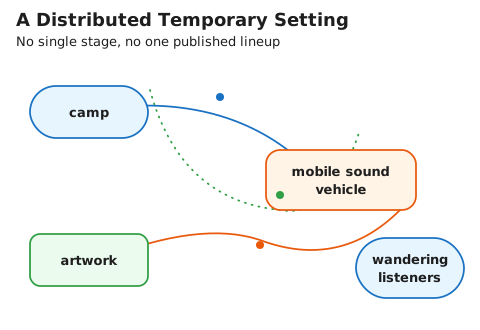
The official 2026 site presents art projects, camps, and invited mutant vehicles in separate public directories. For this case study, Burning Man is not treated as a conventional festival with one promoter-published music lineup and a single stage hierarchy. It is a temporary city built through many participant projects. Music can belong to a camp, move on a vehicle, or emerge beside an artwork.
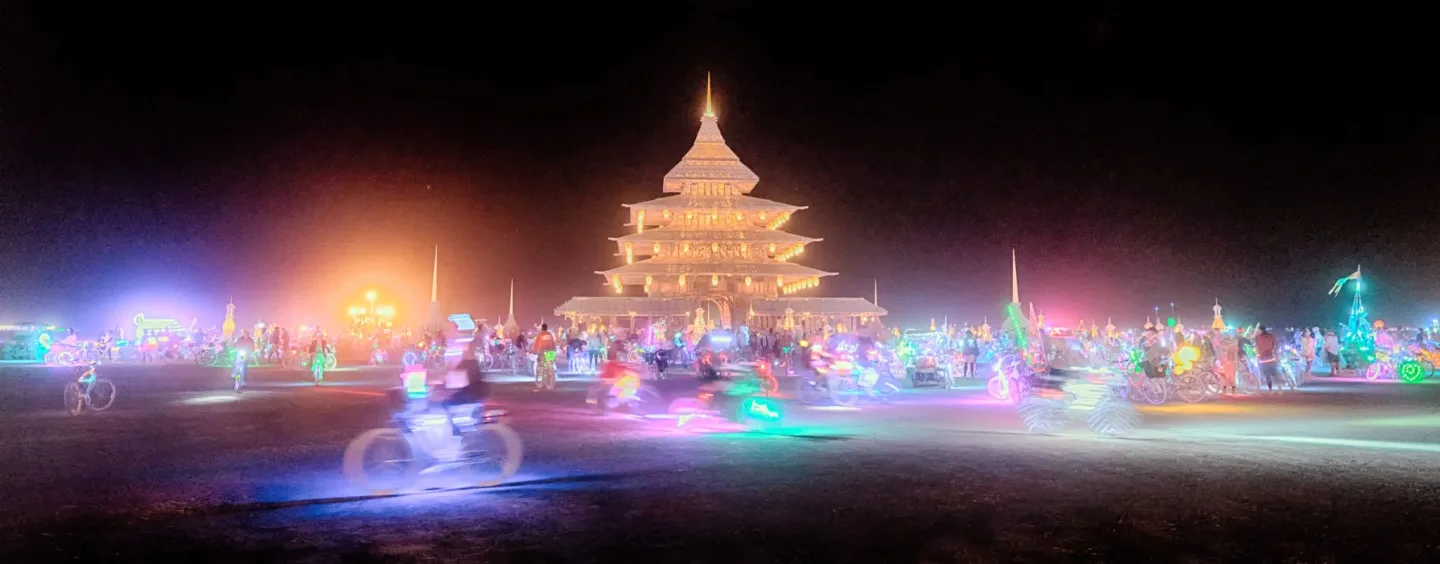
For a listener, that distribution changes what must be noticed. A sound source may approach, join another vehicle, or recede. Dust, distance, lighting, motion, and the search for a moving source can become part of the experience. This inference explains why someone may remember vehicle and set as one event even though the sound system, camp, collective, and performers have different histories.
That distinction is essential. House developed through Chicago’s late-1970s and early-1980s club ecosystem, while techno’s foundational Detroit history also predates 2026 by decades. Burning Man did not originate either genre. It is valuable as a dated 2026 case study of how already-circulating electronic music can be curated, spatialized, and experienced inside a temporary participatory environment.
The 2026 snapshot should therefore answer a bounded question: What happens when electronic styles enter a city organized around temporary art, camps, and movement? It should not replace the histories of Black, Latino, and queer dancers, DJs, producers, and institutions who developed the music. The case study comes late in this pack precisely so that a vivid week in Nevada does not become a false origin story.
Sound Vehicles on the 2026 Playa
Burning Man music names refer to different things. A performer plays a set; a collective organizes activity; a camp is a participant group and home base; and a mutant vehicle is mobile art that may carry a sound system. One project can span categories, but the terms are not interchangeable.
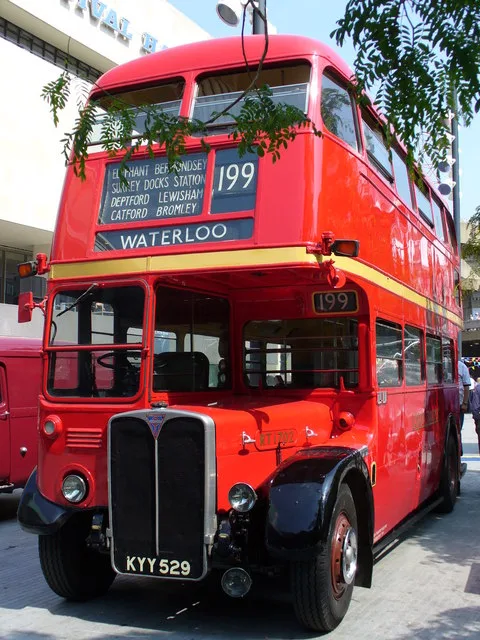
Robot Heart supplies background and a documented 2026 connection. Project leaders say they first camped on the playa in 2008, developing an old double-decker bus into a mobile sound system associated with deep-playa sunrise gatherings. Your Diplo reference is also a firsthand memory from 2026. Separately, on September 4, SFGATE reported that Diplo played a Major Lazer set at Robot Heart at sunset. The memory explains why Diplo belongs in your case study; the report supports the exact set and venue details rather than turning recollection into a guessed solo booking.
Bipolar Express is tied to 2026 through Burning Man’s camp directory: Choo Choo says it has two Bipolar Express trains that travel the playa and play music. An official gallery also documents the project in 2025. Neither source gives a debut year, so say “documented in 2025 and 2026,” not “founded in” a guessed year.
Mayan Warrior shows why a vehicle and its community must be separated. Its founder dates the inspiration to 2011 and the art car’s arrival to 2012. For 2026, Electronic Groove reported that the art car would not appear; the collective shifted its playa participation toward Discosmos, which Burning Man’s official camp directory lists in Mexico City. “The art car was absent” and “the people participated through a camp” can both be true.
Finally, your Pinball Machine memory is correctly placed in 2026, but the project’s official name and creator remain unresolved. Burning Man says its public vehicle page includes only projects choosing to be listed, so no directory match does not disprove what you saw. The memory can anchor the case study, while a public-history card still needs evidence for the name, maker, role, and date it asserts.
Streaming Rewrites the Map
Today, many beginners encounter electronic music through a recommendation system rather than a club resident, record shop, radio specialist, or festival wander. Streaming changes the map, but it does not make genre disappear. Research on platform culture argues that metadata, recommendation algorithms, editorial playlists, and user behavior remediate genre: they reorganize older categories and their associations with identity, place, and time.
One visible change is the rise of context labels. A service may organize music around working out, focusing, relaxing, driving, or a mood rather than presenting a shelf labeled house or techno. Context can be helpful, but it overlays musical history with a prediction about use. Two tracks may sit together because a system expects them to support the same activity even if they come from different scenes.
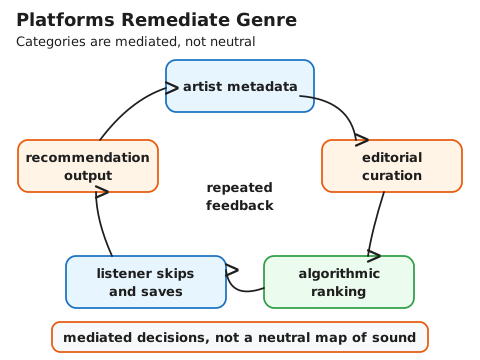
Platform classifications are neither purely automated nor purely human. Editors select and name playlists; artists and distributors supply metadata; listeners skip, save, and repeat; algorithms use those traces to rank or recommend. The resulting category can feel objective because it appears at scale, but it is a mediated decision with feedback loops.
A 2026 study of Afrikaans music provides a useful warning against simple stories of digital openness. It found continuity at the dominant center of discovery and editorial spaces while newer vernacular scenes became more visible at the peripheries. Streaming can surface music that older gatekeepers overlooked, yet visibility and power do not automatically become equal.
Use platform labels as leads, not final answers. When a recommendation says “deep house,” “chill,” or “electronic,” test it against the listening map: pulse, drum organization, groove, bass, timbre, arrangement, performance use, place, and history. Then ask who benefits from the label and what it leaves out. That habit connects the entire pack—from sound objects and disco floors to art cars and algorithms—without pretending electronic music has one fixed center.
Sources
- Cambridge University Press — Breakdowns and the Aesthetic of Disorientation in Festival-House Music
- Dancecult — Squelches, Wobbles and Risers
- Burning Man Project — Black Rock City 2026
- Burning Man Project — Black Rock City 2026 Axis Mundi event record
- Burning Man Project — 2026 Mutant Vehicles
- Burning Man Project — 2026 Camps
- Burning Man Project — The Evolution of Robot Heart
- SFGATE — Diplo once again walks miles to escape Burning Man
- Los Angeles Times — How Pablo González Vargas and Mayan Warrior lived to fight another Burning Man
- Electronic Groove — Mayan Warrior pauses its art car at Burning Man
- Burning Man Project — Bipolar Express gallery record
- Cambridge University Press — The Mediation of Genre, Identity, and Difference in Contemporary Music Streaming
- Cambridge University Press — New currents, old boundaries
Key terms
- EDM
- A context-dependent label that may mean the dance-music mainstream broadly or a commercial festival field, rather than one stable genre.
- Festival house
- A context-specific style: house-derived pulse and repetition arranged for large, visible events, not a definition of all house music.
- Camp (Burning Man)
- A participant group and home base, distinct from a performer, collective, or mutant vehicle.
- Mutant vehicle
- Mobile art that may carry a sound system, distinct from the camp or collective behind it.
Key facts
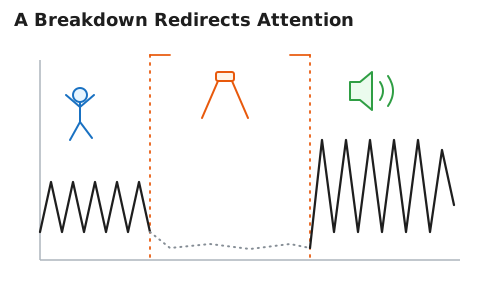
A Breakdown Redirects Attention
Removing drums can loosen bodily entrainment, offer rest, foreground visuals or performer gestures, and make the returning pulse feel more forceful.
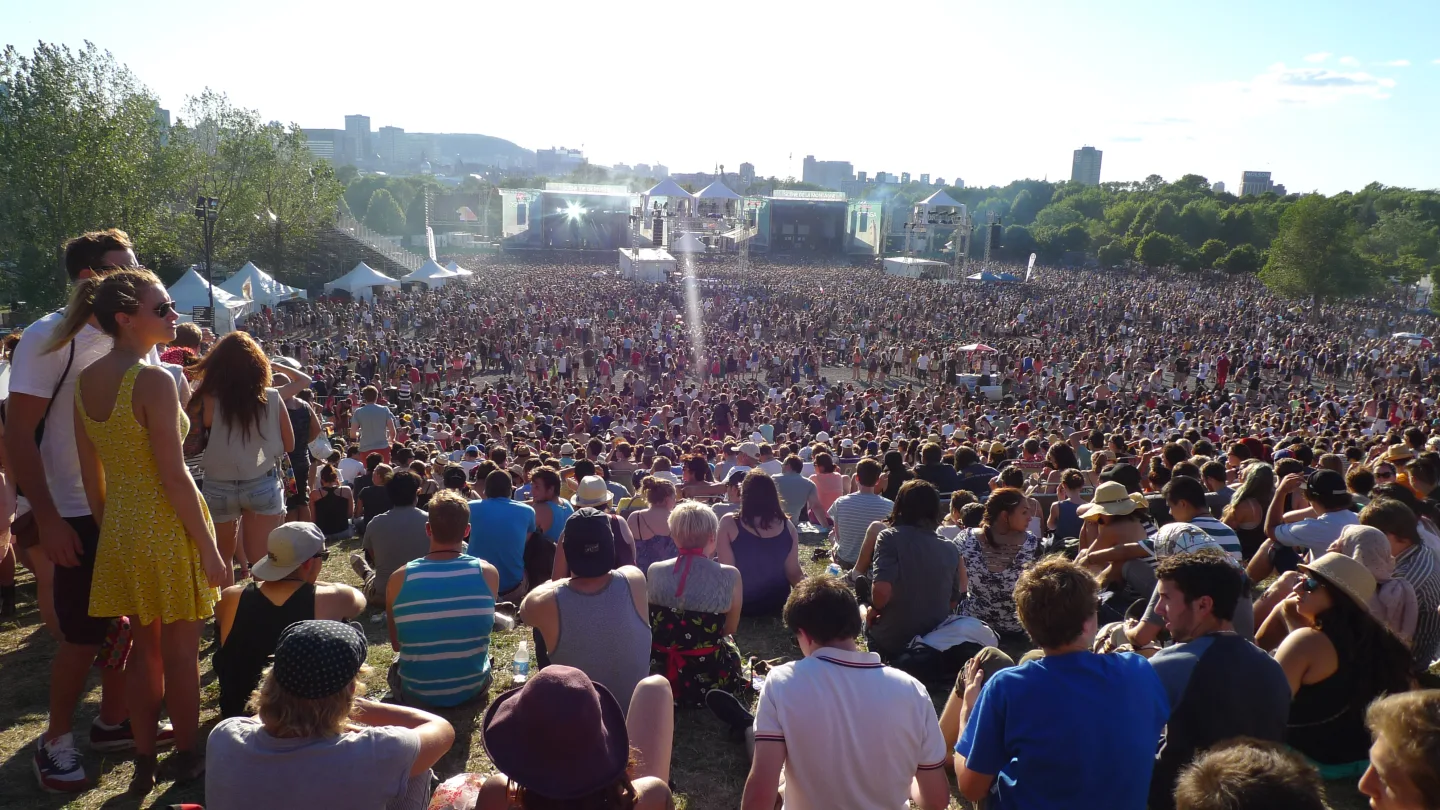
Festival House Is a Style, Not All of House
Festival house names a context-specific style: house-derived pulse and repetition arranged for large, visible events. It does not define all house music, since much of that music grew in smaller clubs with different priorities.
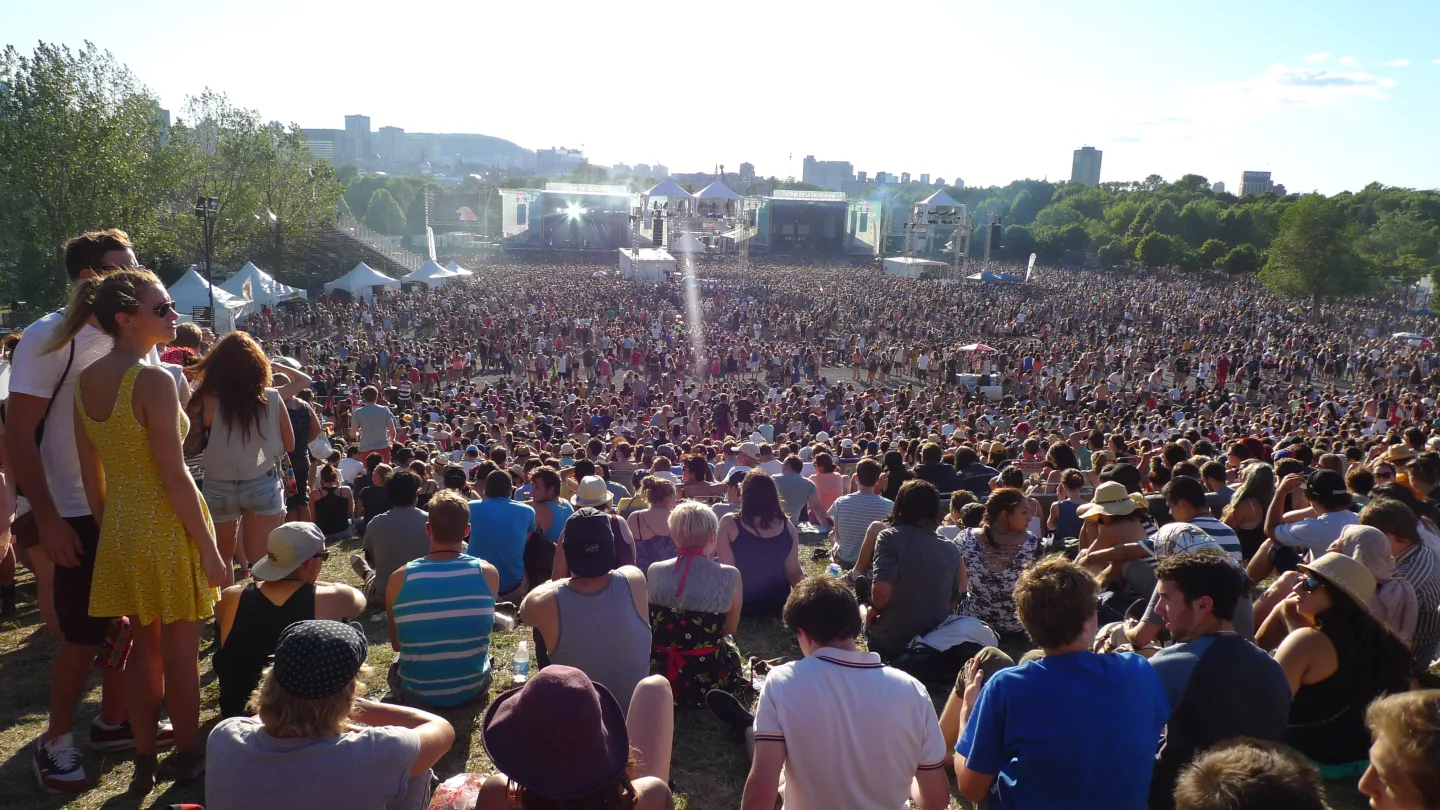
A Breakdown Can Coordinate a Crowd's Anticipation
A breakdown does more than rest dancers' bodies: it can also make space for a gesture or narrative and coordinate anticipation across a large crowd.
Describe EDM by Naming Its Level
A useful description of EDM states which level is meant: “electronic dance music” as a broad umbrella, “festival house” as a context and style, or a narrower subgenre, with that narrower label used only when several audible and historical cues support it.
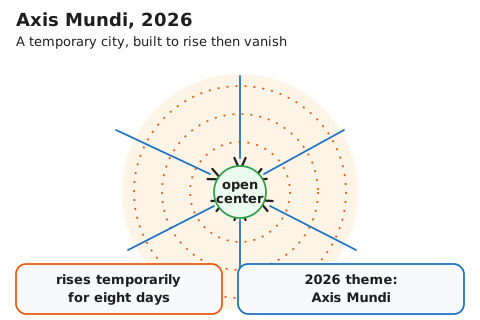
Axis Mundi, 2026
Burning Man Project identifies Axis Mundi as the 2026 Black Rock City theme and describes the city as rising temporarily for eight days.
A Distributed Temporary Setting
The 2026 site lists art, camps, and invited mutant vehicles separately. That structure differs from one promoter-published lineup and does not make Burning Man a genre origin.
A Moving Sound Source Changes Listening
Because Burning Man distributes music across camps, vehicles, and artworks, a sound source may approach, join another vehicle, or recede. Dust, distance, lighting, motion, and the search for a moving source can all become part of the experience.
Why This Case Study Comes Late
The Burning Man case study is placed late in the pack on purpose, so that a vivid week in Nevada does not become a false origin story for music that already had its own history.
Performer, Collective, Camp, Vehicle Differ
A performer plays a set, a collective organizes activity, a camp is a participant group and home base, and a mutant vehicle is mobile art that may carry a sound system. One project can span these categories, but the terms are not interchangeable.
Robot Heart's Bus Became a Sound System
Robot Heart's leaders describe developing an old double-decker bus into a mobile sound system, one associated with deep-playa sunrise gatherings.
Two Bipolar Express Trains
Burning Man's camp directory entry for Choo Choo describes two Bipolar Express trains that travel the playa and play music.
Discosmos Is Based in Mexico City
Burning Man's official camp directory lists Discosmos, the camp the Mayan Warrior collective shifted its 2026 participation toward, as based in Mexico City.
A Memory Isn't a Public-History Record
A vivid personal memory of the Pinball Machine can anchor the case study, but a public-history claim about its name, maker, role, or date still needs its own separate evidence.
Person, Collective, Camp, Vehicle
A firsthand 2026 account of Diplo's set is anchored by separate reporting on the same details. Mayan Warrior's art car was absent while Discosmos represented collective participation. The public vehicle directory is opt-in, and the Pinball Machine identity remains unresolved.
Platforms Remediate Genre
Metadata, editorial playlists, listener behavior, and algorithms reorganize genre visibility. Their categories are mediated decisions, not neutral maps of sound.
Peripheries Gained Visibility, Center Held
The 2026 study of Afrikaans music found that while the dominant center of discovery and editorial spaces stayed continuous, newer vernacular scenes became more visible at the platform's peripheries.
Ask Who a Platform Label Serves
After testing a platform label against the listening map, ask a further question: who benefits from the label, and what does it leave out.
By the numbers
- Robot Heart leadership's year for first camping on the playa
- 2008 year
- Founder's stated inspiration year for Mayan Warrior
- 2011 year
- Mayan Warrior art car's documented playa arrival year
- 2012 year
- Year of the official Bipolar Express gallery record
- 2025 year
- Year of the Choo Choo camp directory entry
- 2026 year
- Year of SFGATE's report on Diplo at Burning Man
- 2026 year
- Number of Bipolar Express trains in Choo Choo's Burning Man camp directory entry
- 2 trains
Matched pairs
Each item on the left goes with the one on the right.
- Ephemeral Black Rock City
- Rises temporarily and then disappears
- Camp, vehicle, or artwork
- Where Burning Man music can be based
- Discosmos
- Camp Burning Man's directory lists as based in Mexico City
- Context playlist
- Groups tracks by mood, activity, or situation
- Metadata, editors, behavior, algorithms
- Inputs that jointly shape platform classification
Step by step
Sketch a track's energy through time
- Mark periods of stable repetition.
- Note gradual changes in brightness, pitch, or density.
- Mark where drums or other anchoring layers disappear.
- Identify the suspended interval before the pulse returns.
- Compare the return with the section that came before it.
The curve describes arrangement and attention; it does not assign a genre from one gesture.
Self-test
Answer each question from memory, then check your work against the answer key.
1. During a festival-house breakdown, what does the listener still remember even when it is no longer stated plainly?
- AThe lead vocal hook
- BThe underlying pulse
- CThe chord progression
- DThe main bass line
2. What was the official theme of Burning Man's Black Rock City 2026?
- ATomorrow Today
- BWaking Dreams
- CAxis Mundi
- DCargo Cult
3. Toward which camp did the Mayan Warrior collective shift its Burning Man participation in 2026?
- ADiscosmos
- BOpulent Temple
- CDistrikt
- DRobot Heart
4. In the process that produces streaming-platform genre categories, what do listeners contribute?
- APlaylist names and the tracks chosen for them
- BRankings computed from the combined signals
- CMetadata supplied along with the tracks
- DTraces left by skipping, saving, and repeating
5. In which platform spaces did a 2026 study of Afrikaans music find continuity of the dominant center?
- ACharts and new-release feeds
- BSearch results and artist pages
- CArtist radio and podcast feeds
- DDiscovery and editorial spaces
Go deeper
Answer key
- 1. B The underlying pulseA breakdown can feel suspended because the listener still remembers the pulse even when it is no longer stated plainly, which is what makes the kick's return land as released tension. A bass line, hook, or chord progression can drop out or in; the remembered reference is the pulse.
- 2. C Axis MundiBurning Man Project's event pages give Axis Mundi as the official 2026 theme. Tomorrow Today was the previous year's theme, not 2026's.
- 3. A DiscosmosPer Electronic Groove, the Mayan Warrior art car would not appear in 2026; the collective shifted its playa participation toward Discosmos, in Burning Man's camp directory as based in Mexico City. Robot Heart is a separate project, the sound system where Diplo's Major Lazer set was reported.
- 4. D Traces left by skipping, saving, and repeatingArtists and distributors supply metadata, editors select and name playlists, listeners skip, save, and repeat, and algorithms use those traces to rank or recommend, so the category that results is a mediated decision with feedback loops.
- 5. D Discovery and editorial spacesA 2026 study of Afrikaans music found continuity at the dominant center of discovery and editorial spaces, while newer vernacular scenes became more visible at the peripheries. Charts and new-release feeds are not the spaces named; the study's warning concerns discovery and editorial gatekeeping.
Sources
- Breakdowns and the Aesthetic of Disorientation in Festival-House Music — www.cambridge.org/core/services/aop-cambridge-core/content/view/A0748DBC5425594BE0F95D9AE0676DDC/S1478572223000087a.pdf/breakdowns-and-the-aesthetic-of-disorientation-in-festival-house-music.pdf
- Squelches, Wobbles and Risers: Continuous Processes and Subgenres in Electronic Dance Music — dj.dancecult.net/index.php/dancecult/article/download/1278/1084/5060
- Black Rock City 2026 Axis Mundi — burningman.org/event/black-rock-city-2026-axis-mundi/
- Black Rock City 2026 — burningman.org/black-rock-city/black-rock-city-2026/
- 2026 Camps — burningman.org/black-rock-city/black-rock-city-2026/2026-camps/
- The Warehouse: Landmark Designation Report — www.chicago.gov/content/dam/city/depts/zlup/Historic_Preservation/Publications/The_Warehouse_Report.pdf
- Roots of Techno: Black DJs and the Detroit Scene Conference, 1998-2007 — archives.iu.edu/html/VAE6885.html
- The Evolution of Robot Heart — burningman.org/podcast/the-evolution-of-robot-heart/
- 2026 Mutant Vehicles — burningman.org/black-rock-city/black-rock-city-2026/2026-mutant-vehicles/
- How Pablo González Vargas and Mayan Warrior lived to fight another Burning Man — www.latimes.com/entertainment-arts/story/2025-10-23/from-ashes-to-dust-how-pablo-gonzalez-vargas-and-mayan-warrior-lived-to-fight-another-burning-man
- Diplo once again walks miles to escape Burning Man — www.sfgate.com/sf-culture/article/diplo-burning-man-22418426.php
- Mayan Warrior pausa las apariciones de su art car en Burning Man — ege.electronicgroove.com/mayan-warrior-pausa-las-apariciones-de-su-art-car-en-burning-man/
- The Mediation of Genre, Identity, and Difference in Contemporary (Popular) Music Streaming — www.cambridge.org/core/services/aop-cambridge-core/content/view/F99D21C8B1E3B170ADC79D652259DF09/S1478572223000270a.pdf/mediation-of-genre-identity-and-difference-in-contemporary-popular-music-streaming.pdf
- New currents, old boundaries: exploring the relationship between streaming platforms and Afrikaans music — www.cambridge.org/core/services/aop-cambridge-core/content/view/836CA8C06ECDC0789D07E33BDB738609/S0001972026101764a.pdf/new-currents-old-boundaries-exploring-the-relationship-between-streaming-platforms-and-afrikaans-music.pdf
Image credits
- A Breakdown Redirects Attention: FlashFeed original diagram · CC-BY-4.0
- Festival House Is a Style, Not All of House: Wikimedia Commons · velkr0 from Vancouver, Canada · CC BY 2.0 — commons.wikimedia.org/wiki/File:2012-08-03_Osheaga_Festival_Parc_Jean-Drapeau_Montreal.jpg
- A Breakdown Can Coordinate a Crowd's Anticipation: Wikimedia Commons · velkr0 from Vancouver, Canada · CC BY 2.0 — commons.wikimedia.org/wiki/File:2012-08-03_Osheaga_Festival_Parc_Jean-Drapeau_Montreal.jpg
- Axis Mundi, 2026: FlashFeed original diagram · CC-BY-4.0
- A Distributed Temporary Setting: FlashFeed original diagram · CC-BY-4.0
- A Moving Sound Source Changes Listening: Wikimedia Commons · RawWriter · CC BY-SA 4.0 — commons.wikimedia.org/wiki/File:Temple_du_Burning_Man_2016.jpg
- Robot Heart's Bus Became a Sound System: Colin Smith · CC BY-SA 2.0 — commons.wikimedia.org/wiki/File:RT_London_double_decker_bus_at_the_Royal_Festival_Hall.jpg
- Platforms Remediate Genre: FlashFeed original diagram · CC-BY-4.0


