
Electronic Music: History, Genres, Scenes, and Sound study guide · Lesson 4 of 5
Genres Travel and Become Local
Across the Atlantic and Pacific · Sound Systems, Breakbeats, and Migration · Local Invention in Brazil, Angola, and South Africa
This is the lesson's study guide from the FlashFeed app, plus its key facts and a self-test.
What you'll be able to do
- Trace electronic-music routes while recognizing exchange, contested naming, and local invention.
Across the Atlantic and Pacific
Across the Atlantic and Pacific
A family tree suggests that a genre starts in one place, produces branches, and moves outward unchanged. Electronic music usually behaves more like a transit map. Records, instruments, broadcasts, touring performers, journalists, clubs, and listeners move in several directions at once. Each stop can alter what a sound means.
Yellow Magic Orchestra offers a vivid Pacific route. In 1980, the Japanese techno-pop group appeared on the American television program Soul Train and performed electronic interpretations within a show centered on Black dance culture. The moment joined Japanese musicians, Black American dancers, disco repertoire, synthesizers, and a drum-machine aesthetic in one public encounter. It is more useful as evidence of exchange than as a contest over which country “owned” electronic pop.
Italodisco reveals how markets and media help construct a category. The label came to group electronic post-disco recordings associated with Italy, but its meaning was shaped heavily through export, DJ use, collecting, and later revival. An outside image of Italian-ness could be projected onto records whose makers did not all use one uniform genre term. Chicago and Detroit DJs heard European productions as material for their own developing scenes; later audiences heard early house and techno through those transatlantic connections.
When American house—especially acid house—circulated in Europe, listeners and producers did not simply preserve it in a display case. New rave styles, harder variants, trance approaches, and local industries developed around it. Institutions also reacted. Section 63 of the United Kingdom’s 1994 Criminal Justice and Public Order Act referred to outdoor music characterized by a succession of repetitive beats. Whatever its practical enforcement, the language is historically revealing: the state tried to define a musical practice in order to regulate gatherings.
These cases suggest three questions for any origin story. What moved: a record, performer, machine, technique, or name? Who changed its use at the destination? Which institution—club, label, broadcaster, press outlet, platform, or law—made the new classification visible? Asking those questions preserves origin claims where the evidence supports them while allowing later creators real agency.
Sound Systems, Breakbeats, and Migration
The route from Jamaica to British bass cultures shows why instruments alone cannot explain electronic music. A sound system is more than a stack of speakers. It is a social and performance organization built around selectors or DJs, recorded music, amplification, versions, vocal participation, competition, and a crowd. Jamaican sound-system and dub practices supplied important approaches to bass, remixing, spatial effects, repeated versions, and audience interaction that later mattered in jungle and drum and bass.
Migration and media transformed those practices in Britain. Producers working in rave networks combined breakbeats, bass pressure, sampling, digital editing, and several Black Atlantic musical lineages. Jungle became drum and bass through disputed changes during the later 1990s; UK garage gathered multiple influences and later fed into dubstep. These are useful connections, but a single arrow from one genre to another can be misleading. Scenes overlap, names change at different speeds, and musicians can work in several styles at once.
The same caution applies to whose movement is remembered. Scholarship on queer dance culture has shown how Latinx participation can be erased when histories compress diverse dance floors into a Black-versus-white story or treat Latino involvement as occasional. Correcting that omission does not require replacing one exclusive origin myth with another. It requires naming people’s documented roles, paying attention to migration and neighborhood histories, and distinguishing a venue’s actual audience from a later image of the scene.
A route-based history therefore follows several carriers:
- records and tapes that DJs transport or exchange;
- radio and press that attach names to sounds;
- migrants and touring artists who bring practices into new social settings;
- clubs and sound systems that change how music is heard in the body;
- laws and markets that enable, suppress, or repackage gatherings.
This method avoids two errors. The first is isolation: treating Britain, Jamaica, the United States, or any other place as a sealed container. The second is flattening: calling every exchange “global” until local power and credit disappear. A route connects specific places; it does not make them interchangeable.
Local Invention in Brazil, Angola, and South Africa
Global history becomes meaningful when local cases are allowed to challenge the map. Brazilian funk, Angolan kuduro, and South African amapiano do not merely add three pins to a genre atlas. They show how naming, technology, dance, inequality, and local history shape electronic music differently.
In Brazilian funk, subgenre names can be tools of recognition, marketing, policing, or argument. Insiders, journalists, institutions, and authorities may apply the same term differently. The power to name matters because a label can make a scene legible while also simplifying it or placing it under suspicion. A beginner should therefore ask who uses a Brazilian funk label, in which city and period, and for what purpose before treating it as a neutral description.
Kuduro demonstrates situated technological invention. Angolan producers in the 1990s and 2000s developed music through the digital tools and material conditions available to them. Limited or particular access did not produce a deficient copy of music made elsewhere. It shaped distinctive production decisions and aesthetics. Technology history becomes more accurate when it asks which tools were actually reachable, repairable, shareable, and learnable in a scene.
Amapiano likewise needs history deeper than a streaming trend. Research connects it to a longer field of Black South African township music, including kwaito and earlier forms. Dance, township social life, synthesized sound, youth innovation, and debates over place and date all belong to the account. The relationship is not that one older genre contains a complete recipe for the newer one. Earlier practices create conditions, memories, institutions, and arguments that later musicians can transform.
Together, the cases overturn a center-and-copy model. Local musicians work with global sounds, software, machines, and media, but they do so inside particular economies and communities. Their work can travel outward and reshape the supposedly central market in return. The best comparative question is not “Which Western genre does this resemble?” It is “What local problem, dance practice, audience, technology, and naming debate makes this music intelligible here?” Similar beats can participate in very different histories.
Sources
- University of Chicago — TR–808: Race, Groove, and Drum Machines
- Dancecult — Historical Emergence and Current Uses of the Term italodisco
- UK Legislation — Criminal Justice and Public Order Act 1994, section 63
- Dancecult — Bring the Break-Beat Back!
- Dancecult — Life and Death on the Pulse Dance Floor
- Dancecult — Brazilian Funk Subgenres
- Dancecult — Fruity Batidas: The Technologies and Aesthetics of Kuduro
- African Music — Kwaito as history
Key terms
- Route-based history
- A history that follows specific carriers and transformations between places without treating either place as sealed or interchangeable.
Key facts
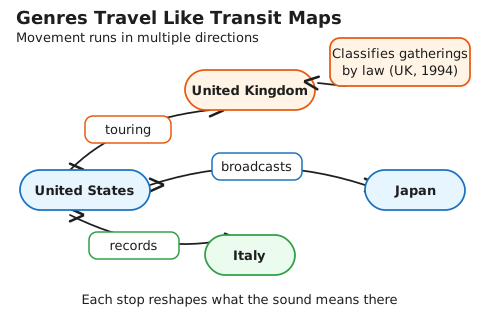
Genres Travel Like Transit Maps
Records, performers, machines, media, and laws move in several directions. Destinations reshape their use; a 1994 UK law even classified certain gatherings through ‘repetitive beats.’
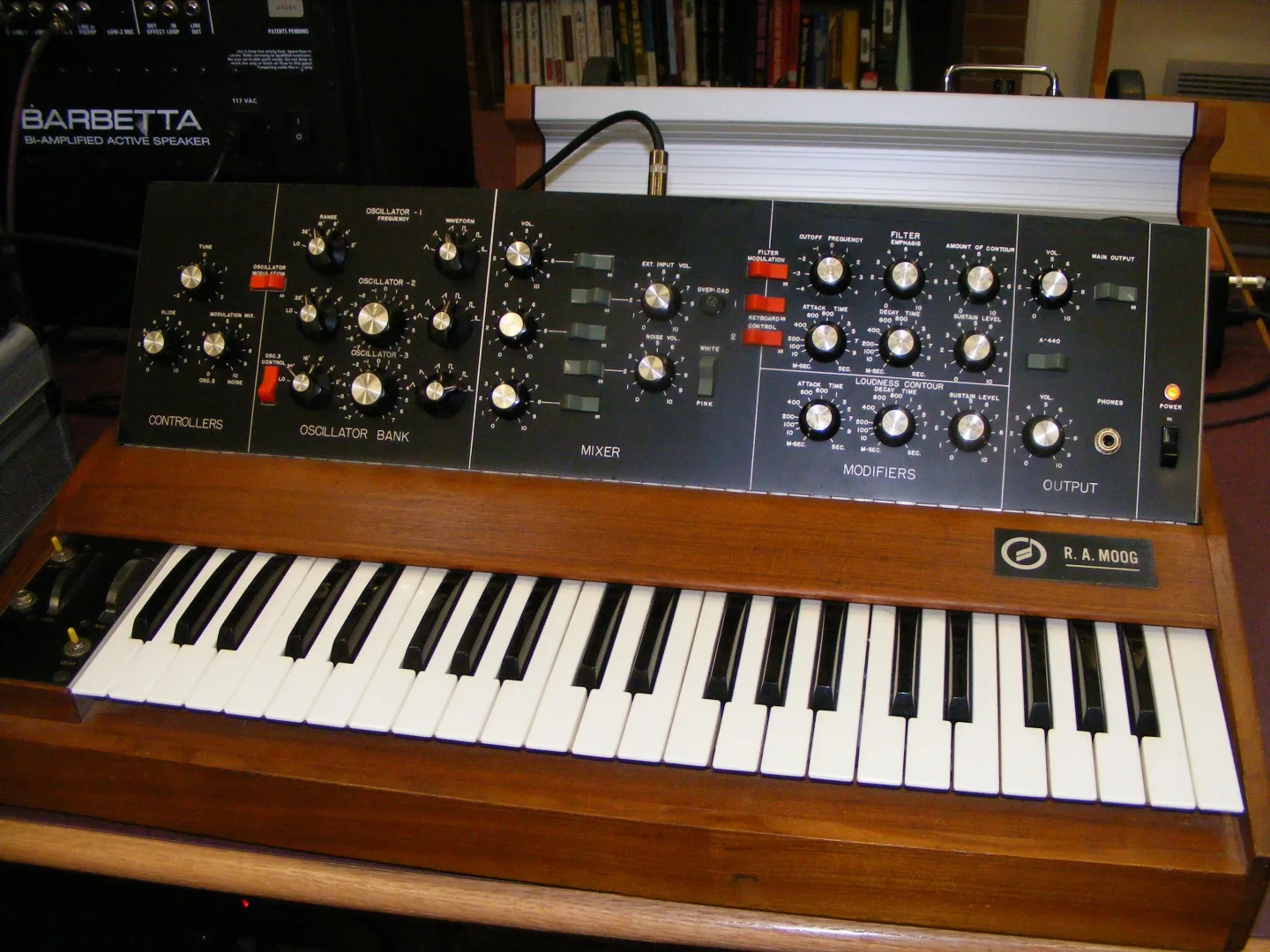
A Meeting, Not a Contest Over Ownership
Yellow Magic Orchestra's 1980 Soul Train appearance joined Japanese musicians, Black American dancers, disco repertoire, synthesizers, and a drum-machine aesthetic. The moment stands as evidence of exchange rather than a contest over which country owned electronic pop.
Italodisco Was Built Through Circulation
The italodisco label grouped electronic post-disco recordings associated with Italy, but its meaning came largely from export, DJ use, collecting, and later revival. Not all of the recordings' makers used one uniform genre term for their own work.
American House Changed Shape In Europe
When American house, especially acid house, circulated in Europe, listeners and producers reworked it rather than preserving it unchanged. New rave styles, harder variants, trance approaches, and local industries grew up around it.
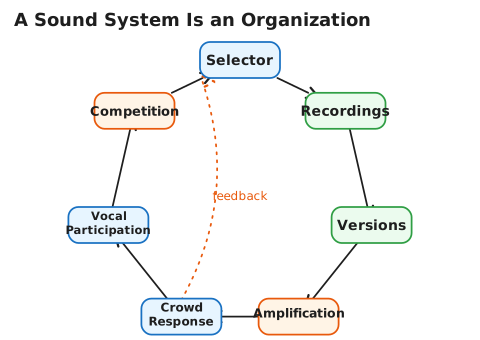
A Sound System Is an Organization
Jamaican sound-system and dub practice joins selectors, versions, amplification, effects, and crowd response. UK garage later fed dubstep through branching, overlapping influences.
A Sound System Runs On Participation
A Jamaican sound system is more than speakers and a selector. Its organization also runs on vocal participation and competition, alongside recorded music, amplification, and a crowd.
Jungle Became Drum And Bass Through Dispute
Jungle turned into drum and bass through changes that were themselves disputed during the later 1990s. UK garage, gathering multiple influences of its own, later fed into dubstep.
Latinx Dancers Can Be Written Out Of The Story
Scholarship on queer dance culture shows that Latinx participation can disappear from the record. It happens when histories compress diverse dance floors into a Black-versus-white story or treat Latino involvement as occasional.
Fixing Erasure Is Not Swapping Myths
Correcting the erasure of Latinx participation does not mean replacing one exclusive origin myth with another. It means naming people's documented roles and telling a venue's actual audience apart from a later image of the scene.
A Route Follows Five Kinds Of Carrier
A route-based history follows several kinds of carrier, not just one. It tracks records and tapes DJs exchange, radio and press that attach names to sounds, migrants and touring artists, clubs and sound systems, and laws or markets that enable, suppress, or repackage gatherings.
Two Ways A Route-History Can Fail
Isolation treats a place like Britain, Jamaica, or the United States as a sealed container. Flattening calls every exchange 'global' until local power and credit disappear.
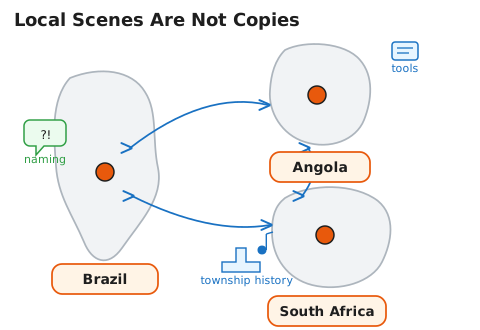
Local Scenes Are Not Copies
Brazilian funk naming, Angolan kuduro production, and South African township histories show musicians turning unequal conditions and circulating tools into local invention.
Question A Label Before Trusting It
A genre label is not automatically a neutral description. Before treating a Brazilian funk label that way, a beginner should ask who uses it, in which city and period, and for what purpose.
Accurate Tech History Asks About Access
Limited access to tools does not make a scene's output a deficient copy. A more accurate technology history instead asks which tools were actually reachable, repairable, shareable, and learnable there.
Amapiano Sits In A Longer Township Lineage
Amapiano needs history deeper than a streaming-era trend. Research connects it to a longer field of Black South African township music, including kwaito and earlier forms.
Amapiano's Story Includes Open Debates
Amapiano's history is not settled trivia. Dance, township social life, synthesized sound, and youth innovation all belong in the account, alongside genuine debates over exactly where and when it began.
Kwaito Is Not Amapiano's Recipe
Kwaito does not hand amapiano a finished recipe. Earlier township practices create conditions, memories, institutions, and arguments that later musicians can transform into something new.
Ask What Makes The Music Intelligible Here
Rather than asking which Western genre a local sound resembles, a better comparative question asks what local problem, dance practice, audience, technology, and naming debate make it intelligible where it is made. Similar beats can belong to very different histories.
Matched pairs
Each item on the left goes with the one on the right.
- Radio and press
- Attach names to sounds
- Clubs and sound systems
- Change how music is heard in the body
- Isolation
- Treating a place as a sealed container
- Kuduro
- Angolan production shaped by locally available digital tools
- Amapiano
- Part of a longer Black South African township lineage including kwaito
Step by step
Trace one electronic-music route without flattening it
- Name the record, person, machine, broadcast, or practice that moved.
- Identify the specific places connected by that movement.
- Describe how people at the destination changed its use or meaning.
- Name the club, radio outlet, label, law, or platform that made the change visible.
This traces a documented route; it does not turn every exchange into one borderless global genre.
Self-test
Answer each question from memory, then check your work against the answer key.
1. In which year did Yellow Magic Orchestra appear on the American television program Soul Train?
- A1978
- B1981
- C1980
- D1983
2. Which DJs heard early italodisco productions as material for their own developing scenes?
- AParis and Brussels DJs
- BChicago and Detroit DJs
- CLondon and Manchester DJs
- DTokyo and Osaka DJs
3. Jamaican sound-system and dub practices went on to matter in which later genres?
- AJungle and drum and bass
- BItalodisco and Hi-NRG
- CTrance and progressive house
- DAcid house and techno
4. Brazilian funk subgenre names can serve as tools of what?
- APromotion, censorship, scholarship, or nostalgia
- BLicensing, broadcasting, regulation, or taxation
- CExport, collecting, revival, or curation
- DRecognition, marketing, policing, or argument
5. In which decades did Angolan producers develop kuduro through the digital tools available to them?
- AThe 2000s and 2010s
- BThe 1970s and 1980s
- CThe 1980s and 1990s
- DThe 1990s and 2000s
Go deeper
Answer key
- 1. C 1980Yellow Magic Orchestra appeared in 1980, performing electronic interpretations on a show centered on Black dance culture — joining Japanese musicians, Black American dancers, disco, synthesizers, and a drum-machine aesthetic in one encounter. The neighbouring years are not the date given.
- 2. B Chicago and Detroit DJsChicago and Detroit DJs heard European productions as material for their own developing scenes, which is why later audiences met early house and techno through those transatlantic connections; no British, French, or Japanese DJs are named in that role.
- 3. A Jungle and drum and bassJamaican sound-system and dub practices supplied approaches to bass, remixing, spatial effects, and audience interaction that later mattered in jungle and drum and bass. Acid house and techno are American styles that reached Europe with no Jamaican sound-system lineage claimed for them.
- 4. D Recognition, marketing, policing, or argumentIn Brazilian funk, subgenre names can be tools of recognition, marketing, policing, or argument, applied differently by insiders, journalists, institutions, and authorities. Export, collecting, and revival are the forces attached to the italodisco label, not to Brazilian funk naming.
- 5. D The 1990s and 2000sAngolan producers in the 1990s and 2000s developed kuduro through the digital tools and material conditions available to them, shaping distinctive production decisions rather than a deficient copy. The 1980s-and-1990s option starts the window a decade too early.
Sources
- Jennifer Iverson: TR–808: Race, Groove, and Drum Machines — music.uchicago.edu/news/jennifer-iverson-tr-808-race-groove-and-drum-machines
- Historical Emergence and Current Uses of the Term italodisco — dj.dancecult.net/index.php/dancecult/article/view/1300/1112
- Squelches, Wobbles and Risers: Continuous Processes and Subgenres in Electronic Dance Music — dj.dancecult.net/index.php/dancecult/article/download/1278/1084/5060
- Criminal Justice and Public Order Act 1994 — www.legislation.gov.uk/ukpga/1994/33/section/63
- Bring the Break-Beat Back! Authenticity and the Politics of Rhythm in Drum 'n' Bass — dj.dancecult.net/index.php/dancecult/article/download/1153/1003/4507
- Life and Death on the Pulse Dance Floor: Transglocal Politics and Erasure of the Latinx in the History of Queer Dance; Life and Death on the Pulse Dance Floor — dj.dancecult.net/index.php/dancecult/article/download/906/773/3327
- Disco's Revenge: House Music's Nomadic Memory — dj.dancecult.net/index.php/dancecult/article/download/298/284
- The Power to Name and Other Dilemmas Presented by Brazilian Funk Subgenres — dj.dancecult.net/index.php/dancecult/article/view/1232/1045
- Fruity Batidas: The Technologies and Aesthetics of Kuduro — dj.dancecult.net/index.php/dancecult/article/download/450/458
- Kwaito as history — journal.ru.ac.za/index.php/africanmusic/article/download/2529/1388/1778
Image credits
- Genres Travel Like Transit Maps: FlashFeed original diagram · CC-BY-4.0
- A Meeting, Not a Contest Over Ownership: Wikimedia Commons · glacial23 · CC BY-SA 2.0 — commons.wikimedia.org/wiki/File:R.A.Moog_minimoog_2.jpg
- A Sound System Is an Organization: FlashFeed original diagram · CC-BY-4.0
- Local Scenes Are Not Copies: FlashFeed original diagram · CC-BY-4.0
