
Electronic Music: History, Genres, Scenes, and Sound study guide · Lesson 3 of 5
A Listening Map of Electronic Genres
Find the Pulse, Then the Groove · Hear Breaks, Bass, and Half-Time · Track Energy Through Time
This is the lesson's study guide from the FlashFeed app, plus its key facts and a self-test.
What you'll be able to do
- Differentiate electronic styles by pulse, groove, bass, timbre, and arrangement before applying labels.
Find the Pulse, Then the Groove
Find the Pulse, Then the Groove
Genre labels become less intimidating when you replace “What is this?” with a sequence of smaller listening questions. Begin with the pulse: the regular beat you could tap or step to. Then listen for the meter, the repeating grouping of those beats, often counted in fours in dance music. Finally, locate the drum grid. Does the kick land on every main beat, or do kick and snare accents form a broken, syncopated pattern?
That frame is only a beginning. Groove is the felt relationship among rhythmic events, and research with musicians and producers shows that it is not produced by timing alone. The shape of each attack, its timbre, its loudness relative to other events, and tiny timing relationships can all matter. A short, hard kick and a rounded kick can occupy the same notated beat while creating different bodily impressions. A hi-hat can feel urgent because of brightness and attack even when its position on the grid is unchanged.
Electronic dance music is sometimes described as perfectly mechanical because sequencers make repetition easy. That description misses how producers work. Tight, grid-related timing is common, but deliberate offsets, timbral variation, swing, and changes in intensity can make a repeated loop breathe. A pattern can be quantized—aligned to a grid—without every element feeling identical. Conversely, a human performance is not automatically groovier merely because it contains timing variation.
Try a four-pass listening method:
- Tap the main pulse and decide whether the kick reinforces every beat.
- Follow the backbeat or snare-like accents and notice whether they feel straight, syncopated, or half-time.
- Shift attention to bass. Does it lock to the kick, answer it, or leave space around it?
- Ignore note names and hear sound shape: sharp or soft attacks, bright or dark timbres, dry or reverberant space, stable or changing texture.
This method is more reliable than memorizing one tempo number for each genre. Two tracks can share a pulse and still belong to different scenes because their bass placement, timbral vocabulary, arrangement, and performance use differ. The goal is not instant certainty. It is to build a defensible description before applying a label.
Hear Breaks, Bass, and Half-Time
A straight four-to-the-floor pattern makes the pulse unusually visible because the kick repeats on every main beat. A breakbeat approach creates a different kind of motion. Kicks, snares, and ghosted percussion form syncopated patterns with gaps, anticipations, and displaced accents. The listener may still feel a steady underlying pulse, but the drums dance around it rather than marking every step in the same way.
Jungle and drum and bass make this distinction especially clear. Their rhythmic identity has often centered on fast, edited or programmed breaks and strong low-frequency design. Yet the passage from jungle to drum and bass in the later 1990s was not a neutral change of label. Musicians and listeners disputed which rhythms, social meanings, and claims to authenticity were being emphasized or lost. In the mid-2000s, producers associated with choppage argued for renewed attention to densely cut sampled breaks. Their slogan-like call to bring the breakbeat back was therefore musical and historical at once.
Dubstep supplies a useful contrast. Many dubstep tracks use a half-time feel: the snare-like anchor arrives less often relative to the underlying subdivisions, creating spaciousness and weight even when small sounds move quickly. A modulated or “wobbling” bass timbre is a common cue. Drum and bass more often projects rapid breakbeat momentum. In a simple comparison, one may feel like running percussion over a fast pulse, while the other may feel like heavy steps with moving bass between them.
Those descriptions are tendencies, not passwords. Drum and bass can simplify its breaks; dubstep can use busy percussion; hybrid tracks can share timbres and production techniques. Listen for a bundle of evidence:
- Pulse and subdivision: What speed does your body track, and what moves faster inside it?
- Kick and snare placement: Is the grid continuously reinforced, broken, or made to feel half-time?
- Break treatment: Does the drum pattern sound sliced, rearranged, or layered?
- Bass behavior: Is bass a stable line, a set of impacts, or a continuously changing timbre?
The genre guess comes last. This protects you from mistaking one spectacular bass sound for the identity of the whole track.
Track Energy Through Time
So far, the listening map has focused on events and patterns. Electronic dance music also communicates through continuous processes—gestures in which pitch, loudness, timbre, or another parameter changes gradually. A filter may open from muffled to bright. A tone may slide upward. A bass sound may repeatedly change shape. These motions help a listener feel that energy is accumulating, dissolving, narrowing, or expanding.
Some continuous gestures become associated with particular subgenres. Acid house is known for a squelching, resonant bass timbre; dubstep often foregrounds a wobble-like bass modulation; trance commonly uses long upward risers to build tension. These are strong clues, but a clue is not a verdict. Producers borrow techniques, and neighboring styles share software and sound-design habits. Ask what the gesture does in the arrangement and what rhythmic frame surrounds it.
The breakdown provides the clearest arrangement example. In festival house, a breakdown commonly removes the drums and may introduce new layers, effects, or metrical ambiguity. A dancer who had been locked to the kick can temporarily lose a firm sense of where the main beat sits. That disorientation has functions. It provides contrast, offers physical rest, redirects attention toward a performer or visual display, and makes the return of the pulse feel larger.
Trance and progressive house show why the full bundle matters. Both can use a similar four-to-the-floor foundation and overlapping tempos. Trance tends to place more emphasis on energetic, anthemic texture and extended risers. Progressive house tends toward warmer, mellower timbres and longer-form development with less aggressive continuous change. Listeners and platforms often conflate them, and individual tracks can cross the boundary.
Sketch an energy curve while listening: level repetition, gradual buildup, beat removal, unstable suspension, then return. Mark which layers disappear and which parameters change. This makes arrangement audible even without formal theory. It also explains why a track can feel dramatically different while its basic harmony changes very little. In electronic dance music, timbre and density can carry structural weight that another style might assign to chords or lyrics. A good genre description therefore combines rhythm, sound design, formal timing, performance context, and historical use.
Sources
Key terms
- Breakbeat
- A drum approach whose kicks, snares, and ghosted percussion form syncopated patterns with gaps, anticipations, and displaced accents around a felt pulse.
- Half-time feel
- A rhythmic feel in which the snare-like anchor arrives less often relative to the underlying subdivisions, creating spaciousness and weight.
- Continuous process
- A gesture in which pitch, loudness, timbre, or another parameter changes gradually rather than in discrete steps.
Key concepts
Pulse
- The regular beat a listener can tap or step to.
- It underlies faster subdivisions even when drums dance around it.
- Finding this steady reference is the first pass in a multi-pass listening method.
Meter
- A recurring organization of beats into larger groups.
- Dance tracks often invite counting in repeated groups of four.
- It describes grouped time rather than the tone color of a sound.
Groove
- A bodily felt relationship among repeating rhythmic events.
- Timing contributes, but attack, color, and intensity also matter.
- Two loops on the same grid can differ strongly in this quality.
Swing
- A way repeated subdivisions can feel uneven rather than perfectly equal.
- It can create rhythmic friction against a strict grid.
- Listeners are asked to notice it after finding pulse and bass placement.
Quantization
- A production operation that aligns musical events to a timing grid.
- Its use does not guarantee that every element will feel identical.
- Producers can combine this alignment with deliberate offsets and sound shaping.
Timbre
- The character or color that distinguishes sounds beyond pitch and loudness.
- Brightness, texture, and attack help a listener describe it.
- It can carry structural weight even when harmony barely changes.
Key facts
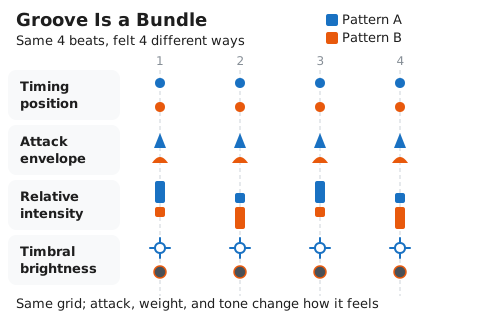
Groove Is a Bundle
Timing matters, but attack shape, timbre, relative intensity, bass placement, and deliberate offsets can all change how the same grid feels.
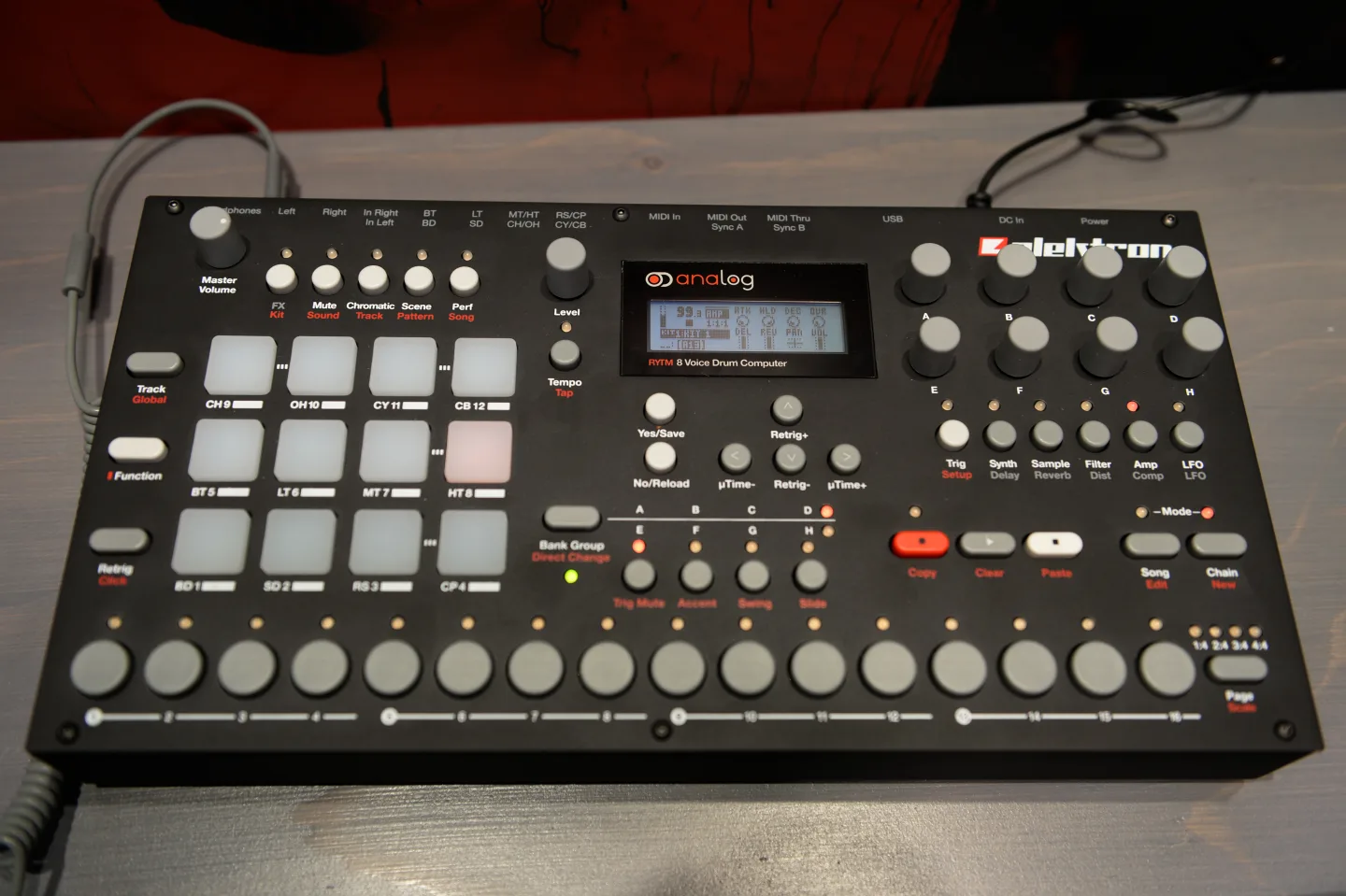
Same Beat, Different Feel
A short, hard kick and a rounded kick can land on the same notated beat while creating different bodily impressions. A hi-hat can feel more urgent purely from its brightness and attack, even when its position on the grid never changes.
Sequenced Isn't the Same as Mechanical
Grid-related timing is common in electronic dance music, but deliberate offsets, timbral variation, swing, and shifts in intensity can make a repeated loop breathe. A human performance is not automatically groovier just because it contains timing variation.
Same Pulse, Different Scene
Two tracks can share the same pulse and still belong to different scenes, because bass placement, timbral vocabulary, arrangement, and performance use can differ between them. The aim of careful listening is a defensible description, not instant certainty.
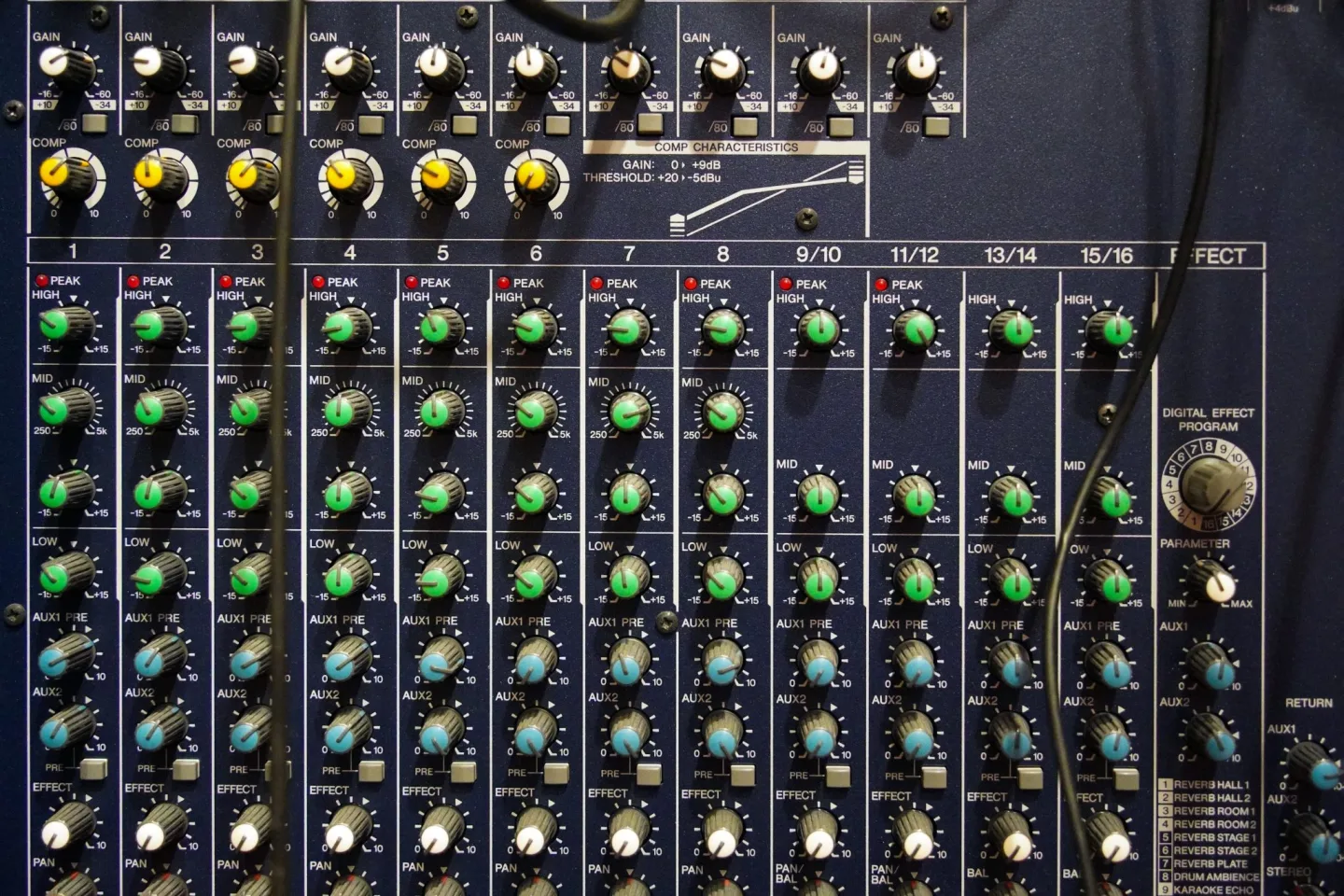
The Fourth Pass: Sound Shape
A four-pass listening method ends by setting note names aside to hear sound shape: sharp or soft attacks, bright or dark timbres, dry or reverberant space, and stable or changing texture.
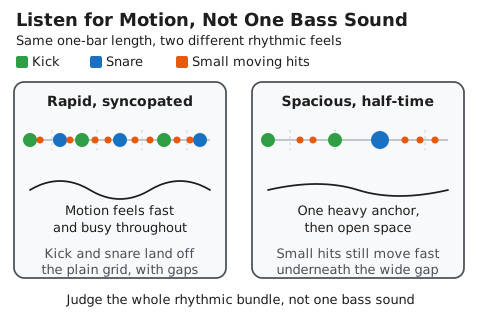
Listen for Motion, Not One Bass Sound
Drum and bass often projects fast breakbeat drive; dubstep often creates a heavier half-time feel. Busy hybrids mean the whole rhythmic bundle still matters.
Breakbeats Dance Around the Pulse
A breakbeat approach lets kicks, snares, and ghosted percussion form syncopated patterns with gaps, anticipations, and displaced accents. Listeners can still feel a steady underlying pulse even as the drums move around it rather than marking every step evenly.
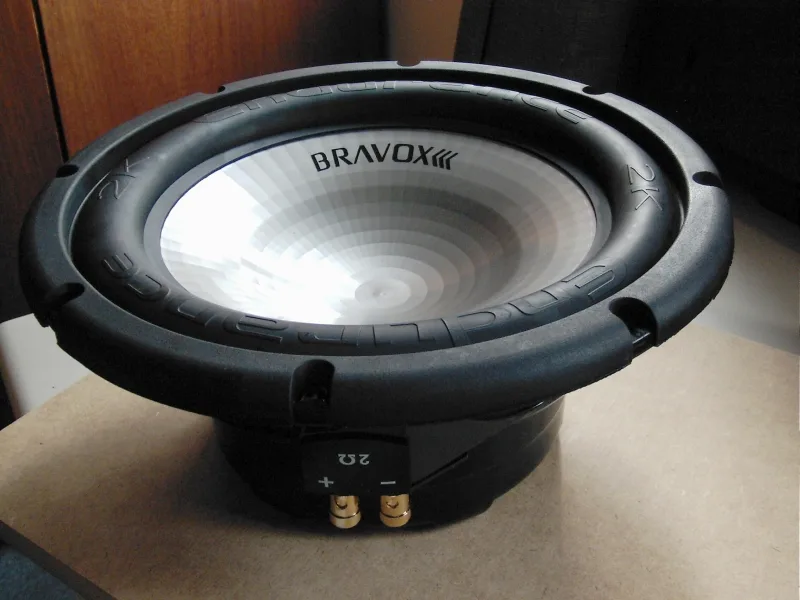
Jungle and DnB's Rhythmic Signature
Jungle and drum and bass built their rhythmic identity around fast, edited or programmed breaks paired with strong low-frequency design.
Not a Neutral Relabeling
When jungle's label shifted toward drum and bass in the later 1990s, musicians and listeners disputed which rhythms, social meanings, and claims to authenticity were being emphasized or lost.
Choppage's Call to Bring the Break Back
In the mid-2000s, producers associated with choppage argued for renewed attention to densely cut sampled breaks, a slogan-like call that was musical and historical at once.
Half-Time Feel, Defined
In a half-time feel, the snare-like anchor arrives less often relative to the underlying subdivisions, creating spaciousness and weight even while small sounds keep moving quickly.
Continuous Processes in Motion
A filter opening from muffled to bright, a tone sliding upward, or a bass sound repeatedly changing shape are continuous processes. These gradual motions help a listener feel energy accumulating, dissolving, narrowing, or expanding.
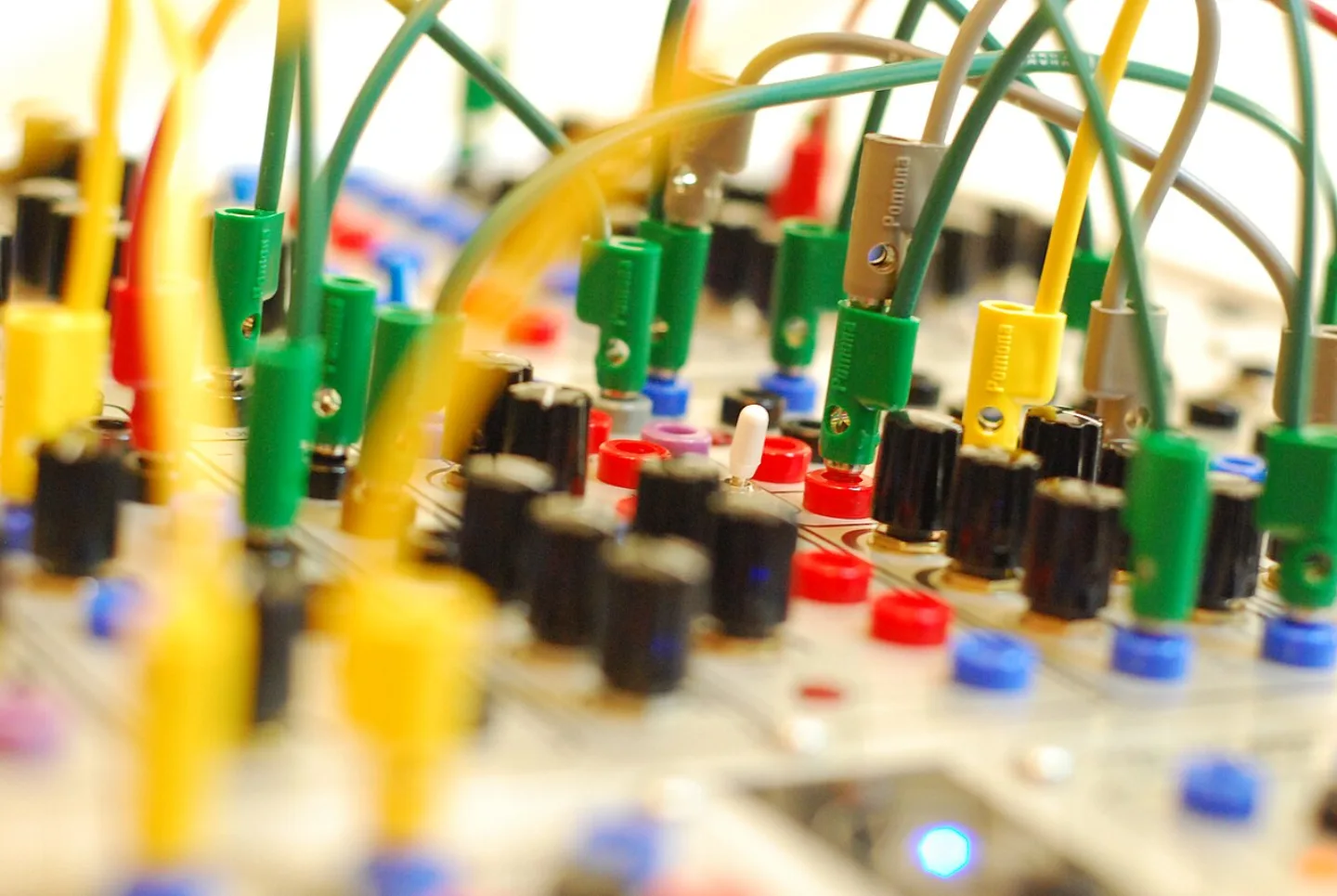
A Clue Is Not a Verdict
A squelching bass, a wobble, or a long riser are strong clues to a subgenre, but producers borrow techniques and neighboring styles share software and sound-design habits. A clue alone does not settle the label.
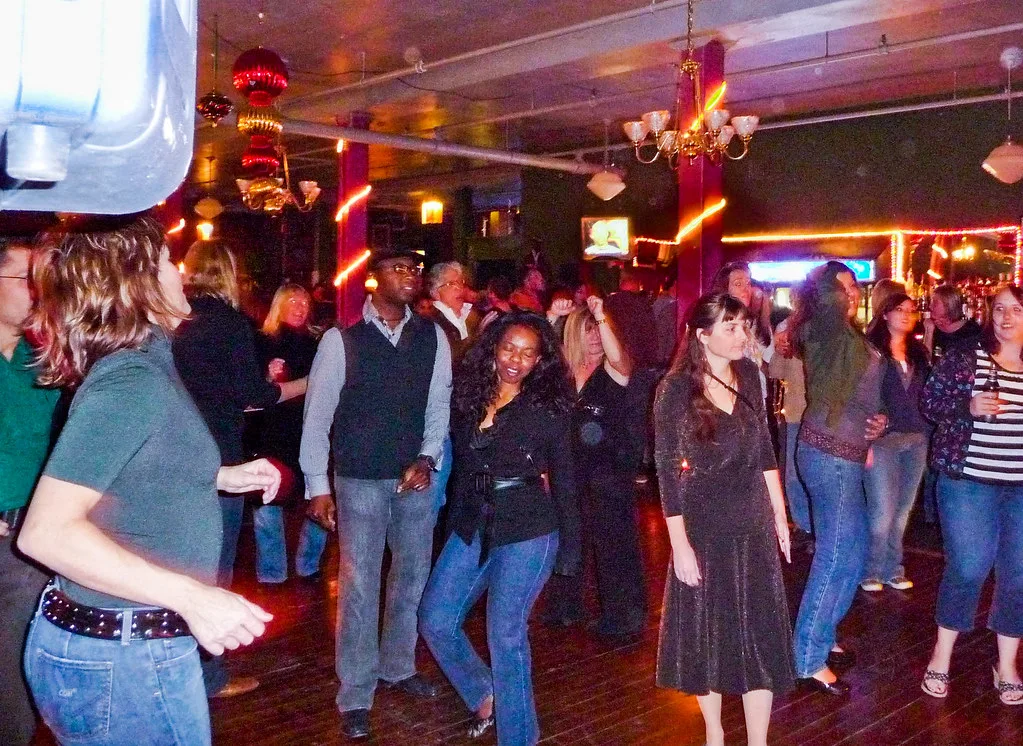
Why Breakdowns Disorient on Purpose
A festival-house breakdown's loss of a firm beat is not an accident. It provides contrast, offers physical rest, redirects attention toward a performer or visual display, and makes the pulse's return feel larger.
Same Foundation, Different Emphasis
Trance and progressive house can share a similar four-to-the-floor foundation and overlapping tempos, so tempo and beat pattern alone will not separate them. Instead, the differences to look for are in texture and pacing between the two styles.
A Full Genre Description
A defensible genre description combines rhythm, sound design, formal timing, performance context, and historical use, not any single cue taken alone.
Matched pairs
Each item on the left goes with the one on the right.
- Acid-house squelch
- Resonant bass timbre used as a genre clue
Step by step
Sketch a track's energy through time
- Mark periods of stable repetition.
- Note gradual changes in brightness, pitch, or density.
- Mark where drums or other anchoring layers disappear.
- Identify the suspended interval before the pulse returns.
- Compare the return with the section that came before it.
The curve describes arrangement and attention; it does not assign a genre from one gesture.
Self-test
Answer each question from memory, then check your work against the answer key.
1. What term describes the felt relationship among rhythmic events?
- AMeter
- BSwing
- CGroove
- DPulse
2. In a four-pass method for listening to electronic music, what is the focus of the third pass?
- AThe snare-like accents and whether they feel half-time
- BThe bass and whether it locks to the kick or leaves space
- CThe sound shape and whether attacks are sharp or soft
- DThe main pulse and whether the kick reinforces every beat
3. In which period did choppage producers argue for renewed attention to densely cut sampled breaks?
- AThe mid-2000s
- BThe early 2010s
- CThe later 1990s
- DThe early 1990s
4. Through disputed changes in the later 1990s, which genre did jungle become?
- ABroken beat and nu-jazz
- BHappy hardcore and gabber
- CSpeed garage and 2-step
- DDrum and bass
5. In festival house, what does a breakdown commonly remove?
- AThe lead
- BThe chords
- CThe vocals
- DThe drums
Go deeper
Answer key
- 1. C GrooveGroove is the felt relationship among rhythmic events, shaped by attack, timbre, relative loudness, and tiny timing relationships rather than timing alone; pulse is the regular beat you could tap or step to, and meter is the repeating grouping of those beats.
- 2. B The bass and whether it locks to the kick or leaves spaceThe four passes run pulse, then backbeat or snare-like accents, then bass (does it lock to the kick, answer it, or leave space around it), then sound shape; the snare-like accents are the second pass, and sound shape is the fourth.
- 3. A The mid-2000sChoppage dates to the mid-2000s, when producers associated with it made their slogan-like call to bring the breakbeat back; the later 1990s is instead the period of the disputed passage from jungle to drum and bass.
- 4. D Drum and bassThe later-1990s passage from jungle to drum and bass was a disputed change, not a neutral relabelling — musicians and listeners argued over which rhythms, meanings, and authenticity claims were emphasized or lost. Speed garage was a parallel late-1990s UK style, not what jungle became.
- 5. D The drumsA festival-house breakdown commonly removes the drums and may add new layers, effects, or metrical ambiguity, so a dancer locked to the kick can briefly lose a firm sense of the beat. Vocals, leads, and chords are layers a breakdown may foreground, not the layer it removes.
Sources
- Shaping rhythm: timing and sound in five groove-based genres — www.cambridge.org/core/services/aop-cambridge-core/content/view/BBC410F9849DB982AEBFACEA14D38F32/S0261143023000041a.pdf/div-class-title-shaping-rhythm-timing-and-sound-in-five-groove-based-genres-div.pdf
- Squelches, Wobbles and Risers: Continuous Processes and Subgenres in Electronic Dance Music — dj.dancecult.net/index.php/dancecult/article/download/1278/1084/5060
- Bring the Break-Beat Back! Authenticity and the Politics of Rhythm in Drum 'n' Bass — dj.dancecult.net/index.php/dancecult/article/download/1153/1003/4507
- Breakdowns and the Aesthetic of Disorientation in Festival-House Music — www.cambridge.org/core/services/aop-cambridge-core/content/view/A0748DBC5425594BE0F95D9AE0676DDC/S1478572223000087a.pdf/breakdowns-and-the-aesthetic-of-disorientation-in-festival-house-music.pdf
Image credits
- Groove Is a Bundle: FlashFeed original diagram · CC-BY-4.0
- Same Beat, Different Feel: Wikimedia Commons · Brandon Daniel from USA · CC BY-SA 2.0 — commons.wikimedia.org/wiki/File:Elektron_Analog_RYTM_-_2014_NAMM_Show.jpg
- The Fourth Pass: Sound Shape: Nilo Velez (Openverse) · cc0 1.0 — wordpress.org/photos/photo/681683358a/
- Listen for Motion, Not One Bass Sound: FlashFeed original diagram · CC-BY-4.0
- Jungle and DnB's Rhythmic Signature: Wikimedia Commons · Matias.Reccius at English Wikipedia · Public domain — commons.wikimedia.org/wiki/File:Bravox_E2k.jpg
- A Clue Is Not a Verdict: GeschnittenBrot · CC BY-SA 2.0 — commons.wikimedia.org/wiki/File:Serge_modular_synthesizer_%26_patching_cables,_Hamburger_Soundstammtisch,_March_2011.jpg
- Why Breakdowns Disorient on Purpose: ex_magician (Openverse) · by 2.0 — www.flickr.com/photos/37882873@N00/3053815551


