
Ham Radio Technician License study guide · Lesson 15 of 15
Safety
Electrical hazards and battery safety · Antenna and tower safety · Radio frequency exposure
This is the lesson's study guide from the FlashFeed app, plus its key facts and a self-test.
What you'll be able to do
- Identify battery hazards, how current through the body harms it, and how to guard against shock and stored charge in station equipment
- Explain what fuses do and how they are sized, how AC wiring is fused and colored, and how grounds and lightning arresters protect a station
- Describe safe practices for climbing towers, and for keeping antennas clear of power lines and off utility poles
- Explain how to ground a tower for lightning protection, and why guy-line turnbuckles are secured with safety wire
- Explain why RF radiation is non-ionizing, what affects exposure and can cause RF burns, and why exposure limits vary with frequency
- Describe how duty cycle affects RF exposure and how a licensee shows and keeps RF safety compliance
A ham station mixes household-voltage wiring, batteries, power supplies, towers, and radio energy. Each brings its own hazards, and each has well-known precautions. This lesson covers electrical and battery hazards, antenna and tower work, and exposure to radio frequency (RF) energy. A new licensee should know all three, because the station licensee is responsible for ensuring that no person is exposed to RF energy above the Federal Communications Commission (FCC) exposure limits.
Electrical hazards and battery safety
Batteries. A 12-volt storage battery that lacks internal protection circuitry is a hazard because shorting its terminals can cause burns, fire, or an explosion. Rapidly charging or discharging an unprotected battery carries a related hazard: overheating or out-gassing.
Current through the body. Electrical current flowing through the body is a health hazard in three ways, and all three are real:
- It may cause injury by heating body tissue.
- It may disrupt the electrical functions of cells.
- It may cause involuntary muscle contractions.
Guarding against shock. Three habits are good ways to guard against electrical shock at a station, and all three are correct:
- Use three-wire cords and plugs for all alternating current (AC) powered equipment.
- Connect all AC powered station equipment to a common safety ground.
- Ensure that all capacitors used for high-voltage direct current (DC) are fully discharged before working inside equipment.
Stored charge. The capacitor habit matters because a power supply is not safe the instant it is turned off. The hazard that remains is charge stored in its filter capacitors. Turning the supply off does not remove it, so capacitors must be fully discharged before anyone works inside the equipment.
Measuring high voltage. When measuring high voltages with a voltmeter, the key precaution is to ensure that the voltmeter and its leads are rated for use at the voltages being measured.
Fuses. A fuse exists to remove power in case of an overload.
A fuse must also be the right size. A 5-ampere fuse should never be replaced with a 20-ampere fuse, because excessive current could cause a fire. The danger is that it allows more current than the circuit was protected for.
Wiring and where to fuse. In the United States, black wire insulation in a three-wire 120-volt AC cable indicates the hot circuit.
A fuse or circuit breaker in a 120-volt AC power circuit goes in series with the hot conductor only.
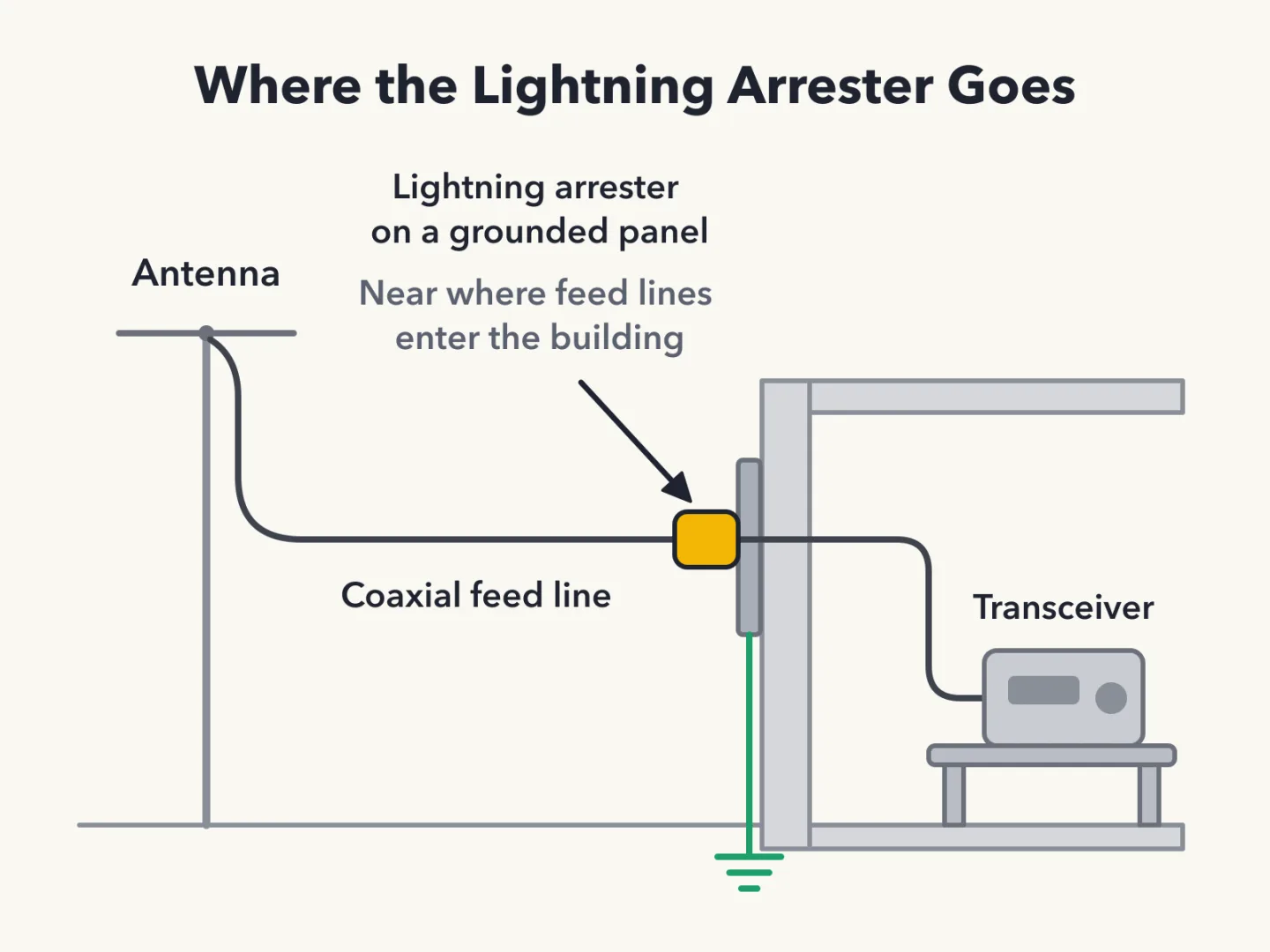
Lightning protection and grounds. A lightning arrester in a coaxial feed line is installed on a grounded panel near where the feed lines enter the building.
All external ground rods and earth connections should be bonded together with heavy wire or conductive strap.
Taken together, these points describe a protected station. The wiring is fused on the hot lead and grounded through three-wire cords. The supply is discharged before anyone works inside it. The feed lines are protected by an arrester at the building entrance, and the ground connections are bonded into one system.
Sources
Antenna and tower safety
Climbing. Three things are required when climbing an antenna tower, and all three are correct:
- Sufficient training on safe tower climbing techniques.
- Appropriate tie-off to the tower at all times.
- An approved climbing harness, always worn.
No circumstance makes it safe to climb a tower without a helper or observer. The rule holds even when no electrical work or no mechanical work is being performed, or when the work is not more than 20 feet above the ground.
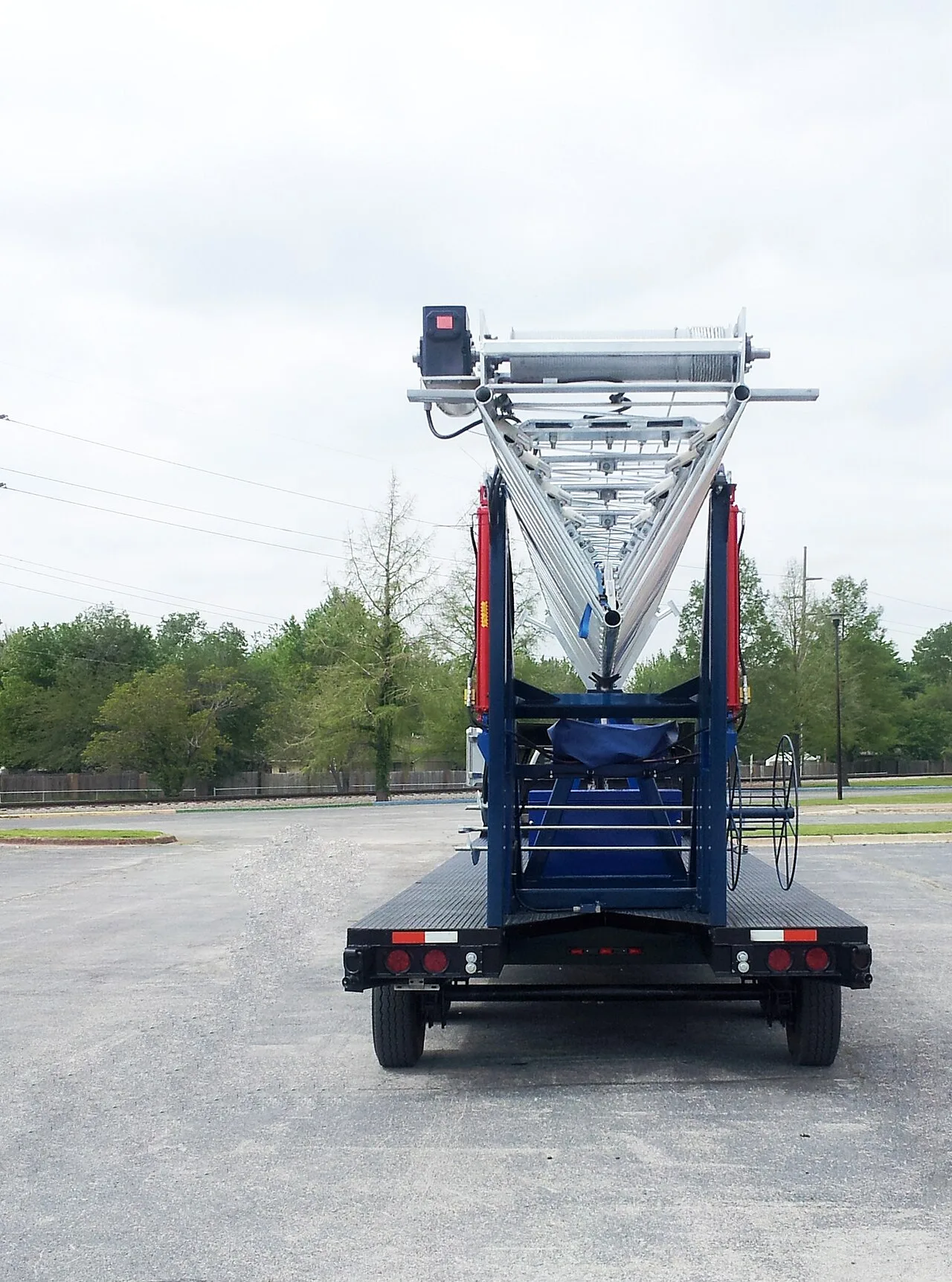
Crank-up towers. A crank-up tower must not be climbed unless it is retracted, or mechanical safety locking devices have been installed.
Overhead wires. An important precaution when putting up an antenna tower is to look for and stay clear of any overhead electrical wires.
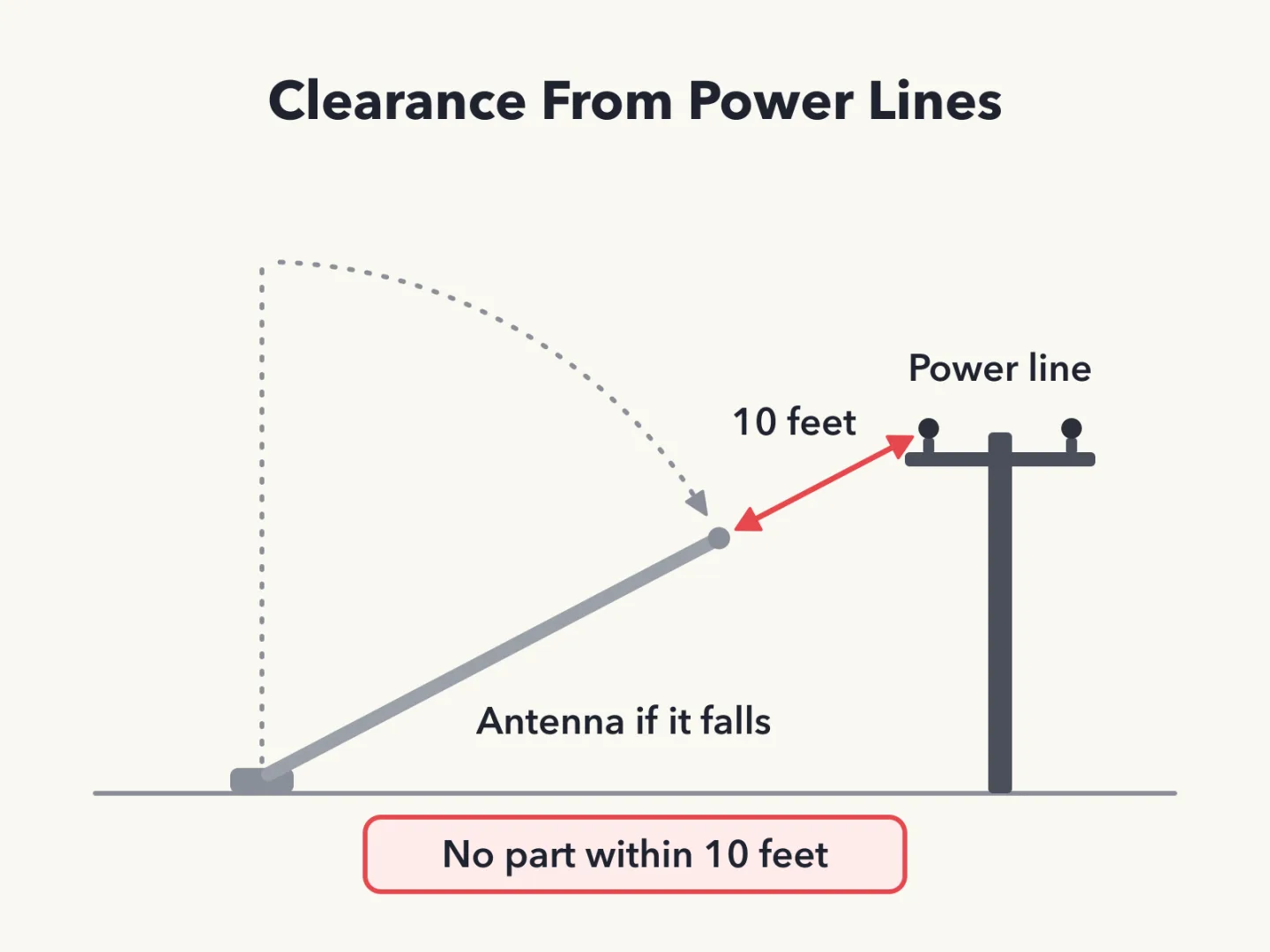
The minimum safe distance from a power line is stated as a condition on a falling antenna. Enough distance must be allowed so that if the antenna falls, no part of it can come within 10 feet of the power wires.
Utility poles. An antenna should never be attached to a utility pole, because it could contact high-voltage power lines.
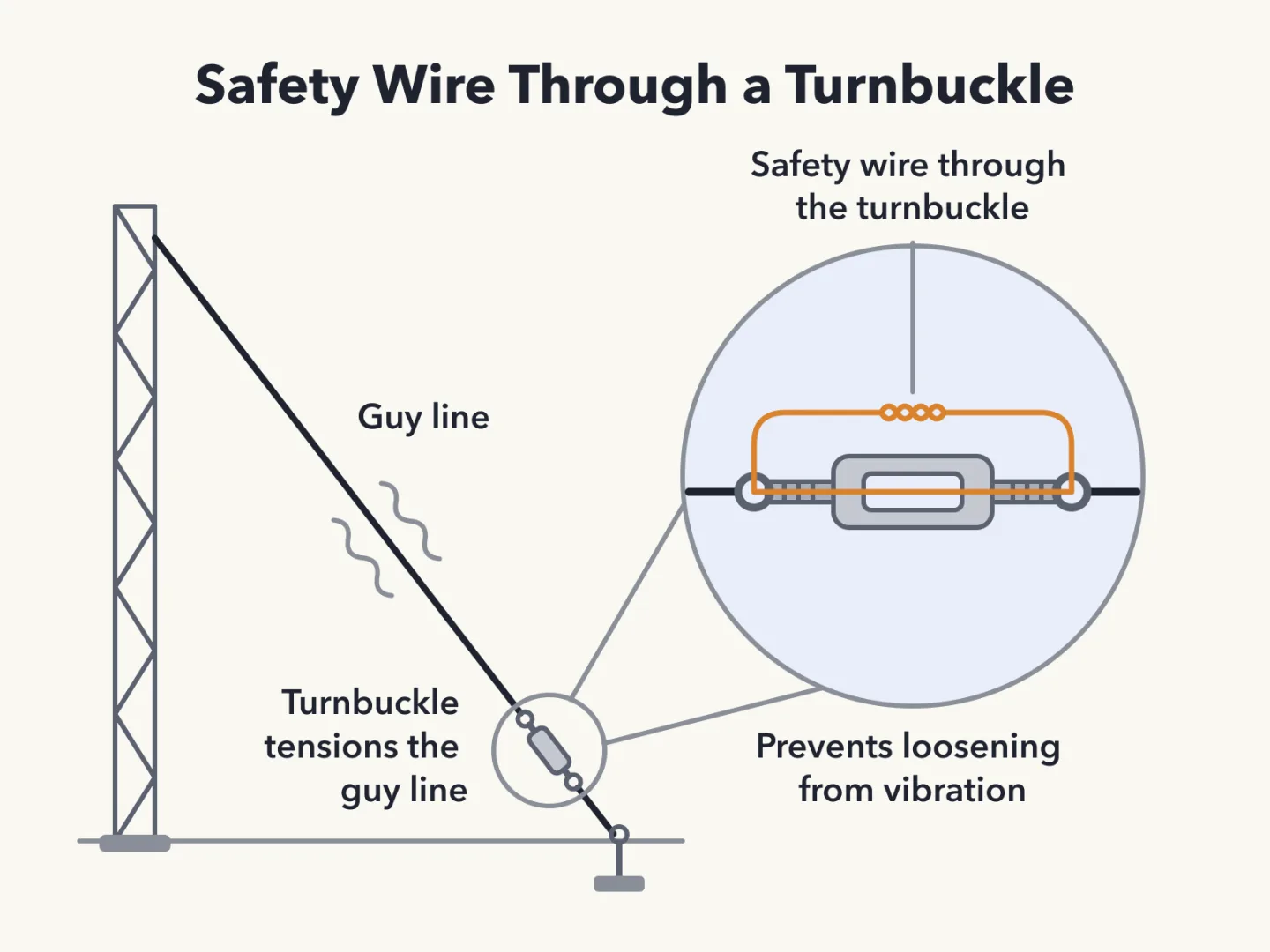
Guy-line turnbuckles. A turnbuckle is used to tension a guy line. A safety wire through it has one purpose: to prevent loosening of the turnbuckle from vibration.
Grounding conductors. For lightning protection, ground wires on a tower should have connections that are short and direct. Sharp bends must be avoided in grounding conductors.
Tower grounds. A proper grounding method for a tower is a set of separate eight-foot ground rods for each tower leg, bonded to the tower and to each other.
Who sets grounding requirements. Local electrical codes establish grounding requirements for an amateur radio tower or antenna. Federal Aviation Administration (FAA) tower lighting regulations do not set them, and neither do FCC Part 97 rules. The amateur rules define FAA as the Federal Aviation Administration (§ 97.3).
A safe tower job therefore starts before the climb. The worker checks for overhead wires and arranges a helper or observer. Training, a harness, and constant tie-off are in place, and a crank-up tower is either retracted or locked mechanically. The installation itself uses safety-wired turnbuckles and short, direct ground wires. It also uses bonded ground rods at each leg, built to local electrical codes.
Sources
Radio frequency exposure
What kind of radiation. Radio signals are non-ionizing radiation. RF radiation does not have sufficient energy to cause chemical changes in cells and damage DNA, which separates it from ionizing radiation (radioactivity). That does not make it harmless: exposure is still limited by FCC rules.
What affects exposure. The RF exposure of people near an amateur station antenna depends on three factors, and all three are correct:
- The frequency and power level of the RF field.
- The distance from the antenna to a person.
- The radiation pattern of the antenna.
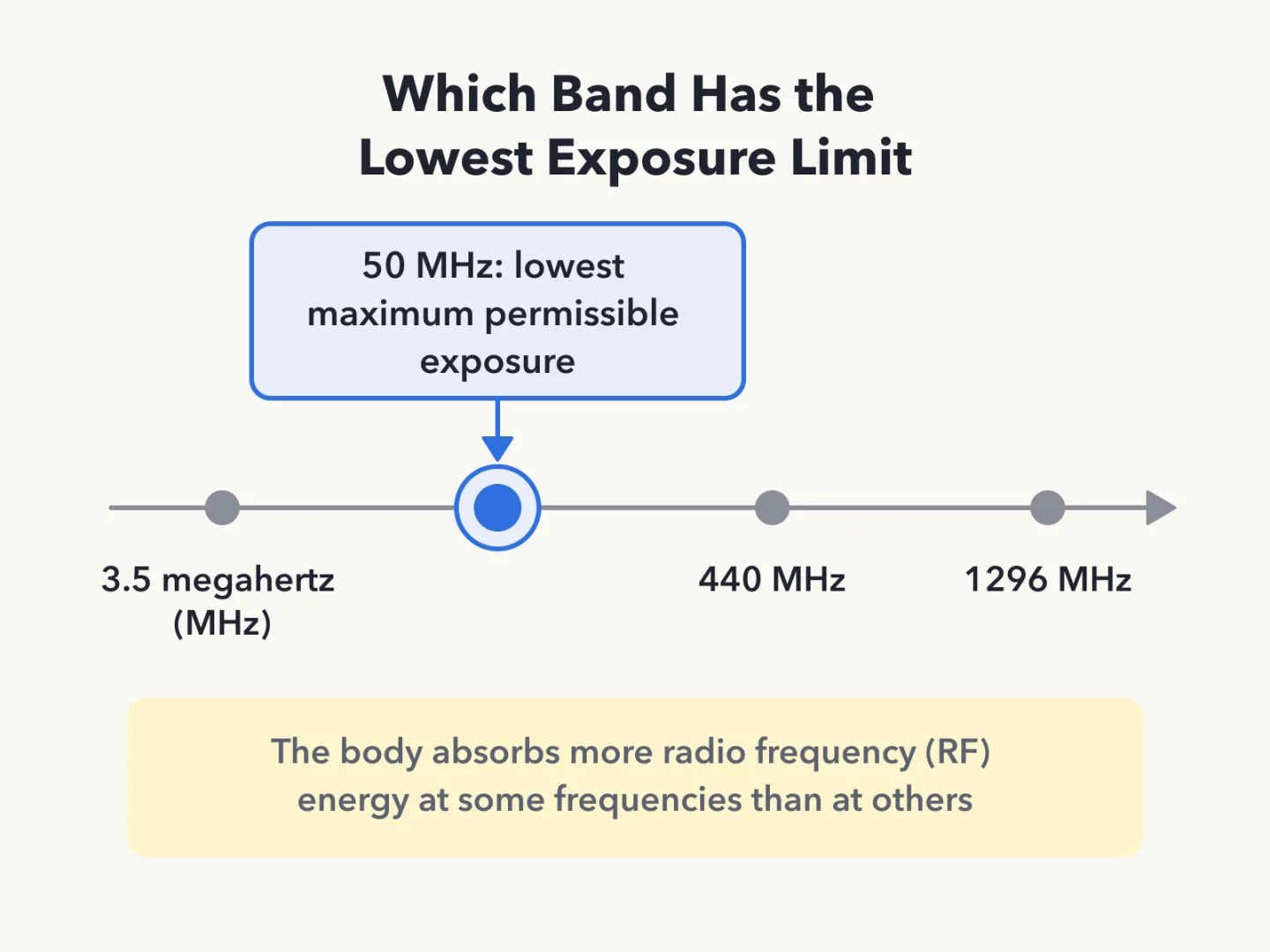
Frequency and limits. Exposure limits vary with frequency because the human body absorbs more RF energy at some frequencies than at others.
Among the bands 3.5 megahertz (MHz), 50 MHz, 440 MHz, and 1296 MHz, the 50 MHz band has the lowest maximum permissible exposure for RF safety.
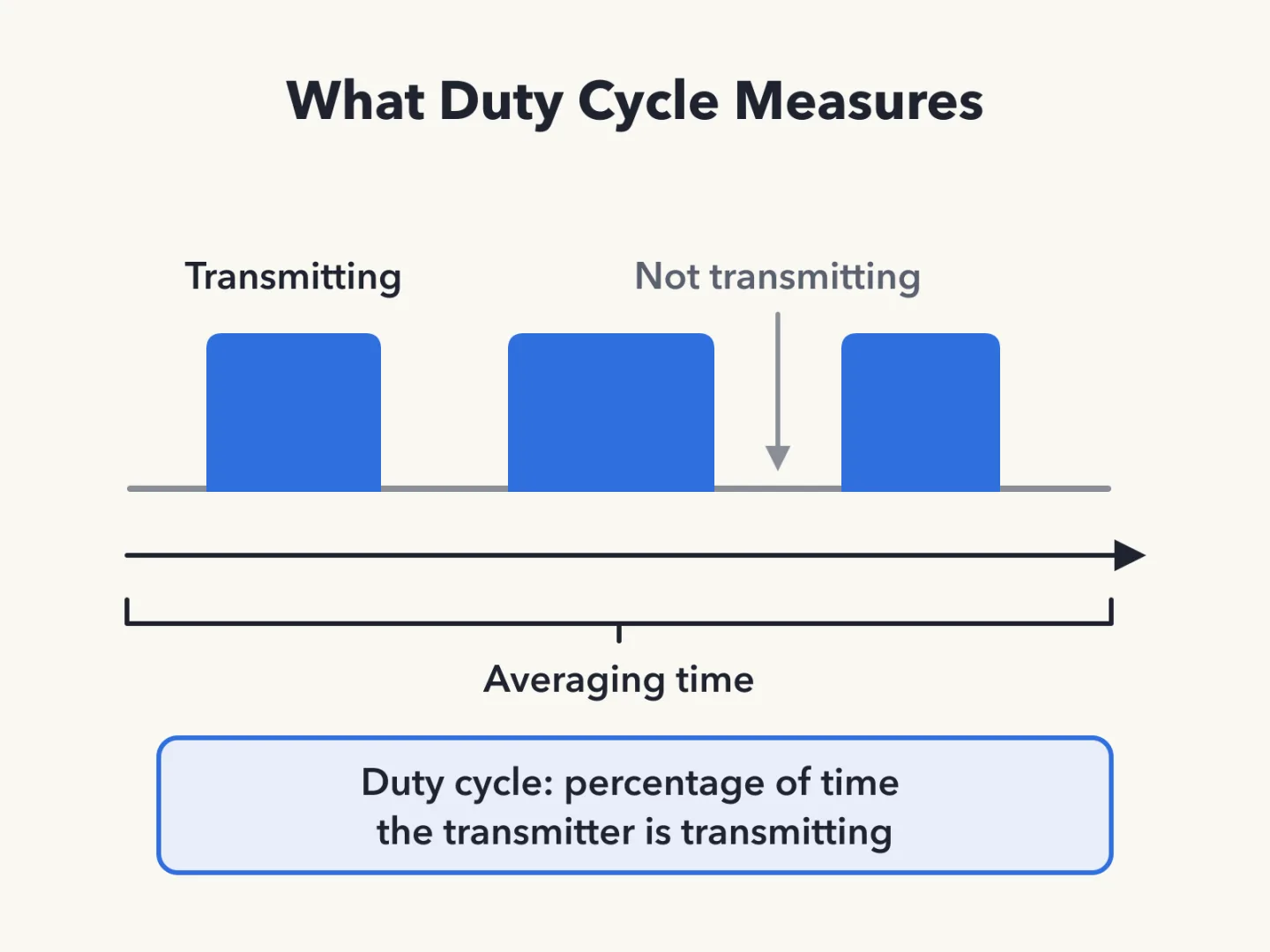
Duty cycle. Duty cycle during the averaging time for RF exposure is the percentage of time that a transmitter is transmitting. It is one of the factors used to determine safe exposure levels because it affects the average exposure to radiation.
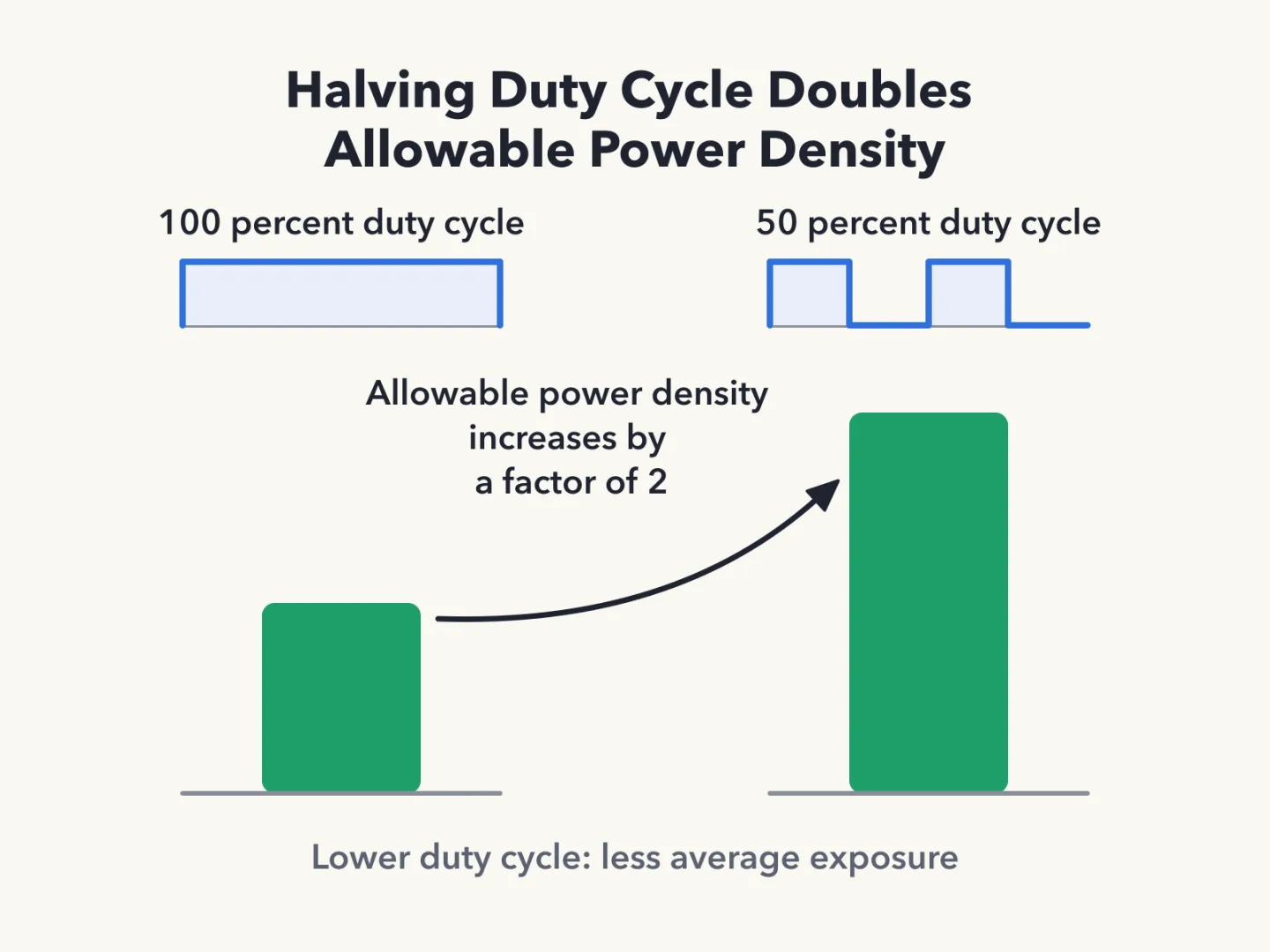
A lower duty cycle means less average exposure. When duty cycle changes from 100 percent to 50 percent, the allowable power density for RF safety increases by a factor of 2. Adjustment for a lower duty cycle is allowed.
RF burns. Touching an antenna during a transmission creates the hazard of an RF burn to skin.
Showing compliance. Any of three methods is acceptable to determine whether a station complies with FCC RF exposure regulations, and all three are correct:
- Calculation based on FCC Office of Engineering and Technology (OET) Bulletin 65.
- Calculation based on computer modeling.
- Measurement of field strength using calibrated equipment.
Staying in compliance. A station stays in compliance by re-evaluating it whenever an item in the transmitter or antenna system is changed.
Reducing exposure. Relocating antennas can reduce exposure to RF radiation.
Responsibility. The station licensee is responsible for ensuring that no person is exposed to RF energy above the FCC exposure limits.
In practice, a licensee considers the frequency, power, distance, and antenna pattern, and accounts for duty cycle when averaging. The licensee then checks compliance by calculation, modeling, or measurement. A change to the transmitter or antenna calls for a fresh evaluation, and if exposure is too high, relocating an antenna is one way to lower it.
Sources
Key terms
- FAA
- Federal Aviation Administration
Key facts
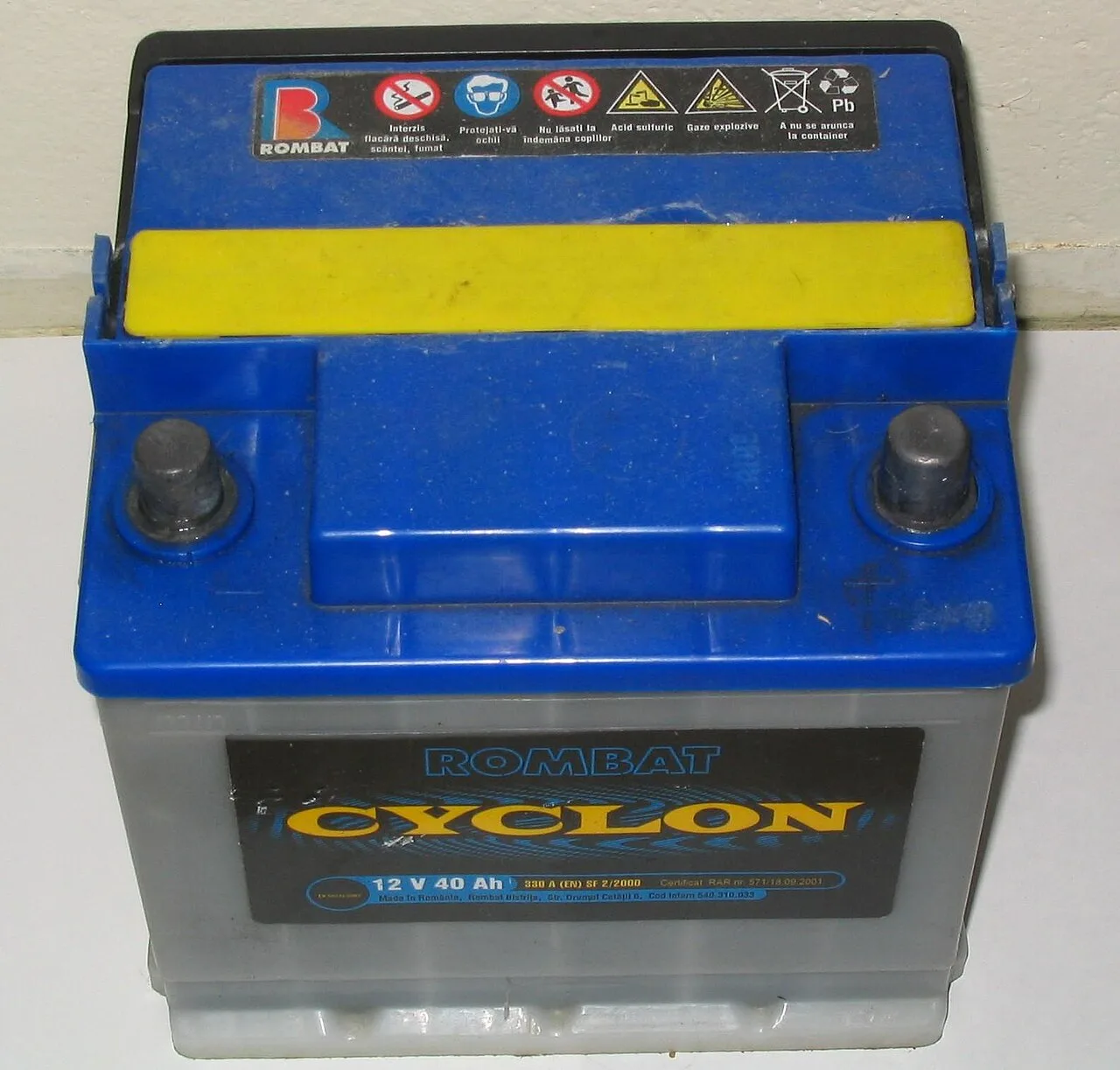
Shorted Battery Terminals
A 12-volt storage battery that lacks internal protection circuitry is a hazard. Shorting the terminals can cause burns, fire, or an explosion.
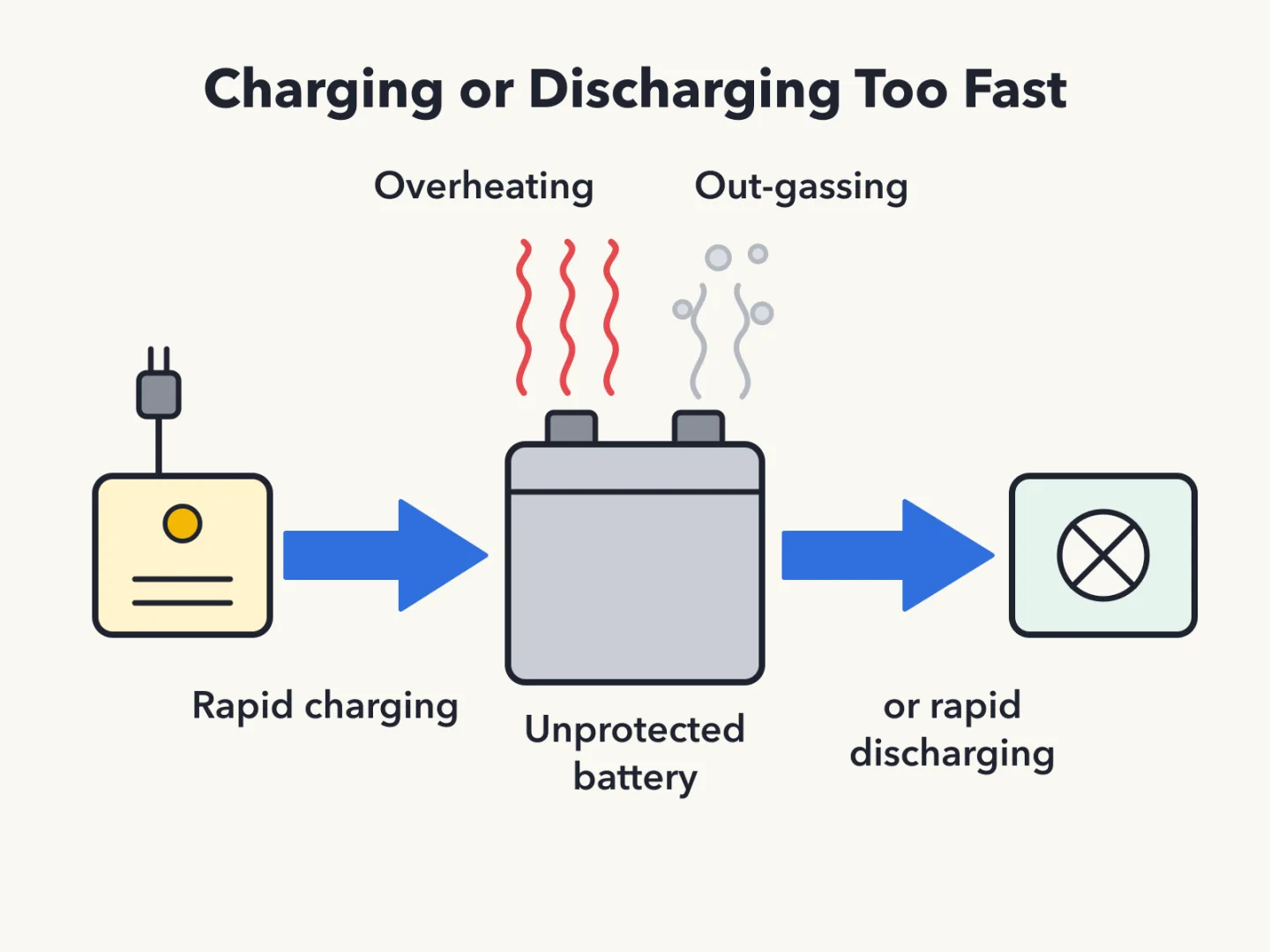
Fast Charging Hazard
Rapidly charging or discharging an unprotected battery carries a hazard of overheating or out-gassing. It is a related risk to shorting the terminals.
Current Through the Body
Electrical current flowing through the body is a health hazard in three ways. It may cause injury by heating body tissue. It may disrupt the electrical functions of cells. It may also cause involuntary muscle contractions.
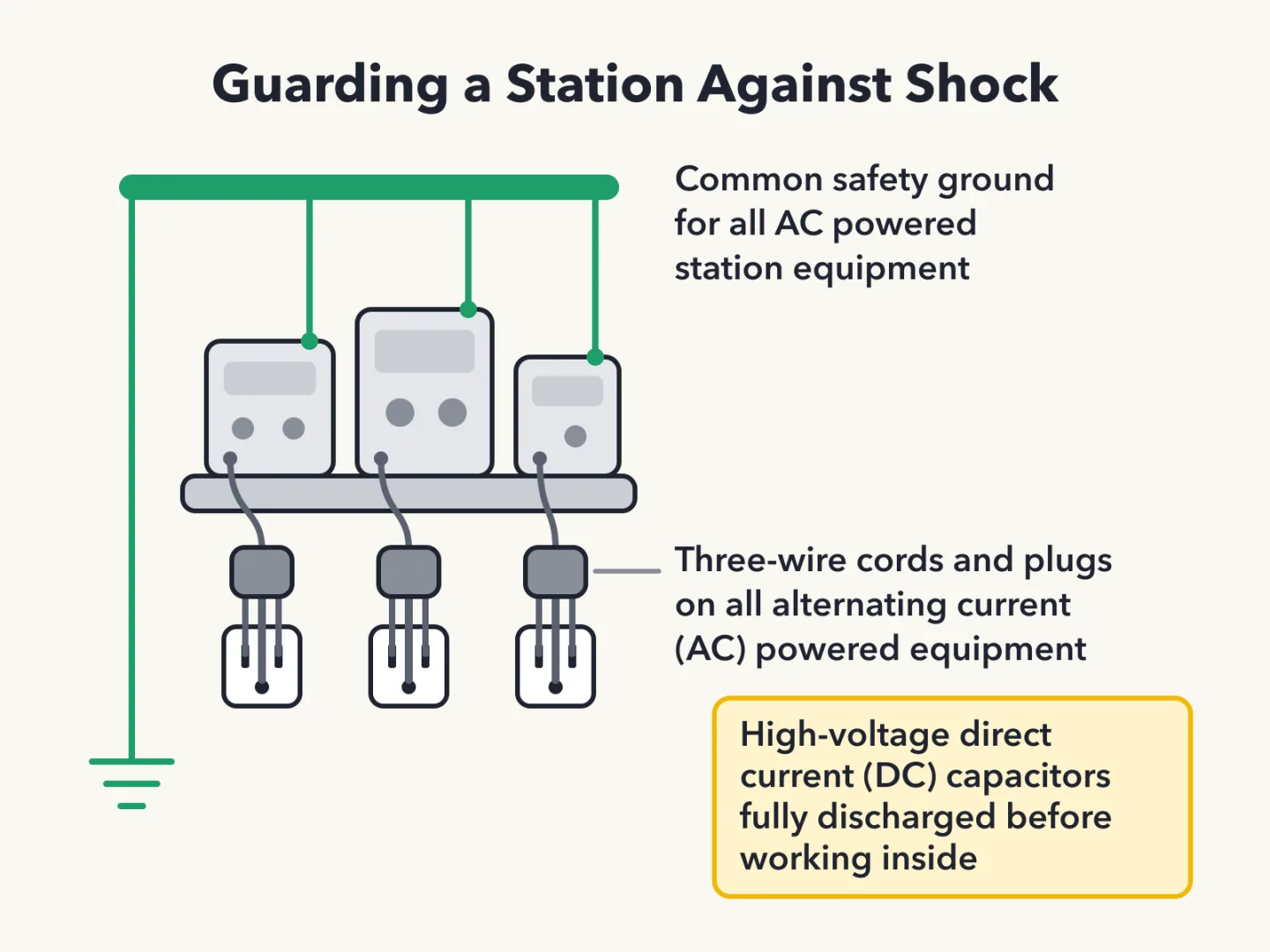
Three Ways to Guard Against Shock
Use three-wire cords and plugs for all alternating current (AC) powered equipment. Connect all AC powered station equipment to a common safety ground. Ensure that capacitors used for high-voltage direct current (DC) are fully discharged before working inside equipment.
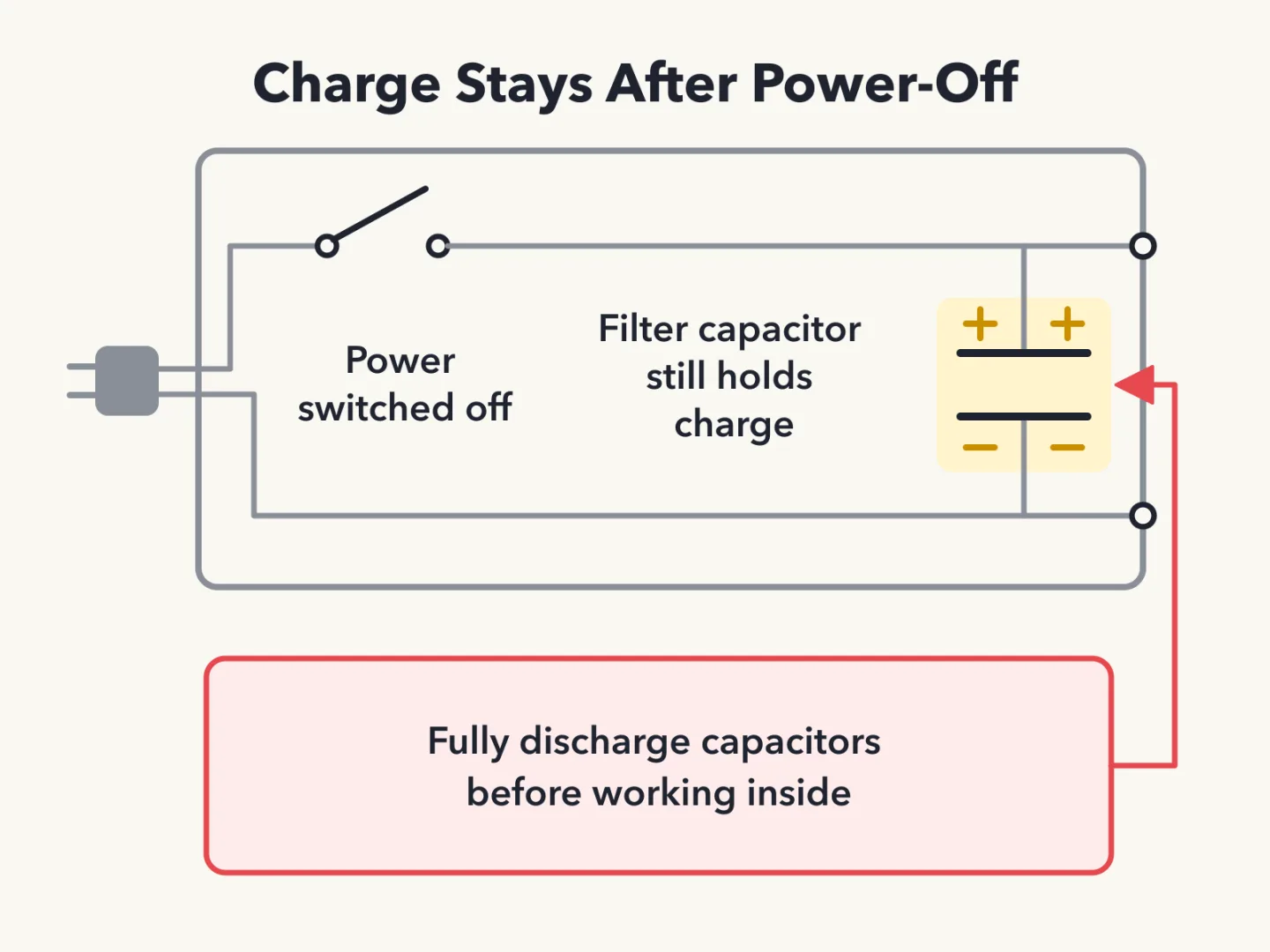
Danger After Power-Off
A power supply is not safe the instant it is turned off. The hazard that remains is charge stored in its filter capacitors. Capacitors must be fully discharged before anyone works inside the equipment.
Measuring High Voltage
When measuring high voltages, the key precaution is to ensure that the voltmeter and its leads are rated for the voltages being measured.
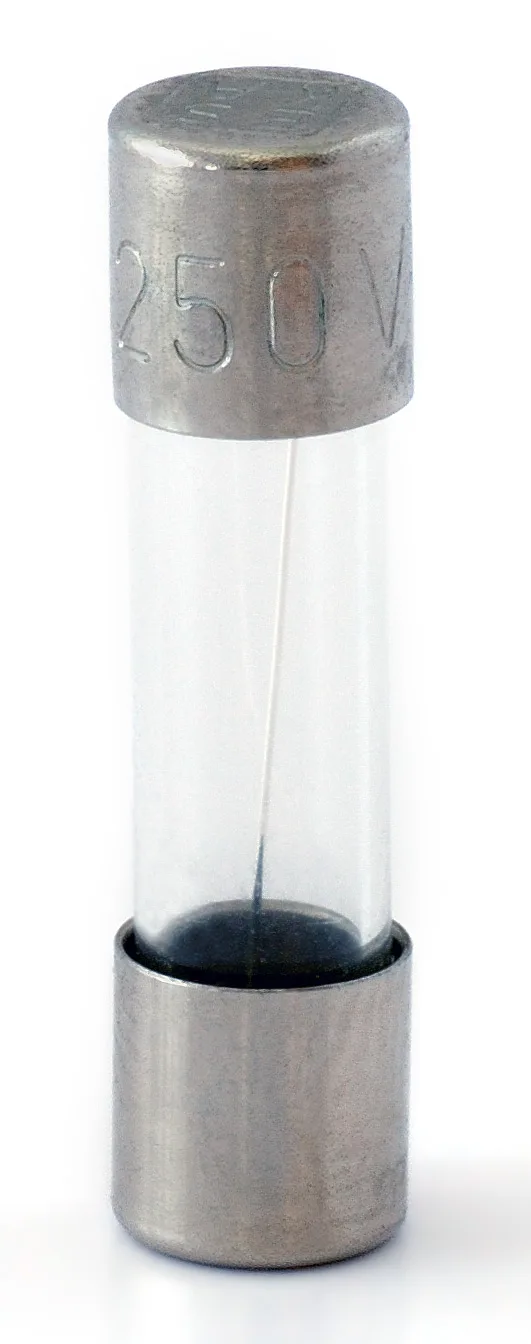
What a Fuse Does
A fuse exists to remove power in case of an overload.
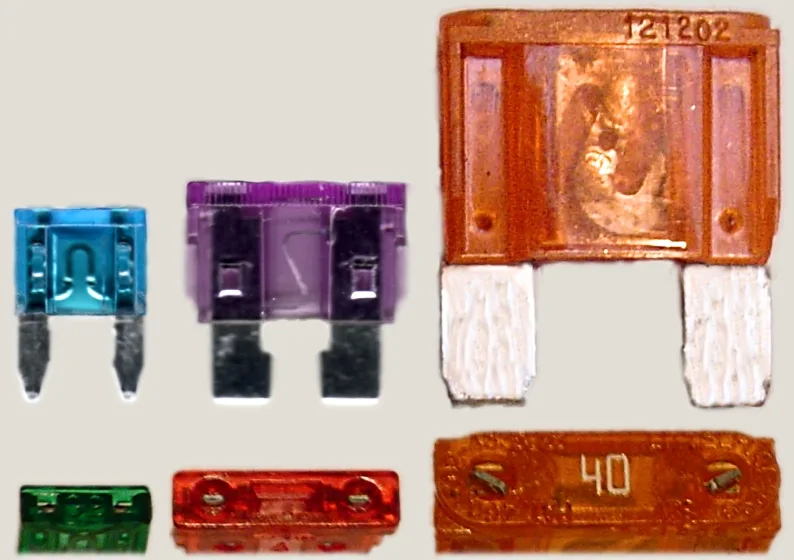
Never Upsize a Fuse
A 5-ampere fuse should never be replaced with a 20-ampere fuse, because excessive current could cause a fire. The larger fuse allows more current than the circuit was protected for.
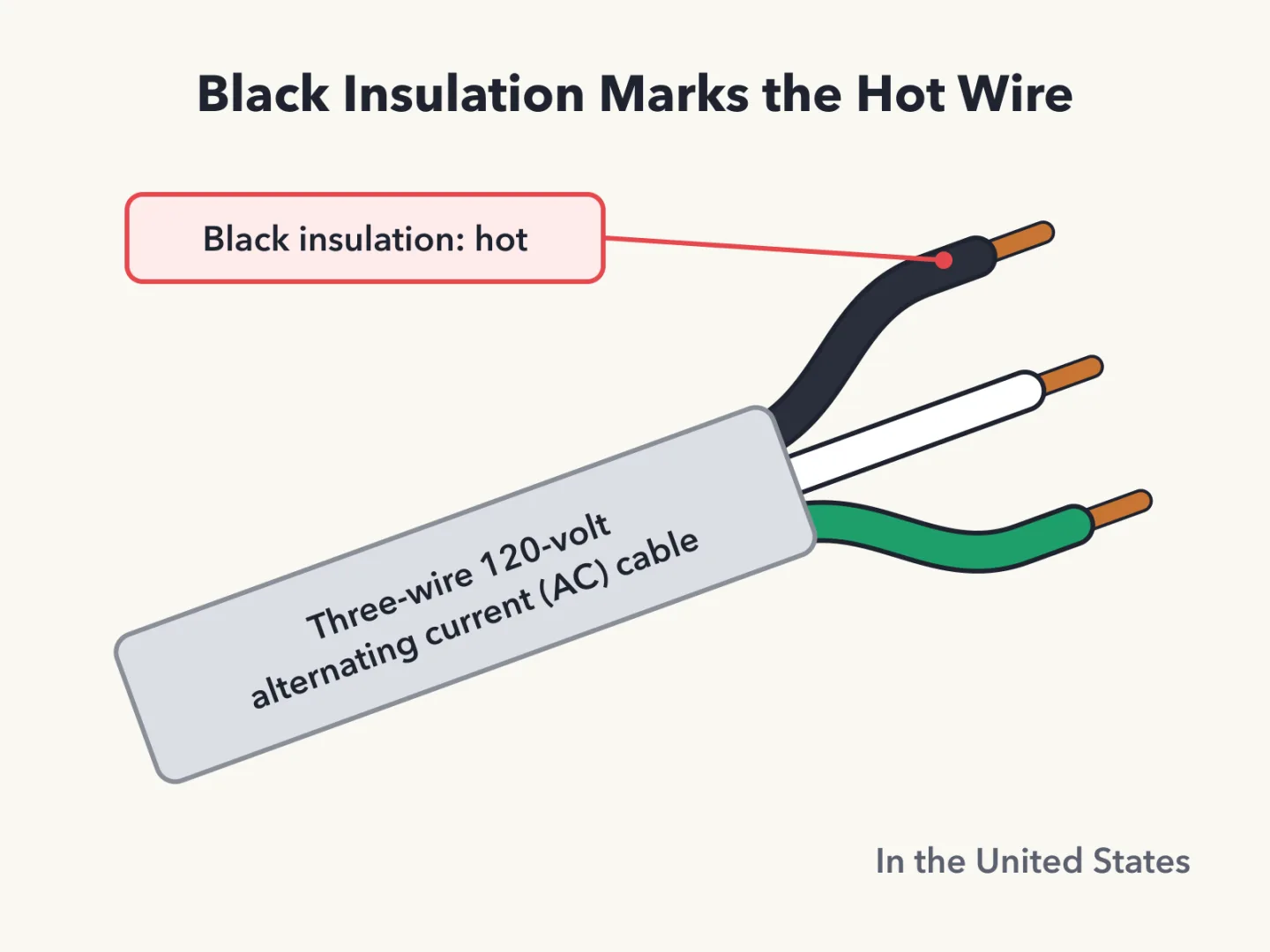
Black Wire Is Hot
In the United States, black wire insulation in a three-wire 120-volt alternating current (AC) cable indicates the hot circuit.
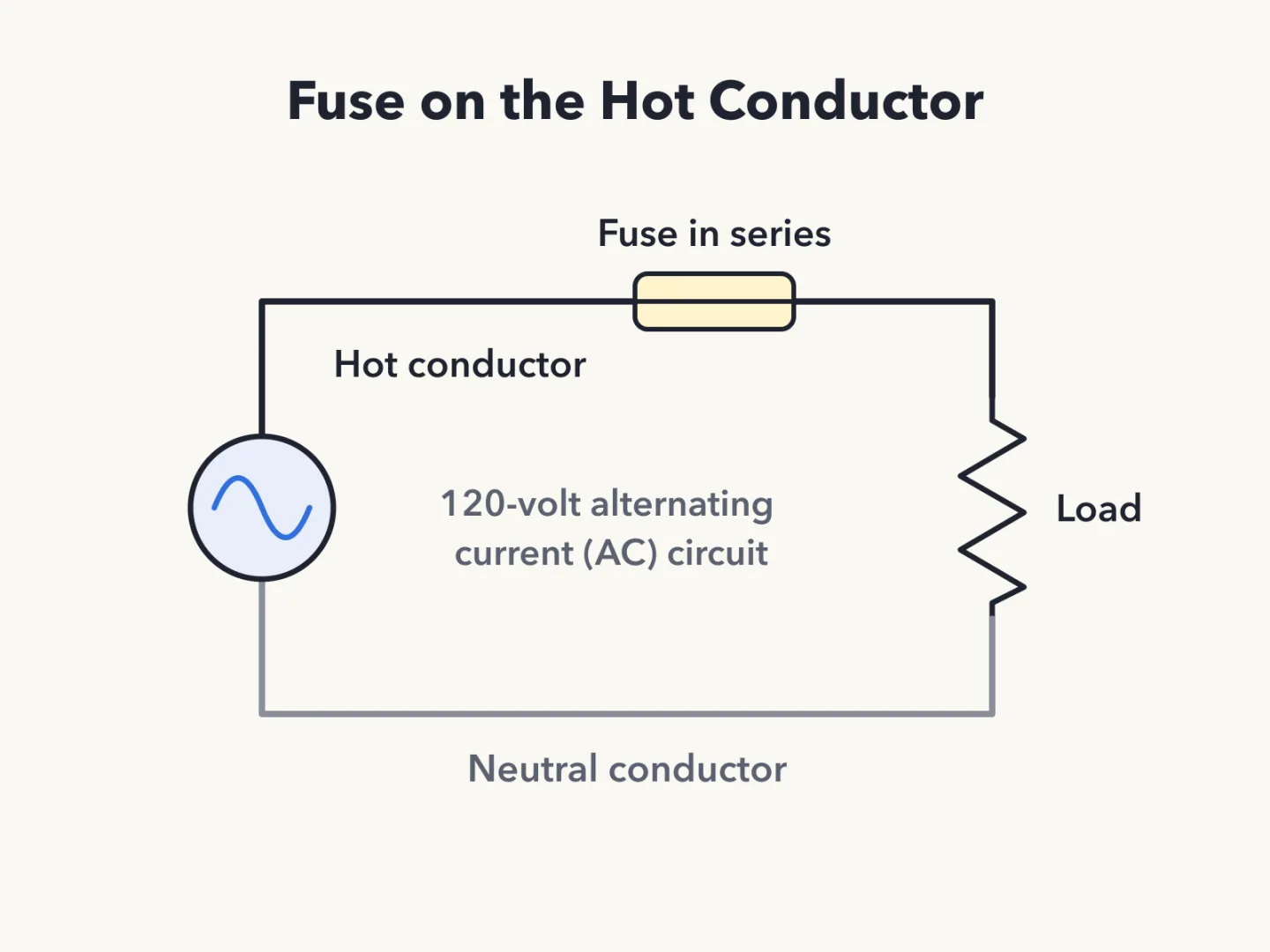
Where to Fuse 120-Volt AC
A fuse or circuit breaker in a 120-volt alternating current (AC) power circuit goes in series with the hot conductor only.
Lightning Arrester Location
A lightning arrester in a coaxial feed line is installed on a grounded panel near where the feed lines enter the building.
Bond All Ground Rods
All external ground rods and earth connections should be bonded together with heavy wire or conductive strap.
Short, Direct Ground Wires
For lightning protection, ground wires on a tower should have connections that are short and direct. Sharp bends must be avoided.
Requirements for Climbing
Three things are required when climbing an antenna tower. The climber needs sufficient training on safe climbing techniques. Appropriate tie-off to the tower is needed at all times. An approved climbing harness must always be worn.
Never Climb Without a Helper
No circumstance makes it safe to climb a tower without a helper or observer. Doing no electrical work, doing no mechanical work, or working no more than 20 feet up does not change this.
Watch for Overhead Wires
An important precaution when putting up an antenna tower is to look for and stay clear of any overhead electrical wires.
Turnbuckle Safety Wire
A turnbuckle is used to tension a guy line. A safety wire through it has one purpose: to prevent loosening of the turnbuckle from vibration.
Distance From Power Lines
The minimum safe distance from a power line is a condition on a falling antenna. Enough distance must be allowed so that if the antenna falls, no part of it can come within 10 feet of the power wires.
Crank-Up Tower Rule
A crank-up tower must not be climbed unless it is retracted, or mechanical safety locking devices have been installed.
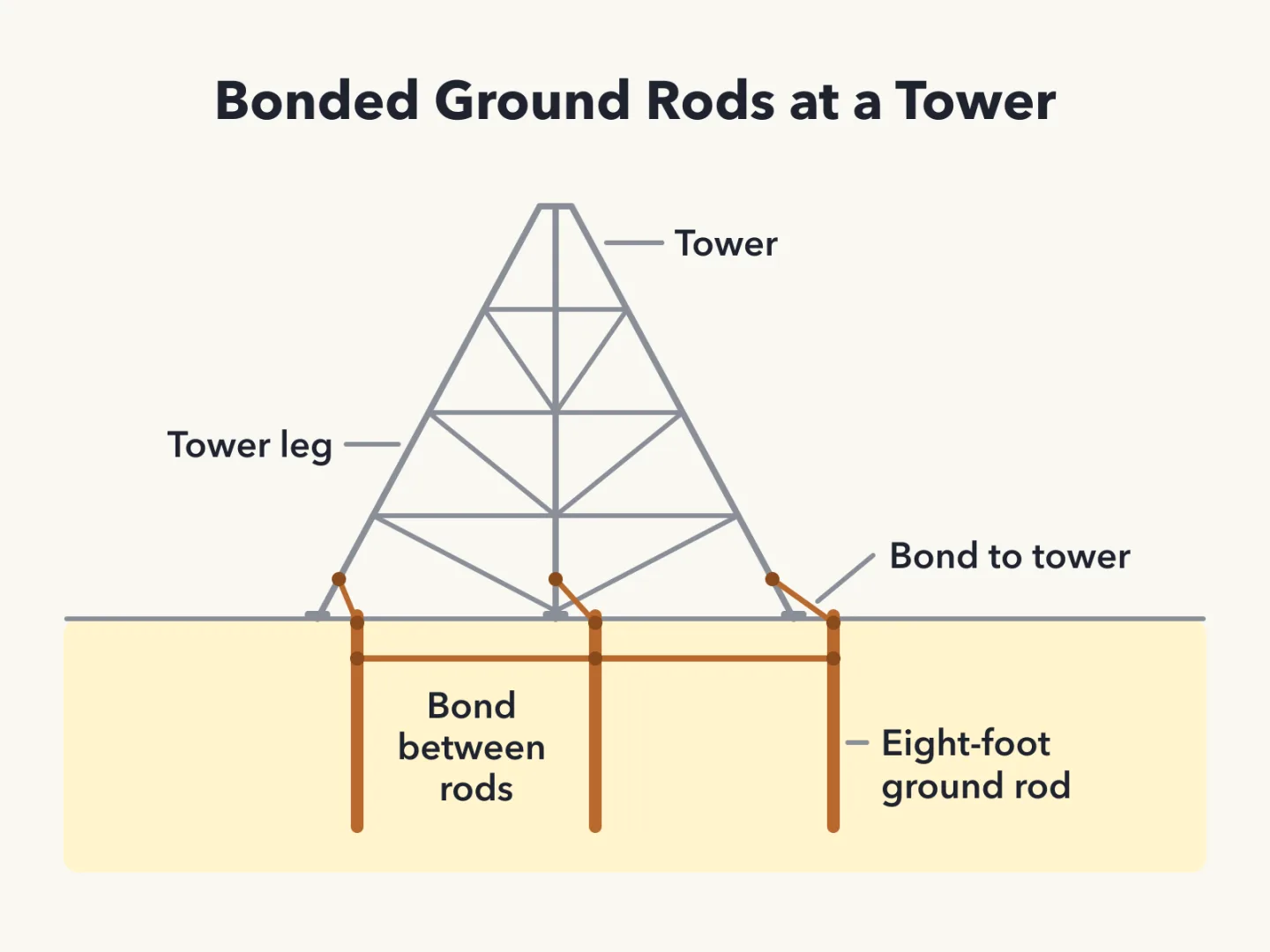
Grounding a Tower
A proper grounding method for a tower is a set of separate eight-foot ground rods for each tower leg, bonded to the tower and to each other.
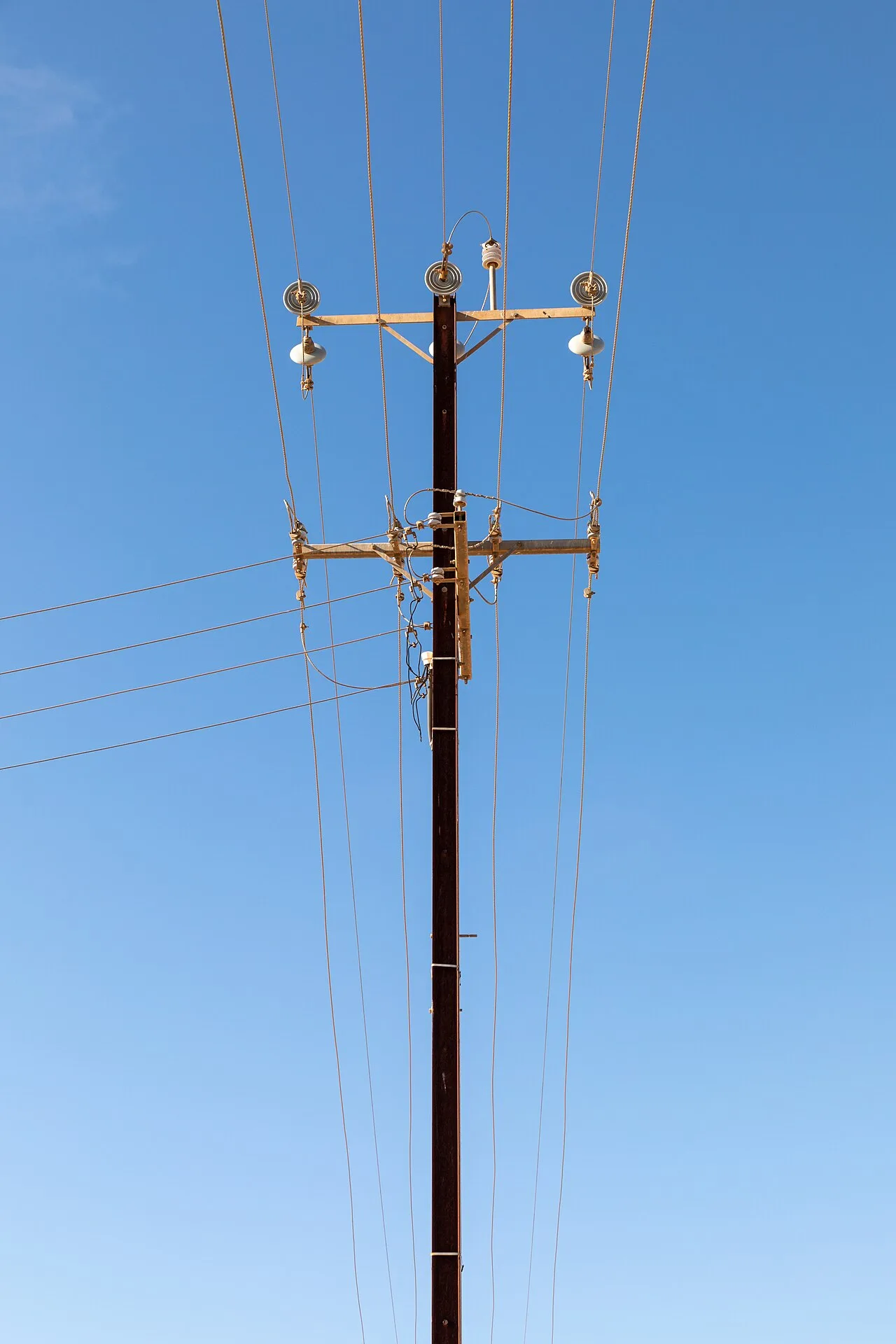
No Antennas on Utility Poles
An antenna should never be attached to a utility pole, because it could contact high-voltage power lines.
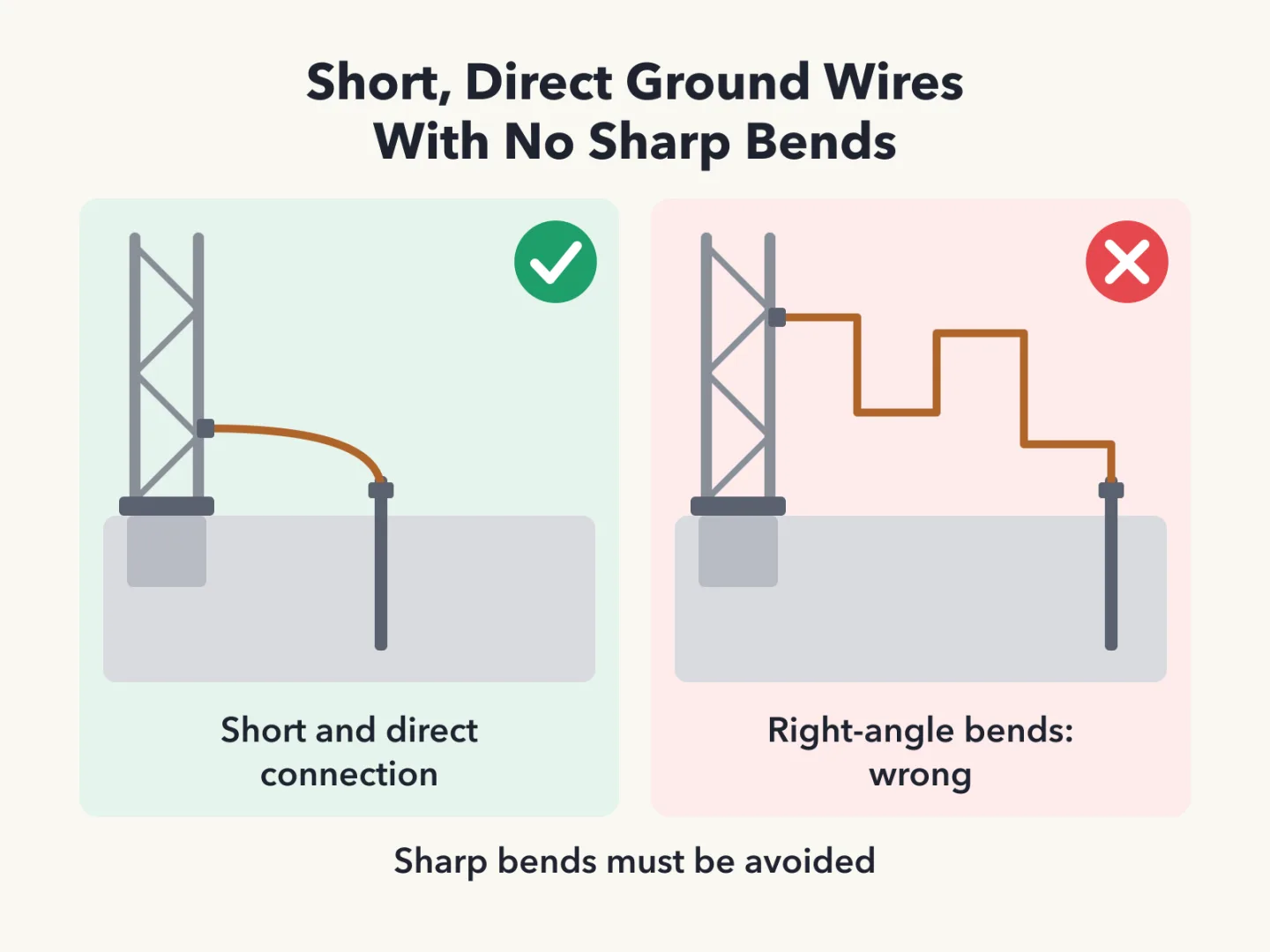
Avoid Sharp Bends
Sharp bends must be avoided in grounding conductors used for lightning protection.
Who Sets Grounding Rules
Local electrical codes establish grounding requirements for an amateur radio tower or antenna.
Radio Signals Are Non-Ionizing
As non-ionizing radiation, radio signals lack the energy to cause chemical changes in cells and damage DNA, unlike ionizing radiation (radioactivity). That does not make them harmless: Federal Communications Commission rules still limit exposure.
Radio Frequency vs. Ionizing Radiation
Radio frequency (RF) radiation differs from ionizing radiation (radioactivity). It does not have sufficient energy to cause chemical changes in cells and damage DNA. That does not make it harmless, because RF exposure is still limited.
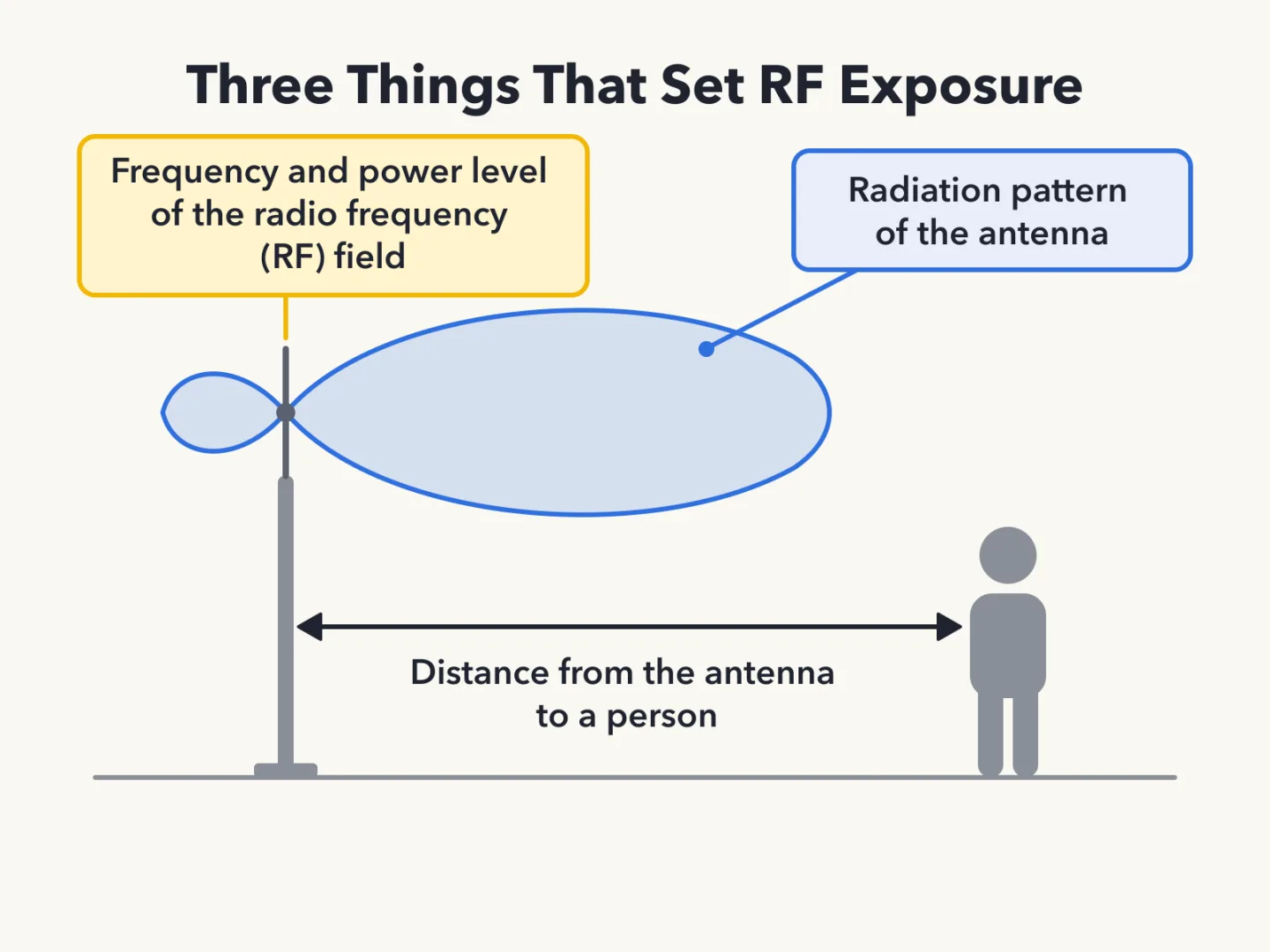
What Affects Exposure
The radio frequency (RF) exposure of people near an amateur antenna depends on three factors. These are the frequency and power level of the field, the distance from the antenna to a person, and the radiation pattern of the antenna.
Why Limits Vary With Frequency
Exposure limits vary with frequency because the human body absorbs more radio frequency (RF) energy at some frequencies than at others.
Lowest Permissible Exposure Band
Among 3.5 megahertz (MHz), 50 MHz, 440 MHz, and 1296 MHz, the 50 MHz band has the lowest maximum permissible exposure for radio frequency (RF) safety.
What Duty Cycle Means
Duty cycle during the averaging time for radio frequency (RF) exposure is the percentage of time that a transmitter is transmitting.
Why Duty Cycle Matters
Duty cycle is one of the factors used to determine safe radio frequency (RF) exposure levels. It matters because it affects the average exposure to radiation. A lower duty cycle means less average exposure.
Duty Cycle and Power Density
When duty cycle changes from 100 percent to 50 percent, the allowable power density for radio frequency (RF) safety increases by a factor of 2. An adjustment for a lower duty cycle is allowed.
Touching a Transmitting Antenna
Touching an antenna during a transmission creates the hazard of a radio frequency (RF) burn to skin.
Ways to Show Compliance
Any of three methods is acceptable to show a station complies with Federal Communications Commission (FCC) radio frequency (RF) exposure regulations. These are calculation based on FCC Office of Engineering and Technology (OET) Bulletin 65, computer modeling, and measurement of field strength with calibrated equipment.
Staying in Compliance
A station stays in compliance by re-evaluating it whenever an item in the transmitter or antenna system is changed.
Reducing RF Exposure
Relocating antennas can reduce exposure to radio frequency (RF) radiation.
Who Is Responsible
The station licensee is responsible for ensuring that no person is exposed to radio frequency (RF) energy above the Federal Communications Commission (FCC) exposure limits.
Matched pairs
Each item on the left goes with the one on the right.
- Black 120-volt wire
- Hot, in a 120-volt alternating current (AC) cable
- Tower ground rods
- Eight feet, one per leg, bonded
- Duty cycle
- Percent of time a radio frequency (RF) transmitter transmits
Self-test
Answer each question from memory, then check your work against the answer key.
1. Which of the following is a safety hazard of a 12-volt storage battery that lacks internal protection circuitry?
- ARF emissions from a nearby transmitter can cause the electrolyte to emit poison gas
- BAll these choices are correct
- CShorting the terminals can cause burns, fire, or an explosion
- DTouching both terminals with your hands can cause electrical shock
2. What hazard exists when rapidly charging or discharging an unprotected battery?
- AExcess output ripple
- BElectric shock
- COvervoltage
- DOverheating or out-gassing
3. What health hazard is posed by electrical current flowing through the body?
- AAll these choices are correct
- BIt may cause involuntary muscle contractions
- CIt may disrupt the electrical functions of cells
- DIt may cause injury by heating body tissue
4. What is a good way to guard against electrical shock at your station?
- AConnect all AC powered station equipment to a common safety ground
- BAll these choices are correct
- CUse three-wire cords and plugs for all AC powered equipment
- DFully discharge all high-voltage DC capacitors before working inside equipment
5. What hazard exists in a power supply immediately after turning it off?
- AVoltage transients from kickback diodes
- BCharge stored in filter capacitors
- CLeakage flux in the power transformer
- DCirculating currents in the dc filter
6. Which of the following precautions should be taken when measuring high voltages with a voltmeter?
- AEnsure that the voltmeter is set to the correct frequency
- BEnsure that the voltmeter has very low impedance
- CEnsure that the circuit is grounded through the voltmeter
- DEnsure that the voltmeter and its leads are rated for use at the voltages being measured
7. What is the purpose of a fuse in an electrical circuit?
- AAll these choices are correct
- BTo limit current and prevent shocks
- CTo remove power in case of an overload
- DTo prevent power supply ripple from damaging a component
8. Why should a 5-ampere fuse never be replaced with a 20-ampere fuse?
- AExcessive current could cause a fire
- BThe power supply ripple would greatly increase
- CHigher current fuse voltage drop could result in excessively low voltage to the device
- DThe larger fuse would be likely to blow because it is rated for higher current
9. In the United States, what circuit does black wire insulation indicate in a three-wire 120 V AC cable?
- AEquipment ground
- BNeutral
- CHot
- DNegative
10. Where should a fuse or circuit breaker be installed in a 120V AC power circuit?
- AIn parallel with the hot conductor only
- BIn series with the hot and neutral conductors
- CIn parallel with the hot and neutral conductors
- DIn series with the hot conductor only
11. Where should a lightning arrester be installed in a coaxial feed line?
- AAt the output connector of a transceiver
- BOn a grounded panel near where feed lines enter the building
- CAt the AC power service panel
- DAt the antenna feed point
12. What should be done to all external ground rods or earth connections?
- ABond them together with heavy wire or conductive strap
- BWaterproof them with silicone caulk or electrical tape
- CKeep them as far apart as possible
- DTune them for resonance on the lowest frequency of operation
13. What is required when climbing an antenna tower?
- AAll these choices are correct
- BUse appropriate tie-off to the tower at all times
- CAlways wear an approved climbing harness
- DHave sufficient training on safe tower climbing techniques
14. Under what circumstances is it safe to climb a tower without a helper or observer?
- AWhen no electrical work is being performed
- BWhen the work being done is not more than 20 feet above the ground
- CWhen no mechanical work is being performed
- DNever
15. Which of the following is an important safety rule to remember when using a crank-up tower?
- AThis type of tower must never be painted
- BAll these choices are correct
- CThis type of tower can't be climbed unless retracted or mechanical safety locks are used
- DThis type of tower must never be grounded
16. Which of the following is an important safety precaution to observe when putting up an antenna tower?
- AWear a ground strap connected to your wrist at all times
- BLook for and stay clear of any overhead electrical wires
- CInsulate the base of the tower to avoid lightning strikes
- DAll these choices are correct
17. What is the minimum safe distance from a power line to allow when installing an antenna?
- A1/2 wavelength at the operating frequency
- BAdd antenna height to power line height and multiply by 1.5
- CThe height of the power line above ground
- DEnough that a falling antenna cannot come within 10 feet of the power wires
18. Why should you avoid attaching an antenna to a utility pole?
- AAll these choices are correct
- BThe antenna will not work properly because of induced voltages
- CThe antenna could contact high-voltage power lines
- DThe antenna may unbalance the power transformer, causing power fluctuations
19. Which of the following is good practice when installing ground wires on a tower for lightning protection?
- AEnsure that connections are short and direct
- BPut a drip loop in the ground connection to prevent water damage to the ground system
- CMake sure all ground wire bends are right angles
- DAll these choices are correct
20. Which of the following is true when installing grounding conductors used for lightning protection?
- AWires must be carefully routed with precise right-angle bends
- BSharp bends must be avoided
- CUse only non-insulated wire
- DCommon grounds must be avoided
21. Which is a proper grounding method for a tower?
- AA ferrite-core RF choke connected between the tower and ground
- BA connection between the tower base and a cold-water pipe
- CA single four-foot ground rod, driven into the ground no more than 12 inches from the base
- DSeparate eight-foot ground rods for each tower leg, bonded to the tower and each other
22. Which of the following establishes grounding requirements for an amateur radio tower or antenna?
- ALocal electrical codes
- BFCC Part 97 rules
- CUL recommended practices
- DFAA tower lighting regulations
23. What is the purpose of a safety wire through a turnbuckle used to tension guy lines?
- ASecure the guy line if the turnbuckle breaks
- BPrevent loosening of the turnbuckle from vibration
- CProvide a ground path for lightning strikes
- DProvide an ability to measure for proper tensioning
24. What type of radiation are radio signals?
- AIonizing radiation
- BGamma radiation
- CNon-ionizing radiation
- DAlpha radiation
25. How does RF radiation differ from ionizing radiation (radioactivity)?
- ARF radiation is limited in range to a few feet
- BRF radiation lacks enough energy to cause chemical changes in cells and damage DNA
- CRF radiation can only be detected with an RF dosimeter
- DRF radiation is perfectly safe
26. Which of the following bands has the lowest maximum permissible exposure for RF safety?
- A3.5 MHz
- B440 MHz
- C1296 MHz
- D50 MHz
27. Why do exposure limits vary with frequency?
- AThe human body absorbs more RF energy at some frequencies than at others
- BHigher frequency RF fields are transient in nature
- CLower frequency RF fields do not penetrate the human body
- DLower frequency RF fields have more energy than higher frequency fields
28. What factors affect the RF exposure of people near an amateur station antenna?
- ADistance from the antenna to a person
- BFrequency and power level of the RF field
- CAll these choices are correct
- DRadiation pattern of the antenna
29. What hazard is created by touching an antenna during a transmission?
- ARF burn to skin
- BAll these choices are correct
- CExposure to ionizing radiation
- DElectrocution
30. How does the allowable power density for RF safety change if duty cycle changes from 100 percent to 50 percent?
- AThere is no adjustment allowed for lower duty cycle
- BIt increases by a factor of 3
- CIt decreases by 50 percent
- DIt increases by a factor of 2
31. Why is duty cycle one of the factors used to determine safe RF radiation exposure levels?
- AIt affects the peak exposure to radiation
- BIt affects the average exposure to radiation
- CIt takes into account the antenna feed line loss
- DIt takes into account the thermal effects of the final amplifier
32. What is the definition of duty cycle during the averaging time for RF exposure?
- AThe difference between the lowest and highest power output of a transmitter
- BThe percentage of time that a transmitter is not transmitting
- CThe percentage of time that a transmitter is transmitting
- DThe difference between the PEP and the average power output of a transmitter
33. Which of the following is an acceptable method to determine whether your station complies with FCC RF exposure regulations?
- AAll these choices are correct
- BBy measurement of field strength using calibrated equipment
- CBy calculation based on FCC OET Bulletin 65
- DBy calculation based on computer modeling
34. How can you make sure your station stays in compliance with RF safety regulations?
- ABy informing the FCC of any changes made in your station
- BBy making sure your antennas have low SWR
- CBy using only Underwriter Laboratories approved transmitting equipment
- DBy re-evaluating the station whenever an item in the transmitter or antenna system changes
35. Which of the following actions can reduce exposure to RF radiation?
- AIncrease the duty cycle
- BAll these choices are correct
- CRelocate antennas
- DRelocate the transmitter
36. Who is responsible for ensuring that no person is exposed to RF energy above the FCC exposure limits?
- AThe FCC
- BThe station licensee
- CAnyone who is near an antenna
- DThe local zoning board
Go deeper
- ListenLesson 15 episode
- WatchStored Charge After Switch-Off You switch off a power supply and assume it is safe to open. It isn't, not yet.
- WatchThe Helper Rule for Tower Climbs Could you climb a tower alone, if the job is small? Never. Not without a helper.
- StudyHam Radio Technician License in the FlashFeed app
Answer key
- 1. C Shorting the terminals can cause burns, fire, or an explosionShorting the terminals of an unprotected 12-volt battery can cause burns, fire, or an explosion. Touching both terminals is not the hazard named. RF stands for radio frequency.
- 2. D Overheating or out-gassingRapid charging or discharging of an unprotected battery risks overheating or out-gassing.
- 3. A All these choices are correctCurrent can heat tissue, disrupt the electrical functions of cells, and cause involuntary muscle contractions. All three are real.
- 4. B All these choices are correctThree-wire cords, a common safety ground, and fully discharged high-voltage capacitors are all good shock precautions. AC stands for alternating current and DC stands for direct current.
- 5. B Charge stored in filter capacitorsTurning a supply off does not remove charge stored in its filter capacitors.
- 6. D Ensure that the voltmeter and its leads are rated for use at the voltages being measuredThe meter and its leads must be rated for the voltages measured. Low impedance, grounding through the meter, or a frequency setting are not the precautions.
- 7. C To remove power in case of an overloadA fuse removes power in case of an overload. It does not limit current to prevent shocks or stop ripple.
- 8. A Excessive current could cause a fireA 20-ampere fuse allows more current than the circuit was protected for, so excessive current could cause a fire.
- 9. C HotIn the United States, black insulation in a three-wire 120-volt alternating current (AC) cable marks the hot circuit.
- 10. D In series with the hot conductor onlyThe fuse or breaker goes in series with the hot conductor only, not both conductors and not in parallel. AC stands for alternating current.
- 11. B On a grounded panel near where feed lines enter the buildingThe arrester sits on a grounded panel near where the feed lines enter the building, not at the transceiver, feed point, or alternating current (AC) panel.
- 12. A Bond them together with heavy wire or conductive strapExternal ground rods and earth connections are bonded together with heavy wire or conductive strap.
- 13. A All these choices are correctTraining, constant tie-off, and an approved harness are all required when climbing a tower.
- 14. D NeverNo circumstance makes solo climbing safe. Doing no electrical or mechanical work, or working no more than 20 feet up, does not change that.
- 15. C This type of tower can't be climbed unless retracted or mechanical safety locks are usedA crank-up tower may be climbed only when retracted or when mechanical safety locking devices are installed.
- 16. B Look for and stay clear of any overhead electrical wiresLooking for and staying clear of overhead electrical wires is the precaution. A wrist strap and insulated base are not.
- 17. D Enough that a falling antenna cannot come within 10 feet of the power wiresThe distance must keep every part of a fallen antenna at least 10 feet from the power wires.
- 18. C The antenna could contact high-voltage power linesAn antenna on a utility pole could contact high-voltage power lines.
- 19. A Ensure that connections are short and directLightning ground wires should have short, direct connections, and right-angle bends are not good practice.
- 20. B Sharp bends must be avoidedSharp bends must be avoided in grounding conductors for lightning protection.
- 21. D Separate eight-foot ground rods for each tower leg, bonded to the tower and each otherSeparate eight-foot rods at each tower leg, bonded to the tower and each other, are a proper method. RF stands for radio frequency.
- 22. A Local electrical codesLocal electrical codes set tower grounding requirements, not Part 97, Federal Aviation Administration (FAA) lighting rules, or Underwriters Laboratories (UL) practices. FCC stands for Federal Communications Commission.
- 23. B Prevent loosening of the turnbuckle from vibrationThe safety wire prevents loosening of the turnbuckle from vibration. It is not a backup, ground path, or tension gauge.
- 24. C Non-ionizing radiationRadio signals are non-ionizing radiation, unlike gamma or alpha radiation.
- 25. B RF radiation lacks enough energy to cause chemical changes in cells and damage DNARadio frequency (RF) lacks the energy to cause chemical changes in cells and damage DNA, though it is not called perfectly safe.
- 26. D 50 MHzOf the listed bands, 50 MHz has the lowest maximum permissible exposure. RF stands for radio frequency.
- 27. A The human body absorbs more RF energy at some frequencies than at othersLimits vary because the body absorbs more radio frequency (RF) energy at some frequencies than others.
- 28. C All these choices are correctFrequency and power, distance from the antenna, and antenna radiation pattern all affect exposure. RF stands for radio frequency.
- 29. A RF burn to skinTouching an antenna during transmission causes a radio frequency (RF) burn to skin, not electrocution or ionizing exposure.
- 30. D It increases by a factor of 2Going from 100 percent to 50 percent duty cycle raises allowable power density by a factor of 2. RF stands for radio frequency.
- 31. B It affects the average exposure to radiationDuty cycle matters because it affects the average exposure to radiation. RF stands for radio frequency.
- 32. C The percentage of time that a transmitter is transmittingDuty cycle is the percentage of time a transmitter is transmitting, not the time it is idle. RF stands for radio frequency and PEP stands for peak envelope power.
- 33. A All these choices are correctOffice of Engineering and Technology (OET) Bulletin 65 calculation, computer modeling, and calibrated field-strength measurement are all acceptable.
- 34. D By re-evaluating the station whenever an item in the transmitter or antenna system changesRe-evaluating whenever an item in the transmitter or antenna system is changed keeps a station compliant. RF stands for radio frequency, FCC stands for Federal Communications Commission, and SWR stands for standing wave ratio.
- 35. C Relocate antennasRelocating antennas can reduce exposure. Increasing duty cycle does not, since duty cycle affects average exposure. RF stands for radio frequency.
- 36. B The station licenseeThe station licensee is responsible for keeping everyone within the Federal Communications Commission (FCC) exposure limits. RF stands for radio frequency.
Sources
- NCVEC Question Pool Committee — 2026–2030 Technician question pool — ncvec.org/index.php/2026-2030-technician-question-pool
- FCC — 47 CFR § 97.3 Definitions — www.ecfr.gov/current/title-47/section-97.3
Image credits
- Shorted Battery Terminals: Wikimedia Commons · Shaddack · Public domain — commons.wikimedia.org/wiki/File:Photo-CarBattery.jpg
- Fast Charging Hazard: FlashFeed original diagram · CC-BY-4.0
- Three Ways to Guard Against Shock: FlashFeed original diagram · CC-BY-4.0
- Danger After Power-Off: FlashFeed original diagram · CC-BY-4.0
- What a Fuse Does: Wikimedia Commons · André Karwath aka Aka · CC BY-SA 2.5 — commons.wikimedia.org/wiki/File:Electrical_Fuse_(aka).jpg
- Never Upsize a Fuse: Wikimedia Commons · havarhen · CC BY-SA 3.0 — commons.wikimedia.org/wiki/File:Electrical_fuses,_plug-in_type,_different_sizes.jpeg
- Black Wire Is Hot: FlashFeed original diagram · CC-BY-4.0
- Where to Fuse 120-Volt AC: FlashFeed original diagram · CC-BY-4.0
- Lightning Arrester Location: FlashFeed original diagram · CC-BY-4.0
- Turnbuckle Safety Wire: FlashFeed original diagram · CC-BY-4.0
- Distance From Power Lines: FlashFeed original diagram · CC-BY-4.0
- Crank-Up Tower Rule: Wikimedia Commons · Eclypes2008 · CC BY-SA 3.0 — commons.wikimedia.org/wiki/File:120_cell_on_wheels_crank_up_tower.jpg
- Grounding a Tower: FlashFeed original diagram · CC-BY-4.0
- No Antennas on Utility Poles: Wikimedia Commons · Dietmar Rabich · CC BY-SA 4.0 — commons.wikimedia.org/wiki/File:Rawlinna_(AU),_Utility_Pole_--_2019_--_0621.jpg
- Avoid Sharp Bends: FlashFeed original diagram · CC-BY-4.0
- What Affects Exposure: FlashFeed original diagram · CC-BY-4.0
- Why Limits Vary With Frequency: FlashFeed original diagram · CC-BY-4.0
- What Duty Cycle Means: FlashFeed original diagram · CC-BY-4.0
- Duty Cycle and Power Density: FlashFeed original diagram · CC-BY-4.0


