
How to Talk to Anyone: 92 Little Tricks for Big Success study guide · Lesson 6 of 6
High-Stakes Networking & Tactical Social Grace
Working the Room & Party Dynamics · Tactical Sensitivity & Navigating Social Traps
Unofficial study guide for How to Talk to Anyone: 92 Little Tricks for Big Success in Relationships by Leil Lowndes. FlashFeed is not affiliated with the author or publisher.
This is the lesson's study guide from the FlashFeed app, plus its key facts and a self-test.
What you'll be able to do
- Work a party: separate munching from mingling, scan the room on arrival, track new contacts, and read listeners' cues with Eyeball Selling.
- Apply the 'See No Bloopers' rule, respect Sacred Spaces, and avoid conversational scorekeeping in high-stakes social environments.
FlashFeed Study Guide | How to Talk to Anyone Knowledge Pack (Lesson 6)
Working the Room & Party Dynamics
Networking events are high-density social arenas that demand spatial strategy, metabolic discipline, and meticulous relationship tracking.
Munching or Mingling & Spatial Reconnaissance
Politicians never eat at receptions; they are there to work the room. Munching or Mingling strictly separates dining from networking. Attempting to balance canapé plates and napkins while introducing yourself produces clumsy, messy interactions. Eat before arriving so your full focus is dedicated to connection.
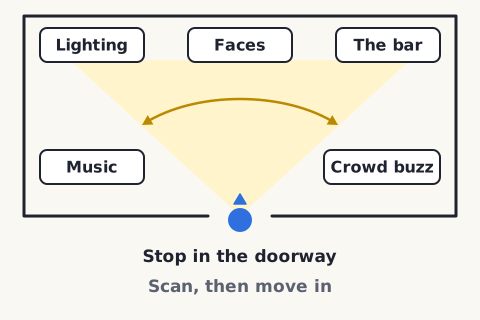
Upon arrival, execute Rubberneck the Room: let your eyes travel back and forth like a SWAT team, taking in the room's mood -- the lighting, the bar, the faces, the music, the buzz of the crowd -- before purposefully moving inward. The book gives no fixed number of seconds — the point is a deliberate scan before you dive in.
Empty Hands & Tracking
The same logic extends to your hands: politicians never hold food or a drink at a party, because anything held in front of you acts as a barrier between you and the person you're meeting.
Immediately after concluding an interaction, step aside to perform Tracking: keep hold of what a new contact told you — their line of work, a trip, a worry, a name they mentioned — so you can bring it up again the next time you meet. Referencing a detail from a past conversation is disproportionately powerful precisely because so few people bother.
Eyeball Selling
During conversation, practice Eyeball Selling: put hidden cameras behind your eyes. Watch your listener's face and body for signals — a nod, a smile, feet turning toward the door, a glance at a phone — and adjust your pitch and pace based on what you see, instead of plowing straight through a fixed script.
Tactical Sensitivity & Navigating Social Traps
True high-status grace is revealed not in effortless triumphs, but in how one navigates clumsy blunders, emotional conflicts, and delicate boundaries.
See No Bloopers & Narrative Resuscitation
When someone makes an embarrassing slip—spilling wine, tripping, or mispronouncing a word—practice See No Bloopers, Hear No Bloopers. Completely ignore the gaffe as though it never occurred, allowing the individual to preserve their dignity without embarrassment.
When a speaker's story is derailed by an interruption, deploy Lend a Helping Tongue: seamlessly bring the spotlight back to them ('Please continue—you were just telling us what happened when you reached the summit!'), earning their deep gratitude.
Bare the Buried WIIFM & Transcending Scorekeeping
Whenever you propose a meeting or ask a favor, Bare the Buried WIIFM: disclose what's in it for you and what's in it for the other person, even if your own gain is zero — a benefit named up front can never later be read as a hidden agenda.
When you do someone a favor, practice Tit for (Wait…Wait) Tat: never demand an immediate return favor, which degrades generous friendship into cold commercial trade. Let them enjoy the fact that you helped out of friendship, not because you were keeping score.
Dinner's for Dining, Sacred Spaces & Emotional Catharsis
Honor Dinner's for Dining: never introduce tough commercial negotiations until the meal is concluded or coffee is served. Dining together does real relational work; premature haggling undoes the trust the meal built.
Respect Chance Encounters Are for Chitchat by never pitching executives during a chance, accidental meeting -- keep the tone sweet and light and save business for later, regardless of where the meeting happens. When someone is furious, practice Empty Their Tanks: allow them to vent their entire emotional grievance without interruption until their rage is fully spent. Finally, use My Goof, Your Gain: whenever you make a clear mistake, don't stop at correcting it — find a way the other person benefits from your slip, turning your goof into their gain.
Core Takeaways & Practical Action Checklist
- Separate eating from networking; never balance food and handshakes.
- Hold nothing in either hand so both stay free for a handshake.
- Remember what a new contact told you, and bring it up again next time you meet.
- Completely ignore other people's clumsy bloopers to protect their dignity.
- Never pitch business during chance encounters in restrooms, gyms, or elevators.
Real-World Case Study: Mastering the Annual Leadership Gala
A newly appointed managing director attends the firm's prestigious annual leadership gala, attended by international partners, board members, and industry luminaries. While many attendees view the event as an opportunity to indulge in cocktails and heavy hors d'oeuvres, the director approaches the evening with diplomatic precision.
She eats a balanced meal prior to arriving (Munching or Mingling). Upon entering the ballroom, she pauses at the entrance, taking in the room's mood -- the lighting, the bar, the faces, the buzz of the crowd -- before moving in (Rubberneck the Room). She carries nothing into the room — no plate, no glass — keeping both hands dry, warm, and ready for handshakes.
During conversations, she watches her partners' faces and body language, reading their reactions and adjusting her pitch accordingly (Eyeball Selling). When a senior partner accidentally knocks over a champagne glass, she maintains total composure, effortlessly continuing dialogue without looking down (See No Bloopers, Hear No Bloopers). When another colleague's story is interrupted by the banquet server, she immediately brings focus back: 'Mark, please finish telling us about the Zurich launch' (Lend a Helping Tongue).
Later, she steps aside to note the personal details she picked up in conversation, so she can bring them up the next time she sees these contacts (Tracking).
Tactical Social Grace Summary Table
| Situation | Amateur Reaction | Master Communicator Protocol |
|---|---|---|
| Networking & Food | Balancing canapé plates while shaking hands | Eating beforehand; dedicating full focus to mingling |
| Beverage Handling | Holding a plate or a drink in your handshake hand | Holding nothing, keeping both hands free |
| Counterpart Blunder | Pointing out or laughing at embarrassing slip | Completely ignoring gaffe (See No Bloopers) |
| Interrupted Story | Allowing narrative to fade into oblivion | Rescuing speaker with Lend a Helping Tongue |
| Favor Management | Demanding immediate transactional payback | Letting the favor sit to build relational capital (Tit for (Wait…Wait) Tat) |
Actionable Behavioral Drills & Muscle Memory Exercises
- Empty-Handed Mingling: At your next networking cocktail reception, consciously commit to holding nothing at all — no plate, no glass — keeping both hands free and ready.
- The Rubberneck Scan: Upon walking into any social venue this week, stand still near the entrance for a moment. Map the room's open and closed clusters before taking your first step.
- Tracking Practice: Within a few minutes of ending a conversation with someone new, mentally note (or jot, out of sight) one personal detail — a project, a trip, a concern — you can bring up the next time you meet.
Key terms
- Tit for (Wait…Wait) Tat
- Waiting before you let someone repay a favor, so the gesture doesn't get repriced as a transaction.
- My Goof, Your Gain
- Fixing your own mistake is only step one — you also find a way the other person actually benefits from your slip, turning your goof into their gain.
Key facts
Munching or Mingling
Munching or Mingling strictly separates dining from networking, following the logic that politicians never eat at receptions because they're there to work the room. A plate, a glass, and a handshake can't be managed together — something spills or somebody waits — so the fix is to eat before you arrive and dedicate full focus to connecting.
Rubberneck the Room
Rubberneck the Room means stopping in the doorway and letting your eyes travel back and forth like a SWAT team, taking in the room's mood -- the lighting, the bar, the faces, the music, the buzz of the crowd -- before you move in. The book gives no fixed number of seconds; the point is a deliberate scan before you dive in, so every later approach looks purposeful instead of aimless.
Hands Empty While You Mingle
Lowndes's Munching or Mingling in practice: at a party, politicians never hold food or a drink, because anything held in front of you acts like a wall between you and the person you're meeting. Eat before you arrive, then mingle with empty hands.
Tracking
Tracking means keeping hold of what a contact told you — their line of work, a trip, a worry, a name they mentioned — so you can bring it up again the next time you meet. Recalling a detail from a past conversation is disproportionately powerful precisely because so few people bother.
Eyeball Selling
Eyeball Selling means putting hidden cameras behind your eyes: while you talk or pitch, watch your listener's face and body for signals — a nod, a smile, feet turning toward the door, a glance at a phone — and adjust your pitch and pace based on what you see, instead of plowing straight through a fixed script.
See No Bloopers, Hear No Bloopers
See No Bloopers, Hear No Bloopers means completely ignoring an embarrassing slip — spilled wine, a trip, a mispronounced word — as though it never happened. Nothing is gained by acknowledging the gaffe, and the person spared the acknowledgment remembers, for a long time, who spared them.
Lend a Helping Tongue
Lend a Helping Tongue seamlessly hands the spotlight back to a speaker whose story was derailed by an interruption — "please continue, you were just telling us about the summit!" Restoring an interrupted story restores the teller's standing in the group, and marks you as the one who was actually paying attention.
Bare the Buried WIIFM
Bare the Buried WIIFM means declaring what's in it for you and what's in it for the other person whenever you propose a meeting or ask a favor, even when your own benefit is zero. A benefit named up front can never later be read as a hidden agenda.
Tit for (Wait…Wait) Tat
Tit for (Wait…Wait) Tat means that after you do someone a favor, you don't call in a return right away -- you let them enjoy the fact that you helped out of friendship, not because you're keeping score. An instant ask for repayment reprices a generous act as a cold transaction.
Dinner's for Dining
Dinner's for Dining holds off any commercial negotiation until the meal is finished or coffee has arrived, because eating together does real bonding work that premature haggling undoes. Business waits; the meal is what builds the trust a negotiation will stand on.
Chance Encounters Are for Chitchat
Chance Encounters Are for Chitchat rules out pitching business, negotiating, or any sensitive ask during an accidental meeting -- Lowndes says to keep the tone of a chance encounter sweet and light instead of capitalizing on it. A chance meeting isn't a sales opportunity, and pitching in one costs you the access you were trying to buy.
Empty Their Tanks
Empty Their Tanks means letting someone talk without interruption until they've said everything they need to -- a grievance, a frustration, a long story -- because people can't actually hear you until their own tank runs dry.
My Goof, Your Gain
My Goof, Your Gain means that fixing your mistake is only step one: you also find some way the other person actually benefits from your slip, so what was a goof for you becomes a gain for them.
Matched pairs
Each item on the left goes with the one on the right.
- Empty Their Tanks
- Letting a furious person vent their entire grievance without interrupting.
- Dinner's for Dining
- Waiting until after the meal, since eating together does real relationship-building work that premature negotiation would undo.
Self-test
Answer each question from memory, then check your work against the answer key.
1. When should you eat, according to 'Munching or Mingling'?
- ABefore arriving
- BWhile mingling
- CAfter introductions
- DDuring the toast
2. Which of these breaks the rule of Eyeball Selling?
- AComplimenting the venue's decor
- BChecking your phone mid-story
- CJotting notes after a chat
- DReading your pitch on autopilot
3. What does 'Eyeball Selling' have you watch for while you're pitching someone at an event?
- AAsking too many follow-up questions
- BStanding too close while talking
- CA listener's nod, smile, or feet turning away
- DMaking too much sustained, unblinking eye contact
4. What is the point of watching your listener's face and body while you pitch, per Eyeball Selling?
- AIt only matters in written proposals
- BIt shows you cues to adjust your pitch
- CIt signals nervousness if you look too much
- DIt has no effect on how your pitch lands
5. What problem does Munching or Mingling warn networkers about?
- APitching someone in a restroom
- BCombining food and handshakes
- CSkipping the room scan at entry
- DNegotiating before the meal ends
6. What does Rubberneck the Room accomplish when you first arrive at an event?
- AMaps the space before mingling
- BRecords details right after
- CEating dinner before you arrive
- DKeeps your right hand free
7. Why should you avoid holding a plate or a drink at all while networking?
- AWhen someone gives you a compliment, don't let it drop to the floor. Accept it graciously and boomerang it right back: 'Thank you! It means so much coming from someone with your impeccable taste.
- BTracking emotional breadcrumbs in conversation uncovers the speaker's true personal interests, bypassing superficial chit-chat.
- CKeeping both hands empty means neither one is busy with a plate or a glass, so either hand is instantly ready for a handshake.
- DIntroducing contentious business contract terms during the main entrée of lunch before interpersonal rapport has settled.
8. What does Rubberneck the Room have you do when you first arrive at an event?
- AImmediately introduce yourself to the host
- BHead straight for the buffet table
- CWait by the door for someone to approach you
- DScan the room's mood -- lighting, bar, faces, and buzz -- before moving in
9. According to Lowndes's Tracking, what should you do with details someone told you at your last meeting?
- AForget them to avoid seeming intrusive
- BRepeat them back immediately, word for word
- CBring them up again next time you meet
- DOnly use them for holiday cards
10. A colleague trips and spills wine at a gala. What does 'See No Bloopers' advise?
- APoint out the mistake
- BCall for help cleaning up
- CMake a light joke
- DIgnore it completely
11. What does Lend a Helping Tongue do for an interrupted speaker?
- AChanges the subject
- BRestores their spotlight
- CEnds the conversation
- DShifts focus to interrupter
12. Bare the Buried WIIFM has you disclose what, whenever you propose a meeting or ask a favor?
- AWhat's in it for both of you
- BA lingering pricing disagreement from before
- CMissing information
- DA scheduling conflict
13. What does Tit for (Wait…Wait) Tat warn against doing after you help someone out?
- ADoing favors for strangers
- BWaiting a while before checking in
- CLetting them thank you right away
- DAsking for it back right away
14. Chance Encounters Are for Chitchat says never pitch business in which settings?
- AAny setting -- a chance meeting is never a pitch opportunity
- BCoffee shops and cafes
- CCompany breakrooms
- DConference hallways
Go deeper
- ReadHow to Talk to Anyone by Leil Lowndes · on Amazon ↗
- StudyHow to Talk to Anyone: 92 Little Tricks for Big Success in the FlashFeed app
These are affiliate links: if you buy a book through one, FlashFeed may earn a small commission at no extra cost to you. The commission helps pay for FlashFeed's servers.
As an Amazon Associate we earn from qualifying purchases.
Answer key
- 1. A Before arrivingPoliticians never eat at receptions — eating beforehand frees your hands and focus fully for networking instead of juggling a plate.
- 2. D Reading your pitch on autopilotEyeball Selling means watching your listener's face and body for signals while you speak and adjusting accordingly; reciting a pitch on autopilot without reading those cues breaks the rule.
- 3. C A listener's nod, smile, or feet turning awayEyeball Selling means putting hidden cameras behind your eyes: watching your listener's face and body for cues and adjusting your pitch and pace based on what you see.
- 4. B It shows you cues to adjust your pitchEyeball Selling means putting hidden cameras behind your eyes: watching your listener's face and body for cues -- a nod, a smile, feet turning away -- and adjusting your pitch and pace based on what you see.
- 5. B Combining food and handshakesMunching or Mingling warns that juggling a plate and introductions at once produces clumsy, messy interactions, so eat beforehand and focus fully on connecting.
- 6. A Maps the space before minglingRubberneck the Room means pausing in the doorway to take in the room's mood -- the lighting, the bar, the faces, the music, the crowd's buzz -- before moving in, so every later approach looks deliberate.
- 7. C Keeping both hands empty means neither one is busy with a plate or a glass, so either hand is instantly ready for a handshake.A hand busy with a plate or a glass is a hand that isn't ready to shake. Holding nothing at all is what keeps both hands free.
- 8. D Scan the room's mood -- lighting, bar, faces, and buzz -- before moving inRubberneck the Room means letting your eyes travel back and forth like a SWAT team on arrival, taking in the lighting, the bar, the faces, and the crowd's buzz before you move in, so your approach looks deliberate.
- 9. C Bring them up again next time you meetTracking means keeping track of what someone told you and referencing it the next time you meet -- remembering it later is what makes the gesture land.
- 10. D Ignore it completelySee No Bloopers means acting as if the gaffe never happened, sparing the person's dignity without acknowledgment.
- 11. B Restores their spotlightLend a Helping Tongue seamlessly hands the spotlight back to the derailed speaker, restoring their standing in the group.
- 12. A What's in it for both of youThe technique means naming the benefit to each side upfront — even if your own gain is zero — so a proposal can never later be read as a hidden agenda.
- 13. D Asking for it back right awayTit for (Wait…Wait) Tat warns against calling in a return favor immediately -- that turns a generous act into a cold transaction instead of genuine goodwill.
- 14. A Any setting -- a chance meeting is never a pitch opportunityChance Encounters Are for Chitchat means never capitalizing on a chance meeting to pitch business, no matter where it happens -- keep the tone sweet and light instead. Lowndes's text names no restroom, elevator, or gym for this technique.
Sources
- How to Talk to Anyone: 92 Little Tricks for Big Success — Leil Lowndes
- How to Talk to Anyone — Part Eight: How to Work a Party Like a Politician Works a Room
- How to Talk to Anyone — Part Nine: How to Break the Most Treacherous Glass Ceiling of All
Image credits
- Rubberneck the Room: FlashFeed original diagram · CC-BY-4.0