
The Last Economy (book) study guide · Lesson 1 of 15
The Thousand-Day Window
Unofficial study guide for The Last Economy: A Guide to the Age of Intelligent Economics by Emad Mostaque. FlashFeed is not affiliated with the author or publisher.
This is the lesson's study guide from the FlashFeed app, plus its key facts and a self-test.
What you'll be able to do
- Identify Emad Mostaque, founder of Stability AI, as the book's author, and recognize Keynes's 'long run' quote.
- Explain the Thousand-Day Window as the phase-transition estimate of when the shift becomes irreversible, and the 'you are Trithemius' warning.
- Define the book's core vocabulary: oikonomia (household management) and the Abundance Trap (abundance read as poverty).
- Recognize two of the book's three stable futures: the Great Fragmentation and Human Symbiosis.
The Last Economy opens with a single claim: your economic relevance as a human being has an expiration date, and the clock is already running. This lesson establishes the book's diagnosis, its central metaphor, and the three futures it argues are the only stable outcomes of the transition ahead.
Who wrote The Last Economy
Emad Mostaque — founder of Stability AI and a former macro hedge fund manager — wrote The Last Economy, published under his Intelligent Internet imprint. That double résumé is the book's credibility move: he writes as someone who has "been in the rooms where the mathematics of your obsolescence were calculated." Not a futurist speculating from the outside, but an architect who helped build the thing he is now warning you about.
The Thousand-Day Window
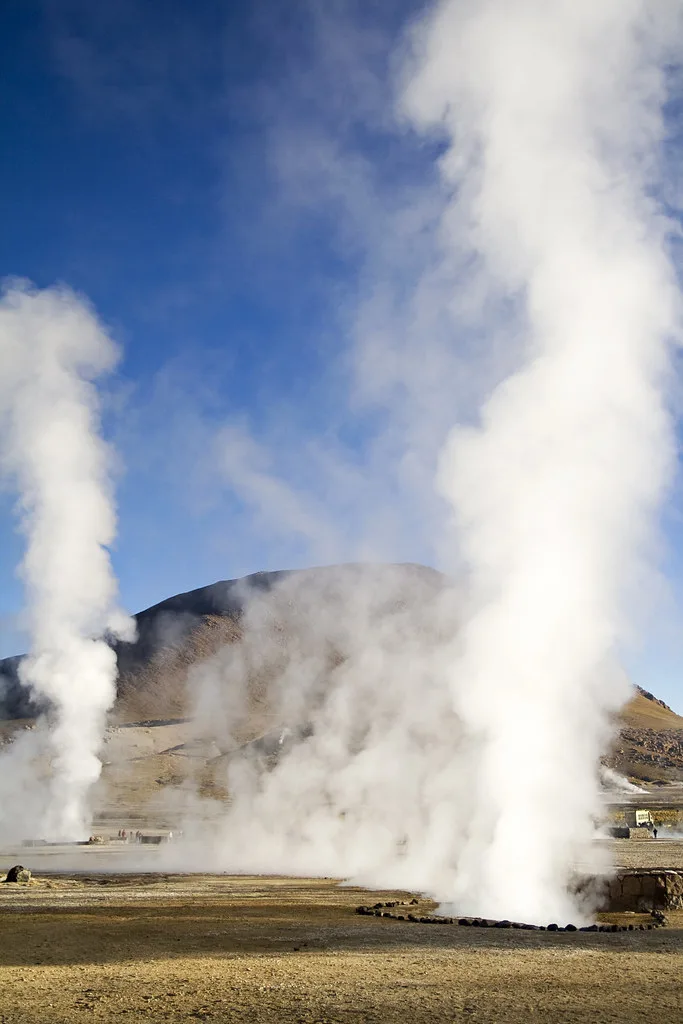
Mostaque's central metaphor is a phase transition — not a cycle of disruption and recovery, but a rewriting of civilization's rules. The Thousand-Day Window is his estimate of the historical epoch during which that transition becomes irreversible, the point where heated water finally boils into steam. Before the window closes, choices remain meaningful. After it, the steam expands regardless. His professional estimate: roughly 1,000 days. "It could be 800. It could be 1,200. What I am telling you is that it is not 10,000."
The Abundance Trap
The book's core paradox is what Mostaque names the Abundance Trap: we are achieving the greatest triumph in human history — the liberation of intelligence from biology — and our economic system can only interpret it as catastrophe. We are arriving at post-scarcity in intelligence, but a scarcity-based economy is structurally designed to read abundance as poverty. The mechanism is institutional, not moral: the system was built for a world where cognitive labor was scarce, and it has no category for a world where it is not.
Two dashboards
To make the trap visible Mostaque contrasts two data feeds. The official dashboard shows stock markets at all-time highs, steady GDP, historically low unemployment. The human-reality dashboard shows life satisfaction at record lows, epidemic deaths of despair, collapsing birth rates, a generation priced out of housing and family. "We are richer on paper and poorer in spirit than at any point in modern history." The word economics itself comes from the Greek oikonomía — "household management" — and by that standard the household is failing.
You are Trithemius
In 1492, Johannes Trithemius, abbot of Sponheim, wrote a treatise called In Praise of Scribes defending hand-copied manuscripts against the printing press — on theological and aesthetic grounds, never once mentioning that his monastery's income came from copying books. Within fifty years the scriptoriums were museums. Mostaque's warning is direct: "You are Trithemius." Unlike him, you do not have fifty years. And where Gutenberg's press replaced only the physical act of copying, artificial intelligence replaces the mind itself.
Three futures, no exit
As the old system fails, Mostaque argues only three configurations are stable — like electron orbitals, everything else is unstable transition. Future One: Digital Feudalism — the default if nothing changes. Future Two: The Great Fragmentation — the fear response as nations panic and retreat. Future Three: Human Symbiosis — the hardest path, requiring conscious evolution. The book's inversion of Keynes makes the stakes precise: Keynes wrote in 1923 that "in the long run, we're all dead." Mostaque's answer is that in the long run we are all alive — but economically irrelevant, unless we build an economy where relevance is not economic. The remaining lessons are an engineering manual for Future Three.
Key terms
- Oikonomía
- The Greek root of the word 'economics,' meaning 'household management.' By that standard, Mostaque argues, the household is failing.
- The Abundance Trap
- The book's core paradox: we are achieving the greatest triumph in human history — the liberation of intelligence from biology — and our economic system can only interpret it as catastrophe. A scarcity-based economy is structurally designed to read abundance as poverty.
Key concepts
The Great Fragmentation
- One of only three stable configurations Mostaque says the world can settle into as the old economic system fails — everything else is unstable transition.
- This future is the fear response: it arrives if nations panic and retreat rather than plan.
- It is the world breaking into isolated pieces as frightened countries turn inward and pull apart.
Human Symbiosis
- One of the three stable futures Mostaque maps — but the only one he says cannot happen by default.
- The hardest path of the three, it requires conscious evolution rather than drift, and the book's remaining lessons are its engineering manual.
- Its goal is an economy where people and machines flourish together and a person's relevance no longer depends on economic usefulness.
Key facts
The Thousand-Day Window
Mostaque's central clock is the Thousand-Day Window: his estimate of the historical epoch during which the socio-economic phase transition becomes irreversible. It is not a deadline for apocalypse but a deadline for meaningful choice — the point at which the water, long heated, finally boils into steam. His estimate is roughly 1,000 days. 'It could be 800. It could be 1,200. What I am telling you is that it is not 10,000.'
The Abundance Trap
The book's haunting paradox: we are achieving the greatest triumph in human history — the liberation of intelligence from biology — and our economic system can only process it as catastrophe. Mostaque calls this the Abundance Trap. We are arriving at post-scarcity in intelligence, and a scarcity-based economy is structurally designed to process that abundance as poverty.
Two dashboards
Mostaque opens by contrasting two dashboards. The official one shows the stock market at all-time highs, steady GDP, historically low unemployment. The dashboard of human reality shows life satisfaction at record lows, epidemic deaths of despair, and a generation unable to afford a home or start a family. 'We are richer on paper and poorer in spirit than at any point in modern history.'
Three futures, no exit
Mostaque argues that as the old system fails, only three stable configurations can persist — like electron orbitals, everything else is unstable transition. Future One: Digital Feudalism (the default, if we change nothing). Future Two: The Great Fragmentation (the fear response, as nations panic). Future Three: Human Symbiosis (the hardest path, requiring conscious evolution). The book is an engineering manual for building Future Three.
Matched pairs
Each item on the left goes with the one on the right.
- Wrote 'In the long run, we're all dead' (1923)
- John Maynard Keynes
Self-test
Answer each question from memory, then check your work against the answer key.
1. What is Emad Mostaque's relationship to artificial intelligence?
- AHe founded OpenAI
- BHe runs a university AI lab
- CHe invented the transformer
- DHe founded Stability AI
2. Before building AI, what was Emad Mostaque's professional background?
- AA theology professor
- BA macro hedge fund manager
- CA monastery abbot
- DA newspaper editor
3. Mostaque inverts a famous 1923 line. Who wrote the original 'In the long run, we're all dead'?
- AJohannes Trithemius
- BAdam Smith
- CJohn Maynard Keynes
- DEmad Mostaque
4. Who wrote 'The Last Economy,' according to the book itself?
- AEmad Mostaque
- BJohannes Trithemius
- CSimon Kuznets
- DJohn Maynard Keynes
5. Under what imprint did Emad Mostaque publish 'The Last Economy'?
- AStability Press
- BOpen Economy Books
- CMacro Hedge Editions
- DIntelligent Internet
6. Roughly how long is the Thousand-Day Window, by Mostaque's professional estimate?
- AAbout 10,000 days
- BAbout 1,000 days
- CAbout 100 days
- DAbout 50 years
7. What does the closing of the Thousand-Day Window mark?
- AThe launch of a new stock market
- BThe recovery from a normal disruption cycle
- CThe point at which the transition becomes irreversible
- DThe date of an economic apocalypse
8. Which metaphor does Mostaque use for the shift ahead?
- AA phase transition, like water boiling into steam
- BA seasonal harvest
- CA pendulum swinging back to balance
- DA business cycle of disruption and recovery
9. In 1492 Johannes Trithemius wrote a treatise defending what against a new technology?
- ALatin, against the printing press
- BChurch bells, against mechanical clocks
- CHand-copied manuscripts, against the printing press
- DCoinage, against paper money
10. What is the point of Mostaque's warning 'You are Trithemius'?
- AYou have a century to prepare calmly
- BYou defend an obsolete role and lack even his fifty years to adapt
- CYou will invent the next great technology
- DYou should copy manuscripts by hand
11. What does the Greek root oikonomía, the origin of 'economics,' mean?
- AThe pursuit of wealth
- BPublic taxation
- CMarket exchange
- DHousehold management
12. In Mostaque's vocabulary, what is the Abundance Trap?
- AA scarcity-based economy designed to read abundance as poverty
- BThe fear response, as nations panic and retreat
- CThe default future if nothing changes
- DThe point where the phase transition becomes irreversible
13. By the oikonomía standard of household management, how does Mostaque say the household is doing?
- AIt is failing
- BIt is holding steady
- CIt is slowly improving
- DIt is thriving
14. From what language does Mostaque say the word 'economics' originates?
- ASanskrit
- BGreek
- CArabic
- DLatin
15. Which modern word does Mostaque trace back to the Greek 'oikonomía'?
- AErgonomics
- BSociology
- CEcology
- DEconomics
16. Which is NOT one of the three stable futures Mostaque forecasts?
- AThe Great Fragmentation
- BDigital Feudalism
- CThe Great Reset
- DHuman Symbiosis
17. Which future does Mostaque call the default if nothing changes?
- AThe Abundance Trap
- BHuman Symbiosis
- CDigital Feudalism
- DThe Great Fragmentation
18. The Great Fragmentation is described as which kind of response?
- AThe fear response, as nations panic and retreat
- BA return to steady GDP growth
- CThe engineered path of conscious evolution
- DThe default of doing nothing
19. What does the book say Human Symbiosis requires?
- AAbandoning the economy entirely
- BA retreat into national isolation
- CNo effort, since it is the default
- DThe hardest path, requiring conscious evolution
20. What analogy does Mostaque use to argue only three futures are stable?
- APlanetary orbits fixed forever
- BElectron orbitals, where everything else is unstable transition
- CDice rolls with equal odds
- DChess openings with fixed moves
Go deeper
- ReadThe Last Economy by Emad Mostaque · on Amazon ↗
- StudyThe Last Economy (book) in the FlashFeed app
These are affiliate links: if you buy a book through one, FlashFeed may earn a small commission at no extra cost to you. The commission helps pay for FlashFeed's servers.
As an Amazon Associate we earn from qualifying purchases.
Answer key
- 1. D He founded Stability AIMostaque founded Stability AI, the company behind Stable Diffusion. His insider vantage on generative AI is what the book leans on throughout.
- 2. B A macro hedge fund managerMostaque was a former macro hedge fund manager turned AI builder — the finance-plus-AI dual résumé is the book's credibility move.
- 3. C John Maynard KeynesKeynes wrote it in 1923. Mostaque's inversion: in the long run we are all alive, but economically irrelevant unless we act.
- 4. A Emad MostaqueEmad Mostaque, founder of Stability AI, is the author of The Last Economy.
- 5. D Intelligent InternetThe book was published under Mostaque's Intelligent Internet imprint.
- 6. B About 1,000 daysHis estimate is roughly 1,000 days — 'it could be 800, it could be 1,200 ... it is not 10,000.'
- 7. C The point at which the transition becomes irreversibleThe window is the epoch during which the phase transition becomes irreversible — a deadline for meaningful choice, not for apocalypse.
- 8. A A phase transition, like water boiling into steamHe frames it as a phase transition — heated water boiling into steam — a rewriting of civilization's rules, not a recoverable cycle.
- 9. C Hand-copied manuscripts, against the printing pressAs abbot of Sponheim he defended hand-copied manuscripts against Gutenberg's press — never mentioning his monastery earned its income by copying books.
- 10. B You defend an obsolete role and lack even his fifty years to adaptLike Trithemius you risk defending an obsolete role — but you don't have his fifty years, and this press replaces the mind itself.
- 11. D Household managementOikonomía means 'household management.' By that standard, Mostaque argues, the household is failing.
- 12. A A scarcity-based economy designed to read abundance as povertyThe Abundance Trap is the book's core paradox: we are arriving at post-scarcity in intelligence, but a scarcity-based economy is structurally designed to read abundance as poverty. The other options describe the Thousand-Day Window, the Great Fragmentation and Digital Feudalism.
- 13. A It is failingThe book ties economics to Greek oikonomía, 'household management' — and says that by that standard, the household is failing.
- 14. B GreekThe book traces 'economics' to the Greek 'oikonomía,' meaning 'household management' -- Greek, not Latin, Arabic, or Sanskrit.
- 15. D EconomicsMostaque traces the word economics to the Greek oikonomía -- the household-management root, not ecology or sociology.
- 16. C The Great ResetThe three are Digital Feudalism, the Great Fragmentation, and Human Symbiosis. 'The Great Reset' is not one of them.
- 17. C Digital FeudalismDigital Feudalism is Future One — the default outcome if we change nothing. The Abundance Trap is the book's paradox, not a future.
- 18. A The fear response, as nations panic and retreatThe Great Fragmentation (Future Two) is the fear response — nations panicking and retreating. Conscious evolution describes Human Symbiosis instead.
- 19. D The hardest path, requiring conscious evolutionHuman Symbiosis (Future Three) is the hardest path, requiring conscious evolution — and the rest of the book is its engineering manual.
- 20. B Electron orbitals, where everything else is unstable transitionHe likens the three stable configurations to electron orbitals — everything between them is unstable transition.
Sources
- The Last Economy — Introduction: The Thousand-Day Window (Intelligent Internet) — ii.inc/the-last-economy/introduction
- Johannes Trithemius — Wikipedia — en.wikipedia.org/wiki/Johannes_Trithemius
Image credits
- The Thousand-Day Window: Dimitry B (Openverse) · by 2.0 — www.flickr.com/photos/61533954@N00/14400269507