
Major Wars: Strategy, Technology, and Mechanics of Conflict study guide · Lesson 1 of 13
Bronze to Classical Era: Phalanxes, Triremes, and Siegecraft
Bronze Age Chariots & Classical Greek Phalanx Tactics · The Sicilian Disaster & Macedonian Combined Arms
This is the lesson's study guide from the FlashFeed app, plus its key facts and a self-test.
What you'll be able to do
- Explain how Egyptian chariots served as archer platforms at Kadesh, how the phalanx's othismos and rightward drift worked, and how Miltiades won at Marathon.
- Explain how counter-walls broke Athens's siege of Syracuse, and how Epaminondas's deep wing, the sarissa, and Alexander's diagonal charge at Gaugamela worked.
Lesson 1: Bronze to Classical Era: Phalanxes, Triremes, and Siegecraft
Battle of Kadesh and Chariot Tactics
In 1274 BC, Pharaoh Ramesses II clashed with the Hittite king Muwatalli II at the Battle of Kadesh along the Orontes River in modern Syria. Kadesh stands as the largest recorded chariot battle in antiquity, deploying an estimated 5,000 to 6,000 chariots. The tactical difference lay in vehicle architecture: Egyptian light two-man chariots served as mobile firing platforms for composite archers, whereas heavier Hittite three-man chariots functioned as direct shock weapons carrying a driver, shield-bearer, and lancer. The battle also produced the Egyptian-Hittite Peace Treaty (the Treaty of Kadesh), the earliest surviving international peace agreement in recorded history.
Hoplite Phalanx and Othismos Mechanics
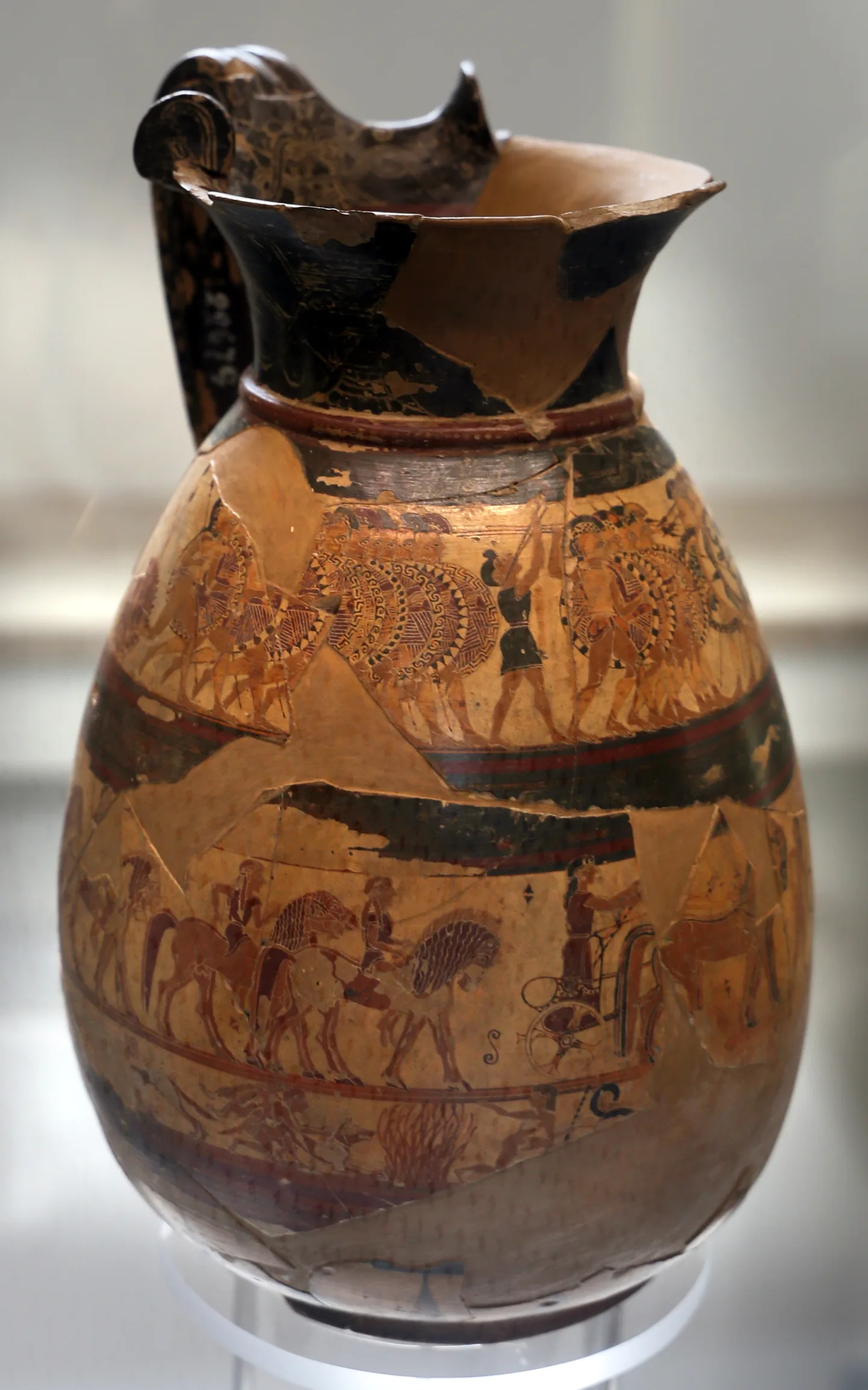
Archaic and Classical Greek warfare was defined by the hoplite phalanx, a dense formation of armored citizen-soldiers locking large circular bronze-faced shields (aspides) eight ranks deep. The fundamental mechanics rested on collective cohesion: each warrior's shield protected his own left side and the unshielded right side of the man to his left, creating a natural tendency for the entire battleline to drift rightward during advance. Clashes culminated in othismos ("the push"), a brutal physical press where rear ranks shoved front ranks forward with their shields while thrusting overhand with eight-foot spears (dory).
Battle of Marathon Double Envelopment
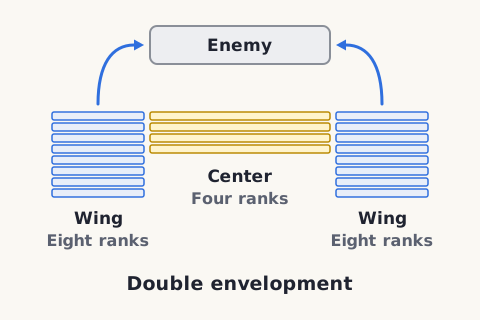
At the Battle of Marathon in 490 BC, Athenian general Miltiades defeated a numerically superior Persian expeditionary force through innovative tactical geometry. Knowing Persian elite infantry and archers occupied the enemy center, Miltiades deliberately thinned his own center to four ranks while reinforcing both wings to eight ranks. The Greek center yielded under pressure, drawing Persian forces forward into a pocket, whereupon the reinforced Athenian wings routed their opponents and wheeled inward to execute a devastating double envelopment.
Battle of Salamis and Trireme Ramming
In 480 BC, Athenian statesman and naval strategist Themistocles lured the massive Persian fleet into the narrow straits between the island of Salamis and the Attic mainland. The primary weapon of the Mediterranean war galley was the trireme, a three-tiered oared warship equipped with a bronze waterline ram. By restricting maneuver in constricted waters, Themistocles negated Persian numerical superiority and prevented the open-water maneuvers both fleets depended on — flanking (periplous) and the breakthrough ramming run (diekplous) — forcing a congested close-quarters clash of direct ramming and boarding actions.
Spartan Land Hegemony vs Athenian Maritime Strategy
The Peloponnesian War (431–404 BC) pitted two diametrically opposed military doctrines against each other: Sparta's invincible agrarian hoplite army and Athens's maritime empire funded by Delian League tribute. Athenian statesman Pericles enacted a grand strategy of strategic avoidance: evacuating Attica's rural population behind the fortified Long Walls connecting Athens to the port of Piraeus while relying on the Athenian fleet to import grain from the Black Sea and raid the Peloponnesian coastline.
Brasidas and Combined Arms at Amphipolis
During the Peloponnesian War, Spartan general Brasidas revolutionized Hellenic land warfare by abandoning rigid hoplite conservatism in favor of operational mobility and combined arms. In the Thracian theater at the Battle of Amphipolis (422 BC), Brasidas integrated light-armed peltasts throwing javelins, mobile cavalry, and hoplites to launch surprise attacks and defeat Athenian forces commanded by Cleon.
Athenian Siege Lines and Disaster at Syracuse
Athens's catastrophic Sicilian Expedition (415–413 BC) demonstrated the logistical fragility of expeditionary siegecraft. Attempting to isolate the city of Syracuse, Athenian general Nicias constructed a double line of circumvallation to starve the city from land and sea. Spartan advisor Gylippus organized Syracusan counter-wall construction (parateichisma) that crossed and severed the Athenian lines, culminating in the complete destruction of the Athenian expeditionary fleet and army in the Great Harbour and Assinarus River.
Epaminondas and the Oblique Order at Leuctra
At the Battle of Leuctra in 371 BC, Theban general Epaminondas shattered centuries of Spartan military supremacy through the revolutionary oblique order (loxē phalanx). Rather than spreading his forces evenly, Epaminondas reinforced his left wing to an unprecedented depth of fifty ranks—spearheaded by the elite Theban Sacred Band—directly opposite the Spartan king Cleombrotus, while refusing (holding back) his weakened center and right wing in echelon. The massive left column pulverized the Spartan elite before the Spartan center could engage.
Philip II and the Macedonian Sarissa Phalanx
King Philip II of Macedon transformed Greek warfare by professionalizing the Macedonian infantry into the syntagma phalanx armed with the sarissa, a two-handed pike measuring 18 to 21 feet in length. The sarissa projected five overlapping tiers of spear points in front of the formation, creating an impenetrable bristling wall that halted frontal cavalry and hoplite assaults while requiring minimal defensive armor, which vastly lowered mobilization costs.
Alexander's Hammer-and-Anvil at Gaugamela
At the Battle of Gaugamela in 331 BC, Alexander the Great perfected the hammer-and-anvil combined-arms doctrine to defeat the Persian army under Darius III. Alexander used his disciplined sarissa phalanx as the stationary anvil to pin the Persian battleline, while leading the elite Companion cavalry (hetairoi) in a rapid echeloned diagonal charge toward a gap created in the Persian left-center, driving directly at Darius's royal bodyguard.
Alexander's Causeway Siege of Tyre
In 332 BC, Alexander faced the heavily fortified island fortress of Tyre, located half a mile off the Phoenician coast with walls rising 150 feet. Demonstrating ancient engineering mastery, Alexander ordered the construction of a massive siege mole (causeway) across the channel, utilizing rubble from Old Tyre and timber from Mount Lebanon. After Tyrian fireships destroyed his first causeway, Alexander assembled a large allied fleet from Cyprus and the Phoenician cities to blockade both harbors and neutralize the Tyrian navy, then mounted naval siege engines and torsion catapults onto transport galleys to breach the harbor walls.
Key terms
- Hoplite Phalanx
- A dense tactical formation of armored citizen spearmen locked shoulder-to-shoulder with overlapping circular shields.
- Circumvallation
- A continuous inner fortified line of walls and trenches constructed around a besieged city to prevent escape and cut off resupply.
- Refused Flank
- A tactical maneuver where a commander deliberately withholds one portion of their battleline out of enemy engagement range while attacking with the other.
- Hammer-and-Anvil
- A combined-arms doctrine in which infantry pins enemy forces in place while mobile cavalry delivers a crushing flanking shock charge.
Key concepts
Egyptian War Chariot
- Lightweight wooden construction with rear-axle placement for high turning agility
- Operated by a driver and an archer wielding a composite bow
- Functioned primarily as a mobile missile skirmishing platform rather than a shock ram
Othismos
- Physical mass shoving phase marking the climax of hoplite infantry battles
- Required rear ranks to brace and drive forward against the backs of front ranks
- Depended on formation depth and collective weight rather than individual swordsmanship
Miltiades
- Athenian strategos who commanded at the Battle of Marathon in 490 BC
- Deliberately weakened his formation's center to strengthen both wings
- Executed the first historically documented double envelopment against Persian invaders
Classical Trireme
- Three-tiered rowing galley powered by 170 oarsmen arranged in three vertical banks
- Main offensive armament consisted of a bronze-sheathed underwater ram at the prow
- High sprint speed but limited operational range due to lack of sleeping and water storage
Long Walls of Athens
- Parallel fortified corridors linking the city of Athens to its harbor at Piraeus
- Allowed maritime resupply while hostile armies ravaged surrounding agricultural land
- Served as the cornerstone of Pericles's defensive strategy during the Peloponnesian War
Oblique Order
- Tactical deployment focusing overwhelming combat mass on a single attacking wing
- Deliberately holds back the center and opposite wing to avoid premature engagement
- First utilized decisively by Epaminondas at Leuctra in 371 BC to crush Spartan lines
Sarissa
- Heavy two-handed pike measuring 18 to 21 feet used by Macedonian phalangites
- Fitted with a heavy iron point and a bronze butt-spike to anchor against charging cavalry
- Projected five tiers of spearheads beyond the front rank of the formation
Companion Cavalry
- Elite noble heavy shock cavalry of the ancient Macedonian kingdom
- Fought in wedge formations using the xyston lance to penetrate disrupted enemy lines
- Acted as the decisive offensive hammer in Alexander the Great's battle doctrine
Key facts
Chariot Warfare at the Battle of Kadesh
The 1274 BC Battle of Kadesh between Egypt and the Hittites deployed over 5,000 chariots, contrasting light Egyptian archer platforms with heavy Hittite shock lancers.
Cohesion and the Hoplite Othismos
The Greek hoplite phalanx deployed citizen-soldiers eight ranks deep, interlocking aspis shields to push enemy lines during brutal close-quarters othismos.
Tactical Geometry at Marathon
At Marathon in 490 BC, Miltiades thinned the Athenian center to four ranks while reinforcing both wings to eight ranks to execute a double envelopment.
Naval Ramming Tactics at Salamis
At Salamis in 480 BC, Themistocles concentrated Greek triremes in narrow waters, using bronze rams to crush Persian galleys unable to deploy broad lines.
Periclean Asymmetric Strategy
Pericles preserved Athens by evacuating the rural population behind the Long Walls, relying on maritime grain convoys to refuse pitched land battle against Sparta.
Combined Arms in Thrace
At Amphipolis in 422 BC, Spartan commander Brasidas broke traditional hoplite rigidity by integrating javelin peltasts and cavalry to rout Athenian forces.
Siege Lines and Counter-Walls at Syracuse
The Athenian siege of Syracuse collapsed when Syracusan counter-walls built under Gylippus severed Athenian circumvallation lines, trapping their army.
The Oblique Order at Leuctra
At Leuctra in 371 BC, Epaminondas stacked a 50-rank deep left wing while refusing his right wing, crushing the Spartan elite royal guard in echelon.
The Macedonian Sarissa Revolution
Philip II rearmed Macedonian infantry with 18-to-21-foot two-handed pikes called sarissas, projecting five defensive tiers of spearheads against attackers.
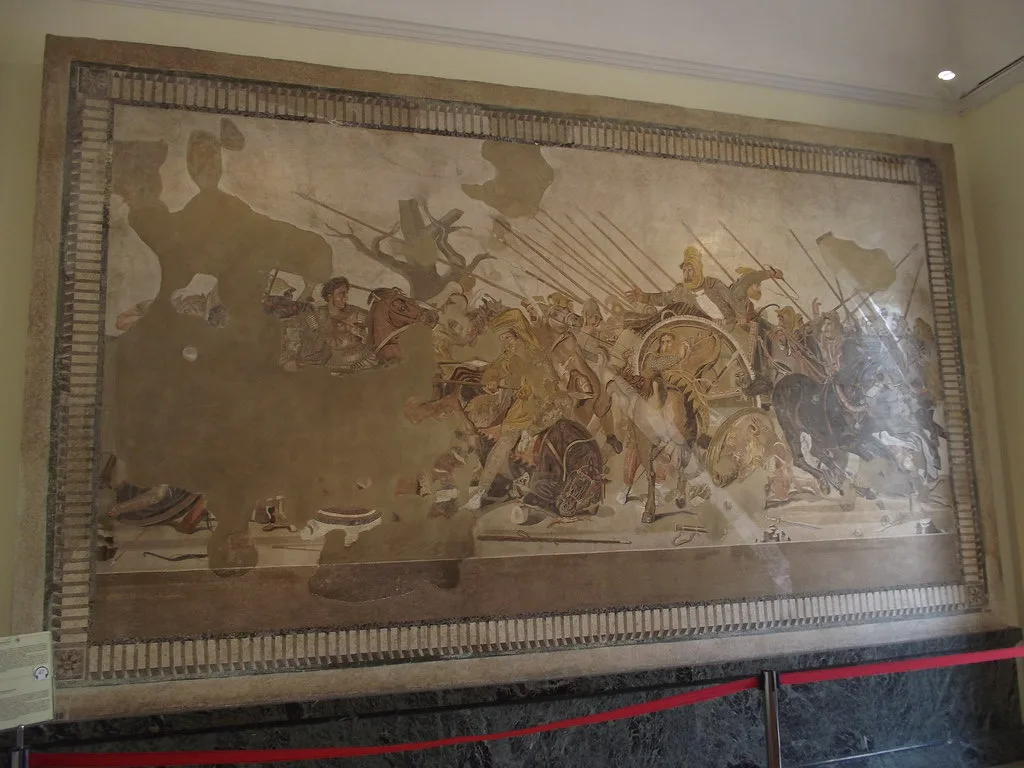
Hammer-and-Anvil at Gaugamela
At Gaugamela in 331 BC, Alexander used his phalanx as an anvil to pin the Persian line, while striking Darius III's flank in a wedge charge with Companion cavalry.
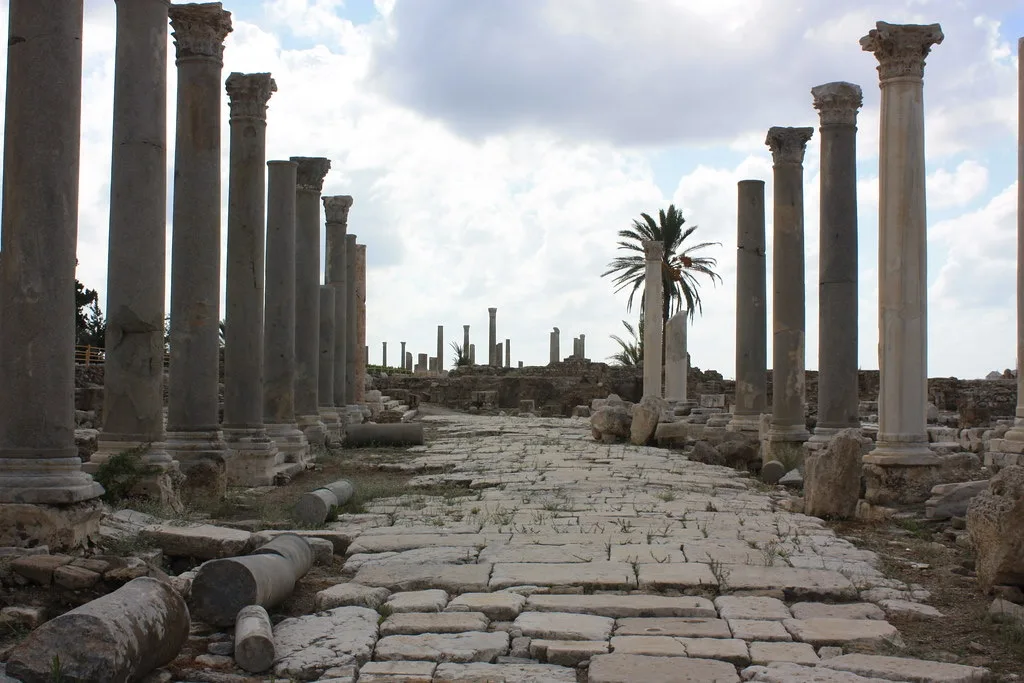
Engineering the Causeway Siege of Tyre
Alexander conquered the island city of Tyre in 332 BC by building a half-mile causeway across open sea to transport heavy torsion siege engines to the walls.
By the numbers
- What was the standard rank depth of a classical Greek hoplite phalanx in battle formation?
- 8
- How many total oarsmen powered a fully crewed classical Athenian trireme warship in battle?
- 170
- How many ranks deep did Epaminondas stack his attacking left wing at the Battle of Leuctra in 371 BC?
- 50
- What was the maximum length in feet of the Macedonian sarissa pike introduced by Philip II?
- 21
Matched pairs
Each item on the left goes with the one on the right.
- Egyptian New Kingdom Chariots
- Lightweight two-man platforms designed for rapid mobile archery skirmishing
- Thranite Rowing Tier
- Top rank pulling the longest oars through outriggers with the greatest leverage
- Massed Theban Left Wing
- Dense 50-rank column tasked with smashing the Spartan royal vanguard immediately
- Sarissa Phalanx Battleline
- Immovable defensive wall that pins enemy infantry and fixes their battleline
Self-test
Answer each question from memory, then check your work against the answer key.
1. What role did the Theban Sacred Band play at the Battle of Leuctra in 371 BC?
- ASpearheaded the massed Theban left wing that overwhelmed the Spartan right, in the assault where King Cleombrotus fell
- BThey marched around Mount Helicon to execute a night ambush on the Spartan camp
- CThey defended the baggage train against Peloponnesian cavalry raids along the rear roads
- DThey operated torsion catapults to bombard the Spartan defensive line with incendiary pitch
2. At the Battle of Kadesh, which force used its chariots as mobile firing platforms for composite archers?
- AHittite two-man chariots
- BEgyptian three-man chariots
- CHittite three-man chariots
- DEgyptian two-man chariots
3. In the hoplite phalanx, what did 'othismos' refer to?
- AJavelin skirmishers screening the front
- BCavalry charging through a gap
- CRear ranks pushing shields forward
- DWings wheeling around the flanks
4. How did Miltiades arrange the Athenian battleline at Marathon to defeat the Persians?
- AEven line, no reinforcement
- BThinned center, reinforced both wings
- COne deep central column
- DThinned both wings, reinforced center
5. Why did classical Greek hoplite phalanxes tend to drift rightward while advancing?
- AOfficers massed elite fighters on the right wing
- BEach shield covered the neighbor's exposed side
- CUneven terrain pulled the line off its axis
- DThe heaviest armor was worn on the right arm
6. How did Egyptian chariot design differ from Hittite chariot design at the Battle of Kadesh?
- AChariots were pulled by camels for desert mobility
- BChariots carried siege ladders instead of archers
- CLight two-man chariots as mobile platforms for archers
- DThree-man chariots carried a shield-bearer and lancer
7. What lasting diplomatic outcome resulted from the stalemate at the Battle of Kadesh in 1274 BC?
- AFormation of the Delian League among Levantine states
- BPartition of Syria between Egypt and Assyria
- CThe Hittites agreed to pay annual tribute to the Egyptian throne
- DThe Treaty of Kadesh, the earliest known peace agreement
8. Why was Spartan general Brasidas able to achieve tactical surprise against Athenian forces at Amphipolis?
- ACombined fast-marching peltasts and cavalry to strike the marching Athenian column
- BHe disguised his hoplites as local Thracian merchants delivering grain shipments to the city markets
- CHe deployed new torsion catapults from concealed earthen redoubts outside the city gate fortifications
- DHe engineered an underground tunnel allowing hoplites to emerge behind Cleon's headquarters tent encampment
9. What logistical and operational advantage did the Macedonian sarissa phalanx hold over traditional Greek hoplites?
- AThe two-handed pike allowed Macedonian phalangites to throw their weapons as heavy javelins before melee
- BThe formation could easily disperse and reform into skirmish lines in dense mountain forests and ravines
- CSarissa reach halted enemy charges while requiring far less expensive infantry armor
- DThe weapon was light enough to be wielded effectively by mounted cavalrymen during high-speed charges
10. How did Alexander the Great create the tactical opening for his decisive cavalry charge at Gaugamela?
- AHe ordered his center phalanx to feign a panicked retreat toward the riverbank to lure the Persian guard
- BMarched diagonally rightward to draw Persian cavalry and open a gap in the opposing center
- CHe deployed scythed chariots directly into the Persian royal guard to scatter their cavalry formations
- DHe used nocturnal smoke signals to coordinate simultaneous cavalry charges from opposite mountain ridges
11. How deep was the Theban attacking wing organized by Epaminondas at the Battle of Leuctra?
- ASixteen ranks deep
- BEight ranks deep
- CFour ranks deep
- DFifty ranks deep
12. What ultimately broke the Athenian siege of Syracuse during the Sicilian Expedition?
- ASyracusan counter-walls cut the siege lines
- BA night assault destroyed the Athenian fleet
- CA plague decimated the Athenian force
- DNicias abandoned the siege for lack of food
Go deeper
Answer key
- 1. A Spearheaded the massed Theban left wing that overwhelmed the Spartan right, in the assault where King Cleombrotus fellLed by Pelopidas, the 300 elite hoplites of the Sacred Band spearheaded Epaminondas's massed left wing that broke the Spartan line; Cleombrotus fell as the Spartan right collapsed under the assault, though ancient sources do not credit the Sacred Band specifically with the killing blow.
- 2. D Egyptian two-man chariotsEgyptian chariots were light two-man platforms built for composite-archer fire; Hittite chariots carried three men (driver, shield-bearer, lancer) for direct shock combat.
- 3. C Rear ranks pushing shields forwardOthismos was the collective shoving match in which rear hoplite ranks pushed front ranks forward with their shields during the spear-thrusting clash.
- 4. B Thinned center, reinforced both wingsMiltiades thinned his center to four ranks and reinforced both wings to eight, luring the Persian center forward before the wings wheeled in for a double envelopment.
- 5. B Each shield covered the neighbor's exposed sideEach hoplite's round shield covered his own left and his neighbor's exposed right, so men crowded rightward for cover as the phalanx advanced, drifting the whole line.
- 6. C Light two-man chariots as mobile platforms for archersEgyptian two-man chariots served as mobile firing platforms for composite archers, while Hittite three-man chariots carried a driver, shield-bearer, and lancer for shock combat.
- 7. D The Treaty of Kadesh, the earliest known peace agreementThe battle produced the Treaty of Kadesh between Ramesses II and the Hittites, the earliest surviving international peace agreement in history.
- 8. A Combined fast-marching peltasts and cavalry to strike the marching Athenian columnBrasidas observed the Athenian army executing an uncoordinated withdrawal and launched a rapid combined-arms attack with peltasts and cavalry before Athens could form a battleline.
- 9. C Sarissa reach halted enemy charges while requiring far less expensive infantry armorThe 18-to-21-foot sarissa projected five tiers of points ahead of the formation, keeping enemy shock troops at bay and eliminating the need for heavy, expensive bronze body armor.
- 10. B Marched diagonally rightward to draw Persian cavalry and open a gap in the opposing centerBy advancing diagonally across the battlefield, Alexander forced Persian cavalry to mirror his movement, opening a critical gap between the Persian left and center.
- 11. D Fifty ranks deepEpaminondas massed 50 ranks of hoplites on his left flank to crush the traditional 12-rank deep Spartan elite formation opposite him.
- 12. A Syracusan counter-walls cut the siege linesSpartan advisor Gylippus directed Syracusan counter-wall (parateichisma) construction that crossed and severed the Athenian circumvallation lines, dooming the siege.
Sources
- Breasted, Ancient Records of Egypt
- Hanson, The Western Way of War
- Herodotus, The Histories, Book VI
- Herodotus, The Histories, Book VIII
- Thucydides, History of the Peloponnesian War
- Thucydides, History of the Peloponnesian War, Book V
- Thucydides, History of the Peloponnesian War, Book VII
- Xenophon, Hellenica, Book VI
- Diodorus Siculus, Historical Library, Book XVI
- Arrian, Anabasis of Alexander, Book III
- Curtius Rufus, Histories of Alexander
- Breasted, Ancient Records of Egypt — www.britishmuseum.org
- Hanson, The Western Way of War — www.oxfordreference.com
- Herodotus, The Histories, Book VI and 8 more references — www.perseus.tufts.edu
- Curtius Rufus, Histories of Alexander the Great, Book 4 — www.perseus.tufts.edu/hopper/text?doc=Perseus:text:2008.01.0536:book=4:chapter=3
- Morrison, The Athenian Trireme — www.cambridge.org
- Markle, The Macedonian Sarissa, AJA — www.jstor.org
Image credits
- Cohesion and the Hoplite Othismos: Wikimedia Commons · Sailko · CC BY-SA 4.0 — commons.wikimedia.org/wiki/File:Pittore_chigi,_olpe_chigi_(corinto),_formello,_tumulo_di_monte_aguzzo,_640_ac_ca._01.jpg
- Tactical Geometry at Marathon: FlashFeed original diagram · CC-BY-4.0
- Periclean Asymmetric Strategy: George E. Koronaios (Openverse) · by-sa 4.0 — commons.wikimedia.org/wiki/File:The_archaeological_site_of_the_Deme_of_Koile_on_June_25,_2021.jpg
- The Macedonian Sarissa Revolution: Wikimedia Commons · Colin W · CC BY-SA 3.0 — commons.wikimedia.org/wiki/File:Entrance_to_the_Royal_Tombs,_Vergina_-_panoramio.jpg
- Hammer-and-Anvil at Gaugamela: ell brown (Openverse) · by 2.0 — www.flickr.com/photos/39415781@N06/7604944102
- Engineering the Causeway Siege of Tyre: Arian Zwegers (Openverse) · by 2.0 — www.flickr.com/photos/67769030@N07/6848004215


