
Mindset: The New Psychology of Success study guide · Lesson 1 of 6
Foundations: The Two Mindsets and Human Potential
The Two Mindsets: Fixed vs. Growth · Inside the Mindsets: Effort, Failure, and Meaning
Unofficial study guide for Mindset: The New Psychology of Success by Carol S. Dweck. FlashFeed is not affiliated with the author or publisher.
This is the lesson's study guide from the FlashFeed app, plus its key facts and a self-test.
What you'll be able to do
- Distinguish between the entity (fixed) and incremental (growth) theories of human intelligence and brain plasticity.
- Analyze how fixed and growth mindsets diverge in internal monologues, EEG brainwave focus, and interpretation of failure.
Lesson 1: Foundations of the Two Mindsets & Human Potential
The Two Mindsets: Fixed vs. Growth
The study of human motivation, cognitive development, and achievement underwent a profound revolution through the empirical research of Dr. Carol S. Dweck, professor of psychology at Stanford University. For decades, educational institutions, parents, and social theorists operated under the assumption that an individual's life trajectory was primarily dictated by innate, unchangeable intellectual and creative endowments. Dweck’s pioneering work demonstrated that human potential is filtered through an individual’s implicit self-theories regarding the nature of their own abilities. These implicit beliefs crystallize into two foundational psychological frameworks: the Fixed Mindset (formally designated in academic literature as the Entity Theory of Intelligence) and the Growth Mindset (designated as the Incremental Theory of Intelligence).
In the Fixed Mindset, an individual operates from the fundamental premise that human qualities—intellectual horsepower, musical talent, athletic capability, and creative genius—are static givens carved permanently into biological stone at birth. Under this worldview, you possess a fixed quota of intelligence and talent. This core assumption generates an exhausting, perpetual psychological urgency: the need to prove yourself over and over again. Every academic examination, professional performance review, social conversation, or creative endeavor is experienced not as an opportunity to acquire competence, but as a high-stakes existential verdict on your basic human worth. If you have only a fixed amount of intelligence, you must continuously demonstrate that you have a healthy supply and desperately hide any perceived deficiencies. To an entity theorist, encountering difficulty or making a public mistake is deeply terrifying because it threatens to reveal a permanent underlying lack of talent.
Conversely, the Growth Mindset is founded upon the transformative belief that an individual's basic qualities are malleable competencies that can be cultivated, strengthened, and expanded through deliberate effort, adaptive strategies, and guidance from others. Although the growth mindset readily acknowledges that individuals differ in their initial biological gifts, genetic predispositions, and temperaments, it asserts that these starting points are merely launchpads for development. In this paradigm, a person’s ultimate intellectual or creative potential is an unknown quantity that can only be revealed through years of passionate toil, disciplined practice, and sustained labor. Rather than wasting precious cognitive bandwidth attempting to look smart and conceal weaknesses, growth-oriented individuals channel their energy into getting better.
The historical roots of standardized intelligence testing provide crucial historical context for this dichotomy. When French psychologist Alfred Binet invented the first intelligence test (the Binet-Simon Scale) in Paris during the early twentieth century, modern popular culture distorted his original vision. Binet did not design the assessment to quantify unchangeable genetic ceilings or rank children into permanent intellectual castes. Instead, he developed the tool specifically to identify children who were failing to thrive in French public classrooms so that customized, intensive remedial curricula could be engineered to accelerate their cognitive growth. Binet famously condemned the "brutal pessimism" of theorists who asserted that an individual’s intelligence is a fixed quantity, declaring that with practice, training, and method, children become literally more intelligent than they were before.
Modern cognitive neuroscience supports Binet's original vision through the discovery of Neuroplasticity. When human beings engage with challenging intellectual tasks, struggle through complex problems, and correct errors, the physical architecture of the brain changes. Neurons fire and forge new synaptic pathways, and oligodendrocytes (support cells) wrap active axons in thicker myelin sheaths, expanding the brain’s cognitive processing capacity. Eminent developmental scientist Dr. Gilbert Gottlieb argued that development is epigenetic: genes and environment cooperate as we develop, and genes require input from the environment to work properly. Intelligence researcher Dr. Robert Sternberg wrote that the major factor in whether people achieve expertise "is not some fixed prior ability, but purposeful engagement."
In early laboratory experiments with four-year-olds, Carol Dweck presented children with simple jigsaw puzzles. After completing them, the children were offered a choice: repeat the same puzzle they had just solved or attempt a novel, harder puzzle. Children holding a Fixed Mindset overwhelmingly demanded to repeat the easy puzzle, seeking the guaranteed validation of success and avoiding any risk of failure. In contrast, children holding a Growth Mindset expressed bewilderment that anyone would want to do the same puzzle twice, enthusiastically demanding the difficult puzzles to expand their skills. Mindsets are not necessarily monolithic personalities; individuals often exhibit Domain-Specific Mindsets, holding a growth mindset in technical programming or athletics while harboring a paralyzing fixed mindset in artistic creativity, public speaking, or interpersonal relationships.
Inside the Mindsets: Effort, Failure, and Meaning
The two mindsets establish fundamentally divergent internal cognitive monologues and psychological operating systems that dictate how an individual interprets effort, failure, setbacks, and the accomplishments of peers. In the Fixed Mindset, the internal monologue is an unending stream of evaluative judgment and status monitoring. Every event, conversation, and performance is filtered through a binary verdict: will I succeed or fail, look smart or dumb, be accepted or rejected? When an entity theorist achieves a goal, their internal monologue generates fleeting arrogance; when they face a roadblock, the monologue plunges into catastrophic despair, transforming an external action into an internal identity: "I failed this exam" instantly becomes "I am an unmitigated failure".
The most profound divergence between the two mindsets centers on the meaning of effort. In the fixed mindset, effort is perceived as a humiliating badge of deficiency. This belief stems from the premise that if you were truly gifted or intelligent, mastery would come effortlessly. If an individual must study late into the night, seek tutoring, or practice repeatedly, the fixed mindset concludes that they lack natural talent. This toxic belief gives rise to the Low-Effort Syndrome, frequently observed in adolescents who deliberately withhold study efforts so they can claim their poor grades resulted from apathy rather than a lack of innate brilliance. To the fixed mindset, withholding effort is a clever self-protective defense mechanism that protects the illusion of genius.
In sharp contrast, the Growth Mindset recognizes effort as the essential engine of human mastery. Effort is not evidence of deficiency; it is what turns raw potential and clumsy struggle into real skill and accomplishment. To a growth-oriented thinker, an internal monologue does not judge; it explores: what can I learn from this mistake, and what new strategies can I try? Setbacks are not personal autopsies; they are vital diagnostic data that reveal the exact boundaries of current skill and guide targeted practice.
To investigate the neural signatures of these two cognitive frameworks, cognitive neuroscientist Dr. Jennifer Mangels and colleagues conducted rigorous electroencephalography (EEG) studies at Columbia University. College students wore an EEG cap of scalp electrodes while answering challenging general knowledge questions. The neural event-related potentials (ERPs) revealed striking physiological differences:
- Fixed Mindset Neural Activation: When the computer told students their answer was wrong (negative feedback), fixed-mindset students showed a larger frontal brain response (a P3 wave), which fits with concern about proving their ability. However, when the computer then displayed the correct answer, their learning-related brain activity was less sustained. They tuned out the corrective information.
- Growth Mindset Neural Activation: Growth-mindset students stayed engaged through the explanation, with more sustained learning-related brain activity. On a surprise retest, they corrected more of their errors.
The two mindsets also diverge in how they calibrate self-appraisal and process social comparisons. Individuals with a growth mindset maintain exceptionally Accurate Self-Appraisal because they view honest assessment as the necessary baseline for designing improvement plans. Entity theorists, conversely, distort self-appraisals defensively, either puffing up their accomplishments or succumbing to helplessness when evaluated. Growth-mindset individuals recognize that human potential is unlocked through iterative reflection, cognitive reframing, and sustained practice.
Key terms
- Growth Mindset
- The foundational belief that intellectual abilities and human talents can be systematically cultivated through dedication, strategic learning, and mentorship.
- Low-Effort Syndrome
- A self-protective academic strategy where students deliberately withhold study efforts to blame poor grades on apathy rather than low ability.
Key concepts
Alfred Binet
- French psychologist who invented the first practical intelligence scale in Paris
- Designed assessments to identify struggling children for customized educational remediation
- Condemned the brutal pessimism of theorists who claimed intelligence is a fixed genetic quantity
Robert Sternberg
- Contemporary cognitive psychologist and preeminent researcher on human intelligence
- Demonstrated that purposeful engagement is the primary determinant of expertise
- Wrote that the major factor in achieving expertise "is not some fixed prior ability, but purposeful engagement"
Dr. Jennifer Mangels
- Columbia University cognitive neuroscientist who recorded event-related potentials during learning
- Found that fixed-mindset students reacted strongly to learning they were wrong
- Found that growth-mindset students stayed engaged through the explanation of the correct answer
Diagnostic Feedback
- The growth mindset framing of performance mistakes and examination setbacks
- Treats errors as informative signals pointing directly to strategic and tactical gaps
- Replaces permanent personal verdicts with actionable roadmaps for skill refinement
Key facts
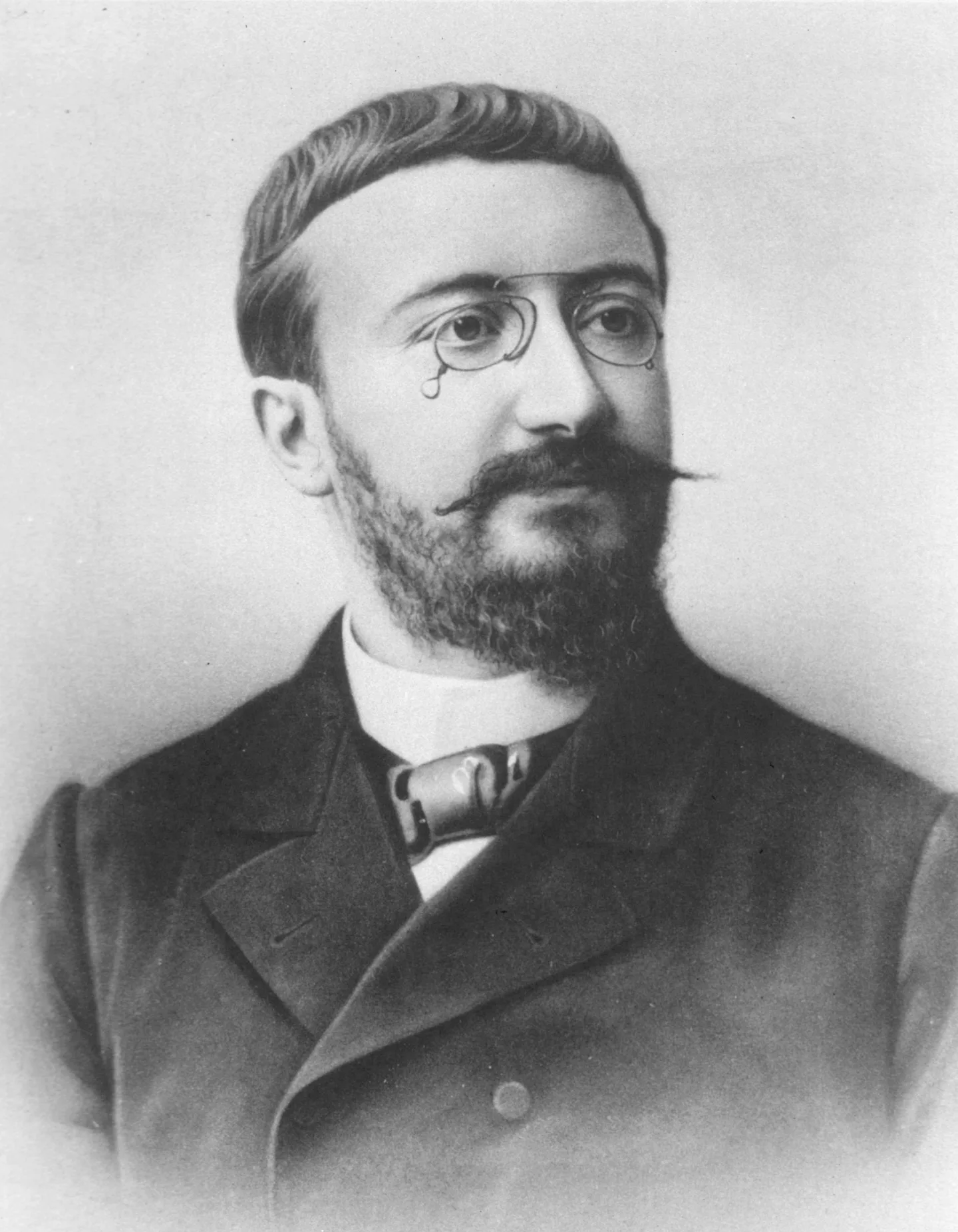
Alfred Binet and the Real Purpose of the IQ Test
French psychologist Alfred Binet invented the first practical intelligence scale (the Binet-Simon Scale) in Paris in the early twentieth century — not to rank children by a fixed genetic ceiling, but to identify students who were struggling in French public classrooms so targeted remedial teaching could accelerate their learning. Binet condemned the "brutal pessimism" of theorists who claimed intelligence is a fixed quantity, insisting that with practice, training, and method, children become literally more intelligent than they were before.
Entity Theory vs. Incremental Theory
Dweck's two mindsets carry formal academic names. The Entity Theory of Intelligence (the fixed mindset) treats ability as a static biological endowment that must be constantly re-proven. The Incremental Theory of Intelligence (the growth mindset) treats competence as a dynamic repertoire of skills expanded through structured practice, and frames current ability as only a launchpad — a person's true ceiling can only be revealed after years of focused labor.
Dweck's Preschool Puzzle Experiment
In an early laboratory study, Carol Dweck gave four-year-olds a moderately challenging jigsaw puzzle, then let each child choose between repeating the puzzle they had just solved or trying a harder, new one. Children with a fixed mindset overwhelmingly chose to repeat the easy puzzle, seeking the guaranteed validation of a success they already knew they could achieve. Children with a growth mindset were baffled that anyone would want to redo a solved puzzle, and eagerly chose the harder one to expand their skills.
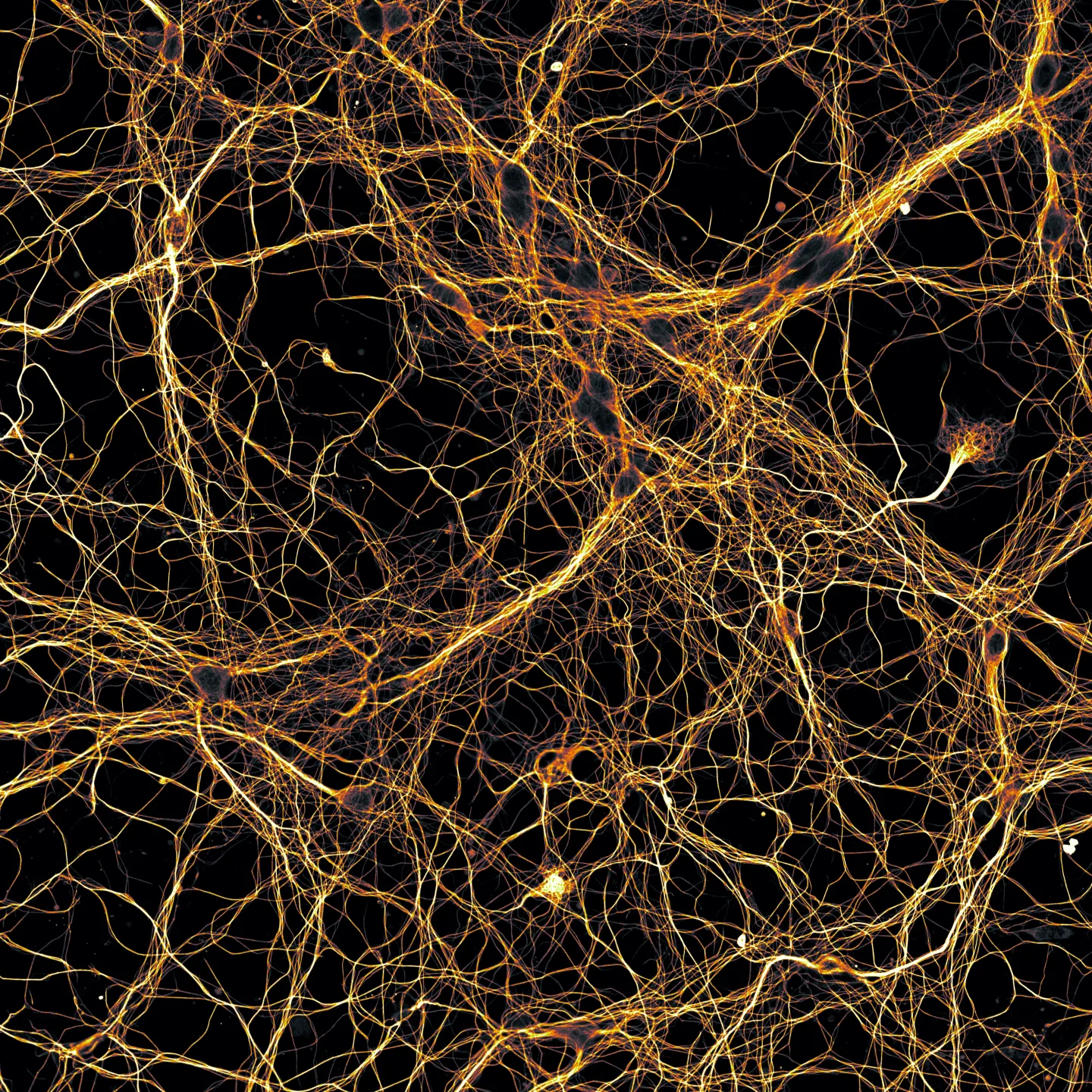
Neuroplasticity: The Brain Changes Through Challenge
Modern neuroscience validates the growth mindset through neuroplasticity: when people grapple with challenging problems and correct their errors, neurons fire, forge new synaptic connections, and wrap axons in denser myelin, literally expanding the brain's processing capacity. Struggling with hard material isn't a sign the brain is inadequate; it's the mechanism by which the brain grows.
Mindsets Are Domain-Specific, Not Monolithic
A mindset isn't a single fixed personality trait that applies identically everywhere. Individuals often hold domain-specific mindsets — for example, a growth mindset toward programming or athletics, paired with a paralyzing fixed mindset toward artistic creativity, public speaking, or relationships. The same person can believe ability is malleable in one arena and fixed in another.
Gilbert Gottlieb and Epigenetic Development
Developmental scientist Gilbert Gottlieb argued that development is epigenetic: genes and environment cooperate as we develop, and genes require input from the environment to work properly. Genetic potential is not expressed automatically in a vacuum; it depends on engagement with the world around us.
The Fixed Mindset's Need to Prove Itself
A fixed mindset creates an exhausting, ongoing psychological imperative: prove your innate brilliance and hide every flaw. Because entity theorists believe intelligence is a fixed quota, they systematically avoid challenging tasks — not out of laziness, but because struggling in public threatens to expose what they fear is a permanent, underlying lack of talent.
Effort as the Engine of Mastery
In the fixed mindset, effort feels like proof that you lack natural ability. In the growth mindset, effort is what turns ability into real skill and accomplishment.
The Effort-as-Deficiency Fallacy and Low-Effort Syndrome
In the fixed mindset, exerting effort is treated as proof of deficiency — the logic runs that if you were truly talented, mastery would come effortlessly. This belief produces Low-Effort Syndrome: students deliberately withhold study effort so a poor grade can be blamed on apathy rather than on a perceived lack of innate ability, protecting the illusion of genius.
Jennifer Mangels' EEG Study on Mindset and Feedback
Cognitive neuroscientist Jennifer Mangels and colleagues at Columbia University recorded brain activity (event-related potentials) while college students answered hard general-knowledge questions. After a wrong answer, fixed-mindset students reacted strongly to the news, then showed less sustained learning-related activity when the computer displayed the correct answer. Growth-mindset students stayed engaged through that corrective feedback, and they corrected more of their errors on a surprise retest.
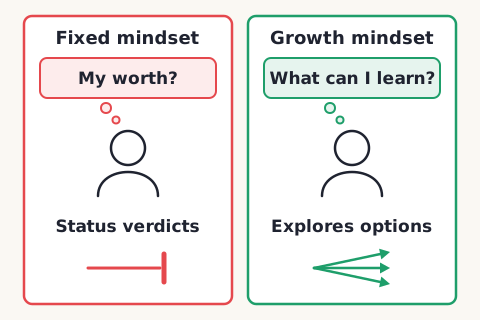
Two Internal Monologues: Judgment vs. Exploration
The fixed and growth mindsets run on opposite internal scripts. The fixed mindset's internal monologue constantly renders status verdicts — "What does this mean for my intelligence and worth?" The growth mindset's internal monologue instead explores options: "What can I learn from this challenge, and how can I adjust my strategy to improve?"
Diagnostic Feedback: Reframing Failure as Data
A growth mindset treats a setback not as a personal verdict but as diagnostic feedback — informative data that reveals exactly which strategies aren't working and points toward what to practice next. This replaces the fixed mindset's tendency to treat failure as a permanent indictment ("I failed this exam" becoming "I am a failure") with an actionable roadmap for improvement.
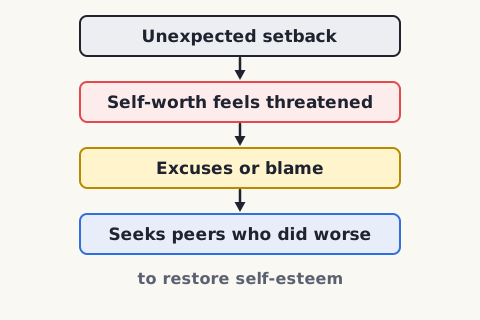
The Fixed Mindset's Defensive Coping Cascade
When a fixed-mindset person hits an unexpected setback — a bad grade, a stumble at work — they move through a predictable defensive sequence: first the obstacle threatens their sense of intelligence and self-worth, then they manufacture excuses or blame external conditions, and finally they seek out peers who did worse in order to artificially restore their self-esteem.
Self-Appraisal: Accuracy vs. Defensive Distortion
Growth-mindset individuals maintain an unusually accurate self-appraisal, because they see an honest read of their current skill as the essential baseline for planning improvement. Fixed-mindset individuals, by contrast, systematically distort their self-assessments — inflating accomplishments or collapsing into helplessness — because admitting a genuine weakness threatens their fragile self-image of effortless brilliance.
Matched pairs
Each item on the left goes with the one on the right.
- Entity Theory of Intelligence
- Views intellectual ability as a static biological endowment requiring constant validation
- Incremental Theory of Intelligence
- Views intellectual competence as a dynamic repertoire of skills expanded through structured practice
- Fixed Mindset Internal Monologue
- Constantly judges events through status verdicts: 'What does this mean for my intelligence and worth?'
- Growth Mindset Internal Monologue
- Attuned to actionable learning: 'What can I learn from this setback and what new strategy can I test?'
Step by step
Preschool Puzzle Choice Experimental Protocol
- Present four-year-old children with an initial moderately challenging jigsaw puzzle to solve
- Offer children the choice between repeating the solved puzzle or attempting a novel harder puzzle
- Observe fixed-mindset children demand the solved puzzle to guarantee flawless performance
- Observe growth-mindset children eagerly choose the harder puzzle to develop new spatial problem-solving skills
Fixed Mindset Defensive Coping Cascade
- Encounter an unexpected performance obstacle or low academic examination grade
- Experience acute threat to perceived intelligence and self-worth
- Manufacture external excuses, blame testing conditions, or deny personal responsibility
- Derogate or seek out peers who performed worse to artificially restore temporary self-esteem
Self-test
Answer each question from memory, then check your work against the answer key.
1. What primary psychological imperative drives an individual operating with a fixed mindset?
- AThe drive to treat every setback as useful data that shows exactly where to focus practice next
- BThe exhausting urgency to prove one's innate brilliance and conceal deficiencies in every evaluation
- CThe commitment to seek out challenging assignments where the probability of making mistakes is high
- DThe habit of measuring personal accomplishment strictly by the degree of daily physical effort exerted
2. What distinctive characteristic defines the hallmark of the growth mindset according to Carol Dweck?
- AThe tendency to abandon complex projects immediately upon encountering an initial technical setback
- BThe expectation that exceptional natural talent guarantees effortless success without disciplined training
- CThe passion for stretching yourself and persisting with rigorous effort especially when things are not going well
- DThe refusal to undertake any intellectual task unless immediate public recognition is guaranteed.
3. Why did Alfred Binet create the Binet-Simon Scale?
- ATo rank children by fixed genetic ceilings
- BTo measure adult IQ for hiring
- CTo identify the most gifted children for advancement
- DTo find struggling students for remediation
4. Which of these does NOT happen in the brain when tackling hard problems, per neuroplasticity research?
- ATotal neuron count doubles
- BNeurons fire more actively
- CMyelin sheaths thicken
- DNew synapses form
5. What did developmental scientist Gilbert Gottlieb argue about development?
- ALimited to a brief infant window
- BFixed entirely by genetics at birth
- CEpigenetic and shaped by the environment
- DShaped by the environment alone
6. In terms of neuroplasticity, what happens when someone tackles demanding cognitive tasks?
- AExisting synapses weaken to save energy
- BNeurons forge new synapses and expand capacity
- CMyelin sheaths gradually dissolve to speed signals
- DNew neurons multiply to replace damaged ones
7. In terms of neuroplasticity, what structural change results from struggling through hard problems?
- AFrontal lobe activity decreases to reduce mental fatigue
- BCortical gray matter volume shrinks
- CSynaptic pathways permanently disconnect
- DAxons become wrapped in denser myelin sheaths
8. What primary question characterizes the internal monologue of an individual operating with a growth mindset?
- AWhat can I learn from this challenging experience and how can I adjust my strategies to improve?
- BWhich external authority figure can I hold responsible if my current business project falls short?
- CDoes this upcoming professional assignment guarantee that I will be publicly recognized as superior?
- DHow can I minimize my visible study time so observers assume my accomplishments are effortless?
9. In an EEG study of students answering hard general-knowledge questions, what did fixed-mindset students' brains do when the correct answer appeared after a wrong answer?
- AActivity showed no change
- BActivity became less sustained
- CActivity stayed elevated throughout the whole session
- DActivity spiked even higher
10. How does a growth mindset reframe a failed exam?
- AAs a permanent verdict on one's worth
- BAs something to blame on external factors
- CAs a reason to avoid future challenges
- DAs diagnostic data to guide practice
11. Why do some fixed-mindset students practice 'Low-Effort Syndrome'?
- ABlame the grade on apathy, not ability
- BBlame the grade on bad luck on test day
- CBlame the grade on not having enough time to study
- DBlame the grade on the teacher's unfair grading
12. Why do people with a fixed mindset systematically distort their personal self-appraisals?
- ABecause they are constantly testing new learning strategies that alter their skill baselines on a daily basis
- BBecause they prioritize providing anonymous peer evaluations over monitoring their personal academic goals
- CBecause acknowledging genuine weaknesses threatens their fragile self-image of innate effortless brilliance
- DBecause they treat assessment data as an objective baseline for designing long-term practice.
Go deeper
- ListenLesson 1 episode
- WatchThe Harder Puzzle Give four-year-olds a choice: do the same easy puzzle again, or try a harder one. Some children want the easy one again.
- WatchTuned Out At Columbia University, students answered hard questions while an EEG recorded their brain activity.
- ReadMindset by Carol S. Dweck · on Amazon ↗
- StudyMindset: The New Psychology of Success in the FlashFeed app
These are affiliate links: if you buy a book through one, FlashFeed may earn a small commission at no extra cost to you. The commission helps pay for FlashFeed's servers.
As an Amazon Associate we earn from qualifying purchases.
Answer key
- 1. B The exhausting urgency to prove one's innate brilliance and conceal deficiencies in every evaluationFixed mindset individuals feel an urgent compulsion to prove their intelligence and hide flaws in every high-stakes evaluation.
- 2. C The passion for stretching yourself and persisting with rigorous effort especially when things are not going wellThe hallmark of the growth mindset is the passion for stretching oneself and persevering especially during adverse, challenging times.
- 3. D To find struggling students for remediationBinet designed the scale to spot struggling students so schools could target remediation, not to rank innate genetic ceilings or single out the gifted.
- 4. A Total neuron count doublesNeuroplasticity means new synapses form, myelin thickens, and neurons fire more actively — but the total neuron count doesn't double.
- 5. C Epigenetic and shaped by the environmentGottlieb argued that development is epigenetic: genes and environment cooperate, and genes need input from the environment to work properly, rather than genetics alone or a fixed early window.
- 6. B Neurons forge new synapses and expand capacityCognitive exertion causes neurons to forge new synaptic connections, physically expanding the brain's processing capacity.
- 7. D Axons become wrapped in denser myelin sheathsWith sustained cognitive challenge, oligodendrocytes (the brain's support cells) wrap active axons in thicker myelin sheaths, which helps signals travel faster.
- 8. A What can I learn from this challenging experience and how can I adjust my strategies to improve?The growth mindset monologue focuses on constructive learning, actionable strategies, and iterative skill improvement.
- 9. B Activity became less sustainedAfter negative feedback, fixed-mindset students showed less sustained learning-related activity to the corrective information, unlike growth-mindset students, who stayed engaged.
- 10. D As diagnostic data to guide practiceThe growth mindset treats a failed exam as diagnostic data pointing to what to practice next, not as an identity verdict, an excuse, or a reason to quit.
- 11. A Blame the grade on apathy, not abilityLow-Effort Syndrome lets students blame a poor grade on apathy instead of admitting a perceived lack of innate talent.
- 12. C Because acknowledging genuine weaknesses threatens their fragile self-image of innate effortless brillianceEntity theorists distort self-assessments because admitting skill gaps punctures their fragile image of innate superiority.
Sources
- Mindset: The New Psychology of Success — Carol S. Dweck
- Carol S. Dweck, Mindset, Chapter 1: The Mindsets
- Carol S. Dweck, Mindset, Chapter 1: The Mindsets; Carol S. Dweck, Mindset, Chapter 2: Inside the Mindsets — www.penguinrandomhouse.com/books/44337/mindset-by-carol-s-dweck-phd/
- Carol S. Dweck, Mindset, Chapter 1: The Mindsets — www.penguinrandomhouse.com/books/44330/mindset-by-carol-s-dweck-phd/
- Carol S. Dweck, Mindset, Chapter 2: Inside the Mindsets
- Mangels, Butterfield, Lamb, Good & Dweck (2006), Social Cognitive and Affective Neuroscience — pmc.ncbi.nlm.nih.gov/articles/PMC1838571
Image credits
- Alfred Binet and the Real Purpose of the IQ Test: Wikimedia Commons · Unidentified photographer · Public domain — commons.wikimedia.org/wiki/File:Alfred_Binet.jpg
- Neuroplasticity: The Brain Changes Through Challenge: Wikimedia Commons · MikeRoscopy · CC BY 4.0 — commons.wikimedia.org/wiki/File:Axons_Al_Dente.png
- Two Internal Monologues: Judgment vs. Exploration: FlashFeed original diagram · CC-BY-4.0
- The Fixed Mindset's Defensive Coping Cascade: FlashFeed original diagram · CC-BY-4.0

