
Mythology: Greek, Norse & Egyptian study guide · Lesson 11 of 15
Egyptian Creation and Maat
Many Beginnings and Uneven Evidence · Maat and the Work of Order
This is the lesson's study guide from the FlashFeed app, plus its key facts and a self-test.
What you'll be able to do
- Distinguish primordial waters, Heliopolitan generations, and Memphite speech while explaining coexistence. Use period, region, corpus, and preservation bias to
- Explain cosmic/social rightness as something maintained through solar cycle, kingship, and ritual.
Many Beginnings and Uneven Evidence
Many Beginnings and Uneven Evidence
Ancient Egyptian creation is best approached as a set of related traditions, not as one official story with competing errors. Accounts associated with different places could coexist and combine. Their relationship was not necessarily that of mutually exclusive creeds. A local god or local way of describing creation could be emphasized without requiring every other account to be rejected.
One strand begins with Nun, a primordial watery condition, and with grouped forces associated with what precedes the ordered world. Traditions linked with Heliopolis center Atum and generations of deities. These elements offer ways of imagining emergence and relationship, but they should not be forced into one continuous opening chapter. Their coexistence is part of the evidence.
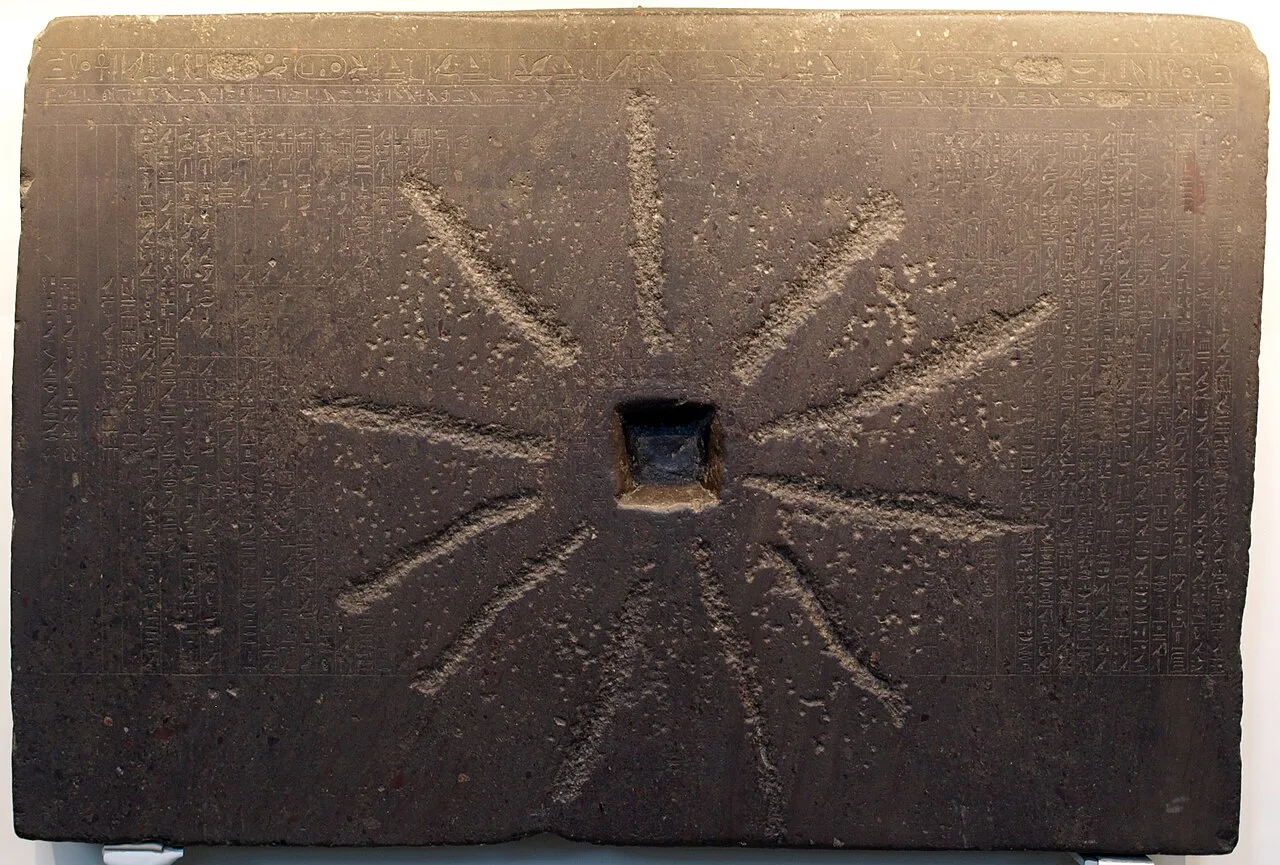
A different formulation appears in Memphite theology, where Ptah creates through conception in the heart and command by the tongue. The surviving witness commonly called the Shabaka Stone dates to Dynasty 25. Claims that its text simply reproduces a much earlier composition are disputed. That distinction matters: the stone attests a particular surviving formulation, but its date does not automatically establish the date of every idea expressed on it.
These examples show why “Which Egyptian creation story is correct?” is the wrong opening question. A better set of questions asks which place, source, period, and creative mechanism are in view. Primordial condition, divine generation, and creation through thought and speech can stand beside one another without becoming three denominations or one seamless canon.
No surviving Egyptian composition gathers every creation motif into one authoritative, continuous narrative. That absence is not a defect waiting for a modern editor to repair. It is a warning against producing a synthetic “Egyptian Genesis” from materials that survive in different forms and settings.
Local cosmogonies, or accounts of the world’s coming into order, were distinct yet interdependent. Over time they could be synthesized with local gods. A formulation should therefore be labeled by period, region, source, and context when those details matter. Similar names across centuries do not guarantee an unchanged meaning, and a later surviving object does not necessarily mark the invention of the ideas it contains.
Survival itself is uneven. Evidence favors particular regions and elite, royal, temple, and funerary settings. What was durable, inscribed, buried, excavated, collected, or preserved is more visible to us than much ordinary practice. Absence of surviving evidence is not evidence of nonbelief. Nor does a museum object speak without context: its material, date, find history, and institutional interpretation shape what it can support.
These limits do not make knowledge impossible. They make careful knowledge source-bound. We can distinguish attested traditions, track combinations, and explain recurring ideas without pretending that the record is complete. The result is a more accurate picture of Egyptian creation: multiple beginnings, changing emphases, and an archive that preserves some settings far more clearly than others.
Maat and the Work of Order
Creation does not make order permanently self-sustaining. Egyptian sources repeatedly present order as something renewed and maintained. The key term maat can refer to truth, justice, balance, and cosmic or social right order; it can also be personified. No single English word captures all of those uses, so translation should remain a working guide rather than a perfect equivalent.
The solar cycle gives this maintenance a recurring shape. Its repetition presents order as something renewed rather than secured once and for all. This is not simply a nature story about sunrise. Within the approved evidence, solar recurrence is a model of maat as continuing cosmic order; the separate lesson on Re’s journey supplies the cycle’s specific stages and textual setting.
Royal and temple activity also belonged to this framework. Royal ideology assigned the king responsibility for maintaining maat. Detailed daily temple service, however, was performed by priests through consecrated divine images. That distinction prevents a common mistake: an image of the king performing a rite expresses royal responsibility, but it does not prove that the individual ruler personally carried out every daily action represented in monumental art.
The different uses of maat are connected by this emphasis on right relation and continued action. Calling maat “truth” may fit one sentence; calling it “justice” or “order” may fit another. None of those translations should be promoted into the one definition that explains every occurrence. Keeping the Egyptian term visible reminds us that cosmic regularity, legitimate rule, and social or ritual rightness can be related without being identical.
The solar journey and temple service also operate on different scales. Re’s renewed dawn presents recurring cosmic maintenance. Priestly work enacts ordered service through consecrated images, while royal representation states the office’s responsibility for maat. Reading one as a substitute for the others would erase the distinction between cosmic pattern, ritual performance, and royal ideology.
Maat therefore links cosmic cycle, legitimate kingship, and ritual work without collapsing them into one thing. The central idea is active maintenance: right order remains meaningful because it must be enacted and renewed. This is why creation and maintenance belong in the same lesson. The world’s emergence establishes relationships, but the repeated solar and ritual patterns show that those relationships remain a continuing achievement rather than a completed event.
Sources
- UCL Digital Egypt: Gods and goddesses in Ancient Egypt—creation
- UCLA Encyclopedia of Egyptology: Cosmogony
- British Museum: The Shabako Stone
- British Museum: Shabaka Stone transcript
- Metropolitan Museum of Art: Divine Egypt
- UCL Digital Egypt: Cult and offerings
- UCL Digital Egypt: Daily Offering Ritual
- Metropolitan Museum of Art: Kings and Queens of Egypt
- Metropolitan Museum of Art: Amduat Papyrus of Henettawy
Key terms
- preservation bias
- The uneven survival of evidence that makes some regions, periods, and elite, royal, temple, or funerary settings more visible than others.
- Memphite theology
- A creation formulation in which Ptah conceives in the heart and commands by the tongue, preserved on the Dynasty 25 Shabaka Stone.
- maat
- An Egyptian concept encompassing truth, justice, balance, and cosmic or social right order; no single English equivalent is exact.
Key facts
No Single Creation Compilation
No surviving Egyptian composition gathers every creation motif into one authoritative continuous story.
Local and Interdependent Cosmogonies
Local cosmogonies were distinct yet interdependent and were repeatedly synthesized with local gods over time.
What Preservation Favors
Surviving evidence favors particular regions and elite, royal, temple, and funerary settings; absence from the record does not prove nonbelief.
Coexisting Creation Traditions
Egyptian creation accounts associated with different local traditions could coexist and combine rather than function as mutually exclusive creeds.
Nun and Atum
One creation strand begins with the primordial watery condition Nun, while Heliopolitan traditions center Atum and divine generations.
Ptah and the Shabaka Stone
Memphite theology presents Ptah creating through the heart and tongue, but the surviving Shabaka Stone is Dynasty 25 and claims of a much earlier text remain disputed.
Maat Resists One-Word Translation
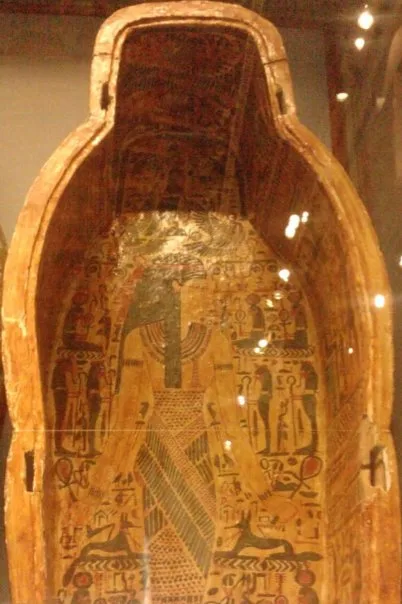
Maat can mean truth, justice, balance, and cosmic or social right order, and it can also be personified; no single English word is exact.
Order Through the Solar Cycle
The recurrence of Re's solar cycle presents maat as cosmic order that must be maintained and renewed rather than secured once for all.
Royal Duty and Priestly Service
Royal ideology assigned the king responsibility for maintaining maat, while priests performed detailed daily temple service through consecrated images.
Matched pairs
Each item on the left goes with the one on the right.
- Local Egyptian cosmogonies
- Distinct yet interdependent traditions repeatedly synthesized over time
- Nun
- Primordial watery condition in one Egyptian creation strand
- Maat and solar recurrence
- Cosmic order maintained through repeated renewal
Step by step
Contextualize an Egyptian creation claim before teaching it
- Identify the exact text, object, or institutional source.
- Record its period or surviving date.
- Locate its region or cult-center context when known.
- Identify its genre, medium, or archaeological setting.
- Compare related local traditions and note combinations or variants.
- State only what the surviving evidence supports and flag preservation gaps.
A later surviving witness may preserve older ideas, but its date does not automatically prove an earlier composition date.
Self-test
Answer each question from memory, then check your work against the answer key.
1. What is the safest conclusion when a belief is absent from surviving Egyptian evidence?
- AThe belief began only after the surviving record
- BThe absence does not by itself prove nonbelief
- CThe belief belonged exclusively to nonelite people
- DThe belief was rejected throughout Egypt
2. Which statement best reflects the evidence for Egyptian creation traditions?
- AOne account replaced every earlier account
- BEach cult center enforced a mutually exclusive creed
- CAll motifs survive in one authoritative narrative
- DLocal accounts could coexist and combine
3. Which condition begins one strand of Egyptian creation, before the ordered world existed?
- ANun
- BPtah
- CRe
- DAtum
4. Which figure anchors the Heliopolitan tradition of creation through generations of deities?
- APtah
- BNun
- CAtum
- DRe
5. In Memphite theology, how does Ptah bring creation into being?
- AConceiving in the heart, commanding by the tongue
- BRenewing order through the daily solar cycle
- CEmerging from the primordial waters of Nun
- DProducing generations of deities from himself
6. Which statement correctly distinguishes royal ideology from daily temple practice?
- ARoyal responsibility ended once a temple image had been consecrated for service
- BThe king bore ideological responsibility, while priests performed daily service
- CPriests held the royal office while the king merely supplied ritual incense
- DOnly the king could approach any consecrated cult image during daily service
7. Which term is NOT among the meanings maat can carry in Egyptian sources?
- ATruth
- BBalance
- CMercy
- DJustice
8. What idea about maat does the recurring solar cycle model?
- AA one-time completed achievement
- BA concept unrelated to kingship
- CA purely astronomical event
- DContinuing maintenance that must be renewed
9. How do the solar cycle, priestly ritual, and royal ideology relate in maintaining maat?
- AOnly the solar cycle matters for maat
- BInterchangeable substitutes for each other
- CMerged into one single royal ritual
- DDistinct scales, not interchangeable substitutes
10. Why do scholars avoid reducing maat to one exact English word?
- AIt refers only to legal court proceedings
- BIt applies only to funerary texts
- CIt also covers balance and cosmic order
- DIt describes only royal genealogy
Go deeper
Answer key
- 1. B The absence does not by itself prove nonbeliefThe surviving record is uneven and favors particular regions and elite, royal, temple, and funerary settings.
- 2. D Local accounts could coexist and combineDifferent local creation accounts could coexist and be combined; the evidence does not support one exclusive canon.
- 3. A NunNun names the primordial watery condition that precedes the ordered world in one Egyptian creation strand.
- 4. C AtumHeliopolitan traditions center Atum and the generations of deities that follow from him.
- 5. A Conceiving in the heart, commanding by the tongueMemphite theology describes Ptah creating through conception in the heart and command by the tongue, unlike the watery Nun strand or Heliopolitan divine generations.
- 6. B The king bore ideological responsibility, while priests performed daily serviceRoyal ideology made maintaining maat the king's responsibility, while priests carried out detailed daily service.
- 7. C MercyMaat can mean truth, justice, balance, or cosmic/social right order; mercy is not among its listed meanings.
- 8. D Continuing maintenance that must be renewedThe solar cycle's repetition models maat as cosmic order renewed again and again, not secured once for all.
- 9. D Distinct scales, not interchangeable substitutesThe solar cycle, priestly service, and royal ideology are distinct scales; collapsing them into one erases meaningful distinctions.
- 10. C It also covers balance and cosmic orderMaat spans truth, justice, balance, and cosmic or social order, so no single English word captures it fully.
Sources
- Gods and goddesses in Ancient Egypt: creation — www.ucl.ac.uk/museums-static/digitalegypt/religion/deitiescreation.html
- Cosmogony (Late to Ptolemaic and Roman Periods) — escholarship.org/uc/item/8tf3j2qq
- Ideology and Belief in Ancient Egypt — Cult: making offerings — www.ucl.ac.uk/museums-static/digitalegypt/religion/cultindex.html
- The Shabako Stone — www.britishmuseum.org/collection/object/Y_EA498
- Shabaka Stone transcript — www.britishmuseum.org/sites/default/files/2022-11/Shabaka_Stone_transcript_Hieroglyphs_unlocking_ancient_Egypt_The_British_Musuem.pdf
- Kings and Queens of Egypt — www.metmuseum.org/essays/kings-and-queens-of-egypt
- Daily Offering Ritual in ancient Egyptian temples — www.ucl.ac.uk/museums-static/digitalegypt/religion/dailycult.html
- Divine Egypt: Inside the Exhibition — www.metmuseum.org/de/exhibitions/divine-egypt/inside-the-exhibition
- Amduat Papyrus of Henettawy — www.metmuseum.org/art/collection/search/551100
- Evidence synthesis — see lesson sources
Image credits
- Ptah and the Shabaka Stone: CaptMondo · CC BY 2.5 — commons.wikimedia.org/wiki/File:ShabakaStone-BritishMuseum-August19-08.jpg
- Maat Resists One-Word Translation: Wikimedia Commons · Nitko · CC BY 3.0 — commons.wikimedia.org/wiki/File:Maat,_Vienna.jpg

