
Mythology: Greek, Norse & Egyptian study guide · Lesson 4 of 15
Heroes, Quests, and Monsters
Heroes Are Not Moral Superheroes · Perseus, Heracles, Theseus, and the Argonauts
This is the lesson's study guide from the FlashFeed app, plus its key facts and a self-test.
What you'll be able to do
- Explain extraordinary capacity, divine aid, pollution, service, and moral ambiguity.
- Anchor three cycles to a problem, helpers, creature, and consequence without pretending the versions are fixed. Show why quests depend on networks and why succe
Heroes Are Not Moral Superheroes
Heroes Are Not Moral Superheroes
In ordinary modern speech, a hero is often someone admirable in both courage and conduct. A Greek mythic hero is not automatically a moral model. Heroic status can mark extraordinary ability, divine connection, memorable suffering, or a story’s importance without guaranteeing good judgment or ethical perfection.
Heracles makes the distinction unmistakable. His cycle combines immense achievements with the killing of his family, purification, imposed service, and continuing consequences. These events should be described without graphic detail, but they cannot be removed without changing what his story says about heroic greatness. His labors are not merely a cheerful checklist of difficult jobs; they stand within a larger pattern of catastrophe, obligation, endurance, and cost.
Divine help also matters. Perseus succeeds through helpers and special equipment, not because divine ancestry makes him invulnerable or able to act alone. The assistance does not erase his agency, but it places achievement inside a network.
An oracle is an authoritative divine response or prediction delivered through a sacred setting or figure. In heroic narratives, an oracle can create a dilemma rather than remove choice. Acrisius tries to evade the prediction connected with his daughter’s son, and that attempt helps set Perseus’s story in motion. The prediction frames action, but characters still make consequential decisions in response to it.
These patterns suggest a better question than “Was this person good?” Heroic stories repeatedly place unusual capacity beside dependence and consequence. Heracles’s strength does not free him from service. Perseus’s equipment and helpers do not perform the quest for him, but they make solitary triumph the wrong model. An oracle supplies knowledge or constraint without turning the characters who hear it into puppets.
That distinction also keeps admiration from becoming simplification. A learner can recognize courage, endurance, or intelligence while still asking who suffers, who supplies help, and what obligations follow success. Greek heroic status identifies a figure as exceptionally important to story and memory; it does not settle every ethical judgment in advance. Reading this way preserves the scale of heroic achievement while making its costs and relationships visible.
Perseus, Heracles, Theseus, and the Argonauts
Three representative cycles show how Greek quests connect a problem, helpers, a dangerous being, and an aftermath.
Perseus is sent after the Gorgon’s head. In the surviving mythographic account used here, Athena, Hermes, and supernatural equipment make the task possible. The killing of the Gorgon is not a context-free monster episode; it belongs to a larger family-and-return story. Details of helpers and equipment can vary, so the account should be named rather than presented as the only ancient version.
Heracles’s famous labors arise after family catastrophe and purification and are performed under imposed service. What holds the cycle together is the repeated relation among exceptional strength, required labor, divine or human opposition, and consequences that continue after individual victories.
Theseus faces the Minotaur in the labyrinth, but he does not succeed alone. Ariadne’s help enables his escape after he kills the creature. The story also involves young people sent toward death, abandonment, and Aegeus’s death after Theseus fails to give the expected signal on his return. Ancient sources vary on the tribute and aftermath. The Minotaur and labyrinth therefore belong to a Cretan and Athenian story network, not a universal monster catalogue.
The Argonautic voyage widens that pattern from individual quest to collective expedition.
The voyage of the Argonauts makes cooperation impossible to ignore. Although Jason receives top billing in many summaries, he reaches the Golden Fleece only because Medea provides essential knowledge and magical help. The quest is a team story whose success depends on unequal and sometimes contested contributions.
That insight changes how monsters should be studied. Greek monsters belong to particular families, places, and narrative problems. The Gorgon, Minotaur, and creatures encountered by Heracles are not entries in one standardized bestiary with fixed rules. A creature’s meaning comes partly from the human and divine relationships around it: who confronts it, who provides help, what place is threatened, and what follows the victory.
“What follows” is crucial. Heracles continues to suffer and serve after great achievements. Theseus’s successful escape does not prevent Aegeus’s death when the return signal fails. The Argonautic escape leads onward to exile and violence. None of this yields one simple moral that success is bad. It shows instead that a quest ending and a story ending are different things.
The strongest comparison among these cycles is therefore not “Which hero is most powerful?” It is “What network makes success possible, and who bears its cost?” Perseus needs divine aid and equipment. Theseus needs Ariadne. Jason needs Medea and the Argonauts. Heracles’s power is repeatedly placed inside service and consequence. Greek heroic narrative becomes more interesting—and more accurate—when achievement, dependence, and aftermath remain visible together.
Sources
Key terms
- mythic hero
- A figure marked by extraordinary achievement or suffering whose status does not guarantee moral perfection.
- aftermath
- The continuing consequences that follow an apparent quest victory, including suffering, death, exile, or further violence.
- labyrinth
- The enclosed maze from which Theseus escapes after killing the Minotaur with Ariadne’s help.
Key facts
Hero Does Not Mean Perfect
Greek heroic status does not guarantee moral perfection; Heracles combines immense achievement with family killing, service, purification, and consequence.
Perseus Needs Help
Perseus succeeds through divine helpers and special equipment rather than through invulnerability or solitary strength.
Oracles Create Dilemmas
Oracles can create dilemmas: Acrisius’s attempt to evade a prediction helps set Perseus’s story in motion.
Medea Makes the Fleece Possible
Jason reaches the Golden Fleece only because Medea supplies essential knowledge and magical help.
Monsters Belong to Story Networks
Greek monsters belong to particular narrative families, places, and problems rather than one standardized bestiary.
Victory Does Not End Consequence
Quest victory does not cancel consequence: Heracles continues to suffer and serve, Aegeus dies after Theseus’s failed signal, and the Argonautic escape produces further exile and violence.
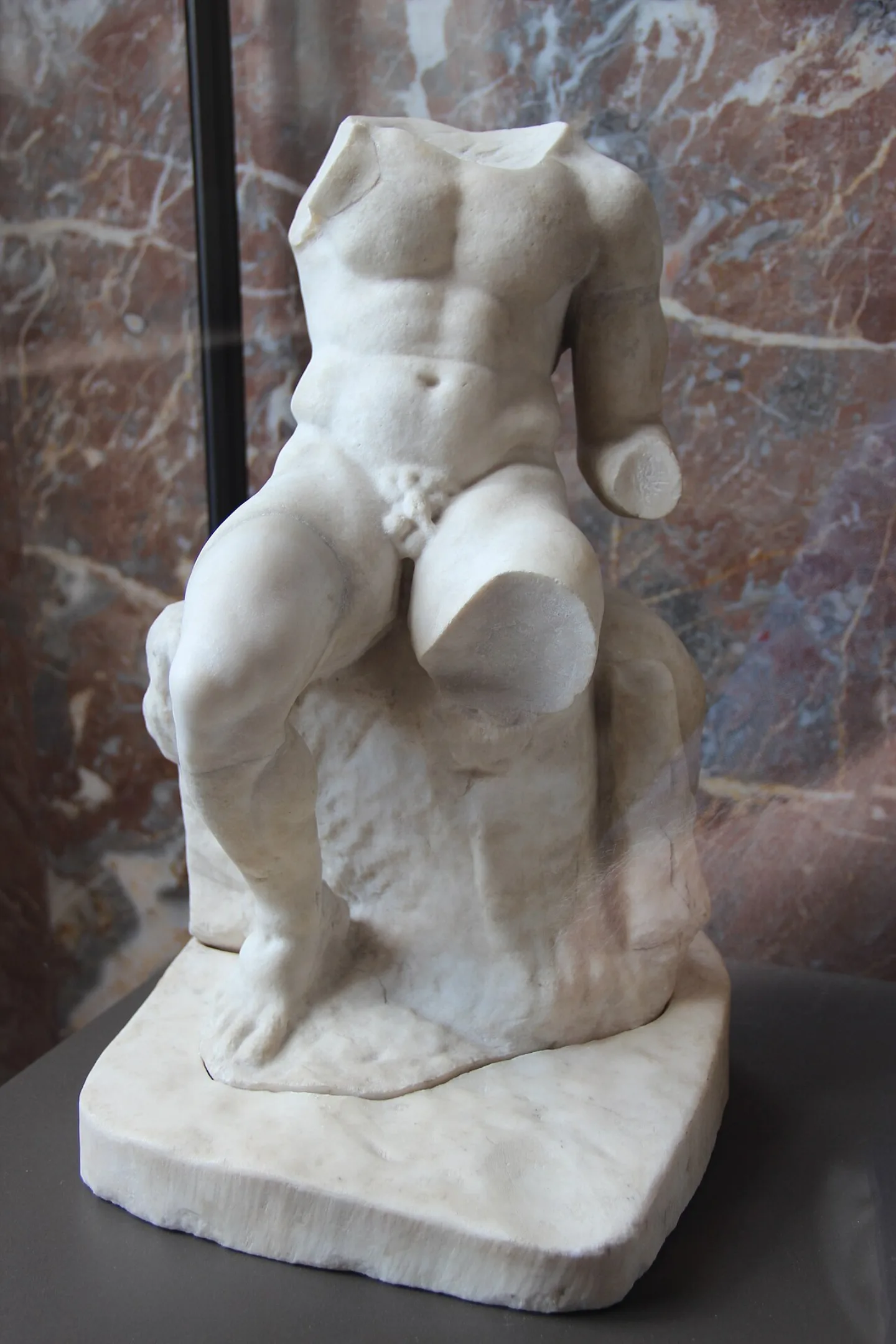
The Labors Have a Larger Context
Heracles’s labors arise within a larger sequence of family catastrophe, purification, imposed service, and later consequences.
Perseus’s Quest Is a Network
Perseus’s Gorgon quest depends on Athena, Hermes, and supernatural equipment and belongs to a larger family-and-return cycle.
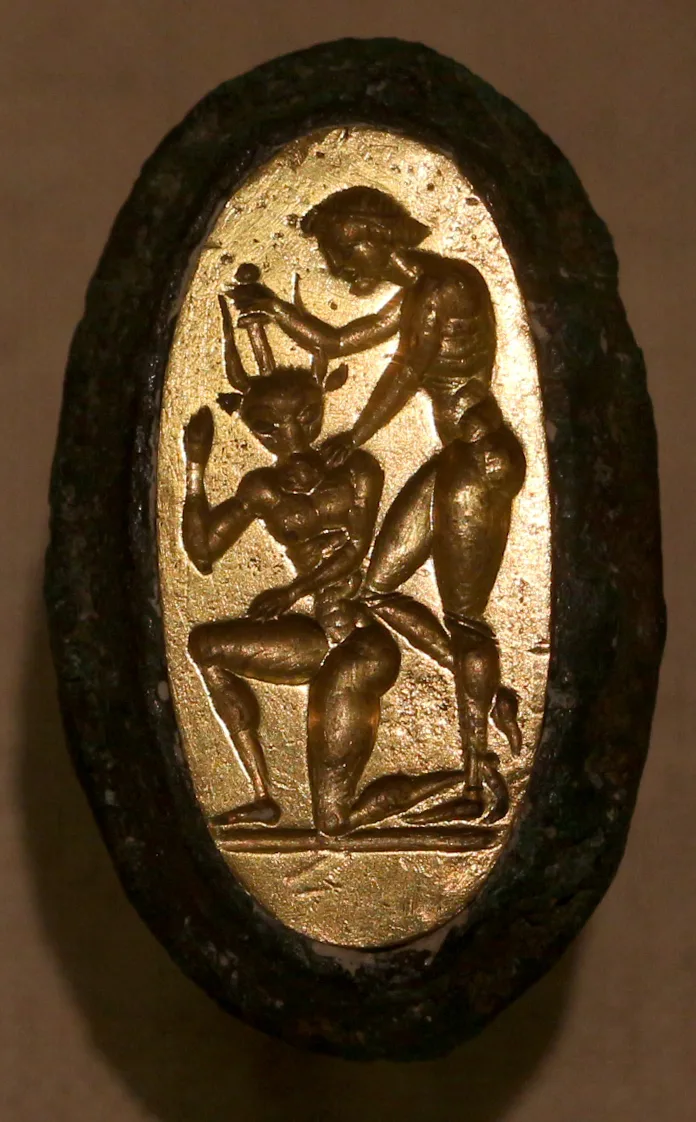
Ariadne Makes Escape Possible
Theseus kills the Minotaur and escapes the labyrinth through Ariadne’s help; ancient sources vary on the tribute and aftermath.
Matched pairs
Each item on the left goes with the one on the right.
- Perseus
- Divine helpers and special equipment
- Jason’s Golden Fleece quest
- Medea’s essential knowledge and magical help
- Theseus
- Ariadne’s help in escaping the labyrinth
Self-test
Answer each question from memory, then check your work against the answer key.
1. How does the oracle function in Acrisius’s part of the Perseus story?
- AHis attempt to evade it helps set the story in motion.
- BIt removes every choice from every character.
- CIt ends the family conflict before Perseus is born.
- DIt grants Perseus automatic invulnerability.
2. What does the term 'mythic hero' mean, unlike its everyday sense?
- AA character who always wins
- BCourageous and morally admirable
- CExtraordinary achievement, not moral perfection
- DInvulnerable due to divine ancestry
3. What best explains how Perseus succeeds in obtaining the Gorgon's head?
- AInnate invulnerability
- BSolitary willpower
- CControl over the oracle
- DDivine helpers and equipment
4. Which is NOT part of Heracles's story cycle?
- APurification
- BDivine invulnerability
- CImposed service
- DFamily killing
5. Which two elements belong to Heracles's cycle alongside family killing?
- ALoss of strength and permanent exile
- BPurification and imposed service
- CA binding oracle and invulnerability
- DImmediate divine reward and celebration
6. What is the most accurate way to organize Greek monsters?
- ABy grouping them chiefly according to physical form and unusual powers
- BBy sorting them according to allegiance for or against the Olympian gods
- CBy arranging them within a reconstructed genealogy of primordial beings
- DBy the particular families, places, and narrative problems to which they belong
7. What makes Perseus’s Gorgon quest possible in the approved account?
- AAthena, Hermes, and supernatural equipment
- BInvulnerability gained at birth
- CA solo test with no divine involvement
- DAriadne’s thread and Daedalus’s wings
8. Theseus's escape from the labyrinth after killing the Minotaur depended most directly on...
- AHermes's guidance
- BAthena's special equipment
- CAriadne's help
- DMedea's magical knowledge
9. Jason reaches the Golden Fleece only because of...
- AMedea's essential knowledge and magical help
- BAthena and Hermes's supernatural equipment
- CHeracles's exceptional strength
- DAriadne's guidance and help
10. Which claim contradicts the myths' account of the heroes' aftermath?
- AHeracles keeps suffering and serving after his labors
- BTheseus's return brings no further loss of life
- CThe Argonauts face exile and violence after their escape
- DAegeus dies after Theseus's failed signal
Go deeper
Answer key
- 1. A His attempt to evade it helps set the story in motion.The oracle creates a dilemma: Acrisius’s effort to evade the prediction helps cause the story’s action.
- 2. C Extraordinary achievement, not moral perfectionA mythic hero is marked by extraordinary achievement or suffering without guaranteed moral perfection, unlike the everyday sense of 'courageous and admirable' or invented ideas about invulnerability or always winning.
- 3. D Divine helpers and equipmentPerseus succeeds through divine helpers and special equipment, not innate invulnerability, solitary effort, or command over an oracle, which belongs to Acrisius's part of the story.
- 4. B Divine invulnerabilityHeracles's cycle involves family killing, purification, and imposed service; his story never gives him oracle-granted invulnerability.
- 5. B Purification and imposed serviceHeracles's cycle is linked to family killing, purification, and imposed service, not reward, weakened strength, or an oracle-granted invulnerability, which never appear in his story.
- 6. D By the particular families, places, and narrative problems to which they belongThe approved evidence treats monsters as parts of particular narrative networks, not one standardized bestiary.
- 7. A Athena, Hermes, and supernatural equipmentPerseus depends on Athena, Hermes, and special equipment within a larger family-and-return cycle.
- 8. C Ariadne's helpAriadne's help enables Theseus's escape after he kills the Minotaur; Medea, Athena, and Hermes belong to other heroes' cycles.
- 9. A Medea's essential knowledge and magical helpJason succeeds only because Medea supplies essential knowledge and magical help; Ariadne, Athena and Hermes, and Heracles belong to other heroes' cycles.
- 10. B Theseus's return brings no further loss of lifeAegeus dies after Theseus's failed signal, contradicting the claim that Theseus's return brings no further loss of life; the other options match the myths' account of the aftermath.
Sources
- Library and Epitome — www.perseus.tufts.edu/hopper/text?doc=Perseus%3Atext%3A1999.01.0022
- Greek Art from Prehistoric to Classical: A Resource for Educators — resources.metmuseum.org/resources/metpublications/pdf/Greek_Art_From_Prehistoric_to_Classical.pdf
Image credits
- The Labors Have a Larger Context: Wikimedia Commons · Gary Todd from Xinzheng, China · CC0 — commons.wikimedia.org/wiki/File:Ancient_Greek_Marble_Statue_of_Heracles_epitrap%C3%A9zios_(Louvre,_Ma_27)_(27684297673).jpg
- Ariadne Makes Escape Possible: Wikimedia Commons · Sailko · CC BY 3.0 — commons.wikimedia.org/wiki/File:Asia_minore,_anello_con_gemma_di_teseo_e_il_minotauro,_II-I_secolo_ac_ca.jpg

