
U.S. National Parks study guide · Lesson 1 of 27
Lesson 1: America's Best Idea
Part 1: How the Parks Came to Be · Part 2: The System by the Numbers
This is the lesson's study guide from the FlashFeed app, plus its key facts and a self-test.
What you'll be able to do
- Identify when and by whom Yellowstone and the National Park Service were founded.
- Recognize the writer and artists who gave the national-park idea its language and proof.
- Explain how the Antiquities Act let presidents create monuments, and state how many national parks exist today.
- Compare the largest and smallest national parks and where the giants cluster.
- Identify the most-visited park and the system's highest point.
Part 1: How the Parks Came to Be
The national park is a genuinely radical invention — and an American one. This part traces the idea from a single 1872 signature to the agency that now safeguards 64 of them.
Americas best idea
The phrase comes from the writer Wallace Stegner, who called the national parks "the best idea we ever had. Absolutely American, absolutely democratic, they reflect us at our best rather than our worst." What made it radical was the premise: that a nation would set aside its most spectacular wild land for everyone, in perpetuity — not for a monarch, a army, or a private estate, but for the public and for the future. Before 1872 there was no such thing anywhere on Earth. Within a few decades the idea had crossed every ocean; today more than 100 countries protect national parks of their own, every one of them a descendant of that first experiment in the American West.
The first national park
On March 1, 1872, President Ulysses S. Grant signed the act establishing Yellowstone as the world's first national park. Congress acted in part because of art: the painter Thomas Moran and photographer William Henry Jackson, traveling with the 1871 Hayden Survey, brought back the first images proving that the tales of geysers and rainbow springs were real. Lawmakers, convinced, protected the place sight unseen by most of them — a leap of faith that defined the model.
The national park service is born
Here's the strange gap: for 44 years, the parks existed with no agency to run them. Yellowstone, Yosemite, and Sequoia were patrolled by the U.S. Cavalry — including the African American Buffalo Soldiers, among the first park rangers. That ended on August 25, 1916, when President Woodrow Wilson signed the Organic Act, creating the National Park Service and charging it with a famous, almost paradoxical mandate: to conserve the parks' scenery and wildlife "unimpaired for the enjoyment of future generations" — to leave them untouched and welcome the crowds. Balancing those two halves is the Park Service's defining tension to this day. (August 25 is still celebrated as the NPS birthday.)
The antiquities act
Not every park began with an act of Congress. The Antiquities Act of 1906 let presidents protect a place instantly, by proclamation, as a national monument. Theodore Roosevelt — the "Conservation President" — used it first on Devils Tower, then on the Grand Canyon, sidestepping Congress to save land before developers could reach it. Many of today's crown jewels (Grand Canyon, Zion, Acadia, Arches, and more) started as monuments and were later upgraded to national parks.
Sixty four and counting
Of the 400-plus units the Park Service manages — monuments, seashores, battlefields, historic sites — only 64 carry the full "national park" title, the most protected designation. The list still grows: the most recent addition is Chiricahua in Arizona, redesignated from a national monument as the 64th national park in October 2026, after New River Gorge in West Virginia became the 63rd in December 2020. Knowing the difference between a "national park" and the broader "park system" is the first step to reading the whole map.
Part 2: The System by the Numbers
The 64 parks are wildly unequal — in size, in height, and in how many people walk through them. A handful of numbers gives you the whole sweep, and they make great trivia.
From the tiniest to the titanic
The range of size is almost comic. The smallest national park, Gateway Arch in St. Louis, is essentially a monument and its grounds — only about 193 acres within its boundary. The largest, Wrangell–St. Elias in Alaska, covers 13.2 million acres — bigger than Switzerland, and larger than Yellowstone, Yosemite, Grand Canyon, and several other marquee parks combined. In fact the four biggest parks are all in Alaska, where the scale of the land dwarfs anything in the Lower 48. That extreme spread is worth carrying in your head: when someone pictures "a national park," they might be imagining a postage stamp or a wilderness the size of a small country.
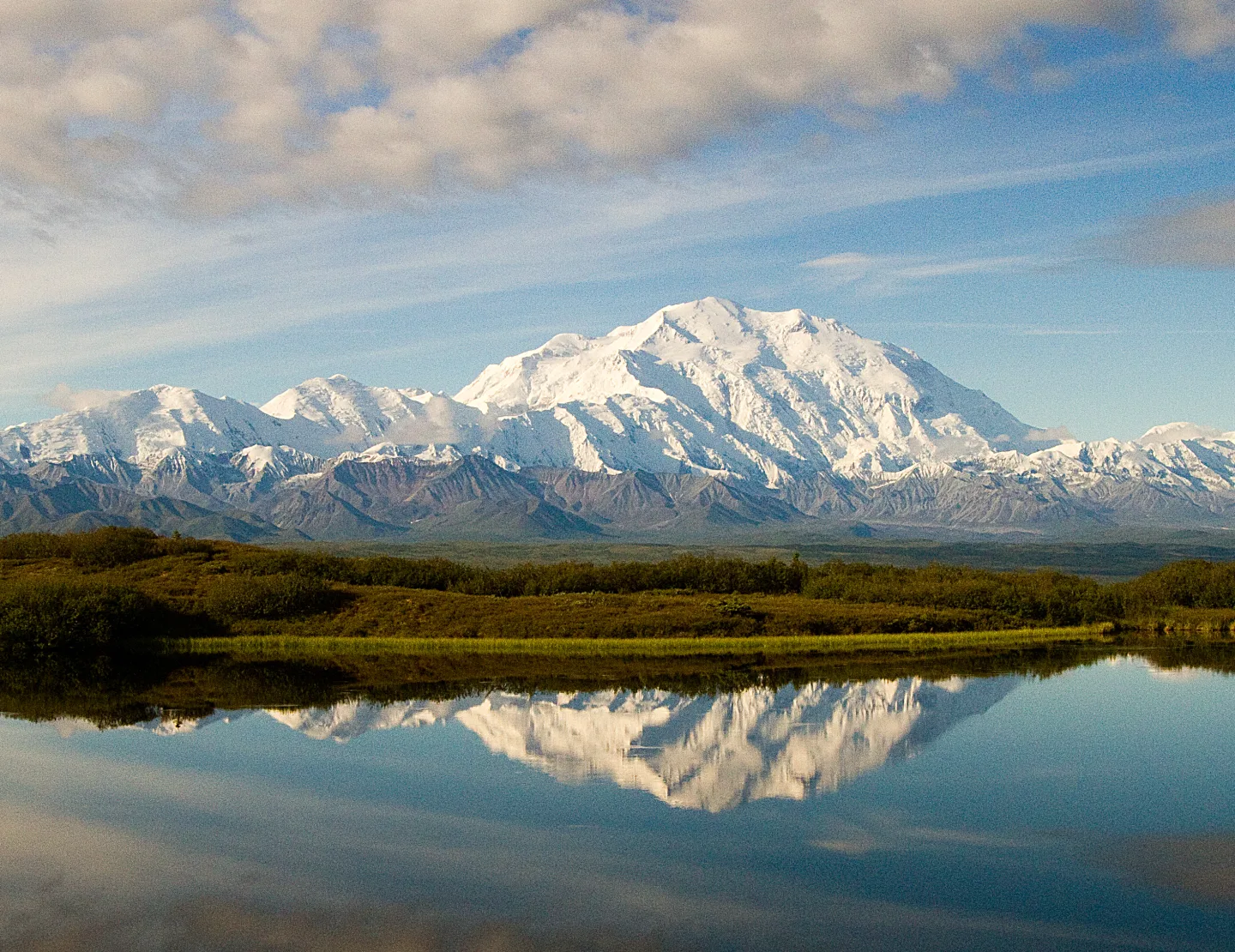
Two more extremes round out the picture. The highest point in any U.S. national park is Denali in Alaska at 20,310 feet — the tallest peak in all of North America, with a base-to-summit rise a mile greater than Everest's, according to the National Park Service. And the deepest, oldest, and most geologically extreme features tend to cluster in the West and Alaska, where tectonics and ice have had the most dramatic say. The numbers aren't just trivia; they map directly onto why each park was worth protecting.
The most visited park
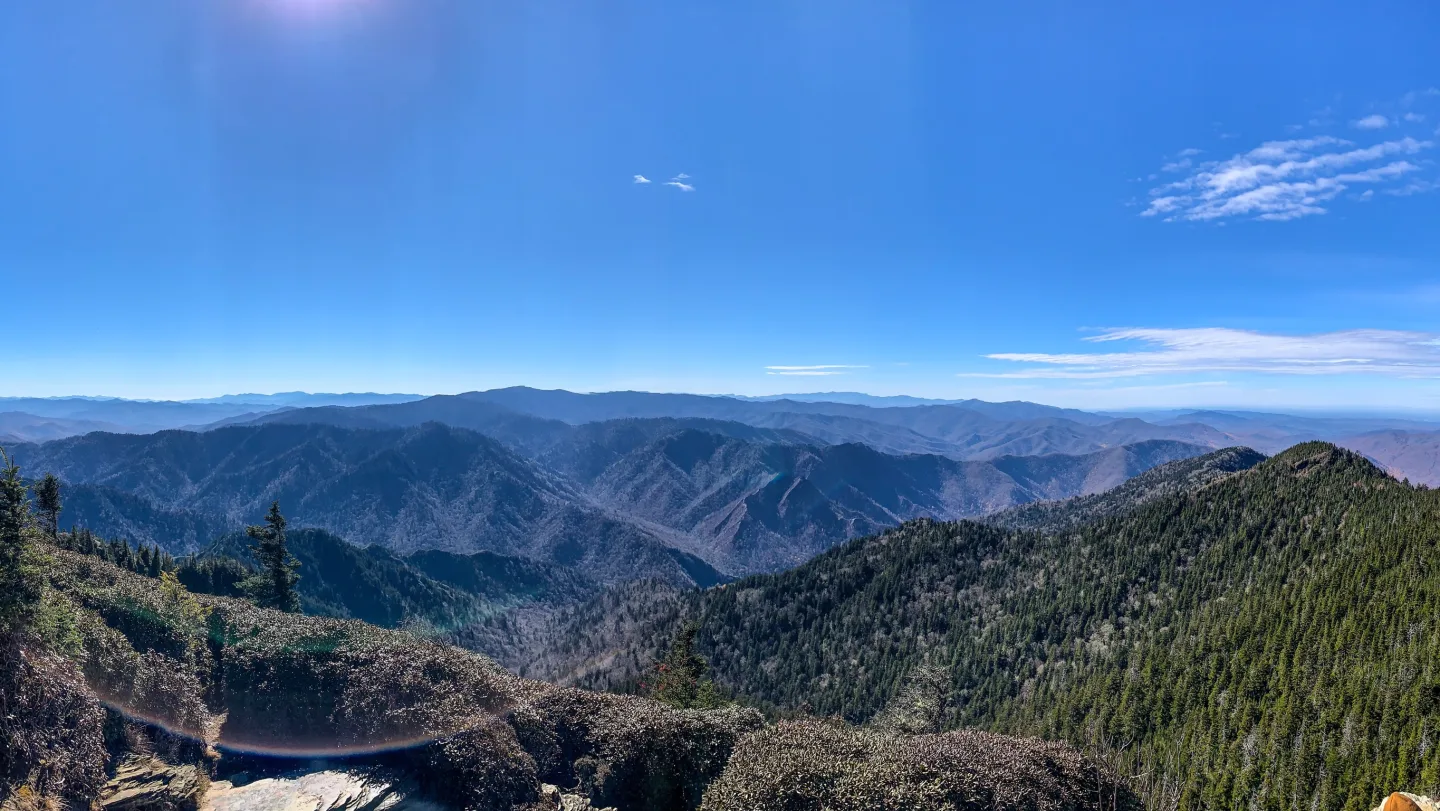
Size and fame don't line up with crowds the way you'd expect. The single most-visited national park isn't Yellowstone or the Grand Canyon — it's Great Smoky Mountains, on the Tennessee–North Carolina border, with about 12.2 million visits in 2024, more than double its nearest rival. Two things drive that: location (it sits within a day's drive of a huge share of the U.S. population, right off a major interstate), and price — the Smokies charge no entrance fee at all, because of a toll ban in Tennessee's 1951 road deed and a federal law (parking more than 15 minutes now needs a parking tag, but entry is free). Compare that with the least-visited parks, the remote Alaskan giants like Gates of the Arctic (around 11,900 visits in a year — fewer in twelve months than the Smokies see before lunch on a busy day), and you've captured the paradox of the system: a few accessible parks absorb most of the people, while the vast, wild majority see almost no one. Knowing the busiest and the loneliest parks is the key to planning a trip that matches the experience you actually want.
Key concepts
Wallace Stegner
- This figure was a writer, not a politician or explorer, yet he shaped how Americans think about the parks.
- He described them as 'absolutely American, absolutely democratic,' reflecting us at our best rather than our worst.
- He coined the celebrated line that the national parks are 'the best idea we ever had.'
Ulysses S. Grant
- As U.S. president, this man signed a genuinely radical, first-of-its-kind law into being.
- On March 1, 1872, his signature set aside wild land for everyone, in perpetuity.
- He established the world's very first national park, at Yellowstone.
Thomas Moran
- Art, as much as science, convinced Congress to protect the first park — and this man supplied it.
- Traveling with the 1871 Hayden Survey, he brought back images proving the tales of geysers were real.
- This painter's canvases, beside a photographer's plates, helped protect a place lawmakers had never seen.
William Henry Jackson
- He also joined the 1871 Hayden Survey, but he worked with a lens rather than a brush.
- His pictures of geysers and rainbow springs helped prove the wild tales were true.
- This photographer's plates, beside a painter's canvases, won protection for the world's first national park.
Woodrow Wilson
- Another U.S. president put his name to a landmark conservation law — but decades after the first park.
- On August 25, 1916, he signed the Organic Act, a date still marked as an agency's birthday.
- He created the National Park Service, charged with keeping the parks 'unimpaired for future generations.'
Key facts
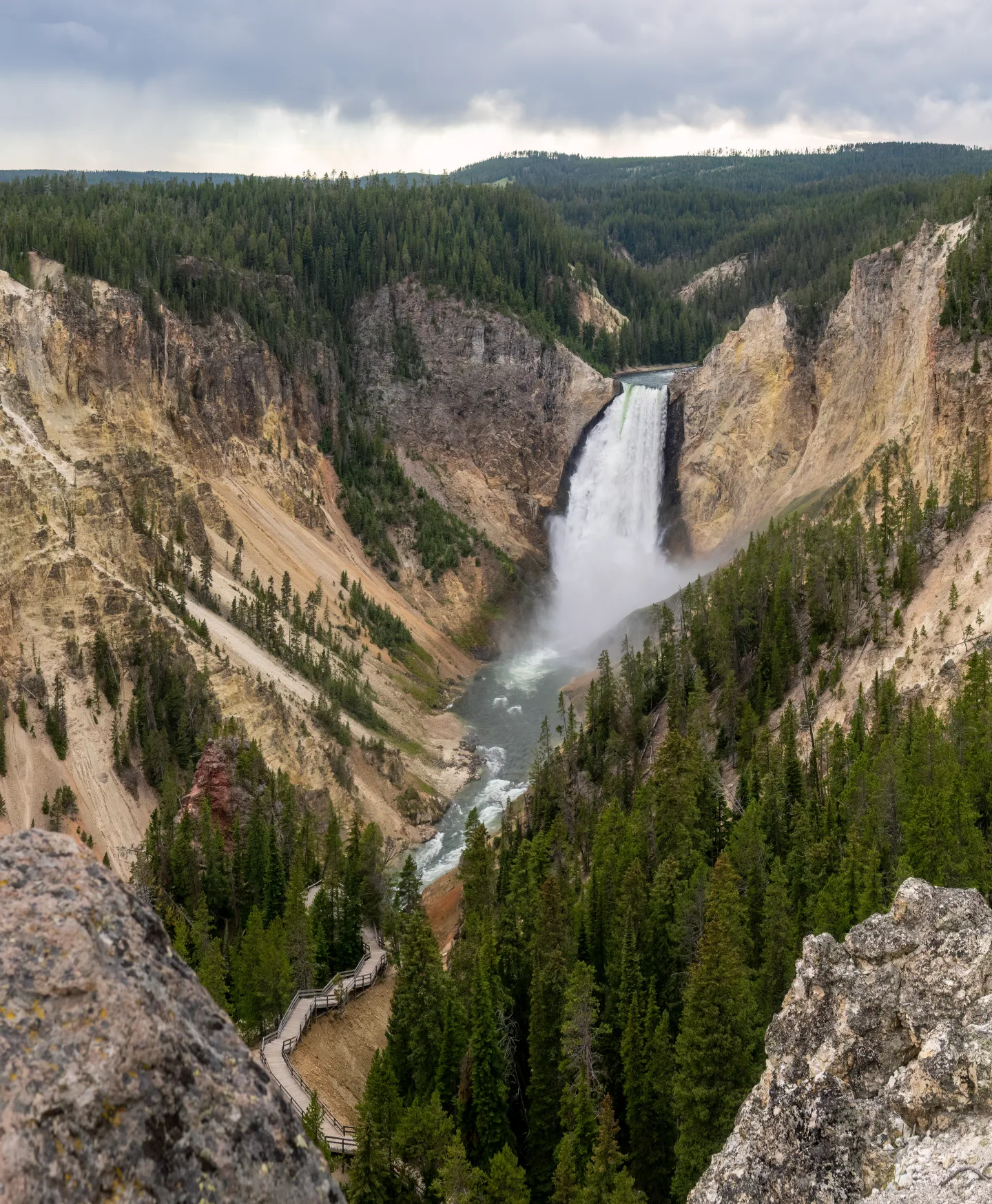
The first national park
On March 1, 1872, President Ulysses S. Grant signed Yellowstone into being — the world's first national park. The idea spread across the globe; today more than 100 nations have national parks of their own, all tracing back to that one signature.
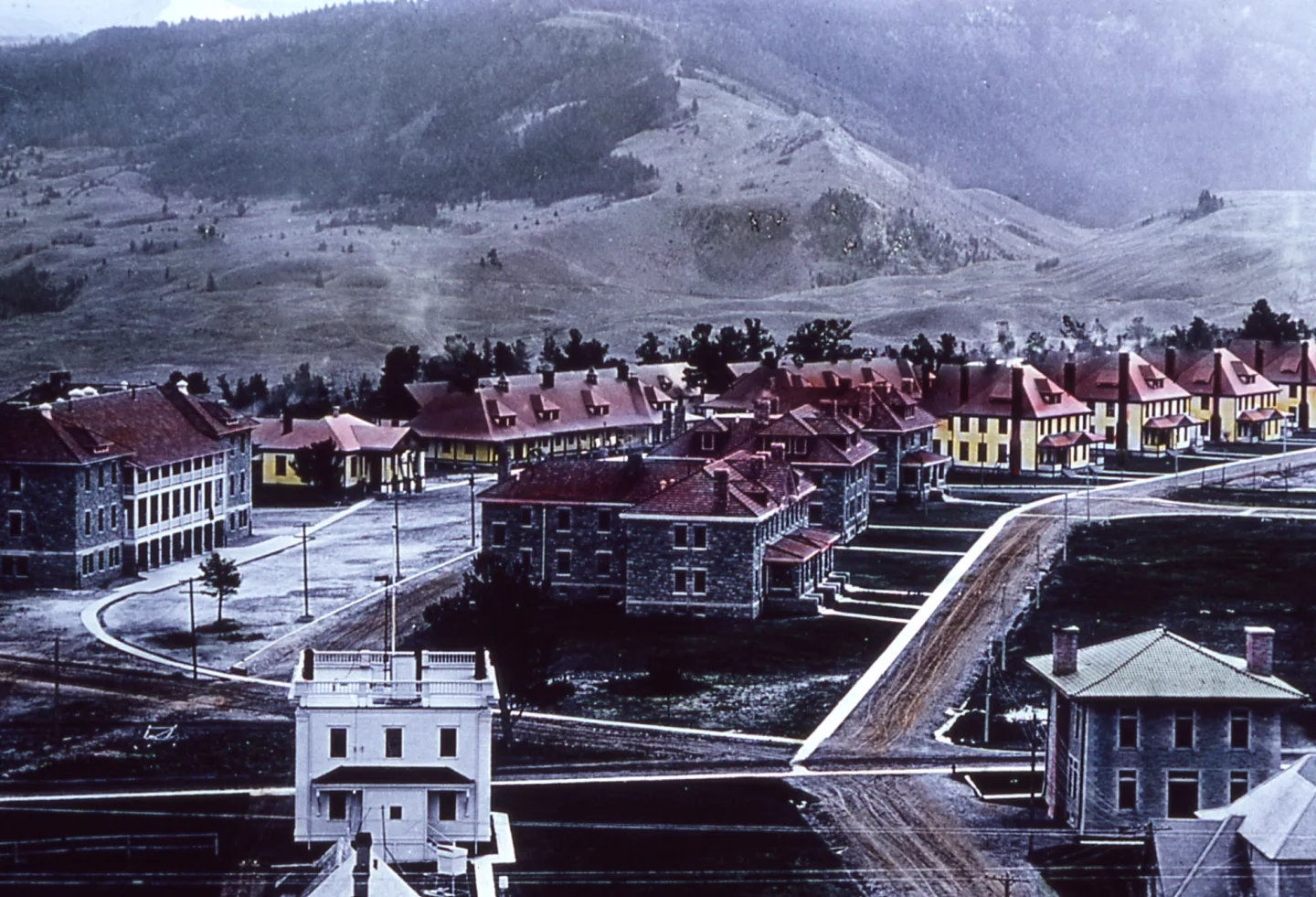
The National Park Service is born
For 44 years the parks had no agency to run them — the U.S. Cavalry even guarded Yellowstone. That changed on August 25, 1916, when the Organic Act, signed by President Woodrow Wilson, created the National Park Service to conserve the parks "unimpaired for the enjoyment of future generations."
Sixty-four and counting
There are 64 national parks in the United States — the most protected tier in the park system. The newest is Chiricahua in Arizona, redesignated from a national monument in October 2026; New River Gorge in West Virginia became the 63rd in December 2020. (The Park Service manages 400-plus units in all, but only 64 carry the full "national park" title.)
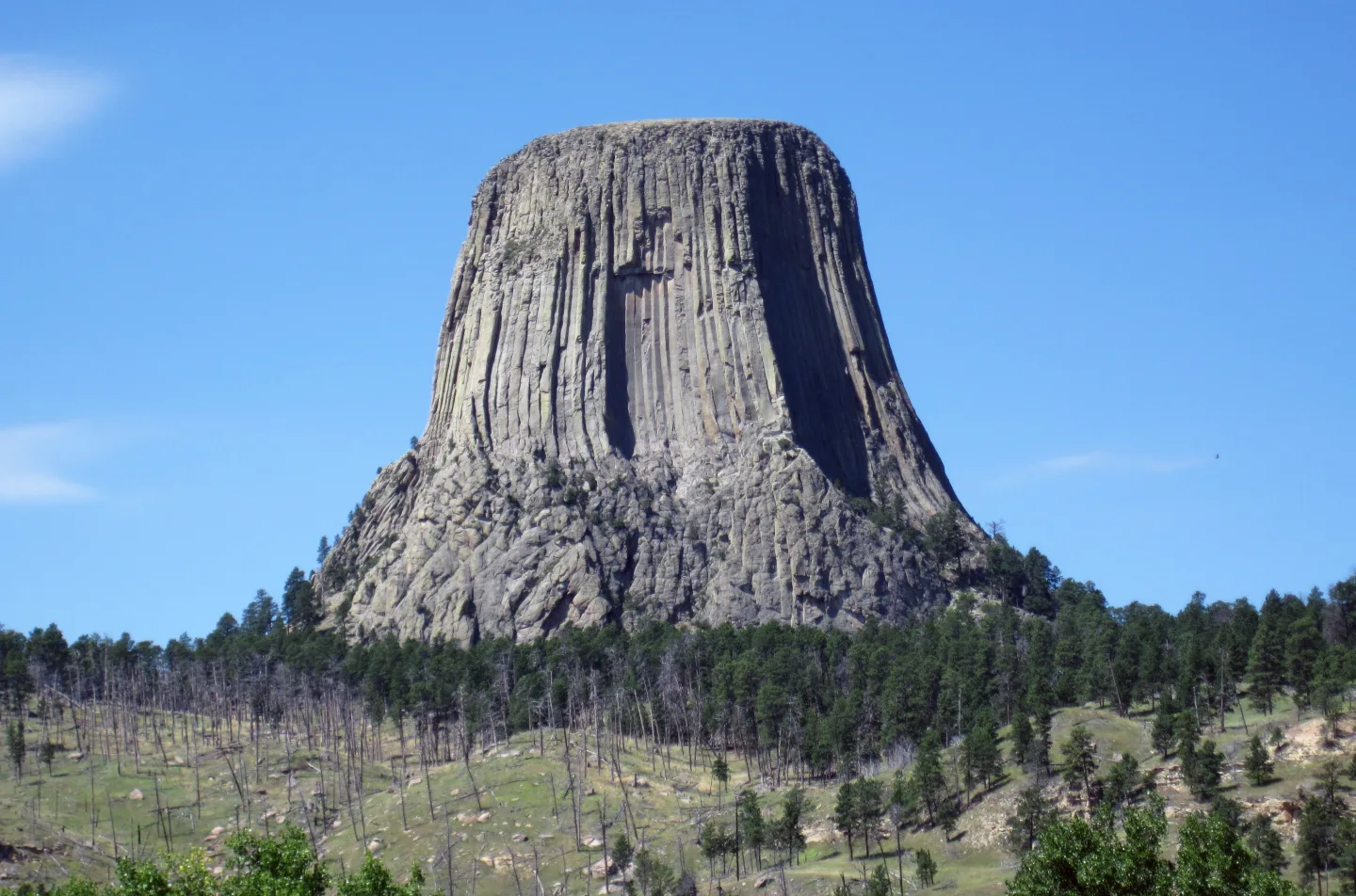
The Antiquities Act
In 1906, the Antiquities Act gave presidents the power to protect special places instantly by proclaiming them national monuments. Theodore Roosevelt used it first on Devils Tower, then on the Grand Canyon — many of today's national parks began life as monuments saved this way.
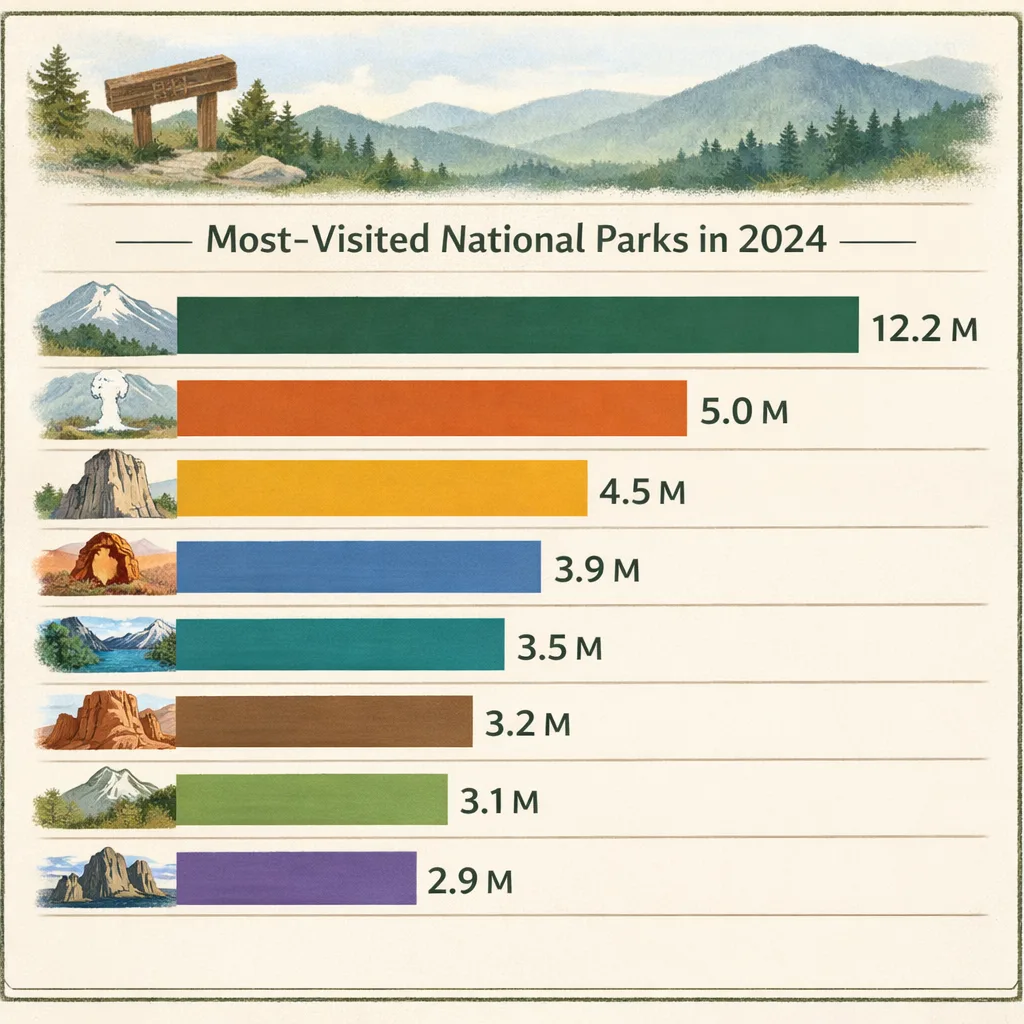
The most visited park
Great Smoky Mountains, straddling Tennessee and North Carolina, is by far the most-visited national park — about 12.2 million visits in 2024, more than double its nearest rival. It charges no entrance fee, which helps explain the crowds.
Denali
Denali in Alaska is the highest point found in any U.S. national park — and the tallest peak on the entire North American continent.
Alaska's big four
The four largest national parks in the U.S. system are all located in Alaska, where the sheer scale of the land dwarfs the Lower 48 states.
The Smokies in 2024
Great Smoky Mountains National Park logged about 12.2 million visits in 2024 — more than double the visitor count of the next-busiest national park.
By the numbers
- In what year was Yellowstone — the world's first national park — established?
- 1872 year
- In what year was the National Park Service created by the Organic Act?
- 1916 year
- How many national parks are there in the United States?
- 64 parks
- How many acres does the largest national park, Wrangell–St. Elias, cover?
- 13175799 acres
- How high is Denali, the highest peak in any U.S. national park (and in North America)?
- 20310 ft
Matched pairs
Each item on the left goes with the one on the right.
- World’s first national park
- Yellowstone (1872)
- Largest national park
- Wrangell–St. Elias, Alaska (13.2 million acres)
- Smallest national park
- Gateway Arch, Missouri (193 acres)
- Most-visited national park
- Great Smoky Mountains (12.2 million in 2024)
Self-test
Answer each question from memory, then check your work against the answer key.
1. In what year was Yellowstone established as the world's first national park?
- A1890
- B1906
- C1872
- D1916
2. Which U.S. president signed the act establishing Yellowstone in 1872?
- AAbraham Lincoln
- BWoodrow Wilson
- CTheodore Roosevelt
- DUlysses S. Grant
3. Which 1916 law created the National Park Service?
- AThe Organic Act
- BThe Homestead Act
- CThe Wilderness Act
- DThe Antiquities Act
4. For how many years did the national parks exist before an agency was created to run them?
- A100 years
- B44 years
- C63 years
- D20 years
5. Which U.S. president signed the 1916 Organic Act, creating the National Park Service?
- AUlysses S. Grant
- BWoodrow Wilson
- CTheodore Roosevelt
- DFranklin D. Roosevelt
6. Which writer called the national parks 'the best idea we ever had'?
- AHenry David Thoreau
- BJohn Muir
- CWallace Stegner
- DAnsel Adams
7. Whose paintings from the 1871 Hayden Survey helped convince Congress to protect Yellowstone?
- AThomas Moran
- BThomas Cole
- CFrederic Church
- DAlbert Bierstadt
8. Which photographer traveled with the 1871 Hayden Survey and captured the first photos of Yellowstone?
- AAnsel Adams
- BCarleton Watkins
- CEdward Weston
- DWilliam Henry Jackson
9. What did Thomas Moran and William Henry Jackson provide that convinced Congress to protect Yellowstone?
- ADetailed survey maps of park boundaries
- BThe first images proving its geysers and springs were real
- CA written petition signed by settlers
- DFinancial backing for the new park
10. Which figure gave the national-park idea its language rather than its visual proof?
- AWallace Stegner
- BFerdinand Hayden
- CThomas Moran
- DWilliam Henry Jackson
11. In what year was the Antiquities Act passed?
- A1872
- B1916
- C1890
- D1906
12. The Antiquities Act let presidents instantly protect a place by proclaiming it as what?
- AA national park
- BA wildlife refuge
- CA national monument
- DA state park
13. Which president first used the Antiquities Act, protecting Devils Tower?
- AFranklin D. Roosevelt
- BTheodore Roosevelt
- CUlysses S. Grant
- DWoodrow Wilson
14. How many national parks are there in the United States today?
- A64
- B100
- C400
- D50
15. Which of these was redesignated as the 63rd national park in December 2020?
- AGateway Arch
- BIndiana Dunes
- CWhite Sands
- DNew River Gorge
16. What is the largest U.S. national park?
- ADenali
- BYellowstone
- CWrangell–St. Elias
- DDeath Valley
17. What is the smallest U.S. national park?
- AAcadia
- BHot Springs
- CGateway Arch
- DCongaree
18. How many acres does the smallest national park, Gateway Arch, cover?
- A193 acres
- B5,000 acres
- C50,000 acres
- D13.2 million acres
19. Wrangell–St. Elias is so vast that it is larger than which of these countries?
- AIceland
- BPortugal
- CIreland
- DSwitzerland
20. The four largest U.S. national parks are all located in which state?
- AWyoming
- BAlaska
- CCalifornia
- DMontana
21. Which region's vast scale explains why the four largest national parks cluster there?
- Athe Desert Southwest
- BAlaska
- Cthe Rocky Mountains
- Dthe Pacific Northwest
22. What do the four largest national parks in the U.S. system have in common?
- Athe Gulf Coast
- BNew England
- CAlaska
- Dthe Great Lakes region
23. Which is the most-visited U.S. national park?
- AGrand Canyon
- BYosemite
- CYellowstone
- DGreat Smoky Mountains
24. About how many visits did Great Smoky Mountains receive in 2024?
- A12.2 million
- B5 million
- C50 million
- D800,000
25. What is the highest point in any U.S. national park (and in North America)?
- ADenali
- BGrand Teton
- CMount Whitney
- DMount Rainier
26. How tall is Denali, the highest peak in any U.S. national park?
- A29,032 feet
- B13,175 feet
- C14,505 feet
- D20,310 feet
27. Besides its location, what helps explain the huge crowds at Great Smoky Mountains?
- AIt is the largest park
- BIt has the tallest peak
- CIt charges no entrance fee
- DIt was the first national park
Go deeper
- WatchNo Park Anywhere Before 1872 Before 1872, no country on Earth had a national park. Then Yellowstone became the first.
- WatchFrom 193 Acres to 13 Million The smallest national park is Gateway Arch in St. Louis: just 193 acres.
- StudyU.S. National Parks in the FlashFeed app
Answer key
- 1. C 1872Yellowstone was signed into law on March 1, 1872 — the world's first national park. 1906 was the year of the Antiquities Act and 1916 created the National Park Service, so those later dates are wrong.
- 2. D Ulysses S. GrantUlysses S. Grant signed the act creating Yellowstone on March 1, 1872. None of the other three presidents signed that 1872 law.
- 3. A The Organic ActThe Organic Act of 1916 created the NPS to conserve parks 'unimpaired for future generations.' The Antiquities Act (1906) instead let presidents proclaim monuments.
- 4. B 44 yearsFrom 1872 to 1916 — 44 years — the parks had no agency; the U.S. Cavalry even guarded Yellowstone until the NPS was formed.
- 5. B Woodrow WilsonWoodrow Wilson signed the Organic Act on August 25, 1916, finally giving the parks an agency after 44 years without one. Grant had signed the Yellowstone act in 1872; Roosevelt championed the Antiquities Act.
- 6. C Wallace StegnerWallace Stegner gave the parks their famous phrase — 'absolutely American, absolutely democratic.' Muir was a naturalist; Adams a photographer.
- 7. A Thomas MoranPainter Thomas Moran traveled with the 1871 Hayden Survey and brought back images proving Yellowstone's wonders were real. The others are landscape painters not on that survey.
- 8. D William Henry JacksonWilliam Henry Jackson was the 1871 Hayden Survey's photographer, working alongside painter Thomas Moran. Ansel Adams, Carleton Watkins, and Edward Weston shot other subjects and later eras.
- 9. B The first images proving its geysers and springs were realTheir paintings and photographs were the first images proving the tales of geysers and rainbow springs were true, so lawmakers protected the place sight unseen.
- 10. A Wallace StegnerWriter Wallace Stegner supplied the words ('the best idea we ever had'); Moran and Jackson supplied the images, and Hayden led the survey.
- 11. D 1906The Antiquities Act was passed in 1906. 1872 was Yellowstone; 1916 created the NPS.
- 12. C A national monumentThe act let presidents declare national monuments by proclamation, sidestepping Congress. Many monuments were later upgraded to national parks.
- 13. B Theodore RooseveltTheodore Roosevelt, the 'Conservation President,' used the Antiquities Act first on Devils Tower, then the Grand Canyon.
- 14. A 64Only 64 units carry the full 'national park' title, though the Park Service manages over 400 units in all.
- 15. D New River GorgeNew River Gorge in West Virginia became the 63rd national park in December 2020. Gateway Arch (2018), Indiana Dunes and White Sands (2019) were redesignated earlier.
- 16. C Wrangell–St. EliasWrangell–St. Elias is the largest U.S. national park, about 13.2 million acres — larger than several marquee parks combined. Yellowstone, Denali, and Death Valley are all far smaller.
- 17. C Gateway ArchGateway Arch in St. Louis — essentially a monument and its surrounding grounds — is the smallest national park, dwarfed by giants such as Wrangell–St. Elias.
- 18. A 193 acresThe Park Service's acreage listing counts about 193 acres within Gateway Arch's boundary. 13.2 million acres is the largest park, Wrangell–St. Elias — the opposite extreme.
- 19. D SwitzerlandAt about 13.2 million acres (~53,000 sq km), Wrangell–St. Elias is larger than Switzerland. Iceland, Ireland, and Portugal are each bigger, so 'larger than' them would be false.
- 20. B AlaskaAll four biggest parks sit in Alaska, where the scale of the land dwarfs the Lower 48. Wrangell-St. Elias alone spans 13.2 million acres, larger than Switzerland and bigger than several marquee parks combined.
- 21. B AlaskaAlaska's scale dwarfs the Lower 48 — its parks, including 13.2-million-acre Wrangell–St. Elias, include the four biggest in the system.
- 22. C AlaskaAll four of the largest national parks sit in Alaska, where the land's scale dwarfs anything in the Lower 48.
- 23. D Great Smoky MountainsGreat Smoky Mountains, on the Tennessee–North Carolina border, draws by far the most visitors — more than double its nearest rival.
- 24. A 12.2 millionThe Smokies logged about 12.2 million visits in 2024, more than double the next-busiest park.
- 25. A DenaliDenali in Alaska is the highest point in any U.S. national park and the tallest peak in North America.
- 26. D 20,310 feetDenali rises to 20,310 feet. 14,505 ft is Mount Whitney; 29,032 ft is Everest — both tempting but wrong.
- 27. C It charges no entrance feeThe Smokies charge no entrance fee, which, with its accessible location, helps explain the crowds.
Sources
- U.S. National Parks — Events & Milestones
- U.S. National Parks — Records & Superlatives
Image credits
- The first national park: Wikimedia Commons · Rhododendrites · CC BY-SA 4.0 — commons.wikimedia.org/wiki/File:Grand_Canyon_of_the_Yellowstone_Lower_Falls_(95819p).jpg
- The National Park Service is born: Wikimedia Commons · Unknown author · Public domain — commons.wikimedia.org/wiki/File:Fort_Yellowstone_Circa_1910.jpg
- The Antiquities Act: Wikimedia Commons · James St. John · CC BY 4.0 — commons.wikimedia.org/wiki/File:Columnar-jointed_porphyritic_phonolite_(Eocene,_49_Ma;_Devils_Tower,_Wyoming,_USA)_48.jpg
- The most visited park: AI-generated (gpt-image-1.5)
- Denali: Wikimedia Commons · Denali National Park and Preserve · Public domain — commons.wikimedia.org/wiki/File:Wonder_Lake_and_Denali.jpg
- The Smokies in 2024: Wikimedia Commons · AppalachianCentrist · CC BY-SA 4.0 — commons.wikimedia.org/wiki/File:View_atop_Cliff_Tops_on_Mount_LeConte,_GSMNP,_TN.jpg


