
U.S. National Parks study guide · Lesson 27 of 27
Spotlight: Everglades
The River of Grass · Where Alligators and Crocodiles Meet · Visiting the Everglades
This is the lesson's study guide from the FlashFeed app, plus its key facts and a self-test.
What you'll be able to do
- Explain the Everglades as the first park protected for its ecosystem, and its river of grass.
- Distinguish the Everglades' sawgrass marsh and hardwood-hammock habitats.
- Explain the alligator-crocodile coexistence and the park's rarest wildlife and honors.
- Identify the Everglades' wading birds, reptiles, panther, and python invaders.
- Plan an Everglades visit around its trails, waterways, and dry season.
The River of Grass
Most national parks were set aside for a view — a canyon, a peak, a geyser. The Everglades was set aside for something you can barely see at all: a living wetland, moving so slowly it looks like it isn't moving. To grasp this park you have to stop looking for scenery and start seeing a system.
Everglades
Established on December 6, 1947, Everglades National Park was the first park in the United States created to protect an ecosystem rather than dramatic scenery — a genuine turning point in how Americans thought about conservation. It spreads across roughly 1.5 million acres of southern Florida, making it the largest tropical wilderness in the U.S. and the third-largest park in the Lower 48. Its champion, the writer Marjory Stoneman Douglas, gave its defining feature a name that stuck: the "River of Grass."
The River of Grass
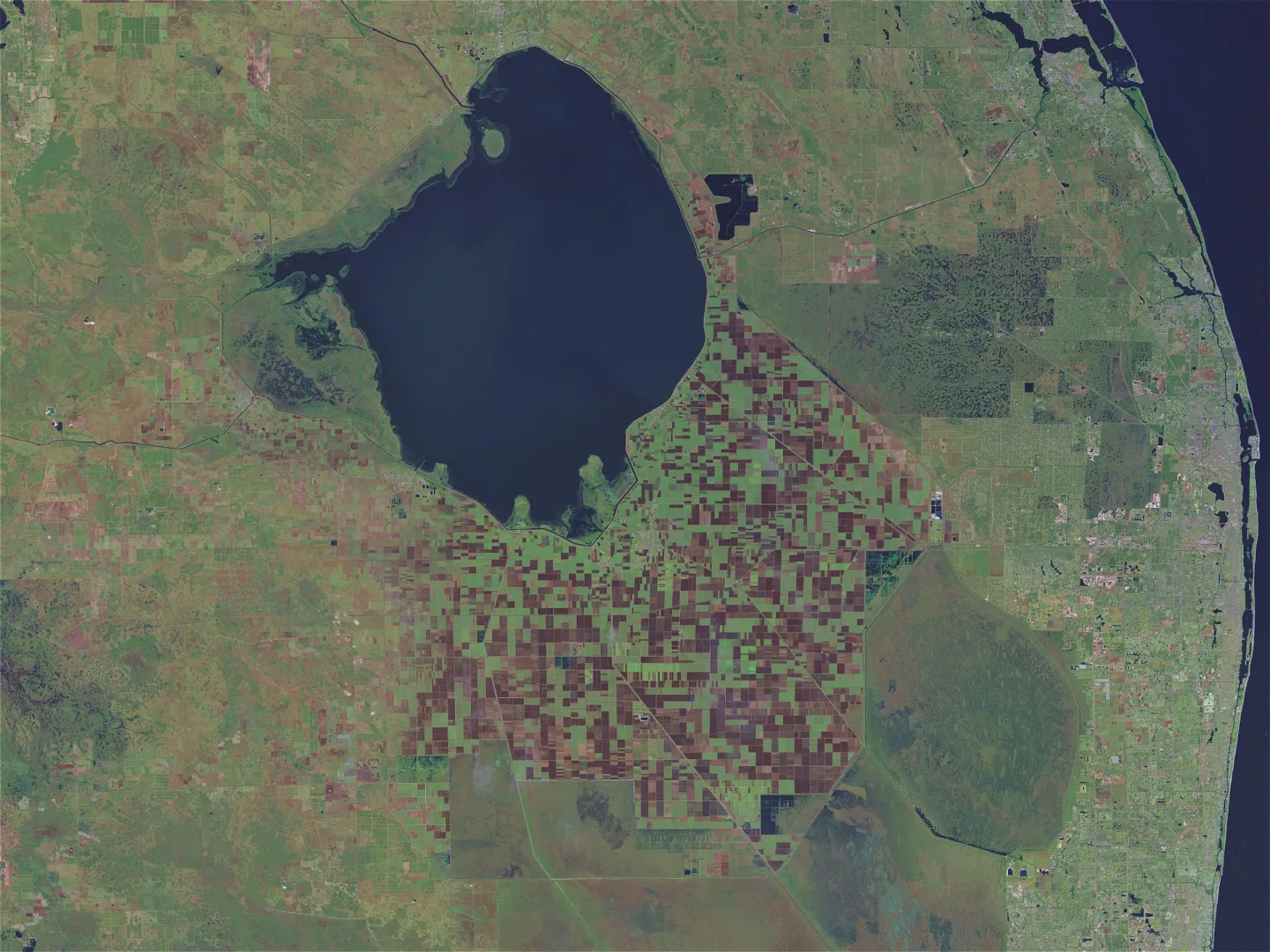
The Everglades is not a swamp — it is a river, just an extraordinarily wide and shallow one. The sheet of fresh water is about 60 miles wide and only inches deep, sliding south across a nearly flat limestone shelf at roughly a mile a day toward Florida Bay. Historically this sheet flow began as the overflow of Lake Okeechobee, the vast inland lake to the north. Everything in the park — grass, trees, gators, birds — depends on that slow, shallow current of clean water.
A Mosaic of Habitats
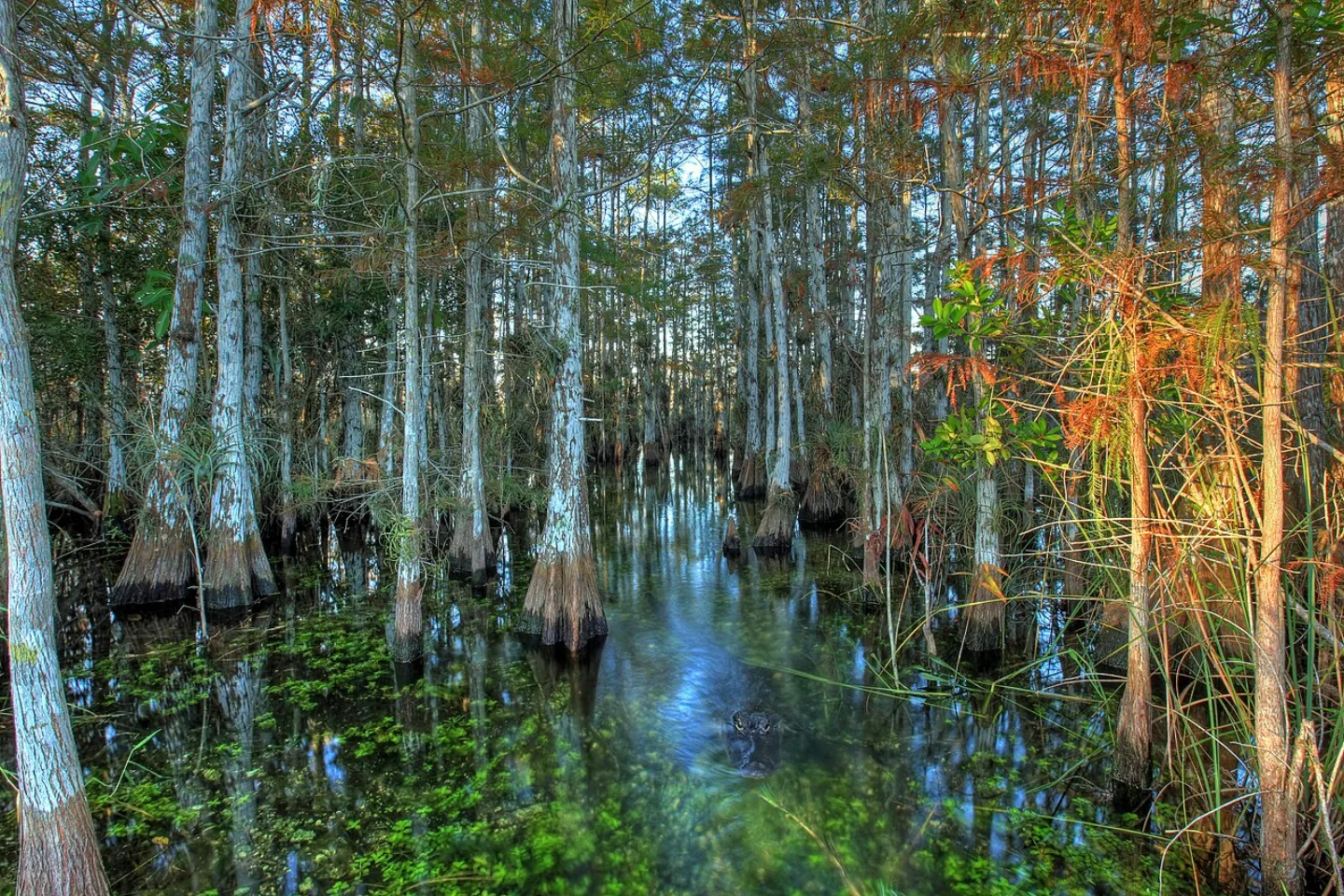
Because the land is so flat, tiny changes in elevation — sometimes only inches — create entirely different worlds. Open sawgrass prairie, the sharp-edged sedge that carpets the marsh, gives way to hardwood hammocks: tree islands of dense broadleaf forest perched on slightly higher, drier ground. Elsewhere there are domes of bald cypress, pine rockland on exposed limestone, and a coastal tangle of mangroves where fresh water meets the salty Gulf. The whole park sits barely above the sea, ranging from sea level to only about 8 feet — one of the flattest parks in the system.
The numbers and the people
Keep a few figures in mind: established in 1947, about 1.5 million acres, a river of grass roughly 60 miles wide, and a high point near 8 feet. The human story matters too. Marjory Stoneman Douglas named the River of Grass and led the decades-long fight to protect it. Lake Okeechobee is the source that once fed the whole sheet flow. And the central idea — a park protected for its ecosystem, not its views — was, in 1947, a genuinely new thing under the American sun.
Where Alligators and Crocodiles Meet
The Everglades is one of the great wildlife theaters of North America — and the stage for a few remarkable standoffs. Some of its dramas are ancient and natural; one of the most consequential arrived only in the last few decades, in a shipping crate.
Where Alligators and Crocodiles Meet
South Florida is the only place on Earth where American alligators and American crocodiles live side by side, and the Everglades is where the two meet in the same waters. Telling them apart is easy once you know the cues: the alligator is dark, broad-snouted, and prefers fresh water, while the rarer crocodile is grayish-green, narrow-snouted, and tolerates the brackish coast. Their ranges overlap exactly where the freshwater marsh meets the salty mangrove fringe — a meeting of two ancient reptiles found only in South Florida.
The Endangered Florida Panther
The Florida panther, a tawny subspecies of cougar, once ranged across the whole Southeast before hunting pushed it to the edge. As of the mid-2020s, only around 200 survive, most in and around the Everglades, making it one of the rarest large cats in North America. Each panther is secretive and wide-ranging — a single cat may patrol some 200 square miles — and roadside collisions remain a leading threat to the slow recovery of the population.
The Burmese Python Invasion
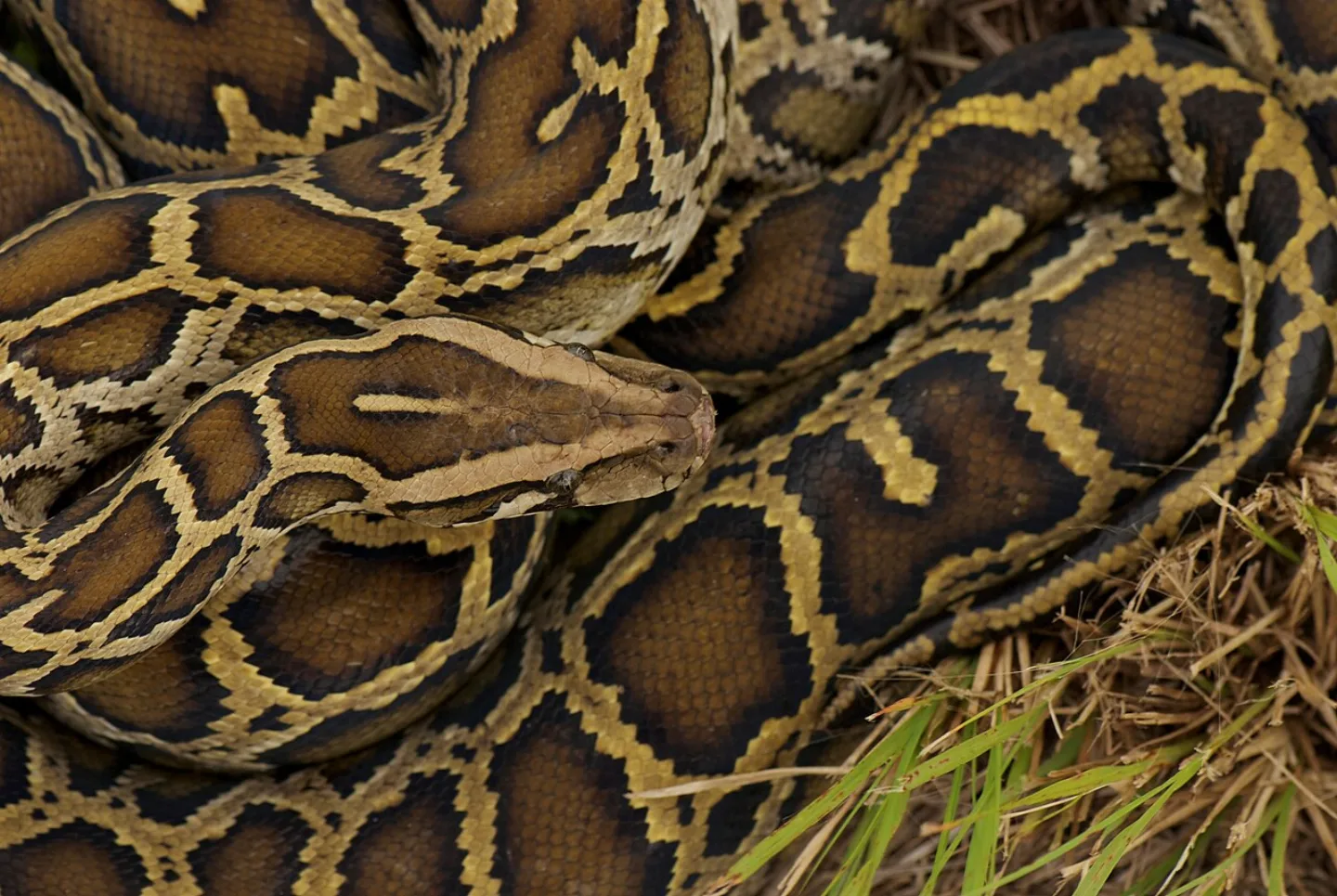
The park's gravest modern threat is not a predator that belongs here. Released or escaped pets, Burmese pythons — giant constrictors native to Southeast Asia — have exploded across the Everglades since the 1990s. With no natural predators, they devour native mammals and birds; in some areas raccoons, opossums, and rabbits have nearly disappeared. Hard to spot in the sawgrass and prolific breeders, pythons are now hunted through state-run removal programs in a fight to slow their spread.
A wealth of wading birds and a sea cow
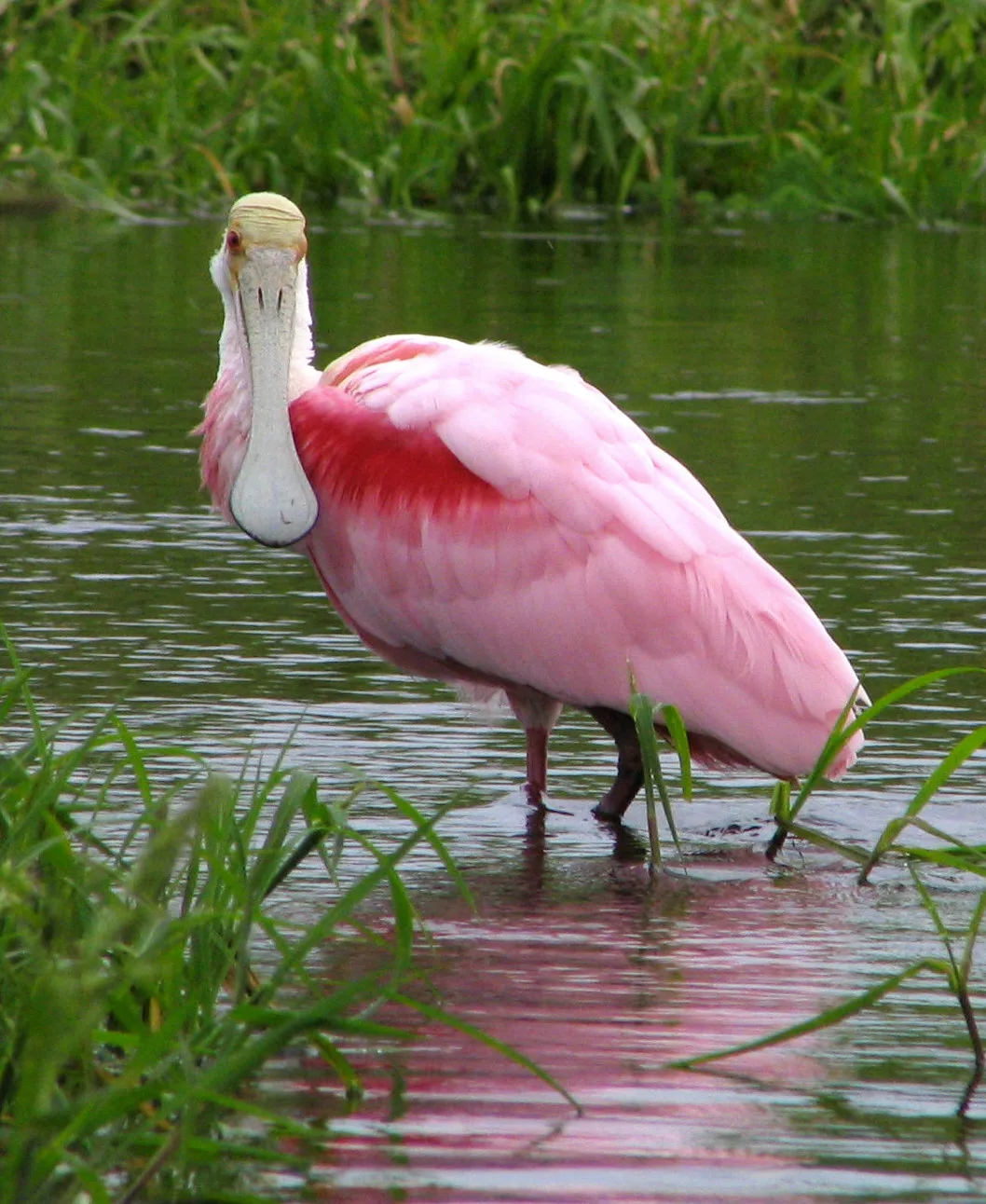
The Everglades is a paradise for wading birds. The roseate spoonbill is unmistakable — a vivid pink bird that sweeps its flat, spoon-shaped bill side to side through the shallows. The anhinga, or "snakebird," swims underwater to spear fish, then perches with wings spread wide to dry. In the warm coastal waters glides the gentle West Indian manatee, the slow-moving "sea cow" grazing on seagrass.
A rare triple honor
Few places on Earth are so internationally celebrated. The Everglades holds a triple international honor — it is at once a UNESCO World Heritage Site, an International Biosphere Reserve, and a Wetland of International Importance, 3 designations rarely held together. Yet that global status sits beside an uncomfortable truth: the wetland is only about half its original size, and invasive pythons keep reshaping its food web from below.
Visiting the Everglades
The Everglades rewards the patient. There are no soaring summits to climb — the magic here is at eye level and just below the waterline, and the trick is knowing where and when to look. Get the season right and a flat green nowhere turns into one of the densest wildlife shows in the country.
The Anhinga Trail
If you walk a single path in the Everglades, make it the Anhinga Trail. It's a flat, easy boardwalk of about 0.8 mile that loops over a freshwater slough near the main entrance. In the dry season the shrinking water draws wildlife into astonishing close range: alligators sun on the banks, anhingas dry their wings on the railings, and herons, turtles, and gar crowd the pools. Few short walks anywhere deliver so much for so little effort.
Shark Valley
On the park's northern edge, Shark Valley centers on a 15-mile paved loop you can ride by bicycle or aboard an open-air tram. At the far end stands a 65-foot observation tower with a long spiraling ramp — a rare high vantage over country this flat. From the top the River of Grass opens into a 360-degree sea of sawgrass, threaded with water and dotted with tree islands and basking gators to every horizon.
The Restoration Challenge
The Everglades is also one of the world's great repair jobs. A century of canals, levees, and farmland diverted the fresh water the wetland runs on, shrinking it to roughly half its original size and leaving the park with only about half its natural water flow. The response — Everglades restoration — is among the largest environmental efforts on Earth: re-engineering the plumbing of South Florida to send clean water south again, so the River of Grass can flow as it once did.
Getting on the water and timing your trip
Beyond the boardwalks, the park opens to paddlers. The Wilderness Waterway is a roughly 99-mile route winding through mangroves between Flamingo and Everglades City, while the Ten Thousand Islands offer a maze of mangrove islets along the Gulf, prized by kayakers. Note that the famous airboats operate in adjacent areas, not the park's core. Above all, time your visit: the best season is the dry winter, December through April — comfortable, far fewer mosquitoes, and falling water that concentrates wildlife around the remaining pools. The park drew about 950,000 visitors in 2024. Summer, by contrast, is hot, stormy, and buggy.
Key concepts
American crocodile
- One of two big reptiles that share the Everglades — the rarer of the pair.
- Grayish-green and narrow-snouted, it tolerates the brackish coast where freshwater marsh meets salty mangrove.
- The park is the only place on Earth where this animal lives side by side with its broad-snouted, freshwater-loving cousin the alligator.
Florida panther
- A tawny subspecies of cougar that once ranged across the whole Southeast.
- Hunting pushed it to the brink; today only about 200 survive, most in and around the Everglades.
- A single wide-ranging cat may patrol some 200 square miles, and roadside collisions still set back its slow recovery.
Burmese python
- The Everglades' gravest modern threat is an animal that doesn't belong here at all.
- A giant constrictor native to Southeast Asia, released from the pet trade, it has exploded across the wetland since the 1990s.
- With no natural predators it devours native mammals — raccoons and rabbits have nearly vanished in places — and is now hunted through state removal programs.
roseate spoonbill
- A wading bird whose vivid pink plumage makes it unmistakable in the Everglades shallows.
- It feeds by sweeping its flattened, rounded beak from side to side as it wades.
West Indian manatee
- A gentle, slow-moving giant that glides through the Everglades' warm coastal waters.
- Nicknamed the 'sea cow,' it grazes peacefully on beds of seagrass.
Anhinga
- Nicknamed the 'snakebird,' this Everglades bird swims underwater to spear fish.
- After a dive it perches with wings spread wide to dry, and a famous boardwalk trail near the main entrance is named for it.
Key facts
A Mosaic of Habitats
Tiny changes in elevation — sometimes just inches — create wildly different worlds across the Everglades. Sawgrass prairie gives way to tree islands called hardwood hammocks, to dwarf and dome cypress, to pine rockland, and finally to a tangle of coastal mangroves where fresh water meets the salty Gulf. Sitting barely above sea level on porous limestone, the whole park ranges from sea level to only about 8 feet high.
Lake Okeechobee
Historically, the Everglades' slow-moving sheet flow began as overflow from vast Lake Okeechobee, which fed water south through the marsh toward Florida Bay.
Where the Nickname Comes From
Sawgrass is a sharp-edged sedge that blankets the Everglades' open marsh prairie, growing so densely across the wetland that it inspired the park's nickname, the "River of Grass."
The Burmese Python Invasion
Released or escaped pets, Burmese pythons have exploded across the Everglades since the 1990s. These giant constrictors, native to Southeast Asia, have no natural predators here and devour native mammals and birds — in some areas raccoons, opossums, and rabbits have nearly vanished. Sprawling, hard to find in the sawgrass, and prolific breeders, the python is now the park's gravest invasive threat, hunted by state-run removal programs.
Three Rare Titles
The Everglades is recognized simultaneously as a World Heritage Site, an International Biosphere Reserve, and a Wetland of International Importance, a combination rarely held together by any single place.
The Roseate Spoonbill
The roseate spoonbill is one of the Everglades' most vivid wading birds, a bright pink species that sweeps its flat, spoon-shaped bill side to side to feed in shallow water.
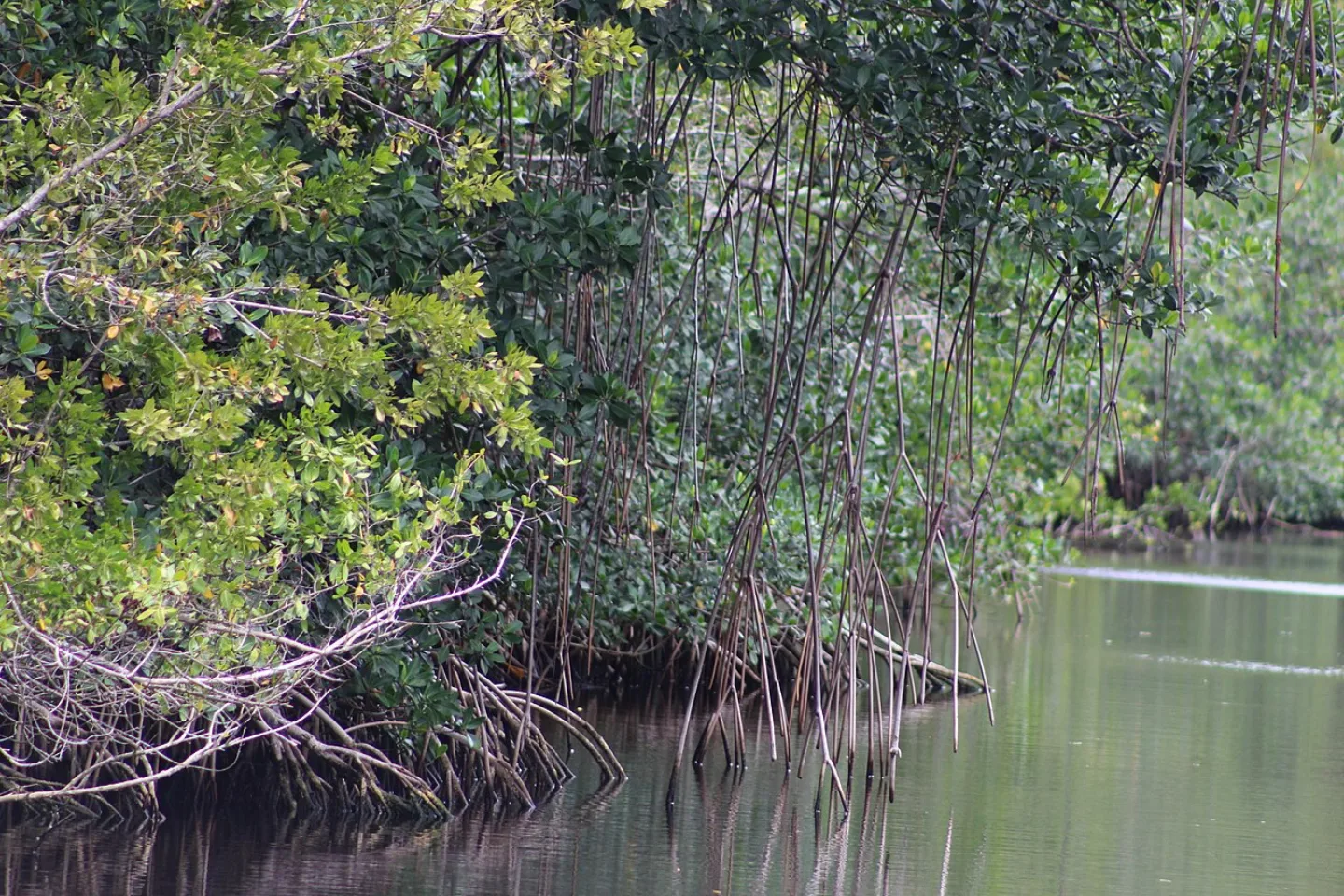
The Restoration Challenge
A century of canals, levees, and farms diverted the fresh water that the Everglades runs on, shrinking the wetland to roughly half its original size and leaving the park with only about half its natural water flow. The response is one of the largest environmental restoration efforts on Earth — re-engineering the plumbing of South Florida to send clean water south again, so the River of Grass can flow as it once did.
Where the Wildlife Gathers
The dry winter season, December through April, brings the Everglades' most comfortable weather, far fewer mosquitoes, and lower water that concentrates wildlife around remaining pools.
99 Miles of Mangroves
The roughly 99-mile Wilderness Waterway winds through mangrove forest between Flamingo and Everglades City, a route prized by paddlers.
By the numbers
- In what year was Everglades established as a national park?
- 1947 year
- About how many acres does Everglades National Park cover?
- 1500000 acres
- About how many miles wide is the Everglades' slow "River of Grass"?
- 60 miles
- About how many feet above sea level is the highest ground in the Everglades — one of the flattest parks?
- 8 ft
- Roughly how many endangered Florida panthers survive in the wild?
- 200 panthers
- How many major international designations does the Everglades hold (World Heritage, Biosphere Reserve, Wetland of International Importance)?
- 3 designations
- About how long is the Everglades' wildlife-packed Anhinga Trail boardwalk?
- 0.8 miles
- About how long is the paved Shark Valley loop by bike or tram?
- 15 miles
- About how many recreation visits did Everglades receive in 2024?
- 950000 visitors
Matched pairs
Each item on the left goes with the one on the right.
- Marjory Stoneman Douglas
- Writer-activist who named it the "River of Grass" and led the fight to protect it
- Lake Okeechobee
- Vast inland lake whose overflow once fed the entire Everglades sheet flow
- Sawgrass
- Sharp-edged sedge that blankets the marsh and gives the "River of Grass" its name
- Hardwood hammock
- Tree island of dense broadleaf forest rising on slightly higher, drier ground
- American crocodile
- Grayish, narrow-snouted, salt-tolerant — far rarer here than the alligator
- Roseate spoonbill
- Pink wading bird with a flat, spoon-shaped bill it sweeps through shallow water
- Anhinga
- Spear-billed "snakebird" that swims underwater, then spreads its wings to dry
- West Indian manatee
- Gentle, slow-moving "sea cow" that grazes in the park's warm coastal waters
- Triple international honor
- World Heritage Site, Biosphere Reserve, and Wetland of International Importance
- Wilderness Waterway
- ~99-mile paddling route through mangroves between Flamingo and Everglades City
- Airboats
- Fan-powered flat boats — offered in adjacent areas, not in the park's core
- Ten Thousand Islands
- Maze of mangrove islets along the Gulf coast, prized for kayaking
Self-test
Answer each question from memory, then check your work against the answer key.
1. When it was established in 1947, what made Everglades a turning point in American conservation?
- AIt was the first national park co-managed with a Native nation
- BIt was the first U.S. national park created to protect an ecosystem rather than scenery
- CIt was the first national park established east of the Mississippi River
- DIt was the first national park created from donated private land
2. In what year was Everglades established as a national park?
- A1947
- B1934
- C1968
- D1916
3. Which statement about the Everglades is NOT true?
- AIt was the first U.S. park created to protect an ecosystem
- BIts River of Grass is roughly 60 miles wide
- CIt covers about 1.5 million acres
- DIt was established in 1847
4. Who named the Everglades the "River of Grass" and led the decades-long fight to protect it?
- AAnsel Adams
- BRachel Carson
- CMarjory Stoneman Douglas
- DJohn Muir
5. Historically, the Everglades' slow sheet flow began as the overflow of which body of water?
- AFlorida Bay
- Bthe Gulf of Mexico
- CLake Okeechobee
- Dthe St. Johns River
6. What is sawgrass, the plant that gives the "River of Grass" its name?
- AA sharp-edged sedge that carpets the open marsh
- BA broadleaf tree of the forest islands
- CA towering dome of bald cypress
- DA salt-tolerant coastal mangrove
7. What is a hardwood hammock in the Everglades?
- AA coastal tangle of salt-tolerant mangroves
- BA tree island of dense broadleaf forest on slightly higher, drier ground
- CAn open prairie of sharp-edged sedge
- DA dome of bald cypress standing in water
8. Why does the nearly flat Everglades hold so many distinct habitats side by side?
- ASteep canyon walls that trap separate microclimates
- BWide swings in annual temperature between zones
- CVolcanic soils of sharply differing mineral content
- DTiny changes in elevation, sometimes only inches, create entirely different worlds
9. Which of the following is NOT one of the Everglades' habitats?
- ASawgrass prairie
- BCoastal mangroves
- CAlpine tundra above the treeline
- DHardwood hammock tree islands
10. The Everglades ranges from sea level to a high point of only about how many feet, making it one of the flattest parks?
- A8,000 feet
- B8 feet
- C80 feet
- D800 feet
11. In the Everglades — the only place on Earth where the two coexist — how can you tell an American alligator from an American crocodile?
- AThe alligator is dark and broad-snouted and prefers fresh water; the crocodile is grayish-green and narrow-snouted and tolerates the brackish coast
- BThe alligator lives only along the salty mangrove coast, while the crocodile stays in the freshwater marsh
- CBoth are broad-snouted, but the alligator is larger and only the crocodile ventures inland
- DThe alligator is grayish-green and narrow-snouted and lives in salt water; the crocodile is dark and broad-snouted and lives in fresh water
12. Roughly how many endangered Florida panthers survive today, most in and around the Everglades?
- AAbout 750
- BAbout 90
- CAbout 1,500
- DAbout 200
13. The Everglades' rare triple international honor consists of which three designations?
- ANational Monument, State Park, and Marine Sanctuary
- BDark Sky Reserve, Geopark, and Ramsar buffer zone
- CWorld Heritage Site, Biosphere Reserve, and Wetland of International Importance
- DWorld Heritage Site, National Seashore, and Wilderness Area
14. How is the rarer American crocodile distinguished from the alligator in the Everglades?
- ADark, broad-snouted, and restricted to fresh water
- BGrayish-green, narrow-snouted, and tolerant of the brackish coast
- CSalt-tolerant but dark and broad-snouted
- DGrayish-green, narrow-snouted, and restricted to the freshwater marsh
15. What makes the Everglades unique among all places on Earth regarding these two reptiles?
- AIt is the only place where American alligators and American crocodiles live side by side
- BIt is the only U.S. park that has any crocodiles
- CIt is where alligators and crocodiles interbreed
- DIt holds the world's largest alligator population
16. Which Everglades wading bird is vivid pink and sweeps a flat, spoon-shaped bill through the shallows?
- AGreat blue heron
- BAnhinga
- CWood stork
- DRoseate spoonbill
17. The "snakebird" that swims underwater to spear fish, then perches with wings spread to dry, is the:
- AGreat blue heron
- BGreat egret
- CAnhinga
- DRoseate spoonbill
18. What is the gravest modern invasive threat to the Everglades, a giant constrictor native to Southeast Asia?
- ANile monitor
- BAmerican crocodile
- CFlorida panther
- DBurmese python
19. Which of these Everglades animals is an invasive species that does NOT belong there naturally?
- AAmerican alligator
- BBurmese python
- CFlorida panther
- DRoseate spoonbill
20. The gentle, slow-moving "sea cow" that grazes on seagrass in the Everglades' warm coastal waters is the:
- AWest Indian manatee
- BAmerican crocodile
- CFlorida panther
- DAnhinga
21. When is the best season to visit the Everglades?
- ADry winter (December–April)
- BEarly autumn hurricane season
- CLate spring at peak mosquito season
- DWet summer (June–September)
22. About how long is the Anhinga Trail, the wildlife-packed boardwalk near the Everglades' main entrance?
- A2.5 miles
- B6 miles
- C12 miles
- D0.8 mile
23. Shark Valley's paved loop, ridden by bike or open-air tram, is about how long, ending at a 65-foot observation tower?
- A65 miles
- B15 miles
- C99 miles
- D0.8 mile
24. The roughly 99-mile Wilderness Waterway paddling route winds through mangroves between which two points?
- AKey West and Everglades City
- Bthe Anhinga Trail and Miami
- CFlamingo and Everglades City
- DShark Valley and Florida Bay
25. Which statement about visiting the Everglades is NOT true?
- AThe best season is the dry winter, December through April
- BAirboats operate throughout the park's core
- CShark Valley has a 65-foot observation tower
- DThe Ten Thousand Islands are prized by kayakers
Go deeper
Answer key
- 1. B It was the first U.S. national park created to protect an ecosystem rather than sceneryEarlier parks preserved dramatic scenery — canyons, peaks, geysers. Everglades (1947) was the first set aside to protect a living ecosystem itself, a genuinely new idea in how Americans thought about conservation.
- 2. A 1947Everglades was established on December 6, 1947. 1916 is the founding of the National Park Service, not this park.
- 3. D It was established in 1847Everglades was established in 1947, not 1847. The other statements are all accurate: ~1.5 million acres, a ~60-mile-wide sheet flow, and the first park set aside for an ecosystem.
- 4. C Marjory Stoneman DouglasWriter-activist Marjory Stoneman Douglas gave the Everglades its defining name, the "River of Grass," and championed its protection.
- 5. C Lake OkeechobeeThe vast inland Lake Okeechobee overflowed to feed the entire sheet flow. Florida Bay is where that fresh water flows TO, at the southern end.
- 6. A A sharp-edged sedge that carpets the open marshSawgrass is the sharp-edged sedge that blankets the open marsh prairie. Mangroves and cypress are separate Everglades habitats.
- 7. B A tree island of dense broadleaf forest on slightly higher, drier groundHardwood hammocks are tree islands of dense broadleaf forest perched on ground just inches higher and drier than the surrounding marsh.
- 8. D Tiny changes in elevation, sometimes only inches, create entirely different worldsBecause the land is so flat, elevation changes of just inches shift a spot from sawgrass marsh to a drier tree island, producing wildly different habitats.
- 9. C Alpine tundra above the treelineThe Everglades sits barely above sea level, so it has no alpine tundra. Sawgrass prairie, hardwood hammocks, and coastal mangroves are all real habitats there.
- 10. B 8 feetThe park's highest ground is only about 8 feet above sea level, which is exactly why inches-scale elevation changes matter so much for its habitats.
- 11. A The alligator is dark and broad-snouted and prefers fresh water; the crocodile is grayish-green and narrow-snouted and tolerates the brackish coastThe dark, broad-snouted alligator favors fresh water, while the rarer grayish-green, narrow-snouted crocodile tolerates the brackish coast — and their ranges overlap only where marsh meets mangrove, a meeting found only in South Florida.
- 12. D About 200Only around 200 Florida panthers survive, making this tawny subspecies of cougar one of the rarest large cats in North America.
- 13. C World Heritage Site, Biosphere Reserve, and Wetland of International ImportanceThe Everglades holds all three at once: World Heritage Site, International Biosphere Reserve, and Wetland of International Importance, a combination rarely held together.
- 14. B Grayish-green, narrow-snouted, and tolerant of the brackish coastThe crocodile is grayish-green, narrow-snouted, and tolerates brackish coastal water. Dark, broad-snouted, freshwater-favoring describes the alligator.
- 15. A It is the only place where American alligators and American crocodiles live side by sideThe Everglades is the only place on Earth where American alligators and American crocodiles coexist, overlapping where freshwater marsh meets salty mangrove.
- 16. D Roseate spoonbillThe roseate spoonbill is unmistakable: a bright pink bird that sweeps its flat, spoon-shaped bill side to side to feed in shallow water.
- 17. C AnhingaThe anhinga, or "snakebird," swims submerged to spear fish, then perches with wings held wide open to dry them.
- 18. D Burmese pythonReleased or escaped Burmese pythons, native to Southeast Asia, have exploded across the Everglades since the 1990s, devouring native mammals and birds.
- 19. B Burmese pythonThe Burmese python is a non-native invader from Southeast Asia. The panther, spoonbill, and alligator are all native to the Everglades.
- 20. A West Indian manateeThe West Indian manatee is the gentle "sea cow" that grazes on seagrass in the park's warm coastal waters.
- 21. A Dry winter (December–April)The dry winter season brings comfortable weather, far fewer mosquitoes, and lower water that concentrates wildlife around remaining pools. Summer is hot, stormy, and buggy.
- 22. D 0.8 mileThe Anhinga Trail is a flat, easy boardwalk of about 0.8 mile looping over a freshwater slough, famous for close wildlife in the dry season.
- 23. B 15 milesShark Valley centers on a 15-mile paved loop leading to a 65-foot observation tower with a rare high view over the flat River of Grass.
- 24. C Flamingo and Everglades CityThe ~99-mile Wilderness Waterway threads through mangroves between Flamingo and Everglades City, a route prized by paddlers.
- 25. B Airboats operate throughout the park's coreAirboats operate in adjacent areas, not the park's core. The dry winter is the best season, the Ten Thousand Islands draw kayakers, and Shark Valley's tower is 65 feet.
Sources
- U.S. National Parks — Everglades
Image credits
- A Mosaic of Habitats: Everglades NPS from Homestead, Florida, United States · Public domain — commons.wikimedia.org/wiki/File:Cypress_Dome_with_Alligator_(2),_NPSphoto,_G.Gardner_(9101884286).jpg
- Lake Okeechobee: Wikimedia Commons · NASA · Public domain — commons.wikimedia.org/wiki/File:Florida_Lac_Okeechobee.jpg
- The Burmese Python Invasion: Bryan Falk, USGS. Public domain. · Public domain — commons.wikimedia.org/wiki/File:A_Burmese_python_coiled_in_the_grass_in_the_Everglades.jpg
- The Roseate Spoonbill: Wikimedia Commons · Mwanner · CC BY-SA 3.0 — commons.wikimedia.org/wiki/File:Roseate_Spoonbill_-_Myakka_River_State_Park.jpg
- The Restoration Challenge: evergladesnps · Public domain — commons.wikimedia.org/wiki/File:Mangrove_Estuary_(39601730540).jpg


