
Philosophy: The Big Questions study guide · Lesson 8 of 15
Eastern Philosophy
Indian Philosophy · Buddhism · Chinese Philosophy · Ubuntu & African Philosophy
This is the lesson's study guide from the FlashFeed app, plus its key facts and a self-test.
What you'll be able to do
- Identify the six orthodox (Ṣaḍdarśana) schools and match Nyāya, Sāṃkhya, and Mīmāṃsā to their domains
- Explain Advaita's non-duality — māyā and 'Tat tvam asi' — and contrast it with Dvaita
- Reconstruct the Four Noble Truths and Buddhism's structural analysis of the path and the self
- Distinguish Confucian virtue (rén, junzi) from the Daoist ideal of wu wei
- Explain Ubuntu's relational personhood and contrast it with Descartes' cogito
Indian philosophy is one of the world's oldest continuous traditions, and it organizes itself around a single fault line: whether a school accepts the authority of the Vedas. That choice sorts every school into orthodox or heterodox, and within the orthodox camp it produced six great "viewpoints" — among them Vedānta, whose boldest branch claims that you, in your deepest self, are identical to the absolute.
Orthodox and Heterodox
The first question Indian philosophy asks of a school is not "do you believe in God?" but "do you accept the Vedas?" — the ancient body of sacred texts. Schools that treat the Vedas as authoritative are āstika, conventionally translated "orthodox." Schools that reject Vedic authority are nāstika, "heterodox" — most importantly Buddhism and Jainism, which built entire systems without leaning on the Vedas at all. The distinction is about textual foundations for knowledge, not theism: some āstika schools are barely interested in a creator god, while remaining firmly orthodox by this test.
Ṣaḍdarśana
The orthodox tradition crystallized into six schools, collectively the Ṣaḍdarśana ("six viewpoints"), often studied as three complementary pairs. Nyāya handles logic and epistemology; Vaiśeṣika offers a metaphysics of atoms and categories of being. Sāṃkhya supplies a dualist metaphysics; Yoga turns that metaphysics into a disciplined eight-limbed practice. Mīmāṃsā systematizes ritual duty; Vedānta reflects on the ultimate reality, Brahman, behind the rituals. Together they cover logic, nature, the self, practice, duty, and the absolute — a full philosophical curriculum.
Nyāya
Nyāya is the school of careful reasoning. Its lasting contribution is a theory of the pramāṇas — the valid sources of knowledge: perception, inference, comparison, and reliable testimony. By spelling out exactly how a belief earns the status of knowledge, Nyāya gave the whole tradition its tools for debate, much as Aristotle's logic did in the West.
Sāṃkhya
Sāṃkhya is rigorously dualist. It splits all reality into puruṣa, pure consciousness, and prakṛti, primordial matter (including the mind and its activity). Suffering arises because consciousness mistakenly identifies with matter; liberation comes from clearly distinguishing the two, so that the witnessing self stands free of the churning world. Yoga borrows this map and adds the practical means to walk it.
Mīmāṃsā
Mīmāṃsā is the school of Vedic exegesis — the disciplined interpretation of the texts in order to perform ritual dharma (duty) correctly. Where Vedānta asks what the Vedas ultimately mean about reality, Mīmāṃsā asks what they command us to do, and how to do it rightly.
The Snake and the Rope
Śaṅkara (c. 788–820 CE), the towering figure of Advaita Vedānta ("non-duality"), explained human error with an unforgettable image. In dim light you see a snake on the path and recoil; a lamp arrives and reveals a rope. The snake never existed — you projected a familiar shape onto a neutral thing. So too, we project a world of separate objects onto the one reality, Brahman. Recognition, not effort, dispels the error.
Māyā
Māyā names this condition. It is often loosely translated "illusion," but Śaṅkara means something subtler: not that the world is fake, but that we misperceive it — reading the single reality of Brahman as a crowd of independent things. The rope is genuinely there; only the snake is mistaken.
Tat Tvam Asi
The Upaniṣadic formula "Tat tvam asi" — "That art thou" — is Advaita's heart. The individual self (ātman) and universal consciousness (Brahman) are not two things in need of joining; they are already one, and moksha (liberation) is simply waking up to that. Madhva's rival Dvaita ("dualism") school insisted, against Śaṅkara, that God and the soul remain eternally distinct — the orthodox tradition arguing fiercely with itself.
Buddhism begins not with a theory but with a problem: suffering. Its founder framed his teaching like a physician — diagnosing the illness, naming its cause, promising a cure, and prescribing a treatment. Along the way it makes one of philosophy's most startling claims: that the solid, permanent self you take yourself to be does not exist.
The Middle Way
Siddhartha Gautama (~563–483 BCE) was raised as a sheltered prince. His first journeys beyond the palace walls confronted him with sickness, old age, and death, and the shock set him on a search. He abandoned his luxury and threw himself into extreme asceticism — fasting nearly to death — before rejecting that too. The path he finally found, as the Buddha ("awakened one"), lay between indulgence and self-torture. He likened the mind to a lute string: too loose and it makes no sound, too tight and it snaps. The Middle Way tunes it to exactly the right tension.
The Four Noble Truths
The Buddha's first sermon laid out four truths in the form of a medical diagnosis. First, dukkha: life is pervaded by suffering and dissatisfaction. Second, samudaya: this suffering has a cause — craving (taṇhā). Third, nirodha: the suffering can cease, a state called nirvana. Fourth, magga: there is a treatment, the Noble Eightfold Path. The structure matters as much as the content — it reframes a spiritual crisis as a solvable problem with a known cure.
Dukkha
Dukkha, the First Noble Truth, is wider than ordinary pain. It includes the obvious sufferings, but its deeper meaning is the chronic, low-grade dissatisfaction baked into impermanence. Even genuine pleasures are tinged with dukkha because they end, and we know they will end. Nothing we cling to stays.
Taṇhā
Taṇhā, craving, is the Second Noble Truth's answer to why we suffer. We suffer not because the world is bad but because we cling — grasping at what we want, recoiling from what we don't, and aching to become something other than we are. Craving is the engine; suffering is its exhaust.
Nirvana
Nirvana is the Third Noble Truth: the cessation of suffering is genuinely possible. The word literally evokes "blowing out" — nirvana is the extinguishing of craving, like a flame that goes out once its fuel is removed. It is not annihilation but release: the end of the compulsive grasping that kept the fire burning.
The Noble Eightfold Path
The Noble Eightfold Path is the Fourth Noble Truth made practical — eight factors that form the treatment. They fall under three headings. Wisdom: Right Understanding and Right Intention. Ethics: Right Speech, Right Action, Right Livelihood. Meditation: Right Effort, Right Mindfulness, Right Concentration. The three reinforce one another — clear seeing shapes conduct, ethical conduct steadies the mind, and a steady mind sees more clearly still. "Right" here means apt or skillful, not merely rule-following. The path is a curriculum for transformation, not a checklist.
No-Self
Buddhism's most radical claim is anattā — no-self. The "I" that feels permanent and unified is, under examination, a stream of changing processes with no fixed owner behind them. There is experience without a separate experiencer. Clinging to a permanent self, the Buddha taught, is itself a root of suffering: we exhaust ourselves defending something that was never solid to begin with.
The Five Aggregates
If there is no self, what are we? Buddhism analyzes a person into five aggregates: form (the body), feeling (pleasant/unpleasant tone), perception, mental formations (volitions and habits), and consciousness. Each is impermanent and constantly changing; none of them — alone or stacked together — is a permanent self. The self is a convenient label for a bundle, not a thing.
Classical Chinese philosophy grew out of an age of warfare, and its two great schools answered the chaos in opposite ways. Confucius prescribed cultivating character and relationships; the Taoists prescribed letting go of contrivance and moving with the grain of nature.
Confucius and the Analects
Confucius (Kongzi, 551–479 BCE) was a teacher and official who watched the warring states of his era dissolve into violence and concluded that the remedy was moral education, not force. He left no treatise; his disciples gathered his conversations into the Analects. For Confucius, education was never job training — it was moral formation, shaping a person fit to govern. Virtue, not birth, was the true qualification for rule.
Rén
Confucius's central virtue is rén (仁) — benevolence or humaneness. It is a settled disposition of care toward others that shows itself not in grand gestures but in the proper conduct of everyday relationships. Rén is cultivated, not inherited; one grows into it through practice and the example of better people.
The Confucian Golden Rule
Asked whether one word could guide a whole life, Confucius offered shu (恕), reciprocity: "What you do not want done to yourself, do not do to others" (Analects 15.24). This is the Golden Rule in its negative, restraint-based form. Confucius did not leave it abstract — he embedded it in the Five Relationships: ruler–subject, parent–child, husband–wife, elder–younger sibling, and friend–friend. Each carries its own lǐ (ritual propriety), the fitting conduct through which rén becomes visible. When every relationship is rightly maintained, society is harmonious.
Junzi vs. Xiaoren
Confucius contrasts the junzi — the "exemplary" or "superior" person — with the xiaoren, the "petty" person. Crucially, the difference is one of cultivated character, not social rank. The junzi has worked on themselves, acts from rén, and puts virtue to use in service to others; the xiaoren is governed by appetite and self-interest. Anyone can become a junzi through moral effort.
The Way That Cannot Be Named
Taoism's founding text, Laozi's Tao Te Ching (~500 BCE), opens with a deliberate paradox: "The Tao that can be told is not the eternal Tao." The Tao — "the Way" — is the dynamic, self-organizing principle by which nature works. It can be pointed at but not pinned down; the instant you fix it in a definition, you hold a word instead of the living reality. Taoism therefore prizes intuition over rigid doctrine.
The Usefulness of Emptiness
Chapter 11 of the Tao Te Ching delivers a quiet reversal: "Thirty spokes join in the wheel's hub; it is the center hole that makes it useful. Shape clay into a vessel; it is the space within that makes it useful. Cut doors and windows for a room; it is the holes which make it useful." We fixate on substance — the spokes, the clay, the walls — and overlook the emptiness, yet it is the emptiness that does the work.
Wu Wei
Wu wei literally means "non-action," but it does not mean idleness. It is action without contrivance — moving with the natural flow of a situation rather than forcing an outcome. Laozi's model is water: the most yielding of things, it seeks the low places and never fights, yet over time it carves canyons. "The Tao is constant in non-action, yet there is nothing it does not do."
Cook Ding's Cleaver
Zhuangzi, the second great Taoist, illustrated wu wei with Cook Ding, whose blade stayed sharp for years because he carved an ox by following its natural joints: "A good cook changes his chopper once a year, because he cuts; an ordinary cook, once a month, because he hacks." Ding does not impose his will on the ox; he reads its structure and slips through it. Maximum effect, minimum force — skill that looks effortless because it stops fighting reality.
Much of Western philosophy starts from the lone individual — Descartes proving his own existence in solitude, the rights-bearing citizen, the self-made person. African philosophy offers a striking alternative. In the tradition known as Ubuntu, you do not start out a complete person and then enter society; you become a person through society. The slogan is simple and radical: "I am because we are."
I Am Because We Are
Ubuntu is a pan-African moral philosophy, most closely associated with Southern and Eastern African traditions and given its sharpest expression in the Zulu/Xhosa phrase "Umuntu ngumuntu ngabantu" — "a person is a person through other persons." Popularly rendered "I am because we are," it is more than a warm sentiment about community. It is a claim about what a human being fundamentally is, and it has been articulated by thinkers and leaders across the continent as a distinctively African contribution to world philosophy.
Ubuntu
At its core, Ubuntu holds that personhood is not an inherent property each individual already possesses simply by being born. Rather, personhood is achieved and sustained in community: you become fully human through your relationships, your participation in shared life, and your mutual recognition with others. A person cut off from all relationship would be diminished — not just lonely but, on this view, less of a person. Humanity is something we grow into together, and can also fail at; one is praised for "having ubuntu" — being generous, hospitable, humane.
Cogito vs. Ubuntu
The contrast with Western individualism is stark, and deliberately drawn. Descartes' foundational truth was cogito ergo sum — "I think, therefore I am" — the isolated thinker establishing his own existence in pure solitude, before he is sure of anything else, including other people. Ubuntu inverts the starting point. Its foundational truth is closer to "I am because we are." Where Descartes begins with the solitary "I" and works outward (often struggling to prove that other minds even exist), Ubuntu begins with the "we" and locates the "I" inside it. The self is not the secure first fact but a communal achievement.
Healing the Community
Because Ubuntu roots personhood in relationship, its practical ethics aim at restoring broken relationships rather than merely punishing wrongdoers. A serious wrong is understood as a tear in the communal fabric, so justice tries to repair that fabric — reintegrating the offender, addressing the harm to the victim, and healing the wider community. This restorative logic informed South Africa's post-apartheid Truth and Reconciliation Commission, which prioritized acknowledgment and healing over retribution. Two further practices flow from the same source: indaba, the circle of dialogue in which a community talks an issue through to consensus rather than imposing a decision from above; and deep respect for elders, honored as living repositories of accumulated communal wisdom. In each case the individual is real and valued — but always as a thread woven into a larger whole.
Key terms
- Ṣaḍdarśana
- The six orthodox "viewpoints" of Indian philosophy: Nyāya, Vaiśeṣika, Sāṃkhya, Yoga, Mīmāṃsā, and Vedānta — often paired as complementary partners.
- Māyā
- Not total illusion, but misperception — seeing the single reality of Brahman as a world of separate, independent things. The world is real; our reading of it is mistaken.
- The Noble Eightfold Path
- The Fourth Noble Truth's practical curriculum: eight factors grouped under wisdom, ethics, and meditation that together lead out of suffering.
- The Five Aggregates
- The five bundles a person can be analyzed into — form, feeling, perception, mental formations, and consciousness. None of them, alone or together, is a permanent self.
- Wu wei
- Literally "non-action," but better understood as action without contrivance — moving with the natural flow of a situation rather than forcing an outcome.
- Ubuntu
- The view that personhood is not an inherent individual property but something achieved and sustained in community — you become fully human through your relationships and your recognition by others.
Key concepts
Māyā
- In Advaita Vedānta, this names our basic misperception of reality.
- Often loosely translated 'illusion,' it does not mean the world is fake — only that we misread it.
- Like mistaking a rope for a snake, we wrongly read the single reality of Brahman as a crowd of separate, independent things.
Nirvana
- This is the Buddhist Third Noble Truth — the promise that suffering can genuinely cease.
- Its name literally evokes 'blowing out,' like a flame going dark once its fuel is gone.
- It is the extinguishing of craving — not annihilation but release from the compulsive grasping that kept the fire burning.
Wu wei
- A central Taoist ideal describing the right way to act in the world.
- It means acting without contrivance — moving with a situation's natural flow rather than forcing an outcome; its name literally means 'non-action,' though not idleness.
- Laozi's model for it is water: the most yielding thing, which never fights yet slowly carves canyons.
Rén
- This is Confucius's central virtue, often translated 'benevolence' or 'humaneness.'
- It is a settled disposition of care toward others, shown not in grand gestures but in the proper conduct of everyday relationships.
- Confucius taught it is cultivated, never inherited — one grows into it through practice and the example of better people.
Ubuntu
- This Southern African moral philosophy rejects the Western idea that you start out a complete person on your own.
- It holds that personhood is not something you are born with but something achieved through your relationships and shared life.
- Its Zulu/Xhosa maxim — 'a person is a person through other persons' — is popularly rendered 'I am because we are.'
Key facts
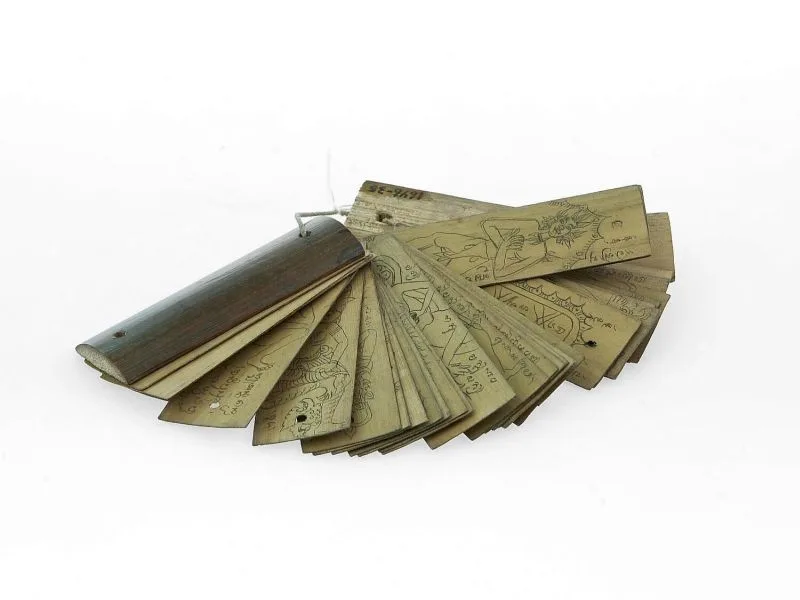
Orthodox and Heterodox
Indian philosophy sorts its schools by a single question: do you accept the authority of the Vedas, the ancient sacred texts? Schools that do are āstika ("orthodox"); schools that reject Vedic authority — most famously Buddhism and Jainism — are nāstika ("heterodox"). The label is not about belief in a god but about which texts count as a foundation for knowledge.
The Snake and the Rope
Śaṅkara (c. 788–820 CE), the great teacher of Advaita Vedānta ("non-duality"), explained our predicament with a metaphor. Walking in dim light, you see a snake coiled in the path and recoil in fear. Someone brings a lamp — it was only a rope. The snake never existed; you superimposed a familiar shape onto a neutral reality. In the same way, we mistake the one ultimate reality, Brahman, for a world of separate things. Liberation is simply the lamp arriving.
Dvaita vs. Advaita
Madhva's Dvaita, meaning 'dualism,' holds that God (Brahman) and the individual soul (ātman) are genuinely separate — the opposite of Advaita's teaching, captured in the phrase 'Tat tvam asi,' or 'that art thou.'
Puruṣa and Prakṛti
Sāṃkhya philosophy holds that all of reality splits into two irreducible principles: puruṣa, pure consciousness, and prakṛti, primordial matter — with liberation coming from learning to tell them apart.
What the Vedas Command
The orthodox school of Mīmāṃsā specializes in Vedic exegesis, interpreting the Vedas to determine the correct performance of ritual duty, or dharma, rather than what the texts mean about reality.
The Middle Way
Siddhartha Gautama (~563–483 BCE), a sheltered prince, was shaken when his first journeys beyond the palace revealed sickness, old age, and death. He left his life of luxury and spent years in extreme asceticism — near starvation — which he also rejected. The answer he found, the Buddha ("awakened one") taught, lay between the extremes. He compared the mind to a lute string: too loose, it makes no sound; too tight, it snaps. The Middle Way is tuning it to just the right tension.
No-Self
Buddhism's most radical claim is anattā — no-self. The "I" that feels so solid and permanent is, on inspection, a bundle of changing processes with no unchanging owner behind them. There is experience, but no fixed experiencer. Clinging to a permanent self, the Buddha taught, is a root of suffering: we exhaust ourselves defending something that was never there. Let the lamp arrive, and the snake — here, the solid self — turns out to be a rope.
Confucius and the Analects
Confucius (Kongzi, 551–479 BCE) was a teacher and civil servant who watched the war-torn states of his era collapse into chaos and concluded that the cure was moral education, not force. He wrote no treatise; his disciples preserved his conversations and sayings in the Analects. For Confucius, education is not job training but moral formation — the slow cultivation of a person fit to lead.

The Confucian Golden Rule
Asked for a single word to live by, Confucius offered shu (恕), reciprocity: "What you do not want done to yourself, do not do to others" (Analects 15.24). This is the Golden Rule in its negative form — restraint rather than initiative. Confucius rooted it in concrete social life: the Five Relationships (ruler–subject, parent–child, husband–wife, elder–younger sibling, friend–friend), each with its own proper conduct. Harmony, he held, follows when every relationship is rightly maintained.
The Way That Cannot Be Named
Laozi's Tao Te Ching (~500 BCE) opens with a paradox: "The Tao that can be told is not the eternal Tao. The name that can be named is not the eternal name." The Tao — "the Way" — is the dynamic, self-organizing principle by which nature works. It cannot be defined, only pointed at. The moment you pin it to a word, you have lost the living thing and kept only a label.
The Usefulness of Emptiness
The Tao Te Ching delivers a quiet reversal of common sense: "Thirty spokes join in the wheel's hub; it is the center hole that makes it useful. Shape clay into a vessel; it is the space within that makes it useful. Cut doors and windows for a room; it is the holes which make it useful" (Chapter 11). We fixate on substance — the clay, the walls — and overlook the emptiness. Yet it is the emptiness that does the work.
Cook Ding's Cleaver
Zhuangzi, the second great Taoist, told of Cook Ding, who carved an ox so skillfully his blade never dulled. His secret? "I glide through the great cavities according to the natural constitution of the animal... A good cook changes his chopper once a year, because he cuts; an ordinary cook, once a month, because he hacks." Ding follows the ox's natural structure rather than fighting it — a perfect picture of wu wei: maximum effect, minimum force.
I Am Because We Are
Ubuntu is a pan-African moral philosophy, most associated with Southern and Eastern African traditions, captured in the Zulu/Xhosa phrase "Umuntu ngumuntu ngabantu" — "a person is a person through other persons." Often rendered "I am because we are," it is not just a warm observation about society but a claim about what a person fundamentally is.
Healing the Community
Because Ubuntu locates personhood in relationship, its ethics aim at restoring broken relationships rather than simply punishing offenders. A wrong tears the communal fabric, so justice tries to repair it — bringing victim, offender, and community back into right relation. This logic shaped South Africa's post-apartheid Truth and Reconciliation process, alongside other Ubuntu practices: consensus decision-making through indaba, and respect for elders as living repositories of communal wisdom.

Ubuntu vs. Descartes' Cogito
Descartes proved the self through solitary reason, alone in his own mind. Ubuntu takes the opposite path, grounding selfhood in relationship — the self is achieved through community, not discovered in isolation.
The Indaba Circle
In Ubuntu practice, an indaba is a circle of dialogue in which a community talks an issue through together until it reaches collective consensus.
Personhood Not Yet Realized
On a strict Ubuntu view, someone raised in total isolation, never recognized by others, has a personhood that is not yet realized, since personhood is achieved through community rather than being an inherent birthright.
Matched pairs
Each item on the left goes with the one on the right.
- Nyāya
- The school of logic and epistemology — it maps the valid sources of knowledge (perception, inference, comparison, testimony)
- Sāṃkhya
- The dualist school: reality splits into puruṣa (pure consciousness) and prakṛti (matter); liberation means telling them apart
- Mīmāṃsā
- The school of Vedic exegesis, concerned with the correct performance of ritual duty (dharma)
- Tat tvam asi
- "That art thou" — the Upaniṣadic teaching that the individual self (ātman) and universal consciousness (Brahman) are not two things but one
- Dukkha
- The First Noble Truth: not just acute pain but the subtle, chronic dissatisfaction of impermanence — even pleasures end
- Taṇhā
- Craving — the origin of suffering (Second Noble Truth): the desire to have, to become, or to be rid of
- Nirvana
- The cessation of suffering (Third Noble Truth): the extinguishing of craving, like a flame going out once its fuel is removed
- Rén (仁)
- Benevolence or humaneness — Confucius's central virtue: a disposition of care toward others, expressed in the proper conduct of relationships
- Junzi vs. xiaoren
- The exemplary person versus the petty person — for Confucius, a distinction of cultivated character, not of birth
- Cogito vs. Ubuntu
- Descartes' isolated thinker proves himself in solitude — "I think, therefore I am"; Ubuntu starts the other way around — "I am because we are"
- Indaba
- The circle of dialogue — a practice of collective decision-making in which a community talks an issue through together until it reaches consensus
Step by step
The Buddha's Four Noble Truths, framed as a physician's diagnosis
- Diagnose the disease: life is pervaded by dukkha — suffering and chronic dissatisfaction (1st Truth)
- Find the cause: suffering arises from taṇhā, craving and clinging (2nd Truth, samudaya)
- Confirm a cure is possible: craving can be extinguished, reaching nirvana (3rd Truth, nirodha)
- Prescribe the treatment: follow the Noble Eightfold Path (4th Truth, magga)
Self-test
Answer each question from memory, then check your work against the answer key.
1. In Indian philosophy, what does the term Ṣaḍdarśana refer to?
- AThe four "valid sources" or pramāṇas of knowledge
- BThe "heterodox" or Veda-rejecting nāstika schools
- CThe eight "limbs" or stages of Yoga practice
- DThe six orthodox "viewpoints" or schools
2. Which orthodox school is devoted to logic and epistemology, mapping the valid sources of knowledge?
- ANyāya
- BSāṃkhya
- CMīmāṃsā
- DVedānta
3. Sāṃkhya splits all reality into which two irreducible principles?
- ABrahman (the one reality) and māyā (misperception)
- BPuruṣa (pure consciousness) and prakṛti (matter)
- CDukkha (suffering) and nirvana (its cessation)
- DĀstika (orthodox) and nāstika (heterodox)
4. Which orthodox school specializes in Vedic exegesis and the correct performance of ritual duty (dharma)?
- AYoga
- BNyāya
- CMīmāṃsā
- DVaiśeṣika
5. In Indian philosophy, what single test sorts a school as āstika (orthodox) or nāstika (heterodox)?
- AWhether it makes liberation from suffering its final aim
- BWhether it identifies the individual self with Brahman
- CWhether it affirms a creator god who fashions the cosmos
- DWhether it accepts the authority of the Vedas
6. Which of the six orthodox schools focuses on logic and the valid sources of knowledge?
- AVedānta
- BNyāya
- CSāṃkhya
- DMīmāṃsā
7. Nyāya's lasting contribution to Indian philosophy is a theory of what?
- AThe ultimate reality of Brahman
- BThe dualism of consciousness and matter
- CThe pramāṇas, or valid sources of knowledge
- DRitual duty and Vedic interpretation
8. Which orthodox school splits reality into puruṣa (consciousness) and prakṛti (matter)?
- ASāṃkhya
- BNyāya
- CVedānta
- DMīmāṃsā
9. For Sāṃkhya, liberation comes from what?
- ADistinguishing consciousness from matter
- BRealizing Brahman is the only reality
- CMastering formal logic and inference
- DCorrectly performing Vedic ritual
10. How does Madhva's Dvaita Vedānta differ from Śaṅkara's Advaita?
- ADvaita teaches that liberation is waking up to the soul's identity with Brahman
- BDvaita holds that the world of separate things is a projection onto Brahman
- CDvaita holds that God and the individual soul are eternally distinct
- DDvaita holds that reality splits into pure consciousness and primordial matter
11. What does Śaṅkara mean by māyā?
- AClinging to passing things out of craving (taṇhā)
- BHolding God and the individual soul (ātman) eternally distinct
- CMistaking primordial matter (prakṛti) for pure consciousness
- DMisperceiving one reality (Brahman) as many separate things
12. The Upaniṣadic formula "Tat tvam asi" teaches which of the following?
- ARitual duty (dharma) and knowledge of Brahman are already one
- BThe individual self (ātman) and Brahman are already one
- CPure consciousness (puruṣa) and primordial matter are already one
- DThe five aggregates (form, feeling and so on) make up one lasting self
13. In Śaṅkara's snake-and-the-rope parable, what does the rope stand for?
- AThe craving (taṇhā) that keeps the fire of suffering burning
- BThe witnessing self (puruṣa) that stands free of churning matter
- CThe world of separate objects (māyā) that we mistakenly project
- DThe single underlying reality (Brahman) that is genuinely there
14. According to Advaita Vedānta, what is moksha (liberation)?
- ARecognizing that the soul (ātman) and God remain eternally distinct
- BWaking up to the ātman–Brahman identity already present
- CRealizing that the self is a mere stream of five aggregates (anattā)
- DDiscerning the witnessing self (puruṣa) from churning matter
15. The Noble Eightfold Path groups its eight factors under three headings. What are they?
- ASpeech, action, and livelihood
- BSuffering, craving, and cessation
- CWisdom, ethics, and meditation
- DForm, feeling, and perception
16. The Second Noble Truth identifies what as the origin of suffering?
- ACraving (taṇhā)
- BMatter (prakṛti)
- CSuffering (dukkha)
- DIllusion (māyā)
17. The word "nirvana" literally evokes which image?
- ACrossing over or fording a wide river
- BTuning or tightening a lute string
- CWaking up or rousing from sleep
- DBlowing out or extinguishing a flame
18. Buddhism's doctrine of anattā (no-self) claims that:
- AThe cessation of suffering does not exist
- BThe permanent, unified "I" does not exist
- CThe changing stream of experience does not exist
- DThe craving that causes suffering does not exist
19. In Buddhism's analysis of a person into Five Aggregates, what does the aggregate called "feeling" cover?
- AThe physical body and its material form
- BThe grasping after what one wants to have
- CThe pleasant or unpleasant tone of experience
- DThe volitions and habits that shape action
20. Which Noble Truth teaches that even pleasures carry a subtle dissatisfaction because everything ends?
- ADukkha
- BTaṇhā
- CNirvana
- DThe Eightfold Path
21. Dukkha, the First Noble Truth, refers to what?
- AThe pervasive suffering and dissatisfaction of existence
- BThe cessation of craving
- CCraving that causes suffering
- DThe eightfold path out of suffering
22. Which Noble Truth names craving as the root cause of suffering?
- ADukkha
- BTaṇhā
- CThe Eightfold Path
- DNirvana
23. Taṇhā, the Second Noble Truth, is best described as what?
- AThe eight-part treatment for suffering
- BThe pervasive fact of suffering
- CThe cessation of desire
- DCraving — grasping at wants, recoiling from the rest
24. Which Noble Truth holds that the cessation of suffering is genuinely possible?
- ATaṇhā
- BThe Eightfold Path
- CNirvana
- DDukkha
25. Why does Laozi hold up water as a model for the sage?
- AIt is essential to all life and must be conserved
- BIt is yielding and seeks the low places, yet overcomes everything without striving
- CIt freezes hard and can shatter rock
- DIt is pure and reflects the heavens
26. What is rén (仁), Confucius's central virtue?
- AReciprocity or restraint, shown in what one refuses to do to others
- BRitual propriety or fitting form, shown in the observances of each bond
- CYielding or effortless action, shown in following the grain of nature
- DBenevolence or humaneness, shown in the conduct of relationships
27. For Confucius, what distinguishes the junzi (exemplary person) from the xiaoren (petty person)?
- ASkill acquired for a court career
- BGoodness possessed from birth
- CVirtue cultivated by learning
- DDetachment perfected in solitude
28. The Daoist ideal of wu wei is best understood as which of the following?
- AAction without contrivance, moving with nature's flow
- BDisciplined striving, bending each situation to a chosen end
- CPropriety without pretense, giving each bond its fitting form
- DStillness without exception, leaving every outcome to nature
29. How did the two great classical Chinese schools respond to the chaos of the warring states?
- AConfucians prized intuition over doctrine; Daoists embedded virtue in five relationships
- BConfucians met violence with stronger force; Daoists retreated into idle stillness
- CConfucians trusted the virtue that comes with birth; Daoists fixed the Way in strict doctrine
- DConfucians cultivated character and relationships; Daoists moved with nature's flow
30. On the Ubuntu view, how does a human being become a full person?
- AThrough participation in community and recognition by others
- BThrough the kinship and ancestral line into which a person is born
- CThrough the choices one makes, since existence comes before essence
- DThrough seeing that the self is only a stream of changing processes
31. The Zulu/Xhosa phrase "Umuntu ngumuntu ngabantu" is usually rendered as:
- A"A person is a person through the land of their birth"
- B"A person is a person through other persons"
- C"A community is a community through its consensus"
- D"A community is a community through its elders"
32. On a strict Ubuntu view, what should we say about someone raised in total isolation, never recognized by or in relationship with others?
- AThey have yet to become a person — personhood is granted by the elders
- BThey are as much a person as anyone — isolation leaves them lonely, but whole
- CThey have yet to become a person — personhood comes through community
- DThey are a full person already — persons come before the communities they form
33. How does Ubuntu's view of the self differ from Descartes' cogito?
- AUbuntu grounds the self in relationships; Descartes proves the self in solitude
- BUbuntu treats the self as the secure first fact; Descartes treats it as an achievement
- CUbuntu locates the self in a shared birthright; Descartes proves the self through the senses
- DUbuntu reaches the self by doubting the world; Descartes reaches it through other minds
34. In Ubuntu practice, what is an indaba?
- AA ceremony of welcome for reintegrating an offender
- BA council of elders for ruling on the community's behalf
- CA circle of dialogue for reaching collective consensus
- DA public hearing for confessing wrongs before the community
Go deeper
- WatchThe Snake and the Rope In dim light, you see a snake on the path and jump back. A lamp arrives. It's a rope.
- WatchThe Lute String Siddhartha Gautama tried luxury, then extreme fasting. He rejected both, and became the Buddha: the awakened one.
- WatchCook Ding's Cleaver Wu wei means non-action. But it doesn't mean idleness. It means acting without forcing. Laozi's model is water: the most yielding thing, yet over time it carves canyons.
- WatchI Am Because We Are Descartes began with the lone thinker: I think, therefore I am.
- StudyPhilosophy: The Big Questions in the FlashFeed app
Answer key
- 1. D The six orthodox "viewpoints" or schoolsṢaḍdarśana means "six viewpoints" — the orthodox schools: Nyāya, Vaiśeṣika, Sāṃkhya, Yoga, Mīmāṃsā, and Vedānta.
- 2. A NyāyaNyāya is the school of careful reasoning; its pramāṇas are perception, inference, comparison, and testimony. Mīmāṃsā handles ritual; Sāṃkhya, dualist metaphysics.
- 3. B Puruṣa (pure consciousness) and prakṛti (matter)Sāṃkhya is rigorously dualist: puruṣa is pure consciousness, prakṛti is primordial matter; liberation comes from telling them apart.
- 4. C MīmāṃsāMīmāṃsā interprets the Vedas to perform ritual dharma correctly — it asks what the texts command us to do, where Vedānta asks what they mean about reality.
- 5. D Whether it accepts the authority of the VedasThe āstika/nāstika line is drawn by one test: whether a school accepts the Vedas as authoritative. It is not about theism, nor non-duality (the orthodox Dvaita school rejects it), nor liberation, which Sāṃkhya seeks as much as Buddhism. Buddhism and Jainism fail the Vedic test.
- 6. B NyāyaNyāya is the school of logic and epistemology, mapping the valid sources of knowledge.
- 7. C The pramāṇas, or valid sources of knowledgeNyāya's theory of the pramāṇas covers perception, inference, comparison, and testimony as sources of knowledge.
- 8. A SāṃkhyaSāṃkhya is the dualist school, dividing reality into puruṣa and prakṛti.
- 9. A Distinguishing consciousness from matterSāṃkhya holds that liberation comes from clearly telling puruṣa (consciousness) apart from prakṛti (matter).
- 10. C Dvaita holds that God and the individual soul are eternally distinctDvaita means "dualism": Madhva insisted that God (Brahman) and the soul (ātman) are genuinely separate — the opposite of Advaita's "Tat tvam asi."
- 11. D Misperceiving one reality (Brahman) as many separate thingsMāyā is not total illusion but misperception: the rope (Brahman) is genuinely there; only the snake — our reading of it as separate things — is mistaken.
- 12. B The individual self (ātman) and Brahman are already one"That art thou" is Advaita's heart: ātman and Brahman are not two things needing to be joined — they are already identical, and moksha is waking to that.
- 13. D The single underlying reality (Brahman) that is genuinely thereThe rope is real — it represents Brahman, the one reality. The snake is the mistaken projection of separate objects; a lamp of recognition dispels it.
- 14. B Waking up to the ātman–Brahman identity already presentFor Advaita, ātman and Brahman are already one; moksha is simply recognizing that unity — not effort or joining, but recognition.
- 15. C Wisdom, ethics, and meditationRight Understanding and Intention fall under wisdom; Right Speech, Action, and Livelihood under ethics; Right Effort, Mindfulness, and Concentration under meditation.
- 16. A Craving (taṇhā)The Second Noble Truth (samudaya) names craving — taṇhā — as the cause: we suffer because we cling, grasp, and ache to become other than we are.
- 17. D Blowing out or extinguishing a flameNirvana literally evokes "blowing out" — the extinguishing of craving, like a flame going out once its fuel is removed. It is release, not annihilation.
- 18. B The permanent, unified "I" does not existAnattā denies a permanent, unified owner behind experience: the self is a stream of changing processes with no fixed 'I'. The stream itself is not denied; nor is craving, which the Second Noble Truth names as suffering's cause, nor its cessation, which the Third calls nirvana.
- 19. C The pleasant or unpleasant tone of experienceThe five aggregates are form (the body), feeling (the pleasant or unpleasant tone of experience), perception, mental formations (volitions and habits), and consciousness.
- 20. A DukkhaDukkha, the First Noble Truth, includes the chronic dissatisfaction baked into impermanence.
- 21. A The pervasive suffering and dissatisfaction of existenceDukkha names the pervasive suffering and dissatisfaction that runs through existence.
- 22. B TaṇhāTaṇhā, the Second Noble Truth, identifies craving as the cause of suffering.
- 23. D Craving — grasping at wants, recoiling from the restTaṇhā is craving: grasping at what we want, recoiling from what we don't, and aching to be otherwise.
- 24. C NirvanaNirvana, the Third Noble Truth, is the cessation of suffering.
- 25. B It is yielding and seeks the low places, yet overcomes everything without striving"The highest good is like water. Water gives life to the ten thousand things and does not strive" — it flows around every obstacle, yet over time carves canyons.
- 26. D Benevolence or humaneness, shown in the conduct of relationshipsRén is a settled disposition of care toward others, expressed in everyday relationships, and cultivated through practice rather than inherited. Lǐ is the ritual propriety through which rén becomes visible, shu is the reciprocity of the negative Golden Rule, and yielding action is the Daoist wu wei.
- 27. C Virtue cultivated by learningThe junzi/xiaoren contrast is one of cultivated character: anyone can become a junzi through moral effort, and virtue — not birth, rank, or a career at court — is the true qualification for rule. The junzi puts virtue to use in service to others rather than withdrawing from them.
- 28. A Action without contrivance, moving with nature's flowWu wei literally means "non-action," but really means acting without forcing — moving with the grain of a situation rather than contriving an outcome. It is not idleness (the Tao is constant in non-action, yet nothing is left undone), and ritual propriety is a Confucian ideal, not a Daoist one.
- 29. D Confucians cultivated character and relationships; Daoists moved with nature's flowConfucius prescribed moral education — not force — and virtue, not birth, as the qualification to rule; the Daoists prescribed letting go of contrivance (wu wei) and moving with the grain of a Way that cannot be pinned down in doctrine.
- 30. A Through participation in community and recognition by othersUbuntu treats personhood as achieved in relationship, not as a property the isolated individual already possesses.
- 31. B "A person is a person through other persons""Umuntu ngumuntu ngabantu" is rendered "a person is a person through other persons," and popularly "I am because we are": personhood is achieved through relationship with others. Elders, birthplace and consensus all matter in the tradition, but none of them is what the phrase says.
- 32. C They have yet to become a person — personhood comes through communityUbuntu treats personhood as achieved and sustained in community, not an inherent birthright that could be confirmed or forfeited — "a person is a person through other persons." Someone cut off from all relationship is, on this view, not merely lonely but less of a person.
- 33. A Ubuntu grounds the self in relationships; Descartes proves the self in solitudeDescartes' isolated thinker proves himself alone — "I think, therefore I am" — before he is sure of other people, and treats the self as the secure first fact. Ubuntu starts the other way: "I am because we are," locating the "I" inside the "we" as a communal achievement rather than a birthright.
- 34. C A circle of dialogue for reaching collective consensusIndaba is the circle of dialogue — a community talks an issue through together until it reaches consensus, rather than having a decision imposed from above.
Image credits
- Orthodox and Heterodox: Wikimedia Commons · Tropenmuseum · CC BY-SA 3.0 — commons.wikimedia.org/wiki/File:COLLECTIE_TROPENMUSEUM_Balinees_manuscript_van_32_bladen_met_aantekeningen_over_magie_en_beschrijving_van_50_demonische_figuren_en_geesten_TMnr_1646-35.jpg
- The Confucian Golden Rule: AI-generated (gpt-image-1.5)
- Ubuntu vs. Descartes' Cogito: AI-generated (gpt-image-1.5)
