
Philosophy: The Big Questions study guide · Lesson 7 of 15
The 20th Century
Existentialism · Analytic Philosophy · Phenomenology & Political Philosophy
This is the lesson's study guide from the FlashFeed app, plus its key facts and a self-test.
What you'll be able to do
- Explain existentialism's core ideas: radical freedom, bad faith, and the absurd
- Explain Wittgenstein's later turn: meaning as use, language-games, family resemblance
- Distinguish analytic philosophy's founders: Frege, Russell, and verificationism
- Explain phenomenology: Husserl's epoche, intentionality, and its founding works
- Explain Foucault's power/knowledge, Derrida's deconstruction, and Rawls's justice
Existentialism is the 20th century's most human philosophy — born in occupied Paris, lived out in cafés, and obsessed with one question: what does it mean to be free? Its great trio — Sartre, de Beauvoir, and Camus — start from a single shock: there is no given human nature, no script. We are simply thrown into existence and left to make ourselves.
"Existence Precedes Essence"
Jean-Paul Sartre (1905–1980) compressed existentialism into a slogan: existence precedes essence. A letter-opener has an essence — a purpose in the maker's mind — before it exists. A human being does not. We first exist, then through our choices we define what we are. There is no blueprint, no fixed human nature handed down. We are, in his phrase, "condemned to be free."
Radical Freedom and Responsibility
For Sartre this freedom is total — and terrifying. Because nothing decides for us, every choice is ours and ours alone. We cannot offload it onto God, nature, or upbringing. With absolute freedom comes absolute responsibility: in choosing for ourselves we implicitly choose an image of what a human ought to be. This weight is the source of existential anguish.
Bad Faith
Bad faith (mauvaise foi) is Sartre's term for the self-deception by which we flee our freedom. We pretend we have no choice — that our role, our class, or "the way things are" forces our hand. Bad faith is reducing yourself to a thing, a fixed role, to escape the dizziness of being free.
The Café Waiter
Sartre's most famous illustration of bad faith is the café waiter whose movements are a little too crisp, too eager — balancing the tray with exaggerated care, gliding like an actor playing "Waiter." He is performing the role so completely that he tries to become it, to hide from himself the truth that he is a free person merely doing a job. You can always step out of the role; the waiter pretends he cannot.
"You Are Always More Than Your Situation"
The flip side of bad faith is liberating: you are always more than your situation. Your past, your circumstances, even your body do not fully define you, because you can always take a new stance toward them. For Sartre this is the ground of human dignity — and the reason no one is ever simply a victim of what they are.
"One Is Not Born, But Becomes, a Woman"
Simone de Beauvoir (1908–1986) applied existentialism to gender in The Second Sex (1949). Her watchword: "One is not born, but rather becomes, a woman." Femininity is not a biological essence but a social construction — woman has been defined as the "Other" against man as the default human. Gender, she argued, is something society makes, not something nature gives.
"One Must Imagine Sisyphus Happy"
Albert Camus (1913–1960) faced the absurd: our craving for meaning meeting a silent, indifferent universe. In The Myth of Sisyphus he takes the man condemned to roll a boulder uphill forever as the image of human life. The answer is not suicide but revolt — living fully in defiance of meaninglessness. His closing line: "One must imagine Sisyphus happy."
While existentialists wrestled with freedom, a different revolution unfolded in the English-speaking world. Analytic philosophy turned its attention to language and logic, convinced that many ancient puzzles were really tangles of words. Its founders — Frege, Russell, and Wittgenstein — and the Logical Positivists who followed, tried to make philosophy as precise as mathematics.
Frege and the Birth of Modern Logic
Gottlob Frege (1848–1925) invented modern formal logic, breaking with Aristotle's syllogisms to build a system powerful enough to express mathematical reasoning. He also drew a famous distinction between sense and reference: "the morning star" and "the evening star" have different senses (meanings) yet the same reference (the planet Venus). The distinction shapes philosophy of language to this day.
Russell and Logical Atomism
Bertrand Russell (1872–1970), with Alfred North Whitehead, wrote the monumental Principia Mathematica, an attempt to derive all of mathematics from pure logic. His philosophical program was logical atomism: the world is built of simple "atomic facts," and a logically perfect language would mirror that structure exactly, each true sentence corresponding to a fact.
The Tractatus: "Whereof One Cannot Speak"
Ludwig Wittgenstein (1889–1951) wrote two books, each demolishing the other. The first, the Tractatus Logico-Philosophicus (1921), argued that language is a picture of facts — a sentence has meaning only if it pictures a possible state of affairs in the world. It follows that ethics, God, and the meaning of life cannot be said at all; they lie beyond language. The book ends: "Whereof one cannot speak, thereof one must be silent."
Meaning Is Use
Twenty years later, Wittgenstein repudiated his own picture theory. In Philosophical Investigations (1953), he argued that words are not labels mirroring reality but tools used in countless ways. Meaning is use — to know what a word means is to know how it is used in practice, not what object it names.
Language-Games
To capture this, Wittgenstein introduced the language-game. Language is like chess: you can only grasp what "checkmate" means by knowing the rules and context of the game. Words torn from their context become meaningless — and most philosophical confusion, he held, arises from words taken out of their games and used as if they had context-free meanings.
Family Resemblance
Wittgenstein also rejected the hunt for essences. Consider "games": board games, ball games, card games, solitaire. No single feature is common to all. Instead they share family resemblances — a web of overlapping, crisscrossing similarities, like the shared features running through a family, with no one trait possessed by every member.
Logical Positivism and the Verification Principle
The Vienna Circle drew a radical lesson from early Wittgenstein and Russell: Logical Positivism. Its weapon was the verification principle — a statement is meaningful only if it is either true by definition (logic and math) or empirically verifiable by observation. Metaphysics, theology, and much traditional ethics were dismissed as literally meaningless. The principle's famous flaw: it cannot itself be verified, so by its own standard it is meaningless.
The Continental tradition took a different path from the analytic one. Phenomenology asked us to describe experience as it is actually lived; later thinkers turned those tools on history, power, and language itself. Alongside them, John Rawls revived political philosophy with a single, dazzling thought experiment about justice.
Husserl's Epoché
Edmund Husserl (1859–1938) founded phenomenology, the rigorous study of experience from the first-person point of view. His method was the epoché — "bracketing." We suspend our ordinary assumptions about whether things really exist out there, in order to examine pure experience exactly as it presents itself to consciousness. Set aside the theories; describe the phenomena.
Intentionality and the Life-World
Two more Husserlian ideas anchor phenomenology. Intentionality is the principle that consciousness is always of something — to be aware is always to be aware of an object. And the life-world (Lebenswelt) is the everyday world of lived experience that all our science and abstraction quietly take for granted.
Heidegger and Dasein
Martin Heidegger (1889–1976), Husserl's student, asked the oldest question anew: what is being? In Being and Time (1927) he coined Dasein — literally "being-there" — for the peculiar human kind of being, the only being that questions its own existence. We do not float above the world; we are always already thrown into it, caring about things, heading toward death.
Authenticity
For Heidegger, most of us live absorbed in "the They" (das Man) — doing what one does, thinking what one thinks, fleeing the anxiety of our own mortality. Authenticity means owning your existence: facing death honestly and choosing your life as your own, rather than drifting in anonymous conformity.
Rawls and the Veil of Ignorance
John Rawls (1921–2002) revived political philosophy with the Veil of Ignorance. Imagine designing society's basic rules from an "original position" in which you do not know who you will be — your race, sex, class, talents, or even your idea of the good life. You could be anyone, richest or poorest. The veil forces impartiality: you cannot rig the system for a group when you don't know which group is yours.
Rawls' Two Principles
From behind the veil, Rawls argued, rational people would choose two principles of justice. First, equal basic liberties: everyone gets the same fundamental rights and freedoms. Second, the Difference Principle: economic inequalities are just only if they benefit the least advantaged members of society. If you might be born into the worst position, you make sure that position is as tolerable as possible.
Foucault: Power/Knowledge
Michel Foucault (1926–1984) studied how knowledge and power intertwine: what a society counts as "truth" — about madness, crime, sexuality — is shaped by its institutions and power relations. His method, genealogy, traces how our supposedly timeless concepts actually emerged through contingent history.
Derrida and Deconstruction
Jacques Derrida (1930–2004) developed deconstruction, a way of reading that exposes the unstable assumptions and hidden hierarchies in texts. His coined term différance captures how meaning is never fully present but endlessly deferred, sliding from sign to sign, never pinned down.
Key terms
- Bad faith (mauvaise foi)
- Sartre's term for the self-deception by which we flee our own freedom — pretending we have no choice, reducing ourselves to a fixed role or to "the way things are."
- Language-game
- Wittgenstein's metaphor that words get their meaning only from their use within a rule-governed activity and context — like understanding "checkmate" only by knowing chess.
- Family resemblance
- The idea that the things a word names (e.g. "games") share no single common essence, only a web of overlapping similarities — like features running through a family.
- Epoché (Husserl)
- The "bracketing" or suspension of our ordinary assumptions about whether things really exist, so that we can examine pure experience exactly as it presents itself to consciousness.
Key concepts
Frege
- This 19th-century German thinker overturned Aristotle's syllogisms to invent modern formal logic.
- He built a system powerful enough to express all of mathematical reasoning.
- He drew a famous distinction between sense and reference: 'the morning star' and 'the evening star' differ in meaning yet both point to Venus.
Russell
- This British philosopher tried to show that all of mathematics could be derived from pure logic.
- With Alfred North Whitehead he wrote the monumental Principia Mathematica.
- His program, logical atomism, held that the world is built of simple 'atomic facts' a perfect language would mirror exactly.
Husserl
- He founded a rigorous method for studying experience strictly from the first-person point of view.
- His technique, the epoché or 'bracketing,' suspends all assumptions about whether things really exist out there.
- He gave phenomenology two anchors: intentionality — consciousness is always of something — and the everyday 'life-world.'
Foucault
- This 20th-century French thinker studied how knowledge and power are woven together.
- He argued that what a society counts as 'truth' — about madness, crime, or sexuality — is shaped by its institutions and power relations.
- His method, called genealogy, traces how our supposedly timeless concepts actually emerged through contingent history.
Derrida
- This French philosopher created a famous way of reading texts against themselves.
- His method, deconstruction, exposes the unstable assumptions and hidden hierarchies buried in a text.
- He coined the term 'différance' for how meaning is never fully present but endlessly deferred, sliding from sign to sign.
Key facts
The Café Waiter
Sartre's most famous portrait of bad faith is the café waiter whose movements are a little too crisp — balancing the tray with exaggerated care, gliding like an actor playing "Waiter." He performs the role so completely that he tries to become it, hiding from himself the truth that he is a free person merely doing a job. The lesson: you are always more than your situation. You can step out of the role; the waiter only pretends he cannot.
Becoming a Woman
In The Second Sex, Simone de Beauvoir argued that woman is defined as the 'Other,' and that femininity is something society makes rather than nature gives — 'one is not born, but becomes, a woman.'

Condemned to Be Free
Sartre held that radical freedom brings 'absolute responsibility': because nothing outside us — not God, nature, or upbringing — decides our choices, every choice is ours alone.
Meaning Is Use
Twenty years on, Wittgenstein repudiated his own picture theory. In Philosophical Investigations (1953), he argued that words are not labels mirroring reality but tools used in countless ways within forms of life. Meaning is use — to know what a word means is to know how it is used in practice, not what object it names. Language is like chess: "checkmate" means nothing apart from the rules and context of the game.
The Verification Principle
The Logical Positivists held that a statement is meaningful only if it is true by definition or empirically verifiable — a rule that, notoriously, fails its own test.
Frege's Morning Star Puzzle
Frege used 'the morning star' and 'the evening star' to show that two phrases can have different senses yet share the same reference — both name the planet Venus.

Russell's Logical Atomism
Russell, co-author of Principia Mathematica, held that reality is built from simple atomic facts, and that a perfectly logical language would mirror that structure exactly.
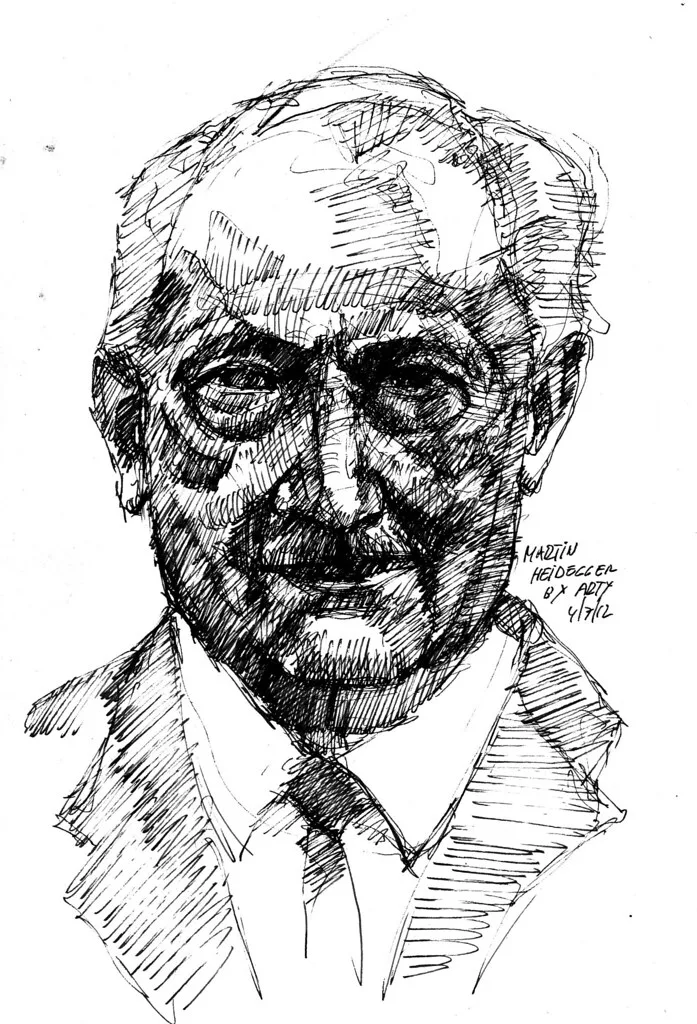
Dasein: Being-There
Heidegger, Husserl's student, asked the oldest question anew: what is being? In Being and Time (1927) he coined Dasein — literally "being-there" — for the peculiar human kind of being, the only being that questions its own existence. We don't float above the world; we are always already thrown into it, caring about things and heading toward death. To live authentically is to own that existence rather than drift in anonymous conformity.
Rawls' Difference Principle
Rawls' Difference Principle allows economic inequality only when it works to benefit society's least advantaged members, alongside his first principle of equal basic liberties.
Husserl's Epoché
Husserl's method of the epoché, or 'bracketing,' means suspending your assumptions about whether things really exist so you can examine pure experience exactly as it presents itself.
Power and Knowledge
Foucault argued that what a society counts as truth is shaped by its institutions and power relations, traced historically, rather than handed down by timeless reason.
By the numbers
- Year Heidegger published Being and Time
- 1927 year
- Year Wittgenstein's Philosophical Investigations was published
- 1953 year
Matched pairs
Each item on the left goes with the one on the right.
- "One is not born, but becomes, a woman" (de Beauvoir)
- From The Second Sex: femininity is a social construction, not a biological essence; woman is defined as the "Other"
- The absurd (Camus)
- The clash between our craving for meaning and the silent, indifferent universe — to be met with revolt, not suicide
- Sense vs. reference (Frege)
- "Morning star" and "evening star" have different senses (meanings) but the same reference (Venus)
- Logical atomism (Russell)
- The world is built of simple "atomic facts"; a logically perfect language would mirror that structure. Russell co-wrote Principia Mathematica
- Intentionality (Husserl)
- Consciousness is always consciousness OF something — to be aware is always to be aware of an object
- Power/knowledge (Foucault)
- What a society counts as "truth" is shaped by its institutions and power relations; genealogy traces how concepts arose historically
- Deconstruction (Derrida)
- A way of reading that exposes the unstable assumptions and hidden hierarchies in texts; meaning is endlessly deferred (différance)
Self-test
Answer each question from memory, then check your work against the answer key.
1. What does Sartre mean by "existence precedes essence"?
- AHumans have no fixed nature; we exist first and define ourselves through our choices
- BHumans share one nature; we exist to realize it through the choices we freely make
- CHumans have no given essence; we choose one early, and that choice then fixes us for life
- DHumans have no maker's blueprint; we inherit a nature and then freely perfect it
2. Sartre's cafe waiter — moving too crisply, playing at being 'Waiter' — illustrates which concept?
- AAbsurd hero
- BBad faith
- CHuman dignity
- DRadical freedom
3. For Camus, what is the right response to the absurd?
- AFaith — leaping past reason to a God who gives life its point
- BReason — trusting that thought can finally explain the universe
- CRevolt — living fully in defiance of meaninglessness
- DSuicide — ending a life the universe has left pointless
4. What did de Beauvoir mean by 'One is not born, but becomes, a woman'?
- AWomen mature later than men do
- BWomanhood is fixed by biology at birth
- CEach person freely picks a gender in infancy
- DFemininity is a social construction, not a biological essence
5. In Sartre's existentialism, why does radical freedom carry 'absolute responsibility'?
- ANothing outside us decides our choices, so each choice is wholly ours
- BOur upbringing shapes each choice, so responsibility is shared with our past
- CWe choose only for ourselves, so no choice commits anyone but its maker
- DOur essence is fixed before we exist, so each choice must answer to that design
6. In Philosophical Investigations, Wittgenstein's slogan 'meaning is use' says that to know a word's meaning is to know:
- AWhat object it stands for
- BHow it is used in practice
- CHow the speaker intends it
- DWhat image it calls to mind
7. Why does Wittgenstein compare language to a game like chess?
- AA word's meaning depends on the contest it helps a speaker win
- BA word's meaning depends on the strategy of the speaker who plays it
- CA word's meaning depends on the rules and context of its use
- DA word's meaning depends on the fixed value it carries into every game
8. Wittgenstein's 'family resemblance' claims that things a word names, like 'games,' are united by:
- ATheir common historical origin
- BA strict logical definition
- COne essential feature shared by every member
- DA web of overlapping similarities with no single common feature
9. Which idea belongs to the EARLY Wittgenstein (the Tractatus), NOT his later philosophy?
- AGames share family resemblances
- BLanguage is a picture of facts
- CWords work within language-games
- DA word's meaning is its use
10. In what year was Wittgenstein's Philosophical Investigations published?
- A1929
- B1921
- C1953
- D1951
11. According to the Logical Positivists' verification principle, a statement is meaningful only if it is:
- ATrue by definition, or empirically verifiable by observation
- BBracketed from assumptions, or described exactly as it is lived
- CCarrying a definite sense, or referring to an object that exists
- DUsed correctly in practice, or governed by a rule of a language-game
12. For Frege, 'the morning star' and 'the evening star' illustrate sense and reference because the two names have:
- AThe same sense but different references
- BThe same sense and the same reference
- CDifferent senses and different references
- DDifferent senses but the same reference
13. What was Russell's philosophical program of 'logical atomism'?
- ALanguage is built of simple everyday uses a perfect logic would only distort
- BThe world is built of simple atomic facts a perfect language would mirror
- CMathematics is built of simple observations a perfect experiment would confirm
- DKnowledge is built of simple innate ideas a perfect intuition would reveal
14. Which achievement is correctly matched to its philosopher?
- ARussell — introduced the language-game
- BFrege — co-wrote Principia Mathematica
- CFrege — invented modern formal logic
- DRussell — drew the sense/reference distinction
15. What is the notorious problem the verification principle raises for itself?
- AIt is neither true by definition nor empirically verifiable, so by its own rule it is meaningless
- BIt was disproved by Frege's formal logic
- CIt cannot handle mathematical truths, only observations
- DIt secretly assumes that God exists
16. Husserl's method of the epoche ('bracketing') involves:
- ADoubting every belief until one indubitable certainty remains, to rebuild knowledge
- BChecking every claim about experience against public observation, to make it scientific
- CTracing each experience back to the brain state that produces it, to explain the mind
- DSuspending assumptions about whether things really exist, to examine pure experience
17. Husserl's principle of intentionality states that consciousness is always:
- AA memory OF the Forms — recalled from before birth
- BDistinct FROM the body — a thinking, unextended thing
- CConsciousness OF something — directed at an object
- DA stage OF Spirit — coming to know itself through history
18. Who founded phenomenology, the rigorous first-person study of experience?
- AEdmund Husserl
- BJean-Paul Sartre
- CJacques Derrida
- DMartin Heidegger
19. What does Husserl's term 'life-world' (Lebenswelt) refer to?
- AThe material world of class struggle that drives all of history
- BThe everyday world of lived experience that science takes for granted
- CThe social world of institutions that fix what a society calls truth
- DThe shared world of language-games that give each word its meaning
20. In Being and Time (1927), Heidegger's term 'Dasein' ('being-there') names:
- AThe human kind of being that tests each maxim as a universal law
- BThe human kind of being that revolts against an absurd universe
- CThe human kind of being that recollects the Forms it once knew
- DThe human kind of being that questions its own existence
21. What does Rawls' Difference Principle say about economic inequality?
- AInequalities are just only if they reward talents that people worked to develop
- BInequalities are just only if they raise the average well-being of the whole society
- CInequalities are just only if they benefit the least advantaged members of society
- DInequalities are just only if they arise from exchanges that everyone freely entered
22. Foucault's idea of 'power/knowledge' claims that what a society counts as truth is:
- AShaped by its institutions and power relations
- BNegotiated among its citizens through open public debate
- CRevised by its scholars as new evidence accumulates
- DInherited from its founding myths and shared rituals
23. Derrida's 'deconstruction' is best described as:
- AReading that verifies a text's claims by testing them against observation
- BReading that brackets a text's claims to describe the experience behind them
- CReading that traces how a society's institutions fixed a text's truths
- DReading that exposes unstable assumptions and hidden hierarchies in texts
24. In Rawls's 'original position,' the Veil of Ignorance requires that you NOT know:
- AThe basic laws of economics
- BYour race, sex, class, talents, or idea of the good life
- CHow others intend to vote
- DThe history of philosophy
25. Which pairing of thinker to idea is correct?
- AHusserl — a text's meaning slides from sign to sign, endlessly deferred
- BFoucault — what counts as truth is shaped by power and institutions
- CDerrida — society's rules are chosen behind a veil of ignorance
- DRawls — consciousness is always consciousness of some object
Go deeper
- WatchExistence Before Essence Sartre summed up existentialism in three words: existence precedes essence.
- WatchFamily Resemblance Try to name one thing that all games have in common. Board games, ball games, card games, solitaire.
- WatchThe Veil of Ignorance Imagine designing society's rules without knowing who you'll be. Rich or poor, any race, any sex, any talent.
- StudyPhilosophy: The Big Questions in the FlashFeed app
Answer key
- 1. A Humans have no fixed nature; we exist first and define ourselves through our choicesUnlike a manufactured tool, a person has no pre-given essence — we first exist, then make ourselves through free choices.
- 2. B Bad faithThe waiter performs his role so completely that he hides from himself that he is free — Sartre's classic example of bad faith, the flight from one's own freedom. Anguish is that freedom faced rather than fled; the absurd is Camus's theme and the Other is de Beauvoir's.
- 3. C Revolt — living fully in defiance of meaninglessnessCamus rejects suicide; the answer to our craving for meaning in an indifferent universe is revolt — 'One must imagine Sisyphus happy.'
- 4. D Femininity is a social construction, not a biological essenceIn The Second Sex, de Beauvoir argues woman is defined as the 'Other' and femininity is made by society, not given by nature.
- 5. A Nothing outside us decides our choices, so each choice is wholly oursBecause nothing — God, nature, upbringing — decides for us, every choice is ours alone, and in choosing for ourselves we choose an image of what a human ought to be; we are 'condemned to be free,' the source of existential anguish.
- 6. B How it is used in practiceThe later Wittgenstein rejected words as labels mirroring objects; a word's meaning is its use within forms of life, not the thing it names.
- 7. C A word's meaning depends on the rules and context of its useLike grasping 'checkmate' only by knowing chess, words get meaning from their rule-governed use; torn from context they become meaningless.
- 8. D A web of overlapping similarities with no single common featureBoard, ball, and card games share no one trait; like features running through a family, they overlap and crisscross — there is no common essence.
- 9. B Language is a picture of factsThe picture theory of language is from the Tractatus (1921); meaning-as-use, language-games, and family resemblance all come from the later Philosophical Investigations.
- 10. C 1953Philosophical Investigations appeared in 1953, two years after Wittgenstein's death (1951) and more than thirty years after the Tractatus (1921); 'twenty years later' describes his change of mind, not a 1941 book.
- 11. A True by definition, or empirically verifiable by observationThe verification principle limits meaning to logical/mathematical truths and empirically testable claims — dismissing metaphysics as meaningless. Notoriously, the principle fails its own test.
- 12. D Different senses but the same referenceThe two names mean different things (sense) yet pick out the same object, the planet Venus (reference) — Frege's enduring distinction in philosophy of language.
- 13. B The world is built of simple atomic facts a perfect language would mirrorRussell, co-author of Principia Mathematica, held reality is composed of atomic facts and that a logically perfect language would mirror that structure exactly.
- 14. C Frege — invented modern formal logicFrege built modern formal logic beyond Aristotle's syllogisms — and the sense/reference distinction was his too. Principia Mathematica was Russell and Whitehead's, and the language-game the later Wittgenstein's.
- 15. A It is neither true by definition nor empirically verifiable, so by its own rule it is meaninglessThe principle says meaning requires being true by definition or empirically testable — yet the principle itself is neither, so by its own standard it is meaningless.
- 16. D Suspending assumptions about whether things really exist, to examine pure experienceThe epoche sets aside our ordinary belief in an external world so we can describe experience exactly as it presents itself to consciousness.
- 17. C Consciousness OF something — directed at an objectTo be aware is always to be aware of an object; intentionality is the 'aboutness' or object-directedness that Husserl held all consciousness has.
- 18. A Edmund HusserlHusserl founded phenomenology and developed the epoche. Heidegger was his student, Sartre carried its tools into existentialism, and Derrida turned to deconstruction.
- 19. B The everyday world of lived experience that science takes for grantedThe life-world is the pre-theoretical world of lived experience that all our science and abstraction quietly presuppose.
- 20. D The human kind of being that questions its own existenceDasein is Heidegger's word for the peculiar human being that is 'thrown' into the world and alone questions its own existence, always heading toward death.
- 21. C Inequalities are just only if they benefit the least advantaged members of societyRawls' second principle permits inequalities, but only when they improve the position of the worst-off — alongside his first principle of equal basic liberties.
- 22. A Shaped by its institutions and power relationsFor Foucault, truth is bound up with power; genealogy traces how concepts arose historically within institutions, not from timeless reason.
- 23. D Reading that exposes unstable assumptions and hidden hierarchies in textsDeconstruction reveals the shaky oppositions and hierarchies within texts; meaning is endlessly deferred (differance). The distractors describe Foucault's genealogy, positivist verification, and Husserl's bracketing.
- 24. B Your race, sex, class, talents, or idea of the good lifeNot knowing who you'll be forces impartiality — you cannot rig society's rules for a group when you don't know which group is yours.
- 25. B Foucault — what counts as truth is shaped by power and institutionsPower/knowledge is Foucault's. The veil of ignorance is Rawls's, differance is Derrida's, and intentionality (consciousness of an object) is Husserl's.
Sources
- Philosophy: A Comprehensive Study Guide
Image credits
- Condemned to Be Free: AI-generated (gpt-image-1.5)
- Russell's Logical Atomism: AI-generated (gpt-image-1.5)
- Dasein: Being-There: Arturo Espinosa (Openverse) · by 2.0 — www.flickr.com/photos/40683483@N07/7499910498