
The Power of Habit study guide · Lesson 3 of 6
Keystone Habits and Willpower in Organizations
Keystone Habits, Small Wins, and Organizational Alignment · Willpower Muscle Theory, Ego Depletion, and Starbucks LATTE Method
Unofficial study guide for The Power of Habit: Why We Do What We Do in Life and Business by Charles Duhigg. FlashFeed is not affiliated with the author or publisher.
This is the lesson's study guide from the FlashFeed app, plus its key facts and a self-test.
What you'll be able to do
- Explain how a keystone habit, like Paul O'Neill's safety focus at Alcoa, triggers small wins that reshape organizational culture.
- Explain ego depletion and how Starbucks trained employees with scripted responses and autonomy to sustain willpower.
Lesson 3 Study Guide: Keystone Habits and Willpower in Organizations
Keystone Habits, Small Wins, and Organizational Alignment
Within complex systems—whether individual human lives, corporate enterprises, or governmental institutions—not all habits carry equal weight. While many routines govern minor, isolated tasks, certain foundational routines possess the unique ability to initiate systemic transformations across multiple unrelated domains. Charles Duhigg defines these high-leverage routines as keystone habits. When an organization or individual successfully alters a keystone habit, it sets off a cascading chain reaction that dislodges entrenched inefficiencies, reshapes communication channels, and redefines collective identity.
The ultimate corporate demonstration of keystone habit theory occurred at the Aluminum Company of America (Alcoa) following the appointment of Paul O'Neill as Chief Executive Officer in 1987. Alcoa was a massive, sluggish manufacturing conglomerate plagued by declining profit margins, poor product quality, and hostile labor relations. At his inaugural investor presentation in Manhattan in October 1987, Wall Street analysts expected O'Neill to unveil standard corporate restructuring plans, such as cost-cutting initiatives, capital reallocations, and sales targets.
Instead, O'Neill stunned the audience by declaring that his sole strategic priority was employee safety, announcing an uncompromising goal of zero workplace injuries. Wall Street investors panicked, viewing O'Neill as an erratic ideologue who would bankrupt the corporation. At least one investor immediately told his largest clients to sell their Alcoa shares.
However, O'Neill had calculated his strategy with profound organizational precision. He recognized that issuing top-down mandates on productivity or profitability would trigger fierce union resistance and managerial obstruction. By choosing worker safety—a moral priority that nobody could publicly oppose—O'Neill bypassed corporate politics and instituted a single non-negotiable operational loop: every workplace injury had to be reported directly to the CEO within twenty-four hours alongside a detailed prevention plan.
This single keystone habit forced a complete overhaul of Alcoa's operational architecture:
- Plant managers were forced to establish open, collaborative communication with frontline union workers to identify mechanical hazards before accidents occurred.
- Workers were granted autonomous authority to halt multi-million-dollar smelting lines immediately if safety protocols were breached.
- Engineers were required to redesign malfunctioning equipment, which simultaneously eliminated manufacturing defects and improved aluminum quality.
- Cross-divisional communication networks were constructed to transmit safety innovations globally, dismantling corporate silos.
- Executive promotions were tied directly to plant safety performance, aligning corporate incentives with worker well-being.
By the time O'Neill retired in 2000, Alcoa's injury rate plummeted to one-twentieth of the national average, while annual net income increased fivefold and market capitalization expanded by twenty-seven billion dollars.
Keystone habits operate through three primary structural mechanisms:
- They Generate Small Wins: Drawing on organizational theorist Karl Weick's seminal framework, small wins are concrete, complete accomplishments that build psychological momentum and prove that large-scale transformation is achievable. Each small victory convinces employees and leaders that larger systemic problems can be mastered.
- They Create Transformational Structures: Keystone habits establish new operational spaces and data-sharing workflows that facilitate subsequent organizational enhancements. The reporting channels built for worker safety became the exact digital pipelines used to share operational efficiency data worldwide.
- They Cultivate an Identity of Excellence: Keystone habits reshape collective self-perception, turning safety or quality from a compliance mandate into a core shared value. Employees ceased seeing themselves as cogs in a dirty factory and began identifying as members of the safest, most precise industrial enterprise on earth.
In personal lives, empirical research demonstrates that establishing a regular exercise routine acts as a powerful keystone habit, spontaneously triggering improvements in nutritional choices, workplace productivity, emotional regulation, and personal financial budgeting without direct intervention in those secondary domains.
The strategic deployment of keystone habits offers a profound blueprint for organizational turnaround and institutional design. In traditional management theory, leaders attempt to resolve systemic dysfunctions by issuing sweeping, multidimensional mandates that demand simultaneous improvements in productivity, quality, cost-reduction, and employee morale. However, these broad top-down initiatives routinely fail because they overwhelm employee bandwidth, trigger jurisdictional turf wars, and provoke active resistance from entrenched corporate factions.
By contrast, keystone habit theory demonstrates that institutional excellence is an emergent property catalyzed by focused leverage. By directing executive energy toward a single, culturally unassailable operational metric—such as worker safety at Alcoa—leaders create a neutral zone of alignment where labor and management can collaborate without political suspicion. As frontline workers and managers experience the psychological momentum of small wins, collective trust expands exponentially. The collaborative routines initially established to achieve safety milestones naturally diffuse across adjacent operational domains, transforming how the organization manages capital equipment, quality control, customer delivery, and financial accounting. Keystone habits prove that transforming an entire corporate culture does not require changing everything at once; it requires changing the central habit that governs how all other routines operate.
Willpower Muscle Theory, Ego Depletion, and Starbucks LATTE Method
For generations, philosophers and educators treated willpower as an immutable character trait—an innate moral fortitude that individuals either possessed or lacked. However, groundbreaking psychological experiments in the late 1990s by Mark Muraven and Roy Baumeister at Case Western Reserve University laid the groundwork for what Duhigg presents as the willpower muscle theory of self-control, an idea that later replications have contested.
In their classic laboratory study, Muraven and Baumeister brought hungry undergraduate subjects into a room permeated with the enticing aroma of freshly baked chocolate-chip cookies. Subjects in the experimental condition were seated in front of a bowl of warm cookies and a bowl of raw, bitter radishes, and were strictly instructed to eat only radishes while resisting the cookies. A control group was permitted to eat the cookies freely.
Afterward, both groups were given what appeared to be a simple spatial tracing puzzle, which was in reality mathematically unsolvable. The researchers measured persistence:
- The cookie group, whose willpower reserves remained untouched, worked on the impossible puzzle for an average of nineteen minutes before giving up.
- The radish group, who had spent substantial mental energy exerting self-control against the cookies, became frustrated and quit after an average of only eight minutes.
This experiment offered striking early evidence for ego depletion: the idea that willpower behaves as an exhaustible mental resource, with cognitive stamina spent on one task leaving less self-discipline available for the next. Duhigg's book also describes research suggesting that, like physical muscle tissue, willpower capacity can grow with regular, deliberate exercise, and that practicing discipline in one domain can strengthen executive function elsewhere. It's worth noting that later large-scale replication attempts (including a 2016 multi-lab study) failed to reproduce the classic ego-depletion effect, so both claims remain contested in psychology rather than settled fact.
Duhigg's leading commercial example of willpower training is Starbucks Corporation. As Starbucks expanded rapidly across the globe, it hired tens of thousands of young baristas, many of whom struggled with emotional self-regulation. When confrontational customers screamed about incorrect drink orders during busy morning rushes, stressed baristas frequently experienced emotional breakdowns or engaged in hostile arguments.
Starbucks recognized that exhorting employees to exhibit "more willpower" was futile because conscious self-control reliably collapses under acute stress. Instead, Starbucks restructured its training programs to transform self-discipline into pre-scripted habit loops. Baristas were taught to anticipate predictable inflection points—specific high-stress moments where willpower was most likely to fail—and rehearse automated response protocols.
This methodology was codified into operational acronyms, most famously the LATTE Method:
- L — Listen: Listen attentively to the customer's complaint without interrupting.
- A — Acknowledge: Acknowledge their grievance and validate their emotional frustration.
- T — Take Action: Take immediate corrective action to resolve the issue (e.g., remaking the beverage).
- T — Thank: Thank the customer for bringing the operational problem to the company's attention.
- E — Explain: Explain calmly why the error occurred and what steps have been implemented to prevent recurrence.
By pre-scripting behavioral routines for stressful inflection points, Starbucks eliminated the cognitive hesitation that leads to conflict, turning emotional regulation into an automatic institutional habit.
Furthermore, follow-up studies by Mark Muraven revealed that the rate of willpower depletion is heavily mediated by perceived autonomy. When subjects were given tasks with authoritarian, coercive framing (for example, instructions framed as an order with no room for choice), their willpower depleted rapidly. However, when granted genuine agency, meaningful purpose, and choice, their self-regulation stamina remained robust. Duhigg applies this to the workplace: giving employees autonomy over their tasks, he argues, helps sustain focus, morale, and emotional endurance.
Duhigg presents the pairing of scripted willpower routines with employee autonomy as a model for high-pressure service work. When frontline employees operate in high-pressure service environments without pre-scripted behavioral protocols, each emotionally charged customer encounter forces them to make real-time decisions while experiencing acute stress. Under the ego-depletion model, this continuous conscious exertion drains their self-control, leaving them cognitively exhausted, emotionally irritable, and highly susceptible to interpersonal conflict as the workday progresses.
By institutionalizing pre-scripted behavioral frameworks like the LATTE Method, organizations provide employees with a cognitive shield that preserves their mental stamina. Because the appropriate response sequence has been thoroughly rehearsed and encoded as an automatic basal ganglia loop, employees can de-escalate volatile customer interactions with less strain on their self-control. Furthermore, when companies pair these structured habit loops with genuine operational autonomy, such as the authority to issue refunds, remake beverages, or customize customer solutions on the spot, employees, Duhigg argues, find it easier to sustain their motivation and self-discipline.
Key terms
- Small Wins
- Concrete, complete accomplishments that build momentum and prove bigger change is achievable.
- Ego Depletion
- The idea that self-control draws on a limited mental resource that resisting temptation uses up.
- LATTE Method
- A five-step scripted routine baristas rehearse in advance for handling angry customers.
Key facts
Keystone Habit
A keystone habit is a foundational routine that sparks widespread, systemic transformation by initiating positive change cascades across unrelated domains.
Paul O'Neill's Safety-First Strategy at Alcoa
When Paul O'Neill took over as CEO of Alcoa in 1987, Wall Street expected him to announce cost-cutting and productivity targets. Instead, in his first investor presentation, he declared his sole priority was worker safety, a goal of zero workplace injuries, and investors panicked, assuming the focus would bankrupt the company. O'Neill had calculated the move deliberately: safety was a moral priority neither union nor management could publicly oppose, which let him bypass the usual corporate politics entirely.
Karl Weick's Small Wins
Organizational theorist Karl Weick formulated the theory of small wins: concrete, completed accomplishments that build psychological momentum toward larger change. A small win doesn't have to be significant in itself; its power comes from being finished and visible, which convinces people that a much bigger problem is achievable too.

Alcoa's Safety Reporting Mechanism
O'Neill's keystone habit was a single non-negotiable rule: every workplace injury had to reach his desk within twenty-four hours, accompanied by a plan to prevent it happening again. That rule forced plant managers into direct communication with frontline workers, and it came paired with real authority — workers were empowered to halt multi-million-dollar smelting lines immediately if they saw a safety protocol breached.
Alcoa's Results Under O'Neill
By the time O'Neill retired in 2000, Alcoa's injury rate had fallen to a twentieth of the national average, while annual net income increased fivefold and market capitalization grew by 27 billion dollars. Fixing the machines that were hurting workers turned out to be largely the same work as fixing the machines producing defective aluminum, so quality rose right alongside the safety record instead of being traded off against it.
Exercise as a Personal Keystone Habit
Empirical research cited in the book found that establishing a regular exercise routine acts as a keystone habit in personal life: people who start exercising often improve their eating choices, workplace productivity, and personal budgeting, without anyone directly intervening in those separate areas. The change in one routine can cascade into others.
How Keystone Habits Transform Organizations
A keystone habit doesn't just fix the problem it targets; it builds new structures and communication channels that make every later improvement easier, the way Alcoa's safety-reporting pipeline became the exact channel later used to share efficiency data worldwide. Over time, that keystone habit reshapes what an organization believes about itself, turning a compliance requirement into a core piece of collective identity.
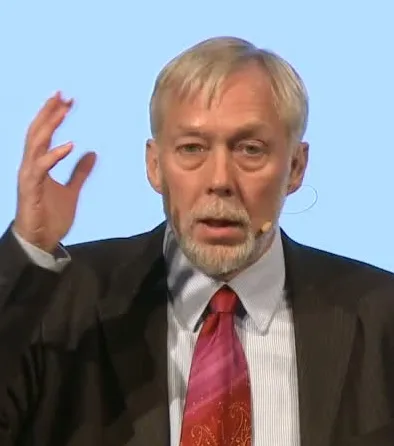
Mark Muraven and Roy Baumeister
Mark Muraven and Roy Baumeister proposed that willpower is an exhaustible mental muscle subject to ego depletion, a claim later replications have contested.
The Cookie-and-Radish Experiment
In their classic study, Mark Muraven and Roy Baumeister seated hungry students in a room smelling of warm chocolate-chip cookies, then told the experimental group to eat only a bowl of raw radishes while resisting the cookies. Afterward, both groups were given an unsolvable puzzle: students allowed to eat cookies freely worked on it for about nineteen minutes, while the radish-resisting group gave up after only about eight. The researchers read this as resisting temptation using up a limited store of mental energy, though later large replications have contested the effect.
The Starbucks LATTE Method
Starbucks couldn't fix its baristas' stress responses by asking for more willpower, so it pre-scripted the response instead, in an acronym called LATTE: Listen to the complaint, Acknowledge the frustration, Take action to fix it, Thank the customer, and Explain what caused the problem. Because the entire response is decided in advance rather than in the heat of the moment, baristas can de-escalate a hostile customer as an automatic procedural habit instead of an emotionally taxing improvisation.
Inflection Points and Why Willpower Fails There
An inflection point is a specific, predictable, high-stress moment where a person's conscious willpower is most likely to collapse, like the instant a customer starts screaming about a wrong order. Simply telling stressed employees to muster more self-control doesn't work, because conscious willpower reliably fails under acute pressure; the fix has to arrive before the pressure does, not during it.
Travis and Starbucks Habit Training
Duhigg follows a young Starbucks employee named Travis, who came from a chaotic background and struggled with emotional volatility, through the company's willpower-habit training. By rehearsing pre-scripted responses to predictable stressful moments rather than relying on raw self-control, Travis overcame that volatility and rose to become a successful Starbucks store manager.
Willpower and Autonomy
Follow-up studies by Mark Muraven found that how fast willpower drains depends heavily on autonomy. When a task was framed coercively, willpower depleted quickly; but when people were given genuine choice and a sense of purpose, their self-regulation held up far better. Duhigg applies this to the workplace, arguing that giving employees real autonomy over their tasks helps sustain focus, morale, and emotional endurance.
Willpower Strengthens Like a Muscle Over Time
Duhigg describes research suggesting willpower can also be built up over time, the way a physical muscle grows stronger with regular exercise, and that practicing self-discipline in one area can strengthen executive function more broadly. Like ego depletion itself, this claim remains contested in psychology.
Matched pairs
Each item on the left goes with the one on the right.
- Paul O'Neill
- Cut Alcoa's injury rate to one-twentieth the national average by his retirement.
- Karl Weick
- Organizational theorist whose seminal framework underlies the small-wins concept.
- Mark Muraven
- Follow-up work found a sense of autonomy, rather than coercion, slows the drain on willpower.
- Starbucks Corporation
- Restructured training to turn self-discipline into pre-scripted habit loops.
Step by step
Handle an upset customer with the Starbucks scripted complaint routine
- Listen to the complaint without interrupting
- Acknowledge the frustration
- Take action to fix the problem
- Thank the customer for raising it
- Explain why it happened and how it will be prevented
The routine is called the LATTE Method, and its letters spell out the order: Listen, Acknowledge, Take action, Thank, Explain.
Self-test
Answer each question from memory, then check your work against the answer key.
1. Charles Duhigg's term for a routine that triggers systemic change across otherwise unrelated habits is called a:
- AHabit loop
- BKeystone habit
- CSmall win
- DGolden rule of habit change
2. When Paul O'Neill became Alcoa's CEO in 1987, what did he declare as his sole strategic priority, shocking Wall Street analysts who expected a standard business speech?
- ACapital reallocation
- BCost-cutting initiatives
- CWorker safety
- DSales targets
3. Under O'Neill's keystone habit at Alcoa, every workplace injury had to reach his desk within how long, along with a prevention plan?
- AOne week
- BSeventy-two hours
- CForty-eight hours
- DTwenty-four hours
4. Which of the following is NOT one of the three mechanisms through which keystone habits operate, per Duhigg?
- AMandating uniform compliance rules
- BCultivating an identity of excellence
- CCreating transformational structures
- DGenerating small wins
5. Which personal routine does Duhigg cite as a keystone habit that often improves eating, productivity, and budgeting?
- ADaily journaling
- BMeal prepping on Sundays
- CMaking the bed
- DRegular exercise
6. Which researchers conducted the classic cookie-and-radish experiment on ego depletion?
- APaul O'Neill and Amy Cuddy
- BMark Muraven and Roy Baumeister
- CKarl Weick and Kurt Lewin
- DCharles Duhigg and Wendy Wood
7. In the cookie-and-radish experiment, about how long did the group who ate cookies freely persist on the unsolvable puzzle?
- AAbout nineteen minutes
- BAbout two minutes
- CAbout eight minutes
- DAbout thirty minutes
8. Which step is NOT part of Starbucks' LATTE method for handling upset customers?
- AThank the customer
- BAcknowledge the frustration
- CEscalate to a manager immediately
- DListen to the complaint
9. According to Duhigg, why does telling stressed employees to just have more willpower fail at a predictable high-stress moment like an angry customer complaint?
- AConscious willpower reliably collapses under stress
- BEmployees simply lack product knowledge
- CSuch moments are too random to script for
- DWillpower is a fixed trait that never changes
10. Follow-up research by Mark Muraven found that willpower drains more slowly when a task is framed around which factor?
- AA top-down mandate
- BAutonomy and choice
- CA public leaderboard ranking
- DAn hourly wage bonus
Go deeper
- ListenLesson 3 episode
- WatchOne Habit at Alcoa In 1987, Paul O'Neill became the CEO of Alcoa. Investors expected cost cuts. He talked about worker safety. His goal: zero injuries.
- WatchRadishes and Willpower Hungry students sat in front of warm cookies and a bowl of radishes. Some could eat the cookies. Others had to eat only radishes.
- ReadThe Power of Habit by Charles Duhigg · on Amazon ↗
- StudyThe Power of Habit in the FlashFeed app
These are affiliate links: if you buy a book through one, FlashFeed may earn a small commission at no extra cost to you. The commission helps pay for FlashFeed's servers.
As an Amazon Associate we earn from qualifying purchases.
Answer key
- 1. B Keystone habitA keystone habit sparks cascading change across unrelated domains; small wins and the habit loop are related but distinct concepts from the book.
- 2. C Worker safetyO'Neill's inaugural address announced worker safety as his sole priority, defying Wall Street's expectation of the usual cost-cutting and sales-target plans.
- 3. D Twenty-four hoursO'Neill's non-negotiable rule required injury reports to reach him within twenty-four hours, forcing direct manager-worker communication.
- 4. A Mandating uniform compliance rulesDuhigg describes keystone habits working through small wins, new structures, and a new identity, not top-down uniform compliance mandates.
- 5. D Regular exerciseDuhigg cites establishing a regular exercise routine as a personal keystone habit that often brings improvements in unrelated areas like diet and budgeting.
- 6. B Mark Muraven and Roy BaumeisterMark Muraven and Roy Baumeister ran the cookie-and-radish study at Case Western Reserve University, an influential early test of ego depletion that later replications contested.
- 7. A About nineteen minutesThe cookie group, whose willpower was untouched, persisted about nineteen minutes; the radish group, who had resisted temptation, quit after about eight.
- 8. C Escalate to a manager immediatelyLATTE stands for Listen, Acknowledge, Take action, Thank, and Explain; escalating to a manager is not one of the five scripted steps.
- 9. A Conscious willpower reliably collapses under stressDuhigg explains that conscious willpower collapses at inflection points, which is exactly why Starbucks pre-scripts responses instead of relying on willpower alone.
- 10. B Autonomy and choiceMuraven found that genuine autonomy and a sense of purpose let self-regulation hold up far longer than coercive, top-down framing.
Sources
- The Power of Habit — Charles Duhigg
- Ego depletion — Wikipedia — en.wikipedia.org/wiki/Ego_depletion
- The Power of Habit; Wikipedia, Ego depletion
Image credits
- Alcoa's Safety Reporting Mechanism: Wikimedia Commons · DearEdward from New York, NY, USA · CC BY 2.0 — commons.wikimedia.org/wiki/File:A321_final_assembly_(9351765668).jpg
- Mark Muraven and Roy Baumeister: Wikimedia Commons · ZURICH.MINDS · CC BY-SA 3.0 — commons.wikimedia.org/wiki/File:Roy_Baumeister.jpg

