
The Power of Habit study guide · Lesson 1 of 6
The Anatomy of Individual Habits: Neurological Loops and Craving
The Habit Loop, Basal Ganglia, and Neurological Chunking · The Craving Brain and Habit Formation Mechanics
Unofficial study guide for The Power of Habit: Why We Do What We Do in Life and Business by Charles Duhigg. FlashFeed is not affiliated with the author or publisher.
This is the lesson's study guide from the FlashFeed app, plus its key facts and a self-test.
What you'll be able to do
- Explain the neurological Habit Loop (cue, routine, reward) in the basal ganglia and how cravings drive automatic behaviors.
- Explain how a craving forms when a cue is linked to a reward, illustrated by the Pepsodent and Febreze campaigns.
Lesson 1 Study Guide: The Anatomy of Individual Habits
The Habit Loop, Basal Ganglia, and Neurological Chunking
The human brain is one of the most energetically demanding biological systems in nature. Although it accounts for only approximately two percent of total human body mass, it consumes more than twenty percent of the body's daily metabolic energy. To survive in dangerous and unpredictable environments, evolutionary pressures forced the central nervous system to develop mechanisms that minimize cognitive energy expenditure during routine, repetitive tasks. Whenever possible, the brain attempts to convert conscious, effortful actions into automatic procedural routines, thereby preserving finite prefrontal cortex reserves for novel challenges, social negotiations, and immediate survival threats.
At the anatomical center of this energy-saving mechanism sits the basal ganglia—an ancient, golf-ball-sized cluster of nuclei situated deep within the subcortical core of the forebrain, positioned immediately adjacent to the brainstem. Unlike the modern neocortex, which governs abstract reasoning, language, and moral deliberation, the basal ganglia is a primitive structure dedicated to motor control, pattern recognition, and procedural sequencing.
The independent operational capacity of the basal ganglia was clinically illuminated in 1993 through the landmark neurological case of Eugene Pauly. At seventy-one years of age, Eugene suffered a devastating bout of viral encephalitis that caused massive localized necrosis across his medial temporal lobes, entirely destroying the hippocampus and amygdala. The neuropathology left Eugene profoundly amnesic; he was completely incapable of forming new declarative memories, could not retain information for longer than thirty seconds, and could not describe the layout of his home or say where his kitchen was.
When Dr. Larry Squire, a preeminent neurobiologist at the University of California, San Diego, began studying Eugene, he discovered an astonishing cognitive phenomenon. Despite being unable to form new conscious memories, Eugene could navigate his suburban San Diego neighborhood on daily solitary walks, turning at specific street corners marked by distinctive trees and unerringly returning to his front door every time. Furthermore, in controlled sixteen-object cognitive choice experiments, Eugene gradually learned to select the correct plastic items with eighty-five percent accuracy over several weeks. When asked why he selected particular items, Eugene insisted he had no conscious knowledge of why he chose them and did not recall ever seeing the objects before. Dr. Squire demonstrated that habit learning is mediated by subcortical circuits that operate completely independently of hippocampal conscious memory.
Concurrently, neuroscientists at the Massachusetts Institute of Technology (MIT), led by Professor Ann Graybiel in the Department of Brain and Cognitive Sciences, deciphered the exact electrical mechanics of habit formation through microelectrode recordings in laboratory rats navigating a T-shaped maze. When an animal was first placed in the maze, hearing a loud opening click before a partition lifted, its basal ganglia and prefrontal cortex fired furiously. The rat sniffed walls, hesitated at every corner, and slowly calculated before locating the chocolate reward. However, as the navigational routine was repeated hundreds of times, overall neural firing plummeted. The rat sprinted through the maze in seconds. Crucially, microelectrode activity spiked at only two distinct moments: first when the opening click sounded (the cue), and second when the chocolate was consumed (the reward). Between those two markers, the conscious prefrontal cortex essentially went quiet while the basal ganglia executed the complex sequence of motor actions automatically.
Graybiel and her colleagues defined this neurological phenomenon as chunking—the biological process by which the brain compresses an intricate sequence of discrete actions into an automated behavioral routine. Chunking allows human beings to execute complex multi-step behaviors, such as driving a motor vehicle, playing an instrument, or tying shoelaces, without conscious deliberation.
Every chunked behavioral unit is structured around The Habit Loop, consisting of three invariant components:
- The Cue: The environmental, sensory, temporal, physical, or emotional trigger that signals the basal ganglia to enter automatic execution mode and selects which specific routine to deploy.
- The Routine: The physical, mental, or emotional sequence executed in response to the cue, occurring with minimal conscious oversight.
- The Reward: The reinforcing neurochemical payoff that teaches the brain whether this specific behavioral loop is advantageous enough to encode permanently for future survival.
When a habit loop is firmly established in the basal ganglia, the conscious mind ceases to participate in decision-making during execution. This automaticity conserves valuable cognitive stamina, but it also creates profound behavioral inertia, locking individuals into unexamined daily routines.
The Craving Brain and Habit Formation Mechanics
While the tripartite structure of cue, routine, and reward explains how a habit loop executes mechanically, it does not explain what propels an organism to initiate the routine in the first place. The kinetic engine that drives the habit loop is craving—the neurological anticipation of reward that emerges when an environmental cue becomes inextricably coupled with an expected neurochemical payoff.
The commercial mastery of craving was demonstrated in the early twentieth century by advertising executive Claude C. Hopkins during his historic campaign for Pepsodent toothpaste. At the turn of the twentieth century, oral hygiene in the United States was severely neglected, leading to widespread tooth decay and gum disease. Military recruits during World War I were routinely rejected due to severe dental infections. Toothpastes were widely available on pharmacy shelves, but almost nobody purchased them because brushing teeth was not an established daily routine.
Hopkins was approached to create an advertising campaign for Pepsodent, a minty concoction containing citric acid and mint oil. Hopkins recognized that to create a new habit, he had to identify a simple, universal, and inescapable cue. He discovered references in dental literature to the natural mucin plaque film that accumulates on human teeth. Hopkins launched a national advertising campaign instructing readers: "Just run your tongue across your teeth. You'll feel a film. That's what makes your teeth look off-color and invites decay." Hopkins promised that brushing with Pepsodent would remove the film and restore a brilliant, radiant smile. Before Pepsodent appeared, only about seven percent of Americans had a tube of toothpaste in their medicine cabinets; a decade after Hopkins' campaign went nationwide, that figure had jumped to sixty-five percent, and Pepsodent became one of the best-selling consumer goods in the nation.
However, Duhigg reveals that Hopkins' advertising copy succeeded because of an accidental biological factor that Hopkins himself never fully understood. Pepsodent contained citric acid, mint oil, and irritants that produced a cool, tingling sensation on the tongue and gums. This tingling had no functional cleaning efficacy, but it provided immediate, tactile physical proof that the product was working. When consumers forgot to brush, their mouths felt stale, and they craved that signature cool tingle. That tactile sensation created a powerful neurological craving that converted a conscious chore into an irresistible, automatic daily habit.
The biological mechanics of craving were empirically mapped by Cambridge neuroscientist Dr. Wolfram Schultz through electrophysiological studies on rhesus macaque monkeys, including a subject named Julio. Schultz placed microelectrodes into dopamine-rich brain structures while Julio learned a computerized task. When a visual shape appeared on a screen (the cue), Julio pulled a lever (the routine), and a drop of sweet blackberry juice was delivered into his mouth (the reward). Initially, Julio's dopamine neurons fired intensely after the juice touched his tongue, representing the pleasure of reward delivery.
However, as the habit loop became firmly encoded in Julio's basal ganglia, Schultz observed a dramatic temporal shift: the dopamine spike moved backward in time, firing the instant the visual shape appeared on the monitor—long before the juice was dispensed. The brain had learned to anticipate the reward upon recognizing the cue. When Schultz altered the experiment by withholding the juice after the lever was pulled, dopamine levels plummeted below baseline, and the monkey exhibited acute physiological agitation and frustration. In Duhigg's account, this dopaminergic anticipation is what a craving looks like in the brain.
The necessity of understanding craving was further underscored by Procter & Gamble's initial failure with Febreze in the mid-1990s. Formulated with cyclodextrin—a ring-shaped sugar molecule that chemically traps malodorous airborne compounds—Febreze was initially marketed as a functional odor eliminator for pet owners and smoky environments. Despite stellar lab performance, sales plummeted because target consumers suffered from olfactory adaptation; individuals had become biologically desensitized to their own domestic odors and therefore never perceived the cue to use the product.
Led by marketing director Drake Stimson, P&G revitalized Febreze by reformulating it with a pleasant floral fragrance and repositioning it within an existing daily habit loop. Instead of marketing Febreze as a problem-solver for bad smells, P&G positioned it as the celebratory final reward of a completed cleaning routine. Consumers were instructed to make the bed, vacuum the rug, and spray Febreze as a rewarding sensory flourish. By attaching the product to an established cleaning cue and providing an aromatic reward that consumers actively craved, Febreze was transformed into a global brand with more than a billion dollars in annual sales.
Key terms
- Chunking
- The brain's process of compressing a multi-step action sequence into one automatic routine
- Craving
- The brain's anticipation of a reward once a cue becomes linked to an expected payoff
- Olfactory Adaptation
- Becoming desensitized to odors in one's own home so a cue to act goes unnoticed
Key facts
Chunking
Chunking is the neurological process by which the brain converts a long string of separate, deliberate actions into a single automatic routine. Neuroscientist Ann Graybiel and her team at MIT identified the process by recording basal ganglia activity in rats learning a maze: dozens of individual movements eventually compress into one uninterrupted sequence the cortex no longer has to supervise. Chunking is what lets people drive, play an instrument, or tie their shoes without thinking through each step.
The Habit Loop's Three Stages
Every chunked behavior runs on The Habit Loop, a sequence of exactly three parts that always fire in the same order: the cue, the routine, and the reward. This order never changes — the loop is invariant, which is what lets a stored behavior run without conscious supervision once it has been learned. The craving that links the three parts together is what makes the loop self-sustaining.
Eugene Pauly's Amnesia
In 1993, Eugene Pauly suffered viral encephalitis that destroyed his hippocampus and amygdala, leaving him unable to form new memories or recall anything for longer than thirty seconds. Yet he could still navigate his neighborhood on daily walks and unerringly find his way home, because those routes were stored as procedural habits in his basal ganglia rather than as conscious memories. His case showed that the brain systems behind habit and the ones behind memory are separate, and one can be destroyed while the other keeps working.
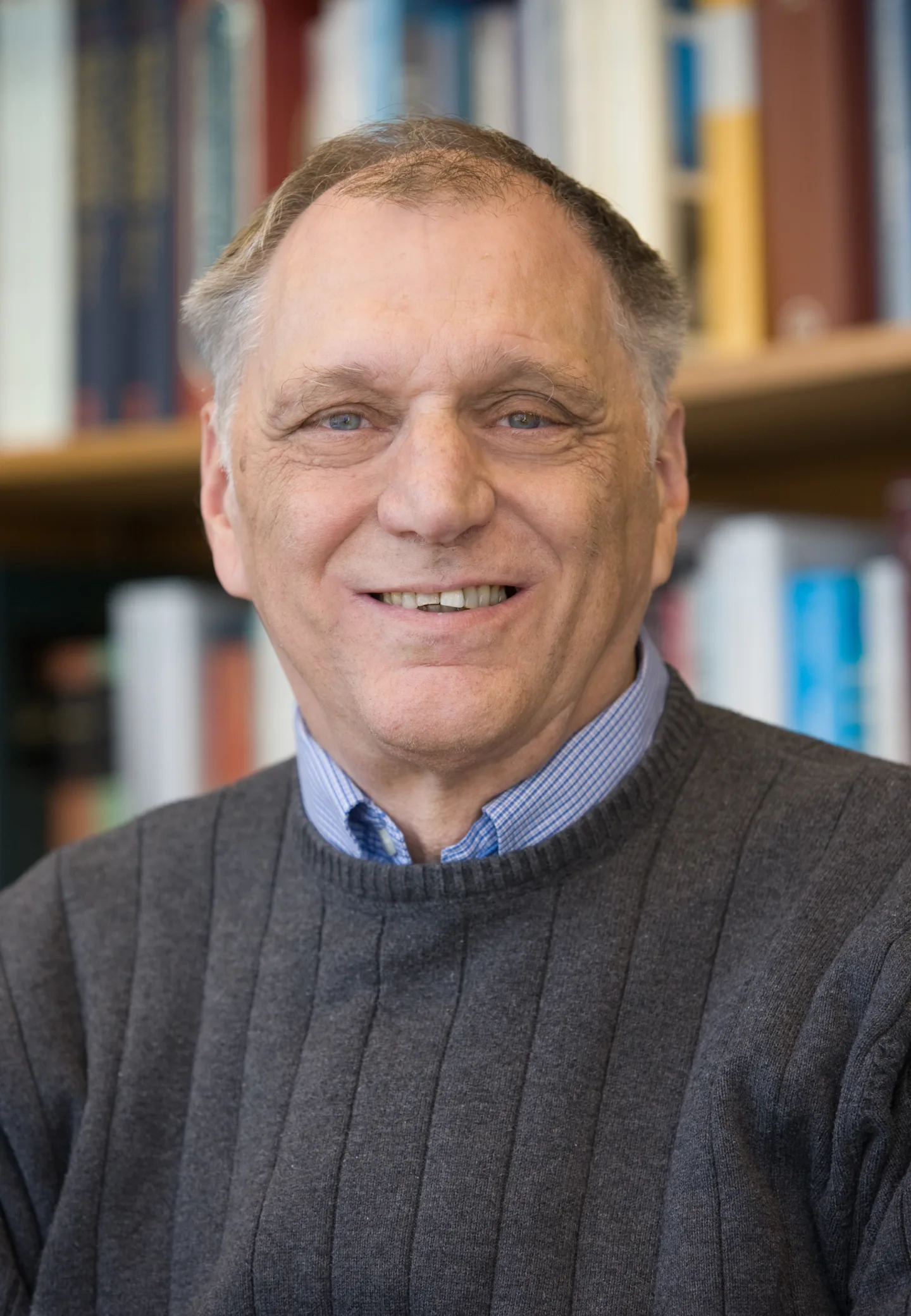
Dr. Larry Squire's Findings
Neurobiologist Dr. Larry Squire at the University of California, San Diego studied Eugene Pauly and ran controlled experiments using sixteen objects arranged in eight pairs. Over several weeks, Eugene gradually learned which object in each pair was the correct one, reaching 85 percent accuracy, despite insisting he had never seen the objects before. Squire concluded that procedural habit learning survives profound damage to the hippocampus and amygdala, because it is stored and run by an entirely separate subcortical circuit.
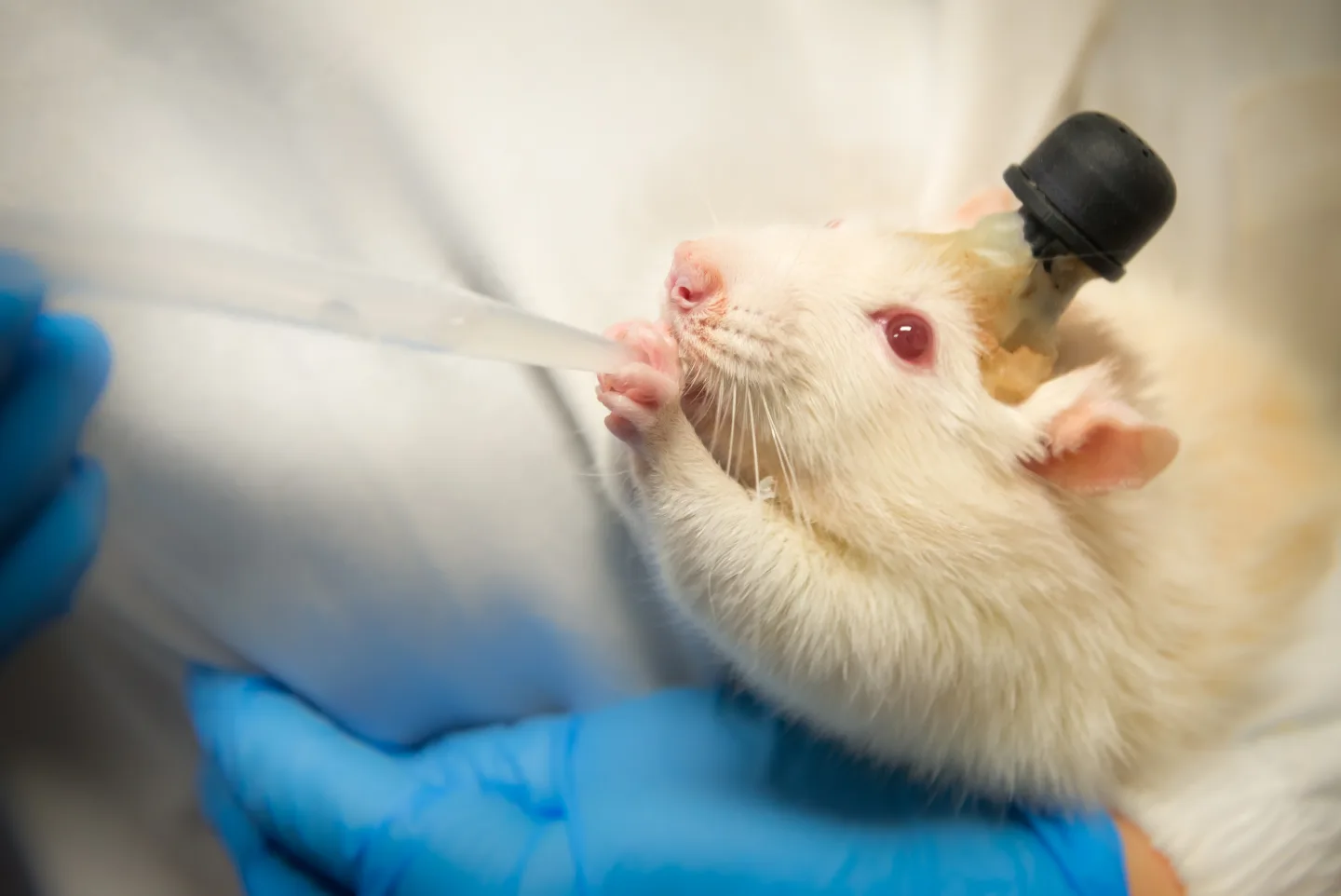
Neural Activity in an Established Habit
Once a routine is fully learned, the brain doesn't stay busy the whole way through it. In Ann Graybiel's T-maze recordings, a rat's neural firing was intense at the start of training, but after hundreds of repetitions, activity dropped away in the middle of the run and spiked only at two moments: when the cue sounded and when the reward arrived. In between, the prefrontal cortex goes largely quiet while the basal ganglia runs the sequence on its own.
Cue, Routine, and Reward Defined
The cue is the trigger — a place, time, feeling, person, or immediately preceding action — that tells the brain which stored routine to run. The routine is the behavior itself, the physical, mental, or emotional sequence carried out automatically once the cue fires. The reward is the neurochemical payoff at the end that teaches the brain whether the loop was worth repeating, and it is what actually gets encoded for next time.
Automaticity and the T-Maze Click
In the MIT T-maze studies, an audible click served as the cue that started each run, and a piece of chocolate at the far end was the reward. Once the route was fully learned, the deciding parts of the brain fell silent for the run in between — a state researchers call automaticity. The rat still executed the entire sequence correctly; it simply stopped needing conscious oversight to do it.

Claude C. Hopkins
Claude Hopkins revolutionized dental hygiene by identifying the universal cue of tooth film and coupling it with Pepsodent.
Pepsodent's Accidental Tingle
Pepsodent contained citric acid and mint oil, irritants that produced a cool, tingling sensation on the tongue and gums. That tingle did nothing to actually clean the teeth, but it gave users immediate physical proof the product was working, and when they skipped a day, their mouths felt stale without it. In Duhigg's account, that tingle, an accidental side effect of the paste's ingredients, is what turned brushing into a craving. The film on the teeth was simply the naturally occurring cue Hopkins pointed to.
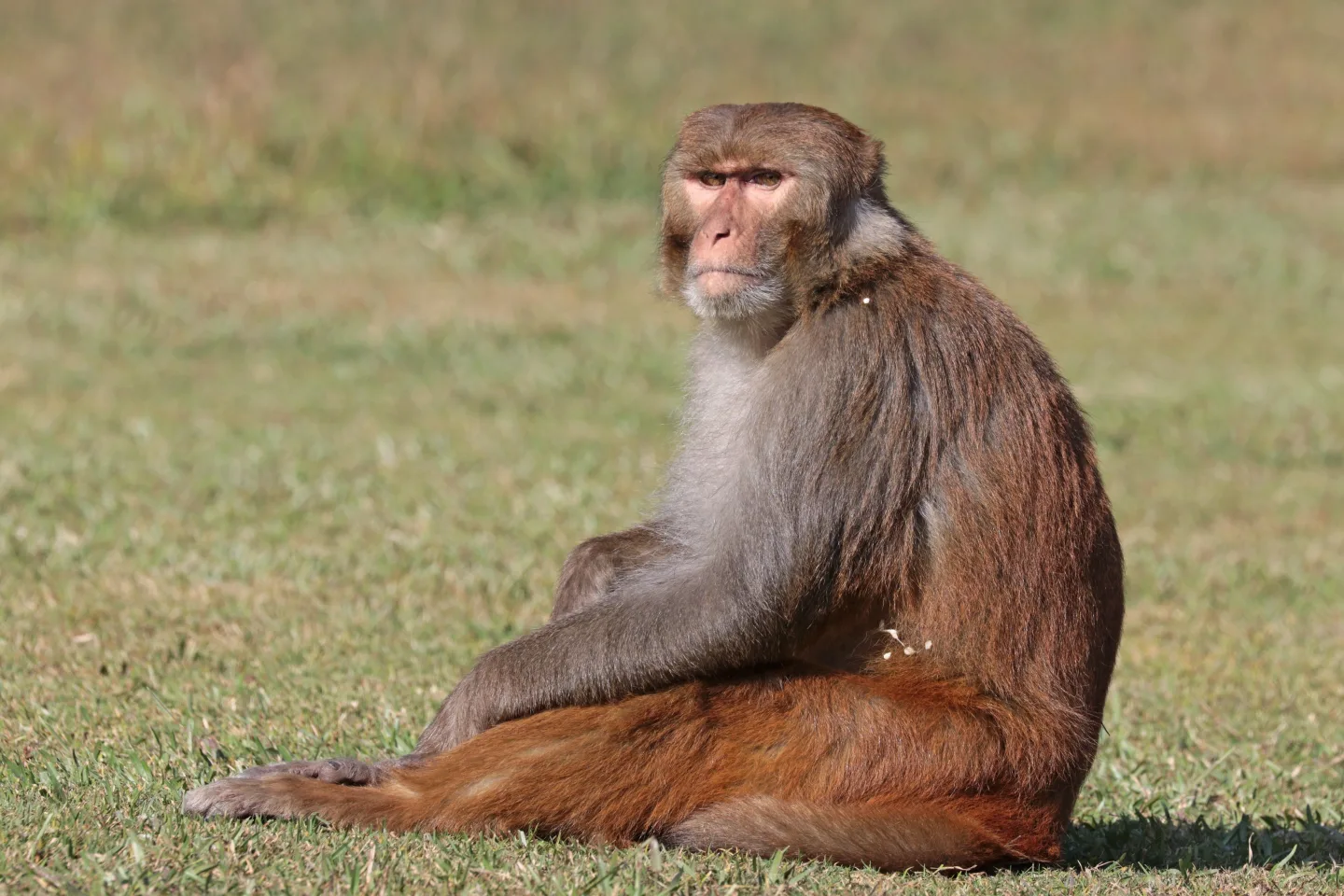
Wolfram Schultz's Dopamine Studies
Cambridge neuroscientist Dr. Wolfram Schultz placed microelectrodes in the dopamine circuits of a macaque monkey named Julio and tracked his brain as he learned to pull a lever after a shape appeared, earning a drop of blackberry juice. At first, Julio's dopamine spiked only after the juice arrived; but as the habit solidified, the spike moved backward in time to fire the instant the shape appeared, well before the juice was delivered. When Schultz then withheld the juice after a learned cue, Julio's dopamine crashed below baseline and he became visibly agitated.
Craving Powers the Habit Loop
A craving is the neurological anticipation of a reward: it's what happens when the brain associates a cue with a specific pleasurable payoff and starts wanting that payoff before the routine even begins. Without an underlying craving, a habit loop is just a sequence somebody has to consciously decide to run each time; the craving is what pulls the routine forward automatically once the cue appears, which is why no habit fully forms or sustains itself without one.
Febreze's Marketing Relaunch
When Febreze failed to sell as a functional odor eliminator, marketing director Drake Stimson led Procter & Gamble's effort to relaunch it, not by fixing the chemistry, but by adding a pleasant floral fragrance and repositioning the spray as the celebratory last step of a cleaning routine. Instead of solving a smell nobody could smell, P&G told consumers to make the bed, vacuum the rug, and finish with a spray of Febreze as the reward. Attaching the product to an already-established cleaning cue turned it into a brand with more than a billion dollars in annual sales.
Febreze's Odor-Trapping Chemistry
Febreze's original formula was built around cyclodextrin, a ring-shaped sugar molecule that chemically traps malodorous airborne compounds inside itself. The chemistry worked exactly as designed in lab tests, but it still didn't sell, because the target customers had grown biologically desensitized to their own household odors and never registered a cue to reach for the spray.
Pepsodent's Effect on American Toothpaste Use
Before Claude Hopkins' Pepsodent campaign, only about 7 percent of Americans had a tube of toothpaste in their medicine cabinets. A decade after the campaign went nationwide, that figure had jumped to 65 percent, and Pepsodent became one of the best-selling products in the country.
Matched pairs
Each item on the left goes with the one on the right.
- Eugene Pauly
- Chose objects with 85% accuracy despite no conscious memory of learning them
- Ann Graybiel
- Led the MIT team recording rat brain activity in the T-maze studies
- Dr. Wolfram Schultz
- Cambridge neuroscientist who mapped craving via dopamine studies on a monkey named Julio
- Drake Stimson
- P&G marketing director who repositioned Febreze as a cleaning routine's reward
Self-test
Answer each question from memory, then check your work against the answer key.
1. Which brain structure stores automatic habits and procedural routines, independent of conscious memory?
- AAmygdala
- BNeocortex
- CHippocampus
- DBasal ganglia
2. Which of these is NOT one of the three components of the Habit Loop?
- ACraving
- BReward
- CRoutine
- DCue
3. In the T-maze studies, what is the name for the state in which the brain's deciding regions fall silent once a routine is fully learned?
- ASensitization
- BAutomaticity
- CChunking
- DHabituation
4. In Ann Graybiel's T-maze studies, what pattern of neural activity appeared once the rat's habit was fully learned?
- AActivity only at the reward
- BActivity only at the cue
- CSpikes only at the cue and reward
- DConstant high activity throughout
5. What did Ann Graybiel's team define as 'chunking'?
- ASplitting a task into deliberate steps
- BGrouping unrelated facts by category
- CCompressing actions into one automatic routine
- DStoring a memory as one vivid image
6. What must be present for a habit loop to run without a conscious decision each time?
- AA written checklist of routine steps
- BConstant conscious supervision
- CA backup reward if the cue fails
- DA craving for the anticipated reward
7. What did Schultz's dopamine studies show about a fully learned habit loop?
- ADopamine spiked at the routine's midpoint
- BDopamine fired at the cue, anticipating reward
- CDopamine output stayed flat throughout
- DDopamine fired only after the reward arrived
8. What did Claude Hopkins use as Pepsodent's cue to trigger daily brushing?
- AThe mucin film a tongue could feel on teeth
- BThe bad breath other people could smell
- CThe bleeding of inflamed gums
- DThe stained enamel visible in photographs
9. According to Duhigg, what was the real effect of Pepsodent's cooling tingle on plaque?
- AIt gently dissolved the mucin film
- BIt had no cleaning effect at all
- CIt hardened enamel against decay
- DIt numbed the gums to reduce pain
10. What happened to Julio's dopamine levels when Wolfram Schultz withheld the juice after the cue?
- AThey dropped below baseline
- BThey spiked even higher than usual
- CThey stayed completely flat
- DThey rose slowly until the next trial
11. How is a 'craving' defined in the neuroscience of habit formation?
- AA decision to consciously repeat a behavior
- BThe routine performed automatically after a cue
- CA memory trace left over from a past reward
- DThe brain's anticipation of an upcoming reward
12. Why did Febreze's original launch fail despite strong lab results against odors?
- AThe floral scent overwhelmed most buyers
- BRetailers refused to stock the new formula
- CCustomers had grown desensitized to their own smells
- DThe cyclodextrin broke down in humid air
Go deeper
- ListenLesson 1 episode
- WatchThe Habit Loop Your brain is about 2% of your body's mass. It burns more than 20% of your energy. So it hunts for shortcuts.
- WatchThe Pepsodent Tingle In the early 1900s, few Americans brushed their teeth. Claude Hopkins sold Pepsodent with a cue: run your tongue across your teeth, and feel the film.
- ReadThe Power of Habit by Charles Duhigg · on Amazon ↗
- StudyThe Power of Habit in the FlashFeed app
These are affiliate links: if you buy a book through one, FlashFeed may earn a small commission at no extra cost to you. The commission helps pay for FlashFeed's servers.
As an Amazon Associate we earn from qualifying purchases.
Answer key
- 1. D Basal gangliaThe basal ganglia governs automatic routines. The hippocampus and amygdala handle conscious memory, which Eugene Pauly's case showed was unnecessary for running habits.
- 2. A CravingThe Habit Loop has exactly three parts: cue, routine, and reward. Craving is the separate driving force that motivates the loop, not one of its stages.
- 3. B AutomaticityResearchers call this silent-execution state automaticity. Chunking is the process that compresses the routine to reach it; habituation and sensitization are unrelated terms.
- 4. C Spikes only at the cue and rewardOnce the route was automatic, overall firing dropped and spiked at just two moments: the opening click (cue) and the chocolate (reward), with the middle going quiet.
- 5. C Compressing actions into one automatic routineChunking is the process by which the brain compresses a multi-step sequence of actions into a single automated routine, freeing conscious attention for other tasks.
- 6. D A craving for the anticipated rewardCraving is the brain's anticipation of the reward; without it, a loop needs a conscious decision to run each time.
- 7. B Dopamine fired at the cue, anticipating rewardAs the loop became automatic, Schultz saw the dopamine spike shift earlier, firing at the cue in anticipation of the reward.
- 8. A The mucin film a tongue could feel on teethHopkins told readers to run their tongue across their teeth and feel the mucin film, turning that ordinary sensation into a cue nobody could avoid noticing.
- 9. B It had no cleaning effect at allThe tingle from citric acid and mint had no real cleaning power, but it gave users tactile 'proof' the product worked, and craving that missing tingle made brushing automatic.
- 10. A They dropped below baselineWhen Schultz withheld the juice after a fully learned cue, Julio's dopamine plummeted below baseline and the monkey grew visibly agitated and frustrated.
- 11. D The brain's anticipation of an upcoming rewardA craving is the neurological anticipation of reward that appears once a cue becomes linked to an expected payoff, and it is what drives someone to start the routine.
- 12. C Customers had grown desensitized to their own smellsTarget customers suffered olfactory adaptation: they'd grown desensitized to their own home's odors and never perceived the cue to reach for Febreze, despite its lab performance.
Sources
- The Power of Habit — Charles Duhigg
Image credits
- Dr. Larry Squire's Findings: Wikimedia Commons · Larry R. Squire · CC BY-SA 3.0 — commons.wikimedia.org/wiki/File:Larry_Ryan_Squire_Head_Shot2008.jpg
- Neural Activity in an Established Habit: Wikimedia Commons · Anna Marchenkova · CC BY 4.0 — commons.wikimedia.org/wiki/File:Feeding_a_laboratory_rat.jpg
- Automaticity and the T-Maze Click: Jeremyida002 · CC BY-SA 4.0 — commons.wikimedia.org/wiki/File:Analog_Stop_Watch.jpg
- Claude C. Hopkins: FlashFeed original diagram · CC-BY-4.0
- Wolfram Schultz's Dopamine Studies: Wikimedia Commons · Charles J. Sharp · CC BY-SA 4.0 — commons.wikimedia.org/wiki/File:Rhesus_macaque_(Macaca_mulatta_mulatta),_male,_Gokarna.jpg


