
Spanish: Travel & Lodging study guide · Lesson 2 of 3
Lesson 2: Lodging & Accommodation
Part 1: At the Hotel · Part 2: Inside the Room · Part 3: Booking and Paying · Fill the Blank: Hotel & Lodging
This is the lesson's study guide from the FlashFeed app, plus its key facts and a self-test.
What you'll be able to do
- Check in at a hotel using reception, reservation, key, guest, and staff vocabulary.
- Identify the hotel-desk words recepción, reservación and botones, and use habitación and recepción in sentences about arriving at a hotel.
- Name in-room items and climate controls and use funcionar for a broken appliance.
- Identify room items and facilities (la almohada, la toalla, el elevador).
- Handle payment vocabulary and request an official itemized invoice at checkout.
Lodging & Accommodation
A hotel is one of the few places where a non-native speaker is expected to handle a multi-step transaction in the local language: reserve, check in, request, complain, pay, check out. This lesson walks the arc. The vocabulary is narrow but high-leverage — if you know a small core of words well, you can resolve most lodging problems without switching to English. Watch the register carefully; reception staff lean formal, and usted is the safer default.
At the Hotel
The front desk is la recepción, and the person behind it is el recepcionista. El botones (bellhop) handles bags — the word looks plural but is singular and masculine, an oddity worth memorizing. You are el huésped (the guest), a word that can also mean host (the person who lodges someone in their home); context decides, and at a hotel it means the guest.
The standard opener is "¿Tiene una habitación libre?" — literally "Do you have a free room?" If you booked ahead, "Tengo una reservación a nombre de..." ("I have a reservation under the name..."; also una reserva) does the job. La llave (key) is what you walk away with, though most places will hand you a card. The duration of your visit is la estancia (the stay); you will also hear la estadía. Confirming "¿Cuántas noches?" up front prevents the awkward checkout-morning conversation about an extra night nobody agreed to.
Inside the Room
Hotel listings advertise instalaciones (facilities) — conexión Wi-Fi, alberca (pool; also piscina), elevador (elevator, used in Mexico and parts of Central America and the Caribbean; called ascensor in Spain and many other countries), and el comedor (the dining room, where breakfast is served). Inside the room itself, the basics are la cama (bed) and la almohada (pillow); in el baño (the bathroom), you will find la regadera (shower; also la ducha) and la toalla (towel). Watch out in Spain, where a regadera is a watering can and an alberca is an irrigation tank; Argentina and Uruguay call a pool la pileta. Temperature is a classic thing to raise with the desk: aire acondicionado (air conditioning) and la calefacción (heating) are the words you need to get the front desk to fix something.
A useful formula: "En la habitación hace mucho calor, ¿funciona el aire acondicionado?" — "It is very hot in the room, is the AC working?" The verb funcionar (to work, in the mechanical sense) is the right one for broken appliances. Prefer funcionar over trabajar for appliances: trabajar is the everyday verb for to work in the employment sense (a dictionary does allow it for machines, but it is not the natural choice). A TV funciona or it does not.
Booking and Paying
The financial vocabulary is small and worth drilling. El precio (price), incluido (included) — as in "¿El desayuno está incluido?" — and the two payment methods, tarjeta de crédito (credit card) and en efectivo (in cash). The verb is pagar (to pay), and the noun el pago is the payment.
When you check out, ask for la factura if you need an official, itemized invoice for expenses or tax purposes; la cuenta is the casual bill you would ask for in a restaurant. Watch for pago por adelantado — payment in advance, common at smaller pensiones. Por adelantado always means ahead of time, never afterwards. Settle the bill, surrender the key, and you are free to head into town — which usually means shopping.
Key concepts
la llave
- After checking in at reception, this is the small item the front desk hands you, though most hotels now give a card instead.
- You use it to open the door to your room.
- The Spanish word for the metal room key you carry during your stay.
la almohada
- A soft furnishing that comes standard on every hotel bed.
- You rest your head on it while you sleep.
- The Spanish word for a bed pillow.
la toalla
- A room basic you reach for right after using the shower.
- You use this cloth to dry yourself off.
- The Spanish word for a bath towel.
el elevador
- A building facility often advertised in a hotel's listings, alongside Wi-Fi and a pool.
- You step into it to travel between floors without taking the stairs.
- The word for the lift in Mexico and parts of Central America and the Caribbean; Spain and many other countries say 'ascensor'.
la factura
- At checkout you ask for this if you need paperwork for expenses or tax purposes.
- It is the official, itemized document of what you owe, not the casual bill (la cuenta) you'd ask for in a restaurant.
- The Spanish word for a formal, itemized invoice.
Key facts
Reservación: Mexico's Booking
In Mexico a booking is la reservación; at the front desk you say Tengo una reservación a nombre de... (I have a reservation under the name...). Many Latin American countries use the word too, but Spain says la reserva, which you will also hear in parts of Latin America.
The Check-In Script at La Recepción
At la recepción you are el huésped (the guest) and the person across the desk is el recepcionista. Without a booking, open with ¿tiene una habitación libre?; with a reservación, tengo una reservación a nombre de.... Either way you leave the desk holding la llave.
Unless You're in Argentina
La estancia is the length of your stay at a Mexican hotel, and la estadía means the same. But in Argentina, Uruguay and elsewhere in the Southern Cone, una estancia is a sprawling cattle ranch, which makes estadía the safer word there. Either way, confirm ¿cuántas noches? at the desk.
El Huésped
In Spanish hotel vocabulary, el huésped means the guest — distinct from staff terms like el botones (bellhop), el recepcionista (desk clerk), and el mesero (waiter).
La Llave
At hotel check-in, you receive la llave, the key (often a card), to get into your room — not to be confused with la factura (invoice) or la reservación (reservation).
Regadera: Mexico's Shower
In Mexico the shower is la regadera: darse un baño de regadera (to take a shower). Spain says la ducha, which Mexicans understand too. Watch out: in Spain a regadera is a watering can for plants (Mexicans use the word that way too).
Hotel Facilities: Instalaciones
When booking, check the instalaciones (facilities). This includes conexión Wi-Fi, alberca (pool), and elevador (elevator).
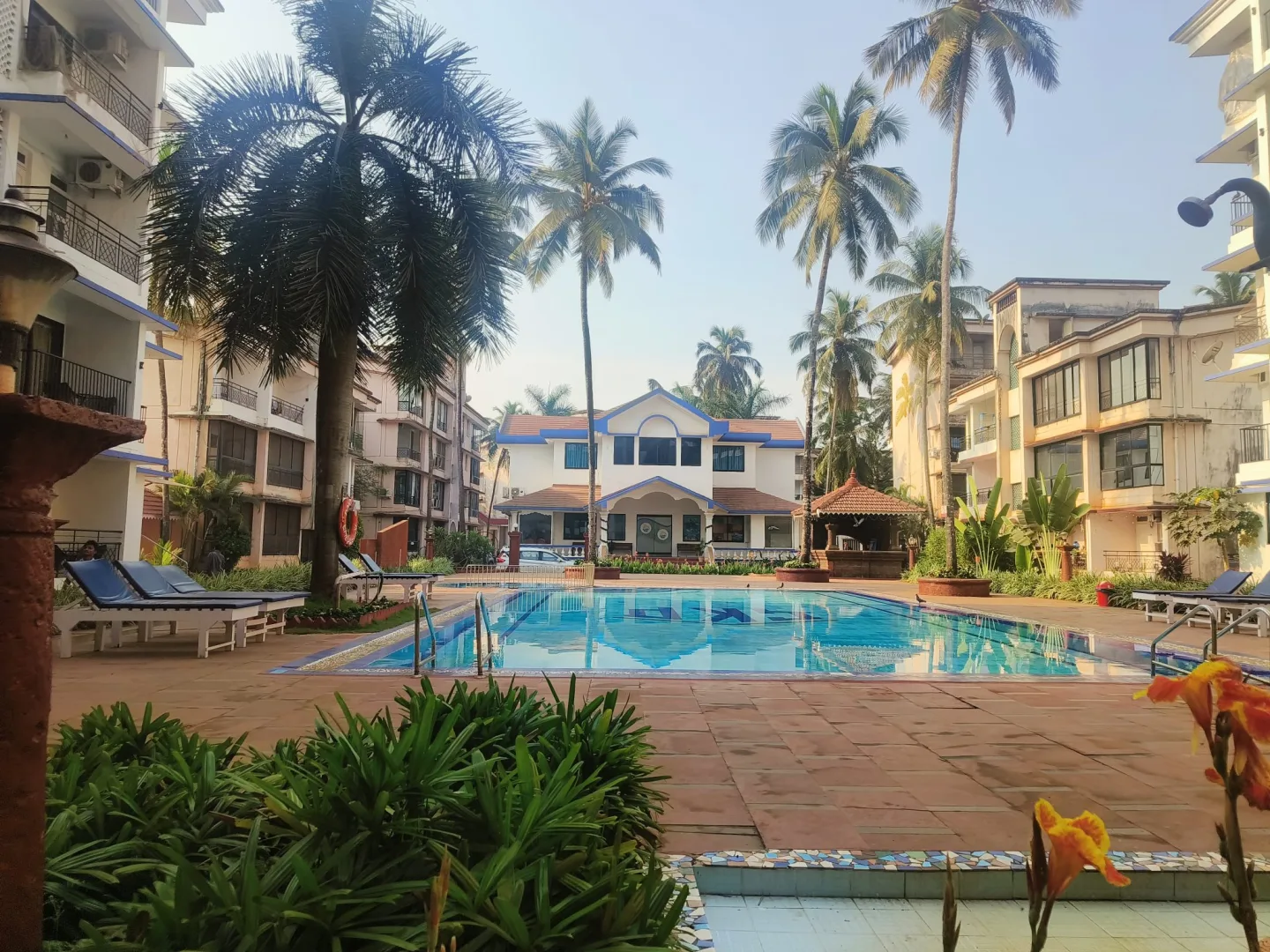
Alberca: Mexico's Swimming Pool
In Mexico the pool is la alberca: El hotel tiene dos albercas (the hotel has two pools). Spain says la piscina, which Mexicans know too, and Argentina and Uruguay say la pileta. Watch out: in Spain an alberca is a tank of water for irrigation.
A Broken TV Doesn't Funcionar
Spanish has two verbs for to work. Funcionar is the natural one for appliances: en la habitación hace mucho calor, ¿funciona el aire acondicionado? Trabajar is the everyday employment verb. Say that a television funciona, or it does not.
La Calefacción
If your hotel room is too cold, ask the desk about la calefacción, the heating — the opposite fix from el aire acondicionado, which cools a room that's too hot.
Aire Acondicionado
Aire acondicionado is Spanish for air conditioning, used when a room feels too warm — the reverse of la calefacción, which heats a cold room.
La Factura, Not La Cuenta
La cuenta is the casual bill you would ask for in a restaurant. La factura is the official, itemized invoice with the tax details — the one your employer will want back. At hotel checkout, the wrong word gets you the wrong piece of paper.
Incluido: The Question That Saves You a Surprise
Incluido means included — ¿el desayuno está incluido? is the question that saves you a surprise at checkout. Keep its neighbors straight: el precio is the price, and el pago is the payment itself.
Por Adelantado: Before, Never After
Smaller pensiones often post pago por adelantado — payment in advance. Por adelantado never means afterwards, so read it as pay now. Then pick your method: tarjeta de crédito, or en efectivo — banknotes and coins. The verb throughout is pagar.
En Efectivo
To say you want to pay with cash in Spanish, use en efectivo — the phrase covers both banknotes and coins.
El Precio
El precio means the price in Spanish — a different word from el pago (the payment) and la factura (the invoice), even though all three relate to money.
Doble Might Have Two Beds
Habitación doble books a room for two — but doble describes the occupancy, not the mattress. Specify cama matrimonial for one big bed or dos camas for twins, or you find out at 11 p.m. which one the hotel assumed.
Elevador, Ascensor, Floor Zero
El elevador is the lift in Mexico and parts of Central America and the Caribbean (in Spain and many other countries: el ascensor). Watch the button panel: the ground floor is often planta baja (PB), so el primer piso is already one flight up. And in Spain un piso is not only a storey; it is also an apartment.
La Factura
When you need an official, itemized invoice for expenses at a hotel, ask for la factura — different from la cuenta, the casual bill you'd request at a restaurant.
La Recepción
En la recepción me dieron la llave del hotel means "At the front desk they gave me the hotel key." La recepción is where you check in and collect la llave, often a card.
Matched pairs
Each item on the left goes with the one on the right.
- La recepción
- The reception desk
- La reservación
- The reservation
- El botones
- The bellhop
- La llave
- The key
- El huésped
- The guest
- La estancia
- The stay (duration)
- La cama
- The bed
- La almohada
- The pillow
- La regadera
- The shower
- La toalla
- The towel
- Aire acondicionado
- Air conditioning
- La calefacción
- The heating
- El precio
- The price
- Incluido
- Included
- Pagar
- To pay
- Tarjeta de crédito
- Credit card
- En efectivo
- In cash
- La factura
- The invoice / official bill
Self-test
Answer each question from memory, then check your work against the answer key.
1. Who helps you with your bags at a hotel?
- AEl cocinero
- BEl botones
- CEl recepcionista
- DEl mesero
2. Which Spanish word means "the guest" at a hotel?
- AEl mesero
- BEl botones
- CEl recepcionista
- DEl huésped
3. You booked ahead. Which phrase tells the desk you have a reservation?
- ATengo una reservación a nombre de...
- B¿Cuántas noches?
- C¿Tiene una habitación libre?
- DLa cuenta, por favor.
4. In hotel talk, what does "la estancia" refer to?
- AThe bellhop
- BThe room key
- CThe duration of your stay
- DThe reception desk
5. At check-in, what do you receive to get into your room?
- ALa reservación
- BLa factura
- CLa llave
- DEl botones
6. "La recepción" translates to which of these?
- AThe bellhop
- BThe key
- CThe reservation
- DThe reception desk
7. What does "la reservación" mean?
- AThe reservation
- BThe bellhop
- CThe reception desk
- DThe stay
8. "El botones" refers to which hotel worker?
- AThe receptionist
- BThe bellhop
- CThe guest
- DThe waiter
9. Complete: "Reservé una ___ doble en el hotel."
- Allave
- Bhabitación
- Crecepción
- Ddocumentación
10. Complete: "En la ___ me dieron la llave del hotel."
- Arecepción
- Bregadera
- Ccama
- Dcalefacción
11. The hotel air conditioning is broken. Which verb is the natural, everyday choice for saying an appliance 'isn't working'?
- ANo opera
- BNo trabaja
- CNo funciona
- DNo labora
12. "La cama" means which in-room item?
- AThe shower
- BThe towel
- CThe pillow
- DThe bed
13. Your room is freezing in winter. Which should you ask the desk to fix?
- ALa almohada
- BLa calefacción
- CLa alberca
- DEl aire acondicionado
14. Which of these is NOT an item found inside the room?
- ALa almohada
- BLa cama
- CLa alberca
- DLa toalla
15. "Aire acondicionado" translates to which climate control?
- AAir conditioning
- BHeating
- CThe pillow
- DThe shower
16. "La almohada" refers to which item?
- AThe shower
- BThe bed
- CThe towel
- DThe pillow
17. What do you use to dry off after a shower?
- ALa llave
- BLa almohada
- CLa cama
- DLa toalla
18. "El elevador" is what?
- AThe shower
- BThe elevator
- CThe staircase
- DThe pool
19. Complete: "Subo a mi piso en el ___."
- Acorredor
- Bbaño
- Celevador
- Dcomedor
20. Which statement about these words is FALSE?
- A"La almohada" means "the bed"
- B"La toalla" means "the towel"
- C"El elevador" means "the elevator"
- D"La cama" means "the bed"
21. How do you say you want to pay with cash?
- AA plazos
- BEn efectivo
- CCon cheque
- DCon tarjeta
22. At checkout you need an official, itemized invoice for your expenses. What do you ask the hotel for?
- AEl precio
- BLa cuenta
- CEl pago total
- DLa factura
23. "El precio" means which of these?
- AThe price
- BThe invoice
- CThe payment
- DThe credit card
24. You want to know whether breakfast comes with the room rate. Which word completes "¿El desayuno está ___?"
- Aefectivo
- Breservado
- Cincluido
- Dadelantado
25. At a small pensión you see "pago por adelantado." What does this mean?
- APayment afterwards
- BPayment in advance
- CPayment by card only
- DPayment in cash only
Go deeper
- WatchEl Botones At a hotel, the front desk is la recepción. El botones is the bellhop. The word looks plural, but it's one person.
- WatchFuncionar, Not Trabajar Hot room? Say en la habitación hace mucho calor. Then ask: ¿funciona el aire acondicionado?
- WatchPor Adelantado Ask: ¿El desayuno está incluido? Is breakfast included?
- StudySpanish: Travel & Lodging in the FlashFeed app
Answer key
- 1. B El botonesThe 'botones' (bellhop) is responsible for luggage assistance.
- 2. D El huésped"El huésped" is the guest. "El botones" is the bellhop, "el recepcionista" the desk clerk, and "el mesero" the waiter — all hotel staff, not the guest.
- 3. A Tengo una reservación a nombre de..."Tengo una reservación a nombre de..." states a booking. "¿Tiene una habitación libre?" asks if a room is free — used when you have NOT booked.
- 4. C The duration of your stay"La estancia" (also "la estadía") is the length of your stay. "La llave" is the key and "la recepción" is the front desk.
- 5. C La llave"La llave" is the key (often a card). "La factura" is the invoice and "la reservación" is the reservation — neither opens the door.
- 6. D The reception desk"La recepción" is the reception desk/lobby. "La reservación" is the reservation and "la llave" is the key.
- 7. A The reservation"La reservación" is the reservation. "La recepción" is the reception desk and "la estancia" is the stay.
- 8. B The bellhop"El botones" is the bellhop who handles bags — singular and masculine despite the plural look. "El recepcionista" is the desk clerk.
- 9. B habitación"Habitación" (room) fits — you reserve a double room. "Recepción" is the desk and "llave" the key; neither is "doble" here.
- 10. A recepciónYou get the key at the "recepción" (reception). "Cama" is bed and "regadera" shower — you don't receive a key there.
- 11. C No funciona'Funcionar' is the natural verb for an appliance that works or is out of order: 'no funciona'. 'Trabajar' is the everyday verb for employment work, so a TV 'funciona' rather than 'trabaja'.
- 12. D The bed"La cama" is the bed. "La almohada" is the pillow and "la toalla" the towel.
- 13. B La calefacción"La calefacción" (heating) warms a cold room. "El aire acondicionado" is air conditioning — that would cool it, the opposite of what you need.
- 14. C La alberca"La alberca" (pool) is a hotel facility (instalación), not an in-room item. The bed, pillow, and towel are all inside the room.
- 15. A Air conditioning"Aire acondicionado" is air conditioning, used when a room is too hot. "La calefacción" is heating — the opposite control.
- 16. D The pillow"La almohada" is the pillow. "La cama" is the bed and "la toalla" the towel — easy to confuse but distinct.
- 17. D La toalla"La toalla" is the towel. "La almohada" is the pillow and "la cama" the bed — neither dries you off.
- 18. B The elevator"El elevador" is the elevator, a hotel facility. "La alberca" is the pool and "la regadera" the shower.
- 19. C elevadorYou go up to your floor in the "elevador" (elevator). "Comedor" is dining room and "baño" bathroom — neither takes you up a floor.
- 20. A "La almohada" means "the bed""La almohada" means the pillow, not the bed — so that statement is false. "La cama" is the bed. The other three pairings are correct.
- 21. B En efectivoBanknotes and coins together are referred to as paying 'en efectivo' (in cash). 'Con tarjeta' is by card, 'con cheque' is by check, and 'a plazos' means in installments — different payment methods, not cash.
- 22. D La facturaLa factura is the official, itemized invoice for tax or expenses. La cuenta is the casual bill you'd ask for in a restaurant; el precio is the price and el pago total the full payment.
- 23. A The price"El precio" is the price. "El pago" is the payment and "la factura" the invoice — related but different.
- 24. C incluido"Incluido" means included — it asks whether breakfast is part of the price. "Adelantado" means in advance and "efectivo" cash — neither fits.
- 25. B Payment in advance"Por adelantado" always means ahead of time, so it's payment in advance — never afterwards. It says nothing about cash versus card.
Image credits
- Alberca: Mexico's Swimming Pool: Sagar Pansuriya (Openverse) · cc0 1.0 — wordpress.org/photos/photo/466686176e/