
Spanish Verbs 2: The Past study guide · Lesson 1 of 6
Lesson 1: The Preterite of Regular Verbs
Part 1: What the Preterite Does · Part 2: Regular -ar Verbs in the Preterite · Part 3: Regular -er and -ir Verbs in the Preterite
This is the lesson's study guide from the FlashFeed app, plus its key facts and a self-test.
What you'll be able to do
- Recognize that the preterite tells finished past actions and events in a row, and use time words like anteayer, el lunes pasado and hace dos días.
- Conjugate hablar, trabajar, estudiar and comprar in the preterite, use the accents on -é and -ó, and recognize that the nosotros form matches the present.
- Conjugate regular -er and -ir verbs in the preterite, use the accents on -í and -ió, and recognize when the nosotros form matches the present.
The Preterite of Regular Verbs
So far you have talked about the present and about what you are going to do. This lesson gives you your first past tense, the preterite, which is how Spanish says what happened: I worked, we ate, they lived. You will learn what the preterite is for, then how to build its forms for regular -ar, -er and -ir verbs. With it you can talk about yesterday, last week or last year.
What the Preterite Does
The preterite (el pretérito) tells what happened. It presents a past action as finished: the action took place at a definite time, or it filled a stretch of time with a clear beginning and end. Some books call this tense the pretérito perfecto simple or the pretérito indefinido. All three names mean the same tense.
- Ayer hablé con mi mamá. — Yesterday I talked with my mom.
- Trabajé ocho horas. — I worked eight hours.
In the first sentence, ayer points to one definite day. In the second, the work filled a span of eight hours with a clear start and finish.
The preterite is the usual tense for telling single events, and also for telling one event after another. Each verb in a series is a new event that follows the one before it:
- Estudié dos horas y después comí tacos. — I studied for two hours and then I ate tacos.
Certain time words often go with the preterite, because they name a finished moment or period in the past:
- ayer — yesterday
- anoche — last night
- anteayer — the day before yesterday
- el lunes pasado — last Monday
- la semana pasada — last week
- el año pasado — last year
- hace dos días — two days ago
In phrases like these, pasado means last and usually comes after the noun. With a past-tense verb, hace plus a stretch of time means ago. Here are some of these time words in sentences:
- Anoche comí en casa de mi abuela. — Last night I ate at my grandmother's house.
- La semana pasada compré un libro. — Last week I bought a book.
- Hace dos días recibí un mensaje. — Two days ago I received a message.
Every verb in these examples is regular: it follows the standard pattern of its family. The next two parts show you how to build those forms.
Sources
- SpanishDictionary.com: Spanish Preterite Tense — https://www.spanishdict.com/guide/spanish-preterite-tense-forms
- SpanishDictionary.com: Preterite Conjugations — https://www.spanishdict.com/guide/preterite-conjugations
- SpanishDictionary.com: Preterite vs Imperfect in Spanish — https://www.spanishdict.com/guide/preterite-vs-imperfect-in-spanish
- Spanish Grammar in Context: Preterit — https://grammar.spanishintexas.org/verbs/preterite/
- Spanish Grammar in Context: Narration: Preterit vs. Imperfect — https://grammar.spanishintexas.org/verbs/narration/
- LibreTexts, Spanish Grammar Manual (Enrique Yepes): 35. El pretérito perfecto simple del indicativo — https://human.libretexts.org/Bookshelves/Languages/Spanish/Spanish_Grammar_and_Linguistics_Bookshelf/Spanish_Grammar_Manual_%28Yepes%29/08/35_Preterite
- Diccionario del español de México: Modelos de conjugación regular — https://dem.colmex.mx/Conjugacion/Regular
- Diccionario del español de México: ayer — https://dem.colmex.mx/Ver/ayer
- Diccionario del español de México: anoche — https://dem.colmex.mx/Ver/anoche
- Diccionario del español de México: anteayer — https://dem.colmex.mx/Ver/anteayer
- Diccionario del español de México: pasado — https://dem.colmex.mx/Ver/pasado
- Wiktionary: pasado — https://en.wiktionary.org/wiki/pasado
- Diccionario del español de México: hacer — https://dem.colmex.mx/Ver/hacer
- SpanishDictionary.com: Last Week in Spanish — https://www.spanishdict.com/translate/last%20week
- SpanishDictionary.com: Last Monday in Spanish — https://www.spanishdict.com/translate/last%20Monday
- SpanishDictionary.com: Ago in Spanish — https://www.spanishdict.com/translate/ago
- Wiktionary: anteayer — https://en.wiktionary.org/wiki/anteayer
- SpanishDictionary.com: Hablar Conjugation — https://www.spanishdict.com/conjugate/hablar
- SpanishDictionary.com: Trabajar Conjugation — https://www.spanishdict.com/conjugate/trabajar
- SpanishDictionary.com: Estudiar Conjugation — https://www.spanishdict.com/conjugate/estudiar
- SpanishDictionary.com: Comer Conjugation — https://www.spanishdict.com/conjugate/comer
- SpanishDictionary.com: Comprar Conjugation — https://www.spanishdict.com/conjugate/comprar
- SpanishDictionary.com: Recibir Conjugation — https://www.spanishdict.com/conjugate/recibir
- Wiktionary: hablar — https://en.wiktionary.org/wiki/hablar
- Wiktionary: trabajar — https://en.wiktionary.org/wiki/trabajar
- Wiktionary: estudiar — https://en.wiktionary.org/wiki/estudiar
- Wiktionary: comer — https://en.wiktionary.org/wiki/comer
- Wiktionary: comprar — https://en.wiktionary.org/wiki/comprar
- Wiktionary: recibir — https://en.wiktionary.org/wiki/recibir
Regular -ar Verbs in the Preterite
To build the preterite of a regular -ar verb, drop -ar to get the stem, then add one of five endings. In a regular verb the stem stays the same and only the ending changes. Hablar (to speak) is the model, with the stem habl-:
- yo hablé — I spoke
- tú hablaste — you spoke (informal)
- usted / él / ella habló — you spoke (formal) / he, she spoke
- nosotros / nosotras hablamos — we spoke
- ustedes / ellos / ellas hablaron — you all spoke / they spoke
The preterite endings of regular -ar verbs are -é, -aste, -ó, -amos and -aron. Here are three more verbs that take them. Each line gives the verb, its stem and its five forms, in the same order as the list above (so trabajé means I worked, trabajaste means you worked, and so on):
- trabajar (to work), stem trabaj-: trabajé, trabajaste, trabajó, trabajamos, trabajaron
- estudiar (to study), stem estudi-: estudié, estudiaste, estudió, estudiamos, estudiaron
- comprar (to buy), stem compr-: compré, compraste, compró, compramos, compraron
Here they are in sentences:
- Compré tamales en el mercado. — I bought tamales at the market.
- ¿Compraste pan dulce? — Did you buy sweet bread?
- Ella estudió en Guadalajara. — She studied in Guadalajara.
- Ustedes trabajaron mucho. — You all worked a lot.
Watch the accents. The yo form ends in -é and the usted / él / ella form ends in -ó, and both carry a written accent. The accent shows that the stress falls on the last syllable: ha-BLÓ, not HA-blo. It also changes the meaning. Hablo, with no accent, is the present tense, I speak, but habló is the preterite, he, she spoke. Dropping the accent turns he, she spoke into I speak.
- Hablo con mi mamá. — I talk with my mom.
- Ella habló con mi mamá. — She talked with my mom.
The nosotros form of a regular -ar verb is the same in the present and the preterite, so hablamos can mean we speak or we spoke. A time word or the context tells you which:
- Ahora trabajamos en Monterrey. — Now we work in Monterrey.
- El año pasado trabajamos en Oaxaca. — Last year we worked in Oaxaca.
Some verbs do not follow this pattern exactly; later lessons cover them.
Sources
- SpanishDictionary.com: Hablar Conjugation — https://www.spanishdict.com/conjugate/hablar
- SpanishDictionary.com: Trabajar Conjugation — https://www.spanishdict.com/conjugate/trabajar
- SpanishDictionary.com: Estudiar Conjugation — https://www.spanishdict.com/conjugate/estudiar
- SpanishDictionary.com: Comprar Conjugation — https://www.spanishdict.com/conjugate/comprar
- Wiktionary: hablar — https://en.wiktionary.org/wiki/hablar
- Wiktionary: trabajar — https://en.wiktionary.org/wiki/trabajar
- Wiktionary: estudiar — https://en.wiktionary.org/wiki/estudiar
- Wiktionary: comprar — https://en.wiktionary.org/wiki/comprar
- Diccionario del español de México: Modelos de conjugación regular — https://dem.colmex.mx/Conjugacion/Regular
- Diccionario del español de México: hablar — https://dem.colmex.mx/Ver/hablar
- Spanish Grammar in Context: Preterit — https://grammar.spanishintexas.org/verbs/preterite/
- SpanishDictionary.com: Spanish Preterite Tense — https://www.spanishdict.com/guide/spanish-preterite-tense-forms
- NC State University: Las tildes y la acentuación en español — https://faculty.chass.ncsu.edu/despain/lgv/acentos.htm
- Wiktionary: hablé — https://en.wiktionary.org/wiki/hablé
- Wiktionary: habló — https://en.wiktionary.org/wiki/habló
- Wiktionary: hablo — https://en.wiktionary.org/wiki/hablo
- Diccionario del español de México: tamal — https://dem.colmex.mx/Ver/tamal
- Diccionario del español de México: pan — https://dem.colmex.mx/Ver/pan
Regular -er and -ir Verbs in the Preterite
Regular -er and -ir verbs share one set of preterite endings: -í, -iste, -ió, -imos and -ieron. Drop -er or -ir to get the stem, then add one of the five. The models are comer (to eat), with the stem com-, and vivir (to live), with the stem viv-. First, comer:
- yo comí — I ate
- tú comiste — you ate (informal)
- usted / él / ella comió — you ate (formal) / he, she ate
- nosotros / nosotras comimos — we ate
- ustedes / ellos / ellas comieron — you all ate / they ate
Now vivir, with the same endings:
- yo viví — I lived
- tú viviste — you lived (informal)
- usted / él / ella vivió — you lived (formal) / he, she lived
- nosotros / nosotras vivimos — we lived
- ustedes / ellos / ellas vivieron — you all lived / they lived
Five more verbs take the same endings. Each line gives the verb, its stem and its five forms, in the same order as above (so bebí means I drank, bebiste means you drank, and so on):
- beber (to drink), stem beb-: bebí, bebiste, bebió, bebimos, bebieron
- aprender (to learn), stem aprend-: aprendí, aprendiste, aprendió, aprendimos, aprendieron
- escribir (to write), stem escrib-: escribí, escribiste, escribió, escribimos, escribieron
- abrir (to open), stem abr-: abrí, abriste, abrió, abrimos, abrieron
- recibir (to receive), stem recib-: recibí, recibiste, recibió, recibimos, recibieron
Here they are in sentences:
- Aprendí mucho en la clase. — I learned a lot in class.
- Ella escribió un mensaje. — She wrote a message.
- Abrí la puerta. — I opened the door.
- Ella bebió café. — She drank coffee.
- Recibieron cien pesos. — They received a hundred pesos.
The yo form ends in -í and the usted / él / ella form ends in -ió, and both carry a written accent. As with -ar verbs, the accent marks a stressed last syllable. Compare the present and the preterite: como (I eat) and comí (I ate), or come (he, she eats) and comió (he, she ate).
The nosotros form depends on the family. For -ir verbs it is the same in the present and the preterite, so vivimos can mean we live or we lived. For -er verbs the two tenses differ: comemos is we eat and comimos is we ate.
- Ahora vivimos en Guadalajara. — Now we live in Guadalajara.
- El año pasado vivimos en Oaxaca. — Last year we lived in Oaxaca.
- Anoche comimos tamales. — Last night we ate tamales.
Some verbs do not follow this pattern exactly; later lessons cover them.
Sources
- SpanishDictionary.com: Comer Conjugation — https://www.spanishdict.com/conjugate/comer
- SpanishDictionary.com: Vivir Conjugation — https://www.spanishdict.com/conjugate/vivir
- SpanishDictionary.com: Beber Conjugation — https://www.spanishdict.com/conjugate/beber
- SpanishDictionary.com: Aprender Conjugation — https://www.spanishdict.com/conjugate/aprender
- SpanishDictionary.com: Escribir Conjugation — https://www.spanishdict.com/conjugate/escribir
- SpanishDictionary.com: Abrir Conjugation — https://www.spanishdict.com/conjugate/abrir
- SpanishDictionary.com: Recibir Conjugation — https://www.spanishdict.com/conjugate/recibir
- Wiktionary: comer — https://en.wiktionary.org/wiki/comer
- Wiktionary: vivir — https://en.wiktionary.org/wiki/vivir
- Wiktionary: beber — https://en.wiktionary.org/wiki/beber
- Wiktionary: aprender — https://en.wiktionary.org/wiki/aprender
- Wiktionary: escribir — https://en.wiktionary.org/wiki/escribir
- Wiktionary: abrir — https://en.wiktionary.org/wiki/abrir
- Wiktionary: recibir — https://en.wiktionary.org/wiki/recibir
- Diccionario del español de México: Modelos de conjugación regular — https://dem.colmex.mx/Conjugacion/Regular
- Spanish Grammar in Context: Preterit — https://grammar.spanishintexas.org/verbs/preterite/
- SpanishDictionary.com: Spanish Preterite Tense — https://www.spanishdict.com/guide/spanish-preterite-tense-forms
- NC State University: Las tildes y la acentuación en español — https://faculty.chass.ncsu.edu/despain/lgv/acentos.htm
- Wiktionary: comí — https://en.wiktionary.org/wiki/comí
- Wiktionary: comió — https://en.wiktionary.org/wiki/comió
- Wiktionary: como — https://en.wiktionary.org/wiki/como
- Diccionario del español de México: tamal — https://dem.colmex.mx/Ver/tamal
Key facts
The preterite tells what happened as a finished action
The preterite (el pretérito) tells what happened. It presents a past action as finished: it took place at a definite time, or it filled a stretch of time with a clear beginning and end. Ayer hablé con mi mamá. (Yesterday I talked with my mom.) Trabajé ocho horas. (I worked eight hours.) The names pretérito perfecto simple and pretérito indefinido mean the same tense.
The preterite tells single events and one event after another
The preterite is the usual tense for telling single events, and also for telling one event after another. Each verb in a series is a new event that follows the one before it: Estudié dos horas y después comí tacos. (I studied for two hours and then I ate tacos.)
Time words that often go with the preterite
Time words that name a finished moment or period often go with the preterite: ayer (yesterday), anoche (last night), anteayer (the day before yesterday), el lunes pasado (last Monday), la semana pasada (last week), el año pasado (last year), hace dos días (two days ago). Pasado means last and usually comes after the noun. With a past-tense verb, hace plus a stretch of time means ago. La semana pasada compré un libro. (Last week I bought a book.) Hace dos días recibí un mensaje. (Two days ago I received a message.)
Hablar is the preterite model for regular -ar verbs
To build the preterite of a regular -ar verb, drop -ar to get the stem, then add one of five endings. Hablar (to speak), stem habl-: yo hablé (I spoke), tú hablaste (you spoke, informal), usted / él / ella habló (you spoke, formal / he, she spoke), nosotros / nosotras hablamos (we spoke), ustedes / ellos / ellas hablaron (you all spoke / they spoke). The endings are -é, -aste, -ó, -amos and -aron.
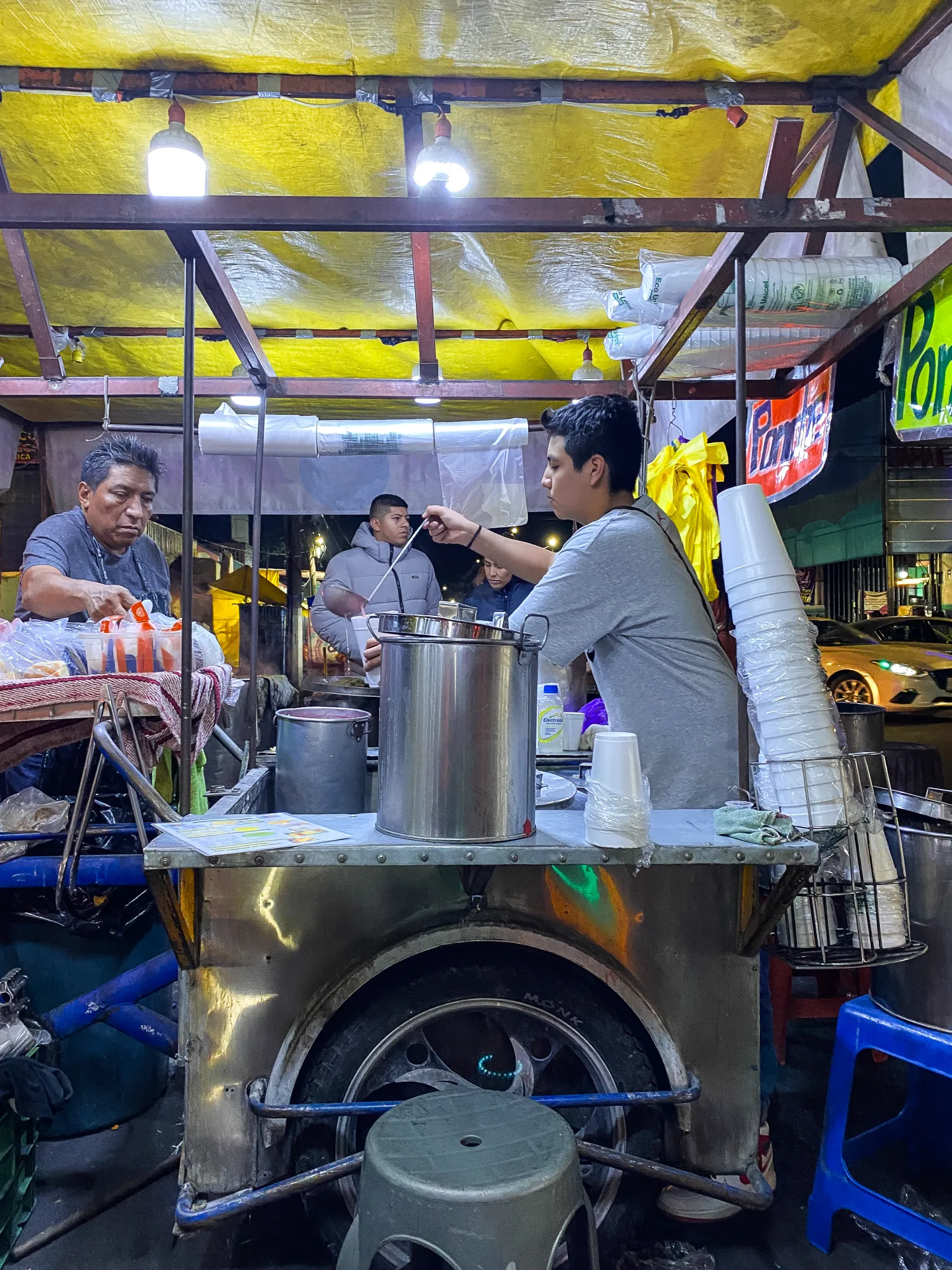
Trabajar, estudiar and comprar take the same -ar endings
Three more verbs take the same endings, in the same order. Trabajar (to work), stem trabaj-: trabajé, trabajaste, trabajó, trabajamos, trabajaron. Estudiar (to study), stem estudi-: estudié, estudiaste, estudió, estudiamos, estudiaron. Comprar (to buy), stem compr-: compré, compraste, compró, compramos, compraron. Compré tamales en el mercado. (I bought tamales at the market.)
Written accents change meaning, and hablamos fits both tenses
The yo form ends in -é and the usted / él / ella form (habló) ends in -ó; both carry a written accent, which shows the stress falls on the last syllable (ha-BLÓ, not HA-blo) and changes the meaning: hablo, with no accent, is the present, I speak, but habló is the preterite, he, she spoke. Hablo con mi mamá. (I talk with my mom.) Ella habló con mi mamá. (She talked with my mom.) The nosotros form is the same in the present and the preterite, so hablamos can mean we speak or we spoke. A time word or the context tells you which.
Regular -er and -ir verbs share one set of preterite endings
Regular -er and -ir verbs share one set of preterite endings: -í, -iste, -ió, -imos and -ieron. Comer (to eat), stem com-: yo comí (I ate), tú comiste (you ate, informal), usted / él / ella comió (you ate, formal / he, she ate), nosotros comimos (we ate), ustedes / ellos / ellas comieron (you all ate / they ate). Vivir (to live), stem viv-: viví, viviste, vivió, vivimos, vivieron, in the same order.
Beber, aprender, escribir and abrir take the same endings
More verbs take the same endings. Beber (to drink), stem beb-: bebí, bebiste, bebió, bebimos, bebieron. Aprender (to learn), stem aprend-: aprendí, aprendiste, aprendió, aprendimos, aprendieron. Escribir (to write), stem escrib-: escribí, escribiste, escribió, escribimos, escribieron. Abrir (to open), stem abr-: abrí, abriste, abrió, abrimos, abrieron. Aprendí mucho en la clase. (I learned a lot in class.) Abrí la puerta. (I opened the door.)
Accents mark -í and -ió, and nosotros depends on the family
The yo form (comí) ends in -í and the usted / él / ella form (comió) ends in -ió, and both carry a written accent that marks a stressed last syllable. Compare como (I eat) and comí (I ate), or come (he, she eats) and comió (he, she ate). The nosotros form depends on the family. For -ir verbs it is the same in the present and the preterite, so vivimos can mean we live or we lived. For -er verbs the tenses differ: comemos is we eat and comimos is we ate.
Matched pairs
Each item on the left goes with the one on the right.
- anteayer
- the day before yesterday
- el lunes pasado
- last Monday
- tú + hablar, ayer
- hablaste
- ustedes + trabajar, ayer
- trabajaron
- ellos + vivir, el año pasado
- vivieron
- Abrí la puerta.
- I opened the door.
Self-test
Answer each question from memory, then check your work against the answer key.
1. Your coworker tells you: "Trabajé ocho horas." What does the preterite show about those eight hours?
- AThey are a finished stretch of time
- BThey have a vague start and end
- CThey are planned for tomorrow
- DThey are still going on now
2. You tell a friend about your Saturday: "Estudié dos horas y después comí tacos." In what order did you do those two things?
- AYou studied but skipped tacos
- BYou studied, then you ate tacos
- CYou studied while you ate tacos
- DYou ate tacos, then you studied
3. You tell a friend that last night you ate at your grandmother's house. Which sentence says it?
- ALa semana pasada comí en casa de mi abuela.
- BAnteayer comí en casa de mi abuela.
- CAnoche comí en casa de mi abuela.
- DEl año pasado comí en casa de mi abuela.
4. A friend texts you: "El año pasado compré un libro." What does the message tell you?
- ATwo days ago I bought a book.
- BLast night I bought a book.
- CLast week I bought a book.
- DLast year I bought a book.
5. Your friend texts you: "Ayer hablé con mi mamá." Why is the preterite the right tense for this sentence?
- AThe talk happened at some unspecified time
- BThe talk is a finished action on one definite day
- CThe talk is happening right now
- DThe talk is something you plan for next week
6. After a day at the market in Oaxaca, you text a friend: "I bought tamales at the market." Which sentence do you send?
- ACompramos tamales en el mercado.
- BCompró tamales en el mercado.
- CCompraron tamales en el mercado.
- DCompré tamales en el mercado.
7. Your friend texts you: "Hablo con mi mamá." What does the message say?
- AI talked with my mom.
- BShe talked with my mom.
- CI talk with my mom.
- DShe talks with my mom.
8. At a bakery in Oaxaca, you ask your friend, informally, whether she bought sweet bread. Which question do you ask?
- A¿Compraste pan dulce?
- B¿Compramos pan dulce?
- C¿Compraron pan dulce?
- D¿Compré pan dulce?
9. A friend writes: "El año pasado trabajamos en Oaxaca." Trabajamos is also a present form. What tells you the meaning here?
- AThe ending -amos is used only in the past
- BThe stem trabaj- changes to show the past
- CThe accent on trabajamos shows it is the past
- DThe time words put it in the past: we worked
10. Look at "Ella estudió en Guadalajara." What does the written accent on estudió tell you about the word?
- AThe stress falls on the first syllable
- BThe stress falls on the last syllable
- CThe verb is in the present tense
- DThe verb is the nosotros form
11. Your classmate just finished her first Spanish class. You ask her, informally, whether she learned a lot. Which question do you ask?
- A¿Aprendieron mucho en la clase?
- B¿Aprendí mucho en la clase?
- C¿Aprendiste mucho en la clase?
- D¿Aprendimos mucho en la clase?
12. Your friend texts you: "Comí tamales." What does the message say?
- AI ate tamales.
- BI eat tamales.
- CHe ate tamales.
- DWe ate tamales.
13. Your two cousins got home first. You tell a friend: "They opened the door." Which sentence do you say?
- AAbrimos la puerta.
- BAbrieron la puerta.
- CAbrí la puerta.
- DAbrió la puerta.
14. A note from your coworker says: "Ella escribió un mensaje." What does the note say?
- AShe writes a message.
- BThey wrote a message.
- CI wrote a message.
- DShe wrote a message.
15. You know that comí means I ate. Using the same endings, how do you say "I lived" with vivir?
- Avivimos
- Bvivió
- Cviví
- Dvivieron
Go deeper
- WatchThree Names, One Tense One Spanish past tense has 3 names: the preterite, the pretérito perfecto simple and the pretérito indefinido.
- WatchHablo or Habló Hablo means I speak. Habló, with an accent, means he or she spoke. Drop the accent, and the past becomes the present.
- WatchComimos or Vivimos Spanish -er and -ir verbs share one set of preterite endings: comí, comiste, comió, comimos, comieron.
- StudySpanish Verbs 2: The Past in the FlashFeed app
Answer key
- 1. A They are a finished stretch of timeThe preterite presents a past action as finished. The eight hours filled a stretch of time with a clear beginning and end, so the work is not still going on now.
- 2. B You studied, then you ate tacosIn a series, each preterite verb is a new event that follows the one before it, so estudié came first and comí tacos came after. Eating first and studying second would reverse the order.
- 3. C Anoche comí en casa de mi abuela.Anoche means last night, so Anoche comí en casa de mi abuela is Last night I ate at my grandmother's house. Anteayer is the day before yesterday, and el año pasado and la semana pasada name much longer periods.
- 4. D Last year I bought a book.El año pasado means last year, and compré means I bought. La semana pasada would be last week, anoche last night, and hace dos días two days ago.
- 5. B The talk is a finished action on one definite dayAyer points to one definite day, so hablé presents the talk as a finished action. It is not happening now, and it is not a plan for next week.
- 6. D Compré tamales en el mercado.The yo form of a regular -ar verb ends in -é with a written accent: compré. Compró is he or she, compramos is we, and compraron is they.
- 7. C I talk with my mom.Hablo, with no accent, is the present: I talk. The preterite forms for yo and usted / él / ella carry a written accent, hablé and habló. Dropping the accent turns he, she spoke into I speak.
- 8. A ¿Compraste pan dulce?Talking informally to one friend, you use the tú form, which ends in -aste: compraste. Compré is yo, compramos is nosotros, and compraron is ellos or ustedes.
- 9. D The time words put it in the past: we workedThe nosotros form of a regular -ar verb is the same in the present and the preterite, so a time word or the context tells you which. Here el año pasado puts trabajamos in the past: we worked.
- 10. B The stress falls on the last syllableThe accent shows that the stress falls on the last syllable, as in ha-BLÓ, not HA-blo. Without it, a form like hablo is the present, so the accent also changes the meaning.
- 11. C ¿Aprendiste mucho en la clase?Talking informally to one classmate, you use the tú form, which ends in -iste: aprendiste. Aprendí is yo, aprendimos is nosotros, and aprendieron is ellos or ustedes.
- 12. A I ate tamales.Comí, with its written accent, is the yo form of the preterite: I ate. Como is the present, I eat. Comió is he or she, and comimos is we.
- 13. B Abrieron la puerta.The ellos form of a regular -ir verb ends in -ieron: abrieron. Abrí is yo, abrió is he or she, and abrimos is nosotros.
- 14. D She wrote a message.Escribió, with a written accent, is the usted / él / ella form of the preterite: she wrote. I wrote would be escribí, and they wrote would be escribieron.
- 15. C vivíRegular -er and -ir verbs share one set of endings, so the yo form of vivir ends in -í, like comí: viví. Vivió is he or she, vivimos is we, and vivieron is they.
Image credits
- Trabajar, estudiar and comprar take the same -ar endings: ProtoplasmaKid (Openverse) · by-sa 4.0 — commons.wikimedia.org/w/index.php?curid=145289522