
The Subtle Art of Not Giving a F*ck study guide · Lesson 5 of 6
Failure as the Mechanism of Growth & The 'Do Something' Principle
The Fear of Failure and the Vulnerability Paradox · The 'Do Something' Principle: Action Precedes Motivation
Unofficial study guide for The Subtle Art of Not Giving a F*ck: A Counterintuitive Approach to Living a Good Life by Mark Manson. FlashFeed is not affiliated with the author or publisher.
This is the lesson's study guide from the FlashFeed app, plus its key facts and a self-test.
What you'll be able to do
- Explain how Onoda's dogmatism shows the cost of fearing failure, and state the Vulnerability Paradox: vulnerability enables trust and strength.
- Explain the Do Something Principle: small action, not waiting for motivation, breaks procrastination and builds a self-reinforcing cycle.
Lesson 5: Failure as the Mechanism of Growth & The 'Do Something' Principle
The Fear of Failure and the Vulnerability Paradox
In his fifth lesson, Mark Manson explores the structural role of failure in the development of human competence, emotional maturity, and creative mastery. Manson observes that when a toddler learns to walk, they stumble, lose balance, and fall hundreds of times. The toddler never concludes that walking is an unachievable goal or that they are fundamentally flawed. The fear of failure is a conditioned cultural neurosis, instilled by institutional education systems that penalize mistakes and reward sterile compliance.
Manson asserts that Improvement at anything is based on thousands of tiny failures. Mastery in any complex discipline (writing, entrepreneurship, athletics, parenting) is directly proportional to the number of failures an individual has sustained, analyzed, and integrated over time. Masters have simply failed far more times than novices have even attempted.
To illustrate the catastrophic danger of avoiding failure and clinging to rigid dogma, Manson analyzes the historical tragedy of Lieutenant Hiroo Onoda. Deployed to Lubang Island in the Philippines during World War II with orders never to surrender, Onoda spent thirty years in the jungle waging a solitary guerrilla war. He dismissed news of Japan's 1945 surrender as enemy deception, killing local civilians and watching his comrades perish from disease and skirmishes. When he was finally convinced to surrender in 1974 by Japanese adventurer Norio Suzuki and his former commander, Onoda discovered that his three decades of heroic, agonizing suffering were completely wasted in service of an obsolete illusion. He had selected a metric—blind imperial obedience—that could not tolerate failure or permit reality-based adaptation.
Manson pairs Onoda's tragedy with a related idea: true psychological strength is not the performance of invulnerability, emotional detachment, or the refusal to admit error. Rather, true strength is the courage to be vulnerable—to expose one's genuine uncertainties, limitations, and emotional truths. Vulnerability is a foundation of authentic human connection, creative innovation, and enduring confidence.
The "Do Something" Principle: Action Precedes Motivation
In the latter half of Lesson 5, Mark Manson provides a potent behavioral framework to cure procrastination, paralysis, and executive dysfunction: The "Do Something" Principle.
Traditional intuition assumes a flawed, linear model of human motivation: $\text{Emotional Inspiration} \longrightarrow \text{Psychological Motivation} \longrightarrow \text{Desirable Action}$
Under this flawed paradigm, individuals wait passively for an external spark of inspiration or a spontaneous surge of motivation before initiating difficult tasks. Because emotional states are volatile and subject to biological fatigue, this linear model guarantees chronic inconsistency and procrastination.
Manson reveals that motivation is an endless, multi-directional closed loop: $\text{Action} \longrightarrow \text{Inspiration} \longrightarrow \text{Motivation} \longrightarrow \text{Further Action}$
Action is both the cause and the effect of the motivational cycle. When an individual initiates even the smallest, most rudimentary physical action—writing a single sentence, opening an IDE, organizing one drawer—that physical engagement generates sensory and proprioceptive feedback, dissolving psychological inertia. This immediate feedback stimulates dopaminergic pathways, generating the motivation required to sustain complex work.
This principle directly mirrors clinical Behavioral Activation (BA) in cognitive behavioral therapy, which treats depression by initiating physical activities before waiting for mood to improve. By redefining the metric of success from "achieving a specific outcome" to "initiating any action," failure loses its paralyzing power and action becomes a perpetual generator of momentum.
Behavioral Activation and the Mechanics of the "Do Something" Principle
When an individual adopts the "Do Something" framework:
- The activation energy barrier is reduced to an almost negligible threshold.
- Procrastination is resolved through micro-behavioral engagement rather than willpower battles.
- Creative and operational output transforms into an autonomous, self-reinforcing habit loop.
Why Micro-Actions Reduce Resistance
The neurological power of The "Do Something" Principle lies in its ability to bypass the brain's threat-detection architecture. Massive, ambiguous goals (e.g., "write a 300-page book," "launch a multi-million-dollar enterprise") feel overwhelming, which is enough on its own to trigger avoidance and acute procrastination.
By reducing the initial behavioral commitment to a microscopic action (e.g., writing a single paragraph or opening a software project), the task is rendered non-threatening. Once physical movement occurs, the resulting sense of progress signals that the task is safe and achievable, generating the momentum required to sustain complex, creative focus.
Therefore, the master practitioner does not wait to feel inspired before beginning work. They establish reliable, micro-behavioral rituals that initiate action unconditionally, allowing motivation to emerge naturally as a downstream consequence of physical execution.
Key terms
- Institutional Fear Conditioning
- The institutional conditioning where mistakes are penalized with poor grades, training individuals to develop risk aversion and fear of error.
- Vulnerability as Strength
- The psychological reality that true strength is not emotional invulnerability, but the courage to expose flaws, limitations, and uncertainties.
- The Cyclical Motivation Loop
- The multi-directional feedback system where Action generates Inspiration and Motivation, which in turn fuel further Action.
- The 'Do Something' Principle
- The behavioral axiom asserting that action is not merely the downstream effect of motivation, but its primary psychological cause.
Key facts
Failure as the Engine of Mastery
Mastery in any complex craft is directly proportional to the number of failures sustained, analyzed, and integrated over time.
Failure Is Natural, Not a Defect
A toddler learning to walk falls hundreds of times without ever concluding that walking 'isn't for them.' Fear of failure isn't innate — it's a conditioned cultural neurosis, instilled by schools and workplaces that penalize mistakes with poor grades and train people toward risk aversion.
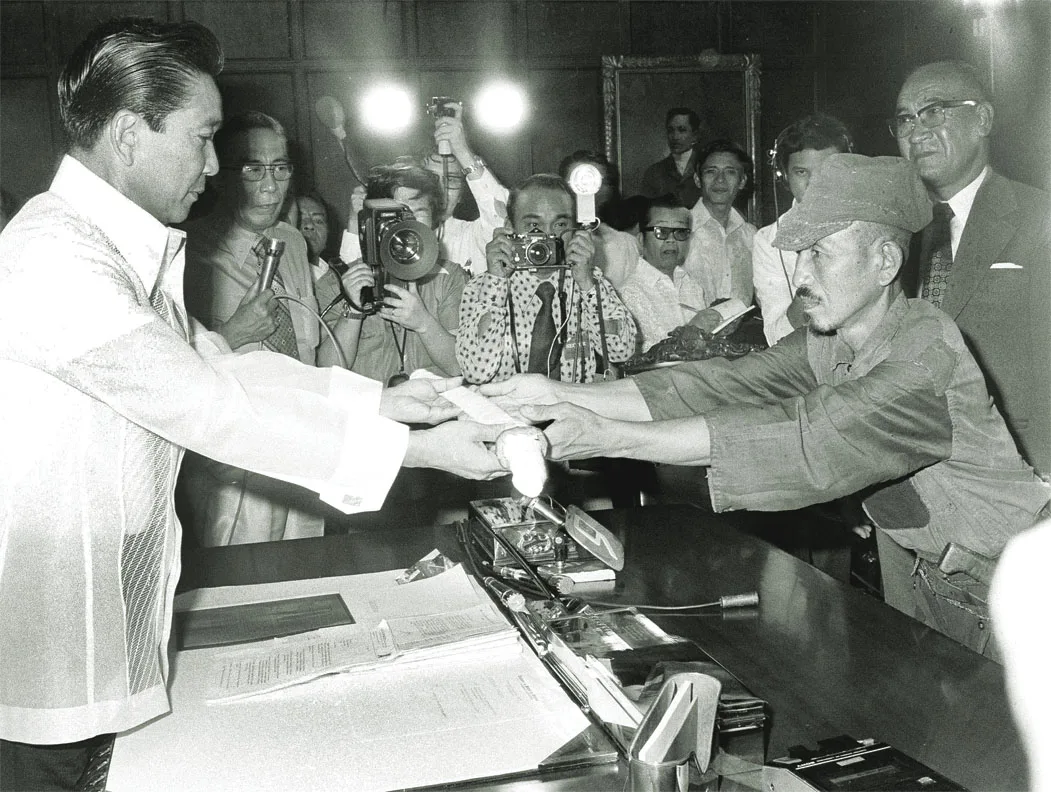
The Tragedy of Hiroo Onoda
Imperial Japanese officer Hiroo Onoda was ordered never to surrender and stationed on Lubang Island, Philippines, during World War II. He dismissed news of Japan's 1945 surrender as propaganda and waged a solitary guerrilla war for thirty years, until adventurer Norio Suzuki finally convinced him to stand down in 1974. Onoda's decades of suffering were wasted in service of a rigid metric that could never adapt to reality.
Mistakes Are Data, Not Verdicts
Treating a mistake as neutral, informative feedback — rather than a moral judgment about your worth — is the shift Manson describes: errors simply indicate what calibration is needed in strategy or technique, the same way any sensory data would guide the next attempt.
The Vulnerability Paradox
True psychological strength isn't invulnerability or the refusal to admit error — it's the courage to expose your genuine flaws, limitations, and uncertainties. Manson argues that authentic trust, intimacy, and creative confidence can't exist without the willingness to be vulnerable and risk failure.
Deliberate Practice Lives at the Edge
Psychologist Anders Ericsson's research on deliberate practice shows skill grows at the edge of your current ability, where errors happen often — not inside a comfortable zone of zero mistakes. Carol Dweck's growth mindset makes the same point: viewing failure as informative feedback, rather than a permanent personal verdict, is what drives skill development.
True Confidence Survives Failure
Real confidence isn't the delusion that you'll never fail — it's the grounded knowledge that failure is survivable and instructive. That confidence comes from actually surviving mistakes, not from pretending to be invincible; a practical reframe is to acknowledge the pain, separate the outcome from your worth, extract the lesson, and try again.
The Cyclical Motivation Loop
The intuitive model — inspiration leads to motivation leads to action — is backwards, and waiting for that spark guarantees procrastination. Manson's real model is a closed loop: action generates inspiration and motivation, which fuel further action. Action is both the cause and the effect of motivation, not just its downstream result.
The 'Do Something' Principle
Manson's 'Do Something' Principle: action is not just the downstream effect of motivation, it's a primary psychological cause of it. This loop applies universally — in creative writing, athletics, entrepreneurship, and even emotional healing — because starting anything, however small, is what gets the cycle moving.
Behavioral Activation in Clinical Therapy
The 'Do Something' Principle mirrors Behavioral Activation (BA), a clinical technique from cognitive behavioral therapy that treats depression by scheduling small physical activities before waiting for mood to improve. In both cases, action comes first and generates the emotional shift, rather than the other way around.
Micro-Actions Lower the Barrier to Start
A massive, ambiguous goal feels overwhelming, which triggers avoidance and procrastination. Shrinking the first step to something almost trivial — writing one sentence, doing one push-up — makes the task feel achievable instead of threatening, and that small win builds momentum. Success is then redefined simply as the willingness to start.
Action Over Emotional Volatility
Relying on proactive physical action rather than volatile emotional inspiration ensures operational consistency across changing mood states.
Action Clarifies Faster Than Thought
Direct engagement with the real world generates feedback that resolves ambiguity faster than abstract contemplation alone. Testing an assumption by actually doing something exposes what's true in a way that thinking about it in your head simply cannot.
Matched pairs
Each item on the left goes with the one on the right.
- The Tragedy of Hiroo Onoda
- Thirty years of extreme suffering wasted in service of an obsolete military illusion
- Mistakes as Neutral Data
- Treating mistakes as rich sensory data guiding future behavioral adjustments
- Courage to Be Imperfect
- Liberating freedom to take bold creative risks and engage in meaningful life experiments
- Flawed Linear Motivation Model
- Inspiration -> Motivation -> Action (Passive dependency on emotional sparks)
- Proprioceptive Sensory Feedback
- Physical movement signalling to the brain that a task is safe and achievable
- The Micro-Step Strategy
- Executing a small physical motion (writing 1 line, doing 1 rep) to break task inertia
Step by step
Reframing an acute failure into actionable developmental feedback
- Acknowledge the emotional pain of the mistake without deploying defensive denial
- Separate the factual outcome of the attempt from your intrinsic self-worth
- Extract specific empirical data regarding what tactical adjustment is required
- Execute a modified attempt incorporating the newly acquired feedback
Applying the 'Do Something' Principle to break procrastination on a daunting project
- Acknowledge the emotional resistance or lack of motivation without self-judgment
- Identify an almost trivial micro-action related to the task (e.g. writing one sentence)
- Execute the micro-action immediately without evaluating final project outcome
- Allow the sensory and physical feedback to naturally generate motivation for the next step
Self-test
Answer each question from memory, then check your work against the answer key.
1. On which island was Lieutenant Hiroo Onoda stationed when he refused to surrender after WWII?
- AIwo Jima, Japan
- BGuam, Mariana Islands
- CLubang Island, Philippines
- DOkinawa, Japan
2. Which of these is NOT how Manson describes true psychological strength in the Vulnerability Paradox?
- ACourage to admit genuine uncertainty
- BGrounded openness about one's flaws
- CWillingness to expose personal limits
- DComplete emotional invulnerability
3. What core lesson does the tragedy of Hiroo Onoda illustrate about avoiding failure?
- AInflexible dogma that can't adapt
- BUnquestioning soldier loyalty
- CPersistence guaranteeing eventual success
- DSuperior military strategy
4. According to Manson, what constitutes true psychological strength?
- ANever admitting error under any circumstance
- BThe courage to expose one's flaws and uncertainties
- CThe performance of complete emotional invulnerability
- DTotal detachment from all vulnerable emotions
5. Per Manson's argument about vulnerability, what is the indispensable foundation for authentic trust and creative innovation?
- AWillingness to be vulnerable and risk exposure
- BConstant performance of unwavering confidence
- CEmotional detachment and self-protection
- DStrict avoidance of all interpersonal risk
6. According to Manson's Cyclical Motivation Loop, what is the correct order of the 'Do Something' cycle?
- AInspiration, motivation, action
- BMotivation, action, inspiration
- CAction, inspiration, motivation
- DEmotion, action, motivation
7. Which of these is NOT a stated effect of adopting the 'Do Something' framework?
- ABuilds a self-reinforcing habit loop
- BResolves procrastination via willpower
- CLowers the activation energy threshold
- DUses micro-behavioral engagement
8. A therapist has a depressed patient take a short walk each morning before their mood improves. This CBT technique is called?
- AMotivational Interviewing
- BExposure Therapy
- CCognitive Restructuring
- DBehavioral Activation
9. Why does shrinking a huge, ambiguous goal into a tiny first step reduce procrastination?
- AEliminates the sense of progress
- BMakes the task feel achievable
- CRemoves the need to feel motivated
- DIncreases the total effort required
10. Manson says redefining success as the willingness to initiate ___ removes failure's power to paralyze. Fill in the blank.
- AInspiration
- BConfidence
- CAction
- DMotivation
Go deeper
- ReadThe Subtle Art of Not Giving a F*ck by Mark Manson · on Amazon ↗
- StudyThe Subtle Art of Not Giving a F*ck in the FlashFeed app
These are affiliate links: if you buy a book through one, FlashFeed may earn a small commission at no extra cost to you. The commission helps pay for FlashFeed's servers.
As an Amazon Associate we earn from qualifying purchases.
Answer key
- 1. C Lubang Island, PhilippinesOnoda was stationed on Lubang Island in the Philippines during WWII and held out there for thirty years before finally surrendering in 1974.
- 2. D Complete emotional invulnerabilityThe Vulnerability Paradox says true strength is the courage to admit uncertainty, not the performance of complete invulnerability.
- 3. A Inflexible dogma that can't adaptOnoda's tragedy shows that clinging to inflexible dogma that can't tolerate failure or adapt leads to decades of wasted suffering.
- 4. B The courage to expose one's flaws and uncertaintiesTrue strength is the courage to expose genuine flaws and uncertainties, not the performance of invulnerability.
- 5. A Willingness to be vulnerable and risk exposureAuthentic trust and creative innovation cannot exist without the willingness to be vulnerable and risk exposure.
- 6. C Action, inspiration, motivationManson's Cyclical Motivation Loop reverses intuition: action comes first, generating the inspiration and motivation that fuel further action.
- 7. B Resolves procrastination via willpowerProcrastination is resolved through micro-behavioral engagement, not willpower battles; the other three are effects it explicitly lists.
- 8. D Behavioral ActivationBehavioral Activation is the CBT technique that treats depression with small physical activities before mood improves, mirroring 'Do Something.'
- 9. B Makes the task feel achievableShrinking a goal to a tiny first step makes it feel achievable instead of overwhelming, which reduces the urge to avoid starting.
- 10. C ActionManson redefines success as the willingness to initiate action itself, which strips failure of its power to paralyze.
Sources
- The Subtle Art of Not Giving a F*ck — Mark Manson
- The Subtle Art of Not Giving a F*ck
Image credits
- The Tragedy of Hiroo Onoda: Malacañang Palace · Public domain — commons.wikimedia.org/wiki/File:President_Marcos_and_Hiroo_Onoda.jpg
