
U.S. Citizenship Civics — 2025 Test study guide · Lesson 1 of 13
Principles and Founding Documents
Constitutional Government · Founding Principles · Rights and the Rule of Law
This is the lesson's study guide from the FlashFeed app, plus its key facts and a self-test.
What you'll be able to do
- Identify the form of government, what the Constitution does, the Bill of Rights, the Declaration’s ideas, and the rule of law.
Constitutional Government
This pack covers the 2025 Naturalization Civics Test in M-1778 (09/25), retrieved 2026-08-22. It applies to Form N-400 filings on or after October 20, 2025. USCIS asks up to 20 oral questions from a list of 128; 12 correct passes, and the officer stops at 12 correct or 9 incorrect. Qualifying 65/20 applicants study 20 designated questions, receive 10, and pass with 6 correct. Filings before that date use the 2008 test, which this pack excludes.
The English portion is separate and is not taught here. USCIS assesses speaking through ordinary eligibility questions. For reading and writing, the applicant must successfully read one sentence out of three and write one dictated sentence out of three. Age-and-residence exceptions may remove the English requirement while leaving civics required; use current USCIS policy for personal eligibility.
Constitutional Government
The Constitution is both a written law and a plan for government. Its opening words place authority in the people, while its articles create institutions and assign powers. A republic uses elected representatives; a representative democracy also depends on people choosing those representatives. These descriptions are compatible accepted responses, not rival answers. Keep the document itself separate from the government it creates: the Constitution is the supreme law, while officials and branches act under it.
Prep for the oral test
What is the form of government of the United States?
Give one printed response:
- Republic
- Constitution-based federal republic
- Representative democracy
What is the supreme law of the land?
Give one printed response:
- (U.S.) Constitution
Name one thing the U.S. Constitution does.
Give one printed response:
- Forms the government
- Defines powers of government
- Defines the parts of government
- Protects the rights of the people
The U.S. Constitution starts with the words “We the People.” What does “We the People” mean?
Give one printed response:
- Self-government
- Popular sovereignty
- Consent of the governed
- People should govern themselves
- (Example of) social contract
How are changes made to the U.S. Constitution?
Give one printed response:
- Amendments
- The amendment process
Distinctions to practice
What is the form of government of the United States? asks what kind of government the country has, such as Republic. What is the supreme law of the land? asks which document is the highest law, so say (U.S.) Constitution.
Name one thing the U.S. Constitution does. asks for one job the Constitution does, such as Forms the government. The U.S. Constitution starts with the words “We the People.” What does “We the People” mean? asks what those opening words mean, such as Self-government.
How are changes made to the U.S. Constitution? asks how the Constitution gets changed, such as Amendments, not the Constitution itself. What is the supreme law of the land? asks which document is the highest law, so say (U.S.) Constitution.
Sources
- USCIS M-1778 (09/25) question bank — retrieved 2026-08-22.
- USCIS 2025 Civics Test Study Guide — retrieved 2026-08-22.
- U.S. Constitution transcript — retrieved 2026-08-22.
Founding Principles
The founding documents connect freedom, equality, consent, and limits on power. The Declaration explains why the colonies separated from Britain and states ideals about equality and inherent rights. The Constitution turns self-government into operating rules. The Bill of Rights adds protections against government interference. On the test, give the printed answer that fits the question, and notice how each document does a different job.
Prep for the oral test
What does the Bill of Rights protect?
Give one printed response:
- (The basic) rights of Americans
- (The basic) rights of people living in the United States
How many amendments does the U.S. Constitution have?
Give one printed response:
- Twenty-seven (27)
Why is the Declaration of Independence important?
Give one printed response:
- It says America is free from British control.
- It says all people are created equal.
- It identifies inherent rights.
- It identifies individual freedoms.
What founding document said the American colonies were free from Britain?
Give one printed response:
- Declaration of Independence
Name two important ideas from the Declaration of Independence and the U.S. Constitution.
Give 2 printed responses:
- Equality
- Liberty
- Social contract
- Natural rights
- Limited government
- Self-government
Distinctions to practice
What founding document said the American colonies were free from Britain? asks for the name of the document, so say Declaration of Independence. Why is the Declaration of Independence important? asks why that document matters, so give a reason such as It says America is free from British control.
What does the Bill of Rights protect? asks about the Bill of Rights alone, and one printed answer is (The basic) rights of Americans. Name one thing the U.S. Constitution does. asks for any one job of the Constitution, such as Protects the rights of the people.
How many amendments does the U.S. Constitution have? asks for a count, so say Twenty-seven (27). How are changes made to the U.S. Constitution? asks how the Constitution gets changed, such as Amendments, not a number.
Name two important ideas from the Declaration of Independence and the U.S. Constitution. asks for two short ideas, such as Liberty. Why is the Declaration of Independence important? asks for one reason, and the printed answers are whole sentences, such as It says all people are created equal.
Sources
- USCIS M-1778 (09/25) question bank — retrieved 2026-08-22.
- USCIS 2025 Civics Test Study Guide — retrieved 2026-08-22.
- Declaration of Independence transcript — retrieved 2026-08-22.
Rights and the Rule of Law
The rule of law means that people and government are accountable to law. It is not simply a slogan about obeying rules. The Constitution limits government, divides authority, and creates a process for change. Rights such as speech, religion, assembly, press, and petition are protected in the First Amendment, but different questions ask for different parts of that set. Reading the exact noun in the question helps prevent mixing a constitutional principle with a specific freedom.
Prep for the oral test
The words “Life, Liberty, and the pursuit of Happiness” are in what founding document?
Give one printed response:
- Declaration of Independence
What is the economic system of the United States?
Give one printed response:
- Capitalism
- Free market economy
What is the rule of law?
Give one printed response:
- Everyone must follow the law.
- Leaders must obey the law.
- Government must obey the law.
- No one is above the law.
Many documents influenced the U.S. Constitution. Name one.
Give one printed response:
- Declaration of Independence
- Articles of Confederation
- Federalist Papers
- Anti-Federalist Papers
- Virginia Declaration of Rights
- Fundamental Orders of Connecticut
- Mayflower Compact
- Iroquois Great Law of Peace
Distinctions to practice
What is the rule of law? asks what the idea means, not for a document, and one printed answer is No one is above the law. What is the supreme law of the land? asks which document is the highest law, so say (U.S.) Constitution.
What is the economic system of the United States? asks about the economy, and one printed answer is Capitalism. What is the form of government of the United States? begins the same way but asks about the government, and one printed answer is Republic.
The words “Life, Liberty, and the pursuit of Happiness” are in what founding document? asks which document holds those words, so say Declaration of Independence. The U.S. Constitution starts with the words “We the People.” What does “We the People” mean? asks what a different set of words means, such as Self-government.
Sources
- USCIS M-1778 (09/25) question bank — retrieved 2026-08-22.
- USCIS 2025 Civics Test Study Guide — retrieved 2026-08-22.
- Bill of Rights transcript — retrieved 2026-08-22.
Key terms
- Amendment
- A formal change or addition to the Constitution.
- Bill of Rights
- The first ten amendments, which protect basic rights and liberties.
- Rule of law
- The principle that everyone, including government leaders, must follow the law.
Key concepts
Forms the government
- This is one accepted function of the Constitution.
- It describes creating the national framework, not protecting one named liberty.
- It answers what the Constitution does.
Self-government
- This is one accepted meaning of ‘We the People.’
- It places public authority in the people.
- It is also described as popular sovereignty.
Protects the rights of the people
- This is one accepted response to: Name one thing the U.S. Constitution does.
- It concerns liberties the government must respect, not a new institution it creates.
- It is distinct from forming the government or defining its powers.
Declaration of Independence
- This is the one accepted response to: What founding document said the American colonies were free from Britain?
- It announced the colonies' independence from British rule.
- It is distinct from the Constitution, which creates the government's institutions.
Equality; natural rights
- These are two accepted ideas from the Declaration.
- One rejects inherited rank; the other includes life, liberty, and the pursuit of happiness.
- Together they satisfy a prompt asking for two ideas.
Defines government powers
- This is one accepted function of the Constitution.
- It identifies what institutions may do.
- It is different from naming the branches themselves.
Key facts
Government Forms
What is the form of government of the United States?
A republic uses elected representatives chosen by the people to exercise government power.
One accepted response: Republic
Other printed responses: Constitution-based federal republic; Representative democracy
Constitution's Jobs
Name one thing the U.S. Constitution does.
The Constitution is both a written law and a plan for government, and its articles create institutions and assign powers.
One accepted response: Forms the government
Other printed responses: Defines powers of government; Defines the parts of government; Protects the rights of the people
Constitution's Opening Words
The U.S. Constitution starts with the words “We the People.” What does “We the People” mean?
The Constitution's opening words place authority in the people.
One accepted response: Self-government
Other printed responses: Popular sovereignty; Consent of the governed; People should govern themselves; (Example of) social contract
Document of Separation
What founding document said the American colonies were free from Britain?
Besides announcing separation from Britain, it stated ideals about equality and inherent rights. The Revolutionary War turned it into a struggle for political independence.
One accepted response: Declaration of Independence
Shared Founding Ideas
Name two important ideas from the Declaration of Independence and the U.S. Constitution.
The founding documents connect freedom, equality, consent, and limits on power. The Declaration states ideals about equality and inherent rights, and the Constitution turns self-government into operating rules.
Say 2: Equality; Liberty; Social contract; Natural rights; Limited government; Self-government
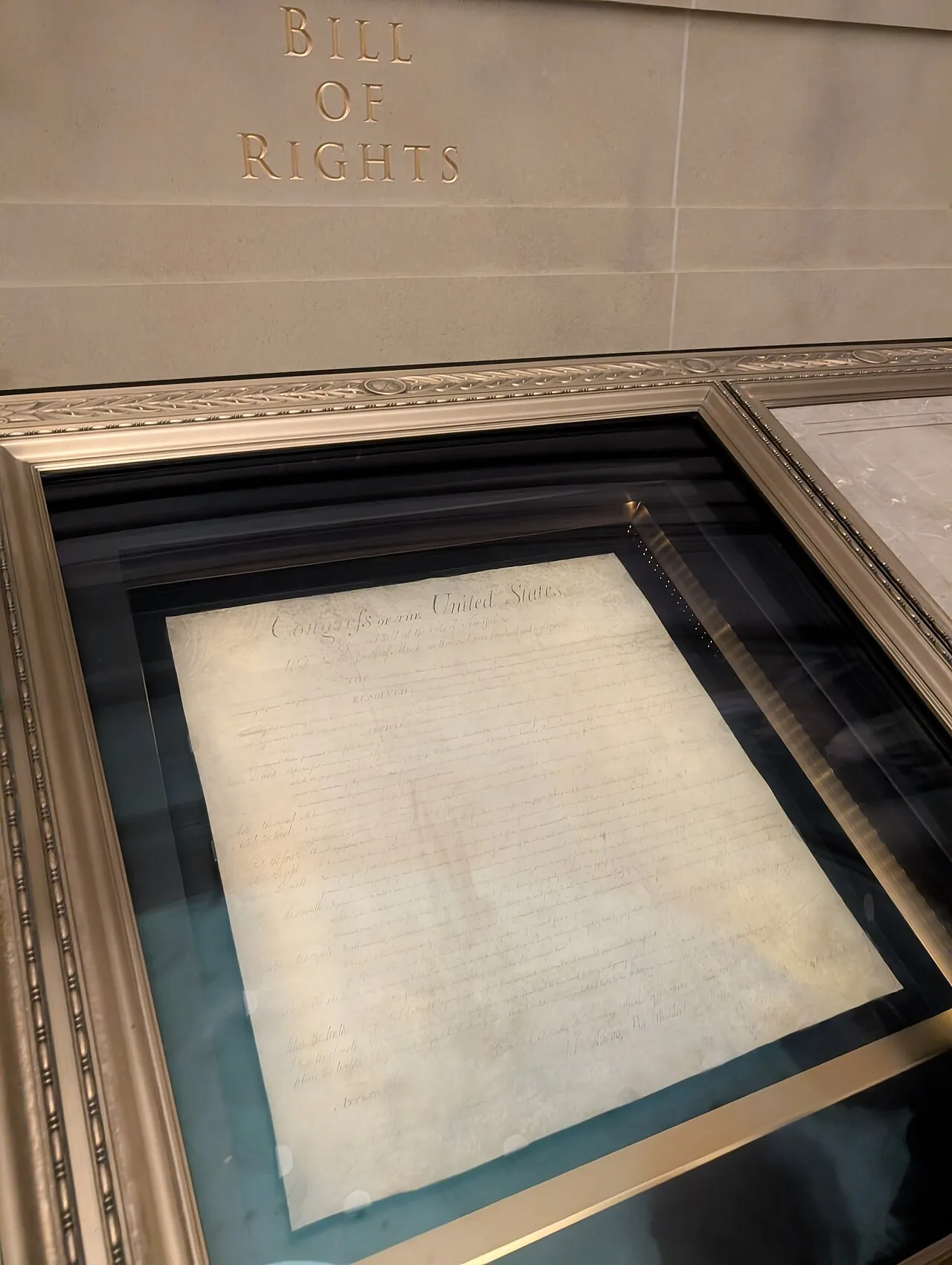
Protected Rights
What does the Bill of Rights protect?
The Bill of Rights adds protections against government interference with the people's basic liberties.
One accepted response: (The basic) rights of Americans
Other printed responses: (The basic) rights of people living in the United States
Constitutional Amendments
How many amendments does the U.S. Constitution have?
The Constitution can be changed only through the formal amendment process, and each change is called an amendment.
One accepted response: Twenty-seven (27)
Declaration's Importance
Why is the Declaration of Independence important?
The Declaration explains why the colonies separated from Britain and states ideals about equality and inherent rights.
One accepted response: It says America is free from British control.
Other printed responses: It says all people are created equal. It identifies inherent rights. It identifies individual freedoms.
Changing the Constitution
How are changes made to the U.S. Constitution?
Along with limiting government and dividing authority, the Constitution itself creates a process for change.
One accepted response: Amendments
Other printed responses: The amendment process
Life and Liberty Document
The words “Life, Liberty, and the pursuit of Happiness” are in what founding document?
An early founding document announced independence from Britain and listed unalienable rights, including life, liberty, and the pursuit of happiness.
One accepted response: Declaration of Independence
U.S. Economic System
What is the economic system of the United States?
The United States runs on private enterprise and free markets rather than a government-planned economy.
One accepted response: Capitalism
Other printed responses: Free market economy
Rule of Law
What is the rule of law?
The rule of law means that people and government are accountable to law — it is not simply a slogan about obeying rules.
One accepted response: Everyone must follow the law.
Other printed responses: Leaders must obey the law. Government must obey the law. No one is above the law.
Documents Behind the Constitution
Many documents influenced the U.S. Constitution. Name one.
They range from the Mayflower Compact of 1620 to the Federalist Papers, written to win the Constitution's ratification.
One accepted response: Declaration of Independence
Other printed responses: Articles of Confederation; Federalist Papers; Anti-Federalist Papers; Virginia Declaration of Rights; Fundamental Orders of Connecticut; Mayflower Compact; Iroquois Great Law of Peace
Matched pairs
Each item on the left goes with the one on the right.
- U.S. market economy
- Capitalism
Step by step
Evaluate a path for proposing and ratifying a constitutional amendment
- Identify which single proposal route the account uses: Congress or a proposing convention.
- Verify proposal: two-thirds of both houses, or convention calls from two-thirds of state legislatures.
- Identify which single ratification mode Congress selected: state legislatures or state conventions.
- Verify approval by three-fourths of the states through that selected mode.
- Reject any account that treats both proposal routes or both ratification modes as consecutive requirements.
- Conclude that adoption requires one valid proposal route followed by one valid ratification mode.
This is a decision checklist for alternative branches, not a claim that four routes happen in sequence.
Self-test
Answer each question from memory, then check your work against the answer key.
1. Which choice gives one accepted response to: “What is the form of government of the United States?”
- AMonarchy
- BDictatorship
- CRepublic
- DConfederation
2. What is the supreme law of the land?
- AU.S. Code
- BDeclaration of Independence
- CArticles of Confederation
- DU.S. Constitution
3. Which choice gives one accepted response to: “What does the Bill of Rights protect?”
- AThe basic rights of Englishmen
- BThe basic rights of Americans
- CThe listed powers of Congress
- DThe stated duties of Americans
4. How many amendments does the U.S. Constitution have?
- ATwenty-seven (27)
- BTwenty-five (25)
- CTwenty-one (21)
- DThirty-three (33)
5. The words “Life, Liberty, and the pursuit of Happiness” are in what founding document?
- ADeclaration of Rights
- BArticles of Confederation
- CConstitution of Massachusetts
- DDeclaration of Independence
6. Which choice gives one accepted response to: "What does the Bill of Rights protect?"
- AThe powers of state governments
- BThe basic rights of Americans
- CThe rights of foreign visitors
- DThe duties of Congress
7. Which choice gives one accepted response to: "How many amendments does the U.S. Constitution have?"
- ATwenty-seven (27)
- BTen (10)
- CThirty-three (33)
- DNineteen (19)
8. Which choice gives one accepted response to: "What is the rule of law?"
- AThe president is above the law
- BOnly citizens must follow the law
- CEveryone must follow the law
- DCongress may ignore the law
9. The words "Life, Liberty, and the pursuit of Happiness" are in what founding document?
- AFederalist Papers
- BU.S. Constitution
- CBill of Rights
- DDeclaration of Independence
Go deeper
- ListenLesson 1 episode
- WatchNot Rival Answers Republic, or democracy? On the civics test, each word is part of a printed answer.
- WatchCount or Change Two civics questions both lead to amendments. One wants a number. The other wants no number at all.
- WatchIdea or Document Rule of law. Supreme law. Two civics questions share the word law. They want different answers.
- WatchA Page From 1620 One printed answer on the civics test dates from 1620. It is the Mayflower Compact.
- StudyU.S. Citizenship Civics — 2025 Test in the FlashFeed app
Answer key
- 1. C RepublicRepublic. It means government through elected representatives, so “representative democracy” also fits as a description.
- 2. D U.S. ConstitutionU.S. Constitution. It is the supreme law; officials and branches of government act under it.
- 3. B The basic rights of AmericansThe basic rights of Americans. The Bill of Rights shields them from government interference.
- 4. A Twenty-seven (27)Twenty-seven (27). The Constitution creates a process for change, and each amendment is a change made through it.
- 5. D Declaration of IndependenceDeclaration of Independence. It announces independence and sets out ideals, while the Constitution builds the national framework.
- 6. B The basic rights of AmericansKey: The basic rights of Americans. The Bill of Rights protects the basic rights of Americans, not government powers or duties.
- 7. A Twenty-seven (27)Key: Twenty-seven (27). The Constitution has been amended 27 times; ten of those form the Bill of Rights.
- 8. C Everyone must follow the lawKey: Everyone must follow the law. The rule of law means no one, including leaders, is above the law.
- 9. D Declaration of IndependenceKey: Declaration of Independence. That phrase appears in the Declaration, not the Constitution or the Bill of Rights.
Sources
- USCIS 2025 official materials and 4 more references — www.uscis.gov/sites/default/files/document/brochures/USCIS-2025-Civics-Test-Study-Guide.pdf
- M-1778 (09/25), Q1 and 13 more references — www.uscis.gov/sites/default/files/document/questions-and-answers/2025-Civics-Test-128-Questions-and-Answers.pdf
- M-1778 (09/25), Q5; U.S. Constitution Article V — www.archives.gov/founding-docs/constitution-transcript
Image credits
- Protected Rights: Wikimedia Commons · Runner1928 · CC BY-SA 4.0 — commons.wikimedia.org/wiki/File:National_Archives_of_the_United_States_-_Bill_of_Rights.jpg
