
U.S. Citizenship Civics — 2025 Test study guide · Lesson 7 of 13
Rights and Responsibilities of Citizenship
Rights and Amendments · Citizenship and Civic Duty
This is the lesson's study guide from the FlashFeed app, plus its key facts and a self-test.
What you'll be able to do
- Identify the voting amendments, rights reserved to citizens, ways to become a citizen, and civic duties such as taxes and Selective Service.
Rights and Amendments
Rights and Amendments
The Reconstruction and voting amendments changed constitutional rules about slavery, citizenship, and voting discrimination. The Thirteenth Amendment abolished slavery in law. The Fourteenth defines national citizenship and protects due process and equal protection. The Fifteenth, Nineteenth, Twenty-fourth, and Twenty-sixth Amendments bar specified forms of voting discrimination. They did not make every barrier disappear at once; that history is background, not a different answer.
Prep for the oral test
There are four amendments to the U.S. Constitution about who can vote. Describe one of them.
Give one printed response:
- Citizens eighteen (18) and older (can vote).
- You don’t have to pay (a poll tax) to vote.
- Any citizen can vote. (Women and men can vote.)
- A male citizen of any race (can vote).
Who can vote in federal elections, run for federal office, and serve on a jury in the United States?
Give one printed response:
- Citizens
- Citizens of the United States
- U.S. citizens
What are three rights of everyone living in the United States?
Give 3 printed responses:
- Freedom of expression
- Freedom of speech
- Freedom of assembly
- Freedom to petition the government
- Freedom of religion
- The right to bear arms
What do we show loyalty to when we say the Pledge of Allegiance?
Give one printed response:
- The United States
- The flag
Name two promises that new citizens make in the Oath of Allegiance.
Give 2 printed responses:
- Give up loyalty to other countries
- Defend the (U.S.) Constitution
- Obey the laws of the United States
- Serve in the military (if needed)
- Serve (help, do important work for) the nation (if needed)
- Be loyal to the United States
Distinctions to practice
- Both of these questions are about who can vote, but Who can vote in federal elections, run for federal office, and serve on a jury in the United States? asks which people can do all three, and one printed answer is Citizens. There are four amendments to the U.S. Constitution about who can vote. Describe one of them. asks you to describe one voting amendment, for example You don’t have to pay (a poll tax) to vote.
- What are three rights of everyone living in the United States? asks for rights that everyone living here has, such as Freedom of speech, and the right to vote is not on its printed list. Who can vote in federal elections, run for federal office, and serve on a jury in the United States? asks which people can do those three things, and one printed answer is Citizens.
- Both of these questions mention allegiance, but they ask for different things. What do we show loyalty to when we say the Pledge of Allegiance? asks what we are loyal to, such as The flag, while Name two promises that new citizens make in the Oath of Allegiance. asks for promises, such as Obey the laws of the United States.
Sources
- USCIS M-1778 (09/25) question bank — retrieved 2026-08-22.
- USCIS 2025 Civics Test Study Guide — retrieved 2026-08-22.
- Bill of Rights transcript — retrieved 2026-08-22.
Citizenship and Civic Duty
Citizenship may arise by birth under constitutional and statutory rules, by naturalization, or by derivation under conditions Congress sets. Citizens have rights, such as voting in federal elections, and responsibilities, such as serving on a jury when summoned. Civic participation also includes voting, contacting officials, joining groups, and helping a campaign. Rights and responsibilities overlap in public life, but the test may ask for one category at a time.
Prep for the oral test
How can people become United States citizens?
Give one printed response:
- Be born in the United States, under the conditions set by the 14th Amendment
- Naturalize
- Derive citizenship (under conditions set by Congress)
What are two examples of civic participation in the United States?
Give 2 printed responses:
- Vote
- Run for office
- Join a political party
- Help with a campaign
- Join a civic group
- Join a community group
- Give an elected official your opinion (on an issue)
- Contact elected officials
- Support or oppose an issue or policy
- Write to a newspaper
What is one way Americans can serve their country?
Give one printed response:
- Vote
- Pay taxes
- Obey the law
- Serve in the military
- Run for office
- Work for local, state, or federal government
Why is it important to pay federal taxes?
Give one printed response:
- Required by law
- All people pay to fund the federal government
- Required by the (U.S.) Constitution (16th Amendment)
- Civic duty
It is important for all men age 18 through 25 to register for the Selective Service. Name one reason why.
Give one printed response:
- Required by law
- Civic duty
- Makes the draft fair, if needed
Distinctions to practice
- Only voting and running for office are printed for both of these questions. What are two examples of civic participation in the United States? asks for two ways to take part in public life, such as Join a civic group, and What is one way Americans can serve their country? asks for one way to serve, such as Serve in the military.
- Paying taxes comes up in both of these questions, once as an answer and once in the question. What is one way Americans can serve their country? asks for something you can do, such as Pay taxes, but Why is it important to pay federal taxes? asks for a reason, such as Civic duty.
- Both of these questions ask for a reason, and they share two printed answers. Each also has an answer of its own: Why is it important to pay federal taxes? has All people pay to fund the federal government, and It is important for all men age 18 through 25 to register for the Selective Service. Name one reason why. has Makes the draft fair, if needed.
Sources
- USCIS M-1778 (09/25) question bank — retrieved 2026-08-22.
- USCIS 2025 Civics Test Study Guide — retrieved 2026-08-22.
- USCIS Policy Manual, Volume 12, Part E, Chapter 2 — retrieved 2026-08-22.
Key terms
- Naturalization
- The legal process through which an eligible noncitizen becomes a U.S. citizen.
Key facts
Voting Amendments
There are four amendments to the U.S. Constitution about who can vote. Describe one of them.
The voting amendments address age, sex, race, and poll taxes as separate constitutional protections.
One accepted response: Citizens eighteen (18) and older (can vote).
Other printed responses: You don’t have to pay (a poll tax) to vote. Any citizen can vote. (Women and men can vote.) A male citizen of any race (can vote).
Citizen-Only Roles
Who can vote in federal elections, run for federal office, and serve on a jury in the United States?
Voting in federal elections, running for federal office, and serving on a jury are rights and responsibilities of citizens.
One accepted response: Citizens
Other printed responses: Citizens of the United States; U.S. citizens
Everyone's Rights
What are three rights of everyone living in the United States?
These rights belong to everyone living in the United States, not just citizens.
Say 3: Freedom of expression; Freedom of speech; Freedom of assembly; Freedom to petition the government; Freedom of religion; The right to bear arms
Pledge Loyalty
What do we show loyalty to when we say the Pledge of Allegiance?
The Pledge of Allegiance is a promise of loyalty said while facing the flag.
One accepted response: The United States
Other printed responses: The flag
Oath of Allegiance Promises
Name two promises that new citizens make in the Oath of Allegiance.
Say 2: Give up loyalty to other countries; Defend the (U.S.) Constitution; Obey the laws of the United States; Serve in the military (if needed); Serve (help, do important work for) the nation (if needed); Be loyal to the United States
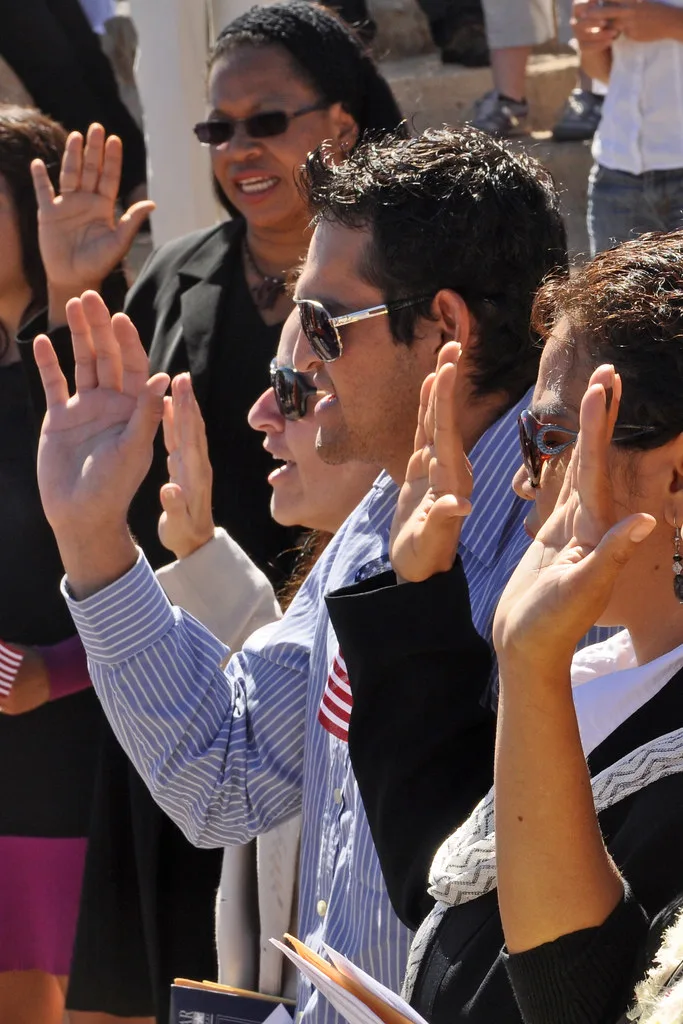
Paths to Citizenship
How can people become United States citizens?
Citizenship may come through birth, naturalization, or derivation under the governing rules.
One accepted response: Be born in the United States, under the conditions set by the 14th Amendment
Other printed responses: Naturalize; Derive citizenship (under conditions set by Congress)
Civic Participation
What are two examples of civic participation in the United States?
Civic participation also includes voting, contacting officials, joining groups, and helping a campaign.
Say 2: Vote; Run for office; Join a political party; Help with a campaign; Join a civic group; Join a community group; Give an elected official your opinion (on an issue); Contact elected officials; Support or oppose an issue or policy; Write to a newspaper
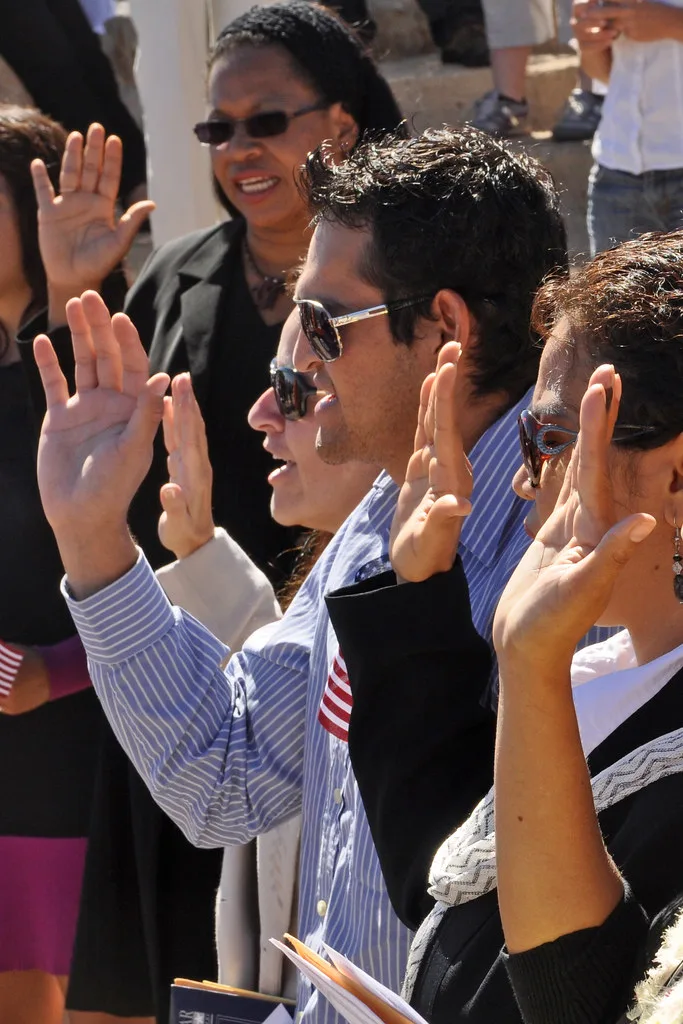
Serving the Country
What is one way Americans can serve their country?
Citizens have rights, such as voting in federal elections, and responsibilities, such as serving on a jury when summoned.
One accepted response: Vote
Other printed responses: Pay taxes; Obey the law; Serve in the military; Run for office; Work for local, state, or federal government
Paying Federal Taxes
Why is it important to pay federal taxes?
One accepted response: Required by law
Other printed responses: All people pay to fund the federal government; Required by the (U.S.) Constitution (16th Amendment); Civic duty
Selective Service Reasons
It is important for all men age 18 through 25 to register for the Selective Service. Name one reason why.
One accepted response: Required by law
Other printed responses: Civic duty; Makes the draft fair, if needed
Matched pairs
Each item on the left goes with the one on the right.
- Federal taxes
- Required by law
Self-test
Answer each question from memory, then check your work against the answer key.
1. Which choice gives one accepted response to: “There are four amendments to the U.S. Constitution about who can vote. Describe one of them.”
- AA male citizen of any age can vote
- BA legal resident of any state can vote
- CA male citizen of any race can vote
- DA married woman of any age can vote
2. Which choice gives one accepted response to: “Who can vote in federal elections, run for federal office, and serve on a jury in the United States?”
- AResidents
- BCitizens
- CTaxpayers
- DAdults
3. Which choice gives one accepted response to: “How can people become United States citizens?”
- ANaturalize
- BRepatriate
- CImmigrate
- DNationalize
4. Which choice supplies 2 accepted responses to: “What are two examples of civic participation in the United States?”
- ASalute; Fly the flag
- BEnlist; Obey the law
- CServe; Pay income taxes
- DVote; Run for office
5. Which choice gives one accepted response to: “What is one way Americans can serve their country?”
- APray
- BDonate
- CLobby
- DVote
6. Which choice gives one accepted response to: "How can people become United States citizens?"
- AImmigrate
- BRepatriate
- CNaturalize
- DNationalize
7. Which choice gives one accepted response to: "What are two examples of civic participation in the United States?"
- ARegister for the Selective Service
- BVote
- CServe on a jury
- DPay federal taxes
8. Which choice gives one accepted response to: "Why is it important to pay federal taxes?"
- ACivic duty
- BState law requirement
- CVoluntary donation
- DRefundable fee
9. It is important for all men age 18 through 25 to register for the Selective Service. Which choice gives one reason why?
- ARequired for jury duty
- BMakes the draft fair, if needed
- CQualifies for a passport
- DGrants voting rights
Go deeper
- ListenLesson 7 episode
- WatchRights of Everyone One civics question asks for the rights of everyone living in the U.S. The right to vote is not on its printed list.
- WatchThree Printed Ways Naturalizing is not the only way to become a U.S. citizen. One civics question has 3 printed answers.
- WatchFour Voting Amendments A tax just to vote? One voting amendment says you don't have to pay one.
- StudyU.S. Citizenship Civics — 2025 Test in the FlashFeed app
Answer key
- 1. C A male citizen of any race can voteA male citizen of any race can vote. That rule comes from one of the four amendments that bar certain kinds of voting discrimination.
- 2. B CitizensCitizens. Voting in federal elections and serving on a jury are among the rights and responsibilities of citizenship.
- 3. A NaturalizeNaturalize. It is one of three ways to become a citizen, along with birth in the United States and derivation under conditions Congress sets.
- 4. D Vote; Run for officeVote; Run for office. Both are civic participation, as are joining groups and helping a campaign.
- 5. D VoteVote. Voting is both a right of citizens and one of the ways Americans serve their country.
- 6. C NaturalizeKey: Naturalize. Naturalization is the printed process; the other terms are not the accepted civics-test response.
- 7. B VoteKey: Vote. It is one of the printed examples for this question; paying taxes, jury service and Selective Service registration are not on that list.
- 8. A Civic dutyKey: Civic duty. Paying federal taxes is a civic duty required by law, not a voluntary or optional act.
- 9. B Makes the draft fair, if neededKey: Makes the draft fair, if needed. Selective Service registration keeps a potential draft fair; it is unrelated to passports or voting.
Sources
- USCIS 2025 official materials — www.uscis.gov/sites/default/files/document/brochures/USCIS-2025-Civics-Test-Study-Guide.pdf
- M-1778 (09/25), Q63 and 9 more references — www.uscis.gov/sites/default/files/document/questions-and-answers/2025-Civics-Test-128-Questions-and-Answers.pdf
Image credits
- Paths to Citizenship: Grand Canyon NPS (Openverse) · by 2.0 — www.flickr.com/photos/50693818@N08/5021872106
- Serving the Country: Grand Canyon NPS (Openverse) · by 2.0 — www.flickr.com/photos/50693818@N08/5021872106