
Ancient Civilizations: First Cities to Late Antiquity study guide · Lesson 8 of 12
Ancient Rome: Republican Law, Legions & Concrete (c. 509 BCE–476 CE)
Republican Mixed Constitution, Law & Military Reforms · Pozzolanic Concrete, Aqueducts & Imperial Logistics
This is the lesson's study guide from the FlashFeed app, plus its key facts and a self-test.
What you'll be able to do
- Analyze the Roman Republican mixed constitution, Twelve Tables law, Punic Wars, and Marian reforms.
- Evaluate Roman pozzolanic concrete, long-distance aqueduct engineering, and Cura Annonae grain logistics.
The Republican Constitution and the Conflict of the Orders
Following the expulsion of the Etruscan tyrant Tarquin the Proud in 509 BCE, Rome established a Republic (Res Publica—"public affair"). Greek historian Polybius analyzed the Roman Republican constitution as an exceptionally stable mixed constitution balancing three elements:
- Monarchical Element: Two Consuls elected annually to command the legions, execute laws, and preside over civic affairs.
- Aristocratic Element: The Senate, an advisory council of former magistrates who controlled foreign policy, state finances, and religious administration.
- Democratic Element: Popular assemblies (Comitia Centuriata and Comitia Tributa) that elected magistrates, passed laws, and decided capital trials.
During the two-century Conflict of the Orders (494–287 BCE), common plebeians (plebs) used political strikes—seceding from the city and refusing military service—to win rights from the patrician aristocracy.
These concessions created key institutions:
- Tribune of the Plebs: Sacrosanct plebeian officials endowed with the power of intercession (Veto—"I forbid") to halt arbitrary patrician magistrate actions.
- The Twelve Tables (Duodecim Tabulae, 450 BCE): The earliest codified Roman written law, inscribed on bronze tablets in the Roman Forum, establishing legal procedure, property rights, debtor protection, and family law.
- Lex Hortensia (287 BCE): Enacted that resolutions passed by the Plebeian Council (plebiscita) possessed the binding force of law over all citizens, patricians included.
The Punic Wars and Marian Military Reforms
Between 264 and 146 BCE, Rome engaged the North African maritime empire of Carthage in the three Punic Wars. Rome mastered naval warfare using the corvus (boarding bridge), endured Hannibal Barca's devastating invasion of Italy during the Second Punic War (218–201 BCE), and ultimately triumphed under Scipio Africanus at the Battle of Zama. The complete destruction of Carthage in 146 BCE established Roman hegemony over the Mediterranean Basin (Mare Nostrum—"Our Sea").
Military expansion strained the traditional citizen-militia system. In 107 BCE, consul Gaius Marius enacted the Marian Reforms:
- Eliminated the ancient property requirement for military enlistment, opening the legions to the landless urban poor (capite censi).
- Made military service a full-time, professional salaried career with state-supplied standardized equipment.
- Reorganized the tactical unit of the legion from the maniple into ten 480-man cohorts, increasing tactical flexibility.
- Standardized the heavy javelin (pilum) designed with a soft iron neck that bent upon impact, preventing the enemy from throwing it back and weighing down shields.
However, because retired legionaries depended on their commanding generals rather than the state for land grants and pensions, the army became privatized, enabling ambitious generals (Sulla, Julius Caesar, Mark Antony) to march their loyal legions on Rome, precipitating the fall of the Republic in civil war.
Pozzolanic Concrete and the Roman Engineering Revolution
The expansion of the Roman Empire was physically built upon an architectural and chemical revolution: the invention of hydraulic concrete (opus caementicium).
Roman builders mixed slaked lime, aggregate rubble, and a reactive volcanic ash named pozzolana (quarried near Pozzuoli by the Bay of Naples). The chemical reaction between volcanic aluminosilicates and lime formed durable crystalline structures that could cure even completely submerged under seawater, allowing Roman engineers to construct colossal artificial marine harbors (such as Portus and Caesarea Maritima).
Concrete freed Roman architecture from the structural limits of post-and-beam stone construction:
- The True Arch and Barrel Vault: Distributed compressive loads efficiently, allowing immense open spans.
- The Roman Dome: Exemplified by the Pantheon in Rome (rebuilt under Hadrian c. 125 CE), which remains the world's largest unreinforced concrete dome (43.3-meter diameter). Roman engineers varied aggregate density—using heavy basalt at the base and lightweight volcanic pumice at the top—and incorporated a 9-meter central open oculus to reduce structural weight.
- The Aqueduct Network: Engineered continuous gravity gradients (as low as 1:3000) across hundreds of kilometers. Bridges like the three-tiered Pont du Gard in southern France (c. 50 CE) carried an estimated 40,000 cubic meters of fresh water daily to public baths, fountains, and private latrines.
- The Roman Road Network: Over 80,000 km of paved highways (Viae, such as the Via Appia) constructed in layered stone strata to facilitate military troop movements and commercial dispatch.
Imperial Logistics: Cura Annonae and Pax Romana
Following the defeat of Mark Antony and Cleopatra at Actium in 31 BCE, Octavian took the title Augustus in 27 BCE, establishing the Principate (the Roman Empire). Augustus disguised absolute autocratic monarchy under the cosmetic restoration of Republican titles (Princeps—"First Citizen"), holding proconsular military command (imperium) and tribunician power (tribunicia potestas).
Augustus inaugurated two centuries of relative internal stability known as the Pax Romana (27 BCE–180 CE). Rome became an urban metropolis of over one million inhabitants, supported by a colossal logistical infrastructure:
- Cura Annonae: The state grain administration, which commanded maritime fleets bringing an estimated 150,000 to over 270,000 tons of grain annually (estimates vary by historian) from Egypt, North Africa, and Sicily.
- Frumentatio: Free monthly grain rations distributed to roughly 200,000 eligible Roman male citizens.
- Monte Testaccio: An artificial 35-meter hill in Rome composed of over 53 million discarded terracotta amphorae shards that imported olive oil from Hispania.
Roman imperial might was projected across provinces through monumental triumphal architecture:
- The Colosseum (Flavian Amphitheater, 80 CE): A 50,000-seat concrete-vaulted stadium for gladiatorial combats and public spectacles.
- Trajan's Column (113 CE): A 38-meter marble column with a 190-meter continuous spiral relief depicting legionary engineering, pontoon bridges, and military logistics during the Dacian Wars.
- The Arch of Titus (81 CE): Commemorating the 70 CE suppression of the First Jewish Revolt, depicting Roman soldiers parading the sacred golden Menorah from the Jerusalem Temple.
Key terms
- Conflict of the Orders
- The political struggle (494–287 BCE) in which common plebeians won political equality and codified legal rights from patricians.
- Opus Caementicium
- Hydraulic concrete developed by the Romans by mixing volcanic pozzolana ash, slaked lime, and rubble aggregate.
Key concepts
Tribune of the Plebs
- Sacrosanct magistrate elected by the Plebeian Assembly to protect commoners from patrician magistrates
- Held the absolute legal authority of intercession (*Veto*) to halt Senate debates and judicial arrests
- Physically protected by law: anyone who harmed a tribune became an outlaw marked for death (*homo sacer*)
The Twelve Tables (Duodecim Tabulae)
- First codified statutory legal text of the Roman Republic, drawn up by the Decemviri in 450 BCE
- Engraved on bronze tablets publicly displayed in the Roman Forum to prevent arbitrary patrician judges
- Established foundational Roman legal procedural rights, debtor regulations, torts, and property boundaries
Gaius Marius
- Roman general and seven-time consul who revolutionized the Roman military system in 107 BCE
- Abolished landownership requirements to enlist the urban poor (*capite censi*) into a salaried career army
- Transformed the legion into ten tactical cohorts and created soldiers carrying their own kit ('Marius' Mules')
The Denarius
- High-purity silver coin weighing approximately 4.5 grams introduced by the Roman Republic in 211 BCE
- Originally valued at ten bronze *asses* (signified by the numeral 'X' behind the head of Roma)
- Served as the standard military wage currency and commercial benchmark across the Mediterranean
Opus Caementicium (Roman Concrete)
- Hydraulic building material composed of slaked lime, aggregate rubble, and reactive volcanic pozzolana ash
- Capable of curing and gaining immense structural hardness even completely submerged under seawater
- Enabled the construction of colossal unreinforced domes (Pantheon), vaulted baths, and deep artificial harbors
The Pont du Gard
- Colossal three-tiered stone aqueduct bridge crossing the Gardon River in southern France built c. 50 CE
- Constructed without mortar using precision-cut limestone blocks weighing up to six tons
- Maintained an exact gravity gradient dropping only 17 meters over its entire 50-kilometer channel
Cura Annonae
- State logistical administration responsible for procuring, transporting, and distributing grain to Rome
- Coordinated merchant shipping fleets moving 150,000 tons of Egyptian, African, and Sicilian wheat annually
- Distributed free monthly grain rations (*frumentatio*) to roughly 200,000 registered male Roman citizens
Augustus (Octavian)
- Adopted heir of Julius Caesar who defeated Mark Antony at Actium (31 BCE) to found the Roman Empire
- Consolidated autocratic power while maintaining the facade of the Republic as *Princeps* ('First Citizen')
- Boasted that he found Rome a city of sun-dried brick and left it an imperial city of marble
Key facts
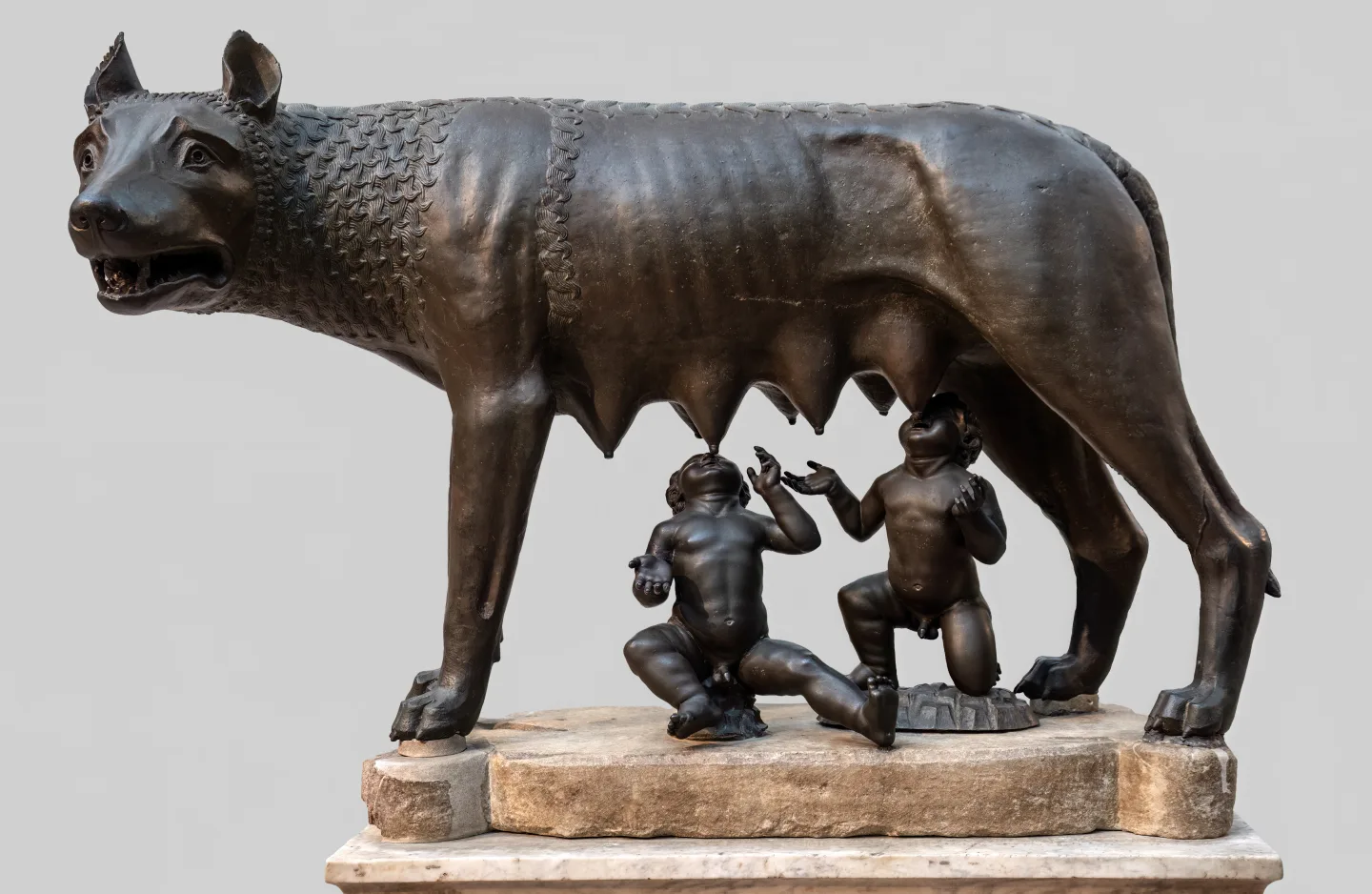
The Roman Republican Mixed Constitution
Greek historian Polybius analyzed the Roman Republic as a balanced 'mixed constitution' blending monarchical power (two Consuls), aristocratic authority (the Senate), and democratic elements (popular assemblies).
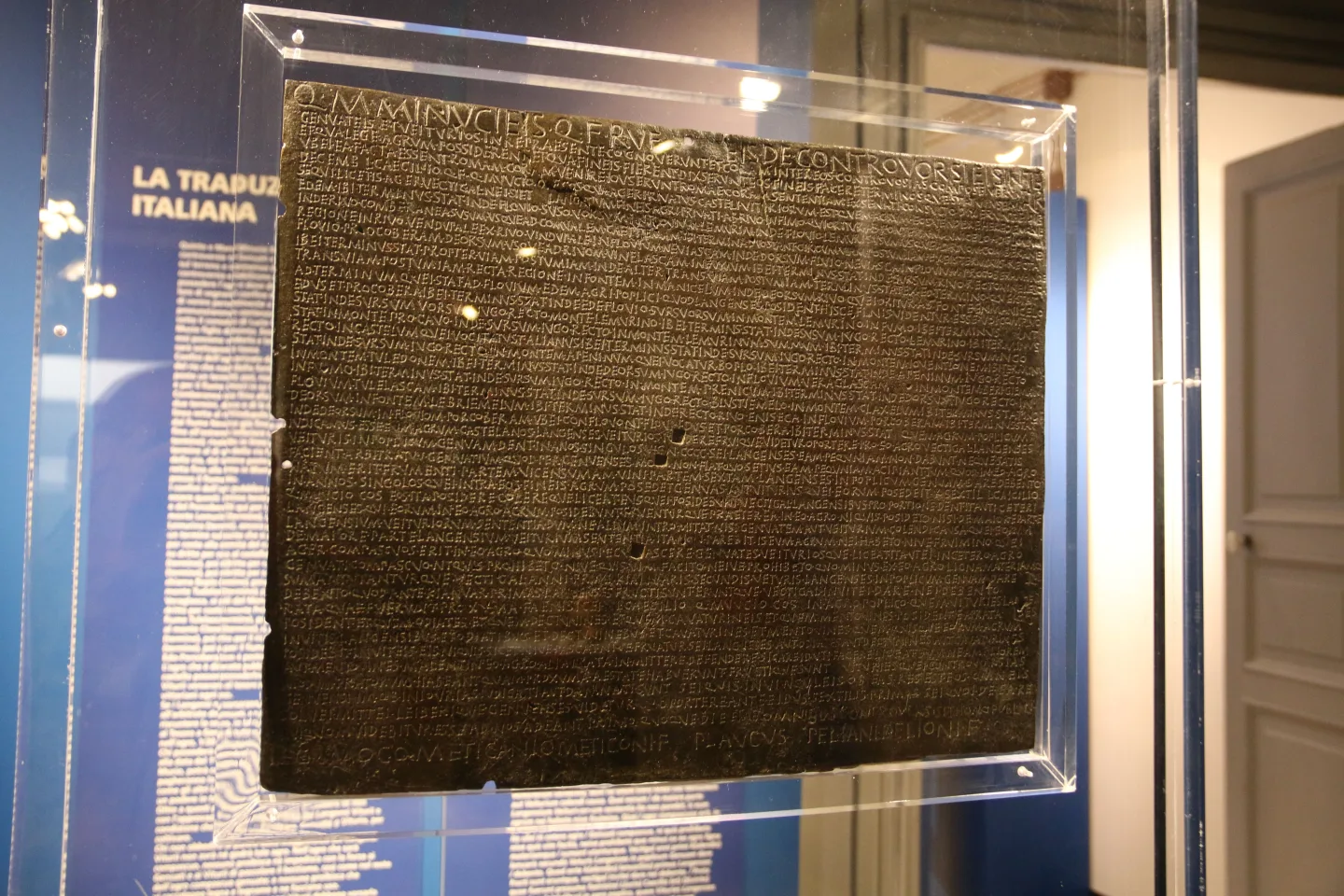
The Tribune of the Plebs and the Power of Veto
Created during the Conflict of the Orders (494 BCE), the sacrosanct Tribune of the Plebs protected commoners against patrician magistrate abuse using the power of intercession (Veto, 'I forbid').
The Twelve Tables and Codified Civil Law
Engraved on bronze tablets in 450 BCE following plebeian agitation, the Twelve Tables (Duodecim Tabulae) formed the foundational written code of Roman civil, property, and procedural law.
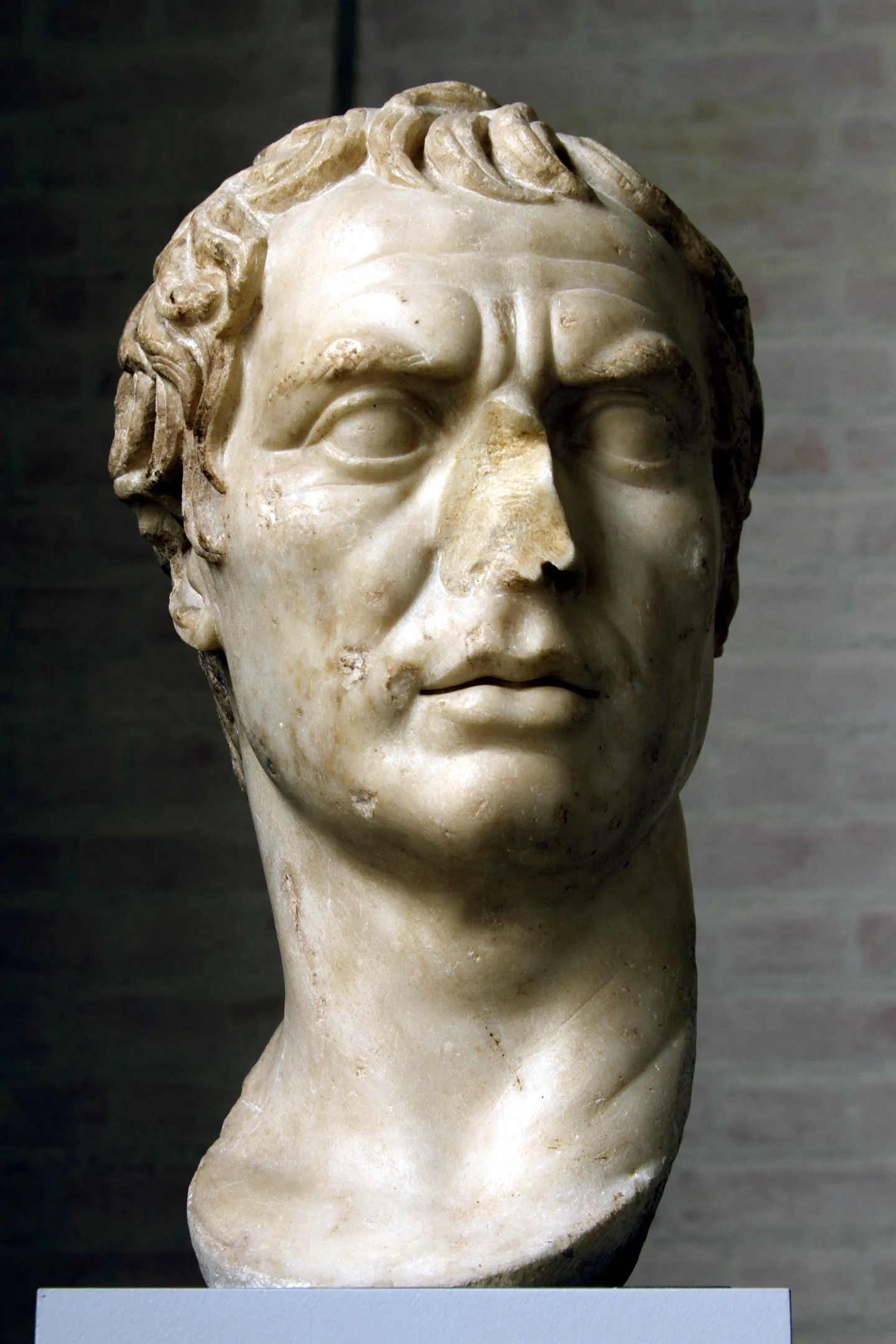
The Punic Wars and Western Mediterranean Hegemony
Between 264 and 146 BCE, Rome fought three Punic Wars against Carthage, culminating in the total destruction of Carthage and Roman naval domination across the Western Mediterranean.
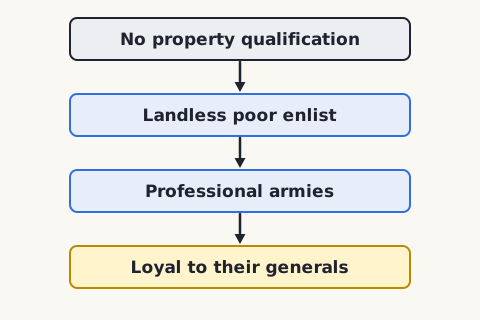
The Marian Reforms and the Professional Legion
In 107 BCE, Gaius Marius eliminated property qualifications for military enlistment, opening the legions to the landless poor (capite censi) and creating professional armies loyal to their commanding generals.
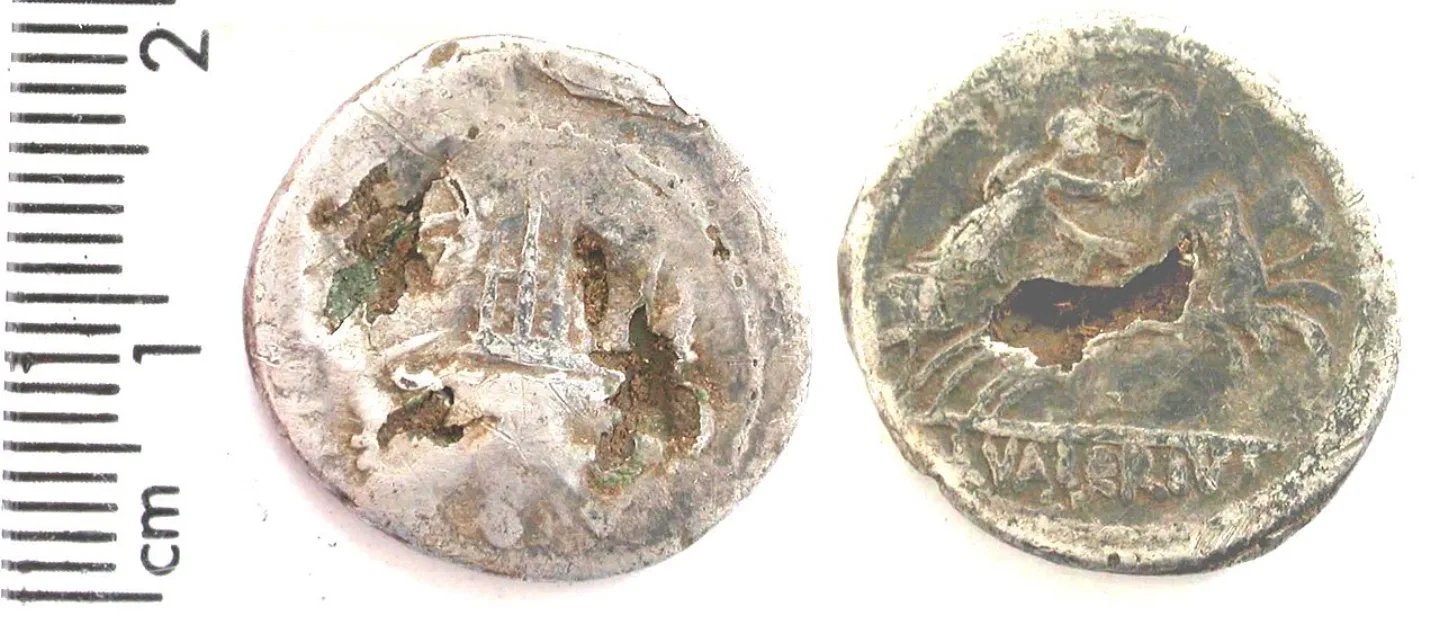
The Denarius Silver Standard and Republican Monetization
Introduced in 211 BCE during the Second Punic War, the silver Denarius became the monetary backbone of the Roman Mediterranean, funding military logistics and imperial market integration.
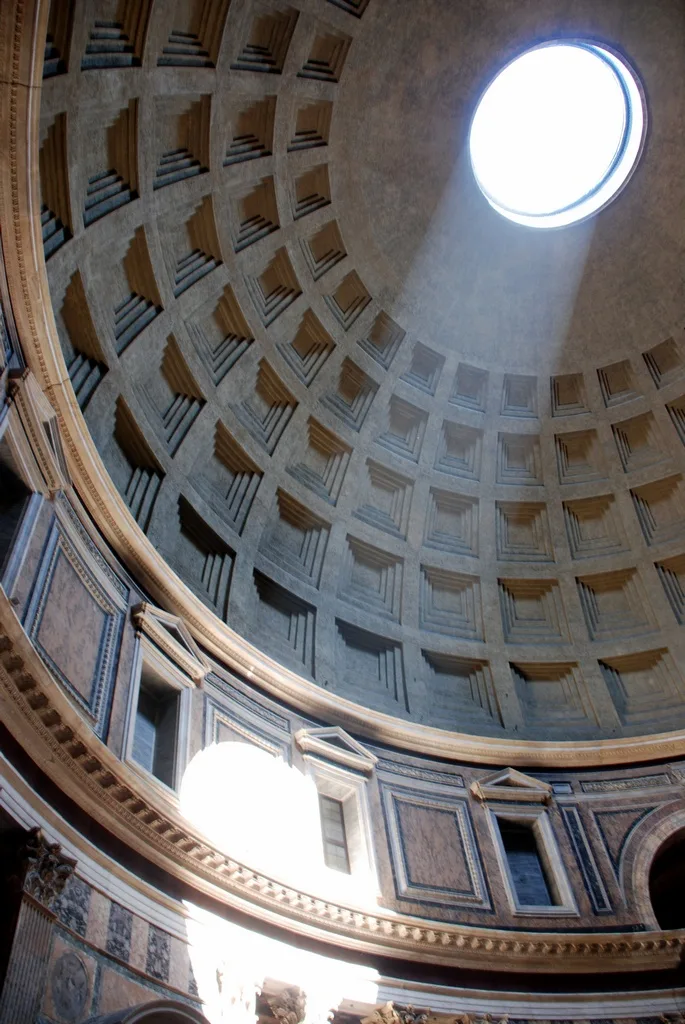
Opus Caementicium and Pozzolanic Concrete Engineering
Roman engineers revolutionized architecture by mixing volcanic ash (pozzolana) from the Bay of Naples with lime and rubble to produce hydraulic concrete (opus caementicium) capable of setting underwater.
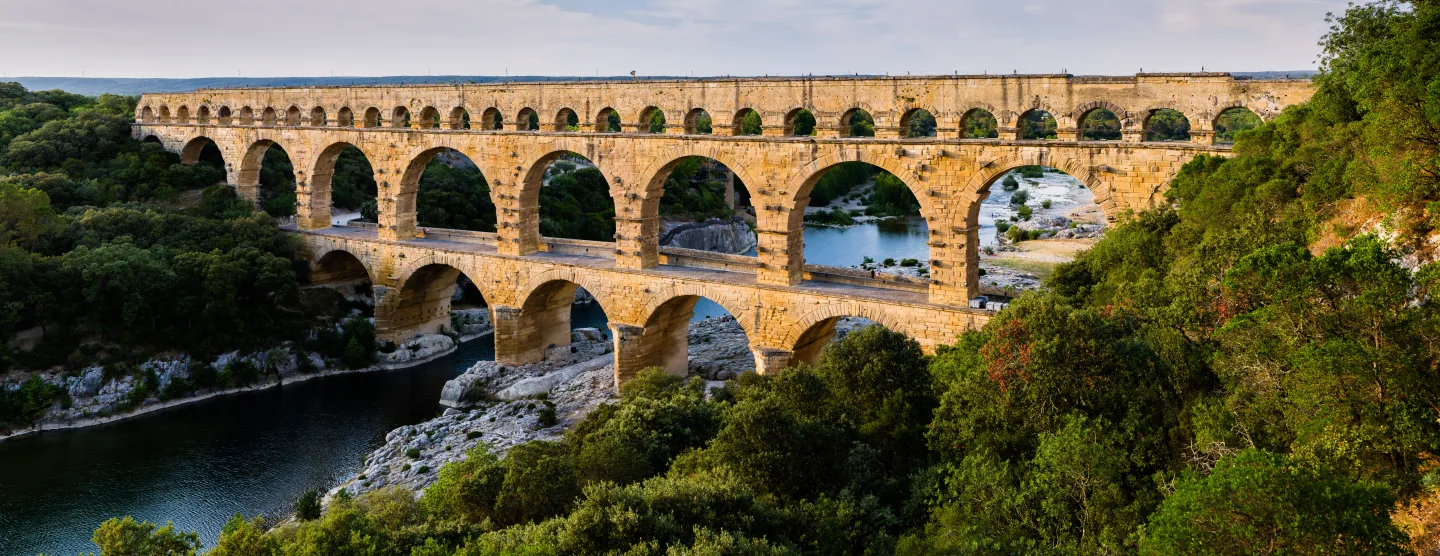
The Roman Aqueduct Network and Arcades
Roman aqueducts, such as the Pont du Gard in southern France (c. 50 CE), utilized continuous gravity gradients and multi-tiered arches to transport over 20,000 cubic meters of fresh water daily to cities.
The Cura Annonae and Egyptian Grain Supply
The Roman state managed the Cura Annonae, an enormous logistical fleet importing over 150,000 tons of grain annually from Egypt and North Africa to provide free grain rations (frumentatio) to 200,000 Roman citizens.
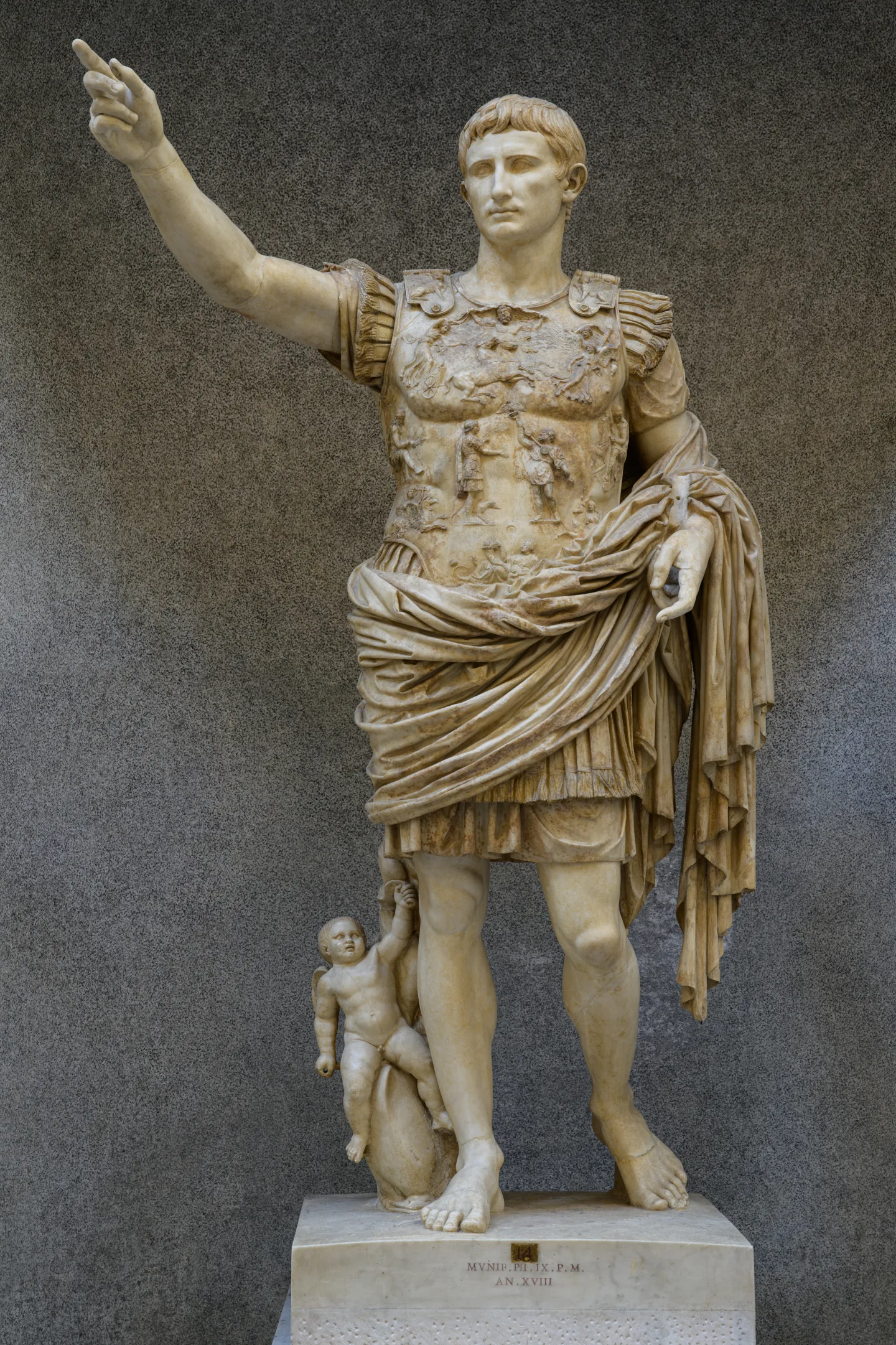
Augustus Caesar and the Foundation of the Principate
In 27 BCE, Octavian took the title Augustus and proconsular military imperium, creating the Principate; he added formal tribunician power (tribunicia potestas) in the Second Settlement of 23 BCE, completing his consolidation of authority behind the cosmetic facade of Republican institutions.
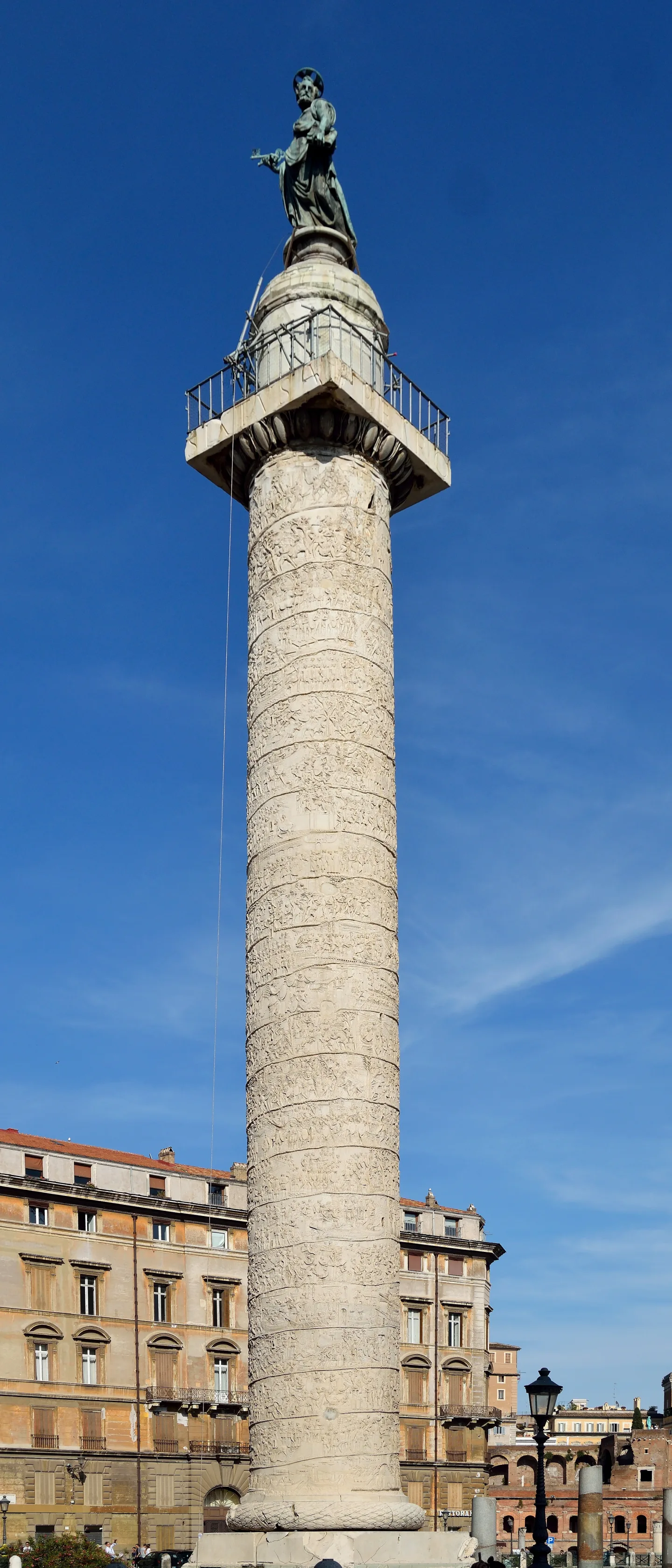
Trajan's Column and Roman Military Logistics
Erected in 113 CE in Rome, Trajan's Column features a 190-meter continuous spiral relief illustrating legionary engineering, pontoon bridges, fortification building, and logistics during the Dacian Wars.
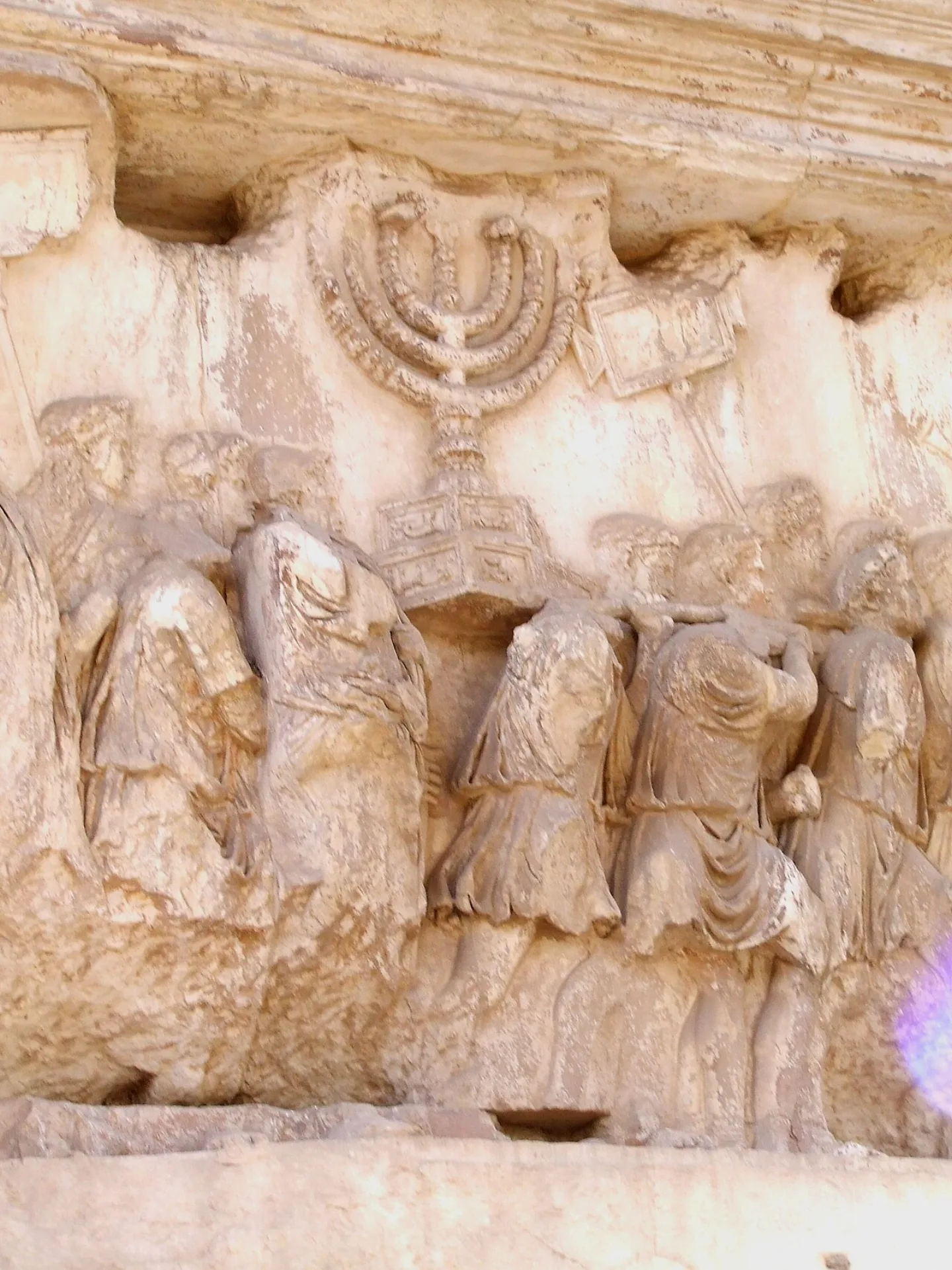
The Arch of Titus and the 70 CE Destruction of Jerusalem
Constructed in 81 CE, the Arch of Titus in the Roman Forum displays relief carvings of Roman soldiers carrying off spoils from the Second Temple of Jerusalem, including the golden Menorah and silver trumpets.
By the numbers
- In what year BCE was the foundational Roman legal code of the Twelve Tables engraved upon bronze tablets?
- 450 year BCE
- In what year BCE was the Title Augustus officially conferred upon Octavian, inaugurating the Roman Principate?
- 27 year BCE
- In what year CE did Roman forces under Titus capture and destroy the Second Temple of Jerusalem?
- 70 year CE
Matched pairs
Each item on the left goes with the one on the right.
- The Consuls
- Two annually elected executive magistrates wielding supreme civil and military command
- The Senate
- Advisory council of former magistrates managing state finances and foreign treaties
- The Pantheon
- World's largest unreinforced volcanic concrete dome with a 9-meter central oculus
- Pont du Gard
- Three-tiered stone aqueduct arcade delivering 20,000 cubic meters of daily water
Self-test
Answer each question from memory, then check your work against the answer key.
1. Which Roman institution represented the 'democratic' element in Polybius's mixed constitution?
- AThe Senate
- BThe Tribune of the Plebs
- CPopular assemblies
- DThe Consuls
2. What legal power allowed a Roman Tribune of the Plebs to halt arbitrary magistrate actions?
- AThe power of personal intercession (Veto — 'I forbid') to freeze legislation and arrests
- BThe power to dissolve the Roman Senate and replace members with foreign merchants
- CThe sole authority to mint gold coinage for imperial military campaigns
- DThe authority to declare immediate offensive foreign wars without Senate approval
3. Why was the public engraving of the Twelve Tables on bronze tablets in 450 BCE a major plebeian victory?
- AIt required that plebeians be permitted to serve as consuls alongside patricians
- BIt permanently abolished all agricultural debt taxation on Italian farmland
- CIt gave plebeian assembly votes binding legal force over the patricians
- DIt established written and public legal rules that prevented arbitrary patrician judicial abuse
4. What geopolitical transformation resulted from Rome's complete victory over Carthage in 146 BCE?
- ACarthaginian merchant syndicates assumed monopolistic control over Roman grain imports
- BRome eradicated its greatest rival and established naval hegemony over the Western Mediterranean
- CThe Persian Achaemenid Empire invaded and colonized the Italian peninsula
- DRome was forced to surrender all naval fleets and retreat behind the Alpine mountains
5. What unintended political consequence stemmed from the Marian military reforms of 107 BCE?
- AConsuls were constitutionally prohibited from leading legions outside the city walls of Rome
- BSoldiers became personally loyal to commanding generals who promised land grants and enabled civil wars
- CThe Roman military shrank rapidly because common citizens refused to enlist as professionals
- DThe Roman Republic abolished all standing armies in favor of hiring barbarian mercenaries
6. What chemical ingredient gave Roman concrete (opus caementicium) the revolutionary ability to cure underwater?
- ACrushed quartz crystal glass melted with Baltic pine resin
- BPowdered white marble extracted from the quarries of Carrara
- CReactive volcanic ash (pozzolana) quarried from the Bay of Naples
- DPulverized Egyptian blue turquoise minerals imported from Sinai
7. How did Roman civil engineers maintain continuous water flow across long-distance aqueducts like the Pont du Gard?
- ABy calculating precise and continuous downward gravity gradients along the entire channel route
- BBy relying on a chain of elevated stone cisterns refilled nightly by teams of runners
- CBy using large Archimedes screw pumps cranked by enslaved laborers at every valley crossing
- DBy digging deep vertical wells to tap fresh groundwater independently at every valley
8. What is the name of the Pantheon's 9-meter central opening that reduces the concrete dome's weight?
- AClerestory
- BOriel
- CCupola
- DOculus
9. What did Roman builders mix to create opus caementicium, concrete that could cure underwater?
- AClay brick, gypsum plaster, and dried straw
- BFired terracotta shards, bitumen, and timber beams
- CQuarried marble powder, egg-white binder, and sand
- DSlaked lime, rubble, and volcanic pozzolana ash
10. Which province was the primary grain-supplying breadbasket for Rome's Cura Annonae fleet?
- AGaul
- BBritannia
- CEgypt
- DHispania
Go deeper
Answer key
- 1. C Popular assembliesPolybius identified the popular assemblies (Comitia Centuriata and Comitia Tributa) as the democratic element, distinct from the monarchical Consuls and aristocratic Senate.
- 2. A The power of personal intercession (Veto — 'I forbid') to freeze legislation and arrestsThe sacrosanct Tribune of the Plebs possessed the power of Veto ('I forbid'), allowing him to physically intervene and halt magistrate actions.
- 3. D It established written and public legal rules that prevented arbitrary patrician judicial abuseBefore 450 BCE, unwritten customary law was largely controlled by patrician pontiffs. Publishing the Twelve Tables is traditionally seen as a plebeian check on arbitrary judicial interpretation, though some historians argue it also served the patricians' own interest in orderly self-governance.
- 4. B Rome eradicated its greatest rival and established naval hegemony over the Western MediterraneanThe destruction of Carthage in 146 BCE during the Third Punic War eliminated Rome's primary rival and established Mare Nostrum ('Our Sea').
- 5. B Soldiers became personally loyal to commanding generals who promised land grants and enabled civil warsBecause landless soldiers relied on their generals for retirement land and pay, armies became privatized tools for ambitious warlords like Sulla and Caesar.
- 6. C Reactive volcanic ash (pozzolana) quarried from the Bay of NaplesPozzolanic volcanic ash reacted with slaked lime to create crystalline structures that gained hardness even underwater, enabling marine concrete harbors.
- 7. A By calculating precise and continuous downward gravity gradients along the entire channel routeRoman aqueducts relied entirely on gravity, engineering minute, uniform downward slopes (sometimes dropping just a few centimeters per kilometer).
- 8. D OculusThe Pantheon's dome has a 9-meter unglazed central opening called the oculus, which cuts weight and admits light. The others are unrelated architectural terms.
- 9. D Slaked lime, rubble, and volcanic pozzolana ashOpus caementicium combined slaked lime, rubble aggregate, and reactive pozzolana ash, forming crystalline structures that hardened even underwater.
- 10. C EgyptThe Cura Annonae grain fleet brought food chiefly from Egypt (plus North Africa and Sicily); Gaul, Britannia, and Hispania were provinces but not part of the grain-supply lifeline.
Sources
- Michael H. Crawford, Roman Statutes and Roman Republican Coinage
- Michael H. Crawford, Roman Statutes and Roman Republican Coinage — cup.cam.ac.uk
- Capitoline Museums Rome: Republican and Imperial Halls — www.museicapitolini.org
- World History Encyclopedia: Twelve Tables — www.worldhistory.org/Twelve_Tables/
- Parco Archeologico del Colosseo: Roman Forum and Monuments — parcocolosseo.it
- Vatican Museums: Classical Roman Antiquities — www.museivaticani.va
- Wikipedia: Pont du Gard — en.wikipedia.org/wiki/Pont_du_Gard
Image credits
- The Roman Republican Mixed Constitution: Wikimedia Commons · Wilfredo Rafael Rodriguez Hernandez · CC0 — commons.wikimedia.org/wiki/File:Lupa_Capitolina,_Rome.jpg
- The Tribune of the Plebs and the Power of Veto: Wikimedia Commons · Giovanni Dall'Orto · Attribution — commons.wikimedia.org/wiki/File:Museo_archeologico_(Genova)_-_Tavola_di_Polcevera_(117_a.C.)_-_Foto_Giovanni_Dall%27Orto,_13_-_01a.jpg
- The Punic Wars and Western Mediterranean Hegemony: Wikimedia Commons · José Luiz Bernardes Ribeiro · Public domain — commons.wikimedia.org/wiki/File:Bust_of_Sulla_(loan_from_Ny_Carlsberg_Glyptotek)_-_Glyptothek_-_Munich_-_Germany_2017.jpg
- The Marian Reforms and the Professional Legion: FlashFeed original diagram · CC-BY-4.0
- The Denarius Silver Standard and Republican Monetization: West Berkshire, Paula Levick, 2006-10-14 12:49:11 · CC BY-SA 4.0 — commons.wikimedia.org/wiki/File:Roman_coin_,_denarius_of_the_Republic_(FindID_146016).jpg
- Opus Caementicium and Pozzolanic Concrete Engineering: Yellow.Cat from Roma, Italy · CC BY 2.0 — commons.wikimedia.org/wiki/File:Pantheon_dome_-_oculus_light_(5832357251).jpg
- The Roman Aqueduct Network and Arcades: Wikimedia Commons · Benh LIEU SONG · CC BY-SA 3.0 — commons.wikimedia.org/wiki/File:Pont_du_Gard_BLS.jpg
- Augustus Caesar and the Foundation of the Principate: Wikimedia Commons · Justin Benttinen · CC BY-SA 4.0 — commons.wikimedia.org/wiki/File:Augustus_of_Prima_Porta.jpg
- Trajan's Column and Roman Military Logistics: Wikimedia Commons · Livioandronico2013 · CC BY-SA 4.0 — commons.wikimedia.org/wiki/File:Trajan%27s_Column_HD.jpg
- The Arch of Titus and the 70 CE Destruction of Jerusalem: Laurel Lodged · Public domain — commons.wikimedia.org/wiki/File:Carrying_off_the_Menorah_from_the_Temple_in_Jerusalem_depicted_on_a_frieze_on_the_Arch_of_Titus_in_the_Forum_Romanum.JPG


