
History of Arizona study guide · Lesson 6 of 12
Lesson 6: Statehood & Early 20th Century
Part 1: The Road to Statehood · Part 2: Carl Hayden · Part 3: The Grand Canyon Becomes an Icon
This is the lesson's study guide from the FlashFeed app, plus its key facts and a self-test.
What you'll be able to do
- Identify Arizona's Valentine's Day 1912 admission as the 48th state, signed by President Taft.
- Recognize Arizona's Progressive constitution and its 1912 women's suffrage initiative.
- Describe Carl Hayden's 56-year congressional career, his sheriff past, and the Central Arizona Project.
- Explain how the Santa Fe Railroad and Fred Harvey brought tourism to the Grand Canyon.
- Identify Powell's 1869 descent, Roosevelt's advocacy, and the 1919 designation of Grand Canyon National Park.
Statehood and Early 20th Century
Arizona became a state on Valentine's Day, 1912 — the last in the contiguous United States. The constitution it brought with it was unusually radical for the era, and the politicians it sent to Washington were unusually durable.
The Road to Statehood
President William Howard Taft signed Arizona into statehood on February 14, 1912 — the 48th state. New Mexico had beaten it by six weeks.
Arizona's constitution was drafted in Phoenix in 1910 by a convention of 52 delegates; only one of them, Carlos Jácome of Pima County, was Hispanic, and he and the rest of Pima's Republican delegation refused to sign it. What they produced was a Progressive showcase: initiative, referendum, recall of officials (including judges), and direct election of senators. President Taft objected specifically to letting voters recall judges — Arizona stripped that provision to get admitted, then restored it by referendum months later. Women's suffrage came separately, by a 1912 initiative. By November 1912 Arizona women had won the vote by state referendum — eight years before the Nineteenth Amendment. Congress had also floated admitting Arizona and New Mexico as one combined state to keep Senate numbers down. New Mexico was open to it; Arizonans voted it down. They wanted their own star on the flag.
Carl Hayden
Carl Hayden represented Arizona in Washington for 56 years — first in the House from statehood in 1912, then in the Senate from 1927 to 1969. He held the seniority record in Congress and chaired Appropriations for fourteen years. Before Congress he had been Maricopa County Sheriff (1907-1912), and led the 1910 pursuit that captured two train robbers, the Woodson brothers, chasing them across the desert partly by automobile. His longest legislative project was the Central Arizona Project, a 336-mile aqueduct to bring Colorado River water to Phoenix and Tucson. He championed it from its 1947 proposal and finally got it authorized in 1968, just months before he retired in January 1969.
The Grand Canyon Becomes an Icon
The Santa Fe Railroad reached the South Rim in 1901, and tourism arrived in a flood. By 1905 the El Tovar Hotel — a Harvey House lodge built by the Santa Fe Railway and run by the Fred Harvey Company, which operated the West's first restaurant chain along the Santa Fe and staffed it with the famed Harvey Girls — was hosting guests overlooking the canyon. The scientific groundwork had been laid earlier: John Wesley Powell, a one-armed Civil War veteran, led the first known descent of the Colorado through the Grand Canyon in 1869. Theodore Roosevelt visited in 1903 and called it "one of the great sights which every American, if he can travel at all, should see." He made it a national monument in 1908; Congress made it a national park in 1919.
Key concepts
William Howard Taft
- This U.S. president had the final say on admitting the last of the contiguous states to the union.
- He signed the admission document on Valentine's Day, February 14.
- In 1912 his signature made Arizona the 48th state, six weeks after New Mexico slipped in.
Fred Harvey
- This entrepreneur ran the West's first restaurant chain, strung along the Santa Fe Railroad.
- His famous uniformed waitresses became icons of rail-travel hospitality.
- By 1905 his company had opened the El Tovar Hotel overlooking the Grand Canyon's South Rim — four years after Harvey's own death.
John Wesley Powell
- A one-armed Civil War veteran who became an explorer of the American West.
- In 1869 he led the first known boat descent of a great river through a mile-deep gorge.
- His expedition ran the Colorado River through the length of the Grand Canyon.
Theodore Roosevelt
- This U.S. president visited northern Arizona in 1903 and urged Americans to see its greatest sight.
- He praised a mile-deep gorge as 'one of the great sights which every American, if he can travel at all, should see.'
- In 1908 he made the Grand Canyon a national monument.
Key facts
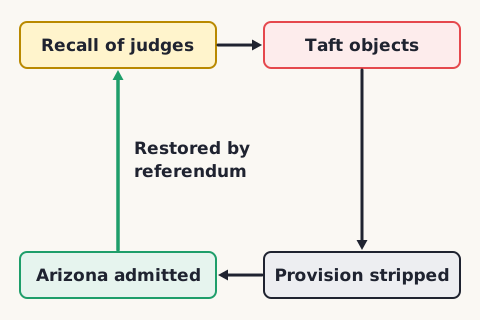
A radical constitution
Arizona's first proposed constitution was a Progressive showcase: initiative, referendum, recall of officials (including judges), and direct election of senators. President Taft objected specifically to letting voters recall judges — Arizona stripped that provision, got admitted, then restored it by referendum months later. Women's suffrage came separately, by a 1912 initiative.
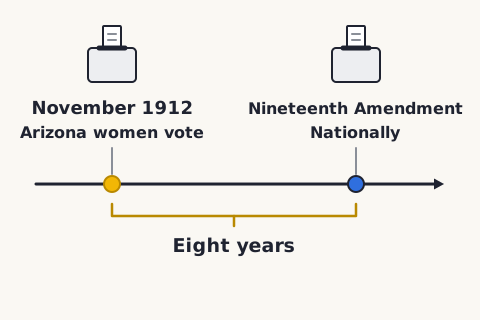
Women voted before federal suffrage
Arizona women won the right to vote in November 1912 by state referendum — eight years before the Nineteenth Amendment did the same nationally. The state constitution had been amended within months of statehood.
An Anglo-dominated convention
Of the 52 delegates at Arizona's 1910 constitutional convention, only one — Carlos Jácome of Pima County — was Hispanic, and he joined his county's delegation in refusing to sign. The early state government was overwhelmingly Anglo, despite Arizona's deep Spanish and Mexican roots.
The 'jointure' idea
Some in Congress proposed admitting Arizona and New Mexico as one combined state to keep Senate numbers manageable. New Mexicans were open to it. Arizonans hated the idea and voted it down — they wanted their own star on the flag.
Carl Hayden's record
Carl Hayden represented Arizona in Washington for 56 years — first in the House from statehood in 1912, then in the Senate from 1927 to 1969. He held the seniority record in Congress and chaired the powerful Appropriations Committee for 14 years.
Sheriff to senator
Before Congress, Hayden was Maricopa County Sheriff — and in 1910 led the pursuit that captured two train robbers, the Woodson brothers, chasing them across the desert partly by automobile. The story made him famous statewide.
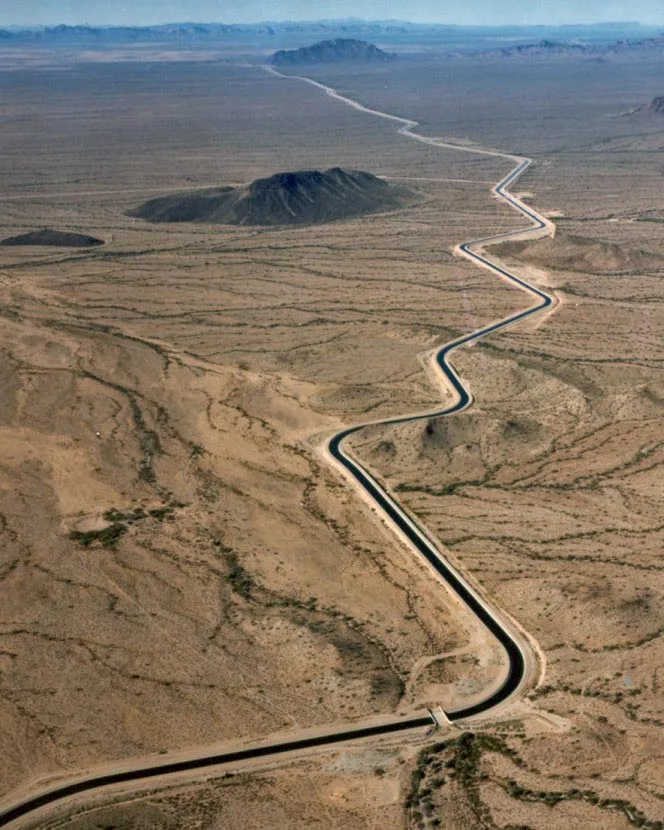
Hayden's 21-year water crusade
Hayden's biggest legislative cause was the Central Arizona Project — a 336-mile aqueduct to carry Colorado River water to Phoenix and Tucson. He championed it from its 1947 proposal, finally getting it authorized in 1968, just months before he retired in January 1969.
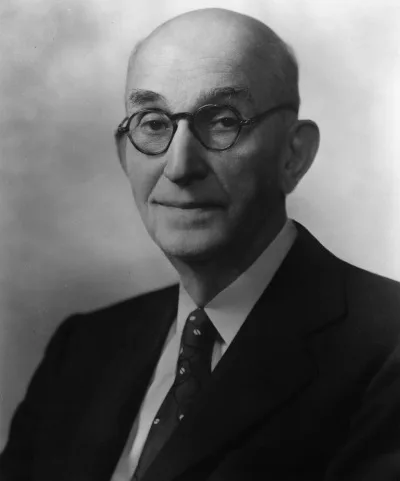
From House to Senate
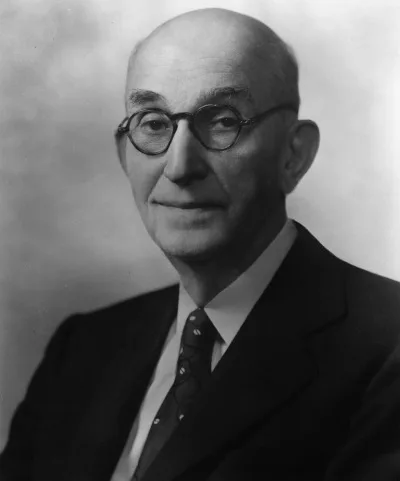
Carl Hayden entered the U.S. House in 1912, the year Arizona became a state, then moved to the Senate in 1927 and served there until 1969.
Hayden's Appropriations chairmanship
Carl Hayden chaired the powerful Appropriations Committee — one of Congress's most influential posts — for 14 years.
Fred Harvey
Fred Harvey built the West's first restaurant chain along the Santa Fe Railroad — clean dining rooms staffed by the famed Harvey Girls. His hotels at the Grand Canyon set the standard for American national-park lodging.
Powell maps the canyon
John Wesley Powell, a one-armed Civil War veteran, led the first known descent of the Colorado River through the Grand Canyon in 1869. His subsequent reports made the canyon famous and laid the scientific groundwork for federal water policy in the West.
National park status
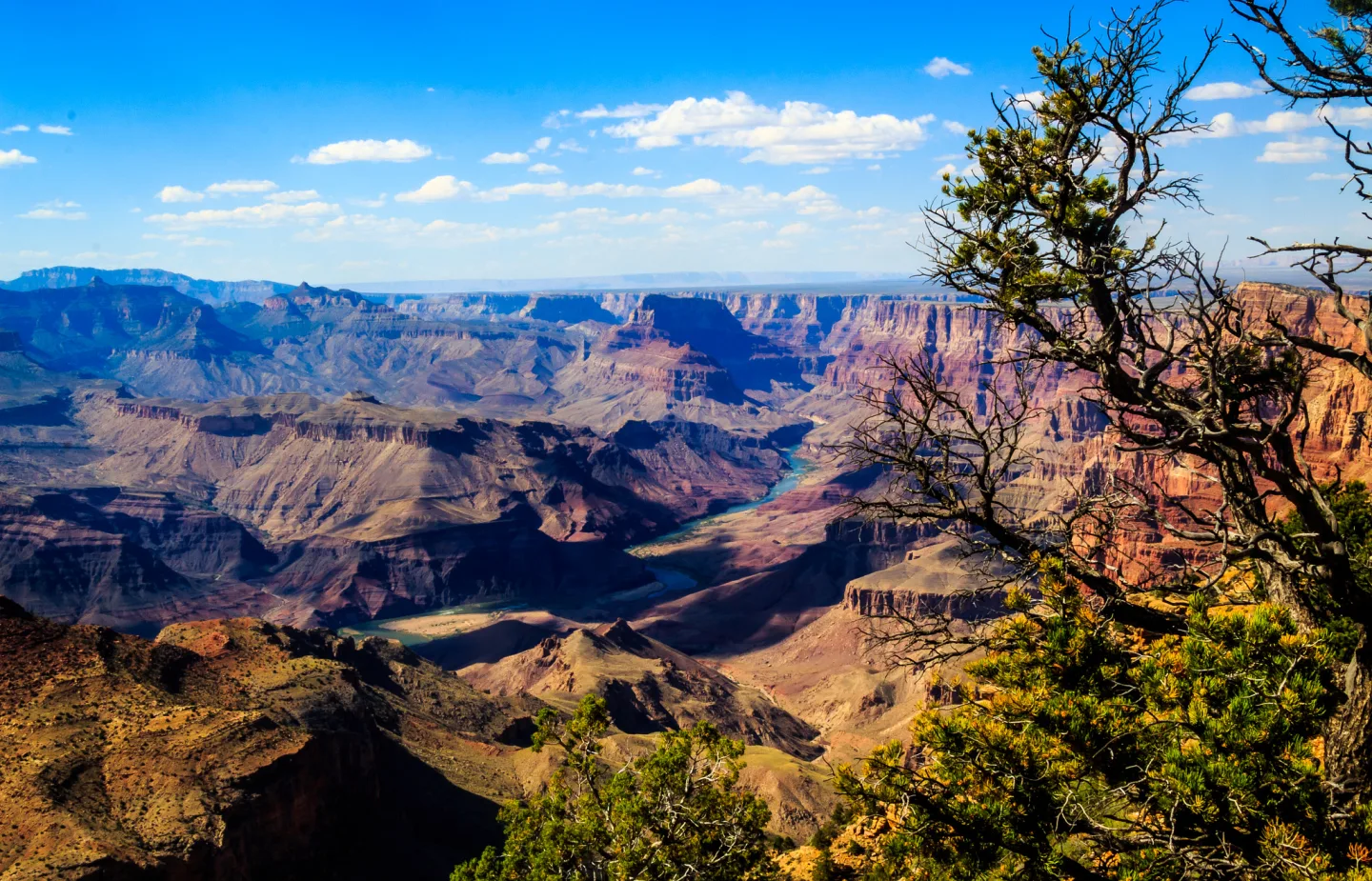
President Theodore Roosevelt visited the Grand Canyon in 1903 and called it 'one of the great sights which every American, if he can travel at all, should see.' He made it a national monument in 1908; Congress made it a national park in 1919.
Tourism came before the park
A rail line reaching the South Rim turned the Grand Canyon from a remote curiosity into a mass tourist destination — national park status came later, riding the wave of tourism rather than starting it.
Self-test
Answer each question from memory, then check your work against the answer key.
1. On what date did Arizona become a US state?
- AJuly 4, 1876
- BFebruary 14, 1900
- CFebruary 14, 1912
- DDecember 7, 1941
2. Arizona entered the Union as which numbered state?
- AThe 47th
- BThe 46th
- CThe 49th
- DThe 48th
3. Which president signed Arizona into statehood?
- AWoodrow Wilson
- BWilliam Howard Taft
- CTheodore Roosevelt
- DWilliam McKinley
4. Which state was admitted to the Union just six weeks before Arizona?
- ANew Mexico
- BUtah
- COklahoma
- DNevada
5. Arizona is often called the last state admitted, yet Alaska and Hawaii joined later. What makes both statements true?
- AAlaska and Hawaii were admitted together in one act of Congress
- BAlaska and Hawaii count as territories rather than full states
- CArizona was the last state admitted within the contiguous US
- DArizona was the last state carved out of a federal territory
6. Arizona women won the right to vote in **November 1912** by state referendum — **eight years before** the ___ did the same nationally. The state constitution had been amended within months of statehood.
- ANineteenth Amendment
- BFifteenth Amendment
- CTwentieth Amendment
- DEighteenth Amendment
7. Which of these was NOT part of the Progressive constitution Arizona drafted in 1910?
- AThe referendum
- BWomen's right to vote
- CThe initiative
- DRecall of officials, including judges
8. What made Arizona's original 'recall' provision unusually radical for 1910?
- AIt applied only to appointed department heads
- BIt required a two-thirds legislative vote to recall anyone
- CIt let voters recall only the territorial governor
- DIt let voters recall any official, including judges
9. Besides recall of officials and the initiative/referendum, what else was in Arizona's original constitution?
- AA state lottery to fund public schools
- BMandatory jury duty for all adult women
- CTerm limits on the governor's office
- DDirect election of US senators
10. President Taft objected to Arizona's recall of judges. How did Arizona still win statehood?
- AIt traded judicial recall away for federal water funding
- BIt refused to change anything and waited Taft out
- CIt stripped the offending provisions, won admission, then restored them
- DIt let the Supreme Court overrule Taft's objection
11. How many years did Carl Hayden serve in Congress?
- A36
- B56
- C8
- D20
12. Before Congress, Hayden was **___** — and in 1910 led the pursuit that captured two train robbers, the Woodson brothers, chasing them across the desert partly by automobile. The story made him famous statewide.
- AMaricopa County Sheriff
- BUS Marshal
- CJustice of the Peace
- DTerritorial Governor
13. Hayden's biggest legislative cause was the **___** — a 336-mile aqueduct to carry Colorado River water to Phoenix and Tucson. He championed it from its **1947** proposal, finally getting it authorized in 1968, just months before he retired in January 1969.
- ARoosevelt Dam
- BBoulder Canyon Project
- CCentral Arizona Project
- DSalt River Project
14. Carl Hayden's congressional service is best described as which sequence?
- ASenate from 1912 to 1968, never in the House
- BHouse from 1912, then Senate from 1927 to 1969
- CHouse from 1912 to 1969, never in the Senate
- DSenate from 1912, then House from 1927 to 1969
15. Which committee did Hayden chair, and for how long?
- AFinance, for 14 years
- BArmed Services, for 8 years
- CAppropriations, for 56 years
- DAppropriations, for 14 years
16. **___** built the West's first restaurant chain along the Santa Fe Railroad — clean dining rooms staffed by the famed **Harvey Girls**. His hotels at the Grand Canyon set the standard for American national-park lodging.
- AFred Harvey
- BCharles Crocker
- CHenry Flagler
- DGeorge Pullman
17. In what year did the Santa Fe Railroad reach the Grand Canyon's South Rim, opening the floodgates for tourism?
- A1869
- B1912
- C1901
- D1919
18. Which luxury Harvey House lodge was hosting guests overlooking the Grand Canyon by 1905?
- AThe Hassayampa Inn
- BThe El Tovar Hotel
- CThe Hotel Monte Vista
- DLa Posada
19. What changed at the Grand Canyon that turned it from a remote curiosity into a mass destination?
- AA railroad line reached the rim, replacing long overland trips
- BPowell's expedition opened a river route for visitors
- CFederal promotion followed its designation as a national park
- DCongress funded a paved highway all the way to the rim
20. Which statement about Fred Harvey's operations is NOT true?
- AHis clean dining rooms were staffed by the famed Harvey Girls
- BHis Grand Canyon hotels set the standard for national-park lodging
- CHe built the West's first restaurant chain
- DHe owned the Santa Fe Railroad and built its line to the rim
21. When did Congress make Grand Canyon a national park?
- A1903
- B1872
- C1919
- D1956
22. Who led the first known descent of the Colorado River through the Grand Canyon in 1869?
- AFred Harvey
- BJohn C. Frémont
- CTheodore Roosevelt
- DJohn Wesley Powell
23. Place these Grand Canyon milestones in correct chronological order.
- APresidential visit, first river descent, park status, monument status
- BFirst river descent, presidential visit, monument status, park status
- CFirst river descent, monument status, presidential visit, park status
- DMonument status, first river descent, presidential visit, park status
24. In 1908, a president used his own authority to give the Grand Canyon what federal designation?
- ANational monument
- BNational park
- CNational recreation area
- DNational forest
25. Which president visited the Grand Canyon in 1903 and called it one of the great sights every American should see?
- AWoodrow Wilson
- BBenjamin Harrison
- CWilliam Howard Taft
- DTheodore Roosevelt
Go deeper
Answer key
- 1. C February 14, 1912
- 2. D The 48thArizona was the 48th state. New Mexico was the 47th, Oklahoma the 46th (1907), and Alaska the 49th (1959) — all real ordinals a learner might confuse.
- 3. B William Howard TaftTaft signed Arizona into statehood in 1912. Roosevelt had left office in 1909, Wilson took office in 1913, and McKinley died in 1901.
- 4. A New MexicoNew Mexico beat Arizona by six weeks. Nevada (1864), Utah (1896), and Oklahoma (1907) were all admitted years earlier.
- 5. C Arizona was the last state admitted within the contiguous USArizona was the last of the contiguous states; Alaska and Hawaii are full states but are not contiguous. They were admitted separately, and both were federal territories first.
- 6. A Nineteenth Amendment
- 7. B Women's right to voteInitiative, referendum and recall of officials (judges included) were all in the 1910 draft. Women's suffrage came separately, by a 1912 initiative.
- 8. D It let voters recall any official, including judgesArizona's Progressive constitution let voters recall any official, even judges — a radical stretch of recall power for 1910, and the provision President Taft objected to.
- 9. D Direct election of US senatorsThe Progressive package also included the initiative, the referendum, and direct election of senators. A lottery, term limits, and mandatory jury duty were never part of it.
- 10. C It stripped the offending provisions, won admission, then restored themTaft objected to recalling judges, so Arizona removed that provision, was admitted in 1912, then restored it by referendum months later. It never waited him out, and no court or water deal was involved.
- 11. B 56
- 12. A Maricopa County Sheriff
- 13. C Central Arizona Project
- 14. B House from 1912, then Senate from 1927 to 1969Hayden entered the House at statehood in 1912 and moved to the Senate in 1927, serving until 1969. He held both offices, in that order.
- 15. D Appropriations, for 14 yearsHayden chaired the powerful Appropriations Committee for 14 years alongside his seniority record. The 56 years is his whole time in Congress, not a chairmanship.
- 16. A Fred Harvey
- 17. C 1901The Santa Fe Railroad arrived at the South Rim in 1901. 1869 is Powell's descent, 1912 is statehood, and 1919 is national park designation.
- 18. B The El Tovar HotelThe El Tovar Hotel, a luxury Harvey House lodge, was hosting canyon-rim guests by 1905. The others are real Arizona hotels, but none of them sits on the canyon rim.
- 19. A A railroad line reached the rim, replacing long overland tripsThe rail line to the rim brought tourism in a flood, and Harvey House lodging met the arriving visitors. Park designation came later and followed the tourism boom rather than causing it.
- 20. D He owned the Santa Fe Railroad and built its line to the rimHarvey built restaurants and hotels ALONG the Santa Fe Railroad — he never owned the railroad or laid its track. The other three describe his operation accurately.
- 21. C 1919
- 22. D John Wesley PowellPowell, a one-armed Civil War veteran, led the 1869 descent, and his reports made the canyon famous and laid the groundwork for federal water policy in the West.
- 23. B First river descent, presidential visit, monument status, park statusThe first descent came in 1869, the presidential visit in 1903, monument status in 1908, and park status in 1919. Monument status followed the visit rather than preceding it.
- 24. A National monumentThe 1908 designation was national monument — a step a president can take alone. Only Congress could elevate it to a national park, which it did later.
- 25. D Theodore RooseveltTheodore Roosevelt made the 1903 visit and became the canyon's most powerful advocate. Taft signed Arizona's statehood, and Wilson was president when the park was created in 1919.
Sources
- Constitution of Arizona — Wikipedia — en.wikipedia.org/wiki/Constitution_of_Arizona
- Arizona Measure Nos. 100-101, Alcohol Prohibition Initiative (1914) — Ballotpedia — ballotpedia.org/Arizona_Measure_Nos._100-101,_Alcohol_Prohibition_Initiative_(1914)
- Made of Sterner Stuff, Arizona State Law Journal (2022) — arizonastatelawjournal.org/2022/02/14/made-of-sterner-stuff-honoring-arizonas-history-as-a-bastion-of-democracy
Image credits
- A radical constitution: FlashFeed original diagram · CC-BY-4.0
- Women voted before federal suffrage: FlashFeed original diagram · CC-BY-4.0
- Hayden's 21-year water crusade: Wikimedia Commons · U.S. Bureau of Reclamation · Public domain — commons.wikimedia.org/wiki/File:Arizona_cap_canal.jpg
- From House to Senate: Wikimedia Commons · United States Senate Historical Office · Public domain — commons.wikimedia.org/wiki/File:Carl_Hayden.jpg
- Hayden's Appropriations chairmanship: United States Senate Historical Office · Public domain — commons.wikimedia.org/wiki/File:Carl_Hayden.jpg
- National park status: Wikimedia Commons · Lennart Sikkema · CC BY 3.0 — commons.wikimedia.org/wiki/File:Canyon_River_Tree_(165872763).jpeg


