
History of Arizona study guide · Lesson 7 of 12
Lesson 7: Depression, War & Water
Part 1: Hoover Dam & the Depression · Part 2: Arizona in World War II · Part 3: Postwar Water & Industry
This is the lesson's study guide from the FlashFeed app, plus its key facts and a self-test.
What you'll be able to do
- Explain the 1922 Colorado River Compact and Arizona's disputed 37% lower-basin allocation.
- Describe Hoover Dam's 1931-1936 construction in Black Canyon on the Arizona-Nevada border.
- Recognize Arizona as a WWII training ground and the loss of the USS Arizona at Pearl Harbor.
- Identify Arizona's two large Japanese American internment camps, Poston and Gila River.
- Explain the Central Arizona Project, the 1980 Groundwater Management Act, and postwar high-tech growth.
Depression, War, and Water
The middle of the 20th century reshaped Arizona around three things: a dam, a war, and a canal. Each one was an enormous federal project, and together they set up the boom that came next.
Hoover Dam and the Depression
The 1922 Colorado River Compact divided the river's water among seven states, but only as far as the basin line: 7.5 million acre-feet a year to the upper basin and 7.5 to the lower, leaving the three lower-basin states to split their own half. The 1928 Boulder Canyon Project Act set that split — California 4.4 million acre-feet, Arizona 2.8, Nevada 0.3, or about 59%, 37%, and 4% of the lower basin. Arizona was furious that California had taken the lion's share and refused to ratify the compact until 1944. (Arizona's 2.8 is also often quoted as 19% — that is its share of the river's full 15 million acre-feet, not of the lower basin.)
The dam itself went up anyway. Hoover Dam — originally Boulder Dam — was built from 1931 to 1936 in the Black Canyon of the Colorado on the Arizona-Nevada border. At 726 feet it was the tallest dam in the world when completed, a record it held until 1957. About 21,000 workers built it; 96 died. The concrete in the arch is so massive that estimates say it would take about 125 years to cool naturally — engineers instead ran refrigerated water through embedded pipes to set it in months.
The dam mattered politically as much as physically. The Depression had wrecked Arizona's copper and cattle economy. By 1932 local relief was exhausted, and the New Deal poured in: CCC camps, road work, dam jobs. Federal spending — capped by Hoover Dam — pulled the state out of crisis.
Arizona in World War II
World War II turned the state into a giant training ground. Arizona offered clear flying weather, empty land, cheap labor, and proximity to California aviation plants. Davis-Monthan Field outside Tucson became the main training center for Army Air Forces bomber crews; as of 2026 it hosts the famous "Boneyard," a 2,600-acre yard of retired military aircraft. Fort Huachuca ballooned to 25,000 soldiers and became home of the 92nd and 93rd Infantry Divisions — two of the few large all-Black combat divisions in the US Army.
Arizona also hosted two of the largest Japanese American internment camps — Poston on the Colorado River and Gila River south of Phoenix — confining over 30,000 people, most of them US citizens, from 1942 to 1945. And the battleship USS Arizona was destroyed at Pearl Harbor on December 7, 1941, taking 1,177 sailors with her. Her hull still rests in the harbor.
Postwar Water and Industry
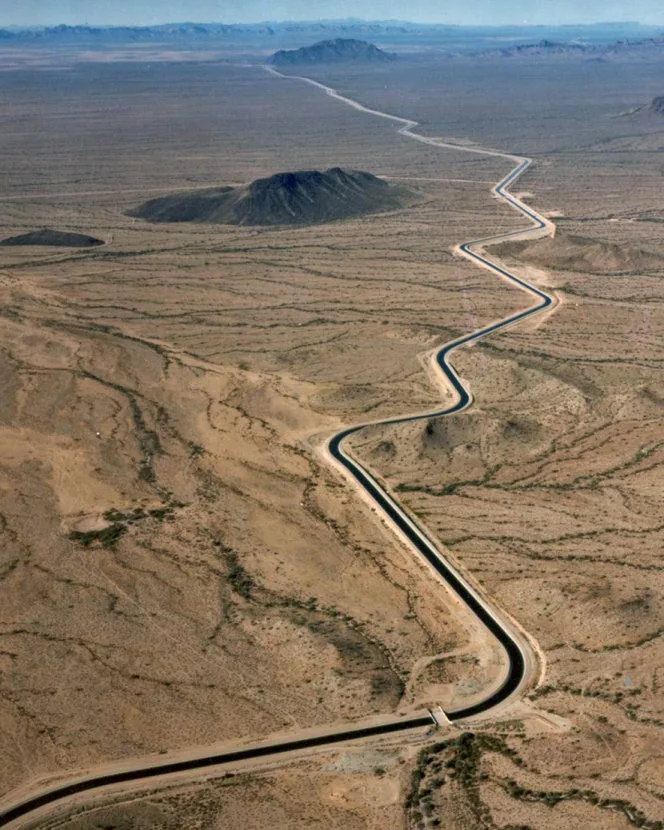
The Central Arizona Project — the 336-mile aqueduct Carl Hayden championed from its 1947 proposal — was authorized in 1968 and finally completed in 1993. It lifts Colorado River water out of Lake Havasu and pumps it uphill some 2,900 feet to Phoenix and Tucson, making it one of the largest electricity consumers in the state.
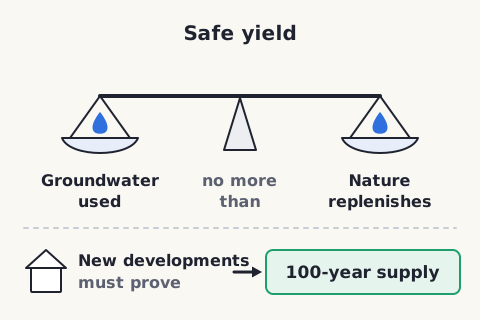
In 1980 Governor Bruce Babbitt pushed through the Groundwater Management Act, forcing cities and farms toward "safe yield" — using no more groundwater than nature replenishes — and requiring new developments to prove a 100-year water supply. Meanwhile manufacturing was reshaping Phoenix: jobs jumped from 49,000 in 1960 to 183,000 in 1985. Motorola, Hughes, Honeywell, IBM, and Goodyear Aircraft all opened operations. The desert was becoming a high-tech corridor.
Key concepts
Davis-Monthan Field
- This site outside Tucson trained Army Air Forces bomber crews during World War II.
- As of 2026 it hosts the famous aircraft 'Boneyard.'
- Its 2,600-acre yard holds thousands of retired military aircraft.
Fort Huachuca
- During World War II this Arizona army post swelled to 25,000 soldiers.
- It was the home base of two of the US Army's few large all-Black combat divisions.
- The 92nd and 93rd Infantry Divisions were stationed here.
Poston
- One of the two large World War II camps where Arizona confined Japanese Americans.
- Over 30,000 people, most of them US citizens, were held here and at a sister camp from 1942 to 1945.
- It stood in western Arizona, on the Colorado River.
Gila River
- This was one of Arizona's two major Japanese American internment camps in World War II.
- Together with a camp on the Colorado River, it confined more than 30,000 people, mostly US citizens.
- It lay just south of Phoenix.
Key facts
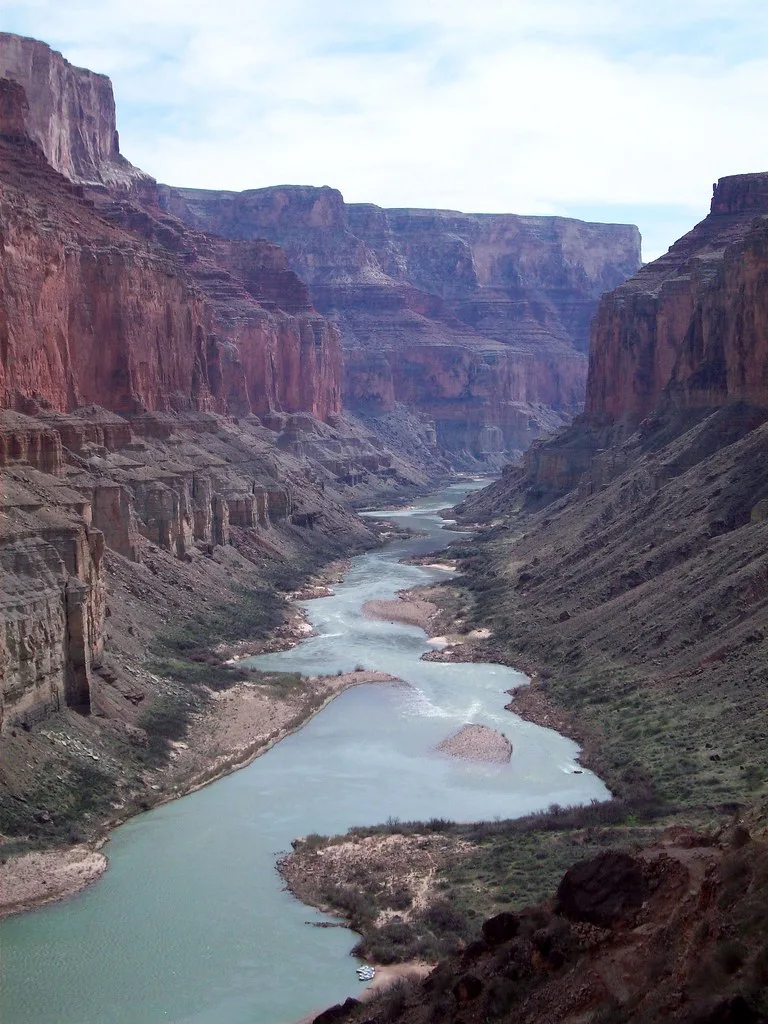
The Colorado River Compact
The 1922 Colorado River Compact split the river between an upper and a lower basin — 7.5 million acre-feet a year each. Dividing the lower half left California 59%, Arizona 37% (2.8 million acre-feet), and Nevada 4%. Arizona refused to ratify until 1944.
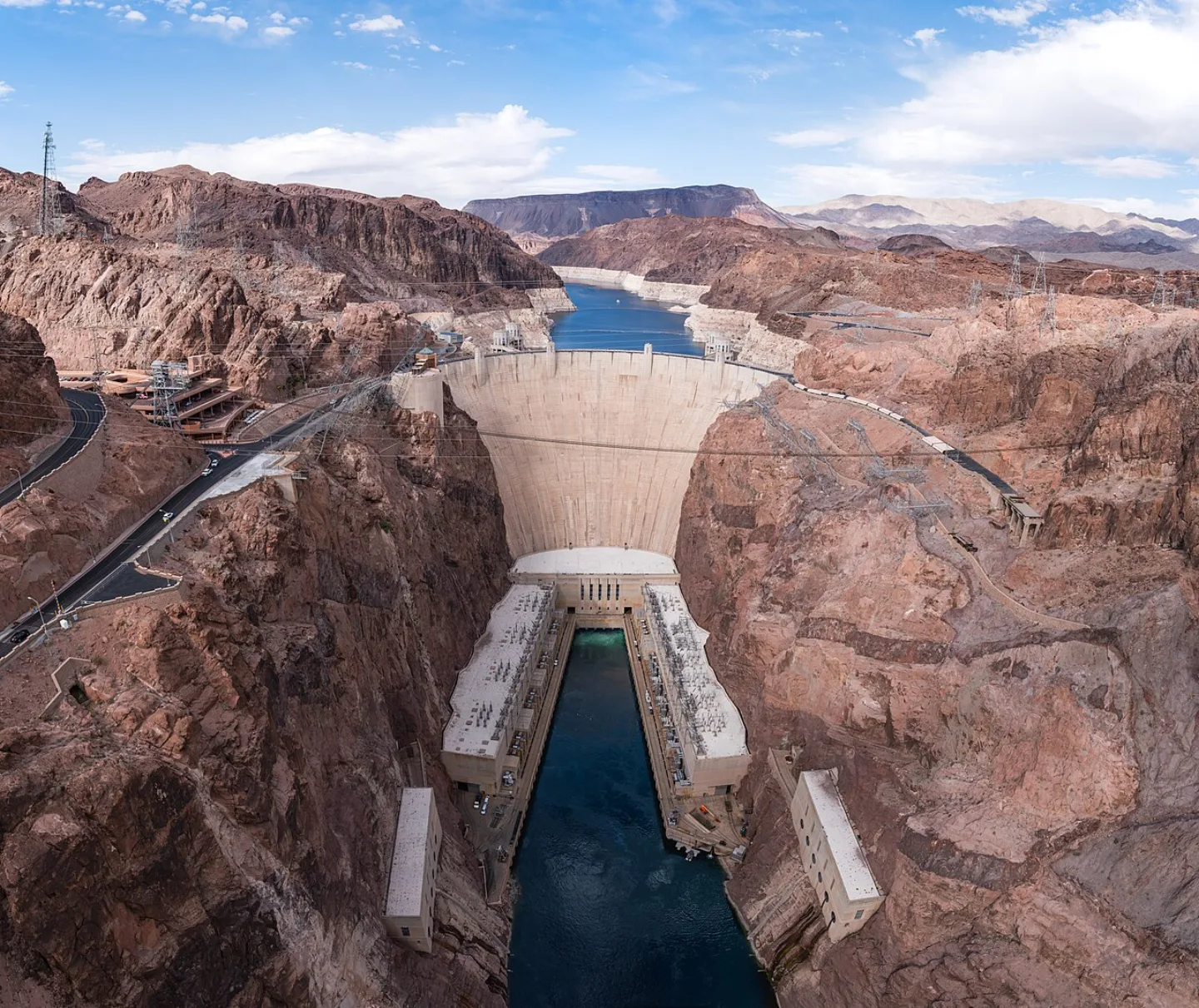
Engineering scale
Hoover Dam was the tallest dam in the world when completed in 1936. Roughly 21,000 workers built it; 96 died on the project. The concrete in its arch is so massive that estimates say it would take about 125 years to cool naturally — engineers instead ran refrigerated water through embedded pipes to set it in months.
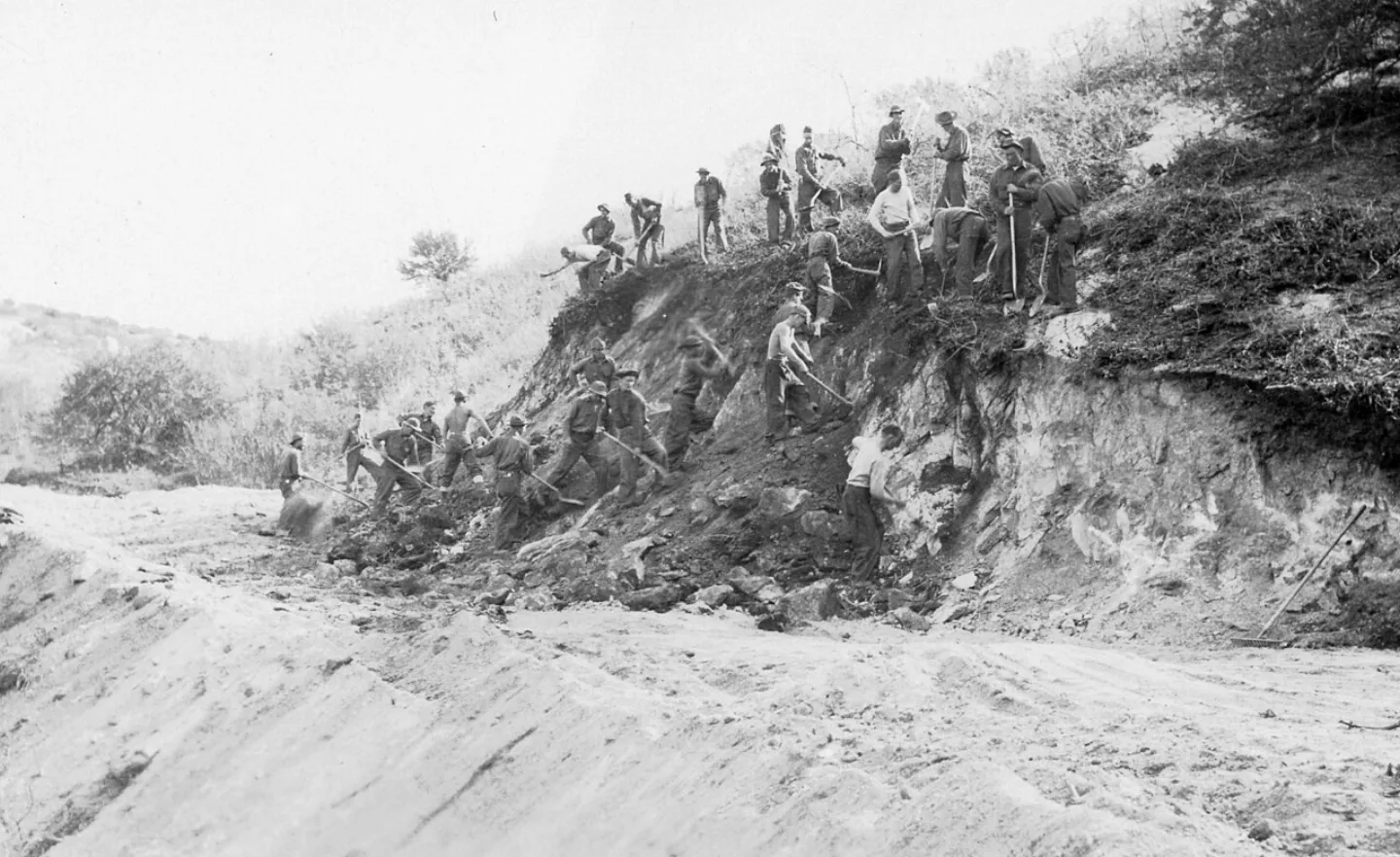
Arizona in the Depression
The Depression hit Arizona's copper and cattle economy hard. By 1932 local relief was exhausted and the New Deal poured in: CCC camps, dam projects, road work. Federal spending — capped by Hoover Dam — pulled the state out of crisis.
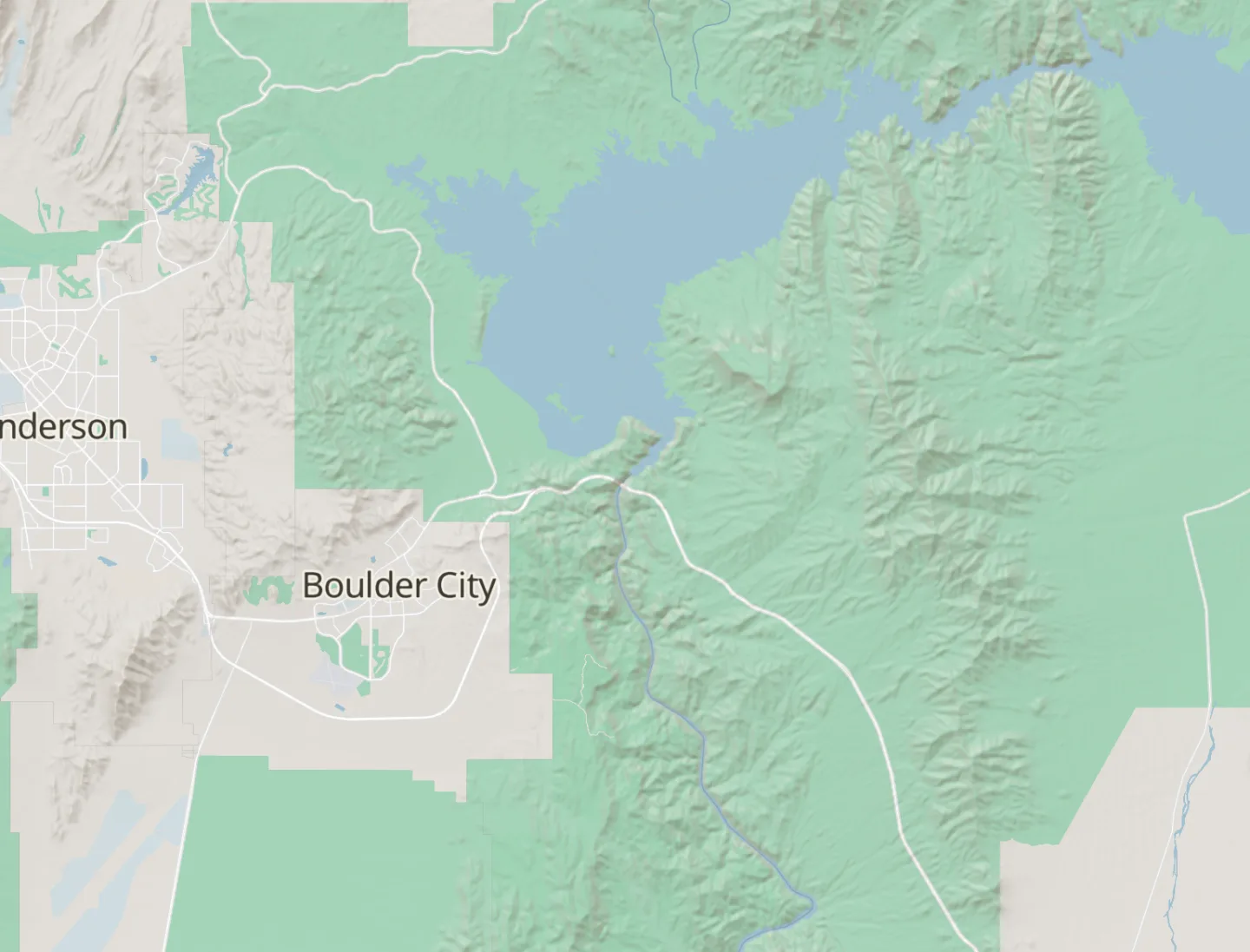
Hoover Dam tames the Colorado
Built 1931–1936 in Black Canyon on the Arizona–Nevada line, Hoover Dam was a Depression-era engineering marvel. Its reservoir, Lake Mead, is the largest in the United States by capacity — and made large-scale settlement of the modern Southwest possible.
Why the military came to Arizona
World War II turned Arizona into a giant training ground. The state offered clear flying weather, empty land, cheap labor, and proximity to California aviation plants. Bases, airfields, and proving grounds spread across the desert — and most of them stayed after the war.
Davis-Monthan Field
Davis-Monthan Field outside Tucson became the main training center for Army Air Forces bomber crews. After the war it kept growing — it now hosts the famous 'Boneyard', a 2,600-acre yard where the US military's retired aircraft sit in the dry air.
Fort Huachuca expands
During WWII, Fort Huachuca ballooned into the home of the 92nd and 93rd Infantry Divisions — two of the few large all-Black combat divisions in the US Army. At its peak the post held 25,000 soldiers.
Japanese American internment
Arizona hosted two of the largest War Relocation camps: Poston on the Colorado River and Gila River south of Phoenix. Over 30,000 Japanese Americans — most of them US citizens — were confined in them from 1942 to 1945.
The Central Arizona Project
The Central Arizona Project is a 336-mile concrete aqueduct that lifts Colorado River water out of Lake Havasu and pushes it uphill to Phoenix and Tucson. Carl Hayden championed it from its 1947 proposal to its authorization in 1968; it took until 1993 to complete.
The Groundwater Management Act
In 1980, Governor Bruce Babbitt pushed through the Groundwater Management Act — forcing cities and farms to reach 'safe yield' (using no more groundwater than nature replenished) and requiring new developments to prove a 100-year water supply.
Arizona's high-tech turn
After the war, Arizona's manufacturing jumped from 49,000 jobs in 1960 to 183,000 in 1985. Motorola, Hughes Aircraft, Honeywell, IBM, and Goodyear Aircraft all opened Phoenix-area operations. By 1959 Hughes was building advanced missiles in Tucson with 5,000 workers.
A 25-year wait
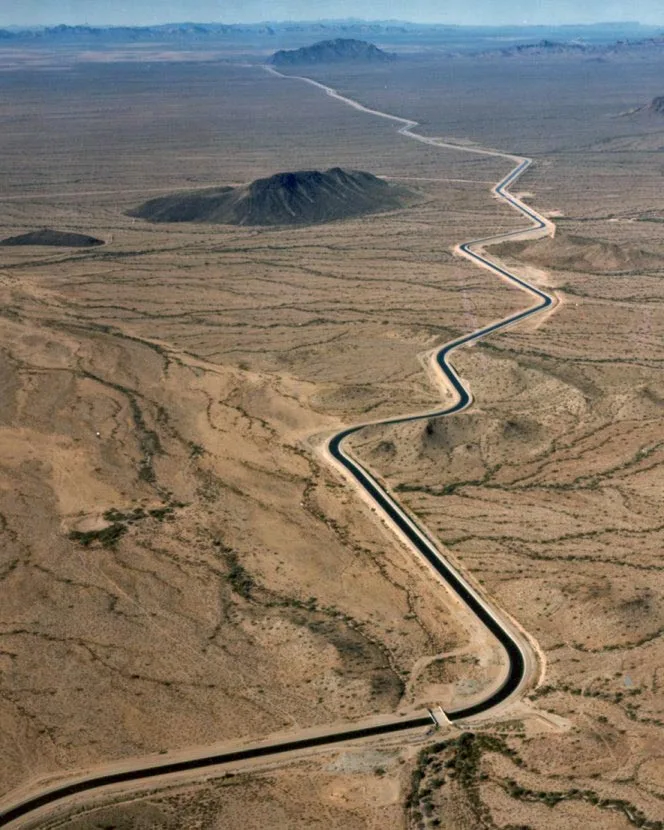
Congress authorized the Central Arizona Project in 1968, but the aqueduct wasn't finished until 1993 — a quarter-century of construction.
Prove 100 years of water
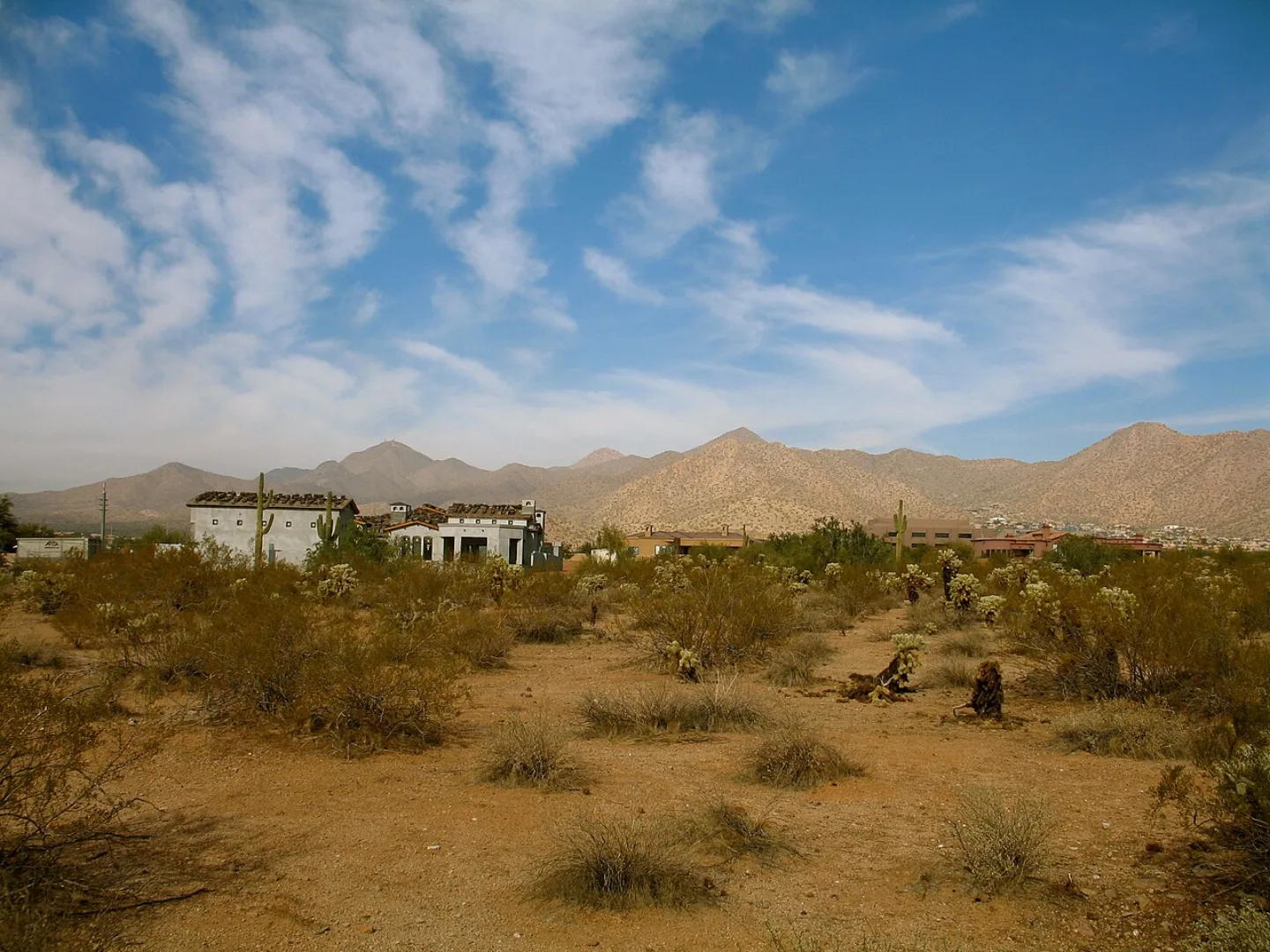
Under Arizona's Groundwater Management Act, new subdivisions must prove a 100-year water supply and can pump no more groundwater than nature replenishes — a rule known as safe yield.
Self-test
Answer each question from memory, then check your work against the answer key.
1. In what year was the Colorado River Compact signed, dividing the river's water among seven states?
- A1912
- B1936
- C1931
- D1922
2. What share of the lower basin's Colorado River water was Arizona allocated?
- A37%
- B59%
- C50%
- D19%
3. Under the Boulder Canyon Project Act, which state received the largest share of the Lower Basin's Colorado River water?
- AArizona
- BCalifornia
- CNevada
- DUtah
4. Why did Arizona refuse to ratify the Colorado River Compact for more than two decades?
- AIt demanded the compact cover only the upper basin states
- BIt objected to the dam being named for Herbert Hoover
- CIt believed California had taken the lion's share of the water
- DIt wanted Nevada excluded from the lower basin entirely
5. In what year did Arizona finally ratify the Colorado River Compact?
- A1944
- B1968
- C1936
- D1922
6. When was Hoover Dam constructed?
- A1912–1917
- B1945–1950
- C1900–1910
- D1931–1936
7. What was Hoover Dam originally called?
- ABlack Canyon Dam
- BMead Dam
- CBoulder Dam
- DGlen Canyon Dam
8. How tall is Hoover Dam — the height that made it the tallest dam in the world when completed?
- A480 feet
- B726 feet
- C255 feet
- D1,050 feet
9. Hoover Dam was built in which canyon of the Colorado, on the Arizona-Nevada border?
- AMarble Canyon
- BGlen Canyon
- CBlack Canyon
- DBoulder Canyon
10. The arch's concrete was so massive that, left alone, it would have taken about 125 years to cool naturally. How did engineers solve this?
- AThey poured the arch only during winter months
- BThey ran refrigerated water through pipes embedded in the concrete
- CThey mixed crushed ice into every batch of concrete
- DThey left ventilation shafts open through the dam's core
11. How many sailors died on the USS Arizona at Pearl Harbor?
- A2,403
- B429
- C703
- D1,177
12. What was Davis-Monthan Field outside Tucson primarily used for during World War II?
- ATraining Army Air Forces bomber crews
- BTesting atomic weapons components
- CHousing German prisoners of war
- DBuilding B-17 airframes for the Pacific theater
13. Fort Huachuca became home to which two units — among the few large all-Black combat divisions in the US Army?
- AThe 1st and 2nd Armored Divisions
- BThe 92nd and 93rd Infantry Divisions
- CThe 442nd and 100th Infantry Regiments
- DThe 82nd and 101st Airborne Divisions
14. Which was NOT one of the advantages that drew the wartime military to Arizona?
- AClear flying weather year-round
- BProximity to California aviation plants
- CDeepwater ports for naval convoys
- DLarge stretches of empty land
15. On what date was the battleship USS Arizona destroyed?
- ADecember 7, 1941
- BSeptember 2, 1945
- CJune 6, 1944
- DDecember 7, 1942
16. Which two large Japanese American internment camps were located in Arizona?
- AManzanar and Tule Lake
- BTopaz and Minidoka
- CHeart Mountain and Amache
- DPoston and Gila River
17. Which Arizona internment camp sat on the Colorado River, and which sat south of Phoenix?
- AGila River on the river; Poston south of Phoenix
- BGila River on the river; Davis-Monthan south of Phoenix
- CPoston on the river; Gila River south of Phoenix
- DPoston on the river; Fort Huachuca south of Phoenix
18. During which years did Arizona's two large internment camps confine Japanese Americans?
- A1942 to 1945
- B1946 to 1949
- C1931 to 1936
- D1939 to 1941
19. About how many Japanese Americans were confined in Arizona's two camps?
- AAbout 300,000
- BOver 30,000
- CAbout 3,000
- DAbout 1,200
20. Which statement about Arizona's internment camps is NOT true?
- AThey were among the largest War Relocation camps in the country
- BThey operated from 1942 to 1945
- CBoth were built in Arizona rather than in California
- DNearly all those confined were citizens of Japan, not the US
21. How long is the Central Arizona Project aqueduct?
- A10 miles
- B336 miles
- C50 miles
- D1,000 miles
22. The Central Arizona Project was authorized in 1968. When was the aqueduct finally completed?
- A1980
- B1972
- C2005
- D1993
23. Which governor pushed through Arizona's 1980 Groundwater Management Act?
- ARaul Castro
- BJack Williams
- CBruce Babbitt
- DGeorge W. P. Hunt
24. A new subdivision must prove a 100-year water supply and pump no more than nature replenishes. Which principle is this?
- ASafe yield, under the Groundwater Management Act
- BReclamation, under the Newlands Act
- CPrior appropriation, under the Colorado River Compact
- DBeneficial use, under the Central Arizona Project
25. Phoenix manufacturing jobs grew from 49,000 in 1960 to roughly what figure by 1985?
- A62,000
- B500,000
- C183,000
- D75,000
Go deeper
Answer key
- 1. D 1922The compact was signed in 1922. 1912 is Arizona's statehood, 1931 the start of Hoover Dam's construction, and 1936 its completion.
- 2. A 37%Arizona's 2.8 million acre-feet is about 37% of the lower basin's 7.5. 19% is its share of the river's full 15 million acre-feet, and 59% is California's share of the lower basin.
- 3. B CaliforniaThe 1928 Boulder Canyon Project Act gave California 4.4 million acre-feet of the lower basin's 7.5 — about 59% — against Arizona's 2.8 (37%) and Nevada's 0.3 (4%). That dominant share so angered Arizona it refused to ratify until 1944. Utah is an Upper Basin state and got none.
- 4. C It believed California had taken the lion's share of the waterArizona was furious that California had taken most of the lower-basin water while Arizona's own share was small, and held out for years. The naming fight over Boulder/Hoover Dam was a separate issue.
- 5. A 1944Arizona held out until 1944. 1922 was the signing, 1936 Hoover Dam's completion, and 1968 the authorization of the Central Arizona Project.
- 6. D 1931–1936
- 7. C Boulder DamThe dam was originally named Boulder Dam. Glen Canyon Dam is a different, later dam upstream on the Colorado.
- 8. B 726 feetHoover Dam stands 726 feet tall, a world record it held until 1957. The other heights are well off the mark.
- 9. C Black CanyonThe dam sits in Black Canyon on the Arizona-Nevada line. Glen and Marble Canyons are farther upstream, and Boulder Canyon echoes the dam's original name but not its site.
- 10. B They ran refrigerated water through pipes embedded in the concreteEngineers embedded pipes in the concrete and circulated refrigerated water to draw off the heat of curing. Winter pouring alone could never shed that much heat.
- 11. D 1,177
- 12. A Training Army Air Forces bomber crewsDavis-Monthan was the main training center for Army Air Forces bomber crews. It was a training field, not a manufacturing plant — aircraft production was concentrated in California.
- 13. B The 92nd and 93rd Infantry DivisionsThe 92nd and 93rd Infantry Divisions were based at Fort Huachuca, which peaked at 25,000 soldiers. The 442nd was the Japanese American regiment, not a Huachuca division.
- 14. C Deepwater ports for naval convoysArizona is landlocked and had no ports. Its draw was clear flying weather, empty land, cheap labor, and closeness to California's aviation plants.
- 15. A December 7, 1941The USS Arizona was destroyed at Pearl Harbor on December 7, 1941. June 6, 1944 is D-Day and September 2, 1945 is Japan's surrender.
- 16. D Poston and Gila RiverArizona hosted Poston and Gila River. Manzanar and Tule Lake were in California; the others were in Utah, Idaho, Wyoming, and Colorado.
- 17. C Poston on the river; Gila River south of PhoenixPoston stood on the Colorado River and Gila River lay south of Phoenix. Fort Huachuca and Davis-Monthan were military posts, not internment camps.
- 18. A 1942 to 1945Arizona's two camps held Japanese Americans from 1942 to 1945, the war years after Pearl Harbor. 1931 to 1936 is when Hoover Dam was built; 1939 to 1941 and 1946 to 1949 miss the years the camps operated.
- 19. B Over 30,000Poston and Gila River together confined over 30,000 people, most of them US citizens. 3,000 is far too low for two of the largest camps in the country.
- 20. D Nearly all those confined were citizens of Japan, not the USThe reverse is true: most of those confined at Poston and Gila River were US citizens. The camps ran 1942-1945 and were among the largest in the system.
- 21. B 336 miles
- 22. D 1993Construction ran until 1993, a quarter century after authorization. 1980 is the Groundwater Management Act, a separate milestone.
- 23. C Bruce BabbittBruce Babbitt drove the 1980 act. Hunt was Arizona's first governor, while Castro and Williams held the office in earlier decades — none pushed the Groundwater Management Act.
- 24. A Safe yield, under the Groundwater Management Act'Safe yield' — using no more groundwater than nature replenishes — is the goal of the 1980 Groundwater Management Act, which also required the 100-year supply proof for new development.
- 25. C 183,000Manufacturing jobs reached 183,000 by 1985 — nearly a fourfold jump — as Motorola, Hughes, Honeywell, IBM, and Goodyear Aircraft opened operations.
Image credits
- The Colorado River Compact: Gonzo fan2007 (Openverse) · by 2.0 — www.flickr.com/photos/25449038@N06/2396607499
- Engineering scale: Christian David · CC BY-SA 4.0 — commons.wikimedia.org/wiki/File:Hoover_Dam_and_Black_Canyon_seen_from_the_Mike_O%27Callaghan%E2%80%93Pat_Tillman_Memorial_Bridge,_panorama,_Arizona%E2%80%93Nevada.jpg
- Arizona in the Depression: Edmund R. Golladay · Public domain — commons.wikimedia.org/wiki/File:CCC_Co._2530_building_road_in_Utah.jpg
- Hoover Dam tames the Colorado: FlashFeed original map · © OpenStreetMap contributors (ODbL) via Protomaps · Elevation: AWS Terrain Tiles — www.openstreetmap.org/copyright
- The Central Arizona Project: Wikimedia Commons · U.S. Bureau of Reclamation · Public domain — commons.wikimedia.org/wiki/File:Arizona_cap_canal.jpg
- The Groundwater Management Act: FlashFeed original diagram · CC-BY-4.0
- A 25-year wait: Wikimedia Commons · U.S. Bureau of Reclamation · Public domain — commons.wikimedia.org/wiki/File:Arizona_cap_canal.jpg
- Prove 100 years of water: Wikimedia Commons · Dominic · Public domain — commons.wikimedia.org/wiki/File:Desert_backyard.JPG


