
Astronomy & Space study guide · Lesson 5 of 13
Earth and Mars
Earth as a Planet · Mars, the World That Dried Out · What Made the Difference
This is the lesson's study guide from the FlashFeed app, plus its key facts and a self-test.
What you'll be able to do
- Compare Earth and Mars, and explain why only one stayed habitable
Two rocky planets next door to each other, spinning at nearly the same rate on nearly the same tilt. One has an ocean and a biosphere; the other has a trace of carbon dioxide and no surface water. The useful question is not what Mars is missing, but which of Earth's features are causes and which are consequences.
Earth as a Planet
Measured from outside, Earth is unremarkable. Mars, half again further from the Sun, has about a tenth of Earth's mass — not half, though it is roughly half the width, because volume goes as the cube of radius. Three things about Earth do stand out, and only one shows up in a photograph.
The first is that the crust moves. Earth's lithosphere — crust plus the rigid uppermost mantle — is broken into plates that constantly shift, with new crust made at ocean ridges and old crust carried back into the mantle at subduction zones. The USGS states that Earth is the only planetary body in the Solar System exhibiting plate tectonics in action; Venus's crust is all one piece, with no evidence of subduction. Drifting continents are not standard equipment on a rocky planet.
That matters because tectonics is the return leg of a thermostat. Liquid water covers 71 percent of Earth's surface. In the slow carbon cycle, warmth brings more rain, rain carrying carbonic acid dissolves rock faster, and the products bury carbon on the ocean floor — a self-correcting loop. Tectonics carries that buried carbon down and returns it through volcanoes, which is why most of Earth's carbon sits in rock rather than air. NASA notes that with no greenhouse gases Earth would be a frozen −18 °C, and with too many it would be like Venus. The greenhouse effect is not a fault; the question is how much.
The second is the air: 78 percent nitrogen, 21 percent oxygen, about 1 percent everything else. Earth is the only rocky planet whose atmosphere is not mostly carbon dioxide, and the oxygen is not left over from formation — NASA states plainly it is there because plants continuously produce it by photosynthesis. Before the Great Oxidation Event, roughly 2.4 billion years ago, the atmosphere was oxygen-poor.
The third is the Moon, absurdly large for the planet it orbits: a radius of 1,738 km, more than a quarter of Earth's width, and the fifth largest moon in the Solar System after Ganymede, Titan, Callisto and Io. Earth is also the only planet with exactly one moon; among rocky worlds it is that single enormous moon that is the anomaly, since Mercury and Venus have none. It is widely held to steady Earth's 23.4 degree tilt, which drifts between 22.1 and 24.5 degrees on a roughly 41,000-year cycle — though how strong that effect is remains unsettled, since the document making the case is a conference abstract whose own simulations keep a moonless Earth inside a 20–25 degree spread.
One number to carry forward: Earth turns once against the stars in 23 hours 56 minutes 4 seconds, the sidereal day. The 24-hour solar day is four minutes longer because Earth moves along its orbit while it spins.
Mars, the World That Dried Out
Mars keeps almost the same clock. A sol — a Martian solar day — lasts 24 hours 39 minutes 35 seconds, about 3 percent longer than an Earth day, which is why rover teams can live on Mars time. Its axis is tilted about 25 degrees, near enough Earth's 23.4 to give it the same kind of seasons; they simply last longer, because a Martian year runs 687 Earth days. Day length comes from spin and year length from orbital distance, and the two are unrelated.
Then the surface stops being familiar. Olympus Mons is the largest volcano in the Solar System, more than 600 km across at its base — the one figure the sources agree on. Its height is genuinely disputed: ESA gives about 22 km above the surrounding plains, one NASA page says 27 km, and NASA's Mars facts page says more than 40 km from base to summit. The base has no clean edge, so the number depends on where you start measuring. The mechanism is the durable part: with no plate tectonics the crust never slid off the hot spot, so eruptions piled up in one place instead of stringing out into an island chain.
Valles Marineris is the largest canyon in the Solar System — about 3,870 km long, up to 600 km wide and 9.3 km deep from rim to floor. It is not a river canyon like the Grand Canyon: it is chiefly a tectonic rift, crust pulled apart, later widened by landslides and water.
Mars's two moons were found by Asaph Hall in August 1877. Phobos, about 27 by 22 by 18 km, circles Mars three times a day from only 6,000 km up; Deimos, about 15 by 12 by 11 km, takes 30 hours per orbit. Both are dark, carbon-rich and irregular, and look like captured asteroids — the leading hypothesis, not a settled one. Together they would not make a pebble beside Earth's Moon.
The evidence that Mars was once wet comes in three independent kinds. Outflow channels such as Ares Vallis were cut by catastrophic floods of released groundwater. Jezero Crater holds a delta and lakebed, filled more than 3.5 billion years ago when channels spilled over its rim. And gray crystalline hematite covers up to 20 percent of the surface at Meridiani Planum, a mineral that on Earth forms mostly in the presence of liquid water. Landforms, sediments and minerals point the same way, which is why the conclusion holds although nobody has seen the water.
What is left of the air is thin: carbon dioxide (95.3 percent), with nitrogen at 2.7 and argon at 1.6, chemically the same recipe as Venus's. Surface pressure is less than one hundredth of Earth's average, and NASA pages put the mean temperature between about −53 and −63 °C.
What Made the Difference
Not distance. Being half again further out sets how much sunlight arrives, but does not by itself fix a surface temperature. What Mars did with its carbon dioxide is the visible half of the answer: each winter a seasonal cap of frozen CO2 — dry ice — condenses straight out of the air at the poles and sublimates away again in spring, so a share of the atmosphere is not in the atmosphere at all. Mars's air is the same gas as Venus's; the difference between a freezer and an oven is quantity, not kind.
Start with mass. Holding an atmosphere is a race between gravity and heat. A textbook rule of thumb says a gas can escape once its average molecular speed exceeds about one sixth of the planet's escape speed — an approximation, not a hard threshold. Mars is roughly half Earth's diameter, so its escape speed is roughly half: 5.03 km/s against 11.19. Escape energy goes as the square of speed, so leaving Mars costs about a quarter of the energy. Halving a planet does not halve the difficulty of keeping its air.
The loss is also selective. Lighter molecules move faster at a given temperature, so hydrogen and helium go first while carbon dioxide and nitrogen hang on longest — caught in progress at Venus, where roughly twice as many hydrogen atoms as oxygen atoms were measured escaping. An atmosphere is filtered by molecular mass, not drained as a whole.
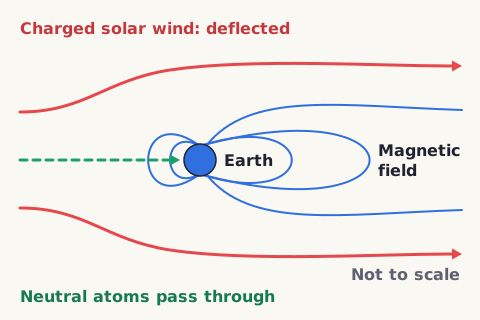
Now the magnetic field, and the correction that matters most. Earth's magnetosphere comes from its molten nickel-iron core, and NASA says it shields us from erosion of our atmosphere by the solar wind. It is a field, not a shell: charged particles are deflected, light and neutral atoms pass straight through. Mars has no global field today, but patches of its southern crust are strongly magnetized — a fossil imprint of a field about 4 billion years old. When the dynamo stopped is not something these sources date.
The tidy conclusion, no magnetic field and therefore no atmosphere, fails in both directions. Venus has no dynamo either and was not stripped bare: its carbon is all in its sky rather than filed away in rock, and NASA's shorthand for too much greenhouse is that Earth would end up like Venus. Across the four rocky planets surface pressure spans a factor of about ten thousand. A magnetic field is neither necessary nor sufficient for keeping an atmosphere.
What can be measured is the loss itself. MAVEN measured the solar wind stripping gas from Mars at about 100 grams per second — a quarter of a pound, every second — and found the erosion increases significantly during solar storms. Run that for billions of years under a far more active young Sun and it empties a planet. Not one catastrophe: a slow drip, still going.
The accounting rests on argon, which cannot react chemically and so can only be removed physically. MAVEN found that about 65 percent of all the argon Mars ever had has been lost to space by sputtering, implying most of the gas ever in its atmosphere is gone — not frozen into the ground, which is the usual guess. Some carbon dioxide is, but the argon says the bulk of it left.
Mars had the same day, near enough the same tilt, and rivers. It also had a tenth of the mass and a core that stopped convecting first.
Key terms
- Lithosphere
- The crust plus the rigid uppermost mantle taken together — the rigid outer shell that is divided into moving plates, not the crust alone
- Sol
- A Martian day measured Sun-to-Sun, 24 hours 39 minutes 35 seconds — about 3 percent longer than the Earth day it is so easily mistaken for
- Escape speed
- The speed a molecule must reach to leave a planet's gravity for good, with a textbook rule of thumb that a gas begins to leak away once its average molecular speed passes about a sixth of that figure
Key facts
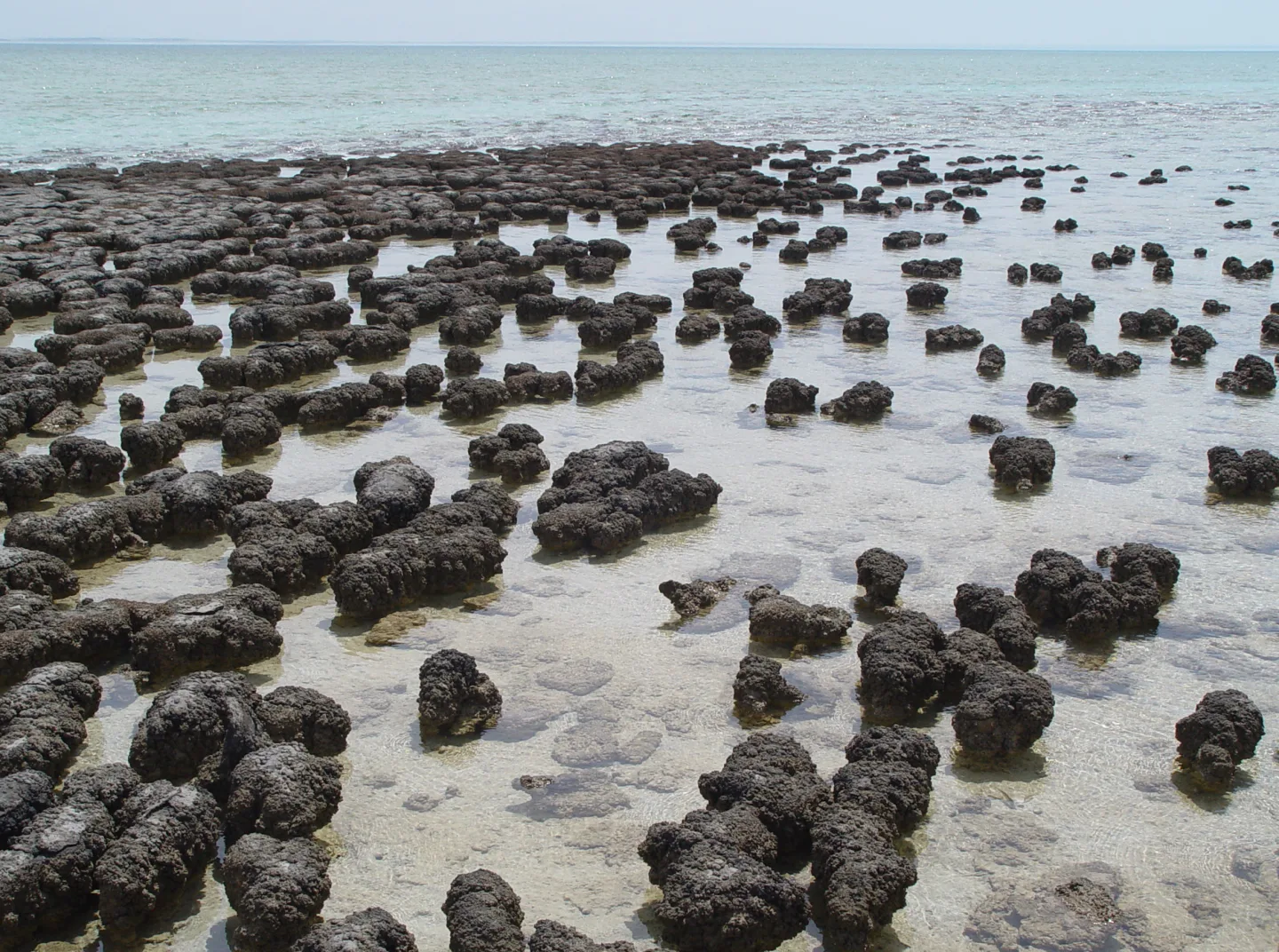
Air Made by Life
Earth's air is 78 percent nitrogen, 21 percent oxygen and about 1 percent everything else — the only rocky-planet atmosphere that is not mostly carbon dioxide. The oxygen is not left over from formation: NASA states plainly that plants continuously produce it by photosynthesis. Before the Great Oxidation Event, roughly 2.4 billion years ago, the atmosphere was oxygen-poor.
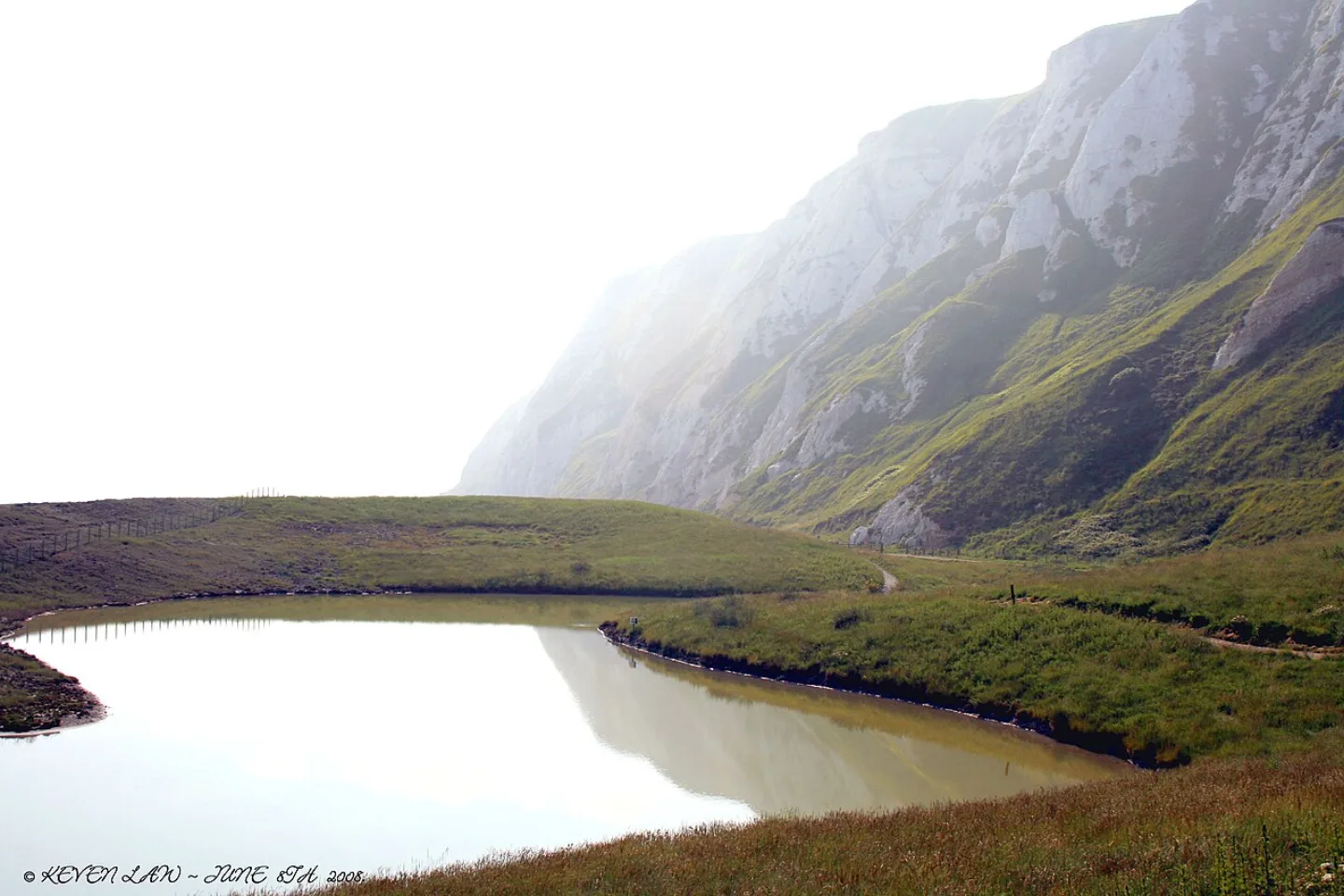
Rain Files Carbon Into Rock
Liquid water covers 71 percent of Earth's surface, and that water runs a thermostat. In the slow carbon cycle, warmth brings more rain, rain carrying carbonic acid dissolves rock faster, and the products bury carbon on the ocean floor — a self-correcting loop. NASA notes that with no greenhouse gases Earth would be a frozen −18 °C, and with too many it would be like Venus. The greenhouse effect is not a fault; the question is how much.
Mars Keeps Earth's Clock
A Martian solar day — a sol — lasts 24 hours 39 minutes 35 seconds, only about 3 percent longer than a day on Earth, which is why rover teams can live on Mars time. Its axis is tilted about 25 degrees, near enough Earth's 23.4 to give it the same kind of seasons. Of everything that makes Mars uninhabitable, the length of the day is not on the list.
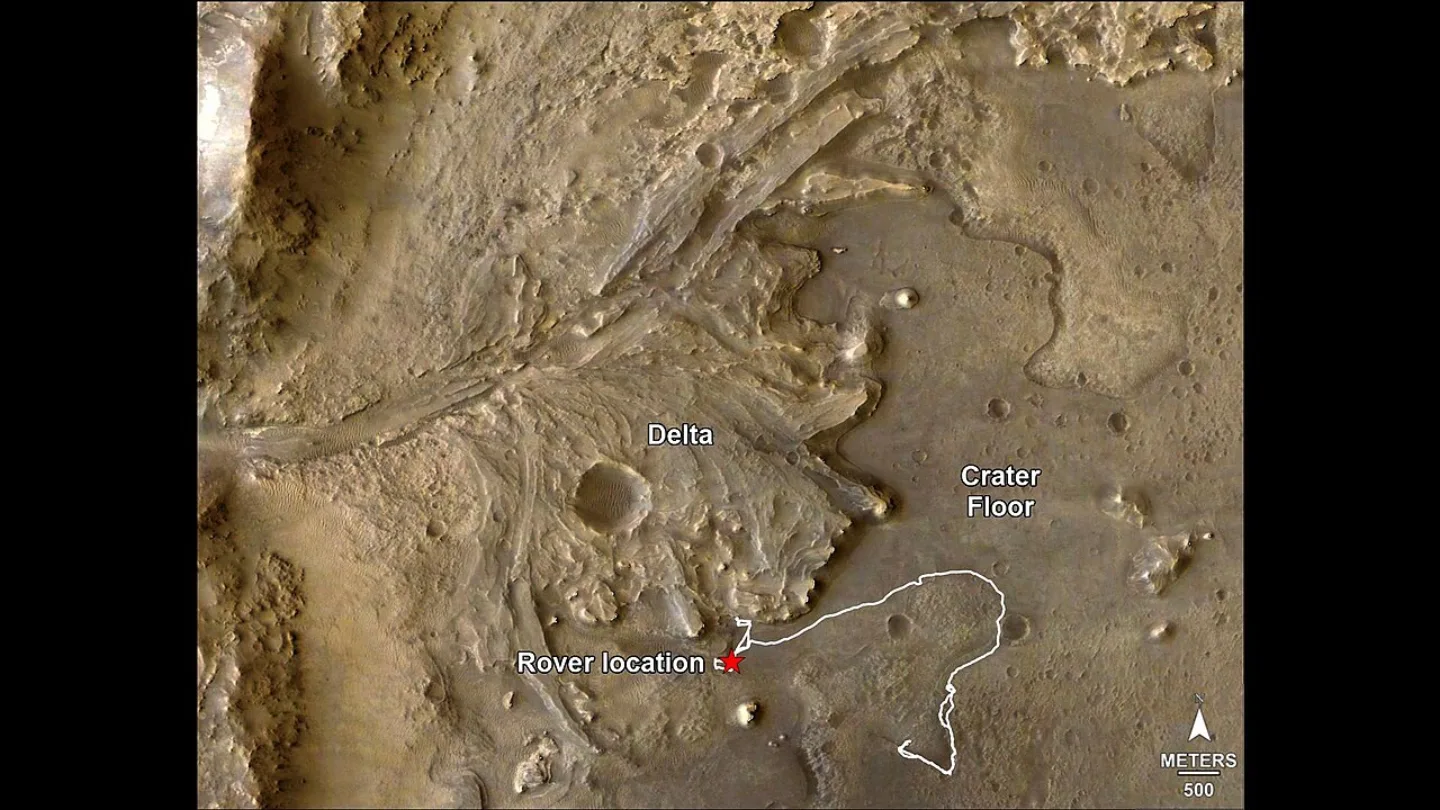
Three Kinds of Evidence
The case that Mars was once wet rests on three independent kinds of evidence. Outflow channels such as Ares Vallis were cut by catastrophic floods of released groundwater. Jezero Crater holds a delta and lakebed, filled more than 3.5 billion years ago when river channels spilled over its rim. And gray crystalline hematite covers up to 20 percent of the surface at Meridiani Planum — a mineral that on Earth forms mostly in the presence of liquid water. Landforms, sediments and minerals all point the same way.
Twenty Degrees, Then Lethal
Mars reaches about 20 °C at its warmest and falls to about −153 °C at its coldest. NASA pages put the average between about −53 and −63 °C — they disagree, so carry the range rather than a single figure. It is not uniformly frozen; it is a world that can be shirtsleeve-warm at noon and lethal hours later, because the air is far too thin to move heat around or store it.
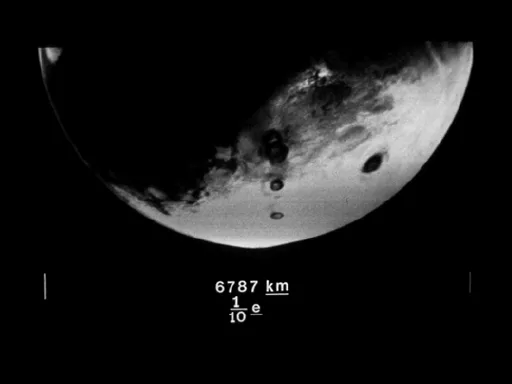
A Tenth, Not a Half
Mars is roughly half Earth's width, which makes it sound like half a planet. It is not. Mars carries about a tenth of Earth's mass — 0.642 against 5.972 × 10^24 kg — because volume goes as the cube of the radius. Mass, not width, is what sets how hard a world grips its air, and across the four rocky planets it spans a factor of eighteen.
Same Gas, Different Amount
Mars's air is 95.3 percent carbon dioxide, with nitrogen at 2.7 and argon at 1.6 — chemically the same recipe as Venus's. The difference between a freezer and an oven is quantity, not kind: Martian surface pressure is less than one hundredth of Earth's average. Being half again further out, at 1.524 au, sets how much sunlight arrives, but does not by itself fix a surface temperature.
A Field, Not a Shell
Earth's magnetosphere comes from its molten nickel-iron core, and NASA says it shields us from erosion of our atmosphere by the solar wind. It is a field, not a shell: charged particles are deflected, and neutral atoms pass straight through. Mars has no global field today — only patches of southern crust thought to have been magnetized some 4 billion years ago. But the tidy conclusion fails: Venus has no dynamo either and was not stripped bare. Its carbon sits in its sky rather than filed away in rock, the way most of Earth's is.
Matched pairs
Each item on the left goes with the one on the right.
- Sidereal day
- 23 h 56 m 04 s — one turn against the stars
- Earth's global ocean
- 71 percent of the surface, averaging 3.6 km deep
- Planets with no moon
- Mercury and Venus
- Phobos
- 27 by 22 by 18 km, three laps of Mars a day
- Deimos
- 15 by 12 by 11 km, one orbit every 30 hours
- Sputtering
- Solar-wind ions knocking atmospheric gas into space
- Earth's carbon
- Mostly locked in rock, not in the sky like Venus's
Self-test
Answer each question from memory, then check your work against the answer key.
1. Why is a fifth of the air you breathe oxygen?
- ASunlight splits it from ice
- BVolcanoes vent it from rock
- CIt was there from the start
- DPlants keep making it
2. Earth alone still runs plate tectonics. What does it do to the crust?
- AMelts it away from below
- BHolds it fixed against erosion
- CMakes new crust and recycles old
- DSlowly thickens it everywhere
3. In Earth's slow carbon cycle, what does extra rain do?
- ADissolves rock faster
- BTraps more heat in the air
- CWarms the deep ocean
- DThickens the cloud deck
4. Why could one Martian volcano pile up so enormously?
- AIts lava ran far thinner
- BIts crust stayed in place
- CWind piled up the dust
- DAn impact pushed the rock up
5. How long does one lap around the Sun take on Mars?
- A1,374 Earth days
- B687 Earth days
- C365 Earth days
- D254 Earth days
6. What does the argon accounting say became of Mars's original air?
- AMost of it went to space
- BMost of it reacted with rock
- CMost of it froze into the ground
- DMost of it is still up there
7. Leaving Mars costs a molecule how much energy, next to leaving Earth?
- AAbout half
- BAbout the same
- CAbout a quarter
- DAbout twice as much
8. When a planet loses atmosphere, which gases go first?
- AAll of them together
- BThe most reactive ones
- CThe heaviest ones
- DThe lightest ones
Go deeper
- WatchThree Things That Make Earth Odd Seen from outside, Earth looks ordinary. Three things stand out.
- WatchMars Was Once Wet A day on Mars lasts 24 hours and 39 minutes, about 3% longer than ours.
- WatchA Slow Drip of Air Mars has about a tenth of Earth's mass. So leaving Mars takes about a quarter of the energy.
- StudyAstronomy & Space in the FlashFeed app
Answer key
- 1. D Plants keep making itNASA states the oxygen is there because plants continuously produce it by photosynthesis. Before the Great Oxidation Event about 2.4 billion years ago the atmosphere was oxygen-poor, so it was not there from the start — and NASA names plants, not volcanoes or sunlight on ice.
- 2. C Makes new crust and recycles oldNew crust is made at ocean ridges and old crust is carried back into the mantle at subduction zones, so the surface is continually replaced rather than accumulated. That recycling is why Earth keeps so few very old rocks — and why the oldest surfaces in the Solar System are on worlds without it.
- 3. A Dissolves rock fasterWarmth brings more rain, rain carrying carbonic acid dissolves rock faster, and the products bury carbon on the ocean floor. The loop removes carbon rather than releasing it, and NASA's account turns on weathering — not on a warming deep ocean or a thicker cloud deck.
- 4. B Its crust stayed in placeWith no plate tectonics the crust never slid off the hot spot, so eruptions stacked in one place instead of stringing out into an island chain. The sources credit that — not wind-piled dust, not an impact, not gravity. Olympus Mons is built of lava, over 600 km across at the base.
- 5. B 687 Earth daysNASA gives 687 Earth days, or 669.6 sols — nearly twice the 365.25 of Earth, because Mars orbits half again as far out. A sol is only 3 percent longer than an Earth day, so day length is no guide: 254 undercuts even Earth's year and 1,374 doubles the real figure.
- 6. A Most of it went to spaceMAVEN found about 65 percent of the argon Mars ever had has been lost to space by sputtering. Argon cannot react chemically, so rock cannot hold it, and 65 percent gone means it is not still up there. Some carbon dioxide did freeze into the ground, but the bulk of the gas left.
- 7. C About a quarterMars is roughly half Earth's diameter, so its escape speed is roughly half — 5.03 km/s against 11.19. Escape energy goes as the square of speed, so the bill is about a quarter: not half, not the same, and certainly not larger. Halving a planet does not halve the difficulty.
- 8. D The lightest onesLighter molecules move faster at a given temperature, so hydrogen and helium leave while carbon dioxide and nitrogen hang on longest — heaviest-first is backwards. At Venus, roughly twice as many hydrogen as oxygen atoms were escaping. Loss is filtered by mass, not reactivity, and never uniform.
Sources
- USGS — This Dynamic Planet: Using the Diagram to Discuss How Plate Tectonics Works — volcanoes.usgs.gov/about/edu/dynamicplanet/nutshell.php
- NASA Science — Oxygen on Exoplanets Isn't Proof of Life — science.nasa.gov/universe/exoplanets/oxygen-on-exoplanets-isnt-proof-of-life/
- NASA Earth Observatory — The Carbon Cycle — science.nasa.gov/earth/earth-observatory/the-carbon-cycle/
- NASA Science — Earth: Facts — science.nasa.gov/earth/facts/
- NASA Imagine the Universe (GSFC) — Ask an Astrophysicist: Earth — imagine.gsfc.nasa.gov/ask_astro/earth.html
- NASA Science — Venus: Facts — science.nasa.gov/venus/facts/
- NASA GISS — Mars24 Sunclock: Technical Notes on Mars Solar Time — www.giss.nasa.gov/tools/mars24/help/notes.html
- NASA Science Photojournal — Olympus Mons — science.nasa.gov/photojournal/olympus-mons/
- NASA Science — Valles Marineris: The Grand Canyon of Mars — science.nasa.gov/resource/valles-marineris-the-grand-canyon-of-mars/
- NASA Science Photojournal — Ares Valles — science.nasa.gov/photojournal/ares-valles/
- NASA Science — Mars: Facts — science.nasa.gov/mars/facts/
- NASA Science — Phobos — science.nasa.gov/mars/moons/phobos/
- NASA Science — Deimos — science.nasa.gov/mars/moons/deimos/
- JPL Solar System Dynamics — Planetary Physical Parameters — ssd.jpl.nasa.gov/planets/phys_par.html
- NASA JPL — InSight Landing Press Kit: Mars at a Glance — www.jpl.nasa.gov/news/press_kits/insight/landing/facts/mars-at-a-glance/
- NASA — Mission Reveals Speed of Solar Wind Stripping Martian Atmosphere (5 Nov 2015) — www.nasa.gov/news-release/nasa-mission-reveals-speed-of-solar-wind-stripping-martian-atmosphere/
- NASA Science — Earth's Magnetosphere: Protecting Our Planet from Harmful Space Energy (3 Aug 2021) — science.nasa.gov/science-research/earth-science/earths-magnetosphere-protecting-our-planet-from-harmful-space-energy/
- NASA Science — The Changing Ice Cap of Mars — science.nasa.gov/resource/the-changing-ice-cap-of-mars/
- NASA — MAVEN Reveals Most of Mars' Atmosphere Was Lost to Space (30 Mar 2017) — www.nasa.gov/news-release/nasas-maven-reveals-most-of-mars-atmosphere-was-lost-to-space/
- Catling & Kasting, Atmospheric Evolution on Inhabited and Lifeless Worlds, Ch. 5 (Cambridge University Press, 2017) — sseh.uchicago.edu/doc/Catling_and_Kasting_ch_5.pdf
Image credits
- Air Made by Life: Wikimedia Commons · Paul Harrison · CC BY-SA 3.0 — commons.wikimedia.org/wiki/File:Stromatolites_in_Sharkbay.jpg
- Rain Files Carbon Into Rock: Wikimedia Commons · Keven Law from Los Angeles, USA · CC BY-SA 2.0 — commons.wikimedia.org/wiki/File:Flickr_-_law_keven_-_There%27ll_Be_Blue_Birds_Over_the_White_Cliffs_of_Dover....jpg
- Three Kinds of Evidence: NASA/JPL-Caltech/University of Arizona/USGS/JHU-APL — commons.wikimedia.org/wiki/File:PIA24922-Mars-PerseveranceRover-RouteToDelta-20220915.jpg
- A Tenth, Not a Half: Wikimedia Commons · Voyager Golden Record (Internet Archive) · Public domain — commons.wikimedia.org/wiki/File:Voyager_Golden_Record_010._Mars.png
- A Field, Not a Shell: FlashFeed original diagram · CC-BY-4.0


