
Broken Money: Why Our Financial System Is Failing Us & How We Can Make It Better study guide · Lesson 5 of 7
Lesson 5: Global Reserve Hegemony: Eurodollars & Petrodollars
5.1 The Offshore Eurodollar Matrix · 5.2 The Petrodollar and Monetary Imperialism
Unofficial study guide for Broken Money: Why Our Financial System is Failing Us and How We Can Make it Better by Lyn Alden. FlashFeed is not affiliated with the author or publisher.
This is the lesson's study guide from the FlashFeed app, plus its key facts and a self-test.
What you'll be able to do
- Explain how the offshore Eurodollar market lets banks create dollar credit beyond Fed limits, forcing emergency swap lines.
- Explain the petrodollar system's origins and how dollar reserve status enables monetary imperialism, from the CFA Franc to asset freezes.
Monograph Section: Lesson 5 of Broken Money: Why Our Financial System Is Failing Us and How We Can Make It Better by Lyn Alden.
Executive Overview
Explores the shadowy mechanics of the offshore Eurodollar banking market where dollars are created outside US regulatory borders, the 1974 US-Saudi Petrodollar pact establishing structural global dollar demand, the petrodollar recycling loop into US Treasuries, monetary neocolonialism, how the US exports its domestic inflation to the developing world, and systemic sovereign debt crises on the global periphery.
The Offshore Eurodollar Matrix
Conceptual Foundations: Eurodollar Definition, Offshore Dollar Creation, Soviet Origins (Moscow Narodny Bank), Regulation Q Arbitrage
Core Insight: A Eurodollar is any US dollar-denominated bank deposit held at a financial institution located outside the regulatory jurisdiction of the United States.
Whether in London, Tokyo, Zurich, or the Cayman Islands, foreign commercial banks maintain dollar balance sheets to facilitate global trade, originating trillions in dollar credit completely separate from the domestic US banking system.
Core Insight: The Eurodollar market originated in the 1950s during the Cold War when the Soviet Union placed its dollar earnings in European banks (like Moscow Narodny Bank) to avoid the risk of US asset freezes.
British banks welcomed these dollar deposits and began lending them to European corporations. Because these loans were denominated in dollars but booked in London, they were exempt from US banking regulations and reserve requirements.
Core Insight: US Federal Reserve Regulation Q, which capped the maximum interest rates domestic banks could pay on savings deposits, accelerated the flight of capital into unregulated offshore Eurodollar accounts.
When US inflation rose in the 1960s, domestic banks could not raise deposit rates above the Fed's legal cap. London-based banks faced no such caps, drawing billions of dollars in corporate deposits across the Atlantic and creating an explosive offshore credit engine.
Core Insight: Foreign banks in the Eurodollar market create dollar credit ex nihilo through loan origination just as domestic US banks do, operating with minimal or zero reserve requirements.
The global supply of dollars is not controlled solely by the Federal Reserve. Trillions in offshore dollars are created and destroyed through the private balance sheet expansion of European, Asian, and offshore financial conglomerates.
Core Insight: The London Interbank Offered Rate (LIBOR) functioned for decades as the primary global interest rate benchmark for hundreds of trillions of dollars in offshore loans, bonds, and derivatives.
LIBOR was determined by daily self-reported interbank lending rates among major London banks, granting offshore institutions immense influence over global interest rate pricing until rigging scandals forced its replacement by SOFR.
Core Insight: The true aggregate size of the offshore Eurodollar market is virtually unmeasurable by official central bank statistics because offshore transactions are recorded on foreign ledgers outside Federal Reserve reporting rules.
The Bank for International Settlements (BIS) estimates that tens of trillions of dollars in hidden dollar liabilities exist off-balance-sheet in foreign exchange swaps and offshore credit facilities, dwarfing official domestic M2 numbers.
Core Insight: A foreign exchange (FX) swap is a functional offshore collateralized dollar loan where one currency is exchanged for dollars with an agreement to reverse the trade at a future date at a predetermined forward rate.
Foreign corporations and banks with local currency assets use FX swaps to obtain short-term dollars to pay for imported energy, commodities, and international debt service, exposing them to catastrophic rollover risk when dollar liquidity tightens.
Core Insight: The Federal Reserve is structurally forced to act as the de facto global lender of last resort during international crises by opening emergency central bank dollar liquidity swap lines to foreign central banks.
If foreign banks cannot obtain dollars to roll over their maturing Eurodollar liabilities, they dump US assets in panic, driving US yields up and crashing American markets. The Fed must provide emergency swap lines to protect the domestic financial system.
Core Insight: The Eurodollar system establishes the US dollar as the dominant denominator of international trade, with the dollar used to invoice roughly half of global cross-border trade transactions — far above the US's own ~10% share of world trade.
Because the dollar is the most liquid, network-dense medium of exchange, international merchants denominate trade in dollars to minimize foreign exchange volatility and access global banking liquidity.
Core Insight: When the Federal Reserve raises domestic interest rates to combat US inflation, it inadvertently triggers severe offshore dollar shortages and currency crises across emerging market economies.
When Fed rates rise, capital flees developing countries to earn higher risk-free yields in US Treasuries. Emerging market currencies crash, making it much harder for local governments and corporations to service their dollar-denominated debts.
Core Insight: The Society for Worldwide Interbank Financial Telecommunication (SWIFT), founded in 1973 in Belgium, provides the standardized, secure messaging infrastructure that coordinates cross-border bank ledger settlements.
SWIFT does not hold funds or clear payments itself; it provides the authenticated digital messaging protocols that instruct banks in different countries to debit and credit corresponding accounts on their respective ledgers.
Core Insight: Because the Clearing House Interbank Payments System (CHIPS) in New York clears over 95% of cross-border US dollar transactions, the US government exercises unilateral jurisdictional sanction power over global commerce.
Any bank anywhere in the world that clears dollar transactions must maintain a correspondent relationship with a US-regulated bank, subjecting global commerce to US legal subpoenas, OFAC sanctions, and political compliance mandates.
Core Insight: Eurodollar banks operate with substantial duration mismatches, borrowing overnight interbank dollar deposits to fund multi-year foreign infrastructure and sovereign loans.
This structural instability was exposed during the Latin American debt crisis of 1982 and the Asian financial crisis of 1997, where sudden withdrawal of short-term offshore dollar funding triggered immediate national economic collapse.
Core Insight: The offshore Eurodollar market created an uncontrollable monetary multiplier that significantly eroded the Federal Reserve's ability to precisely regulate the aggregate global dollar supply.
Lyn Alden argues that measuring and controlling the money supply became impossible as banking shifted to offshore balance sheets and electronic shadow-banking credit networks.
Core Insight: The structural reality of the modern international monetary system is that the world operates on an offshore, private commercial bank dollar standard backstopped by the US military and Federal Reserve.
Understanding global macroeconomics requires recognizing that the world runs on an offshore ledger of dollar-denominated bank credit, making global commerce intimately dependent on the health and policy decisions of the US banking nexus.
The Petrodollar and Monetary Imperialism
Conceptual Foundations: 1974 US-Saudi Petrodollar Agreement, Pricing Global Oil in USD, Petrodollar Recycling into US Treasuries, Artificial Global Dollar Demand
Core Insight: In 1974, the US and Saudi Arabia deepened a security-and-finance relationship — including a confidential arrangement for Saudi Arabia to buy US Treasury debt outside public auctions — that is popularly summarized as a 'petrodollar deal,' though historians have not found a single signed treaty pricing Saudi oil exclusively in dollars in exchange for military protection, since Gulf oil was already dollar-denominated before 1974.
Faced with the collapse of gold backing, the US effectively backed the dollar with the world's most critical physical commodity—crude oil. By the mid-1970s, OPEC producers had largely followed Saudi Arabia's lead in pricing and settling oil in dollars, which is the basis of the popular 'Petrodollar System' narrative.
Core Insight: The Petrodollar system created mandatory, non-negotiable structural global demand for US dollars, forcing every nation on Earth to maintain dollar reserves to import energy for industrial survival.
If Germany, Japan, or India needed crude oil to power their factories and transportation grids, they had to earn, borrow, or hold US dollars. This gave the US the unprecedented ability to print paper currency to acquire foreign oil without suffering severe domestic exchange rate depreciation.
Core Insight: Petrodollar recycling was the systematic mechanism where oil-exporting OPEC nations channeled their massive dollar surpluses into US Treasury bonds and Wall Street financial markets.
This arrangement provided the US government with a permanent, deep, captive buyer for its growing sovereign national debt, keeping US interest rates low and funding massive American military, corporate, and consumer spending.
Core Insight: Monetary neocolonialism refers to the structural dynamic where core developed nations export their domestic monetary debasement to peripheral developing nations, extracting real resources while trapping them in dollar debt.
Developing nations must borrow in dollars to finance infrastructure. When local currencies devalue, their dollar debt burdens explode in real terms, forcing them to surrender state assets, mines, and ports to international creditors under IMF structural adjustment programs.
Core Insight: The Central African CFA Franc zone represents a direct institutional remnant of French monetary colonialism, where, as of 2025, six nations are still required to deposit 50% of their foreign exchange reserves in the French Treasury (the eight West African CFA Franc nations ended this requirement in a 2019-2020 reform).
While marketed as providing currency stability, the CFA Franc prevents African member nations from directing their own monetary policy, financing local industrialization, or protecting domestic industries against European imports.
Core Insight: Developing countries suffer from 'original sin' in international finance, defined as the inability of a sovereign nation to borrow in its own domestic currency on international markets.
When an emerging economy borrows in US dollars, a 30% drop in its domestic currency against the dollar raises the local-currency cost of that debt by about 43% overnight, triggering rapid sovereign insolvency and hyperinflation.
Core Insight: The Volcker Shock of 1979-1981, which raised the US Federal Funds rate to an unprecedented 20% to crush domestic inflation, triggered the catastrophic Latin American Debt Crisis of 1982.
Countries like Mexico, Brazil, and Argentina had borrowed billions in floating-rate Eurodollars during the 1970s. When US interest rates spiked to 20%, their annual interest payments doubled, forcing a decade of sovereign defaults, hyperinflation, and the 'Lost Decade'.
Core Insight: The International Monetary Fund's Structural Adjustment Programs (SAPs) historically imposed severe austerity, public spending cuts, and forced privatization of state assets on developing debtor nations in exchange for emergency dollar bailouts.
These austerity measures ensured that Western commercial banks and bondholders were repaid in full, while domestic populations in Asia, Africa, and Latin America endured prolonged economic depression and poverty.
Core Insight: The freezing of over $300 billion in Russian Central Bank foreign exchange reserves by the US and European allies in February 2022 fundamentally undermined global trust in the dollar as a politically neutral reserve asset.
For decades, foreign central banks treated US Treasuries as 'risk-free'. Freezing a major nuclear power's reserves demonstrated that any nation defying US foreign policy could have its national sovereign wealth frozen with a single keystroke, accelerating global de-dollarization.
Core Insight: The weaponization of the dollar and the SWIFT messaging network has catalyzed a global transition toward a multipolar monetary order where nations settle trade in local currencies, bilateral clearing mechanisms, and physical gold.
Nations like China, Russia, India, and Brazil increasingly settle bilateral oil, gas, and commodity trades in Yuan, Rubles, and Rupees, creating independent settlement architectures (like China's CIPS) to bypass US sanction vulnerabilities.
Core Insight: Global central bank net gold purchases surged to historic all-time highs following 2022, as non-Western nations diversified away from US Treasury bonds into politically unfreezable physical bearer assets.
Unlike US Treasuries—which are book-entry ledger claims held at the Federal Reserve Bank of New York—physical gold bars stored in a sovereign nation's domestic vault carry zero counterparty, credit, or sanction risk.
Core Insight: China's Cross-Border Interbank Payment System (CIPS) and the expansion of the BRICS coalition represent structural institutional challenges to the Western-dominated SWIFT dollar clearing monopoly.
As the BRICS economic bloc expands to include major energy producers (the UAE and Iran, with Saudi Arabia invited but, as of 2025, not formally confirmed as a member), the share of global petroleum traded outside the US dollar is steadily rising, marking the gradual dissolution of the 1974 Petrodollar monopoly.
Core Insight: Currency debasement is disproportionately catastrophic for developing nations because their domestic fiat currencies lack global reserve demand, causing local currencies to rapidly hyperinflate during fiscal stress.
When an emerging market government prints money, domestic citizens immediately dump the currency for US dollars or hard assets, causing the exchange rate to plummet and food/energy import prices to explode overnight.
Core Insight: The Petrodollar system created a structural domestic economic penalty for the United States often linked to the 'Triffin dilemma' (Robert Triffin, 1960): supplying the world's reserve currency requires persistent external deficits, which sustain high demand for the dollar and weigh on domestic industrial export competitiveness.
Because foreign nations needed to export goods to the US to earn dollars for oil reserves, the US ran persistent merchandise trade deficits for 50 years, offshoring its industrial base to Asia while expanding its financial and defense sectors.
Core Insight: The breakdown of the unipolar Petrodollar regime signals the historical transition toward an open, neutral, decentralized international settlement medium that cannot be weaponized by any single nation.
In a multipolar world where major superpowers distrust each other, no nation will accept a rival's fiat currency as the sole global reserve. The world must inevitably converge on neutral, non-sovereign monetary technologies—such as gold and digital bearer assets.
Key terms
- Eurodollar
- A US dollar-denominated deposit balance held in a commercial bank located outside the legal borders and regulatory jurisdiction of the United States.
- Foreign Exchange (FX) Swap
- A functional offshore collateralized dollar loan where an entity exchanges foreign currency for dollars with an agreement to repurchase it at a future date.
- The Petrodollar System
- The post-1974 geopolitical financial regime requiring global crude oil exports to be settled in US dollars, creating non-negotiable structural global demand for the currency.
- Original Sin in Macroeconomics
- The structural vulnerability of developing economies that cannot borrow internationally in their own domestic currency, forcing them to issue debt in foreign US dollars.
Key facts
Regulation Q Arbitrage
The migration of corporate capital to London Eurodollar banks driven by the Fed's Regulation Q interest rate caps on domestic savings accounts.

Opaque Shadow Money Supply
The inability of central banks to accurately measure total global dollars due to off-balance-sheet FX swaps and offshore commercial bank balance sheets.
SWIFT Messaging Network (1973)
Belgian-based financial telecommunications backbone providing authenticated digital instructions to reconcile cross-border bank ledger payments across 11,000 institutions.
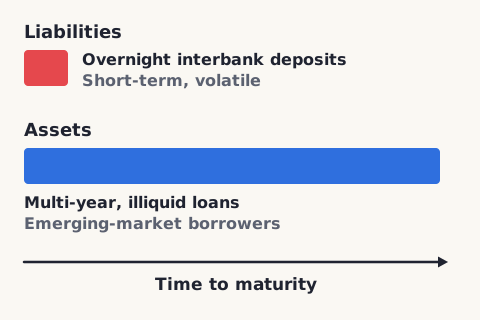
Compare the funding structure and asset maturities of offshore Eurodollar banks.
Eurodollar Liabilities — Short-term, volatile overnight interbank deposits.
Eurodollar Assets — Multi-year, illiquid loans to emerging-market borrowers.
Monetary Neocolonialism
Structural exploitation where core nations print unbacked fiat to buy real resources, exporting inflation and trapping peripheral developing nations in dollar debt.
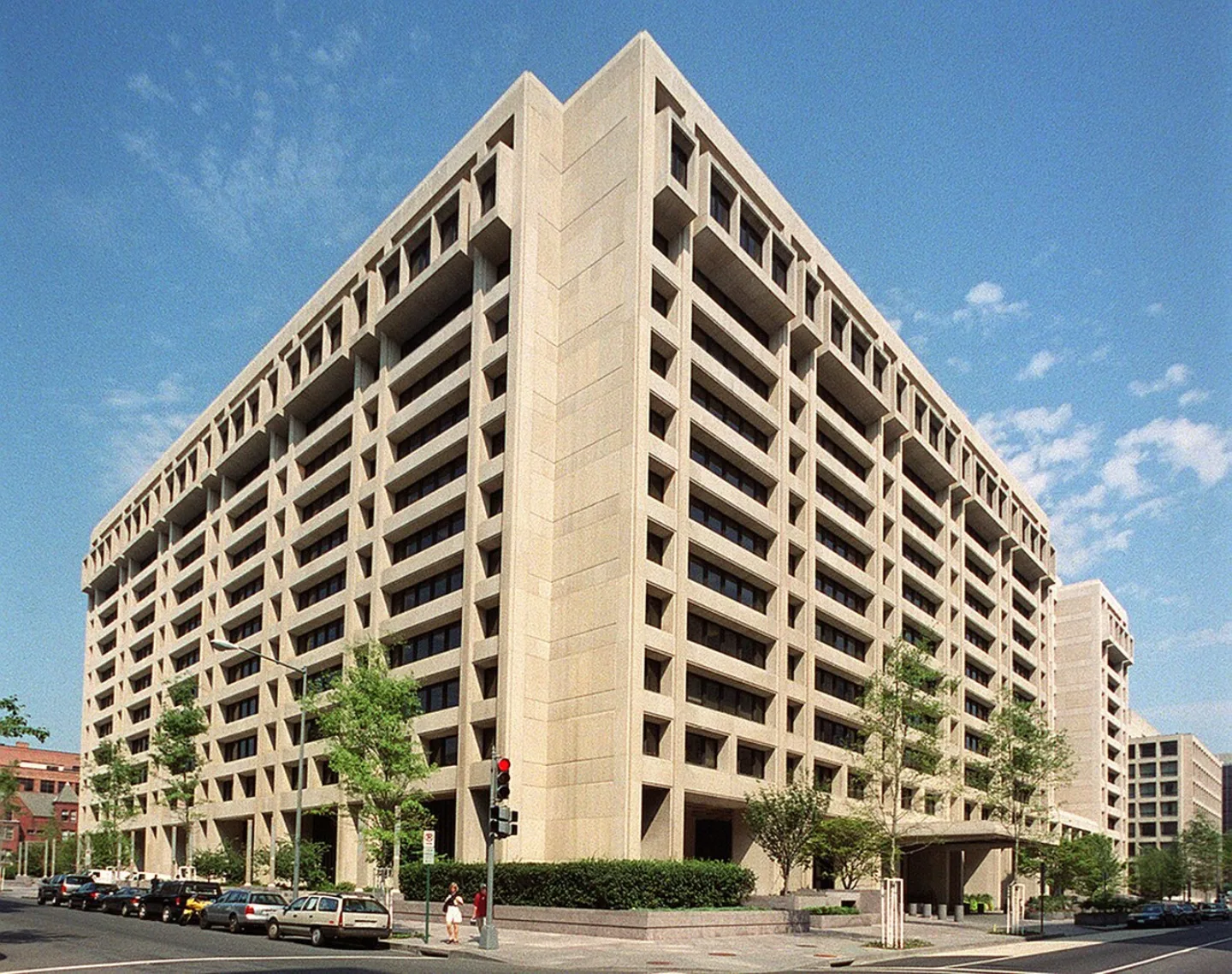
IMF Structural Adjustment Programs
Austerity mandates requiring developing debtor nations to slash public spending and privatize state assets to repay Western commercial banks and bondholders.
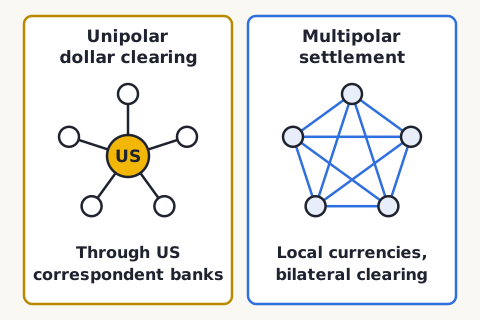
Compare unipolar dollar settlement with the emerging multipolar monetary order.
Unipolar Dollar Clearing — Routes all trade through US correspondent banks, subject to US jurisdiction and sanctions.
Multipolar Currency Settlement — Uses local currencies, bilateral clearing, and unfreezable physical gold.
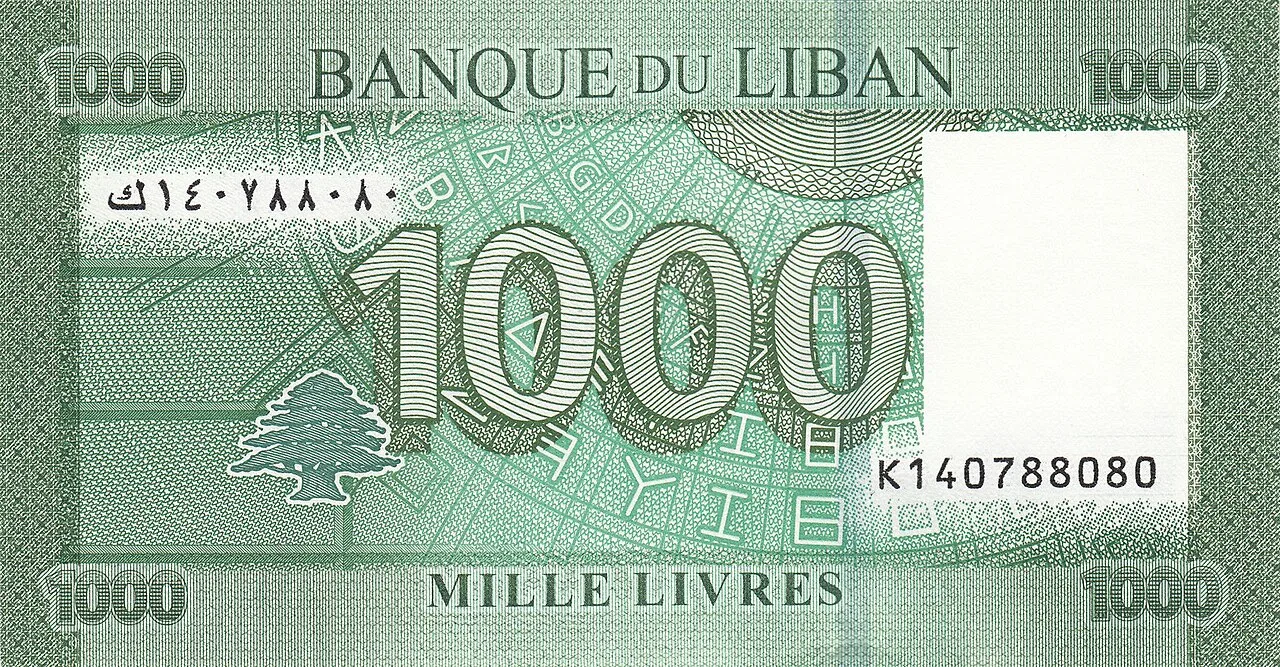
Periphery Currency Hyperinflation
The rapid destruction of purchasing power in developing economies (Lebanon, Argentina, Nigeria) where unbacked local fiat lacks global reserve demand.
Matched pairs
Each item on the left goes with the one on the right.
- Trade Invoicing Dominance
- In Latin America, over 80% of cross-border trade is invoiced in dollars — far above the dollar's ~40% share of trade worldwide.
- Eurodollar System
- Private offshore commercial banking network insured by US military and Fed swap lines.
- China's CIPS System
- Alternative cross-border settlement architecture designed to clear trade without SWIFT.
- Post-Hegemonic Order
- Transition toward neutral, decentralized settlement media that no single sovereign can weaponize.
Step by step
Trace the cyclical flow of capital in the Petrodollar recycling loop.
- Global industrialized and developing nations earn or borrow US dollars to import oil.
- OPEC oil exporters receive billions in dollar-denominated petroleum revenues.
- Gulf monarchies reinvest surplus oil dollars into US Treasury bonds and Wall Street assets.
- US government budget deficits and consumer trade deficits are continuously subsidized at low rates.
Self-test
Answer each question from memory, then check your work against the answer key.
1. What is a Eurodollar?
- AEurozone government bond
- BDollar-backed cryptocurrency
- CLondon dollar futures contract
- DUS dollar deposit outside the US
2. Which nation's dollar deposits in European banks launched the Eurodollar market in the 1950s?
- AUnited Kingdom
- BSoviet Union
- CSaudi Arabia
- DWest Germany
3. What did Fed Regulation Q do that pushed capital into Eurodollar accounts?
- ACapped domestic deposit interest rates
- BTaxed offshore loan interest
- CBanned foreign dollar holdings
- DRequired 100% deposit reserves
4. What funding mismatch destabilizes offshore Eurodollar banks?
- ALong-term deposits funding overnight loans
- BEquity funding short-term trade credit
- COvernight deposits funding multi-year loans
- DCentral bank reserves funding bonds
5. Why does the Fed open emergency dollar swap lines during global crises?
- ASet foreign bank reserve requirements
- BIssue SWIFT messaging codes
- CReset LIBOR benchmark rates
- DProvide dollar liquidity to foreign banks
6. Which arrangement, deepened by 1974 US-Saudi agreements, kept global oil trade priced in US dollars and recycled oil revenue into Treasuries?
- APetrodollar System
- BPlaza Accord
- CBretton Woods Agreement
- DCFA Franc Arrangement
7. Which is NOT a mechanism of monetary neocolonialism?
- ADollar-only debt from Original Sin
- BGlobal corporate tax harmonization
- CExporting inflation via unbacked fiat
- DIMF structural adjustment austerity
8. Which arrangement pegs six Central African nations' currency to the Euro with reserves held in the French Treasury?
- APetrodollar System
- BBretton Woods System
- CCFA Franc zone
- DIMF Structural Adjustment
9. Which reserve asset have central banks been stockpiling at record pace since the 2022 sovereign asset freezes?
- AForeign currency reserves
- BPhysical gold bullion
- CSpecial Drawing Rights (SDRs)
- DUS Treasury bonds
10. Which settlement approach lets nations bypass US correspondent banking and sanctions?
- AEurodollar interbank lending
- BPetrodollar recycling
- CMultipolar currency settlement
- DUnipolar dollar clearing
Go deeper
- ReadBroken Money by Lyn Alden · on Amazon ↗
- StudyBroken Money: Why Our Financial System Is Failing Us & How We Can Make It Better in the FlashFeed app
These are affiliate links: if you buy a book through one, FlashFeed may earn a small commission at no extra cost to you. The commission helps pay for FlashFeed's servers.
As an Amazon Associate we earn from qualifying purchases.
Answer key
- 1. D US dollar deposit outside the USA Eurodollar is a US dollar deposit held at a bank outside US regulatory jurisdiction, not a crypto asset, bond, or futures contract.
- 2. B Soviet UnionThe Soviet Union placed dollar earnings in banks like Moscow Narodny Bank to avoid US asset freezes, launching the Eurodollar market in the 1950s.
- 3. A Capped domestic deposit interest ratesRegulation Q capped interest banks could pay on domestic deposits, so corporations moved dollars to uncapped London Eurodollar accounts for higher yields.
- 4. C Overnight deposits funding multi-year loansEurodollar banks fund multi-year emerging-market loans with short-term overnight interbank deposits, a mismatch exposed in the 1982 and 1997 debt crises.
- 5. D Provide dollar liquidity to foreign banksWhen foreign banks can't roll over maturing Eurodollar debt, they dump US assets in panic; Fed swap lines supply dollars to prevent this from crashing US markets.
- 6. A Petrodollar SystemThe petrodollar system: Gulf oil was already dollar-denominated, and the 1974 US-Saudi security-and-finance arrangements (including Saudi purchases of US Treasury debt) cemented structural global dollar demand — distinct from Bretton Woods or the Plaza Accord.
- 7. B Global corporate tax harmonizationCorporate tax harmonization isn't discussed; neocolonialism works through inflation export, IMF austerity mandates, and Original Sin forcing dollar-denominated debt.
- 8. C CFA Franc zoneThe CFA Franc zone requires six Central African nations to peg to the Euro and deposit reserves in the French Treasury, unlike the petrodollar or Bretton Woods systems.
- 9. B Physical gold bullionGold purchases surged past 1,000 metric tons a year after 2022, since bullion can't be frozen like Treasuries, SDRs, or foreign-currency reserves held in Western institutions.
- 10. C Multipolar currency settlementMultipolar currency settlement uses local currencies, bilateral clearing, and gold, unlike unipolar dollar clearing which routes trade through US correspondent banks.
Sources
- Broken Money: Why Our Financial System Is Failing Us & How We Can Make It Better — Lyn Alden
Image credits
- Opaque Shadow Money Supply: Wikimedia Commons · Taxiarchos228 · FAL — commons.wikimedia.org/wiki/File:Basel_-_Bank_f%C3%BCr_internationalen_Zahlungsausgleich3.jpg
- Compare the funding structure and asset maturities of offshore Eurodollar banks.: FlashFeed original diagram · CC-BY-4.0
- IMF Structural Adjustment Programs: Wikimedia Commons · International Monetary Fund · Public domain — commons.wikimedia.org/wiki/File:IMF_building_HR.jpg
- Compare unipolar dollar settlement with the emerging multipolar monetary order.: FlashFeed original diagram · CC-BY-4.0
- Periphery Currency Hyperinflation: Padres Hana · CC BY-SA 4.0 — commons.wikimedia.org/wiki/File:Lebanon_1000_lira_2006_reverse.jpg


