
Burning Man: From Curiosity to Black Rock City study guide · Lesson 5 of 8
People and Milestones
People Who Built the Story · A Timeline of Turning Points · Beyond Black Rock City
Unofficial study guide for Enabling Creative Chaos: The Organization Behind the Burning Man Event by Katherine K. Chen. FlashFeed is not affiliated with the author or publisher.
This is the lesson's study guide from the FlashFeed app, plus its key facts and a self-test.
What you'll be able to do
- Identify the people whose decisions shaped Burning Man and what each contributed.
- Date Burning Man's turning points from 1986 to 2014 and put them in chronological order.
People Who Built the Story
Burning Man’s history is collective. Builders, Cacophony Society organizers, artists, city designers, operations leaders, and volunteers shaped it at different stages. Crediting Burning Man contributors by phase is more accurate than treating one founder as the sole author. The most visible people also changed as the project moved from a beach ritual to a desert city and then to a nonprofit network.
Larry Harvey co-built the first Man and later articulated the Ten Principles. Jerry James brought carpentry to the physical construction of the earliest Baker Beach effigy. John Law connected the event with the Cacophony Society and helped shape its desert era, while Michael Mikel helped organize early desert operations and community.
As the event developed, other forms of leadership became central. Crimson Rose helped build its fire-art culture and organizational leadership. Marian Goodell helped lead the organization and its transition into Burning Man Project. These roles are not interchangeable: construction, cultural connection, desert operations, fire art, organizational leadership, and nonprofit development each belong to a different part of the story.
Harvey and James belong to the earliest physical burn, Law and Mikel to the formative desert community, Rose to fire art and organizational leadership, and Goodell to organizational and nonprofit development. Volunteers and other builders remain part of the collective history.
A Timeline of Turning Points
The timeline begins in 1986 with the first Baker Beach burn. In 1990, the first Black Rock Desert burn moved the gathering into the setting that would reshape participation, survival, and settlement. The organizational crisis of 1996 accelerated formal organization as attendance and operational problems outgrew earlier practices.
The recurring Temple tradition began in 2000. Larry Harvey wrote the Ten Principles in 2004, giving the Regional Network a set of guideposts that described the culture’s developing ethos. In 2014, Burning Man Project completed its transition to nonprofit control.
These dates mark different kinds of change. The 1986 and 1990 moments concern the origin and relocation of the burn. The 1996 turning point concerns safety and organization. The year 2000 marks the beginning of an enduring ritual tradition, while 2004 marks the written articulation of principles. The 2014 milestone concerns institutional form. Read together, the dates trace a movement from a small beach gathering through a temporary desert city to a nonprofit organization and wider cultural network.
The order helps prevent anachronism. The desert move came before the organizational crisis, the Temple tradition came before the written principles, and the principles came before completion of the nonprofit transition. Each development belongs to the conditions of its own period.
Beyond Black Rock City
The culture’s reach extends beyond the Nevada event. The Regional Network began after the 1997 event, and Burning Flipside became the first official Regional Event in 1998. The network now supports events and projects beyond Black Rock City.
Regional Events adapt the culture to their local communities rather than reproducing Black Rock City exactly. This allows common principles and practices to take forms suited to different places, people, and conditions. The network is therefore connected without being uniform.
The cancellations of official Black Rock City in 2020 and 2021 made that wider cultural life especially visible. Virtual and unofficial gatherings continued even without the official event. Those years showed that Burning Man culture was larger than one annual city: the event remained central, but the communities, relationships, and locally adapted projects around it could persist beyond the playa.
The network’s early sequence is also useful: it began after the 1997 event, and Burning Flipside became the first official Regional Event in 1998. Expansion beyond Nevada thus developed through locally adapted events rather than exact copies of Black Rock City.
Key concepts
Crimson Rose
- One of Burning Man’s long-term organizers
- Helped build its fire-art culture
Jerry James
- Worked at the Baker Beach origin
- Co-built the first wooden figure
John Law
- Helped shape Burning Man’s early desert era
- Connected the event with the Cacophony Society
Larry Harvey
- Co-built the first Man
- Wrote the Ten Principles in 2004
Marian Goodell
- A long-term organizational leader
- Associated with the nonprofit era
Michael Mikel
- Helped sustain Burning Man beyond its beach beginnings
- Organized early desert operations and community
Key facts
No single-founder story
Burning Man’s history is a collective story spanning builders, Cacophony organizers, artists, city designers, operations leaders, and volunteers.
Credit the work by phase
Crediting contributors by phase makes the history more accurate than treating one founder as the sole author of the event.
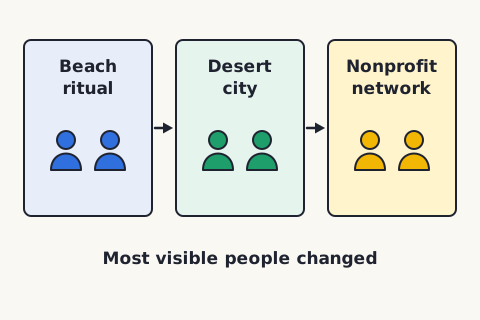
Leadership changed with scale
The people most visible in Burning Man’s history changed as the project moved from a beach ritual to a desert city and then a nonprofit network.
Crisis that accelerated formal organization
On the turning-point timeline, “The crisis that accelerated formal organization” is placed at 1996.
First Black Rock Desert burn
On the turning-point timeline, “The first Black Rock Desert burn” is placed at 1990.
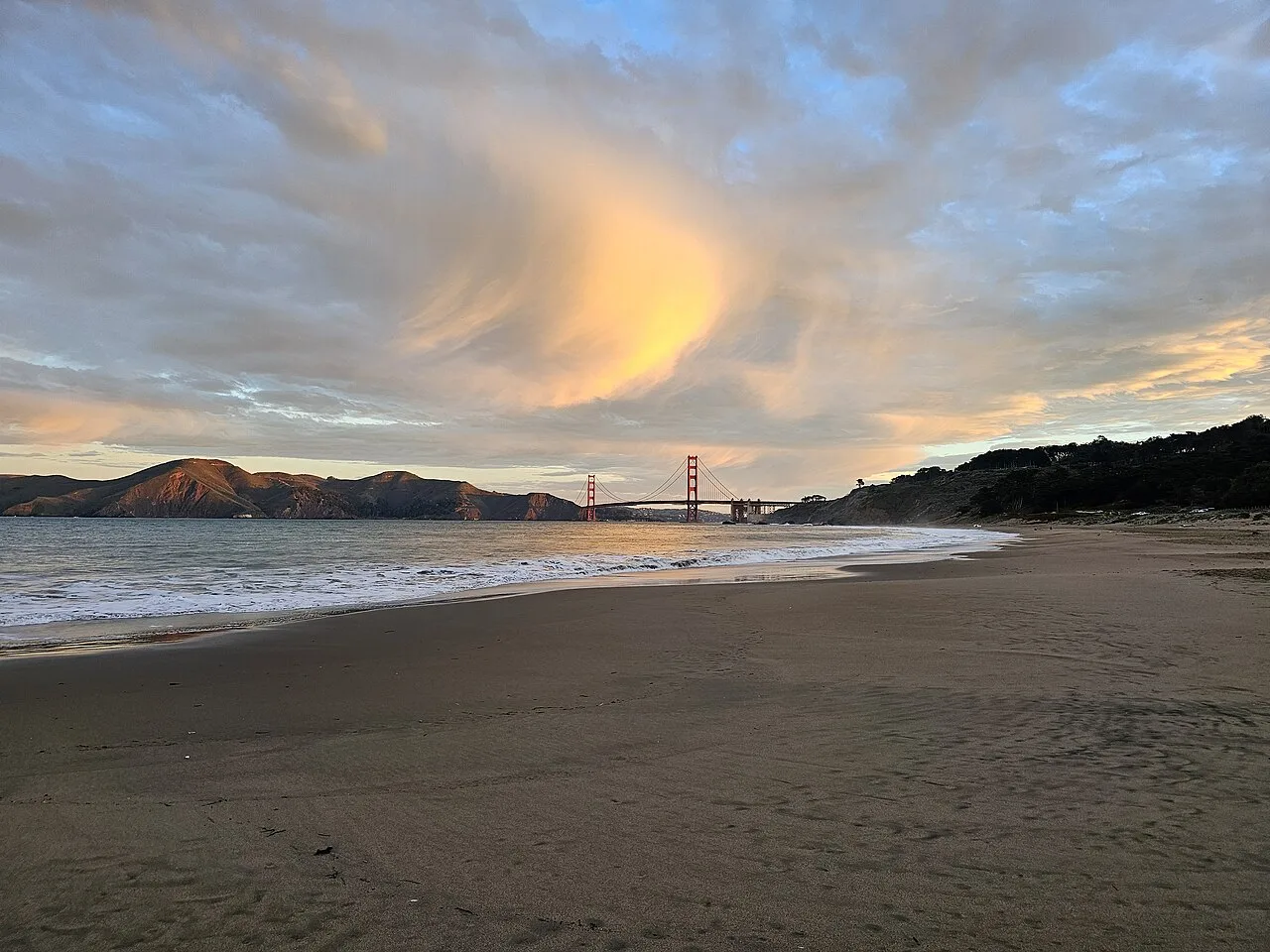
The first Baker Beach burn
On the turning-point timeline, “The first Baker Beach burn” is placed at 1986.
Regionals
The Regional Network began after the 1997 event, the first official Regional Event was Burning Flipside in 1998, and the network now supports events and projects beyond Black Rock City.
Pandemic
Official Black Rock City was cancelled in 2020 and 2021, while virtual and unofficial gatherings showed the culture was larger than the event.
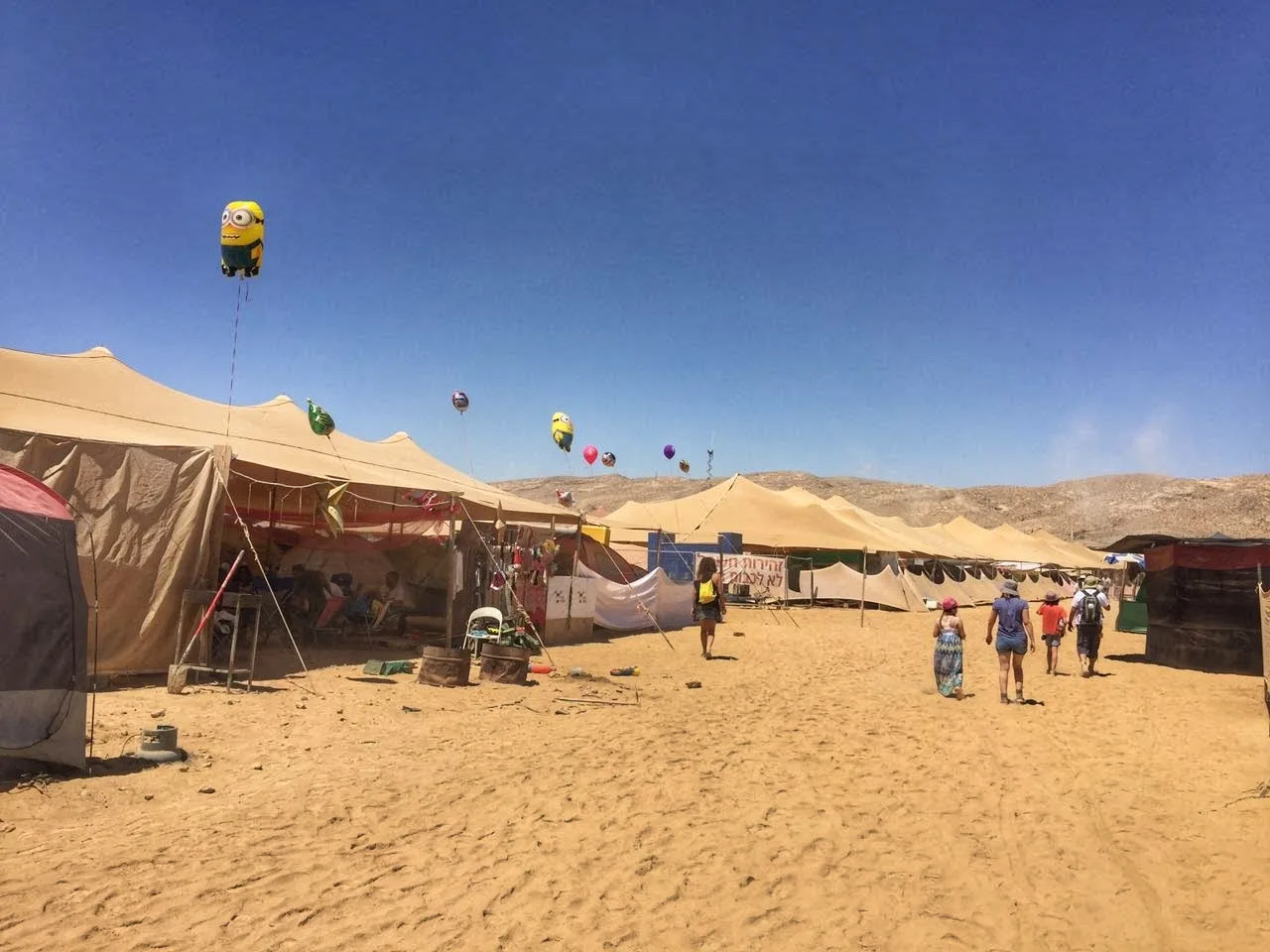
Regional culture changes locally
Regional Events adapt the culture to local communities rather than reproducing Black Rock City exactly.
By the numbers
- In which year did the first Black Rock Desert burn take place?
- 1990 year
- In which year did Burning Man Project complete its nonprofit transition?
- 2014 year
Self-test
Answer each question from memory, then check your work against the answer key.
1. Who co-built the first Man and later wrote the Ten Principles?
- ALarry Harvey
- BCrimson Rose
- CMichael Mikel
- DJohn Law
2. Who brought carpentry skills to building the earliest Baker Beach effigy?
- ALarry Harvey
- BMichael Mikel
- CJerry James
- DJohn Law
3. Which pair belongs to the formative desert community phase, not the earliest beach burn?
- ACrimson Rose and Marian Goodell
- BJohn Law and Michael Mikel
- CLarry Harvey and Jerry James
- DLarry Harvey and Michael Mikel
4. Whose contribution centers on fire-art culture and organizational leadership?
- AMarian Goodell
- BJohn Law
- CMichael Mikel
- DCrimson Rose
5. Who connected the event to the Cacophony Society and helped shape its early desert era?
- ALarry Harvey
- BJohn Law
- CJerry James
- DCrimson Rose
6. In which year did the first Black Rock Desert burn take place?
- A1996
- B2000
- C1990
- D1986
7. In which year did Burning Man Project complete its transition to nonprofit control?
- A2014
- B1996
- C2000
- D2004
8. Which milestone came directly before the 1996 organizational crisis?
- AStart of the Temple tradition
- BWriting of the Ten Principles
- CCompletion of nonprofit transition
- DFirst Black Rock Desert burn
9. Which milestone came directly before the Ten Principles were written in 2004?
- ACompletion of nonprofit transition
- BStart of the Temple tradition
- CFirst Black Rock Desert burn
- DThe organizational crisis
10. Marian Goodell's leadership was most directly tied to which turning point?
- ACompletion of nonprofit transition
- BStart of the Temple tradition
- CThe organizational crisis of 1996
- DFirst Black Rock Desert burn
11. Which of these four Burning Man turning points occurred earliest?
- AStart of the recurring Temple tradition
- BOrganizational crisis that spurred formalization
- CWriting of the Ten Principles
- DFirst Black Rock Desert burn
12. Which of these four milestones happened earliest in Burning Man's history?
- ANonprofit transition completed
- BOfficial Black Rock City cancellation
- CTemple tradition begins
- DTen Principles written
Go deeper
- ListenLesson 5 episode
- WatchSix Dates Burning Man's history fits in six dates.
- WatchNo City, Still a Culture In 2020 and 2021, there was no official Black Rock City. The culture kept going.
- ReadEnabling Creative Chaos by Katherine K. Chen · on Amazon ↗
- StudyBurning Man: From Curiosity to Black Rock City in the FlashFeed app
These are affiliate links: if you buy a book through one, FlashFeed may earn a small commission at no extra cost to you. The commission helps pay for FlashFeed's servers.
As an Amazon Associate we earn from qualifying purchases.
Answer key
- 1. A Larry HarveyLarry Harvey co-built the first Man and later articulated the Ten Principles in 2004.
- 2. C Jerry JamesJerry James brought carpentry to the physical construction of the earliest Baker Beach effigy.
- 3. B John Law and Michael MikelLaw and Mikel shaped the formative desert community, while Harvey and James belong to the earliest physical burn.
- 4. D Crimson RoseCrimson Rose helped build Burning Man's fire-art culture and organizational leadership.
- 5. B John LawJohn Law linked the event to the Cacophony Society and helped shape its move into the desert era.
- 6. C 1990The first Black Rock Desert burn took place in 1990, moving the gathering into the desert.
- 7. A 2014Burning Man Project completed its transition to nonprofit control in 2014.
- 8. D First Black Rock Desert burnThe desert move (1990) came directly before the 1996 organizational crisis; the other options all happened later.
- 9. B Start of the Temple traditionThe Temple tradition began in 2000, the milestone immediately preceding the 2004 Ten Principles; the others are further back or later.
- 10. A Completion of nonprofit transitionMarian Goodell helped lead the organization through its 2014 transition into Burning Man Project; the other milestones predate that role.
- 11. D First Black Rock Desert burnThe desert move happened in 1990, before the 1996 crisis, the 2000 Temple tradition, and the 2004 Ten Principles.
- 12. C Temple tradition beginsThe Temple tradition began in 2000, before the 2004 principles, the 2014 nonprofit transition, and the 2020 cancellation.
Sources
- Burning Man Project History — Burning Man Timeline — 1990 — history.burningman.org/timeline/1990/
- Rod Garrett / Burning Man Journal — Designing Black Rock City — journal.burningman.org/2010/04/black-rock-city/building-brc/designing-black-rock-city/
- Burning Man Project History — Burning Man Timeline — 2014 — history.burningman.org/timeline/2014/
- Burning Man Project History — Burning Man Timeline — 1996 — history.burningman.org/timeline/1996/
- Burning Man Project — Timeline — history.burningman.org/timeline/
- Burning Man Project — The 10 Principles — burningman.org/about-us/10-principles/
- Burning Man Project History — Burning Man Timeline — 2000 — history.burningman.org/timeline/2000/
- Burning Man Project — History of the Regional Network — burningman.org/global-events-groups/burning-man-regional-network/history-of-the-regional-network/
- Graham St John / University of Huddersfield — Burnerverse: The Borderland, Midburn, and the Global Event Culture of Burning Man — pure.hud.ac.uk/en/publications/burnerverse-the-borderland-midburn-and-the-global-event-culture-o/
- Burning Man Project History — Burning Man Timeline — 2020 — history.burningman.org/timeline/2020/
- Wikipedia — Burning Man (history section) — en.wikipedia.org/wiki/Burning_Man
- Burning Man Project History — Burning Man Timeline — 2021 — history.burningman.org/timeline/2021/
Image credits
- Leadership changed with scale: FlashFeed original diagram · CC-BY-4.0
- The first Baker Beach burn: BradleyPelton · CC BY-SA 4.0 — en.wikipedia.org/wiki/Baker_Beach
- Regional culture changes locally: Nettadi · CC BY-SA 3.0 — commons.wikimedia.org/wiki/File:Midburn_2016_12.jpg
