
U.S. Permit Test by State (Driving) study guide · Lesson 16 of 18
Texas: Phones, Restraints and Road-User Laws
Phones, seat belts and child restraints · School buses · Move-over, bicycles and motorcycles
This is the lesson's study guide from the FlashFeed app, plus its key facts and a self-test.
What you'll be able to do
- In Texas, state the rules on phones, seat belts and child restraints, and on school buses, move-over zones, bicycles and motorcycles.
Texas law sets rules for phone use, seat belts and child seats. It also sets rules for sharing the road with school buses, stopped emergency and tow vehicles, bicycle riders and motorcyclists. These rules protect people in and around vehicles, such as a child in a seat, a student getting off a bus, or a motorcyclist. The rules come from the Transportation Code, and the Texas Driver Handbook (DL-7, revised January 2026) words a few of them differently.
Phones, seat belts and child restraints
Texting is a form of distracted driving, which is any activity that pulls a driver's attention away from driving. The Texas ban for drivers under 18 covers any wireless device, hands-free included. The ban for all drivers works differently. It covers reading, writing or sending an electronic message unless the vehicle is stopped.
As of 30 October 2026, a Texas driver under 18 may not use a wireless communication device while operating a motor vehicle, except in an emergency (section 545.424). The Transportation Code defines that device as one that uses commercial mobile service, whether handheld or hands-free. DL-7 also says the ban includes hands-free devices, as do Texas Department of Public Safety (DPS) pages dated 2024.
Every Texas driver commits the texting offense (breaks the law) by using a portable device to read, write or send an electronic message while driving, unless the vehicle is stopped (section 545.4251). The code lists six affirmative defenses to the texting offense:
- Using a device hands-free
- Using a device for navigation
- Using a portable wireless communication device to report illegal activity, summon emergency help, or enter information into a traffic and road-conditions app
- Reading an electronic message that the driver reasonably believed concerned an emergency
- Using certain work equipment
- Starting music on a device
The hands-free defense does not make hands-free use lawful for a driver under 18. DL-7 words its texting entry more briefly, leaving out the stopped-vehicle exception and the defenses. In a Texas school crossing zone, a driver may not use a wireless communication device unless the vehicle is stopped or the device is used hands-free (section 545.425). DL-7's school-zone sign entry is stricter and describes use there as prohibited.
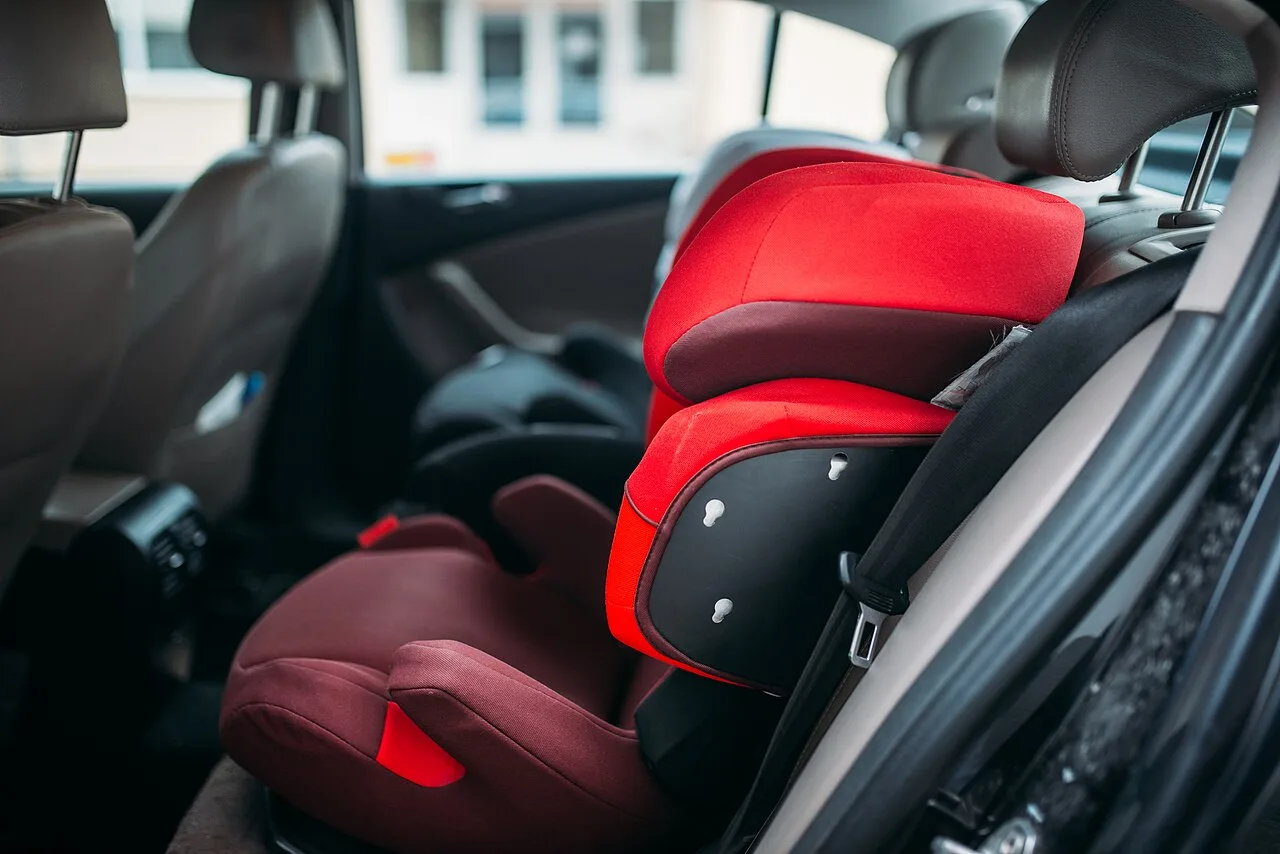
A Texas driver who transports a child younger than eight years old must keep the child secured in a child passenger safety seat system used as the manufacturer directs, unless the child is taller than 4 feet 9 inches (section 545.412). A separate belt rule covers different riders: a person at least 15 years old who rides in an operating passenger vehicle, in a seat with a safety belt, commits an offense by not being secured by it (section 545.413). That rule also makes the driver responsible for a child under 17 who is not required to be in a child seat, so the driver commits an offense by letting such a child ride unbelted.
Sources
School buses
A Texas driver on a highway must stop before reaching a school bus that is stopped to receive or discharge a student (pick up or let off) and is operating a visual signal (Transportation Code section 545.066). The rule applies whether the driver approaches from either direction, from behind the bus or toward it, and it protects students as they get on or off the bus. A Texas school bus warns with its visual signal: four alternately flashing red lights (they take turns flashing), two at the front and two at the rear (section 547.701).
A Texas driver stopped for a school bus may not proceed until any one of these happens:
- the bus moves
- the bus driver signals the driver to proceed
- the visual signal is no longer actuated (no longer turned on)
In Texas, the stop rule has two exceptions:
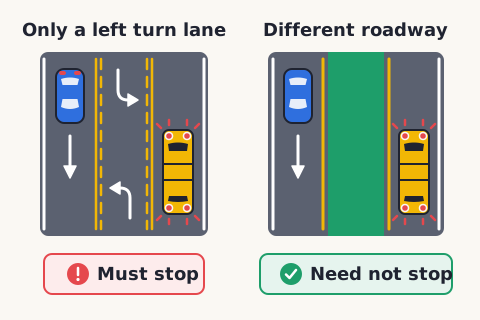
- A driver need not stop for a school bus that is on a different roadway.
- On a controlled-access highway having separate roadways, a driver need not stop for a school bus stopped in a loading zone that is part of or adjacent to the highway where pedestrians may not cross the roadway.
The Texas Transportation Code defines a controlled-access highway as one where no one, including abutting owners or occupants, has a right of access, and entry and exit are restricted to the places and ways that the authority with jurisdiction determines (section 541.302(8)).
Both exceptions depend on where the bus is stopped. In Texas, roadways separated only by a left turn lane are not separate roadways for the school-bus stop rule. So a driver approaching a school bus across a left turn lane must still stop when the bus is operating its visual signal. In short, a Texas driver must stop for a school bus operating its visual signal from either direction on a highway, but need not stop when the bus is on a different roadway or in a controlled-access loading zone where pedestrians may not cross.
Sources
Move-over, bicycles and motorcycles
The Texas move-over rule is in Transportation Code section 545.157, which was amended effective 1 September 2025. It covers a stationary (not moving) emergency, tow, Texas Department of Transportation (TxDOT), utility or other listed vehicle that is using its lights. A driver approaching such a vehicle must, unless a police officer directs otherwise, move out of the lane closest to the vehicle on a highway with two or more lanes in that direction, or else slow down.
Slowing down is the alternative, and in Texas the speed depends on the posted speed limit, in miles per hour (mph):
- A posted speed limit of 25 mph or more means slowing to a speed not exceeding 20 mph less than the posted limit, that is, at least 20 mph below the posted limit.
- A posted speed limit under 25 mph means slowing to a speed of no more than 5 mph.
The 20 mph is a reduction from the limit, while the 5 mph is the highest speed allowed. DL-7 words the 5 mph case differently: one page says less than 5 mph, and another leaves it out and lists fewer vehicles than the code.
A Texas bicycle rider has the rights and duties of a vehicle driver, unless the bicycle chapter (Chapter 551) alters a right or duty or a driver's right or duty cannot by its nature apply to a bicycle (section 551.101).
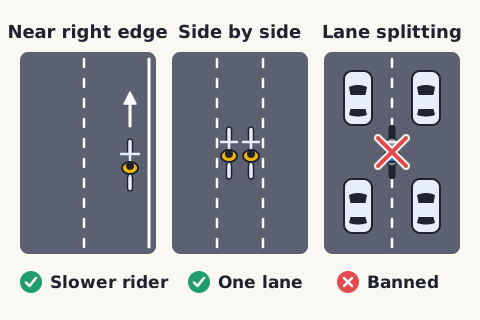
In Texas, a bicycle rider moving slower than traffic rides as near as practicable to the right curb or edge, unless:
- passing
- preparing for a left turn
- avoiding a hazard
- in an outside lane under 14 feet wide without a bike lane or too narrow to share
On a one-way roadway with two or more marked lanes, the rider may ride as near as practicable to the left curb or edge instead (section 551.103). Two bicycle riders in Texas may ride side by side in one lane, known as riding two abreast, if they do not impede traffic. A driver passes another vehicle on the left at a safe distance, and Transportation Code chapters 545 and 551 state no passing distance in feet for passing a bicyclist.
Transportation Code section 545.0605, added effective 1 September 2023, bars a motorcycle in Texas from riding between two lanes of vehicles traveling the same way, which bans lane splitting. The same section gives a motorcycle operator the right to use a full lane, and DL-7 tells drivers to allow the rider a full lane.
Sources
Key facts
Texas Wireless Device Ban Under 18
A Texas driver under 18 may not use a wireless communication device while operating a motor vehicle, except in an emergency. The Transportation Code defines that device as one that uses commercial mobile service, whether handheld or hands-free, so the ban covers hands-free use. The ban for all drivers works differently: it covers reading, writing or sending an electronic message, unless the vehicle is stopped. Texting is a form of distracted driving, which is any activity that pulls a driver's attention away from driving.
Texas Texting Offense and Its Defenses
Every Texas driver commits the texting offense by using a portable device to read, write or send an electronic message while driving, unless the vehicle is stopped. The code lists six affirmative defenses: hands-free use; navigation; using a portable wireless communication device to report illegal activity, summon emergency help or enter information into a traffic and road-conditions app; reading a message the driver reasonably believed concerned an emergency; certain work equipment; and starting music. The hands-free defense does not make hands-free use lawful for a driver under 18.
Texas Child Seat and Seat Belt Rules
A Texas driver who transports a child younger than eight years old must keep the child secured in a child passenger safety seat system used as the manufacturer directs, unless the child is taller than 4 feet 9 inches. The belt rule covers different riders: a person at least 15 years old who rides in an operating passenger vehicle, in a seat with a safety belt, commits an offense by not being secured by it. That rule also makes the driver responsible for a child under 17 who is not required to be in a child seat. These rules protect people in a vehicle, such as a child in a seat.
Texas School Bus Stop Rule
A Texas driver on a highway must stop before reaching a school bus that is stopped to receive or discharge a student and is operating a visual signal, approaching from either direction. The only exceptions apply on a highway with separate roadways: a bus on a different roadway or, on a controlled-access highway, a bus in a loading zone where pedestrians may not cross. A Texas school bus warns with four alternately flashing red lights, two at the front and two at the rear. The driver may not proceed until the bus moves, the bus driver signals to proceed, or the signal is no longer actuated.
Texas School Bus Stop Exceptions
In Texas, a driver need not stop for a school bus that is on a different roadway. On a controlled-access highway having separate roadways, a driver also need not stop for a school bus stopped in a loading zone that is part of or adjacent to the highway where pedestrians may not cross the roadway. Roadways separated only by a left turn lane are not separate roadways, so the driver must still stop when the bus is operating its visual signal.
Texas Move-Over Rule
The Texas move-over rule covers a stationary emergency, tow, Texas Department of Transportation, utility or other listed vehicle that is using its lights. Unless a police officer directs otherwise, an approaching driver must move out of the closest lane on a highway with two or more lanes in that direction, or else slow down. Where the posted speed limit is 25 mph or more, slowing means a speed not exceeding 20 mph less than the posted limit, that is, at least 20 mph below it. Where it is under 25 mph, slowing means a speed no more than 5 mph.
Texas Bicycle and Motorcycle Rules
A Texas bicycle rider moving slower than traffic rides as near as practicable to the right curb or edge, unless passing, preparing for a left turn, avoiding a hazard, or in an outside lane under 14 feet wide without a bike lane or too narrow to share. On a one-way roadway with two or more marked lanes, the rider may ride as near as practicable to the left curb or edge instead. Two bicycle riders may ride side by side in one lane if they do not impede traffic. A motorcycle may not ride between two lanes of vehicles traveling the same way, which bans lane splitting.
Self-test
Answer each question from memory, then check your work against the answer key.
1. Under the Texas texting offense, when may a driver read, write or send an electronic message on a portable device?
- AWhen the message is very short
- BWhen traffic is moving slowly
- CWhen the vehicle is stopped
- DWhen the road ahead is clear
2. A Texas driver transports a child who is younger than eight but taller than 4 feet 9 inches. Which Texas rule covers how that child rides?
- AThe child seat rule, as the child is younger than eight
- BThe belt rule, as the child is taller than 4 feet 9 inches
- CNeither rule, as the child is too young for a belt
- DThe child seat rule, as the height exception starts at eight
3. A Texas driver approaches a school bus operating its visual signal. Only a left turn lane separates the driver's side of the road from the bus. What must the driver do?
- AStop, because the bus is still on the driver's roadway
- BSlow down and pass, because the students are on the far side
- CContinue, because the bus is on a different roadway
- DStop only if the bus is on the driver's own side of the road
4. Unless a police officer directs otherwise, what must a Texas driver do on approaching a stationary tow truck that is using its lights, on a highway with two lanes in the driver's direction?
- AStop behind the tow truck until its lights go off
- BKeep the same lane at the posted speed limit
- CMove over only for an emergency vehicle
- DMove out of the closest lane or else slow down
5. Two bicycle riders in Texas ride side by side in one lane. When is this allowed?
- AWhen they are on a one-way roadway
- BWhen they are riding slower than traffic
- CWhen they do not impede traffic
- DWhen no bike lane is marked
Go deeper
- WatchStop for the Bus A school bus stops across the road, red lights flashing. In Texas, do you stop?
- WatchMove Over or Slow Down A tow truck is stopped on a Texas highway, using its lights. What must an approaching driver do?
- StudyU.S. Permit Test by State (Driving) in the FlashFeed app
Answer key
- 1. C When the vehicle is stoppedThe texting offense covers reading, writing or sending an electronic message while driving, unless the vehicle is stopped. Slow traffic is still driving. The Texas Driver Handbook words its entry more briefly, leaving out the stopped-vehicle exception.
- 2. B The belt rule, as the child is taller than 4 feet 9 inchesThe Texas child seat rule covers a child younger than eight unless the child is taller than 4 feet 9 inches, so this child is outside it. The belt rule covers the child instead: it makes the driver responsible for a child under 17 who is not required to be in a child seat.
- 3. A Stop, because the bus is still on the driver's roadwayRoadways separated only by a left turn lane are not separate roadways for the school-bus stop rule, so the driver must still stop while the bus operates its visual signal. The different-roadway exception does not apply across a left turn lane.
- 4. D Move out of the closest lane or else slow downUnless a police officer directs otherwise, the driver must move out of the closest lane on a highway with two or more lanes in that direction, or else slow down. The rule covers tow vehicles, not only emergency vehicles.
- 5. C When they do not impede trafficTwo Texas bicycle riders may ride side by side in one lane if they do not impede traffic. A one-way roadway, the lack of a marked bike lane or slower speed does not by itself allow it.
Sources
- Texas Legislature — Texas Transportation Code, Chapter 545: Operation and Movement of Vehicles; Texas Legislature — Texas Transportation Code, section 545.066 (Chapter 545) and section 547.701 (Chapter 547) — tcss.legis.texas.gov/resources/TN/htm/TN.545.htm
- Texas Legislature — Texas Transportation Code, Chapter 551 (§551.103, bicycles) and Chapter 545 (§545.0605, motorcycles); Texas Legislature — Texas Transportation Code, Chapter 551: Operation of Bicycles, Mopeds, Play Vehicles, and Golf Carts — tcss.legis.texas.gov/resources/TN/htm/TN.551.htm
Image credits
- Texas Child Seat and Seat Belt Rules: Wikimedia Commons · Shixart1985 · CC BY 2.0 — commons.wikimedia.org/wiki/File:Modern_child_car_seat_closeup.jpg
- Texas School Bus Stop Exceptions: FlashFeed original diagram · CC-BY-4.0
- Texas Bicycle and Motorcycle Rules: FlashFeed original diagram · CC-BY-4.0
