
The 5 Love Languages: The Secret to Love That Lasts study guide · Lesson 3 of 7
Lesson 3: Love Language #2 — Quality Time
3.1 Undivided Attention & Shared Experiences · 3.2 Quality Conversation & Communication Personalities
Unofficial study guide for The 5 Love Languages: The Secret to Love That Lasts by Gary Chapman. FlashFeed is not affiliated with the author or publisher.
This is the lesson's study guide from the FlashFeed app, plus its key facts and a self-test.
What you'll be able to do
- Cultivate Quality Time through focused undivided attention, eye contact, and shared memory-building activities.
- Navigate the Dead Sea and Babbling Brook communication dyad using active empathetic listening and the Minimum Daily Requirement.
Monograph Section: Lesson 3 of The 5 Love Languages: The Secret to Love That Lasts by Dr. Gary Chapman.
Executive Overview
Explores the vital significance of giving undivided attention to your partner, distinguishes true emotional connection from mere physical co-presence, details the structure of quality conversation and active listening, analyzes the 'Dead Sea' and 'Babbling Brook' communication dyad, and outlines the role of shared memory-building activities.
Undivided Attention & Shared Experiences
Conceptual Foundations: Quality Time, Undivided Attention, Physical Proximity vs. Focused Attention, Screen Distractions and Phubbing
Core Insight: Quality Time means giving your partner your undivided, full emotional attention without competing distractions.
True quality time requires focusing all mental and emotional faculties on the spouse, communicating that they are the absolute center of your priority.
Core Insight: Physical proximity alone does not equal Quality Time; two people can occupy the same room while existing miles apart emotionally.
Sitting side-by-side while engrossed in smartphones or screens provides zero emotional nourishment, as attention is captured by digital devices.
Core Insight: Quality activities are defined by doing something together that at least one partner enjoys, with the primary purpose being shared togetherness.
The specific activity (a walk, gardening, visiting an art gallery) is simply the emotional vehicle; the true product is the shared memory and connection.
Core Insight: Engaging in quality activities builds a durable emotional reservoir of shared memories that anchors a marriage through hard times.
Shared positive experiences create a rich collective narrative, giving couples nostalgic anchor points that reinforce their shared identity and history.
Core Insight: Maintaining direct, loving eye contact during conversation is an essential non-verbal requirement of Quality Time.
Gazing into a partner's eyes prevents mind-wandering, conveys deep respect, and creates an intimate channel of non-verbal emotional attunement.
Core Insight: Multitasking while a spouse is talking—such as checking email or washing dishes—signals that the tasks are more important than the person.
Splitting attention makes the speaking partner feel like an inconvenient background interruption rather than a cherished human being.
Core Insight: Participating in an activity you do not naturally enjoy simply because your spouse loves it is a profound expression of sacrificial love.
Stepping into the partner's world demonstrates that their joy is more important to you than personal amusement, filling their love tank deeply.
Core Insight: Quality Time requires intentional scheduling and calendar protection, as urgent daily demands naturally crowd out unstructured intimacy.
Without deliberate scheduling, career demands, household chores, and child-rearing obligations consume all available margin, leaving no space for connection.
Core Insight: Going for a walk together is one of the simplest and most effective Quality Time practices, combining physical motion with uninterrupted conversation.
Walking side-by-side removes environmental distractions, promotes relaxation, and facilitates gentle, unhurried sharing of thoughts and feelings.
Core Insight: For a Quality Time person, canceled plans, missed dates, or chronic lateness are interpreted as severe emotional rejections.
Time is the ultimate non-renewable asset; when a partner fails to show up or delays, it communicates that something else was deemed more valuable.
Core Insight: Sharing a meal at a restaurant without mobile devices on the table fosters an environment conducive to deep mutual attunement.
Removing digital devices from the visual field eliminates subtle anticipatory anxiety, allowing full immersion in the partner's presence.
Core Insight: Taking regular weekend getaways or retreats revitalizes marital romance by temporarily removing couples from domestic responsibilities.
Changing environments breaks monotonous domestic autopilot and creates dedicated space for mutual rediscovery and emotional refueling.
Core Insight: Quality Time must include both quiet one-on-one conversation and interactive shared recreation to nourish all facets of connection.
Balancing reflective, introspective dialogue with playful, active recreational fun ensures that both intellectual and experiential needs are met.
Core Insight: Listening to a spouse's thoughts without checking your watch communicates that their inner life is intrinsically worth your time.
Patience in conversation validates the speaker's emotional dignity, assuring them that they are not an imposition on your schedule.
Core Insight: Couples who share a rich menu of hobbies and shared interests experience greater marital stability over long decades.
Friendship is the foundational soil of enduring romance; shared hobbies ensure that partners remain genuine companions when children leave the home.
Quality Conversation & Communication Personalities
Conceptual Foundations: Quality Conversation, Sympathetic Dialogue, Active Empathetic Listening, The Dead Sea Personality
Core Insight: Quality Conversation involves sympathetic dialogue where two individuals share their experiences, thoughts, feelings, and desires in an uninterrupted, accepting context.
While affirmation is about broadcasting praise, quality conversation is an active, collaborative exchange designed to foster mutual understanding and emotional intimacy.
Core Insight: The primary goal of active empathetic listening in quality conversation is understanding the spouse's heart, not offering unsolicited solutions.
When individuals share vulnerabilities, they seek emotional resonance and validation; jumping immediately into problem-solving invalidates their feelings.
Core Insight: Chapman introduces the metaphor of the 'Dead Sea' to describe personalities that receive vast amounts of life experiences but rarely express their feelings.
Dead Sea personalities are content to absorb daily events and process them internally without feeling an innate urge to verbalize their inner emotional state.
Core Insight: The 'Babbling Brook' personality represents individuals whose thoughts and feelings flow immediately and continuously into verbal expression.
Babbling Brooks process reality through continuous external dialogue, feeling a natural compulsion to share every thought, observation, and emotion as it occurs.
Core Insight: Dead Sea personalities and Babbling Brook personalities frequently attract each other in dating, but this dynamic creates severe friction in marriage.
The very traits that were charming in early romance become sources of resentment unless both partners intentionally adapt to each other's communication style.
Core Insight: Chapman calls this the 'Minimum Daily Requirement': each spouse shares three things that happened that day and how they felt about them.
This structured daily practice prevents emotional drift by giving the Dead Sea a concrete template to open up and the Babbling Brook a focused window to connect.
Core Insight: Observing body language—such as folded arms, trembling hands, or shifting posture—reveals the underlying emotional truth of spoken words.
Non-verbal cues frequently convey true emotional distress that the speaker's conscious words may attempt to downplay or conceal.
Core Insight: Refusing to interrupt while a partner is speaking is essential for creating psychological safety during Quality Conversation.
Interrupting breaks the speaker's train of thought, signals impatience, and shifts focus back to the listener's agenda rather than the partner's heart.
Core Insight: Asking clarifying questions ('Are you saying that you felt overwhelmed by the workload?') ensures accurate emotional understanding.
Paraphrasing and checking back prevents misunderstandings and demonstrates to the partner that you are actively processing their words.
Core Insight: Validating a spouse's feelings does not mean you agree with their logical interpretation, but that you recognize their emotional reality.
Empathy validates the emotional experience first, paving the way for calm, logical discussion without triggering defensiveness.
Core Insight: Many individuals must deliberately learn to identify and name their own emotions because their upbringing suppressed emotional expression.
Developing emotional literacy enables an internalizing partner to accurately articulate their inner world rather than retreating into silent withdrawal.
Core Insight: Creating a distractor-free environment—turning off television, tablets, and phones—is mandatory for Quality Conversation.
A quiet, peaceful setting signals that the conversation is important and prevents cognitive overload from external stimuli.
Core Insight: The Dead Sea partner must make a conscious decision to share their thoughts, recognizing that silence isolates their spouse.
Silence may feel safe to an internalizer, but it leaves an extroverted or Quality Time partner feeling abandoned and disconnected.
Core Insight: The Babbling Brook partner must learn to pause, listen attentively, and ask inviting questions without dominating the airwaves.
Creating conversational pauses gives quieter partners the necessary cognitive time to formulate thoughts and speak without feeling overwhelmed.
Core Insight: Consistent Quality Conversation deepens emotional intimacy over time, transforming two separate lives into a harmonious, unified partnership.
Regular reciprocal sharing ensures that partners grow together rather than drifting apart as their careers, perspectives, and lives evolve.
Key terms
- Quality Conversation
- Sympathetic dialogue where two individuals share their experiences, thoughts, feelings, and desires in an accepting, uninterrupted climate.
Key facts
Quality Activities
Shared experiences where the primary objective is togetherness and connection rather than the specific task being performed.
Entering Their World
Participating in an activity you do not naturally enjoy simply because your spouse loves it is a profound expression of sacrificial love.
Digital Sanctuary Dining
The practice of keeping dining tables free of phones and devices to foster deep eye contact and presence.
Unhurried Listening
Listening to a spouse's thoughts without checking your watch communicates that their inner life is intrinsically worth your time.
The Dead Sea Personality
A communication style that absorbs vast amounts of daily life experiences but holds them internally without feeling an urge to verbalize.

The Babbling Brook Personality
A communication style where whatever enters the eye or ear is immediately verbalized through continuous external dialogue.
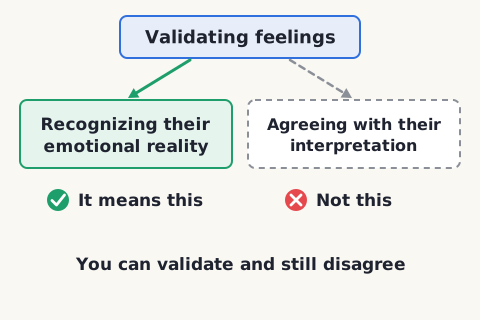
Validation vs. Agreement
Validating a spouse's feelings does not mean you agree with their logical interpretation, but that you recognize their emotional reality.
The Babbling Brook's Discipline
The Babbling Brook partner must learn to pause, listen attentively, and ask inviting questions without dominating the airwaves.
Matched pairs
Each item on the left goes with the one on the right.
- Multitasking on a Screen While Listening
- Communicates that digital tasks are more important than the partner's soul
- Quality Conversation
- Sympathetic dialogue focused on empathetic listening and sharing feelings
- Asking Clarifying Questions
- Ensures accurate emotional comprehension without making false assumptions
- The Dead Sea Adaptation
- Consciously choosing to open up and verbalize internal thoughts and feelings
Step by step
How to protect and prioritize Quality Time amidst demanding modern schedules
- Review your weekly calendar with your spouse every Sunday evening.
- Block out dedicated two-hour uninterrupted date windows in your schedule.
- Treat these marital appointments with the same professional sanctity as business meetings.
- Silence all mobile devices and eliminate domestic chores during the reserved time.
How to execute Chapman's 'Minimum Daily Requirement' communication exercise
- Set aside ten uninterrupted minutes together each evening.
- Each partner identifies three specific events that occurred during the day.
- Each partner shares how they emotionally felt about each of those three events.
- The listening partner offers empathetic validation without interrupting or giving advice.
Self-test
Answer each question from memory, then check your work against the answer key.
1. What is the core requirement of Quality Time as a love language?
- AFrequent verbal affirmations
- BActs of service for your partner
- CThoughtful gifts regularly
- DUndivided and full emotional attention
2. Which of these does NOT count as genuine Quality Time?
- AScrolling phones while sitting together
- BSharing a meal with devices put away
- CTaking a distraction-free walk together
- DHaving an uninterrupted conversation
3. What does multitasking (like checking email) while your spouse talks communicate?
- AThe partner should reschedule
- BThe task outweighs the partner
- CThe partner talks too much
- DMultitasking improves listening
4. What durable outcome does the lesson say quality activities build?
- AA shared financial investment portfolio
- BA joint social media presence
- CAn emotional bank of shared memories
- DA shared list of household chores
5. Which simple, phone-free ritual does the lesson recommend for daily Quality Time?
- AA short neighborhood walk
- BA grocery shopping errand
- CA televised sports broadcast
- DA weekly restaurant date night
6. What defines the 'Dead Sea' communication personality?
- AInterrupts constantly during conversation
- BAvoids eye contact entirely
- CAbsorbs experiences without verbalizing them
- DImmediately verbalizes everything perceived
7. Which trait describes the 'Babbling Brook' personality rather than the 'Dead Sea'?
- ARarely speaks about daily events
- BHolds experiences internally
- CNeeds prompting to share feelings
- DVerbalizes everything immediately
8. Why must some adults deliberately learn the vocabulary of emotions from scratch?
- AThey did not complete higher academic coursework in clinical psychology.
- BThey grew up in homes where emotions were suppressed or discouraged.
- CThey spent their careers in highly technical fields that rarely required emotional expression.
- DThey spent their formative years in isolation, growing into an introverted personality.
9. What technique helps a listener avoid false assumptions about a partner's feelings?
- AOffering unsolicited advice
- BAsking clarifying questions
- CMultitasking while listening
- DChanging the subject
10. What adaptation must a 'Dead Sea' partner make to bridge the communication gap?
- AConsciously verbalize inner thoughts and feelings
- BWait silently until directly asked a question
- CAsk the spouse to talk less
- DWrite feelings in a journal instead of speaking
Go deeper
- ReadThe 5 Love Languages by Gary Chapman · on Amazon ↗
- StudyThe 5 Love Languages: The Secret to Love That Lasts in the FlashFeed app
These are affiliate links: if you buy a book through one, FlashFeed may earn a small commission at no extra cost to you. The commission helps pay for FlashFeed's servers.
As an Amazon Associate we earn from qualifying purchases.
Answer key
- 1. D Undivided and full emotional attentionQuality Time means giving your partner full, undivided emotional attention—the other options describe different love languages, not Quality Time.
- 2. A Scrolling phones while sitting togetherPhysical proximity isn't Quality Time; phubbing side-by-side gives zero emotional nourishment, unlike the other distraction-free activities.
- 3. B The task outweighs the partnerSplitting attention signals the task is more important than the person, making the speaker feel like an interruption.
- 4. C An emotional bank of shared memoriesQuality activities create a reservoir of shared memories that anchors the marriage through hard times.
- 5. A A short neighborhood walkA short, phone-free neighborhood walk is the most effective daily ritual—a weekly date night is valuable too, but it isn't a daily practice.
- 6. C Absorbs experiences without verbalizing themThe Dead Sea personality absorbs daily experiences internally without an urge to verbalize them, unlike the externally-processing Babbling Brook.
- 7. D Verbalizes everything immediatelyBabbling Brooks verbalize everything as it happens—the opposite of the internally-processing Dead Sea style in the other options.
- 8. B They grew up in homes where emotions were suppressed or discouraged.
- 9. B Asking clarifying questionsClarifying questions ensure accurate emotional comprehension, whereas the other responses derail empathetic listening.
- 10. A Consciously verbalize inner thoughts and feelingsThe Dead Sea Adaptation means consciously choosing to open up and verbalize internal thoughts and feelings aloud, rather than staying silent or redirecting the effort elsewhere.
Sources
- The 5 Love Languages: The Secret to Love That Lasts — Gary Chapman
- The 5 Love Languages - Chapter 5
Image credits
- The Babbling Brook Personality: Wikimedia Commons · John Baker · CC BY-SA 2.0 — commons.wikimedia.org/wiki/File:The_Babbling_Brook_-_geograph.org.uk_-_4940381.jpg
- Validation vs. Agreement: FlashFeed original diagram · CC-BY-4.0
