
Ham Radio Technician License study guide · Lesson 7 of 15
Electrical Principles: Impedance, Power and Ohm's Law
Capacitance, inductance, impedance and power · Ohm's law, series and parallel
This is the lesson's study guide from the FlashFeed app, plus its key facts and a self-test.
What you'll be able to do
- Identify the terms and units for capacitance, inductance and impedance, and define impedance
- Write frequency unit abbreviations and calculate DC power from voltage and current
- Choose the Ohm's law formula for current, voltage or resistance and calculate resistance
- Calculate current and voltage with Ohm's law and tell series from parallel circuits
This lesson turns the electrical vocabulary of the previous lesson into working tools. It names the properties that store energy in a circuit, gives their units, and shows how to write frequency units correctly. It then adds the formulas for power and for Ohm's law, which let a new licensee work out current, voltage, resistance and power from numbers a meter or a label provides. These calculations are short, and they come up whenever a radio's power supply or wiring is discussed.
Capacitance, inductance, impedance and power
Capacitance and inductance
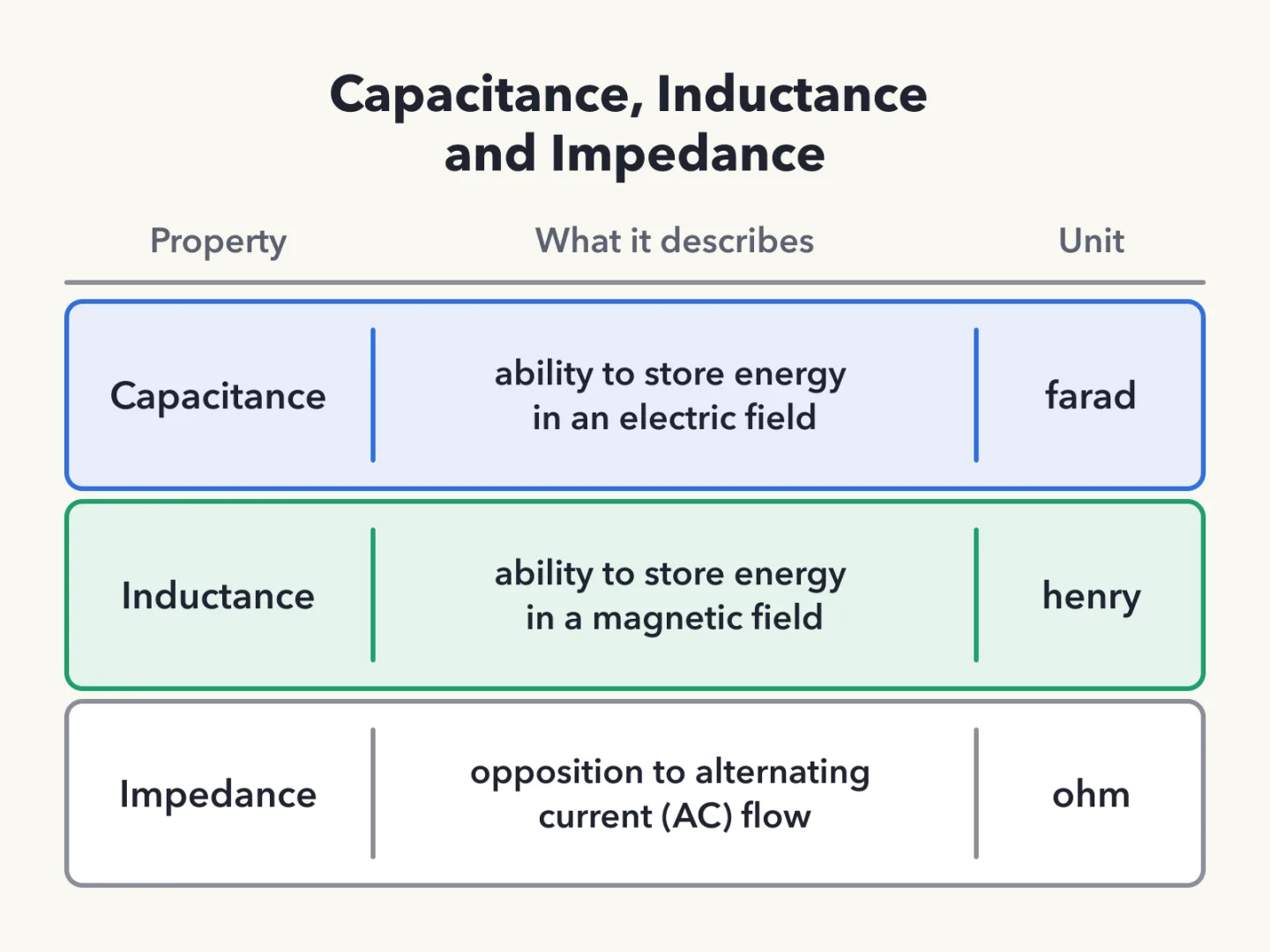
Electrical parts can store energy in two different ways. Capacitance describes the ability to store energy in an electric field. Inductance describes the ability to store energy in a magnetic field. The two are easy to swap, so it helps to pair each with its field: electric field with capacitance, magnetic field with inductance.
Each property has its own unit. The unit of capacitance is the farad. The unit of inductance is the henry. Neither is interchangeable with the other.
Impedance
Impedance is the opposition to alternating current (AC) flow. Its unit is the ohm.
Writing frequency units
Frequency units have exact capitalization when written as abbreviations.
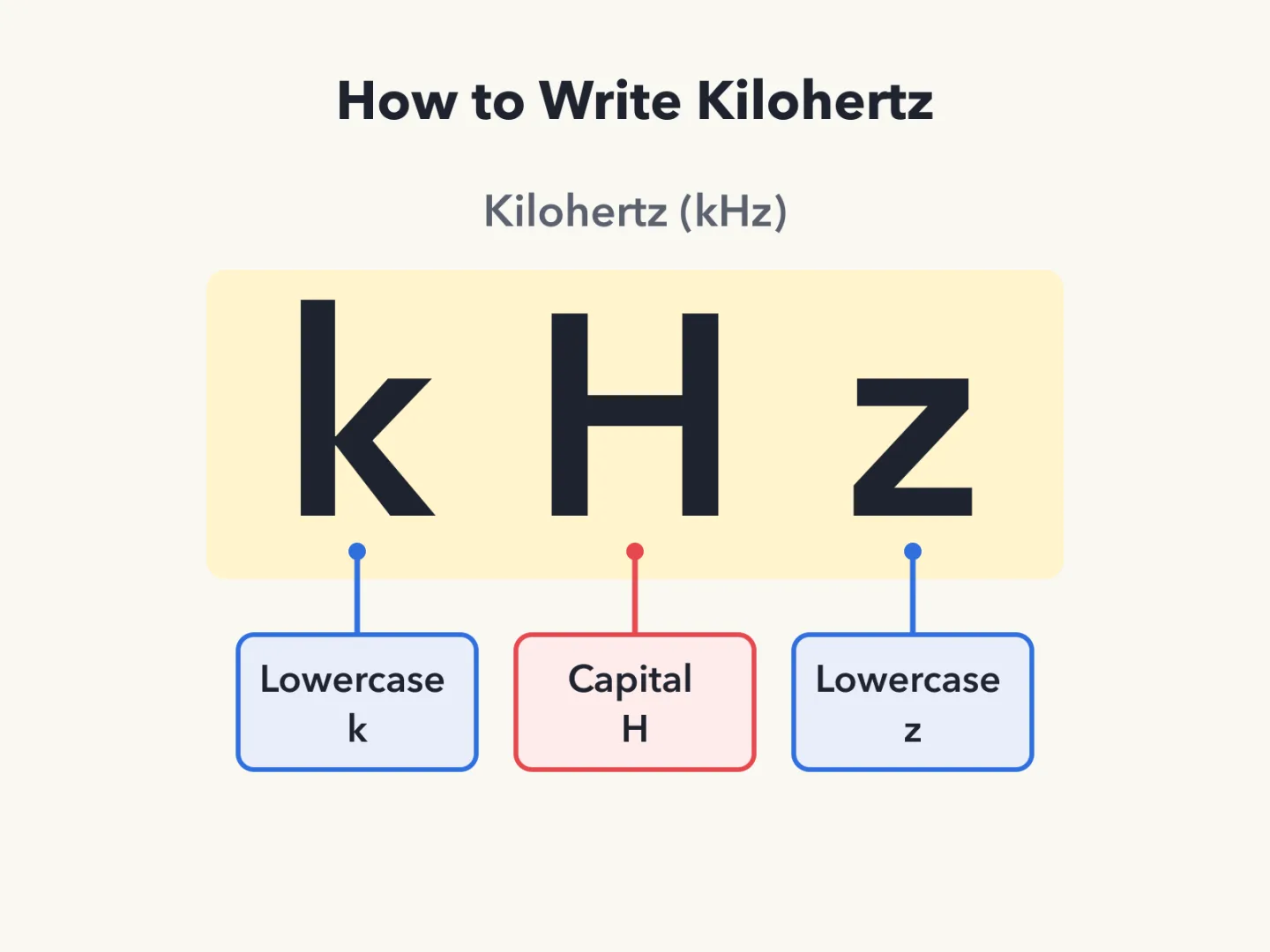
- Kilohertz is written kHz: a lowercase k, a capital H and a lowercase z.
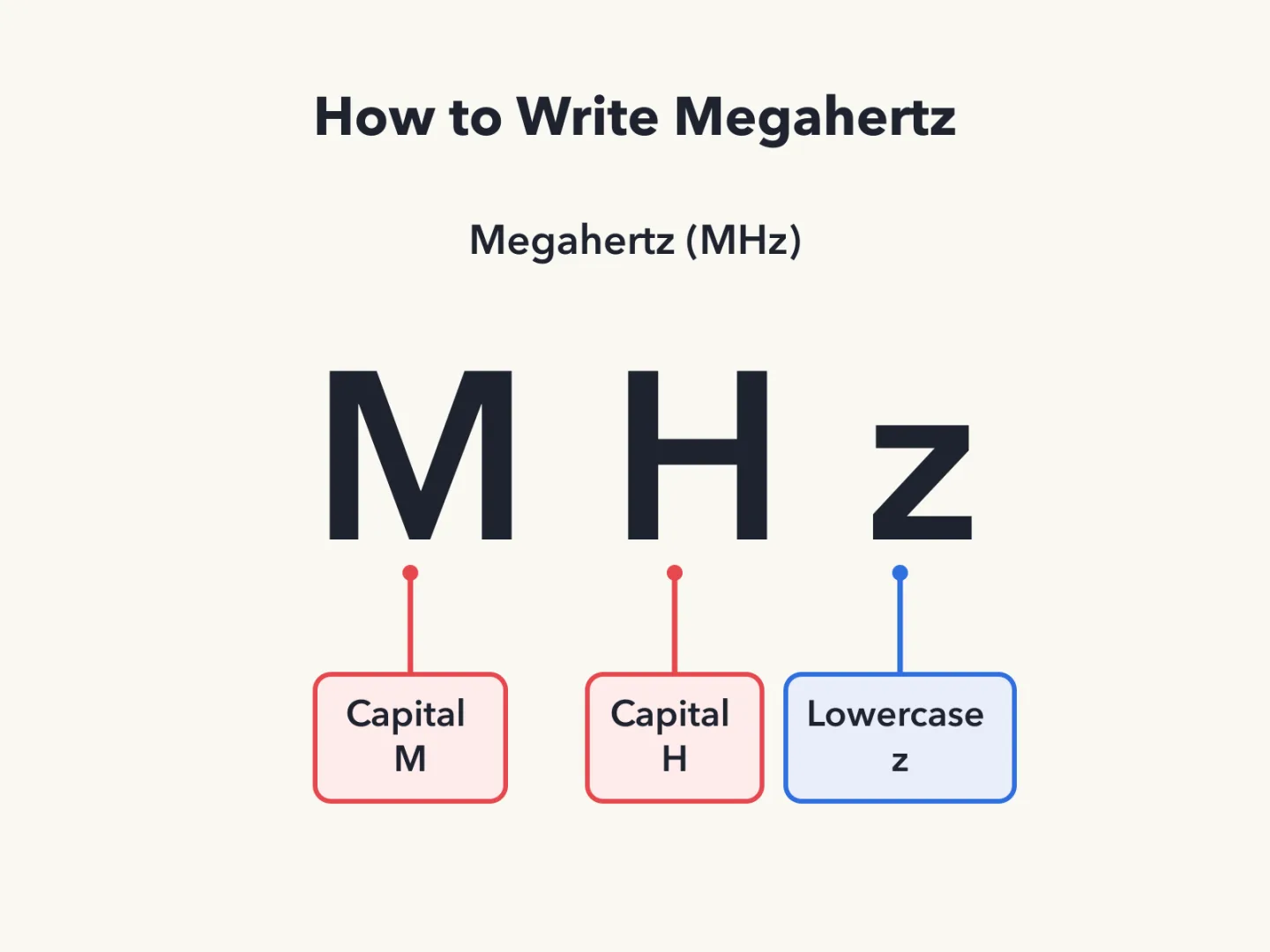
- Megahertz is written MHz: a capital M, a capital H and a lowercase z.
The two abbreviations differ in their first letter: a lowercase k in kHz and a capital M in MHz. Both end in a capital H and a lowercase z, and the case of every letter counts.
Power in a direct current circuit
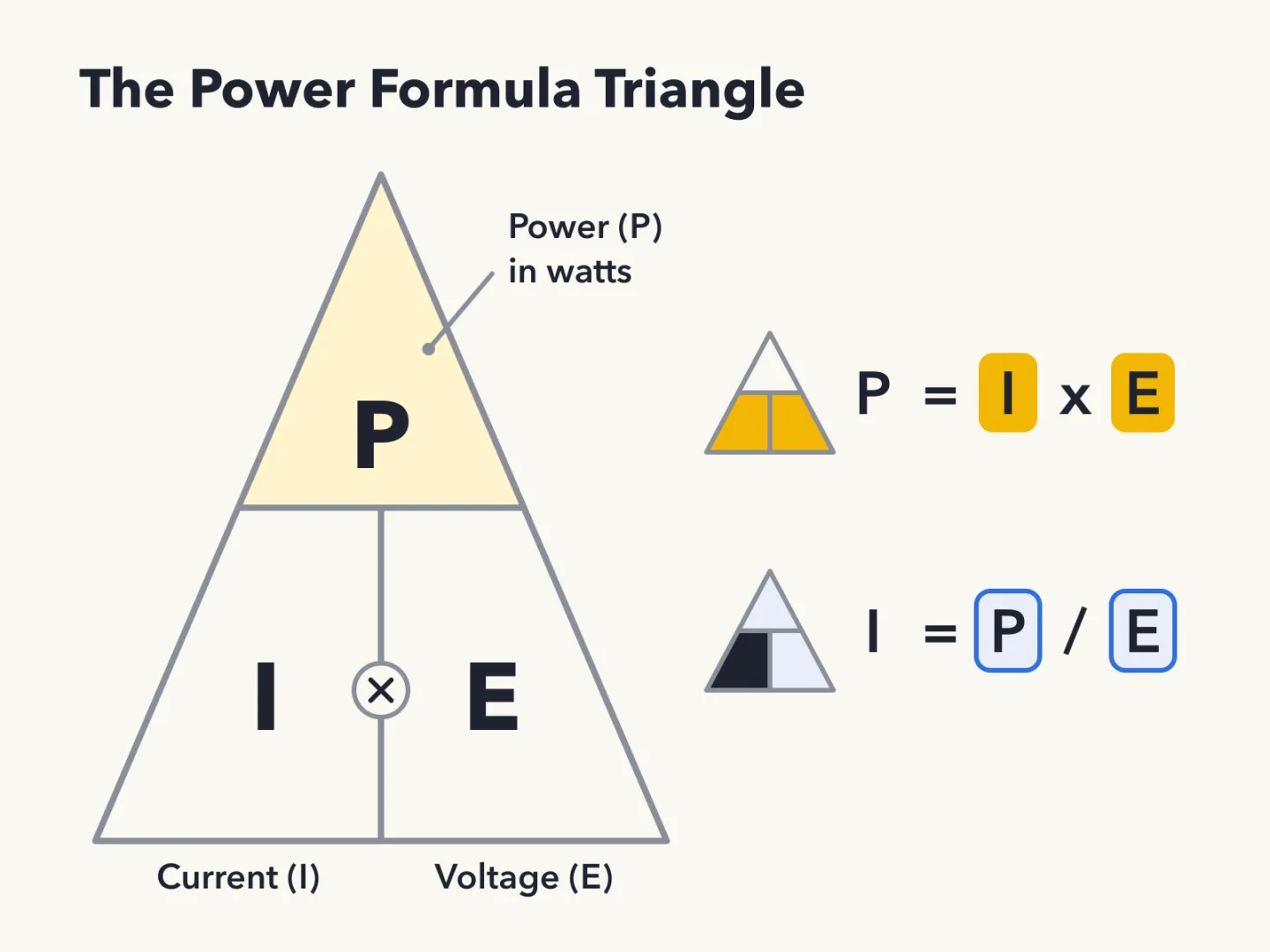
Electrical power (P) in a direct current (DC) circuit is found by multiplying current (I) by voltage (E): P = I x E. Power is measured in watts, current in amperes and voltage in volts.
Three worked examples show the formula in use.
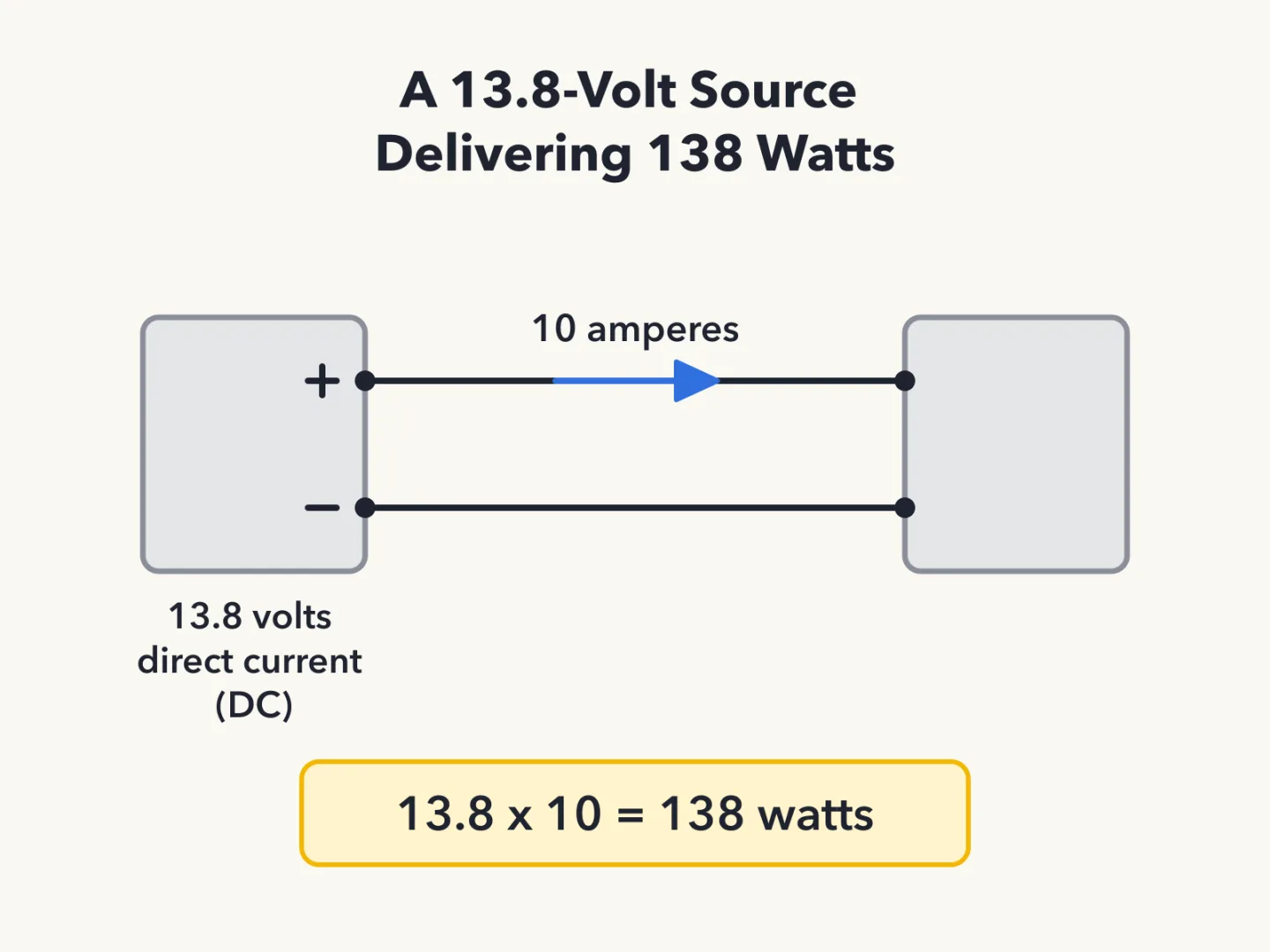
- A voltage of 13.8 volts DC and a current of 10 amperes deliver 138 watts, because 13.8 x 10 is 138.
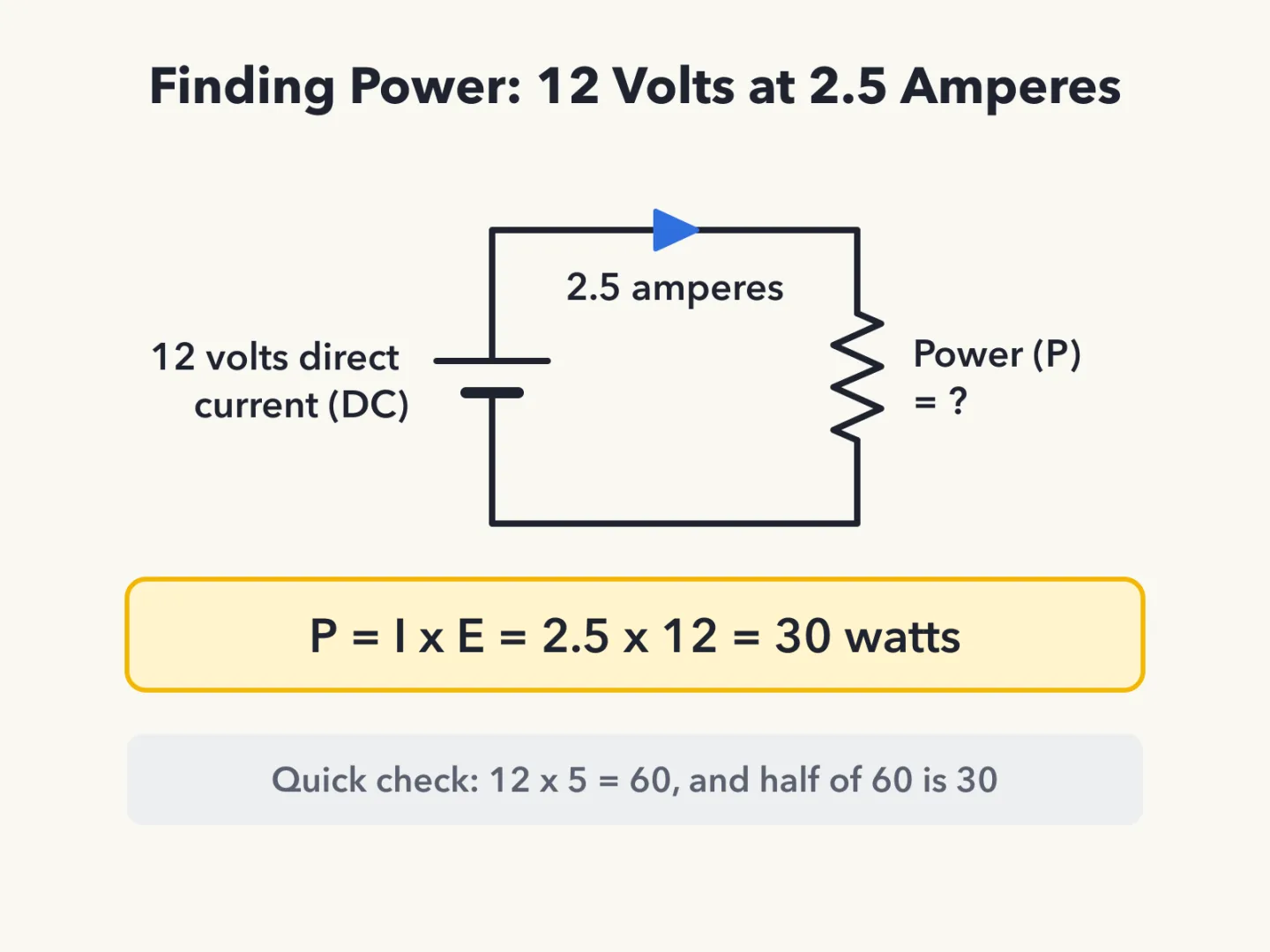
- A voltage of 12 volts DC and a current of 2.5 amperes deliver 30 watts, because 12 x 2.5 is 30.
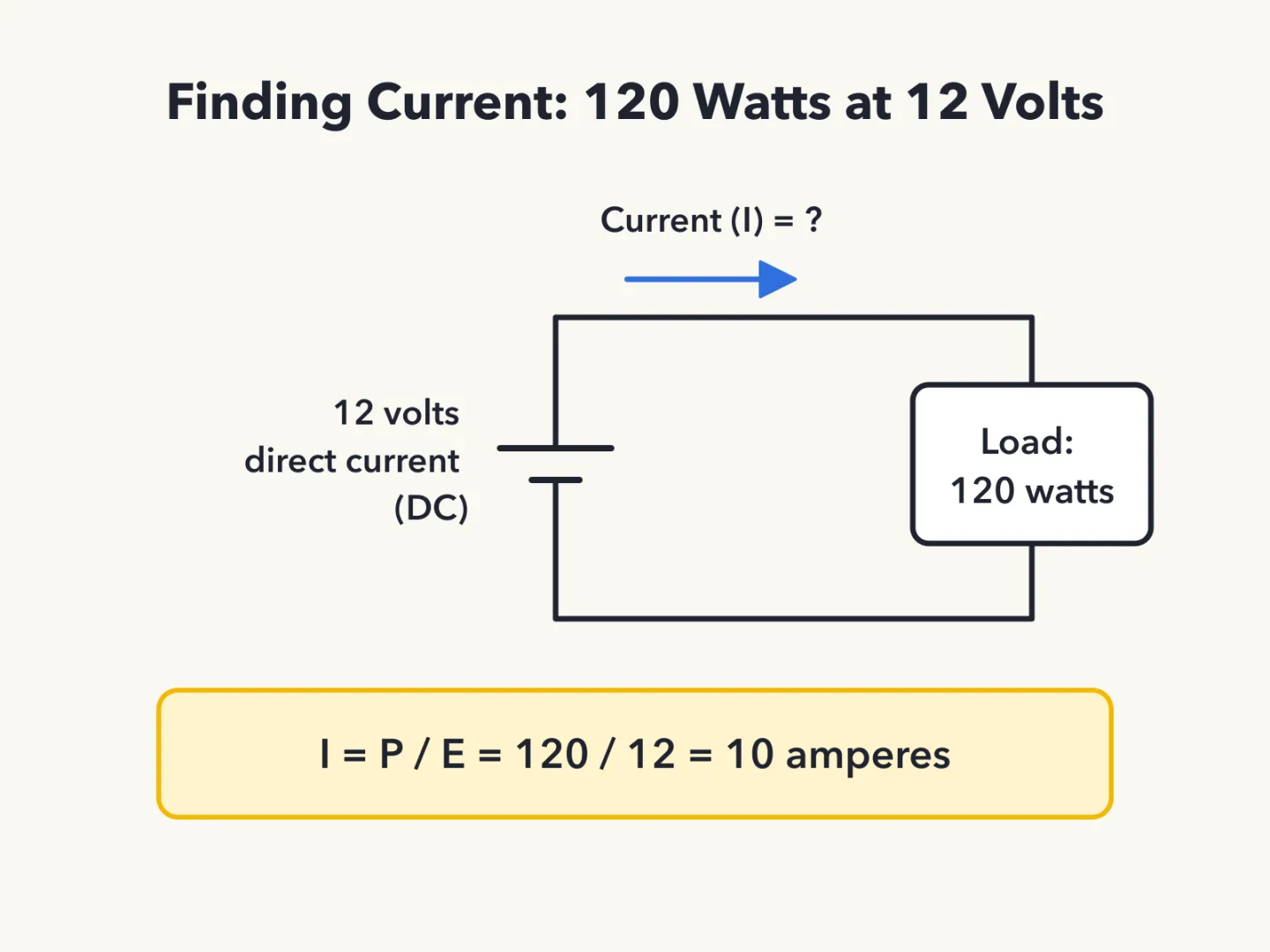
- Delivering 120 watts at 12 volts DC takes 10 amperes. Since power equals current times voltage, dividing the power by the voltage gives the current: 120 divided by 12 is 10.
The third example runs the formula backward. When power and voltage are known, the current is the power divided by the voltage.
A 13.8 volt supply feeding a radio that draws 10 amperes is a realistic case of the first example. The result is 138 watts of power delivered to the radio.
With different numbers, 6 volts DC and a current of 4 amperes deliver 24 watts, because 6 x 4 is 24. Run backward, 48 watts at 12 volts DC takes 4 amperes, because 48 / 12 is 4.
Checking an answer
A quick sense check catches most mistakes. In the first example, 13.8 volts is a little under 14, and 14 x 10 is 140, so an answer near 138 makes sense. In the second example, 12 x 2.5 is half of 12 x 5, which is 60, so 30 watts fits.
Sources
Ohm's law, series and parallel
The three forms of Ohm's law
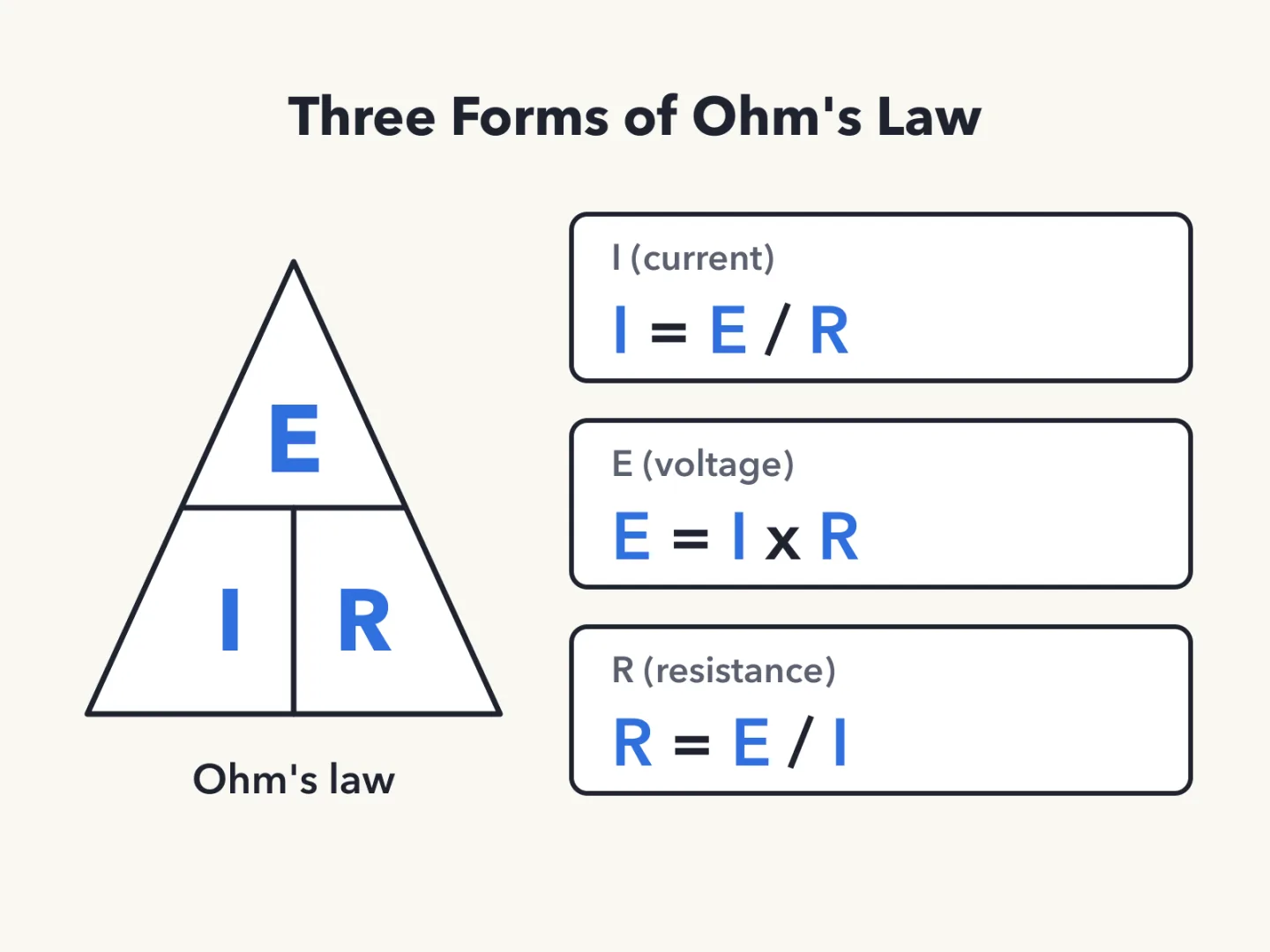
Ohm's law ties together three quantities of a circuit: current (I), voltage (E) and resistance (R). Knowing any two lets a licensee find the third. The formula depends on which one is unknown.
- Current: I = E / R. Current is voltage divided by resistance.
- Voltage: E = I x R. Voltage is current times resistance.
- Resistance: R = E / I. Resistance is voltage divided by current.
A good habit is to say the three formulas as a set. Each is the same relationship rearranged, so one of them can be rebuilt from another.
Calculating resistance
To find resistance, divide the voltage by the current.
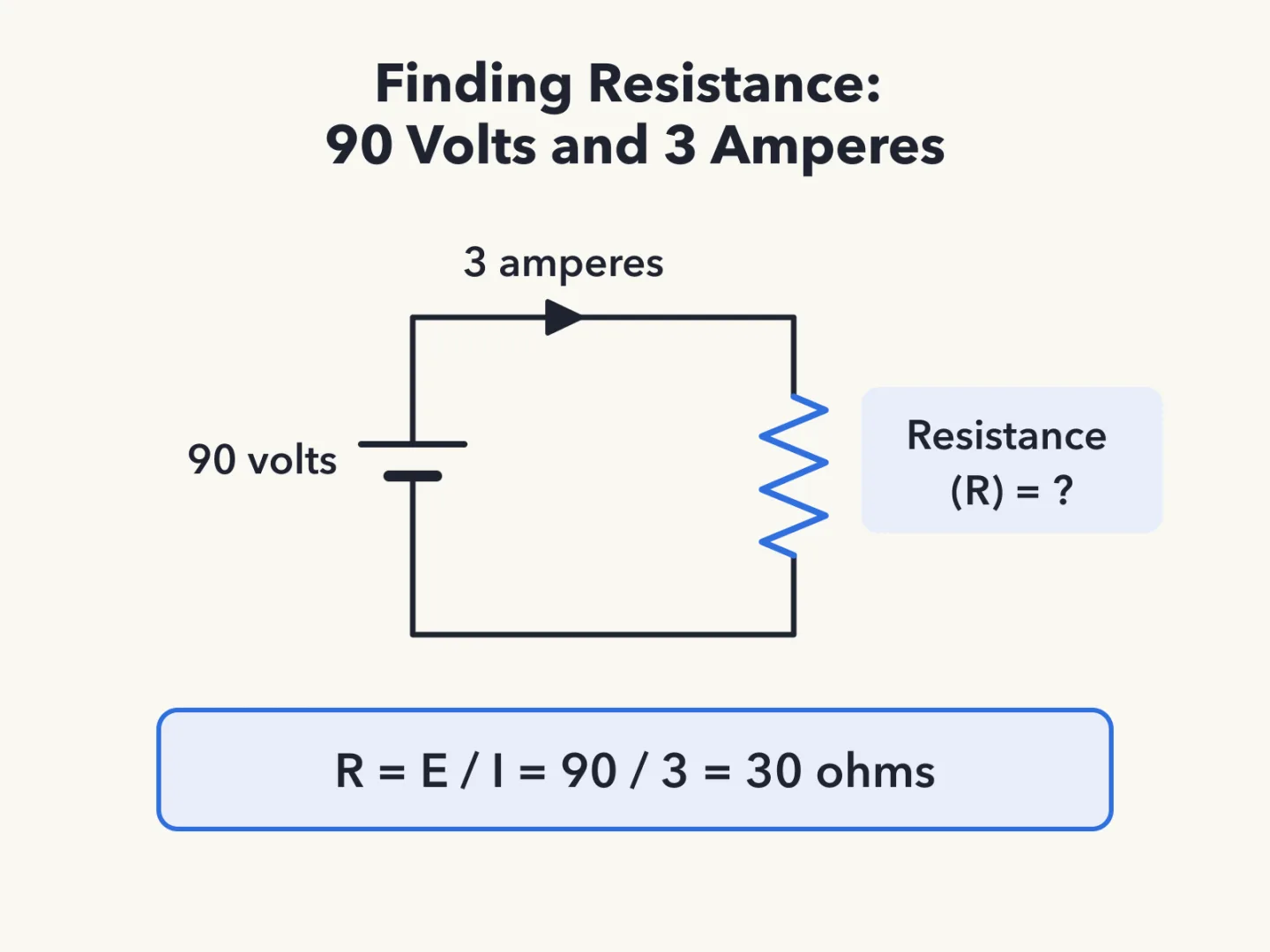
- A circuit in which 3 amperes flows when connected to 90 volts has a resistance of 30 ohms, because 90 / 3 is 30.
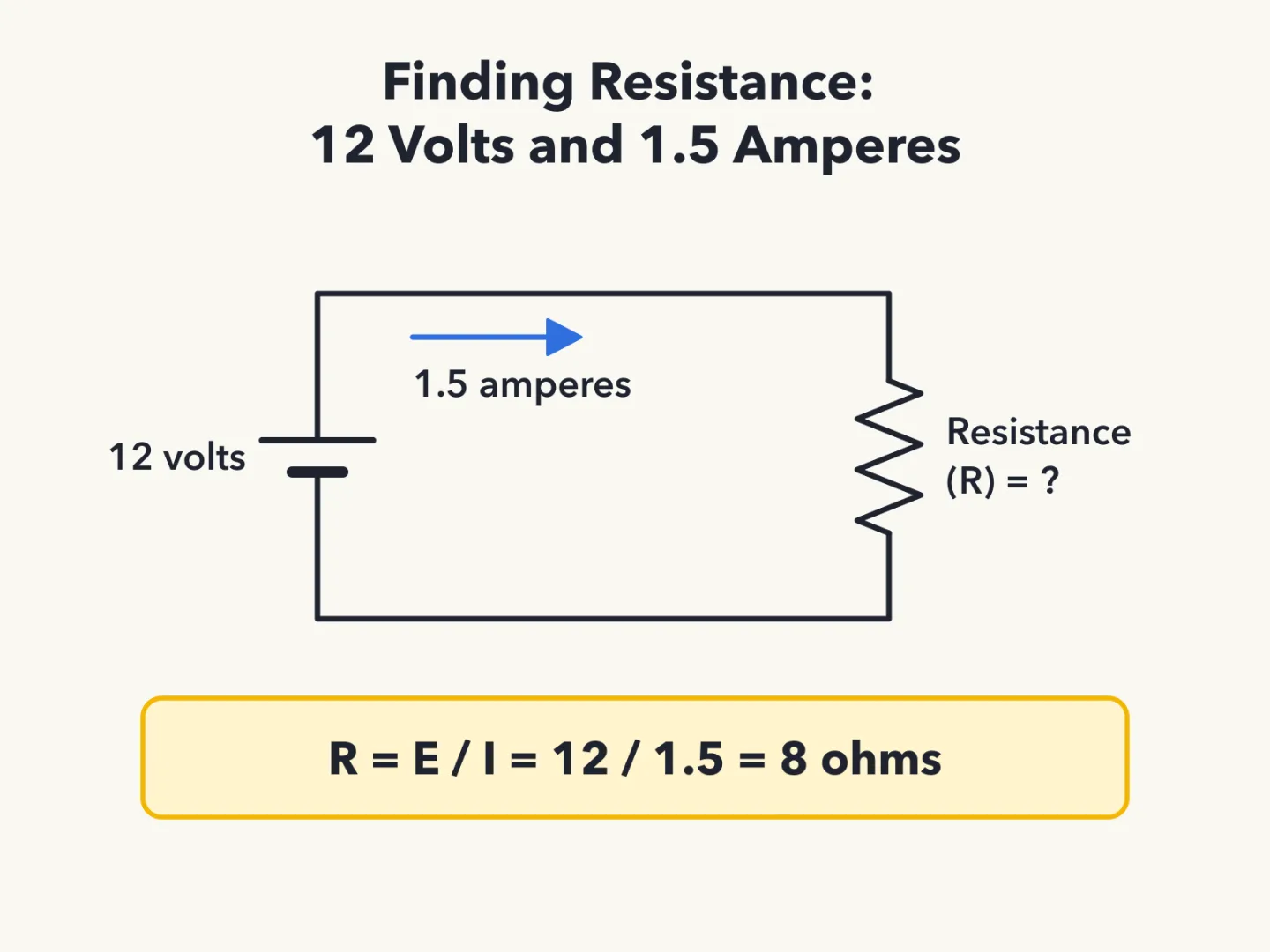
- A circuit with 12 volts applied and 1.5 amperes flowing has a resistance of 8 ohms, because 12 / 1.5 is 8.
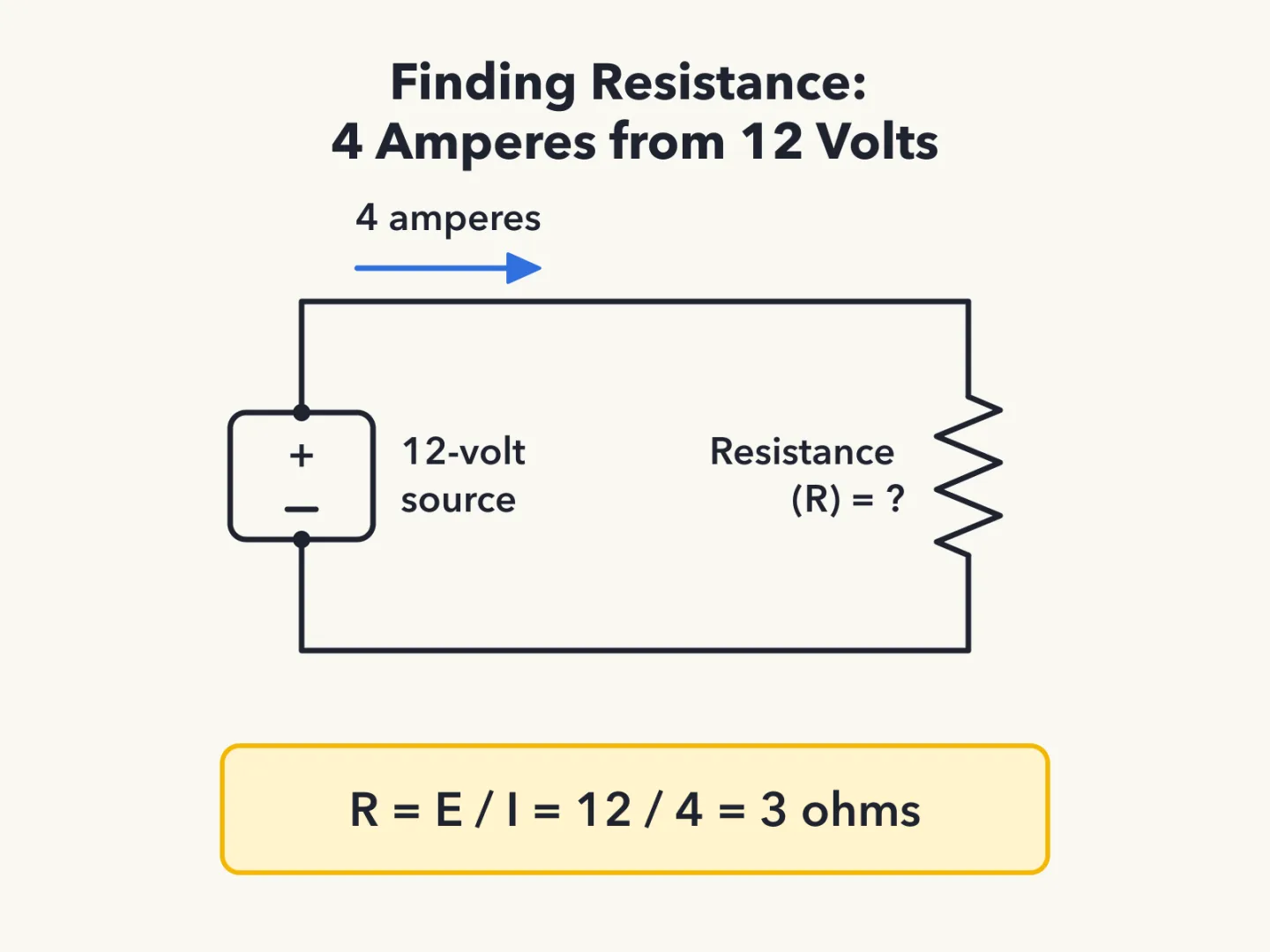
- A circuit that draws 4 amperes from a 12-volt source has a resistance of 3 ohms, because 12 / 4 is 3.
The ohm is the unit of resistance in all three answers. With different numbers, 20 volts applied to a circuit carrying 5 amperes gives a resistance of 4 ohms, because 20 / 5 is 4.
Calculating current
To find current, divide the voltage by the resistance.
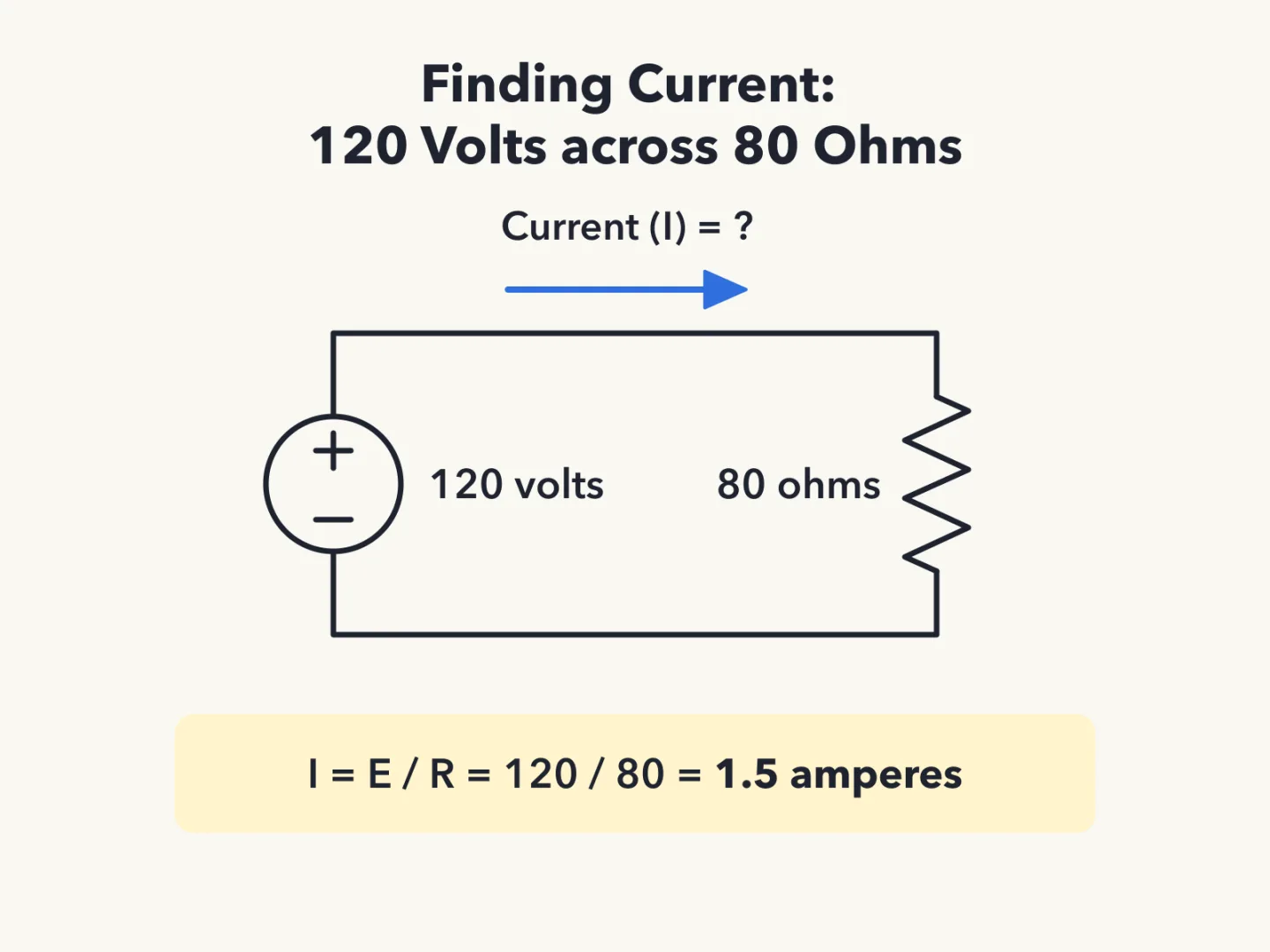
- A circuit with an applied voltage of 120 volts and a resistance of 80 ohms carries 1.5 amperes, because 120 / 80 is 1.5.
- A 100-ohm resistor connected across 200 volts carries 2 amperes, because 200 / 100 is 2.
- A 24-ohm resistor connected across 240 volts carries 10 amperes, because 240 / 24 is 10.
Multiplying the voltage by the resistance is the usual slip when finding current. A current of several thousand amperes is a clear sign that the voltage was multiplied by the resistance instead of divided by it. With different numbers, a 15-ohm resistor connected across 60 volts carries 4 amperes, because 60 / 15 is 4.
Calculating voltage
To find voltage, multiply the current by the resistance.
- A current of 0.5 amperes through a 2-ohm resistor gives a voltage of 1 volt, because 0.5 x 2 is 1.
- A current of 1 ampere through a 10-ohm resistor gives 10 volts, because 1 x 10 is 10.
- A current of 2 amperes through a 10-ohm resistor gives 20 volts, because 2 x 10 is 20.
Doubling the current through the same 10-ohm resistor doubles the voltage, from 10 volts to 20 volts. That is a handy check on the result.
Series and parallel circuits
Components can be connected in two basic ways, and each way keeps one quantity the same.
- In a series circuit, the current is always the same through all components.
- In a parallel circuit, the voltage is always the same across all components.
Series goes with current, and parallel goes with voltage.
Sources
Key facts
Capacitance Stores Electric-Field Energy
Capacitance describes the ability to store energy in an electric field. Pairing each property with its field helps: electric field goes with capacitance.
The Farad Measures Capacitance
The unit of capacitance is the farad.
Inductance Stores Magnetic-Field Energy
Inductance describes the ability to store energy in a magnetic field. Magnetic field goes with inductance, and electric field goes with capacitance.
The Henry Measures Inductance
The unit of inductance is the henry. The farad belongs to capacitance.
The Ohm Measures Impedance
The unit of impedance is the ohm. Impedance is the opposition to alternating current (AC) flow.
Writing Kilohertz Correctly
Kilohertz is written kHz: a lowercase k, a capital H and a lowercase z.
Writing Megahertz Correctly
Megahertz is written MHz: a capital M, a capital H and a lowercase z.
The Power Formula
In a direct current (DC) circuit, electrical power (P) is current (I) multiplied by voltage (E): P = I x E. Power is measured in watts.
13.8 Volts at 10 Amperes
A voltage of 13.8 volts of direct current (DC) and a current of 10 amperes deliver 138 watts, because 13.8 x 10 is 138. A 13.8 volt supply feeding a radio that draws 10 amperes is a realistic case of this formula.
12 Volts at 2.5 Amperes
A voltage of 12 volts of direct current (DC) and a current of 2.5 amperes deliver 30 watts, because 12 x 2.5 is 30. A quick check: 12 x 5 is 60, so half of that, 30, fits.
Finding Current from Power
Delivering 120 watts at 12 volts of direct current (DC) takes 10 amperes. Since power equals current times voltage, the current is the power divided by the voltage: 120 divided by 12 is 10.
What Impedance Means
Impedance is the opposition to alternating current (AC) flow.
Ohm's Law for Current
Ohm's law ties together current (I), voltage (E) and resistance (R). Current is voltage divided by resistance: I = E / R.
Ohm's Law for Voltage
Voltage is current times resistance: E = I x R. This is one form of Ohm's law.
Ohm's Law for Resistance
Resistance is voltage divided by current: R = E / I. To find resistance, divide the voltage by the current.
90 Volts and 3 Amperes
A circuit in which 3 amperes flows when connected to 90 volts has a resistance of 30 ohms, because 90 / 3 is 30.
12 Volts and 1.5 Amperes
A circuit with 12 volts applied and 1.5 amperes flowing has a resistance of 8 ohms, because 12 / 1.5 is 8.
4 Amperes from 12 Volts
A circuit that draws 4 amperes from a 12-volt source has a resistance of 3 ohms, because 12 / 4 is 3.
120 Volts across 80 Ohms
A circuit with an applied voltage of 120 volts and a resistance of 80 ohms carries 1.5 amperes, because 120 / 80 is 1.5.
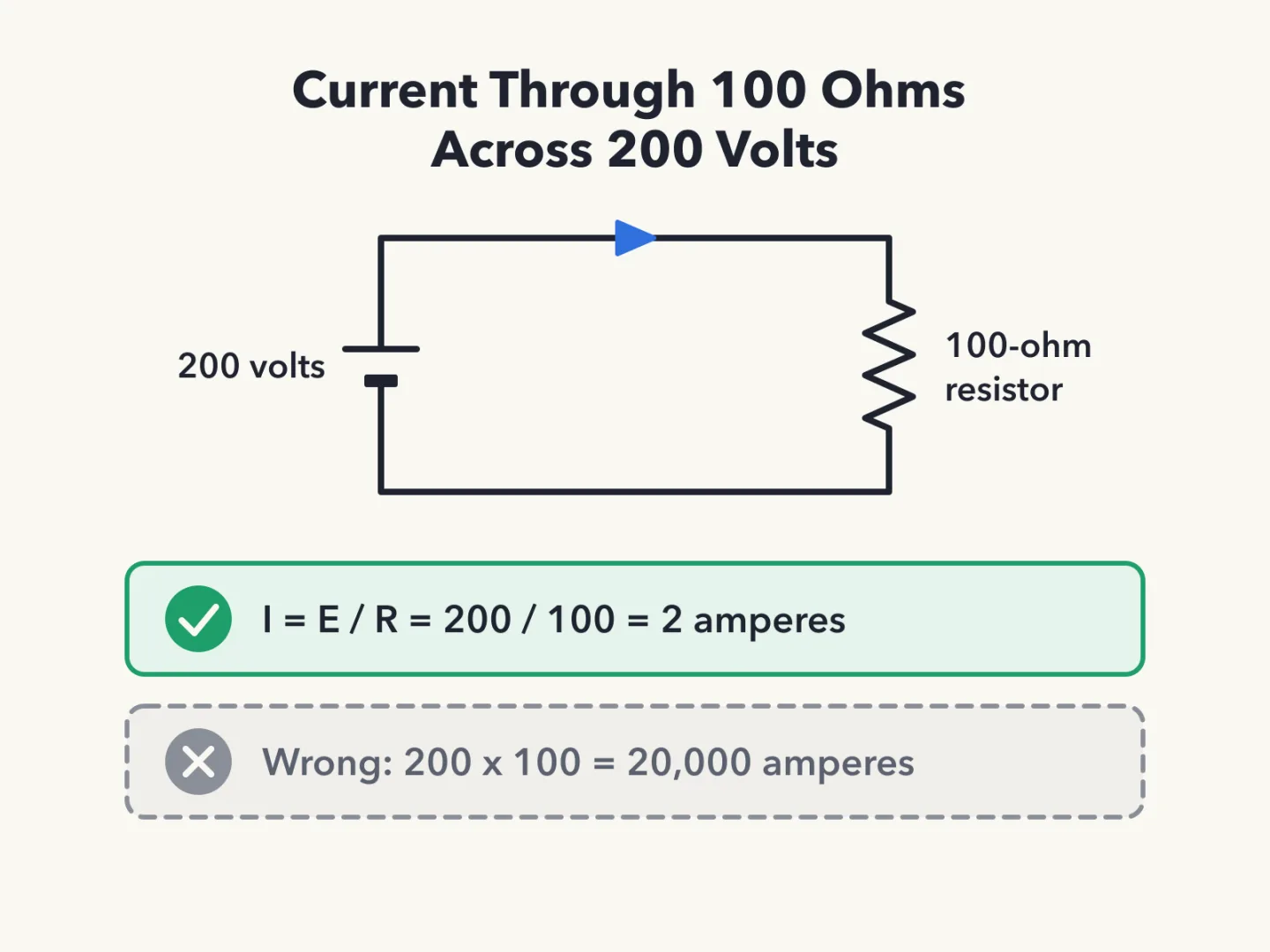
100 Ohms across 200 Volts
A 100-ohm resistor connected across 200 volts carries 2 amperes, because 200 / 100 is 2. A current of several thousand amperes is a clear sign that the voltage was multiplied by the resistance instead of divided by it.
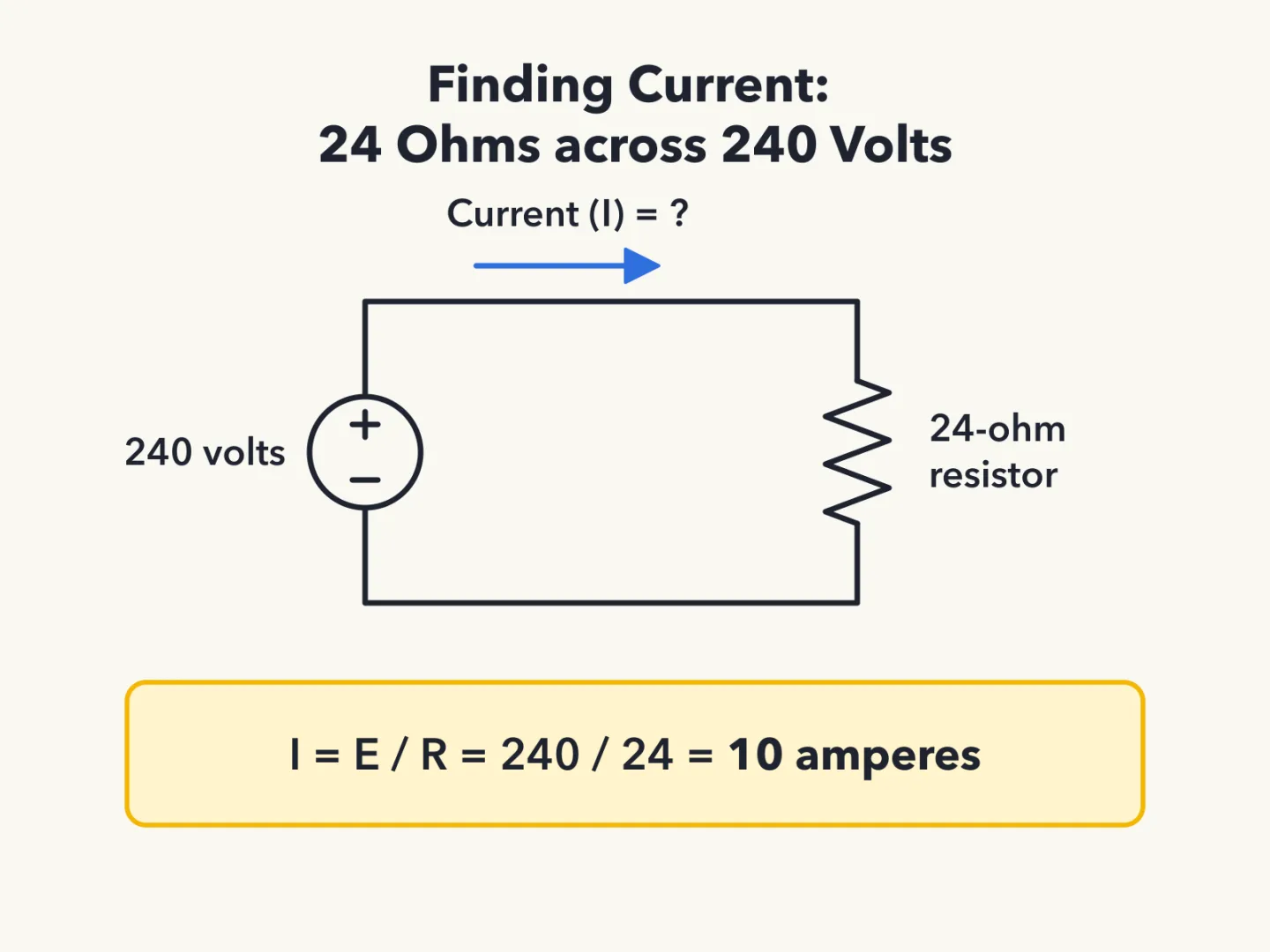
24 Ohms across 240 Volts
A 24-ohm resistor connected across 240 volts carries 10 amperes, because 240 / 24 is 10.
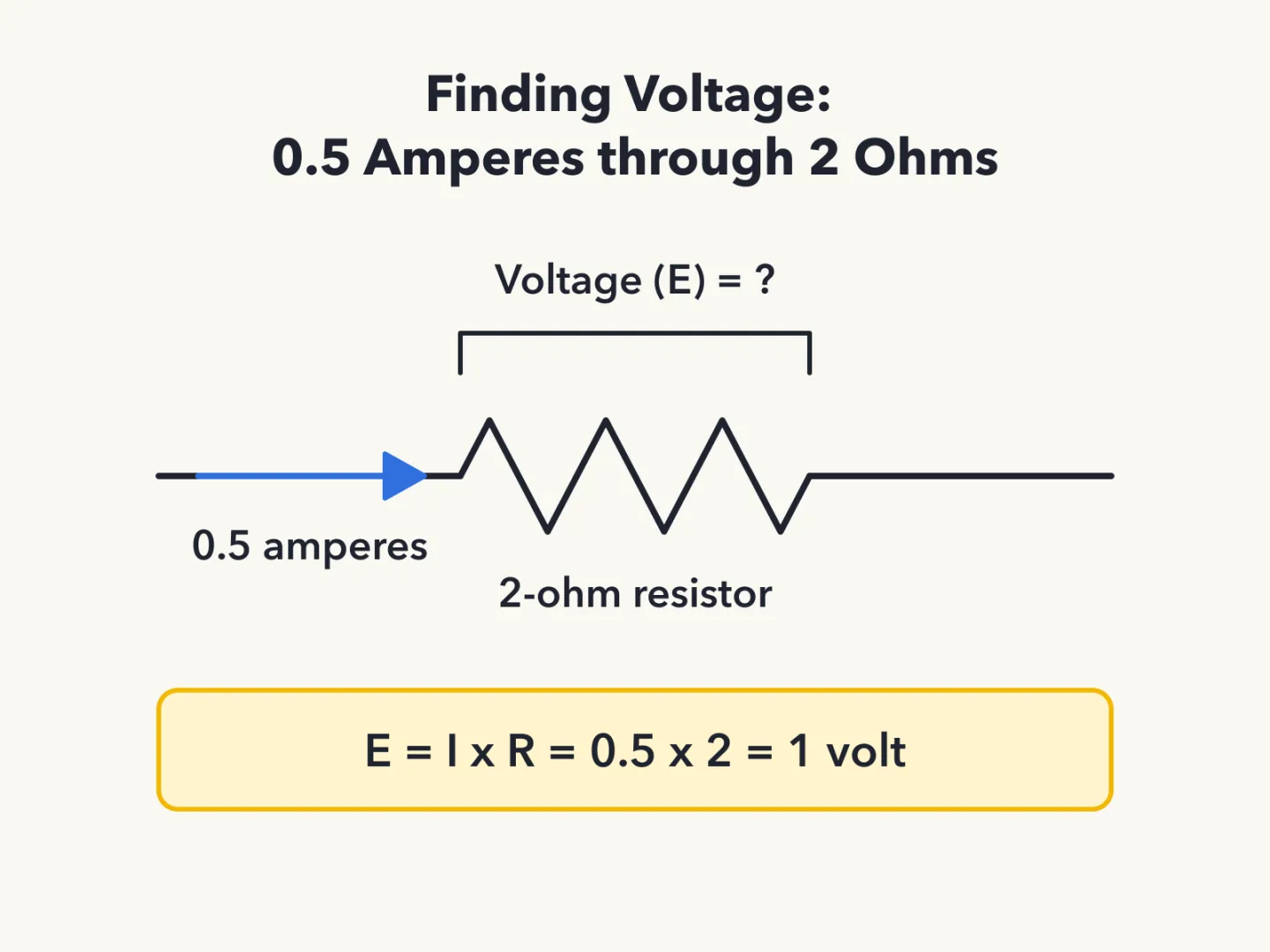
0.5 Amperes through 2 Ohms
A current of 0.5 amperes through a 2-ohm resistor gives a voltage of 1 volt, because 0.5 x 2 is 1.
1 Ampere through 10 Ohms
A current of 1 ampere through a 10-ohm resistor gives 10 volts, because 1 x 10 is 10.
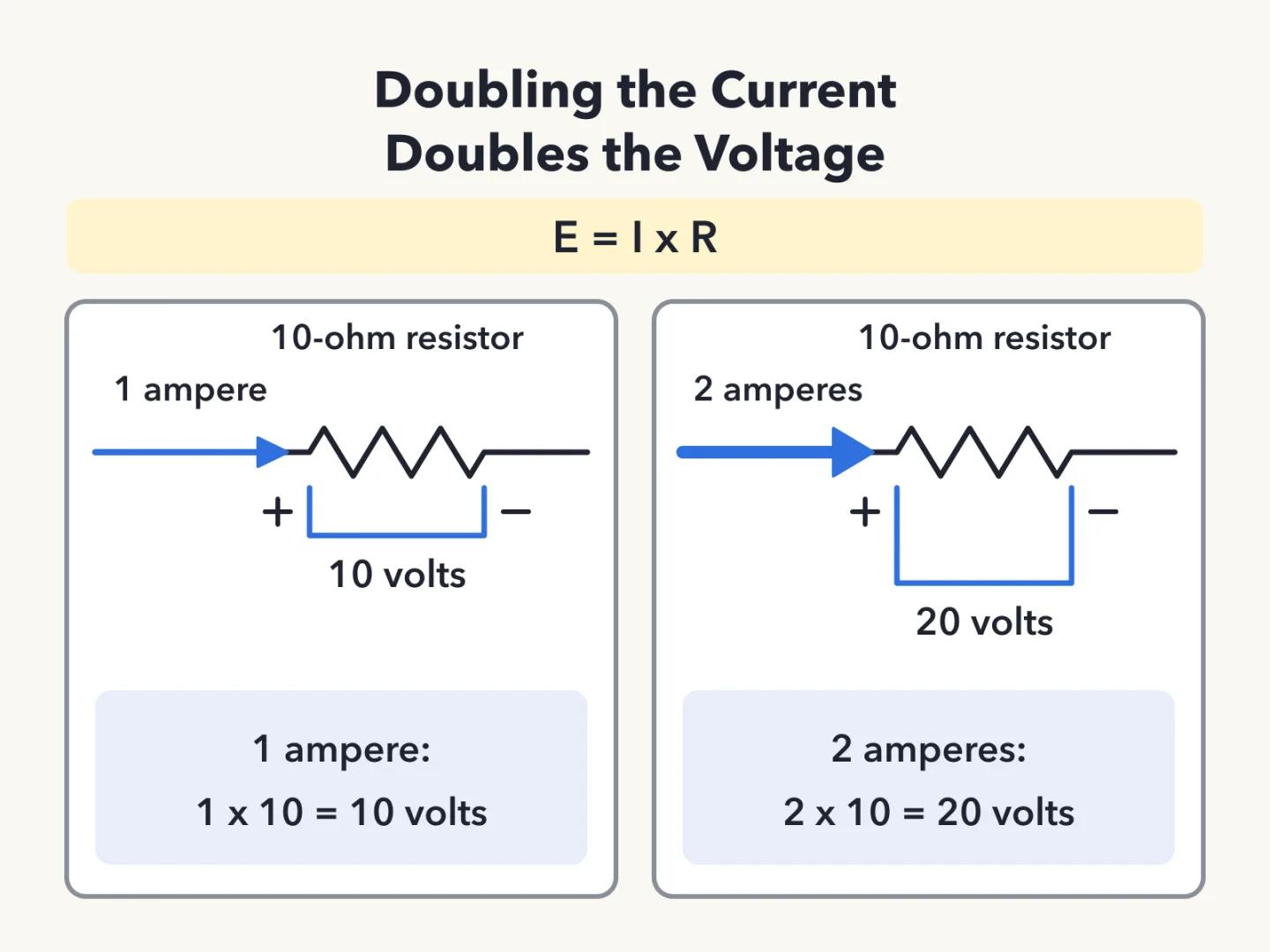
2 Amperes through 10 Ohms
A current of 2 amperes through a 10-ohm resistor gives 20 volts, because 2 x 10 is 20. Doubling the current through the same resistor doubles the voltage.
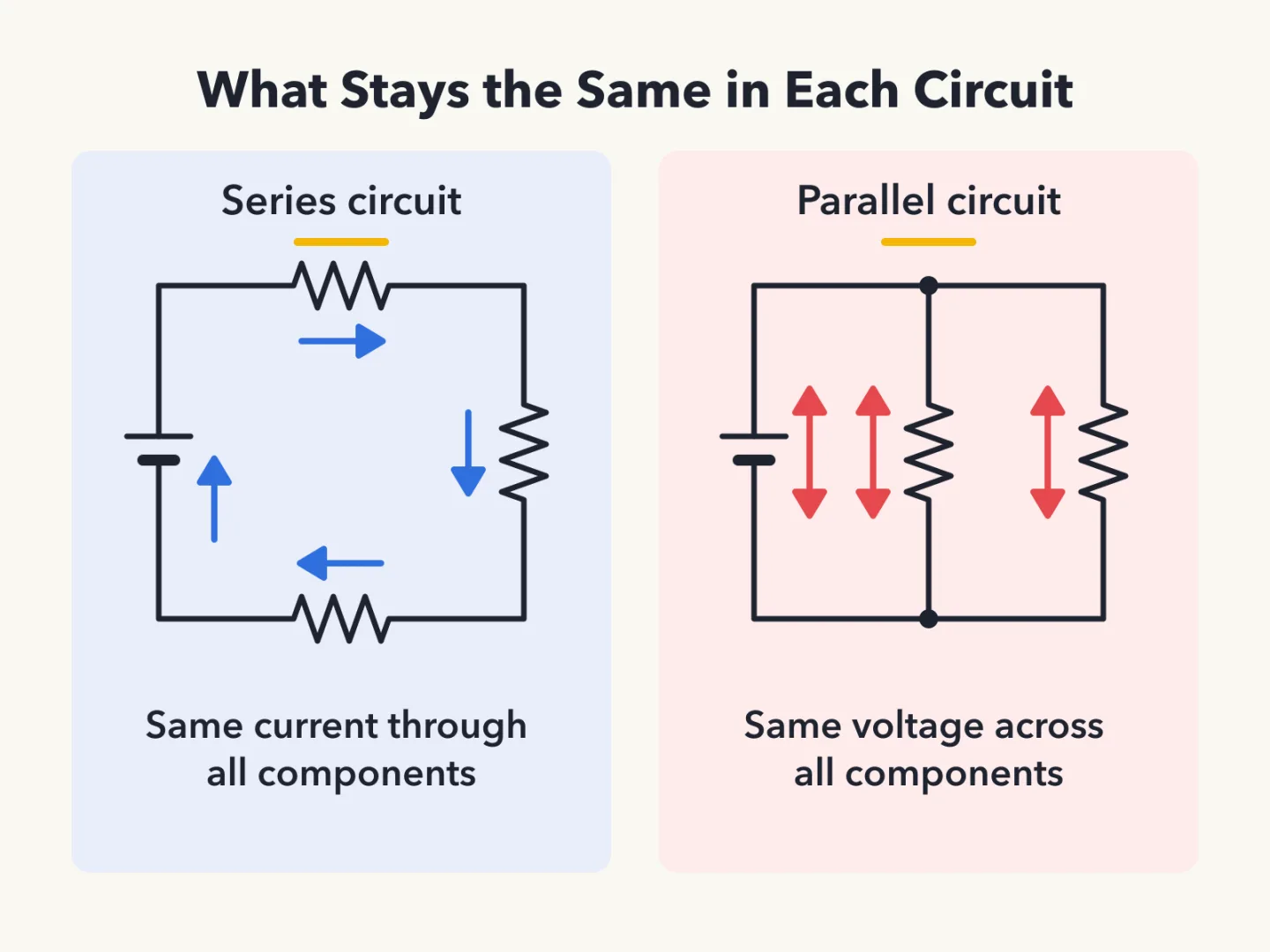
Series Circuits Share Current
In a series circuit, the current is always the same through all components. A parallel circuit keeps the voltage the same instead.
Parallel Circuits Share Voltage
In a parallel circuit, the voltage is always the same across all components. Series goes with current, and parallel goes with voltage.
Matched pairs
Each item on the left goes with the one on the right.
- Magnetic-field storage
- Inductance
- Series circuit
- Same current through all parts
Self-test
Answer each question from memory, then check your work against the answer key.
1. What describes the ability to store energy in an electric field?
- ACapacitance
- BFrequency
- CInductance
- DResistance
2. What is the unit of capacitance?
- AOhm
- BHenry
- CVolt
- DFarad
3. What describes the ability to store energy in a magnetic field?
- AResistance
- BAdmittance
- CInductance
- DCapacitance
4. What is the unit of inductance?
- ACoulomb
- BHenry
- COhm
- DFarad
5. What is the unit of impedance?
- AOhm
- BAmpere
- CVolt
- DCoulomb
6. What is impedance?
- AThe inverse of resistance
- BThe inverse of reactance
- CThe power handling capability of a component
- DThe opposition to AC current flow
7. What is the abbreviation for kilohertz?
- AKHz
- Bkhz
- CkHz
- DKHZ
8. What is the abbreviation for megahertz?
- AMhz
- BMHz
- CmHz
- DmHZ
9. What formula is used to calculate electrical power (P) in a DC circuit?
- AP = I / E
- BP = E / I
- CP = I x E
- DP = I2 x E
10. How much power is delivered by a voltage of 13.8 volts DC and a current of 10 amperes?
- A23.8 watts
- B138 watts
- C3.8 watts
- D0.7 watts
11. How much power is delivered by a voltage of 12 volts DC and a current of 2.5 amperes?
- A14.5 watts
- B0.208 watts
- C4.8 watts
- D30 watts
12. How much current is required to deliver 120 watts at a voltage of 12 volts DC?
- A10 amperes
- B0.1 amperes
- C132 amperes
- D12 amperes
13. What formula is used to calculate current in a circuit?
- AI = E2 x R
- BI = E2 / R
- CI = E x R
- DI = E / R
14. What formula is used to calculate voltage in a circuit?
- AE = I x R
- BE = I / R
- CE = I2 / R
- DE = I2 x R
15. What formula is used to calculate resistance in a circuit?
- AR = E + I
- BR = E / I
- CR = E x I
- DR = E - I
16. What is the resistance of a circuit in which a current of 3 amperes flows when connected to 90 volts?
- A270 ohms
- B1/30 ohm
- C30 ohms
- D3 ohms
17. What is the resistance of a circuit for which the applied voltage is 12 volts and the current flow is 1.5 amperes?
- A13.5 ohms
- B0.125 ohms
- C8 ohms
- D18 ohms
18. What is the resistance of a circuit that draws 4 amperes from a 12-volt source?
- A48 ohms
- B8 ohms
- C16 ohms
- D3 ohms
19. What is the current in a circuit with an applied voltage of 120 volts and a resistance of 80 ohms?
- A0.667 amperes
- B1.5 amperes
- C200 amperes
- D9600 amperes
20. What is the current through a 100-ohm resistor connected across 200 volts?
- A2 amperes
- B0.5 amperes
- C20,000 amperes
- D100 amperes
21. What is the current through a 24-ohm resistor connected across 240 volts?
- A2400 amperes
- B5760 amperes
- C0.1 amperes
- D10 amperes
22. What is the voltage across a 2-ohm resistor if a current of 0.5 amperes flows through it?
- A1 volt
- B1.5 volts
- C2.5 volts
- D0.25 volts
23. What is the voltage across a 10-ohm resistor if a current of 1 ampere flows through it?
- A1 volt
- B10 volts
- C9 volts
- D11 volts
24. What is the voltage across a 10-ohm resistor if a current of 2 amperes flows through it?
- A12 volts
- B0.2 volts
- C20 volts
- D8 volts
25. In which type of circuit is the current always the same through all components?
- ABranch
- BSeries
- CResonant
- DParallel
26. In which type of circuit is the voltage always the same across all components?
- ASeries
- BResonant
- CParallel
- DBranch
Go deeper
- ListenLesson 7 episode
- WatchPower From a 13.8 Volt Radio A radio on a 13.8 volt supply draws 10 amperes. How much power does it use?
- WatchFinding Current With Ohm's Law Put 200 volts across a resistor of 100 ohms. How many amperes flow through it?
- StudyHam Radio Technician License in the FlashFeed app
Answer key
- 1. A CapacitanceCapacitance stores energy in an electric field. Inductance is the magnetic-field property, and resistance and frequency are not storage abilities.
- 2. D FaradThe farad is the unit of capacitance. The henry is for inductance, and the ohm and volt are not capacitance units.
- 3. C InductanceInductance stores energy in a magnetic field. Capacitance is its electric-field counterpart.
- 4. B HenryThe henry is the unit of inductance. The farad measures capacitance and the ohm is not an inductance unit.
- 5. A OhmImpedance is opposition to alternating current (AC) flow and is measured in ohms. Volt, ampere and coulomb are not impedance units.
- 6. D The opposition to AC current flowImpedance is the opposition to alternating current (AC) flow. It is not an inverse of resistance or reactance, nor a power rating.
- 7. C kHzKilohertz is kHz: lowercase k, capital H, lowercase z. The other capitalizations are wrong.
- 8. B MHzMegahertz is MHz: capital M, capital H, lowercase z. The lowercase m forms and Mhz are wrong.
- 9. C P = I x EIn a direct current (DC) circuit, power is current times voltage, P = I x E. Dividing them or squaring the current does not give power.
- 10. B 138 wattsPower is voltage times current: 13.8 x 10 = 138 watts. 0.7 comes from dividing, 23.8 from adding and 3.8 from subtracting. DC stands for direct current.
- 11. D 30 wattsMultiply voltage by current: 12 x 2.5 = 30 watts. DC stands for direct current.
- 12. A 10 amperesCurrent is power divided by voltage: 120 / 12 = 10 amperes. DC stands for direct current.
- 13. D I = E / RCurrent is voltage divided by resistance, I = E / R. Multiplying them gives wrong, very large values.
- 14. A E = I x RVoltage is current times resistance, E = I x R. Dividing current by resistance is not Ohm's law for voltage.
- 15. B R = E / IResistance is voltage divided by current, R = E / I. Multiplying, adding or subtracting them is wrong.
- 16. C 30 ohmsDivide voltage by current: 90 / 3 = 30 ohms.
- 17. C 8 ohmsDivide voltage by current: 12 / 1.5 = 8 ohms.
- 18. D 3 ohmsDivide voltage by current: 12 / 4 = 3 ohms. Multiplying gives 48, which is not the resistance.
- 19. B 1.5 amperesDivide voltage by resistance: 120 / 80 = 1.5 amperes. 9600 comes from multiplying.
- 20. A 2 amperesDivide voltage by resistance: 200 / 100 = 2 amperes. 20,000 comes from multiplying.
- 21. D 10 amperesDivide voltage by resistance: 240 / 24 = 10 amperes.
- 22. A 1 voltVoltage is current times resistance: 0.5 x 2 = 1 volt.
- 23. B 10 voltsVoltage is current times resistance: 1 x 10 = 10 volts.
- 24. C 20 voltsVoltage is current times resistance: 2 x 10 = 20 volts.
- 25. B SeriesIn a series circuit the current is the same through all components. Parallel circuits share voltage instead.
- 26. C ParallelIn a parallel circuit the voltage is the same across all components. Series circuits share current instead.
Sources
- NCVEC Question Pool Committee — 2026–2030 Technician question pool — ncvec.org/index.php/2026-2030-technician-question-pool
Image credits
- Inductance Stores Magnetic-Field Energy: FlashFeed original diagram · CC-BY-4.0
- Writing Kilohertz Correctly: FlashFeed original diagram · CC-BY-4.0
- Writing Megahertz Correctly: FlashFeed original diagram · CC-BY-4.0
- The Power Formula: FlashFeed original diagram · CC-BY-4.0
- 13.8 Volts at 10 Amperes: FlashFeed original diagram · CC-BY-4.0
- 12 Volts at 2.5 Amperes: FlashFeed original diagram · CC-BY-4.0
- Finding Current from Power: FlashFeed original diagram · CC-BY-4.0
- Ohm's Law for Voltage: FlashFeed original diagram · CC-BY-4.0
- 90 Volts and 3 Amperes: FlashFeed original diagram · CC-BY-4.0
- 12 Volts and 1.5 Amperes: FlashFeed original diagram · CC-BY-4.0
- 4 Amperes from 12 Volts: FlashFeed original diagram · CC-BY-4.0
- 120 Volts across 80 Ohms: FlashFeed original diagram · CC-BY-4.0
- 100 Ohms across 200 Volts: FlashFeed original diagram · CC-BY-4.0
- 24 Ohms across 240 Volts: FlashFeed original diagram · CC-BY-4.0
- 0.5 Amperes through 2 Ohms: FlashFeed original diagram · CC-BY-4.0
- 2 Amperes through 10 Ohms: FlashFeed original diagram · CC-BY-4.0
- Series Circuits Share Current: FlashFeed original diagram · CC-BY-4.0