
Ham Radio Technician License study guide · Lesson 8 of 15
Electronic Components: Parts and Semiconductors
Resistors, capacitors, inductors and batteries · Semiconductors: diodes and transistors
This is the lesson's study guide from the FlashFeed app, plus its key facts and a self-test.
What you'll be able to do
- Identify resistors, potentiometers, capacitors and inductors by function, construction and the energy they store
- Describe inductor construction, SPDT and other switch types, and which battery chemistries can be recharged
- Explain how diodes work, how their leads are marked and named, and how LEDs light, and name a component that can act as an electronic switch
- Identify transistor types and electrodes, the FET abbreviation, and what gain means in amplifiers
Every circuit in a station is built from a small set of parts, and each part has a recognizable job. This lesson covers the parts that oppose current, store energy, switch between circuits and supply power. It then covers the semiconductor parts: diodes, light-emitting diodes and transistors. A new licensee who can tell these parts apart can read a schematic and understand what each part does in a radio.
Resistors, capacitors, inductors and batteries
Resistors and potentiometers
A resistor is the component that opposes the flow of current in a direct current (DC) circuit.
A potentiometer is the component often used as an adjustable volume control. What a potentiometer controls is resistance. Together these facts show the link: an adjustable volume control is a part whose resistance can be changed, and the potentiometer is that part.
Capacitors and inductors
Two common parts store energy, and the kind of field tells them apart.
A capacitor stores energy in an electric field. A capacitor consists of conductive surfaces separated by an insulator.
An inductor stores energy in a magnetic field. An inductor is typically constructed as a coil of wire.
To keep the two apart, pair each with its field and its shape:
- Capacitor: electric field, conductive surfaces separated by an insulator.
- Inductor: magnetic field, coil of wire.
Switches
A single-pole double-throw (SPDT) switch switches a single circuit between one of two other circuits.
Switch types carry names such as single-pole single-throw and double-pole double-throw, and a schematic shows which type is used. In the reference schematic labeled figure T-2, component 3 is a single-pole single-throw switch.
Batteries
Some battery chemistries can be recharged and some cannot. Nickel-metal hydride, lithium-ion and lead-acid are all rechargeable.
Carbon-zinc is a chemistry that cannot be recharged. Nickel-cadmium is rechargeable as well.
A builder choosing a power source for a portable station can sort chemistries by this one fact: carbon-zinc cannot be recharged, and the other chemistries named here can.
Sources
Semiconductors: diodes and transistors
Diodes
A diode is the electronic component that allows current to flow in only one direction.
The electrodes of a diode are named the anode and cathode.
The cathode lead of a semiconductor diode is often marked on the package with a stripe. The stripe on a diode's package points out the cathode end.
A diode's forward voltage drop is lower in some diode types than in others.
Light-emitting diodes
A light-emitting diode (LED) is a diode that gives off light. Forward current is what causes an LED to emit light. Because an LED is a diode, the one-way idea applies to it too: it lights with forward current.
Transistors
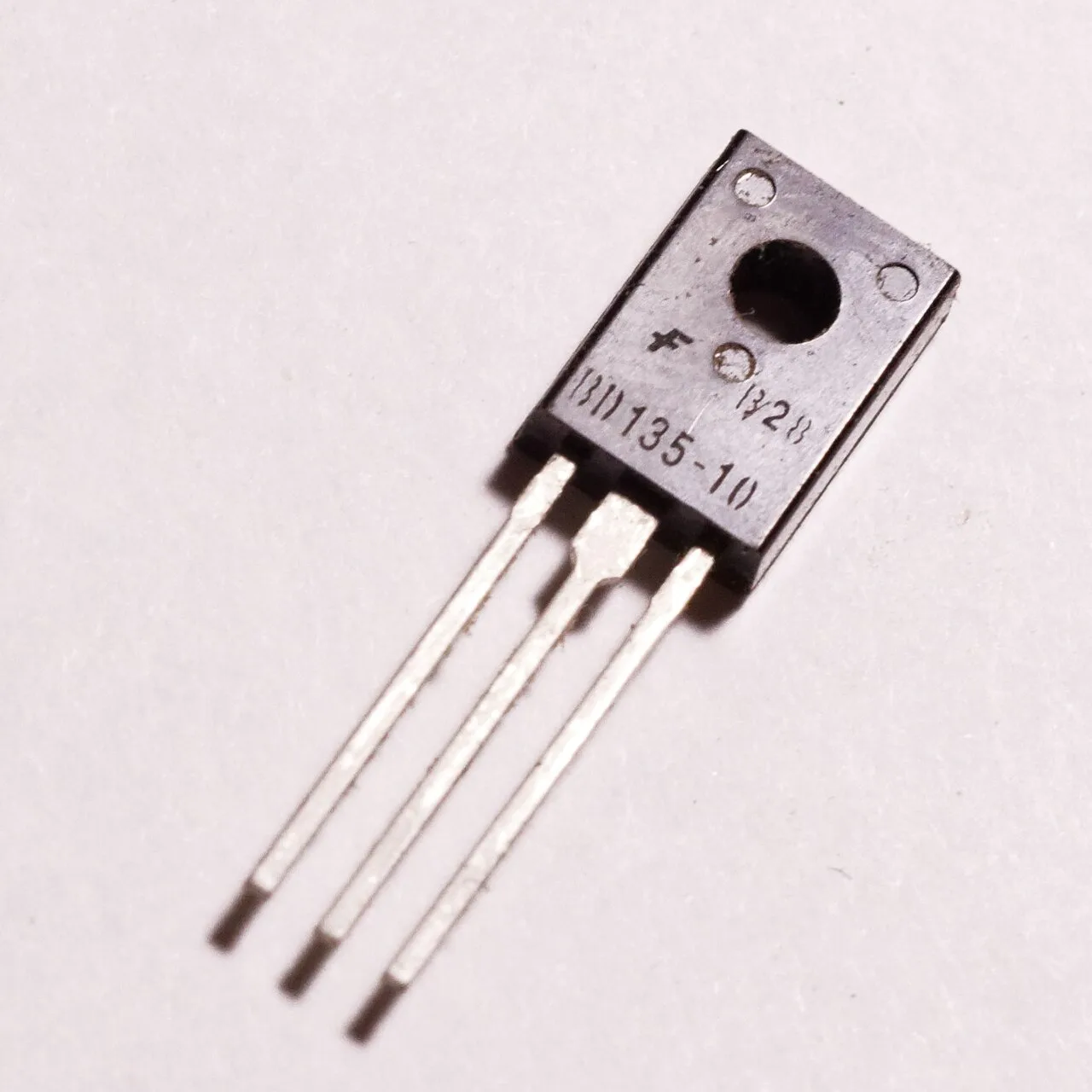
A transistor is a component that can consist of three regions of semiconductor material.
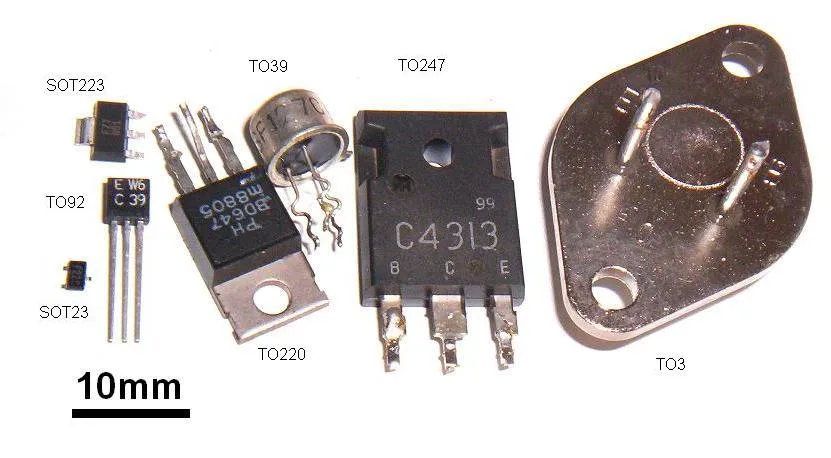
A transistor can be used as an electronic switch.
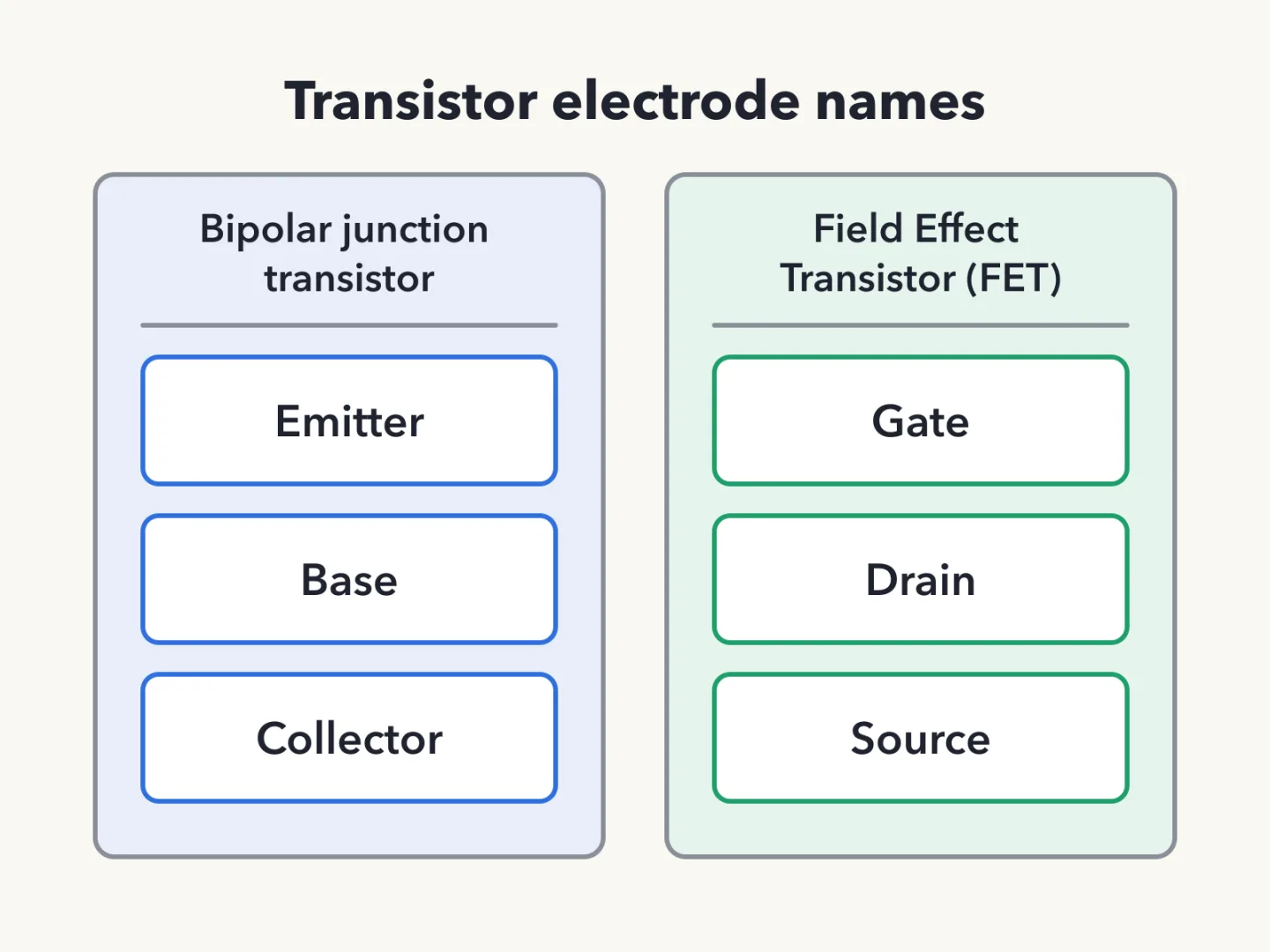
Transistors come in more than one type, and the names of their electrodes differ:
- A Field Effect Transistor (FET) is the type that has a gate, a drain and a source.
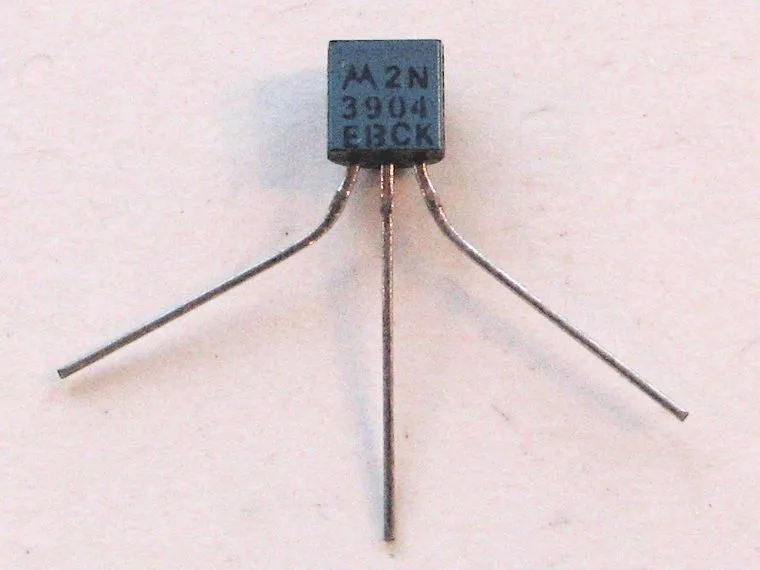
- A bipolar junction transistor has the electrodes emitter, base and collector.
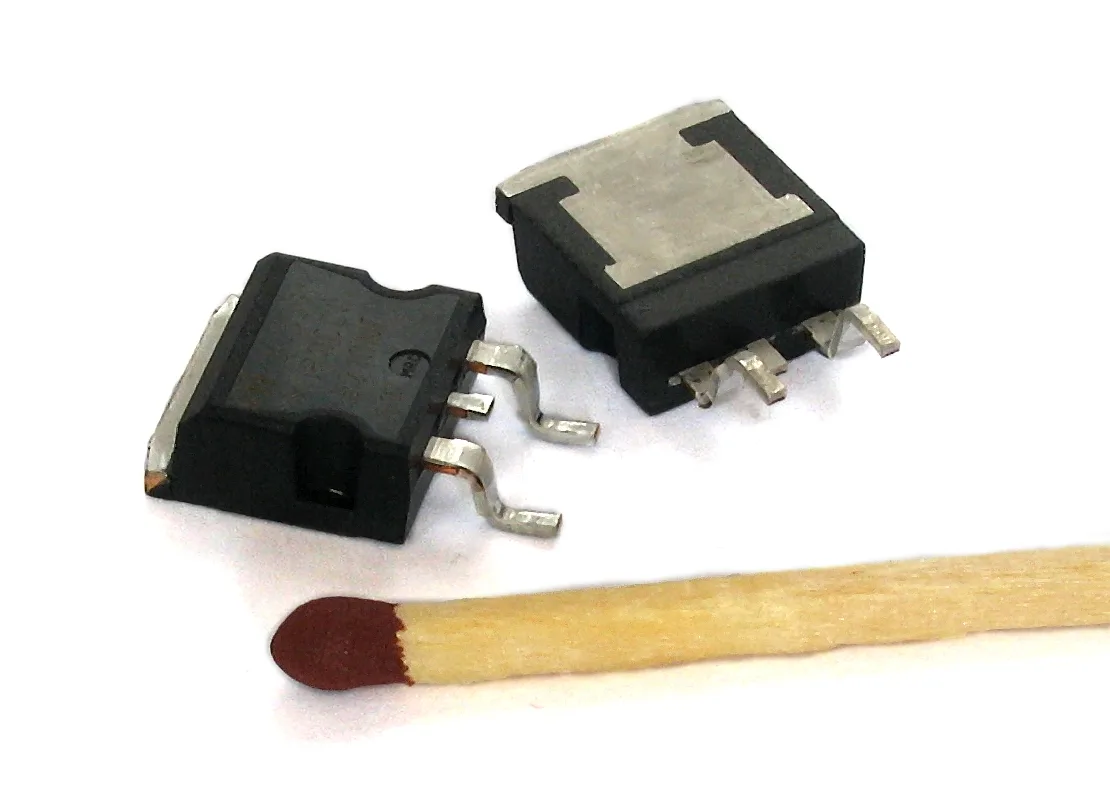
The abbreviation FET stands for Field Effect Transistor.
Gain in amplifiers
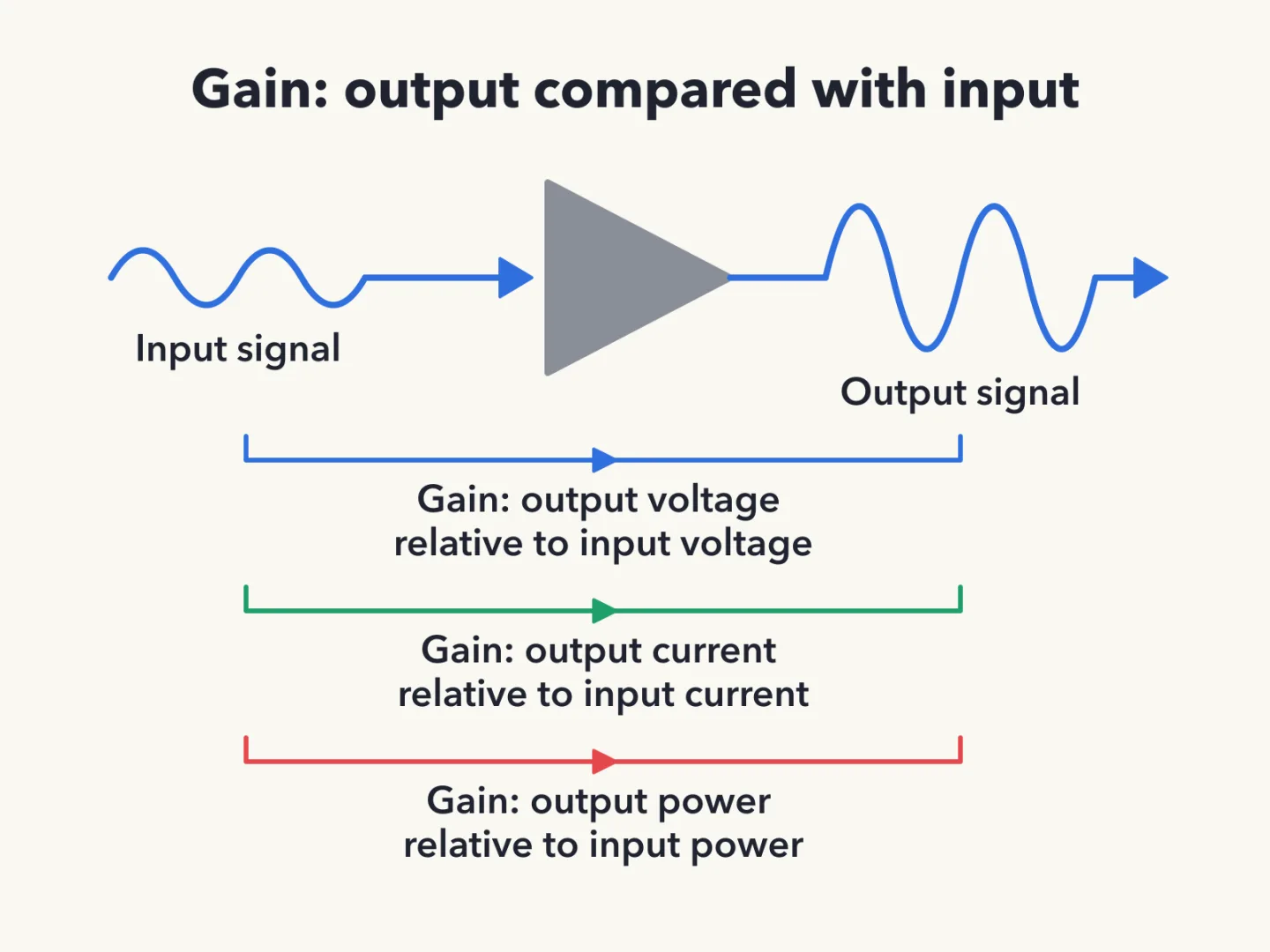
Gain describes what an amplifier does to a signal: it compares the output signal with the input signal. The comparison can be made in three ways, and each is a meaning of gain:
- the output signal voltage relative to the input signal voltage;
- the output signal current relative to the input signal current;
- the output signal power relative to the input signal power.
A transistor is a component that can provide power gain.
The transistor shows up in three jobs in this section: a three-region semiconductor part, an electronic switch, and a source of power gain. A diode, by contrast, is the part for one-way current, and an LED is a diode that lights with forward current.
Sources
Key facts
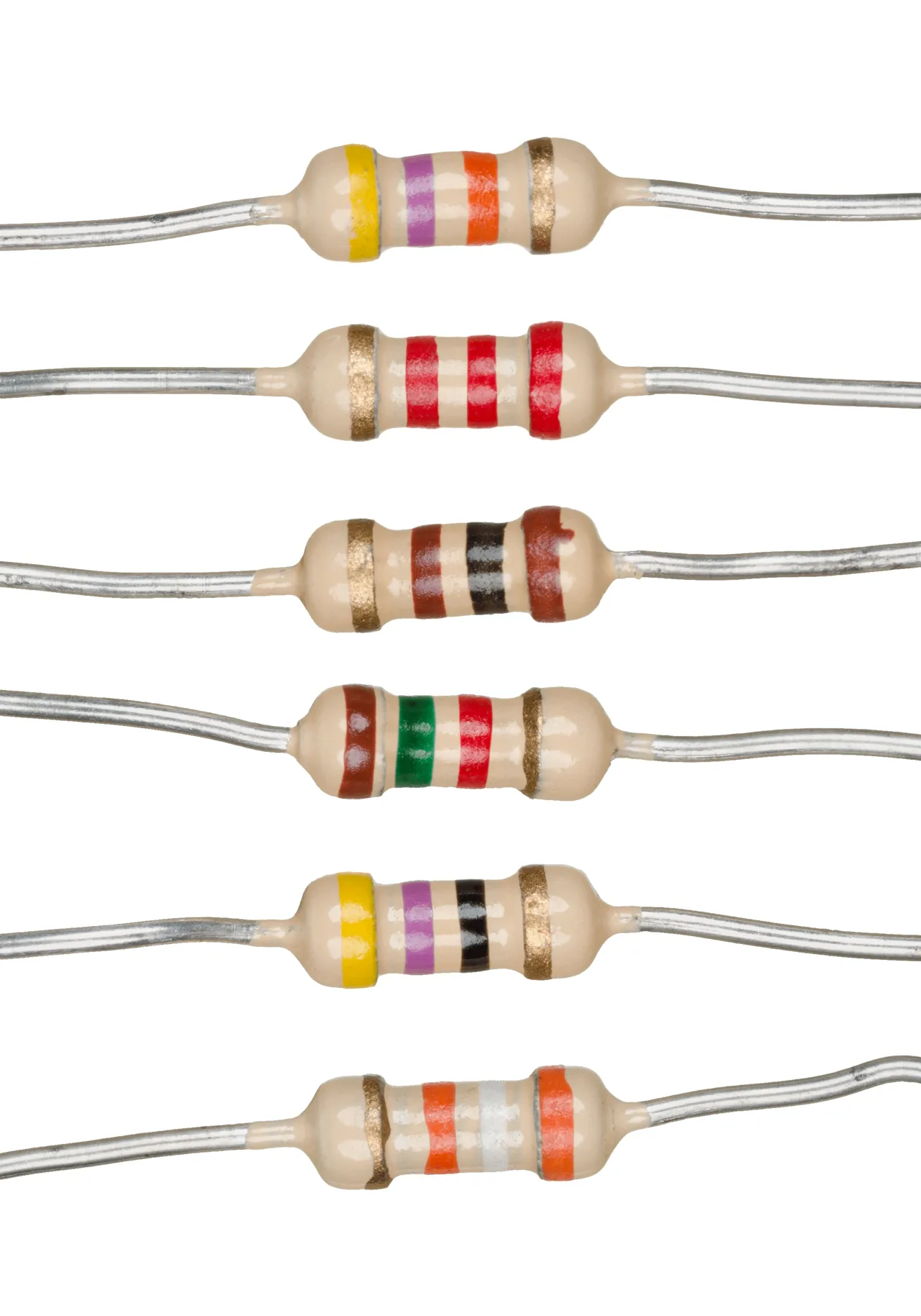
The Resistor Opposes Current
A resistor is the component that opposes the flow of current in a direct current (DC) circuit.
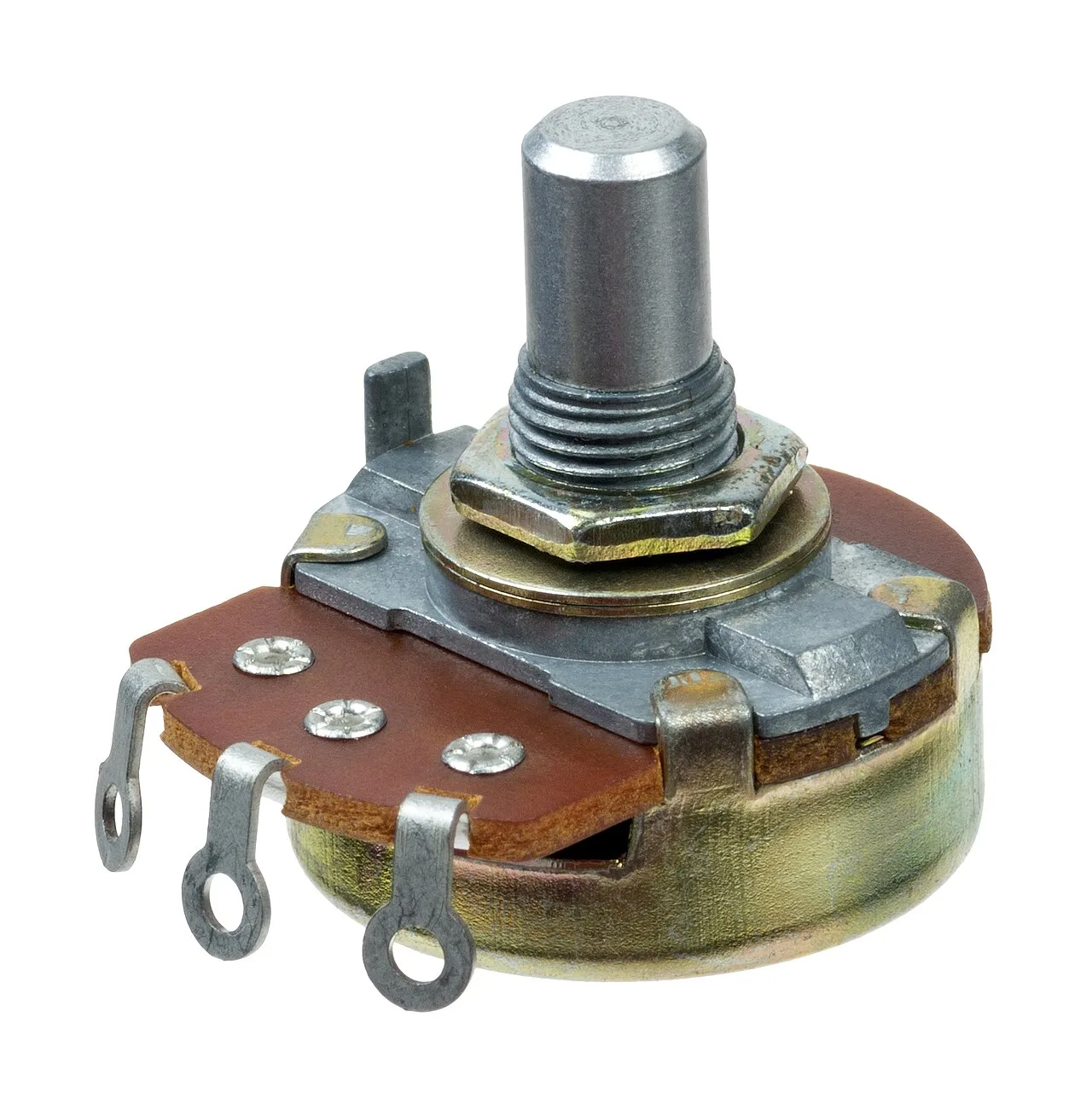
Potentiometer as Volume Control
A potentiometer is the part often used as an adjustable volume control.
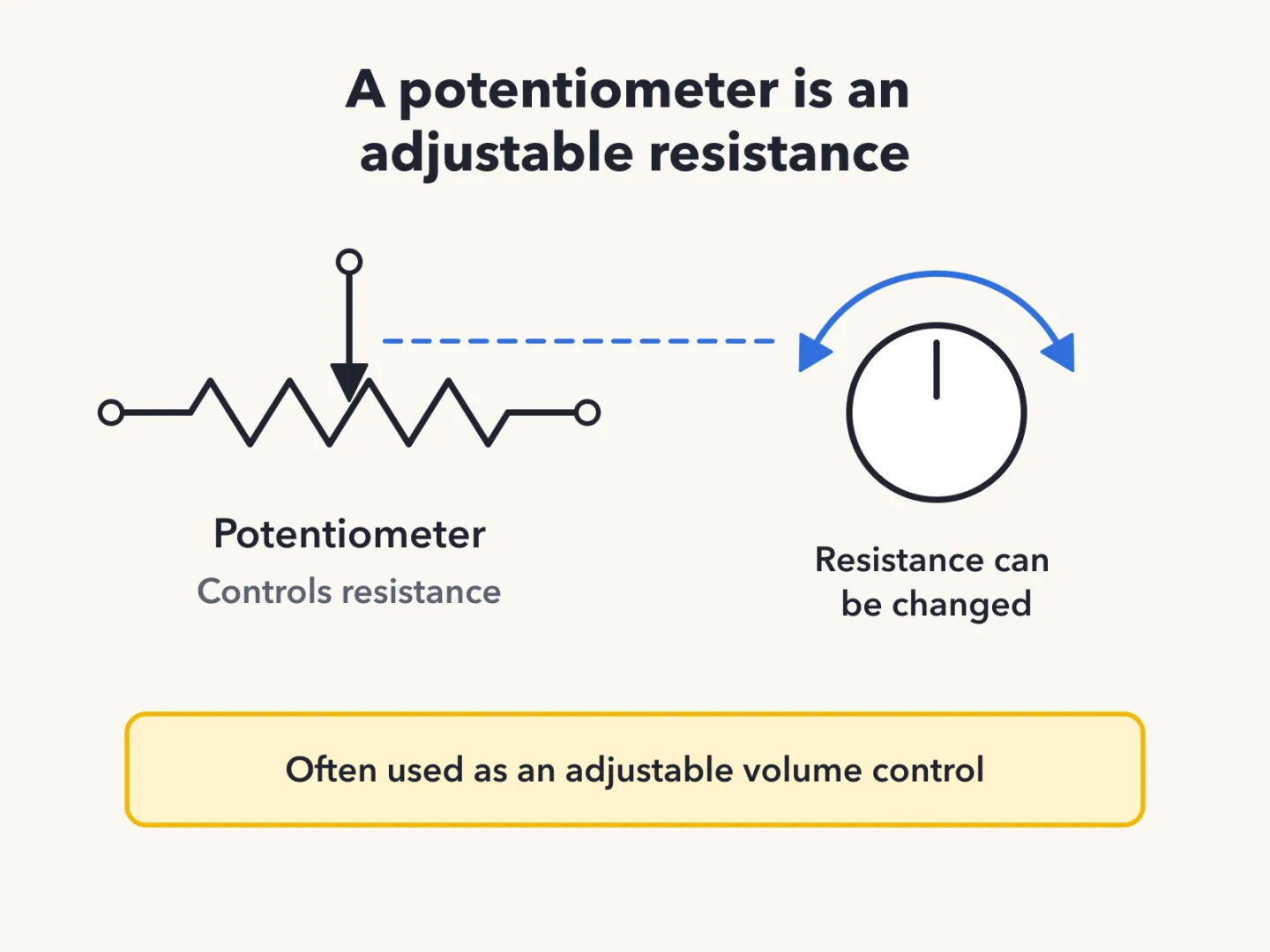
What a Potentiometer Controls
A potentiometer controls resistance. An adjustable volume control is a part whose resistance can be changed.
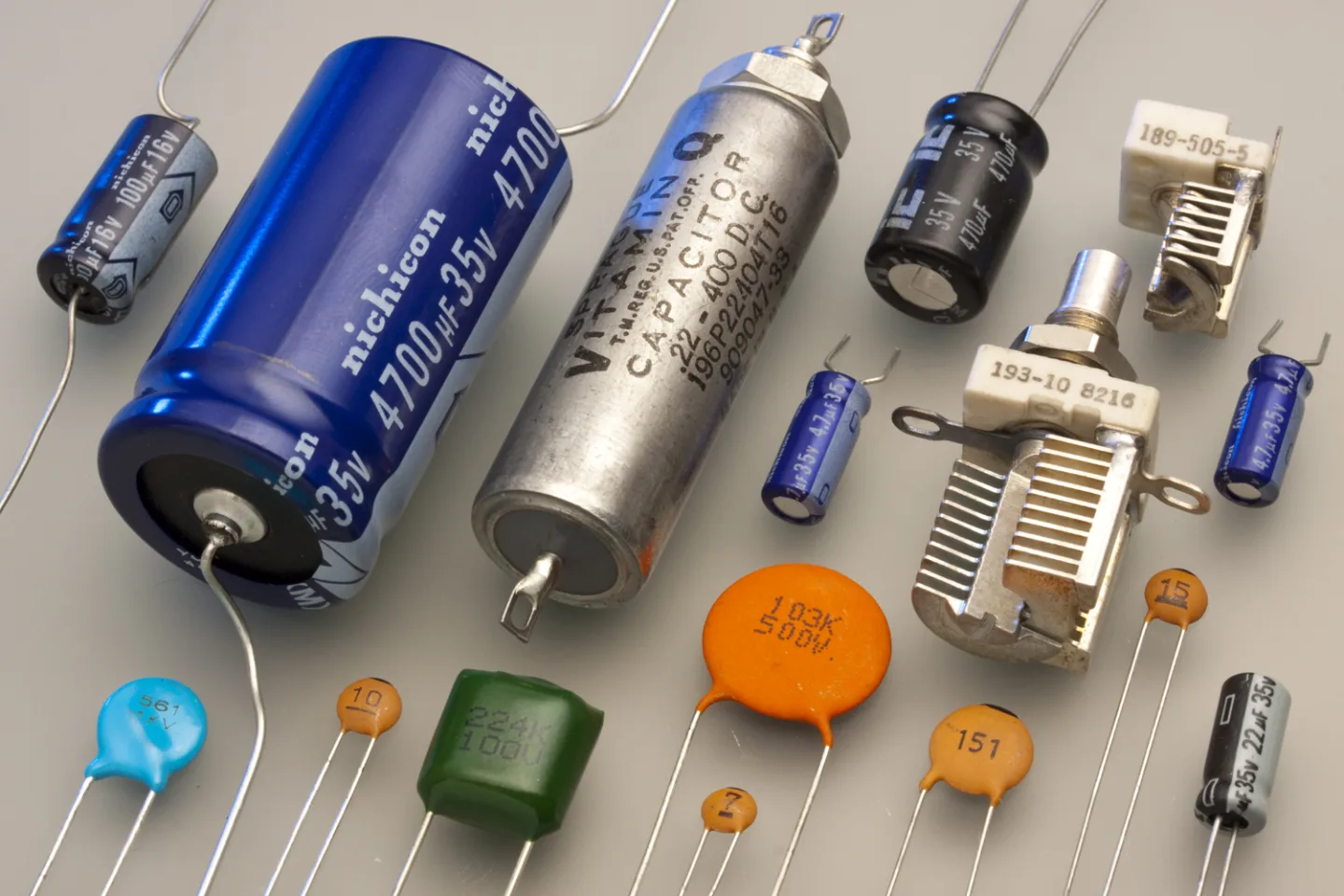
Capacitors Store Electric-Field Energy
A capacitor stores energy in an electric field.
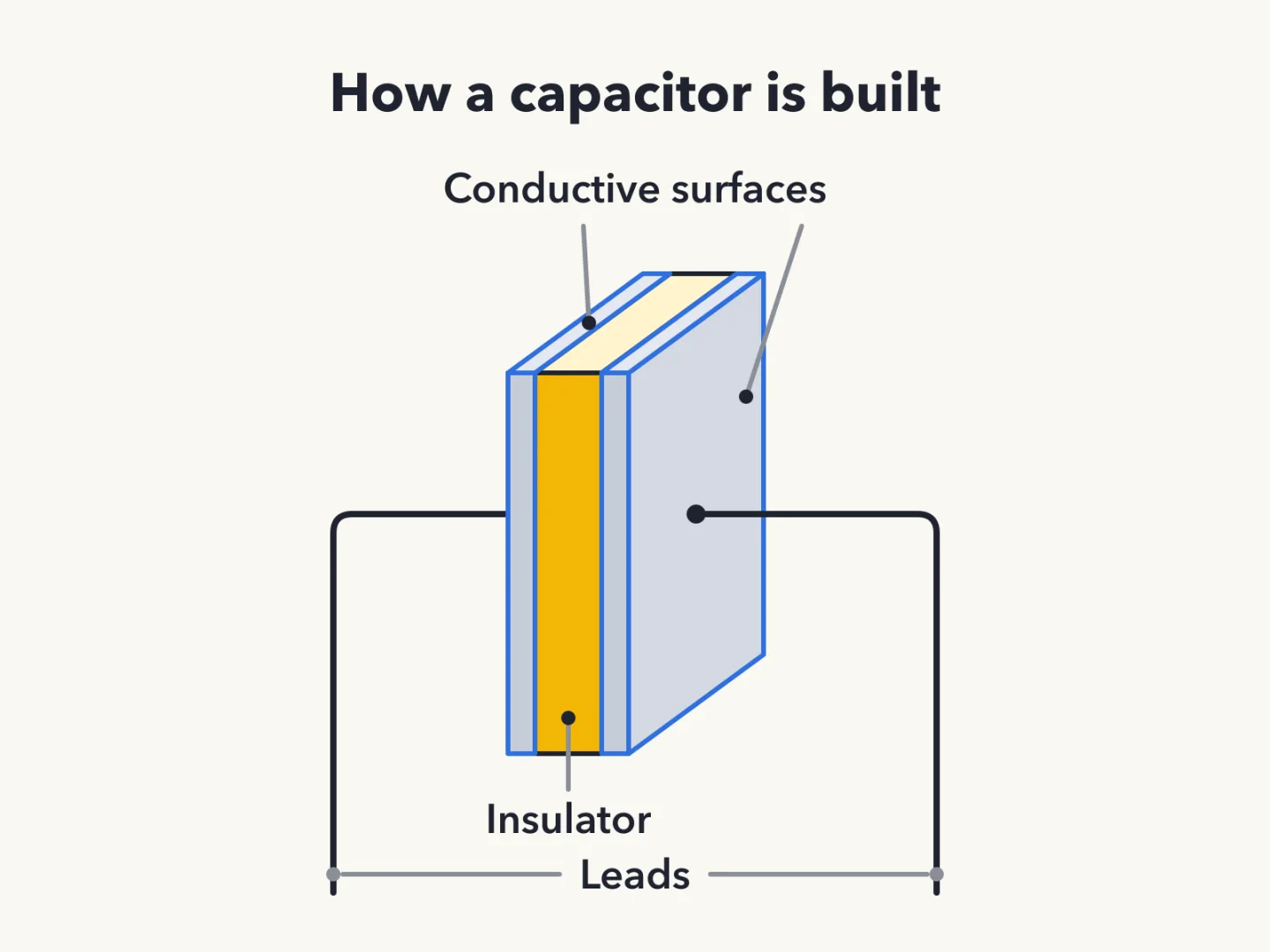
How a Capacitor Is Built
A capacitor consists of conductive surfaces separated by an insulator.
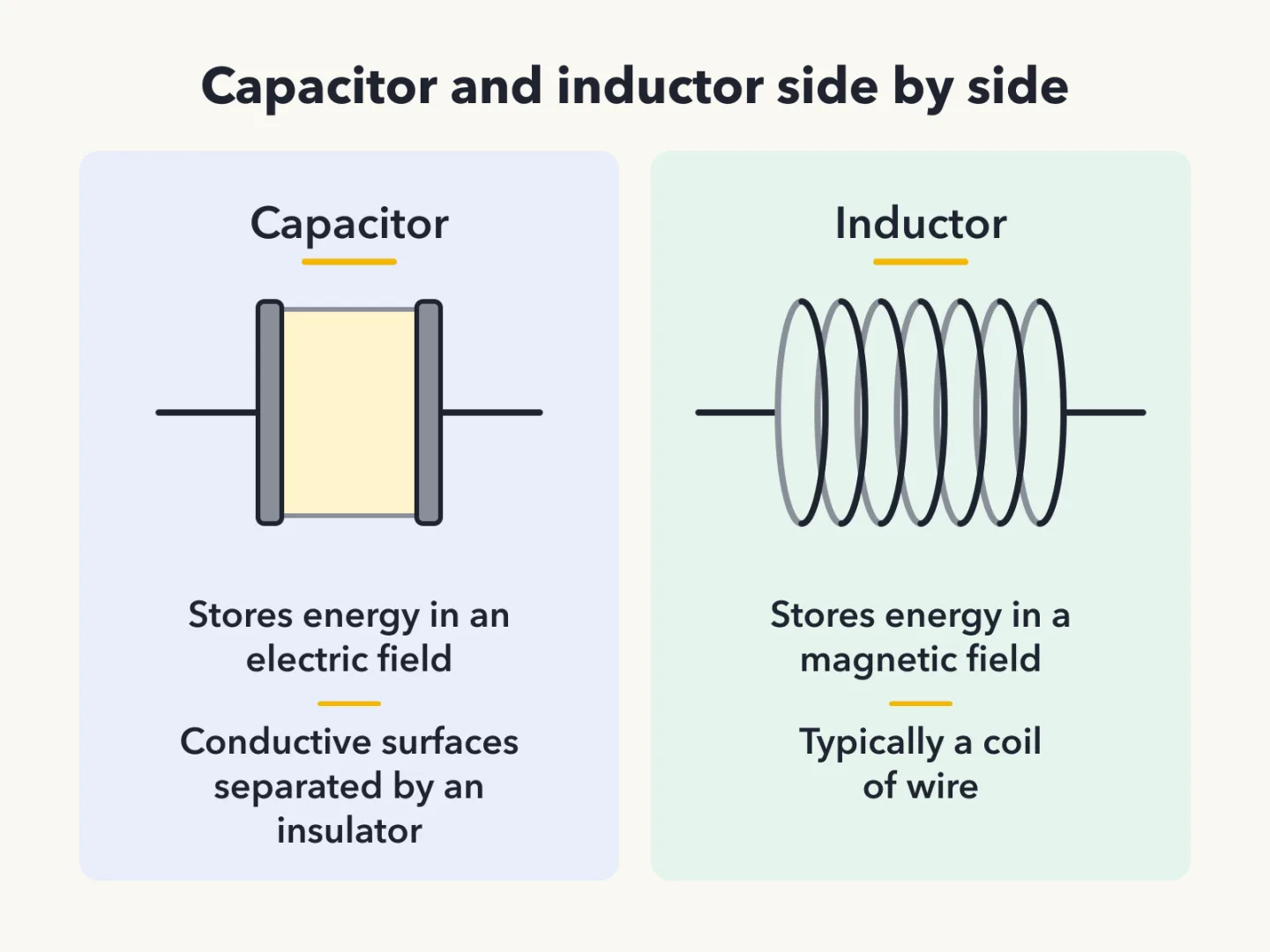
Inductors Store Magnetic-Field Energy
An inductor stores energy in a magnetic field.
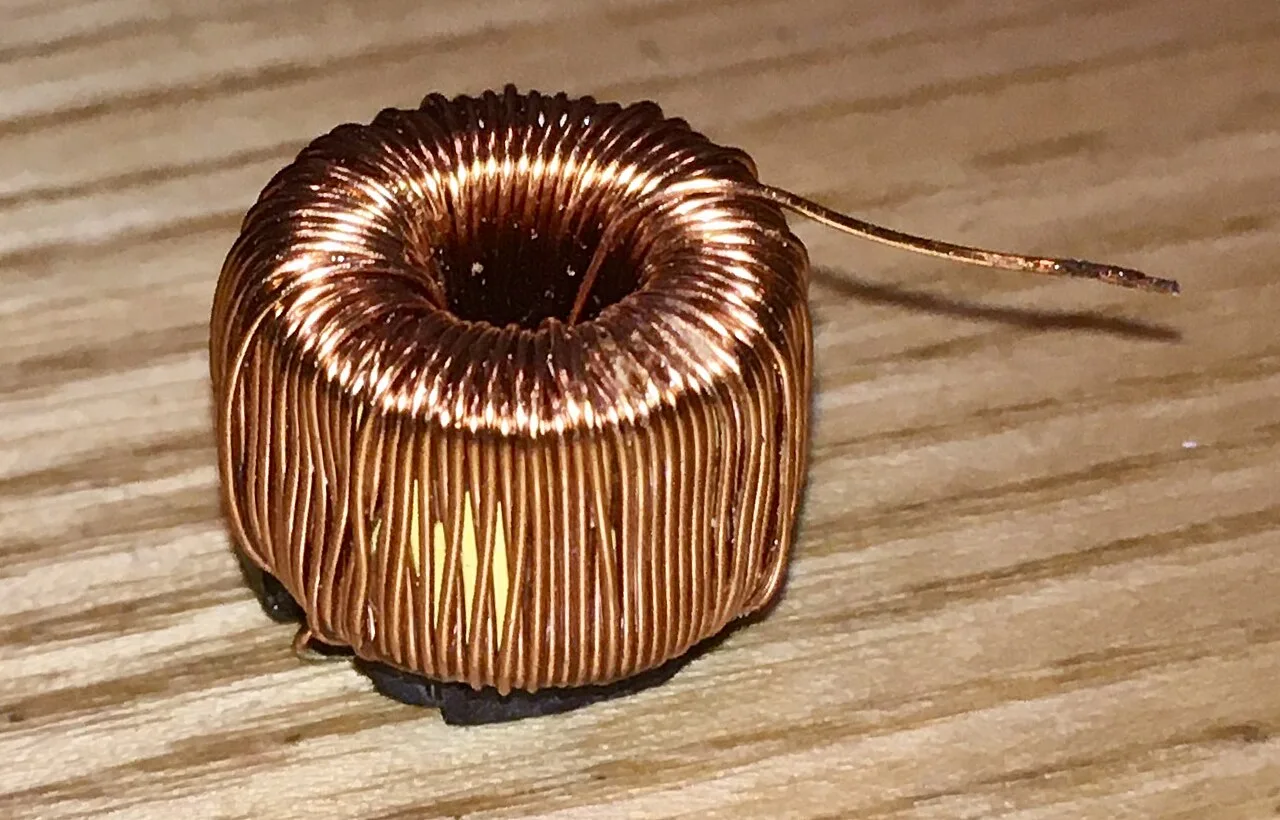
An Inductor Is a Coil
An inductor is typically constructed as a coil of wire.
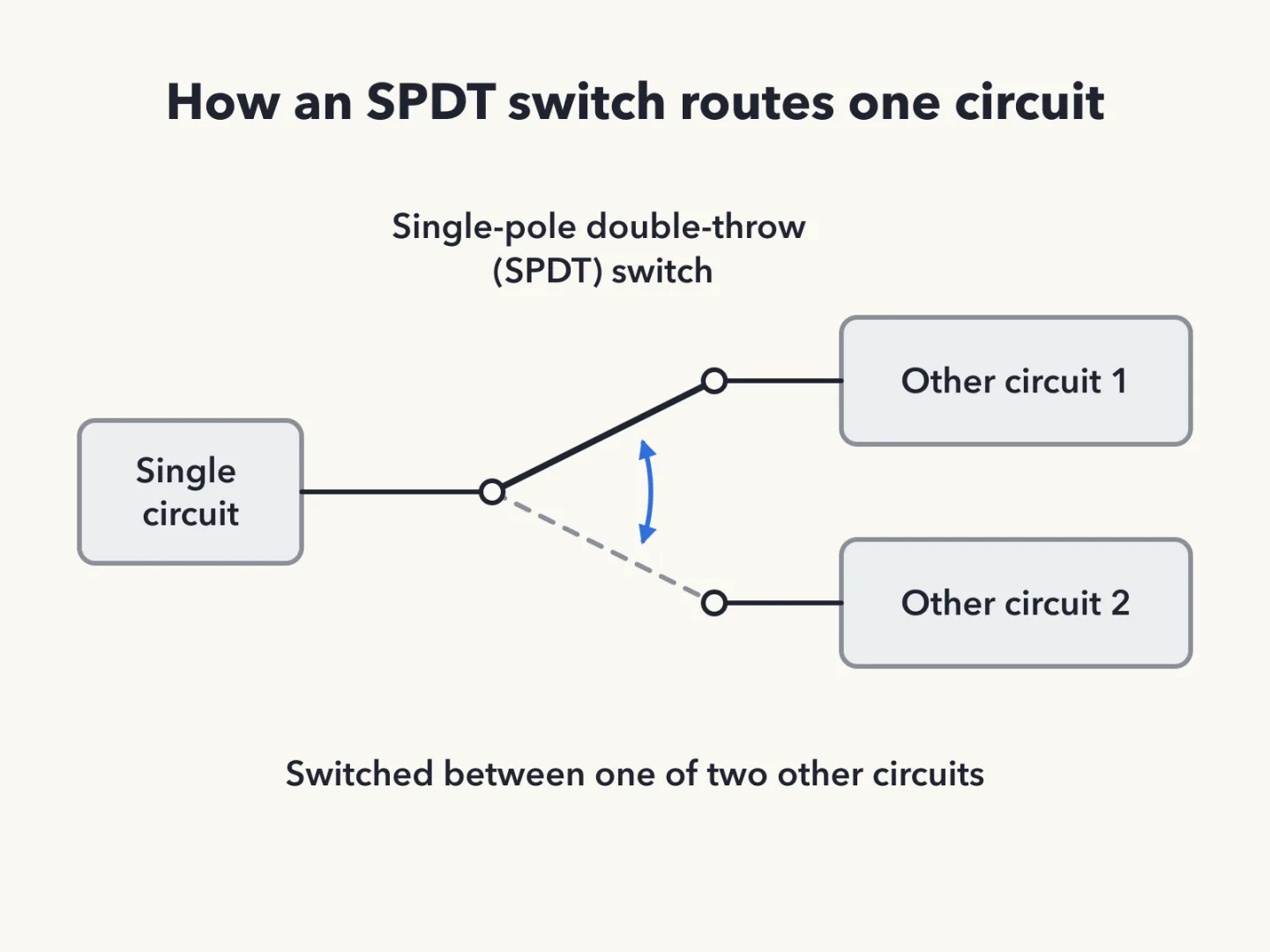
What an SPDT Switch Does
A single-pole double-throw (SPDT) switch switches a single circuit between one of two other circuits.
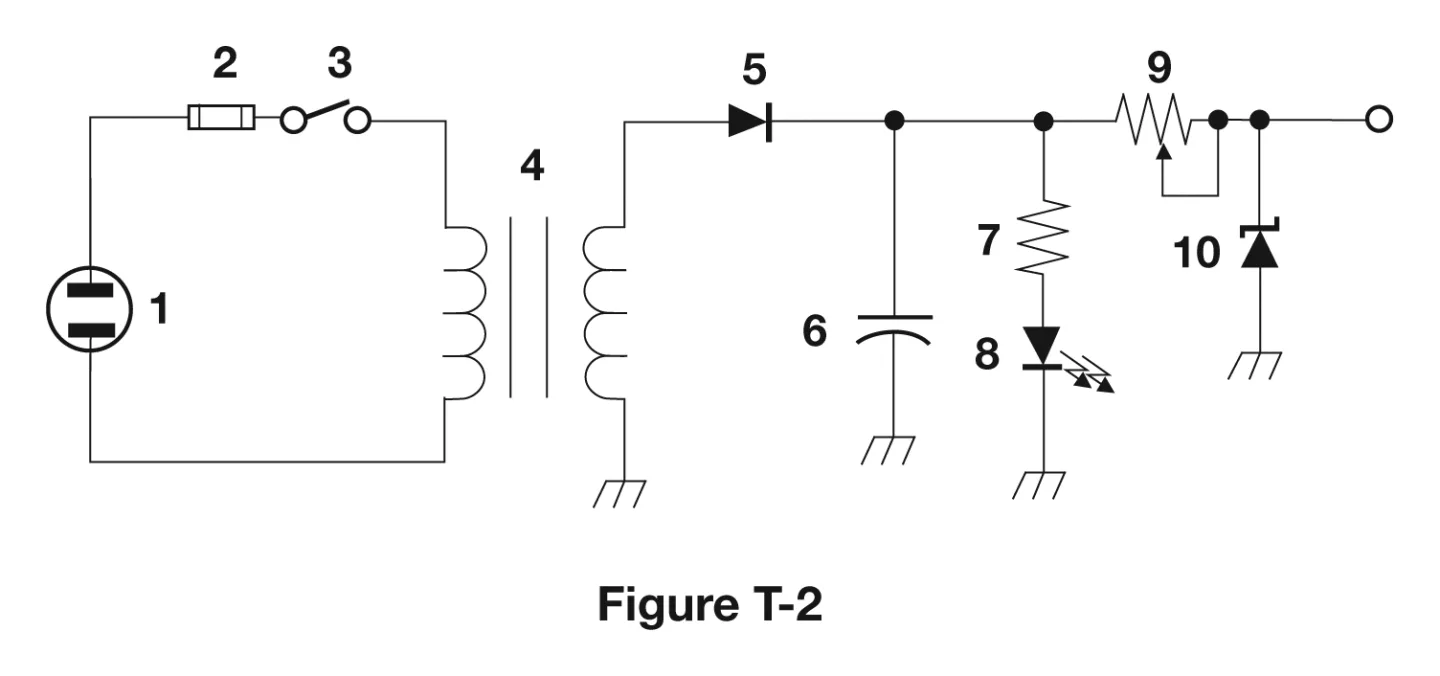
Reading Switch Type on Figure T-2
In the reference schematic labeled figure T-2, component 3 is a single-pole single-throw switch.
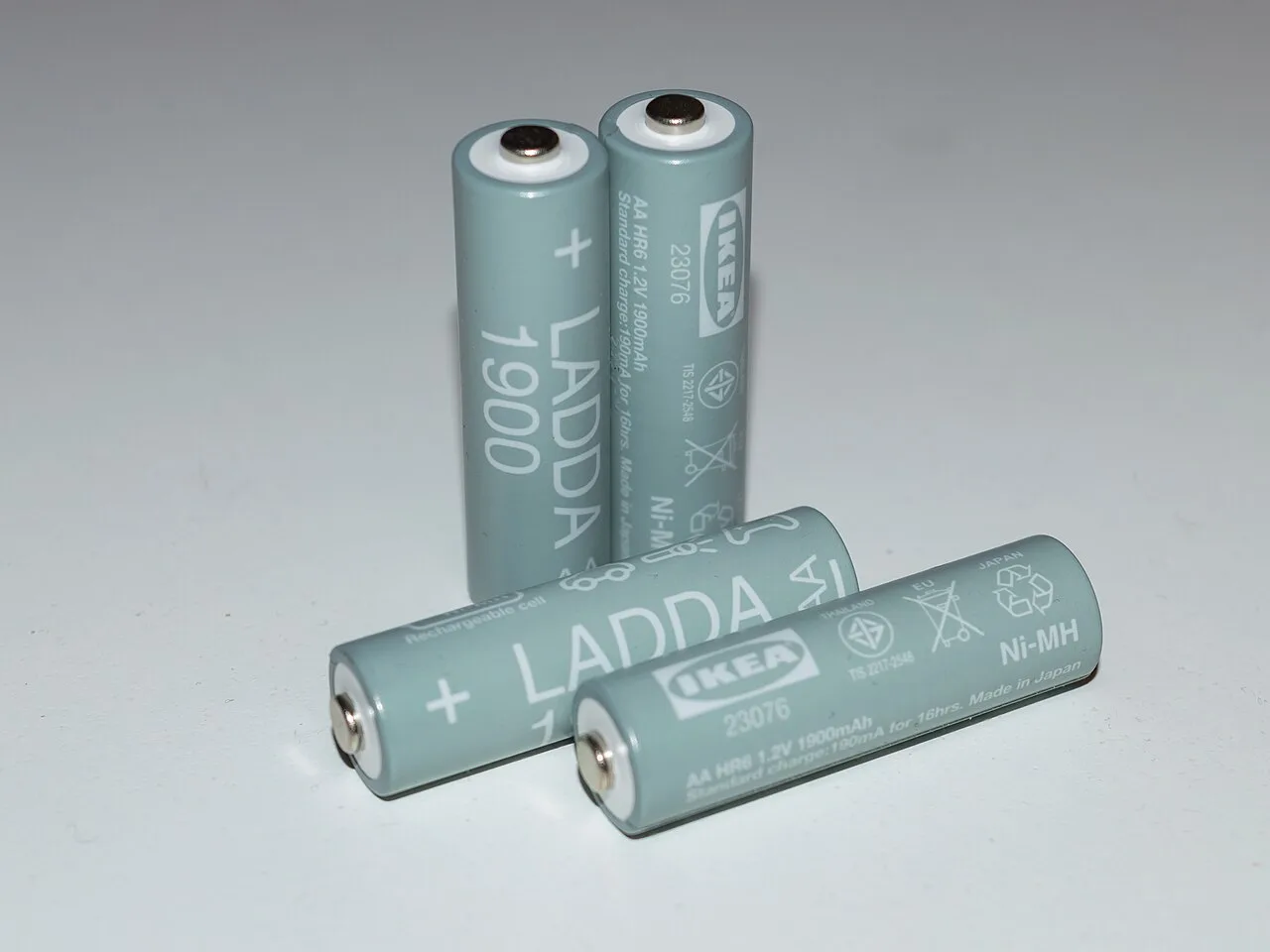
Rechargeable Battery Chemistries
Nickel-metal hydride, lithium-ion and lead-acid batteries can all be recharged. Nickel-cadmium can be recharged as well.
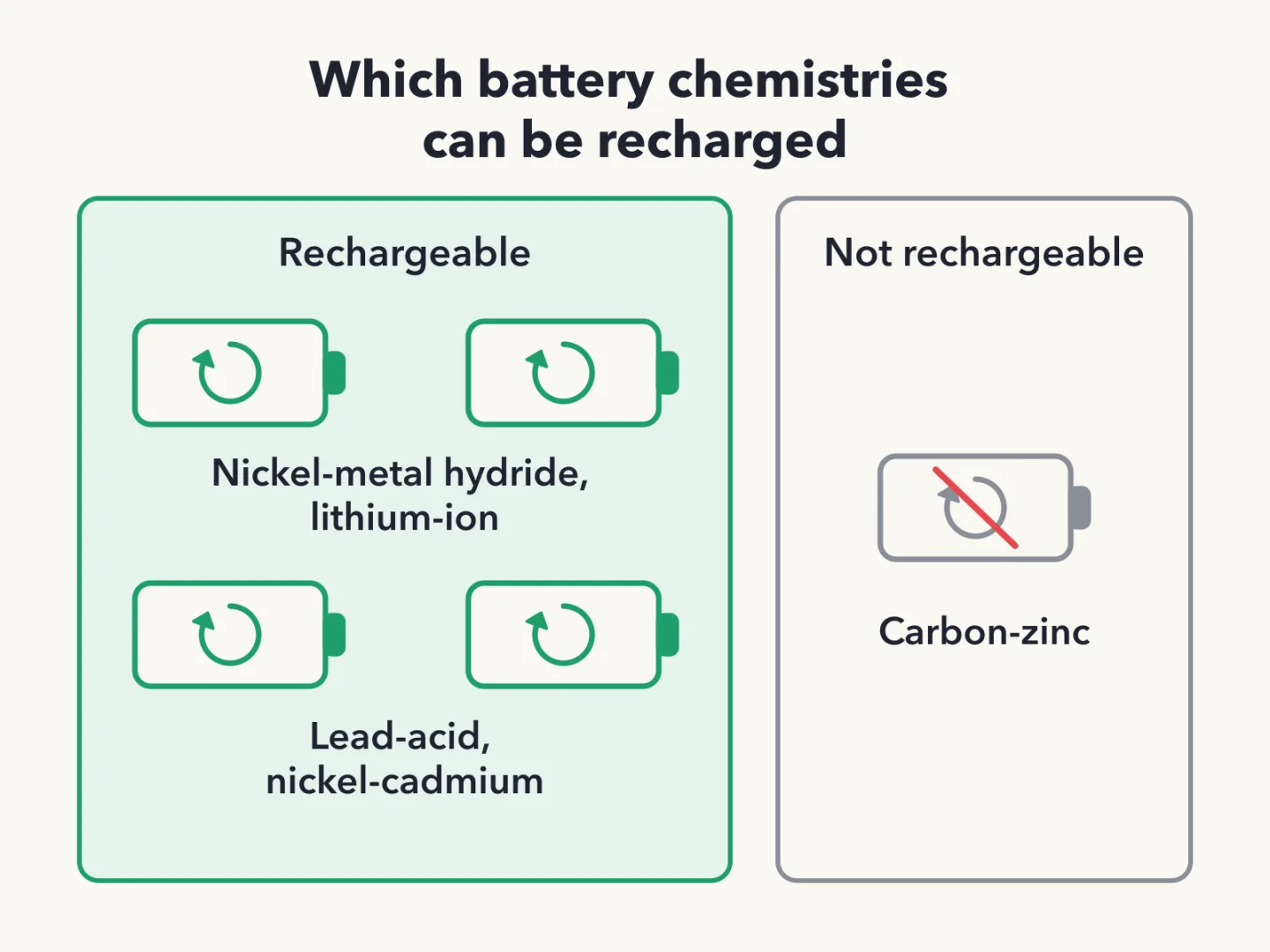
Carbon-Zinc Is Not Rechargeable
Carbon-zinc batteries cannot be recharged. Nickel-metal hydride, lithium-ion, lead-acid and nickel-cadmium batteries can all be recharged.
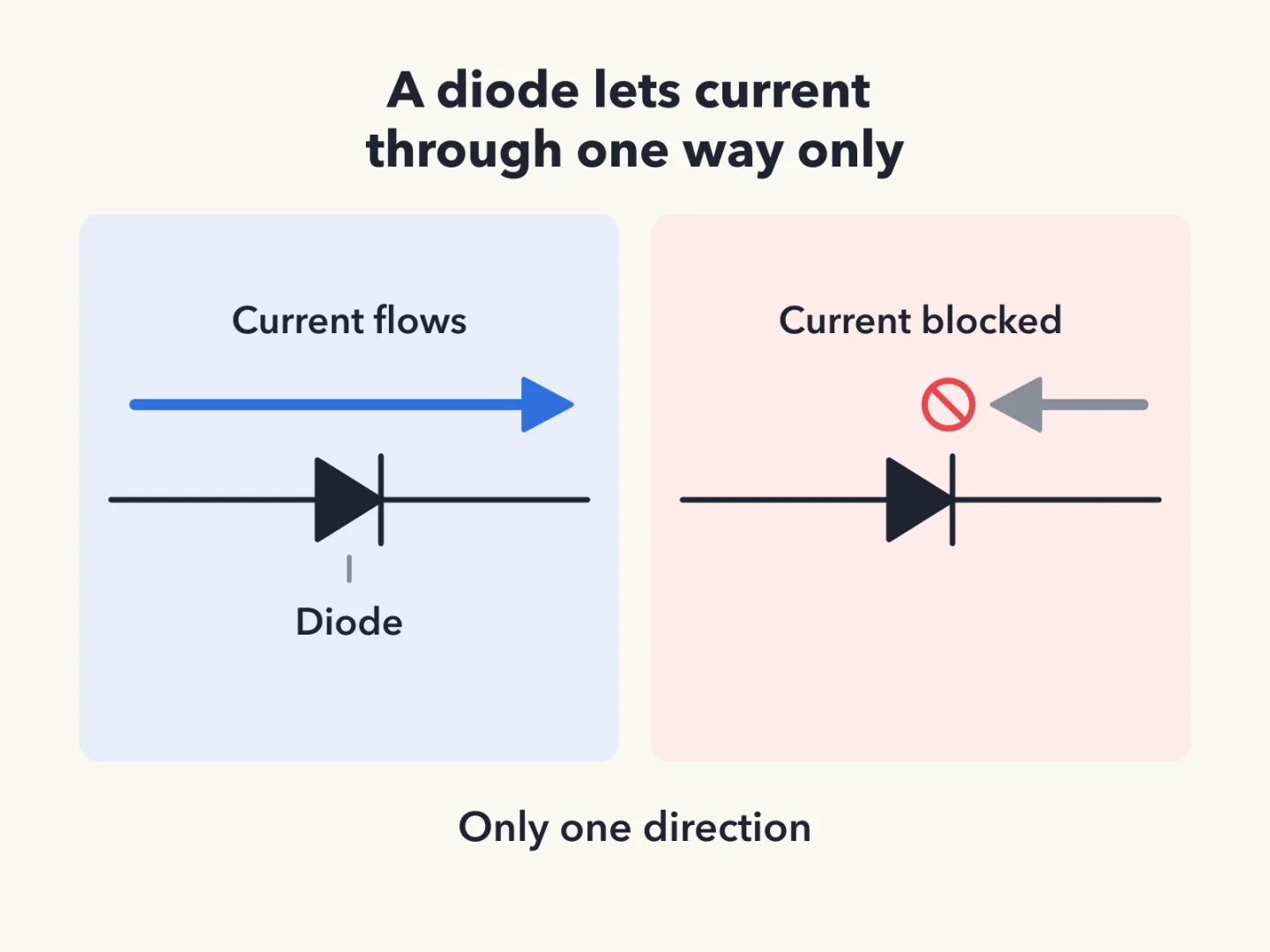
The Diode Passes Current One Way
A diode is the electronic component that allows current to flow in only one direction.
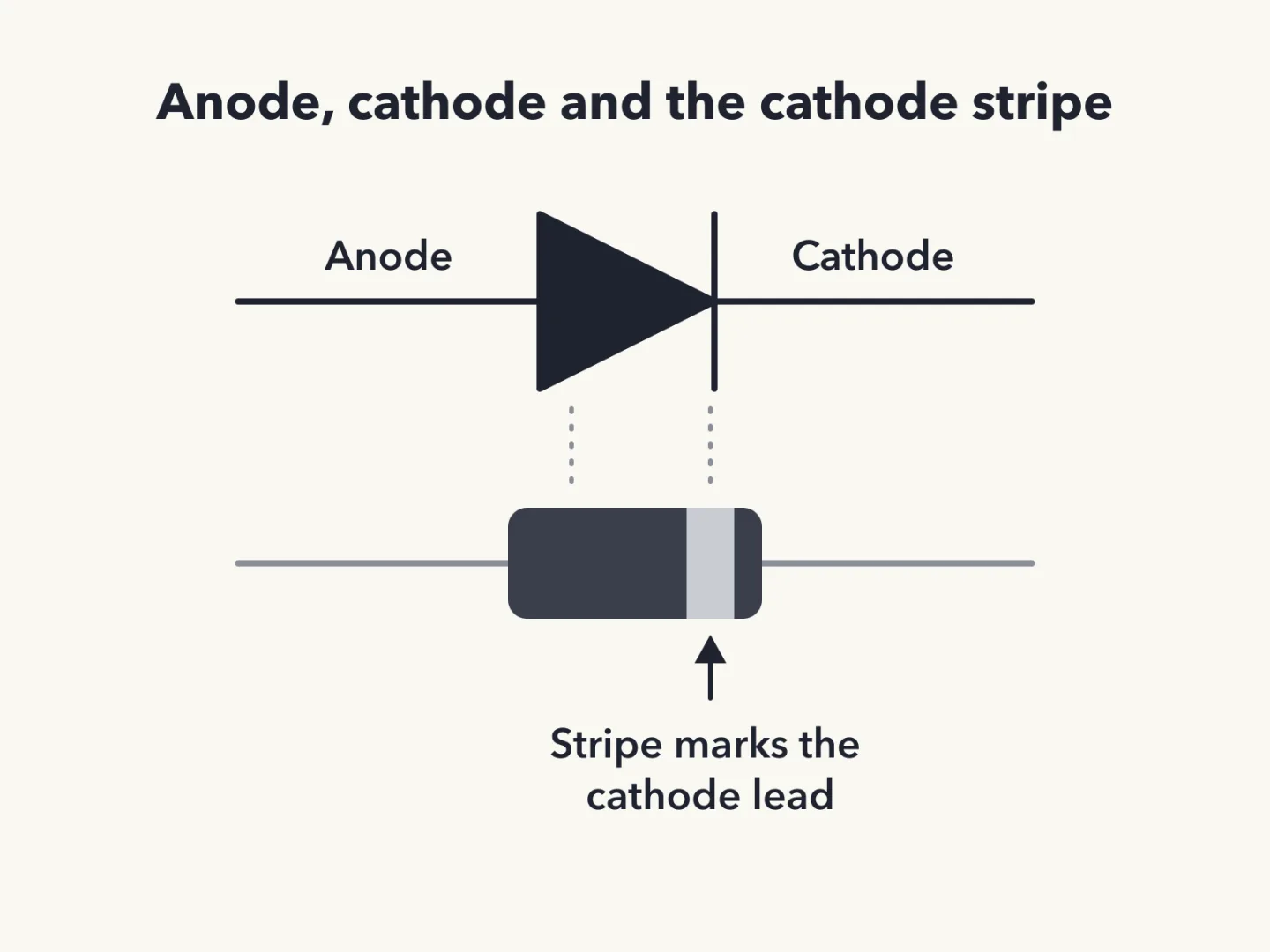
Diode Electrode Names
The two electrodes of a diode are the anode and cathode.
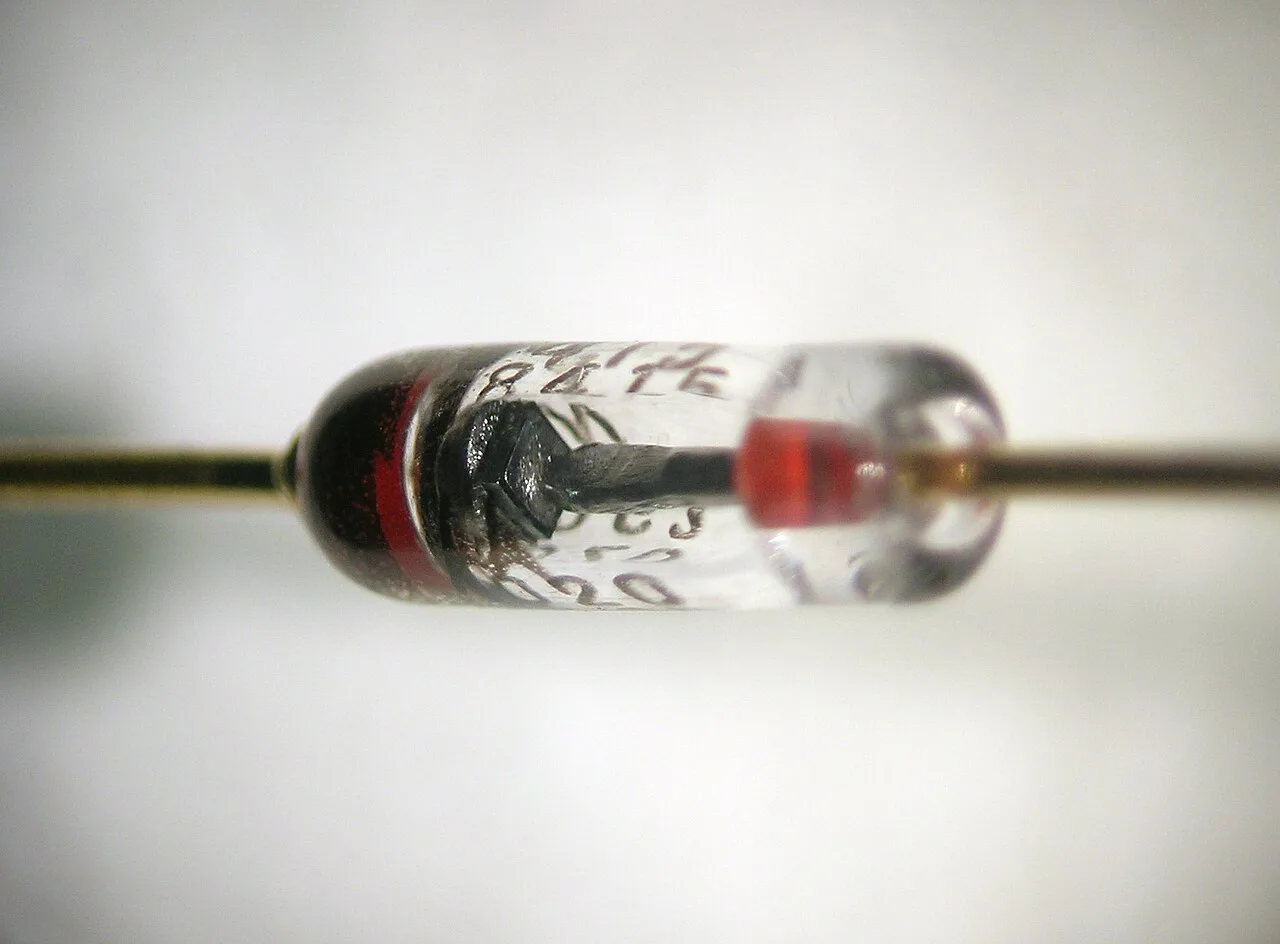
Stripe Marks the Cathode
The cathode lead of a semiconductor diode is often marked on the package with a stripe.
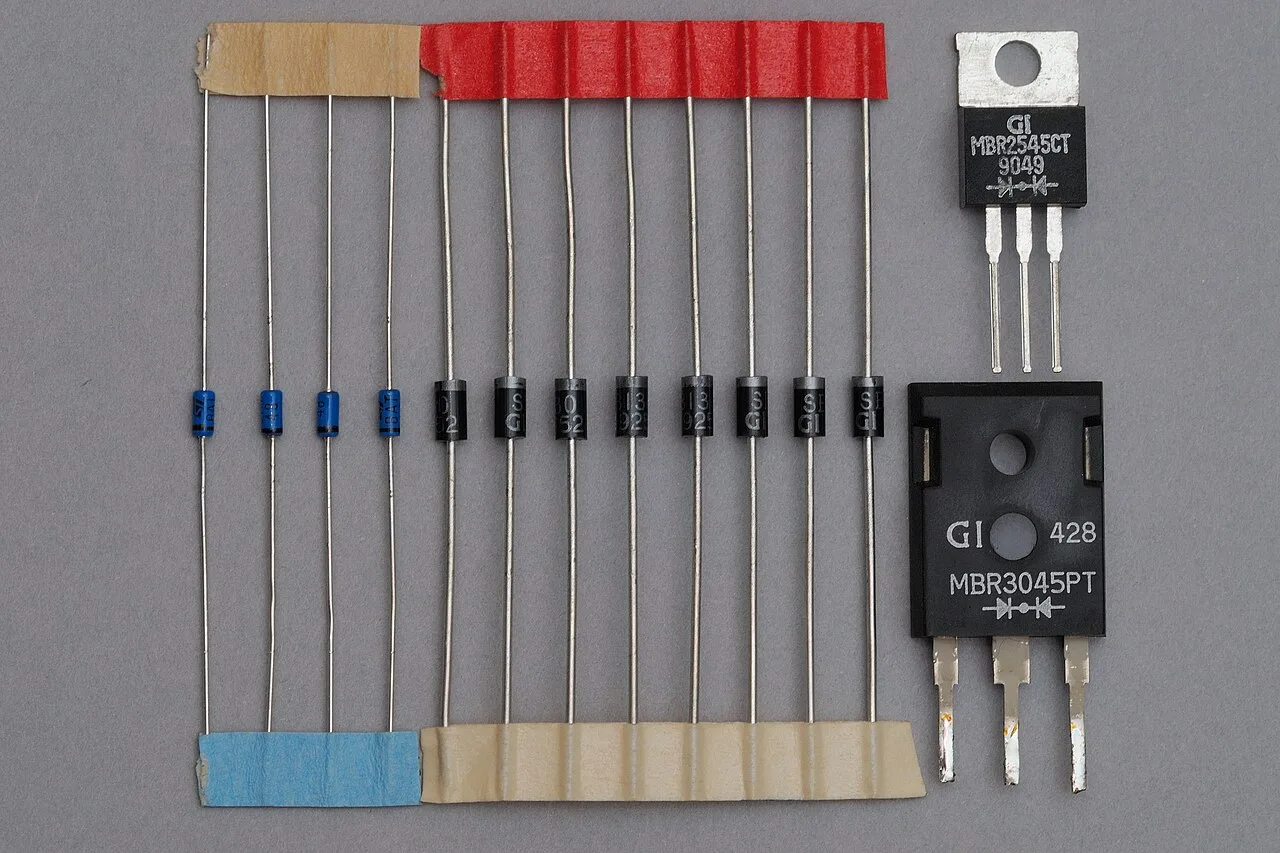
Diode Forward Voltage Drop
A diode's forward voltage drop is lower in some diode types than in others.
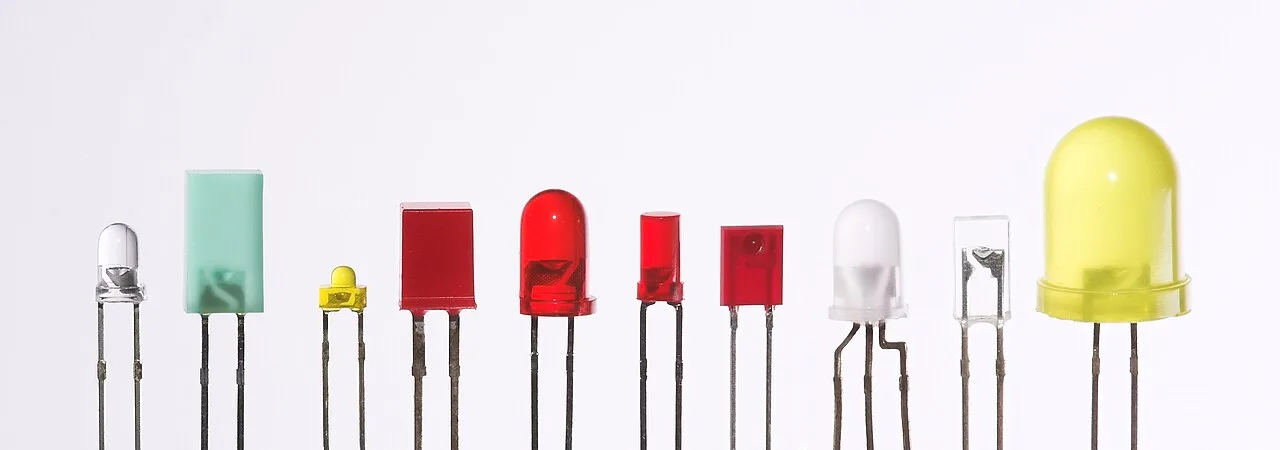
What Lights an LED
Forward current is what causes a light-emitting diode (LED) to emit light.
Three Regions of Semiconductor
A transistor is a component that can consist of three regions of semiconductor material.
Transistor as Electronic Switch
A transistor can be used as an electronic switch.
Gate, Drain and Source
A Field Effect Transistor (FET) is the type that has a gate, a drain and a source.
What FET Stands For
The abbreviation FET stands for Field Effect Transistor.
Bipolar Transistor Electrodes
A bipolar junction transistor has the electrodes emitter, base and collector.
Transistors Provide Power Gain
A transistor is a component that can provide power gain.
Three Meanings of Gain
Gain compares an amplifier's output signal with its input signal. It can mean output voltage relative to input voltage, output current relative to input current, or output power relative to input power. Each is a meaning of gain.
Matched pairs
Each item on the left goes with the one on the right.
- Inductor
- Stores energy in a magnetic field
- Diode electrodes
- Anode and cathode
Self-test
Answer each question from memory, then check your work against the answer key.
1. What electrical component opposes the flow of current in a DC circuit?
- ATransformer
- BResistor
- CInverter
- DInductor
2. What type of component is often used as an adjustable volume control?
- ATransformer
- BPower resistor
- CPotentiometer
- DFixed resistor
3. What electrical parameter is controlled by a potentiometer?
- AResistance
- BInductance
- CCapacitance
- DField strength
4. What electrical component stores energy in an electric field?
- AResistor
- BDiode
- CInductor
- DCapacitor
5. What type of electrical component consists of conductive surfaces separated by an insulator?
- APotentiometer
- BOscillator
- CResistor
- DCapacitor
6. What type of electrical component stores energy in a magnetic field?
- AResistor
- BDiode
- CInductor
- DCapacitor
7. What electrical component is typically constructed as a coil of wire?
- ACapacitor
- BInductor
- CDiode
- DTransistor
8. What is the function of an SPDT switch?
- AA single circuit is switched between one of two other circuits
- BA single circuit is opened or closed
- CTwo circuits are opened or closed
- DTwo circuits are each switched between one of two other circuits
9. What type of switch is represented by component 3 in figure T-2?
- ASingle-pole double-throw
- BDouble-pole double-throw
- CDouble-pole single-throw
- DSingle-pole single-throw
10. Which of the following battery chemistries is rechargeable?
- AAll these choices are correct
- BLead-acid
- CLithium-ion
- DNickel-metal hydride
11. Which of the following battery chemistries is not rechargeable?
- ALithium-ion
- BCarbon-zinc
- CLead-acid
- DNickel-cadmium
12. Which is true about forward voltage drop in a diode?
- AIt is proportional to peak inverse voltage
- BIt indicates that the diode is defective
- CIt is lower in some diode types than in others
- DIt has no impact on the voltage delivered to the load
13. What electronic component allows current to flow in only one direction?
- ADiode
- BFuse
- CResistor
- DDriven element
14. How is the cathode lead of a semiconductor diode often marked on the package?
- AWith the letter K
- BWith the word "cathode"
- CWith the letter C
- DWith a stripe
15. What are the names for the electrodes of a diode?
- AGate and base
- BAnode and cathode
- CSource and drain
- DPlus and minus
16. What causes a light-emitting diode (LED) to emit light?
- AReverse current
- BInductively-coupled RF signal
- CForward current
- DCapacitively-coupled RF signal
17. Which of these components can be used as an electronic switch?
- AThermistor
- BTransistor
- CVaristor
- DPotentiometer
18. Which of the following components can consist of three regions of semiconductor material?
- ATransistor
- BAlternator
- CPentode
- DTriode
19. What type of transistor has a gate, drain, and source?
- ABipolar junction
- BHall-effect
- CVaristor
- DField-effect
20. What does the abbreviation FET stand for?
- AFree Electron Transmitter
- BFrequency Emission Transmitter
- CField Effect Transistor
- DFast Electron Transistor
21. What are the names of the electrodes of a bipolar junction transistor?
- APole one, pole two, output
- BEmitter, base, collector
- CInput, output, supply
- DSignal, bias, power
22. Which of the following can provide power gain?
- AResistor
- BTransformer
- CTransistor
- DReactor
23. What does the term gain mean in amplifiers?
- AAll these choices are correct
- BThe output signal power relative to the input signal power
- CThe output signal current relative to the input signal current
- DThe output signal voltage relative to the input signal voltage
Go deeper
- ListenLesson 8 episode
- WatchRechargeable or Not Which common battery chemistry can never be recharged? Some can be recharged, and some cannot.
- WatchWhich Way Current Flows Which way does current have to flow for a light-emitting diode (LED) to light up?
- StudyHam Radio Technician License in the FlashFeed app
Answer key
- 1. B ResistorA resistor opposes current flow in a direct current (DC) circuit. An inductor, an inverter and a transformer do not do this job.
- 2. C PotentiometerA potentiometer is the part often used as an adjustable volume control, because its resistance can be changed.
- 3. A ResistanceA potentiometer controls resistance, not inductance, capacitance or field strength.
- 4. D CapacitorA capacitor stores energy in an electric field. Resistors, inductors and diodes do not.
- 5. D CapacitorA capacitor is built from conductive surfaces separated by an insulator.
- 6. C InductorAn inductor stores energy in a magnetic field. Resistors, capacitors and diodes do not.
- 7. B InductorAn inductor is typically constructed as a coil of wire. Transistors, capacitors and diodes are not typically coils.
- 8. A A single circuit is switched between one of two other circuitsA single-pole double-throw (SPDT) switch moves a single circuit between one of two other circuits. Simply opening or closing a circuit is a different switch type.
- 9. D Single-pole single-throwIn figure T-2, component 3 is a single-pole single-throw switch, not a double-pole or double-throw type.
- 10. A All these choices are correctNickel-metal hydride, lithium-ion and lead-acid are all rechargeable, so all three choices are correct.
- 11. B Carbon-zincOf these four, carbon-zinc is the chemistry that cannot be recharged. Nickel-cadmium, lead-acid and lithium-ion are rechargeable.
- 12. C It is lower in some diode types than in othersForward voltage drop is lower in some diode types than in others. It does not mean the diode is defective.
- 13. A DiodeA diode allows current to flow in only one direction. Resistors, fuses and driven elements do not.
- 14. D With a stripeThe cathode lead is often marked with a stripe, not the word cathode or the letter C or K.
- 15. B Anode and cathodeA diode's electrodes are the anode and cathode. Plus and minus, source and drain, and gate and base are not diode electrode names.
- 16. C Forward currentAn LED is a diode that lights with forward current. Reverse current and radio frequency (RF) signals do not make it emit light.
- 17. B TransistorA transistor can act as an electronic switch. Varistors, potentiometers and thermistors are not named for that job.
- 18. A TransistorA transistor can consist of three regions of semiconductor material. An alternator, triode and pentode are not described that way.
- 19. D Field-effectThe Field Effect Transistor has a gate, a drain and a source. A bipolar junction transistor has other electrode names.
- 20. C Field Effect TransistorFET stands for Field Effect Transistor, not any of the transmitter or electron-based names.
- 21. B Emitter, base, collectorA bipolar junction transistor has an emitter, base and collector. Signal, bias and power are not its electrode names.
- 22. C TransistorA transistor can provide power gain. A transformer, a reactor and a resistor are not named for that job.
- 23. A All these choices are correctGain can compare output to input voltage, current or power, so all three choices are correct meanings.
Sources
- NCVEC Question Pool Committee — 2026–2030 Technician question pool — ncvec.org/index.php/2026-2030-technician-question-pool
Image credits
- The Resistor Opposes Current: Wikimedia Commons · Evan-Amos · Public domain — commons.wikimedia.org/wiki/File:Electronic-Axial-Lead-Resistors-Array.png
- Potentiometer as Volume Control: Wikimedia Commons · Evan-Amos · Public domain — commons.wikimedia.org/wiki/File:Electronic-Component-Potentiometer.jpg
- What a Potentiometer Controls: FlashFeed original diagram · CC-BY-4.0
- Capacitors Store Electric-Field Energy: Wikimedia Commons · Eric Schrader from San Francisco, CA, United States · CC BY-SA 2.0 — commons.wikimedia.org/wiki/File:Capacitors_(7189597135).jpg
- How a Capacitor Is Built: FlashFeed original diagram · CC-BY-4.0
- Inductors Store Magnetic-Field Energy: FlashFeed original diagram · CC-BY-4.0
- An Inductor Is a Coil: Wikimedia Commons · Pittigrilli · CC BY-SA 4.0 — commons.wikimedia.org/wiki/File:Coil_with_ferrite_core_from_dimmer.jpg
- What an SPDT Switch Does: FlashFeed original diagram · CC-BY-4.0
- Reading Switch Type on Figure T-2: NCVEC Question Pool Committee · Public domain — ncvec.org/index.php/2026-2030-technician-question-pool
- Rechargeable Battery Chemistries: Wikimedia Commons · RAIL P (RAIL.PHOTOGRAPHY) · CC0 — commons.wikimedia.org/wiki/File:IKEA_LADDA_rechargeable_AA-batteries.jpg
- Carbon-Zinc Is Not Rechargeable: FlashFeed original diagram · CC-BY-4.0
- The Diode Passes Current One Way: FlashFeed original diagram · CC-BY-4.0
- Diode Electrode Names: FlashFeed original diagram · CC-BY-4.0
- Stripe Marks the Cathode: Wikimedia Commons · John Maushammer · CC BY-SA 2.5 — commons.wikimedia.org/wiki/File:Diode-closeup.jpg
- Diode Forward Voltage Drop: Wikimedia Commons · Steffen Maisch · Public domain — commons.wikimedia.org/wiki/File:Schottky.jpg
- What Lights an LED: Wikimedia Commons · Afrank99 · CC BY-SA 2.0 — commons.wikimedia.org/wiki/File:Verschiedene_LEDs.jpg
- Three Regions of Semiconductor: Wikimedia Commons · Retired electrician · CC0 — commons.wikimedia.org/wiki/File:BD135-10-Fullpak_bipolar_transistor_01.jpg
- Transistor as Electronic Switch: Wikimedia Commons · Ulfbastel · CC BY-SA 3.0 — commons.wikimedia.org/wiki/File:Transbauformen.jpg
- Gate, Drain and Source: FlashFeed original diagram · CC-BY-4.0
- What FET Stands For: Wikimedia Commons · CyrilB~commonswiki · CC BY-SA 3.0 — commons.wikimedia.org/wiki/File:D2PAK.JPG
- Bipolar Transistor Electrodes: Wikimedia Commons · Windell Oskay · CC BY 2.0 — commons.wikimedia.org/wiki/File:2N3904.jpg
- Three Meanings of Gain: FlashFeed original diagram · CC-BY-4.0


