
Ham Radio Technician License study guide · Lesson 5 of 15
Setting Up and Running a Station
Setting up a station · Operating controls on a radio
This is the lesson's study guide from the FlashFeed app, plus its key facts and a self-test.
What you'll be able to do
- Explain how to power a mobile transceiver and place meters and grounds correctly in a station
- Describe how to connect a computer to a transceiver, how to choose a standing wave ratio (SWR) meter, and what hotspots and electronic keyers do
- Use frequency entry, scanning, squelch, the RIT or clarifier and SSB filter width to find and tune in stations clearly
- Explain microphone gain, filter bandwidth and the setup of DMR and D-STAR digital radios
A working station needs more than a radio. It needs a suitable power source, correct wiring and grounds, meters in the right places, and often a computer. This lesson covers how a Technician licensee connects those parts. It then covers the controls on a transceiver used to enter frequencies, hear weak signals and keep audio clean. It ends with the setup needed before a digital voice radio such as a Digital Mobile Radio (DMR) or Digital Smart Technologies for Amateur Radio (D-STAR) unit can be used.
Setting up a station
Power and wiring
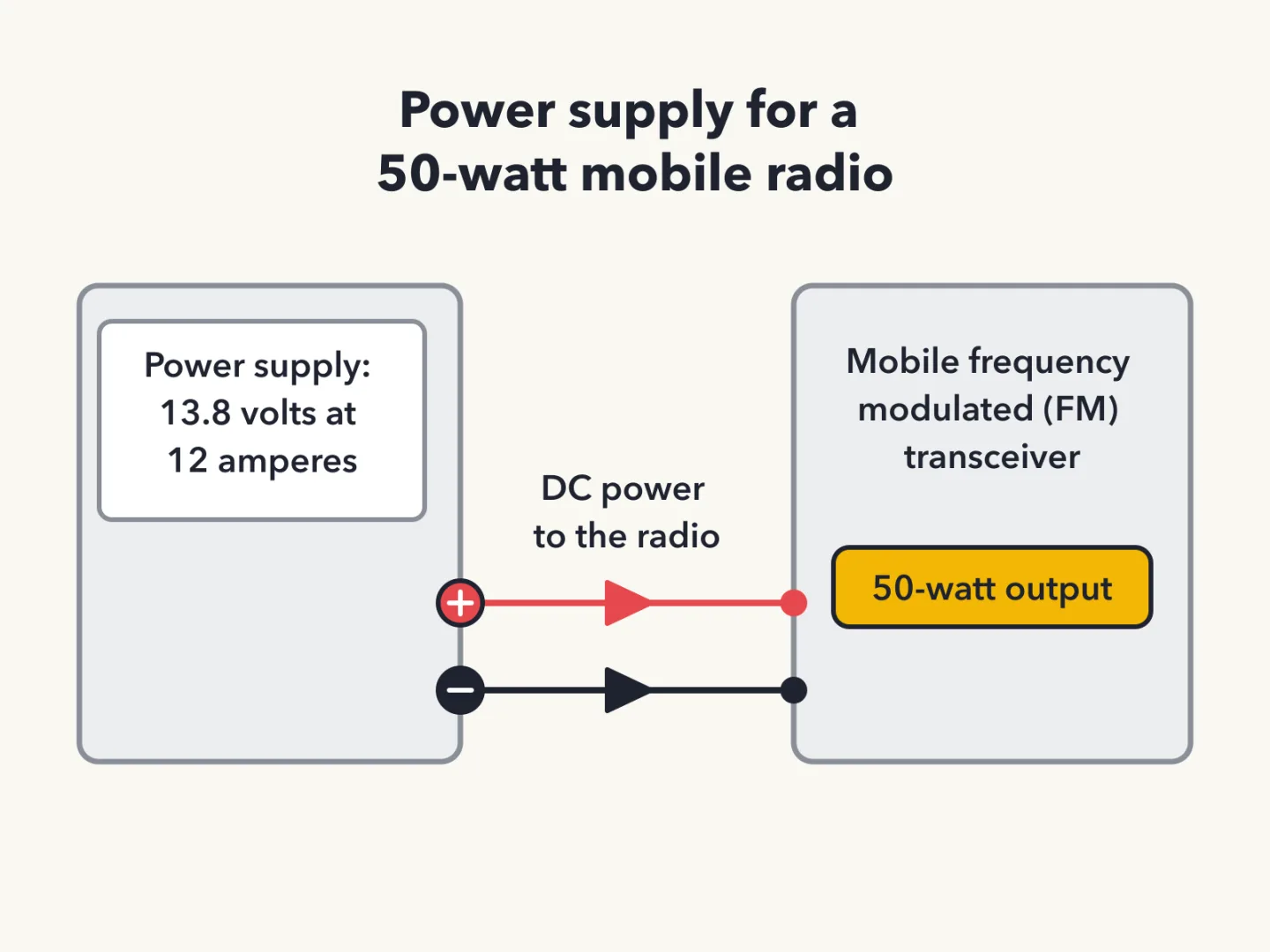
A typical 50-watt output mobile frequency modulated (FM) transceiver is powered from a supply rated 13.8 volts at 12 amperes.
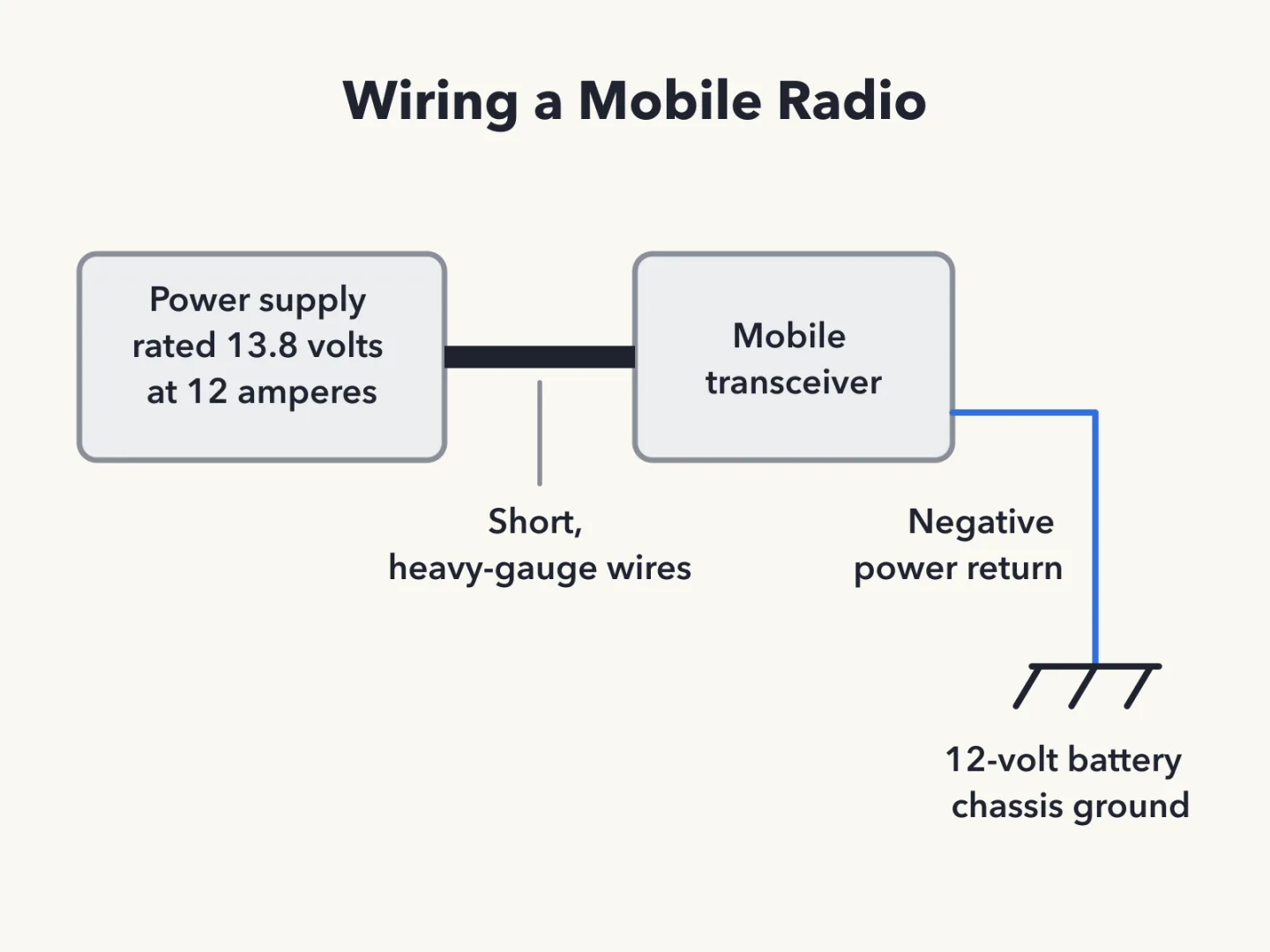
A transceiver's direct current (DC) power connection uses short, heavy-gauge wires. They are used to minimize voltage drop when transmitting.
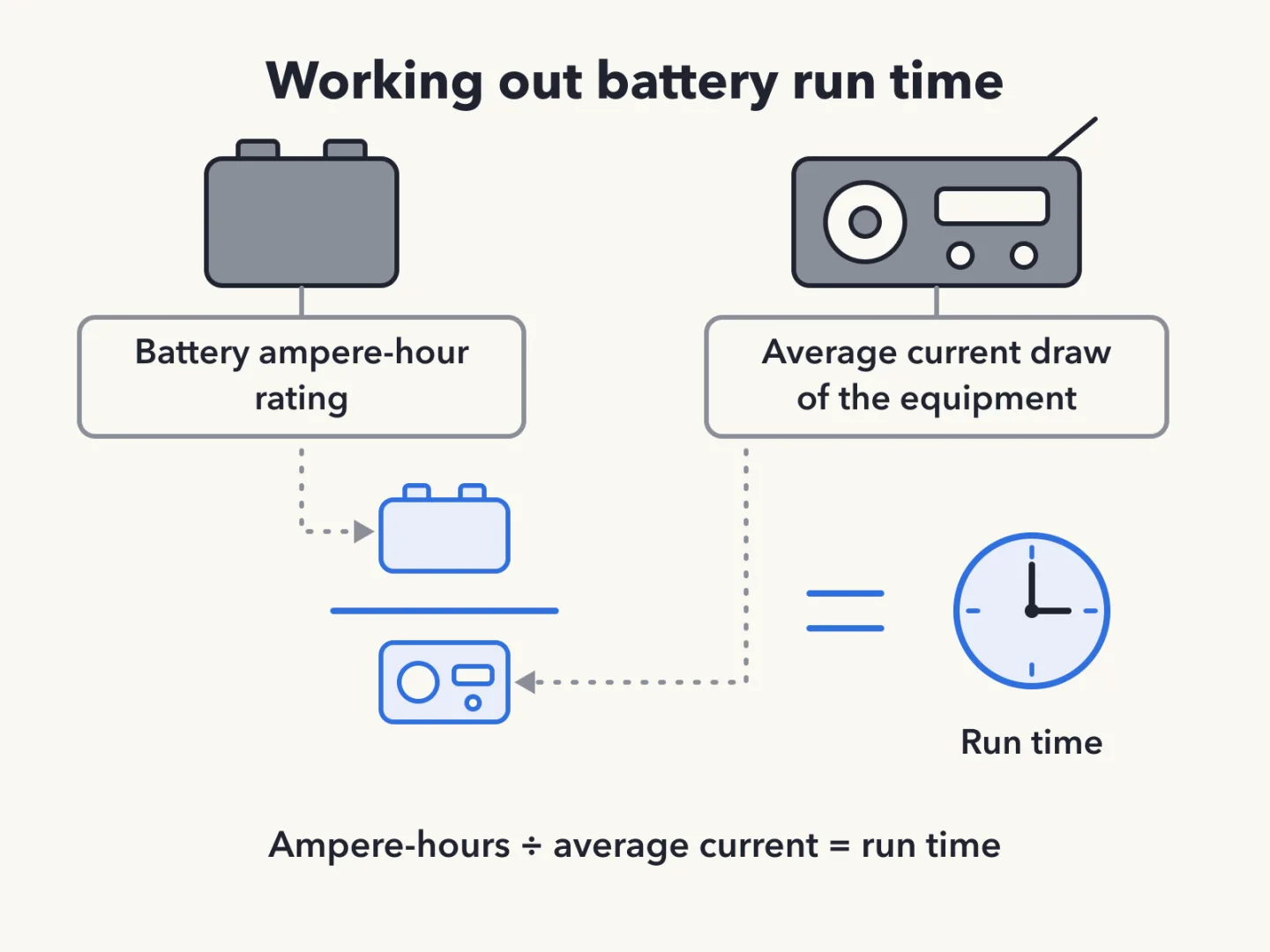
A battery can run equipment only for a limited time. To find how long, divide the battery's ampere-hour rating by the average current draw of the equipment.
Grounding and bonding
In a vehicle, the negative power return of a mobile transceiver is connected at the 12-volt battery chassis ground.
A separate point concerns bonding at radio frequency (RF). The preferred conductor for bonding at RF is flat copper strap.
Meters in the feed line
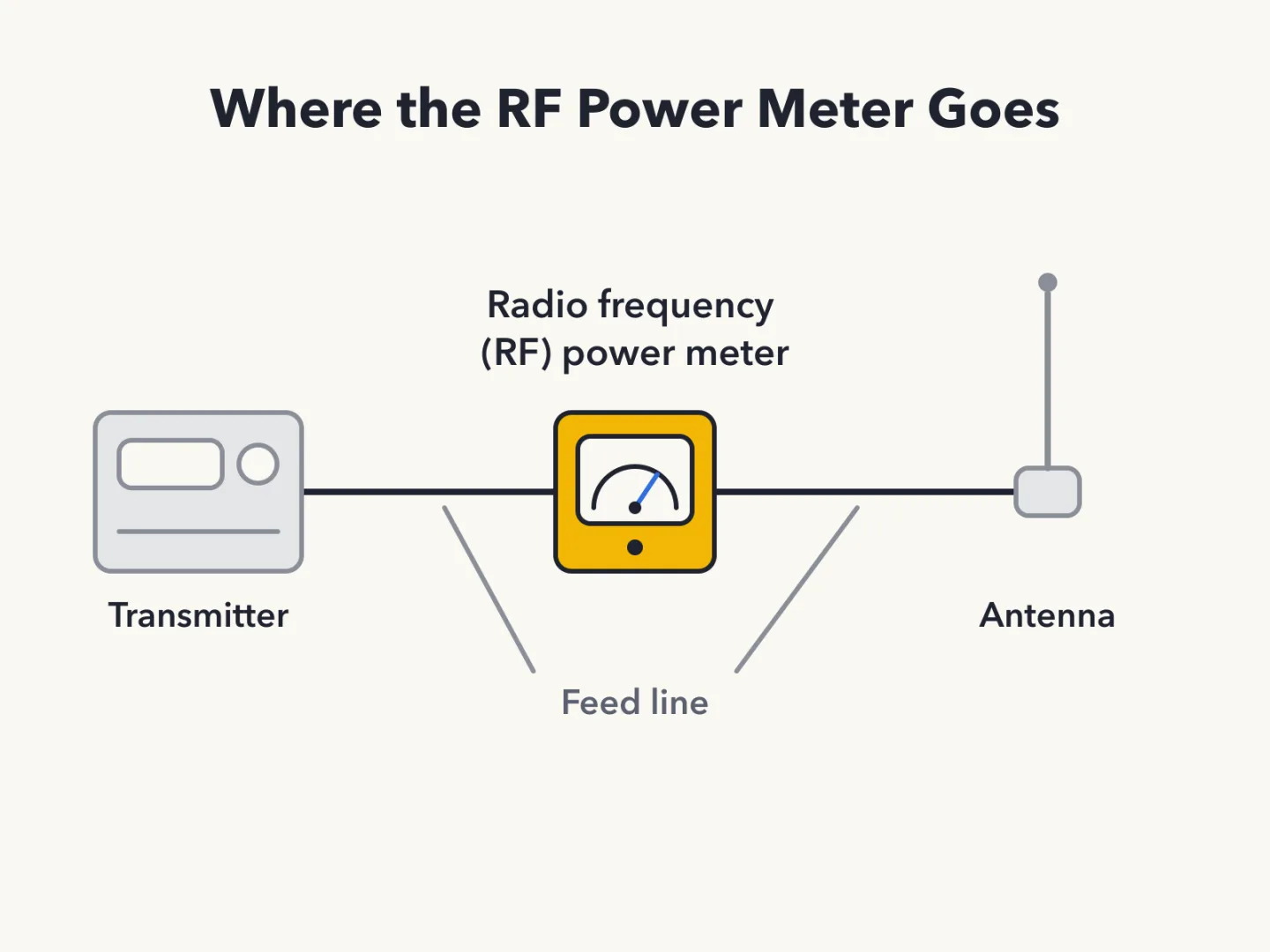
An RF power meter is installed in the feed line, between the transmitter and the antenna.
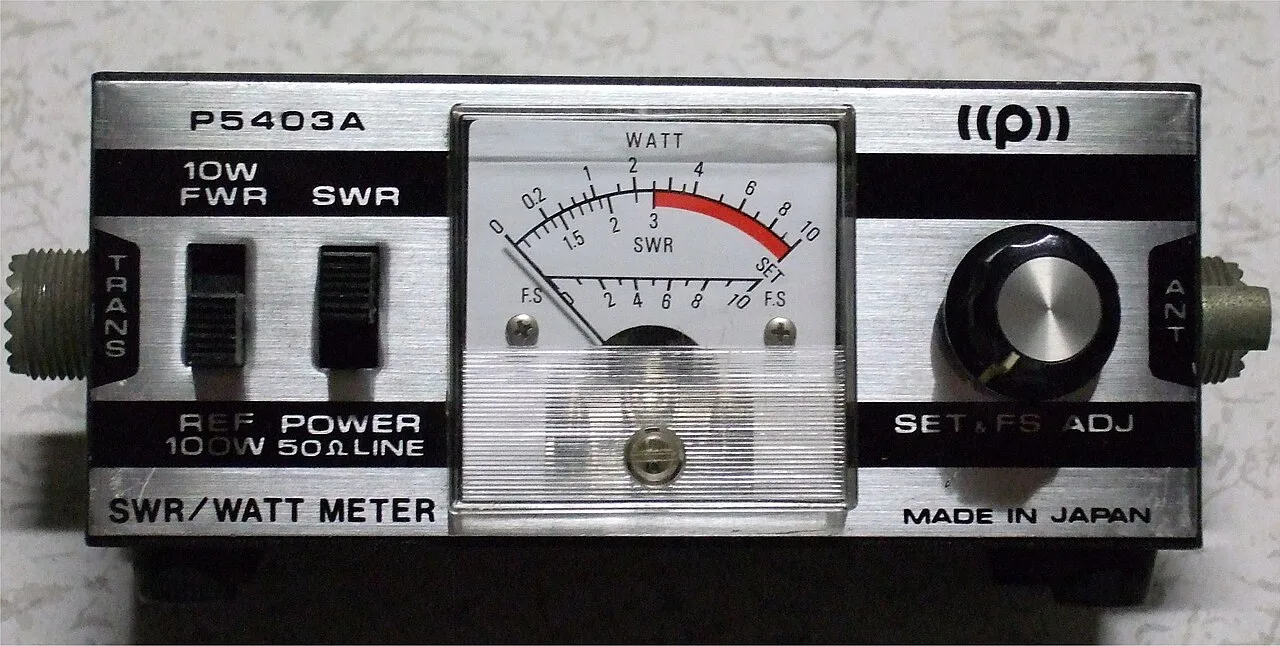
An accessory standing wave ratio (SWR) meter is chosen by considering the frequency and power level at which the measurements will be made.
Computer and digital connections
To operate FT8, the audio input and output of the transceiver connect to the audio output and input of a computer running FT8 software.
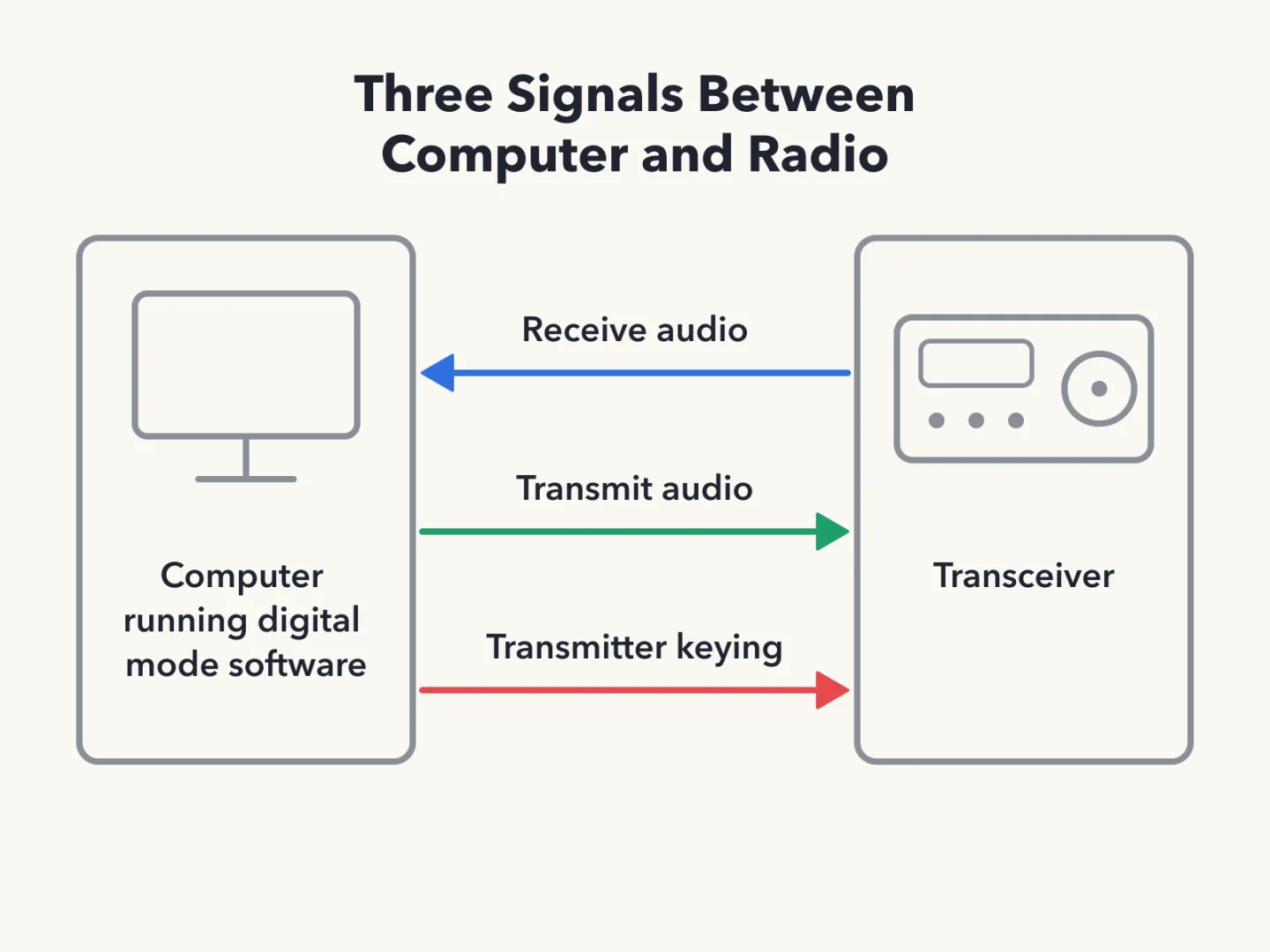
A computer-radio interface for digital modes carries three signals: receive audio, transmit audio and transmitter keying.
One required connection between a computer and a transceiver is the computer's "line in" to the transceiver's speaker connector.
The Federal Communications Commission (FCC) defines radioteletype (RTTY) as narrow-band direct-printing telegraphy emissions with certain emission designators, including J2B. Only a digital code of a type specifically authorized in the amateur rules may be transmitted.
Hotspots and keyers
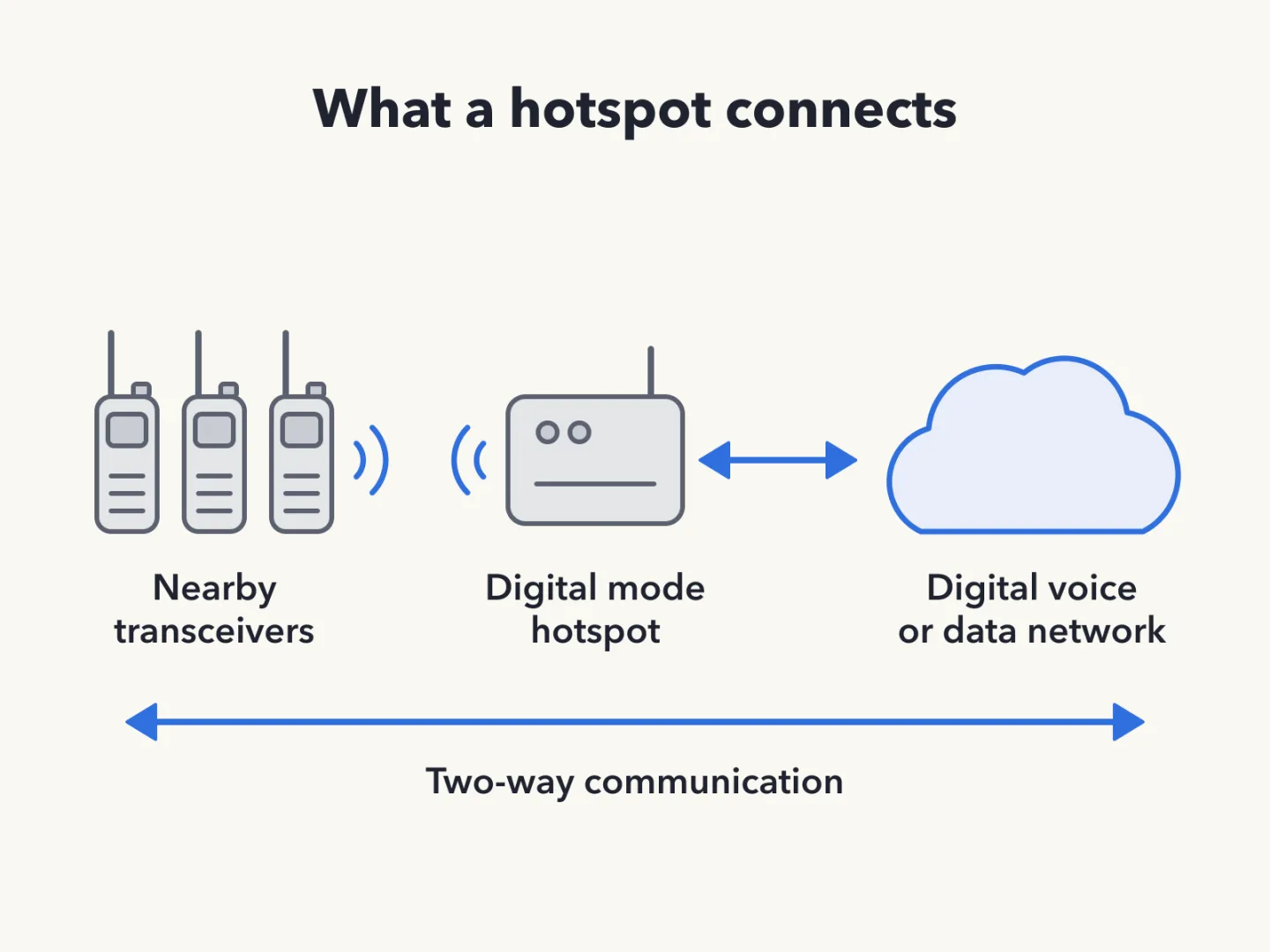
A digital mode hotspot gives nearby transceivers communication with a digital voice or data network.
An electronic keyer is a device that assists in manual sending of Morse code.
Sources
- 2026-2030 Technician Class (Element 2) Question Pool and Syllabus, public release of February 19, 2026 (errata applied)
- 47 CFR § 97.3 Definitions
Operating controls on a radio
Entering and scanning frequencies
A transceiver's operating frequency is entered with the keypad or the variable frequency oscillator (VFO) knob.
The scanning function of an FM transceiver tunes through a range of frequencies to check for activity.
Squelch and off-frequency FM
To hear a weak FM signal, the squelch threshold is set so that receiver output audio is on all the time.
An FM signal received slightly off frequency sounds distorted.
Pitch, filters and gain
The receiver incremental tuning (RIT) control, also called the clarifier, is the one to use when the voice pitch of a single sideband (SSB) signal answering a CQ (calling any station) call seems too high or low.
A multimode transceiver offers a choice of receiver filter bandwidths. The advantage is that noise or interference can be reduced by selecting a bandwidth matching the mode.
For SSB reception, a receiver filter bandwidth of 2400 hertz (Hz) provides the best signal-to-noise ratio.
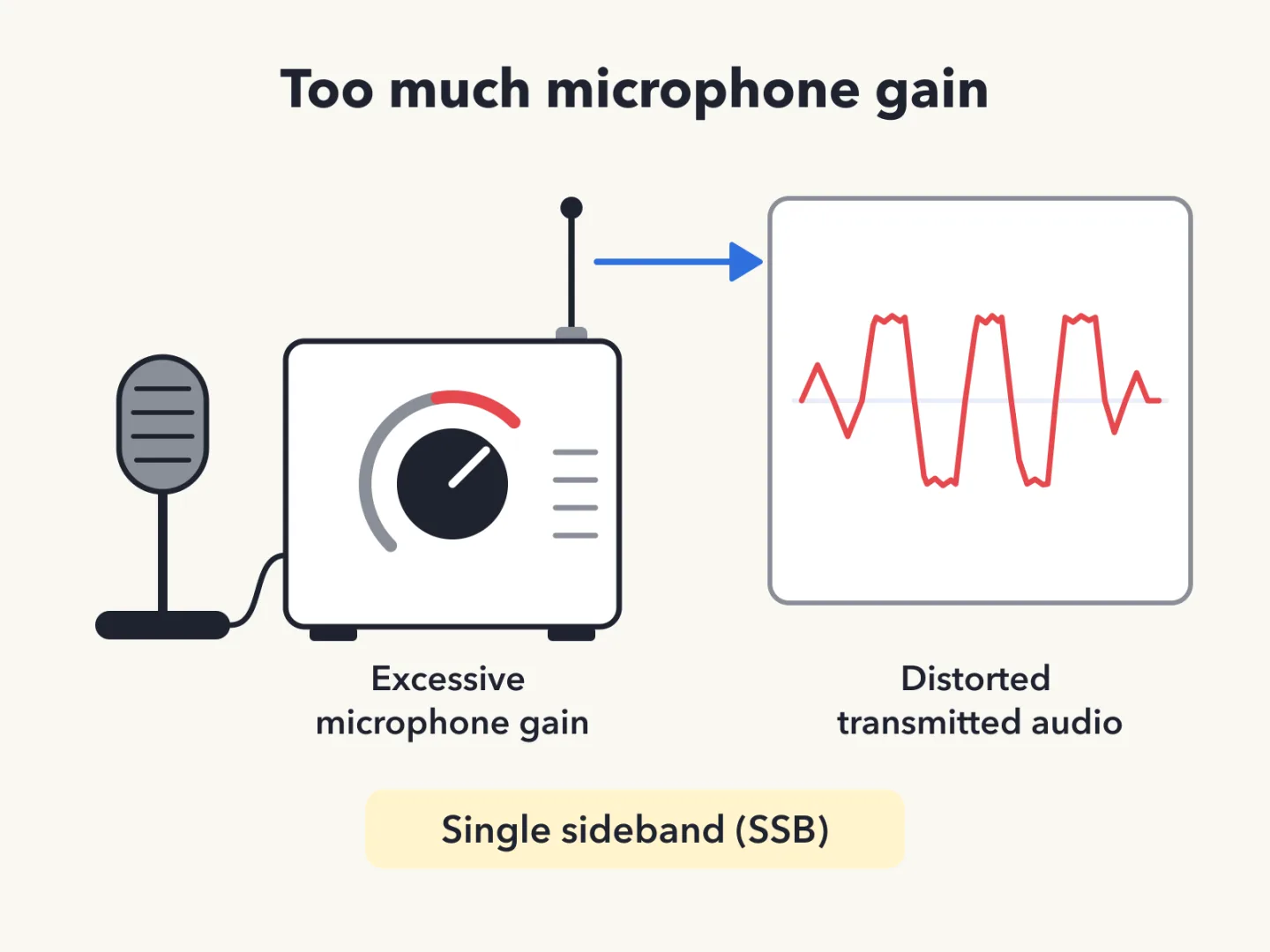
Excessive microphone gain on SSB transmissions distorts the transmitted audio.
DMR and D-STAR radios
On a Digital Mobile Radio (DMR) transceiver, a code plug is configuration data loaded onto the radio to access repeaters and talkgroups.
A specific group of stations is selected on a DMR transceiver by entering the group's identification code.
A D-STAR digital transceiver must have the operator's call sign programmed into it before transmitting.
Sources
Key terms
- Radioteletype (RTTY)
- Narrow-band direct-printing telegraphy; only an authorized digital code may be sent
Key facts
Mobile Radio Power Supply Rating
A typical 50-watt output mobile frequency modulated (FM) transceiver is powered from a supply rated 13.8 volts at 12 amperes.
Choosing an SWR Meter
An accessory standing wave ratio (SWR) meter is chosen by considering the frequency and power level at which the measurements will be made.
Why Short, Heavy Power Wires
A transceiver's direct current (DC) power connection uses short, heavy-gauge wires. They are used to minimize voltage drop when transmitting.
Connecting a Radio for FT8
To operate FT8, the transceiver's audio input and output connect to the audio output and input of a computer running FT8 software.
Where the Power Meter Goes
A radio frequency (RF) power meter is installed in the feed line, between the transmitter and the antenna.
Three Signals in a Digital Interface
A computer-radio interface for digital modes carries three signals: receive audio, transmit audio and transmitter keying.
Computer Line In to Speaker Jack
One required connection between a computer and a transceiver for digital modes is the computer's "line in" to the transceiver's speaker connector.
Best Conductor for RF Bonding
The preferred conductor for bonding at radio frequency (RF) is flat copper strap.
Battery Run Time
To find how long a battery can power equipment, divide the battery's ampere-hour rating by the average current draw of the equipment.
What a Hotspot Does
A digital mode hotspot gives nearby transceivers communication with a digital voice or data network.
Negative Return in a Vehicle
In a vehicle, the negative power return of a mobile transceiver is connected at the 12-volt battery chassis ground.
What an Electronic Keyer Is
An electronic keyer is a device that assists in manual sending of Morse code.
Too Much Microphone Gain
Excessive microphone gain on single sideband (SSB) transmissions distorts the transmitted audio.
Entering an Operating Frequency
A transceiver's operating frequency is entered with the keypad or the variable frequency oscillator (VFO) knob.
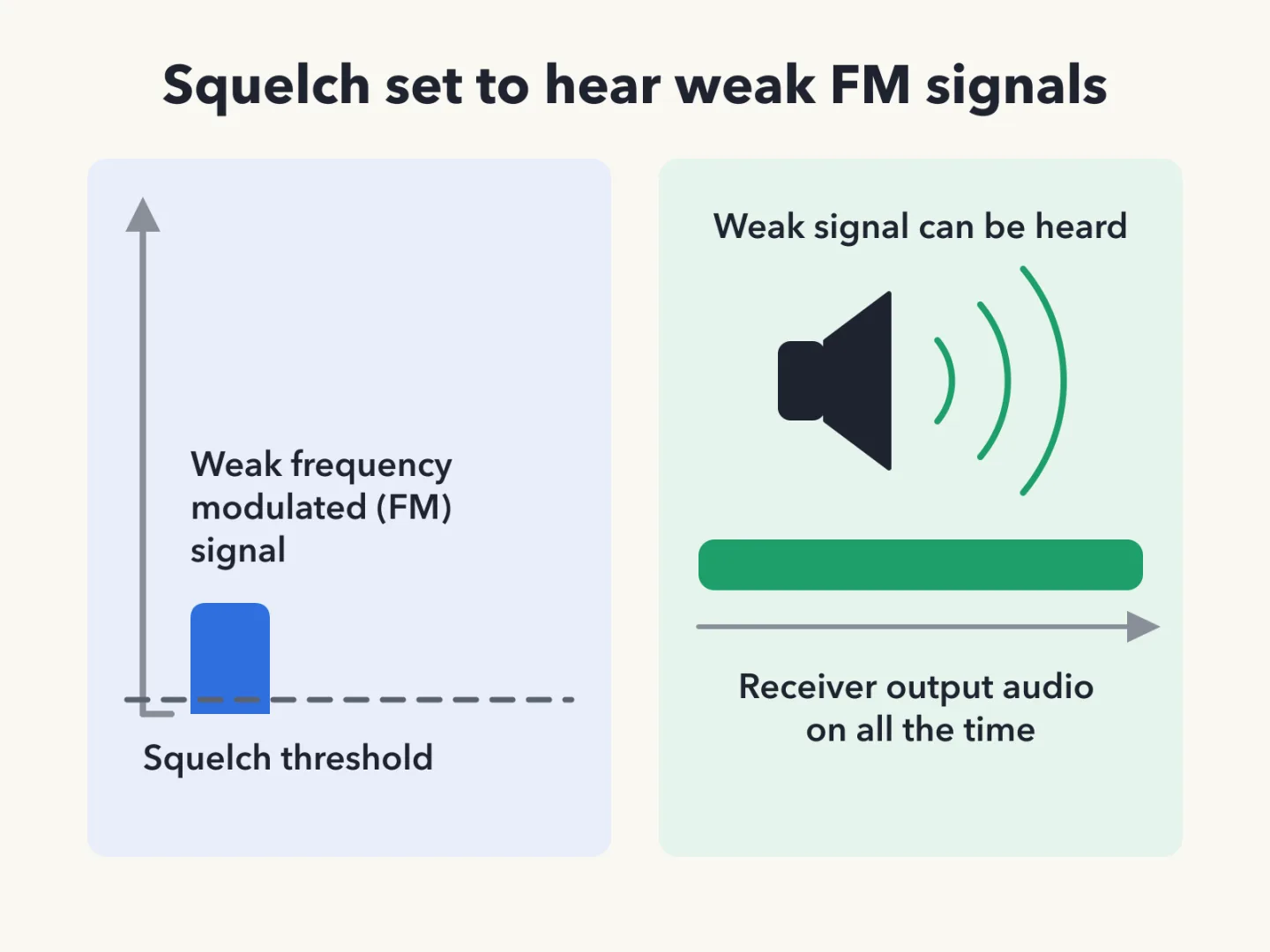
Squelch for Weak FM Signals
To hear a weak frequency modulated (FM) signal, the squelch threshold is set so that receiver output audio is on all the time.
FM Received Off Frequency
A frequency modulated (FM) signal received slightly off frequency sounds distorted.
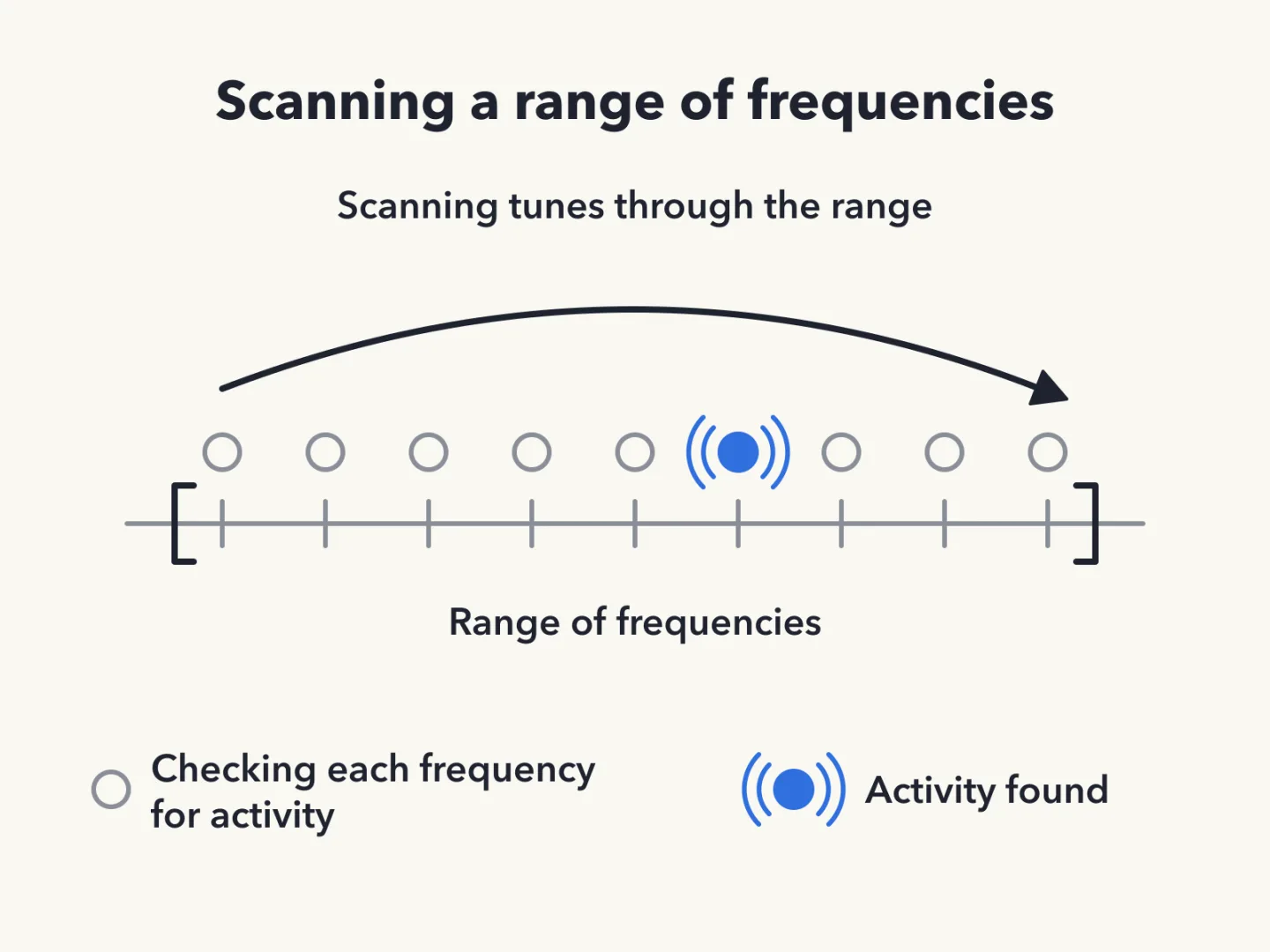
What Scanning Does
The scanning function of a frequency modulated (FM) transceiver tunes through a range of frequencies to check for activity.
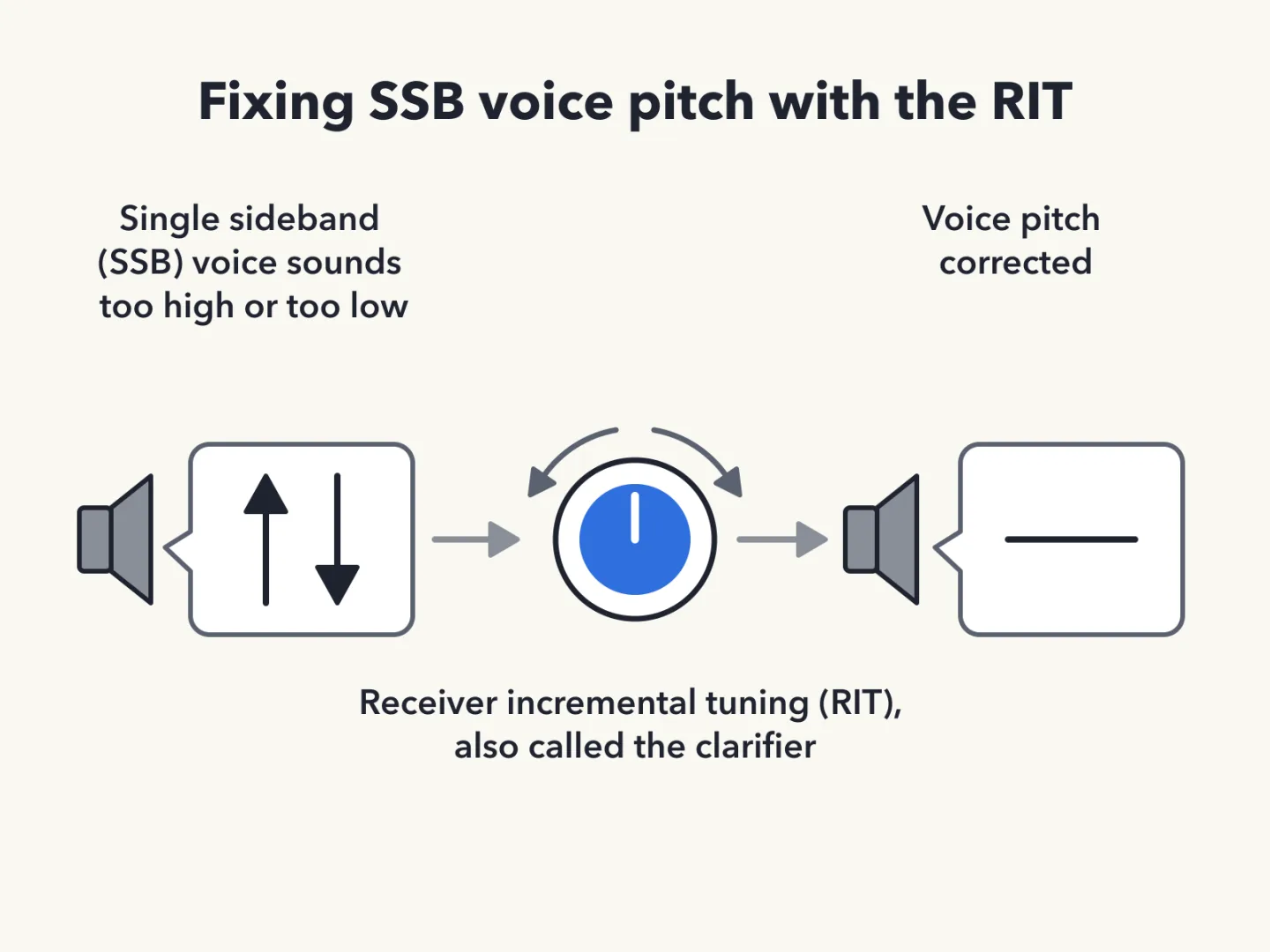
Fixing Pitch with the RIT
The receiver incremental tuning (RIT) control, also called the clarifier, fixes a single sideband (SSB) voice that sounds too high or low.
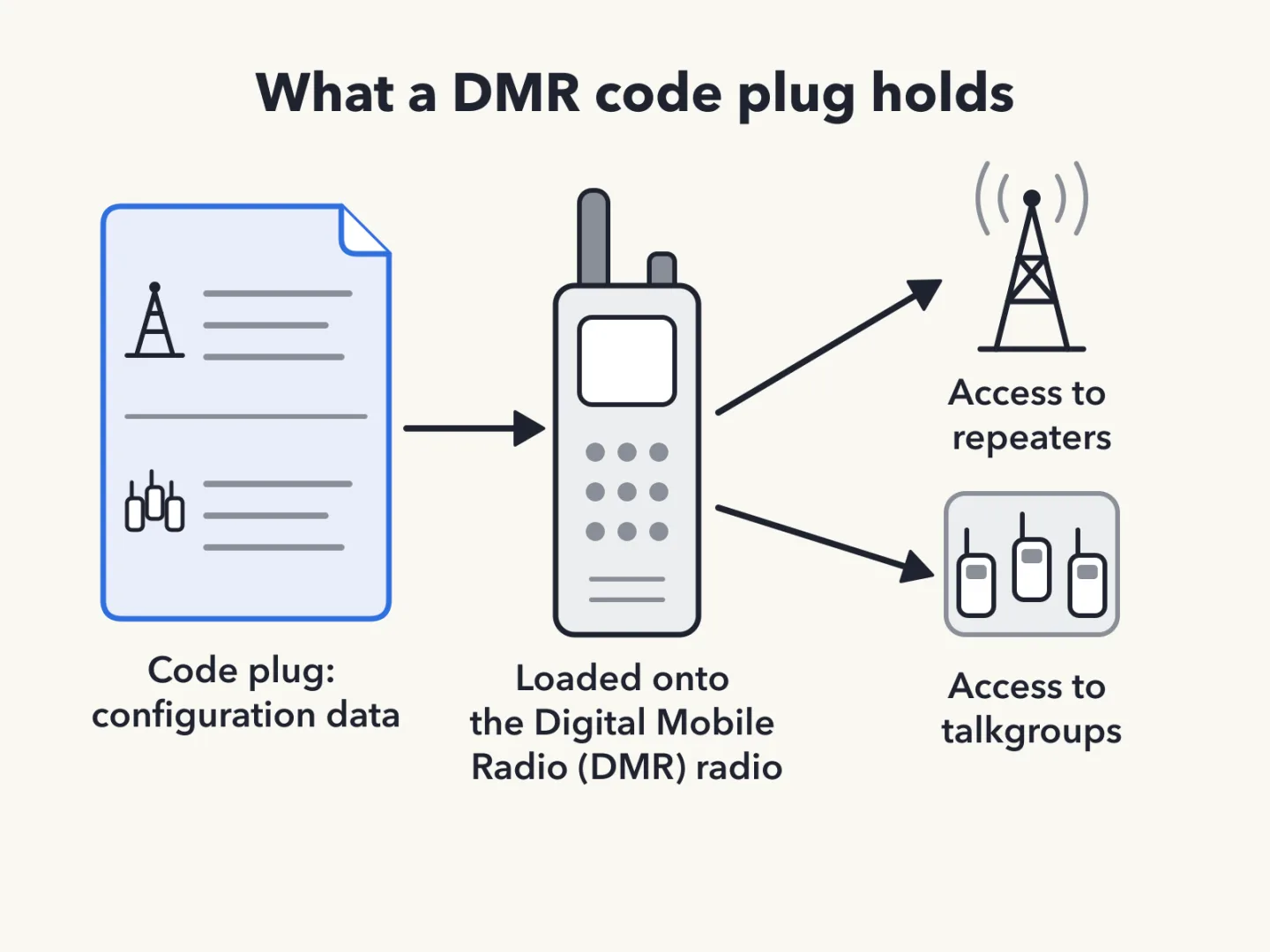
What a DMR Code Plug Is
On a Digital Mobile Radio (DMR) transceiver, a code plug is configuration data loaded onto the radio to access repeaters and talkgroups.
Why Choose a Filter Bandwidth
A multimode transceiver offers a choice of receiver filter bandwidths. Noise or interference can be reduced by selecting a bandwidth matching the mode.
Selecting a DMR Group
A specific group of stations is selected on a Digital Mobile Radio (DMR) transceiver by entering the group's identification code.
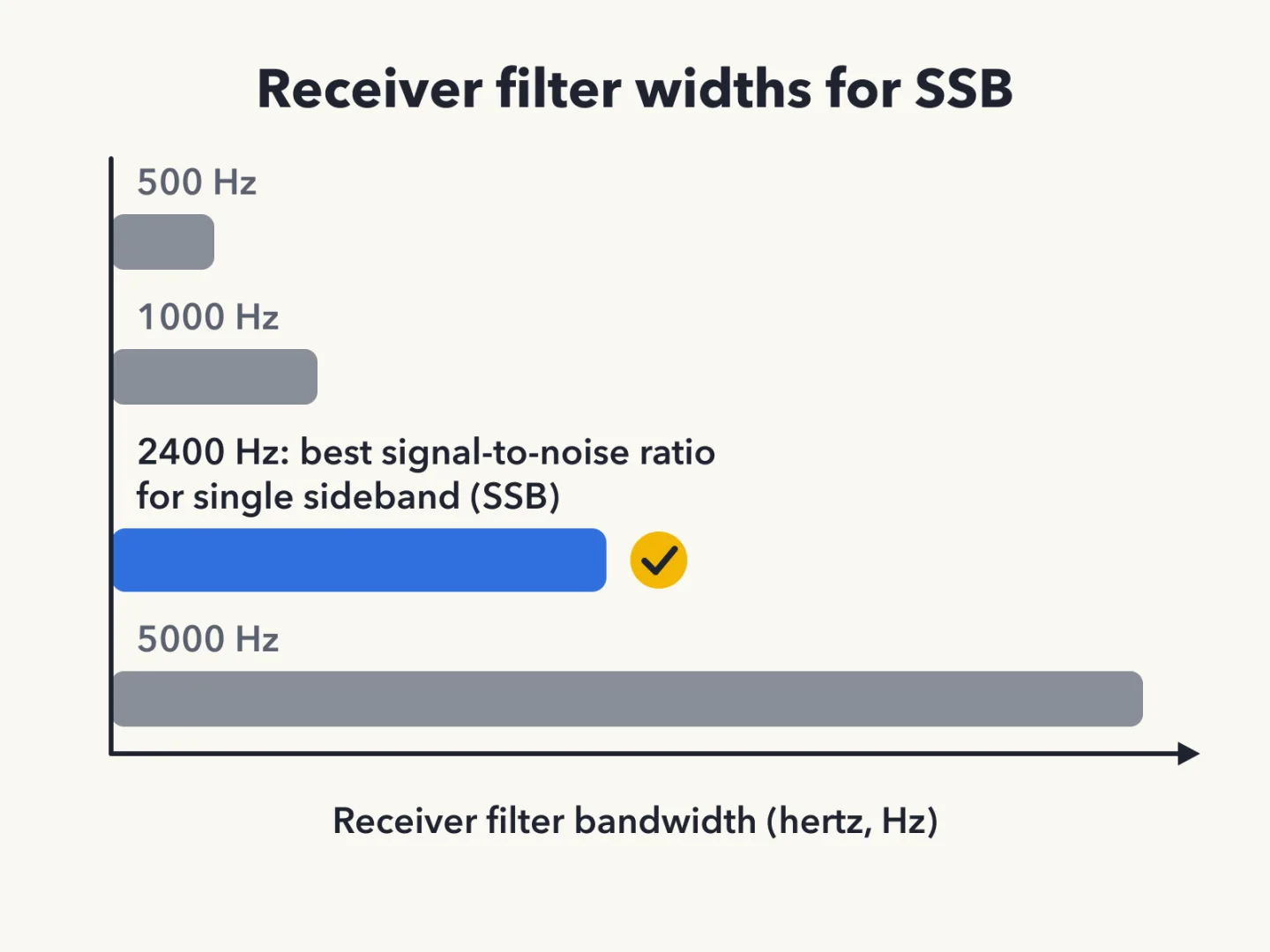
Best SSB Filter Width
For single sideband (SSB) reception, a receiver filter bandwidth of 2400 hertz (Hz) provides the best signal-to-noise ratio.
A Call Sign for Digital Radio
A Digital Smart Technologies for Amateur Radio (D-STAR) digital transceiver must have the operator's call sign programmed into it before transmitting.
Matched pairs
Each item on the left goes with the one on the right.
- Electronic keyer
- Aids manual Morse code sending
- Scanning
- Tunes through frequencies to check activity
Self-test
Answer each question from memory, then check your work against the answer key.
1. Which of the following is an appropriate power supply rating for a typical 50-watt output mobile FM transceiver?
- A13.8 volts at 4 amperes
- B24.0 volts at 12 amperes
- C24.0 volts at 4 amperes
- D13.8 volts at 12 amperes
2. Why are short, heavy-gauge wires used for a transceiver’s DC power connection?
- ATo provide a close match to the power supply output impedance
- BTo minimize radiative losses in the power cable
- CTo minimize voltage drop when transmitting
- DTo avoid RF interference
3. How can you determine the length of time that equipment can be powered from a battery?
- ADivide the battery ampere-hour rating by the average current draw of the equipment
- BMultiply the square of the battery's current rating by the equipment's input resistance
- CDivide the watt-hour rating of the battery by the peak power consumption of the equipment
- DMultiply the watts per hour consumed by the equipment by the battery power rating
4. Which of the following conductors is preferred for bonding at RF?
- ATwisted-pair cable
- BFlat copper strap
- CCopper braid removed from coaxial cable
- DCopper-clad steel wire
5. Where should the negative power return of a mobile transceiver be connected in a vehicle?
- AAt the 12-volt battery chassis ground
- BTo any metal part of the vehicle
- CThrough the transceiver’s mounting bracket
- DTo the shell of the power connector
6. Where should an RF power meter be installed?
- AAt the power supply output
- BIn parallel with the push-to-talk line and the antenna
- CIn the power supply cable, as close as possible to the radio
- DIn the feed line, between the transmitter and antenna
7. Which of the following should be considered when selecting an accessory SWR meter?
- AThe distance that the meter will be located from the antenna
- BThe ability of the meter to compensate for a poor transmission line match to the antenna
- CThe frequency and power level at which the measurements will be made
- DThe maximum SWR anticipated on the transmission line
8. How are the audio input and output of a transceiver connected in a station configured to operate using FT8?
- ATo a computer connected to the FT8converter.com website
- BTo the audio output and input of a computer running FT8 software
- CTo an FT8 conversion unit, a keyboard, and a computer monitor
- DTo a computer running a terminal program and connected to a terminal node controller unit
9. What signals are used in a computer-radio interface for digital mode operation?
- ANMEA GPS location and DC power
- BAntenna and RF power
- CReceive audio, transmit audio, and transmitter keying
- DReceive and transmit mode, status, and location
10. Which of the following is one of the connections required between a computer and a transceiver to operate digital modes?
- AComputer “line out” to transceiver push-to-talk
- BComputer “line in” to transceiver push-to-talk
- CComputer “line out” to transceiver speaker connector
- DComputer “line in” to transceiver speaker connector
11. What function does a digital mode hotspot perform for nearby transceivers?
- AFT8 digital communications via AFSK using a smartphone connected to the internet
- BCommunication with a digital voice or data network
- CHigh-speed digital communications for meteor scatter
- DRTTY encoding and decoding without a computer
12. What is an electronic keyer?
- AA device that assists in manual sending of Morse code
- BAn interlock to prevent unauthorized use of a radio
- CA device for switching antennas from transmit to receive
- DA device for voice activated switching from receive to transmit
13. Which of the following can be used to enter a transceiver’s operating frequency?
- AThe Automatic Frequency Control
- BAll these choices are correct
- CThe CTCSS or DTMF encoder
- DThe keypad or VFO knob
14. What does the scanning function of an FM transceiver do?
- ATunes through a range of frequencies to check for activity
- BTunes through a range of frequencies to determine the antenna’s resonant frequency
- CChecks incoming signal deviation
- DPrevents interference to nearby repeaters
15. How is squelch adjusted so that a weak FM signal can be heard?
- ATurn on the anti-squelch function
- BTurn up the audio level until it overcomes the squelch threshold
- CSet the squelch threshold so that receiver output audio is on all the time
- DEnable squelch enhancement
16. What does an FM signal sound like when received slightly off frequency?
- AThere is no effect except for reduction in amplitude
- BThe audio becomes distorted
- CThe audio increases in pitch
- DThe audio decrease in pitch
17. Which of the following controls could be used if the voice pitch of a single-sideband signal returning to your CQ call seems too high or low?
- AThe RIT or Clarifier
- BThe AGC or limiter
- CThe bandwidth selection
- DThe tone squelch
18. Which of the following receiver filter bandwidths provides the best signal-to-noise ratio for SSB reception?
- A5000 Hz
- B2400 Hz
- C500 Hz
- D1000 Hz
19. What is the effect of excessive microphone gain on SSB transmissions?
- AFrequency instability
- BSideband inversion
- CDistorted transmitted audio
- DIncreased SWR
20. What is the advantage of having a choice of receiver filter bandwidths in a multimode transceiver?
- AIncreases the number of frequencies that can be stored in memory
- BIncreases the amount of offset between receive and transmit frequencies
- CPermits monitoring several modes at once by selecting a separate filter for each mode
- DPermits noise or interference reduction by selecting a bandwidth matching the mode
21. What is a DMR “code plug”?
- AA manufacturer's DMR programming software upgrade to support new radio models
- BAn adapter cable used to connect a DMR radio to a computer for internet access
- CA Coder-Decoder (CODEC) that converts analog voice data to DMR digital data and vice versa
- DConfiguration data loaded onto your radio to access repeaters and talkgroups
22. How is a specific group of stations selected on a DMR digital voice transceiver?
- ABy enabling the group’s CTCSS tone
- BBy entering the group’s identification code
- CBy retrieving the frequencies from transceiver memory
- DBy inserting a five-pin, pre-programmed code plug
23. Which of the following must be programmed into a D-STAR digital transceiver before transmitting?
- AYour call sign
- BAll these choices are correct
- CYour output power
- DThe codec type being used
Go deeper
- ListenLesson 5 episode
- WatchPowering a Mobile Radio A typical fifty-watt mobile radio needs a power supply. What should that supply be rated?
- WatchHearing a Weak Signal A weak frequency modulated (FM) signal is on the air. The radio stays quiet, and nothing can be heard.
- StudyHam Radio Technician License in the FlashFeed app
Answer key
- 1. D 13.8 volts at 12 amperesA typical 50-watt output mobile frequency modulated (FM) transceiver runs from a supply rated 13.8 volts at 12 amperes. The 24.0-volt ratings and the 4-ampere rating are wrong for that radio.
- 2. C To minimize voltage drop when transmittingShort, heavy-gauge wires minimize voltage drop when transmitting. They are not used for impedance matching, radio frequency (RF) interference or radiative losses. DC stands for direct current.
- 3. A Divide the battery ampere-hour rating by the average current draw of the equipmentRun time is the battery's ampere-hour rating divided by the equipment's average current draw. Peak power consumption is not used.
- 4. B Flat copper strapFlat copper strap is the preferred conductor for bonding at radio frequency (RF). Coax braid, copper-clad steel wire and twisted-pair cable are not preferred.
- 5. A At the 12-volt battery chassis groundThe negative power return of a mobile transceiver goes at the 12-volt battery chassis ground, not the connector shell, any metal part or the bracket.
- 6. D In the feed line, between the transmitter and antennaA radio frequency (RF) power meter goes in the feed line between the transmitter and the antenna, not at the power supply output or in the power cable.
- 7. C The frequency and power level at which the measurements will be madeAn accessory standing wave ratio (SWR) meter is chosen by the frequency and power level of the measurements. Distance, expected SWR and match compensation are not the considerations.
- 8. B To the audio output and input of a computer running FT8 softwareFor FT8, the transceiver's audio input and output connect to the audio output and input of a computer running FT8 software.
- 9. C Receive audio, transmit audio, and transmitter keyingA computer-radio interface for digital modes carries receive audio, transmit audio and transmitter keying. Location data, antenna and direct current (DC) power are not among them. RF stands for radio frequency.
- 10. D Computer “line in” to transceiver speaker connectorOne required connection is the computer's "line in" to the transceiver's speaker connector. "Line out" to the speaker connector is wrong.
- 11. B Communication with a digital voice or data networkA hotspot gives nearby transceivers communication with a digital voice or data network. It is not an FT8 smartphone setup or a radioteletype (RTTY) device. AFSK stands for audio frequency-shift keying.
- 12. A A device that assists in manual sending of Morse codeAn electronic keyer assists in manual sending of Morse code. It is not an antenna switch, voice-activated switch or interlock.
- 13. D The keypad or VFO knobThe keypad or the variable frequency oscillator (VFO) knob enters a frequency. The Continuous Tone-Coded Squelch System (CTCSS) or Dual-Tone Multi-Frequency (DTMF) encoder and Automatic Frequency Control do not.
- 14. A Tunes through a range of frequencies to check for activityScanning tunes through a range of frequencies to check for activity. It does not find the antenna's resonant frequency. FM stands for frequency modulated.
- 15. C Set the squelch threshold so that receiver output audio is on all the timeFor a weak frequency modulated (FM) signal, the squelch threshold is set so receiver audio is on all the time. Raising the audio level is not the method.
- 16. B The audio becomes distortedA frequency modulated (FM) signal received slightly off frequency sounds distorted, not simply higher or lower in pitch.
- 17. A The RIT or ClarifierThe receiver incremental tuning (RIT) or clarifier corrects the pitch of a single sideband (SSB) voice that seems too high or low. Automatic gain control (AGC), bandwidth selection and tone squelch do not. CQ means calling any station.
- 18. B 2400 HzFor single sideband (SSB), a 2400 Hz receiver filter bandwidth gives the best signal-to-noise ratio. 500, 1000 and 5000 Hz are not the best.
- 19. C Distorted transmitted audioExcessive microphone gain distorts the transmitted audio. It does not cause frequency instability, increased standing wave ratio (SWR) or sideband inversion. SSB stands for single sideband.
- 20. D Permits noise or interference reduction by selecting a bandwidth matching the modeChoosing a receiver filter bandwidth matching the mode reduces noise or interference. It does not store more frequencies or monitor several modes at once.
- 21. D Configuration data loaded onto your radio to access repeaters and talkgroupsA Digital Mobile Radio (DMR) code plug is configuration data loaded onto the radio to access repeaters and talkgroups. It is not a cable, upgrade or CODEC.
- 22. B By entering the group’s identification codeA group of stations is selected on a Digital Mobile Radio (DMR) transceiver by entering the group's identification code, not by memory frequencies or a Continuous Tone-Coded Squelch System (CTCSS) tone.
- 23. A Your call signA Digital Smart Technologies for Amateur Radio (D-STAR) transceiver needs the operator's call sign programmed before transmitting. Output power and codec type are not what must be programmed.
Sources
- NCVEC Question Pool Committee — 2026–2030 Technician question pool — ncvec.org/index.php/2026-2030-technician-question-pool
- FCC — 47 CFR § 97.3 Definitions — www.ecfr.gov/current/title-47/section-97.3
Image credits
- Mobile Radio Power Supply Rating: FlashFeed original diagram · CC-BY-4.0
- Choosing an SWR Meter: Wikimedia Commons · 魔私利戸 · CC BY-SA 4.0 — commons.wikimedia.org/wiki/File:SWR_&_power_meter_front_view.jpg
- Why Short, Heavy Power Wires: FlashFeed original diagram · CC-BY-4.0
- Where the Power Meter Goes: FlashFeed original diagram · CC-BY-4.0
- Three Signals in a Digital Interface: FlashFeed original diagram · CC-BY-4.0
- Battery Run Time: FlashFeed original diagram · CC-BY-4.0
- What a Hotspot Does: FlashFeed original diagram · CC-BY-4.0
- Too Much Microphone Gain: FlashFeed original diagram · CC-BY-4.0
- Squelch for Weak FM Signals: FlashFeed original diagram · CC-BY-4.0
- What Scanning Does: FlashFeed original diagram · CC-BY-4.0
- Fixing Pitch with the RIT: FlashFeed original diagram · CC-BY-4.0
- What a DMR Code Plug Is: FlashFeed original diagram · CC-BY-4.0
- Best SSB Filter Width: FlashFeed original diagram · CC-BY-4.0
