
Ham Radio Technician License study guide · Lesson 13 of 15
Signals and Emissions: Contests, Linking and Digital Modes
Direction finding, contests and internet linking · Digital and non-voice modes
This is the lesson's study guide from the FlashFeed app, plus its key facts and a self-test.
What you'll be able to do
- Explain how direction finding, contests and grid locators are used in operating activities, including good contest practice
- Describe how IRLP, EchoLink, VoIP and gateways link amateur stations over the internet, and how to access them
- Identify common digital and non-voice modes and terms, including FT8, WSJT-X, PSK, CW and NTSC
- Describe how APRS, packet radio, ARQ, DMR and mesh networks send and protect data
This lesson covers the activities that go beyond ordinary conversation on the air. It starts with finding the source of a signal, then covers contests, grid locators and the systems that link stations over the internet. It then turns to digital and non-voice modes, including packet radio, position reporting, digital voice and mesh networks. A new licensee meets all of these terms in club talk and on the air, so each needs a plain meaning.
Direction finding, contests and internet linking
Finding a signal's source
Radio direction finding is the method used to locate sources of noise interference or jamming.
The same skill is the point of a hidden transmitter hunt, where operators search for a transmitter that has been concealed. The useful item for such a hunt is a directional antenna.
Contests and grid locators
Contesting is the operating activity of contacting as many stations as possible during a specified period.
Good practice in a contest contact is to send only the minimum information needed for proper identification and the contest exchange. A grid locator is a letter-number designator assigned to a geographic location.
Linking stations through the internet
The Internet Radio Linking Project (IRLP) is a technique to connect amateur radio systems, such as repeaters, via the internet.
Over-the-air access to IRLP nodes is accomplished by using Dual-Tone Multi-Frequency (DTMF) signals.
Voice Over Internet Protocol (VoIP) is a method of delivering voice communications over the internet using digital techniques.
EchoLink is the protocol that enables an amateur station to transmit through a repeater without using a radio to initiate the transmission.
Before using the EchoLink system, a person must register a call sign and provide proof of license.
An amateur radio station that connects other amateur stations to the internet is a gateway.
Sources
Digital and non-voice modes
Digital modes
Several modes count as digital communications modes. Packet radio is one. IEEE 802.11 is another, where IEEE stands for Institute of Electrical and Electronics Engineers. FT8 is a third. Each of the three is a digital communications mode.
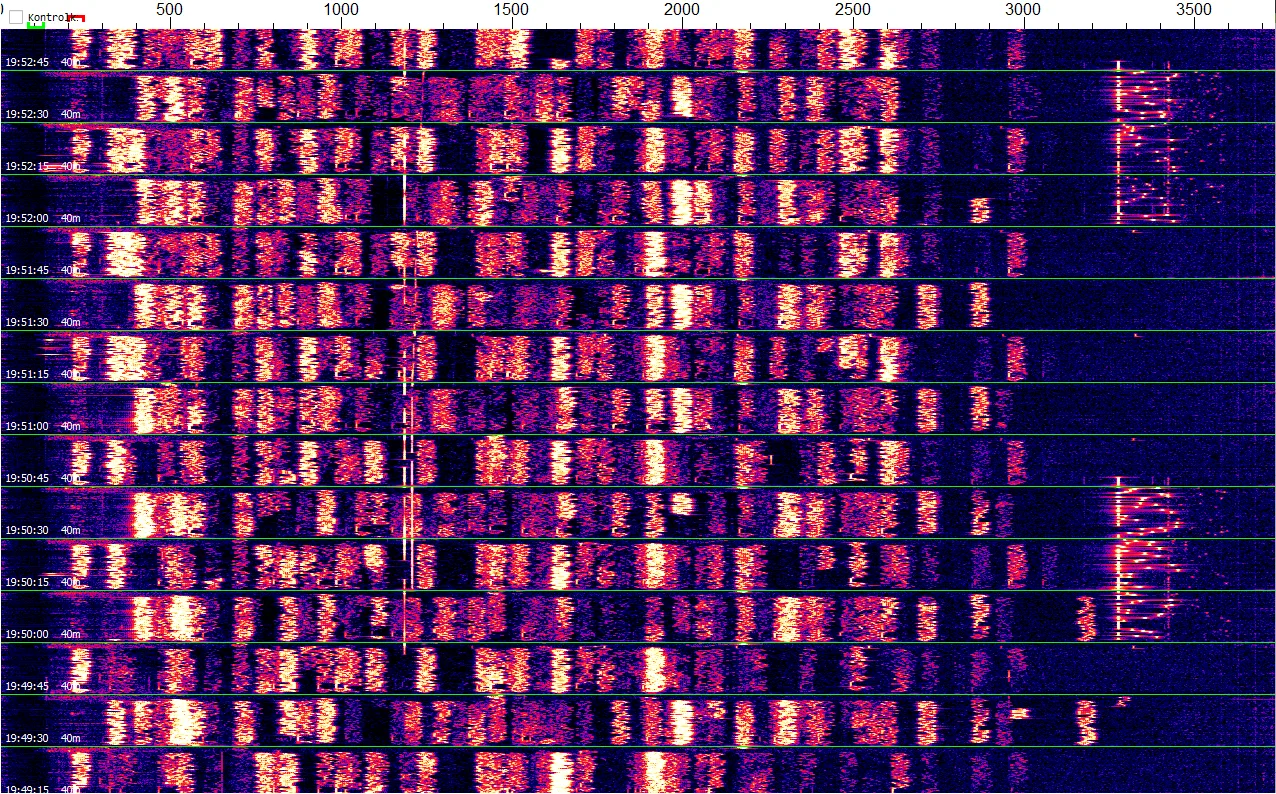
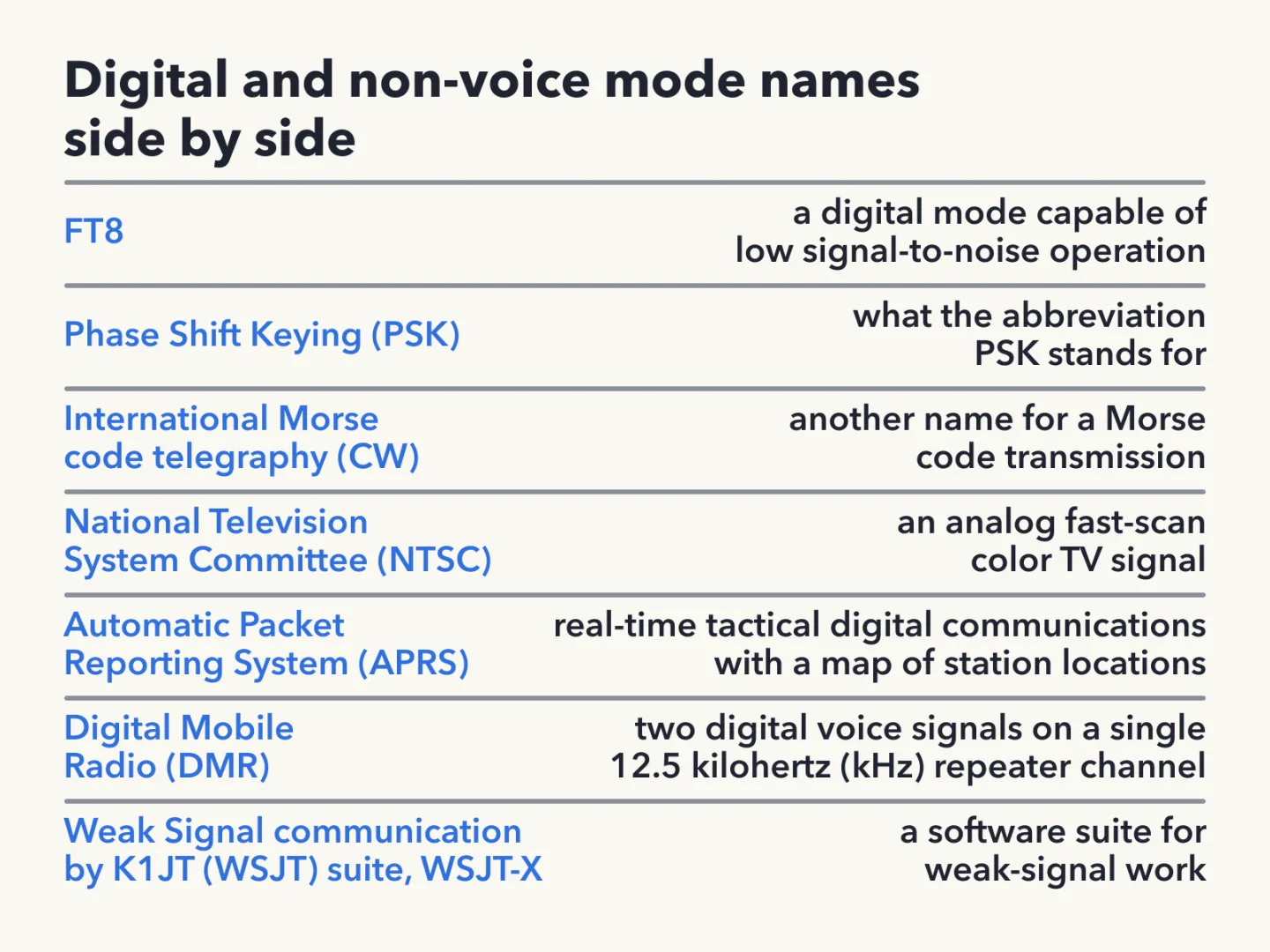
FT8 is a digital mode capable of low signal-to-noise operation. That means it can work with weak signals.
WSJT-X is a software suite for weak-signal work; the name begins with Weak Signal communication by K1JT (WSJT). Its digital mode software supports all three of these operating activities:
- Earth-Moon-Earth (EME);
- weak signal propagation beacons;
- meteor scatter.
Keying and Morse code
Phase Shift Keying is what the abbreviation PSK means.
CW, short for continuous wave, is another name for a Morse code transmission.
Television signals
National Television System Committee (NTSC) is the full name. As a term, it means an analog fast-scan color TV signal.
Packet radio and error control
Packet radio transmissions include all three of the following:
- a checksum that permits error detection;
- a header that contains the call sign of the station to which the information is being sent;
- automatic repeat request (ARQ) in case of error.
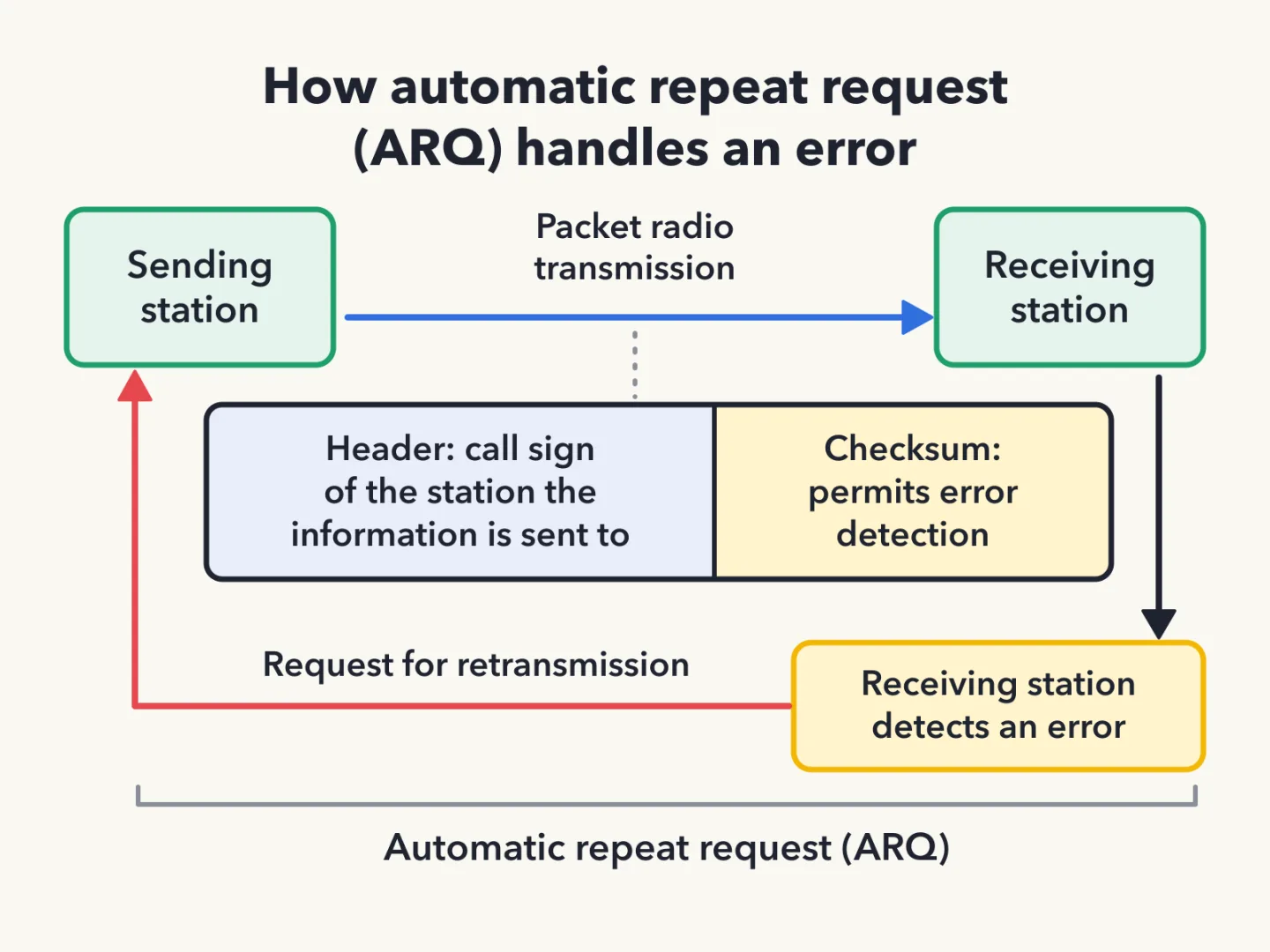
ARQ is an error correction method in which the receiving station detects errors and sends a request for retransmission.
Position reporting
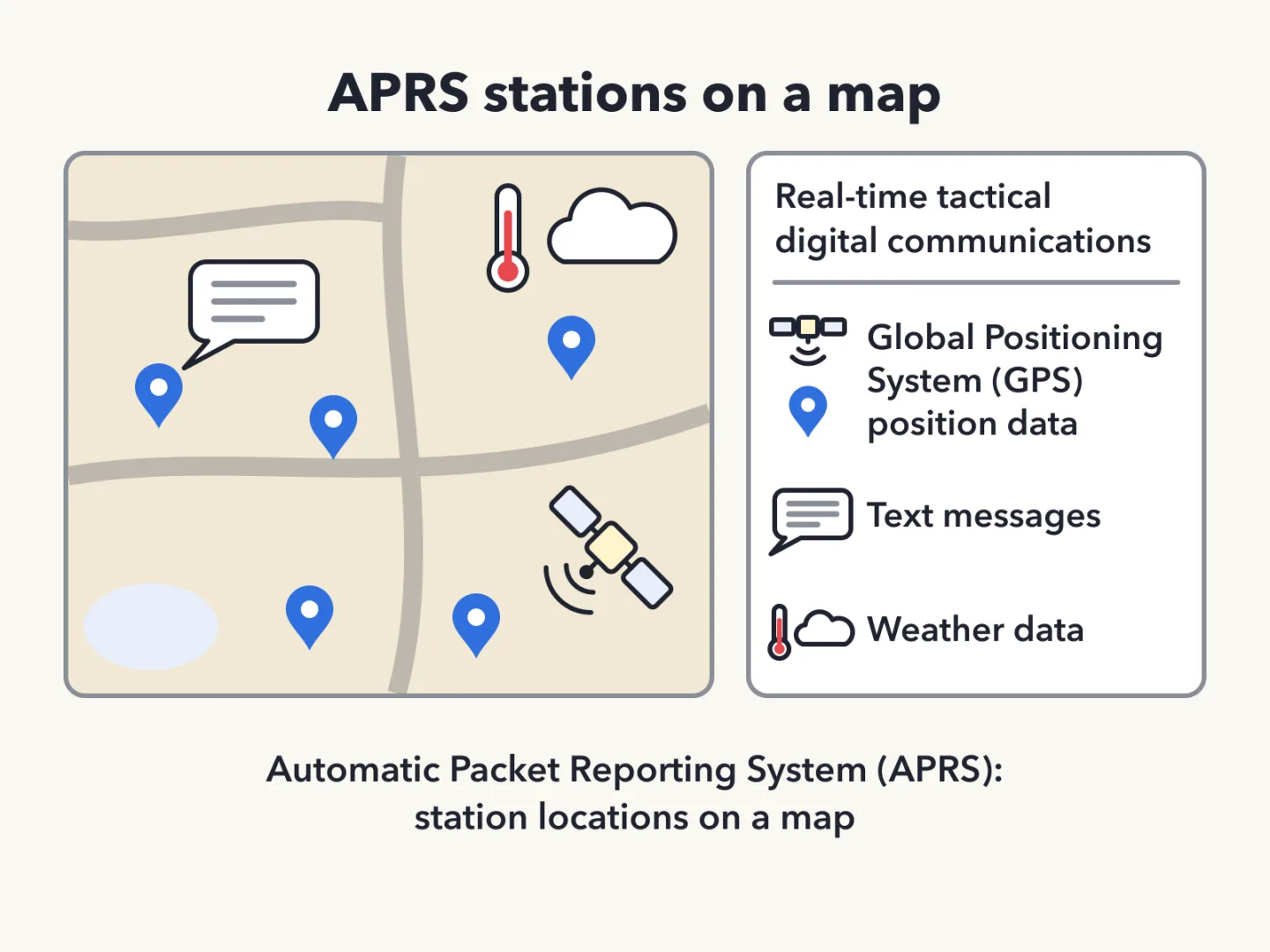
The Automatic Packet Reporting System (APRS) can transmit all three of these kinds of data: Global Positioning System (GPS) position data, text messages and weather data.
An application of APRS is real-time tactical digital communications in conjunction with a map showing the locations of stations.
Digital voice and mesh networks
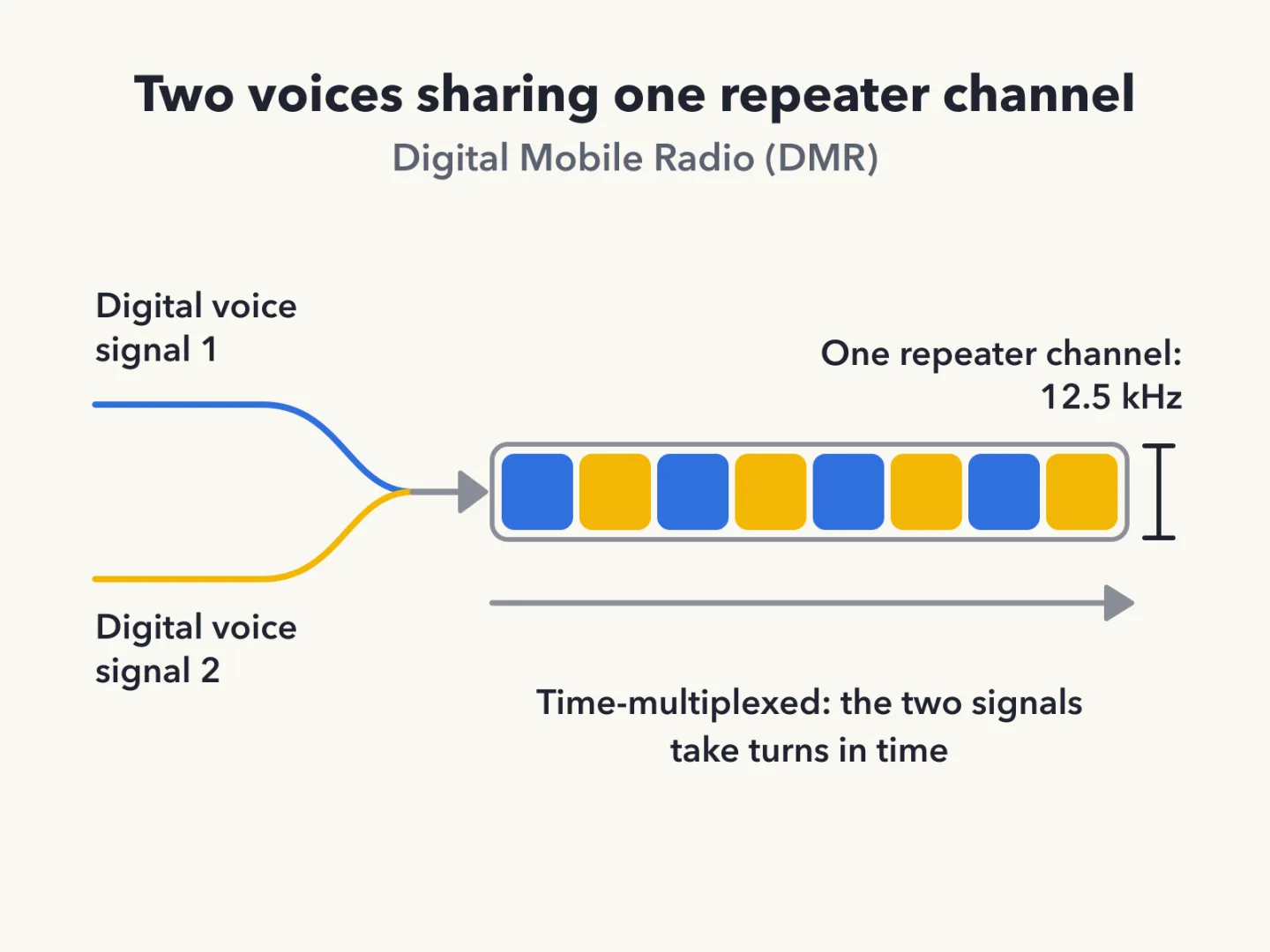
Digital Mobile Radio (DMR) is a technique for time-multiplexing two digital voice signals on a single 12.5 kilohertz (kHz) repeater channel.
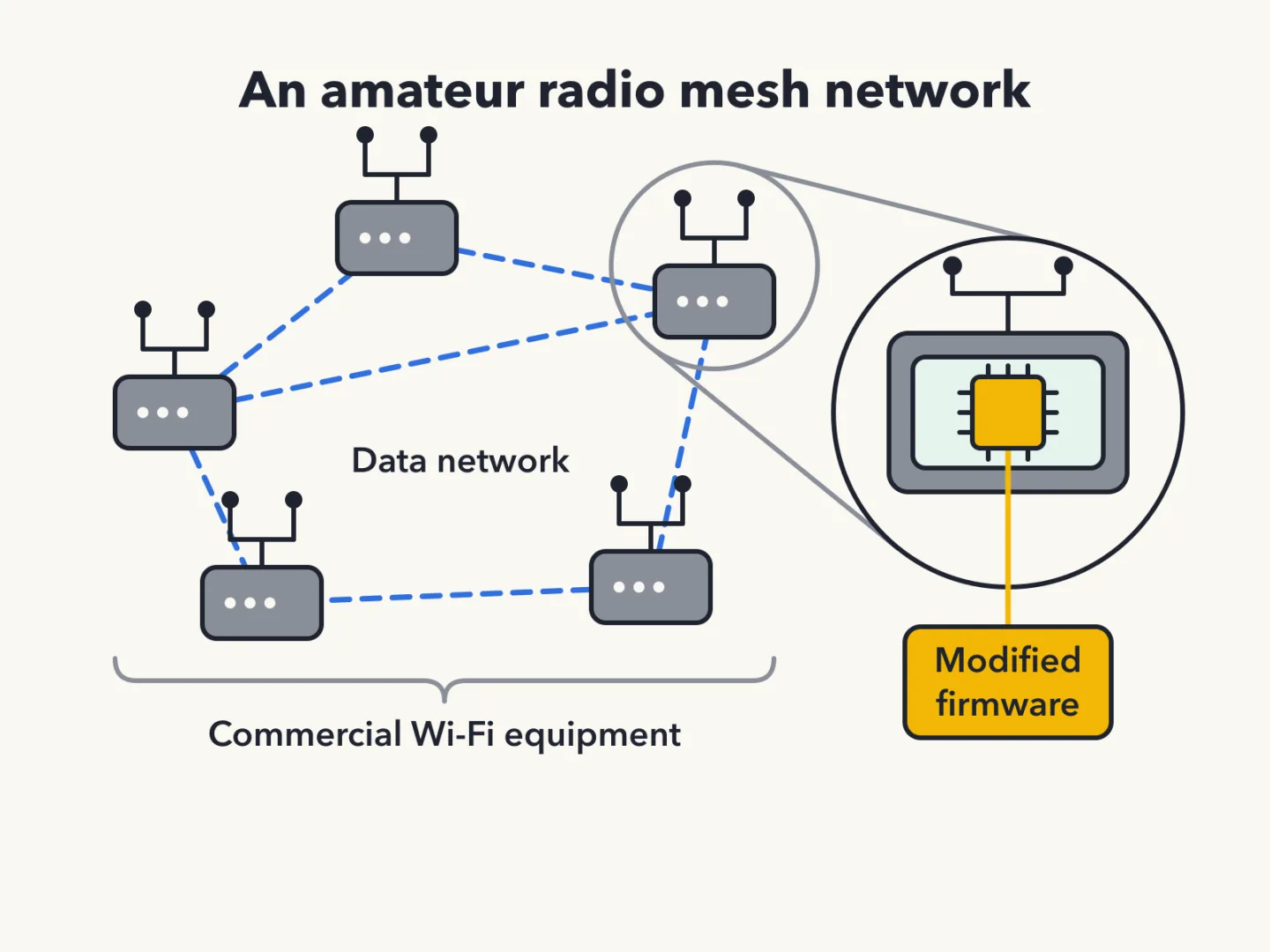
An amateur radio mesh network is an amateur-radio data network using commercial Wi-Fi equipment with modified firmware.
Sources
Key facts
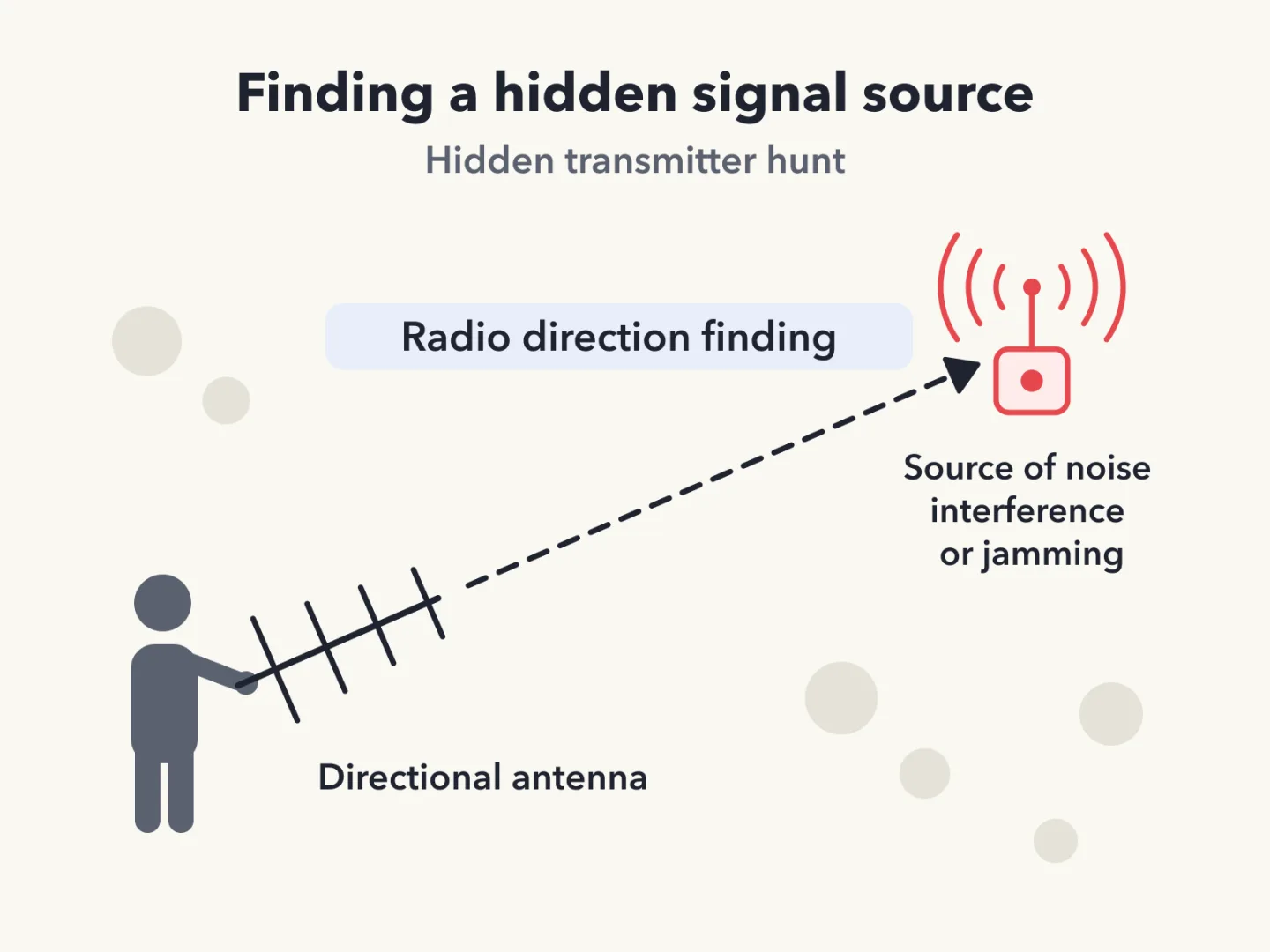
Radio Direction Finding
Radio direction finding is the method used to locate sources of noise interference or jamming.
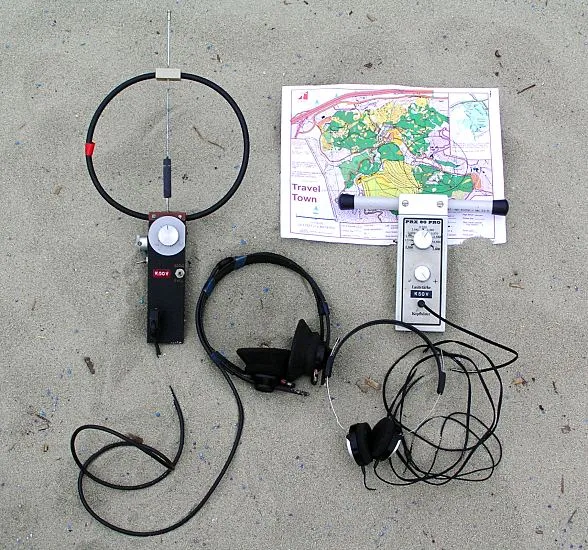
Gear for a Transmitter Hunt
In a hidden transmitter hunt, operators search for a transmitter that has been concealed. The useful item for the hunt is a directional antenna.
What Contesting Is
Contesting is the operating activity of contacting as many stations as possible during a specified period.
Good Contest Practice
Good practice in a contest contact is to send only the minimum information needed for proper identification and the contest exchange.
Grid Locator Meaning
A grid locator is a letter-number designator assigned to a geographic location.
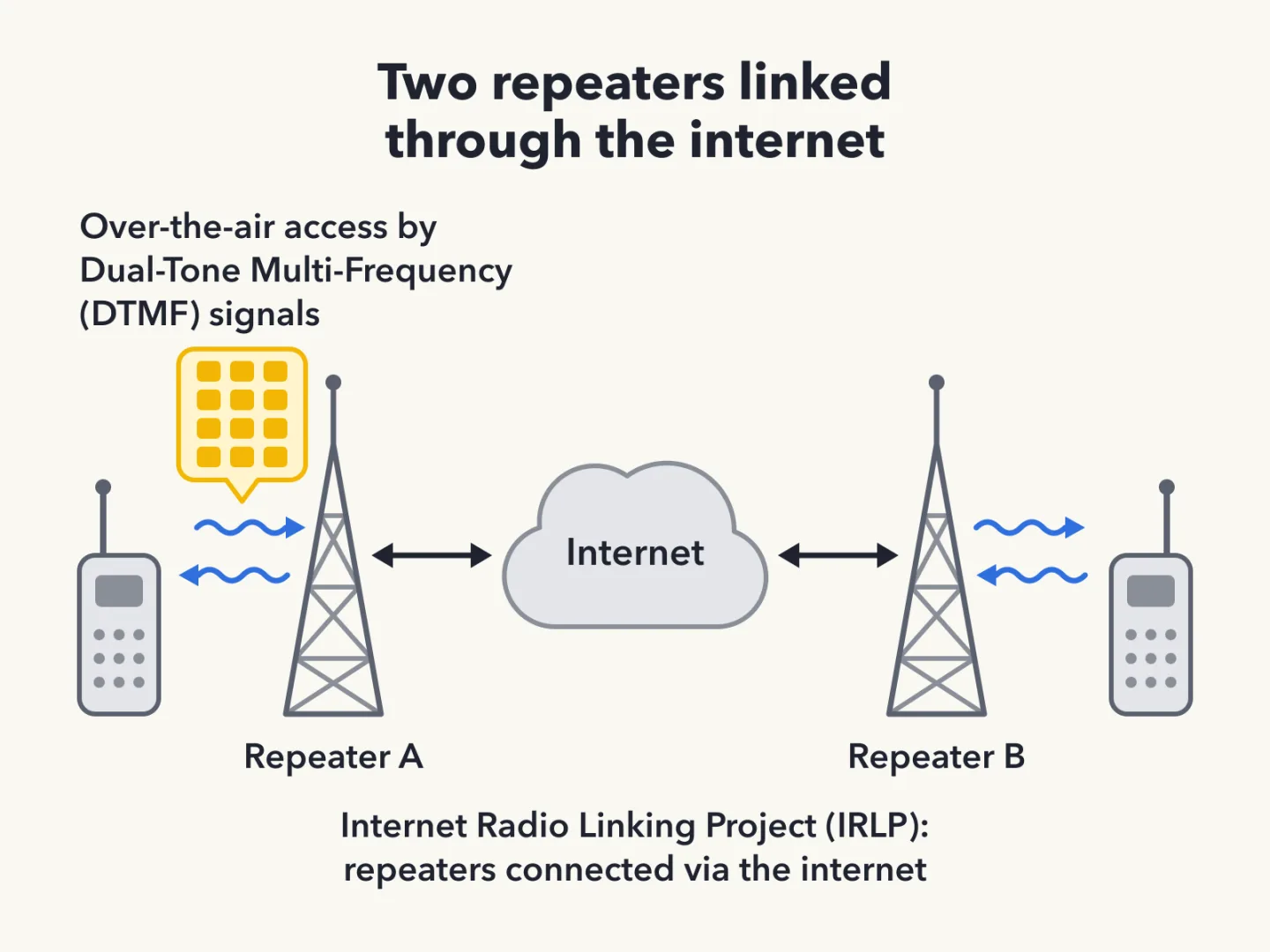
Reaching IRLP Nodes
Over-the-air access to Internet Radio Linking Project (IRLP) nodes is accomplished by using Dual-Tone Multi-Frequency (DTMF) signals.
Voice Over the Internet
Voice Over Internet Protocol (VoIP) is a method of delivering voice communications over the internet using digital techniques.
What IRLP Does
The Internet Radio Linking Project (IRLP) is a technique to connect amateur radio systems, such as repeaters, via the internet.
EchoLink Without a Radio
EchoLink is the protocol that enables an amateur station to transmit through a repeater without using a radio to initiate the transmission.
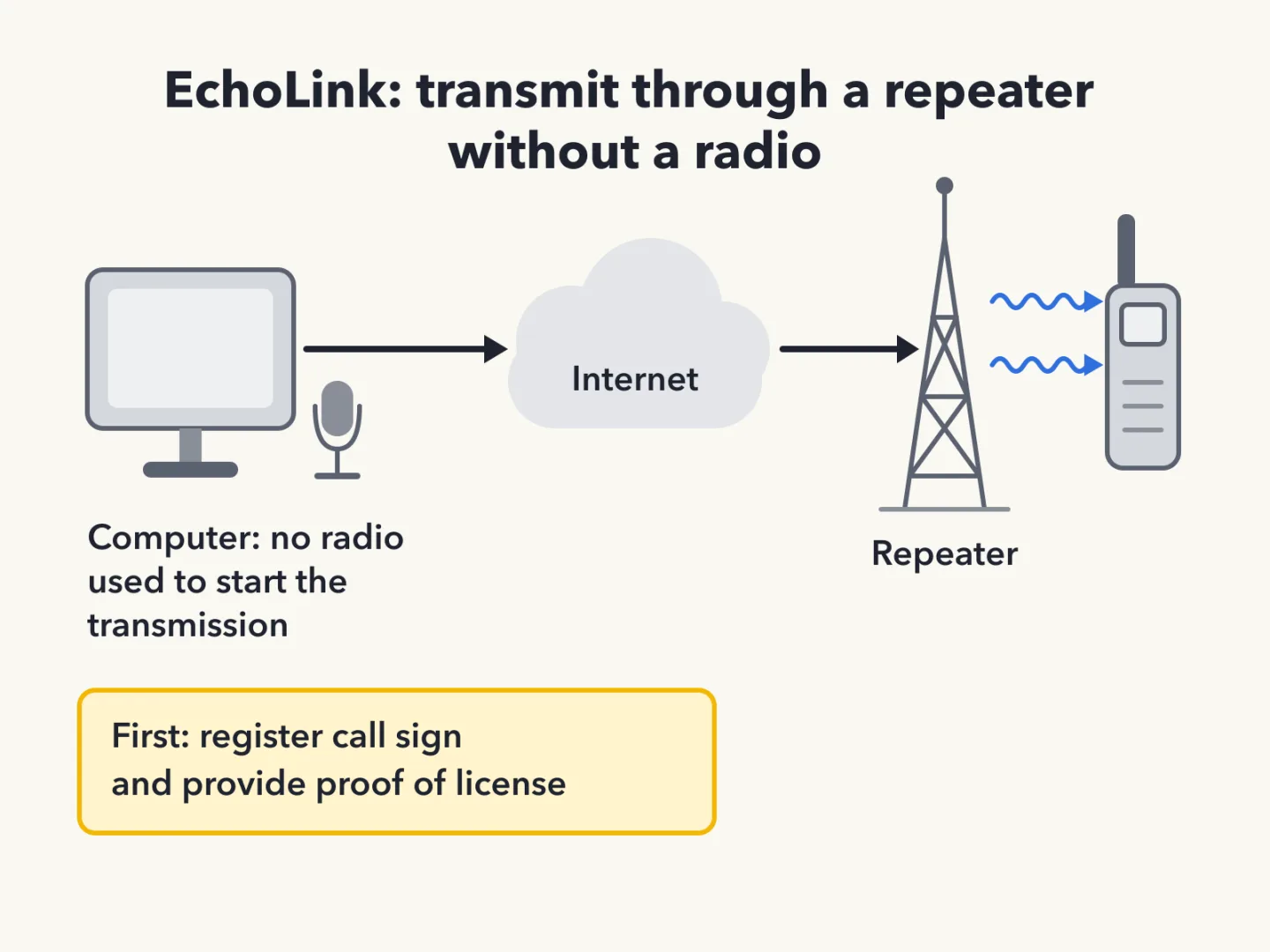
Starting With EchoLink
Before using EchoLink, a person must register a call sign and provide proof of license.
Gateway Stations
An amateur radio station that connects other amateur stations to the internet is a gateway.
Digital Communications Modes
Packet radio, IEEE 802.11 and FT8 all count as digital communications modes. IEEE stands for Institute of Electrical and Electronics Engineers.
FT8 Weak-Signal Mode
FT8 is a digital mode capable of low signal-to-noise operation, so it can work with weak signals.
Data Sent by APRS
The Automatic Packet Reporting System (APRS) can transmit three kinds of data. They are Global Positioning System (GPS) position data, text messages and weather data.
What NTSC Means
National Television System Committee (NTSC) is the full name. As a term, it means an analog fast-scan color TV signal.
APRS Maps and Messages
An application of the Automatic Packet Reporting System (APRS) is real-time tactical digital communications in conjunction with a map showing the locations of stations.
PSK Spelled Out
Phase Shift Keying is what the abbreviation PSK means.
What DMR Does
Digital Mobile Radio (DMR) is a technique for time-multiplexing two digital voice signals on a single 12.5 kilohertz (kHz) repeater channel.
Inside Packet Transmissions
Packet radio transmissions include a checksum that permits error detection. They include a header containing the call sign of the station receiving the information. They also include automatic repeat request (ARQ) in case of error.
What CW Means
CW, short for continuous wave, is another name for a Morse code transmission.
What WSJT-X Supports
WSJT-X is a software suite for weak-signal work; the name begins with Weak Signal communication by K1JT (WSJT). Its digital mode software supports Earth-Moon-Earth (EME), weak signal propagation beacons and meteor scatter.
How ARQ Fixes Errors
Automatic repeat request (ARQ) is an error correction method in which the receiving station detects errors and sends a request for retransmission.
Amateur Radio Mesh Networks
An amateur radio mesh network is an amateur-radio data network using commercial Wi-Fi equipment with modified firmware.
Matched pairs
Each item on the left goes with the one on the right.
- Gateway
- Links amateur stations to the internet
- CW
- Another name for a Morse code transmission
Self-test
Answer each question from memory, then check your work against the answer key.
1. Which of the following methods is used to locate sources of noise interference or jamming?
- APhase locking
- BRadio direction finding
- CEcholocation
- DDoppler radar
2. Which of these items would be useful for a hidden transmitter hunt?
- ACalibrated SWR meter
- BA directional wattmeter
- CA directional antenna
- DAll these choices are correct
3. What operating activity involves contacting as many stations as possible during a specified period?
- ASimulated emergency exercises
- BHidden transmitter hunts
- CNet operations
- DContesting
4. Which of the following is good practice when contacting another station in a contest?
- ASending only the minimum information for proper identification and the contest exchange
- BAdding “Please copy” before your exchange
- CContacting the station twice to be sure that you are in his log
- DSigning only the last two letters of your call if there are many other stations calling
5. What is a grid locator?
- AAn instrument for radio direction finding
- BA letter-number designator assigned to a geographic location
- CAn instrument for locating faults in power amplifiers
- DA letter-number designator assigned to an azimuth and elevation
6. How is over the air access to Internet Radio Linking Project (IRLP) nodes accomplished?
- ABy using Continuous Tone-Coded Squelch System (CTCSS) tone codes
- BBy entering the proper internet password
- CBy using Dual-Tone Multi-Frequency (DTMF) signals
- DBy obtaining a password that is sent via voice to the node
7. What is the Internet Radio Linking Project (IRLP)?
- AA system for informing amateurs in real time of the frequency of active DX stations
- BA system for providing access to websites via amateur radio
- CA technique for measuring signal strength of an amateur transmitter via the internet
- DA technique to connect amateur radio systems, such as repeaters, via the internet
8. What is Voice Over Internet Protocol (VoIP)?
- AA method of delivering voice communications over the internet using digital techniques
- BMeasuring transmitter modulation quality using remote sites monitored via the internet
- CRules for identifying your station when linked over the internet to another station
- DA technique employed to “spot” DX stations via the internet
9. Which of the following protocols enables an amateur station to transmit through a repeater without using a radio to initiate the transmission?
- AD-STAR
- BIRLP
- CEchoLink
- DDMR
10. What is required before using the EchoLink system?
- ARegister your call sign and provide proof of license
- BPurchase a license to use the EchoLink software
- CComplete the required EchoLink training
- DAt least a General Class license
11. What is an amateur radio station that connects other amateur stations to the internet?
- AA digipeater
- BA beacon
- CA repeater
- DA gateway
12. Which of the following is a digital communications mode?
- AIEEE 802.11
- BAll these choices are correct
- CPacket radio
- DFT8
13. What is FT8?
- AA wideband FM voice mode
- BA digital slow-scan TV mode with forward error correction and automatic color compensation
- CAn eight-channel multiplex mode for FM repeaters
- DA digital mode capable of low signal-to-noise operation
14. Which of the following operating activities is supported by digital mode software in the WSJT-X software suite?
- AAll these choices are correct
- BWeak signal propagation beacons
- CEarth-Moon-Earth
- DMeteor scatter
15. What does the abbreviation "PSK" mean?
- APulse Shift Keying
- BPacket Sampled Keying
- CPhase Shift Keying
- DPower Sampled Keying
16. What is CW?
- AError correction for digital transmission using code words
- BAnother name for a Morse code transmission
- CA digital mode used primarily on 2-meter FM
- DA type of electromagnetic propagation
17. What is meant by the term "NTSC?"
- AA special mode for satellite uplink
- BA digital transmission standard for encrypting data
- CAn analog fast-scan color TV signal
- DA frame compression scheme for TV signals
18. What kind of data can be transmitted by APRS?
- AText messages
- BGPS position data
- CWeather data
- DAll these choices are correct
19. Which of the following is an application of APRS?
- AProviding real-time tactical digital communications with a map showing station locations
- BProviding information on the number of stations signed into a repeater
- CAutomatically showing the number of PACTOR packets sent during a specific time interval
- DProviding voice over internet connection between repeaters
20. Which of the following is included in packet radio transmissions?
- AA checksum that permits error detection
- BAll these choices are correct
- CA header that contains the call sign of the station to which the information is being sent
- DAutomatic repeat request in case of error
21. What is the role of ARQ in a transmission system?
- AAn error correction method where the receiver detects errors and requests retransmission
- BA special transmission format limited to video signals
- CA method of compressing data using autonomous reiterative Q codes prior to final encoding
- DA system used to encrypt command signals to an amateur radio satellite
22. Which of the following describes DMR?
- AAn automatic position tracking mode for FM mobiles communicating through repeaters
- BTransmitting on two repeater inputs simultaneously for automatic error correction
- CAutomatic computer logging for hands-off logging while operating a vehicle
- DTime-multiplexing two digital voice signals on a single 12.5 kHz repeater channel
23. Which of the following best describes an amateur radio mesh network?
- AA wide-bandwidth digital voice mode employing DMR protocols
- BAn amateur-radio satellite network using modified commercial satellite TV hardware
- CAn amateur-radio data network using commercial Wi-Fi equipment with modified firmware
- DAn internet linking protocol allowing communication through repeaters around the world
Go deeper
- ListenLesson 13 episode
- WatchWhy Contest Stations Send Less In a radio contest, sending less can be the smarter move.
- WatchHow Radio Packets Fix Errors How does a digital radio message deal with an error on the way?
- StudyHam Radio Technician License in the FlashFeed app
Answer key
- 1. B Radio direction findingRadio direction finding is the method used to locate sources of noise interference or jamming. Echolocation, Doppler radar and phase locking are not methods for this job.
- 2. C A directional antennaA hidden transmitter hunt calls for a directional antenna. A calibrated standing wave ratio (SWR) meter and a directional wattmeter are not the right tools, so "all of these" is wrong.
- 3. D ContestingContesting is contacting as many stations as possible during a specified period. Emergency exercises, nets and transmitter hunts are different activities.
- 4. A Sending only the minimum information for proper identification and the contest exchangeGood contest practice is sending only the minimum information needed for identification and the exchange. Partial call signs, repeat contacts and "Please copy" are poor practice.
- 5. B A letter-number designator assigned to a geographic locationA grid locator is a letter-number designator for a geographic location. It is not tied to an azimuth and elevation, and it is not an instrument.
- 6. C By using Dual-Tone Multi-Frequency (DTMF) signalsIRLP nodes are reached over the air with DTMF signals, not a voice-sent password, an internet password or CTCSS tone codes.
- 7. D A technique to connect amateur radio systems, such as repeaters, via the internetIRLP connects amateur radio systems, such as repeaters, via the internet. It does not give website access, report DX (long distance) stations or measure signal strength.
- 8. A A method of delivering voice communications over the internet using digital techniquesVoIP delivers voice communications over the internet using digital techniques. It is not station identification rules, DX (long distance) spotting or modulation measurement.
- 9. C EchoLinkEchoLink lets a station transmit through a repeater without using a radio to start the transmission. Internet Radio Linking Project (IRLP), Digital Smart Technologies for Amateur Radio (D-STAR) and Digital Mobile Radio (DMR) are not the answer.
- 10. A Register your call sign and provide proof of licenseEchoLink requires registering a call sign and providing proof of license. Training, a purchased software license and a General Class license are not required.
- 11. D A gatewayA gateway is a station that connects other amateur stations to the internet. It is not the same thing as a repeater, digipeater or beacon.
- 12. B All these choices are correctPacket radio, Institute of Electrical and Electronics Engineers (IEEE) 802.11 and FT8 are all digital communications modes, so all three choices are correct.
- 13. D A digital mode capable of low signal-to-noise operationFT8 is a digital mode capable of low signal-to-noise operation, meaning it works with weak signals. It is not a voice, repeater multiplex or slow-scan TV mode. FM stands for frequency modulated.
- 14. A All these choices are correctWSJT-X, whose name begins with Weak Signal communication by K1JT (WSJT), supports Earth-Moon-Earth, weak signal propagation beacons and meteor scatter, so each choice is correct.
- 15. C Phase Shift KeyingPSK stands for Phase Shift Keying. Pulse Shift, Packet Sampled and Power Sampled Keying are wrong.
- 16. B Another name for a Morse code transmissionContinuous wave (CW) is another name for a Morse code transmission. It is not propagation, a 2-meter frequency modulated (FM) digital mode or code-word error correction.
- 17. C An analog fast-scan color TV signalNTSC means an analog fast-scan color TV signal. It is not an encryption standard, a satellite uplink mode or a frame compression scheme.
- 18. D All these choices are correctAutomatic Packet Reporting System (APRS) can send GPS position data, text messages and weather data, so all three choices are correct.
- 19. A Providing real-time tactical digital communications with a map showing station locationsAutomatic Packet Reporting System (APRS) provides real-time tactical digital communications with a map showing station locations. It does not link repeaters by voice or count stations. PACTOR means a digital mode combining packet and Amateur Teleprinting Over Radio (AMTOR).
- 20. B All these choices are correctPacket radio transmissions include a checksum for error detection, a header with the destination call sign and automatic repeat request, so all three are correct.
- 21. A An error correction method where the receiver detects errors and requests retransmissionAutomatic repeat request (ARQ) is error correction in which the receiver detects errors and requests retransmission. It is not a video format, satellite encryption or compression.
- 22. D Time-multiplexing two digital voice signals on a single 12.5 kHz repeater channelDigital Mobile Radio (DMR) time-multiplexes two digital voice signals on a single 12.5 kHz repeater channel. It is not position tracking, logging or dual-input error correction. FM stands for frequency modulated.
- 23. C An amateur-radio data network using commercial Wi-Fi equipment with modified firmwareA mesh network is a data network using commercial Wi-Fi equipment with modified firmware. It is not a Digital Mobile Radio (DMR) voice mode, a satellite network or a linking protocol.
Sources
- NCVEC Question Pool Committee — 2026–2030 Technician question pool — ncvec.org/index.php/2026-2030-technician-question-pool
Image credits
- Radio Direction Finding: FlashFeed original diagram · CC-BY-4.0
- Gear for a Transmitter Hunt: Wikimedia Commons · Lz1adf · CC BY-SA 3.0 — commons.wikimedia.org/wiki/File:80sets.jpg
- Reaching IRLP Nodes: FlashFeed original diagram · CC-BY-4.0
- Starting With EchoLink: FlashFeed original diagram · CC-BY-4.0
- FT8 Weak-Signal Mode: Wikimedia Commons · Chrumps · CC0 — commons.wikimedia.org/wiki/File:FT8+JT65.png
- APRS Maps and Messages: FlashFeed original diagram · CC-BY-4.0
- What DMR Does: FlashFeed original diagram · CC-BY-4.0
- Inside Packet Transmissions: FlashFeed original diagram · CC-BY-4.0
- What WSJT-X Supports: FlashFeed original diagram · CC-BY-4.0
- Amateur Radio Mesh Networks: FlashFeed original diagram · CC-BY-4.0

