
How to Talk to Anyone: 92 Little Tricks for Big Success study guide · Lesson 4 of 6
Social Insider Mastery & Psychological Rapport
Cross-Field Fluency & Industry Insiders · Mirroring, Imagery & Deep Empathy
Unofficial study guide for How to Talk to Anyone: 92 Little Tricks for Big Success in Relationships by Leil Lowndes. FlashFeed is not affiliated with the author or publisher.
This is the lesson's study guide from the FlashFeed app, plus its key facts and a self-test.
What you'll be able to do
- Expand conversational surface area through Scramble Therapy and learn insider terms (Jobbledygook) before attending cross-industry events.
- Apply Be a Copyclass and Potent Imaging to build rapport, and use Employ Empathizers to validate emotional disclosures before offering advice.
FlashFeed Study Guide | How to Talk to Anyone Knowledge Pack (Lesson 4)
Cross-Field Fluency & Industry Insiders
True social versatility requires the ability to converse fluently across diverse professions, industries, and subcultures without feigning unearned expertise.
Scramble Therapy & Expanding Conversational Surface Area
Commit to Scramble Therapy once a month: intentionally participate in a completely unfamiliar activity, sport, or cultural event (e.g., attending an auction, taking a sailing lesson, visiting an architectural studio). This deliberate exposure broadens your experiential surface area, creating authentic touchpoints when meeting specialists from all walks of life.
Learn a Little Jobbledygook & Read Their Rags
Before meeting specialists in an unfamiliar sector, Learn a Little Jobbledygook by mastering fundamental acronyms, trade terms, and core operational concepts. Scan specialized industry journals with Read Their Rags to uncover emerging trends, slang, and prominent leaders.
Identify the sector's central tension using Baring Their Hot Button: ask about the major regulatory shifts, economic disruptions, or technological battles currently reshaping their field. Inquiring about a hot-button issue unlocks impassioned insider insights.
Clear Customs
When operating across regional or international boundaries, Clear 'Customs' by researching local etiquette, dining rules, and cultural taboos to prevent inadvertent offense.
Mirroring, Imagery & Deep Empathy
Deep rapport is established when a communicator synchronizes with the somatic tempo and cognitive schemas of their partner.
Be a Copyclass: Behavioral Isopraxism
Subtly mirror your partner's physical posture, movement speed, and vocal rhythm with Be a Copyclass. Behavioral isopraxism stimulates mirror neuron firing in the brain, generating an involuntary feeling of biological familiarity. Keep the mirroring subtle and natural rather than an exact instant copy, so it stays below conscious notice.
Potent Imaging & Cognitive Analogizing
Tailor your metaphorical language to match your listener's world with Potent Imaging. Use nautical metaphors with sailors, architectural analogies with builders, and athletic imagery with sports enthusiasts.
Employ Empathizers
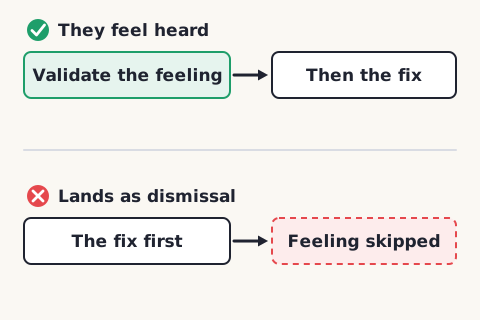
When someone shares a distressing dilemma, never rush in with logical fixes. Deploy Employ Empathizers: answer with a full sentence that shows you understood, not a bare grunt ('That must have been extraordinarily stressful'). Emotional validation satisfies the core human need to be heard before logical problem-solving can begin.
Neurobiological Foundations of Mirroring & Cognitive Scaffolding
Modern neuroscience corroborates Lowndes's insights regarding Be a Copyclass. Research led by Giacomo Rizzolatti at the University of Parma demonstrated that specialized mirror neurons fire both when an individual performs an action and when they observe another performing that same action. When you subtly match a partner's postural cadence and gesture velocity, you stimulate involuntary mirror neuron resonance in their premotor cortex, inducing a biological sensation of harmony and shared identity.
Furthermore, cognitive psychologists emphasize that metaphorical scaffolding anchors novel concepts into preexisting neural networks. When explaining an unfamiliar proposal, mapping its structure onto a familiar domain—such as comparing an enterprise software rollout to an aircraft carrier launch for a former naval officer—reduces cognitive load and accelerates comprehension.
The Psychological Arc of Interpersonal Disclosure
Developing deep social alliances requires strict adherence to symmetrical disclosure pacing. Social penetration theory (Altman & Taylor) offers a complementary framework: relationships progress through concentric layers of vulnerability:
- Orientation Layer: Public biographical facts, pleasantries, and external observations.
- Exploratory Affective Layer: Professional perspectives, domain opinions, and general preferences.
- Affective Layer: Personal vulnerabilities, private aspirations, and shared confidences.
- Core Stable Layer: Deepest values, foundational beliefs, and intimate emotional bonds.
Attempting to jump directly from the orientation layer to the affective layer by dumping deep emotional trauma onto a new acquaintance triggers acute social discomfort; pacing disclosure gradually, matching the other person's depth, is what keeps rapport-building from backfiring.
Core Takeaways & Practical Action Checklist
- Practice Scramble Therapy monthly to broaden your conversational surface area.
- Read trade rags to learn domain-specific vernacular before meeting specialists.
- Mirror physical posture with a 2-to-4-second delay to stimulate mirror neuron rapport.
- Tailor metaphors to your listener's profession (sports, aviation, engineering).
- Validate emotional distress before offering any logical problem-solving advice.
Real-World Case Study: Crossing Industry Chasms
A commercial consultant is scheduled to pitch a massive logistics transformation to the executive board of a major maritime shipping conglomerate. Rather than relying on generic corporate slide decks, the consultant prepares with disciplined social insider protocols.
Three weeks prior, she attends an open maritime trade symposium (Scramble Therapy). She studies specialized freight publications (Read Their Rags), mastering core vernacular like twenty-foot equivalent units (TEUs), demurrage fees, and bunkering optimization (Learn a Little Jobbledygook). Through mutual colleagues, she identifies that the CEO is intensely concerned about emerging sulfur emissions regulations (Baring Their Hot Button).
During the pitch meeting, she subtly mirrors the CEO's seated posture and deliberate vocal tempo (Be a Copyclass). She translates abstract software algorithms into maritime analogies (Potent Imaging), comparing data bottlenecks to port harbor congestion. When an executive raises frustration over past implementation failures, she immediately validates their anger (Employ Empathizers) before proposing structural solutions. The board awards the multi-million-dollar contract unanimously.
Cross-Field Fluency Protocol Table
| Domain Mastery Stage | Standard Outsider Approach | Social Insider Strategy |
|---|---|---|
| Industry Familiarity | Superficial general knowledge | Reading specialized trade rags & mastering Jobbledygook |
| Core Discussion | Generic corporate talking points | Inquiring directly about sector hot-button issues |
| Metaphorical Framing | One-size-fits-all business clichés | Potent imaging customized to listener's trade |
| Behavioral Rapport | Rigid, disconnected body language | Subtle isopraxic mirroring of posture and tempo |
| Emotional Resistance | Defending facts and arguing logic | Immediate empathetic validation of distress |
Actionable Behavioral Drills & Muscle Memory Exercises
- Monthly Scramble Therapy Plan: Schedule an unfamiliar cultural, artistic, or sporting activity on your calendar for this month that falls completely outside your normal routine.
- Trade Rag Deep Dive: Identify an industry you interact with regularly (e.g., real estate, healthcare, software). Spend thirty minutes reading their primary trade journal to learn three new domain acronyms.
- The Delayed Mirroring Drill: In your next coffee dialogue, observe your partner's seated posture and subtly adopt a matching posture a few moments later, rather than instantly.
Key terms
- Scramble Therapy
- A monthly practice of trying a completely unfamiliar activity or event to widen your common ground with people
- Learn a Little Jobbledygook
- Mastering an industry's basic acronyms, trade terms, and core operational concepts before meeting its specialists
- Employ Empathizers
- Mirroring and validating someone's emotional state before offering any logical fix
Key facts
Scramble Therapy
Scramble Therapy means committing to one completely unfamiliar activity a month — an auction, a sailing lesson, an architectural studio tour. Each new experience broadens your conversational surface area, creating authentic common ground with specialists from walks of life you'd otherwise have nothing to say to.
Learn a Little Jobbledygook
Learn a Little Jobbledygook means mastering a handful of a trade's fundamental acronyms and terms before meeting its specialists, so they can talk to you as a peer instead of stopping to translate. The combination that works is using the terms accurately while being honest that you're not claiming their expertise — the vocabulary opens the door, but pretending to a rank you don't have slams it shut.
Baring Their Hot Button
Baring Their Hot Button means asking about the major regulatory shift, economic disruption, or controversy currently running through someone's trade — naming that live argument turns a polite exchange into a genuinely engaging one. Lowndes argues against the safer, more common habit of politely steering around anything contentious.
Read Their Rags
Read Their Rags means skimming a profession's trade journals before engaging its members, since the trade press carries the slang, the ongoing feuds, and the names that currently matter. What you gain isn't background facts but currency — knowing which fights are live and who's prominent right now.
Clear 'Customs'
Clear 'Customs' means researching local etiquette, dining rules, and cultural taboos before operating across a regional or cultural boundary, since these norms are cheap to learn in advance and expensive to get wrong in the room. Adapting to local custom is read as deep respect; refusing to adapt reads as contempt, regardless of what you actually intended.
Be a Copyclass
Be a Copyclass subtly mirrors a partner's posture, movement speed, and vocal rhythm, stimulating mirror-neuron firing that produces an involuntary sense of familiarity the other person can't account for.
Potent Imaging
Potent Imaging tailors your metaphors to the listener's own world — nautical language with sailors, athletic imagery with athletes — so a comparison drawn from their own frame of reference lands without any translation step. An idea poured into a frame that's already built arrives instantly, rather than requiring effortful decoding.
Employ Empathizers
Employ Empathizers validates someone's emotional state first — with a full sentence such as "that must have been extraordinarily stressful" rather than a bare acknowledgment — before offering any logical fix. Being heard is the actual need in play when someone shares a dilemma; solving the problem first answers a question nobody asked, and advice offered before the feeling is acknowledged lands as dismissal, however good the advice is.
Matched pairs
Each item on the left goes with the one on the right.
- Giacomo Rizzolatti
- Led the University of Parma research on mirror neurons
- Social Penetration Theory
- Altman and Taylor's model of relationships progressing through concentric layers of vulnerability
Self-test
Answer each question from memory, then check your work against the answer key.
1. Which technique means committing to one completely unfamiliar activity each month, such as an auction or a sailing lesson?
- AScramble Therapy
- BBaring Their Hot Button
- CLearn a Little Jobbledygook
- DBluffing for Bargains
2. Which technique means mastering a trade's core acronyms and terms before meeting its specialists?
- ARead Their Rags
- BLearn a Little Jobbledygook
- CBaring Their Hot Button
- DClear 'Customs'
3. A consultant spends thirty minutes reading a trade journal to learn current slang and who's prominent right now. Which technique is this?
- ABluffing for Bargains
- BWhoozat
- CRead Their Rags
- DLearn a Little Jobbledygook
4. Which technique means asking about the major regulatory shift or controversy currently running through someone's trade?
- AClear 'Customs'
- BRead Their Rags
- CImplied Magnificence
- DBaring Their Hot Button
5. Before pitching to an overseas client, a consultant researches local dining etiquette and cultural taboos. Which technique is this?
- ARead Their Rags
- BScramble Therapy
- CClear 'Customs'
- DBluffing for Bargains
6. According to Potent Imaging, which metaphorical domain should you use when talking with a sailor?
- ANautical
- BArchitectural
- CAviation
- DAthletic
7. Which technique replaces a bare "uh-huh" with a full sentence like "That sounds like it took forever"?
- ALearn a Little Jobbledygook
- BThe Premature We
- CPotent Imaging
- DEmploy Empathizers
8. Which technique creates instant intimacy with someone you just met by using 'we' and 'us' right away?
- AEmploy Empathizers
- BThe Premature We
- CPotent Imaging
- DBe a Copyclass
9. Why does Be a Copyclass have you quietly mirror a partner's posture and rhythm?
- AIt stimulates a felt familiarity
- BIt buys time to plan your next line
- CIt shortens the whole conversation
- DIt signals you outrank the speaker
10. What does Lowndes's Potent Imaging call for when explaining an idea?
- AValidating feelings before offering advice
- BA graceful line for exiting the conversation
- CMetaphors drawn from the listener's own field
- DA confident, unhedged opening statement
Go deeper
- ReadHow to Talk to Anyone by Leil Lowndes · on Amazon ↗
- StudyHow to Talk to Anyone: 92 Little Tricks for Big Success in the FlashFeed app
These are affiliate links: if you buy a book through one, FlashFeed may earn a small commission at no extra cost to you. The commission helps pay for FlashFeed's servers.
As an Amazon Associate we earn from qualifying purchases.
Answer key
- 1. A Scramble TherapyScramble Therapy broadens your conversational surface area through monthly novel exposure; the other techniques involve gathering intel, calibrated greetings, or trade vocabulary, not new activities.
- 2. B Learn a Little JobbledygookLearn a Little Jobbledygook means mastering fundamental trade terms so specialists can talk to you as a peer; Read Their Rags is about trade journals, not vocabulary.
- 3. C Read Their RagsRead Their Rags means skimming trade journals for current slang, feuds, and prominent names — the field's 'currency,' not just its vocabulary.
- 4. D Baring Their Hot ButtonBaring Their Hot Button means naming the live controversy or regulatory shift in someone's field, turning a polite exchange into an engaging one; the others cover cultural norms, journals, and flattery.
- 5. C Clear 'Customs'Clear 'Customs' means researching local etiquette and taboos before crossing a cultural boundary, preventing inadvertent offense.
- 6. A NauticalPotent Imaging matches metaphors to the listener's own world — nautical language for sailors, architectural for builders, athletic for sports enthusiasts.
- 7. D Employ EmpathizersEmploy Empathizers swaps passive grunts for complete sentences that show you understood, which reads as active listening rather than mere acknowledgment.
- 8. B The Premature WeThe Premature We creates a felt alliance through first-person-plural language before real closeness has had time to form.
- 9. A It stimulates a felt familiarityMatched posture and rhythm stimulate the listener's mirror-neuron response, producing a felt sense of kinship they cannot quite explain.
- 10. C Metaphors drawn from the listener's own fieldPotent Imaging has you tailor your metaphors to the listener's world: nautical images for sailors, architectural ones for builders, and so on.
Sources
- How to Talk to Anyone: 92 Little Tricks for Big Success — Leil Lowndes
- How to Talk to Anyone — Part Four: How to Be an Insider in Any Crowd
- How to Talk to Anyone — Part Five: How to Sound Like You're Peas in a Pod
Image credits
- Employ Empathizers: FlashFeed original diagram · CC-BY-4.0