
The Infinity Machine (book) study guide · Lesson 9 of 12
RaceGPT and Bletchley
The ChatGPT shock · Governments arrive
Unofficial study guide for The Infinity Machine: Demis Hassabis, DeepMind, and the Quest for Superintelligence by Sebastian Mallaby. FlashFeed is not affiliated with the author or publisher.
This is the lesson's study guide from the FlashFeed app, plus its key facts and a self-test.
What you'll be able to do
- Recall ChatGPT's 2022 launch and record-fast adoption (100 million users within two months), plus the 2017 Transformer paper behind it
- Define AI alignment, identify Geoffrey Irving, and recognize safety-letter signatory Yoshua Bengio and non-signatory Yann LeCun.
- Trace the US government response — AI czar Ben Buchanan and the July 2023 White House voluntary commitments
- Recall the November 2023 Bletchley Park summit — 28 countries signed the Bletchley Declaration, with the UK and US announcing AI Safety Institutes
- Recognise the 2022 US chip-export ban on China and Ke Jie, the champion whose AlphaGo defeat became China's 'Sputnik moment'
The ChatGPT shock
On 30 November 2022, OpenAI pushed a research preview that most people in the industry expected to cause moderate buzz. What followed was the fastest consumer-technology adoption in recorded history and a forcing event for every government, regulator, and rival lab that had been watching AI from a comfortable distance.
The ChatGPT shock
ChatGPT launched on 30 November 2022 as a polished interface on top of GPT-3.5. A million users arrived within five days; 100 million within two months — a rate no prior consumer product had matched. For Sebastian Mallaby, the launch is the moment the AI race became public: investors who had filed deep learning under "long horizon" suddenly demanded weekly briefings, and politicians who had never typed the words "large language model" began scheduling hearings. The speed of adoption also accelerated the safety conversation, because a system anyone's grandmother could query was far harder to dismiss than a benchmark score.
Geoffrey Irving joins DeepMind
Geoffrey Irving moved from OpenAI to DeepMind in autumn 2019, bringing with him close professional ties to Dario Amodei and Paul Christiano — two figures who would later co-found Anthropic. His explicit brief at DeepMind was alignment: the technical and conceptual problem of ensuring an AI system reliably pursues human-intended goals even as it becomes more capable. Irving's framing was stark — "If a malevolent actor solves the problem first, civilisation would be in trouble" — and it positioned DeepMind's safety group as an in-house counterweight to the race dynamics driven by the commercial side. Irving would later become a key figure at the UK AI Safety Institute.
The one-sentence letter
In May 2023 the Center for AI Safety published a single sentence: "Mitigating the risk of extinction from AI should be a global priority alongside other societal-scale risks such as pandemics and nuclear war." The brevity was tactical — one sentence is harder to nitpick than a white paper. Signatories included Geoffrey Hinton, Yoshua Bengio, Demis Hassabis, Sam Altman, and Dario Amodei. Mallaby treats the letter as the rhetorical inflection point that pulled governments into the room: once the people who built the systems signed a statement invoking extinction, dismissal became politically untenable. Notably, Yann LeCun did not sign, maintaining his long-held scepticism about near-term catastrophic risk.
Governments arrive
The twelve months after ChatGPT's launch produced more AI-specific government action than the previous decade combined. The sequence ran from voluntary pledges to executive orders to an international summit — a compressed arc that revealed both how seriously the administration took the risk and how little legislative appetite existed for binding law.
An AI czar in the White House
In June 2023 the Biden administration created a senior AI coordination role and filled it with Ben Buchanan, a Georgetown professor specialising in AI and cybersecurity who had been working on the National Security Council. Buchanan's mandate was to operationalise the concerns Hinton and Bengio had been voicing — without deploying regulatory friction that would hand the lead to China. His position gave the labs a single senior interlocutor and gave the White House a mechanism to move faster than Congress.
Voluntary commitments, 21 July 2023
On 21 July 2023, leaders from Google, OpenAI, Anthropic, Meta, Amazon, Microsoft, and Mustafa Suleyman's Inflection signed voluntary commitments at the White House: pre-release safety testing, cybersecurity investment, and public reporting of capabilities. No major US frontier lab declined. The pledges carried no enforcement mechanism, but Buchanan's reasoning was reputational — any lab seen backsliding publicly would face political consequences. Thin by the standards of financial regulation, the commitments were nonetheless the first coordinated acknowledgment by the industry that external accountability had arrived.
Biden's AI executive order, October 2023
In October 2023 Buchanan's team pushed through an executive order invoking the Defense Production Act. Developers training the most powerful AI models would be required to notify the government and share results of red-team testing before release. The order also stood up what would become the US AI Safety Institute. The administration was writing safety infrastructure into executive authority because Congress had shown no appetite for legislation — a deliberate decision to create facts on the ground before the political window closed.
Bletchley Park summit, November 2023
On 1 November 2023, delegates from 28 countries gathered at Bletchley Park — Alan Turing's wartime codebreaking home — for the first international AI Safety Summit. The event traced back to a conversation between Hassabis and Prime Minister Rishi Sunak roughly six months earlier. The resulting Bletchley Declaration was signed by all 28 delegations. National AI Safety Institutes were announced in both the United Kingdom and the United States. Yoshua Bengio pressed DeepMind's safety advisers on the pace of deployment. The summit gave governments a multilateral frame that had not existed before.
Chip exports and China
In October 2022 — a month before ChatGPT launched — the Biden administration imposed broad export controls on advanced semiconductors bound for China. Mallaby reads the move as closing the most consequential lane of US-China technology cooperation. The ban meant that by the time Hassabis was pitching a global summit to Sunak, the geopolitical backdrop had already hardened: the AI race and the chip war were now the same story.
China's Sputnik moment
Hassabis has tracked China's competitive intent since 2017, when AlphaGo's defeat of world champion Ke Jie was described inside Beijing as a Sputnik moment — a demonstration of Western technological lead that demanded a national response. By 2022, China's State Council had a formal AI strategy with 2030 targets. The framing matters: the West perceived an accelerating race it needed to win; Beijing perceived a race it had been preparing for since AlphaGo played its first move on a Chinese board.
Key terms
- Alignment
- The technical and conceptual problem of ensuring that an AI system reliably pursues human-intended goals, even as the system becomes more capable. Irving's analogy: rules of safety might be simple (do not harm, do not deceive), but implementing them is as hard as AlphaGo's mastery of Go.
Key concepts
Yoshua Bengio
- A pioneering deep-learning researcher who lent his name to a stark 2023 warning about AI.
- He signed a one-sentence statement ranking AI extinction risk alongside pandemics and nuclear war.
- At the Bletchley Park summit he pressed DeepMind's safety advisers on how fast they were deploying.
Yann LeCun
- A prominent AI pioneer who broke with peers over doomsday framing.
- When a one-sentence statement warned of AI extinction risk, he pointedly declined to sign.
- His refusal reflected a long-held scepticism about near-term catastrophic risk.
Ke Jie
- A reigning world champion of an ancient board game, defeated by AlphaGo in 2017.
- Inside Beijing his loss was called a 'Sputnik moment', proof of a Western technological lead.
- The defeat helped spur China's State Council toward a formal AI strategy with 2030 targets.
Key facts
Geoffrey Irving joins DeepMind
In autumn 2019 DeepMind hired Geoffrey Irving from OpenAI, where he had been part of a safety circle with Dario Amodei and Paul Christiano. Irving's goal: design alignment into the architecture itself. "If a malevolent actor solves the problem first," he believed, "civilisation would be in trouble."
The one-sentence letter
In May 2023 the Center for AI Safety released a one-sentence letter: "Mitigating the risk of extinction from AI should be a global priority alongside other societal-scale risks such as pandemics and nuclear war." Hinton, Bengio, Hassabis, Altman, Amodei and hundreds of others signed. Mallaby treats it as the rhetorical inflection point that forced governments into the conversation.
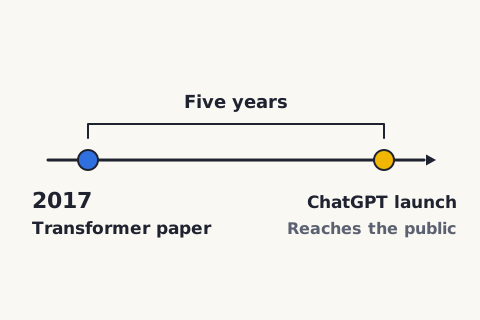
Five years before ChatGPT
The Transformer paper — the architecture ChatGPT ultimately rests on — was published in 2017, five years before ChatGPT's launch put it in front of the general public.
The model behind ChatGPT
ChatGPT launched as a polished interface on top of GPT-3.5, presented at the time as a research preview rather than a finished product.
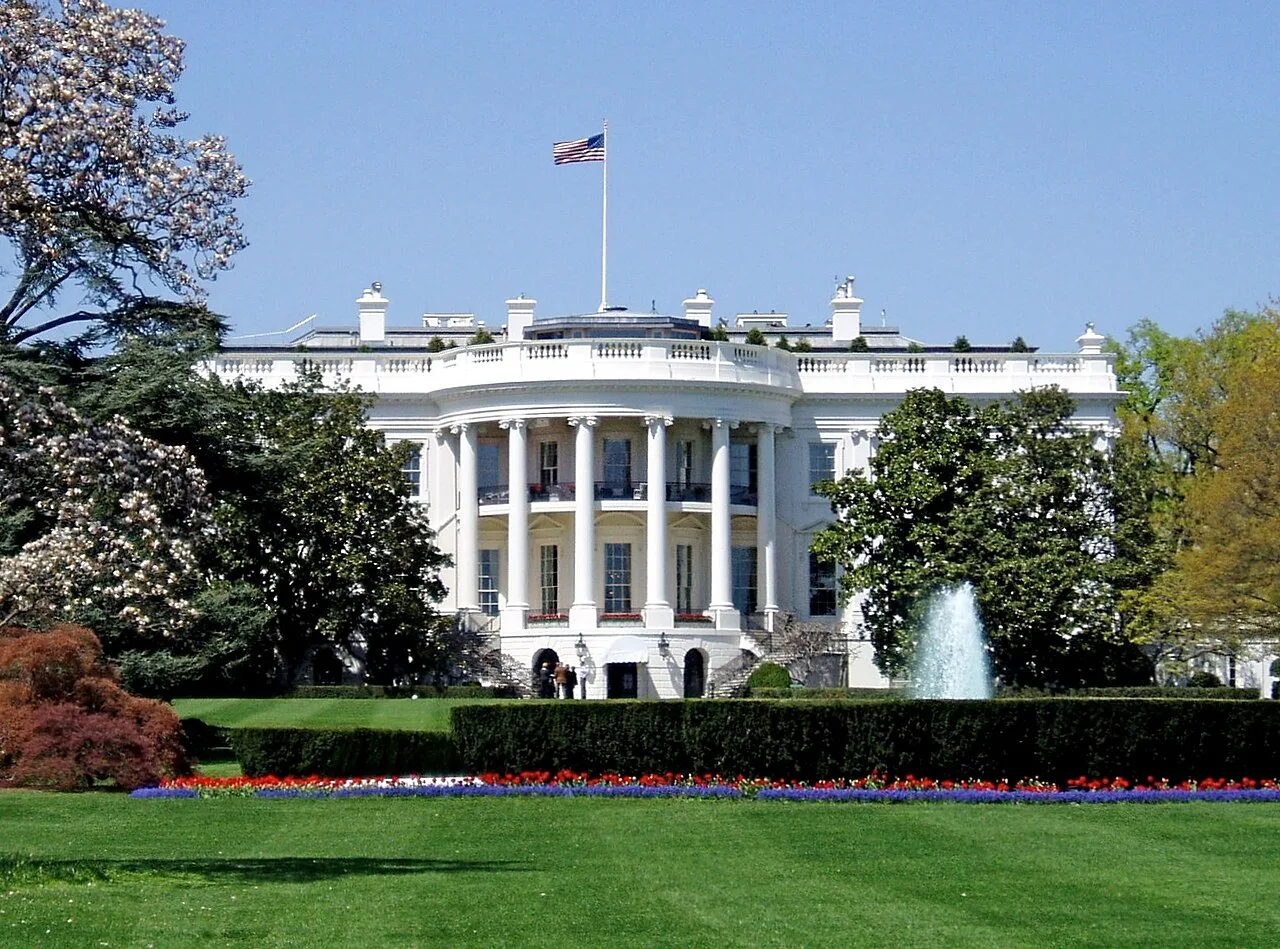
Voluntary commitments, 21 July 2023
On 21 July 2023, leaders from Google, OpenAI, Anthropic, Meta, Amazon, Microsoft, and Suleyman's Inflection signed voluntary commitments at the White House: pre-release safety testing, cybersecurity investment, public reporting of capabilities. Not a single major US frontier lab declined. The pledges were thin on enforcement but, Buchanan reasoned, public backsliding would now be visible.
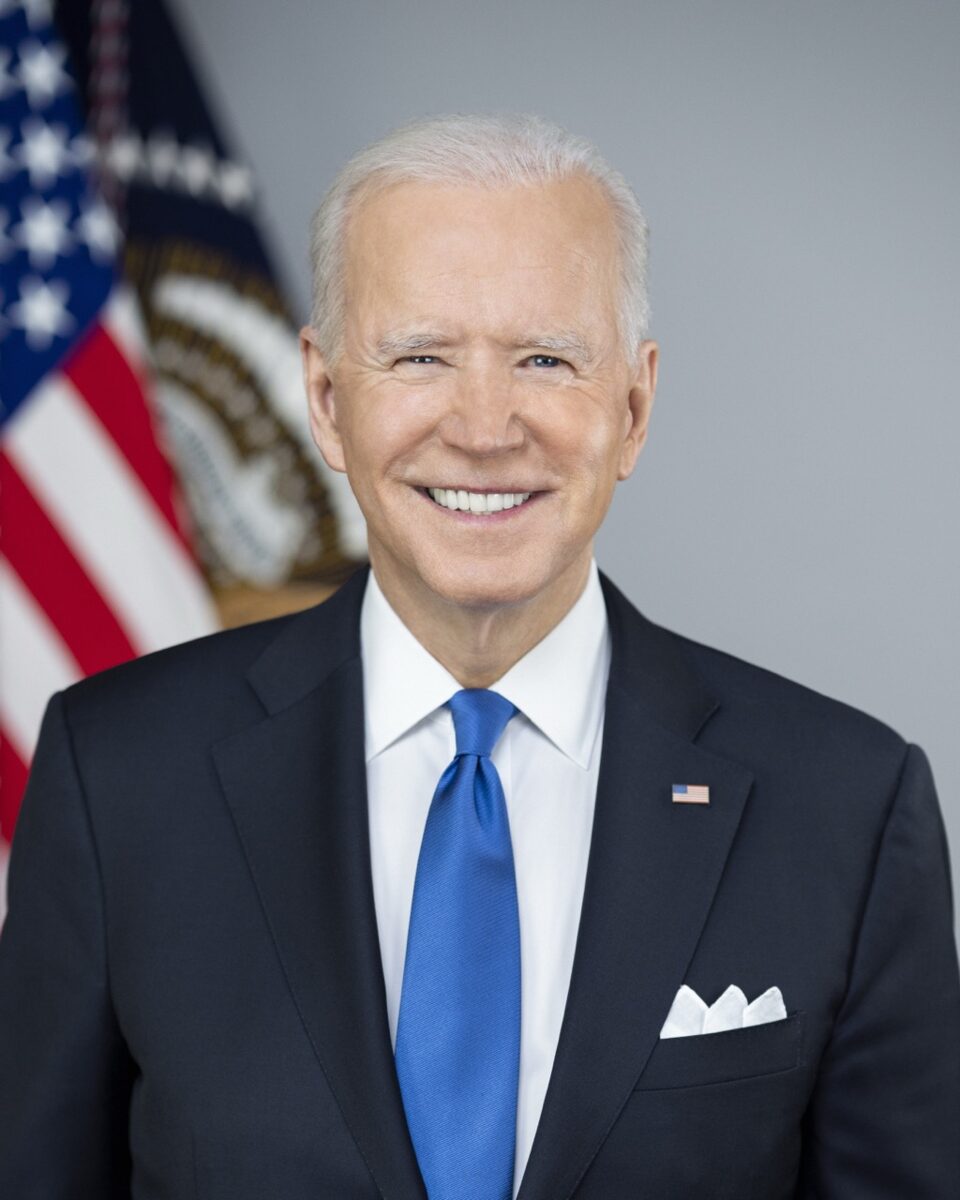
Biden's AI executive order, October 2023
In October 2023 Buchanan orchestrated an executive order invoking the Defense Production Act. Developers training the most powerful AI models would have to notify the government and share red-team results. The order also created what would become the US AI Safety Institute. The administration was building the rails before Congress could be convinced to legislate.
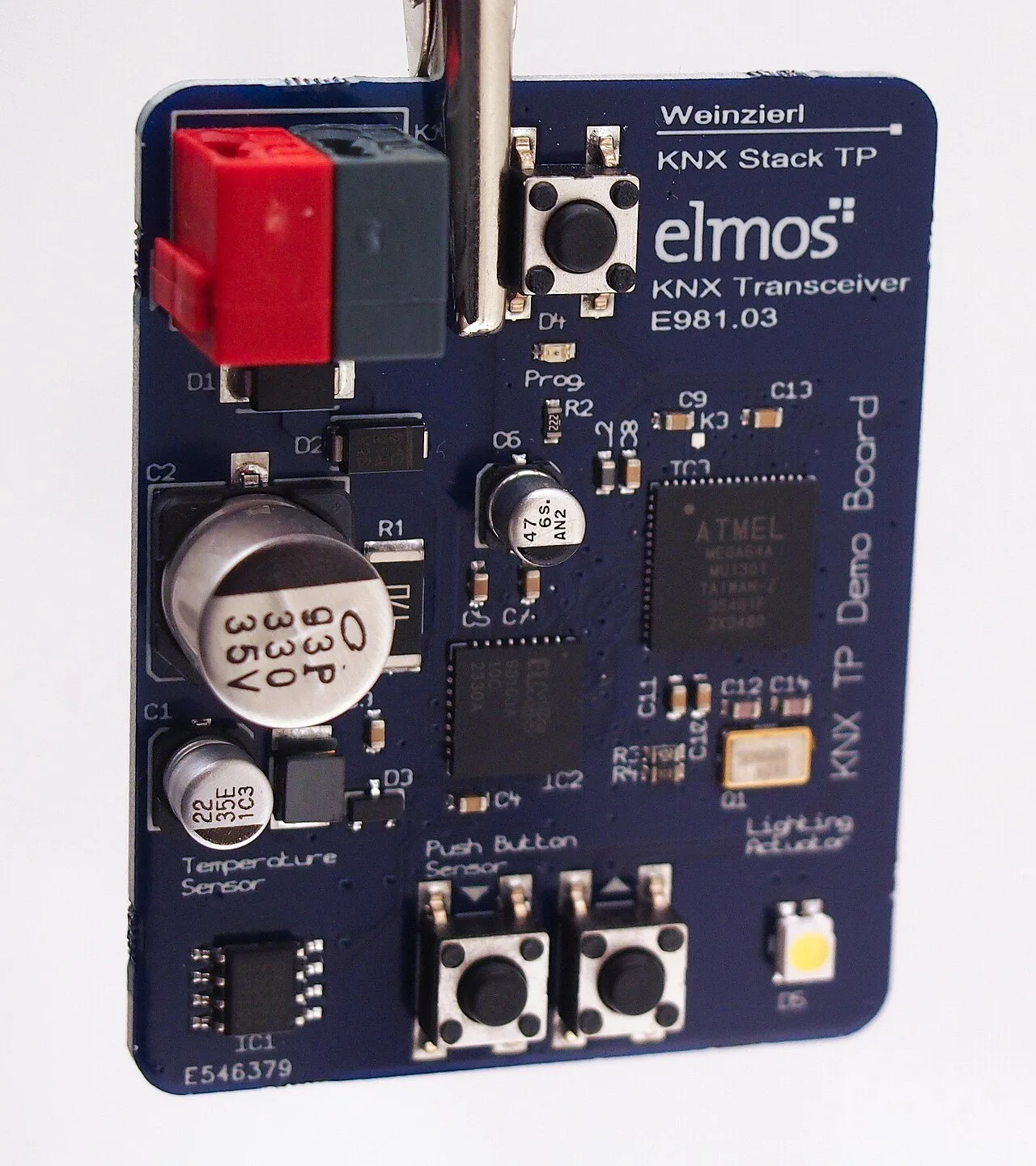
Chip exports and China
In October 2022, a month before ChatGPT, the Biden administration rolled out a wide-ranging ban on the supply of advanced semiconductors to China. Mallaby reads the move as the closing of the most consequential lane of US-China cooperation. By the time Hassabis pitched Sunak on a global AI summit, the geopolitics had already hardened.
China's Sputnik moment
Hassabis has been aware of China's determination to compete since 2017. AlphaGo's defeat of Ke Jie that year was widely described inside Beijing as a Sputnik moment. By 2022 the State Council had a national AI strategy with 2030 ambitions. The race the West thought it was running was, from Beijing, a race China had already been preparing for.
By the numbers
- Year the Transformer paper was published
- 2017 year
- Year ChatGPT was released
- 2022 year
- Number of countries that signed the 2023 Bletchley Declaration
- 28 countries
- Year of the first international AI Safety Summit at Bletchley Park
- 2023 year
- Year the Biden administration banned advanced semiconductor supply to China
- 2022 year
Matched pairs
Each item on the left goes with the one on the right.
- DeepMind safety pioneer who joined the UK AI Safety Institute
- Geoffrey Irving
- Biden's June 2023 AI czar
- Ben Buchanan, a Georgetown AI and cybersecurity professor
- Where AI labs signed voluntary commitments in July 2023
- At the White House, with no major US frontier lab declining
Self-test
Answer each question from memory, then check your work against the answer key.
1. How fast did ChatGPT reach 100 million users after its 30 November 2022 launch?
- AWithin two months
- BWithin a year
- CWithin one week
- DWithin five days
2. For Mallaby, what did ChatGPT's launch mark?
- AThe first time deep learning beat a human benchmark
- BOpenAI's abandonment of its research-preview model
- CThe moment the AI race became public
- DThe invention of the Transformer architecture
3. In what year was the Transformer paper — the architecture ChatGPT ultimately rests on — published?
- A2015
- B2012
- C2020
- D2017
4. ChatGPT reached its first million users in how long after launch?
- AFive hours
- BFive days
- CFive months
- DFive weeks
5. ChatGPT launched as a polished interface on top of which underlying model?
- AGemini
- BGPT-2
- CGPT-3.5
- DGPT-4
6. In AI, what is 'alignment'?
- ATuning chip supply to match a lab's compute demand
- BEnsuring an AI reliably pursues human-intended goals as it grows more capable
- CCoordinating release dates across competing AI labs
- DMatching a model's training data to its benchmark test set
7. Which researcher moved from OpenAI to DeepMind in autumn 2019 with an explicit alignment brief, and later became a key figure at the UK AI Safety Institute?
- AGeoffrey Irving
- BDario Amodei
- CPaul Christiano
- DDemis Hassabis
8. Which prominent AI researcher did NOT sign the Center for AI Safety's May 2023 one-sentence letter?
- AYoshua Bengio
- BSam Altman
- CGeoffrey Hinton
- DYann LeCun
9. The May 2023 one-sentence letter compared AI extinction risk to which other societal-scale risks?
- ACyberattacks and financial collapse
- BPandemics and nuclear war
- CAsteroid impacts and supervolcanoes
- DClimate change and famine
10. Which group correctly lists researchers who signed the May 2023 one-sentence letter?
- AHinton, Bengio, Hassabis, Altman and Amodei
- BBengio, LeCun, Altman and Hassabis
- CLeCun, Irving, Buchanan and Sunak
- DHinton, LeCun, Hassabis and Amodei
11. Whom did the Biden administration appoint to its new senior AI coordination role in June 2023?
- AMustafa Suleyman
- BGeoffrey Irving
- CBen Buchanan
- DDario Amodei
12. What was Ben Buchanan's academic and professional background before becoming AI czar?
- AA DeepMind alignment researcher recruited from OpenAI
- BA semiconductor export-control lawyer at Commerce
- CA Center for AI Safety policy director
- DA Georgetown professor of AI and cybersecurity on the National Security Council
13. Where were the July 2023 voluntary AI commitments signed?
- AAt the Georgetown School of Foreign Service
- BAt OpenAI's headquarters
- CAt Bletchley Park
- DAt the White House
14. Which was NOT among the voluntary commitments the labs signed in July 2023?
- APublic reporting of capabilities
- BCybersecurity investment
- CBinding financial penalties for backsliding
- DPre-release safety testing
15. How did major US frontier labs respond to the July 2023 voluntary commitments?
- AAll declined pending congressional legislation
- BNo major US frontier lab declined to sign
- COnly OpenAI and Anthropic signed
- DMeta and Amazon publicly refused
16. Which two countries announced national AI Safety Institutes around the November 2023 Bletchley summit?
- AUnited Kingdom and United States
- BIsrael and Singapore
- CFrance and Germany
- DCanada and Japan
17. How many countries sent delegations that signed the Bletchley Declaration?
- A18
- B38
- C28
- D50
18. In what month and year was the first international AI Safety Summit held at Bletchley Park?
- ANovember 2023
- BJuly 2023
- COctober 2023
- DNovember 2022
19. Why was Bletchley Park a pointed venue for the first AI Safety Summit?
- AIt was DeepMind's original London laboratory
- BIt was where the Transformer paper was written
- CIt housed the UK's largest AI supercomputer
- DIt was Alan Turing's wartime codebreaking home
20. Whose conversation with Prime Minister Rishi Sunak, about six months earlier, led to the Bletchley summit?
- ABen Buchanan
- BDemis Hassabis
- CSam Altman
- DGeoffrey Hinton
21. In what year did the Biden administration impose broad export controls on advanced semiconductors bound for China?
- A2017
- B2023
- C2020
- D2022
22. What did the Biden administration's October 2022 controls actually restrict?
- AExport of trained model weights to China
- BChinese investment in US AI laboratories
- CThe supply of advanced semiconductors to China
- DChinese researchers' access to US AI conferences
23. Which world champion's defeat by AlphaGo was described inside Beijing as a 'Sputnik moment'?
- AKe Jie
- BLee Sedol
- CGarry Kasparov
- DFan Hui
24. From what year has Hassabis tracked China's competitive intent — the year AlphaGo's win over the reigning Go champion was called a 'Sputnik moment'?
- A2015
- B2017
- C2020
- D2022
25. How does Mallaby read the significance of the chip-export ban?
- AIt was the direct cause of the Bletchley Declaration
- BIt gave China an unbeatable lead in advanced semiconductors
- CIt closed the most consequential lane of US-China technology cooperation
- DIt was a symbolic gesture with no effect on the AI race
Go deeper
- ReadThe Infinity Machine by Sebastian Mallaby · on Amazon ↗
- StudyThe Infinity Machine (book) in the FlashFeed app
These are affiliate links: if you buy a book through one, FlashFeed may earn a small commission at no extra cost to you. The commission helps pay for FlashFeed's servers.
As an Amazon Associate we earn from qualifying purchases.
Answer key
- 1. A Within two monthsChatGPT hit 1 million users in five days and 100 million within two months — the fastest consumer-technology adoption on record, which is what pulled investors and governments off the sidelines and into the AI race.
- 2. C The moment the AI race became publicMallaby treats the launch as the moment the AI race went public: investors demanded weekly briefings and politicians began scheduling hearings. The Transformer had been invented five years earlier, in 2017.
- 3. D 2017The Transformer paper was published in 2017, five years before ChatGPT's 2022 launch put the architecture in front of the general public.
- 4. B Five daysA million users arrived within five days; 100 million took two months. The five-day figure is the first-million milestone, not the 100-million one.
- 5. C GPT-3.5ChatGPT was a research preview wrapping GPT-3.5. GPT-2 was an earlier OpenAI model, GPT-4 arrived after the launch, and Gemini was Google's — none underpinned the November 2022 release.
- 6. B Ensuring an AI reliably pursues human-intended goals as it grows more capableAlignment is the technical and conceptual problem of an AI reliably pursuing human-intended goals even as capability grows. The other options describe engineering or business coordination, not goal fidelity.
- 7. A Geoffrey IrvingGeoffrey Irving made that move. Amodei and Christiano were his OpenAI safety colleagues who went on to co-found Anthropic; Hassabis co-founded DeepMind rather than joining it from OpenAI.
- 8. D Yann LeCunYann LeCun declined, consistent with his long-held scepticism about near-term catastrophic risk. Bengio, Hinton and Altman all signed, alongside Hassabis and Amodei.
- 9. B Pandemics and nuclear warThe single sentence named pandemics and nuclear war as the comparison class. The other pairings are plausible societal risks but were not the ones the letter invoked.
- 10. A Hinton, Bengio, Hassabis, Altman and AmodeiHinton, Bengio, Hassabis, Altman and Amodei are among the signatories. Every other option includes Yann LeCun, who pointedly declined to sign.
- 11. C Ben BuchananBen Buchanan, a Georgetown professor of AI and cybersecurity working at the National Security Council, took the AI czar role. Suleyman ran Inflection and Amodei Anthropic — labs that signed the commitments.
- 12. D A Georgetown professor of AI and cybersecurity on the National Security CouncilBuchanan came from Georgetown, specialising in AI and cybersecurity, via the National Security Council. The DeepMind alignment description fits Geoffrey Irving instead.
- 13. D At the White HouseThe 21 July 2023 commitments were signed at the White House. Bletchley Park hosted the separate international summit that November; Georgetown was Buchanan's academic home, not the venue.
- 14. C Binding financial penalties for backslidingThe pledges carried no enforcement mechanism — Buchanan's leverage was reputational. Safety testing, cybersecurity investment and capability reporting were the three actual commitments.
- 15. B No major US frontier lab declined to signGoogle, OpenAI, Anthropic, Meta, Amazon, Microsoft and Inflection all signed — not a single major US frontier lab declined, which is what made the pledges a coordinated first.
- 16. A United Kingdom and United States
- 17. C 28Delegates from 28 countries gathered at Bletchley Park on 1 November 2023, and all 28 delegations signed the Declaration.
- 18. A November 2023The summit opened 1 November 2023. October 2023 was Biden's executive order and July 2023 the voluntary commitments — the summit came after both.
- 19. D It was Alan Turing's wartime codebreaking homeBletchley Park was Alan Turing's wartime codebreaking workplace, which gave the summit its symbolism. DeepMind was founded in London but not at Bletchley.
- 20. B Demis HassabisHassabis pitched Sunak on a global summit roughly six months before Bletchley. Buchanan was driving the parallel US executive-order track, not the UK summit.
- 21. D 2022The controls came in October 2022. 2023 was the year of the voluntary commitments, the executive order and the Bletchley summit; 2017 was the Ke Jie match.
- 22. C The supply of advanced semiconductors to ChinaThe controls were a wide-ranging ban on supplying advanced semiconductors to China. They targeted hardware, not capital flows, model weights or researcher access.
- 23. A Ke JieAlphaGo's defeat of Ke Jie, played on a Chinese board, prompted the Sputnik framing in Beijing. Lee Sedol's and Fan Hui's earlier losses, and Kasparov's chess defeat, were not the trigger described here.
- 24. B 2017The match was in 2017. By 2022 China's State Council already had a formal AI strategy with 2030 targets — the strategy followed the Sputnik moment, it did not precede it.
- 25. C It closed the most consequential lane of US-China technology cooperationMallaby reads the ban as closing the most consequential lane of US-China cooperation, merging the AI race and the chip war into one story. Bletchley traced to Hassabis and Sunak, not to the ban.
Image credits
- Five years before ChatGPT: FlashFeed original diagram · CC-BY-4.0
- Voluntary commitments, 21 July 2023: Wikimedia Commons · Matt H. Wade · CC BY-SA 3.0 — commons.wikimedia.org/wiki/File:WhiteHouseSouthFacade.JPG
- Biden's AI executive order, October 2023: Wikimedia Commons · Adam Schultz · Public domain — commons.wikimedia.org/wiki/File:Joe_Biden_presidential_portrait.jpg
- Chip exports and China: Wikimedia Commons · Ordercrazy · CC0 — commons.wikimedia.org/wiki/File:Embedded_World_KNX_TP_Demo_Board.jpg


