
Investing 201 study guide · Lesson 13 of 17
The Future of Finance
This is the lesson's study guide from the FlashFeed app, plus its key facts and a self-test.
What you'll be able to do
- Recall the scale of algorithmic trading and the state of central-bank digital currencies.
- Explain decentralized finance (DeFi).
- Explain ESG investing.
The machinery of finance is changing quickly. Algorithms now execute most trades, blockchain projects are testing new financial plumbing, and the barriers that once kept ordinary people out of markets have largely fallen. This lesson surveys the forces reshaping where capital flows and who gets to participate.
The future of finance
The most immediate shift is the rise of artificial intelligence and algorithmic trading. Commonly cited estimates put algorithmic systems, rather than humans clicking buy and sell, behind roughly 60 to 75% of U.S. equity trading volume, though figures vary by definition. AI is improving fraud detection, powering hyper-personalized investment recommendations, automating credit scoring, and enabling real-time risk profiling at scale. The competitive advantage is migrating to firms — and individuals — who understand how to leverage these tools effectively, rather than competing against them by hand.
Running parallel is the blockchain revolution. DeFi — Decentralized Finance — uses blockchain-based smart contracts to recreate lending, borrowing, trading, and yield generation without traditional intermediaries like banks. Protocols such as Aave, Uniswap, and Compound operate transparently on public blockchains, accessible to anyone with an internet connection. It remains nascent and volatile, but it represents a potential restructuring of global financial architecture. Closely related is tokenization: representing real-world assets — real estate, bonds, private equity, commodities — as digital tokens on a blockchain. BlackRock, JPMorgan, and Goldman Sachs have all launched tokenized initiatives, promising fractional ownership, 24/7 liquidity, and programmable compliance.
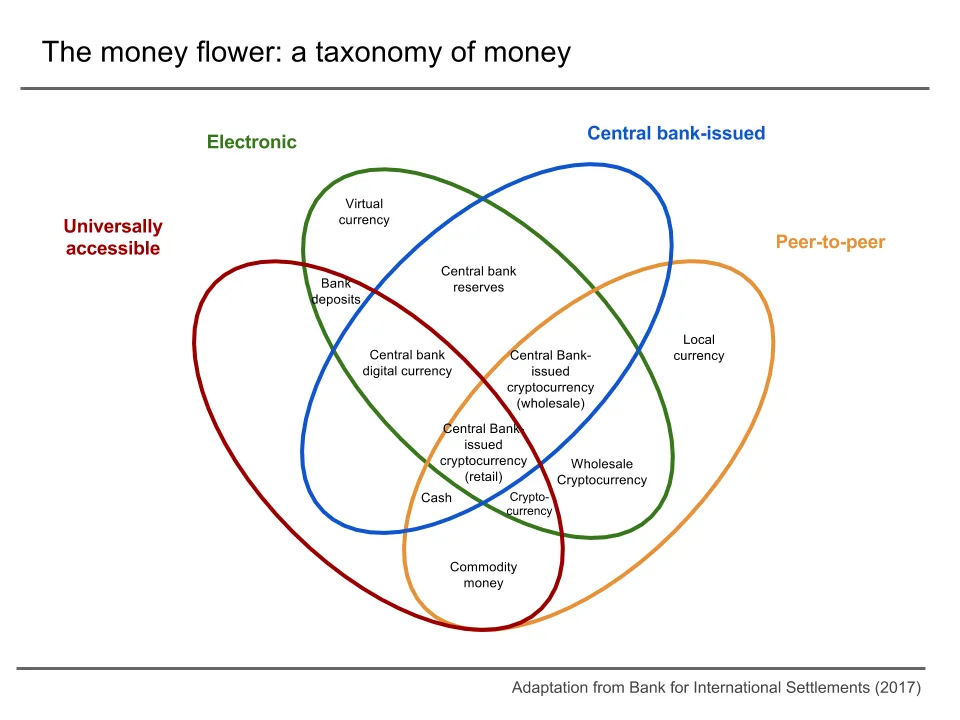
Governments are responding with their own digital money. Central Bank Digital Currencies (CBDCs) are digital forms of central-bank money, issued directly by central banks; depending on design, they can be programmable and traceable. Over 130 countries are exploring them. A few smaller economies, such as the Bahamas and Nigeria, have formally launched one, and China's digital yuan (e-CNY) is in a large-scale public pilot. The U.S. Federal Reserve's FedNow instant-payments system is not a CBDC. CBDCs could reshape monetary policy transmission, financial inclusion, and cross-border payments — while raising hard questions about privacy and control.
Two broader currents round out the picture. Environmental, social, and governance (ESG) investing — evaluating companies on Environmental, Social, and Governance factors alongside financial performance — has grown from a niche movement to a mainstream benchmark, with trillions in assets now carrying ESG mandates, even as critics debate whether it consistently generates alpha. And perhaps most profound is the democratization of finance: commission-free trading pioneered by Robinhood, fractional shares, exchange-traded fund (ETF) proliferation, and AI-powered tools have radically lowered the barriers to entry. As recently as June 2022, a single share of Amazon cost about 2,447, before its 20-for-1 stock split; today a 1 stake is possible on many retail platforms. The future of finance is not only faster and more automated — it is, for the ordinary investor, more open than it has ever been.
Key terms
- DeFi
- Decentralized Finance — blockchain-based smart contracts that recreate lending, borrowing, and trading without traditional intermediaries. Protocols like Aave, Uniswap, and Compound run transparently on public blockchains.
- ESG investing
- Environmental, Social, and Governance investing — evaluating companies on non-financial factors alongside financial performance. It has grown from niche to mainstream, with trillions in assets under ESG mandates.
Key concepts
DeFi
- An emerging system that uses blockchain-based smart contracts to recreate lending, borrowing, trading, and yield generation without traditional intermediaries like banks.
- It runs transparently on public blockchains through protocols such as Aave, Uniswap, and Compound — open to anyone with an internet connection.
Tokenization
- The practice of representing real-world assets — real estate, bonds, private equity, commodities — as tradable digital units recorded on a blockchain.
- BlackRock, JPMorgan, and Goldman Sachs have all launched initiatives around it, promising fractional ownership, 24/7 liquidity, and programmable compliance.
Central Bank Digital Currencies
- Electronic forms of money issued directly by a nation's monetary authority rather than a private company; depending on design, they can be programmable and traceable.
- More than 130 countries are exploring them, and China's version is in a large-scale public pilot; the U.S. Federal Reserve's FedNow instant-payments system is not one.
ESG investing
- An investing approach that weighs a company's ethics, sustainability, and management quality alongside its financial performance.
- Once a niche movement, it now guides trillions in assets under formal mandates — though critics debate whether it consistently generates alpha.
Key facts
Tokenization of real assets
Institutions are increasingly representing real-world assets — real estate, bonds, private equity, commodities — as digital tokens on a blockchain. BlackRock, JPMorgan, and Goldman Sachs have all launched tokenized initiatives, promising fractional ownership, 24/7 liquidity, and programmable compliance.
Central Bank Digital Currencies
Governments are developing digital currencies issued directly by central banks; depending on design, they can be programmable and traceable. Over 130 countries are exploring them, and China's digital yuan is in a large-scale public pilot. These currencies could reshape monetary policy, financial inclusion, and cross-border payments.
The democratization of finance
Commission-free trading (pioneered by Robinhood), fractional shares, exchange-traded fund (ETF) proliferation, and AI tools have radically lowered barriers. As recently as June 2022, a single Amazon share cost about 2,447, before its 20-for-1 stock split; today a 1 stake is possible on many retail platforms.
Where Trading's Edge Is Going
The competitive edge in trading has been shifting toward those who can effectively harness AI and algorithmic tools, rather than firms and individuals competing by hand.
By the numbers
- By commonly cited estimates, roughly what percent of U.S. equity trading is algorithmic?
- 70 %
Self-test
Answer each question from memory, then check your work against the answer key.
1. Which of these major economies already has a central-bank digital currency (CBDC) in public use through a large-scale pilot?
- AThe United Kingdom (digital pound)
- BChina (the digital yuan)
- CThe United States (FedNow)
- DJapan (digital yen)
2. Roughly what share of U.S. equity trading is now conducted by algorithmic systems rather than humans?
- ARoughly 5 to 10%
- BRoughly 90 to 95%
- CRoughly 15 to 20%
- DRoughly 60 to 75%
3. By the mid-2020s, about how many countries were exploring central bank digital currencies (CBDCs)?
- AAbout 130
- BAbout 190
- CAbout 70
- DAbout 30
4. The competitive advantage in trading is migrating toward those who do what?
- ARely on a broker to place every order
- BAvoid algorithmic systems entirely
- CLeverage AI and algorithmic tools effectively
- DExecute trades by hand faster than machines
5. What is the U.S. Federal Reserve's FedNow?
- AA tokenized real-estate fund
- BAn instant-payments system, not a CBDC
- CA DeFi lending protocol
- DThe official U.S. central bank digital currency
6. In finance, what does 'DeFi' stand for?
- ADigital Fiat
- BDefined Finance
- CDeferred Financing
- DDecentralized Finance
7. Which set of protocols does the lesson cite as examples of DeFi?
- AAave, Uniswap, and Compound
- BBitcoin, Ethereum, and Litecoin
- CStablecoins, non-fungible tokens (NFTs), and CBDCs
- DTokenized real estate, bonds, and commodities
8. DeFi recreates lending, borrowing, and trading without which of the following?
- AAny form of collateral
- BThe internet
- CTraditional intermediaries like banks
- DPublic blockchains
9. What technology do DeFi services use to recreate financial functions?
- AGovernment central bank digital currency (CBDC) networks
- BCentral bank ledgers
- CBlockchain-based smart contracts
- DPrivate bank mainframes
10. Which statement about DeFi is NOT accurate?
- AIt requires a bank to approve each loan
- BIt removes traditional intermediaries
- CIt enables lending and borrowing
- DIt runs transparently on public blockchains
11. In ESG investing, what do the letters E, S, and G stand for?
- AEconomic, Structural, and Global
- BEnvironmental, Social, and Governance
- CEquity, Savings, and Growth
- DEarnings, Stability, and Gains
12. What about environmental, social, and governance (ESG) investing do critics still debate?
- AWhether it is legal in most countries
- BWhether governments require it by law
- CWhether it can ever include bonds
- DWhether it consistently generates alpha (outperformance)
13. ESG investing evaluates companies on which factors alongside financial performance?
- AShort-term price momentum
- BOnly quarterly earnings
- CNon-financial environmental, social, and governance factors
- DDividend yield alone
14. Which of the following is NOT one of the three ESG factors?
- ASocial
- BProfitability
- CEnvironmental
- DGovernance
15. How has environmental, social, and governance (ESG) investing evolved?
- AIt was banned by most regulators
- BFrom mainstream to nearly obscure
- CIt replaced all financial analysis
- DFrom a niche movement to a mainstream benchmark with trillions in assets
Go deeper
- WatchMost Trades Have No Human Over 70% of U.S. stock trading is now done by algorithms, not by people clicking buy and sell.
- StudyInvesting 201 in the FlashFeed app
Answer key
- 1. B China (the digital yuan)China's digital yuan (e-CNY) is in a large-scale public pilot. Smaller economies like the Bahamas and Nigeria have formally launched CBDCs. FedNow is an instant-payments system, not a CBDC, a common trap.
- 2. D Roughly 60 to 75%Commonly cited estimates put algorithmic trading at roughly 60 to 75% of U.S. equity volume, though narrower measures, such as buy-side orders, run lower. Figures vary by definition.
- 3. A About 130By the mid-2020s, over 130 countries were exploring CBDCs, and China's digital yuan is in a large-scale public pilot.
- 4. C Leverage AI and algorithmic tools effectivelyAdvantage migrates to firms and individuals who understand how to leverage AI/algorithmic tools, rather than competing against them by hand.
- 5. B An instant-payments system, not a CBDCFedNow is an instant-payments system, not a central bank digital currency (CBDC). Mistaking it for a U.S. CBDC is a common trap; China's digital yuan, by contrast, is a CBDC in a large-scale public pilot.
- 6. D Decentralized FinanceDeFi is short for Decentralized Finance — recreating financial services without traditional intermediaries.
- 7. A Aave, Uniswap, and CompoundAave, Uniswap, and Compound are the DeFi protocols cited. BlackRock/JPMorgan/Goldman are tokenization initiatives; Robinhood/Fidelity are retail brokers.
- 8. C Traditional intermediaries like banksDeFi removes traditional intermediaries like banks, but it still relies on public blockchains and internet access to function.
- 9. C Blockchain-based smart contractsDeFi uses blockchain-based smart contracts running transparently on public blockchains to recreate lending, borrowing, and trading.
- 10. A It requires a bank to approve each loanDeFi's defining feature is operating WITHOUT traditional intermediaries — no bank approves transactions; smart contracts do.
- 11. B Environmental, Social, and GovernanceESG stands for Environmental, Social, and Governance — non-financial factors evaluated alongside financial performance.
- 12. D Whether it consistently generates alpha (outperformance)ESG grew to mainstream with trillions in assets, even as critics debate whether it consistently generates alpha (outperformance).
- 13. C Non-financial environmental, social, and governance factorsESG evaluates companies on non-financial factors — environmental, social, and governance — in addition to financial performance.
- 14. B ProfitabilityThe three ESG factors are Environmental, Social, and Governance. Profitability is a financial metric, considered separately alongside ESG.
- 15. D From a niche movement to a mainstream benchmark with trillions in assetsESG grew from niche to mainstream, with trillions in assets under ESG mandates, though critics debate whether it consistently generates alpha.
Image credits
- Central Bank Digital Currencies: Wikimedia Commons · Stanjourdan · CC BY-SA 4.0 — commons.wikimedia.org/wiki/File:Money_flower.png
