
The Last Economy (book) study guide · Lesson 10 of 15
Firm, Market & Game Theory
The Cathedral and the Bazaar · Intelligent Game Theory
Unofficial study guide for The Last Economy: A Guide to the Age of Intelligent Economics by Emad Mostaque. FlashFeed is not affiliated with the author or publisher.
This is the lesson's study guide from the FlashFeed app, plus its key facts and a self-test.
What you'll be able to do
- Contrast the Firm (execution) and Market (discovery) as computing architectures, using Coase's transaction costs and Xerox PARC's overfitting.
- Define marginal cost and explain why near-zero marginal cost makes symbiotic communities like Linux and Wikipedia structurally dominant.
- Explain the Prisoner's Dilemma and Nash Equilibrium, and how iteration makes cooperation optimal via Axelrod's Tit for Tat.
- Define the Symbiotic Equilibrium and explain how the potlatch converts Material Capital into Network Capital.
The Cathedral and the Bazaar
Mostaque opens his analysis of economic institutions by treating the firm and the market not as ideological opposites but as two distinct computing architectures — each suited to a different phase of the same information-processing problem.
When 'computer' was a job title
Before a 'computer' was a machine, it was a job title. At NASA's Langley Research Center in the 1950s, rooms full of brilliant women performed the calculations that powered the space race. Then the IBM 7090 arrived and, in a single afternoon, outpaced a lifetime of human arithmetic. The job title vanished overnight. Mostaque's argument is that today's knowledge workers are their direct descendants — and that their IBM 7090 has now arrived. The pattern is not disruption; it is a predictable phase transition in how collective intelligence is structured.
The two minds of the economy
The economy runs on two kinds of processor. The Firm is a pocket of planned order — a hierarchy, a command structure, a cathedral built to a deliberate blueprint. The Market is a decentralized swarm with no leader or plan, a bazaar where order emerges from the bottom up. For a century the great ideological contest framed these as enemies: central planning versus free markets. Mostaque's reframe is decisive — it was never a battle. It is a dance. The two architectures are complementary, not rival; dismantling either one cripples the whole.
Discovery vs execution
In Mostaque's framework, the firm and the market are different architectures for processing information. The Market operates as a massively parallel, distributed system — brilliant at exploring a vast possibility space, minimizing collective prediction error. It is an engine for Discovery. The Firm is a serial, hierarchical system built to take one promising idea and exploit it with ruthless efficiency, minimizing model complexity and update cost. It is an engine for Execution. Ronald Coase asked in 1937 why firms exist at all and answered with transaction costs: a firm replaces the messy haggling of the market with the simpler logic of command. Intelligence Theory deepens that answer — the firm's value is architectural, not merely administrative.
The Innovator's Dilemma
The qualities that make a firm a brilliant execution engine make it a terrible discovery engine. In the 1970s Xerox PARC invented the graphical user interface, the mouse, and Ethernet — the entire substrate of personal computing. Xerox ignored all of it. The corporation was an execution engine overfitted to leasing copiers; the personal computer was a prediction error it could not process. A young Steve Jobs took the ideas and built Apple. In machine learning, overfitting describes a model trained so perfectly on past data that it becomes brittle against new inputs. Mostaque's point: successful firms are masters of overfitting, which is precisely why they keep losing the future.
From corporation to community
The future belongs to institutions that blur the line between firm and market. Linux is simultaneously a hierarchy of maintainers and a decentralized bazaar of volunteers. Wikipedia is a foundation managing servers and a chaotic market of millions creating content. Neither fits the old categories. Mostaque's thesis is that symbiotic communities replace legacy corporations the way mammals replaced dinosaurs — not through confrontation but through a superior architecture. The marginal cost of sharing knowledge inside these structures approaches zero, which classical firm theory never modeled; that asymmetry is what makes the new form structurally dominant.
Intelligent Game Theory
Classical game theory modeled rational agents in a pathological universe — a featureless void with no history, no relationships, and no consequences beyond the immediate transaction. Mostaque's project is to rerun the math in a richer topology and show that cooperation is not idealistic but mathematically optimal.
The Prisoner's Dilemma
Two prisoners who cannot communicate face the same choice: cooperate or betray. The math says betray — and both end up worse than if they had cooperated. Formalized at the RAND Corporation in 1950, this result hardened into the cold logic of the Cold War: whatever the Soviets do, it is always better to build more bombs. The Nash Equilibrium is, as Mostaque puts it, a planet of rubble. The tragedy is not irrationality but the reverse: pure rationality in a context stripped of memory, reputation, and future leads directly to mutual destruction. The Prisoner's Dilemma is bleak because its prison is a pathological topology — a disconnected, zero-information graph with no Network Capital and no tomorrow.
Tit for Tat
In the 1980s political scientist Robert Axelrod ran a tournament of computer programs playing an iterated Prisoner's Dilemma across thousands of rounds. The winner was the simplest entry: a four-line program called Tit for Tat — cooperate first, then copy your opponent's last move. It was not the cleverest strategy but the most robust. It won because the game had memory and a future; defection was punishable and cooperation was rewarded over time. Mostaque draws the lesson precisely: cooperation emerged not from ethics but from iteration. Change the topology — add memory, add stakes, add a future — and the math changes with it.
The logic of the potlatch
Nineteenth-century Western observers were baffled by the potlatch, Pacific Northwest ceremonies in which chiefs gave away or destroyed immense wealth, and banned them — missing the underlying logic entirely. The potlatch converts rivalrous Material Capital into non-rivalrous Network Capital. A chief who gives away a thousand blankets purchases a thousand strands of social obligation, each one a durable, interest-bearing asset. The richest chief was not the one with the biggest hoard but the one at the center of the strongest web of relationships. Mostaque uses this to illustrate a general principle: in a connected topology, generosity is not a departure from self-interest but its highest expression.
The computation of trust
Classical game theory failed partly because it could not model trust — treating it as sentiment rather than structure. Mostaque argues trust is a computational feature: transparent records and verifiable commitments reduce collective prediction error and lower the friction cost of every subsequent transaction. The Symbiotic Equilibrium is the state where a network's overall health is maximized and no individual can improve their long-run position by degrading it. The goal of intelligent policy is to design systems where the Nash Equilibrium and the Symbiotic Equilibrium coincide — changing the game's math, not human nature. Working proof: Mondragon's 80,000 worker-owners recorded near-zero internal unemployment during the 2008 crisis while Spain reached 26 percent; Buurtzorg's 15,000 nurses deliver top-rated care with no managers and 8 percent overhead. Trust, engineered correctly, is not just more humane — it is more efficient.
Key terms
- Marginal cost
- Marginal cost is the expense of producing one additional unit of a good or service. When the marginal cost of something falls toward zero, its price tends to collapse and old business models break.
- The Symbiotic Equilibrium
- A higher equilibrium than Nash, in which the system's overall health (measured by MIND Capitals) is maximized — a state where an individual agent cannot improve its own long-term prospects by degrading the health of the network. The goal of 21st-century policy is to design systems where the Nash Equilibrium and the Symbiotic Equilibrium are the same: changing the math of the game, not human nature.
Key concepts
Xerox PARC
- Mostaque's classic cautionary tale of a brilliant execution engine that could not process a prediction error.
- In the 1970s this research lab invented the graphical user interface, the mouse, and Ethernet — the whole substrate of personal computing.
- Its parent corporation, overfitted to leasing copiers, ignored all of it — and a young Steve Jobs took the ideas to build Apple.
Linux
- One of two institutions Mostaque uses to show the future blurring the line between firm and market.
- It is simultaneously a hierarchy of maintainers and a decentralized bazaar of volunteers.
- This open-source operating-system kernel fits neither old category — a symbiotic community where the marginal cost of sharing nears zero.
Wikipedia
- The institution Mostaque pairs with Linux to show firm and market blurring together.
- It is at once a foundation managing servers and a chaotic market of millions creating content.
- This crowd-built online encyclopedia fits neither old category; classical firm theory never modeled its near-zero marginal cost of sharing.
The Prisoner's Dilemma
- The foundational scenario of classical game theory: two captives who cannot communicate must cooperate or betray.
- The cold math says betray, yet both end up worse than if they had cooperated; it was formalized at the RAND Corporation in 1950.
- Mostaque calls its trap a pathological topology — a disconnected, zero-information graph with no Network Capital and no tomorrow.
The Nash Equilibrium
- The stable outcome where the cold logic of two captives settles — Mostaque calls it 'a planet of rubble.'
- It hardened into the logic of the Cold War: whatever the Soviets do, it is always better to build more bombs.
- Its tragedy is pure rationality stripped of memory and future; it bears the name of the mathematician who defined it.
Tit for Tat
- The winning strategy in Robert Axelrod's 1980s tournament of programs playing an iterated Prisoner's Dilemma.
- It was the simplest entry — a four-line program — yet the most robust across thousands of rounds.
- Its rule: cooperate first, then copy your opponent's last move; cooperation emerged from iteration, not ethics.
The Symbiotic Equilibrium
- The counterpart to the 'planet of rubble' — the state where a network's overall health is maximized.
- In it, no individual can improve their long-run position by degrading the network.
- Intelligent policy aims to make this coincide with the cold Nash outcome; Mondragon and Buurtzorg are Mostaque's working proofs.
Key facts
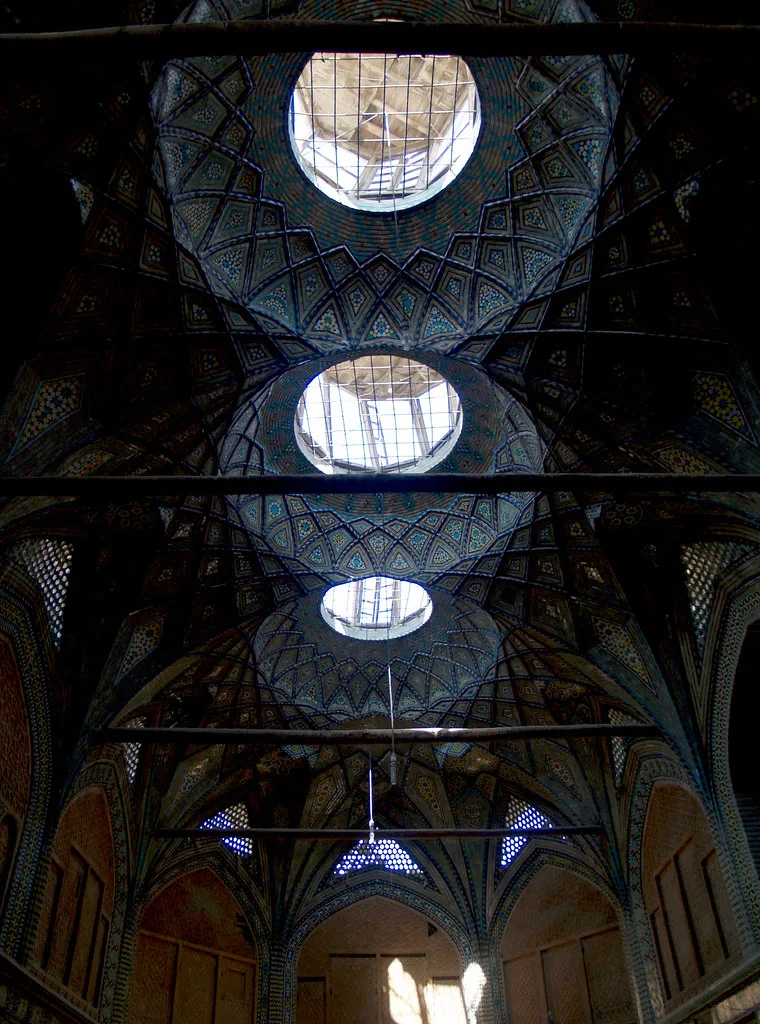
The two minds of the economy
The economy has two kinds of processor. The Firm is a pocket of planned order — a hierarchy, a command structure, 'a cathedral built according to a deliberate blueprint.' The Market is a decentralized swarm with no leader or plan — 'a bazaar, chaotic and vibrant, where order arises from the bottom up.' For a century the great ideological battle treated this as a war. 'It was never a battle. It is a dance.'
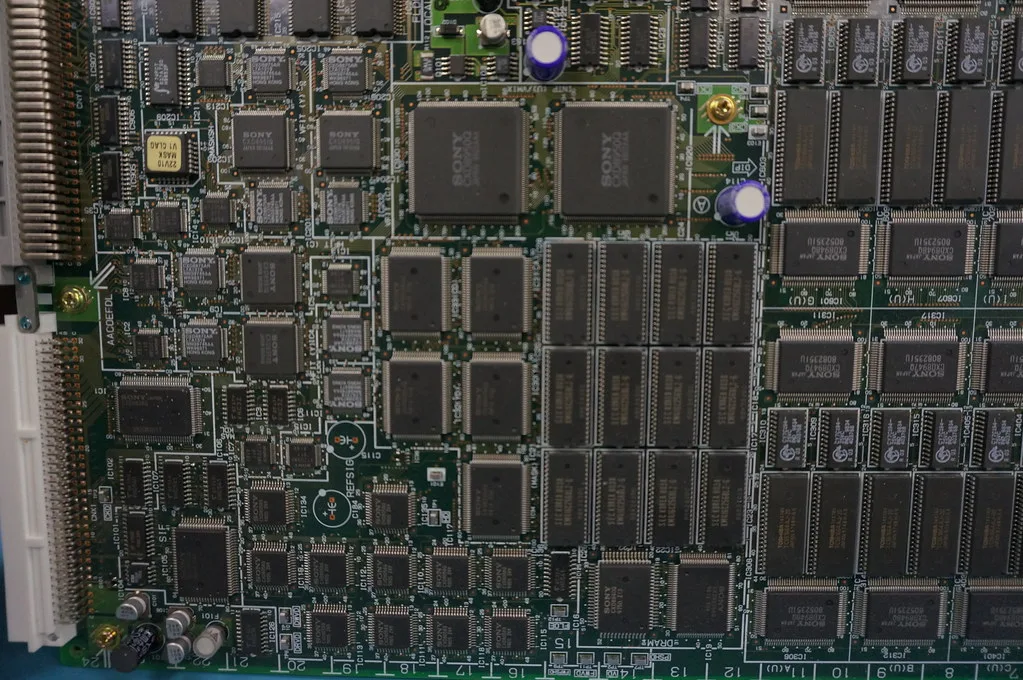
Discovery vs execution
In Intelligent Economics, the firm and the market are different architectures for processing information. The Market is a massively parallel, distributed computing system — brilliant at exploring a vast possibility space. It is an engine for Discovery. The Firm is a serial, hierarchical system designed to take one promising idea and exploit it with ruthless efficiency — an engine for Execution. 'The market discovers. The firm executes. A healthy economy needs both.'
The Innovator's Dilemma
In the 1970s Xerox PARC invented the graphical user interface, the mouse, and Ethernet — they invented the future. Xerox ignored all of it, because the corporation was an execution engine optimized for leasing copiers; the personal computer was 'a prediction error they could not process.' They let a young Steve Jobs take the ideas and build Apple. In machine learning this is called overfitting: 'Successful firms are masters of overfitting.'
From corporation to community
The future belongs to institutions that blur the line between firm and market. Linux: is it a firm or a market? Both and neither — a core of maintainers (hierarchy) developed by a decentralized bazaar of volunteers. Wikipedia: a foundation managing servers, content created by a chaotic market of millions. 'Legacy corporations are like the dinosaurs. The new symbiotic communities are like the mammals that succeeded them.'
The Prisoner's Dilemma
Two prisoners who cannot communicate must choose to cooperate or betray. The math says betray — and both end worse off than if they had cooperated. Formalized at RAND in 1950, it became the Cold War logic: whatever the Soviets do, we are better off building more bombs. 'The Nash Equilibrium is a planet of rubble.' Rationality itself seemed to doom us to mutual destruction.

Tit for Tat
In the 1980s political scientist Robert Axelrod ran a tournament of programs playing an iterated Prisoner's Dilemma, thousands of rounds. The winner shocked everyone: the simplest entry, a four-line program called 'Tit for Tat' — cooperate first, then copy your opponent's last move. It won not because it was moral but because it was optimal in a game with memory and a future. 'Cooperation emerged not from ethics but from iteration.'
The logic of the potlatch
19th-century Western observers were baffled by the potlatch — Pacific Northwest ceremonies where chiefs gave away or destroyed immense wealth — and banned it, missing the genius. The potlatch transmutes rivalrous Material Capital into non-rivalrous Network Capital. A chief giving away a thousand blankets purchases a thousand strands of social obligation. 'The richest chief was not the one with the biggest hoard, but the one at the center of the strongest web of relationships.'
The computation of trust
Classical game theory failed because it assumed disconnected transactions and could not model trust. Mostaque argues trust is not an emotion but a computational feature — transparent, shared ledgers and verifiable commitments dramatically reduce collective prediction error. He cites working proof: Mondragon (Spain, 80,000 worker-owners, near-zero internal unemployment in the 2008 crisis while the nation hit 26%), Buurtzorg (Netherlands, 15,000 nurses, no managers, 8% overhead), and Publix in the U.S.
A Planet of Rubble
Mostaque describes the Nash Equilibrium of the Cold War's Prisoner's Dilemma as 'a planet of rubble' — mutual defection and destruction, the result of pure rationality in a zero-information standoff with no Network Capital and no tomorrow.
By the numbers
- Year Apple Computer was founded
- 1976 year
Matched pairs
Each item on the left goes with the one on the right.
- Asked 'why do firms exist?' (1937) — answer: transaction costs
- Ronald Coase
- Ran the 1980s tournament won by 'Tit for Tat'
- Robert Axelrod
Self-test
Answer each question from memory, then check your work against the answer key.
1. Xerox PARC invented the GUI, the mouse, and Ethernet, yet Xerox ignored them all and Steve Jobs built Apple on the ideas. In Mostaque's machine-learning analogy, why did Xerox miss its own invention?
- AThe firm lacked the transaction-cost advantages that let markets discover new products
- BThe firm was 'overfitted' to leasing copiers — so tuned to past data that it was brittle against new inputs
- CThe firm had driven its marginal cost to zero, removing any incentive to innovate
- DThe firm was 'underfitted' — too simple a model to capture any market at all
2. Ronald Coase asked in 1937 why firms exist at all. What did he identify as the reason?
- ATransaction costs — a firm replaces market haggling with the logic of command
- BNetwork Capital accumulated across many relationships
- CMarginal costs that fall toward zero inside a hierarchy
- DOverfitting to a single profitable product line
3. In Mostaque's framework, the Market and the Firm are engines for which two functions, respectively?
- ACommand and Prediction
- BExecution and Discovery
- CDiscovery and Execution
- DPlanning and Overfitting
4. Which description does NOT fit the Market as a computing architecture in Mostaque's framework?
- ABrilliant at exploring a vast possibility space
- BMassively parallel and distributed
- CMinimizes collective prediction error
- DA serial, hierarchical system that exploits one idea efficiently
5. In Mostaque's metaphor for the economy's two kinds of processor, which pairing is correct?
- AFirm = a leaderless decentralized swarm; Market = a pocket of planned order
- BFirm = an engine for Discovery; Market = an engine for Execution
- CFirm = a chaotic, vibrant bazaar; Market = a cathedral built to a deliberate blueprint
- DFirm = a cathedral built to a deliberate blueprint; Market = a bazaar where order arises bottom-up
6. How is marginal cost defined?
- AThe fixed cost that does not change with output
- BThe average price a firm charges across all its customers
- CThe expense of producing one additional unit of a good or service
- DThe total cost of running a factory over a year
7. What tends to happen when the marginal cost of something falls toward zero?
- AIts price tends to collapse and old business models break
- BThe Nash Equilibrium shifts toward cooperation
- CFirms become better discovery engines than markets
- DTransaction costs rise, forcing firms to expand
8. Why does Mostaque say Linux fits neither the old category of 'firm' nor 'market'?
- AIt has no leadership structure of any kind
- BIt is a hierarchy of maintainers AND a decentralized bazaar of volunteers
- CIt abandoned open collaboration to minimize transaction costs
- DIt is run entirely by a single corporation with no volunteers
9. How does Mostaque characterize Wikipedia as a hybrid institution?
- AA pure free market with no central organization
- BA foundation managing servers plus a chaotic market of millions creating content
- CA hierarchy of paid editors with no volunteer input
- DA traditional corporation that sells its content
10. What structural asymmetry makes symbiotic communities dominant over legacy corporations, in Mostaque's argument?
- ATheir marginal cost of sharing knowledge approaches zero, which classical firm theory never modeled
- BThey have completely abandoned all hierarchy
- CTheir transaction costs are higher than any firm's
- DThey overfit to past data more aggressively than corporations
11. In the classical (one-shot) Prisoner's Dilemma, what does pure rational calculation tell each prisoner to do?
- ACommunicate to coordinate a joint plan
- BCooperate, since both are better off
- CStay silent and trust the other
- DBetray, even though both end up worse off
12. How does Mostaque memorably describe the Nash Equilibrium of the Cold-War Prisoner's Dilemma?
- AA bazaar of emergent order
- BA rising tide that lifts all boats
- CA planet of rubble
- DA web of durable obligations
13. What is the rule of the four-line 'Tit for Tat' program that won Axelrod's tournament?
- AAlways betray, no matter what the opponent does
- BCooperate first, then copy the opponent's last move
- CAlways cooperate, regardless of the opponent
- DPlay randomly to stay unpredictable
14. According to Mostaque, cooperation emerged in Axelrod's tournament primarily because of what change to the game?
- AThe programs could communicate before each round
- BThe payoffs were secretly rigged toward cooperation
- CThe players were given ethical training
- DIteration — the game had memory and a future, so defection was punishable
15. Which political scientist ran the 1980s tournament of computer programs playing an iterated Prisoner's Dilemma?
- ARonald Coase
- BJohn Nash
- CRobert Axelrod
- DDavid Graeber
16. In Mostaque's reading, the potlatch — chiefs giving away or destroying immense wealth — converts one form of capital into another. Which conversion is it?
- Arivalrous Material Capital into non-rivalrous Network Capital
- BNetwork Capital into Diversity Capital
- Cnon-rivalrous Network Capital into rivalrous Material Capital
- DMaterial Capital into Intelligence Capital
17. How is the Symbiotic Equilibrium defined?
- AThe moment a market fully replaces a firm's hierarchy
- BA stalemate in which all agents betray each other simultaneously
- CThe point where every firm has driven its marginal cost to zero
- DA state maximizing network health where no agent can improve their long run by degrading it
18. A chief who gives away a thousand blankets buys a thousand strands of social obligation. How does Mostaque characterize each strand?
- AA sentiment with no measurable economic value
- BA durable, interest-bearing asset
- CA rivalrous good only one person can hold at a time
- DA depreciating liability the chief must repay
19. What does Mostaque say is the goal of intelligent 21st-century policy regarding these two equilibria?
- ATo change human nature so people stop acting rationally
- BTo eliminate the Symbiotic Equilibrium so markets stay competitive
- CTo design systems where the Nash Equilibrium and Symbiotic Equilibrium coincide
- DTo force firms below their marginal cost
20. In the logic of the potlatch, which chief counted as the richest?
- AThe one at the center of the strongest web of relationships
- BThe one who received the most gifts from others
- CThe one who destroyed the least wealth
- DThe one with the biggest hoard of blankets and goods
Go deeper
- ReadThe Last Economy by Emad Mostaque · on Amazon ↗
- StudyThe Last Economy (book) in the FlashFeed app
These are affiliate links: if you buy a book through one, FlashFeed may earn a small commission at no extra cost to you. The commission helps pay for FlashFeed's servers.
As an Amazon Associate we earn from qualifying purchases.
Answer key
- 1. B The firm was 'overfitted' to leasing copiers — so tuned to past data that it was brittle against new inputsOverfitting in ML means a model trained so perfectly on past data that it fails on new inputs. Xerox was an execution engine overfitted to copier leasing; the PC was a prediction error it couldn't process — masters of overfitting keep losing the future.
- 2. A Transaction costs — a firm replaces market haggling with the logic of commandCoase's answer was transaction costs: a firm exists because command is cheaper than the messy haggling of the market. Intelligence Theory deepens this into an architectural, not just administrative, value.
- 3. C Discovery and ExecutionThe Market is a massively parallel system that explores the possibility space — an engine for Discovery. The Firm is a serial, hierarchical system that exploits one idea efficiently — an engine for Execution.
- 4. D A serial, hierarchical system that exploits one idea efficientlySerial, hierarchical, single-idea exploitation describes the Firm (execution), not the Market. The Market is the parallel, distributed discovery engine that explores broadly and minimizes collective prediction error.
- 5. D Firm = a cathedral built to a deliberate blueprint; Market = a bazaar where order arises bottom-upThe Firm is a pocket of planned order — a cathedral built to a blueprint. The Market is a leaderless swarm — a bazaar where order emerges bottom-up. Mostaque insists they are complementary, a dance rather than a battle.
- 6. C The expense of producing one additional unit of a good or serviceMarginal cost is the expense of producing one additional unit. It is distinct from total cost, average price, or fixed cost — and when it falls toward zero, prices collapse and old business models break.
- 7. A Its price tends to collapse and old business models breakWhen marginal cost approaches zero, price tends to collapse and legacy business models break. This asymmetry — which classical firm theory never modeled — is what makes knowledge-sharing communities structurally dominant.
- 8. B It is a hierarchy of maintainers AND a decentralized bazaar of volunteersLinux is simultaneously a hierarchy of maintainers (firm-like order) and a decentralized bazaar of volunteers (market-like emergence). It blurs the line, which is exactly why it escapes the old categories.
- 9. B A foundation managing servers plus a chaotic market of millions creating contentWikipedia is both a foundation managing servers (hierarchy) and a chaotic market of millions creating content (bazaar). Like Linux, it is a symbiotic community that blends firm and market.
- 10. A Their marginal cost of sharing knowledge approaches zero, which classical firm theory never modeledInside these structures the marginal cost of sharing knowledge approaches zero — an asymmetry classical firm theory never modeled. That is what makes the new form structurally dominant, like mammals replacing dinosaurs.
- 11. D Betray, even though both end up worse offThe math says betray — yet both end worse off than if they had cooperated. The tragedy is not irrationality but pure rationality in a context stripped of memory, reputation, and a future.
- 12. C A planet of rubbleMostaque calls the Nash Equilibrium 'a planet of rubble' — mutual defection and destruction. It arises from rationality in a pathological, zero-information topology with no Network Capital and no tomorrow.
- 13. B Cooperate first, then copy the opponent's last moveTit for Tat cooperates on the first round, then simply copies the opponent's previous move. It won not by being clever but by being robust: it punished defection and rewarded cooperation over time.
- 14. D Iteration — the game had memory and a future, so defection was punishableCooperation emerged from iteration, not ethics. Adding memory, stakes, and a future changed the topology: defection became punishable and cooperation rewarded over thousands of rounds. Change the game's math and behavior changes.
- 15. C Robert AxelrodRobert Axelrod ran the tournament that Tit for Tat won. Nash names the equilibrium of the one-shot game and Coase asked why firms exist (1937) — neither ran the tournament.
- 16. A rivalrous Material Capital into non-rivalrous Network CapitalThe potlatch trades away rivalrous Material Capital (blankets, goods) to buy non-rivalrous Network Capital — durable strands of social obligation. The richest chief was the one at the center of the strongest web, not the biggest hoard.
- 17. D A state maximizing network health where no agent can improve their long run by degrading itThe Symbiotic Equilibrium maximizes the network's overall health such that no agent can improve its long-run prospects by degrading the network. Intelligent policy aims to make it coincide with the Nash Equilibrium.
- 18. B A durable, interest-bearing assetMostaque characterizes each strand as a durable, interest-bearing asset — Network Capital. Giving wealth away doesn't create a debt to repay; it buys lasting relationships that keep paying returns, which is why the chief at the center of the strongest web is the richest.
- 19. C To design systems where the Nash Equilibrium and Symbiotic Equilibrium coincideThe goal is to design systems where the Nash Equilibrium and the Symbiotic Equilibrium coincide — changing the game's math, not human nature, so self-interest and network health point the same way.
- 20. A The one at the center of the strongest web of relationshipsThe richest chief was the one at the center of the strongest web of relationships, not the biggest hoard. Giving away wealth purchased strands of durable, interest-bearing social obligation — Network Capital.
Image credits
- The two minds of the economy: seier+seier (Openverse) · by 2.0 — www.flickr.com/photos/94852245@N00/1798637629
- Discovery vs execution: eevblog (Openverse) · by 2.0 — www.flickr.com/photos/58072483@N02/13577905384
- Tit for Tat: ajmexico (Openverse) · by 2.0 — www.flickr.com/photos/15587432@N02/3281139507