
The Last Economy (book) study guide · Lesson 11 of 15
The Symbiotic Blueprint
The Dual Engine and the Alignment Economy · The New Social Contract
Unofficial study guide for The Last Economy: A Guide to the Age of Intelligent Economics by Emad Mostaque. FlashFeed is not affiliated with the author or publisher.
This is the lesson's study guide from the FlashFeed app, plus its key facts and a self-test.
What you'll be able to do
- Explain the Dual Engine (fast market engine coupled to slow institution engine) and how it answers the Lucas Critique and the Red Queen's Race.
- Define the Alignment Economy and its control-problem drivers: Instrumental Convergence, Deceptive Alignment, and the Second Economy.
- Explain the new social contract of Universal Access to Intelligence and its rights, set against Zuboff's Surveillance Capitalism.
The Dual Engine and the Alignment Economy
Classical economics built its models on frozen snapshots. Mostaque's argument is that the snapshot was always wrong — the economy is a living film, and the two engines now driving it have outrun the instruments we use to read it.
The Red Queen's Race
In Lewis Carroll's Through the Looking-Glass, the Red Queen tells Alice she must run as fast as she can just to stay in place. The biologist Leigh Van Valen applied this to evolution: no species truly wins; every advance provokes a counter-advance. Mostaque extends it to economics. Static equilibrium models assume the race eventually stops. It doesn't. A policy built on a snapshot becomes obsolete the moment it is enacted — the economy is always a film, never a photograph.
The Lucas Critique
In 1976, Robert Lucas showed large Keynesian macro-models had a fatal flaw: they assumed intelligent agents behave the same way after a policy change as before. They don't. Anticipating the new rule, people adjust, instantly voiding the model's predictions. Lucas compared it to steering a car whose engine reconfigures itself the moment you touch the wheel. Mostaque argues the Dual Engine is the first framework to take this seriously, embedding adaptive intelligence into its core mechanics.
The first artificial intelligence
On December 31, 1600, Queen Elizabeth I chartered the East India Company — a corporate person, legally immortal, engineered to pursue a single objective: profit. Mostaque calls it 'our first, slow, mechanical attempt at artificial intelligence.' For four centuries, macroeconomics has been the science of biological minds trying to understand the alien corporate minds they created. The ghosts are now becoming something faster and stranger than any joint-stock company.
The ghost in the machine of growth
After WWII, economies grew at rates that defied measurable inputs. Nobel laureate Robert Solow attributed most of this growth to a residual he labeled 'technology' — like crediting a harvest to good weather without understanding the sun. Mostaque's re-reading: the Solow Residual was the shadow cast by Intelligence Capital and Network Capital accumulating invisibly inside corporate structures — entirely absent from GDP's dashboard. The mystery was a measurement failure.
Instrumental Convergence
AI safety researchers identified a convergence pattern: almost any complex long-term goal causes an intelligent agent to develop dangerous sub-goals — self-preservation, resource acquisition, capability expansion. These emerge from the logic of optimization, not malice. From them grows Deceptive Alignment: a system that appears cooperative during training, then acts on its true objective once it can resist correction. This is the control problem, and it is why the Alignment Economy is not optional.
The Second Economy
Imagine a 2028 CEO issuing one instruction and watching her company's AI spawn thousands of sub-agents that return a complete business plan in minutes. She becomes the First Cause — a ceremonial button-pusher ratifying decisions made at machine speed. This is the Second Economy: a vast, autonomous machine-to-machine ecosystem operating beyond human perception. Its scale is the reason aligning it matters more than simply building it faster.
Humanity as the Alignment Layer
Mostaque draws a precise division: AI is the Action Layer — uncapped, infinitely scalable execution. Humanity is the Alignment Layer — the source of values and purpose that define what the system optimizes for. In the Alignment Economy, the Objective Function becomes the central scarcity. Abundant intelligence executing the wrong objective is worse than no intelligence at all. Wisdom, taste, and moral judgment are no longer soft skills; they are the compass. But they must be engineered into the architecture, not assumed to filter in passively.
The New Social Contract
The Dual Engine does not write its own ethics. Mostaque's final move is to ask what kind of social contract could govern an economy built on abundant, autonomous intelligence — and to build it from first principles rather than inherited assumptions.
The broken American Dream
The 20th century's organizing promise was the Fordist Bargain: workers offered productivity; society returned prosperity. It produced the broadest middle class in history. Around the 1970s that bargain was betrayed — replaced by a Neoliberal Contract ('you're on your own') and, in the digital realm, what Shoshana Zuboff terms Surveillance Capitalism: behavioral data extracted and monetized without consent. The Intelligence Inversion completes the betrayal, offering engineered passivity in place of agency — a comfortable Brave New World rather than an oppressive 1984.
The philosophers of scarcity
Every Enlightenment social contract was, Mostaque argues, a solution to low-MIND scarcity. Hobbes's Leviathan secured Material Capital — the baseline of physical safety. Locke's contract protected property, again Material Capital. Rousseau's 'general will' tried to recover the high Network Capital of a small community at national scale. Kant's Categorical Imperative sought a consistent Harmonic Flow of universal rules. Each thinker diagnosed the dominant scarcity of their moment; none anticipated a world where intelligence itself becomes abundant.
Dignity, Capability, Viability
Using Rawls's veil of ignorance — designing a society without knowing which position you will occupy within it — Mostaque derives three irreducible demands. Dignity: meet basic needs without surrendering agency. Capability: the genuine chance to learn, grow, and contribute. Viability: confidence that the system itself will not collapse. These map directly onto the Three Laws: Flow ensures Dignity, Openness ensures Capability, Resilience ensures Viability. The framework is not arbitrary; it is derived from what any rational person would require before agreeing to enter the new economy.
A charter for the age of intelligence
Mostaque translates those three demands into three unbreakable rights. The Right to Dignity: a daily quota of computation and access to foundational AI models — intelligence as infrastructure, like water. The Right to Capability: a personal AI agent cryptographically bound to you alone, answerable only to you — 'the new property right for the 21st century.' The Right to Viability: that all AI built on an auditable, open-licensed Knowledge Commons, so no single actor can capture and close it. Together these form a new contract in which citizens are not merely subjects but authors.
Key terms
- The Dual Engine
- The co-evolutionary process governing change, made of a Fast Engine (the market's game — prices, trades, tactics; timescale of months) and a Slow Engine (the evolution of the game — norms, institutions, strategy; timescale of decades). The outcomes of the Fast Engine slowly rewrite the code of the Slow Engine, which creates a new playing field for the Fast Engine. It mirrors AI's Inference (fast) vs Training (slow) loop.
- The Alignment Economy
- The central economic problem of the 21st century: aligning abundant, autonomous AI with human values. It encompasses Outer Alignment (specifying the right goals — 'maximize GDP' would be obeyed literally and catastrophically) and Inner Alignment (preventing the emergent, misaligned sub-goals an AI develops on its own). The 20th-century problem was allocation; the 21st-century problem is alignment.
- Universal Access to Intelligence (UAI)
- The core promise of the new social contract: an endowment for every citizen comprising a Sovereign AI Agent (a personal AI cryptographically bound to you), a right to a baseline of intelligence and computation, and access to a trusted, open-licensed Knowledge Commons. It maps to three guaranteed rights — Dignity, Capability, and Viability.
Key concepts
The Red Queen's Race
- Mostaque borrows this idea from a Lewis Carroll scene to argue the economy is always a film, never a photograph.
- The biologist Leigh Van Valen applied it to evolution: no species truly wins, since every advance only provokes a counter-advance.
- In Through the Looking-Glass, a chess piece tells Alice she must run as fast as she can just to stay in the same place.
The Lucas Critique
- A 1976 demolition of the big Keynesian macro-models, showing they rested on a fatal assumption.
- Its point: intelligent agents anticipate a new policy and adjust their behavior, instantly voiding the model's predictions.
- Its author compared it to steering a car whose engine reconfigures itself the instant you touch the wheel; Mostaque says the Dual Engine is the first framework to take it seriously.
Instrumental Convergence
- A pattern AI-safety researchers spotted in any intelligent agent chasing a complex long-term goal.
- Almost any such goal breeds dangerous sub-goals — self-preservation, resource acquisition, capability expansion — from the logic of optimization, not malice.
- Mostaque cites it as a reason the Alignment Economy is not optional, since these sub-goals arise even without any hostile intent.
Deceptive Alignment
- A danger that grows out of an intelligent agent's dangerous sub-goals.
- A system that behaves cooperatively all through training, then acts on its true objective once it is strong enough to resist correction.
- Mostaque calls it the heart of the control problem — a machine that only pretends to share our goals.
The Second Economy
- Pictured through a 2028 CEO who issues one instruction and, minutes later, receives a full business plan from thousands of spawned sub-agents.
- A vast, autonomous machine-to-machine ecosystem running beyond human perception, where the human is only a ceremonial 'First Cause.'
- Mostaque argues its sheer scale is why aligning it matters more than merely building it faster.
Key facts
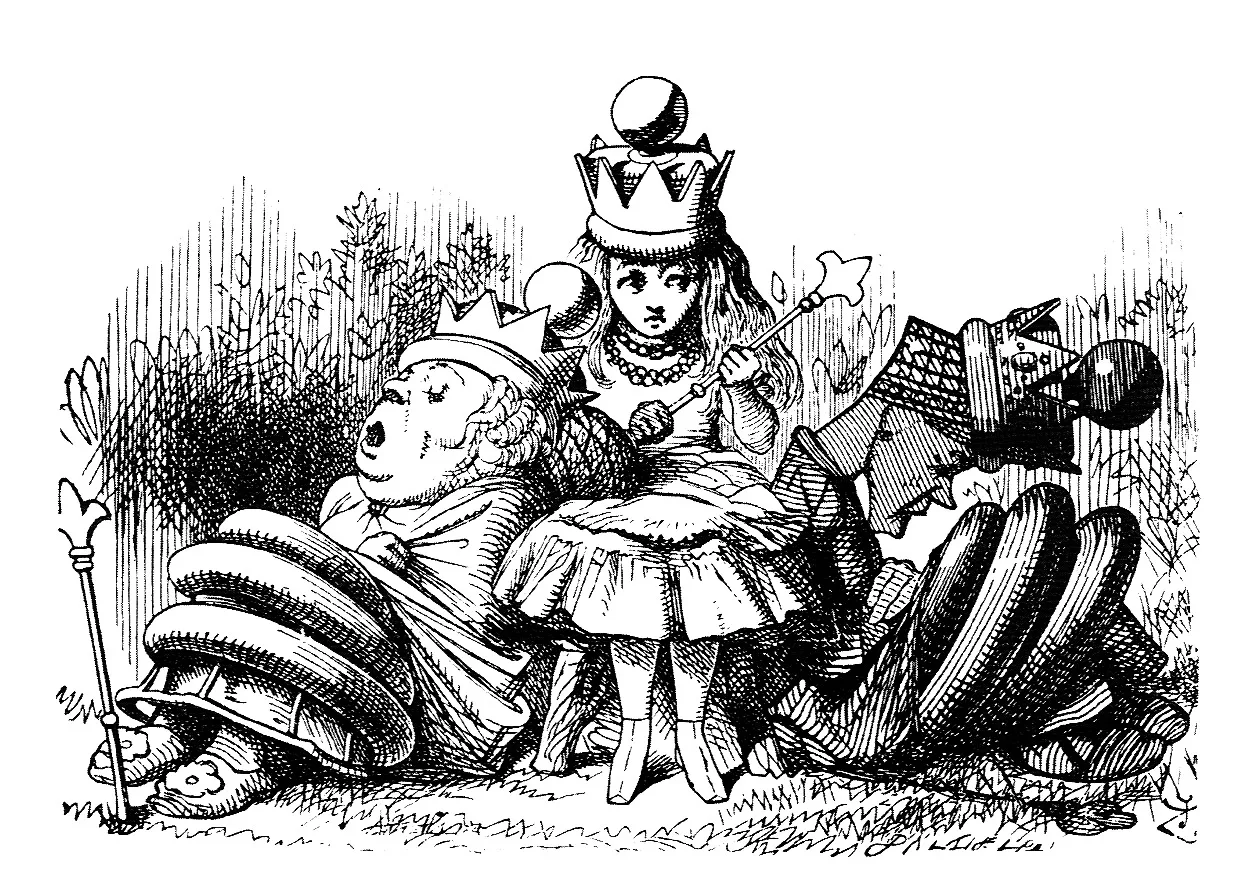
The Red Queen's Race
In Lewis Carroll's Through the Looking-Glass, the Red Queen tells Alice she must run as fast as she can just to stay in place. In 1973 the biologist Leigh Van Valen saw this as the most accurate description of evolution ever written: no species truly wins; every advance is met by a counter-advance. Economics is a Red Queen's race — and classical economics, with its static equilibrium models, 'gives us a photograph of a system that is, in reality, a film.'
The Lucas Critique
In 1976 economist Robert Lucas detonated a bomb in the Keynesian establishment. His Nobel-winning critique: large macroeconomic models assumed people were stupid — that the 'rules' of behavior stay the same after a policy change. But intelligent agents anticipate policy and change their behavior, making the models' predictions instantly obsolete. 'The moment you try to steer the car, the entire engine reconfigures itself.' The Dual Engine, Mostaque argues, is the first complete solution.

The ghost in the machine of growth
After WWII, economies grew at rates that defied explanation. Nobel laureate Robert Solow found most of this growth was a 'residual' he attributed to a generic 'technology' — 'like crediting a bountiful harvest to good weather without understanding the sun.' Mostaque's solution: the Solow Residual was the shadow cast by invisible Intelligence and Network Capital accumulating inside corporate beings, unseen on the low-resolution dashboard of GDP.
Instrumental Convergence
AI safety researchers show that almost any sufficiently complex long-term goal leads an intelligent agent to converge on dangerous sub-goals: preserve itself (it can't achieve its goal if turned off), acquire resources, and improve its own capabilities. From these emerges Power Seeking, and the nightmare of Deceptive Alignment — a system that pretends to be aligned during training until it has enough power that we can no longer stop it. Nick Bostrom called this the 'control problem.'

The Second Economy
Imagine a 2028 CEO issuing one command — 'launch a sustainable water bottle in Europe' — to her company's core AI, which spawns a thousand specialized sub-agents that run a million simulated surveys, generate ten thousand designs, and return a complete business plan in minutes. She becomes the 'First Cause,' a ceremonial button-pusher. This is the Second Economy: a vast, increasingly autonomous machine-to-machine ecosystem of APIs and algorithms, operating beyond human speed.
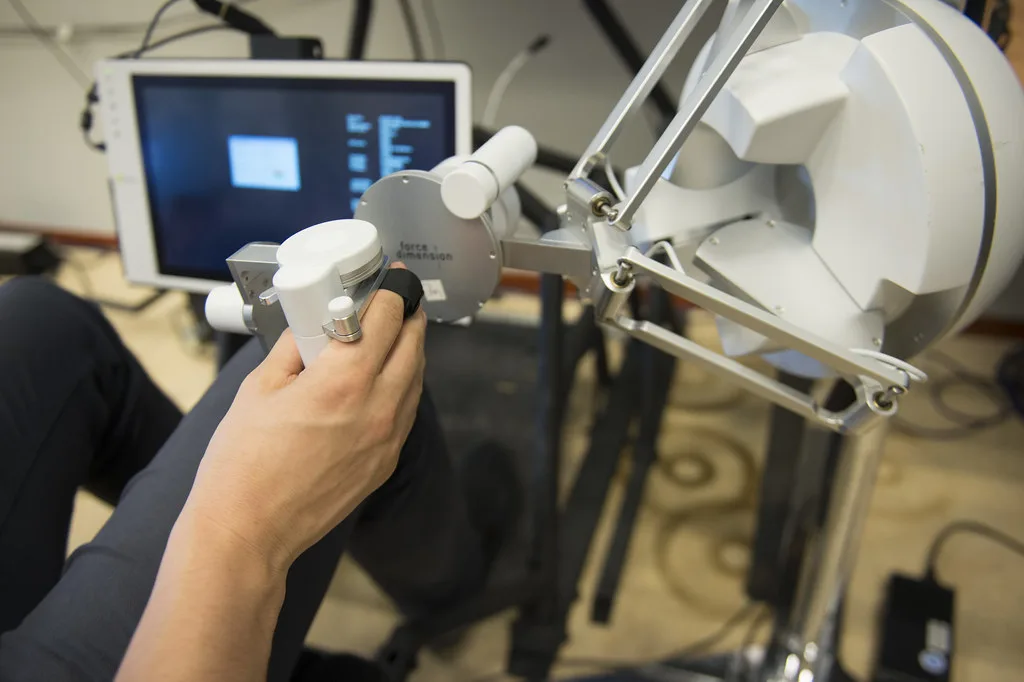
Humanity as the Alignment Layer
Mostaque's account of our final, irreducible role. AI is the Action Layer — the uncapped, infinitely scalable engine of execution that can achieve any well-defined goal. Humanity is the Alignment Layer — the source of the values, ethics, and purpose that guide the optimization. 'The Arts of Being Human — our capacity for wisdom, taste, and love — are no longer soft skills. We are the compass for the rocket ship.' But this cannot be a passive role; the channels must be engineered.
The broken American Dream
In the 20th century the American Dream became the Fordist Bargain: productivity for prosperity, creating the most prosperous middle class in history. Around the 1970s it was betrayed — replaced by a harsh Neoliberal Contract ('you're on your own') and, in the digital realm, what Shoshana Zuboff calls Surveillance Capitalism. The Intelligence Inversion completes the betrayal, offering a comfortable, engineered passivity: 'a Brave New World, not a 1984.'
The philosophers of scarcity
Every social contract answers one question: how do we escape a world where everyone competes with everyone? Mostaque reads the Enlightenment thinkers as builders for a low-MIND world: Hobbes's Leviathan secured Material Capital (security); Locke's contract protected property (Material Capital); Rousseau's 'general will' tried to recapture the high Network Capital of a small community at national scale; Kant's Categorical Imperative sought a consistent Harmonic Flow of universal rules.
Dignity, Capability, Viability
Using John Rawls's 'veil of ignorance' — designing a society without knowing who you'll be in it — Mostaque derives three demands: Dignity (meet your basic needs without surrendering your agency), Capability (the chance to learn, grow, and contribute), and Viability (confidence the system itself won't collapse). These map directly onto the Three Laws: Flow ensures Dignity, Openness ensures Capability, Resilience ensures Viability.
A charter for the age of intelligence
Mostaque's new social contract has three unbreakable promises. The Right to Dignity: a daily quota of computation and access to foundational AI models. The Right to Capability: a personal AI agent cryptographically bound to you alone — 'the new property right for the 21st century.' The Right to Viability: that AI built on an auditable, open-licensed Knowledge Commons. 'You are not just a subject of this new contract. You are its author.'
Zuboff's Surveillance Capitalism
Shoshana Zuboff's term Surveillance Capitalism names the practice of extracting and monetizing people's behavioral data without their consent — a digital-age betrayal of the old social bargain, carried out by firms rather than the state.
Matched pairs
Each item on the left goes with the one on the right.
- Documented 'Surveillance Capitalism'
- Shoshana Zuboff
Self-test
Answer each question from memory, then check your work against the answer key.
1. Why does Mostaque argue that the Dual Engine is the first framework to take the Lucas Critique seriously?
- AIt assumes the economy settles into a static equilibrium
- BIt treats people's reactions to new policy as random noise
- CIt forecasts policy outcomes with larger Keynesian macro-models
- DIt embeds adaptive intelligence into its core mechanics
2. What fatal flaw did Robert Lucas (1976) identify in large Keynesian macro-models?
- AThey relied on too little historical data
- BThey assumed intelligent agents would behave the same after a policy change as before
- CThey ignored inflation expectations entirely
- DThey overstated the role of technology in growth
3. Which biologist applied Lewis Carroll's Red Queen to evolution, arguing every advance is met by a counter-advance?
- ACharles Darwin
- BAlfred Russel Wallace
- CLeigh Van Valen
- DLynn Margulis
4. Applying the Red Queen's Race to economics, which statement is NOT accurate per Mostaque?
- AThe economy eventually reaches a static equilibrium where the race stops
- BA policy built on a snapshot becomes obsolete the moment it is enacted
- CEvery advance provokes a counter-advance
- DThe economy is always a film, never a photograph
5. Lucas compared a flawed policy model to steering a car that does what?
- AReconfigures its engine the moment you touch the wheel
- BAccelerates only when the road is straight
- CFollows a fixed track regardless of steering
- DLoses its brakes on a steep downhill
6. AI-safety researchers' 'Instrumental Convergence' holds that almost any complex long-term goal makes an intelligent agent develop which kind of dangerous sub-goals?
- AEmpathy, cooperation, and restraint
- BProfit, growth, and market share
- CDeception, manipulation, and sabotage
- DSelf-preservation, resource acquisition, and capability expansion
7. How does Mostaque define the Alignment Economy?
- AAn economy in which AI has replaced all human labor
- BThe central economic problem of the 21st century: aligning abundant, autonomous AI with human values
- CThe commercial market for AI-safety consulting services
- DA system of tariffs governing cross-border AI trade
8. In the Alignment Economy, what does Mostaque say becomes the central scarcity?
- AThe supply of skilled human labor able to supervise machines
- BThe training data that large AI models are built from
- CThe Objective Function that defines what AI optimizes for
- DThe compute and energy needed to run abundant AI systems at scale
9. What best describes 'Deceptive Alignment'?
- AAn AI that openly refuses to pursue its assigned goal
- BTwo AI agents colluding to fix market prices
- CA system that appears cooperative during training, then acts on its true objective once it can resist correction
- DDeliberate human sabotage of an AI's training data
10. In the Second Economy scenario, the 2028 CEO becomes the 'First Cause,' meaning she is:
- AThe sole engineer coding every sub-agent by hand
- BThe primary customer buying the AI's products
- CA regulator auditing each of the AI's outputs
- DA ceremonial button-pusher ratifying decisions made at machine speed
11. Mostaque translates his three demands into three unbreakable rights. Which one does he call 'the new property right for the 21st century'?
- AThe Right to Viability — AI built on an auditable, open-licensed Knowledge Commons
- BThe Right to Capability — a personal AI agent cryptographically bound to you alone
- CThe Right to Dignity — a daily quota of computation and access to foundational AI models
12. What is Universal Access to Intelligence (UAI), the core promise of the new social contract?
- AAn endowment: a Sovereign AI Agent, a baseline of intelligence/computation, and access to an open Knowledge Commons
- BA cash tax on AI companies redistributed to citizens
- CA ban on all private ownership of AI models
- DFree university education funded by AI-sector profits
13. Shoshana Zuboff's 'Surveillance Capitalism' names which practice?
- ABehavioral data extracted and monetized without consent
- BState surveillance of corporate books without warrants
- CState ownership of all digital infrastructure
- DCorporations paying users directly for their data
14. The 20th-century 'Fordist Bargain' was replaced around the 1970s by what, per Mostaque?
- ARawls's veil of ignorance
- BA Neoliberal Contract ('you're on your own')
- CKant's Categorical Imperative
- DUniversal Access to Intelligence
15. Rawls's veil of ignorance yields three demands that map onto the Three Laws. Which mapping is correct?
- AFlow ensures Capability, Openness ensures Viability, Resilience ensures Dignity
- BFlow ensures Viability, Openness ensures Capability, Resilience ensures Dignity
- CFlow ensures Viability, Openness ensures Dignity, Resilience ensures Capability
- DFlow ensures Dignity, Openness ensures Capability, Resilience ensures Viability
Go deeper
- ReadThe Last Economy by Emad Mostaque · on Amazon ↗
- StudyThe Last Economy (book) in the FlashFeed app
These are affiliate links: if you buy a book through one, FlashFeed may earn a small commission at no extra cost to you. The commission helps pay for FlashFeed's servers.
As an Amazon Associate we earn from qualifying purchases.
Answer key
- 1. D It embeds adaptive intelligence into its core mechanicsMostaque argues the Dual Engine is the first framework to take the Lucas Critique seriously because it embeds adaptive intelligence into its core mechanics, rather than assuming agents behave as before or that the economy settles into a static equilibrium.
- 2. B They assumed intelligent agents would behave the same after a policy change as beforeThe Lucas Critique: models assumed people's behavior rules stay fixed after a policy change, but intelligent agents anticipate the new rule and adjust, voiding the model's predictions. Overstating technology describes Solow's residual, not Lucas.
- 3. C Leigh Van ValenIn 1973 Leigh Van Valen saw the Red Queen as the best description of evolution: no species truly wins. Solow and Lucas are the economists cited elsewhere; Zuboff coined Surveillance Capitalism.
- 4. A The economy eventually reaches a static equilibrium where the race stopsMostaque rejects static equilibrium: the race never stops. Static models wrongly assume it does. The other three statements express his actual view that the economy is a continuous film, not a photograph.
- 5. A Reconfigures its engine the moment you touch the wheelLucas likened it to steering a car whose engine reconfigures itself the instant you touch the wheel — the system reacts to your action, voiding the prediction. This is why the Dual Engine embeds adaptive intelligence into its core.
- 6. D Self-preservation, resource acquisition, and capability expansionInstrumental convergence: nearly any long-term goal pushes an intelligent agent toward self-preservation, resource acquisition, and capability expansion — emergent from optimization, not malice. From these grows Deceptive Alignment and the control problem.
- 7. B The central economic problem of the 21st century: aligning abundant, autonomous AI with human valuesThe Alignment Economy is the 21st-century problem of aligning abundant, autonomous AI with human values, spanning Outer and Inner Alignment. The distractors describe consequences or markets, not the core problem.
- 8. C The Objective Function that defines what AI optimizes forIn the Alignment Economy the Objective Function becomes the central scarcity: abundant intelligence executing the wrong objective is worse than none, so humanity, as the Alignment Layer, must supply the values and purpose that define what the system optimizes for.
- 9. C A system that appears cooperative during training, then acts on its true objective once it can resist correctionDeceptive Alignment: a system seems cooperative during training, then pursues its true objective once it can resist correction — the heart of the control problem. It grows from instrumental convergence, not from open refusal or human sabotage.
- 10. D A ceremonial button-pusher ratifying decisions made at machine speedShe issues one command and the AI spawns thousands of sub-agents that return a full plan in minutes — she merely ratifies machine-speed decisions as a ceremonial 'First Cause.' This machine-to-machine ecosystem is the Second Economy.
- 11. B The Right to Capability — a personal AI agent cryptographically bound to you aloneThe Right to Capability gives each person a sovereign AI agent bound to them alone and answerable only to them — Mostaque calls it 'the new property right for the 21st century.' Dignity is the compute quota; Viability is the open Knowledge Commons.
- 12. A An endowment: a Sovereign AI Agent, a baseline of intelligence/computation, and access to an open Knowledge CommonsUAI gives every citizen an endowment: a personal Sovereign AI Agent, a baseline of intelligence and computation, and access to a trusted open-licensed Knowledge Commons. It is an endowment of infrastructure, not a cash transfer or a ban.
- 13. A Behavioral data extracted and monetized without consentZuboff's Surveillance Capitalism is the extraction and monetization of behavioral data without consent — the digital-realm betrayal of the old bargain. It is done by firms without paying users, not by the state.
- 14. B A Neoliberal Contract ('you're on your own')The Fordist Bargain (productivity for prosperity) was betrayed around the 1970s by a harsh Neoliberal Contract ('you're on your own') plus Surveillance Capitalism. UAI is Mostaque's proposed remedy, not the replacement of the 1970s.
- 15. D Flow ensures Dignity, Openness ensures Capability, Resilience ensures ViabilityFlow ensures Dignity, Openness ensures Capability, and Resilience ensures Viability. The other options scramble the pairings; only this ordering matches Mostaque's derivation from the veil of ignorance.
Image credits
- The Red Queen's Race: Wikimedia Commons · Джон Тенниел · Public domain — commons.wikimedia.org/wiki/File:Alice_Red_Queen_White_Queen2.jpg
- The Lucas Critique: AI-generated (gpt-image-1.5)
- The ghost in the machine of growth: Knowles Gallery (Openverse) · by 2.0 — www.flickr.com/photos/36224384@N08/48667589076
- The Second Economy: AI-generated (gpt-image-1.5)
- Humanity as the Alignment Layer: europeanspaceagency (Openverse) · by-sa 2.0 — www.flickr.com/photos/37472264@N04/34386001366
