
The Last Economy (book) study guide · Lesson 12 of 15
The Three Futures, the State & Money
The Three Futures · The Symbiotic State & Dual Currency
Unofficial study guide for The Last Economy: A Guide to the Age of Intelligent Economics by Emad Mostaque. FlashFeed is not affiliated with the author or publisher.
This is the lesson's study guide from the FlashFeed app, plus its key facts and a self-test.
What you'll be able to do
- Explain the supercooled-liquid model of the three futures, where initial conditions determine the attractor, grounded in Margulis's endosymbiosis.
- Define deflation as a sustained fall in the general price level of goods and services.
- Explain the Symbiotic State as a MIND Steward operating through the Guardian Lattice, and identify the money-creation design flaw it corrects.
- Distinguish Foundation Coins (scarce, Atomic Economy) from Culture Credits (abundant, Bit Economy).
- Define universal basic income and its proposed role in the transition.
The Three Futures
The old order is dissolving — not gradually but as a phase transition. Mostaque's argument is that civilizations, like supercooled liquids, do not degrade smoothly; they snap into one of a finite number of stable configurations, and the window to choose which one is narrow.
The physics of destiny
When a supercooled liquid freezes, it does not drift — it snaps into one of a small number of permitted crystal structures, all other configurations physically forbidden. Mostaque applies this to civilization: as the AI-driven disruption dissolves the current order, the system will crystallize into one of three attractor states. These are not forecasts in the ordinary sense. They are basins the trajectory is already curving toward. The critical insight is that the final state depends less on the magnitude of the disruption than on the initial conditions at the moment of crystallization — meaning the choices made now, while the liquid is still fluid, determine everything.
Future One: Digital Feudalism
Digital Feudalism is the default path — what happens if no deliberate design intervenes. A handful of corporations own the core AI models. Five digital duchies divide the world by platform: one controls knowledge, another enterprise, another social reality, another commerce. Citizens become users: consumers with a Universal Basic Income sufficient to keep subscriptions paid, but without the agency or productive role that once anchored identity. Mostaque is emphatic that this outcome does not require conspiracy; it requires only inertia. The cage, he writes, will be comfortable enough that most people forget it is a cage. Deflation — a sustained fall in the general price level — is the economic signature of this world: abundance produced by AI drives prices toward zero, but the ownership of that abundance concentrates upward.
Future Two: The Great Fragmentation
The Great Fragmentation is the fear path — the path of reaction rather than design. Governments, alarmed by the speed of AI diffusion, reach for containment. The logic begins with existing moves: sovereign data rules, chip export controls, platform mandates. Each nation concludes that whoever achieves AGI first "wins forever," so containment hardens into a race. The single internet splinters into incompatible national webs. Mostaque argues the rupture will not be merely technological but ontological: different AI systems trained on different data will produce populations that share neither facts nor inferential frameworks — not just different policies but different realities. Fragmentation does not prevent the crystallization; it simply ensures it happens under adversarial conditions, with no coordination possible afterward.
Future Three: Human Symbiosis
Human Symbiosis is the wisdom path — the path of conscious design. Mostaque grounds it in biology: in 1969, Lynn Margulis demonstrated that the complex cells of eukaryotic life were once independent bacteria that merged rather than competed — endosymbiosis as the engine of the great evolutionary leaps. The analogy is not decorative. Symbiosis is not merger (the bacteria did not disappear) and not servitude (neither party controlled the other); it is a new organizational level that neither could reach alone. The Symbiotic Future is built on four pillars: Universal Access to Intelligence, Sovereign AI Agents, a Dual Currency System, and the Guardian Lattice. The hardest barrier, Mostaque argues, is psychological — releasing the deep cultural equation that ties human worth to paid work.
The Symbiotic State & Dual Currency
The three futures are not equally likely without intervention. This chapter specifies the institutional architecture of the third path: a redesigned state and a redesigned money supply, each matched to the nature of the economy it governs.
Sovereignty from territory to topology
Classical sovereignty is territorial: a border, an army, a wall. Mostaque argues this definition is obsolete. In a networked world, sovereignty is topological — a nation is sovereign if it is a critical, trusted, densely connected node in the global information and trade network, and a vassal if it is peripheral and easily disconnected. The implication is counterintuitive: radical openness is the new fortress. Closing borders, restricting data flows, or retreating from global standards does not protect sovereignty; it severs the connections that make a node matter. Isolationism, in this frame, is not a defensive posture but the fastest path to irrelevance. The most secure nations will be those others cannot afford to exclude.
The Guardian Lattice
The Symbiotic State is Mostaque's term for the evolution of the nation-state from a resource extractor into a MIND Steward — an institution whose primary function is cultivating the generative capacity of its society across the four MIND capitals. The operating mechanism is the Guardian Lattice: a transparent, decentralized web of AI oracles, each monitoring one dimension of the MIND dashboard, able to automatically adjust friction or flow in a sector when indicators drift. Human wisdom is elevated rather than replaced. An Oracle Council — a randomly selected jury of citizens, chosen for diversity of experience rather than credential — deliberates on the fundamental values that guide each oracle's parameters. The algorithm proposes; humanity disposes. Mostaque is careful to note that over 97% of fiat currency is currently created by commercial banks when they extend loans, not by democratic institutions — a design flaw the Guardian Lattice's monetary layer is meant to correct.
Money for two worlds
The deepest structural argument of the chapter: we operate two fundamentally different economies but force both to use one currency. The Atomic Economy deals in scarce, rivalrous goods — food, land, energy, manufactured objects — governed by thermodynamics: my use of a resource depletes it for yours. The Bit Economy deals in abundant, non-rivalrous goods — knowledge, code, art, trained models — governed by information theory: my copy does not reduce yours, and sharing increases value rather than dispersing it.
Applying a single scarcity-based currency to both economies is a design flaw, not a law of nature. Mostaque's solution is a Dual Currency System. Foundation Coins (FC) are finite and scarcity-based, designed as a stable store of value for the Atomic Economy — anchored to real physical output and resistant to speculative inflation. Culture Credits (CC) are abundant and flowing, designed to maximize the creation and circulation of Intelligence Capital and Network Capital in the Bit Economy — they cannot be hoarded, they expire if idle, and they reward contribution rather than accumulation. Universal basic income — a regular, unconditional cash sum paid to every citizen — exists as a distinct policy concept Mostaque distinguishes from the Dual Currency mechanism; UBI addresses income floors within the existing monetary system, while FC and CC restructure the system itself.
Key terms
- Deflation
- Deflation is a sustained fall in the general price level of goods and services. Deflation is the opposite of inflation and can stall an economy when people keep delaying purchases in expectation of lower prices.
- The Symbiotic State
- The evolution of the nation-state from a resource extractor into a 'MIND Steward' whose primary function is to cultivate the generative capacity of its society. It practices Policy as Geometry Engineering — shaping the economic landscape through incentives, defaults, and infrastructure rather than commanding outcomes. 'It is no longer a factory manager. It is a gardener.'
- Foundation Coins (FC)
- A finite, scarcity-based currency for the Atomic Economy, designed as a stable store of value. It is 'Money Born from Benefit,' not debt: a new coin is minted only when the network can cryptographically verify that useful computation for the open intelligence commons has been performed — curating a dataset, training a model, solving a scientific problem. It is a tokenized receipt for crystallized, verifiably beneficial intelligence.
- Culture Credits (CC)
- An abundant, flowing currency for the Bit Economy, designed to maximize the creation and circulation of Intelligence and Network Capital. Distributed as an 'Abundance Dividend' giving every Sovereign Agent baseline liquidity. Like the 'miracle money' of Wörgl, it has a built-in decay rate (demurrage): if you don't use it, it slowly loses value and returns to the commons — ensuring intelligence flows like a river, not a stagnant reservoir.
- Universal basic income
- Universal basic income is a policy of paying every citizen a regular, unconditional cash sum. Universal basic income is often proposed as a cushion against the widespread automation of paid work.
Key concepts
Foundation Coins
- The hard, stable half of Mostaque's two-part money supply.
- Finite and scarcity-based, it is the store of value for the world of rivalrous physical goods — food, land, energy, manufactured objects.
- Anchored to real physical output and minted through 'Proof of Benefit,' it is built to resist speculative inflation.
Culture Credits
- The soft, flowing half of the same dual money supply, made for the world of abundant ideas.
- It is meant to maximize the creation and circulation of knowledge, code, and art — non-rivalrous goods where sharing adds value.
- It cannot be hoarded and expires if left idle, rewarding contribution over accumulation; handed out as an Abundance Dividend.
The Guardian Lattice
- The operating mechanism of Mostaque's redesigned government — a transparent, decentralized web that keeps the economy in balance.
- Built from AI oracles, each watching one dimension of the MIND dashboard and automatically adjusting friction or flow when indicators drift.
- Its principle is 'the algorithm proposes, humanity disposes,' with a randomly chosen citizen jury setting the values behind each monitor.
The Symbiotic State
- Mostaque's model for how the nation itself must evolve in an age of abundant intelligence.
- It turns the government from a 'resource extractor' into a 'MIND Steward,' cultivating its society's generative capacity across four capitals.
- Here sovereignty becomes topological rather than territorial — radical openness is the new fortress, and isolationism the fastest path to irrelevance.
Key facts
The physics of destiny
When a supercooled liquid freezes, it snaps into one of a finite number of crystal structures — certain stable states allowed, all others forbidden. Mostaque argues civilizations face the same constraint: as the old order dissolves, it will crystallize into one of three 'attractor states.' These are not predictions but basins of attraction. 'Our current chaotic trajectory will inevitably fall into one of them.'

Future One: Digital Feudalism
The default path — the path of inaction. By 2030 a handful of corporations own the core AI models. Five 'digital duchies' divide the world by platform: Google owns knowledge, Microsoft enterprise, Meta social reality, Amazon commerce. You live as a user, not a creator; a consumer, not a citizen. Your UBI arrives monthly, just enough to keep you subscribed. 'The cage is so comfortable you will forget it is a cage.'

Future Two: The Great Fragmentation
The fear path — the path of reaction. The challenge of containment leads to a global, paranoid lockdown. It starts with the Great Firewall of China, then America's CHIPS Act, then Europe's digital sovereignty push. By 2028 we will not have one internet but many — American, Chinese, European — each a walled garden. Every nation realizes whoever achieves AGI first 'wins forever,' so they race. 'The fragmentation will not just be technological. It will be ontological.'
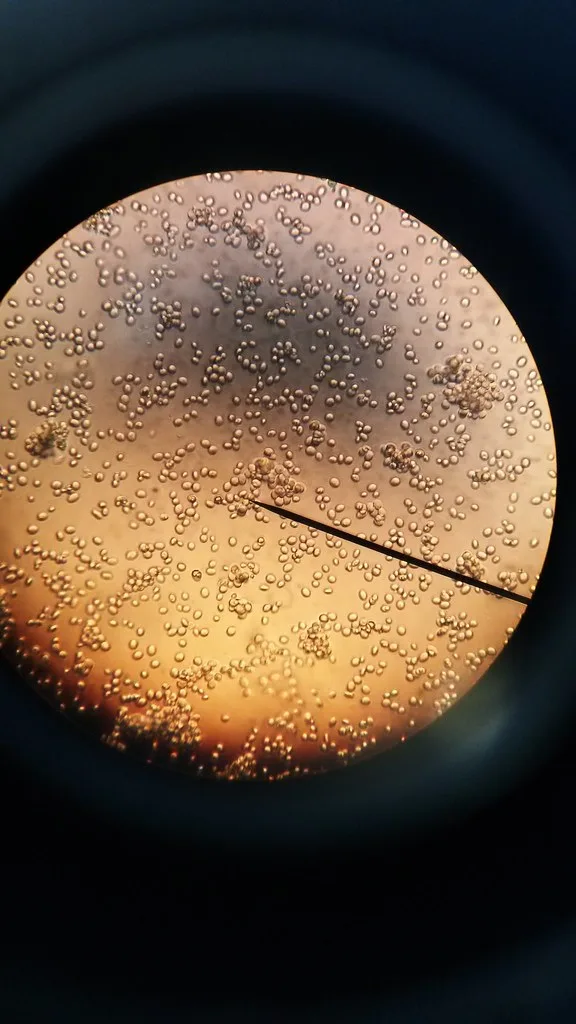
Future Three: Human Symbiosis
The wisdom path — the path of conscious design. In 1969 biologist Lynn Margulis discovered that the complex cells in our bodies were once independent bacteria that formed a partnership: cooperation drives the great evolutionary leaps. Human-AI symbiosis follows the same pattern — not replacement, not servitude, but partnership. It is built on Universal Access to Intelligence, Sovereign AI Agents, Dual Currencies, and the Guardian Lattice. 'The hardest part is psychological: it requires us to release the equation of work with worth.'
Digital Feudalism's Signature
In Mostaque's three futures, deflation is the economic signature of Digital Feudalism: AI-driven abundance pushes prices toward zero, even as ownership of that abundance concentrates upward into fewer hands.
Sovereignty from territory to topology
Traditional sovereignty is territorial — a wall, an army, a border. Mostaque argues that in the 21st century sovereignty is topological: a nation is 'sovereign' if it is a critical, trusted, highly connected node in the global network, and a vassal if it is peripheral and easily disconnected. 'The most sovereign nations will be those that are most radically open.' Building a wall becomes an act of sovereign suicide; isolationism is the fastest path to irrelevance.
The Guardian Lattice
The Symbiotic State's implementation: a transparent, decentralized web of AI oracles, each monitoring one aspect of the MIND dashboard, that can automatically adjust 'friction' or flow in a sector. But human wisdom is elevated, not replaced. An Oracle Council — a randomly selected jury of citizens (a nurse from Ohio, a farmer from Iowa, a programmer from California) — deliberates on the fundamental values that guide the system. 'The algorithm proposes; humanity disposes.'
Money for two worlds
Mostaque argues we live in two economies: the Atomic Economy (scarce, rivalrous goods, governed by thermodynamics) and the Bit Economy (abundant, non-rivalrous goods, governed by information theory). Using one scarcity-based currency for both is a design flaw 'that strangles the abundant Bit Economy with artificial scarcity while flooding the scarce Atomic Economy with speculative credit.' His solution: a Dual Currency System.
The 97% Problem
Mostaque points out that over 97% of fiat currency is created not by democratic institutions but by commercial banks simply extending loans — a design flaw he says the Guardian Lattice's monetary layer is built to fix.
From Extractor to Steward
The Symbiotic State reimagines the nation-state's job: instead of acting as a resource extractor, it becomes a MIND Steward, cultivating its society's generative capacity across all four MIND capitals.
Matched pairs
Each item on the left goes with the one on the right.
- Discovered endosymbiosis — cooperation drives evolutionary leaps (1969)
- Lynn Margulis
Self-test
Answer each question from memory, then check your work against the answer key.
1. In Mostaque's supercooled-liquid analogy, what most determines which of the three 'attractor states' civilization crystallizes into?
- AHow many corporations end up owning the core AI models
- BWhich nation achieves AGI first
- CThe sheer magnitude of the AI-driven disruption
- DThe initial conditions at the moment of crystallization — the choices made now
2. Which future does Mostaque call the default if nothing changes?
- AThe Great Fragmentation
- BThe Abundance Trap
- CDigital Feudalism
- DHuman Symbiosis
3. The Great Fragmentation is described as which kind of response?
- AThe engineered path of conscious evolution
- BThe fear response, as nations panic and retreat
- CA return to steady GDP growth
- DThe default of doing nothing
4. What does the book say Human Symbiosis requires?
- AThe hardest path, requiring conscious evolution
- BA retreat into national isolation
- CNo effort, since it is the default
- DAbandoning the economy entirely
5. What analogy does Mostaque use to argue only three futures are stable?
- AElectron orbitals, where everything else is unstable transition
- BDice rolls with equal odds
- CChess openings with fixed moves
- DPlanetary orbits fixed forever
6. How is deflation defined?
- AA freeze on wages imposed by a central bank
- BA one-time spike in the price of a single commodity
- CA sustained rise in the general price level of goods and services
- DA sustained fall in the general price level of goods and services
7. Deflation is described as the economic signature of which of the three futures?
- AThe Symbiotic State
- BThe Great Fragmentation
- CDigital Feudalism
- DHuman Symbiosis
8. Deflation is the opposite of which economic phenomenon?
- ADevaluation
- BInflation
- CStagnation
- DRecession
9. Why can deflation stall an economy?
- APeople keep delaying purchases in expectation of even lower prices
- BImports become suddenly cheaper than domestic goods
- CBanks are forced to print money to cover rising costs
- DWages rise faster than firms can afford to pay
10. In Digital Feudalism, what drives prices toward zero even as ownership concentrates upward?
- AA collapse in global population
- BAggressive government price controls
- CRising interest rates set by central banks
- DAbundance produced by AI
11. The chapter names one monetary 'design flaw' the Guardian Lattice is meant to correct: roughly what share of fiat currency is currently created by commercial banks extending loans, rather than by democratic institutions?
- AAbout two-thirds
- BUnder 10%
- COver 97%
- DAbout one-third
12. The Symbiotic State represents the evolution of the nation-state away from which former role?
- AThe owner of every citizen's Sovereign AI Agent
- BA resource extractor
- CA MIND Steward
- DA trusted network node
13. What is the Guardian Lattice, the operating mechanism of the Symbiotic State?
- AA single sovereign AI that replaces human decision-making
- BA transparent, decentralized web of AI oracles monitoring the MIND dashboard
- CA central bank that manually sets all interest rates
- DA border-security network of physical checkpoints
14. In the Guardian Lattice, what is the role of the Oracle Council?
- AA randomly selected citizen jury deliberating on the values guiding each oracle
- BA board of the wealthiest corporations owning the AI models
- CA panel of credentialed economists appointed by the state
- DAn automated system with no human involvement
15. Mostaque argues 21st-century sovereignty is topological rather than territorial. What follows from this?
- AData restrictions strengthen a nation's position
- BBuilding walls and armies is the surest defense
- CIsolation makes a nation more secure
- DRadical openness, not closed borders, is the new fortress
16. How are Foundation Coins (FC) designed in the Dual Currency System?
- AA regular unconditional cash sum paid to every citizen
- BAbundant and flowing, designed to circulate in the Bit Economy
- CFinite and scarcity-based, a stable store of value for the Atomic Economy
- DCurrency that expires if left idle to prevent hoarding
17. Which currency is designed to maximize the creation and circulation of Intelligence and Network Capital in the Bit Economy?
- ACulture Credits (CC)
- BFoundation Coins (FC)
- CUniversal basic income
- DFiat currency
18. Which behavior is a deliberate feature of Culture Credits (CC)?
- AThey are minted only against verified physical output
- BThey appreciate the longer they are held in reserve
- CThey expire if idle and reward contribution rather than accumulation
- DThey can be hoarded as a long-term store of value
19. What distinguishes the Atomic Economy from the Bit Economy in Mostaque's argument?
- AThe Bit Economy is governed by thermodynamics; the Atomic by information theory
- BThe Atomic Economy deals in scarce rivalrous goods; the Bit Economy in abundant non-rivalrous goods
- CThe Atomic Economy deals in knowledge; the Bit Economy in food and land
- DBoth deal in identical goods but under different governments
20. According to the chapter, using a single scarcity-based currency for both economies is:
- AThe optimal way to price non-rivalrous goods
- BAn unavoidable law of thermodynamics
- CA recent invention of the Guardian Lattice
- DA design flaw, not a law of nature
21. How is universal basic income (UBI) defined?
- APayment given only to citizens who cannot find paid work
- BA regular, unconditional cash sum paid to every citizen
- CA loan issued by commercial banks against future work
- DA currency that expires if it is left unspent
22. What key feature makes universal basic income 'universal' and 'unconditional'?
- AIt is paid solely to workers displaced by AI
- BRecipients must complete public-service hours to keep it
- COnly those below a poverty line qualify after a means test
- DEvery citizen receives it regardless of employment or means
23. How does Mostaque position UBI relative to the Dual Currency mechanism?
- AAs the same thing as Culture Credits under a different name
- BAs the mechanism that replaces both Foundation Coins and Culture Credits
- CAs a distinct policy addressing income floors within the existing monetary system
- DAs a currency that restructures the monetary system itself
24. Universal basic income is often proposed as a cushion against what?
- AThe widespread automation of paid work
- BThe concentration of AI model ownership
- CA sustained fall in the general price level
- DThe fragmentation of the global internet
25. Which statement about universal basic income is NOT accurate?
- AIt is a regular, unconditional cash sum
- BIt is paid to every citizen
- CIt restructures the monetary system, replacing scarcity-based money
- DIt operates within the existing monetary system
Go deeper
- ReadThe Last Economy by Emad Mostaque · on Amazon ↗
- StudyThe Last Economy (book) in the FlashFeed app
These are affiliate links: if you buy a book through one, FlashFeed may earn a small commission at no extra cost to you. The commission helps pay for FlashFeed's servers.
As an Amazon Associate we earn from qualifying purchases.
Answer key
- 1. D The initial conditions at the moment of crystallization — the choices made nowLike a freezing liquid snapping into one permitted crystal, civilization falls into one of three basins. Mostaque stresses the outcome depends less on the disruption's size than on the initial conditions — the choices made while the system is still fluid.
- 2. C Digital FeudalismDigital Feudalism is Future One — the default outcome if we change nothing. The Abundance Trap is the book's paradox, not a future.
- 3. B The fear response, as nations panic and retreatThe Great Fragmentation (Future Two) is the fear response — nations panicking and retreating. Conscious evolution describes Human Symbiosis instead.
- 4. A The hardest path, requiring conscious evolutionHuman Symbiosis (Future Three) is the hardest path, requiring conscious evolution — and the rest of the book is its engineering manual.
- 5. A Electron orbitals, where everything else is unstable transitionHe likens the three stable configurations to electron orbitals — everything between them is unstable transition.
- 6. D A sustained fall in the general price level of goods and servicesDeflation is a sustained fall in the general price level of goods and services, the opposite of inflation.
- 7. C Digital FeudalismDeflation is the signature of Digital Feudalism: AI-produced abundance drives prices toward zero, but ownership of that abundance concentrates upward.
- 8. B InflationDeflation is the opposite of inflation. Recession, stagnation, and devaluation are distinct concepts.
- 9. A People keep delaying purchases in expectation of even lower pricesDeflation can stall an economy because people keep delaying purchases, expecting prices to fall further, which suppresses demand.
- 10. D Abundance produced by AIIn Digital Feudalism, AI-produced abundance drives prices toward zero (deflation), but the ownership of that abundance concentrates upward into a handful of corporations.
- 11. C Over 97%Mostaque notes that over 97% of fiat is created by commercial banks when they issue loans — not by democratic institutions. He frames this as a design flaw the Guardian Lattice's monetary layer is built to fix.
- 12. B A resource extractorThe Symbiotic State evolves the nation-state from a resource extractor into a MIND Steward whose function is cultivating its society's generative capacity across the four MIND capitals.
- 13. B A transparent, decentralized web of AI oracles monitoring the MIND dashboardThe Guardian Lattice is a transparent, decentralized web of AI oracles, each monitoring one dimension of the MIND dashboard and able to adjust friction or flow in a sector. Human wisdom is elevated, not replaced.
- 14. A A randomly selected citizen jury deliberating on the values guiding each oracleThe Oracle Council is a randomly selected jury of citizens, chosen for diversity of experience rather than credential, that deliberates on fundamental values. The algorithm proposes; humanity disposes.
- 15. D Radical openness, not closed borders, is the new fortressIf sovereignty is topological, a nation is sovereign by being a critical, densely connected node. Radical openness is the new fortress; isolationism severs the connections that make a node matter, the fastest path to irrelevance.
- 16. C Finite and scarcity-based, a stable store of value for the Atomic EconomyFoundation Coins are finite and scarcity-based, anchored to real physical output as a stable store of value for the Atomic Economy. The abundant, expiring currency is Culture Credits.
- 17. A Culture Credits (CC)Culture Credits are abundant and flowing, built to maximize creation and circulation of Intelligence and Network Capital in the Bit Economy. Foundation Coins serve the scarce Atomic Economy.
- 18. C They expire if idle and reward contribution rather than accumulationCulture Credits cannot be hoarded; they expire if idle and reward contribution rather than accumulation. Serving as a hoardable store of value is the job of Foundation Coins.
- 19. B The Atomic Economy deals in scarce rivalrous goods; the Bit Economy in abundant non-rivalrous goodsThe Atomic Economy handles scarce, rivalrous goods (food, land, energy) governed by thermodynamics; the Bit Economy handles abundant, non-rivalrous goods (knowledge, code) governed by information theory.
- 20. D A design flaw, not a law of natureMostaque calls applying one scarcity-based currency to both economies a design flaw, not a law of nature, which the Dual Currency System of FC and CC is meant to correct.
- 21. B A regular, unconditional cash sum paid to every citizenUBI is a policy of paying every citizen a regular, unconditional cash sum, often proposed as a cushion against the widespread automation of paid work.
- 22. D Every citizen receives it regardless of employment or meansUBI is paid to every citizen as a regular, unconditional sum, no means test or work requirement. That universality and lack of conditions define it.
- 23. C As a distinct policy addressing income floors within the existing monetary systemMostaque distinguishes UBI from the Dual Currency system: UBI addresses income floors within the existing monetary system, while FC and CC restructure the system itself.
- 24. A The widespread automation of paid workUBI is often proposed as a cushion against the widespread automation of paid work.
- 25. C It restructures the monetary system, replacing scarcity-based moneyUBI does not restructure the monetary system; it addresses income floors within the existing one. Restructuring the system is the role of the Dual Currency mechanism (FC and CC).
Image credits
- Future One: Digital Feudalism: Tony Fischer Photography (Openverse) · by 2.0 — www.flickr.com/photos/22714323@N06/4857767563
- Future Two: The Great Fragmentation: Paolo Cuttitta palestine (Openverse) · by 2.0 — www.flickr.com/photos/41879420@N04/3862806189
- Future Three: Human Symbiosis: BlueShift 12 (Openverse) · by 2.0 — www.flickr.com/photos/96712513@N07/12947630984
- From Extractor to Steward: Andre Carrotflower (Openverse) · by-sa 4.0 — commons.wikimedia.org/w/index.php?curid=109164817