
The Last Economy (book) study guide · Lesson 3 of 15
Harbingers of the Storm
The four harbingers
Unofficial study guide for The Last Economy: A Guide to the Age of Intelligent Economics by Emad Mostaque. FlashFeed is not affiliated with the author or publisher.
This is the lesson's study guide from the FlashFeed app, plus its key facts and a self-test.
What you'll be able to do
- Define Critical Slowing Down, the first harbinger, as lengthening recovery time near a transition.
- Explain Variance Explosion, the second harbinger, where small inputs produce disproportionate outputs.
- Recognize Flickering Between States, the third harbinger, where a system cannot resolve which state it belongs to.
- Explain Correlation Length Explosion, the fourth harbinger, using the Ever Given blocking the Suez Canal.
The four harbingers
Mostaque borrows a diagnostic vocabulary from physics to argue that the global economy is not simply struggling — it is displaying the measurable signatures of a system approaching a critical transition, a phase change that physics treats as inevitable once the signals appear.
Harbingers of the storm
Mostaque's framework comes from the study of complex systems near criticality — the moment before water boils, before tectonic plates slip. These systems do not fail randomly; they broadcast four specific, measurable warnings in advance. Mostaque calls these the harbingers, and his central claim is that all four are simultaneously present in the economy right now. The chapter's epigraph is Hemingway: "It happens gradually, then suddenly." That is not a metaphor; it is a description of how phase transitions actually behave. The gradual part is measurable. The suddenly part is not avoidable once the gradual part is far enough along.
Permanent prosperity, five days
The chapter opens with Richard Whitney's famous walk onto the New York Stock Exchange floor on October 24, 1929. He placed conspicuously high bids on behalf of a banking consortium, the floor cheered, and the newspapers declared the panic over. Five days later, Black Tuesday wiped out 12% in a single session; by 1932 the market had fallen 89%. Whitney died discredited, having later been convicted of embezzlement and sent to Sing Sing. Mostaque's point is not that crashes are unpredictable — it is the opposite. Everyone felt the wrongness; they lacked the language to name what they were feeling. The four harbingers supply that language. Critical Slowing Down is the first: a healthy system recovers quickly from shocks, but a system nearing a transition takes longer and longer to bounce back, losing its capacity for self-correction. The economy's critical slowing down, Mostaque argues, became unmistakable after 2008, when a decade of extraordinary monetary intervention produced what earlier cycles managed in two years. Variance Explosion is the second: small inputs produce wildly disproportionate outputs as criticality approaches, which is why single Reddit forums can detonate hedge funds. Flickering Between States is the third: just as water at exactly 0°C is neither fully ice nor fully liquid, the economy flickers — gig workers who are neither employees nor entrepreneurs, Bitcoin that is neither currency nor commodity nor equity. The system cannot resolve which state it belongs to because it is suspended at the transition point.
Correlation length explosion
The fourth harbinger — Correlation Length Explosion — is the one most visible to ordinary experience. In a resilient system, local disturbances stay local. As criticality approaches, the distance over which events propagate, the correlation length, stretches toward infinity. The Ever Given container ship ran aground in the Suez Canal in March 2021 and sat there for six days. That single vessel stopped roughly 12% of global trade. German car factories idled for lack of chips; American furniture retailers emptied their showrooms; Brazilian coffee rotted at ports. No single node in the system should have that much leverage — but in a system optimized for efficiency at the expense of resilience, every node does. Mostaque is explicit: a phase transition is not an ending. Water does not disappear when it boils. The economy will not vanish; it will become something unprecedented. What it becomes remains, just barely, a choice.
Key terms
- Critical Slowing Down
- The first harbinger: as a system nears a critical transition, its recovery time lengthens and it loses its ability to self-correct. Mostaque dates the economy's critical slowing down to 2008 — fifteen years of monetary life support producing ever weaker recoveries. 'We are not bouncing back. We are being propped up.'
- Variance Explosion
- The second harbinger: small inputs create wildly disproportionate outputs as a system nears criticality. The 2021 GameStop frenzy — $17 to over $400 in two weeks because a Reddit forum found it amusing — is the example. Mostaque calls it the 'Everything Bubble': every asset class saturated with speculative energy, nowhere stable to hide.
- Flickering Between States
- The third harbinger: at a tipping point, a system flickers between states like water at exactly 0°C showing both ice and liquid. The gig economy flickers — are Uber drivers employees or contractors? Money flickers — is Bitcoin a currency, a commodity, or a speculative asset? 'We are not evolving toward a new system; we are stuck in the phase transition.'
Key concepts
Critical Slowing Down
- The first of four warning signs Mostaque borrows from physics to show the economy is nearing a phase change.
- A healthy system bounces back fast from a shock; a system near transition takes longer and longer to recover, losing its power to self-correct.
- Mostaque says it became unmistakable after 2008, when a decade of extraordinary monetary intervention did what earlier cycles managed in two years.
Variance Explosion
- The second harbinger: as the breaking point nears, cause and effect lose their proportion.
- Tiny inputs start producing wildly outsized outputs across the system.
- It is why a single Reddit forum can detonate a hedge fund.
Flickering Between States
- The third harbinger, illustrated by water sitting at exactly 0°C — neither fully ice nor fully liquid.
- The system cannot resolve which condition it belongs to because it is suspended right at the transition point.
- Its symptoms: gig workers who are neither employees nor entrepreneurs, and Bitcoin that is neither currency nor commodity nor equity.
Correlation Length Explosion
- The fourth harbinger, and the one most visible in ordinary life: in a resilient system local troubles stay local, but not here.
- The distance over which a single disturbance propagates stretches toward infinity, so no node is truly local anymore.
- Its emblem is the Ever Given wedging the Suez Canal for six days in 2021, halting roughly 12% of global trade.
Key facts
Harbingers of the storm
Mostaque borrows from the physics of complex systems near a critical transition. An economy, like water about to boil or plates about to slip, shows specific measurable behaviors as it nears a phase transition. He names four 'harbingers,' all of which, he argues, are currently screaming. The chapter's epigraph: 'It happens gradually, then suddenly' (Hemingway).
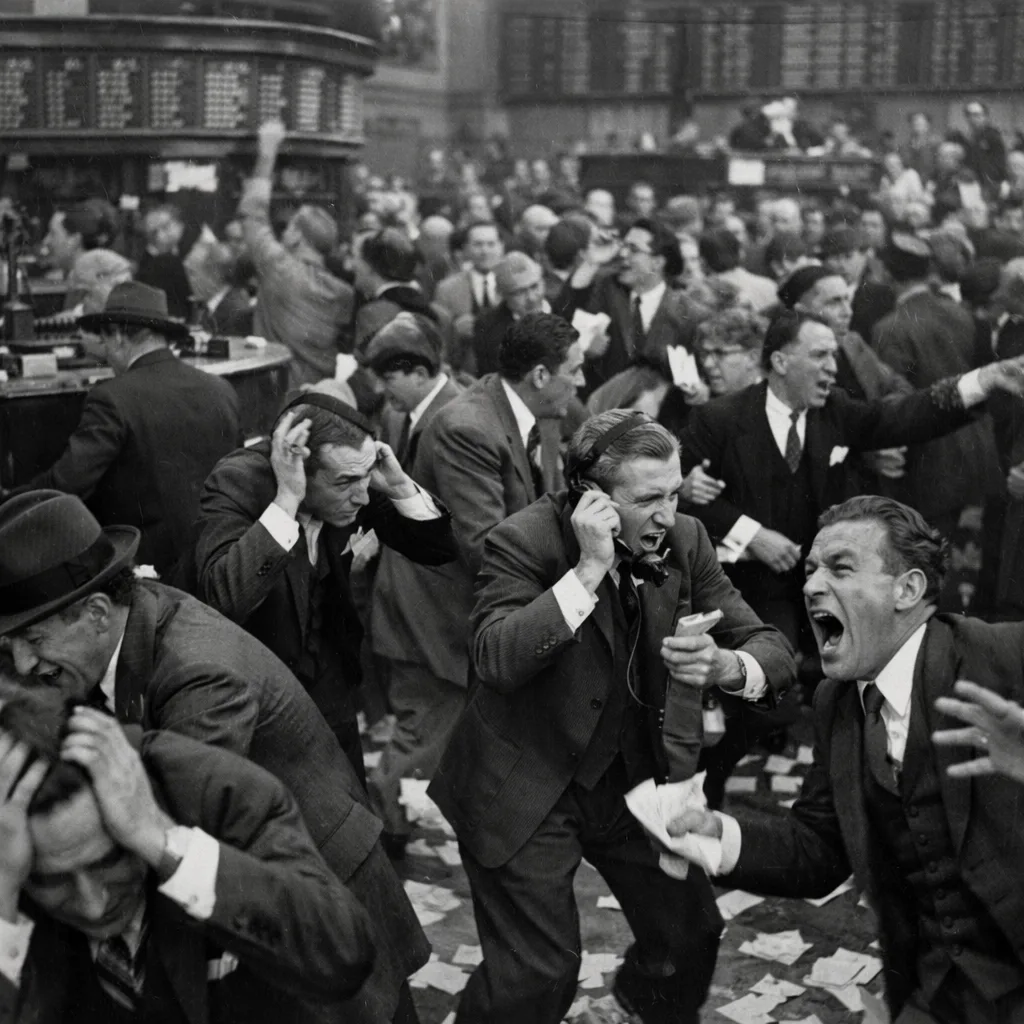
Permanent prosperity, five days
On October 24, 1929, Richard Whitney of the NYSE strode onto the floor and placed showy high bids for a consortium of banks. The floor cheered; the crisis seemed averted. Five days later, on Black Tuesday, the market fell 12% in a day. By 1932 it had fallen 89%. Whitney later went to Sing Sing for embezzlement. Everyone saw the crash coming — they just lacked the language to name the harbingers.
Critical Slowing Down
The first harbinger, Critical Slowing Down, shows up when a system takes longer and longer to recover from shocks as it nears a transition — steadily losing its capacity to self-correct.
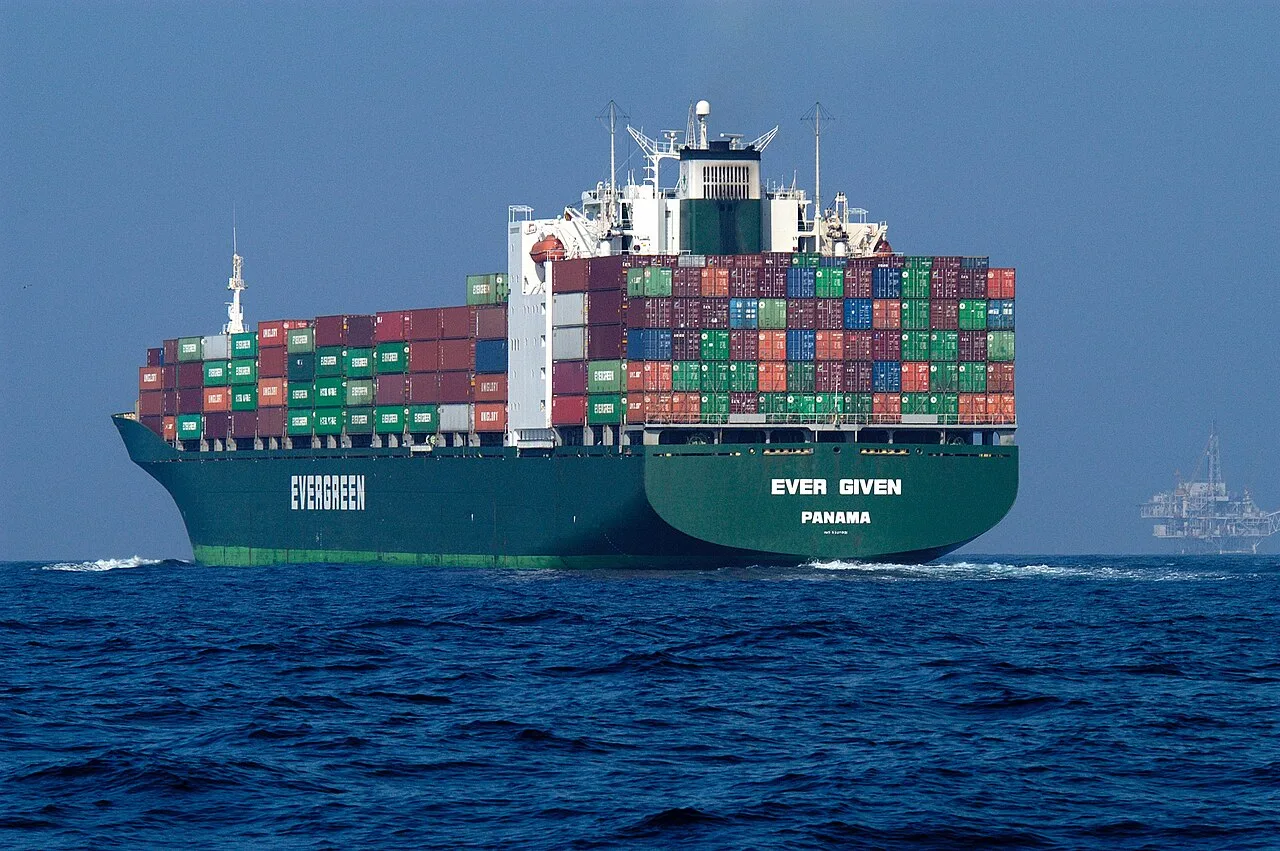
One Ship, Global Gridlock
When the container ship Ever Given blocked the Suez Canal, it halted roughly 12% of global trade — a single stuck ship freezing one of the world's key trade routes.
Self-test
Answer each question from memory, then check your work against the answer key.
1. What behavior defines Critical Slowing Down, the first harbinger?
- ALocal disturbances propagate across the whole system
- BRecovery time from shocks lengthens as a transition nears
- CThe system flickers between two states at once
- DSmall inputs produce wildly disproportionate outputs
2. According to Mostaque, after which year did the economy's critical slowing down become unmistakable?
- A2008
- B2021
- C1932
- D1929
3. How does a healthy system differ from one experiencing Critical Slowing Down?
- AA healthy system never experiences any shocks
- BA healthy system has an infinite correlation length
- CA healthy system flickers between multiple states
- DA healthy system recovers quickly from shocks
4. Which capacity does a system LOSE as Critical Slowing Down sets in?
- AIts ability to grow at all
- BIts ability to hold any single state
- CIts ability to self-correct
- DIts ability to trade globally
5. After 2008, roughly how long did recovery take compared with what earlier cycles managed in two years?
- AOnly a few months with no intervention
- BAbout the same two years as before
- CRecovery happened almost instantly
- DA full decade of extraordinary monetary intervention
6. What defines Variance Explosion, the second harbinger?
- ARecovery from shocks takes longer and longer
- BDisturbances spread across the entire system
- CSmall inputs produce wildly disproportionate outputs
- DThe system is stuck between two states
7. Which real-world example does Mostaque use to illustrate Variance Explosion?
- AUber drivers who are neither employees nor entrepreneurs
- BA Reddit forum detonating hedge funds via GameStop
- CA container ship blocking the Suez Canal
- DBitcoin acting as currency, commodity, and equity
8. In the Reddit-forum example of Variance Explosion, how does the size of the cause compare with the size of the effect?
- AA tiny cause produces a wildly outsized effect
- BA large cause produces a proportionally large effect
- CA tiny cause produces an equally tiny effect
- DA large cause produces almost no visible effect
9. A market keeps reacting wildly to tiny pieces of news. How would Mostaque's framework read this?
- AAs a measurable warning that criticality is near
- BAs random noise that carries no signal at all
- CAs proof that the phase transition is already over
- DAs a healthy market taking in news the normal way
10. Which statement is NOT true of Variance Explosion?
- AIt intensifies as a system nears criticality
- BSmall inputs create wildly disproportionate outputs
- COutputs stay proportional to the size of the inputs
- DA Reddit forum could detonate a hedge fund
11. What defines Flickering Between States, the third harbinger?
- ASmall inputs yield disproportionate outputs
- BOne small node can stop global trade
- CRecovery time from shocks keeps lengthening
- DA system cannot resolve which state it belongs to
12. Which physical image does Mostaque use for Flickering Between States?
- ATectonic plates that have already slipped
- BWater at exactly 0°C, neither fully ice nor fully liquid
- CA container ship wedged in a canal
- DWater boiling into vapor and vanishing
13. Which pair best illustrates Flickering Between States?
- AGig workers who are neither employees nor entrepreneurs
- BA market falling 89% by 1932
- CA stock rising from $17 to over $400
- DGerman factories idled without computer chips
14. Why does Mostaque say Bitcoin exemplifies Flickering Between States?
- AIt recovers slowly from every market shock
- BIt single-handedly halts global trade
- CIt is neither currency nor commodity nor equity
- DIt always behaves as a stable currency
15. Why can the flickering system not settle into one state?
- AIts inputs are perfectly proportional to outputs
- BIt has lost all of its correlation length
- CIt has already completed its phase change
- DIt is suspended at the transition point
16. Roughly how much of global trade stopped when the Ever Given blocked the Suez Canal?
- AAbout 2%
- BAbout 12%
- CAbout 75%
- DAbout 40%
17. What does 'correlation length' measure in the fourth harbinger?
- AHow long a system stays between two states
- BThe distance over which disturbances propagate
- CHow disproportionate outputs are to inputs
- DHow long recovery from a shock takes
18. In March 2021, how long did the Ever Given block the Suez Canal?
- ATwo months
- BOne day
- CSix days
- DThree weeks
19. Which effect is cited as a downstream consequence of the Ever Given blockage?
- AGerman car factories idled for lack of chips
- BGameStop shares surged past $400
- CBitcoin was reclassified as a currency
- DThe market fell 89% within three years
20. What does the Ever Given reveal about an economy optimized for efficiency over resilience?
- ACorrelation length shrinks toward zero
- BLocal disturbances always remain local
- CNo single node can ever affect the whole system
- DAny single node can gain outsized leverage over the whole
Go deeper
- ReadThe Last Economy by Emad Mostaque · on Amazon ↗
- StudyThe Last Economy (book) in the FlashFeed app
These are affiliate links: if you buy a book through one, FlashFeed may earn a small commission at no extra cost to you. The commission helps pay for FlashFeed's servers.
As an Amazon Associate we earn from qualifying purchases.
Answer key
- 1. B Recovery time from shocks lengthens as a transition nearsCritical Slowing Down means a system nearing a transition takes longer and longer to bounce back, losing its capacity for self-correction. The other options describe the other three harbingers.
- 2. A 2008Mostaque dates the economy's critical slowing down to after 2008, when a decade of extraordinary monetary intervention produced what earlier cycles managed in two years.
- 3. D A healthy system recovers quickly from shocksA healthy system recovers quickly, while a system nearing a transition takes longer and longer to bounce back. Flickering and infinite correlation length are other harbingers, not marks of health.
- 4. C Its ability to self-correctAs recovery time lengthens, the system loses its ability to self-correct. Losing a single state describes flickering, not critical slowing down.
- 5. D A full decade of extraordinary monetary interventionMostaque notes a decade of extraordinary monetary intervention produced what earlier cycles managed in two years — the signature lengthening of recovery time.
- 6. C Small inputs produce wildly disproportionate outputsVariance Explosion is when small inputs create wildly disproportionate outputs as criticality approaches. The other options describe critical slowing down, flickering, and correlation length.
- 7. B A Reddit forum detonating hedge funds via GameStopVariance Explosion is why single Reddit forums can detonate hedge funds, as with the GameStop frenzy. The Suez ship illustrates correlation length; Uber and Bitcoin illustrate flickering.
- 8. A A tiny cause produces a wildly outsized effectVariance Explosion means small inputs produce wildly disproportionate outputs as criticality approaches, which is why a single Reddit forum can detonate hedge funds. The other options describe proportional or muted responses.
- 9. A As a measurable warning that criticality is nearWild reactions to tiny inputs are Variance Explosion, one of four measurable warnings a system gives as it nears criticality. Such systems do not fail randomly: they broadcast specific signs in advance, so this is not noise, health or a finished transition.
- 10. C Outputs stay proportional to the size of the inputsVariance Explosion means outputs are disproportionate to inputs, so proportional outputs is the false statement. The other three accurately describe the harbinger.
- 11. D A system cannot resolve which state it belongs toFlickering means the system is suspended at a transition point and cannot resolve which state it belongs to. The other options describe critical slowing down, correlation length, and variance explosion.
- 12. B Water at exactly 0°C, neither fully ice nor fully liquidWater at exactly 0°C is neither fully ice nor liquid — the image for flickering. Boiling and the wedged ship illustrate other ideas in the chapter.
- 13. A Gig workers who are neither employees nor entrepreneursGig workers who are neither employees nor entrepreneurs are the flickering example. The idled factories are correlation length; the stock is variance explosion; the 89% fall is the 1929 crash.
- 14. C It is neither currency nor commodity nor equityBitcoin flickers because it is neither currency nor commodity nor equity — the system cannot resolve its state. The other options describe different harbingers or contradict the text.
- 15. D It is suspended at the transition pointThe system flickers because it is suspended at the transition point and cannot resolve which state it belongs to — not because the change is finished.
- 16. B About 12%
- 17. B The distance over which disturbances propagateCorrelation length is the distance over which events propagate; as criticality approaches it stretches toward infinity. The other options describe the other three harbingers.
- 18. C Six daysThe Ever Given ran aground in the Suez Canal in March 2021 and sat there for six days, halting roughly 12% of global trade.
- 19. A German car factories idled for lack of chipsGerman car factories idled for lack of chips, showing how far the disturbance propagated. The other options belong to variance explosion, flickering, and the 1929 crash.
- 20. D Any single node can gain outsized leverage over the wholeIn a system optimized for efficiency at the expense of resilience, no node should have that much leverage — yet every node does. As criticality nears, correlation length stretches toward infinity, not zero.
Image credits
- Harbingers of the storm: Tisquesusa (Openverse) · by 4.0 — commons.wikimedia.org/w/index.php?curid=69748403
- Permanent prosperity, five days: AI-generated (gpt-image-1.5)
- One Ship, Global Gridlock: Wikimedia Commons · Robert Schwemmer for NOAA's National Ocean Service · CC BY-SA 2.0 — commons.wikimedia.org/wiki/File:Ever_Given_container_ship.jpg
