
The Let Them Theory study guide · Lesson 2 of 5
Relationships and Letting Go of Control
Adult Relationships and Romantic Dynamics · Parenting, Family, and Friends
Unofficial study guide for The Let Them Theory: A Life-Changing Tool That Millions of People Can't Stop Talking About by Mel Robbins, Sawyer Robbins. FlashFeed is not affiliated with the author or publisher.
This is the lesson's study guide from the FlashFeed app, plus its key facts and a self-test.
What you'll be able to do
- Explain how managing a partner creates a parent-child dynamic, how contaminated energy and covert contracts backfire, and how Let Them works in dating.
- Identify how the Let Them Theory guides parenting, family systems, and friendships, including natural consequences and Collaborative Problem Solving.
Adult Relationships and Romantic Dynamics
Romantic partnerships and long-term marriages frequently devolve into arenas of chronic micromanagement and unspoken resentment. In the daily rhythm of shared life, one partner often assumes the role of a hyper-vigilant manager, attempting to supervise the other's dietary habits, workout routines, career trajectory, domestic contributions, driving speed, punctuality, and emotional expression. While the managing partner frequently rationalizes these behaviors as acts of devotion, helpfulness, or practical organization, this chronic surveillance is fundamentally an anxiety-driven impulse that destabilizes the foundation of the relationship.
Over time, this dynamic creates a toxic Parent-Child Dynamic, as identified by couples therapist Esther Perel (2006). When one partner acts as a scolding, supervisory parent, the other partner reflexively retreats into the role of a resistant or passive adolescent. Erotic desire, mutual respect, and deep emotional intimacy cannot survive in a dynamic between a scolding parent and an evasive child. The managing partner gradually loses respect for the person they feel compelled to manage, while the managed partner loses romantic attraction toward a hyper-critical overseer. The cycle produces profound relational alienation, where both partners feel fundamentally unseen and unappreciated.
Mel Robbins shares vulnerable insights from her marriage of over twenty-five years to Chris Robbins. During years of severe financial hardship and entrepreneurial uncertainty, Mel found herself compulsively trying to fix Chris's problems, dictate his daily routines, and tell him how to handle his career. This micromanagement generated immense marital friction and pushed their relationship to the brink of dissolution. It was only when Mel embraced "Let Them"—stepping back entirely, releasing Chris from her unsolicited advice, and allowing him the space to navigate his own challenges—that Chris found the psychological autonomy to initiate his own personal transformation. This autonomous growth ultimately culminated in the creation of his successful men's retreat organization, Soul Degree.
A central framework in romantic relationships is the distinction between Clean Energy and Contaminated Energy in interpersonal transactions. Clean Energy involves taking actions, performing domestic chores, offering support, or giving gifts with total transparency, direct communication, and zero hidden scorekeeping or expectations of indebtedness. When you clean the kitchen with clean energy, you do so simply because you desire a clean space.
Contaminated Energy, by contrast, occurs when actions are performed with covert resentment, passive-aggressive martyrdom, or uncommunicated expectations. Examples include doing the dishes while loudly slamming cabinet doors to elicit guilt, attending a social gathering while secretly planning to make a partner pay for it later, or giving a gift with strings attached. Contaminated energy is toxic because, as the book frames it, the brain's mirror neurons may pick up on that emotional incongruence — an evocative claim, though the specific link between mirror neurons and detecting hidden resentment isn't a rigorously settled neuroscience finding. When you perform an act of service with contaminated energy, the recipient does not feel cared for; they feel manipulated and trapped. Research by Dr. John Gottman identifies contempt (sarcasm, mockery, name-calling, sneering, eye-rolling) as the single greatest predictor of divorce. The Let Them Theory demands total energetic honesty: if you cannot perform an act or agree to a request with clean energy, do not do it. It is far healthier for a relationship to offer a clean "no" than a contaminated, resentful "yes."
This dynamic is closely tied to what Dr. Robert Glover, in his book No More Mr. Nice Guy (2000), termed Covert Contracts. A covert contract is an unspoken, unilateral agreement formed in one person's mind, in which they do something for someone while expecting something in return and never say so. Covert contracts tend to play out in a familiar sequence:
- Construct an uncommunicated expectation in one's own mind.
- Perform a self-sacrificing action with contaminated energy.
- Observe the partner fail the unvoiced obligation they never agreed to.
- React with the silent treatment, righteous indignation, and passive-aggressive anger.
When the partner inevitably breaks the contract they never signed, the initiator feels victimized and explodes in anger. Applying "Let Them" dismantles covert contracts by forcing an individual to let their partner be unaware of unspoken thoughts, compelling them to take full ownership of their needs and communicate them explicitly and directly.
Furthermore, constantly prompting, reminding, and coaxing a partner contaminates relational data. When you manage someone's daily actions, you make it impossible to know whether their behavior stems from authentic care or merely an urge to stop your nagging. A central idea of The Let Them Theory is that when you stop prompting a partner and let them act freely, you see what they genuinely choose to do.
When you step back and deploy "Let Them," you create a functional vacuum. In that open space, a partner's authentic effort or lack of investment reveals itself clearly. Sawyer Robbins applies this principle directly to modern dating: stop chasing, stop sending quadruple texts, and stop engineering encounters. When you grant prospective partners the freedom to act, they demonstrate their genuine priorities immediately without the distortion of your over-functioning.
Parenting, Family, and Friends
Parenting undergoes a profound developmental evolution as children mature from infancy into adulthood. To foster healthy independence, parents must consciously upgrade their relational operating system across three distinct stages:
- Childhood (ages 0–12): The Manager. In early childhood, parents operate as hands-on managers, directing daily logistics, ensuring physical safety, and establishing basic routines.
- Adolescence (ages 13–18): The Guide. During adolescence, parents transition to guides, collaborating with teenagers, offering guidance, and allowing minor failures within safe boundaries.
- Adulthood (ages 18+): The Trusted Consultant. In adulthood, parents step into the role of trusted consultants, stepping back completely and offering perspective or advice only when explicitly requested.
Failing to transition out of the manager role produces Snowplow Parenting (clearing all obstacles from a child's path) or Helicopter Parenting (hovering over every decision). These over-controlling styles can infantilize older children and communicate an implicit belief in their incompetence, and research associates them with higher anxiety and weaker self-regulation. Mel Robbins asserts that the greatest gift a parent can offer an older child is the dignity of their own life experience—including the sacred right to make mistakes and clean up their own messes.
This developmental philosophy relies on the power of Natural Consequences, which act as a feedback loop. When an individual makes a poor choice, the uncomfortable friction of the resulting consequence teaches through direct experience, which this philosophy holds builds responsibility better than lectures or micromanagement. If an adult child continually oversleeps, calling them repeatedly to wake them up prevents them from taking responsibility for getting themselves up. If an adolescent forgets their lunch, rushing to school to deliver it prevents them from building executive planning skills. If an adult child mismanages money, bailing them out reinforces fiscal irresponsibility. Practicing "Let Them" in parenting requires allowing loved ones to bump against the natural boundaries of reality, maintaining unconditional emotional warmth and empathy while firmly refusing to absorb or solve their practical problems.
To provide clinical structure for navigating behavioral challenges, the framework incorporates Collaborative Problem Solving (CPS), originated by child psychologist Dr. Ross Greene and also taught (as of 2026) by Dr. J. Stuart Ablon's Think:Kids program in the Department of Psychiatry at Massachusetts General Hospital. The model's foundational axiom, coined by Greene, is: "Kids do well if they can." Behavioral difficulties in children and adolescents stem from lagging cognitive skills—such as emotional regulation, cognitive flexibility, and frustration tolerance—rather than intentional malice, defiance, or laziness.
This Collaborative Problem Solving model outlines three distinct approaches to parental expectations, as taught in both Greene's original framework and Ablon's Think:Kids program:
- Plan A (Unilateral Imposition): The adult imposes their will through force, punishment, or coercion. This approach escalates conflict, damages relational connection, and fails to teach lagging skills.
- Plan C (Dropping the Expectation): The adult temporarily removes the expectation to reduce systemic stress and stabilize an overwhelmed nervous system.
- Plan B (Collaborative Problem Solving): The gold standard of relational parenting, executed in three structured steps:
- The Empathy Step: Make a neutral observation and gather information to understand the child's underlying concern without judging or correcting ("I notice you've been having a hard time getting ready in the morning. What's going on?").
- The Define Adult Concerns Step: Validate the child's perspective and state the adult concern regarding safety, health, or practical impact clearly and non-judgmentally ("My concern is that when we run late, it creates morning stress and you miss instructional time").
- The Invitation Step: Invite the child to brainstorm realistic solutions that mutually address both concerns ("I wonder if there's a way we can ensure you don't feel rushed while still leaving on time? What do you think?").
"Let Them" provides parents with the emotional regulation required to step away from the coercive trap of Plan A and engage in the collaborative mastery of Plan B.
Within extended family systems, Dr. Murray Bowen's Family Systems Theory (1978) explains that relational health depends on Differentiation of Self—the systemic capacity to maintain one's individual identity, values, and emotional autonomy while remaining emotionally connected to one's family. In undifferentiated families, anxiety triggers Emotional Triangulation, wherein two family members in conflict draw in a third person to diffuse direct tension rather than addressing the core issue. During family gatherings and holiday dinners, relatives frequently pressure individuals to conform regarding marital status, career choices, parenting methods, or politics. Applying "Let Them" is an act of supreme differentiation: letting relatives hold their opinions and ask intrusive questions without allowing their anxiety to dictate your emotional state.
Finally, friendships are dynamic connections that evolve over time. Clinging to friendships that have reached their natural conclusion produces unnecessary emotional suffering. The Let Them Theory offers a liberating standard for navigating shifting social circles: let friends stay, let them go, and let them choose, because your peace does not depend on their decision. When friends drift away or cancel plans, do not pursue them with frantic demands. Granting them total freedom allows you to invest your relational energy into connections that actively celebrate and reciprocate your presence.
Key terms
- Clean Energy
- Helping or giving to a partner with total honesty and no hidden expectation of payback.
- Snowplow Parenting
- Clearing every obstacle from a child's path instead of letting them face it themselves.
- Emotional Triangulation
- Pulling a third family member into a conflict instead of the two people addressing it directly.
Key facts
The Parent-Child Dynamic in Marriage
Couples therapist Esther Perel (2006) observed that when one romantic partner chronically scolds and manages the other, the managed partner reflexively retreats into a resistant, passive-adolescent role. This dynamic corrodes erotic desire and mutual respect on both sides — a scolding parent and an evasive teenager cannot sustain intimacy.
Mel and Chris: Stepping Back
During years of financial hardship, Mel Robbins compulsively tried to fix and direct her husband Chris Robbins' career decisions — friction that pushed their marriage to the brink of divorce. Once Mel stopped offering unsolicited advice and applied "Let Them," Chris found the autonomy to build his own path, eventually founding his men's retreat organization, Soul Degree.
Clean Energy in Relational Transactions
Clean energy means performing acts of service, chores, or gifts with complete transparency and zero hidden scorekeeping. When an action is done with clean energy, it is motivated purely by genuine desire rather than covert expectations of reciprocation.
Contaminated Energy and Mirror Neurons
Contaminated energy is an act of service performed with hidden resentment or an unspoken expectation of payback — like doing the dishes while loudly slamming cabinets. Popular accounts of mirror neurons suggest the brain picks up on that emotional incongruence — a widely repeated but not rigorously settled claim — and in practice the recipient often doesn't feel cared for; they feel manipulated, even when the words and actions look helpful.
Contempt Predicts Divorce
Research by Dr. John Gottman found that contempt, shown through sarcasm, name-calling, sneering and eye-rolling, is the single greatest predictor of divorce, ahead of criticism, defensiveness, or stonewalling.
Clean No vs. Resentful Yes
The Let Them Theory demands total energetic honesty: if you cannot say yes with clean energy — full willingness and no hidden scorekeeping — then don't. A direct, clean "no" is healthier for a relationship than a contaminated, resentful "yes," because the resentful yes poisons the relationship with hidden bitterness that eventually surfaces.
Covert Contracts
Dr. Robert Glover, in No More Mr. Nice Guy (2000), defined a covert contract as an unspoken, one-sided deal in which a person does something for someone while expecting something in return, a bargain the other person never agreed to or even heard. When they inevitably fail to honor it, the initiator reacts with righteous indignation, feelings of victimhood, and passive-aggressive resentment. "Let Them" dismantles covert contracts by forcing people to voice their needs directly instead of expecting others to read their mind.
Let Them in Modern Dating
Sawyer Robbins recommends applying "Let Them" to dating: stop chasing, stop sending repetitive follow-up texts, and stop engineering "accidental" encounters. When you grant a prospective partner the freedom to act on their own, their genuine level of interest shows itself immediately, without the distortion of your own over-functioning.
The Functional Vacuum of Relational Space
When an over-functioning partner stops managing and steps back, they create a functional vacuum. In this open space, the other partner's authentic motivation and unforced behavior emerge clearly, providing honest relational data.
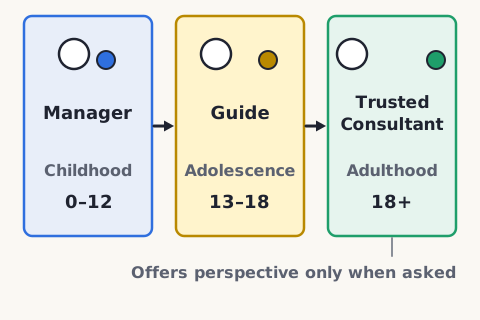
Parenting Adults: The Trusted Consultant
As children grow, parents must upgrade their role: hands-on Manager in childhood (0–12), Guide during adolescence (13–18), and — once a child reaches adulthood (18+) — Trusted Consultant, someone who steps back completely and offers perspective only when explicitly asked.

Snowplow Parenting Backfires
Snowplow parenting — clearing every obstacle from an older child's path — doesn't protect them; it stunts executive-function development, breeds anxiety, and quietly communicates that you believe they're incompetent. A related pattern, helicopter parenting, hovers over every decision instead of clearing the path outright.
The Dignity of Lived Experience
Mel Robbins teaches that the greatest gift a parent can give an adult child — or that anyone practicing "Let Them" can give a loved one — is the dignity of their own life experience: the right to make their own mistakes and clean up their own messes, rather than having every obstacle managed away for them.
Empathy Without Rescue
When a mature child faces the painful fallout of a poor choice, the "Let Them" approach pairs unconditional emotional empathy with a firm refusal to absorb the practical or financial consequences on their behalf. Warmth and non-rescue work together — you comfort the person, not the mistake.
Kids Do Well If They Can
Child psychologist Dr. Ross Greene originated Collaborative Problem Solving (CPS), an approach also taught by Dr. J. Stuart Ablon through the Think:Kids program in the Department of Psychiatry at Massachusetts General Hospital, on one axiom: "Kids do well if they can." Behavioral struggles come from lagging cognitive skills, like emotional regulation and frustration tolerance, not from a lack of motivation, malice, or laziness.
Collaborative Problem Solving (CPS) Plan A and Plan C
In this Collaborative Problem Solving model — originated by Ross Greene and also taught by Dr. J. Stuart Ablon's Think:Kids — Plan A imposes the adult's will through force, punishment, or coercion — it escalates conflict and teaches no skills. Plan C deliberately drops a non-urgent expectation to lower stress and stabilize an overwhelmed nervous system. Neither builds lasting change on its own; that's the job of Plan B.
Collaborative Problem Solving (CPS) Plan B: Empathy and Concerns
Plan B, the "gold standard" of CPS, opens with two steps. Step 1, the Empathy Step, gathers neutral information about the child's underlying concern without judging ("What's going on?"). Step 2, Define Adult Concerns, states the adult's concern about safety, health, or practical impact clearly and without moralizing, so both sides can see the problem objectively.
Differentiation and Triangulation
Dr. Murray Bowen described Differentiation of Self as the capacity to hold your own values and identity while staying emotionally connected to your family. When two family members in conflict lack this, they often pull in a third person to diffuse the tension — a pattern Bowen called Emotional Triangulation — rather than addressing each other directly.

Letting Friendships Ebb and Flow
Friendships naturally evolve, and clinging to ones that have run their course only creates suffering. The standard is simple: let friends stay, let them go, and let them choose, because your peace does not depend on their decision. Don't chase friends who drift away; invest your energy where connection is mutual.
Matched pairs
Each item on the left goes with the one on the right.
- Dr. John Gottman
- found contempt is the single greatest predictor of divorce
- Mel and Chris Robbins
- Mel's stepping back let Chris build his retreat business, Soul Degree
- Collaborative Problem Solving (CPS) Plan C
- temporarily drops the expectation to calm an overwhelmed nervous system
Self-test
Answer each question from memory, then check your work against the answer key.
1. According to couples therapist Esther Perel, what dynamic tends to emerge when one romantic partner chronically manages and scolds the other?
- AThe managed partner reflexively retreats into the role of a resistant or passive adolescent.
- BBoth partners develop deeper erotic attraction through clearly structured supervisory roles.
- CThe partner being managed comes to quietly respect and appreciate the arrangement over time.
- DThe managed partner becomes increasingly proactive and enthusiastic about household leadership.
2. What is contaminated energy?
- AA direct, clean "no" to a request you cannot meet willingly
- BAny help given to a partner who did not ask for it
- CHelp offered freely, with no expectation of anything in return
- DAn act done with hidden resentment or an expectation of payback
3. How does Dr. Robert Glover define a 'covert contract' in interpersonal relationships?
- AA legally binding marital prenuptial agreement negotiated through professional mediation.
- BA mutually agreed-upon schedule dividing domestic responsibilities explicitly and cleanly.
- CAn unspoken, unilateral expectation where one makes sacrifices expecting an unvoiced return.
- DA therapeutic coaching technique used by couples therapists to resolve longstanding conflicts.
4. What is the typical emotional reaction of someone whose partner fails an unspoken covert contract?
- AImmediate relief and gratitude for the partner's independent emotional autonomy.
- BRighteous indignation, feelings of victimhood, and passive-aggressive resentment.
- CNeutral curiosity and a calm invitation to discuss personal relational boundaries.
- DIncreased enthusiasm for performing further unprompted domestic sacrifices for the partner.
5. How does Sawyer Robbins recommend applying 'Let Them' in modern dating dynamics?
- ACease chasing, sending repetitive follow-up texts, and engineering artificial encounters.
- BConceal all personal interests and schedule conflicts to maximize mutual availability.
- CSend continuous reminders to test the prospective partner's patience and responsiveness.
- DRely on mutual friends to orchestrate unexpected social meetings and check on intentions.
6. According to the developmental framework in The Let Them Theory, what role should a parent transition into when a child reaches adulthood (ages 18+)?
- AThe Strict Disciplinarian who enforces behavioral compliance through penalties.
- BThe Passive Observer who severs emotional connection to ensure total detachment.
- CThe Direct Manager who oversees daily logistics and financial decisions.
- DThe Trusted Consultant who provides perspective and guidance only upon request.
7. How should a parent practicing 'Let Them' respond when a mature child experiences the painful fallout of a poor choice?
- ADeliver a lengthy lecture detailing exactly how the mistake could have been avoided.
- BSever all communication until the child demonstrates complete behavioral perfection.
- COffer unconditional emotional empathy while refusing to rescue them from the practical outcome.
- DImmediately intervene to absorb the financial and practical fallout on their behalf.
8. In the Collaborative Problem Solving framework (originated by Dr. Ross Greene, also taught by Dr. J. Stuart Ablon's Think:Kids), what characterizes Plan A?
- AInviting the child to collaboratively brainstorm mutually agreeable realistic solutions.
- BUnilaterally imposing adult will through authoritative force, punishment, or coercion.
- CConducting a structured empathy interview to understand the child's underlying concern.
- DTemporarily dropping an expectation to reduce stress on an overwhelmed nervous system.
9. How did psychiatrist Dr. Murray Bowen define 'Differentiation of Self' in family systems?
- AThe enforcement of rigid conformity to ancestral family traditions and rules.
- BThe unconscious tendency to absorb the emotional distress and anxiety of relatives.
- CThe complete emotional and physical cutoff from one's family of origin.
- DThe capacity to maintain personal values and autonomy while staying connected.
10. What is the primary objective of Step 1 (The Empathy Step) in Collaborative Problem Solving (CPS) Plan B?
- AInvite the child to brainstorm solutions for both concerns
- BGather information on the child's concern without judgment
- CTemporarily drop the expectation to reduce stress
- DState the adult's safety, health, or practical concern
Go deeper
- ListenLesson 2 episode
- WatchStop Reminding If you keep reminding a partner to do things, you never learn what they would do on their own.
- WatchManager, Guide, Consultant In the Let Them framework, a parent's role has three stages.
- ReadThe Let Them Theory by Mel Robbins, Sawyer Robbins · on Amazon ↗
- StudyThe Let Them Theory in the FlashFeed app
These are affiliate links: if you buy a book through one, FlashFeed may earn a small commission at no extra cost to you. The commission helps pay for FlashFeed's servers.
As an Amazon Associate we earn from qualifying purchases.
Answer key
- 1. A The managed partner reflexively retreats into the role of a resistant or passive adolescent.When one partner adopts a supervisory parental role, the other typically withdraws into passive-aggressive or adolescent behavior, eroding erotic intimacy and mutual respect.
- 2. D An act done with hidden resentment or an expectation of paybackContaminated energy is an act of service done with hidden resentment or an unspoken expectation of payback, like doing the dishes while slamming cabinets. The recipient often feels manipulated and not cared for. Help given freely, with no scorekeeping, is clean energy.
- 3. C An unspoken, unilateral expectation where one makes sacrifices expecting an unvoiced return.In 'No More Mr. Nice Guy', Dr. Robert Glover defines a covert contract as an unvoiced expectation where an individual gives something while silently demanding an uncommunicated payback.
- 4. B Righteous indignation, feelings of victimhood, and passive-aggressive resentment.Because the initiator treats the unspoken expectation as an absolute obligation, the partner's inevitable failure to read their mind triggers feelings of betrayal and anger.
- 5. A Cease chasing, sending repetitive follow-up texts, and engineering artificial encounters.Releasing dating anxiety requires stopping excessive texting and manipulation, allowing the other person's unforced effort to show their true level of interest.
- 6. D The Trusted Consultant who provides perspective and guidance only upon request.Healthy adult parenting requires shifting from direct management to the role of a trusted consultant, stepping back and offering counsel only when explicitly invited.
- 7. C Offer unconditional emotional empathy while refusing to rescue them from the practical outcome.The Let Them approach pairs genuine emotional warmth and empathy with firm boundaries, letting the natural consequences do the teaching without intervening to fix the mess.
- 8. B Unilaterally imposing adult will through authoritative force, punishment, or coercion.Plan A represents traditional authoritarian control where the adult imposes their will unilaterally, which tends to escalate resistance and fails to build cognitive skills.
- 9. D The capacity to maintain personal values and autonomy while staying connected.Differentiation of Self is the systemic ability to remain grounded in one's own identity, boundaries, and values without reacting defensively or disconnecting from the family system.
- 10. B Gather information on the child's concern without judgmentThe Empathy Step centers on making neutral observations and asking open-ended questions to genuinely understand what makes the task difficult for the child.
Sources
- The Let Them Theory — Mel Robbins and Sawyer Robbins
- The Let Them Theory
Image credits
- Parenting Adults: The Trusted Consultant: FlashFeed original diagram · CC-BY-4.0
- Snowplow Parenting Backfires: Wikimedia Commons · SimonP · CC BY-SA 3.0 — commons.wikimedia.org/wiki/File:Sidewalk_plow.JPG
- Letting Friendships Ebb and Flow: shabdaly (Openverse) · by 2.0 — www.flickr.com/photos/14716179@N02/3818395918
