
Major Wars: Strategy, Technology, and Mechanics of Conflict study guide · Lesson 12 of 13
The Cold War, Asymmetric Warfare, & Revolutionary Insurgency
Korean Maneuver, Jet Aviation, & Maoist Insurgency · Helicopter Cavalry, Subterranean Trails, & Nuclear Triad
This is the lesson's study guide from the FlashFeed app, plus its key facts and a self-test.
What you'll be able to do
- Explain MacArthur's Inchon landing, the Chinese PVA's night marches at Chosin, the F-86's edge over the MiG-15, and the stages of Mao's Protracted War.
- Explain how Hueys enabled airmobile assault at Ia Drang, why the Ho Chi Minh Trail and Cu Chi tunnels endured, and why the triad guarantees a second strike.
Lesson 12: The Cold War, Asymmetric Warfare, & Revolutionary Insurgency
MacArthur's Amphibious Flank Stroke at Inchon
In September 1950, with United Nations forces pinned inside the Pusan Perimeter, General Douglas MacArthur executed Operation Chromite: an amphibious landing at the port of Inchon behind North Korean lines. Navigating extreme 30-foot Yellow Sea tides and narrow muddy approach channels, US Marines scaled the harbor seawalls, severed North Korean rail supply routes to the south, and recaptured Seoul. This bold operational flank maneuver shattered the Korean People's Army, forcing a headlong retreat back to the 38th Parallel.
PVA Night Infiltration and Mountain Encirclement
In November 1950, China entered the Korean War. Under Marshal Peng Dehuai, the People's Volunteer Army (PVA) committed roughly 300,000 troops to the Korean front by late 1950, marching exclusively at night through freezing mountainous terrain to evade UN aerial surveillance. Bypassing mechanized UN columns along valley roads, PVA light infantry established hilltop ambushes, signaling maneuvers with bugles, horns, and flares. At the Battle of Chosin Reservoir, the Ninth Army Group — roughly 120,000 PVA troops — surrounded the 1st Marine Division in sub-zero blizzards, forcing the UN to conduct a fighting withdrawal to Hungnam port.
MiG Alley and First-Generation Jet Fighter Combat
The Korean War witnessed history's first jet-versus-jet air combat over MiG Alley (the Yalu River border between North Korea and China). Soviet-built Mikoyan-Gurevich MiG-15 fighters—flown by veteran Soviet pilots (honchos)—featured swept wings and heavy 37mm cannons, initially outclassing straight-wing Allied aircraft. The United States deployed the swept-wing North American F-86 Sabre, which utilized radar-ranging gunsights, hydraulic flight controls, and superior high-G pilot flight suits to achieve a dominant kill ratio in high-speed dogfights.
Mao Zedong's Three-Stage Protracted People's War
In On Protracted War (1938), Mao Zedong articulated the foundational doctrine of revolutionary communist insurgency, designed to defeat technologically superior industrialized adversaries through three distinct phases:
- Strategic Defense: Preserving insurgent strength, mobilizing peasant political support, and avoiding decisive pitched battles while trading space for time.
- Strategic Stalemate: Relentless small-scale guerrilla warfare, ambushing enemy outposts, severing supply lines, and establishing rural "liberated base areas."
- Strategic Counter-Offensive: Transitioning from irregular guerrillas into conventional regular armies to encircle cities from the countryside and annihilate the isolated government forces.
Vo Nguyen Giap's Artillery Siege at Dien Bien Phu
In 1954, French General Henri Navarre established a fortified airhead at Dien Bien Phu in a remote valley of northwestern Vietnam, believing the Viet Minh could not transport heavy artillery through mountainous jungle. General Vo Nguyen Giap mobilized 250,000 civilian porters who manually disassembled and hauled heavy 105mm howitzers and anti-aircraft guns over jungle peaks using ropes and modified bicycles. Entrenching the guns in camouflaged caves overlooking the French valley basin, Giap closed the airstrip with anti-aircraft fire and battered the French strongpoints into surrender, ending French colonial rule in Indochina.
Counter-Insurgency Friction and the Strategic Hamlet Dilemma
In asymmetric counter-insurgency (COIN), conventional armies face the "insurgent's advantage": irregular fighters blend into civilian populations without uniforms. The French in Algeria and the US in South Vietnam attempted population control through resettlement programs (such as South Vietnam's Strategic Hamlet Program). However, uprooting peasant populations, combined with heavy conventional firepower (napalm and artillery barrages), alienated rural populations, driving civilians to support insurgent cadres like the National Liberation Front (Viet Cong).
Airmobile Helicopter Warfare at the Ia Drang Valley
In November 1965, the US Army fought its first major engagement with the North Vietnamese Army (NVA) at the Battle of the Ia Drang Valley (LZ X-Ray). Commanded by Lieutenant Colonel Hal Moore, the 1st Battalion, 7th Cavalry demonstrated revolutionary airmobile doctrine: using UH-1 Iroquois ("Huey") helicopters for rapid troop insertion, continuous ammunition resupply, aerial medical evacuation, and rocket gunship close support in dense, roadless jungle terrain, successfully holding LZ X-Ray against massed NVA assaults.
The Logistics of the Ho Chi Minh Trail and Cu Chi Tunnels
The North Vietnamese war effort was sustained through redundant asymmetric infrastructure:
- Ho Chi Minh Trail: A 10,000-mile braided logistics network through Laos and Cambodia, combining jungle paths, gravel truck roads, and underground fuel pipelines. Despite millions of tons of US aerial bombing (Operation Commando Hunt) and chemical defoliation (Agent Orange), tens of thousands of repair workers kept supply convoys moving south continuously.
- Cu Chi Tunnels: A 150-mile subterranean labyrinth outside Saigon featuring living quarters, hospitals, weapon workshops, and trapdoors that allowed Viet Cong guerrillas to strike US bases and vanish underground.
Stinger MANPADS and Asymmetric Air Denial in Afghanistan
During the Soviet-Afghan War (1979–1989), Soviet forces dominated rural valleys using heavily armored Mil Mi-24 Hind helicopter gunships and Su-25 ground-attack jets. In 1986, the CIA began supplying Afghan Mujahideen fighters with American-made shoulder-fired FIM-92 Stinger MANPADS (Man-Portable Air-Defense Systems). Using infrared heat-seeking guidance, Stingers were credited, by US records of uncertain reliability, with roughly 270 Soviet aircraft kills, and they forced Soviet pilots to bomb from higher altitude with less accuracy and to restrict low-altitude helicopter assaults. Their effect on the war's outcome is contested: Soviet flares, exhaust baffles, and night and terrain-hugging flying blunted them within months, and Soviet accounts give them little role in the decision to withdraw in 1989.
The Strategic Nuclear Triad and Second-Strike Survival
To maintain strategic stability, Cold War superpowers developed the Nuclear Triad to guarantee an un-destroyable second-strike capability:
- Land-Based ICBMs (Intercontinental Ballistic Missiles): Silo-based missiles (such as Minuteman III and SS-18 Satan) providing rapid, high-accuracy retaliatory response within 30 minutes.
- Strategic Heavy Bombers: Long-range aircraft (such as B-52 Stratofortress and Tu-95 Bear) capable of being launched on warning, loitering, or being recalled during diplomatic crises.
- SSBN Submarines (Ballistic Missile Submarines): Nuclear-powered stealth submarines (such as Ohio and Typhoon classes) carrying submarine-launched ballistic missiles (SLBMs), prowling undetected under ocean thermoclines to ensure catastrophic retaliation even if the homeland was entirely destroyed in a surprise first strike.
The 1973 Yom Kippur War Missile Shock
On October 6, 1973, Egypt and Syria launched a surprise coordinated attack against Israel. The war revolutionized conventional combat through the mass deployment of precision-guided missiles:
- AT-3 Sagger Wire-Guided ATGMs: Egyptian infantry equipped with suitcase-portable wire-guided anti-tank missiles decimated Israeli armored counter-attacks without needing their own tanks.
- SA-6 Gainful SAM Umbrella: Dense mobile surface-to-air missile batteries shot down dozens of Israeli A-4 Skyhawks and F-4 Phantoms, nullifying traditional Israeli air superiority until IDF ground forces crossed the Suez Canal to destroy the missile batteries from behind.
Key terms
- Protracted War
- A military and political strategy that avoids decisive pitched battles to exhaust a stronger adversary's political will over many years.
- Airmobility
- The doctrine of transporting combat ground troops and their equipment across the battlefield rapidly using utility and assault helicopters.
- MANPADS
- Man-Portable Air-Defense Systems: shoulder-fired surface-to-air missile weapons designed to engage low-altitude aircraft using heat-seeking guidance.
- Nuclear Triad
- A three-pronged military nuclear arsenal consisting of land-based ICBMs, strategic heavy bombers, and ballistic missile submarines (SSBNs).
Key concepts
North American F-86 Sabre
- Swept-wing American first-generation jet fighter armed with six .50 caliber machine guns
- Featured hydraulic flight controls and an AN/APG-30 radar-ranging optical gunsight
- Dominated the skies over MiG Alley against Soviet-built MiG-15s during the Korean War
Protracted People's War
- Maoist revolutionary military doctrine designed to defeat industrialized military powers
- Relies on rural peasant mobilization, geographic depth, and trading space for political time
- Transitions methodically through strategic defense, guerrilla stalemate, and conventional counter-attack
Vo Nguyen Giap
- Self-taught Vietnamese general and supreme military commander of the Viet Minh and PAVN
- Masterminded the logistical triumph and artillery siege of the French at Dien Bien Phu in 1954
- Directed the strategic campaigns of the Vietnam War, including the 1968 Tet Offensive
UH-1 Iroquois (Huey)
- Turboshaft-powered utility helicopter that became the iconic symbol of the Vietnam War
- Served as the primary workhorse for airmobile troop insertion, casualty evacuation, and rocket gunship support
- Enabled US air cavalry units to maneuver rapidly across roadless mountainous jungles
Ho Chi Minh Trail
- Braided 10,000-mile logistical network running through neutral Laos and Cambodia into South Vietnam
- Integrated unpaved jungle truck roads, footpaths, river transport, and buried fuel pipelines
- Maintained continuous flow of North Vietnamese troops and heavy weapons despite intense US bombing
FIM-92 Stinger MANPADS
- Man-portable shoulder-fired air-defense system with dual infrared and ultraviolet homing seekers
- Supplied by the CIA's Operation Cyclone to Afghan Mujahideen guerrillas starting in 1986
- Shot down Soviet Mi-24 Hind gunships and transport aircraft, denying the Soviets low-altitude airspace
SSBN Ballistic Missile Submarine
- Nuclear-powered submarine equipped with submarine-launched intercontinental ballistic missiles (SLBMs)
- Patrols silently beneath ocean thermoclines for months without surfacing, virtually undetectable
- Forms the most survivable leg of the Strategic Nuclear Triad, guaranteeing second-strike retaliation
9M14 Malyutka (AT-3 Sagger)
- Soviet man-portable wire-guided anti-tank guided missile (ATGM) transported in a fiberglass suitcase
- Steered by a joystick operator via a trailing micro-wire connected to the optical sight
- Decimated unescorted Israeli armored counter-attacks during the opening days of the 1973 Yom Kippur War
Key facts
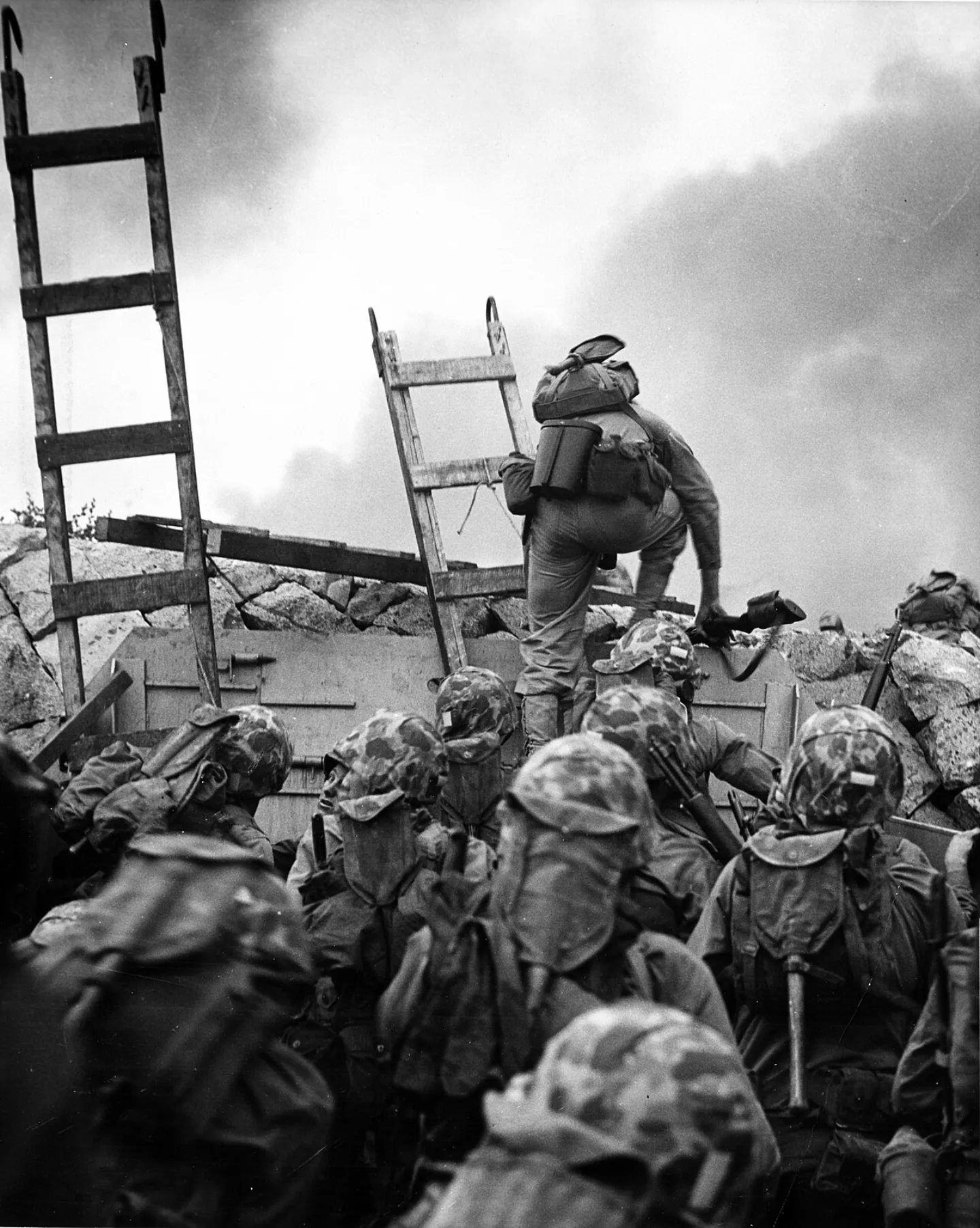
MacArthur's Amphibious Flank Landing at Inchon
In 1950, MacArthur's amphibious assault at Inchon navigated 30-foot tides to sever North Korean supply lines, recapturing Seoul and reversing the war.
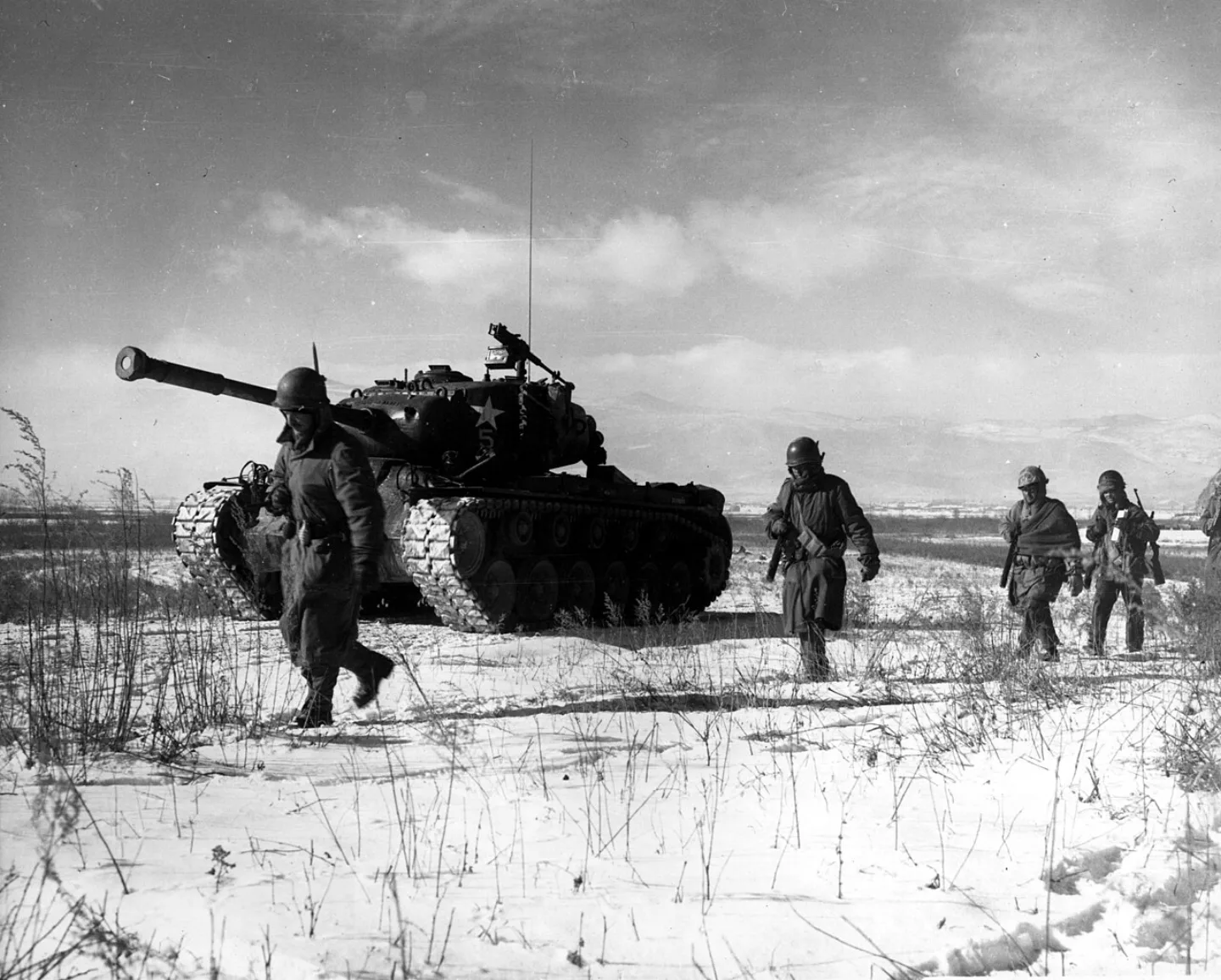
PVA Mountain Infiltration and Bugle Tactics
In 1950, roughly 120,000 Chinese PVA troops of the Ninth Army Group infiltrated Korean mountains by night, using bugles and hill ambushes to surround UN forces at Chosin Reservoir.
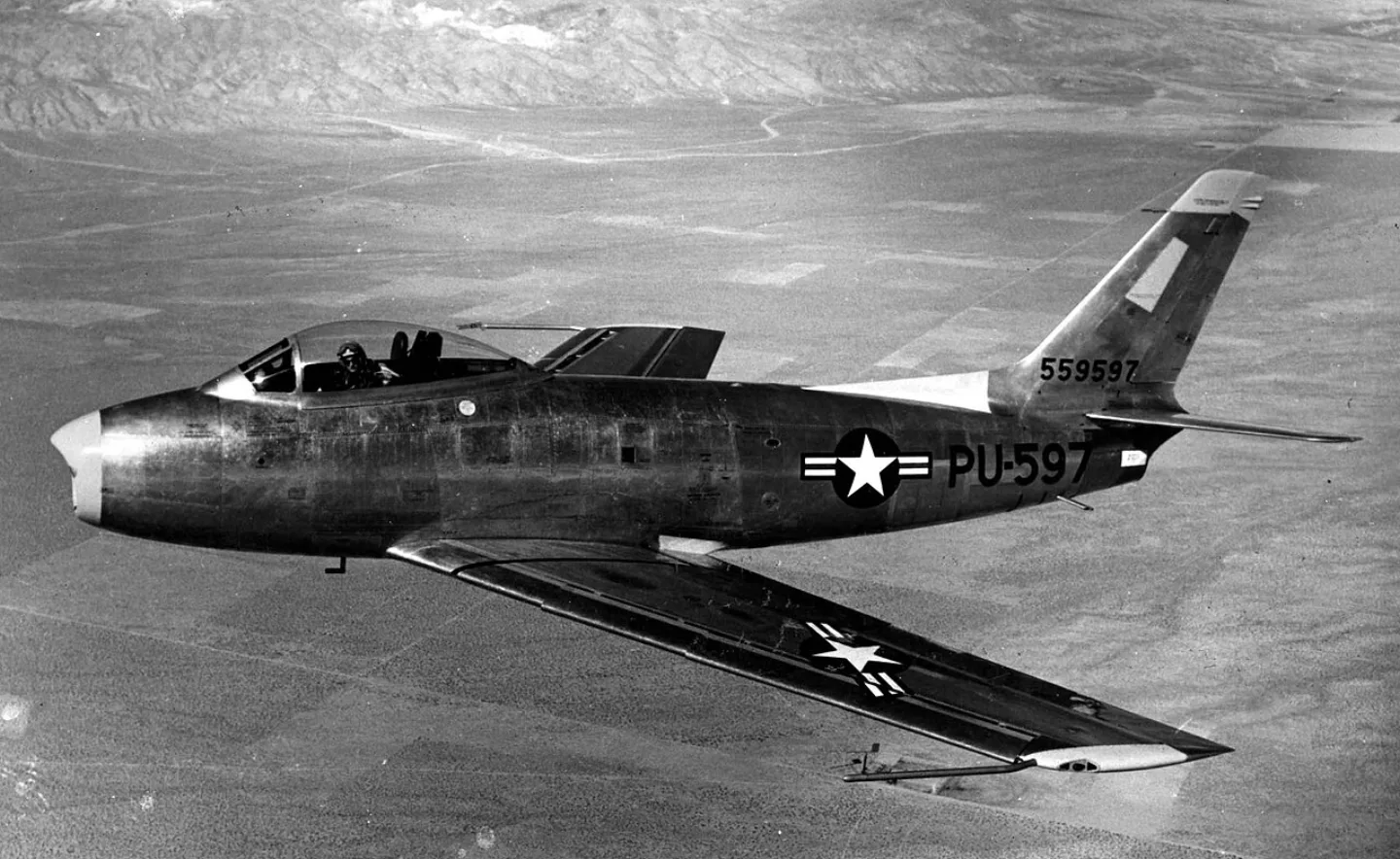
First-Generation Jet Dogfights in MiG Alley
In MiG Alley during the Korean War, American F-86 Sabres with radar-ranging sights outdueled Soviet-flown swept-wing MiG-15 jet interceptors.
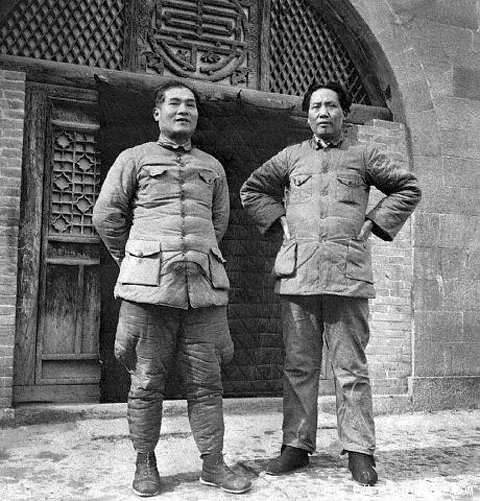
Mao's Three Stages of Protracted War
Mao Zedong's Protracted People's War doctrine outlined three phases: strategic defense, rural guerrilla stalemate, and conventional counter-offensive.
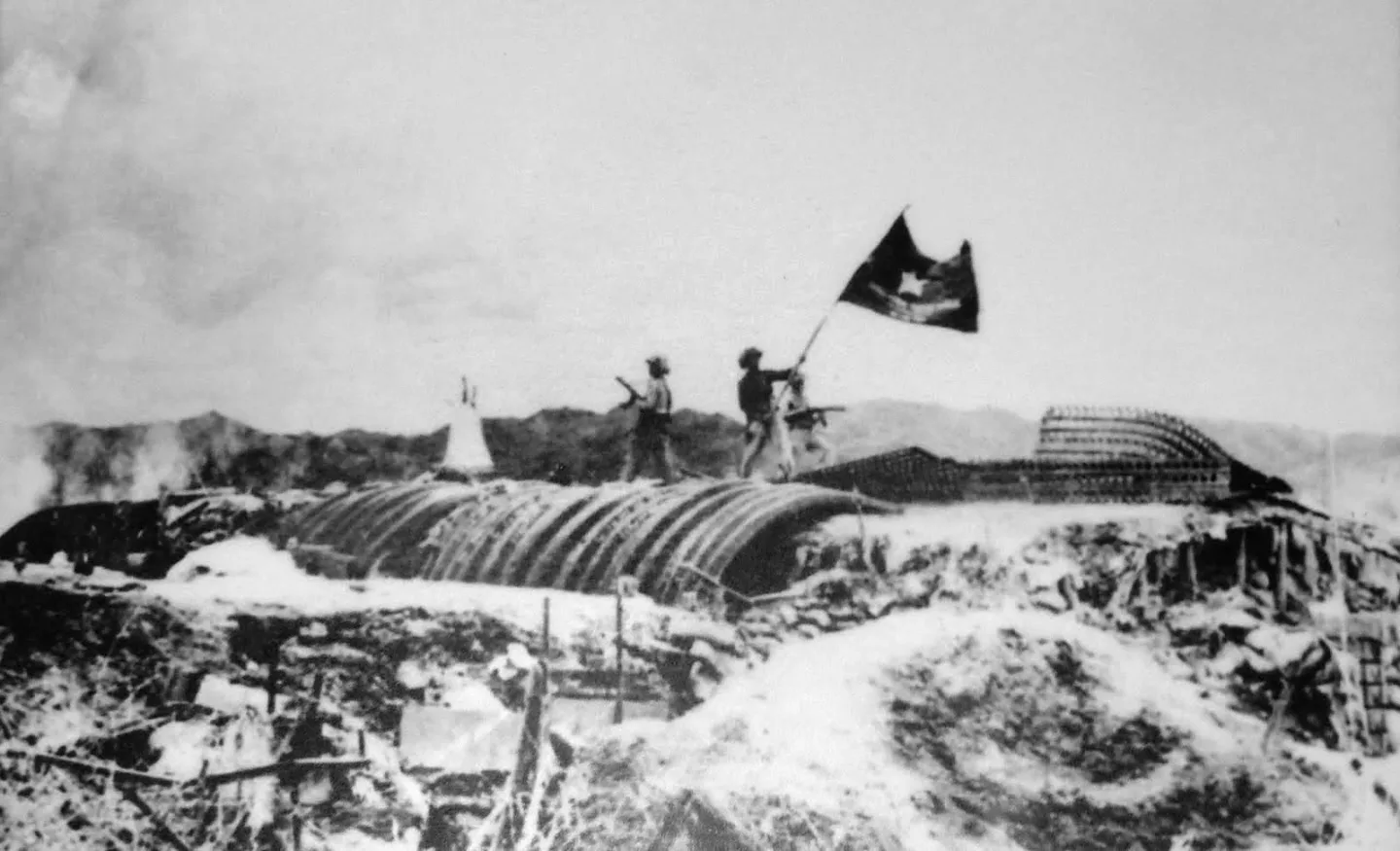
Giap's Mountain Artillery Siege at Dien Bien Phu
At Dien Bien Phu in 1954, General Giap used 250,000 porters to haul heavy 105mm artillery into mountain caves, crushing the French valley garrison.
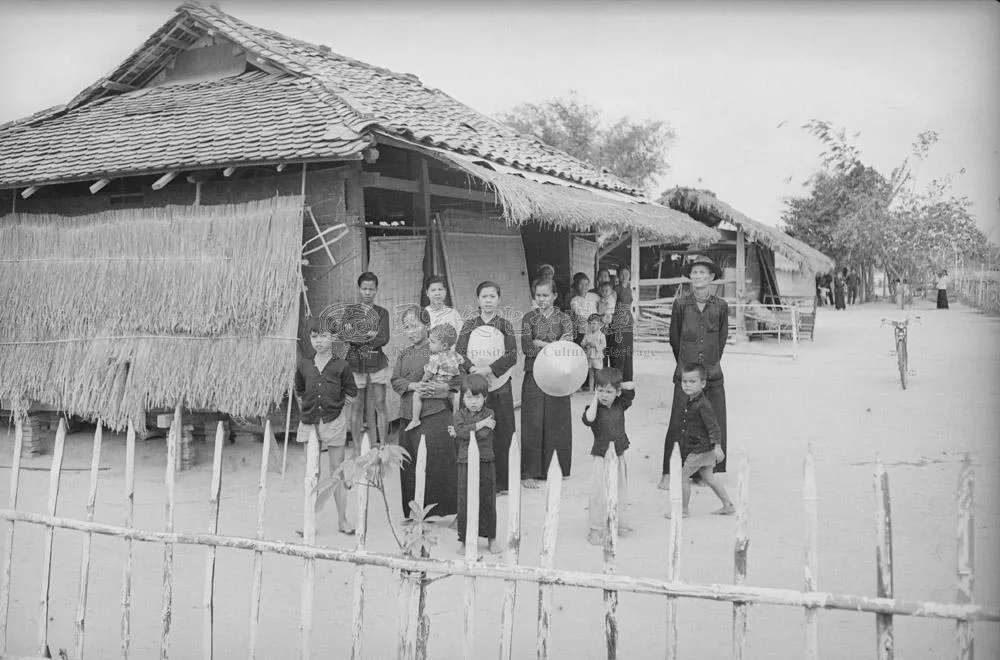
Counter-Insurgency Friction and Strategic Hamlets
Counter-insurgency resettlement programs like South Vietnam's Strategic Hamlets often alienated rural peasants, bolstering guerrilla recruitment.
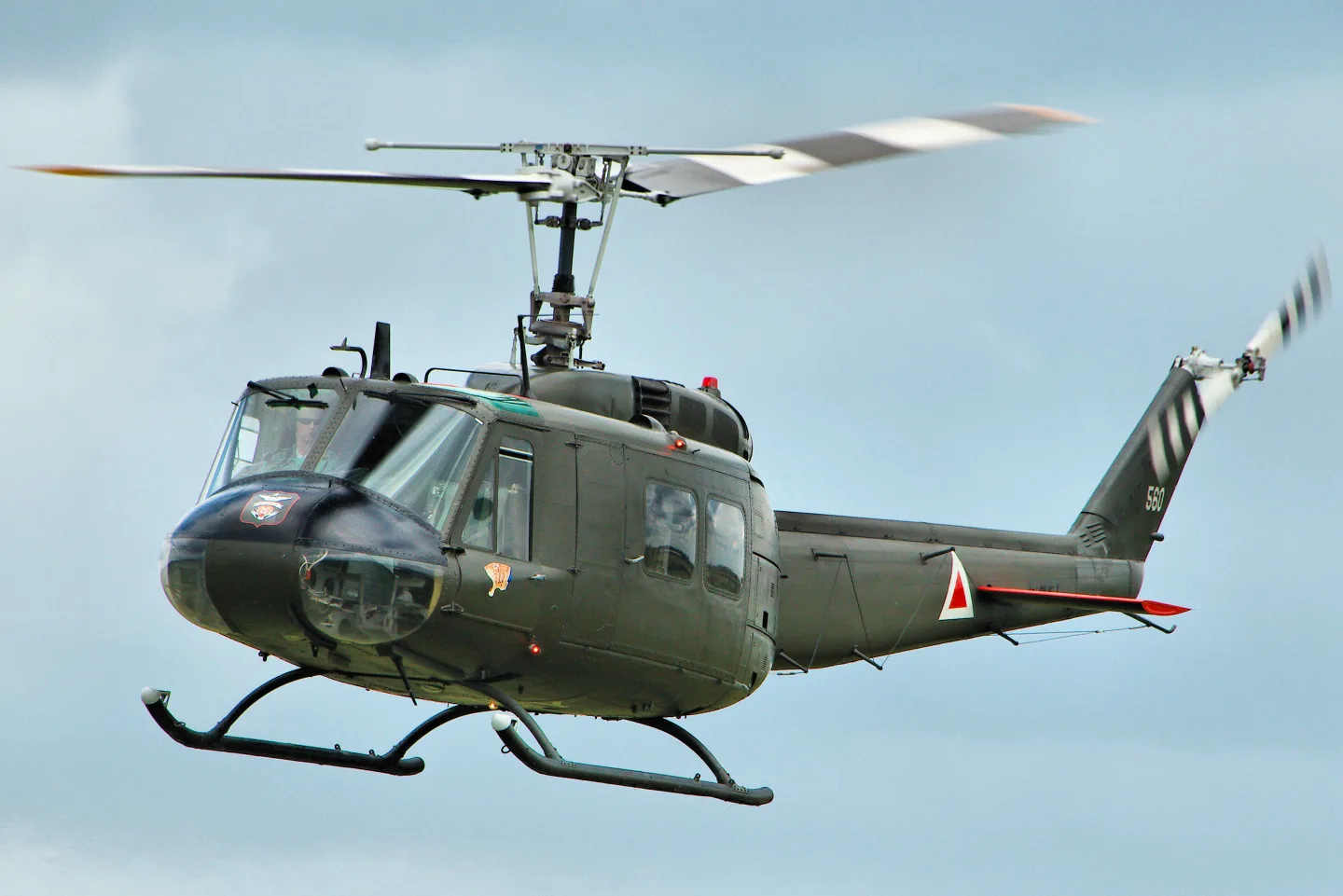
Airmobile Helicopter Doctrine at Ia Drang
At the 1965 Battle of the Ia Drang Valley, the US 1st Cavalry Division proved airmobile doctrine using UH-1 Huey helicopters for assault and resupply.
The Ho Chi Minh Trail and Subterranean Tunnels
The 10,000-mile Ho Chi Minh Trail and 150-mile Cu Chi tunnel labyrinth sustained communist forces despite millions of tons of US aerial bombing.
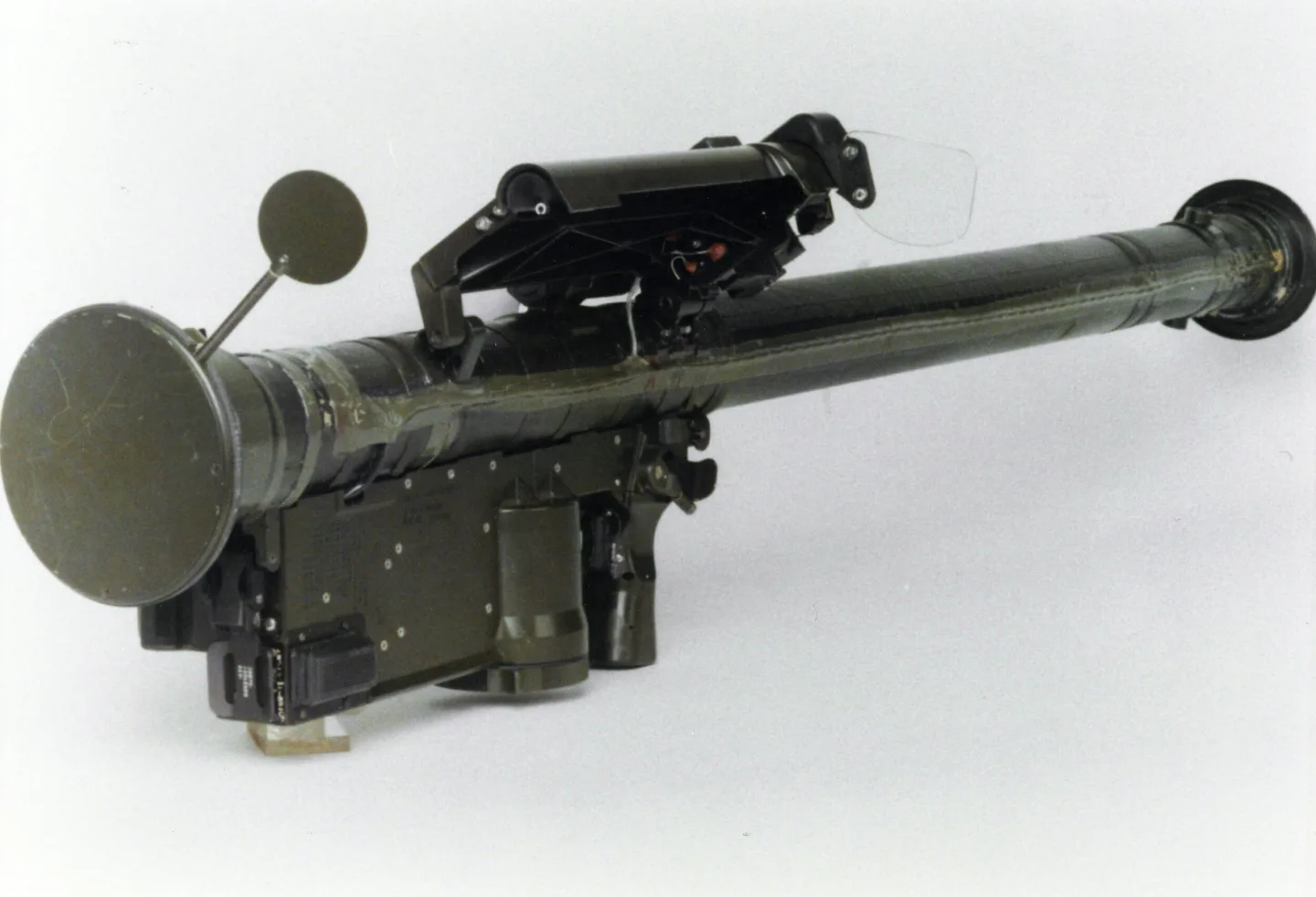
Stinger Missiles and Soviet Air Denial
In the Soviet-Afghan War, US-supplied shoulder-fired Stinger missiles shot down hundreds of aircraft, neutralizing Soviet Mi-24 helicopter dominance.
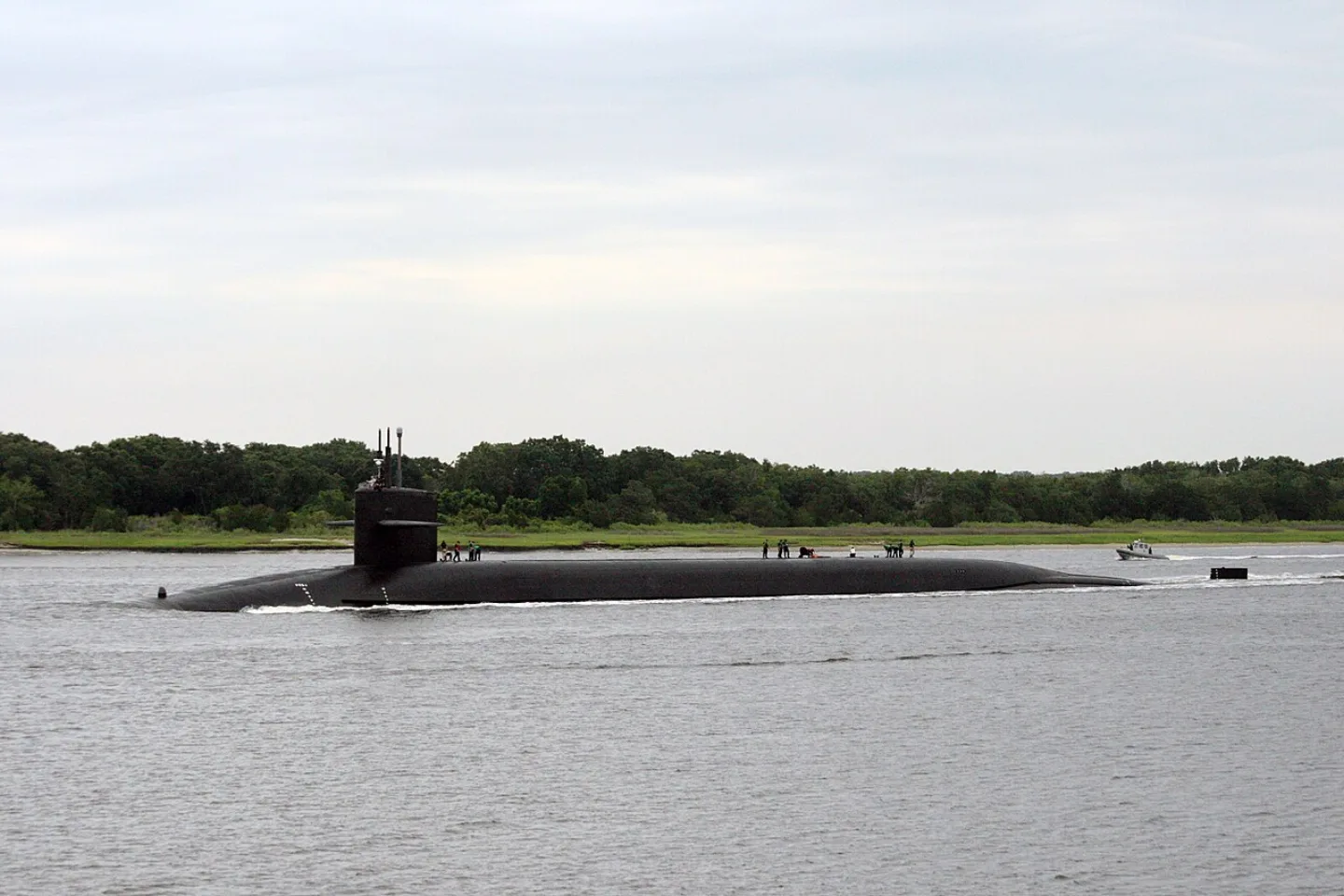
The Cold War Strategic Nuclear Triad
The Cold War Nuclear Triad (silo ICBMs, strategic bombers, and stealth SSBN submarines) ensured an invulnerable second-strike retaliatory capability.
The 1973 Yom Kippur War Missile Shock
In the 1973 Yom Kippur War, Egyptian AT-3 Sagger wire-guided ATGMs and mobile SA-6 SAMs inflicted severe losses on Israeli armor and aircraft.
By the numbers
- In what year AD did General Douglas MacArthur launch the amphibious landing at Inchon?
- 1950
- In what year AD did the French garrison surrender at the Battle of Dien Bien Phu?
- 1954
- In what year AD was the airmobile Battle of the Ia Drang Valley fought in Vietnam?
- 1965
- In what year AD was the Yom Kippur War fought between Israel, Egypt, and Syria?
- 1973
Matched pairs
Each item on the left goes with the one on the right.
- American F-86 Sabre Jet
- Hydraulically powered flight controls and radar-ranging optical lead computing gunsights
- Stage 1: Strategic Defensive
- Preserves core cadres and builds rural political base while trading space for time
- Stealth SSBN Ballistic Submarine
- Undetectable ocean stealth ensuring an invulnerable second-strike retaliatory capability
- AT-3 Sagger Wire-Guided Missile
- Man-portable shaped-charge anti-tank missile guided via joystick to destroy armor
Self-test
Answer each question from memory, then check your work against the answer key.
1. Which Korean port did MacArthur's September 1950 amphibious landing target?
- AHungnam
- BWonsan
- CInchon
- DPusan
2. How did PVA troops avoid UN aerial surveillance while advancing into Korea in 1950?
- ADigging tunnels between hidden bases
- BUsing aircraft-deployed smoke screens
- CTraveling in armored columns on valley roads
- DMarching only at night through mountains
3. What let the F-86 Sabre out-dogfight the heavier-cannon MiG-15 over MiG Alley?
- AHeavier 37mm cannon armament
- BHydraulics, gunsight, G-suit
- CSwept-wing aerodynamic design
- DExtra armor plating around the cockpit
4. Which stage of Mao's Protracted War shifts guerrillas into conventional armies to encircle cities?
- AStrategic Counter-Offensive
- BStrategic Stalemate Phase Two
- CStrategic Withdrawal
- DStrategic Defense
5. In Mao's Strategic Stalemate phase, what tactic do insurgents primarily rely on?
- AGuerrilla ambushes on supply lines
- BNaval blockades of enemy ports
- CMassed conventional tank offensives
- DNuclear deterrence posturing
6. What operational maneuver did MacArthur use at Inchon to reverse the Korean War in 1950?
- ANaval blockade of the Yalu River to starve Chinese forces
- BNight infiltration through mountain passes to encircle Seoul
- CAmphibious landing behind enemy lines to cut supply routes
- DDirect frontal assault across the 38th Parallel minefields
7. How did the Chinese PVA achieve surprise against UN forces near the Chosin Reservoir in 1950?
- ADeploying swept-wing jets to strafe retreating Marines
- BMarching by night through mountains to encircle UN columns
- CLaunching wire-guided ATGMs from hidden bunkers
- DBuilding tunnel networks beneath the reservoir
8. What role did UH-1 Huey helicopters play at the 1965 Battle of the Ia Drang Valley?
- AAerial defoliant spraying operations
- BNaval gunfire spotting for warships
- CLong-range bombing of NVA cities
- DTroop insertion, resupply, and medevac
9. Why couldn't years of US bombing permanently sever the Ho Chi Minh Trail?
- ATrail passed only through neutral China
- BUS bombs couldn't crater jungle roads
- CSupply convoys moved and repaired only at night
- DBraided routes let crews reroute trucks
10. What made the Cu Chi Tunnel network near Saigon effective for Viet Cong guerrillas?
- AQuarters, hospitals, and trapdoors
- BElevated causeways between rooftops
- CPaved airstrips hidden under the jungle canopy
- DConcrete bunkers with radar arrays
11. Which of these is NOT one of the three legs of the Cold War Nuclear Triad?
- AStrategic bombers
- BLand-based ICBMs
- CAircraft carriers
- DSSBN submarines
12. Why do SSBN submarines guarantee a second strike even if the other two Triad legs are destroyed?
- AThey are recalled mid-flight during crises
- BThey hide undetected beneath ocean thermoclines
- CThey can relaunch within 30 minutes of alert
- DThey launch from hardened underground silos
13. What tactical innovation did the US 1st Cavalry Division demonstrate at the 1965 Battle of Ia Drang Valley?
- AAmphibious landing behind enemy coastal defenses
- BSilo-launched ICBM deterrence patrols
- CUnderground tunnel infiltration beneath enemy camps
- DAirmobile assault, resupply, and medevac via UH-1 Hueys
14. Which capability did UH-1 Huey helicopters provide during the airmobile Battle of Ia Drang Valley?
- AHigh-altitude photographic reconnaissance over enemy territory
- BChemical defoliation spraying along supply roads
- CRocket gunship close air support for ground troops
- DArtillery forward-observation and fire-direction relay for supporting batteries
15. Why did the Ho Chi Minh Trail continue functioning despite years of US aerial bombing?
- AMonsoon season halted US bombing runs for months
- BBraided alternate jungle paths let crews reroute trucks
- CDiplomatic pressure forced a temporary bombing halt
- DAnti-aircraft guns shot down enough bombers to deter strikes
16. What made the Cu Chi Tunnels an effective base for Viet Cong guerrillas near Saigon?
- A150-mile tunnels with quarters, hospitals, trapdoors
- BArmored personnel carriers hidden in jungle clearings
- CAbove-ground barracks connected by trenchworks
- DFortified surface bunkers ringed with razor wire
17. What strategic purpose did the Cold War Nuclear Triad's three delivery systems serve together?
- AGuaranteeing retaliation even if one leg is destroyed
- BLetting civilian airlines share military runways
- CCutting defense spending by consolidating forces
- DReplacing ground forces with missile crews only
Go deeper
Answer key
- 1. C InchonOperation Chromite landed Marines at Inchon behind North Korean lines, severing rail supply routes and recapturing Seoul.
- 2. D Marching only at night through mountainsPVA troops marched exclusively at night through mountain terrain to stay hidden from UN aircraft before encircling forces at Chosin.
- 3. B Hydraulics, gunsight, G-suitThe Sabre's hydraulic flight controls, radar-ranging gunsight, and G-suit let pilots out-maneuver the MiG-15, offsetting its heavier 37mm cannon.
- 4. A Strategic Counter-OffensiveIn the Strategic Counter-Offensive, insurgents convert into regular armies to encircle cities and destroy the isolated government forces.
- 5. A Guerrilla ambushes on supply linesStage 2 relies on relentless small-scale guerrilla warfare, ambushing outposts and supply lines while building rural base areas.
- 6. C Amphibious landing behind enemy lines to cut supply routesMacArthur's Operation Chromite landed Marines at Inchon behind enemy lines, severing North Korean supply routes and forcing a headlong retreat.
- 7. B Marching by night through mountains to encircle UN columnsRoughly 120,000 PVA troops of the Ninth Army Group marched only at night through freezing mountains, evading air surveillance to surround UN forces at Chosin Reservoir.
- 8. D Troop insertion, resupply, and medevacHueys gave the 1st Battalion, 7th Cavalry rapid troop insertion, continuous resupply, and medical evacuation in roadless jungle, proving airmobile doctrine.
- 9. D Braided routes let crews reroute trucksThe Trail was a braided 10,000-mile web of jungle paths and roads through Laos and Cambodia; repair crews rerouted trucks around any cratered section.
- 10. A Quarters, hospitals, and trapdoorsThe 150-mile Cu Chi labyrinth held living quarters, hospitals, and weapon workshops with trapdoors, letting guerrillas strike bases and vanish underground.
- 11. C Aircraft carriersThe Triad's three legs are silo-based ICBMs, strategic bombers, and SSBN submarines; aircraft carriers are not part of the nuclear deterrent structure.
- 12. B They hide undetected beneath ocean thermoclinesSSBNs prowl undetected under ocean thermoclines, unlike silo-based ICBMs (fixed, fast-response) or bombers (recallable), guaranteeing retaliation.
- 13. D Airmobile assault, resupply, and medevac via UH-1 HueysAt Ia Drang, UH-1 Huey helicopters gave US forces rapid troop insertion, continuous resupply, and aerial medevac in roadless jungle terrain.
- 14. C Rocket gunship close air support for ground troopsHuey rocket gunships delivered close air support while other Hueys handled troop insertion, resupply, and medevac for 1st Cavalry units at LZ X-Ray.
- 15. B Braided alternate jungle paths let crews reroute trucksThe Trail's redundant braided routes through Laos and Cambodia let repair workers quickly bypass bomb craters and keep supplies moving south.
- 16. A 150-mile tunnels with quarters, hospitals, trapdoorsThe Cu Chi Tunnels' 150-mile subterranean labyrinth let Viet Cong fighters live, plan, and strike from hidden underground bases before vanishing.
- 17. A Guaranteeing retaliation even if one leg is destroyedLand-based ICBMs, strategic bombers, and SSBN submarines together ensured an undestroyable retaliatory strike even after a surprise first attack.
Sources
- Battle of Inchon — Wikipedia — en.wikipedia.org/wiki/Battle_of_Inchon
- Chinese Volunteers in the Korean War 1950–53 — Osprey Publishing blog (2024) — www.ospreypublishing.com/us/osprey-blog/2024/chinese-volunteers-in-the-korean-war-1950-53/
- Battle of Dien Bien Phu — Wikipedia — en.wikipedia.org/wiki/Battle_of_Dien_Bien_Phu
- Battle of Ia Drang — Wikipedia — en.wikipedia.org/wiki/Battle_of_Ia_Drang
- Nuclear triad — Wikipedia — en.wikipedia.org/wiki/Nuclear_triad
- 9M14 Malyutka — Wikipedia — en.wikipedia.org/wiki/9M14_Malyutka
- Operation Abirey-Halev — Wikipedia — en.wikipedia.org/wiki/Operation_Abirey-Halev
- Strategic Hamlet Program — Wikipedia — en.wikipedia.org/wiki/Strategic_Hamlet_Program
- Operation Commando Hunt — Wikipedia — en.wikipedia.org/wiki/Operation_Commando_Hunt
- FIM-92 Stinger — Wikipedia — en.wikipedia.org/wiki/FIM-92_Stinger
- Fehrenbach, This Kind of War
- Appleman, Disaster in Korea
- Futrell, The USAF in Korea
- Mao Zedong, On Protracted War
- Fall, Hell in a Very Small Place
- Nagl, Learning to Eat Soup with a Knife
- Moore & Galloway, We Were Soldiers Once
- Prados, The Blood Road
- Grau & Gress, The Soviet-Afghan War
- Freedman, The Evolution of Nuclear Strategy
- Rabinovich, The Yom Kippur War
- Futrell, The USAF in Korea — www.afhistory.af.mil
- Mao Zedong, On Protracted War — www.marxists.org
- Fall, Hell in a Very Small Place — www.dacapopress.com
- Moore & Galloway, We Were Soldiers Once — www.randomhouse.com
- Prados, The Blood Road — www.wwnorton.com
- Grau & Gress, The Soviet-Afghan War — www.kansaspress.ku.edu
- Freedman, The Evolution of Nuclear Strategy — www.palgrave.com
- Rabinovich, The Yom Kippur War — www.schocken.com
- Mao Zedong, On Protracted War — www.marxists.org/reference/archive/mao/selected-works/volume-2/mswv2_09.htm
- Fehrenbach, This Kind of War — www.potomacbooksinc.com
- Appleman, Disaster in Korea — www.tamupress.com
Image credits
- MacArthur's Amphibious Flank Landing at Inchon: Wikimedia Commons · Unknown Marine · Public domain — commons.wikimedia.org/wiki/File:Lopez_scaling_seawall.jpg
- PVA Mountain Infiltration and Bugle Tactics: Photo by Corporal Peter McDonald, USMC · Public domain — en.wikipedia.org/wiki/Battle_of_Chosin_Reservoir
- First-Generation Jet Dogfights in MiG Alley: USAF · Public domain — commons.wikimedia.org/wiki/File:North_American_XP-86_Sabre_c1947.jpg
- Mao's Three Stages of Protracted War: Wikimedia Commons · Unknown author · Public domain — commons.wikimedia.org/wiki/File:1938_Mao_Zedong_Zhang_Guotao_in_Yan%27an.jpg
- Giap's Mountain Artillery Siege at Dien Bien Phu: Wikimedia Commons · Vietnam People's Army · Public domain — commons.wikimedia.org/wiki/File:Victory_in_Battle_of_Dien_Bien_Phu.jpg
- Counter-Insurgency Friction and Strategic Hamlets: Wikimedia Commons · Unknown author · Public domain — commons.wikimedia.org/wiki/File:Vietnamese_villagers_of_the_strategic_hamlet_inside_a_bamboo_fence_during_Chen_Cheng%27s_visit.jpg
- Airmobile Helicopter Doctrine at Ia Drang: Wikimedia Commons · Airwolfhound from Hertfordshire, UK · CC BY-SA 2.0 — commons.wikimedia.org/wiki/File:UH1_Huey_-_Fly_Navy_2017_(26938005897).jpg
- Stinger Missiles and Soviet Air Denial: Wikimedia Commons · Audiovisuele Dienst Koninklijke Landmacht (AVDKL) · CC BY-SA 4.0 — commons.wikimedia.org/wiki/File:Voorzijde_van_een_Stinger_lanceerbuis_met_richt-afvuurapparatuur_(2086-065-004).jpg
- The Cold War Strategic Nuclear Triad: U.S. Navy photo Mass Communication Specialist 1st Class Kimberly Clifford · Public domain — commons.wikimedia.org/wiki/File:US_Navy_090630-N-1841C-015_Ohio_class_ballistic_missile_submarine_USS_West_Virginia_(SSBN_736)_transits_the_Atlantic_Intracoastal_Waterway_as_it_returns_to_Naval_Submarine_Base_Kings_Bay,_Ga._from_a_patrol_mission.jpg


