
Major Wars: Strategy, Technology, and Mechanics of Conflict study guide · Lesson 11 of 13
World War II: Carrier Aviation, Amphibious Warfare, & the Bomb
Carrier Aviation, Submarine War, & Pacific Island Assault · Strategic Bombing, Normandy, & the Nuclear Dawn
This is the lesson's study guide from the FlashFeed app, plus its key facts and a self-test.
What you'll be able to do
- Explain how carriers displaced battleships at Pearl Harbor, how US submarines sank 55% of Japan's merchant fleet, and why the Hedgehog beat depth charges.
- Explain how P-51 escorts won air supremacy, how Mulberry Harbours and naval gunfire carried Normandy, and how nuclear deterrence changed strategy's goal.
Lesson 11: World War II: Carrier Aviation, Amphibious Warfare, & the Bomb
The Kido Butai Multi-Carrier Strike at Pearl Harbor
On December 7, 1941, the Imperial Japanese Navy launched a surprise attack on the US Pacific Fleet at Pearl Harbor, Hawaii. Commanded by Vice Admiral Chuichi Nagumo, the Kido Butai ("Mobile Force") concentrated six fleet aircraft carriers into a single unified strike force, deploying 353 carrier planes (Nakajima B5N torpedo bombers and Aichi D3A dive bombers). Specially modified aerial torpedoes fitted with wooden stabilizing fins navigated the shallow 45-foot waters of Pearl Harbor, sinking or damaging eight US battleships and demonstrating that the aircraft carrier had decisively superseded the battleship as the primary capital ship of naval warfare.
Cryptanalysis and Dive Bomber Timing at Midway
At the Battle of Midway (June 4–7, 1942), US naval cryptanalysts under Commander Joseph Rochefort at Station HYPO broke the Japanese naval code JN-25, identifying the target "AF" as Midway Atoll. Forewarned, Admiral Chester W. Nimitz positioned three US carriers (Enterprise, Hornet, Yorktown) to ambush the Kido Butai. While US torpedo bomber squadrons were decimated drawing Japanese Zero fighters down to sea level, Lieutenant Commander Wade McClusky's SBD Dauntless dive bombers arrived overhead unmolested. In five catastrophic minutes, American dive bombers struck the Japanese carriers Akagi, Kaga, and Soryu, permanently crippling Japanese naval aviation. The carriers were at their most vulnerable. Nagumo had ordered his reserve bombers rearmed with bombs for land targets, then reversed the order when a scout plane reported American ships, so armed and fueled strike aircraft filled the hangar decks below the flight deck, fuel hoses were laid out for hasty refueling, and bombs and torpedoes lay stacked outside the magazines. The traditional account placed a fully armed strike ready on the flight decks; Jonathan Parshall and Anthony Tully's Shattered Sword (2005), drawing on Japanese records, found that the few aircraft on deck were mostly defensive fighters.
Ultra Intelligence and Centimetric Radar in the Atlantic
The Allied victory in the six-year Battle of the Atlantic was won through technological and intelligence superiority:
- Ultra Cryptanalysis: Mathematicians at Bletchley Park (including Alan Turing) broke German Naval Enigma ciphers using electromechanical "Bombes," allowing Allied convoys to reroute around U-boat wolfpack patrol lines.
- Centimetric Radar (10cm Cavity Magnetron): Enabled escort vessels and long-range B-24 Liberator aircraft to detect surfaced submarine conning towers at night and through dense ocean fog.
- Hedgehog Anti-Submarine Mortars: Forward-throwing spigot mortars firing contact-fused projectiles, eliminating the acoustic blind spot caused by traditional stern depth charges.
The US Submarine Blockade of the Japanese Empire
While German U-boats failed to cut Britain's Atlantic lifeline, the United States Navy submarine campaign achieved the most successful oceanic commerce blockade in history. American fleet submarines (such as the Gato and Balao classes) operated aggressively in Japanese home waters. Equipped with refined Torpedo Data Computers and Mark 14 contact/magnetic torpedoes, US submarines sank over 1,300 Japanese merchant vessels (representing 55% of Japan's entire merchant marine) and cut off oil shipments from the Dutch East Indies, starving Japan's war industries and grounding its air fleets.
Island-Hopping and Higgins Amphibious Landing Craft
In the Pacific Theater, Admiral Chester Nimitz's Central Pacific drive and General Douglas MacArthur's Southwest Pacific advance — including MacArthur and Admiral William Halsey's Operation Cartwheel against Rabaul — together executed the island-hopping strategy, bypassing heavily fortified Japanese island bastions (such as Rabaul and Truk) to seize strategic airfields closer to the Japanese home islands. Amphibious doctrine was revolutionized by Andrew Higgins's LCVP (Higgins Boat): shallow-draft wooden landing craft with bow ramps that could drop 36 infantrymen directly onto coral reefs and beaches, alongside tracked amphibious tractors (LVT Amtracs) capable of clawing over jagged shallow reefs under fire.
The Decisive Fleet Clashes at the Battle of Leyte Gulf
Fought on October 23–26, 1944, the Battle of Leyte Gulf in the Philippines is widely regarded as the largest naval battle in history, involving over 200,000 naval personnel and 300 warships. Clashing across four separate engagements (Sibuyan Sea, Surigao Strait, Cape Engaño, and Samar), the US Third and Seventh Fleets annihilated the remaining offensive power of the Imperial Japanese Navy. At the Battle of Surigao Strait, American battleships executed the final classical "crossing the T" in naval history, while the Japanese launched their first organized Kamikaze suicide aerial attacks off Samar.
The Strategic Bombing Campaign and the P-51 Mustang
The Allied Combined Bomber Offensive against Nazi Germany combined British Royal Air Force night area bombing (commanded by Arthur "Bomber" Harris) with United States Army Air Forces (USAAF) daylight precision bombing against industrial bottlenecks (ball bearings, oil refineries, and aircraft plants). Daylight raids suffered catastrophic losses (over 20% casualty rates at Schweinfurt and Regensburg) until the introduction of the P-51 Mustang fighter in late 1943. Fitted with the British Rolls-Royce Merlin engine and large jettisonable drop tanks, the P-51 possessed the 1,500-mile range needed to escort heavy B-17 Flying Fortresses deep into Berlin, achieving total air supremacy by destroying the Luftwaffe fighter force.
Mulberry Harbours and Naval Gunfire on D-Day
On June 6, 1944 (D-Day, Operation Overlord), Allied forces under General Dwight D. Eisenhower executed history's largest amphibious assault on the beaches of Normandy. To sustain 150,000 troops without capturing a fortified deep-water port, British engineers constructed two colossal prefabricated artificial harbors called Mulberry Harbours, consisting of floating breakwaters (Bombardons), sunken blockships (Corncobs), and concrete caissons (Phoenixes). Close-in naval gunfire support from Allied destroyers and battleships battered German concrete bunkers on Omaha Beach, enabling the breakout from the beachhead.
Subterranean Defense and Kamikazes at Iwo Jima & Okinawa
In 1945, Pacific combat reached its most lethal intensity at Iwo Jima and Okinawa. Japanese General Tadamichi Kuribayashi abandoned traditional shoreline defense in favor of deep subterranean defense networks: miles of underground tunnels, honeycomb bunkers, and artillery emplacements carved into volcanic rock. Clearing these positions required brutal close-quarters fighting with flamethrowers and satchel charges. Off Okinawa, an estimated 1,500 to nearly 1,900 Kamikaze sorties (accounts vary by what is counted) struck the US Fifth Fleet, sinking 36 ships and killing nearly 5,000 sailors.
A kamikaze was in effect a piloted missile. Pilots crashed aircraft loaded with bombs, torpedoes, or other explosives into their targets (the "body attack", tai-atari), and by late 1944 these strikes were more accurate than conventional air attacks and often did more damage. On May 11, 1945, two kamikazes hit the carrier USS Bunker Hill off Okinawa: their bombs penetrated the flight deck, the crashes set parked aircraft full of fuel and ammunition ablaze, and gasoline fires and explosions killed 396 sailors and airmen.
The Manhattan Project and Atomic Fission at Hiroshima
Led by physicist J. Robert Oppenheimer and General Leslie Groves, the top-secret Manhattan Project developed the world's first nuclear weapons. On August 6, 1945, the Boeing B-29 Superfortress Enola Gay dropped the uranium-235 gun-type atomic bomb (Little Boy) on Hiroshima, detonating with an explosive yield of 15 kilotons and destroying 70% of the city. Three days later, on August 9, a plutonium implosion weapon (Fat Man) was dropped on Nagasaki. The atomic bombings, combined with the Soviet invasion of Manchuria, forced Emperor Hirohito to announce the unconditional surrender of Imperial Japan on August 15, 1945.
Nuclear Weapons and the Transformation of Total Warfare
The detonation of nuclear weapons fundamentally transformed the Clausewitzian relationship between warfare and politics. For the first time in human history, weapons existed with the capacity to destroy human civilization within hours. Military strategy shifted from traditional operational victory to nuclear deterrence: preventing wars from occurring rather than winning them on the battlefield. The emergence of the US-Soviet nuclear arms race ushered in the Cold War, replacing total global conflict with proxy wars, limited engagements, and nuclear brinkmanship.
Key terms
- Fast Carrier Task Force
- A US Navy formation grouping multiple aircraft carriers with escort warships under a numbered task force (such as Task Force 38/58) to project long-range offensive air power.
- Island-Hopping Strategy
- A Pacific campaign doctrine bypassing heavily fortified enemy islands to capture strategic unfortified airfields closer to Japan.
- Kamikaze Tactic
- A deliberate suicide attack in which Japanese pilots flew explosive-laden aircraft directly into Allied warships.
- Mutually Assured Destruction
- A national security doctrine where a full-scale use of nuclear weapons by two opposing sides would cause the complete annihilation of both.
Key concepts
Kido Butai
- First Air Fleet of the Imperial Japanese Navy concentrating six fleet carriers
- Pioneered massed multi-carrier flight deck operations and coordinated aerial torpedo strikes
- Executed the surprise attack on Pearl Harbor and dominated early Pacific naval campaigns
Douglas SBD Dauntless
- Carrier-based dive bomber of the United States Navy equipped with perforated split dive flaps
- Delivered 1,000-pound armor-piercing bombs in steep 70-degree vertical dive attacks
- Sank four Japanese fleet aircraft carriers during the decisive Battle of Midway in 1942
Ultra Cryptanalysis
- Allied signals intelligence project based at Bletchley Park decrypting German Enigma ciphers
- Utilized electro-mechanical Bombe machines designed by Alan Turing to break naval codes
- Allowed Allied convoy routes to be secretly diverted around German U-boat wolfpack patrol lines
LCVP Higgins Boat
- Shallow-draft plywood landing craft featuring a forward drop-down steel bow ramp
- Designed by New Orleans boatbuilder Andrew Higgins for trappers and oil-drillers navigating the shallow Louisiana bayous
- Disembarked 36 fully armed infantrymen directly onto combat beachheads in Europe and the Pacific
North American P-51 Mustang
- Long-range single-seat escort fighter powered by the British Rolls-Royce Merlin engine
- Fitted with laminar-flow wings and auxiliary drop tanks providing a combat radius of 750 miles
- Provided continuous fighter escort all the way to Berlin, destroying Luftwaffe interceptors
Mulberry Harbour
- Massive prefabricated artificial port facility towed in pieces across the English Channel to Normandy
- Included massive hollow concrete Phoenix caissons, sunken blockships, and floating steel roadways
- Discharged millions of tons of ammunition and vehicles to sustain the Allied liberation of France
Little Boy Atomic Bomb
- Gun-type nuclear fission weapon utilizing enriched uranium-235 developed by the Manhattan Project
- Fired a subcritical uranium projectile down an artillery barrel into a target cylinder to achieve critical mass
- Detonated over the city of Hiroshima on August 6, 1945, with an explosive yield of 15 kilotons
Nuclear Deterrence
- Strategic doctrine holding that possession of overwhelming nuclear retaliatory power prevents enemy attack
- Based on the threat of Mutually Assured Destruction (MAD) if a first strike is launched
- Shifted military grand strategy from preparing to fight total war to preventing its outbreak
Key facts
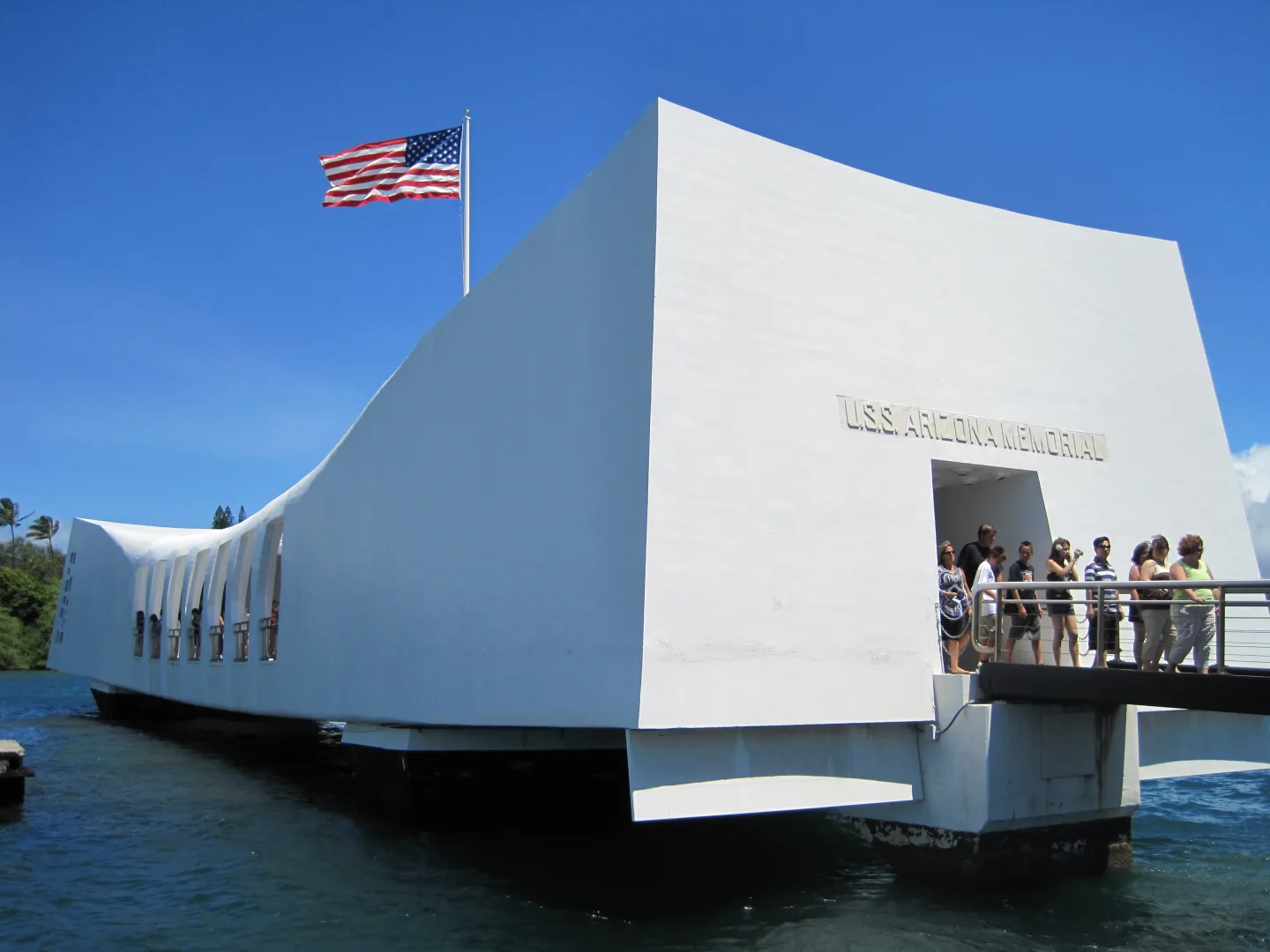
Carrier Aviation Dominance at Pearl Harbor
At Pearl Harbor in 1941, the six-carrier Kido Butai strike proved that naval aviation had replaced the battleship as the supreme capital ship of warfare.
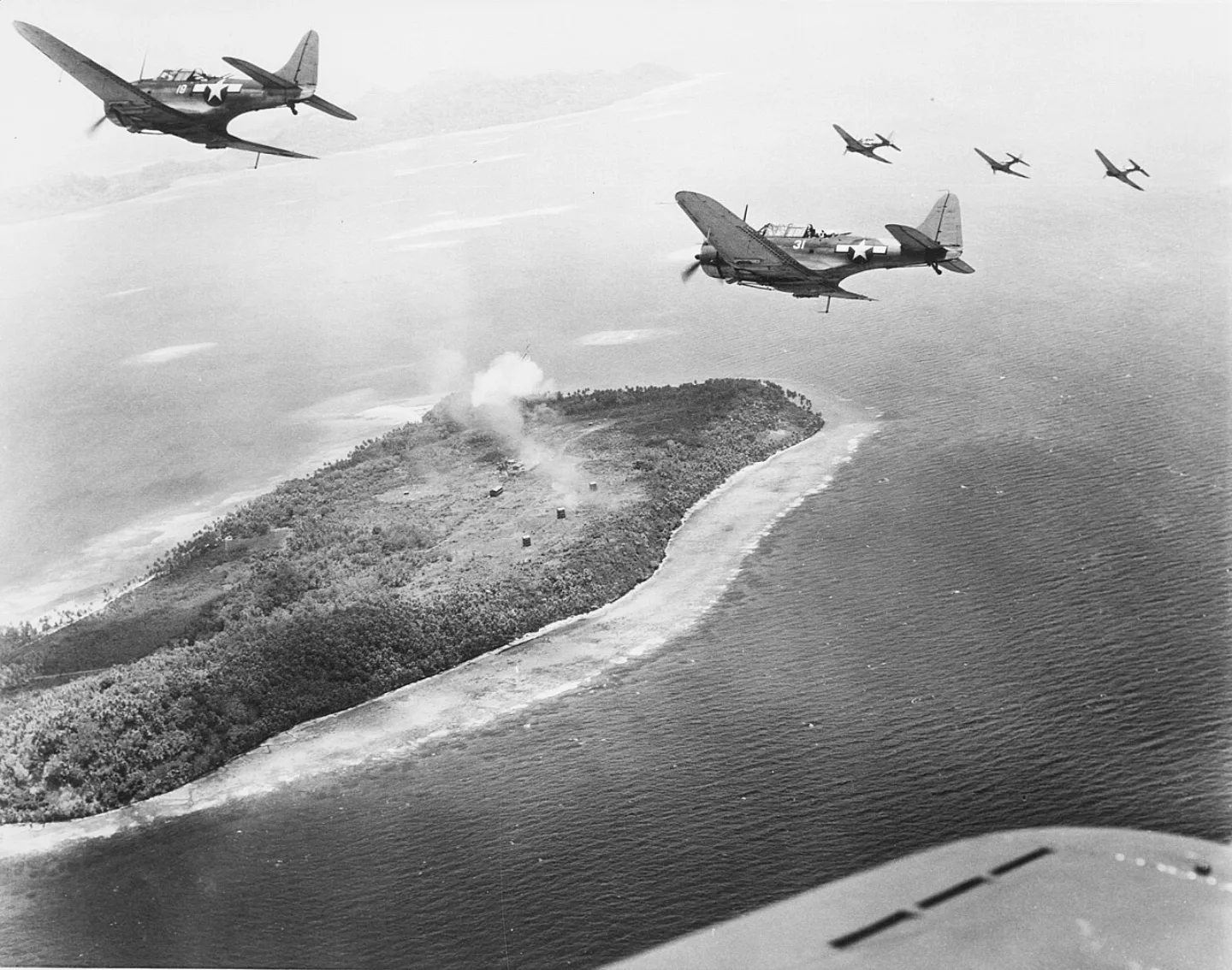
Codebreaking and Dive Bombers at Midway
At Midway in 1942, JN-25 cryptanalysis and SBD Dauntless dive bombers destroyed three Japanese fleet carriers in five minutes and a fourth hours later, turning the Pacific War.
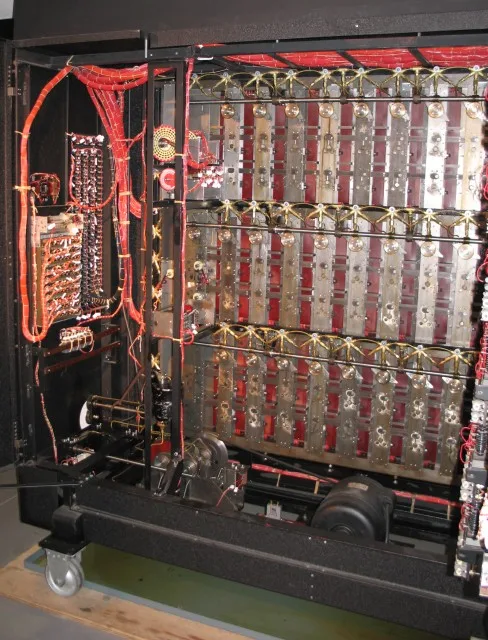
Ultra Intelligence and Radar in the Atlantic
The Battle of the Atlantic was won through Bletchley Park Ultra Enigma decrypts, 10cm cavity magnetron radar, and forward-throwing Hedgehog mortars.
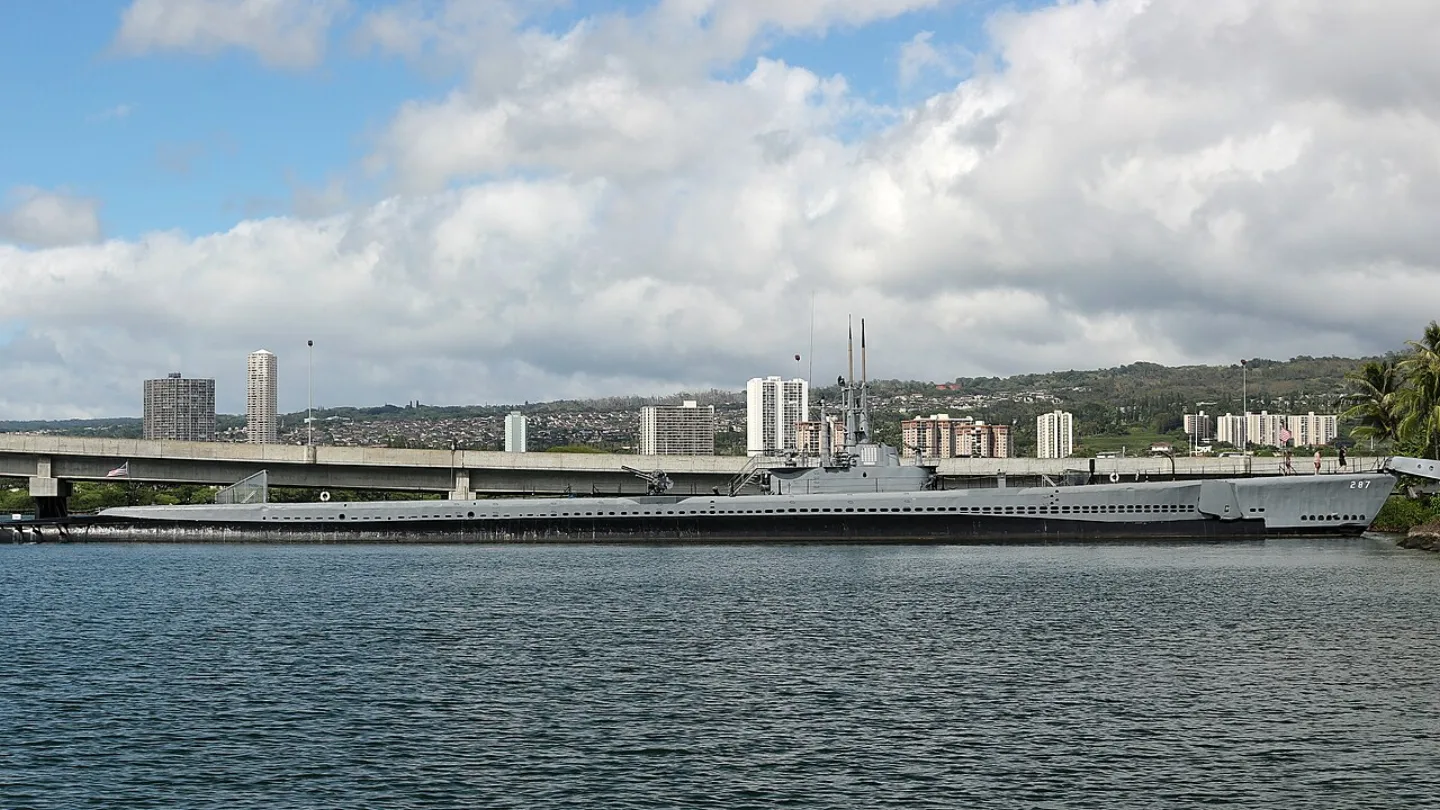
US Submarine Blockade of Japan
The US Navy submarine offensive in the Pacific sank 55% of Japan's merchant fleet, cutting off raw materials and oil to starve Japan's war industry.
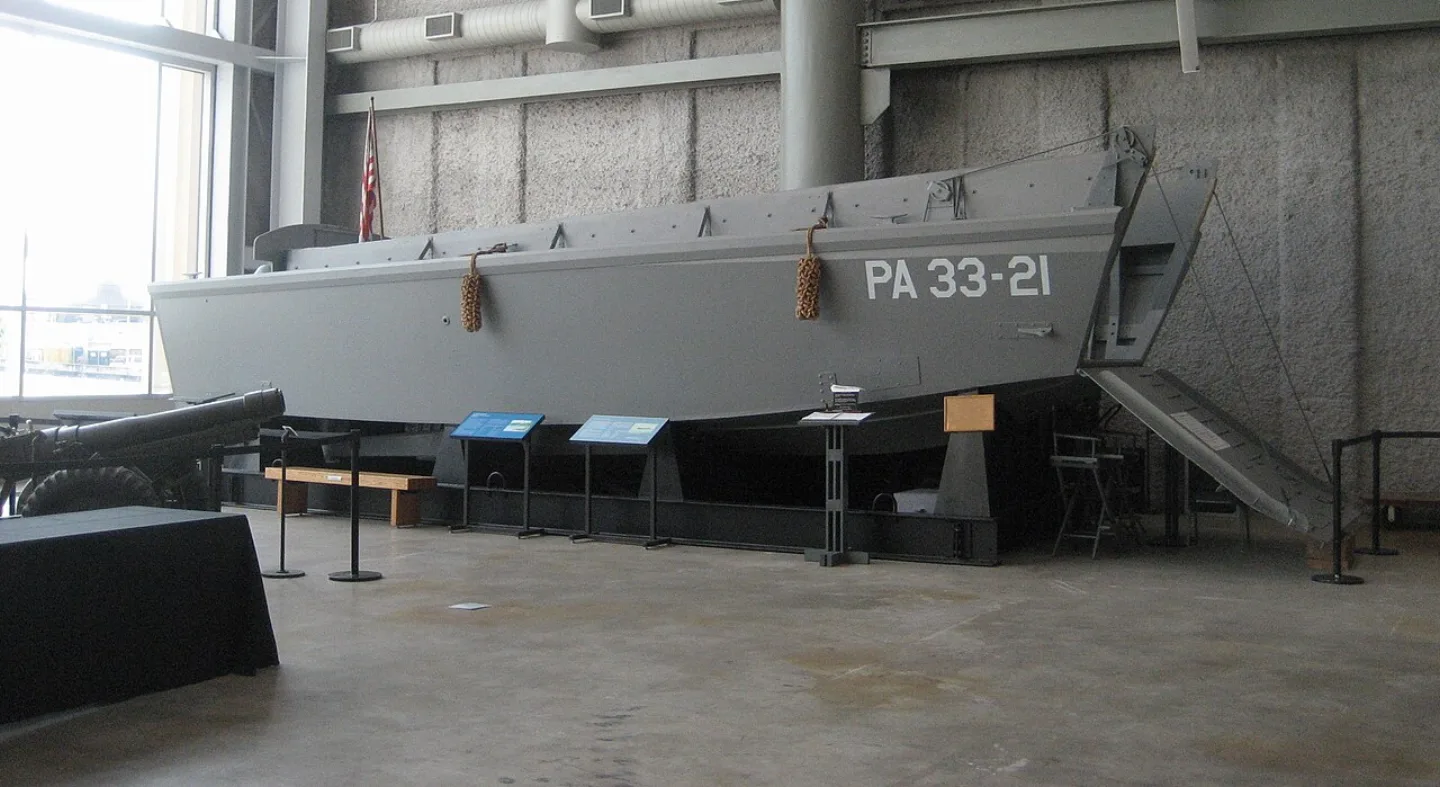
Island-Hopping and Higgins Landing Craft
The Pacific island-hopping campaign relied on the shallow-draft Higgins boat (LCVP) and tracked LVT Amtracs to land troops across shallow coral reefs.
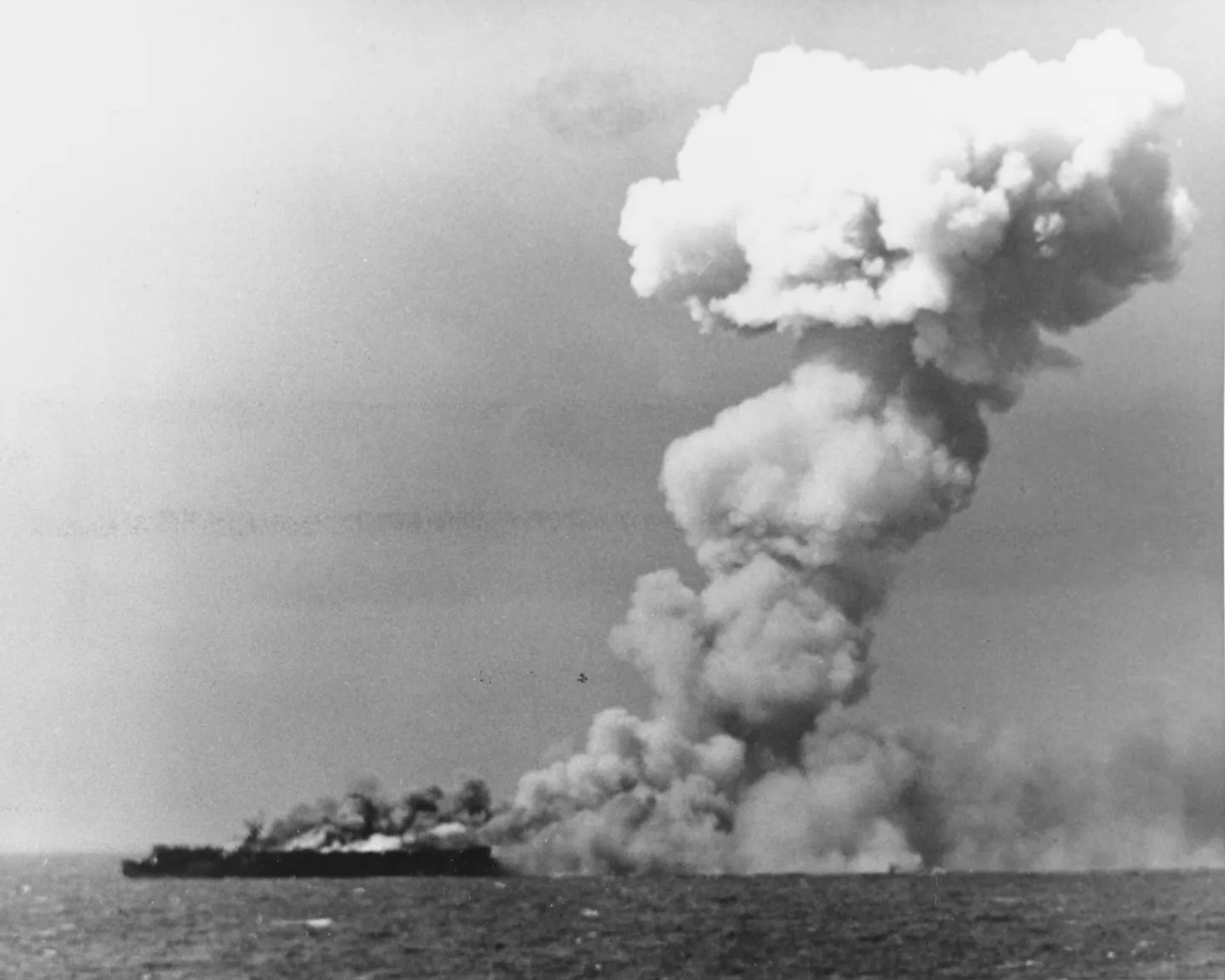
Decisive Clash at Leyte Gulf
At Leyte Gulf in 1944, widely regarded as the largest naval battle in history, the battle destroyed the Imperial Japanese Navy's battlefleet and witnessed the first organized Kamikaze attacks.
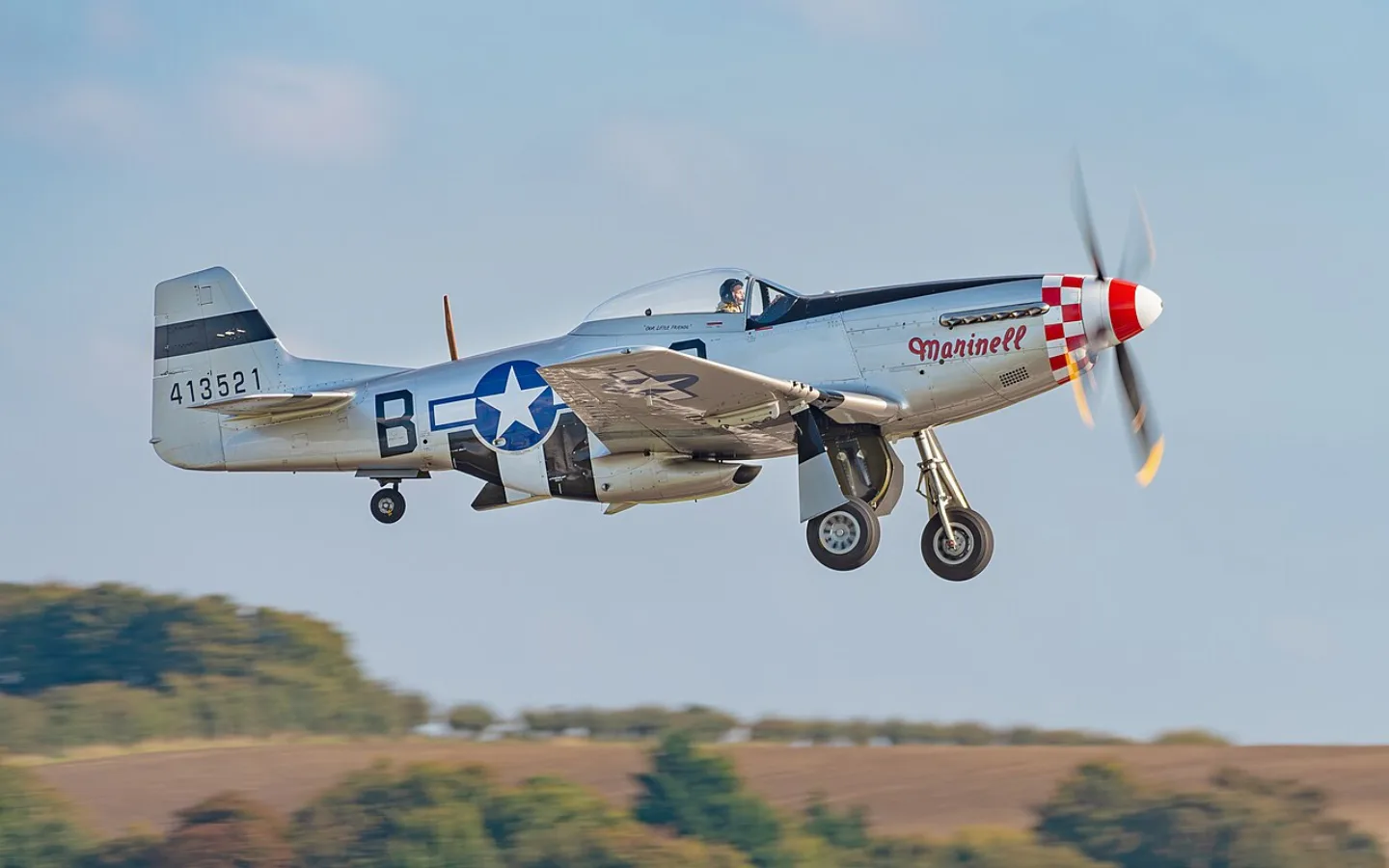
P-51 Mustangs and Strategic Air Superiority
The long-range P-51 Mustang fighter with drop tanks allowed Allied bombers to strike deep into Germany with fighter escort, breaking the Luftwaffe.
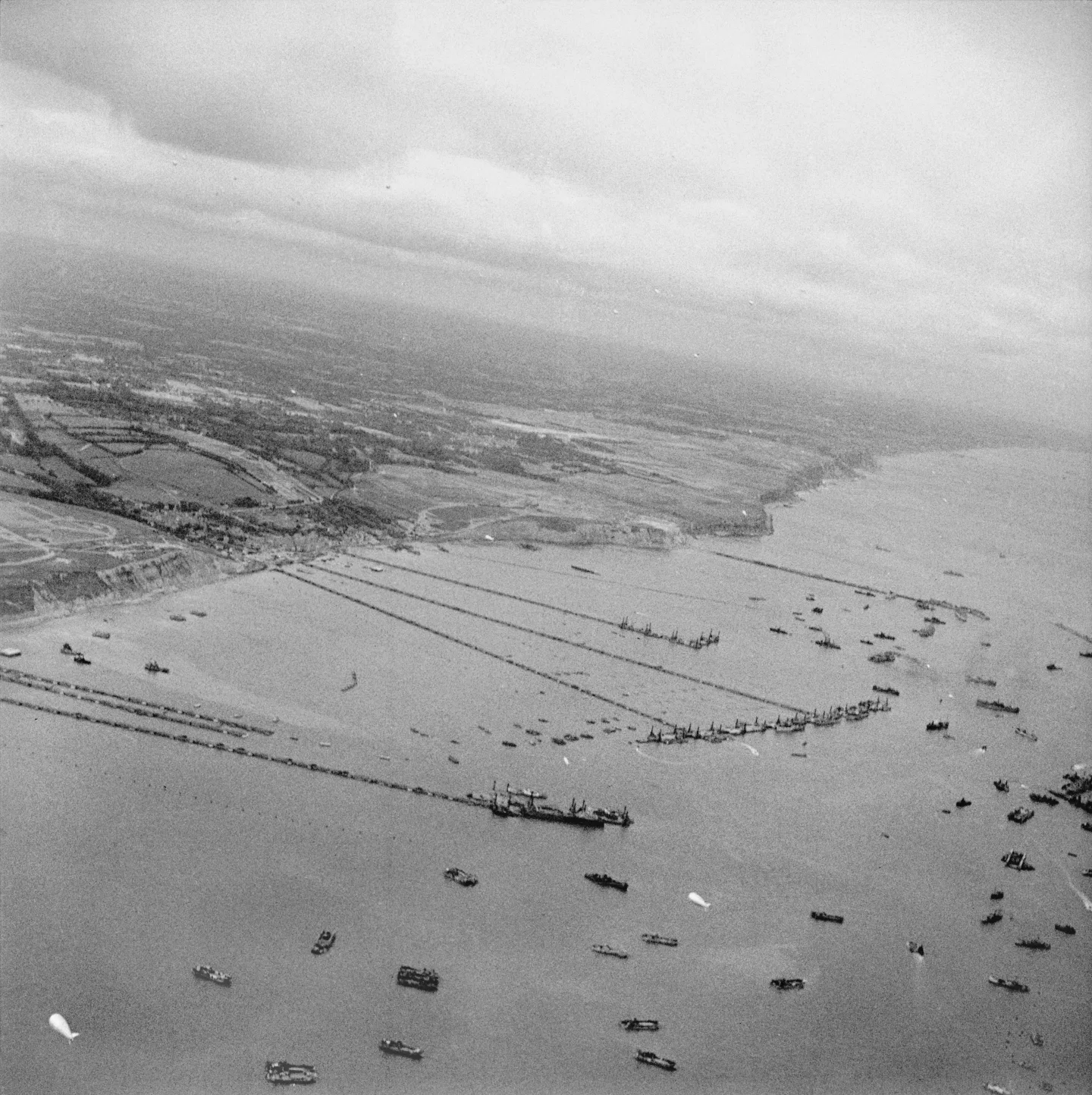
Mulberry Harbours and Naval Guns on D-Day
On D-Day in 1944, Allied forces used prefabricated Mulberry artificial harbours and close-in naval destroyer bombardment to secure the Normandy beachhead.
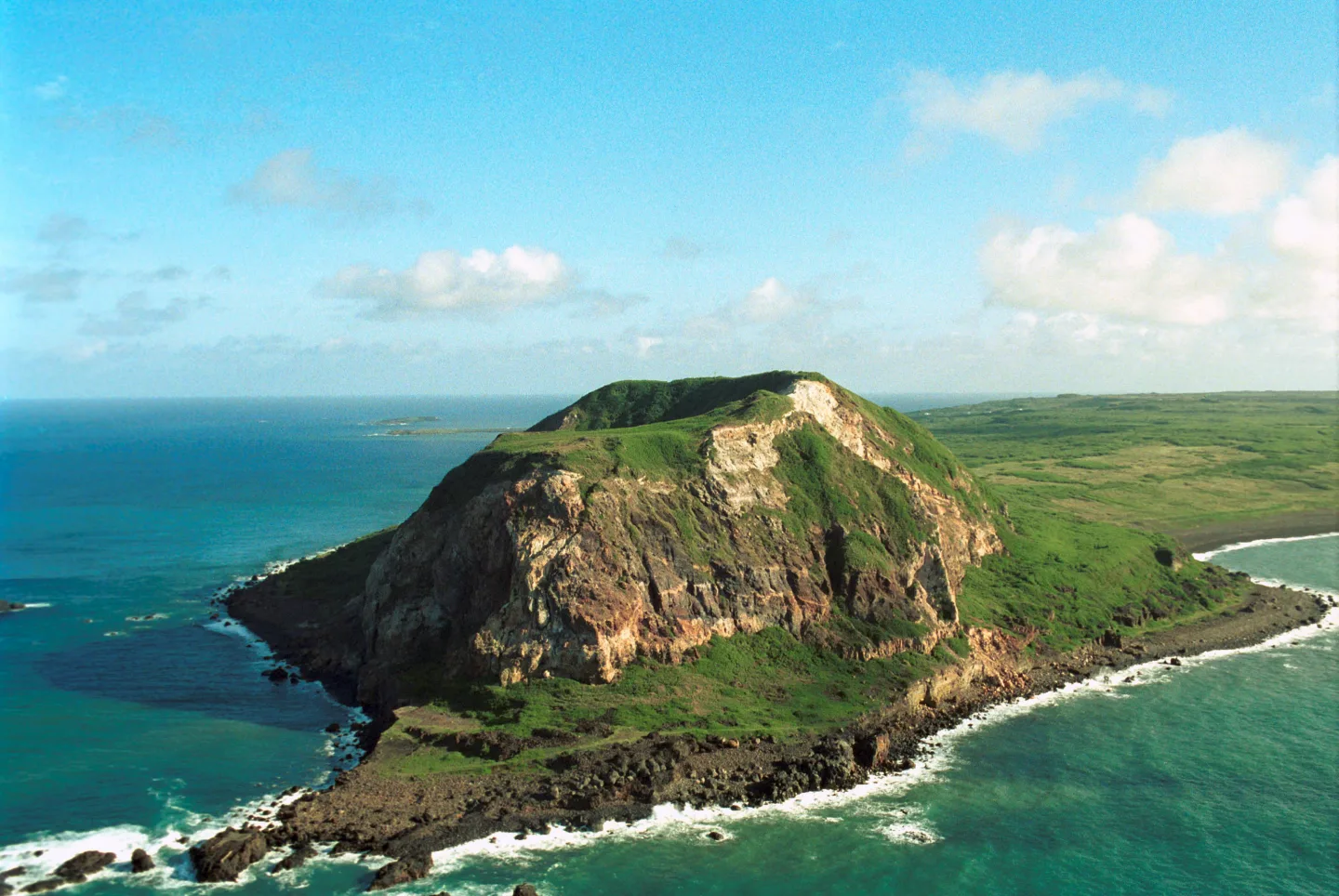
Subterranean Bunkers and Kamikazes at Okinawa
At Iwo Jima and Okinawa in 1945, Japanese subterranean tunnel honeycombs and, chiefly off Okinawa, an estimated 1,500 to nearly 1,900 Kamikaze attacks inflicted massive attritional casualties on US forces.
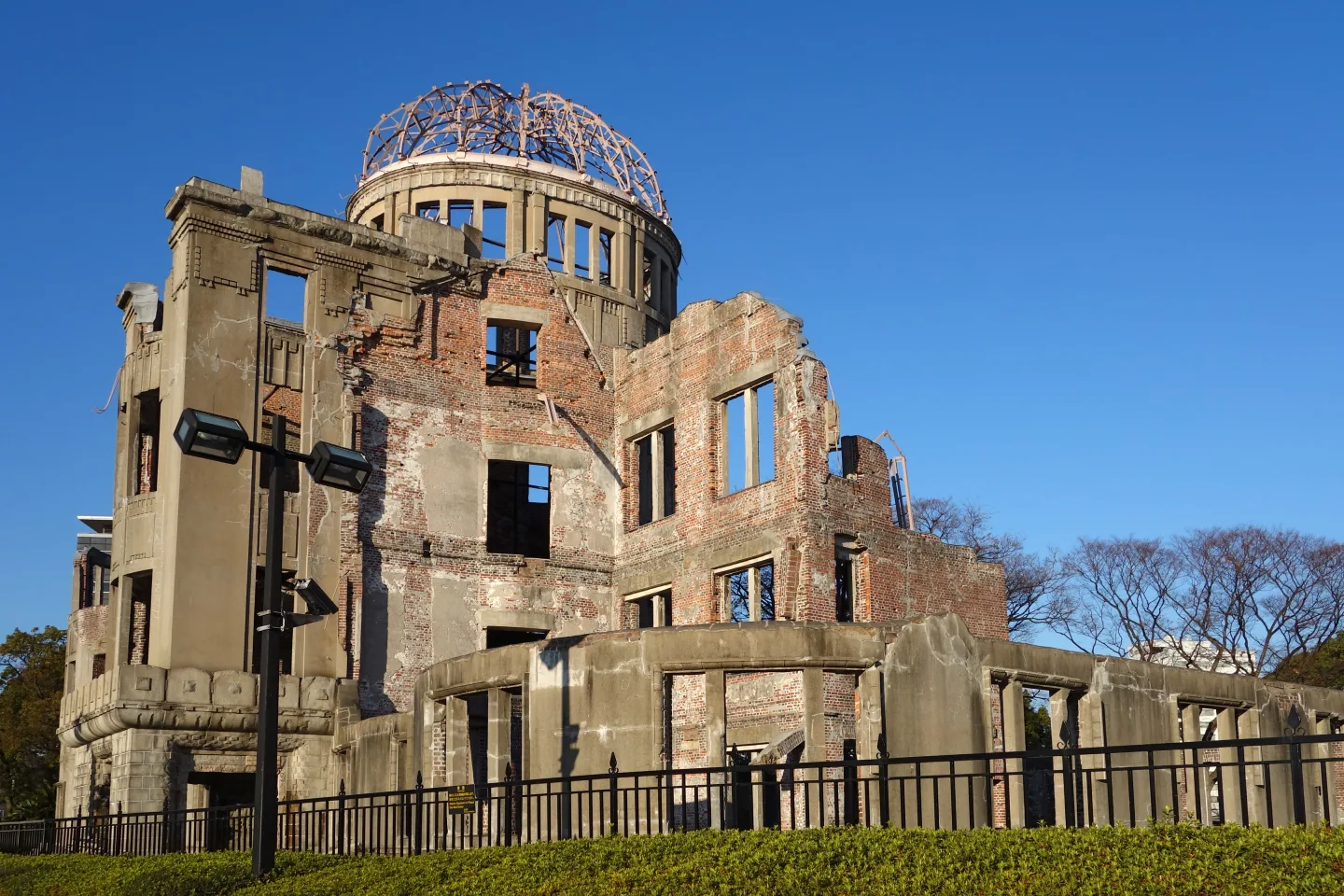
The Atomic Bombing of Hiroshima and Nagasaki
In August 1945, the Manhattan Project's atomic bombs dropped on Hiroshima and Nagasaki, together with the Soviet invasion of Manchuria, pushed Japan to an unconditional surrender, ending World War II.
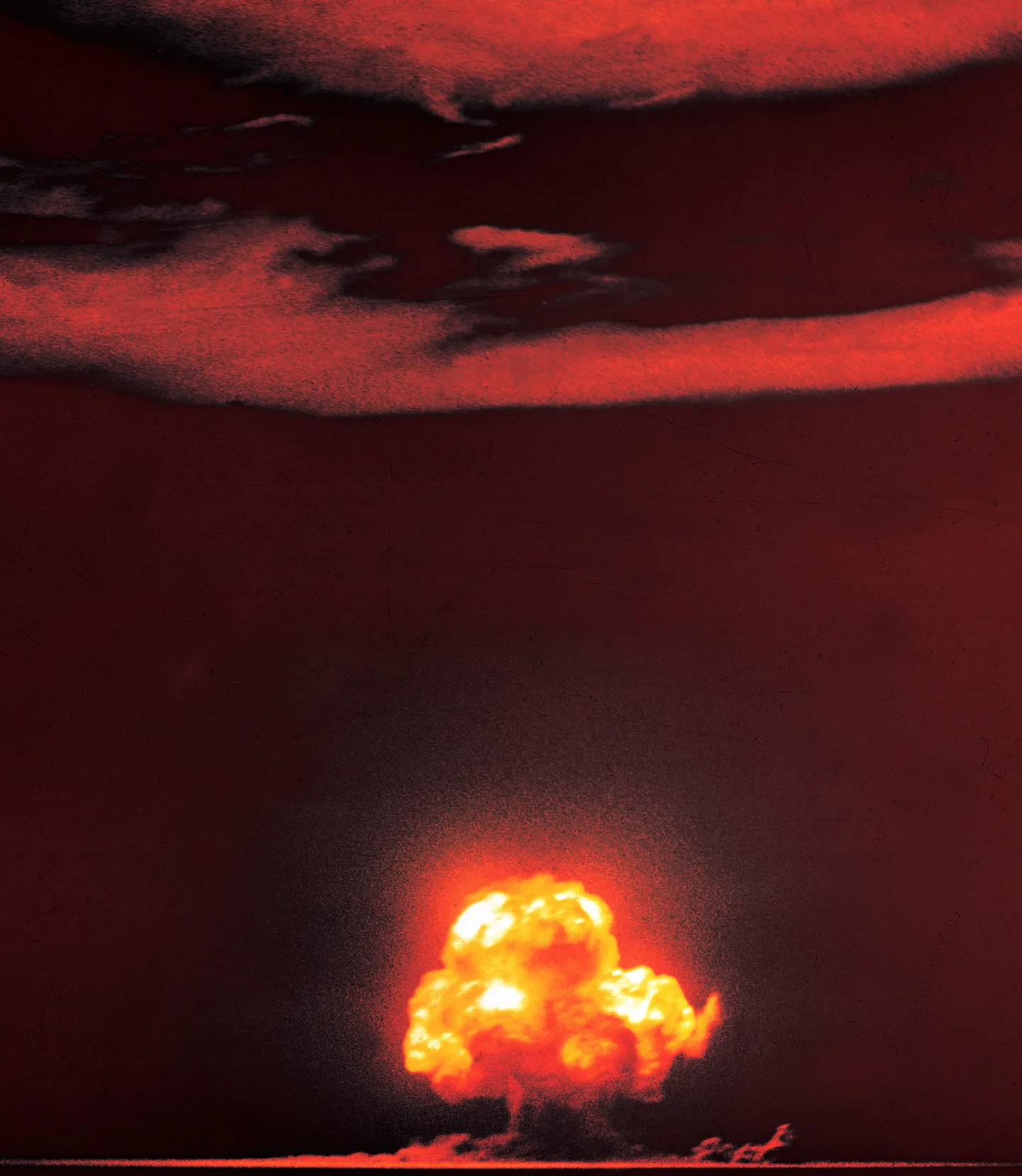
Nuclear Deterrence and Strategic Transformation
The advent of nuclear weapons shifted military strategy from battlefield victory to nuclear deterrence, preventing total war between superpowers.
By the numbers
- In what year AD did Imperial Japan launch the surprise carrier strike on Pearl Harbor?
- 1941
- In what year AD was the decisive carrier Battle of Midway fought in the Pacific?
- 1942
- In what year AD did Allied forces launch the D-Day landings in Normandy?
- 1944
- In what year AD were atomic bombs detonated over Hiroshima and Nagasaki?
- 1945
Matched pairs
Each item on the left goes with the one on the right.
- Fleet Aircraft Carrier
- Launches coordinated air wings carrying torpedoes and dive bombs across 200+ miles
- Tracked Amphibious Amtrac
- Claws directly over shallow jagged coral reefs and drives inland onto the beachhead
- US Eighth Air Force
- Daylight precision bombing of critical industrial nodes, oil refineries, and aircraft plants
- Little Boy Weapon (Hiroshima)
- Gun-type assembly utilizing highly enriched uranium-235 to achieve critical mass
Self-test
Answer each question from memory, then check your work against the answer key.
1. Why were the Japanese carriers at Midway so vulnerable when McClusky's dive bombers struck them?
- AJapanese carriers had exhausted their fighter fuel reserves during dawn patrol flights
- BNagumo had launched his fighter cover to escort a second strike against Midway's airfield
- CDamage control parties had been reassigned to firefighting duty on a different carrier
- DArmed, fueled strike planes filled the hangars amid fuel hoses and bombs stacked outside the magazines
2. Why was the forward-throwing Hedgehog mortar far more lethal against submarines than traditional stern depth charges?
- ADropped a tighter cluster of standard depth charges set to a shallower detonation depth
- BReleased a chemical dye that marked the submerged U-boat's position for aircraft
- CFired contact-fused bombs ahead of the ship while sonar maintained tracking
- DIt fired miniature acoustic-homing torpedoes powered by compressed steam
3. Which vessel type did the Kido Butai's Pearl Harbor strike prove was now the navy's primary capital ship?
- AAircraft carrier
- BBattleship
- CHeavy cruiser
- DAttack submarine
4. Which WWII landing craft had a bow ramp that could drop 36 infantrymen directly onto beaches and coral reefs?
- ALVT Amtrac
- BLCVP Higgins Boat
- CDUKW Amphibious Truck
- DLST Landing Ship
5. What percentage of Japan's merchant marine did the US submarine campaign sink by the end of the war?
- A55%
- B40%
- C25%
- D75%
6. How effective was the US Navy submarine campaign against Japan's merchant marine?
- ASank a majority of German U-boats in the Pacific
- BDestroyed 1,900 Kamikaze aircraft before launch
- CSank 1,300+ ships, 55% of Japan's merchant fleet
- DCaptured Rabaul and Truk by direct assault
7. What torpedo technology equipped US fleet submarines like the Gato and Balao classes?
- AAcoustic-homing Hedgehog mortars fired from the bow
- BTorpedo Data Computers with Mark 14 torpedoes
- CWooden-finned aerial torpedoes for shallow water
- DCentimetric cavity magnetron radar on the conning tower
8. Which British engine, paired with drop tanks, gave the P-51 Mustang range to escort bombers to Berlin?
- ARolls-Royce Griffon
- BNapier Sabre
- CBristol Hercules
- DRolls-Royce Merlin
9. Which codename referred to the concrete caisson components of the Mulberry Harbours at Normandy?
- AGooseberries
- BCorncobs
- CBombardons
- DPhoenixes
10. What broke the German deadlock pinning US troops down on Omaha Beach on D-Day?
- ANaval gunfire from destroyers
- BTank artillery barrage
- CCarpet bombing by B-17s
- DParatrooper drop behind defenses
11. Who led the scientific research team of the top-secret Manhattan Project that built the atomic bomb?
- ALeslie Groves
- BJ. Robert Oppenheimer
- CAlan Turing
- DChester Nimitz
12. How did the doctrine of nuclear deterrence change the goal of military strategy?
- AWin through attrition warfare
- BForce unconditional surrender
- CPrevent wars, not fight them
- DMaximize territorial conquest
13. What breakthrough gave Allied bombers air supremacy over Germany in late 1943?
- ASupermarine Spitfire fighters providing bomber escort over Germany
- BP-51 Mustangs with drop tanks escorting deep raids
- CAvro Lancasters replacing all daylight raids
- DThe atomic bomb ending need for bomber escorts
14. What targets did USAAF daylight precision bombing prioritize in the Combined Bomber Offensive?
- ARail yards supplying the Kursk salient
- BCoastal U-boat pens under radar cover
- CBall bearings, oil, and aircraft plants
- DGerman civilian residential districts in major cities
15. What artificial structures sustained Allied troops at Normandy without a captured port?
- AMulberry Harbours of breakwaters, blockships, caissons
- BUnderground tunnels modeled on Iwo Jima's defenses
- CA siege causeway built from rubble, like at Tyre
- DPontoon rail bridges linking Sedan to the coast
16. How did Allied naval gunfire support troops pinned down on Omaha Beach on D-Day?
- AArmy combat engineers cleared bunkers with satchel charges
- BSubmarines shelled the coastline with their deck guns
- CEscort carriers launched dive-bomber strikes on the bluffs
- DDestroyers battered German bunkers to enable breakout
Go deeper
Answer key
- 1. D Armed, fueled strike planes filled the hangars amid fuel hoses and bombs stacked outside the magazinesNagumo's rearming order and its reversal left armed, fueled strike planes in the hangar decks, with fuel hoses out and bombs and torpedoes stacked outside the magazines, so single bomb hits set off uncontrollable fires.
- 2. C Fired contact-fused bombs ahead of the ship while sonar maintained trackingDepth charges lost sonar tracking as the ship sailed over the U-boat, but Hedgehog fired 24 mortars ahead without breaking sonar contact, exploding only on impact.
- 3. A Aircraft carrierSix carriers concentrated into one strike force sank or damaged eight battleships, showing carrier aviation had superseded the battleship as the fleet's premier capital ship.
- 4. B LCVP Higgins BoatThe shallow-draft plywood LCVP had a bow ramp for 36 infantry, unlike the tracked LVT Amtrac used for reefs or the wheeled DUKW.
- 5. A 55%US fleet submarines sank over 1,300 Japanese merchant vessels, representing 55% of Japan's entire merchant marine, cutting off oil and raw materials.
- 6. C Sank 1,300+ ships, 55% of Japan's merchant fleetUS fleet submarines sank over 1,300 Japanese merchant vessels, 55% of Japan's merchant marine, cutting off oil and raw materials to its war industries.
- 7. B Torpedo Data Computers with Mark 14 torpedoesGato and Balao-class submarines used refined Torpedo Data Computers paired with Mark 14 contact/magnetic torpedoes to hunt Japanese shipping.
- 8. D Rolls-Royce MerlinThe Rolls-Royce Merlin combined with jettisonable drop tanks gave the Mustang the 1,500-mile range needed to escort B-17s deep into Germany.
- 9. D PhoenixesPhoenixes were the concrete caissons; Corncobs were sunken blockships and Bombardons were floating breakwaters in the Mulberry Harbour system.
- 10. A Naval gunfire from destroyersAllied destroyers and battleships closed to point-blank range and battered German bunkers with direct gunfire, enabling the breakout from Omaha Beach.
- 11. B J. Robert OppenheimerOppenheimer directed the Manhattan Project's scientific research while General Leslie Groves ran military oversight; Turing worked on Enigma and Nimitz commanded the Pacific Fleet.
- 12. C Prevent wars, not fight themBecause a nuclear exchange could destroy both sides, deterrence shifted strategy from winning battlefield victories to preventing wars from occurring at all.
- 13. B P-51 Mustangs with drop tanks escorting deep raidsThe P-51 Mustang's long range with jettisonable drop tanks let it escort B-17 bombers deep into Germany, breaking the Luftwaffe's fighter force.
- 14. C Ball bearings, oil, and aircraft plantsUSAAF daylight raids targeted industrial bottlenecks such as ball bearing plants, oil refineries, and aircraft plants to cripple German war production.
- 15. A Mulberry Harbours of breakwaters, blockships, caissonsBritish engineers built prefabricated Mulberry Harbours from floating breakwaters, sunken blockships, and concrete caissons to supply troops without a port.
- 16. D Destroyers battered German bunkers to enable breakoutAllied destroyers and battleships closed in to batter German concrete bunkers on Omaha Beach with direct gunfire, enabling troops to break out.
Sources
- Battle of Midway — Wikipedia (citing Parshall & Tully, Shattered Sword, 2005) — en.wikipedia.org/wiki/Battle_of_Midway
- Kamikaze — Wikipedia — en.wikipedia.org/wiki/Kamikaze
- USS Bunker Hill (CV-17) — Wikipedia — en.wikipedia.org/wiki/USS_Bunker_Hill_(CV-17)
- Prange, At Dawn We Slept
- Parshall & Tully, Shattered Sword
- Milner, Battle of the Atlantic
- Blair, Silent Victory
- Morison, The Two-Ocean War
- Hornfischer, The Last Stand of the Tin Can Sailors
- Overy, The Bombers and the Bombed
- Hastings, Overlord
- Sloan, The Ultimate Battle: Okinawa 1945
- Rhodes, The Making of the Atomic Bomb
- Freedman, The Evolution of Nuclear Strategy
- Prange, At Dawn We Slept — en.wikipedia.org/wiki/Attack_on_Pearl_Harbor
- Parshall & Tully, Shattered Sword — en.wikipedia.org/wiki/Douglas_SBD_Dauntless
- Milner, Battle of the Atlantic; Overy, The Bombers and the Bombed; Prange, At Dawn We Slept — www.penguin.co.uk
- Morison, The Two-Ocean War — en.wikipedia.org/wiki/Landing_Craft,_Vehicle,_Personnel
- Hastings, Overlord — en.wikipedia.org/wiki/Mulberry_harbour
- Rhodes, The Making of the Atomic Bomb — en.wikipedia.org/wiki/Little_Boy
- Freedman, The Evolution of Nuclear Strategy — en.wikipedia.org/wiki/Deterrence_theory
- Parshall & Tully, Shattered Sword; Blair, Silent Victory — www.usni.org
- Morison, The Two-Ocean War — www.littlebrown.com
- Sloan, The Ultimate Battle: Okinawa 1945; Rhodes, The Making of the Atomic Bomb — www.simonandschuster.com
- Hornfischer, The Last Stand of the Tin Can Sailors — www.penguinrandomhouse.com
- Hastings, Overlord — www.panmacmillan.com
- Freedman, The Evolution of Nuclear Strategy — www.palgrave.com
Image credits
- Carrier Aviation Dominance at Pearl Harbor: Wikimedia Commons · Victor-ny · CC BY-SA 3.0 — commons.wikimedia.org/wiki/File:USS_Arizona_Memorial.JPG
- Codebreaking and Dive Bombers at Midway: U.S. Navy · Public domain — commons.wikimedia.org/wiki/File:Douglas_SBD-5_Dauntless_of_VB-16_fly_low_over_Param_Island,_Truk_Atoll,_17-18_February_1944_(NNAM.1996.253.688).jpg
- Ultra Intelligence and Radar in the Atlantic: Ian Petticrew · CC BY-SA 2.0 — commons.wikimedia.org/wiki/File:A_Turing_Bombe,_Bletchley_Park_-_geograph.org.uk_-_1590993.jpg
- US Submarine Blockade of Japan: Robert Linsdell from St. Andrews, Canada · CC BY 2.0 — commons.wikimedia.org/wiki/File:USS_Bowfin_Submarine_Museum_%26_Park,_Pearl_Harbor,_Honolulu_(503658)_(20426350130).jpg
- Island-Hopping and Higgins Landing Craft: Infrogmation of New Orleans · CC BY-SA 3.0 — commons.wikimedia.org/wiki/File:DDayMuseumHigginsPA22-21_Sept07.jpg
- Decisive Clash at Leyte Gulf: Wikimedia Commons · Unknown author · Public domain — commons.wikimedia.org/wiki/File:USS_Princeton_(CVL-23)_burning_on_24_October_1944_(80-G-287970).jpg
- P-51 Mustangs and Strategic Air Superiority: Julian Herzog (Website) · CC BY 4.0 — commons.wikimedia.org/wiki/File:North_American_P-51D_Mustang_44-13521_G-MRLL_Duxford_Flying_Finale_2024_01.jpg
- Mulberry Harbours and Naval Guns on D-Day: Wikimedia Commons · Harrison (Sgt), No 5 Army Film & Photographic Unit · Public domain — commons.wikimedia.org/wiki/File:The_Mulberry_artificial_harbour_off_Arromanches_in_Normandy,_September_1944._BU1024.jpg
- Subterranean Bunkers and Kamikazes at Okinawa: Wikimedia Commons · Phan Lee McCaskill, USN · Public domain — commons.wikimedia.org/wiki/File:Iwo_Jima_Suribachi_DN-SD-03-11845.JPEG
- The Atomic Bombing of Hiroshima and Nagasaki: Wikimedia Commons · Oilstreet · CC BY 2.5 — commons.wikimedia.org/wiki/File:Genbaku_Dome04-r.JPG
- Nuclear Deterrence and Strategic Transformation: Wikimedia Commons · Jack W. Aeby · Public domain — commons.wikimedia.org/wiki/File:Trinity_shot_color.jpg


