
Major Wars: Strategy, Technology, and Mechanics of Conflict study guide · Lesson 7 of 13
The Napoleonic Wars & the Birth of Modern Operational Art
The Napoleonic Operational System & Grand Maneuver · Operational Culmination & Clausewitzian Theory
This is the lesson's study guide from the FlashFeed app, plus its key facts and a self-test.
What you'll be able to do
- Explain Napoleon's corps d'armée system, the envelopment at Ulm, the Pratzen trap at Austerlitz, Davout's win at Auerstedt, and the Spanish guerrilla war.
- Explain the Continental System, Russia in 1812, and Leipzig's Elster bridge, and define Clausewitz's center of gravity and culminating point.
Lesson 7: The Napoleonic Wars & the Birth of Modern Operational Art
The Corps d'Armée All-Arms Organizational System
Napoleon Bonaparte revolutionized operational warfare by permanently dividing the Grande Armée into autonomous Corps d'Armée. Ranging from 20,000 to 30,000 men under a Marshal of the Empire, each corps functioned as a self-contained miniature army possessing its own infantry divisions, cavalry brigades, 12-pounder artillery reserve, and engineering train. Guided by the operational doctrine "March divided, fight united" (marcher séparément, combattre ensemble), corps advanced along parallel road networks separated by a day's march, enabling high strategic mobility and living off the land before rapidly converging on the battlefield.
Strategic Envelopment at the Ulm Campaign
During the Ulm Campaign (October 1805), Napoleon executed his classic manoeuvre sur les derrières (rear envelopment) without fighting a major pitched battle. While Marshal Murat staged a visible feint through the Black Forest, Napoleon marched five corps across the Danube in a massive sweep behind Austrian General Karl Mack von Leiberich. Severing Mack's communications and supply lines back to Vienna, Napoleon encircled and forced the surrender of Mack's remaining 27,000 troops inside Ulm, part of roughly 60,000 Austrians captured across the whole campaign, in one of history's most bloodless operational triumphs.
The Central Position and Pratzen Heights at Austerlitz
At the Battle of Austerlitz on December 2, 1805, Napoleon defeated the Austro-Russian coalition under Tsar Alexander I and Emperor Francis II using psychological deception. Napoleon deliberately weakened his right flank around Telnitz, enticing the allies to strip their center on the Pratzen Heights to launch a massive southward envelopment. Once the allied center was depleted, Marshal Soult's IV Corps surged up the heights as the morning mist burned away in the famous soleil d'Austerlitz ('sun of Austerlitz'), snapping the allied army in two and surrounding their left wing on the frozen Satschan ponds.
The Continental System and Economic Blockade Warfare
Following the defeat of Prussia and Russia, Napoleon enacted the Continental System via the Berlin Decree (1806) and Milan Decree (1807). This grand economic strategy placed the British Isles under total commercial blockade, banning all European imports of British goods. Britain responded with the Orders in Council, blockading European continental ports and intercepting neutral shipping. While the counter-blockade strained British manufacturing, it created severe inflation in Europe, provoked mass smuggling, and drove Napoleon into catastrophic invasions of Portugal, Spain, and Russia to enforce compliance.
Operational Speed at the Double Battle of Jena-Auerstedt
On October 14, 1806, the operational speed of the Grande Armée shattered the rigid Frederician Prussian military at the Double Battle of Jena-Auerstedt. While Napoleon defeated Prince Hohenlohe's rearguard at Jena, Marshal Louis-Nicolas Davout's isolated III Corps of 27,000 men met the main Prussian royal army of 63,000 men under the Duke of Brunswick at Auerstedt. Utilizing superior combined-arms coordination, disciplined square defenses against cavalry, and decisive counter-attacks, Davout routed an army more than double his size.
The Peninsular War and Asymmetric Guerrilla Dynamics
The French occupation of Spain and Portugal (1808–1814) degenerated into the Peninsular War, termed Napoleon's "Spanish Ulcer." While the British expeditionary army under the Duke of Wellington conducted disciplined defensive operations from behind the Lines of Torres Vedras, Spanish irregulars invented modern guerrilla ("little war") tactics. Guerrillas ambushed French couriers, severed supply convoys, and massacred garrisons, forcing the French to commit over 300,000 veteran troops just to maintain road communications.
Logistical Disaster of the 1812 Russian Invasion
In June 1812, Napoleon invaded Russia with the colossal Grande Armée of over 600,000 men. The campaign collapsed under its own logistical weight. Russian commanders Barclay de Tolly and Mikhail Kutuzov conducted a strategic scorched-earth retreat, burning crops, forage, and villages to deny French forces the ability to live off the land. The Battle of Borodino produced 70,000 casualties in a brutal slugfest, followed by the Burning of Moscow. During the catastrophic winter retreat along the devastated Smolensk road, hunger, typhus, sub-zero cold, and Cossack harassment reduced the Grande Armée to fewer than 40,000 effective survivors.
Concentric Multi-Army Convergence at the Battle of Leipzig
At the Battle of Leipzig (Battle of the Nations, October 16–19, 1813), the Sixth Coalition applied the Trachenberg Plan: avoiding direct battle with Napoleon himself while attacking his subordinate marshals. At Leipzig, four separate coalition armies (over 365,000 Russian, Prussian, Austrian, and Swedish troops) converged concentrically on Napoleon's 195,000-man force. In the largest battle in Europe prior to World War I, Napoleon's defenses were overwhelmed from all sides, forcing a retreat after the accidental early demolition of the Elster River bridge.
Interior Lines at the Waterloo Campaign
In June 1815, Napoleon launched the Waterloo Campaign by driving his Army of the North into the strategic gap between Wellington's Anglo-Allied army and Blücher's Prussian army in Belgium (strategy of the central position). After defeating the Prussians at Ligny and holding Wellington at Quatre Bras, Napoleon detached Grouchy to pursue the Prussians while attacking Wellington at the Battle of Waterloo on June 18. Wellington's infantry held the reverse slope of Mont-Saint-Jean against massed French cavalry and infantry charges until Blücher's Prussian IV Corps arrived on Napoleon's right flank, shattering the French army.
Clausewitz on Friction, Fog of War, and Centers of Gravity
Prussian Major General Carl von Clausewitz analyzed the Napoleonic transformation of warfare in his seminal philosophical treatise On War (Vom Kriege). Clausewitz established foundational concepts:
- War as Politics: War is the continuation of politics by other means (die Fortsetzung der Politik mit anderen Mitteln).
- Friction (Reibung): The myriad unforeseen physical and psychological difficulties that make the simplest action in war difficult.
- Fog of War (Nebel des Krieges): The pervasive uncertainty and unreliability of battlefield intelligence.
- Center of Gravity (Schwerpunkt): The hub of all power and movement on which everything depends, which must be destroyed to achieve victory.
- Culminating Point of Victory: The precise moment beyond which an attacker's strength diminishes and further advance invites disaster.
Jomini's Principles of Concentrating Mass on Decisive Points
Swiss-born general Antoine-Henri Jomini presented a geometric, prescriptive theory of warfare in Summary of the Art of War (Précis de l'art de la guerre). Jomini argued that all strategic success derives from a single fundamental principle: operating with superior mass along interior lines to throw the bulk of one's forces against a decisive fractional point of the enemy's line or communications. Jomini's clear, doctrinal rules heavily influenced 19th-century military academies across Europe and the United States.
Key terms
- Corps d'Armée System
- An operational organization dividing an army into permanent, self-contained mini-armies capable of independent maneuver.
- Rear Strategic Envelopment
- A campaign maneuver where an army sweeps around an opponent's flank to sever their retreat line and supply communications.
- Fog of War
- The pervasive state of uncertainty, confusion, and incomplete intelligence in which all battlefield decisions are made.
- Culminating Point
- The threshold in an offensive campaign beyond which an attacking army's strength declines and continued advance risks defeat.
Key concepts
Corps d'Armée
- Autonomous formation of 20,000 to 30,000 men possessing infantry, cavalry, and artillery
- Capable of fighting independently for 24 to 48 hours against superior enemy forces
- Allowed the Grande Armée to march dispersed along parallel routes and concentrate for battle
Manoeuvre Sur Les Derrières
- Strategic envelopment maneuver pinning an enemy's front while marching around to cut their rear
- Severs the opponent's line of communications, supply lines, and retreat routes to their capital
- Executed by Napoleon to encircle General Mack's Austrian army at Ulm in 1805
Marshal Louis-Nicolas Davout
- Senior French Marshal known as 'The Iron Marshal' for legendary tactical discipline
- Defeated the main Prussian royal army double his size at the Battle of Auerstedt in 1806
- Renowned for exceptional discipline and reliability, though his I Corps suffered a severe reverse at Krasnoi during the bitter 1812 retreat from Russia
Guerrilla Warfare
- Asymmetric partisan resistance by Spanish irregulars against French occupying armies
- Specialized in intercepting couriers, ambushing isolated detachments, and attacking supply trains
- Forced French commanders to divert hundreds of thousands of troops from front-line field armies
Mikhail Kutuzov
- Field Marshal of the Russian Empire who commanded imperial forces during the 1812 invasion
- Fought Napoleon to a bloody standstill at the Battle of Borodino outside Moscow
- Executed the strategic decision to abandon Moscow to preserve the army and let winter destroy the French
Duke of Wellington
- Anglo-Irish field marshal who commanded Allied armies in the Peninsular War and at Waterloo
- Master of defensive tactics utilizing reverse slopes to shelter infantry from enemy artillery
- Defeated French marshals across Spain before achieving final victory over Napoleon in 1815
Carl von Clausewitz
- Prussian major general and military philosopher who fought in the Napoleonic Wars
- Author of the foundational treatise *On War* (*Vom Kriege*) analyzing the nature of conflict
- Articulated the concepts of friction, the fog of war, and war as the continuation of politics
Center of Gravity
- Clausewitzian concept defining the primary hub of all power and movement upon which everything depends
- Can be an enemy's main field army, capital city, or alliance cohesion depending on political context
- The focal point toward which all offensive military efforts must be concentrated
Key facts
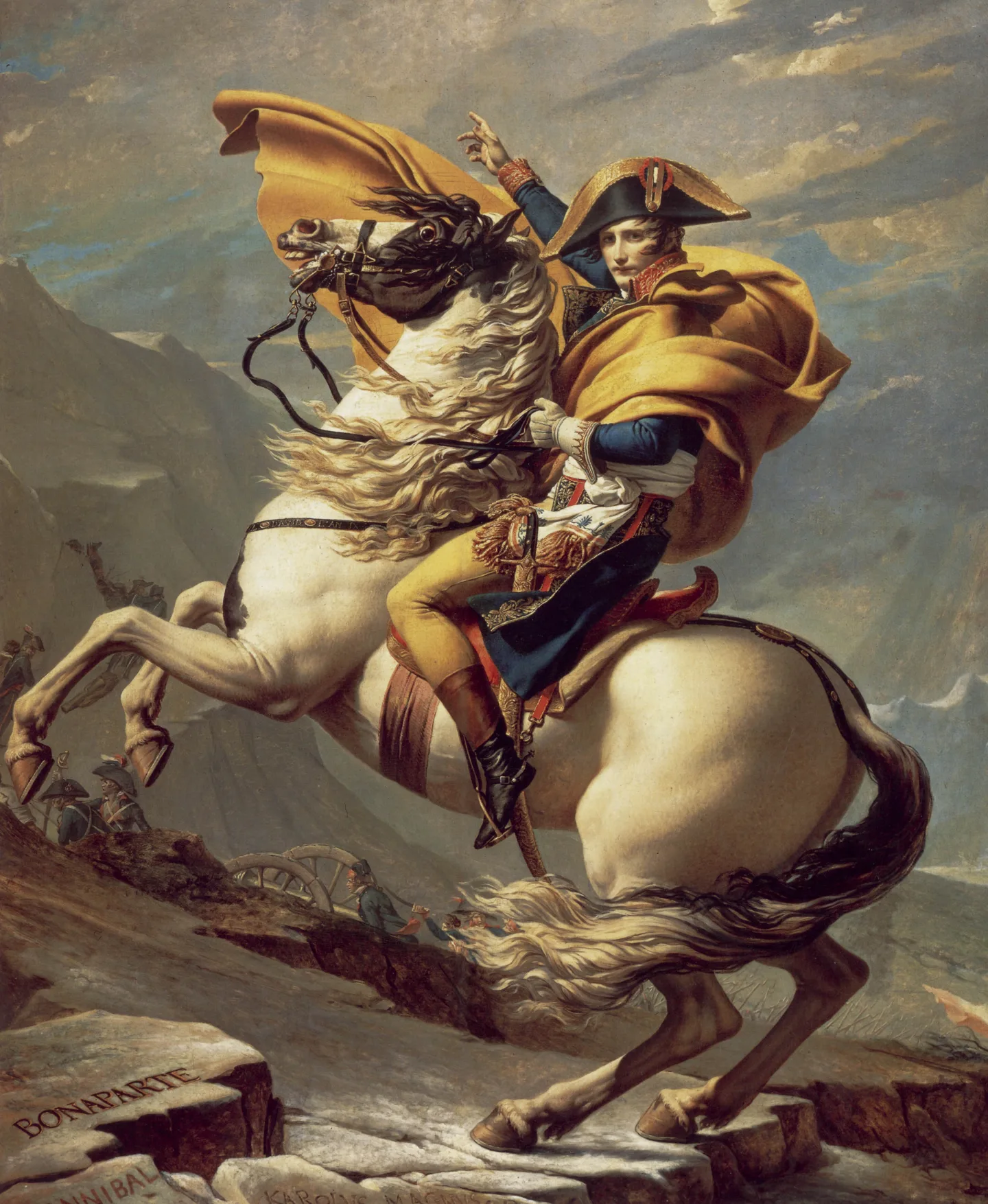
The Corps d'Armée Operational System
Napoleon reorganized the Grande Armée into autonomous 20,000-man Corps d'Armée, enabling armies to march dispersed along parallel roads and concentrate for battle.
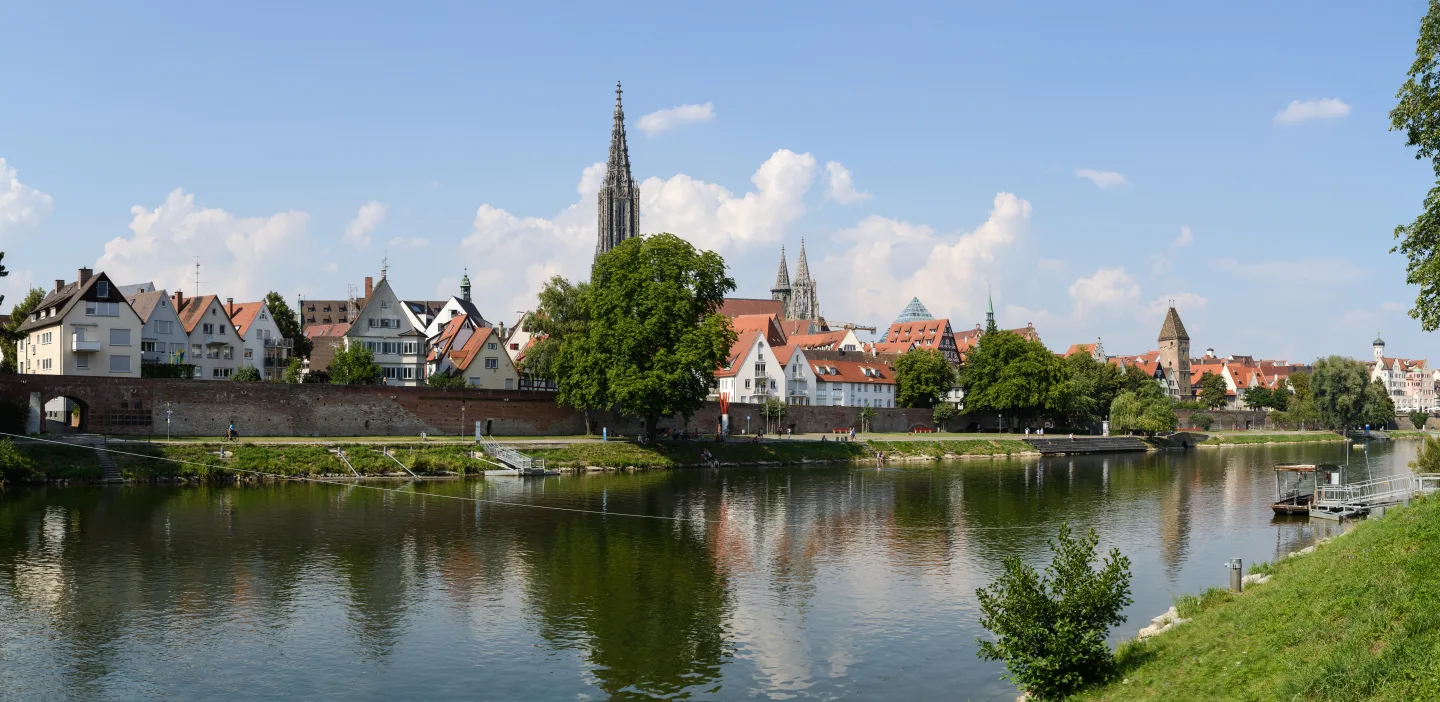
Strategic Rear Envelopment at Ulm
In the 1805 Ulm Campaign, Napoleon used a strategic rear envelopment (manoeuvre sur les derrières) to encircle and capture 60,000 Austrian troops without a major battle.

Bait and Breakthrough at Austerlitz
At Austerlitz in 1805, Napoleon feigned right-flank weakness to bait the allies off the Pratzen Heights, splitting the Austro-Russian army in two.
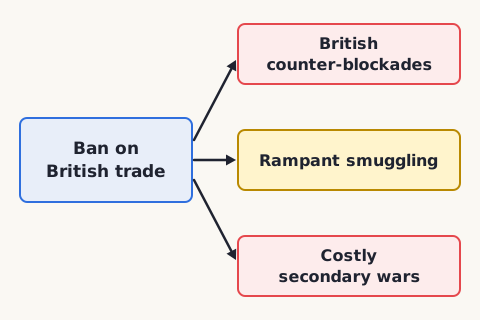
The Continental System and Economic Blockade
Napoleon's Continental System banned British trade across Europe, prompting British counter-blockades, rampant smuggling, and costly secondary wars.
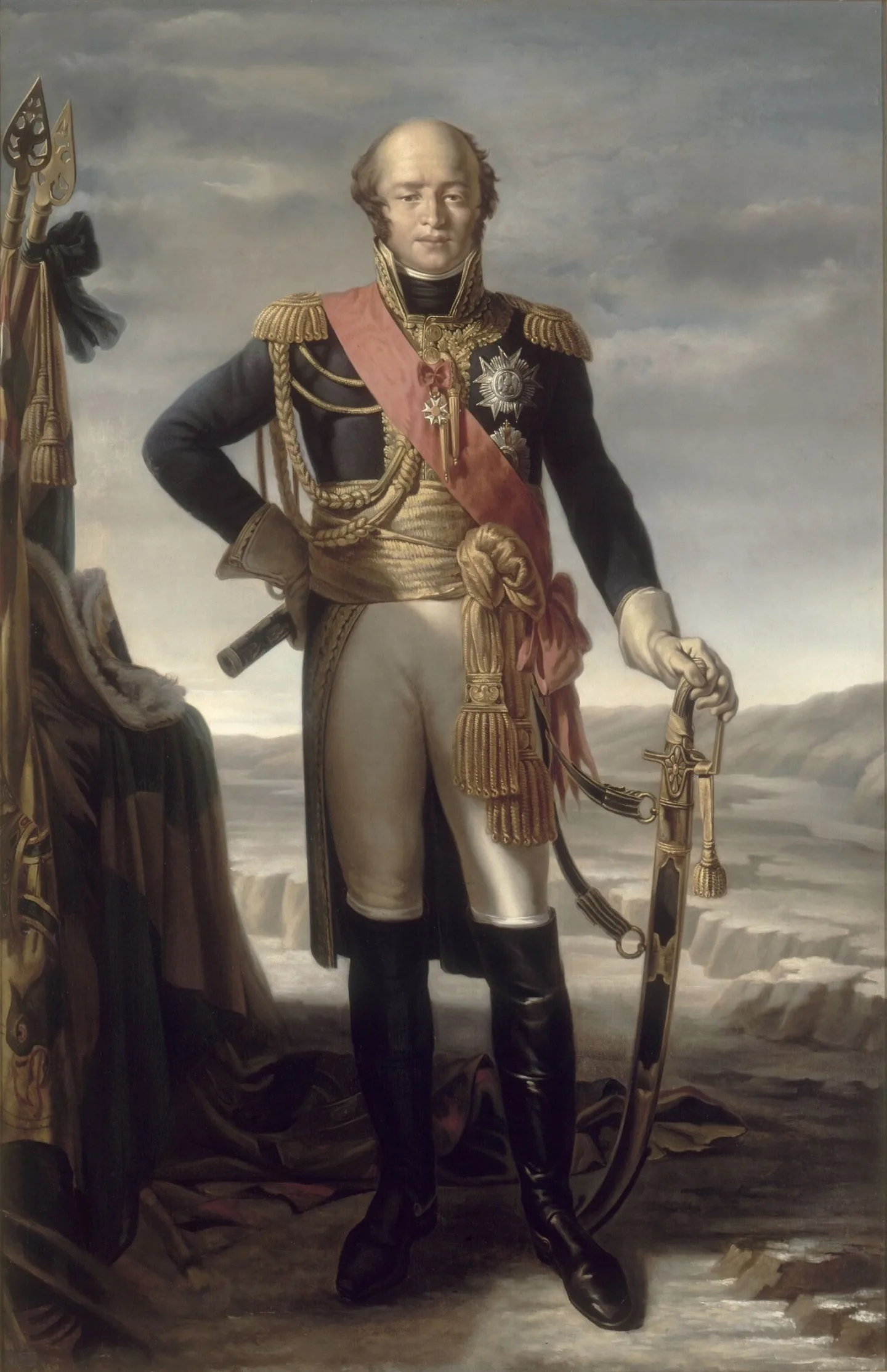
Davout's Stand at Auerstedt
At Auerstedt in 1806, Marshal Davout's isolated 27,000-man III Corps defeated the main 63,000-man Prussian army through disciplined combined arms.
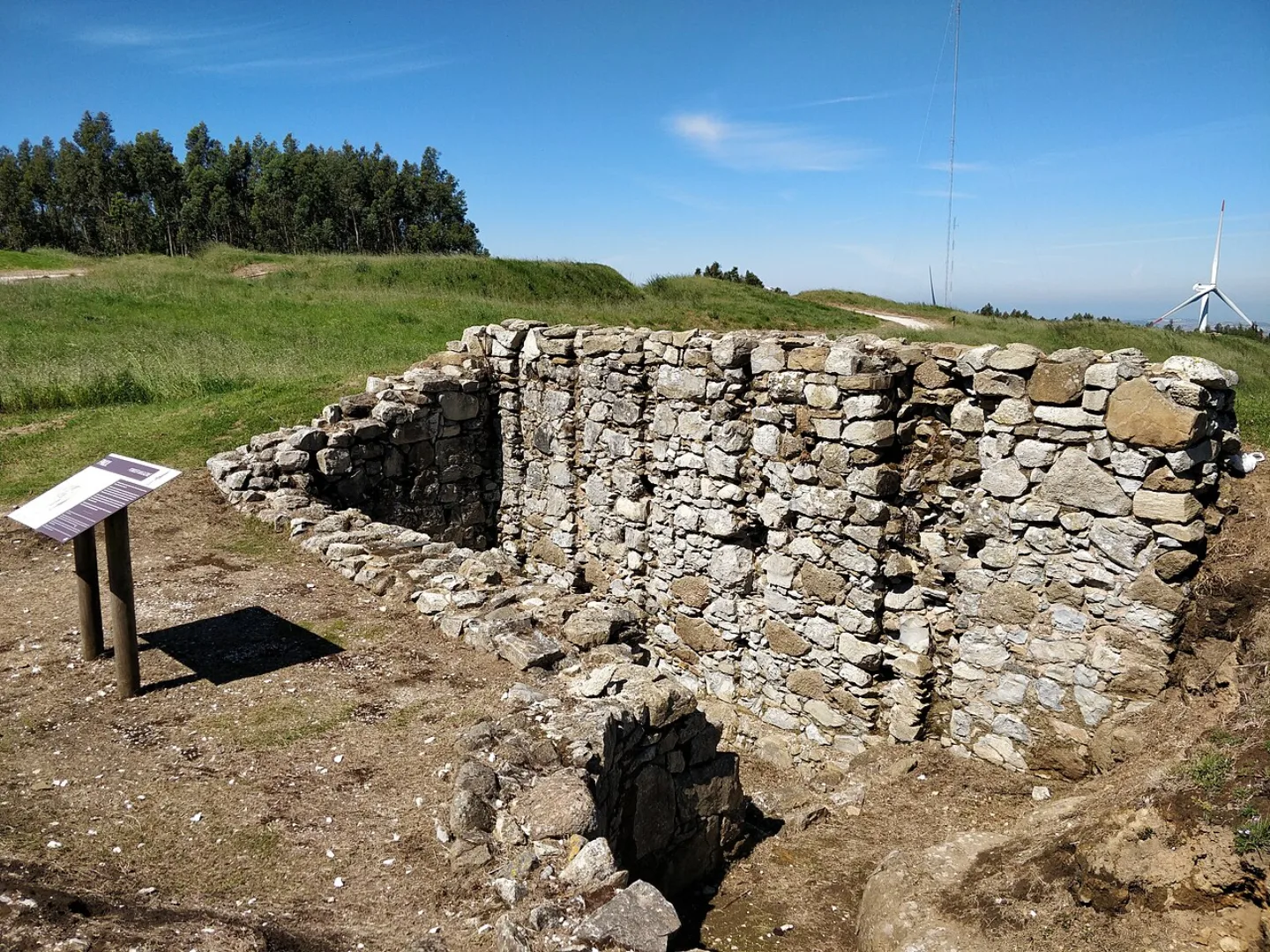
The Spanish Ulcer and Guerrilla War
The Peninsular War pinned 300,000 French soldiers in Spain due to relentless guerrilla ambushes that severed supply lines and couriers.
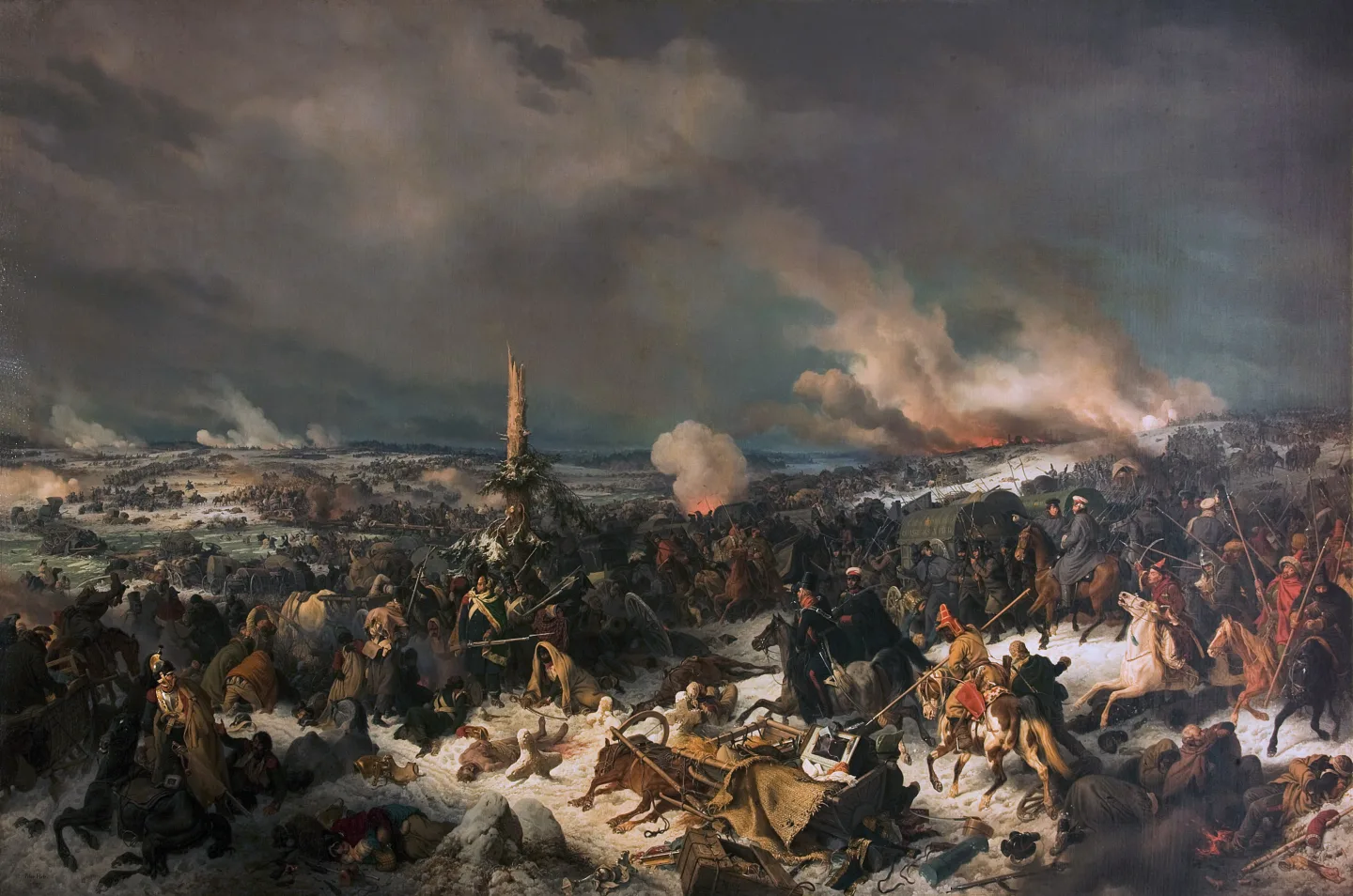
Logistical Collapse in Russia 1812
The 1812 French invasion of Russia collapsed as Russian scorched-earth tactics, winter freezing, and supply line overextension reduced 600,000 men to under 40,000.

Concentric Convergence at Leipzig
At Leipzig in 1813, four coalition armies executed a concentric multi-front convergence of 365,000 troops to decisively crush Napoleon in the Battle of the Nations.

Reverse Slopes and Flank Shock at Waterloo
At Waterloo in 1815, Wellington's reverse-slope infantry squares resisted French assaults until Blücher's Prussian army arrived to strike Napoleon's right flank.
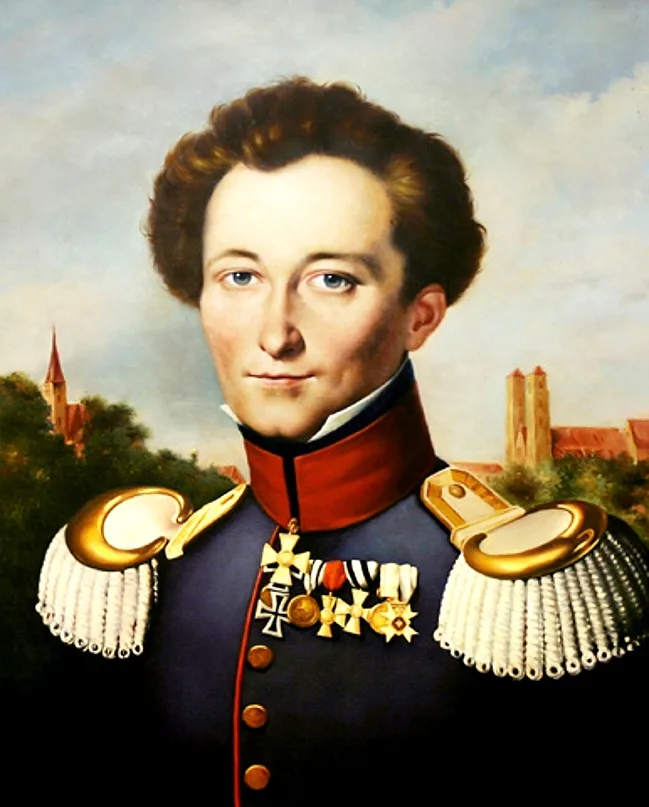
Clausewitzian Philosophy of War
Carl von Clausewitz's On War established the enduring concepts of friction, the fog of war, and the strategic center of gravity (Schwerpunkt).
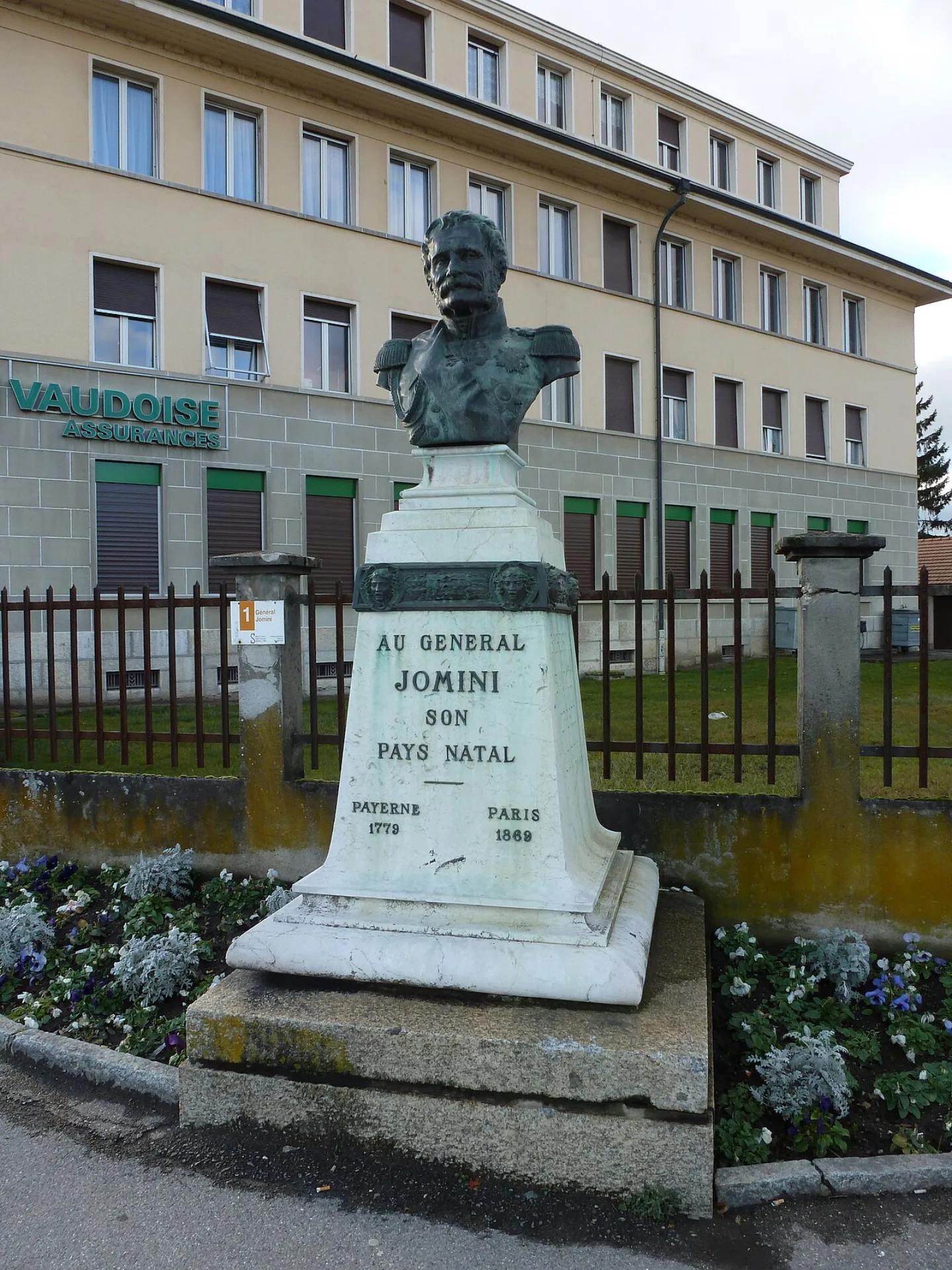
Jomini's Principles of Mass and Interior Lines
Antoine-Henri Jomini codified Napoleonic warfare into geometric principles of operating along interior lines to concentrate mass against decisive points.
By the numbers
- In what year AD did Napoleon achieve his tactical masterpiece at the Battle of Austerlitz?
- 1805
- In what year AD was the double Battle of Jena-Auerstedt fought between France and Prussia?
- 1806
- In what year AD was the Battle of Leipzig (Battle of the Nations) fought in Saxony?
- 1813
- In what year AD was the Battle of Waterloo fought in Belgium?
- 1815
Matched pairs
Each item on the left goes with the one on the right.
- All-Arms Army Corps
- Self-contained force with independent infantry, cavalry, and artillery under a marshal
- Feigned French Right Flank
- Acts as bait to draw the allied army south off their central commanding high ground
- Operational Friction
- The sum of myriad unforeseen impediments, danger, and exhaustion that degrades all military action
- Central Interior Lines
- Enables a central army to shift forces rapidly to defeat separated enemy wings in detail
Self-test
Answer each question from memory, then check your work against the answer key.
1. Why is Napoleon's 1805 Ulm Campaign considered a masterpiece of operational art?
- AHe deployed new Congreve rocket batteries to incinerate the central Austrian ammunition fortress
- BHe launched an amphibious fleet of flatboats down the Danube River to torpedo Austrian river barges
- CHe constructed a twenty-mile continuous stone circumvallation wall around the city of Ulm in four days
- DHe enveloped General Mack's army at Ulm and captured 60,000 Austrians by pure maneuver
2. Which French corps executed the decisive uphill assault on the Pratzen Heights at Austerlitz?
- AMarshal Ney's VI Corps
- BMarshal Augereau's VII Corps
- CMarshal Soult's IV Corps
- DMarshal Masséna's II Corps
3. Which statement about Napoleon's Corps d'Armée system is FALSE?
- ACould operate independently, then mass together for battle
- BWas a temporary formation, reassembled after each campaign
- CLed by a Marshal of the Empire
- DIncluded its own infantry, cavalry, and artillery
4. How did Davout's outnumbered III Corps defeat the main Prussian army at Auerstedt in 1806?
- ACombined-arms, infantry squares
- BCavalry numerical superiority
- CA lured scorched-earth withdrawal
- DRear envelopment like at Ulm
5. What term, coined during the Peninsular War, describes the irregular tactics Spanish partisans used against French occupation?
- AGuerrilla warfare
- BTrachenberg Plan
- CBlitzkrieg
- DReconquista
6. What did Napoleon's manoeuvre sur les derrieres achieve against General Mack at Ulm?
- ASplit Mack's army into pursuing corps
- BLured the Austrians into a river ambush
- CBombarded Ulm's walls before the infantry advanced
- DEncircled Mack's army and cut its supply lines
7. How did the Pratzen Heights central position win the day at Austerlitz?
- ASplit artillery into three siege parallels
- BUsed the heights as a naval signal relay
- CWeakened his flank to lure the allied center
- DFortified the heights with star-fort bastions
8. What strategic dilemma did Napoleon's Continental System create for his empire?
- AA Royal Navy invasion of France
- BBritish counter-blockade and smuggling
- CCollapse of the corps d'armée system
- DCrushing war reparations to Britain
9. Why did the Grande Armée collapse from over 600,000 men to fewer than 40,000 survivors during the 1812 invasion of Russia?
- AScorched earth, winter cold, disease
- BDefeat at the Battle of Borodino
- CRoyal Navy blockade of the Baltic
- DOttoman intervention against Russia
10. What turned the French retreat from the Battle of Leipzig (1813) into a disaster for Napoleon's rearguard?
- AAustrian sappers mining the Dresden bridge
- BCapture of the entire pontoon train
- CA flooded Danube crossing
- DEarly demolition of the Elster bridge
11. In Clausewitz's On War, what term describes the hub of all power that must be destroyed to win?
- AFog of War (Nebel des Krieges)
- BCenter of Gravity (Schwerpunkt)
- CCulminating Point of Victory
- DFriction (Reibung)
12. Which Clausewitzian concept names the moment an attacker's strength starts to decline and further advance risks disaster?
- ACenter of Gravity (Schwerpunkt)
- BInterior Lines
- CCulminating Point of Victory
- DFog of War
13. What did Clausewitz mean by an enemy's 'Center of Gravity'?
- AThe average marching speed of a supply train
- BThe heaviest gun in a besieging army's train
- CThe hub of power an army must destroy to win
- DThe geographic midpoint between two capitals
14. What is Clausewitz's 'Culminating Point of Victory'?
- AThe point an attacker's strength fades
- BThe instant a peace treaty is signed
- CThe final battle that decides a war
- DThe peak troop strength before mobilizing
Go deeper
Answer key
- 1. D He enveloped General Mack's army at Ulm and captured 60,000 Austrians by pure maneuverNapoleon marched around the Black Forest, crossed the Danube behind General Mack, and forced 60,000 Austrians to surrender with minimal losses.
- 2. C Marshal Soult's IV CorpsMarshal Soult's IV Corps advanced out of the morning mist to storm the Pratzen Heights, cutting the allied army in half.
- 3. B Was a temporary formation, reassembled after each campaignCorps d'Armée were permanent, self-contained all-arms formations under a Marshal that could march divided and fight united — never temporary units reassembled per campaign.
- 4. A Combined-arms, infantry squaresDavout's 27,000-man corps used disciplined infantry squares and combined-arms coordination to rout Brunswick's 63,000-man Prussian army; Ulm was won by envelopment, not this battle.
- 5. A Guerrilla warfareSpanish partisans coined 'guerrilla' ('little war') for ambushes on couriers and convoys; Blitzkrieg is 20th-century, the Trachenberg Plan was an 1813 coalition strategy, and the Reconquista was medieval.
- 6. D Encircled Mack's army and cut its supply linesNapoleon marched his corps around Mack's army, severing communications and supply back to Vienna and forcing surrender.
- 7. C Weakened his flank to lure the allied centerBy baiting the allies to strip their center to attack his deliberately thin flank, Napoleon's forces surged up the heights and split the allied army.
- 8. B British counter-blockade and smugglingBritain's Orders in Council counter-blockade fueled smuggling and inflation, forcing Napoleon into invasions of Portugal, Spain, and Russia to enforce the embargo — not reparations or a French invasion.
- 9. A Scorched earth, winter cold, diseaseRussian scorched-earth tactics denied food and fodder, and the winter retreat brought starvation, typhus, and Cossack raids; Borodino was a costly but indecisive battle, not the cause of the collapse.
- 10. D Early demolition of the Elster bridgeThe Elster River bridge was blown prematurely, trapping Marshal Poniatowski's rearguard of roughly 30,000 troops who drowned or were captured; Leipzig sits on the Elster/Pleisse, not the Danube.
- 11. B Center of Gravity (Schwerpunkt)Clausewitz defined the Center of Gravity (Schwerpunkt) as the hub of all power and movement that must be destroyed to achieve victory.
- 12. C Culminating Point of VictoryThe Culminating Point of Victory is the precise moment beyond which an attacking army's strength diminishes and continued advance invites disaster.
- 13. C The hub of power an army must destroy to winClausewitz defined the Center of Gravity as the hub of all power and movement on which an enemy's strength depends.
- 14. A The point an attacker's strength fadesClausewitz described the culminating point as the moment an attacker's strength is exhausted, beyond which advancing invites disaster.
Sources
- Chandler, The Campaigns of Napoleon
- Goetz, 1805: Austerlitz
- Ellis, The Napoleonic Empire
- Petre, Napoleon's Conquest of Prussia 1806
- Esdaile, The Peninsular War
- Lieven, Russia Against Napoleon
- Nafziger, The Battle of Nations
- Adkin, The Waterloo Companion
- Carl von Clausewitz, On War
- Antoine-Henri Jomini, Summary of the Art of War
- Chandler, The Campaigns of Napoleon — www.simonandschuster.com
- Petre, Napoleon's Conquest of Prussia 1806; Goetz, 1805: Austerlitz; Nafziger, The Battle of Nations — www.greenhillbooks.com
- Esdaile, The Peninsular War; Lieven, Russia Against Napoleon — www.penguin.co.uk
- Adkin, The Waterloo Companion — www.stackpolebooks.com
- Carl von Clausewitz, On War — www.oxfordreference.com
- Wikipedia, Trachenberg Plan — en.wikipedia.org/wiki/Trachenberg_Plan
- Ellis, The Napoleonic Empire — www.bloomsbury.com
- Antoine-Henri Jomini, Summary of the Art of War — www.gutenberg.org/ebooks/13549
- Antoine-Henri Jomini, Summary of the Art of War — www.gutenberg.org
Image credits
- The Corps d'Armée Operational System: Wikimedia Commons · Jacques-Louis David · Public domain — commons.wikimedia.org/wiki/File:David_-_Napoleon_crossing_the_Alps_-_Malmaison2.jpg
- Strategic Rear Envelopment at Ulm: Wikimedia Commons · Uoaei1 · CC BY-SA 4.0 — commons.wikimedia.org/wiki/File:Ulm_Panorama_01.jpg
- Bait and Breakthrough at Austerlitz: Wikimedia Commons · Kirk · CC BY-SA 3.0 — commons.wikimedia.org/wiki/File:Mohyla_miru_1.jpg
- The Continental System and Economic Blockade: FlashFeed original diagram · CC-BY-4.0
- Davout's Stand at Auerstedt: Wikimedia Commons · After Pierre-Claude Gautherot / Tito Marzocchi de Bellucci · Public domain — commons.wikimedia.org/wiki/File:Louis_nicolas_davout.jpg
- The Spanish Ulcer and Guerrilla War: Wikipedia · Roundtheworld · CC BY-SA 4.0 — en.wikipedia.org/wiki/List_of_forts_of_the_Lines_of_Torres_Vedras
- Logistical Collapse in Russia 1812: Wikimedia Commons · Peter von Hess · Public domain — commons.wikimedia.org/wiki/File:Crossing_the_Berezina_River,_by_Peter_von_Hess.jpg
- Concentric Convergence at Leipzig: Wikimedia Commons · Stein53 · CC BY-SA 4.0 — commons.wikimedia.org/wiki/File:V%C3%B6lkerschlachtdenkmal_Leipzig_beim_Nacht.jpg
- Reverse Slopes and Flank Shock at Waterloo: Wikimedia Commons · FrDr · CC BY-SA 4.0 — commons.wikimedia.org/wiki/File:Domaine_du_champ_de_bataille_de_Waterloo_13_02.jpg
- Clausewitzian Philosophy of War: Wikipedia · Wilhelm Wach · Public domain — en.wikipedia.org/wiki/Carl_von_Clausewitz
- Jomini's Principles of Mass and Interior Lines: Wikimedia Commons · Spyridon · CC BY-SA 4.0 — commons.wikimedia.org/wiki/File:Denkmal_f%C3%BCr_Antoine-Henri_Jomini_in_Payerne.jpg


