
Major Wars: Strategy, Technology, and Mechanics of Conflict study guide · Lesson 9 of 13
World War I: The Machine Gun, Industrial Attrition, and Tactical Breakthrough
The Deadlock of Industrial Trench Warfare & Attrition · Tactical Innovations & the Return of Operational Maneuver
This is the lesson's study guide from the FlashFeed app, plus its key facts and a self-test.
What you'll be able to do
- Explain why the Schlieffen Plan collapsed, how trench defenses froze the Western Front, Falkenhayn's attrition at Verdun, and why Jutland favored Britain.
- Explain how stormtroopers, Bruchmüller's hurricane bombardment, Brusilov's offensive, and Allied tanks, aircraft, and creeping barrages restored maneuver.
Lesson 9: World War I: The Machine Gun, Industrial Attrition, and Tactical Breakthrough
The Schlieffen Plan's Logistical Breakdown at the Marne
Germany's 1914 war plan, drafted by Alfred von Schlieffen and modified by Helmuth von Moltke the Younger, aimed to defeat France within six weeks through a massive wheeling right wing through Belgium before turning against Russia. The plan collapsed under logistical friction: German infantry marched over thirty miles a day in summer heat, outrunning their horse-drawn supply trains and railheads. When French General Joseph Joffre launched a counter-offensive at the First Battle of the Marne (September 1914), exhausted German armies were forced to halt and dig in along the Aisne River, initiating the Race to the Sea and four years of static trench deadlock.
Deep Trench Systems, Barbed Wire, and Maxim Machine Guns
By 1915, the Western Front solidified into a continuous 400-mile ribbon of deep, fortified trench systems stretching from the Swiss border to the North Sea. The defense held decisive technological superiority:
- Maxim and Vickers Machine Guns: Water-cooled, belt-fed guns firing 500 to 600 rounds per minute along pre-sighted interlocking grazing fire lines.
- Barbed Wire: Dense belts up to 100 feet deep channeled attackers into pre-targeted machine gun kill zones.
- Deep Dugouts: Underground shelters excavated 30 feet below ground level allowed defending infantry to survive days of heavy artillery bombardment unscathed before manning their parapets.
Falkenhayn's Strategy of Industrial Attrition at Verdun
At the Battle of Verdun (February–December 1916), German Chief of the General Staff Erich von Falkenhayn launched a deliberate operational strategy of attrition (Gericht, or "place of execution"). Aiming, according to his postwar account, to "bleed France white," Falkenhayn attacked a narrow sector surrounded by historic forts (such as Fort Douaumont and Fort Vaux) that France was politically forced to defend at all costs. French General Philippe Pétain organized the defense, rotating 70% of the French Army through the Voie Sacrée ("Sacred Way") supply highway, resulting in over 700,000 combined casualties in ten months of meat-grinder artillery warfare.
The Creeping Barrage and Counter-Battery Sound Ranging
To solve the tactical deadlock, military engineers developed scientific artillery doctrines:
- Creeping Barrage (feux roulants): A moving curtain of high-explosive artillery shells advancing in timed 50-to-100-yard increments, under whose close canopy infantry advanced directly into enemy trenches before defenders could emerge from deep dugouts.
- Sound Ranging and Flash Spotting: Microphones and optical observers triangulated the exact acoustic and visual signature of enemy cannons, allowing artillery to execute precision counter-battery fire without prior registration, preserving the element of tactical surprise.
The Battle of the Somme and Industrial Firepower
Launched on July 1, 1916, by British General Douglas Haig, the Battle of the Somme was the largest Anglo-French offensive on the Western Front. On the first day alone, the British Army suffered 57,000 casualties (including 19,000 dead). The week-long preparatory bombardment of 1.5 million shells failed because one-third of the shells were duds and shrapnel balls could not cut heavy barbed wire or penetrate deep German subterranean bunkers. However, the four-month battle forced the German army to adopt flexible defense-in-depth doctrines.
The Distant Naval Blockade and the Battle of Jutland
The British Royal Navy exercised strategic command of the sea through a distant naval blockade anchored at Scapa Flow and Dover, severing Imperial Germany from global maritime trade, nitrates, and food imports, causing the devastating "Turnip Winter" of 1916–1917. On May 31, 1916, the German High Seas Fleet under Reinhard Scheer clashed with John Jellicoe's British Grand Fleet at the Battle of Jutland. Although Germany inflicted greater tactical ship losses through superior armor and gunnery, Jellicoe's fleet retained command of the North Sea, forcing the German navy to remain in port for the remainder of the war.
The battle fleets at Jutland were built around the dreadnought battleship, named after HMS Dreadnought. Entering service in 1906, she was the first battleship of her era with a uniform main battery of big guns (ten 12-inch guns in five twin turrets) instead of a few large guns backed by many smaller ones, and the first battleship driven by steam turbines, designed for 21 knots. She made earlier battleships obsolete, and they became known as pre-dreadnoughts; her launch helped spark the naval arms race between Britain and Germany before the war. Dreadnought herself missed Jutland while under refit.
Unrestricted Submarine Warfare and the Convoy System
Faced with starvation from the British blockade, Germany declared unrestricted submarine warfare in February 1917, ordering U-boats to torpedo all merchant shipping bound for the British Isles. Sinkings reached catastrophic levels of 875,000 tons per month, pushing Britain to within six weeks of food exhaustion. Britain countered by introducing the convoy system in May 1917: clustering merchant vessels into large groups protected by zigzagging naval destroyers equipped with hydrophones and depth charges, which reduced merchant shipping losses to under 1%.
The Brusilov Offensive and Wide-Front Shock Doctrine
In June 1916, Russian General Aleksei Brusilov shattered the Austro-Hungarian Fourth and Seventh Armies in the Brusilov Offensive across modern Ukraine. Rejecting traditional narrow-sector attacks preceded by days of bombardment, Brusilov attacked along a massive 300-mile front with minimal preparatory artillery. Shock units dug advance trenches to within 75 paces of Austrian lines, launching synchronized assaults that overwhelmed reserve reactions and captured over 400,000 prisoners.
The Debut and Maturation of the Armored Tank
To cross no-man's-land and crush barbed wire under machine-gun fire, the British Admiralty and Army developed the tracked armored fighting vehicle, nicknamed the tank. Debuting in small numbers at Flers-Courcelette in 1916, the tank matured at the Battle of Cambrai (November 1917), where 476 Mark IV tanks bypassed artillery registration to achieve an immediate breakthrough of the Hindenburg Line. At the Battle of Amiens in August 1918, massed Mark V tanks spearheaded the Allied combined-arms offensive.
German Stormtrooper Infiltration Tactics in 1918
In the 1918 Spring Offensive (Kaiserschlacht), German General Erich Ludendorff introduced Stosstruppen (Stormtrooper) infiltration tactics developed by Willy Rohr and Georg Bruchmüller:
- Hurricane Bombardment: A short, violent, unregistered artillery bombardment combining high explosives, smoke, and phosgene gas — followed by the Feuerwalze (German for the creeping/rolling barrage) advancing with the infantry.
- Infiltration: Specialized light stormtrooper squads bypassed enemy fortified strongpoints, infiltrating deep into the rear to eliminate command posts and artillery batteries, leaving isolated strongholds to be mopped up by follow-on heavy infantry.
The All-Arms Hundred Days Offensive Breaking the Hindenburg Line
Between August and November 1918, Allied Supreme Commander Ferdinand Foch and Douglas Haig directed the Hundred Days Offensive, beginning with the Battle of Amiens ("the black day of the German Army"). The Allies mastered modern all-arms combined warfare: perfectly synchronizing massed tanks, creeping artillery barrages, low-flying ground-attack aircraft, motorized logistics, and infantry platoons armed with Lewis guns and rifle grenades to breach the formidable concrete fortifications of the Hindenburg Line (Siegfriedstellung), forcing Germany to sign the Armistice of November 11, 1918.
Key terms
- Creeping Barrage
- A moving artillery curtain of high explosives that advances in timed distance intervals just ahead of advancing infantry.
- Distant Naval Blockade
- A naval strategy stationing battlefleets at ocean chokepoints far from enemy coastal guns to intercept all merchant shipping.
- Convoy System
- The practice of assembling groups of merchant vessels to travel together under armed naval warship escort for mutual defense.
- Infiltration Tactics
- An offensive infantry doctrine in which small, highly trained squads bypass strongpoints along soft spots to penetrate deep into enemy rear areas.
Key concepts
Maxim MG08 Machine Gun
- Water-cooled, belt-fed automatic heavy machine gun firing 7.92mm ammunition
- Operated by a four-man crew mounted on a heavy steel sledge (Schlitten 08)
- Delivered sustained interlocking defensive grazing fire along fixed surveyed arcs
Fort Douaumont
- Massive subterranean concrete and masonry fortress protecting the approaches to Verdun
- Equipped with rotating steel retractable 155mm and 75mm artillery turrets
- Captured by German infantry in a surprise coup and recaptured by France after months of bloody assaults
Creeping Barrage
- Moving wall of concentrated high-explosive artillery shells advancing in timed distance increments
- Kept enemy defenders pinned inside deep underground dugouts until attacking infantry reached the parapet
- Required precise mathematical timetables and synchronized watches across dozens of artillery batteries
HMS Dreadnought
- Revolutionary British battleship completed in 1906 that rendered all previous warships obsolete
- First battleship to feature an 'all-big-gun' armament of ten 12-inch heavy naval guns
- Powered by steam turbines giving a top speed of 21 knots, initiating a global naval arms race
Merchant Convoy System
- Organized formation of commercial cargo vessels sailing together under armed naval destroyer escort
- Dramatically reduced ocean search visibility for individually patrolling enemy U-boats
- Rescued Great Britain from merchant shipping starvation in the North Atlantic in 1917
Mark IV Heavy Tank
- Tracked rhomboid armored fighting vehicle designed to cross 10-foot trenches and crush barbed wire
- Produced in 'Male' (carrying 6-pounder naval cannons) and 'Female' (carrying machine guns) variants
- Spearheaded the massed armored breakthrough at the Battle of Cambrai in November 1917
Stosstruppen Infiltration
- Specialized assault infantry doctrine developed by the Imperial German Army in World War I
- Armed with MP18 submachine guns, stick grenades, portable flamethrowers, and light mortars
- Bypassed heavily defended front-line strongpoints to penetrate deeply into enemy rear headquarters
Hindenburg Line
- Formidable German defensive network of concrete pillboxes, deep bunkers, and massive wire fields
- Constructed in early 1917 across northeastern France to shorten the front and conserve manpower
- Breached by Allied all-arms combined divisions during the Hundred Days Offensive in autumn 1918
Key facts
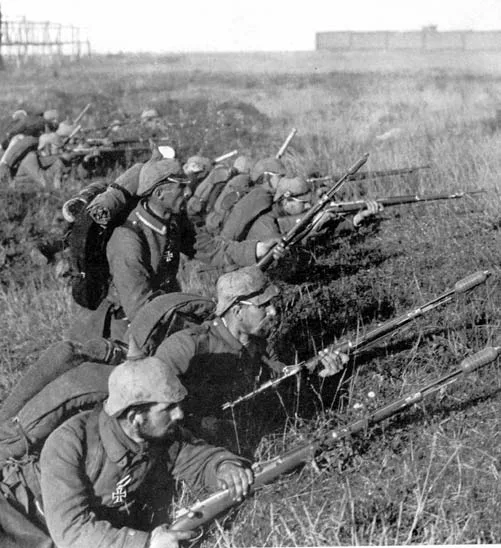
Schlieffen Plan Logistical Failure at the Marne
The 1914 Schlieffen Plan failed at the Marne because advancing German infantry outran their horse-drawn supply lines and railheads, allowing a French counter-attack.
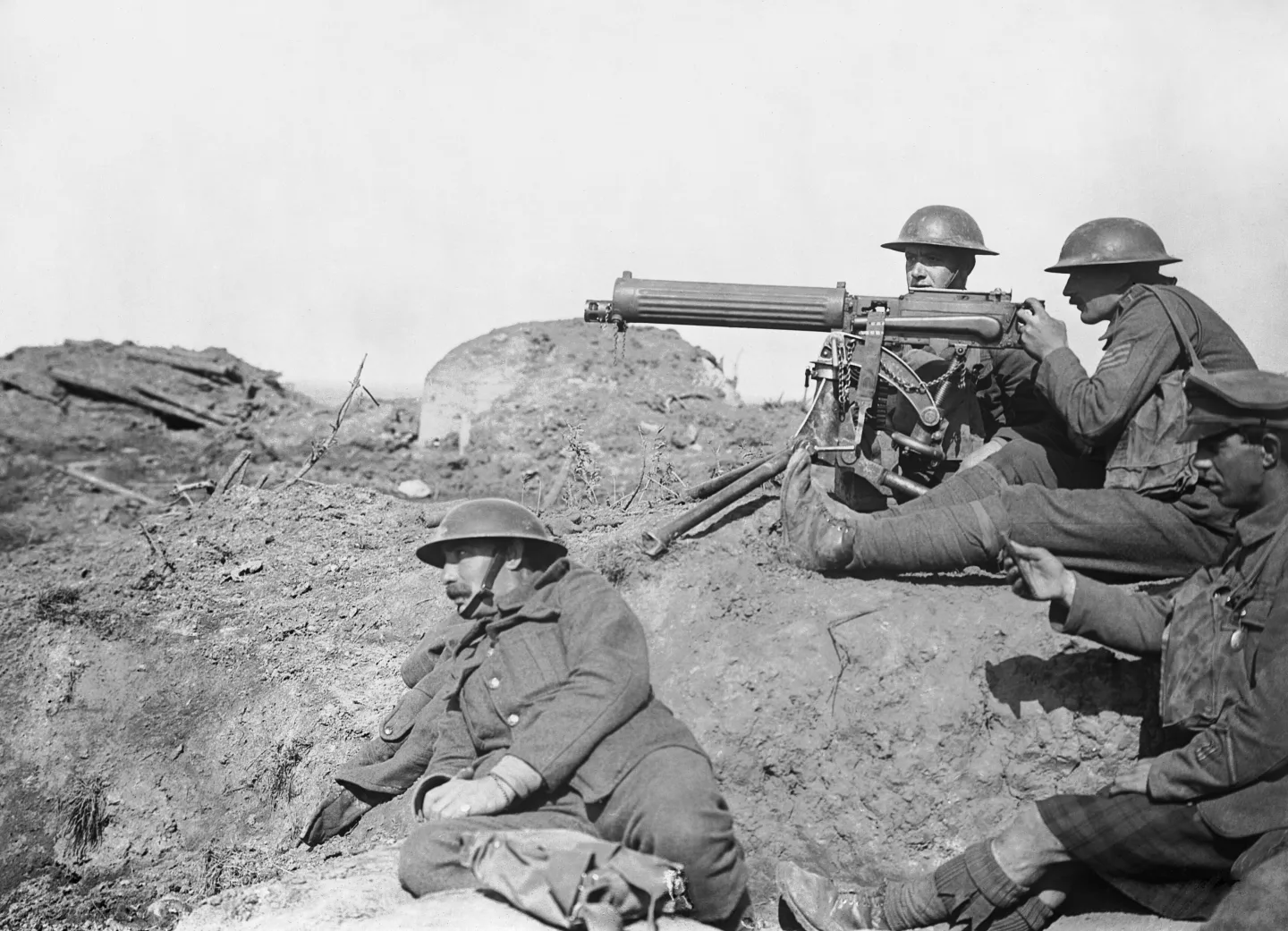
Industrial Defense: Trenches and Machine Guns
The Western Front solidified around deep underground dugouts, interlocking water-cooled Maxim machine guns, and dense barbed-wire kill zones.
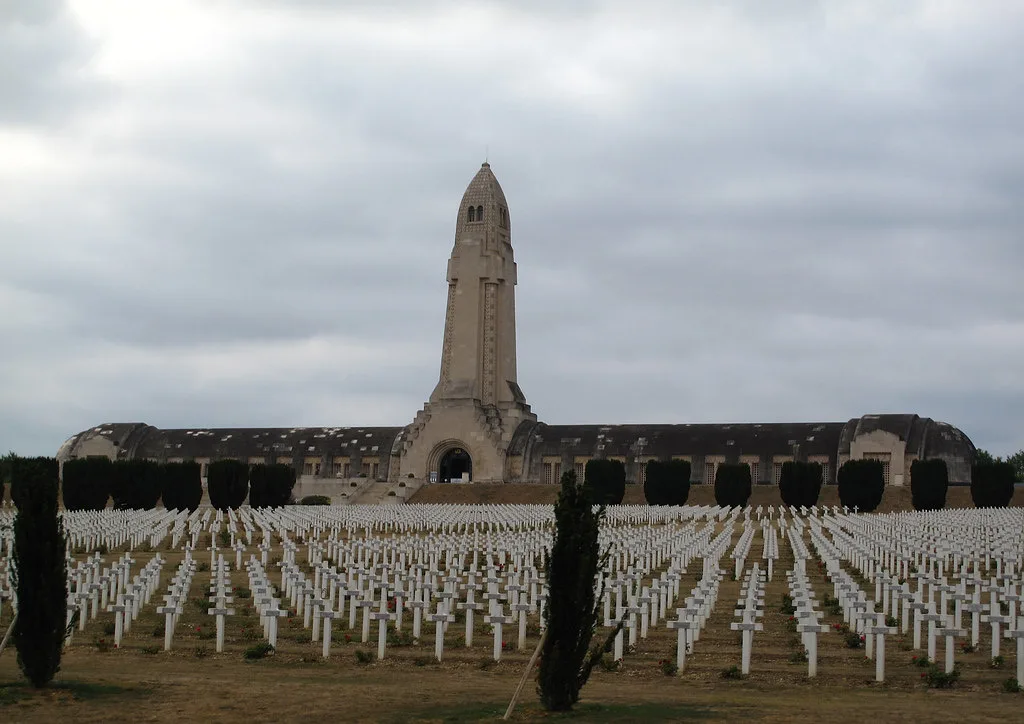
Falkenhayn's Attrition Strategy at Verdun
At Verdun in 1916, Falkenhayn launched a deliberate war of attrition — which he later described, in a postwar account, as an attempt to 'bleed France white' — at historic forts, resulting in over 700,000 combined casualties.
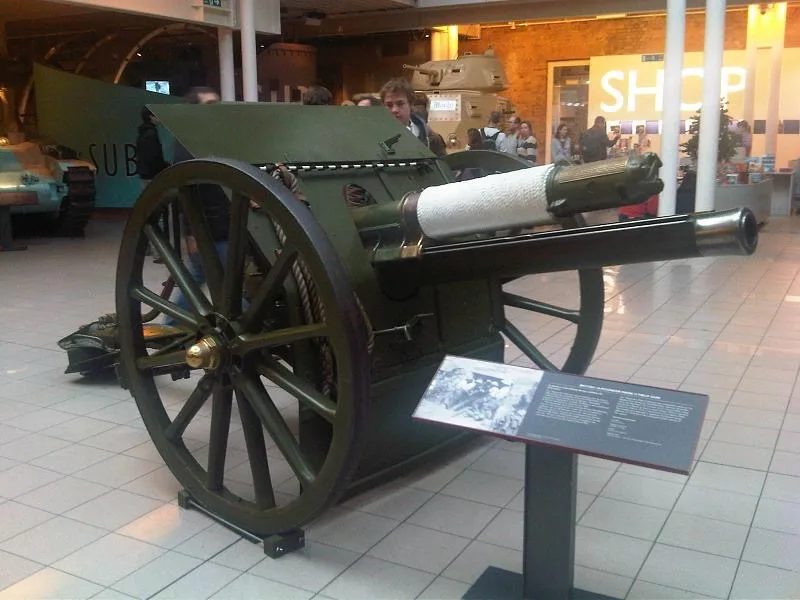
Creeping Barrages and Sound Ranging
The creeping barrage and acoustic sound ranging allowed artillery to suppress trenches and eliminate enemy batteries without prior registration.
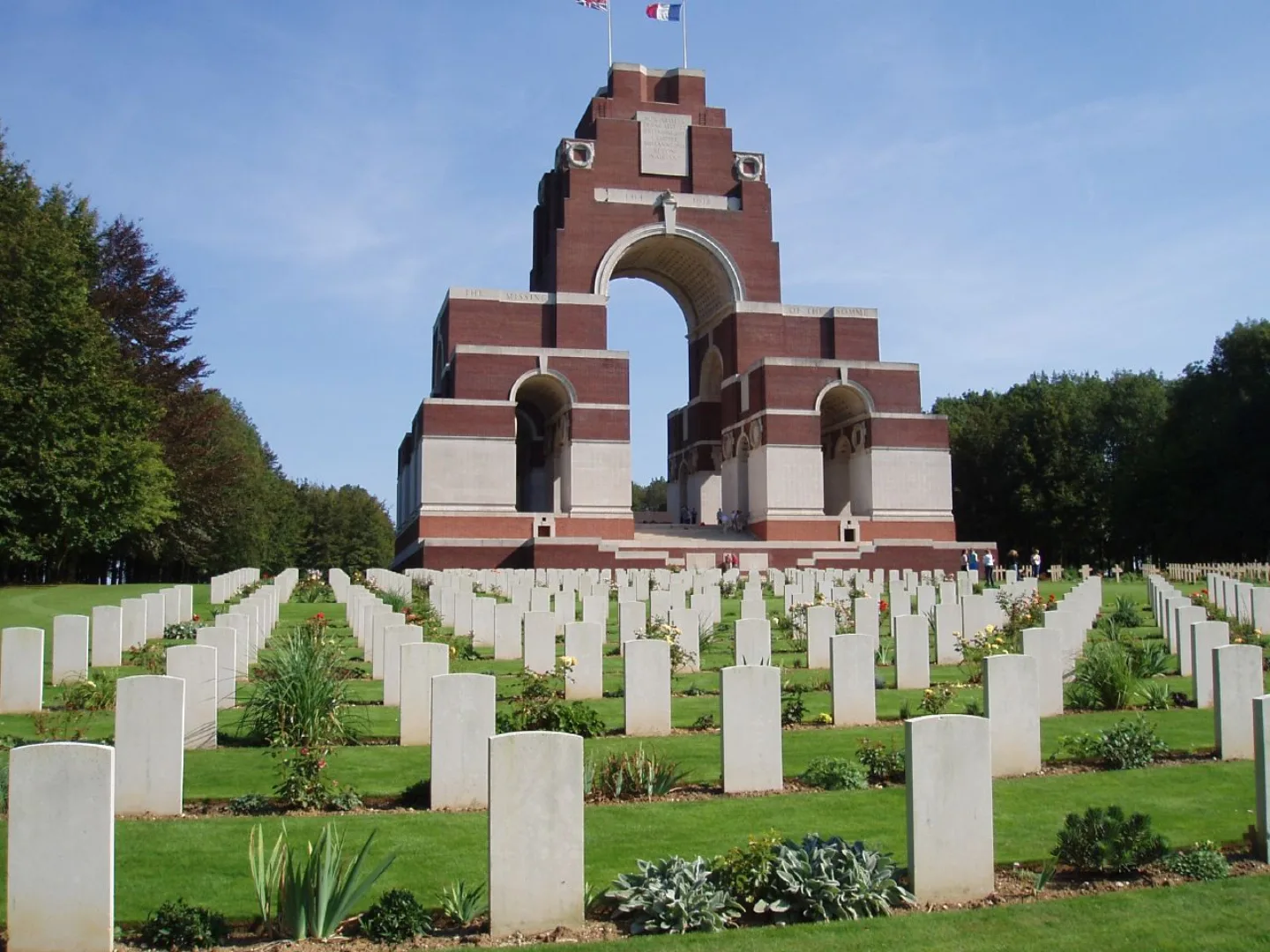
Industrial Carnage at the Battle of the Somme
On the first day of the Somme in 1916, Britain suffered 57,000 casualties as a week-long artillery bombardment failed to cut wire or destroy deep dugouts.
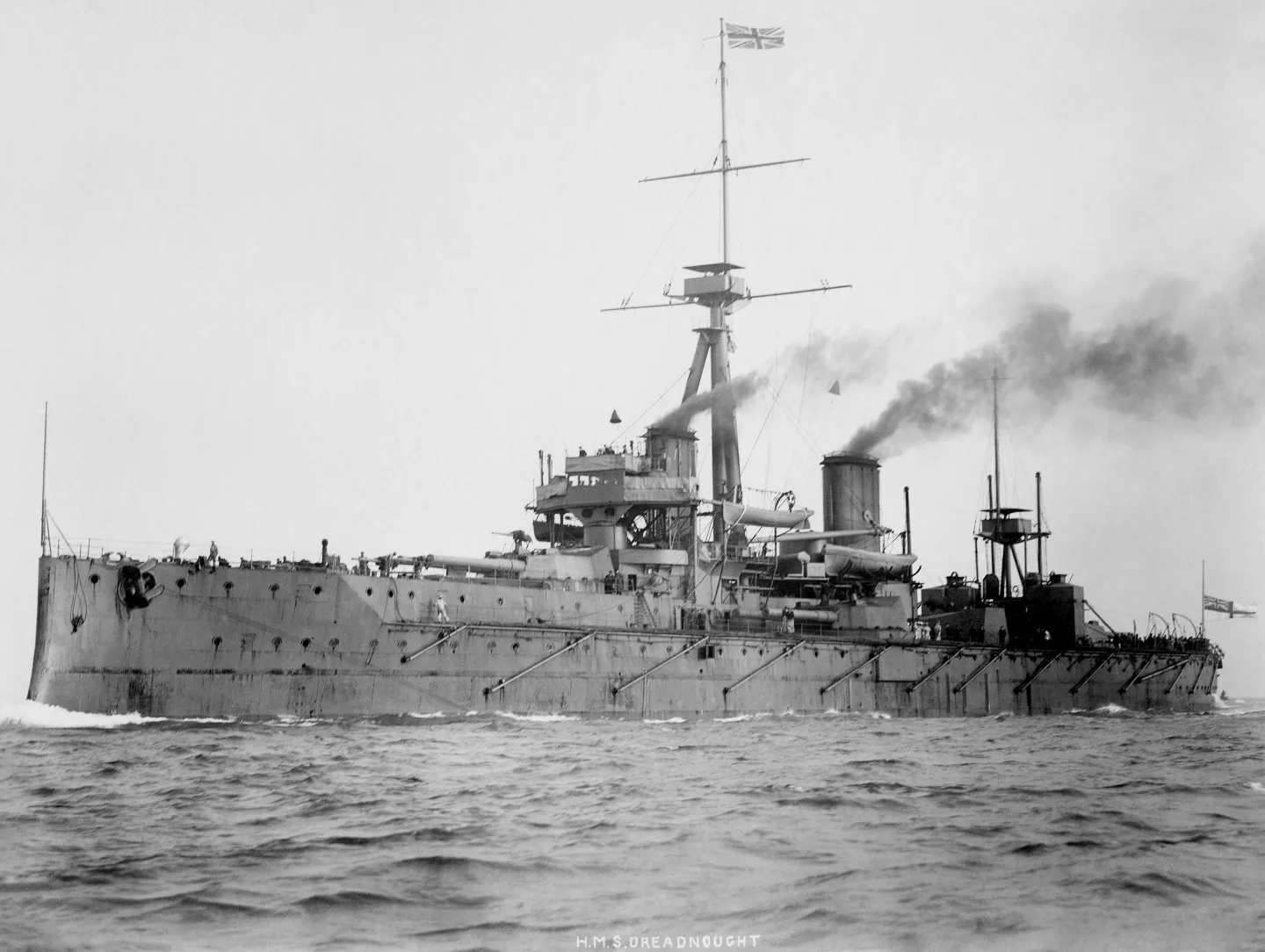
The Distant Blockade and Battle of Jutland
Britain's distant blockade starved Germany of food and nitrates, while the 1916 Battle of Jutland preserved Royal Navy control of the North Sea.
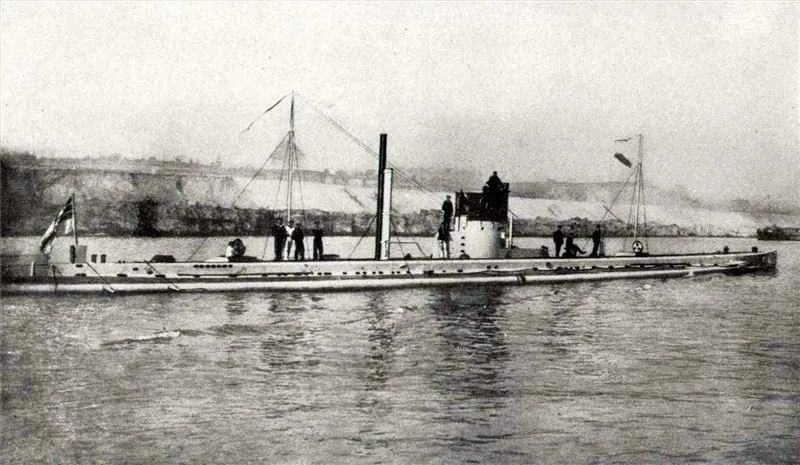
U-Boat War and the Convoy System
Germany's 1917 U-boat campaign threatened to starve Britain until the introduction of escorted merchant convoys reduced losses below 1%.
Brusilov's Wide-Front Shock Offensive
In 1916, Russian General Brusilov shattered Austrian armies by attacking across a 300-mile front with shock units and short artillery preparation.
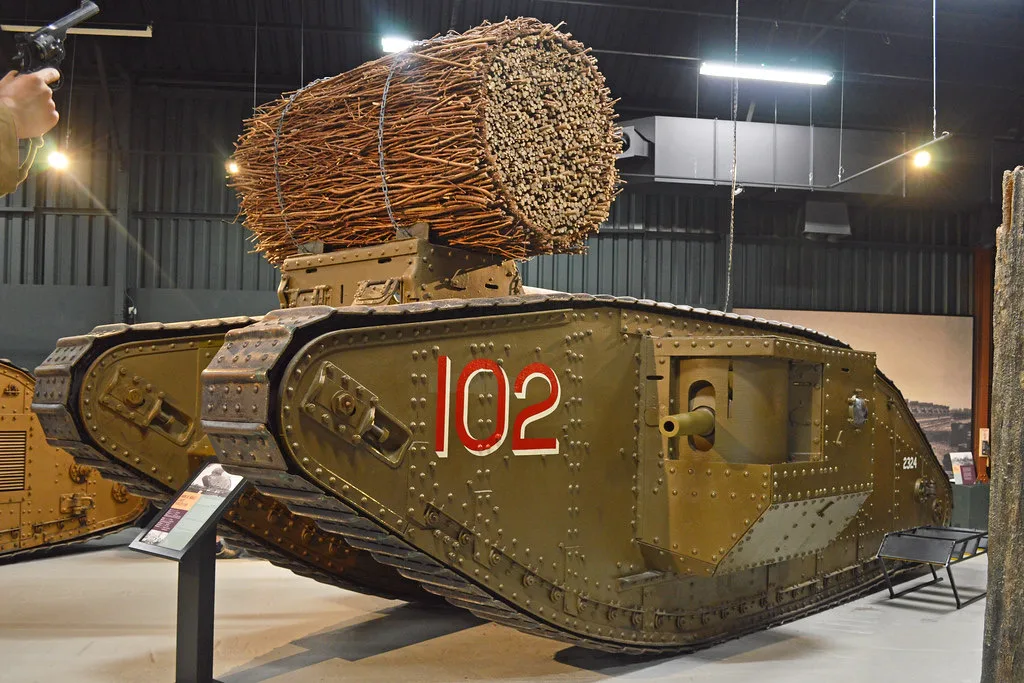
The Armored Tank Breakthrough at Cambrai and Amiens
British Mark IV tanks broke the deadlock at Cambrai in 1917, and the newer Mark V restored mobility at Amiens in 1918, both crossing trenches and crushing barbed-wire belts.
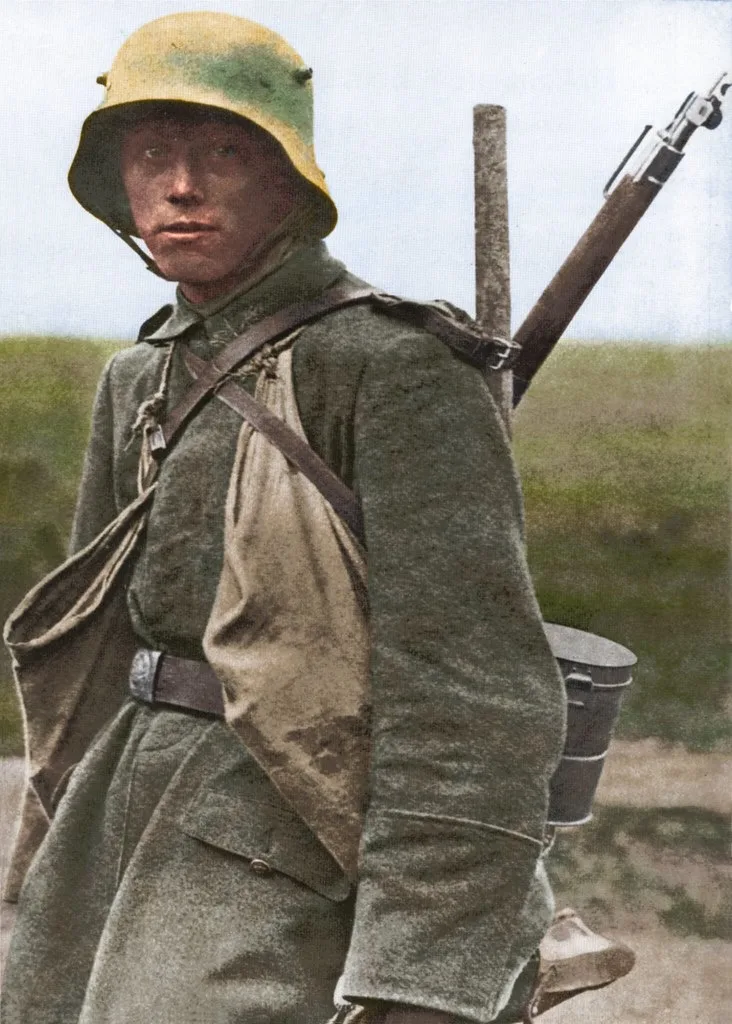
German Stormtrooper Infiltration Tactics
German Stosstruppen infiltrated enemy lines under hurricane gas-and-shell barrages, bypassing strongpoints to destroy command posts and artillery.
The Hundred Days All-Arms Breakthrough
The 1918 Hundred Days Offensive combined massed tanks, aircraft, creeping barrages, and motorized supply to break the concrete Hindenburg Line.
By the numbers
- In what year AD was the First Battle of the Marne fought, halting the German advance?
- 1914
- In what year AD was the ten-month Battle of Verdun fought in northeastern France?
- 1916
- In what year AD was the naval Battle of Jutland fought between Britain and Germany?
- 1916
- In what year AD did massed British tanks first break the Hindenburg Line at the Battle of Cambrai?
- 1917
Matched pairs
Each item on the left goes with the one on the right.
- Erich von Falkenhayn
- Deliberate attritional strategy — by his own postwar account — to bleed the French army white at a historic fortress
- Microphone Sound Ranging
- Triangulates hidden enemy gun positions using acoustic shockwaves without warning fire
- Unrestricted U-Boat Warfare
- Torpedoes all merchant vessels in designated war zones without surface boarding warnings
- Infiltration Assault Groups
- Bypasses fortified frontline redoubts to neutralize command posts and artillery in the rear
Self-test
Answer each question from memory, then check your work against the answer key.
1. Why did the Battle of Jutland end in a strategic victory for Great Britain despite higher British tactical ship losses?
- AThe entire German battlecruiser squadron was captured and towed to Scapa Flow
- BActually sank the majority of Britain's dreadnought battleship fleet
- CGerman High Seas Fleet fled to port and never challenged North Sea control again
- DConvinced Kaiser Wilhelm II to personally negotiate an early ceasefire
2. What caused the 1914 Schlieffen Plan to collapse before reaching Paris?
- ACut off by naval blockade
- BHalted by French tank attacks
- CMutiny among German troops
- DOutran supply and rail lines
3. Which was NOT one of the Western Front's three core defensive trench technologies by 1915?
- ADeep dugouts
- BCreeping barrage
- CMaxim machine guns
- DBarbed wire belts
4. What term describes a moving curtain of artillery fire advancing in timed increments just ahead of infantry?
- ACreeping barrage
- BCounter-battery fire
- CSound ranging
- DBox barrage
5. What miscalculation undermined Falkenhayn's attrition strategy at Verdun?
- AGermany suffered only light casualties overall
- BCasualties on both sides were nearly identical
- CFrance suffered far more losses than Germany
- DBritish forces bore Verdun's heaviest losses
6. How did Allied all-arms combined warfare during the Hundred Days Offensive differ fundamentally from 1915–1916 operations?
- AArmies abandoned artillery entirely in favor of unarmored mass cavalry charges across open plains
- BDepended mainly on large Zeppelin airships to bomb enemy positions from high altitude
- CTanks, aircraft, and creeping artillery barrages advanced together with infantry in a coordinated, real-time all-arms assault
- DRelied primarily on massed poison gas barrages to clear trenches ahead of the infantry
7. Why did General Erich Ludendorff describe August 8, 1918 (the Battle of Amiens) as 'the black day of the German Army'?
- AMassed Allied tanks broke through German lines with ease, causing mass surrenders and shattering German troop morale
- BLost contact with headquarters after Allied cavalry cut key telegraph lines
- CAll German field aircraft were destroyed on the ground by American stealth bombers
- DExhausted their artillery shells after a two-week preparatory bombardment
8. What artillery technique was pioneered by Colonel Georg Bruchmüller for the 1918 German Spring Offensive?
- AA prolonged week-long bombardment relying on traditional pre-registered artillery fire
- BContinuous two-week solid-shot cannonades targeting enemy civilian monuments
- CLong-range naval gun batteries transferred inland to bombard enemy trenches
- DA short, intense hurricane bombardment mixing high explosives, tear gas, and phosgene without prior registration fire
9. What was the tactical rule followed by German stormtrooper squads when encountering strong enemy resistance?
- AExecute a frontal bayonet charge while shouting psychological intimidation slogans
- BBypass the strongpoint along gaps and push deep into the rear, leaving strongholds for follow-on infantry
- CHalt immediately and dig a three-tier defensive trench system until heavy artillery arrived
- DSurrender to the nearest enemy officer to act as undercover espionage agents
10. What tactic let Brusilov's 1916 offensive break through Austro-Hungarian lines?
- AMassed tanks breaking through the line
- BA narrow-sector assault after days of shelling
- CA creeping barrage just ahead of infantry
- DA synchronized attack along a 300-mile front
Go deeper
Answer key
- 1. C German High Seas Fleet fled to port and never challenged North Sea control againWhile Germany sank more ships, Britain retained uncontested command of the North Sea, maintaining the distant blockade that strangled Germany.
- 2. D Outran supply and rail linesMarching over 30 miles a day in summer heat, German infantry outran their horse-drawn supply trains and railheads, letting Joffre's Marne counter-attack force a halt and dig in.
- 3. B Creeping barrageMachine guns, barbed wire, and deep dugouts formed the defense's core; the creeping barrage was an offensive artillery tactic developed later to break trenches, not defend them.
- 4. A Creeping barrageThe creeping barrage advanced in 50-to-100-yard increments just ahead of infantry — unlike a box barrage (a stationary ring of fire sealing off a fixed area), sound ranging (locating guns by sound), or counter-battery fire (targeting enemy guns).
- 5. B Casualties on both sides were nearly identicalFalkenhayn expected a favorable kill ratio to bleed France white, but German losses (about 350,000) nearly matched French losses (about 380,000), undercutting the strategy's logic.
- 6. C Tanks, aircraft, and creeping artillery barrages advanced together with infantry in a coordinated, real-time all-arms assaultThe 1918 Allied offensives integrated armor, air power, artillery suppression, and infantry tactics into a cohesive, fast-moving combined-arms doctrine.
- 7. A Massed Allied tanks broke through German lines with ease, causing mass surrenders and shattering German troop moraleAt Amiens, Allied combined arms advanced eight miles on day one, inflicting roughly 30,000 German casualties — including over 15,000 prisoners — and breaking the German High Command's belief in victory.
- 8. D A short, intense hurricane bombardment mixing high explosives, tear gas, and phosgene without prior registration fireBruchmüller used sudden, mathematically registered hurricane bombardments mixing gas and HE to paralyze defenses just before stormtrooper assault.
- 9. B Bypass the strongpoint along gaps and push deep into the rear, leaving strongholds for follow-on infantryStormtroopers bypassed resistant pockets to maintain offensive momentum and strike rear artillery and command posts, letting heavy units mop up.
- 10. D A synchronized attack along a 300-mile frontBrusilov attacked across a 300-mile front from advance trenches dug within 75 paces of Austrian lines, using minimal bombardment, unlike the narrow, artillery-heavy assaults of 1915-16.
Sources
- HMS Dreadnought (1906) — Wikipedia — en.wikipedia.org/wiki/HMS_Dreadnought_(1906)
- MG 08 — Wikipedia — en.wikipedia.org/wiki/MG_08
- Strachan, The First World War
- Keegan, The First World War
- Horne, The Price of Glory: Verdun 1916
- Bailey, Field Artillery and Firepower
- Prior & Wilson, The Somme
- Marder, From the Dreadnought to Scapa Flow
- Stone, The Eastern Front 1914-1917
- Gudmundsson, Stormtroop Tactics
- Boff, Winning and Losing on the Western Front
- Horne, The Price of Glory: Verdun 1916; Stone, The Eastern Front 1914-1917 — www.penguin.co.uk
- Bailey, Field Artillery and Firepower; Halpern, A Naval History of World War I — www.usni.org
- Marder, From the Dreadnought to Scapa Flow; Strachan, The First World War — www.oxfordreference.com
- Childs, A Ticklish Sort of Business — www.ospreypublishing.com
- Gudmundsson, Stormtroop Tactics — www.greenhillbooks.com
- Boff, Winning and Losing on the Western Front — www.cambridge.org
- Prior & Wilson, The Somme — www.yalebooks.yale.edu
Image credits
- Schlieffen Plan Logistical Failure at the Marne: Wikimedia Commons · German Army · Public domain — commons.wikimedia.org/wiki/File:German_soldiers_Battle_of_Marne_WWI.jpg
- Industrial Defense: Trenches and Machine Guns: Wikimedia Commons · Ernest Brooks · Public domain — commons.wikimedia.org/wiki/File:Vickers_machine_gun_in_the_Battle_of_Passchendaele_-_September_1917.jpg
- Falkenhayn's Attrition Strategy at Verdun: Rutger van der Maar (Openverse) · by 2.0 — www.flickr.com/photos/83468718@N06/52573967029
- Creeping Barrages and Sound Ranging: Emőke Dénes (Openverse) · by-sa 4.0 — commons.wikimedia.org/wiki/File:British_18-pounder_mark_II_field_gun_-_Imperial_War_Museum_1.jpg
- Industrial Carnage at the Battle of the Somme: Wikimedia Commons · Amanda Slater, from Coventry (England) · CC BY-SA 2.0 — commons.wikimedia.org/wiki/File:Thiepval_cimeti%C3%A8re_derri%C3%A8re_m%C3%A9morial_1.jpg
- The Distant Blockade and Battle of Jutland: Wikimedia Commons · Adam Cuerden · Public domain — commons.wikimedia.org/wiki/File:HMS_Dreadnought_1906_H61017.jpg
- U-Boat War and the Convoy System: Wikipedia — SM U-9 · Public domain — en.wikipedia.org/wiki/SM_U-9
- The Armored Tank Breakthrough at Cambrai and Amiens: HawkeyeUK (Openverse) · by-sa 2.0 — www.flickr.com/photos/65001151@N03/36197633110
- German Stormtrooper Infiltration Tactics: Cassowary Colorizations (Openverse) · by 2.0 — www.flickr.com/photos/150300783@N07/35390395301


