
Mythology: Greek, Norse & Egyptian study guide · Lesson 9 of 15
Wisdom, Thor, Loki, Baldr, and Ragnarök
Knowledge, Thor, Loki, and Boundary Crises · Baldr, Ragnarök, and Renewal
This is the lesson's study guide from the FlashFeed app, plus its key facts and a self-test.
What you'll be able to do
- Interpret Thor's fishing trip and Loki's shifting roles as crises of theft, bargaining, disguise, and unstable alliance.
- Separate poetic compression from Snorri’s expansion and see catastrophe alongside survival.
Knowledge, Thor, Loki, and Boundary Crises
Knowledge, Thor, Loki, and Boundary Crises
Odin is associated with knowledge, but the surviving stories do not make him effortlessly omniscient. He repeatedly seeks what he does not yet possess, and the search may require risk, deception, or sacrifice. That pattern matters: wisdom is valuable because it is difficult to obtain and because gaining it can create obligations or consequences.
In Hávamál, Odin describes hanging for nine nights, wounded and offered to himself, before taking up runes—potent signs of hard-won knowledge in this passage. The scene has encouraged many ritual interpretations, but the evidence ledger does not support one settled explanation. The poem gives a stark act of self-sacrifice. Moving from that poetic scene to a general account of historical ritual requires additional evidence.
The mead of poetry, a drink associated with poetic ability, offers another lesson in source variation. Hávamál and Snorri do not tell its story in exactly the same way. Meanwhile, Vafþrúðnismál presents a contest between Odin and Vafþrúðnir, a jötunn—a being often misleadingly reduced to “giant”—who possesses formidable cosmic knowledge. Wisdom is therefore not the Æsir’s private property. Odin’s stature is shown partly by the risks he accepts and the knowledgeable beings he must confront.
For Eddic passages, the Bellows translation is used only to locate stanzas; interpretation is controlled by the current Codex Regius edition and the other approved scholarship.
Costly knowledge is not isolated from the crises faced by other figures. The same corpus repeatedly makes power depend on uncertain information, negotiated help, and unstable relationships.
Thor’s hammer is more than a powerful weapon. In Þrymskviða, the jötunn Þrymr possesses it and demands Freyja as a bride, creating a serious threat to divine security even though the poem handles the crisis with comedy. Recovering the hammer requires Loki’s cooperation and a disguise plan built around that coerced marriage arrangement. The episode shows Thor acting within a network of dependence: strength alone cannot solve every breach.
Thor’s fishing encounter with the world-serpent has a different tone. Their confrontation anticipates their enmity at Ragnarök, the catastrophic sequence involving the gods and the cosmos. Yet the surviving versions do not give precisely the same immediate outcome. Remembering the variant is more accurate than choosing the most cinematic version and treating it as the only one.
Loki’s roles help explain why boundaries are so unstable. Across the corpus, he can be companion, problem-solver, instigator, accuser, and opponent. No single label—“devil,” “fire god,” or even “trickster” used as a total explanation—contains all those roles. His significance often lies in movement between positions: he helps restore order in one story and intensifies danger in another.
These episodes also contain coercion, sexualized insults, gender disguise, and violence. Their comedy belongs to the texts’ handling of a crisis; it is not a reason to mock gender variance or turn every character into a modern identity category. A useful reading asks what has been stolen, which boundary has failed, who must cooperate, and how the source imagines order being restored—or not restored.
Baldr, Ragnarök, and Renewal
Baldr’s death is a clear example of why source layers matter. Völuspá links his death with mistletoe and Höðr. Snorri supplies a much fuller chain of causes and expands Loki’s role. The prose story is culturally powerful, but it should not be projected backward as though every earlier passage explicitly named Loki as the killer. The poetic account is compressed; Snorri’s account is explanatory and continuous.
The episode can support readings about killing within a family and the pressure of foreknown doom, but no one interpretation exhausts every variant. That restraint carries into Ragnarök. The catastrophe includes social collapse, divine deaths, and cosmic violence. It is not, however, absolute erasure. The sources also speak of the earth returning, successor gods, and renewed human life. Renewal belongs to the sequence alongside destruction.
Christian influence is a real source-critical question because these texts survive through Christian-era manuscripts and authors. It is neither responsible to ignore that context nor to declare Ragnarök a simple copy of Christian Revelation. Similarity, influence, inherited tradition, and medieval arrangement are different claims. The evidence supports a mythic arc of collapse and renewal while leaving room for debate about how particular forms reached the surviving texts.
Read the cycle in two lanes: what the poetry states and what Snorri’s prose adds or connects. That preserves a gripping narrative without inventing a seamless franchise canon.
A practical attribution test keeps the lanes separate. If a retelling gives Loki an extended place in the chain of causes, identify that continuity with Snorri’s prose. If a claim is limited to Baldr, Höðr, and mistletoe, identify the compressed poetic witness. This does not force a choice between a “true” and a “false” version. It tells the learner which source supports each connection and prevents a later explanatory arrangement from silently becoming the wording of an earlier poem.
The same test improves interpretation of Ragnarök. Ask whether a summary stops at catastrophe or follows the evidence through return and survival. A destruction-only account omits part of the attested arc; a confident claim about exactly how Christian influence produced the arc exceeds it. Between those errors lies a useful conclusion: the surviving sequence holds collapse and renewal together, while questions about the development of its particular form remain open.
Sources
- Codex Regius of the Poetic Edda: electronic edition
- The Poetic Edda — accessible passage locator
- Snorri Sturluson: Edda — Prologue and Gylfaginning
- Snorri Sturluson: Edda — Skáldskaparmál
- Vafþrúðnismál, from Parchment to Print
- Old Norse Mythology
- Loki the Slandered God?
- Ymir, Baldr, and the Grand Narrative Arc of Mythological History
- Gylfaginning and Early Medieval Conversion Theory
Key terms
- Loki
- A mythic figure whose roles range across companion, solver, instigator, accuser, and opponent rather than one stable moral category.
- Vafþrúðnir
- A jötunn presented as a holder of formidable cosmic knowledge in a wisdom contest with Odin.
- Ragnarök
- A mythic catastrophe involving social and cosmic collapse, divine deaths, survival, and renewal rather than absolute annihilation.
Key concepts
Loki
- A figure shifts among companion, solver, instigator, accuser, and opponent across the corpus.
- Cooperation helps recover a stolen hammer in one poem.
- No single label such as devil, fire god, or totalizing trickster explains all of this figure's roles.
Odin
- A god pursues knowledge through contest, deception, risk, and sacrifice rather than effortless omniscience.
- He hangs wounded for nine nights before taking up runes.
Thor
- A stolen hammer makes one god's absence of power a crisis for divine security.
- A fishing encounter anticipates an enmity with the world-serpent that reaches Ragnarök.
Þrymr
- A jötunn possesses the hammer whose theft threatens divine security.
- His marriage demand helps drive a comic disguise plan and a coerced arrangement.
Vafþrúðnir
- A jötunn holds formidable cosmic knowledge in an exchange with Odin.
- The wisdom contest shows that such knowledge is not exclusive to the Æsir.
World-serpent
- Thor encounters this being while fishing.
- Their confrontation anticipates Ragnarök, though sources vary on the encounter's immediate outcome.
Key facts
The Hammer Theft Is a Security Crisis
In Þrymskviða, Thor's stolen hammer creates a comic but serious threat to divine security. Recovery requires Loki's cooperation, not strength alone.
Thor Fishes for the Serpent
Thor's fishing encounter with the world-serpent anticipates their Ragnarök enmity. Surviving versions differ about the immediate outcome.
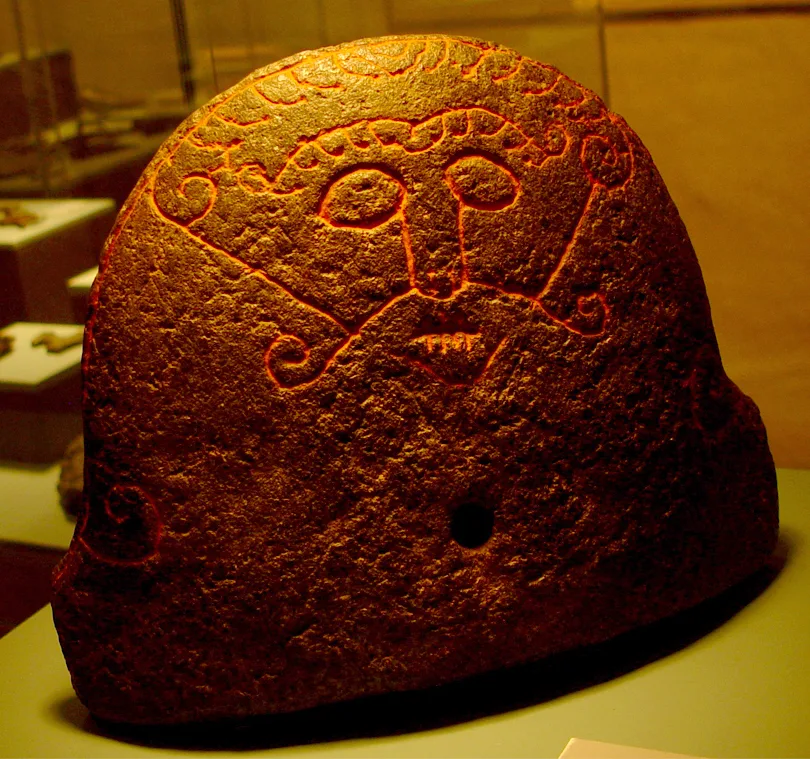
Loki Changes Roles
Loki appears as companion, solver, instigator, accuser, and opponent. No single label such as devil or fire god fits the whole corpus.
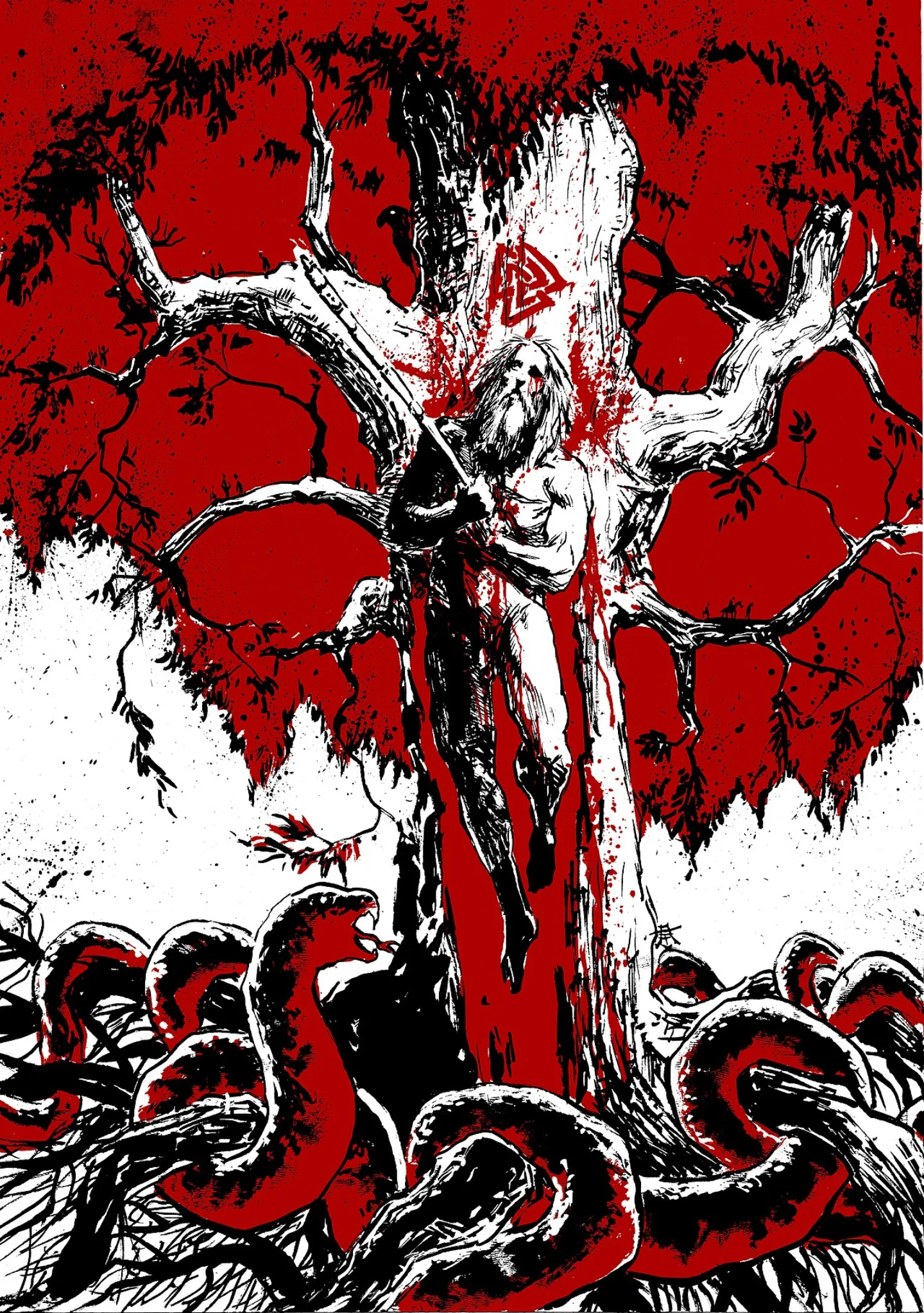
Knowledge Is Costly
Odin's pursuit of knowledge repeatedly involves risk, deception, or sacrifice. His authority does not rest on effortless omniscience.
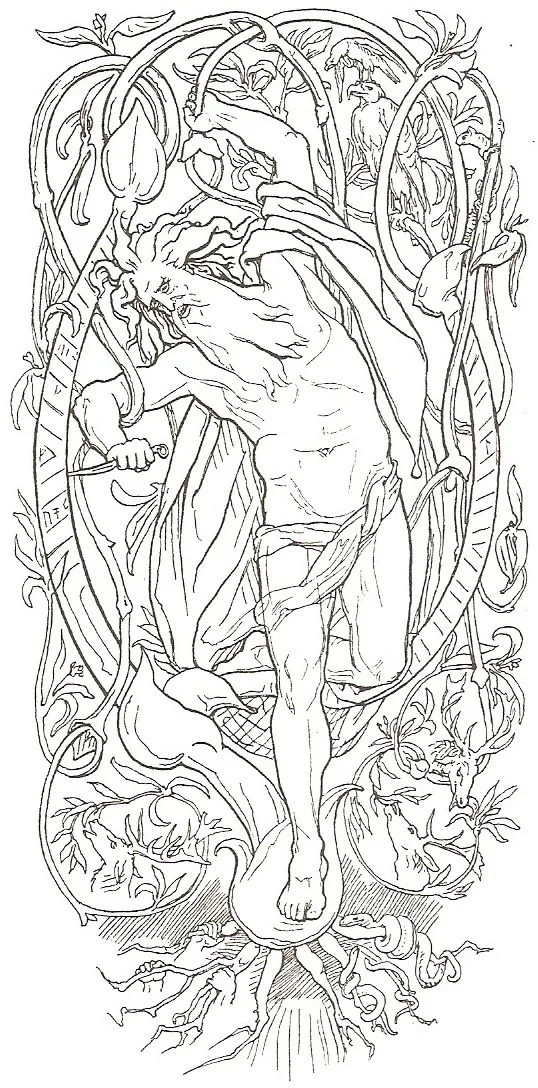
Nine Nights for Runes
Hávamál depicts Odin hanging for nine nights, wounded and offered to himself, before taking up runes.
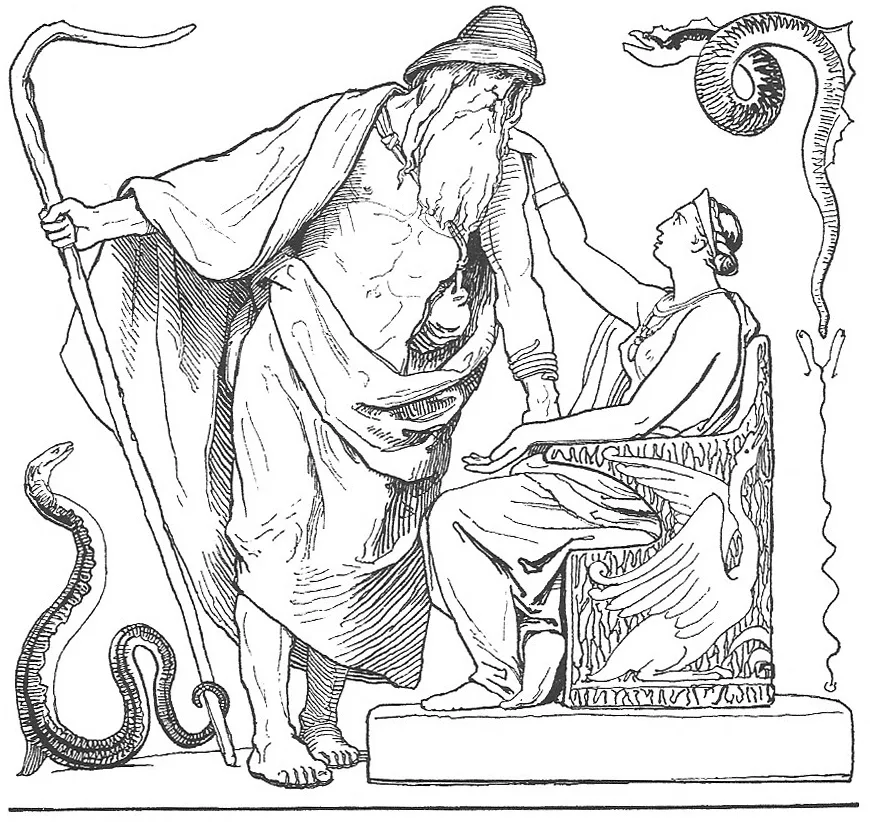
Wisdom Beyond the Æsir
In Vafþrúðnismál, the jötunn Vafþrúðnir possesses formidable cosmic knowledge, showing that such wisdom is not exclusive to the Æsir.
Baldr's Story Has Source Layers
Völuspá links Baldr's death with mistletoe and Höðr. Snorri expands the causal sequence and Loki's role into a fuller prose narrative.
Foreknown Doom, Several Readings
Baldr's story supports readings about killing within a family and foreknown doom, but no single interpretation exhausts the source variants.
Ragnarök Includes Renewal
Ragnarök combines social collapse, divine deaths, and cosmic violence with a returning earth, successor gods, and renewed human life.
Matched pairs
Each item on the left goes with the one on the right.
- Thor's stolen hammer
- A boundary and security crisis that requires Loki's cooperation
- Odin's pursuit of knowledge
- Risk, deception, or sacrifice rather than effortless omniscience
- Völuspá's Baldr account
- Compressed links among Baldr, mistletoe, and Höðr
Self-test
Answer each question from memory, then check your work against the answer key.
1. How should Thor's fishing encounter with the world-serpent be taught?
- AAs an episode with one identical outcome in every version
- BAs an event unrelated to Thor's later enemy
- CAs proof that the serpent is Loki in disguise
- DAs a source-variable encounter that anticipates Ragnarök enmity
2. What does Vafþrúðnir's role show?
- ACosmic history belongs chiefly to the Vanir
- BA jötunn can possess profound cosmic wisdom
- CJötnar are depicted as warriors rather than wisdom holders
- DOdin's questions are ceremonial because he lacks nothing
3. In Havamal, how many nights does Odin hang, wounded and self-offered, before taking up the runes?
- ASeven nights
- BTwelve nights
- CNine nights
- DThree nights
4. In Thrymskvida, whose cooperation does Thor need to recover his stolen hammer?
- ALoki
- BOdin
- CThrymr
- DFreyja
5. Which of these is NOT one of Loki's shifting functional roles?
- AAccuser
- BCompanion
- CDevil
- DInstigator
6. Which statement best describes Ragnarök?
- AA final catastrophe with no surviving beings or renewed earth
- BA simple copy of Christian Revelation
- CA single prose sequence preserved without poetic variants
- DCatastrophe followed by survival and renewal
7. Which source gives the compressed account linking Baldr's death to mistletoe and Hodr?
- ASnorri's Prose Edda
- BVoluspa
- CHavamal
- DVafthrudnismal
8. Whose causal role in Baldr's death does Snorri's prose expand beyond the compressed poetic account?
- ALoki
- BThrymr
- CHodr
- DVafthrudnir
9. Which of the following is NOT part of the attested Ragnarok sequence?
- ASuccessor gods
- BRenewed human life
- CDivine deaths
- DAbsolute erasure of the cosmos
10. How should the relationship between Christian influence and Ragnarok's structure be framed?
- AAn exact copy of Revelation
- BReal influence, but not a copy
- CA claim already disproven
- DA context that should be ignored
Go deeper
Answer key
- 1. D As a source-variable encounter that anticipates Ragnarök enmityThe encounter foreshadows later enmity, but its immediate result differs by version.
- 2. B A jötunn can possess profound cosmic wisdomThe wisdom contest places formidable knowledge in a jötunn's possession.
- 3. C Nine nightsHavamal depicts Odin hanging for nine nights before taking up the runes as hard-won knowledge.
- 4. A LokiRecovering the hammer requires Loki's cooperation and a disguise plan, showing strength alone cannot solve the crisis.
- 5. C DevilLoki's shifting functional roles are companion, problem-solver, instigator, accuser, and opponent; 'devil' is a rejected reductive label, not a role.
- 6. D Catastrophe followed by survival and renewalThe sequence includes cosmic violence and divine death, but also a returning earth, successor gods, and renewed human life.
- 7. B VoluspaVoluspa states the compressed link; Snorri's prose later expands the causal chain and Loki's role.
- 8. A LokiSnorri supplies a fuller causal chain that expands Loki's role; Voluspa's account is more compressed.
- 9. D Absolute erasure of the cosmosThe sources describe collapse alongside renewal, not absolute erasure of the cosmos.
- 10. B Real influence, but not a copyChristian-era transmission is a genuine question; both an ignore-it stance and a simple-copy claim about Revelation are rejected.
Sources
- The Codex Regius of the Poetic Edda: GKS 2365 4to, Electronic Edition — eae.ku.dk/q?p=eae%2Fvols%2Ftext%2F1
- The Poetic Edda — www.gutenberg.org/cache/epub/73533/pg73533-images.html
- Loki the Slandered God? Selective Omission of Skaldic Citations in Snorri Sturluson’s Edda — www.cambridge.org/core/books/abs/myth-and-history-in-celtic-and-scandinavian-traditions/loki-the-slandered-god-selective-omission-of-skaldic-citations-in-snorri-sturlusons-edda/7F7419D1D27F97866D9D2D2FF3915C8A
- Snorri Sturluson: Edda — Prologue and Gylfaginning — vsnr.org/editions/snorri-sturluson-edda-prologue-and-gylfaginning/
- Old Norse Mythology — academic.oup.com/book/41179
- Snorri Sturluson: Edda — Skáldskaparmál — vsnr.org/editions/snorri-sturluson-edda-skaldskaparmal/
- Vafþrúðnismál, from Parchment to Print: Stability and Change in the Transmission of Eddic Poetry — www.cambridge.org/core/books/abs/cultural-legacies-of-old-norse-literature/vafrunismal-from-parchment-to-print-stability-and-change-in-the-transmission-of-eddic-poetry/B5B95E1EBA724851ECAF8C985F93DCF5
- Ymir, Baldr, and the Grand Narrative Arc of Mythological History — www.cambridge.org/core/books/abs/myth-and-history-in-celtic-and-scandinavian-traditions/ymir-baldr-and-the-grand-narrative-arc-of-mythological-history/BD3464F071C2E5E507582BD104665D9A
- Gylfaginning and Early Medieval Conversion Theory — vsnr.org/wp-content/uploads/2021/11/Saga-Book-XXXIII.pdf
- Evidence synthesis — see lesson sources
Image credits
- Loki Changes Roles: Bloodofox · public domain — commons.wikimedia.org/wiki/File:Lokistone.jpg
- Knowledge Is Costly: Wikimedia Commons · Kim Diaz Holm · CC BY 4.0 — commons.wikimedia.org/wiki/File:Odin_yggdrasil.jpg
- Nine Nights for Runes: Wikimedia Commons · Lorenz Frølich · Public domain — commons.wikimedia.org/wiki/File:The_Sacrifice_of_Odin_by_Fr%C3%B8lich.jpg
- Wisdom Beyond the Æsir: Wikimedia Commons · Lorenz Frølich · Public domain — commons.wikimedia.org/wiki/File:Odin_and_Frigg_from_Vaf%C3%BEr%C3%BA%C3%B0nism%C3%A1l_by_Lorenz_Fr%C3%B8lich.jpg


