
U.S. National Parks study guide · Lesson 11 of 27
Lesson 11: California, Pacific Northwest & Hawaii
California Giants · Coast, Spires & the Northwest · Volcanoes & the Pacific Edge · Which Pacific Park Is It? · By the Numbers
This is the lesson's study guide from the FlashFeed app, plus its key facts and a self-test.
What you'll be able to do
- Identify California's giant parks and why its sequoias need fire.
- Recognize the coast and Pacific Northwest parks.
- Explain the volcanic and Pacific-edge parks, from Crater Lake to American Samoa.
- Identify a Pacific park from a single distinctive clue.
- Recall Pacific park peaks and records and match parks to states.
California Giants
California holds more national parks than any other state, and its best are studies in superlatives — the tallest, the biggest, the deepest, the most recently violent. This part profiles five of them, strung down the Sierra Nevada and the northern coast: a granite valley, the planet's largest tree, North America's deepest canyon, a smoking volcano, and the tallest living things on Earth.
Yosemite
Yosemite is the granite heart of the Sierra Nevada. A great batholith of rock was uplifted with the range, then glaciers ground through it, carving the U-shaped Yosemite Valley and leaving behind exfoliating domes and walls. El Capitan rises about 3,000 ft in a single sheer face — the most coveted big-wall climb on Earth, free-climbed up its Dawn Wall in 2015 and free-soloed by Alex Honnold in 2017. Half Dome looms ~4,737 ft above the valley floor. The park has the highest concentration of major waterfalls anywhere, crowned by Yosemite Falls at 2,425 ft, the tallest in North America. The 1864 Yosemite Grant was the first time the federal government set aside scenic land for protection; the national park followed in 1890, driven by John Muir. The Ahwahneechee people lived in the valley, which they called Ahwahnee, before being violently expelled in 1851. About 4.1 million visitors come each year.
Sequoia
Established the same week as Yosemite in 1890, Sequoia is the second-oldest national park. Its fame rests on a single tree: the General Sherman, the largest single-stem tree on Earth by volume — roughly 52,500 cubic feet, about 275 ft tall, ~36 ft across at the base, and an estimated 2,200 years old. It stands in the Giant Forest, one of several groves of giant sequoias. On the park's eastern boundary rises Mount Whitney (14,505 ft), the highest peak in the contiguous United States. Counterintuitively, giant sequoias need fire: their cones open in heat, and decades of fire suppression actually threatened the species' renewal. Their thick, tannin-rich bark makes the mature trees nearly fireproof.
Kings Canyon
Kings Canyon adjoins Sequoia to the north and shares its management. The canyon itself plunges nearly 8,000 ft from river to peak, among the deepest in North America, gouged by glaciers along the South Fork Kings River. The General Grant Tree, the third-largest tree on Earth, is the official "Nation's Christmas Tree." John Muir judged the canyon a "rival to Yosemite." Most of the 462,000-acre park is roadless wilderness, crossed only on foot by trails including a stretch of the John Muir and Pacific Crest Trails.
Lassen Volcanic
In the southern Cascades of Northern California, Lassen Peak (10,457 ft) is one of the largest plug-dome volcanoes on Earth. It erupted from 1914 to 1917, blasting ash 30,000 ft high — the most recent Cascade eruption before Mount St. Helens in 1980. Remarkably, all four volcano types — shield, composite, cinder cone, and plug dome — occur within the park. At Bumpass Hell, boiling mudpots and fumaroles vent from the ground. Heavy snow keeps the high road closed much of the year; the park, founded in 1916, is also a designated Dark Sky Park.
Redwood
Along the foggy far-northern coast, coast redwoods are the tallest trees on Earth — including Hyperion at about 380 ft, whose exact location is kept secret to protect it. Pacific fog supplies the moisture they need, and they can live ~2,000 years. Logging destroyed about 95% of the original old growth; these jointly managed national and state parks now protect roughly 45% of what survives. The Yurok, California's largest tribe, co-steward parts of the parks and helped bring condors back to the coast in 2022.
Coast, Spires & the Northwest
This part runs from the central California coast up into Washington's Cascades. Two of its parks are small and strange — a sliced-up volcano and an island Galápagos — and three are vast Northwest landscapes: a park of three worlds, a glacier-clad giant, and the most rugged, least-visited range in the Lower 48.
Pinnacles
Pinnacles is, almost literally, half of a volcano. The ancient Neenach Volcano was split by the San Andreas Fault and its western half carried about 195 miles northwest over some 23 million years — the other half still sits in Southern California. The journey left dramatic rock spires and rare talus caves, formed where boulders jammed into narrow canyons. East of the Salinas Valley and made a national park in 2013, it is among the smallest in the system at ~26,700 acres, and one of the best places on Earth to watch wild California condors roosting on the crags. The east and west entrances do not connect by road.
Channel Islands
Five undeveloped islands off Southern California — Santa Cruz, Anacapa, Santa Rosa, San Miguel, and Santa Barbara — make up this 1980 park, the "Galápagos of North America." Isolation drove about 150 endemic species, and Santa Cruz holds the world's largest sea cave. The standout recovery story is the island fox: house-cat-sized, it crashed to ~1,500 animals under golden-eagle predation, then rebounded to be delisted in 2016, one of the fastest Endangered Species Act recoveries ever. The Chumash navigated these waters for ~13,000 years in plank canoes; Arlington Springs Man, found on Santa Rosa, is among the oldest human remains in North America.
Olympic
Olympic squeezes three ecosystems into one Washington park: glaciated mountains crowned by Mount Olympus (7,980 ft) with 60-plus glaciers, the soaking Hoh temperate rainforest, and ~73 miles of wild Pacific coastline. The Hoh drinks 12–14 ft of rain a year, among the wettest places in the contiguous U.S., while rain-shadow valleys to the northeast stay nearly dry. You can touch a glacier, a rainforest, and an ocean beach in a single day. Championed by Franklin Roosevelt and made a national park in 1938, it is both a UNESCO Biosphere Reserve and a World Heritage Site. Roosevelt elk roam its valleys — the park was nearly named for them.
Mount Rainier
Mount Rainier (14,410 ft) is an active, glacier-clad stratovolcano and the most heavily glaciated peak in the contiguous U.S., wearing about 26 major glaciers. It last erupted roughly 1,000 years ago and ranks among America's most dangerous volcanoes — not for an eruption but for lahars, volcanic mudflows that could race down to Puget Sound cities. The Paradise meadows erupt with wildflowers each summer; Paradise is also among the snowiest measured places on Earth (a record ~93.5 ft fell in 1971–72). Established in 1899, Rainier was the fifth national park, and serves as the classic training peak for Everest and Denali climbers.
North Cascades
Nicknamed "the American Alps," North Cascades is a wall of jagged peaks holding more than 300 glaciers — about one-third of all the glaciers in the Lower 48. Turquoise glacier-fed lakes such as Diablo and Ross glow at the foot of the peaks. Established in 1968 on the Canadian border, it is one of the least-visited parks in the Lower 48 — roughly 40,000 visitors a year, fewer than Yellowstone draws in a busy weekend — even though it sits only about three hours from Seattle. Most traffic simply passes through the adjacent recreation area.
Volcanoes & the Pacific Edge
The final stretch of the Pacific lesson is all fire and ocean: a lake born when a volcano destroyed itself, two Hawaiian volcanoes still building new land, the "House of the Sun," and the only U.S. national park south of the equator.
Crater Lake
At 1,943 ft deep, Crater Lake in southern Oregon is the deepest lake in the United States. It fills the caldera of Mount Mazama, which erupted about 50 cubic km of magma and collapsed roughly 7,700 years ago. No river runs in or out — the basin filled with rain and snowmelt alone, which keeps the water exceptionally clear, scattering sunlight back as an intense, pure blue. Wizard Island, a cinder cone, rises from one side: a volcano within a volcano. Established in 1902 as the sixth national park, it sits in one of the snowiest inhabited places in the U.S. (~41 ft a year). The Klamath remember Mazama's eruption in oral tradition as a battle between spirit chiefs — a memory some 7,700 years old.
Hawaii Volcanoes
On the Big Island, this 1916 park holds two of the world's most active volcanoes. Kīlauea erupted nearly continuously from 1983 to 2018 and has flared episodically since (2020–2024+), while Mauna Loa (13,681 ft) is the largest active volcano on Earth by volume. Both are shield volcanoes, built by fluid basaltic lava welling up over the stationary Hawaiian hotspot. Lava lakes, steam vents, and lava tubes thread the landscape, and the volcanoes add new land before your eyes — hundreds of acres in recent decades. For Native Hawaiians, the goddess Pele dwells in Kīlauea's Halemaʻumaʻu crater, and the park is deeply sacred.
Haleakala
Haleakalā — "House of the Sun" — is a dormant shield volcano (10,023 ft) on Maui, last erupted some 400–600 years ago. Crowds gather before dawn for its famous sunrises above a sea of clouds; a reservation is required. Its vast, Mars-like summit "crater" is actually a large erosional basin studded with cinder cones. Hawaiian tradition tells of the demigod Māui lassoing the sun here to slow its journey across the sky. The endemic silversword (ʻāhinahina) can live about 90 years, bloom a single spectacular time, then die. Far below, the lush Kīpahulu district drops through bamboo forest to coastal waterfalls and pools.
American Samoa
The only U.S. national park south of the equator, the National Park of American Samoa spans three South Pacific islands — Tutuila, Taʻū, and Ofu. Authorized in 1988, it protects rare paleotropical rainforest, coral reefs, and steep volcanic coastlines, plus giant fruit bats (flying foxes) with ~3-ft wingspans that soar in daylight. Uniquely in the system, the land is leased from Samoan villages rather than federally owned, and the park is co-managed with village councils. It is also the only national park where a homestay with a local family is the primary lodging — a direct immersion in faʻa Samoa, the Samoan way of life.
Which Pacific Park Is It?
The Pacific parks span granite, glacier, rainforest, and lava — but each has a fingerprint you can learn to read. This part is a recognition game: a few clues, broadest first, narrowing to the giveaway. Below are the tells worth memorizing for each park.
Playing which Pacific park is it
You are given two or three clues per park, broad to specific, and you name the park. The clues never say the name outright. Train yourself on the single most distinctive fact for each: a famous tree, a record depth, a unique recovery story.
The California granite and water parks
Three of these places are pure California superlative. Yosemite is the Sierra park of the 1864 federal grant, with glacier-carved granite walls — El Capitan's ~3,000-ft face and the 2,425-ft tallest waterfall in North America. Redwood is the foggy northern coast, run jointly as national and state parks, sheltering the tallest trees on Earth and fern canyons full of Roosevelt elk. Pinnacles, one of the smallest and newest parks, is half of an ancient volcano carried ~195 miles north by the San Andreas Fault, riddled with talus caves and patrolled by condors.
The island and the Hawaiian volcano
Channel Islands is five undeveloped islands off Southern California, reachable only by boat or plane — the "Galápagos of North America" with ~150 endemic species and a house-cat-sized fox that recovered from ~1,500 animals to be delisted in 2016. Haleakalā, on Maui, is the "House of the Sun," famous for pre-dawn summit sunrises above the clouds and for the silversword that blooms once after ~90 years and dies.
The Northwest and Cascade parks
Crater Lake, Oregon's sixth national park, fills the caldera of Mount Mazama — the deepest lake in the U.S., fed only by rain and snow, with Wizard Island rising from it. Olympic, on a Washington peninsula and recognized by UNESCO as both a Biosphere Reserve and a World Heritage Site, bundles glaciated mountains, ~73 miles of wild coast, and the soaking Hoh rainforest. North Cascades, "the American Alps" on the Canadian border, holds more than 300 glaciers — about a third of those in the Lower 48 — yet is among the least-visited parks there. The tells: deepest lake, three ecosystems, most glaciers.
By the Numbers
The Pacific parks are easy to feel and hard to scale. This part fixes the numbers — the heights, depths, and visitor counts worth carrying — and pins each park to its state and high point.
Heights and depths
A handful of measurements anchor the whole lesson. Yosemite Falls drops 2,425 ft, the tallest waterfall in North America. On Sequoia's eastern edge, Mount Whitney rises to 14,505 ft, the highest peak in the contiguous United States. Just shy of it, Mount Rainier summits at 14,410 ft and is the most heavily glaciated peak in the Lower 48. In Hawaii, Mauna Loa reaches 13,681 ft and is the largest active volcano on Earth by volume. And going the other direction, Crater Lake plunges 1,943 ft down — the deepest lake in the United States, filling a collapsed volcano with nothing but rain and snowmelt.
How many come
Numbers also measure people. Yosemite draws about 4.1 million visitors a year, one of the busiest parks in the system — which is why peak-period reservations have become routine. That figure is a useful yardstick: North Cascades, by contrast, sees only ~40,000 a year, roughly a hundredth of Yosemite's crowds, despite sitting just hours from Seattle.
Parks, states and high points
The map ties it together. Yosemite is in California; Mount Rainier in Washington; Crater Lake in Oregon; and Haleakalā on the island of Maui in Hawaii. Each park also has a high point that doubles as a landmark. Sequoia's is Mount Whitney (14,505 ft) on its boundary — the contiguous U.S. summit record. Olympic's is Mount Olympus (7,980 ft), ringed by glaciers and rainforest. Learn the pairings and you can place any of these parks on a map and know its ceiling.
Key concepts
Yosemite
- A California park in the Sierra Nevada, born of the 1864 federal grant that John Muir championed.
- Glaciers carved its valley into a U-shape walled by exfoliating granite domes and cliffs.
- El Capitan's ~3,000-ft wall is a climbing mecca, and its 2,425-ft waterfall is the tallest in North America.
Crater Lake
- An Oregon park, the sixth national park, set in the southern Cascades.
- Its centerpiece fills the caldera of Mount Mazama, which collapsed about 7,700 years ago.
- Fed only by rain and snow, it is the deepest lake in the U.S. and holds a cinder cone called Wizard Island.
Redwood
- A foggy stretch of the far Northern California coast, jointly run as national and state parks.
- Fern canyons and Roosevelt elk meadows shelter beneath its old growth.
- It guards the tallest trees on Earth, including the secret-located Hyperion at about 380 ft.
Olympic
- A Washington park on a peninsula, championed by Franklin Roosevelt and recognized by UNESCO as both a Biosphere Reserve and a World Heritage Site.
- It bundles glaciated mountains, ~73 miles of wild coastline, and a soaking temperate rainforest.
- Its Hoh forest drinks 12–14 ft of rain a year, among the wettest places in the contiguous U.S.
Pinnacles
- One of the smallest and newest national parks, in central California east of the Salinas Valley.
- Boulders wedged in narrow canyons form rare talus caves you explore by flashlight.
- It is half of an ancient volcano carried ~195 miles north by the San Andreas Fault, and a prime condor refuge.
Channel Islands
- Five undeveloped islands off Southern California, reachable only by boat or small plane.
- Isolation made it the 'Galápagos of North America,' with roughly 150 endemic species.
- Its house-cat-sized dwarf fox staged one of the fastest Endangered Species Act recoveries ever, delisted in 2016.
Haleakalā
- A Maui park whose name means 'House of the Sun.'
- Crowds gather before dawn at its 10,023-ft summit for sunrises above the clouds.
- Its Mars-like summit basin shelters the endemic silversword, which blooms once after ~90 years, then dies.
North Cascades
- A rugged Washington park on the Canadian border, nicknamed 'the American Alps.'
- Its turquoise glacier-fed lakes include Diablo and Ross.
- It holds more than 300 glaciers — about a third of those in the Lower 48 — yet is among the least-visited parks there.
Key facts
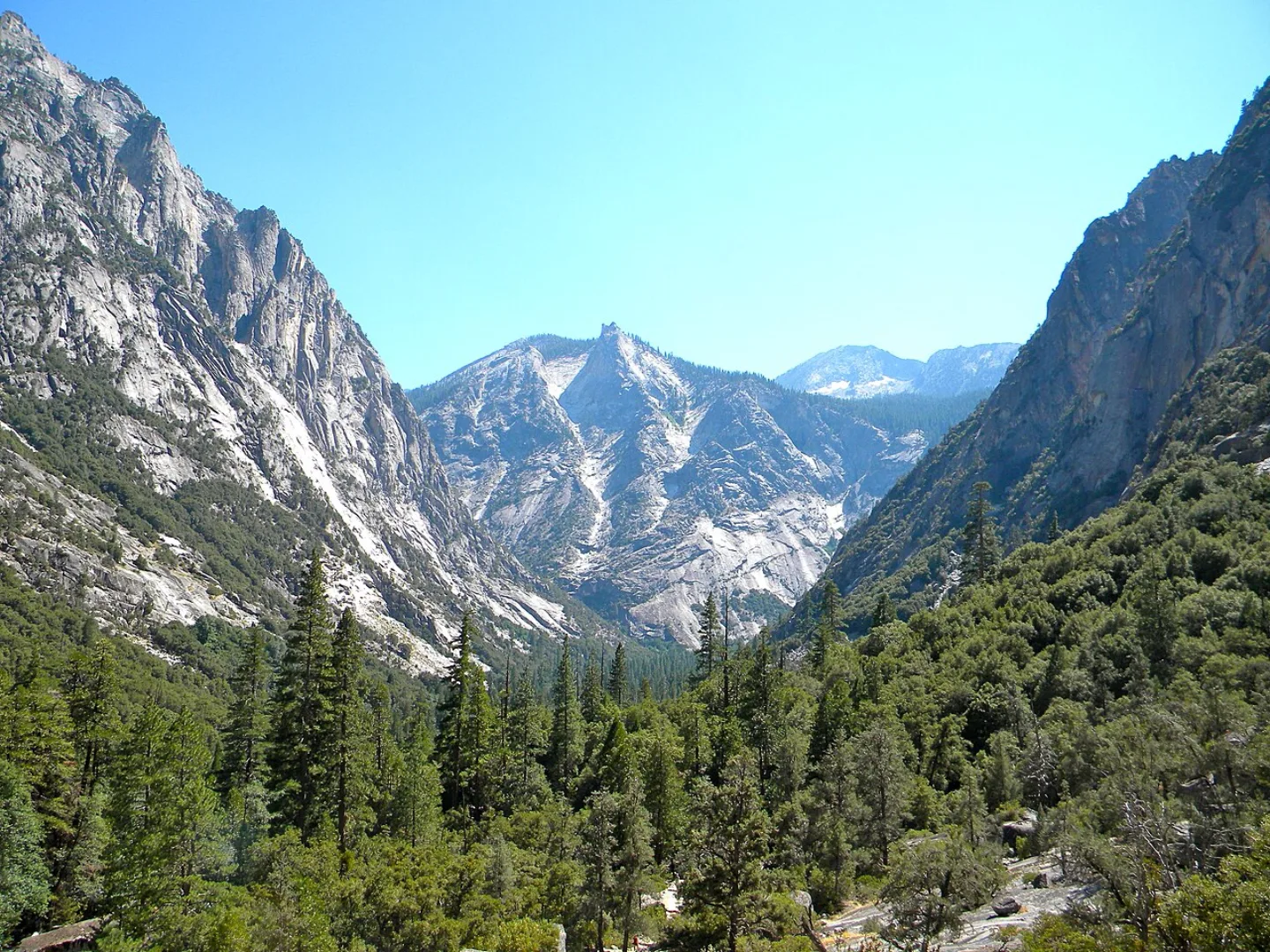
Kings Canyon
Adjoining Sequoia to the north, Kings Canyon plunges nearly 8,000 ft from river to peak — among the deepest canyons in North America. The General Grant Tree, the third-largest tree on Earth, is the nation's official Christmas Tree. John Muir called this glacier-carved, granite-walled wilderness a 'rival to Yosemite'; most of the 462,000-acre park is roadless backcountry threaded by the John Muir Trail.
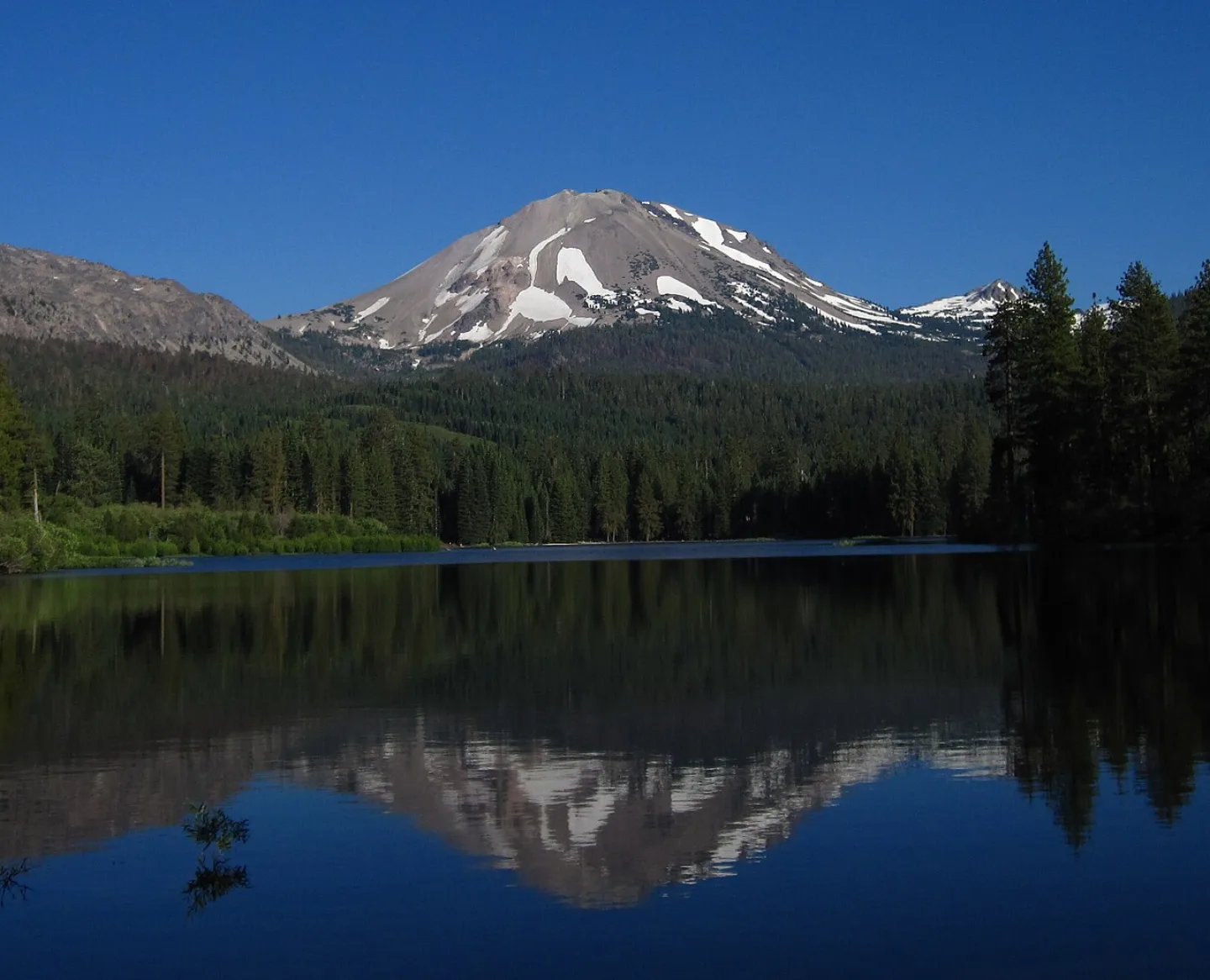
Lassen Volcanic
Lassen Peak (10,457 ft) is one of the largest plug-dome volcanoes on Earth, and it erupted from 1914 to 1917 — the most recent Cascade eruption before Mount St. Helens in 1980. All four volcano types occur in this Northern California park, and Bumpass Hell bubbles with boiling mudpots and fumaroles. The park, founded in 1916, is also a designated Dark Sky Park.
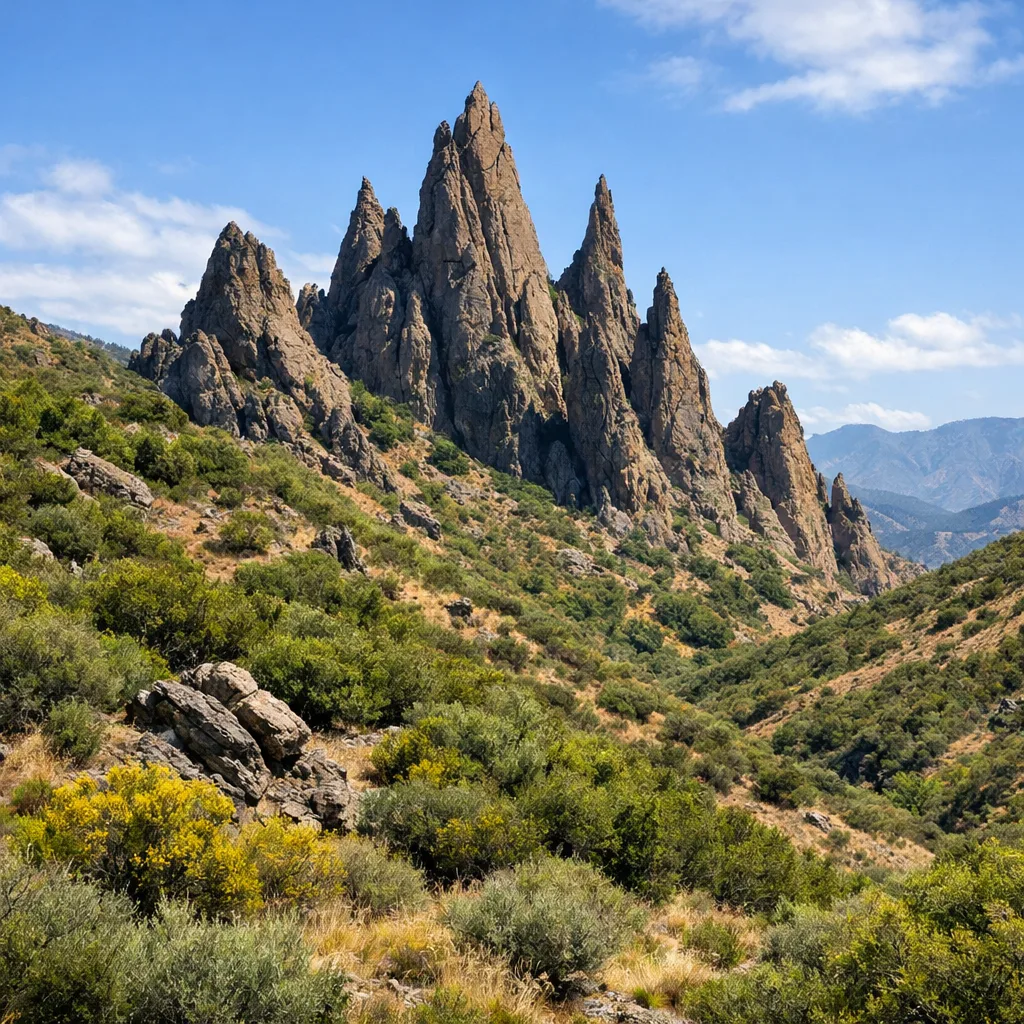
Pinnacles
Pinnacles is literally a chunk of an ancient volcano. The Neenach Volcano was split by the San Andreas Fault and carried ~195 miles northwest over some 23 million years — its other half still sits in Southern California. Boulders wedged in narrow canyons form rare talus caves, and the spires are one of the best places on Earth to watch wild California condors. It became a national park in 2013.
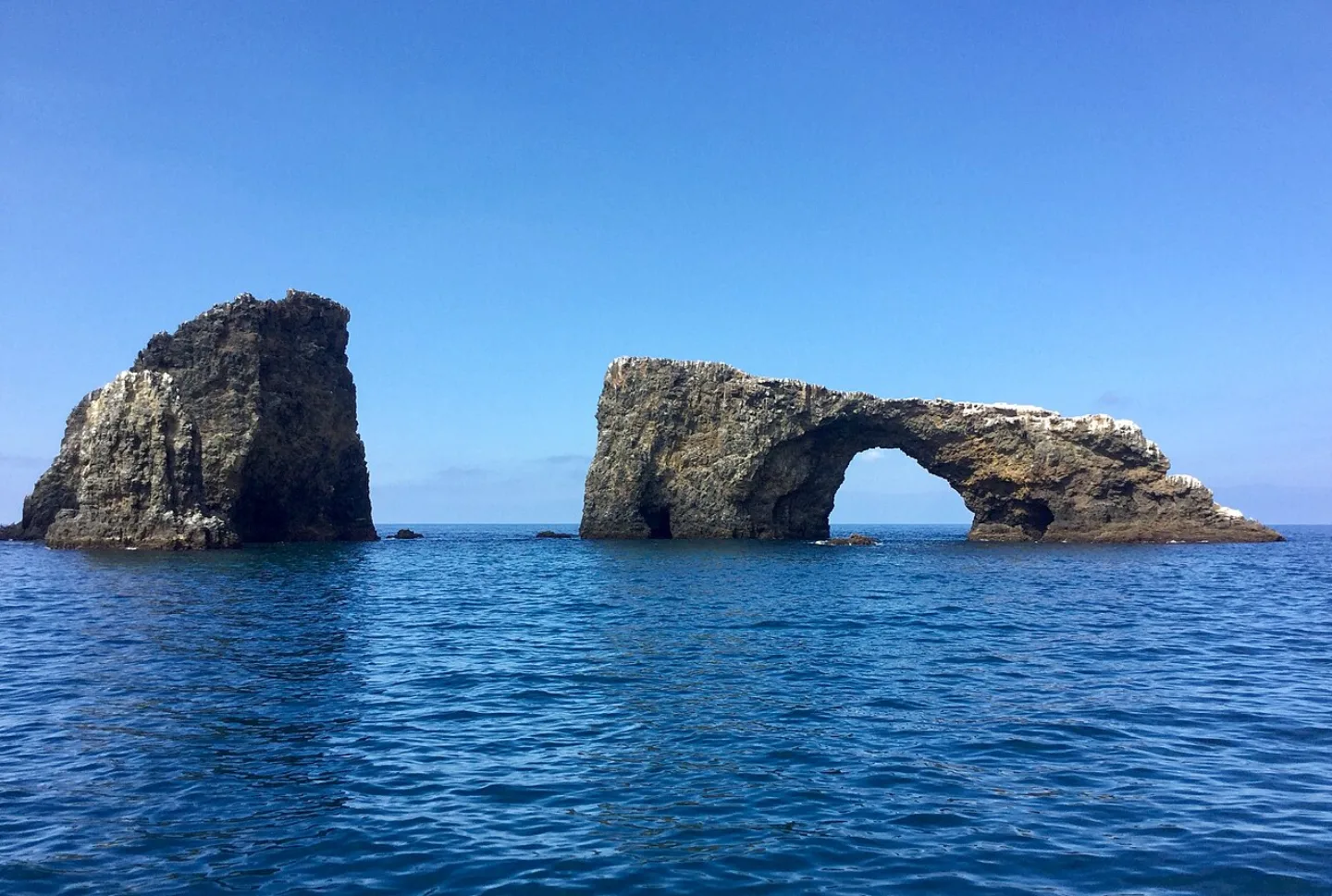
Channel Islands
Five undeveloped islands off the Southern California coast — the 'Galápagos of North America' — host about 150 endemic species, sea caves, kelp forests, and vast seabird colonies. The dwarf island fox, no bigger than a house cat, crashed to ~1,500 animals before recovering to be delisted in 2016, one of the fastest Endangered Species Act recoveries ever. The Chumash navigated these waters for ~13,000 years.
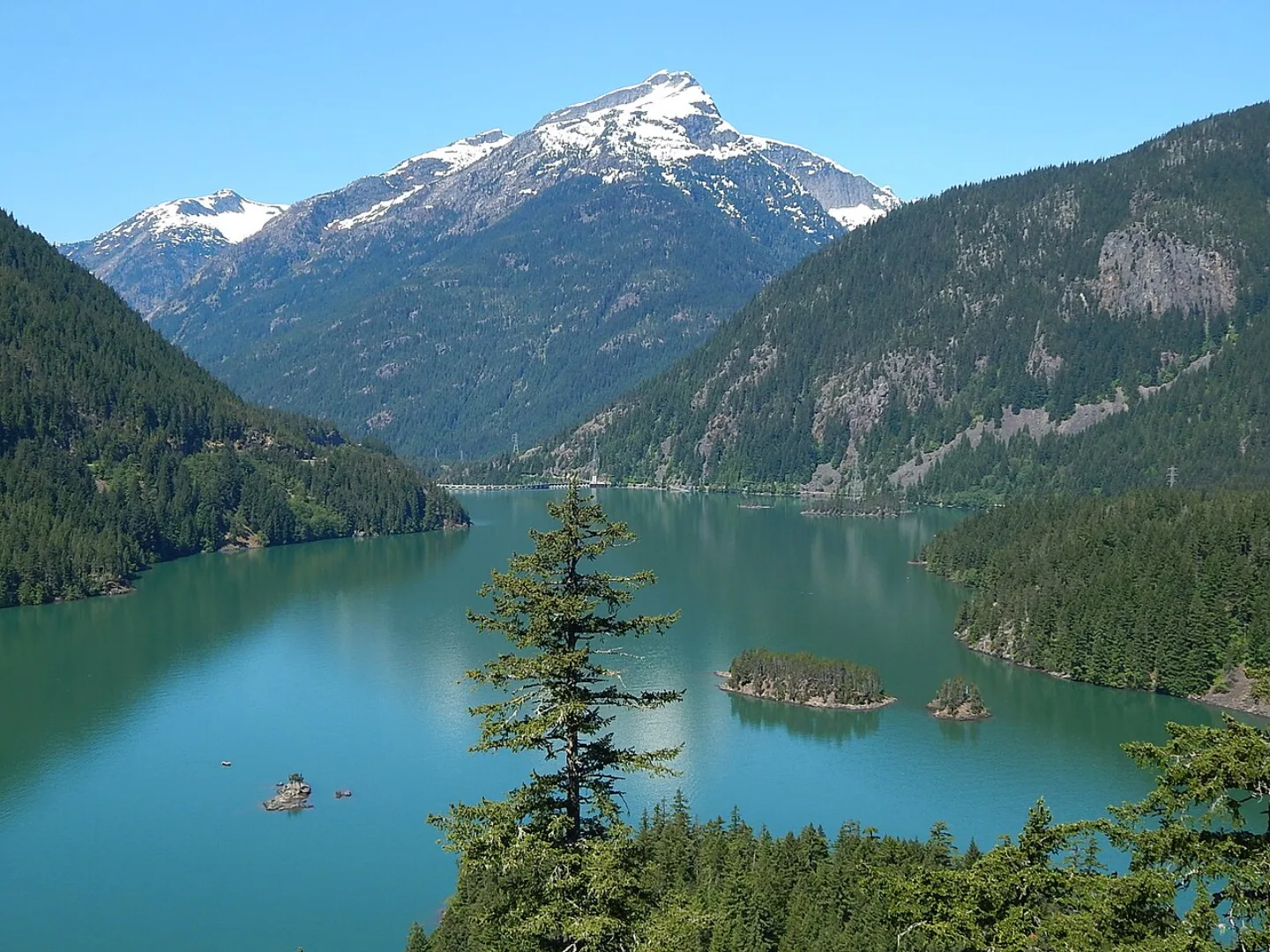
North Cascades
Nicknamed 'the American Alps,' North Cascades bristles with jagged peaks and more than 300 glaciers — about one-third of all the glaciers in the Lower 48. Turquoise glacier-fed lakes like Diablo and Ross glow below. Yet despite being only ~3 hours from Seattle, it draws around 40,000 visitors a year — fewer than Yellowstone sees in a busy weekend.
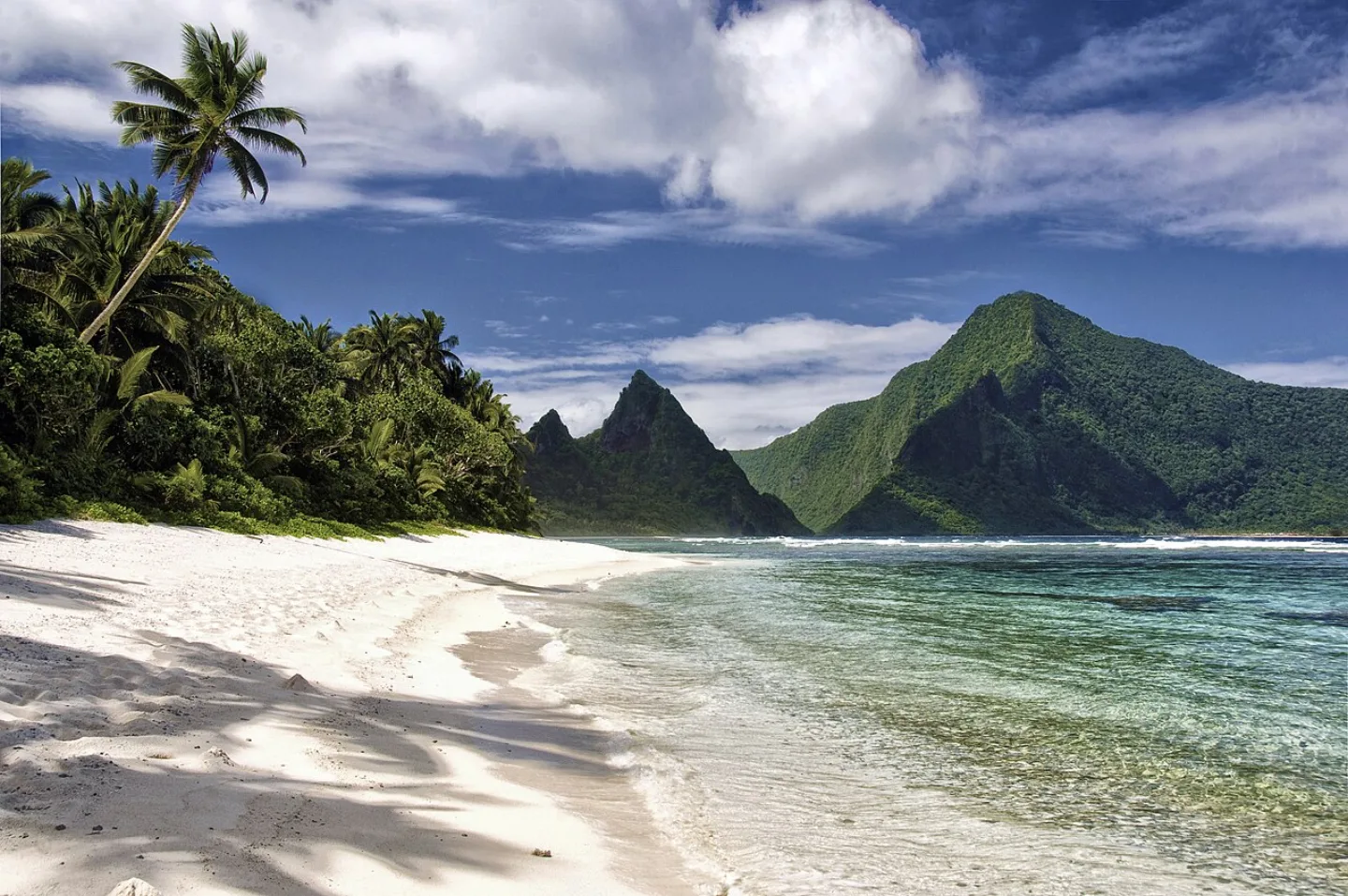
American Samoa
Spread across three South Pacific islands, this is the only U.S. national park south of the equator. It protects rare paleotropical rainforest, coral reefs, and giant fruit bats — flying foxes with ~3-ft wingspans that soar in daylight. Uniquely in the system, the land is leased from Samoan villages, not owned by the government, and you can stay in a family's home as the primary lodging.
Māui Lassoed the Sun
Haleakalā, the dormant shield volcano on Maui, gets its name from Hawaiian tradition holding that the demigod Māui lassoed the sun there to slow its journey across the sky.
By the numbers
- How tall is Yosemite Falls, the tallest waterfall in North America?
- 2425 feet
- What is the elevation of Mount Whitney, the highest peak in the contiguous U.S., which rises on Sequoia's eastern boundary?
- 14505 feet
- How tall is Mount Rainier, the active glacier-clad stratovolcano that is the most heavily glaciated peak in the contiguous U.S.?
- 14410 feet
- Nicknamed 'the American Alps,' this park holds about one-third of all glaciers in the Lower 48 — how many glaciers is that, at minimum?
- 300 count
- How deep is Crater Lake, the deepest lake in the United States?
- 1943 feet
- What is the elevation of Mauna Loa, the largest active volcano on Earth by volume?
- 13681 feet
- How tall is Yosemite Falls, the tallest waterfall in North America?
- 2425 ft
- How high is Mount Whitney, the highest peak in the contiguous U.S., on Sequoia's eastern boundary?
- 14505 ft
- How deep is Crater Lake, the deepest lake in the United States?
- 1943 ft
- What is the summit elevation of Mount Rainier, the most heavily glaciated peak in the contiguous U.S.?
- 14410 ft
- How high is Mauna Loa, the largest active volcano on Earth by volume, in Hawaii Volcanoes?
- 13681 ft
- About how many people visited Yosemite National Park in 2024?
- 4100000 visitors
Matched pairs
Each item on the left goes with the one on the right.
- General Sherman Tree
- Largest single-stem tree on Earth by volume
- Channel Islands
- Galápagos of North America
- Haleakalā
- House of the Sun
- Yosemite
- California
- Mount Rainier
- Washington
- Crater Lake
- Oregon
- Sequoia — high point
- Mount Whitney (14,505 ft)
- Olympic — high point
- Mount Olympus (7,980 ft)
- Haleakalā
- Hawaii (Maui)
Self-test
Answer each question from memory, then check your work against the answer key.
1. Counterintuitively, the giant sequoias of Sequoia National Park depend on periodic fire. Why?
- AAsh supplies the only nutrients their shallow roots can absorb
- BFire kills a bark beetle that would otherwise girdle the mature trunks
- CFlames scorch away a fungus that would otherwise rot the seeds before they sprout
- DThe heat opens their cones to release seeds, so decades of fire suppression threatened the species' renewal
2. What distinction does the General Sherman Tree in Sequoia National Park hold?
- AThe largest single-stem tree on Earth by volume
- BThe widest tree canopy on Earth
- CThe tallest tree on Earth
- DThe oldest living tree on Earth
3. How far does Yosemite Falls, the tallest waterfall in North America, plunge?
- A1,943 ft
- B2,425 ft
- C3,000 ft
- D4,737 ft
4. Which statement about Sequoia National Park is NOT true?
- AMount Whitney rises on its eastern boundary
- BThe General Sherman is the largest single-stem tree by volume
- CIts coast redwoods are the tallest trees on Earth
- DIt was established in 1890
5. Which far-northern California park protects the tallest trees on Earth, including Hyperion at about 380 ft?
- AYosemite
- BKings Canyon
- CSequoia
- DRedwood
6. Which Pacific park — a chunk of the ancient Neenach Volcano split by the San Andreas Fault — is one of the best places on Earth to watch wild California condors?
- AOlympic
- BNorth Cascades
- CPinnacles
- DChannel Islands
7. Which park off the Southern California coast is nicknamed the 'Galápagos of North America' for its roughly 150 endemic species?
- AChannel Islands
- BOlympic
- CNorth Cascades
- DPinnacles
8. How is Mount Rainier best described?
- AA caldera lake formed by a collapsing summit
- BAn active, glacier-clad stratovolcano and the most heavily glaciated peak in the contiguous U.S.
- CA plug-dome volcano that last erupted in 1917
- DA shield volcano built over the Hawaiian hotspot
9. North Cascades, 'the American Alps,' holds about one-third of the glaciers in the Lower 48. How many glaciers is that?
- ARoughly 60
- BMore than 300
- CNearly 150
- DApproximately 26
10. Which Washington park lets you touch a glacier, a rainforest, and a wild ocean beach in a single day?
- AMount Rainier
- BPinnacles
- COlympic
- DNorth Cascades
11. Which is the only U.S. national park located south of the equator?
- AHaleakalā
- BCrater Lake
- CHawaii Volcanoes
- DAmerican Samoa
12. How deep is Crater Lake, the deepest lake in the United States?
- A1,943 ft
- B2,215 ft
- C1,450 ft
- D900 ft
13. How did the basin that holds Crater Lake form?
- AA fault dropped a block of crust below sea level
- BA glacier gouged out a deep U-shaped valley
- CA meteor impact blasted the crater
- DThe caldera collapsed when Mount Mazama erupted ~7,700 years ago
14. Haleakalā, the dormant shield volcano on Maui, has a name that translates to what?
- AHouse of the Sun
- BHome of the Gods
- CHouse of the Moon
- DMountain of Fire
15. Kīlauea and Mauna Loa, built by fluid basaltic lava welling up over the Hawaiian hotspot, are both what type of volcanic edifice?
- ACinder cones
- BShield volcanoes
- CPlug-dome volcanoes
- DStratovolcanoes
16. In the 'Which Pacific Park?' game, which one is half of an ancient volcano carried roughly 195 miles north along the San Andreas Fault — a small, new park riddled with talus caves and patrolled by condors?
- AHaleakalā
- BLassen Volcanic
- CPinnacles
- DChannel Islands
17. Which park is the deepest lake in the U.S., filling the caldera of Mount Mazama with no inlet or outlet?
- ACrater Lake
- BChannel Islands
- COlympic
- DNorth Cascades
18. Which park squeezes three worlds — glaciated mountains, the Hoh rainforest, and 73 miles of Pacific coast — into one?
- AMount Rainier
- BNorth Cascades
- CRedwood
- DOlympic
19. Which park is the 'Galápagos of North America,' home to the recovered dwarf island fox?
- AAmerican Samoa
- BChannel Islands
- CPinnacles
- DHaleakalā
20. Which park is 'the American Alps,' with more than 300 glaciers yet only about 40,000 visitors a year?
- ALassen Volcanic
- BMount Rainier
- CNorth Cascades
- DOlympic
21. In Hawaii Volcanoes National Park, Mauna Loa rises to 13,681 ft. What superlative does it hold?
- AThe most frequently erupting volcano in the world
- BThe tallest mountain on Earth measured from base to summit
- CThe largest active volcano on Earth by volume
- DThe highest peak anywhere in the Pacific
22. What is the summit elevation of Mount Rainier, the most heavily glaciated peak in the contiguous U.S.?
- A14,505 ft
- B14,410 ft
- C10,457 ft
- D13,681 ft
23. About how many people visit Yosemite National Park each year?
- A1.9 million
- B12 million
- C40,000
- D4.1 million
24. Yosemite and Sequoia National Parks are both located in which state?
- ACalifornia
- BOregon
- CNevada
- DWashington
25. Mount Olympus, the high point of Olympic National Park, rises to what elevation?
- A14,410 ft
- B7,980 ft
- C10,023 ft
- D14,505 ft
Go deeper
- WatchSequoias Need Fire Counterintuitively, giant sequoias need fire. Their cones open in heat.
- WatchHalf a Volcano Pinnacles is, almost literally, half of a volcano.
- WatchNo River In or Out At 1,943 feet deep, Crater Lake is the deepest lake in the United States.
- WatchThe Galápagos of North America Which Pacific park is it? Three clues, narrowing to the giveaway.
- WatchA Hundredth of the Crowds Yosemite draws about 4.1 million visitors a year. It's one of the busiest parks in the system, which is why peak-period reservations have become routine.
- StudyU.S. National Parks in the FlashFeed app
Answer key
- 1. D The heat opens their cones to release seeds, so decades of fire suppression threatened the species' renewalGiant sequoia cones need the heat of fire to open and drop their seeds, so decades of fire suppression actually endangered the species' renewal. The mature trees' thick, tannin-rich bark leaves them nearly fireproof.
- 2. A The largest single-stem tree on Earth by volumeThe General Sherman is the largest single-stem tree on Earth by volume (~52,500 cubic feet). The tallest trees are the coast redwoods in Redwood, not Sequoia.
- 3. B 2,425 ftYosemite Falls drops 2,425 ft. 3,000 ft is El Capitan's face, 4,737 ft is Half Dome above the valley, and 1,943 ft is Crater Lake's depth.
- 4. C Its coast redwoods are the tallest trees on EarthCoast redwoods, the tallest trees, grow in Redwood National Park, not Sequoia. Sequoia's fame is the giant sequoia General Sherman, and Mount Whitney sits on its eastern boundary.
- 5. D RedwoodRedwood National and State Parks protect the coast redwoods, the tallest trees on Earth. Sequoia's giant sequoias are largest by volume, not tallest.
- 6. C PinnaclesPinnacles, half of the fault-split Neenach Volcano, is one of the best places to watch wild California condors.
- 7. A Channel IslandsChannel Islands' isolation drove about 150 endemic species, earning it the 'Galápagos of North America' nickname and a famous island-fox recovery.
- 8. B An active, glacier-clad stratovolcano and the most heavily glaciated peak in the contiguous U.S.Mount Rainier is an active, glacier-clad stratovolcano wearing ~26 glaciers. The plug-dome is Lassen, shield volcanoes are Hawaiian, and the caldera lake is Crater Lake.
- 9. B More than 300North Cascades holds more than 300 glaciers, roughly a third of those in the Lower 48. 26 is Rainier's glacier count and 60-plus is Mount Olympus's.
- 10. C OlympicOlympic packs glaciated mountains, the Hoh temperate rainforest, and ~73 miles of Pacific coastline into one park, so all three are reachable in a day.
- 11. D American SamoaSpread across three South Pacific islands, American Samoa is the only U.S. national park south of the equator.
- 12. A 1,943 ftCrater Lake reaches 1,943 ft, the deepest in the U.S., fed only by rain and snowmelt in Mount Mazama's caldera.
- 13. D The caldera collapsed when Mount Mazama erupted ~7,700 years agoCrater Lake fills the caldera left when Mount Mazama erupted and collapsed about 7,700 years ago, then filled with rain and snowmelt.
- 14. A House of the SunHaleakalā means 'House of the Sun'; Hawaiian tradition says the demigod Māui lassoed the sun there to slow its journey across the sky.
- 15. B Shield volcanoesBoth Hawaiian volcanoes are shield volcanoes, built by fluid basaltic lava over the stationary Hawaiian hotspot. Stratovolcanoes and plug domes are steeper Cascade types.
- 16. C PinnaclesPinnacles, one of the smallest and newest parks, preserves half of an ancient volcano that the San Andreas Fault has hauled ~195 miles north from its other half; its talus caves and skies are patrolled by California condors.
- 17. A Crater LakeCrater Lake fills Mount Mazama's caldera and, fed only by rain and snowmelt, is the deepest lake in the United States.
- 18. D OlympicOlympic combines glaciated peaks, the soaking Hoh temperate rainforest, and wild Pacific coastline in a single Washington park.
- 19. B Channel IslandsChannel Islands, the 'Galápagos of North America,' saw its house-cat-sized island fox rebound to be delisted in 2016.
- 20. C North CascadesNorth Cascades, 'the American Alps,' holds more than 300 glaciers but draws roughly 40,000 visitors a year, among the least-visited Lower 48 parks.
- 21. C The largest active volcano on Earth by volumeMauna Loa is the largest active volcano on Earth by volume. The other options are real mountain superlatives, but none is the title Mauna Loa holds — making them tempting distractors.
- 22. B 14,410 ftMount Rainier stands 14,410 ft. 14,505 ft is Mount Whitney, 13,681 ft is Mauna Loa, and 10,457 ft is Lassen Peak.
- 23. D 4.1 millionAbout 4.1 million visitors come to Yosemite each year. 40,000 is North Cascades' annual total.
- 24. A CaliforniaBoth parks sit in California's Sierra Nevada. Crater Lake is in Oregon, and Rainier, Olympic, and North Cascades are in Washington.
- 25. B 7,980 ftMount Olympus reaches 7,980 ft. 10,023 ft is Haleakalā, 14,410 ft is Rainier, and 14,505 ft is Mount Whitney.
Sources
- U.S. National Park Service
- U.S. National Parks — Redwood
- U.S. National Parks — Olympic
- U.S. National Parks — Haleakalā
- U.S. National Parks — Yosemite
- U.S. National Parks — Crater Lake
- U.S. National Parks — Pinnacles
- U.S. National Parks — Channel Islands
- U.S. National Parks — North Cascades
- U.S. National Parks — Sequoia
- U.S. National Parks — Geology
- U.S. National Parks — Mount Rainier
- U.S. National Parks — Hawaii Volcanoes
Image credits
- Kings Canyon: Crd637 · CC BY-SA 3.0 — en.wikipedia.org/wiki/Kings_Canyon_National_Park
- Lassen Volcanic: Av9 · Public domain — commons.wikimedia.org/wiki/File:Lassen_Peak_Manzanita_Lake_(cropped).jpg
- Pinnacles: AI-generated (gpt-image-1.5)
- Channel Islands: Craig Baker · CC BY-SA 4.0 — commons.wikimedia.org/wiki/File:Anacapa_Island,_Arch_Rock.jpg
- North Cascades: Ron Clausen · CC BY-SA 4.0 — commons.wikimedia.org/wiki/File:Davis_Peak_seen_from_Diablo_Lake_Overlook_in_the_North_Cascades.jpg
- American Samoa: The U.S. National Park Service (public domain) · Public domain — commons.wikimedia.org/wiki/File:Ofu_Beach_American_Samoa_US_National_Park_Service.jpg


