
U.S. National Parks study guide · Lesson 12 of 27
Lesson 12: The Alaskan Giants
Alaskan Giants: Denali to Katmai · Alaskan Giants: Kenai Fjords to Wrangell–St. Elias · Which Alaskan Park Is It? · Alaska by the Numbers
This is the lesson's study guide from the FlashFeed app, plus its key facts and a self-test.
What you'll be able to do
- Identify the first set of Alaskan giants, from Denali to Katmai and Glacier Bay.
- Identify the second set of Alaskan giants, from Kenai Fjords to Wrangell-St. Elias.
- Identify an Alaskan park from a single distinctive clue.
- Recall Alaska's superlative numbers and signature features.
Alaskan Giants: Denali to Katmai
Alaska holds eight of the wildest national parks on Earth — most without a single road. This first set runs from the continent's highest summit to a wilderness with no trails at all, past the fastest-retreating ice and the most famous fishing bears in the world.
Denali
Interior Alaska's marquee park sprawls across roughly 6 million acres — larger than New Hampshire — of taiga forest and alpine tundra. Its centerpiece is the 20,310-ft peak the Koyukon Athabascan called Denali, "the high one" — the highest in North America. Its federal name was Mount McKinley until 2015, Denali from 2015, and Mount McKinley again after a January 2025 executive order; the park keeps the name Denali National Park and Preserve. The Alaska Range rises along the Denali Fault, and the mountain's base-to-summit rise of about 18,000 ft is, according to the National Park Service, a mile more than Everest's. A single ~92-mile road is the only way in; private vehicles are limited, so most visitors travel by park bus. The park, created in 1917 to protect Dall sheep from hunting, shelters the "Big Five": grizzly bears, gray wolves, moose, caribou, and Dall sheep. It also runs the only working sled-dog kennel in the Park Service. Catch is, Denali makes its own weather — only about 30% of summer visitors ever glimpse the summit.
Gates of the Arctic
At ~7.5 million acres, this is the second-largest U.S. national park, lying entirely north of the Arctic Circle in the Brooks Range. It is also the least-visited national park, with only ~11,000–12,000 visitors a year — and for good reason: there are no roads, no trails, no campgrounds, and no facilities of any kind. The NPS expects visitors to be fully self-sufficient. Access is by bush plane only, to float the Alatna, Noatak, or Kobuk rivers, see the granite Arrigetch Peaks, or follow the Western Arctic caribou herd. The Nunamiut (interior Iñupiat) and Gwich'in Athabascan still subsistence-hunt here. The name honors two peaks — "Boreal Mountain" and "Frigid Crags" — that wilderness advocate Bob Marshall called the gates to the Arctic.
Glacier Bay
When Captain George Vancouver sailed past in 1794, the bay was almost entirely filled with ice. The glaciers have since retreated about 65 miles, one of the fastest documented retreats anywhere, exposing fresh land that becomes a living laboratory of primary succession — bare rock progressing to forest over roughly 200 years, observable across the bay like a time-lapse. The park, made a monument in 1925 and a park in 1980, spans ~3.3 million acres of tidewater glaciers and rich marine waters: humpback whales, sea otters, and orcas. Mount Fairweather tops it at 15,300 ft. Most of its ~700,000 yearly visitors arrive by cruise ship. The Huna Tlingit, whose homeland the ice buried ~250 years ago, returned to dedicate a tribal house here in 2016.
Katmai
On the Alaska Peninsula, Katmai is famous for Brooks Falls, where brown bears catch leaping sockeye salmon. The park holds about 2,200 brown bears, and its online "Fat Bear Week" tournament has become a global sensation. Katmai also protects the Valley of Ten Thousand Smokes, an ash plain from the 1912 Novarupta eruption — the largest volcanic eruption of the 20th century, which ejected some 30 times the volume of Mount St. Helens.
Alaskan Giants: Kenai Fjords to Wrangell–St. Elias
The second half of Alaska's giants runs from an Ice Age icefield spilling into the sea, to Arctic sand dunes, to a one-park sampler of the whole state, and finally to the largest national park in the United States.
Kenai Fjords
Near Seward on the Kenai Peninsula, this park is built around the Harding Icefield — about 700 square miles of ice, a remnant of the last Ice Age, that feeds roughly 40 glaciers. The land here is slowly sinking through tectonic subsidence, drowning glacial valleys to form the deep coastal fjords that give the park its name. Those fjords teem with whales, sea otters, puffins, and sea lions. The classic visit is a boat tour from Seward, but Exit Glacier is the one road-accessible piece, with roadside signs marking where the ice stood in past years — a stark, walkable record of glacial retreat within living memory. The strenuous Harding Icefield Trail (~8.2 miles, ~3,500 ft of gain) climbs to a vast sea of ice. The park spans ~669,650 acres and saw ~400,000 visitors in 2024.
Kobuk Valley
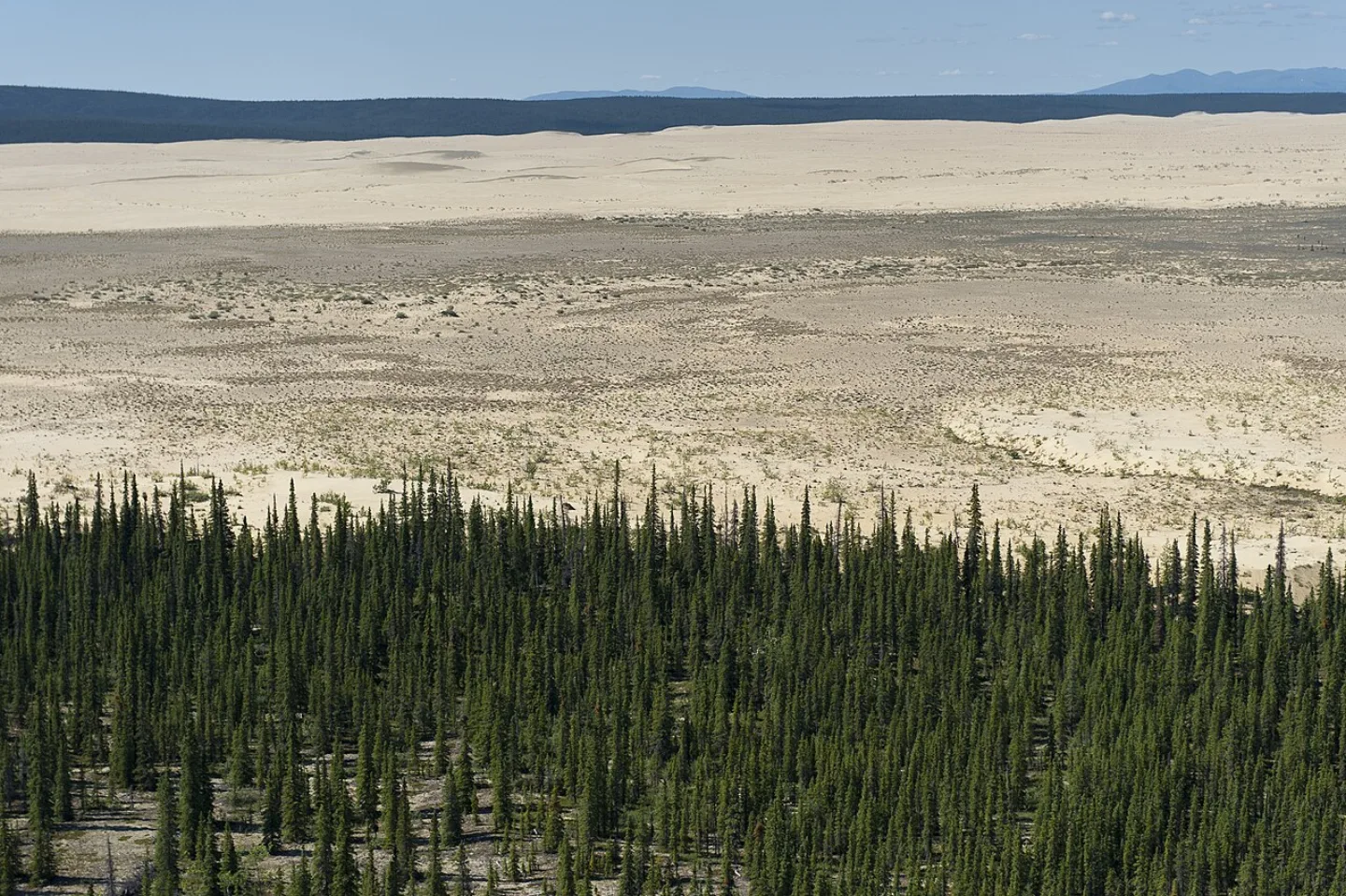
Above the Arctic Circle in northwest Alaska sits one of the system's strangest sights: the Great Kobuk Sand Dunes, ~25 square miles of dunes up to 100 ft tall, whose surface can reach 100°F in summer despite the Arctic setting. They are Ice Age sand — glacially ground, deposited, and shaped by wind into active dunes. The park's other great story is movement: half a million caribou of the Western Arctic Herd migrate through the region, crossing the Kobuk River at Onion Portage, where the Iñupiat have hunted for some 9,000 years — one of the longest continuously used hunting sites in the Arctic. With only ~17,000 visitors a year, it is among the least-visited parks; there are no roads, trails, or facilities, and access is by bush plane only.
Lake Clark
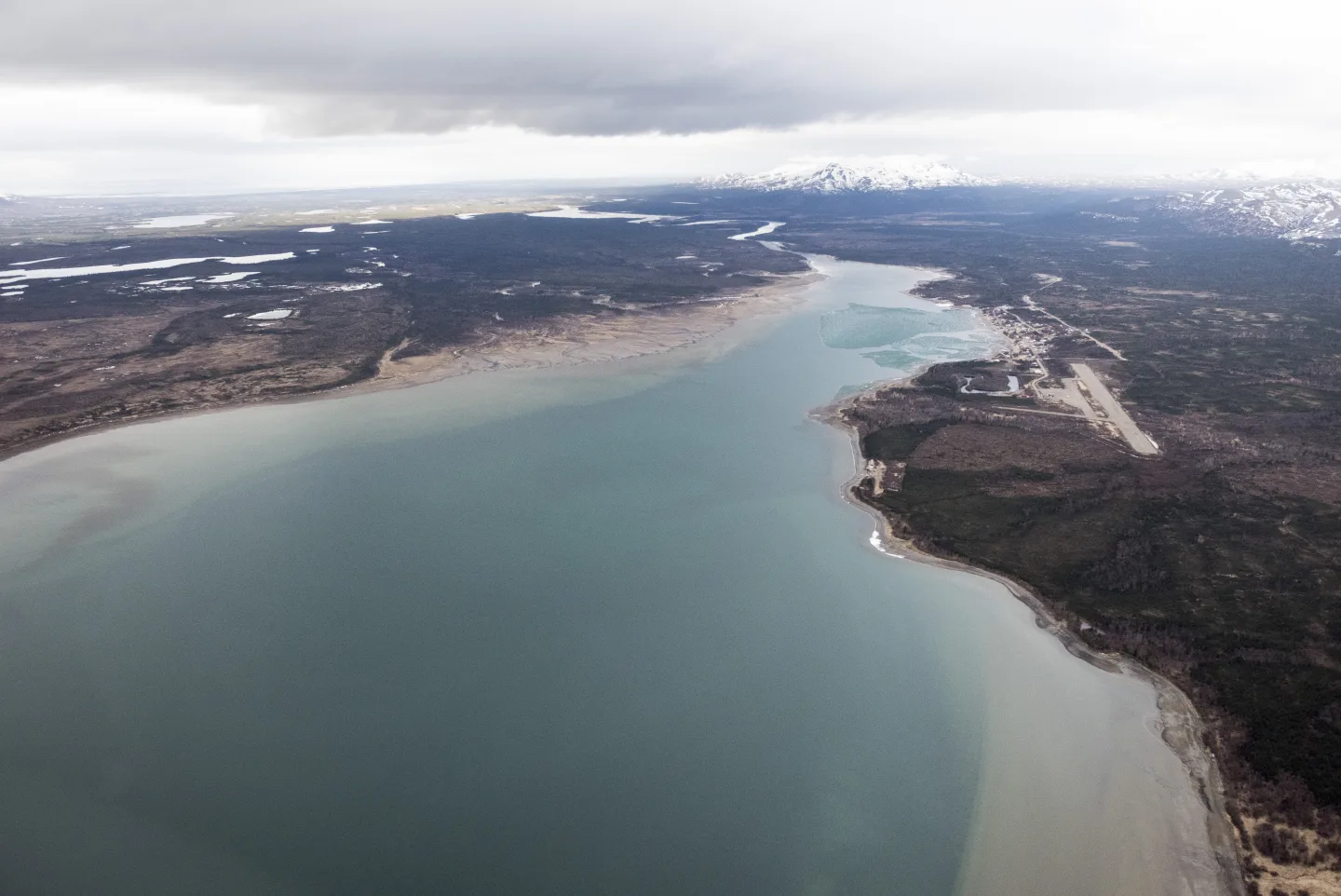
Across Cook Inlet from Anchorage, Lake Clark is a compact sampler of Alaska in a single ~2.6-million-acre park: two active volcanoes (Redoubt and Iliamna), the turquoise Lake Clark itself, salmon runs, and brown bears. Here the Alaska and Aleutian ranges meet; Redoubt erupted in 1989–90 and again in 2009. The park guards the headwaters of the Bristol Bay sockeye fishery — the largest wild sockeye run on Earth. Its most beloved human story is Dick Proenneke's hand-built cabin at Upper Twin Lake, where he lived alone for about 30 years and filmed Alone in the Wilderness. The Dena'ina Athabascan, whose homeland this is, have used the lake region for subsistence for generations. Access is by small plane only — there are no roads. Bear viewing at Silver Salmon Creek and Chinitna Bay is a draw.
Wrangell–St. Elias
At ~13.2 million acres, this is the largest national park in the United States — bigger than Switzerland, and so vast that Yellowstone would fit inside it about six times. Four major mountain ranges converge here, holding nine of the 16 highest peaks in the U.S., including Mount St. Elias (18,008 ft), the nation's second-highest. The Malaspina Glacier is larger than Rhode Island, and Mount Wrangell is an active volcano. The historic Kennecott copper mines survive as an early-1900s ghost town, reached by the gravel McCarthy Road. Combined with adjoining Canadian and Alaskan parks, it forms the largest internationally protected wilderness on Earth, a UNESCO World Heritage Site.
Which Alaskan Park Is It?
Eight of Alaska's national parks are giants of wilderness — most without a road, several among the largest and least-visited in the country. Each clue set runs broad to specific. Picture the place, then name the park.
Guess the Alaskan park
Use these recognition handles for each of the eight. They're the same broad-to-specific signals the game leans on — the landscape first, then the human or natural twist, then the dead-giveaway detail.
Denali — Interior Alaska, ~6 million acres of taiga and tundra. The only working NPS sled-dog kennel, reached by one ~92-mile road. Its summit is the highest peak in North America, whose Koyukon name means "the high one."
Gates of the Arctic — Entirely north of the Arctic Circle in the Brooks Range; the second-largest park. No roads, trails, campgrounds, or facilities; the least-visited national park. Named for two flanking peaks, "Boreal Mountain" and "Frigid Crags."
Glacier Bay — A Southeast Alaska panhandle park of tidewater ice and rich marine waters. Most visitors arrive by cruise ship and never step ashore. Its ice has retreated about 65 miles since Captain Vancouver found the bay choked with it in 1794.
Katmai — An Alaska Peninsula park protecting roughly 2,200 brown bears. Its waterfall viewing platforms inspired "Fat Bear Week." It also holds the Valley of Ten Thousand Smokes, born of the 1912 Novarupta eruption.
Kenai Fjords — Near Seward, pairing an Ice Age icefield with a drowned, fjord-cut coast. Its Harding Icefield feeds about 40 glaciers, one reachable by road. Markers along Exit Glacier show the ice retreating within living memory.
Kobuk Valley — A roadless park above the Arctic Circle, among the least-visited. Half a million caribou of the Western Arctic Herd cross its river at Onion Portage. Improbably, it shelters 25 square miles of Ice Age sand dunes that can hit 100°F.
Lake Clark — Across Cook Inlet from Anchorage, packing volcanoes, a turquoise lake, salmon, and bears into one park. It guards the Bristol Bay fishery, the largest wild sockeye run on Earth. Dick Proenneke's hand-built cabin stands at Upper Twin Lake.
Wrangell–St. Elias — In Southeast-central Alaska, the largest national park in the country, where four mountain ranges converge. It holds nine of the 16 highest U.S. peaks and a glacier larger than Rhode Island. The Kennecott copper boomtown survives within it as a ghost town.
Alaska by the Numbers
Alaska is where the national park superlatives live: the biggest parks, the tallest peaks, and the smallest crowds. These are the magnitudes worth memorizing — and the landmark-to-park pairings that go with them.
The biggest parks of all
Alaska holds the two largest national parks by a wide margin. Wrangell–St. Elias is the largest at 13,175,799 acres — bigger than Switzerland, with Yellowstone fitting inside it about six times. Gates of the Arctic is second at 8,472,506 acres. Both dwarf any park in the Lower 48; size rank #1 and #2 in the entire system belong to Alaska.
The tallest peaks
The highest summits in the country cluster here too. Denali rises to 20,310 ft, the highest peak in North America, and its base-to-summit rise of about 18,000 ft is a mile more than Everest's, according to the National Park Service. Mount St. Elias, the high point of Wrangell–St. Elias, reaches 18,008 ft — the second-highest peak in the United States. Mount Fairweather, crowning Glacier Bay, stands at 15,300 ft. These figures make Alaska's parks the natural home of any "higher or lower" elevation contest.
The smallest crowds
Vastness comes with solitude. Gates of the Arctic drew only about 11,900 visitors in 2024, making it the least-visited national park in the system — a number smaller than a single busy summer day at Yellowstone. Kobuk Valley (~17,000) and Lake Clark (~17,000–22,000) are close behind. The pattern is simple: the harder a park is to reach — bush plane only, no roads, no trails — the fewer people see it.
Landmarks and their parks
Several signature features are tied tightly to one park each, and knowing the pairings locks in the geography. The Kennecott Mines ghost town belongs to Wrangell–St. Elias, a relic of an early-1900s copper boom. The Valley of Ten Thousand Smokes, the ash plain from the 1912 Novarupta eruption, lies in Katmai. The Harding Icefield, source of some 40 glaciers, sits in Kenai Fjords. And Denali itself — "the high one" in Koyukon Athabascan — is North America's highest peak at 20,310 ft, the soul of the park that bears its name.
Key concepts
Denali
- This interior Alaska park spans about 6 million acres of taiga and alpine tundra.
- It runs the only working sled-dog kennel in the National Park Service, and a single ~92-mile road is the lone way in.
- Its centerpiece is the highest peak in North America, whose Koyukon name means 'the high one.'
Gates of the Arctic
- Lying entirely north of the Arctic Circle in the Brooks Range, it is the second-largest national park.
- It has no roads, trails, campgrounds, or facilities, and is the least-visited national park.
- Its name comes from two flanking peaks dubbed 'Boreal Mountain' and 'Frigid Crags' by Bob Marshall.
Glacier Bay
- This Southeast Alaska panhandle park is a UNESCO-recognized expanse of tidewater ice and rich marine waters.
- Most of its visitors arrive by cruise ship and never step ashore.
- Its ice has retreated about 65 miles since Captain Vancouver found the bay choked with it in 1794.
Katmai
- This Alaska Peninsula park protects roughly 2,200 brown bears.
- Its waterfall bear-viewing platforms inspired the online 'Fat Bear Week' tournament.
- It also holds the Valley of Ten Thousand Smokes, born of the 1912 Novarupta eruption.
Kenai Fjords
- Near Seward on its namesake peninsula, this park pairs an Ice Age icefield with a drowned, fjord-cut coast.
- The Harding Icefield here feeds about 40 glaciers, one of them reachable by road.
- Roadside markers along Exit Glacier show how far the ice has retreated within living memory.
Kobuk Valley
- This roadless park above the Arctic Circle is among the least-visited in the system.
- Half a million caribou of the Western Arctic Herd migrate across its namesake river at Onion Portage.
- Improbably, it shelters 25 square miles of Ice Age sand dunes that can hit 100°F in summer.
Lake Clark
- Across Cook Inlet from Anchorage, this park packs volcanoes, a turquoise lake, salmon, and bears into one place.
- It guards the headwaters of the Bristol Bay fishery, the largest wild sockeye run on Earth.
- Dick Proenneke's hand-built cabin, where he filmed 'Alone in the Wilderness,' stands at Upper Twin Lake.
Wrangell–St. Elias
- Four mountain ranges converge in this Southeast-central Alaska park, the largest in the United States.
- It holds nine of the 16 highest peaks in the country and a glacier larger than Rhode Island.
- The Kennecott copper boomtown survives within it as a preserved ghost town.
Key facts
Not for Bison
Denali shelters a 'Big Five' of grizzly bears, gray wolves, moose, caribou, and Dall sheep — but not bison. The park was in fact established in 1917 specifically to protect Dall sheep.
Kobuk Valley
Improbably set above the Arctic Circle, the Great Kobuk Sand Dunes cover ~25 square miles and rise up to 100 ft — Ice Age sand whose surface can reach 100°F in summer. Half a million caribou of the Western Arctic Herd migrate through the region, crossing the Kobuk River at Onion Portage, where the Iñupiat have hunted for some 9,000 years. With ~17,000 visitors a year, it is among the least-visited parks; there are no roads, trails, or facilities.
Lake Clark
A compact sampler of Alaska: two active volcanoes (Redoubt and Iliamna), the turquoise Lake Clark, salmon runs, and brown bears. It also guards the headwaters of the Bristol Bay sockeye fishery — the largest wild sockeye run on Earth. At Upper Twin Lake stands the hand-built cabin of Dick Proenneke, who lived alone there for about 30 years and filmed 'Alone in the Wilderness.'
Alone in the Wilderness
Dick Proenneke hand-built his cabin at Upper Twin Lake in Lake Clark National Park, where he lived alone for about 30 years — a story later filmed as 'Alone in the Wilderness.'
By the numbers
- The highest peak in North America, an Alaskan summit the Koyukon Athabascan called 'the high one,' rises to what elevation?
- 20310 feet
- The second-largest U.S. national park, lying entirely north of the Arctic Circle with no roads or trails, covers roughly how many acres?
- 7500000 acres
- The largest U.S. national park spans roughly how many million acres?
- 13.2 million acres
- In Wrangell–St. Elias, how tall is Mount St. Elias, the nation's second-highest peak?
- 18008 feet
- How many acres is Wrangell–St. Elias, the largest U.S. national park?
- 13175799 acres
- How many acres is Gates of the Arctic, the second-largest national park?
- 8472506 acres
- How tall is Denali, the highest peak in North America?
- 20310 ft
- How tall is Mount St. Elias, the second-highest peak in the U.S.?
- 18008 ft
- About how many people visited Gates of the Arctic, the least-visited national park, in 2024?
- 11900 visitors
- How tall is Mount Fairweather, the high point of Glacier Bay?
- 15300 ft
Matched pairs
Each item on the left goes with the one on the right.
- Katmai
- Brooks Falls brown bears of 'Fat Bear Week'
- Lake Clark
- Dick Proenneke's hand-built cabin at Upper Twin Lake
- Denali ('the high one')
- Highest peak in North America (20,310 ft)
- Kennecott Mines ghost town
- Wrangell–St. Elias
- Valley of Ten Thousand Smokes (1912 Novarupta eruption)
- Katmai
- Harding Icefield
- Kenai Fjords
Self-test
Answer each question from memory, then check your work against the answer key.
1. Glacier Bay's ice has retreated about 65 miles, leaving bare rock that slowly turns to forest — a sequence scientists watch across the bay like a time-lapse. What is this ecological process called?
- AEcological eutrophication
- BSecondary succession
- CGlacial isostatic rebound
- DPrimary succession
2. Denali, the highest peak in North America, reaches what summit elevation above sea level?
- A20,310 ft
- B18,008 ft
- C15,300 ft
- D14,505 ft
3. Denali shelters the 'Big Five.' Which animal is NOT one of them?
- ADall sheep
- BBison
- CGray wolves
- DCaribou
4. Katmai's Valley of Ten Thousand Smokes was created by which 1912 event, the largest volcanic eruption of the 20th century?
- ARedoubt eruption
- BKrakatoa eruption
- CNovarupta eruption
- DMount St. Helens eruption
5. Since Captain Vancouver found the bay ice-choked in 1794, Glacier Bay's glaciers have retreated roughly how far?
- A65 miles
- B10 miles
- C200 miles
- D25 miles
6. Which Alaskan park holds the Great Kobuk Sand Dunes, a ~25-square-mile expanse of Ice Age sand above the Arctic Circle?
- ALake Clark
- BKenai Fjords
- CWrangell–St. Elias
- DKobuk Valley
7. At roughly 13.2 million acres, which is the largest national park in the United States?
- ADenali
- BKobuk Valley
- CWrangell–St. Elias
- DGates of the Arctic
8. Mount St. Elias, the nation's second-highest peak, in Wrangell–St. Elias, stands at what height?
- A15,300 ft
- B18,008 ft
- C13,175 ft
- D20,310 ft
9. Dick Proenneke's hand-built cabin at Upper Twin Lake, filmed in 'Alone in the Wilderness,' stands in which park?
- AKatmai
- BKobuk Valley
- CLake Clark
- DKenai Fjords
10. Kenai Fjords is built around the Harding Icefield, a ~700-square-mile Ice Age remnant that feeds roughly how many glaciers?
- A400
- B40
- C4
- D12
11. Which roadless Alaskan park north of the Arctic Circle improbably shelters 25 square miles of Ice Age sand dunes that can hit 100°F, while half a million caribou cross its river at Onion Portage?
- AGates of the Arctic
- BKenai Fjords
- CLake Clark
- DKobuk Valley
12. Which park has the only working sled-dog kennel in the National Park Service and a single ~92-mile road to its interior?
- ADenali
- BKatmai
- CLake Clark
- DGates of the Arctic
13. Which park's glaciers have retreated about 65 miles since 1794, and whose visitors mostly arrive by cruise ship?
- AKatmai
- BWrangell–St. Elias
- CGlacier Bay
- DKenai Fjords
14. Which park protects roughly 2,200 brown bears at Brooks Falls and inspired the online 'Fat Bear Week'?
- AKobuk Valley
- BKatmai
- CDenali
- DLake Clark
15. Which clue does NOT describe Wrangell–St. Elias?
- AHarding Icefield feeds about 40 glaciers
- BMalaspina Glacier larger than Rhode Island
- CNine of the 16 highest U.S. peaks
- DKennecott copper-mine ghost town
16. Wrangell–St. Elias, the largest U.S. national park at 13,175,799 acres, is bigger than Switzerland. Roughly how many times could Yellowstone fit inside it?
- AAbout two times
- BAbout a hundred times
- CAbout twenty times
- DAbout six times
17. About how many people visit Gates of the Arctic, the least-visited national park, each year?
- A~400,000
- B~700,000
- C~11,000–12,000
- D~2 million
18. From its base to its summit, roughly how much does Denali rise?
- A~29,000 ft
- B~12,000 ft
- C~6,000 ft
- D~18,000 ft
19. In the Koyukon Athabascan language, what does the name 'Denali' mean?
- A'The high one'
- B'Great river'
- C'White mountain'
- D'Home of the sun'
20. Despite their Arctic setting, the Great Kobuk Sand Dunes' surface can reach what temperature in summer?
- A130°F
- B100°F
- C50°F
- D70°F
Go deeper
- Watch65 Miles of Retreat Picture a bay almost entirely filled with ice. That's what Captain George Vancouver saw at Glacier Bay in 1794.
- WatchArctic Dunes Above the Arctic Circle in northwest Alaska sits one of the park system's strangest sights: the Great Kobuk Sand Dunes.
- Watch2,200 Brown Bears Which Alaskan park is it? Three clues, broad to specific. Picture the place, then name the park.
- WatchThe High One Denali rises to 20,310 feet: the highest peak in North America. Its base-to-summit rise is about 18,000 feet: a mile more than Everest's, says the National Park Service.
- StudyU.S. National Parks in the FlashFeed app
Answer key
- 1. D Primary successionNewly exposed, lifeless rock progressing to mature forest over roughly 200 years is primary succession. Secondary succession, by contrast, follows a disturbance where soil already exists — so it is the wrong term here.
- 2. A 20,310 ftDenali tops out at 20,310 ft. 18,008 ft is Mount St. Elias, 15,300 ft is Mount Fairweather in Glacier Bay, and 14,505 ft is Mount Whitney in the Lower 48.
- 3. B BisonDenali's 'Big Five' are grizzly bears, gray wolves, moose, caribou, and Dall sheep. Bison are not among them; the park was in fact created in 1917 to protect Dall sheep.
- 4. C Novarupta eruptionThe 1912 Novarupta eruption ejected about 30 times the volume of Mount St. Helens (a 1980 event) and formed the ash plain of the Valley of Ten Thousand Smokes.
- 5. A 65 milesGlacier Bay's ice has retreated about 65 miles since 1794, one of the fastest documented retreats anywhere, exposing fresh land that undergoes primary succession.
- 6. D Kobuk ValleyThe Great Kobuk Sand Dunes, covering ~25 square miles above the Arctic Circle, lie in Kobuk Valley.
- 7. C Wrangell–St. EliasWrangell–St. Elias is the largest U.S. national park, bigger than Switzerland. Gates of the Arctic (~7.5M acres) is second-largest; Denali is about 6 million acres.
- 8. B 18,008 ftMount St. Elias reaches 18,008 ft, the second-highest in the U.S. behind Denali's 20,310 ft. 15,300 ft is Mount Fairweather, not St. Elias.
- 9. C Lake ClarkProenneke built his cabin at Upper Twin Lake in Lake Clark, where he lived alone about 30 years. Lake Clark also guards the Bristol Bay sockeye fishery.
- 10. B 40The Harding Icefield feeds about 40 glaciers, including the road-accessible Exit Glacier, whose roadside markers show the ice's retreat within living memory.
- 11. D Kobuk ValleyKobuk Valley's tells are its 25 square miles of Ice Age sand dunes that can reach 100°F and the Western Arctic caribou herd crossing the river at Onion Portage — an improbable desert above the Arctic Circle.
- 12. A DenaliDenali runs the Park Service's only working sled-dog kennel, reached by one ~92-mile road where private vehicles are limited and most visitors ride park buses.
- 13. C Glacier BayGlacier Bay's tidewater ice has retreated ~65 miles since Vancouver's 1794 visit, and most of its ~700,000 yearly visitors arrive by cruise ship.
- 14. B KatmaiKatmai holds about 2,200 brown bears that fish for sockeye at Brooks Falls, the setting of 'Fat Bear Week.' Lake Clark also has bears but far fewer.
- 15. A Harding Icefield feeds about 40 glaciersThe Harding Icefield belongs to Kenai Fjords, not Wrangell–St. Elias. Wrangell holds nine of the 16 highest U.S. peaks, the Kennecott mines, and the Malaspina Glacier.
- 16. D About six timesYellowstone fits inside Wrangell–St. Elias about six times. At over 13 million acres it is larger than Switzerland and ranks #1 by area in the entire national park system, with Gates of the Arctic #2.
- 17. C ~11,000–12,000Gates of the Arctic draws only ~11,000–12,000 visitors a year, the fewest of any national park — it has no roads, trails, or facilities and is reached by bush plane.
- 18. D ~18,000 ftDenali rises about 18,000 ft from base to summit, about a mile more than Everest's, says the National Park Service. ~29,000 ft is Everest's total elevation above sea level.
- 19. A 'The high one'The Koyukon Athabascan called the peak Denali, 'the high one.' It became the official federal name in 2015, replacing Mount McKinley; a January 2025 executive order changed the federal name back.
- 20. B 100°FThe Great Kobuk Sand Dunes' surface can reach 100°F in summer — Ice Age sand improbably forming a desert above the Arctic Circle across ~25 square miles.
Sources
- U.S. National Park Service
- U.S. National Parks — Kenai Fjords
- U.S. National Parks — Kobuk Valley
- U.S. National Parks — Denali
- U.S. National Parks — Gates of the Arctic
- U.S. National Parks — Glacier Bay
- U.S. National Parks — Katmai
- U.S. National Parks — Lake Clark
- U.S. National Parks — Wrangell–St. Elias
Image credits
- Kobuk Valley: National Park Service, Alaska Region · Public domain — commons.wikimedia.org/wiki/File:The_Great_Kobuk_Sand_Dunes_(8029764718).jpg
- Lake Clark: Wikimedia Commons · Dev Dharm Khalsa / NPS · Public domain — commons.wikimedia.org/wiki/File:Lake_Clark_Place_Name_Project_images._Credit_Dev_Charm_Khalsa_NPS._(997f0f3e-e7db-418a-83be-eaacbe026e50).jpg

