
U.S. National Parks study guide · Lesson 13 of 27
Lesson 13: East, Midwest & Territories
Appalachian Heart: Mountains, Gorge & Cave · Great Lakes & Heartland · Southern Waters & Tropics · Which Eastern Park Is It? · By the Numbers
This is the lesson's study guide from the FlashFeed app, plus its key facts and a self-test.
What you'll be able to do
- Identify the Appalachian parks by their mountains and cave.
- Recognize the Midwest parks, from Gateway Arch to Isle Royale.
- Identify the southern and tropical parks, including Everglades' ecosystem first.
- Identify an Eastern park from a single distinctive clue.
- Recall Eastern park numbers and match parks to their states and high points.
Appalachian Heart: Mountains, Gorge & Cave
The eastern parks trade the West's raw verticality for something older and softer — ranges so ancient they have worn to rounded, mist-blue waves. These five are the Appalachian heart of the system: the most-visited park of all, the first east of the Mississippi, the Blue Ridge's scenic spine, the gorge that became the 63rd national park, and the longest cave on Earth.
Great Smoky Mountains
The Smokies straddle the Tennessee–North Carolina border on some of the oldest mountains on the planet, ~480–300 million years old — eroded stubs of a Himalayan-scale range raised when continents collided to build Pangaea. The famous blue "smoke" is natural haze, not pollution. Stacked by elevation from cove hardwood up to a spruce-fir "Canadian" forest, the park is the most biodiverse in the system: over 19,000 documented species and so many salamanders it is called the "Salamander Capital of the World." Around 1,900 black bears roam here, roughly two per square mile. Its high point, Kuwohi (formerly Clingmans Dome, 6,643 ft), is also the highest point on the Appalachian Trail. With 12.19 million visits in 2024 it is by far the most-visited national park — more than the next two combined — and, like about a third of the national parks, charges no entrance fee.
Acadia
Acadia crowns Maine's Mount Desert Island with pink granite, spruce-fir forest, and a glacially sculpted coast. It was the first national park east of the Mississippi (as Lafayette National Park, 1919, renamed Acadia in 1929) and the first created from donated private land, an effort led by George B. Dorr, who spent his fortune on it. Cadillac Mountain (1,530 ft) is the highest point on the eastern seaboard of the U.S. and, from early October to early March, the first place in the country to see the sunrise — so popular at dawn that a vehicle reservation is required in season. John D. Rockefeller Jr. funded 45 miles of carriage roads that still thread the island, and Somes Sound is often called the only true fjord on the East Coast.
Shenandoah
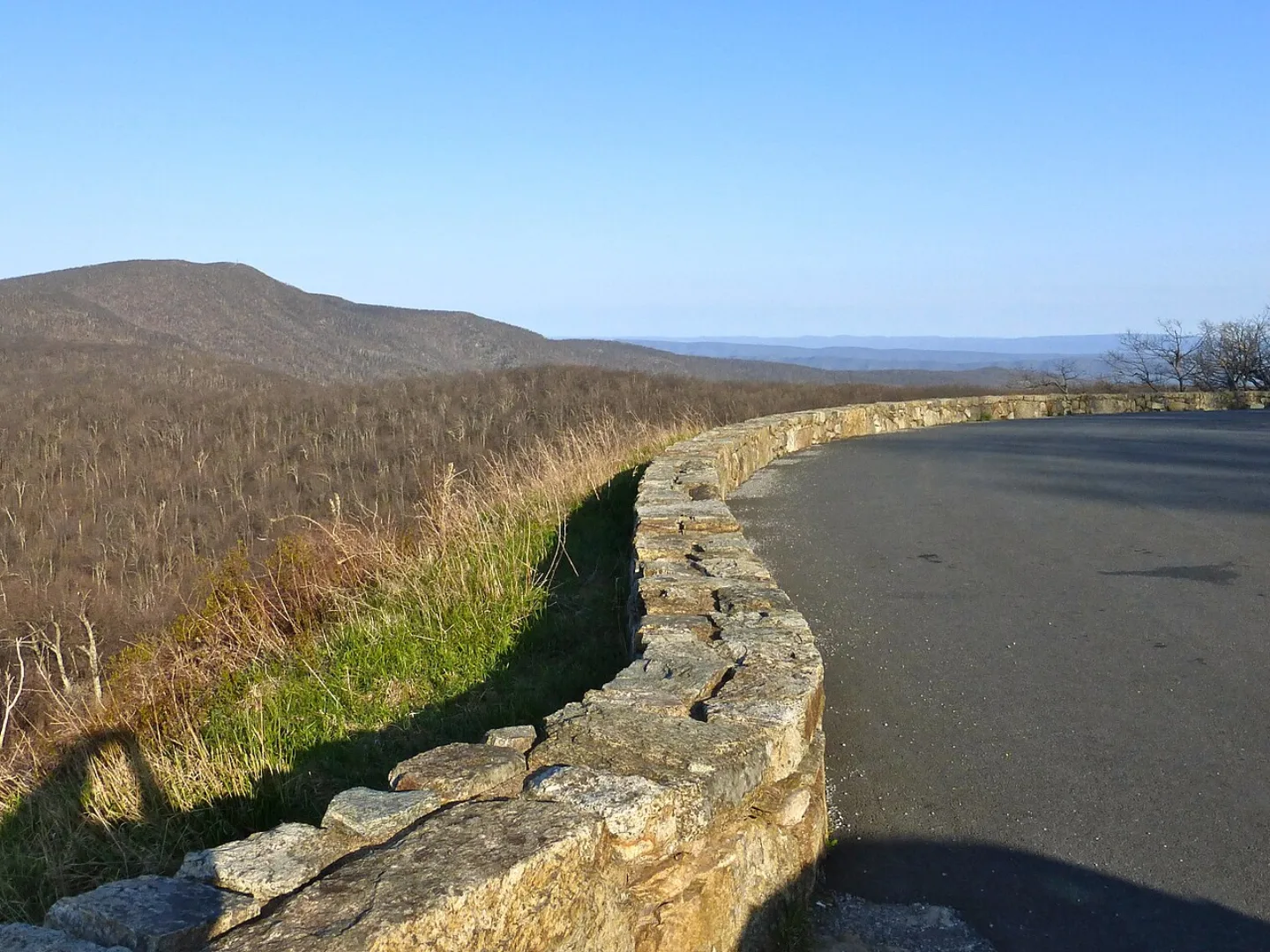
Shenandoah runs along Virginia's Blue Ridge, and its defining feature is Skyline Drive — 105 miles with 75 overlooks tracing the very crest of the mountains. The Appalachian Trail follows about 101 miles through the park. The bedrock is ancient: ~1.1-billion-year-old basement rock and Catoctin greenstone from old lava flows. Established in 1935 from private and condemned land, the park forcibly displaced roughly 500 mountain families; the Civilian Conservation Corps then built Skyline Drive and much of the infrastructure in the 1930s, and forest has since reclaimed the old farms. Its high point is Hawksbill (4,051 ft).
New River Gorge
West Virginia's first national park — and the 63rd overall, designated on December 27, 2020 — protects a deep Appalachian gorge cut by the New River, which despite its name is among the oldest rivers in the world. The New River Gorge Bridge is the longest single-span steel arch bridge in the Western Hemisphere, its deck about 876 ft above the water. The park is a mecca for whitewater rafting and rock climbing, with 1,400-plus routes on Nuttall Sandstone. Each October on Bridge Day, hundreds of BASE jumpers legally leap from the bridge.
Mammoth Cave
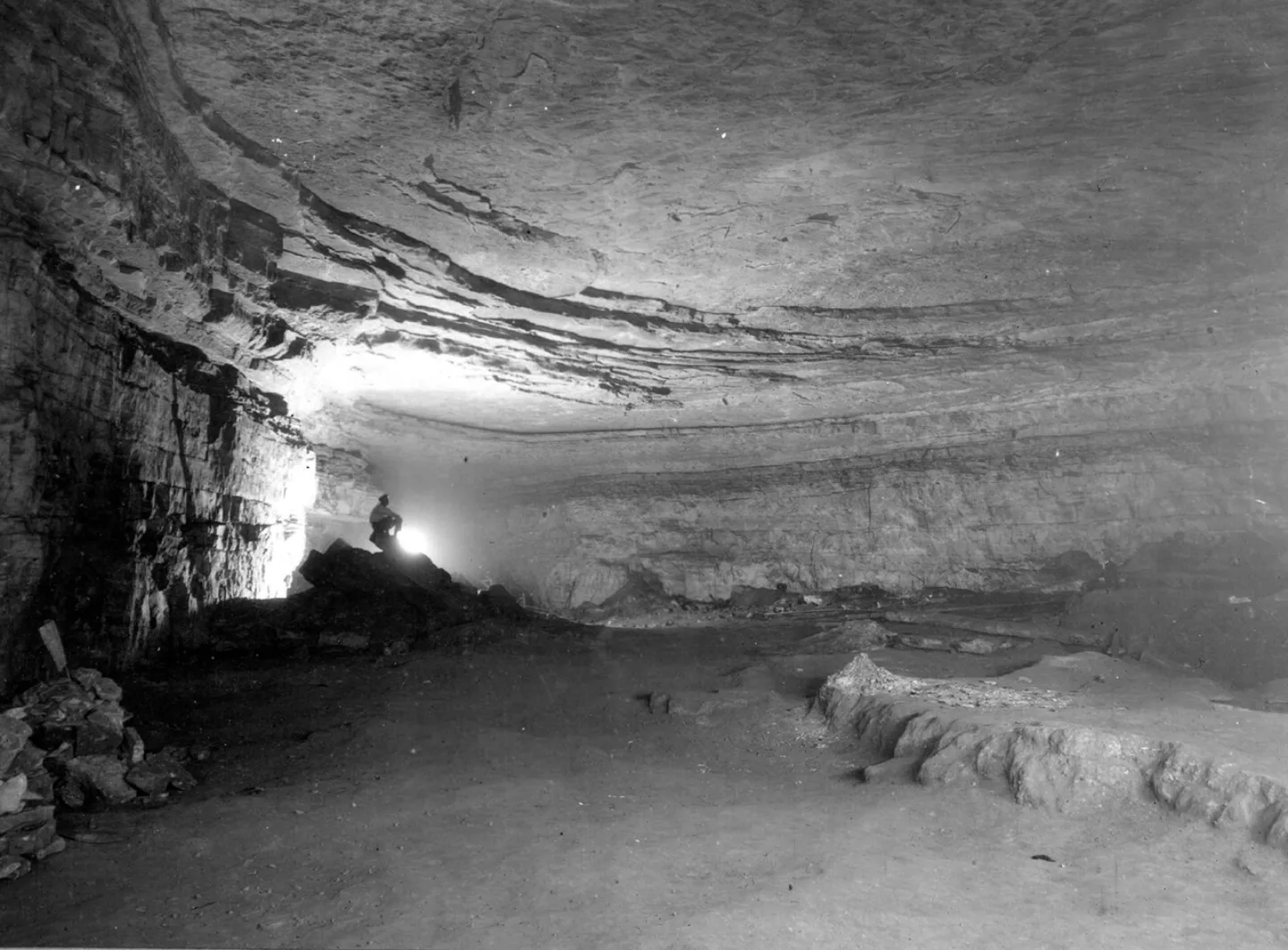
Beneath the Kentucky hills lies the longest known cave system on Earth: over 426 miles mapped, more than twice the next-longest, with new passages still being connected. It is classic karst — slightly acidic water dissolving Mississippian-age limestone capped by a protective sandstone layer over millions of years. Ancestral peoples explored the cave roughly 5,000 years ago, leaving cane-torch remains. In the 1840s–50s, an enslaved Black guide named Stephen Bishop explored and mapped much of it, crossing the "Bottomless Pit" to become one of its most famous early explorers. Since 1981 it has been a UNESCO World Heritage Site, and since 1990 an International Biosphere Reserve.
Great Lakes & Heartland
The Midwest's national parks are quieter surprises: an urban valley redeemed from disaster, a sweep of Lake Michigan dunes that birthed a science, a wolf-and-moose island at the edge of Lake Superior, a roadless world of lakes on the Canadian line, and — improbably — the smallest national park in the country, a stainless-steel arch over the Mississippi. Together they show how broad the idea of a "national park" can stretch.
Cuyahoga Valley
Tucked between Cleveland and Akron, Cuyahoga Valley wraps the river that infamously caught fire in 1969 — one of several blazes from industrial pollution that helped galvanize the Clean Water Act and the modern environmental movement. National park status came in 2000, and today the restored valley draws about 2.9 million visitors a year, remarkable for a park of modest fame, thanks to its urban setting. Highlights include 65-ft Brandywine Falls, the Ohio & Erie Canal Towpath Trail, the Ledges, the restored Beaver Marsh, and a scenic railroad. "Cuyahoga" is an Iroquoian word meaning "crooked river," and the river's comeback is now a national-park success story.
Indiana Dunes
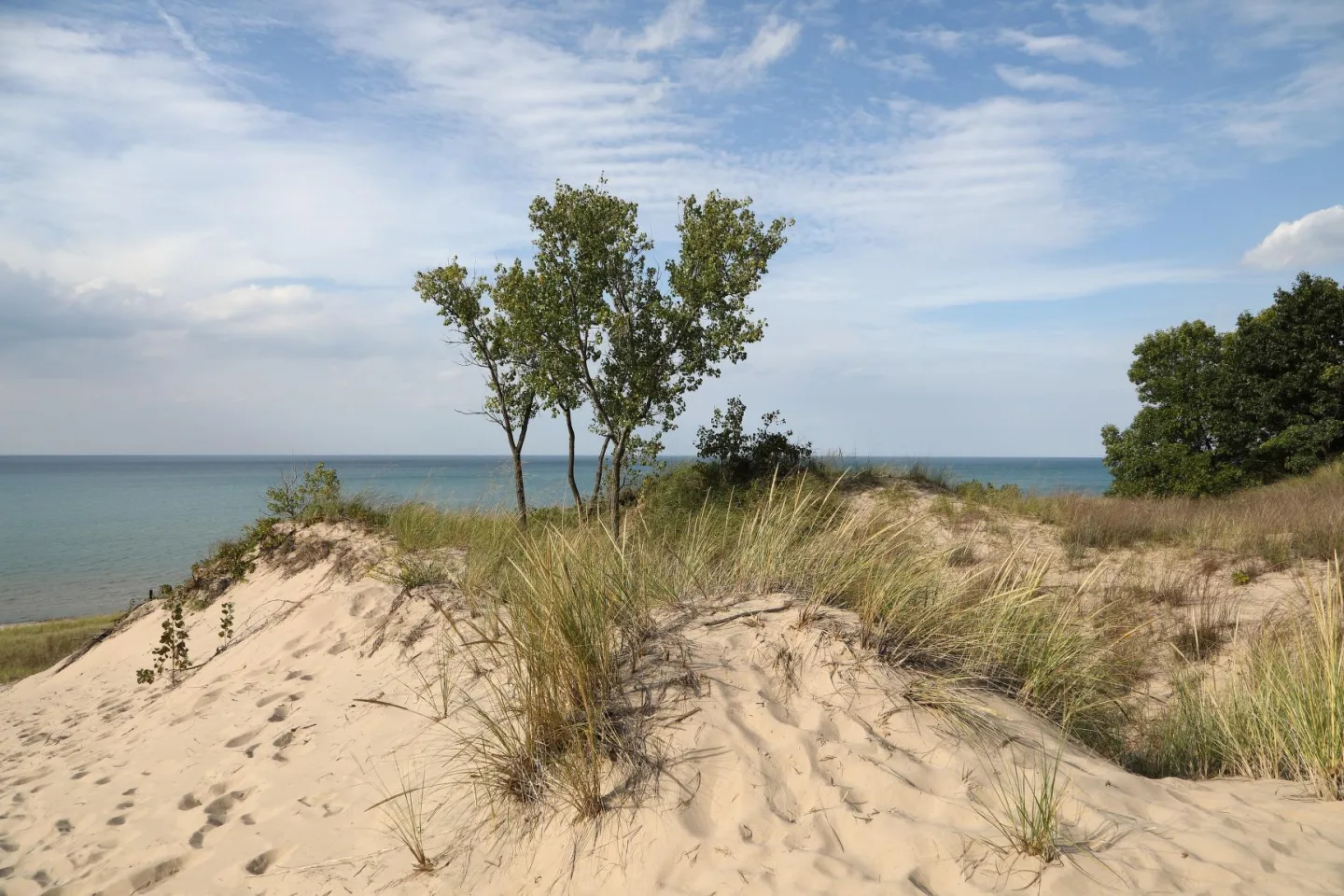
Along 15 miles of Lake Michigan shoreline in northwest Indiana, the dunes (a national park since 2019) pack beach, dune, oak savanna, bog, and prairie into one of the most botanically diverse parks per acre — over 1,100 native plant species, all set against the backdrop of working steel mills. The dunes were built by post-glacial lake processes, and their ridges record former lake levels. This landscape shaped science: botanist Henry Cowles studied the dunes around 1899, and his work helped found the field of plant ecology and the concept of ecological succession. Visitors climb the "living," moving Mount Baldy and take on the Three Dune Challenge over the three tallest dunes.
Isle Royale
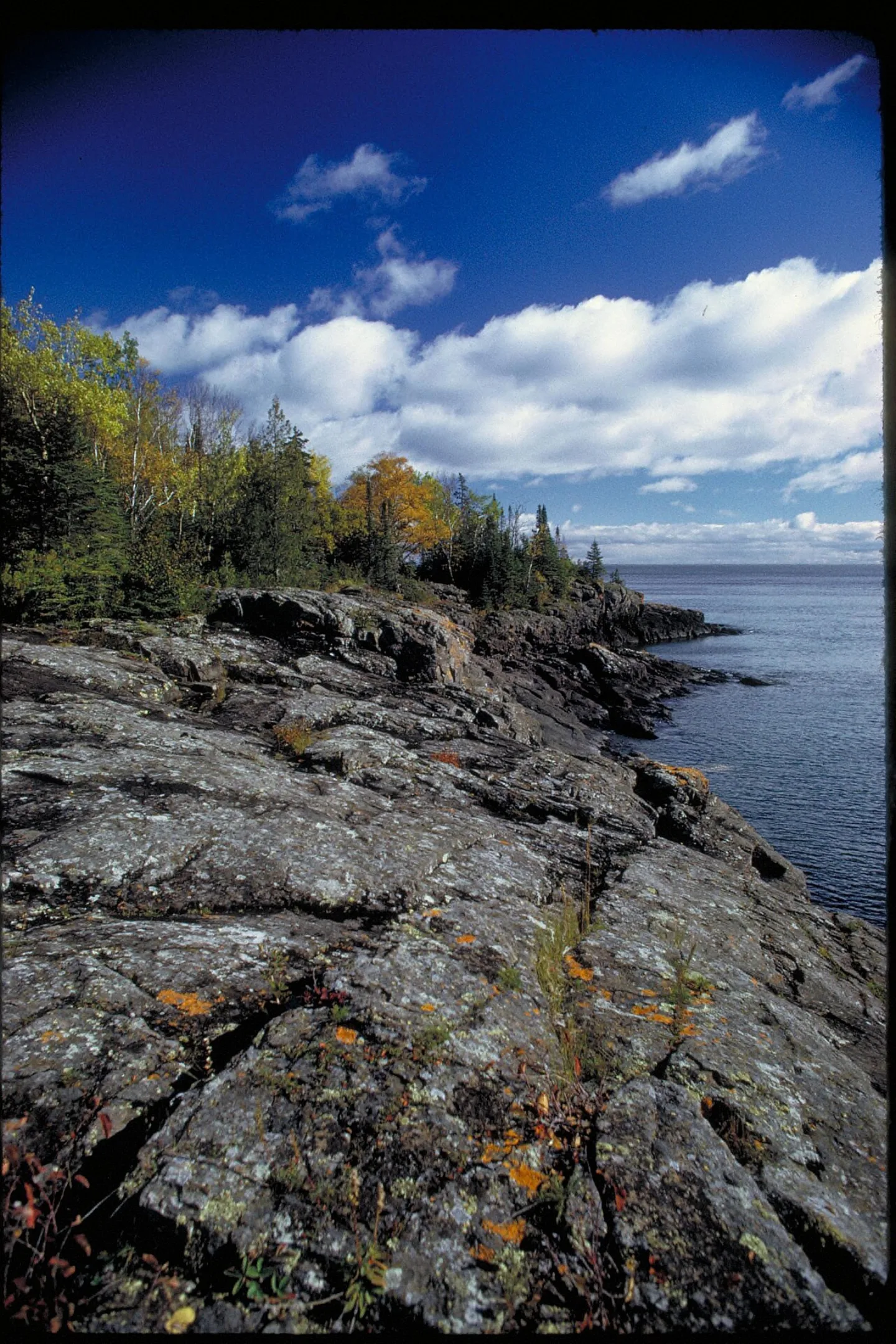
A remote wilderness island in Lake Superior, Isle Royale is reachable only by boat or seaplane and closes entirely from November to mid-April. It is one of the least-visited national parks — about 28,800 visitors in 2024 — yet those who come stay longer on average than at any other park. The island runs on billion-year-old basalt ridges and was mined for copper for some 4,500 years, long by the Ojibwe (Anishinaabe), who call it Minong. It hosts the world's longest-running predator-prey study, tracking wolves and moose since 1958. When the wolf population crashed to just two animals by 2018, the NPS controversially relocated new wolves in 2018–2019 to restore the balance and keep the famous study alive. Its high point is Mount Desor (1,394 ft).
Voyageurs
On Minnesota's Canadian border, Voyageurs is a water-based park of interconnected lakes — Rainy, Kabetogama, Namakan, Sand Point — navigated by boat, with no roads into the interior. Most of the park is reachable only by water, echoing the canoe travel of the 18th-century French-Canadian fur-trade canoemen, the voyageurs, for whom it is named. Underfoot lies some of the oldest exposed rock in North America — Precambrian Canadian Shield around 2.7 billion years old, scoured by glaciers into a lake-studded landscape. As a certified Dark Sky Park, it offers superb northern lights.
Gateway Arch
In downtown St. Louis stands Eero Saarinen's 630-ft stainless-steel Gateway Arch, completed in 1965 — the tallest arch and tallest monument in the U.S., commemorating the nation's westward expansion. It is a catenary curve, exactly as wide as it is tall, and a tram rides inside to the top. Redesignated a national park in 2018 (it was the Jefferson National Expansion Memorial), its roughly 193 acres within the park boundary make it the smallest and most urban national park — and the only one honoring a historical event rather than a natural landscape. (That figure is the gross area in the Park Service's acreage listing; its park pages cite about 91 acres, a different measure — either way, the smallest national park.) The grounds include the Old Courthouse, site of the Dred Scott case.
Southern Waters & Tropics
The South and the territories give the park system its warmest, wettest edges — thermal springs in a working town, an old-growth floodplain forest, the slow River of Grass, and parks that are mostly or almost entirely underwater, including a Caribbean island. Water is the through-line: rising from underground, sheeting across limestone, or surrounding fortress walls and reefs.
Hot Springs
Hot Springs is the oldest area in the entire National Park System — federally protected in 1832, a full 40 years before Yellowstone. Its 47 natural thermal springs flow about a million gallons a day at roughly 143°F; rainwater seeps deep, is heated by the Earth's interior, and rises along faults, so the water emerging today fell as rain an estimated 4,000 to 4,400 years ago. The park is embedded in a working Arkansas town, and its historic Bathhouse Row earned the nickname "the American Spa." Multiple tribes treated the springs as neutral, sacred healing ground.
Congaree
Congaree protects the largest intact tract of old-growth bottomland hardwood forest in the U.S. — and, importantly, it is a floodplain forest, not a swamp. Periodic flooding from the Congaree and Wateree rivers deposits nutrients that grow some of the tallest trees in the eastern U.S., including a roughly 167-ft loblolly pine, in a "champion tree" forest with one of the highest canopies in eastern North America. The park was saved by a grassroots campaign in the 1970s after logging threatened it. Visitors walk the elevated 2.4-mile Boardwalk Loop or canoe Cedar Creek, and in late spring the forest stages a famous synchronous firefly display.
Everglades
Established in 1947, the Everglades was the first national park created to protect an ecosystem rather than scenery, championed by Marjory Stoneman Douglas. It is a vast "River of Grass" — a roughly 60-mile-wide, inches-deep sheet of water creeping south across a limestone shelf, fed by Lake Okeechobee. At about 1.5 million acres it is the largest tropical wilderness in the U.S., and the only place on Earth where alligators and crocodiles coexist. It shelters the endangered Florida panther, while the invasive Burmese python is a major threat. The park holds a rare triple honor — UNESCO World Heritage Site, International Biosphere Reserve, and Wetland of International Importance — yet survives at only half its original size.
Biscayne
Just south of Miami, Biscayne is about 95% underwater, one of the few majority-marine national parks. It protects the northern Florida Keys reef tract, Biscayne Bay, the longest mangrove shoreline on Florida's east coast, and a Maritime Heritage Trail of historic shipwrecks, all atop ancient limestone. In the 1960s, a plan to build a city called "Islandia" and an oil-refinery seaport here was defeated by conservationists — saving the reef and creating a park best explored by snorkel, dive, and boat.
Dry Tortugas
About 70 miles west of Key West, Dry Tortugas is roughly 99% water — seven small coral-and-sand islands reachable only by boat or seaplane. Its centerpiece is Fort Jefferson, a massive, unfinished 19th-century fortress of some 16 million bricks, the largest masonry structure in the Americas. The "Tortugas" (turtles) were named by Ponce de León in 1513; "Dry" warns there is no fresh water. As a Civil War prison, the fort held Dr. Samuel Mudd, convicted of treating John Wilkes Booth's broken leg after Lincoln's assassination.
Virgin Islands
Covering about 60% of the Caribbean island of St. John, Virgin Islands National Park was established in 1956, largely from land donated by Laurance Rockefeller. It pairs white-sand beaches and coral reefs — like Trunk Bay's underwater snorkel trail — with the ruins of Danish colonial sugar plantations worked by enslaved Africans. The island's 1733 slave revolt was one of the earliest and longest-sustained uprisings in the Americas, and the park preserves both a tropical paradise and that painful history.
Which Eastern Park Is It?
This round is a guessing game: each card gives you two to four clues, broad to specific, and asks you to name the eastern, midwestern, or territorial park. The clues never say the name. Here is the reasoning behind each one.
Guess the eastern park
The trick to these is to start wide and let the details narrow it down. A "vast subtropical wetland" could be several Florida parks — until "River of Grass" and "alligators and crocodiles together" pin it to the Everglades. A "mist-shrouded range across two southern states" could be any Appalachian park, but "most biodiverse" and "12 million visitors" can only be Great Smoky Mountains. Read every clue before committing.
The underground and the urban
Two of the trickiest are opposites. One park's main attraction is entirely underground at a constant ~54°F, with the longest cave system on Earth and a famous enslaved guide, Stephen Bishop — that is Mammoth Cave. Another is the smallest and most urban park, the only one honoring a historical event, built around a 630-ft steel curve — Gateway Arch. When a clue stresses "underground" or "urban," it is steering you hard.
The remote islands
Two island parks invite confusion. One is a wilderness island closed every winter, least-visited yet longest-stayed, home to the wolf-and-moose study since 1958 — Isle Royale, in Lake Superior. The other is a cluster of tiny waterless keys 70 miles from the nearest city, built around a giant brick fortress that imprisoned Dr. Samuel Mudd — Dry Tortugas. The tell is the setting: cold northern lake versus tropical Gulf.
The first in the East
A park of pink granite on a coastal island, the first national park east of the Mississippi, with the highest point on the eastern seaboard of the U.S. and Rockefeller's carriage roads, is Acadia. The "first east of the Mississippi" detail is the giveaway once you reach it.
By the Numbers
The East, Midwest, and territories hold some of the system's most extreme statistics — the busiest park, the longest cave, the tallest monument, and the oldest protected land. This round drills the figures and the park-to-place matches worth remembering.
The most visited park
Great Smoky Mountains drew 12,191,834 visitors in 2024 — by far the most of any national park, more than the next two combined. The lack of an entrance fee (since 2023 a parking tag is required to park for more than 15 minutes) and its location within a day's drive of much of the eastern U.S. both feed those numbers. Compare that to the least-visited eastern parks, like Isle Royale at under 30,000, and the range across the system becomes vivid.
Elevations to remember
Two summits anchor the East's high points. Kuwohi (formerly Clingmans Dome) in the Smokies reaches 6,643 ft — both the park's high point and the highest point on the entire Appalachian Trail. Cadillac Mountain in Acadia rises only 1,530 ft, but the Park Service calls it the highest point on the eastern seaboard of the U.S. and, from early October to early March, the first place in the country to see the sunrise. Shenandoah tops out lower still, at Hawksbill (4,051 ft), and remote Isle Royale at Mount Desor (1,394 ft).
Records and milestones
Mammoth Cave has over 426 miles of mapped passage, making it the longest known cave system on Earth — more than twice the next-longest. The Gateway Arch stands 630 ft tall, the tallest monument in the U.S. and exactly as wide as it is high. Hot Springs was first federally protected in 1832, making it the oldest area in the National Park System, 40 years before Yellowstone. And the Everglades sprawls across about 1,508,938 acres, the largest tropical wilderness in the U.S.
Park to place
Some matches are worth memorizing cold: Great Smoky Mountains spans Tennessee and North Carolina; Virgin Islands National Park sits on St. John in the U.S. Virgin Islands. Pair each park with its high point too — Shenandoah with Hawksbill, Isle Royale with Mount Desor — and the geography of the eastern parks starts to lock into place.
Key concepts
Everglades National Park
- A vast, flat subtropical wetland in the far south of one state, with wet and dry seasons.
- Often described as a "River of Grass" — a 60-mile-wide, inches-deep sheet of water creeping south.
- The only place on Earth where alligators and crocodiles live side by side; threatened by invasive Burmese pythons.
- The first national park created to protect an ecosystem rather than scenery, championed by Marjory Stoneman Douglas.
Great Smoky Mountains National Park
- An ancient, mist-shrouded mountain range straddling two southern states.
- The most biodiverse national park in the U.S., nicknamed the "Salamander Capital of the World."
- By far the most-visited national park, drawing more than 12 million people a year.
- It charges no entrance fee: Tennessee's deed for its main roads bars tolls, and federal law bars fees where tolls are barred.
Mammoth Cave National Park
- A Kentucky park whose main attraction lies entirely underground at a constant ~54°F.
- Karst limestone capped by protective sandstone, with new passages still being discovered.
- The longest known cave system on Earth — over 426 miles mapped, more than twice the next-longest.
- An enslaved guide named Stephen Bishop mapped much of it in the 1840s–50s.
Acadia National Park
- A rugged park of pink granite and spruce-fir forest on a coastal island far up the Atlantic seaboard.
- The first national park east of the Mississippi, created from donated private land.
- Its summit is the highest point on the eastern seaboard of the U.S. and, from early October to early March, the first place in the country to see the sunrise.
- Famous for 45 miles of carriage roads funded by John D. Rockefeller Jr.
Gateway Arch National Park
- The smallest and most urban national park, sitting in a downtown riverfront.
- The only national park honoring a historical event rather than a natural landscape.
- Its centerpiece is a 630-ft stainless-steel catenary curve, the tallest monument in the U.S.
- It commemorates westward expansion from St. Louis, with a tram riding to the top.
Dry Tortugas National Park
- A remote cluster of tiny coral-and-sand islands about 70 miles from the nearest city, reachable only by boat or seaplane.
- Nearly all water; its name warns there is no fresh water on the keys.
- Home to a massive unfinished 19th-century brick fortress, the largest masonry structure in the Americas.
- Its fort once imprisoned Dr. Samuel Mudd, convicted of treating John Wilkes Booth.
Isle Royale National Park
- A remote wilderness island reachable only by boat or seaplane, closed entirely each winter.
- One of the least-visited national parks, though visitors stay longer than anywhere else.
- Site of the world's longest-running predator-prey study, tracking wolves and moose since 1958.
- Sits in Lake Superior and was mined for copper for thousands of years by the Ojibwe.
Key facts
Shenandoah
Strung along Virginia's Blue Ridge, Shenandoah is defined by Skyline Drive — 105 miles and 75 overlooks running the very crest of the mountains. The Appalachian Trail threads about 101 miles through the park. Established in 1935 from private and condemned land, it displaced roughly 500 mountain families; the CCC then built the drive, and forest has since reclaimed the old farms.
Mammoth Cave
Beneath the Kentucky hills lies the longest known cave system on Earth — over 426 miles mapped, more than twice the next-longest, with new passages still being connected. Acidic water dissolved limestone capped by protective sandstone to carve this karst labyrinth. Ancestral peoples explored it ~5,000 years ago; in the 1840s–50s, an enslaved guide named Stephen Bishop mapped much of it and crossed the "Bottomless Pit."
Indiana Dunes
Along 15 miles of Lake Michigan shoreline, Indiana Dunes (a national park since 2019) packs beach, dune, oak savanna, bog, and prairie into one of the most botanically diverse parks per acre — over 1,100 native plant species amid working steel mills. Botanist Henry Cowles studied these dunes around 1899, helping found the science of plant ecology and the concept of succession.
Isle Royale
A remote wilderness island in Lake Superior, reachable only by boat or seaplane and closed entirely each winter, Isle Royale is one of the least-visited parks — yet visitors stay longer than anywhere else. It hosts the world's longest-running predator-prey study, tracking wolves and moose since 1958. When wolves crashed to just two animals by 2018, the NPS relocated new wolves to restore the balance.
Voyageurs
On Minnesota's Canadian border, Voyageurs is a park of interconnected lakes — Rainy, Kabetogama, Namakan, Sand Point — navigated by boat, with no roads into the interior. It is named for the French-Canadian fur-trade canoemen who once paddled these waters. Underfoot lies some of the oldest exposed rock in North America (~2.7 billion years), and overhead, as a certified Dark Sky Park, it offers superb northern lights.
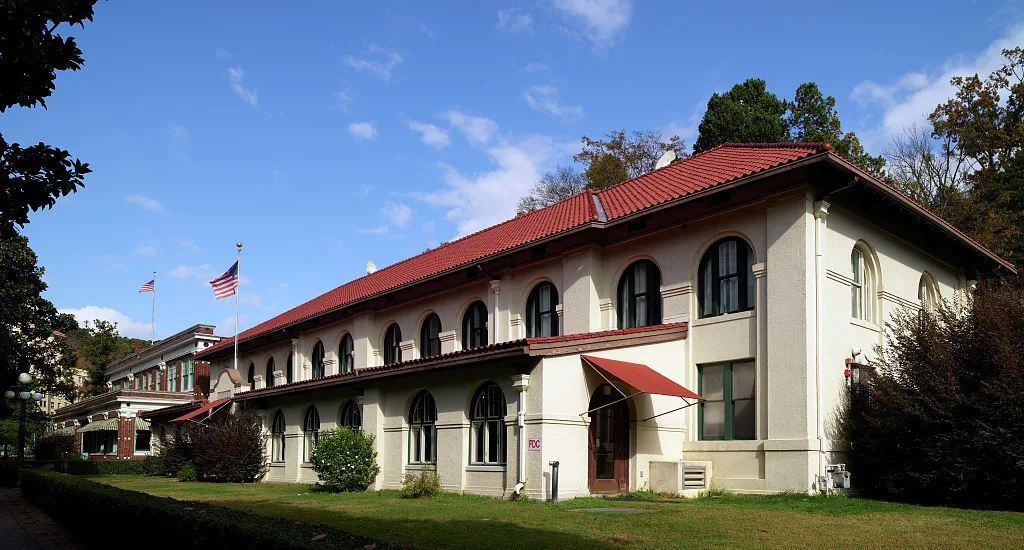
Hot Springs
Hot Springs is the oldest area in the National Park System — federally protected in 1832, 40 years before Yellowstone. Its 47 thermal springs flow about a million gallons a day at ~143°F; the rain that emerges today fell roughly 4,400 years ago. Embedded in a working town, its historic Bathhouse Row earned it the nickname "the American Spa," and you can still fill jugs with free, drinkable hot spring water at public fountains.
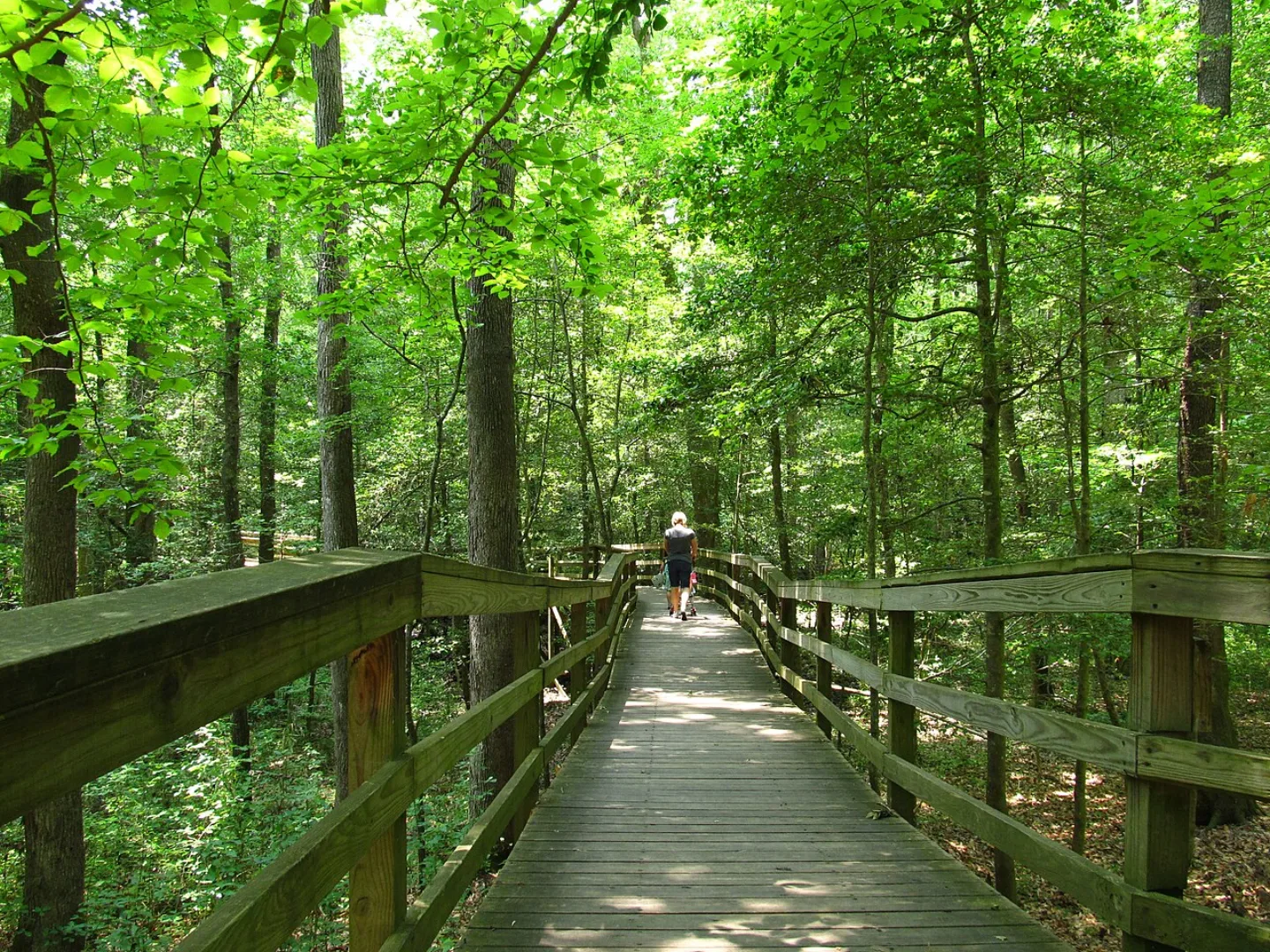
Congaree
Congaree protects the largest intact tract of old-growth bottomland hardwood forest in the U.S. — not a swamp but a floodplain forest, where periodic flooding from the Congaree and Wateree rivers feeds some of the tallest trees in the eastern U.S., including a ~167-ft loblolly pine. Saved by a 1970s grassroots campaign, it dazzles with synchronous fireflies each late spring and dark, star-filled skies.
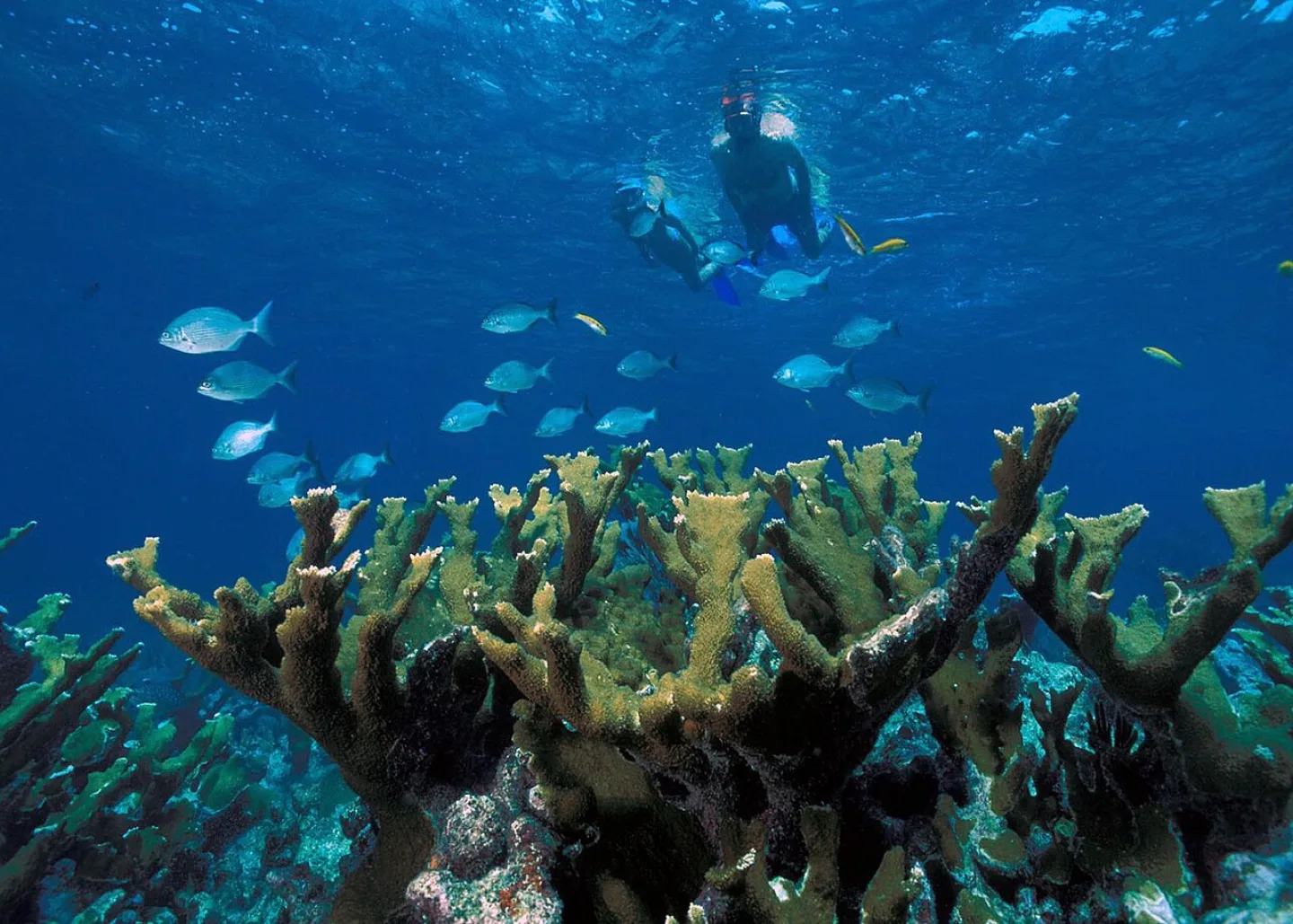
Biscayne
Just south of Miami, Biscayne is about 95% underwater — one of the few majority-marine national parks. It protects the northern Florida Keys reef tract, Biscayne Bay, the longest mangrove shoreline on Florida's east coast, and a Maritime Heritage Trail of historic shipwrecks. A 1960s plan to build a city called "Islandia" and an oil-refinery seaport here was defeated by conservationists, saving the reef.
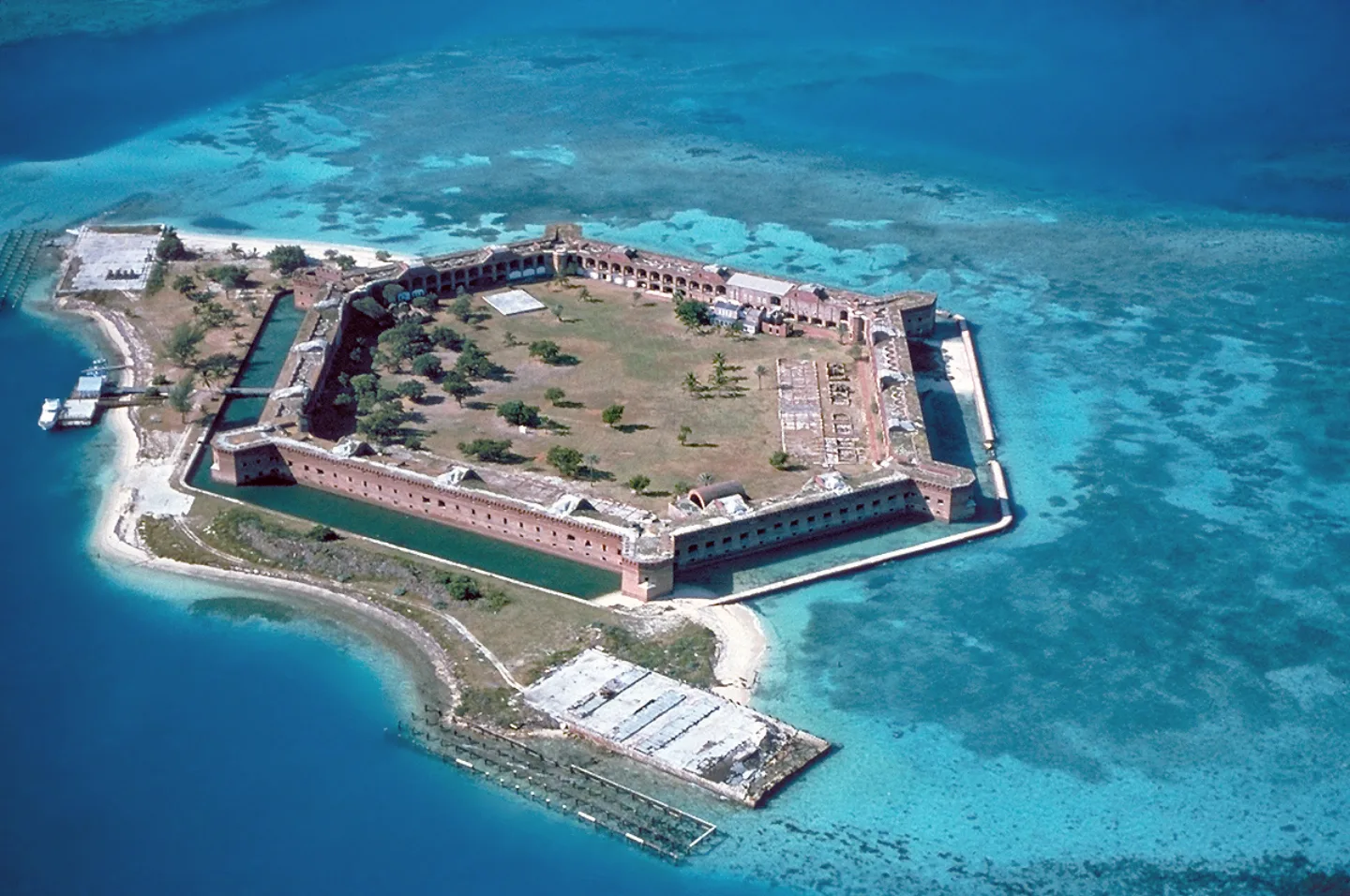
Dry Tortugas
About 70 miles west of Key West, Dry Tortugas is ~99% water — seven small coral-and-sand islands reachable only by boat or seaplane. Its centerpiece is Fort Jefferson, a massive unfinished 19th-century fortress of some 16 million bricks, the largest masonry structure in the Americas. As a Civil War prison it held Dr. Samuel Mudd, convicted of treating John Wilkes Booth's broken leg. The fort never saw battle.
By the numbers
- In Acadia, Cadillac Mountain is the highest point on the eastern seaboard of the U.S. What is its elevation in feet?
- 1530 feet
- How many miles of Mammoth Cave have been mapped, making it the longest known cave system on Earth?
- 426 miles
- In feet, how tall is the stainless-steel Gateway Arch in St. Louis — the tallest arch and tallest monument in the U.S.?
- 630 feet
- In what year did Isle Royale's predator-prey study — the world's longest-running — begin tracking wolves and moose?
- 1958 year
- How many thermal springs flow at Hot Springs, the oldest area in the National Park System?
- 47 count
- Fort Jefferson at Dry Tortugas — the largest masonry structure in the Americas — was built from roughly how many bricks?
- 16000000 count
- How many people visited Great Smoky Mountains, the most-visited national park, in 2024?
- 12191834 visitors
- How high is Kuwohi (formerly Clingmans Dome), the highest point in Great Smoky Mountains and on the Appalachian Trail?
- 6643 ft
- How tall is Cadillac Mountain, the highest point on the eastern seaboard of the U.S.?
- 1530 ft
- How many miles of passage have been mapped in Mammoth Cave, the longest cave system on Earth?
- 426 miles
- How tall is the Gateway Arch, the tallest monument in the U.S.?
- 630 ft
- In what year was Hot Springs first federally protected, making it the oldest area in the National Park System?
- 1832 year
- About how many acres does Everglades, the largest tropical wilderness in the U.S., cover?
- 1508938 acres
Matched pairs
Each item on the left goes with the one on the right.
- Shenandoah
- Skyline Drive (105 miles, 75 overlooks)
- Cuyahoga (Iroquoian word)
- crooked river
- Everglades
- First national park created to protect an ecosystem rather than scenery
- Great Smoky Mountains
- Tennessee & North Carolina
- Shenandoah's high point
- Hawksbill (4,051 ft)
- Isle Royale's high point
- Mount Desor (1,394 ft)
- Virgin Islands National Park
- U.S. Virgin Islands (St. John)
Self-test
Answer each question from memory, then check your work against the answer key.
1. Great Smoky Mountains is by far the most-visited national park, with 12.19 million visits in 2024. What else is true of it?
- AIt protects the longest known cave on Earth
- BIt was the first national park east of the Mississippi
- CIt charges no entrance fee
- DIt is the newest national park in the system
2. Which Appalachian park protects the longest known network of underground passages on Earth?
- AShenandoah
- BMammoth Cave
- CNew River Gorge
- DGreat Smoky Mountains
3. Which park's defining feature is Skyline Drive, running 105 miles with 75 overlooks along the Blue Ridge crest?
- AShenandoah
- BAcadia
- CNew River Gorge
- DMammoth Cave
4. Which West Virginia park, designated December 27, 2020, became the 63rd national park overall?
- ACuyahoga Valley
- BShenandoah
- CMammoth Cave
- DNew River Gorge
5. Which of these is NOT one of the Appalachian Heart parks?
- AShenandoah
- BMammoth Cave
- CIsle Royale
- DGreat Smoky Mountains
6. Which of these parks is the smallest and most urban national park, and the only one honoring a historical event rather than a natural landscape?
- AGateway Arch
- BIndiana Dunes
- CVoyageurs
- DCuyahoga Valley
7. The river that infamously caught fire in 1969, helping spark the Clean Water Act, flows through which national park?
- AVoyageurs
- BCuyahoga Valley
- CIndiana Dunes
- DIsle Royale
8. Which remote Lake Superior island park hosts the world's longest-running predator-prey study, tracking wolves and moose since 1958?
- AGateway Arch
- BIndiana Dunes
- CVoyageurs
- DIsle Royale
9. Which Minnesota park on the Canadian border is a roadless, water-based park named for 18th-century French-Canadian fur-trade canoemen?
- AIsle Royale
- BIndiana Dunes
- CCuyahoga Valley
- DVoyageurs
10. All of these are Midwest / Great Lakes parks EXCEPT one. Which?
- AVoyageurs
- BIndiana Dunes
- CAcadia
- DIsle Royale
11. Which park sits just south of Miami and is about 95% underwater, protecting the northern Florida Keys reef tract?
- ABiscayne
- BEverglades
- CVirgin Islands
- DDry Tortugas
12. Established in 1947, which park was the first national park created to protect an ecosystem rather than scenery?
- ABiscayne
- BEverglades
- CCongaree
- DDry Tortugas
13. Which park, federally protected in 1832 — 40 years before Yellowstone — is the oldest area in the entire National Park System?
- ACongaree
- BVirgin Islands
- CHot Springs
- DEverglades
14. Fort Jefferson, the largest masonry structure in the Americas, sits about 70 miles west of Key West in which park?
- AEverglades
- BBiscayne
- CVirgin Islands
- DDry Tortugas
15. Congaree protects the largest intact tract of old-growth bottomland hardwoods in the U.S. It is best described as which of these?
- AA thermal spring basin
- BA floodplain forest
- CA tropical coral reef
- DA desert slot canyon
16. Which park is recognized as the first national park established east of the Mississippi River?
- AAcadia
- BEverglades
- CGreat Smoky Mountains
- DShenandoah
17. Called the 'Salamander Capital of the World,' this is the most biodiverse U.S. national park. Which is it?
- AMammoth Cave
- BGreat Smoky Mountains
- CShenandoah
- DCongaree
18. An enslaved Black guide named Stephen Bishop explored and mapped much of this park in the 1840s–50s, crossing its 'Bottomless Pit.' Which park?
- AIsle Royale
- BNew River Gorge
- CMammoth Cave
- DHot Springs
19. Each October on Bridge Day, hundreds of BASE jumpers legally leap from a record steel arch bridge in which park?
- ANew River Gorge
- BShenandoah
- CAcadia
- DMammoth Cave
20. A 630-ft stainless-steel catenary curve, as wide as it is tall, towers over downtown St. Louis as the centerpiece of which national park?
- AHot Springs
- BVoyageurs
- CCuyahoga Valley
- DGateway Arch
21. Which eastern summit is the highest point on the entire Appalachian Trail?
- ACadillac Mountain
- BKuwohi
- CMount Desor
- DHawksbill
22. Great Smoky Mountains straddles the border of which two states?
- AVirginia & West Virginia
- BNorth Carolina & Georgia
- CKentucky & Virginia
- DTennessee & North Carolina
23. Which summit is Shenandoah's high point?
- AHawksbill (4,051 ft)
- BMount Desor (1,394 ft)
- CKuwohi (6,643 ft)
- DCadillac Mountain (1,530 ft)
24. Which summit is Isle Royale's high point?
- ACadillac Mountain (1,530 ft)
- BHawksbill (4,051 ft)
- CMount Desor (1,394 ft)
- DKuwohi (6,643 ft)
25. About how many people visited Great Smoky Mountains — the most-visited national park — in 2024?
- A28,800
- B10.83 million
- C12.19 million
- D2.9 million
Go deeper
- WatchSalamander Capital The Salamander Capital of the World is a national park: Great Smoky Mountains.
- WatchThe River That Burned The Cuyahoga River caught fire in 1969. It was one of several blazes from industrial pollution.
- WatchOlder Than Yellowstone One park was protected 40 years before Yellowstone: Hot Springs, Arkansas, in 1832. It's the oldest area in the National Park System.
- WatchWolves and Moose Which eastern park is it? 3 clues, broad to specific.
- Watch426 Miles Over 426 miles of mapped passage. That's Mammoth Cave, the longest known cave system on Earth, more than twice the next-longest.
- StudyU.S. National Parks in the FlashFeed app
Answer key
- 1. C It charges no entrance feeThe Smokies charge no entrance fee, and neither do roughly a third of the national parks. The other options belong to other parks: Acadia was first east of the Mississippi, Mammoth Cave holds the longest cave, and Chiricahua (2026) is the newest national park.
- 2. B Mammoth CaveMammoth Cave, beneath the Kentucky hills, has over 426 miles mapped — more than twice the next-longest, making it the longest known cave system on Earth.
- 3. A ShenandoahShenandoah, along Virginia's Blue Ridge, is defined by Skyline Drive — 105 miles and 75 overlooks tracing the very crest of the mountains.
- 4. D New River GorgeNew River Gorge, West Virginia's first national park, was designated on December 27, 2020 as the 63rd national park. It stayed the newest until Chiricahua in Arizona became the 64th in October 2026.
- 5. C Isle RoyaleIsle Royale is a remote Lake Superior island in the Midwest group. Great Smoky Mountains, Shenandoah, and Mammoth Cave are all Appalachian Heart parks.
- 6. A Gateway ArchGateway Arch's ~193 acres within its boundary make it the smallest, most urban national park and the only one honoring a historical event rather than a natural landscape.
- 7. B Cuyahoga ValleyCuyahoga Valley, between Cleveland and Akron, wraps the Cuyahoga River, whose 1969 fire helped galvanize the Clean Water Act and modern environmental movement.
- 8. D Isle RoyaleIsle Royale, reachable only by boat or seaplane, hosts the world's longest-running predator-prey study of wolves and moose, begun in 1958.
- 9. D VoyageursVoyageurs, on Minnesota's Canadian border, is navigated by boat and named for the French-Canadian fur-trade canoemen — the voyageurs — who paddled these waters.
- 10. C AcadiaAcadia is on Maine's coast, in the Appalachian Heart group. Voyageurs, Indiana Dunes, and Isle Royale are all Great Lakes / Midwest parks.
- 11. A BiscayneBiscayne, south of Miami, is about 95% underwater and protects the northern Florida Keys reef tract.
- 12. B EvergladesThe Everglades (1947), a vast 'River of Grass,' was the first national park created to protect an ecosystem rather than scenic landscape.
- 13. C Hot SpringsHot Springs, Arkansas, was federally protected in 1832, making it the oldest area in the National Park System, a full 40 years before Yellowstone.
- 14. D Dry TortugasDry Tortugas, ~70 miles west of Key West and ~99% water, is centered on Fort Jefferson, a massive brick fortress and the largest masonry structure in the Americas.
- 15. B A floodplain forestCongaree is a floodplain forest — not a swamp — where periodic river flooding feeds some of the tallest trees in the eastern U.S.
- 16. A AcadiaAcadia — a park of pink granite on a Maine coastal island with the highest point on the eastern seaboard of the U.S. — was the first national park east of the Mississippi, created from donated private land.
- 17. B Great Smoky MountainsGreat Smoky Mountains, with over 19,000 documented species, is the most biodiverse U.S. national park and the self-proclaimed 'Salamander Capital of the World.'
- 18. C Mammoth CaveStephen Bishop mapped much of Mammoth Cave, crossing the 'Bottomless Pit' to become one of its most famous early explorers.
- 19. A New River GorgeNew River Gorge's bridge — the longest single-span steel arch bridge in the Western Hemisphere — hosts Bridge Day, when BASE jumpers legally leap from its deck.
- 20. D Gateway ArchGateway Arch National Park in St. Louis centers on Eero Saarinen's 630-ft stainless-steel catenary monument commemorating westward expansion.
- 21. B KuwohiKuwohi (formerly Clingmans Dome) in the Great Smoky Mountains reaches 6,643 ft — both the park's high point and the highest point on the whole Appalachian Trail. Cadillac (1,530 ft), Hawksbill (4,051 ft), and Mount Desor (1,394 ft) are lower park high points.
- 22. D Tennessee & North CarolinaThe Smokies straddle the Tennessee–North Carolina border on some of the oldest mountains on the planet.
- 23. A Hawksbill (4,051 ft)Hawksbill (4,051 ft) is Shenandoah's high point. Kuwohi (formerly Clingmans Dome) is in the Smokies, Cadillac in Acadia, and Mount Desor on Isle Royale.
- 24. C Mount Desor (1,394 ft)Mount Desor (1,394 ft) is Isle Royale's high point. Hawksbill belongs to Shenandoah, Kuwohi (formerly Clingmans Dome) to the Smokies, and Cadillac to Acadia.
- 25. C 12.19 millionWith 12.19 million visits in 2024, the Smokies are by far the most-visited national park — more than the next two combined. 2.9 million is Cuyahoga Valley's annual visitation.
Sources
- U.S. National Park Service
- U.S. National Parks — Everglades
- U.S. National Parks — Great Smoky Mountains
- U.S. National Parks — Mammoth Cave
- U.S. National Parks — Acadia
- U.S. National Parks — Gateway Arch
- U.S. National Parks — Dry Tortugas
- U.S. National Parks — Isle Royale
- U.S. National Parks — Hot Springs
- U.S. National Parks — Shenandoah
- U.S. National Parks — Virgin Islands
Image credits
- Shenandoah: MPSharwood · CC BY-SA 4.0 — commons.wikimedia.org/wiki/File:Shenandoah_National_Park,_VA_-_Skyline_Drive_lookout.jpg
- Mammoth Cave: Willis Thomas Lee · Public domain — commons.wikimedia.org/wiki/File:Mammoth_Cave_Rotunda_(USGS_Lwt02830).jpg
- Indiana Dunes: Library of Congress · Scene at Indiana Dunes State Park, encompassing 2,182 acres · No known restrictions (verify at source) — www.loc.gov/item/2016631623/
- Isle Royale: NPS staff · Public domain — commons.wikimedia.org/wiki/File:Views_at_Isle_Royale_National_Park,_Michigan_(ea8a8bd8-1a01-473b-a088-ca34718f6552).jpg
- Hot Springs: Library of Congress · Scene along "Bathhouse Row" in Hot Springs, a city in centra · No known restrictions (verify at source) — www.loc.gov/item/2020741795/
- Congaree: Ken Lund from Reno, Nevada, USA · CC BY-SA 2.0 — commons.wikimedia.org/wiki/File:Boardwalk_Trail,_Congaree_National_Park_(3)_(5797809615).jpg
- Biscayne: John Brooks, National Park Service photographer · Public domain — commons.wikimedia.org/wiki/File:Elkhorn_Coral_Biscayne_NP1.jpg
- Dry Tortugas: U.S. National Park Service · Public domain — commons.wikimedia.org/wiki/File:Fort-Jefferson_Dry-Tortugas.jpg


