
U.S. National Parks study guide · Lesson 4 of 27
Lesson 4: Wildlife of the Parks
Icons of the Wild · Keystones & Comebacks
This is the lesson's study guide from the FlashFeed app, plus its key facts and a self-test.
What you'll be able to do
- Match the marquee mammals to their signature parks.
- Recognize iconic park animals and the field marks of a grizzly.
- Explain what makes a species a keystone and identify examples.
- Match recovery and coexistence species to the parks that shelter them.
Icons of the Wild
The great parks of the American West are, above all, theaters of wildlife. Standing in a Yellowstone meadow at dawn, you can watch the same cast of animals that shaped the continent for millennia — and several that came within a whisker of vanishing. These are the marquee mammals, the ones people drive thousands of miles to glimpse.
American bison
The bison is the living symbol of the American wilderness, and its story is the parks' story in miniature: catastrophe, then rescue. Once 30 to 60 million animals thundered across the continent in herds so vast they took days to pass. By the 1880s, relentless hunting had reduced them to fewer than 1,000. Yellowstone became their refuge — it is the only place in the United States where bison have lived continuously since prehistoric times, and today it holds the largest wild, free-ranging herd on Earth, roughly 4,000 to 6,000 strong. Wind Cave and Theodore Roosevelt protect smaller but genetically important herds.
Grizzly bear
The grizzly is unmistakable once you know the marks: a muscular shoulder hump, a dished, concave face, and long front claws built for digging. Its recovery rivals the bison's. In 1975, when it was listed as threatened, only about 136 grizzlies survived in the Greater Yellowstone Ecosystem. Today that ecosystem holds roughly 1,000, with about 1,000 more around Glacier in the Northern Continental Divide Ecosystem.
Gray wolf and the trophic cascade
When wolves were reintroduced to Yellowstone in 1995–96, they did far more than fill an empty niche. Today about 100 to 125 wolves in 8 to 10 packs hunt the park, and their return is the textbook example of a trophic cascade. By thinning and constantly moving elk herds, wolves let willows and aspen recover along the rivers. That brought back beavers, whose dams created wetlands; songbirds returned; even streambanks stabilized. One predator rippled outward through the whole web of life.
Elk and moose
Each autumn, Rocky Mountain National Park's elk rut becomes one of the parks' great spectacles, as bull elk bugle their eerie, carrying calls across the meadows. The moose, meanwhile, is the largest deer of all. On Isle Royale, the interplay between moose and wolves has been studied without interruption since 1958 — the longest-running predator-prey study in the world.
Mountain goat vs bighorn sheep
These high-country look-alikes confuse many visitors, but the tells are simple. Mountain goats are pure white with short black horns — and despite the name, they are not true goats at all. Bighorn sheep are brown, with the massive curling horns that give them their name. Both range through Glacier and Rocky Mountain, though the mountain goats in the Tetons and Olympic are partly introduced.
Pronghorn
The pronghorn is the fastest land animal in the Western Hemisphere, sprinting around 55 mph across the sagebrush of Yellowstone and Grand Teton. Its speed is a beautiful evolutionary ghost story: no living predator can come close to catching it, because it was built to outrun the American cheetah — a hunter that went extinct thousands of years ago.
Keystones & Comebacks
Some animals matter out of all proportion to their numbers, and some have clawed back from the very edge of extinction. This part is about both — the species that hold whole ecosystems together, and the recovery stories that prove protection works.
What is a keystone species
The name comes from architecture. A keystone is the wedge-shaped stone at the top of an arch; remove it, and the whole arch collapses. A keystone species plays the same role in an ecosystem — its influence vastly outweighs its abundance. The Yellowstone wolf is the celebrated example, but it is far from alone. The beaver is a keystone engineer: its dams flood meadows into wetlands that shelter fish, amphibians, birds, and moose. The prairie dog shapes entire grasslands through its burrowing and grazing, feeding predators and aerating soil. Lose the keystone, and the system unravels.
California condor
North America's largest land bird spreads its wings nearly 9.5 feet from tip to tip. Its rescue is one of conservation's boldest gambles. By 1982, only 22 California condors remained alive anywhere on Earth, and biologists made the wrenching decision to capture every last wild bird for a captive breeding program. The gamble paid off. Wild flocks now soar again over Pinnacles, the Grand Canyon and Zion country of Arizona and Utah, and Big Sur, and the total population — wild and captive — exceeds 560.
Bald eagle
America's national bird nearly disappeared in the mid-20th century, poisoned by the pesticide DDT, which thinned its eggshells until they broke under the weight of the nesting parent. After DDT was banned and the eagle won federal protection, it rebounded dramatically. Today it is a common and thrilling sight fishing the waters of Voyageurs, Olympic, Katmai, and dozens of other parks — a quiet triumph hiding in plain sight.
Where alligators meet crocodiles
The Everglades holds a distinction found nowhere else: it is the only place on Earth where American alligators and American crocodiles live side by side. Telling them apart comes down to color and snout. Alligators are dark, with broad, rounded snouts; crocodiles are grayish, with narrow, tapered ones. The alligator is itself a keystone species — the "gator holes" it digs hold water and life through the dry season. The same wetlands shelter wintering West Indian manatees.
Roosevelt elk
The Roosevelt elk is the largest of all elk subspecies, thriving in the misty temperate rainforests of Olympic and Redwood. The herds were so central to Olympic's founding that the park was first proposed under the name "Elk National Park," explicitly to protect them. They remain one of the great sights of the Pacific Northwest's old-growth forests, moving like shadows through the moss and ferns.
Key concepts
American bison
- This shaggy, humped mammal once roamed the continent in herds tens of millions strong.
- Hunting crashed its numbers to fewer than 1,000 by the 1880s before it was saved.
- Yellowstone holds its largest wild, free-ranging herd.
gray wolf
- This pack-hunting predator was absent from Yellowstone for decades before its 1995–96 return.
- Its comeback triggered a famous trophic cascade, reviving willows, beavers, and songbirds.
- About 100–125 of them now live in 8–10 packs in the park.
California condor
- This is North America's largest land bird, with a wingspan near 9.5 feet.
- By 1982 only 22 of them remained alive anywhere on Earth.
- Recovering flocks now soar over Pinnacles, the Grand Canyon, and Big Sur.
pronghorn
- This tan-and-white grazer is the fastest land animal in the Western Hemisphere.
- It can run about 55 mph across the sagebrush of Yellowstone and Grand Teton.
- It evolved that speed to escape a cheetah that went extinct long ago.
grizzly bear
- You can recognize this large bear by its shoulder hump, dished face, and long claws.
- It rebounded from about 136 animals in 1975 to roughly 1,000 around Yellowstone.
- Glacier's Northern Continental Divide Ecosystem holds about 1,000 more.
American alligator
- This dark reptile has a broad, rounded snout, unlike its narrow-snouted relative.
- The Everglades is the only place it shares waters with the American crocodile.
- It is itself a keystone species, its gator holes sheltering wildlife through the dry season.
Key facts
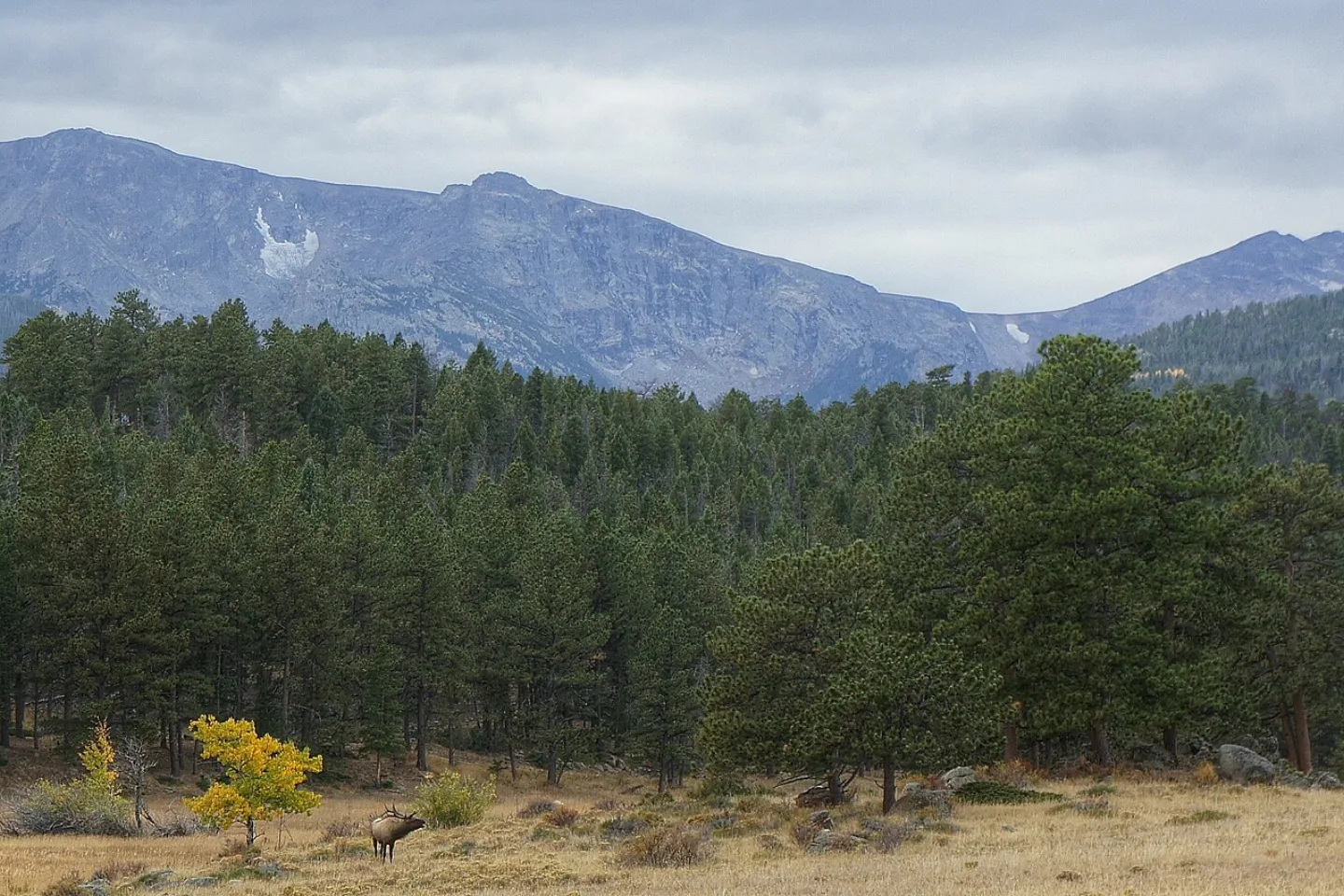
Elk and Moose
Each autumn, Rocky Mountain National Park's elk rut draws crowds to hear bull elk bugling across the meadows. The moose is the largest deer of all — and on Isle Royale, the moose–wolf predator-prey system has been studied continuously since 1958, the longest-running study of its kind in the world.
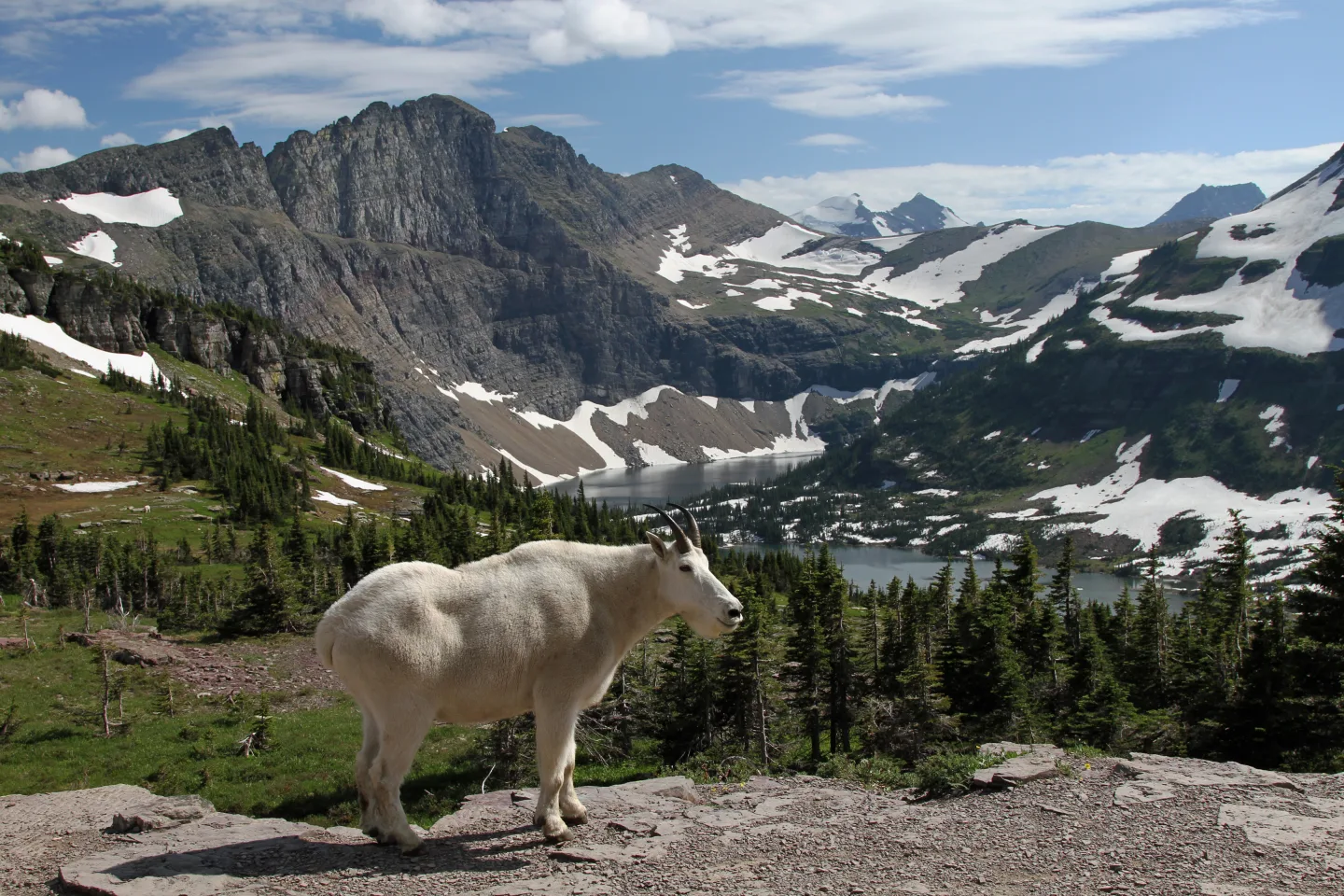
Mountain Goat vs. Bighorn Sheep
These high-country look-alikes are easy to tell apart. Mountain goats are all white with short black horns — and despite the name, they aren't true goats. Bighorn sheep are brown with massive curling horns. Both roam Glacier and Rocky Mountain; the mountain goats in the Tetons and Olympic are partly introduced.
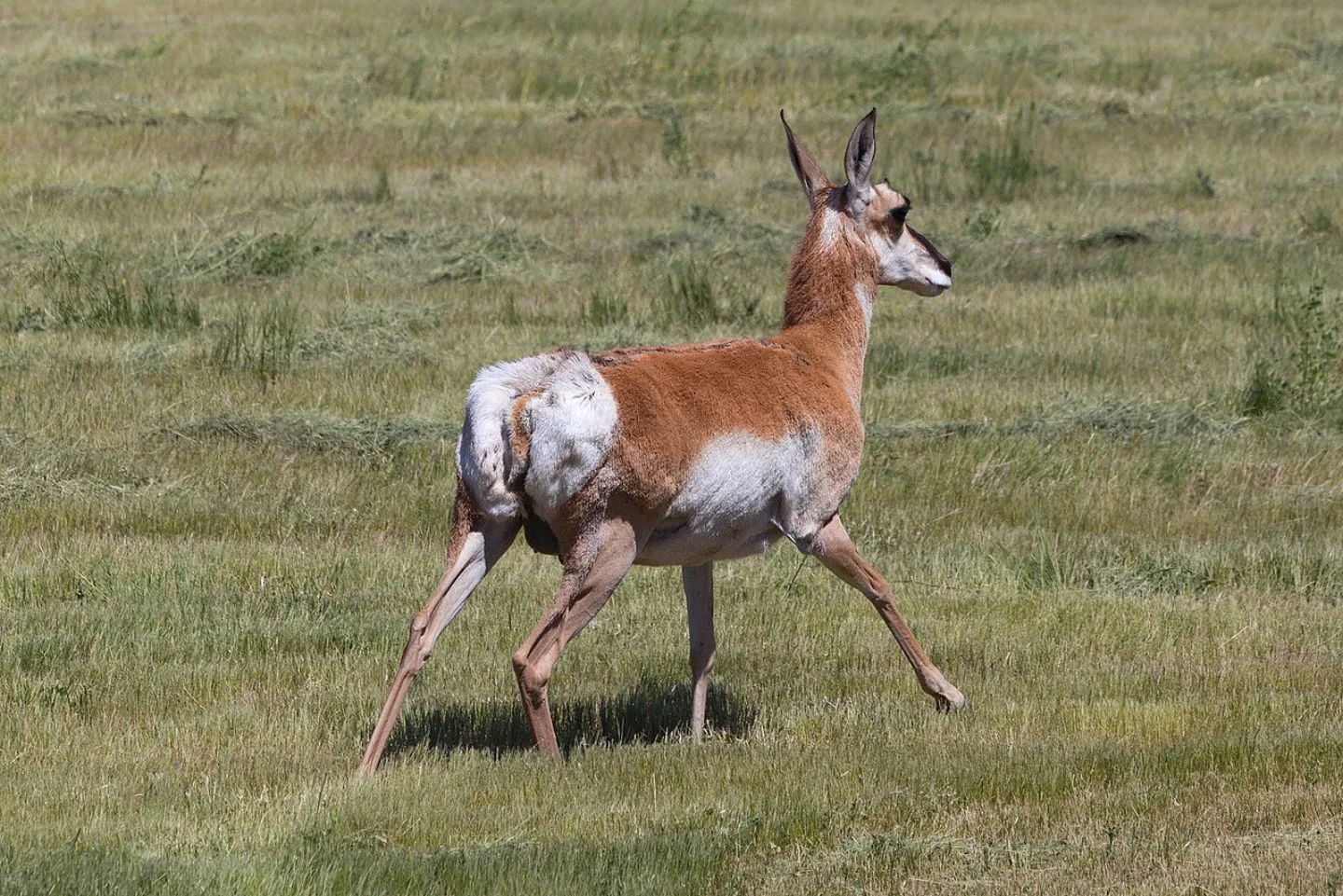
Pronghorn
The pronghorn is the fastest land animal in the Western Hemisphere, clocking around 55 mph across the sagebrush of Yellowstone and Grand Teton. Why so fast, with no predator that can keep up? It evolved its speed to outrun the American cheetah — a predator that went extinct thousands of years ago.
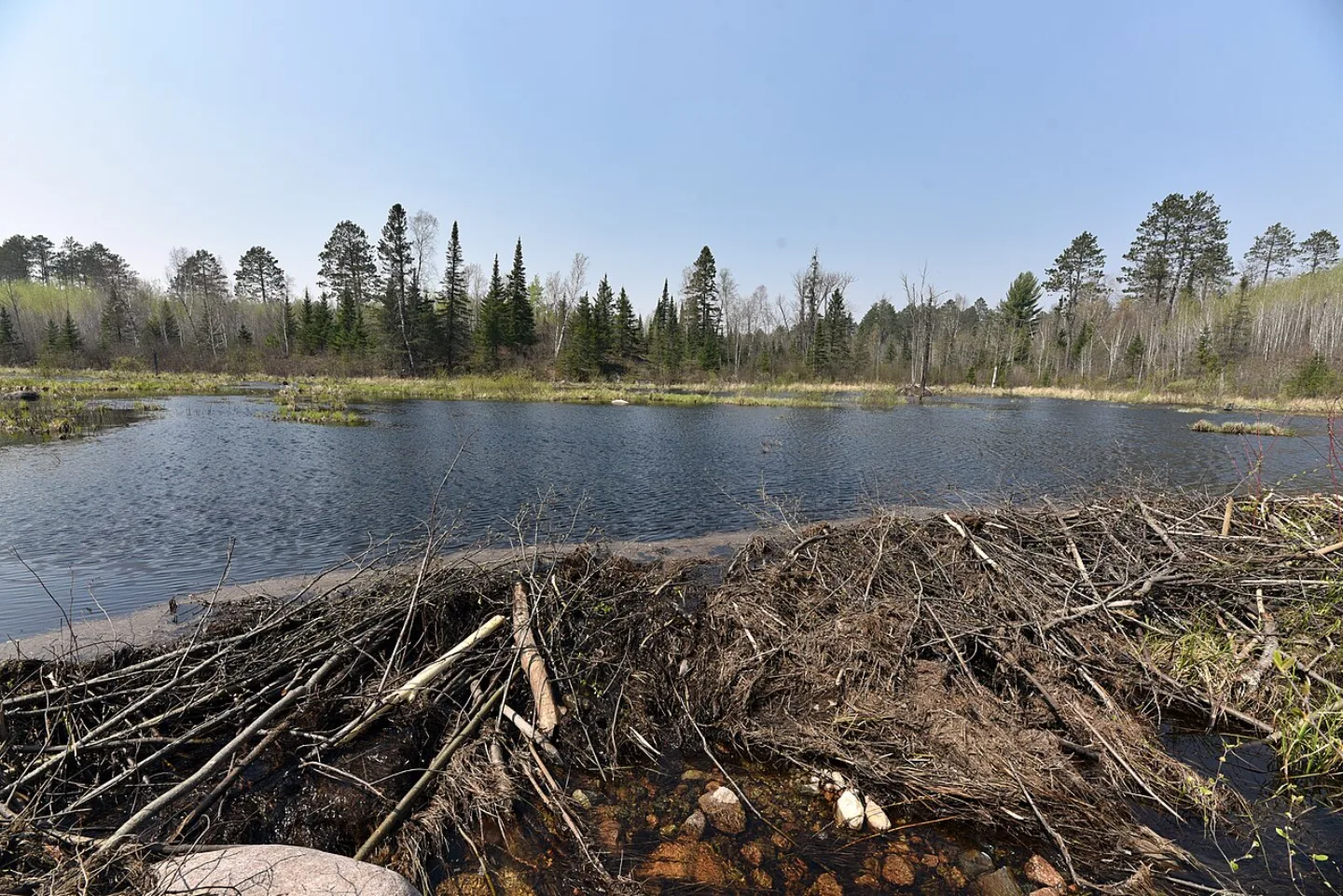
What Is a Keystone Species?
A keystone species holds an ecosystem together far out of proportion to its numbers — remove it, and the whole system unravels. The Yellowstone wolf is the famous example, but so are the beaver, whose dams create wetlands for countless other species, and the prairie dog, whose burrows and grazing shape entire grasslands. Lose the keystone and the arch collapses.
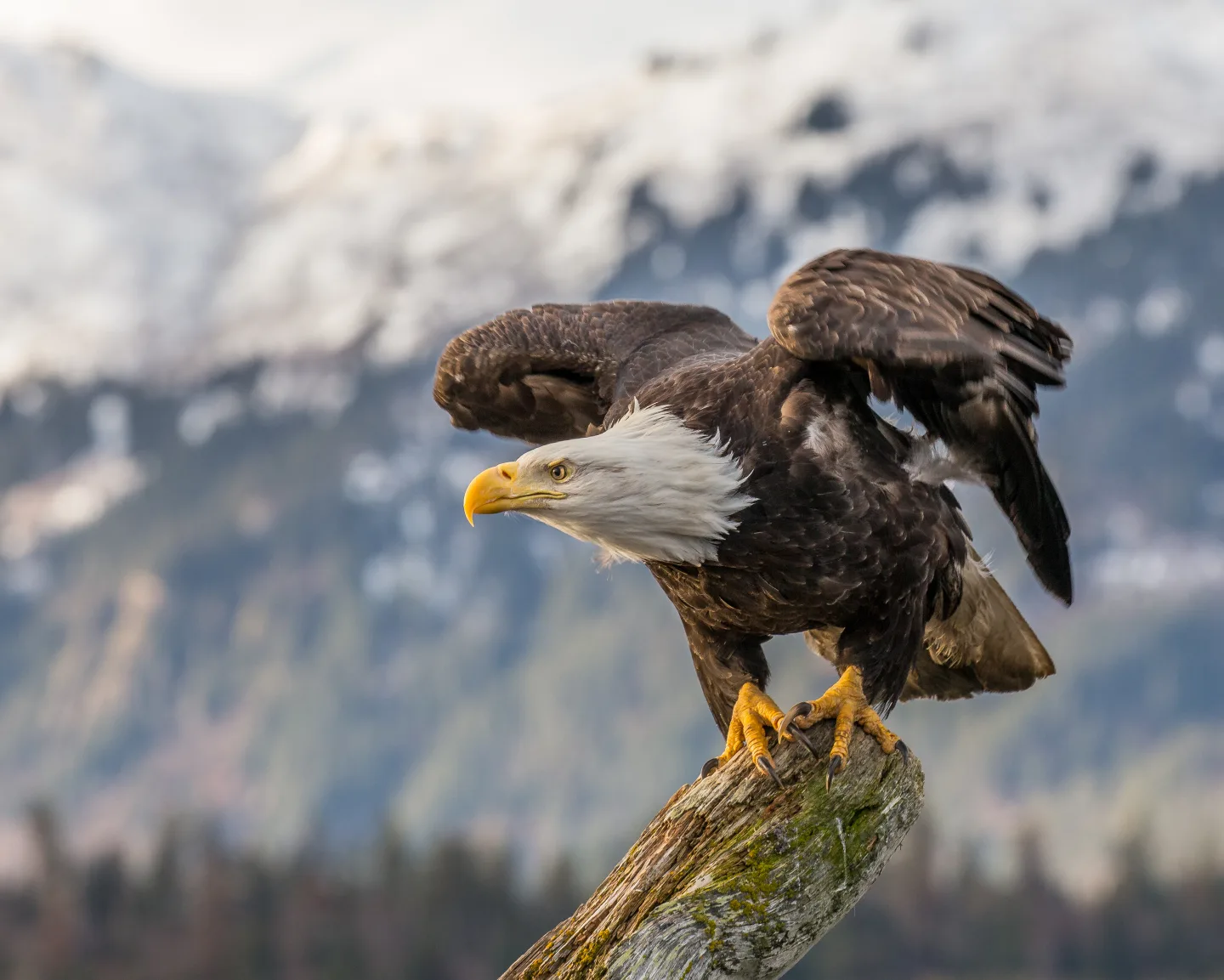
Bald Eagle
America's national bird nearly vanished in the mid-20th century, its eggshells thinned to breaking by the pesticide DDT. After DDT was banned and the eagle was protected, it roared back — and is now a common sight fishing the waters of Voyageurs, Olympic, Katmai, and dozens of other parks.
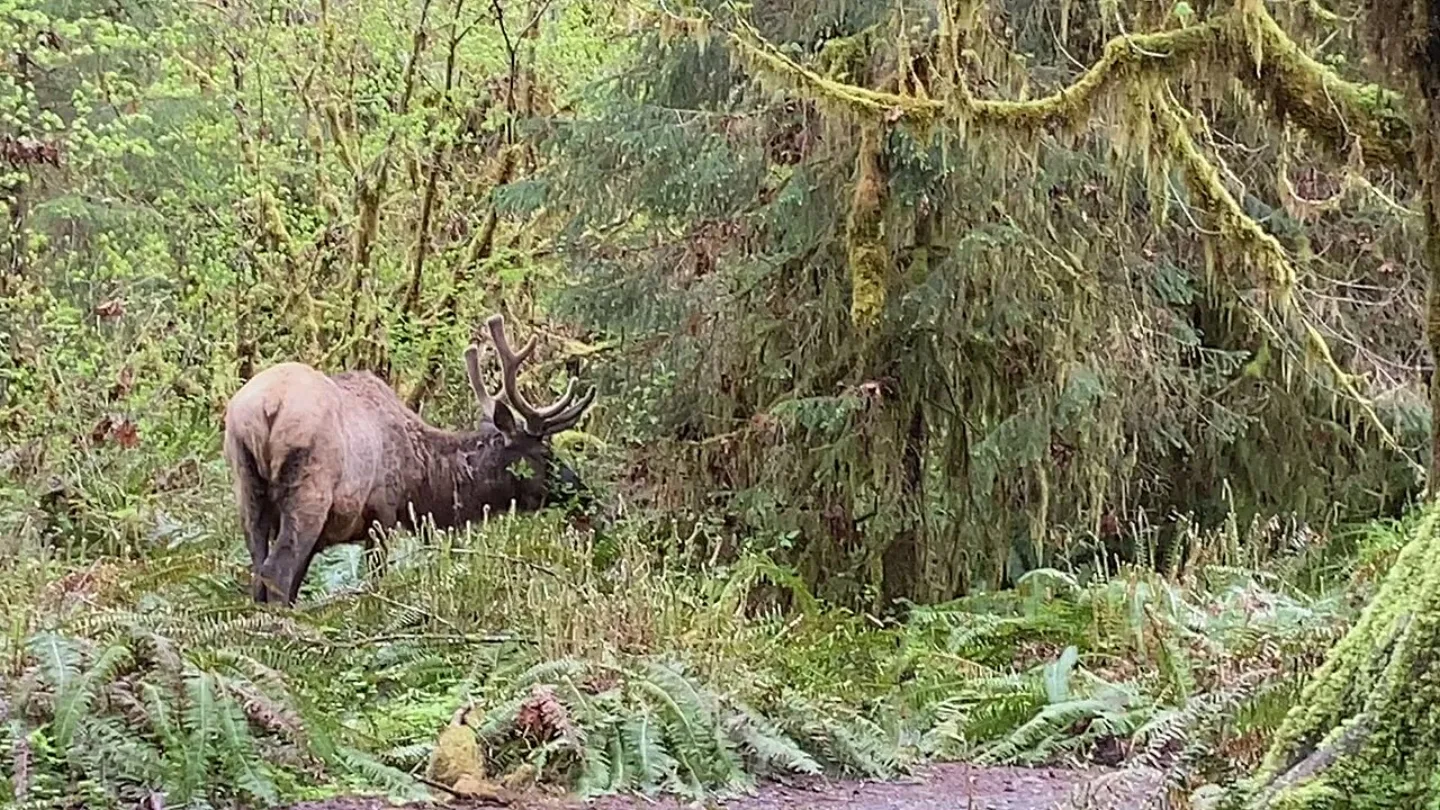
Roosevelt Elk
The Roosevelt elk is the largest elk subspecies, at home in the rainforests of Olympic and Redwood. Olympic's elk were so central to its creation that the park was originally proposed under the name 'Elk National Park' to protect the herds.
Matched pairs
Each item on the left goes with the one on the right.
- American bison
- Yellowstone (largest wild herd)
- Moose (and wolves)
- Isle Royale
- Bugling elk rut
- Rocky Mountain
- Mountain goat & bighorn sheep
- Glacier
- California condor
- Pinnacles
- Alligators and crocodiles together
- Everglades
- Roosevelt elk
- Olympic & Redwood
Step by step
Trace the trophic cascade that followed wolves' return to Yellowstone.
- Wolves are reintroduced to the park
- Wolves thin and constantly move the elk herds
- Willows and aspen recover along the rivers
- Beavers return and build dams
- The dams create wetlands that shelter more wildlife
Each link follows from the one before: wolves move elk, plants recover, beavers return, and their dams make wetlands.
Self-test
Answer each question from memory, then check your work against the answer key.
1. Which park holds the largest wild, free-ranging bison herd on Earth?
- ATheodore Roosevelt
- BRocky Mountain
- CWind Cave
- DYellowstone
2. At which park has the moose-wolf predator-prey system been studied continuously since 1958?
- AOlympic
- BGlacier
- CIsle Royale
- DYellowstone
3. At which park is the autumn elk rut, with bull elk bugling across the meadows, a famous spectacle?
- ARocky Mountain
- BKatmai
- CVoyageurs
- DEverglades
4. The mountain goat and bighorn sheep, two high-country look-alikes, both roam which park?
- AEverglades
- BGlacier
- CIsle Royale
- DVoyageurs
5. Which mammal-to-park pairing is INCORRECT?
- ABugling elk rut - Rocky Mountain
- BMountain goat & bighorn sheep - Glacier
- CAmerican bison - Yellowstone
- DGrizzly bears - Great Smoky Mountains
6. Which physical feature is a key field mark for identifying a grizzly bear?
- AA straight facial profile
- BTall, prominent ears
- CA muscular shoulder hump
- DShort, curved claws
7. Which trait is NOT a field mark of a grizzly bear?
- ATall, prominent ears
- BA muscular shoulder hump
- CLong front claws
- DA dished, concave face
8. Which animal is the fastest land animal in the Western Hemisphere, sprinting around 55 mph?
- AElk
- BPronghorn
- CGray wolf
- DBighorn sheep
9. Once 30 to 60 million strong but hunted to fewer than 1,000 by the 1880s, which animal is the living symbol of the American wilderness?
- AGrizzly bear
- BRoosevelt elk
- CAmerican bison
- DGray wolf
10. Whose reintroduction to Yellowstone in 1995-96 became the textbook example of a trophic cascade?
- AGrizzly bear
- BGray wolf
- CAmerican bison
- DPronghorn
11. In ecology, what makes a species a "keystone species"?
- AIt is always the apex predator at the top of the food chain
- BIt is simply the most numerous species in its habitat
- CIt lives only inside protected national park boundaries
- DIts influence on the whole ecosystem far outweighs its abundance
12. The term "keystone species" borrows its name from what?
- AThe wedge stone at the top of an arch
- BA stone used to grind grain
- CThe largest stone in a building's foundation
- DThe first cornerstone laid in construction
13. Which keystone engineer builds dams that flood meadows into wetlands sheltering fish, birds, and moose?
- ABighorn sheep
- BBeaver
- CPronghorn
- DCalifornia condor
14. In the Everglades, which keystone species digs "gator holes" that hold water and life through the dry season?
- AAmerican alligator
- BGray wolf
- CWest Indian manatee
- DAmerican crocodile
15. Which animal is NOT considered a keystone species?
- AGray wolf
- BBeaver
- CPronghorn
- DPrairie dog
16. Wild California condor flocks now soar over which of these parks?
- AVoyageurs
- BKatmai
- CIsle Royale
- DPinnacles
17. Which park is the only place on Earth where American alligators and American crocodiles live side by side?
- AYellowstone
- BGrand Canyon
- COlympic
- DEverglades
18. The Roosevelt elk, largest of all elk subspecies, thrives in the temperate rainforests of which parks?
- AGlacier and Rocky Mountain
- BOlympic and Redwood
- CYellowstone and Grand Teton
- DEverglades and Big Cypress
19. Olympic National Park was originally proposed under what name, to protect its wapiti herds?
- ARainforest National Park
- BCascade National Park
- CElk National Park
- DRoosevelt National Park
20. By 1982, how many California condors remained alive, prompting biologists to capture every wild bird?
- A22
- B560
- C87
- D136
Go deeper
- WatchFrom 60 Million Bison to 1,000 Once, 30 to 60 million bison roamed North America, in herds that took days to pass.
- Watch22 Condors Left North America's largest land bird has wings nearly 9.5 feet across. By 1982, only 22 California condors were left alive anywhere on Earth.
- StudyU.S. National Parks in the FlashFeed app
Answer key
- 1. D YellowstoneYellowstone's herd of roughly 4,000-6,000 is the largest wild, free-ranging bison herd on Earth. Wind Cave and Theodore Roosevelt protect smaller, genetically important herds.
- 2. C Isle RoyaleThe Isle Royale moose-wolf study, running since 1958, is the longest-running predator-prey study in the world. Yellowstone's wolves returned only in 1995-96.
- 3. A Rocky MountainRocky Mountain National Park's elk rut draws crowds each autumn to hear bull elk bugle. Everglades, Voyageurs, and Katmai are known for other wildlife.
- 4. B GlacierBoth the all-white mountain goat and the brown, curl-horned bighorn sheep range through Glacier (and Rocky Mountain). The others are wetland or northern-forest parks.
- 5. D Grizzly bears - Great Smoky MountainsGreat Smoky Mountains is famous for BLACK bears — grizzlies live in Yellowstone, Glacier and Alaska, not the southern Appalachians. The other three pairings are all correct.
- 6. C A muscular shoulder humpA grizzly shows a muscular shoulder hump, a dished (concave) face, and long front claws built for digging. Tall ears, a straight facial profile, and short claws are marks of the black bear instead.
- 7. A Tall, prominent earsTall, prominent ears mark a black bear, not a grizzly. A grizzly shows a shoulder hump, a dished face, and long front claws built for digging.
- 8. B PronghornThe pronghorn clocks around 55 mph across the sagebrush of Yellowstone and Grand Teton, making it the Western Hemisphere's fastest land animal.
- 9. C American bisonThe bison numbered 30-60 million before 1880s hunting cut it below 1,000; Yellowstone became its refuge and it is the enduring symbol of the American wilderness. The others never suffered that near-total collapse.
- 10. B Gray wolfReintroduced gray wolves thinned and moved elk herds, letting willows and aspen recover, which brought back beavers and songbirds - one predator rippling through the whole food web.
- 11. D Its influence on the whole ecosystem far outweighs its abundanceNamed for the wedge stone that holds an arch together, a keystone species shapes its entire ecosystem out of proportion to its numbers. Wolves, beavers, and prairie dogs all qualify; remove the keystone and the system unravels.
- 12. A The wedge stone at the top of an archA keystone is the wedge-shaped stone at the top of an arch; remove it and the arch collapses. A keystone species holds its ecosystem together the same way.
- 13. B BeaverThe beaver is a keystone engineer: its dams create wetlands for countless other species. Pronghorn, bighorn sheep, and condors do not engineer habitat this way.
- 14. A American alligatorThe American alligator is a keystone species whose gator holes retain water through the dry season. Crocodiles and manatees share the wetlands but do not dig them.
- 15. C PronghornThe wolf, beaver, and prairie dog are keystone species. The pronghorn is celebrated for speed, not for holding an ecosystem together.
- 16. D PinnaclesRecovered condor flocks fly over Pinnacles, the Grand Canyon and Zion country, and Big Sur. Isle Royale, Voyageurs, and Katmai are known for other wildlife.
- 17. D EvergladesThe Everglades uniquely hosts both American alligators and crocodiles together. Tell them apart by color and snout: alligators are dark with broad snouts, crocodiles grayish with narrow ones.
- 18. B Olympic and RedwoodThe Roosevelt elk is at home in the misty rainforests of Olympic and Redwood. The other pairs are drier or wetland habitats without these elk.
- 19. C Elk National ParkOlympic's elk were so central to its creation that the park was first proposed as 'Elk National Park' explicitly to protect the herds.
- 20. A 22Only 22 condors remained by 1982, so biologists took every wild bird into captive breeding. 136 was the 1975 Yellowstone grizzly count, 560 is today's total condor population, and 87 isn't tied to any other count — it's simply another specific number to rule out.
Sources
- U.S. National Parks — Wildlife
Image credits
- Elk and Moose: Los Paseos from Earth · CC BY-SA 2.0 — commons.wikimedia.org/wiki/File:Bugle_(23072423525).jpg
- Mountain Goat vs. Bighorn Sheep: Wikimedia Commons · Robert M. Russell · CC BY-SA 4.0 — commons.wikimedia.org/wiki/File:Mountain_Goat_at_Hidden_Lake.jpg
- Pronghorn: Mr. Satterly · CC0 — commons.wikimedia.org/wiki/File:Antilocapra_americana_400471915.jpg
- What Is a Keystone Species?: U.S. Fish and Wildlife Service - Midwest Region · Public domain — commons.wikimedia.org/wiki/File:Beaver_dam_(53718655489).jpg
- Bald Eagle: Wikimedia Commons · Andy Morffew · CC BY 2.0 — commons.wikimedia.org/wiki/File:Bald_eagle_about_to_fly_in_Alaska_(2016).jpg
- Roosevelt Elk: USFWS Pacific · Public domain — commons.wikimedia.org/wiki/File:Grazing_bull_elk,_Olympic_National_Park_(52094128946).jpg


